Government asks WhatsApp to take urgent steps to curb rumours

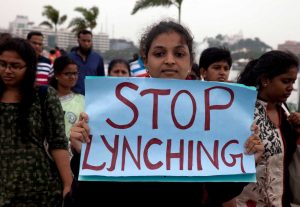
The central government has asked WhatsApp messenger to take immediate steps to prevent the circulation of “irresponsible and explosive messages” on its platform that have led to a series of lynching and mob beatings in the past few months.

The government’s warning came in wake of rise in the number of innocent lynching on suspicion of child lifting and other issues.

“Deep disapproval of such developments has been conveyed to the senior management of WhatsApp and they have been advised that necessary remedial measures should be taken,” the IT Ministry said.

The ministry added “The government has also conveyed in no uncertain terms that WhatsApp must take immediate action to end this menace and ensure that their platform is not used for such malafide activities.”

IT Ministry terms the “unfortunate killings” in states like Maharashtra, Assam, Tripura, Karnataka and West Bengal as “deeply painful and regrettable.”

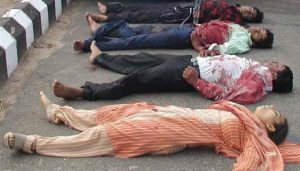
In the recent incident in Dhule District of Maharashtra, five people were beaten to death by a mob on suspicions that they were child abductors.

5 pilgrims dead due to landslide on Amarnath Yatra route, Rajnath Singh expresses grief

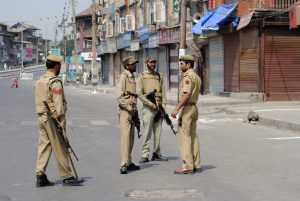
Representational Image

Five pilgrims (four men and a woman) were killed and four others got injured when a landslide triggered due to flash floods on the Baltal route of the Amarnath Yatra in Ganderbal District of Jammu and Kashmir on Tuesday night, police said.

Police official said, “A landslide hit between Railpatri and Brarimarg on the Baltal route.”

“The identities of the deceased and the injured were yet to be ascertained and the bodies were being brought to the Baltal base hospital,” police official added.

“Anguished beyond words on the loss of precious lives due to a landslide on the Baltal route of Shri Amarnathji Yatra. My thoughts are with the bereaved families and my prayers for the speedy recovery of the injured,” Union Home Minister Rajnath Singh tweeted.

Police and other security forces and rescue agencies were undergoing rescue operations on the accident site, the official said.

Including these 5 deaths, the death toll in this year’s Amarnath Yatra has reached to 10. 

Is the govt supporting Rupees free fall!

Conjuring up speculations over the government turning a blind eye to the free fall of the rupee, the government think tank Niti Ayog opined in not so many words that the RBI was unlikely to intervene as was in the case of 2013. But time round it must be mentioned the rupee slide comes in the wake of the Trump trade war as well as rising crude oil prices.  

Rajiv Kumar, Vice Chairman, Niti Ayog today said; “The Indian rupee is today overvalued by almost 5 per cent in terms of Real Effective Exchange Rate (REER).. and as such there in no need for panic”. REER is a weighted average of currencies of 36 trading countries adjusted against inflation and weighted against volume of bilateral trade. Moreover he said that since the rupee was on free float and hence there was little to be done by the RBI. 

In 2015, China resorted to deliberate devaluation of the Chinese currency Yuan-Renminbi twice in order to push it exports. China that time had panicked with its stock market index Hang Seng showing a drastic dip indicating that everything was not well with its economy.

But despite the Niti Ayog assurances, the rising crude oil prices as well as Trumps tariff imposition on imports and its trade wars put the Indian currency in a disadvantage position.

Assuaging any panic to the rupee free fall which touched 69 to a US dollar, which last happened in 2013 when the UPA II was in power, the government think tank said that the macro economic conditions then were quite different. That time the rupee had become highly volatile. Kumar, today defended the fall in rupee versus the US dollar and said that the macro economic conditions in 2013 when the rupee had touched an all time low of 69 to a dollar were quite different and as such there was no need to panic on rupee free fall. He said then the rupee had drastic free fall to a record 69 to a dollar in just three months and the REER had slipped. This was when the UPA II brought in a new RBI Governor Rajan Raghunathan to stabilise the fast weakening Indian currency.

Supreme Court asks states to prevent incidents of ‘mob lynching’

While taking a serious view of mob lynching the Supreme Court on July 2 said that mob lynching is a crime and no matter what the motive is whether lynching happens as a result of cow vigilantism or because people believe someone is a child abductor. SC asks states to prevent such incidents, Chief Justice of India (CJI) Dipak Misra said.

“Nobody can take law into their own hands. It is the obligation of the state’s to see these incidents are prevented,” said a three-judge bench headed by the CJI Mishra.

“Anyone can be a victim of mob crime. We do not want to categorize victims of mob violence or lynching on the basis of their caste, gender or religion,” CJI added.

SC says that instances of vigilantism are actually acts of mob violence, which is a crime. Apex court added that plans are underway to issue guidelines to the Centre as well as all states on how to deal with rise in incidents of mob lynching.

The Supreme Court also said that it may lay down guidelines to compensate victims of vigilante violence.”

 “We can deal with this under Article 142 of the Constitution (to do substantive justice), the concept of compensation, monitoring of investigation are aspects that have to be looked into in the judgment,” CJI said.

CJI also asked for compliance reports, saying “nobody can wash off their hands (from their duty).”

LG cannot act as an obstructionist to policy decisions taken by AAP government: SC

LG Anil Baijal

The five-judge constitution bench of the Supreme Court on July 4 pronounced its verdict on the question of who should have a major say in governing Delhi. The SC ruled that the “Lieutenant Governor (LG) cannot act as an obstructionist to policy decisions taken by Aam Aadmi Party (AAP) government.”

The verdict is delivered by Chief Justice of India (CJI) Dipak Misra and other judges, including Justices AK Sikri, AM Khanwilkar, DY Chandrachud and Ashok Bhushan.

“A big victory for the people of Delhi…a big victory for democracy,” tweeted the Delhi CM.

Delhi Chief Minister Arvind Kejriwal has accused LG Anil Baijal of abusing his constitutional mandate to undermine the elected government.

Judgment reads:

SC says the constitution mandates the council of ministers to communicate all decisions to LG but they do not require LG’s consensus. LG can only refer it to President if he has a difference of opinion but he cannot sit on it.

Aid and advice under Article 239AA mean that LG is bound by aid and advice of the elected government.

LG must work harmoniously with the government and any differences between them must be resolved by discussion. The concurrence of LG is not required.

CJI asks both the Delhi government and LG to work together.

The executive power of Delhi government must be given some degree of independence within the areas on which the Constitution allows it to legislate and administer.

A decision of the council of ministers does not require LG’s concurrence in every case.

Except for the three issues, including land and law and order, over which Centre had exclusive power, Delhi government must be allowed to legislate and govern other issues and LG cannot stall decisions mechanically.

The Centre may in exceptional cases block decisions of the council of ministers in the national interest.

Facebook reveals data-sharing partnerships with 52 companies, including Saavn, Airtel

Airtel and music streaming app Saavn were among select firms that received special exemptions from social media major Facebook to obtain user data even after it discontinued the access in 2015, according to the submissions made by the social media giant to the US Congress.

Documents revealed that Airtel is among other 52 companies authorised to use Facebook user data to create such services, which allowed the social media giant to increase its reach among users. According to Facebook, 38 of these 52 partnerships have already been discontinued.

The information was revealed by Facebook’s 750-page document, which was addressed to Greg Walden, chairman US Energy and Commerce Committee, Ranking Member Frank Pallone and other members of the Committee.

The document answered nearly 2000 questions that were raised during the Mark Zuckerberg’s Congressional hearing and was handed over on June 29.

“Integration partners were not permitted to use data received through Facebook APIs for independent purposes unrelated to the approved integration without user consent,” Facebook said in its document.

“The matter pertains to the year 2010 when Airtel was granted access to data by Facebook as an App developer. The project ended in 2013 and so did the access to the data. We confirm that the data was used only for our internal purposes. We take data privacy extremely seriously and follow a zero tolerance policy on the same” Airtel spokesperson said.

Even according to Facebook its partnership with Airtel is no longer in force.

“At that time we made clear that existing apps would have a year to transition at which point they would be forced to migrate to the more restricted API and be subject to Facebook’s new review and approval protocols. The vast majority of companies were required to make the changes by May 2015,” Facebook said.

Saavn is among those companies who were given time till May 2015 to comply with rules according to Facebook.

Facebook in its submission said Saavn and others were given “less than six months beyond May 2015 to come into compliance”.

Saavn did not respond to email queries.

Facebook is investigating every app that had access to large amounts of information before it changed its policies in 2014. So far Facebook has suspended nearly 200 apps during investigation and will ban them if it finds evidence of wrongdoing.

The other companies include Microsoft, Apple, Blackberry, Lenovo and Samsung but their access to data ended in year 2013.

Freedom of Press is at stake as there is a method in madness

At this juncture, we don’t have to allow the brutal murders of independent voices like Shujaat Bukhari and Gauri Lankesh to instill fear in the minds of independent journalists and thinkers. The killings have left a clear message: stand up for what you believe in, fight out relentlessly regardless of the consequences. The untimely killing of the fiercely independent journalists is certainly an attack on the freedom of press. The World Press Freedom Index compiled by Reporters without Borders mentions that journalists were increasingly targets of online smear campaigns and threats while “Prosecutions are also used to gag journalists who are overly critical of the government.” It is high time the government reassures journalists and comes out with a legislation providing foolproof protection to journalists.

According to the latest World Press Freedom Index published by Reporters Without Borders, India ranked 138th among 180 countries. India’s ranked 136th in 2017 and 133rd in 2016. Actually in the World Press Freedom Day, India slipped two points on the World Press Freedom Index ranking. The report has been compiled by Reporters Without Borders (RWB), one of the world’s leading independent organizations dedicated to promoting and defending freedom of information. The RWB has network of active correspondents in over 150 countries and it strives daily to maintain a free press in every corner of the globe. Registered in France as a non-profit organization, it has consultant status at the United Nations and UNESCO.

The 2018 World Press Freedom Index reflects growing bitterness towards journalists. The antagonism towards the media which is openly encouraged by political leaders poses a great threat to democracy. The RWB publishes the World Press Freedom Index each year since 2002 and it measures the level of press freedom available to journalists and the quality of journalism in 180 countries. The parameters to determine the ranking include media independence, transparency, legal framework and environment and self-censorship. India slipped two ranks on the 2018 index 138 from 136, one spot below Myanmar and one spot above Pakistan. Norway topped the list while North Korean stood at bottom at 180. A major reason for India’s poor ranking is the killing of journalists in connection with their work. “At least three of the journalists murdered in 2017 were targeted in connection with their work. They included the newspaper editor Gauri Lankesh, who had been the target of a hate campaign on social networks. Three other journalists were killed for their professional activity in March 2018.” The RSF report says that “In India hate speech targeting journalists is shared and amplified on social networks and this hatred of journalism poses a threat to democracy.”

The Hoot, a non-profit media watchdog has also observed that “Media freedom continued to deteriorate in the first four months of 2018 in India. There were also around 50 instances of censorship and more than 20 instances of suspension of Internet services”. Before the killing of Shujaat Bhukhari, two Dainik Bhaskar journalists, Navin Nishchal and Vijay Singh were killed when their bike was hit by an SUV in Bhojpur in Bihar on March 26. A day later, a TV journalist, Sandeep Sharma died when a truck run over him in Bhind in Madhya Pradesh. It is learnt that Sharma had done a sting operation on a sand mining mafia in Bhind. He had told police beforehand that he feared threat to his life.

The daylight murder of Bukhari has become Kashmir’s make or break moment with BJP already withdrawing support to Mehbooba Mufti government. Shujaat Bukhari held an independent opinion on the conflict in Kashmir and how it could be resolved amicably. The killing in the heart of Srinagar has caused widespread damage to the normalization process in Kashmir. Fingers are being pointed to country’s poor ranking on the press freedom index which is just one point above Pakistan. Bukhari had built goodwill for him and credibility for media that he worked for. He was a prominent advocate of the ceasefire. Whosoever chose to kill him would have been aware of the consequences of his killing. Over the years, Bukhari earned for himself a name as the editor and founder of Rising Kashmir and as correspondent of The Hindu. The mindless murder is an attempt to block out the truth by attacking an important institution of democracy. The Fourth Estate. Shujaat was a fearless journalist who advocated peace in Kashmir and it did not find favour with Pakistan and militant organizations. It has always been a tight ropewalk for journalists in Valley because terrorist outfits have no respect for freedom of speech and expression. The killing of journalist Shujaat Bukhari and journalist-activist Gauri Lankesh by unidentified assailants have saddened media fraternity and the protests across the nation are indicators that it was nothing short of murder of a voice of dissent. Angry reaction to the killings shows how people stood up for Shujaat Bukhari and Gauri Lankesh, who held a dissenting view on variety of issues, a sign of vibrant democracy, their right to express opinions. Karnataka Police has finally claimed to have cracked the Gauri Lankesh murder case. A frail activist-journalist had antagonised many with her anti-establishment stance and secularism which led to her death. However, the police lost precious time in unravelling the murder of Gauri’s ideological fellow traveller MM Kalburgi three years back. In both Gauri Lankesh and Shujaat Bukhari cases, t is the network of masterminds and puppeteers that needs to be unravelled.

The murders of journalists have reignited the debate on freedom of the press and the freedom of speech in the country. Among the major economies of the world belonging to the G-20 group, India has witnessed the fourth highest number of such killings related to journalistic work, behind Mexico, Russia, and Brazil. Most journalists who have been murdered for their work covered politics and corruption. Another community which has been targeted is that of Right to Information (RTI) activists. About 70 RTI activists have been killed in India so far since the act was passed in 2005, and hundreds have faced assault. Death is the ultimate price journalists, writers, and whistleblowers pay for challenging powerful vested interests or for expressing dissent. It is time there is a national debate on the precarious freedom of press.

Online abuse: Silver lining that isn’t for female journalists

Escaping the wrath of online abusers for the female journalists and bloggers around the world has become invariably inevitable who wear heroism on sleeves while risking their lives to report the truth. The classification of online harassment’s that are meted to women journalists from other side of the screens of social media platforms begins from hurling abuses, naming, slut shaming, death threats, rape threats, circulating morphed pornographic pictures/videos, imposter accounts to circulate false information, doxxing, trolling, hate speech, bigotry, etc.

Such vehement online attacks on the female journalists and writers cannot be called as the manifestation of gender discrimination or sexuality, instead, a direct attack on the freedom of press and expression to silence voices that represent them. However, this cannot be denied that female journalists are three times susceptible to online abuses than male counterpart.

The UN Human Rights Council Resolution L.13, on the promotion, protection and enjoyment of human rights on the Internet, strongly affirms that “the same rights that people have offline must also be protected online, in particular freedom of expression, which is applicable regardless of frontiers and through any media of one’s choice, in accordance with articles 19 of the Universal Declaration of Human Rights and the International Covenant on Civil and Political Rights.”

Female journalists and writers in South Asia have since ages been under constant threat of life, sexual harassment and violation of human rights for expressing opinions freely — be it offline or online. The hit list of online victims from India has names like Barkha Dutt, Patricia Mukhim, Rana Ayyub, Nidhi Razdan, Sagarika Ghose, Dhanya Rajendran, Masrat Zahra (Photojournalist from Kashmir). Besides India, Gul Bukhari from Pakistan, Taslima Nasreen (author) from Bangladesh, Shammi Haque (blogger) from Dhaka.

Recently, within days of the murder of noted Kashmiri journalist Shujaat Bukhari, consulting editor at Times of India, Sagarika Ghose, faced death threat on Facebook. On June 23, an ICICI bank official name Karan Bir Singh posted Ghose’s image with a death threat message: “This is the journalist that should get shot. Not the likes of Bhukhari (Shujaat Bukhari).”

Then in April this year, independent journalist and author Rana Ayyub became the victim of one of the biggest doxing scandals when malicious tweets from a Twitter handle bearing her name and image were widely circulated to represent her as the sympathizer of child rapist in Kathua rape-murder case. One of the tweets read: “Minor child rapists are also human, do they have no human rights. This Hindutva Government is bringing ordinance for death to child rapists just to hang Muslims in larger numbers. Muslims aren’t safe in India anymore”.

Rana, explaining her harrowing account in a criminal complaint filed on April 26 said: “I couldn’t sleep for three nights. I couldn’t talk, I couldn’t believe what was happening. I was numb. My parents called me to see if I was OK. The trolls posted my phone number, the address of my house online. If this is the depth of their hatred, what will stop them from coming into my house as a mob and kill me?”… “I’ve been trolled before, but I have never faced anything like this. I don’t know what else I have to fear after this… I’m repeatedly telling the state that I’m under attack and I fear for my safety. Will they take action only after something happens?”

Senior Indian Journalist Barkha Dutt too talked about receiving death threat, “Received chilling veiled threats and “messages” from powerful people in the Establishment today that my family and I are under surveillance — and that I will be smeared & maligned to stop me from starting any new projects. Was advised to get my house debugged. Is this my country?”

Another incident like in the case of Dhanya Rajendran, editor-in-chief, The News Minute, was asked to upload nude videos and perform sex acts with her supporters. The reason was a critical opinion by Rajendran on film Sura. A hashtag #PublicityBeepDhanya was run on Twitter to troll her that lasted for three days and pulled over 30,000 abusive tweets. Then, Famous TV journalist at NDTV, Nidhi Razdan, has received death threats on many occasions and to count in, recently on Instagram via a private message, a platform mostly known for photo stories. Journalist Sandhya Ravishankar for her sand mining story from Tamil Nadu, investigative journalist Neha Dixit for child trafficking in Assam, BuzzFeed India editor Rega Jha for her opinion, the list is never ending.

Again, female photojournalists are often subjected to abuse and hostility both on the ground and online. And if she is a Muslim, reporting from a conflict or encounter site then the gravity of abuse is even more. This is what happened when budding photojournalist from Kashmir, Masrat Zahra, was called Mukhbir (spy) by online offenders for being sighted at a conflict site while taking pictures at the encounter site.

Masrat then took to Facebook to share her ordeal, “Last night, I uploaded my picture from a gun battle site and within no time people circulated it on their pages and walls with the caption ‘MUKHBIR’ (spy). This is really shocking, that fateful day I was seriously injured my leg and shoulder got serious injuries despite that I did my job and clicked pictures with a broken arm, even my trousers were torn off, and now it has been one and a half month still I am not recovering.”

Dealing with trolls

In 2013, a study on verbal and online abuse in India called ‘Don’t Let It Stand’ mentioned that in some cases, a person uses multiple accounts to harass a woman. Wikipedia defines such a phenomenon, in which multiple (Wikipedia) user accounts are used for inappropriate purposes as sock puppetry. In a volunteer-driven community dependent project like Wikipedia, volunteers use sock puppetry to derive support for their point of view, especially while editing an article that has contentious views by many people.

The Organisation for Security and Cooperation in Europe, in its report released in February 2016 ‘New Challenges to Freedom of Expression: Countering Online Abuse of Female Journalists’, said that women journalists, bloggers and other media actors are “disproportionally experiencing gender related threats, harassment and intimidation on the internet which has a direct impact on their safety and future online activities.”

On the occasion of International Women’s Day, March 8, 2017, famous journalist organisation International Federation of Journalists (IFJ), known as protector of freedom of press, started the Byteback Campaign calling the entire torchbearers of press freedom organisations to commonly fight to stop the steady trend of trolling, cyber-bullying, online harassment, etc. meted against the women journalists across the world. There is a need to create national discussions on the topic of online harassment and through Byteback Campaign, the organisation, IFJ, aims to achieve its campaign goals which are:

♦ Raise awareness on online harassment of women journalists in Asia-Pacific;
♦ Engage men and women journalists to join in solidarity in a social media campaign against online abuse of women journalists in our region;
♦ Advocate with media houses to sign on to a draft IFJ social media policy to take action against trolls;
♦ Call on the public to call out trolling and harassment as a critical press freedom violation.

In a Summit held in 2016, London, noted journalist Julie Posetti of Fairfax Media talked about dealing with online harassers and advised some tips to deal with them:

♦ Acknowledge the problem and take the impacts seriously.
♦ Provide specific training for women journalists to help them deal with online misogyny.
♦ Ensure that senior management is aware of the issues and disseminate to all staff.
♦ Escalate early, report breaches to the police.
♦ Request access to technical, legal and psychological support.
♦ Devote editorial resources to coverage of these issues.
♦ Make a plan to deal with potential harassment at the commissioning stage of “lightning rod” stories

Extending her support she asked the representatives of press freedom to “Develop holistic strategies: involve cyber security staff, senior editors, editorial trainers, workplace health and safety teams, and social media editors in developing and disseminating online harassment policies and guidelines.”

But, will these techniques help women journalists, bloggers to fight the crime of online harassment, the answers still remain.

The rise of conservative governments across the world has to led to an increase in crushing of dissent and the restriction of the freedom of press. The harassment of journalists is mainly driven by political groups who loathe any kind of criticism. India, as an example, is witnessing a similar phase of an administration which encourages vicious trolling of female journalists. Police reports if filed are ignored and deliberately delayed, no action is taken against the abusers, partly because there are no concrete laws or the trolls somehow support a major political group so enjoy the support.

Make laws for social media decorum and punish the guilty to the extent they fear doing the same thing again. Social media platforms like Facebook or Twitter should make stringent policies which discourages female harassment online, and suspend accounts which don’t fall in line. All we need now is action and an immediate stop to such immoral and unethical behaviour.


letters@tehelka.com

To no end

 PDP-BJP coalition was not in the abruptness of the development but in the BJP choosing to do it. It was always taken for granted that if the coalition was ever going to come apart, it would be because of the withdrawal of the support by the PDP. This thinking was based on a solid rationale: The alliance with the PDP had enabled the BJP to become a ruling party in India’s only Muslim majority state, an otherwise improbable prospect considering the party’s aggressive Hindu nationalist credentials and implicit antagonism towards Muslims.

Confined largely to Hindu majority districts of the Jammu province, the BJP on its own can hardly hope to secure a majority and depends sorely on support from a state-level party to become a part of the government. But considering the BJP’s hardline ideological position on the state, a J&K party dependent on the support from Muslim majority is instinctively loath to partner with it. Such an association is deemed to be potentially detrimental to the electoral chances in the Valley. So, when the PDP partnered BJP to form the state government in 2015, the decision went against the conventional political wisdom in the state: two ideologically antithetical parties, with divergent policies on the state, choosing to join hands to rule the state.

Was power the glue that held the two together? It was but there were other powerful factors that left them little choice. PDP-BJP coalition was the best possible ruling arrangement for the state. With BJP almost sweeping the Hindu majority Jammu by securing 25 seats in 87-seat Assembly, a new state government could only have left it out at its own peril. For, this would not only have kept an entire region out of its due share in political power, a trigger for a destabilizing regional discord, but also then a resurgent BJP backed by its own majority government at the centre. More so, when the prevailing political trends in the country pointed to the BJP getting only stronger by the day and becoming more influential on the national scene.

PDP, the largest single party with 28 seats, could also go with the Congress, an ally from the party’s previous stint in power from 2002-08. But it would have still needed the support of four more legislators to secure the requisite majority of 44 to form the government. Also, a PDP-Congress alliance, apart from its abstract logic of both being secular in their outlook would hardly have been in a position to deliver. Congress, despite also being a Jammu-centric party in the state, had got only two of its 12 seats from the province. In fact, a majority of its seats came from Kashmir Valley. So, a PDP-Congress coalition government would have made the consequent state government largely Kashmir-centric, an avoidable situation in a state comprising three distinct geographic and cultural regions.

Ditto for an alliance with the National Conference, once a pan-J&K party, now largely confined to Kashmir.

Thrust together by the nature of the electoral verdict, mutual convenience, and not to mention the lure of power, the PDP and the BJP had set about forging terms of their engagement which became known as the Agenda of Alliance. On paper, the agenda seemed to make an eminent sense. It obliged the BJP not only to provide more means for the development of the state but also committed it to take steps towards resolution of Kashmir by holding talks with Pakistan and the separatists.

The coalition government was formed and rest as they say is history. From the day one, the government got off to a rambunctious start. While the issues of governance took back seat, the ideological tug-of-war moved to centre stage. The contradictions and the conflict only grew by the day, much of it to the detriment of the PDP in the Valley.

The BJP being the disproportionately more powerful party could always get away with an ideological overreach — albeit, on sensitive issues like the Article 370 and Article 35A, citizenship of West Pakistan Refugees, etc. the two parties managed to maintain an uneasy trade-off. The BJP also worked to secure a larger say in the governance. So, it was always presumed that if push came to shove, it would be the PDP which would take a bow.

But that didn’t happen. Counter-intuitively, it was the BJP that walked away. And adding further insult to the injury, waved bye to the PDP from New Delhi.

What made the development further inexplicable was that there was apparently no discord between the parties. Though privately the PDP wanted an extension of the ceasefire, it hadn’t made any public demand to the effect, nor had objected to the union government calling it off. In fact, Mehbooba had blamed militants and separatists for not reciprocating the gesture from the centre. In several statements, she had called on the Hurriyat to respond to the talks offer from the centre. She also appeared to be ready to play along with the centre’s recourse to hardline policy on the state.

Pulling the rug out

On June 19, Mehbooba as J&K Chief Minister was sitting in her office on the third floor in Kashmir’s civil Secretariat when news of the withdrawal of support by the BJP started trickling in, first as a rumour, then as a tentative story in some newspapers followed by the sudden confirmation. Mehbooba had just finished an official meeting when the then Chief Secretary B B Vyas informed her of the development after receiving a call from the Governor N N Vohra, who, in turn, had received a faxed letter from the BJP. Mehbooba immediately decided to resign. She headed to her residence at Gupkar, held a meeting with her party leaders and later at a press conference said she was not surprised.

“Our alliance was not for power but for the good of Kashmir. It had a bigger objective. We made unilateral ceasefire possible, Prime Minister (Narendra Modi) went to Lahore, we withdrew cases against 11,000 youth,” she told reporters.

Mehbooba also said the coalition with the BJP was for safeguarding the J&K’s special constitutional position within Indian Union. “In our four years with the BJP, we did everything to protect the Article 370 and Article 35A. We robustly defended the constitutional provisions in the Supreme Court,” she said.

But her efforts to validate the alliance found fewer takers in Kashmir. On the contrary, Kashmir rejoiced over the break-up. The social media and the Whatsapp overflowed with the exultant and satirical posts and memes over the development.

For a majority of people, it was a deserved comeuppance for Mehbooba’s rough-neck dispensation which had presided over “killings and mass blindings” in the state. Many people started posting report cards of her government.

One such post quoting from the official and unofficial estimates blamed her for killing, “235 civilians and 460 militants,” partially or completely blinding “1050 persons” and arresting around “16000 people.” She was also blamed for slapping Public Safety Acts on “countless people,” making thousands of illegal appointments and what is more, “bringing RSS to Kashmir.”

“Perhaps the first-ever break-up that the people in the Kashmir Valley will enjoy to the hilt,” posted the commentator Gowhar Geelani on his Facebook. “This break-up will not break hearts, but will bring joy and smiles on the faces of pellet-hit people”.

“Today every Kashmiri is happy This woman used Hurriyat card during elections to be in power but what she did we people will never forget,” wrote one Abdul Hamid in response.

The widespread rejoicing was largely borne out of a deep sense of betrayal of her longstanding political agenda, compounded by her government’s acquiescence to a militaristic response to the situation in the state. It was also against the perceived transformation of Mehbooba from a firebrand Kashmiri nationalistic leader to a tame Chief Minister always ready to do the bidding of the BJP.

In the altered popular opinion, Mehbooba for all her Kashmir-centric political credentials shading at times into soft-separatism had turned out to be a weak defence against the BJP’s perceived nationalistic overreach. Instead, the pressure of a coalition with the BJP had forced her to vacate the political middle-ground her party had come to occupy since its founding in 1999.

She had played down her pro-Kashmir resolution agenda and offered little counter-narrative to balance her partner’s shrill Hindutva noise. In the consequent atmosphere of grievance and fear in the Valley, Mehbooba was thus seen on the side of the tormentor.

BJP Gambit

Why did the BJP do it? More so, when the state government had still two years to go before the fresh polls and the general elections were a full eleven months away? The statements issued by the BJP leaders following the decision to withdraw support adumbrate the rationale for doing it. The BJP General Secretary and the architect of the PDP-BJP alliance cited the spike in militant activities including killing of the journalist Shujaat Bukhari, radicalisation as the reasons for pulling out of the government.

Similarly, state spokesperson for the BJP Sunil Sethi said the break-up was the result of “the insistence of the PDP for extension of the period of suspension of operations and soft approach towards militants, Pakistan and separatists” which hurt nationalistic sentiments not only in Jammu and Kashmir but across the country.

“Now is the time for an all-out war against militants and their supporters and give them no place to hide and run,” Sethi said.

As if to reinforce this idea, the day after the coalition government fell, a video clip showing a two storey house in South Kashmir being blown up to smithereens mysteriously surfaced online and went viral. It was read as a message of what was to come.

The general opinion is that the alliance was broken because the BJP thought that continuing with it was not politically helpful for it in the run-up to the general elections next year. More so, with the situation getting worse by the day and the PDP apparently putting hurdles in an all-out assault against militants — albeit few in the Valley would believe that the PDP was a problem. In the more than three years that this coalition was in power, the response to militancy has been irredeemably hardline.

According to the Union Home Minister Rajnath Singh, a total of 619 militants in Jammu and Kashmir have been killed in past four years of the Narendra Modi-led government killed.

“The number of militants killed in the previous UPA-II government was 471,” the home minister said in May during an interaction with the reporters.

Last year alone, 2018 militants were killed in gunfights with security forces, highest in the preceding seven years. But despite these record killings, the militancy in the Valley has only grown from strength to strength. Between January 1 and May 31, around 90 new recruits have joined the ranks of militants in South Kashmir. The total number of militants in the Valley is estimated to be around 280.

So a fresh all-out assault is hardly expected to make any redeeming difference, unless the effort is backed by a credible political outreach to the Valley geared to the address the factors underpinning the violence.

But that is unlikely to happen during an election year. More so, when Modi government has made it impossible for itself to establish such an outreach by its rigid and maximalist ideological position on the state. So, the gambit seems to be like this: Blame the PDP for the abject failure of the four years in Kashmir.

Mount a fresh all-out operation against the militancy, stack up an impressive figure of fresh militant fatalities alongside civilian collaterals, and hope to bring the situation under control by the time elections are around and sell it as an achievement.

But as has been the case in Kashmir, the situation may not play according to script. Instead, repression could lead to more alienation and anger and more militancy — a perpetuation of the ongoing bloody roundabout.
Fallout

There are many ways of looking at the short and long term fallout of the break-up of the coalition. In Kashmir, while the BJP’s withdrawal of support has come as a vicarious fulfilment of a public desire for retribution against the PDP for its perceived betrayal of the public mandate, a parallel narrative connects the development to the New Delhi’s familiar recourse to toppling governments in the state, beginning with that the legendary Kashmiri leader Sheikh Mohammad Abdullah in 1953. The government of Sheikh, then the Prime Minister of J&K, was summarily dismissed in 1953 for his alleged hobnobbing with the US government in pursuit of an independent Kashmir. This has bred a popular discourse that New Delhi inherently doesn’t trust Kashmiri parties with handling the state of affairs and that it would rather prefer manipulating the democracy in the state than allow it a free run.

But the current development is more complex – albeit in some of its aspects it is of a piece with the centre’s attitude towards the state. An example from the past that comes closest is the withdrawal of support to Sheikh Abdullah by Congress in 1977. Sheikh had returned to political mainstream just two years before that. Another example, and it is not about pulling out of the support, is the summary dismissal of the Sheikh’s son, Dr Farooq Abdullah’s government in 1984. This time the government fell when a breakaway group within National Conference defected to form a government with Congress support. But while on both these occasions, Kashmiris supported the incumbent parties and their anger was directed against the centre, this time they have celebrated the fall of the government.

So, how is the latest unceremonious ouster of a Kashmiri leader going to play out. It is clear from the anger directed against Mehbooba that the repercussions will be unlike those in the wake of similar developments in the past. But repercussions there will be, nevertheless. One possible outcome could be that the B JP in future could find it difficult to get a coalition partner in the state, making it unlikely for it to return to power in the state. More so, after the party implemented the Agenda of Alliance with the PDP largely in breach.

But considering that the BJP still went ahead with the break-up shows that the party doesn’t care much about forming a future government in the state. It is clear that for BJP Kashmir is important for mobilizing political support in the rest of the country than for its own sake. So, getting to power in the state becomes secondary to using the state to get to power at the centre. BJP’s attempt has been to unite and consolidate Hindu vote bank. And the one sure-fire way to do this is to champion a hardline nationalistic policy, bordering on polarization of voters.

This has been one abiding template of the saffron politics in the country. In breaking up its own coalition government in the state, an eye on the next year’s general election appears to be the overriding motivating factor. Says the commentator Gowhar Geelani: “The fact is that for the BJP, Kashmir is a laboratory for its Hindutva project. The polarization in Jammu and muscular policy in Kashmir is being adopted with an eye on upcoming general elections.”

OTHER POSSIBILITIES 

There are other possibilities in store: With the Assembly being in suspended animation, the political parties in the state have expressed apprehensions of horse-trading in the state. National Conference has demanded dissolution of the Assembly to pave way for fresh elections. The PDP fears that the BJP might poach upon its disgruntled elements to make a government on its own. Shall any of these scenarios play out in near future? There aren’t many in Kashmir that buy into this prospect.

“It is very unlikely that the BJP would resort to horse-trading, given the sensitive nature of the state,” says Naseer Ahmad, a columnist. “But if it does, the move would further undermine the democracy in the state and alienate people from New Delhi.”

The US based Kashmiri academician Dr Nyla Neelofar also warns against such a prospect.

“Dismissing governments and legitimizing the practice of horse trading ends up criminalizing the electoral process and government formation,” she says. “Governments that are hurriedly rustled up and disconnected from the grassroots lack the foresight to pay attention to whether the legislation and execution of political, economic, and social policies and programs in contemporary Kashmir is successfully addressing women’s as well as men’s experiences and concerns”.

However, the possibility that a majority of the people in the state are genuinely anxious about is fiddling with J&K’s special status. One law that is critical to this status is the Article 35A which is currently being challenged in the Supreme Court. The Article 35A which was extended to the state through a 1954 Presidential Order gives protection to the state subject laws in J&K whereby outsiders are not allowed to settle or acquire property in the state.

At the press conference following her resignation, Mehbooba Mufti was quick to point this out. Among her achievements she touted the defence of the Article 370 which gives J&K its special constitutional position within Indian Union and also that of the Article 35A, one of its critical features.

Should the BJP succeed in tampering with the provisions, or somehow the court judgement goes on to dilute them, the party can again sell it as a major triumph in the run up to the polls.

But it could throw Kashmir into turmoil and lend an even greater rationale to separatist movement and the militancy.

“The break-up of the coalition has created a fraught scenario in J&K,” says Naseer. “The BJP would be wise to remember that Kashmir is too sensitive a state to be messed with to win an election.”

letters@tehelka.com

Whither black money if money in Swiss banks is not black?

The news that money parked by Indians in Swiss banks grew 50 per cent while secret deposits by other global depositors grew by just three per cent, has pushed the government on the back foot with Finance Minister Piyush Goyal and Union Minister Arun Jaitley wondering how all this money could be “assumed to be black”.

If Swiss money deposits by Indians is not black, where has all the black money gone? Was it another “jumla” if seen in the light of famous rhetoric that if NDA was voted to power it would bring back every paisa stashed in Swiss banks? It is strange how this has happened despite demonetisation which was touted as a crucial weapon in the fight against black money. If all money parked in Swiss Banks is not black money, shouldn’t we stop labeling the wealthy as tax evaders and instead encourage them to invest their funds in India in public interest?

It was expected of opposition Congress to come down heavily on government’s claims of fighting against black money, but what could hurt the government is its own leaders and allies criticising it. Rajya Sabha MP Subramanian Swamy wrote on his Twitter handle, “Major success of Finance Secy Adhia. Secret Swiss Bank accounts deposits from global sources rose by 3 per cent last 12 months. Indians deposits however grew 50 per cent. Adhia would have managed more if Rajeshwar was not a distraction”. Even KC Tyagi of JD-U, BJP’s ally in Bihar, called the trends “worrisome”, saying everyone had hoped black money would be curbed post demonetisation. CPM’s Sitaram Yechury and CPI’s D Raja also attacked the BJP for “waiving off corporate loans and allowing fraudsters to flee with bank monies”.

The government put up a strong face with Goyal promising action against those guilty of holding black money and Jaitley writing a blog pointing out that to assume all deposits are per se tax-evaded money or that Switzerland in the matter of illegal deposits is what it was decades ago is to start on a shaky presumption. The flow of information from Switzerland will start from January 2019.

Any illegal depositor knows it is a matter of months before his name becomes public and he will be subjected to the harsh penal provisions of the black money law. Time has come for the government to re-establish its sense of sincerity about its commitment to weed out black money. It needs to accelerate the pace of investigations in all cases by prosecuting all those who have violated the law. Nothing short of that will work to bring favourable public perception like the famous lines from Christopher Marlowe’s play Dr. Faustus “All is dross that is not Helena”

Who will win the FIFA World Cup 2018?

When I summed up in my first write-up for Tehelka titled “FIFA World Cup 2018: Football fever grips the globe” that “there are no clear favourites in this tournament”, little did I know that the article would prove prophetic. The FIFA World Cup 2018 that is underway in Russia is generating a flurry of excitement and has become the most viewed event in the history of sports, and a big reason for that may be the excitement about the possibility that new teams could spring surprises and spoil the chances of traditional favourites.

The writing on the wall was clear when Iceland, the smallest nation ever to play in the World Cup stalled the advances of Argentina in a 1-1 draw with Lionel Messi missing a penalty. Iceland is a country of just 3.5 lakh population and most of their football players are sort of part time footballers as their full time avocations are different. Croatia, whose golden generation which includes star names such as Modric, Rakitic and Mandzukic, finally seem to be performing according to their potential as they poured further misery on the 2014 runners up, Argentina, crushing them 3-0. This led to reports of mutiny and discord in the Argentinean camp, and criticisms of Messi’s body language and his inability to perform under pressure. Argentina and Messi finally showed some spirit, just about qualifying to the round of 16, with Messi and Ever Banega shining in their crucial 2-1 win against a young and valiant Nigerian team who will bow out of the competition with their heads held high. Though the addition of Banega seems to have somewhat solved Argentina’s lack of creativity in the midfield, they still do not look like world beaters. They were helped by a similar score line in the other match in Group D as the Croats, who made nine changes to their starting 11, still had too much for the brave Icelanders. Croatia thus became the second team after Uruguay to have collected all 9 out of a possible 9 points.

The Last time the world saw the emergence of a new champion was in 2010, with Spain’s legendary midfield quartet of Iniesta, Xavi, Alonso and Busquets literally passing their way to World Cup glory. Though Inesta and Busquets still remain, not as dynamic but still influential, and new talent like Isco and Koke have emerged, Spain do not look as strong as before. Both Spain and superstar Cristiano Ronaldo’s Portugal, the reigning European champions, found qualification to the next round a tough task as Iran and Morocco gave a really good account of themselves in Group B. The gap between the traditional favourites and others has narrowed. World Cup holders Germany were on the brink of a humiliating knockout, having lost to a Mexico side who, led by ‘Chucky’ Lozano, counterattacked with such ferocity that their shocking 1-0 win against Germany could actually have been much, much worse for the Germans whose famed midfield was cut through like knife through butter. The elegant Toni Kroos, with ice in his veins, scored a fabulous last minute free kick to just about beat Sweden and keep Germany in contention, but their struggles to find the same kind of balance for which they had been lauded for in the previous edition, remains. Fans of Die Mannschaft will hope that Kroos’ moment of brilliance becomes a turning point for them as they seek victory and also an improved performance in their last game against South Korea.

It may be recalled that despite participation by 79 nations in the history of the tournament thus far, only eight nations have won the FIFA World Cup since the tournament began in 1930. These are Brazil, Italy, Germany, Argentina, Uruguay, England, France and Spain. However, this World Cup may turn out to be a different ball game altogether. The omens were there even before the finals began, as four time winners, Italy, failed to even qualify for a World Cup for the first time since 1958. The only team to have bettered those four wins is Brazil, who drew 1-1 against Switzerland in their opening match, and only managed to score against Costa Rica in extra time, resulting in tears of relief by their star man Neymar. Their qualification to the next round is not yet confirmed as the Swiss, like them, are on four points, and in their last match Brazil play a tough Serbia side that are just one point behind. Thus, traditional powerhouses such as Brazil, Argentina, Germany, Spain and Portugal have found the going tough. England and France have enjoyed better results but several critics have questioned the quality of their performances or the quality of the opposition they’ve played against. Uruguay, who have only recently regained their relevance in the football world, topped Group A with full points and a goal difference of +5. But this was aided by a complacent Russian side who gifted them an own goal, played with ten men for much of the match and rested several starters, having already qualified for the next round. Uruguay are defensively strong, but seem surprisingly dull, even though they boast the likes of Cavani and Suarez in attack. Their match in the next round against a similarly dull but efficient Portugal side promises to be a hard fought one.

Iran, Morocco, Serbia, Switzerland, Senegal, Japan, Colombia, Denmark, Nigeria, Iceland and hosts Russia have all played well, but the free-scoring Belgians, the masterful Croatians and the rapid Mexicans have arguably been the three most impressive sides in the world cup so far. Yet, whether they can keep up their performances in the latter stages of the competition, when experience really plays its part, remains a question for many. There’s always a first time though, right? So, even though there may be no surety about who the favourites are this time, one thing seems sure, this is going to be be a very interesting world cup!

Note: This article was written on 26 June, before the last round of matches in Groups E to H.

The writer is a student at the DAV College, Chandigarh, who played for National School Games and Subroto Cup Football Tournament named after Indian Air Force Air Marshal Subroto Mukerjee.

letters@tehelka.com

MOST POPULAR

HOT NEWS