Sunday, December 28, 2025

Delhi residents struggle amid severe smog and GRAP IV restrictions

Photo by: Naveen Bansal

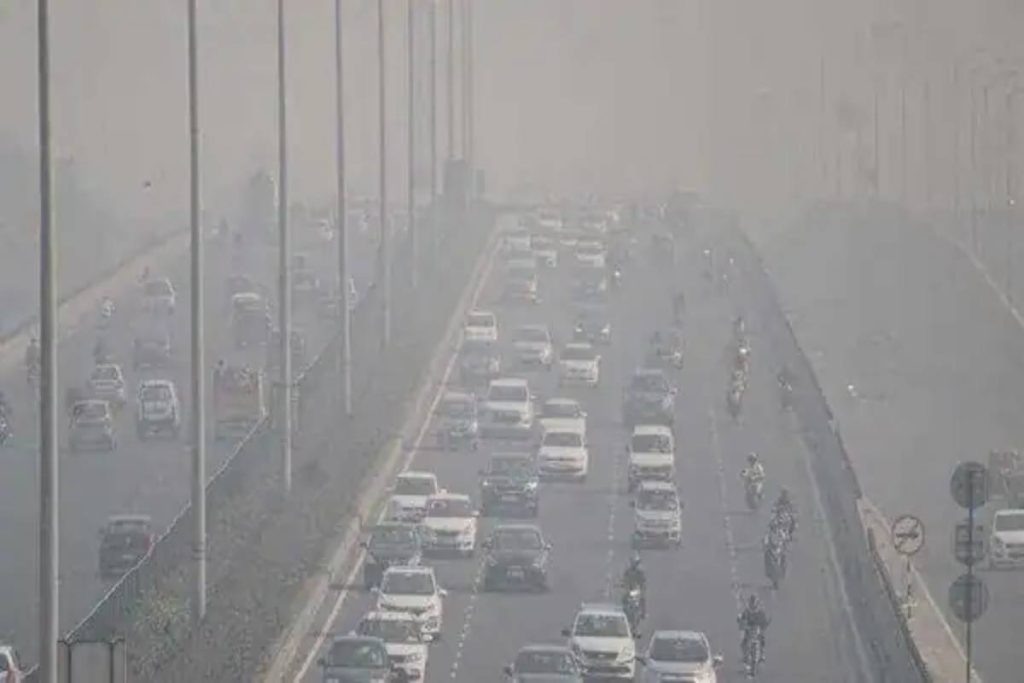
Delhi on Friday once again woke up to heavy smog and remained shrouded in a layer of haze, with air quality plunged into severe category in several parts of the national capital.

As per the Air Quality Index (AQI), the air quality was recorded in severe category at 405 in Bawana, 408 in Mundka, 404 in Jahangirpuri, and 412 in Shadipur.

The Central Pollution Control Board (CPCB) categorises air quality as good between 0-50, satisfactory between 51-100, moderate between 101-200, poor between 201-300, very poor between 301-400, and severe above 400.

On the one hand residents of Delhi are facing many difficulties due to high pollution levels, on the other hand the Graded Response Action Plan (GRAP)-IV rules which are still in place have increased their plight. Residents are facing significant hardships as daily commute has become increasingly challenging, affecting personal and professional life across the city.

Speaking to Tehelka.com, Devendra Khushwaha, Advocate, Delhi High Court said that restrictions under GRAP IV are physically and mentally exhausting.

“The combination of restricted vehicle movement, overcrowded public transport, and hazardous air quality has made commuting under GRAP IV not only inconvenient but also physically and mentally exhausting. Additionally, Delivery and logistics services are also disrupted and restrictions on private vehicles, buses, causing delays and price surge,” he said.

Another resident who is an Entrepreneur in Delhi said that overcrowding metros and buses are contributing to stress and anxiety for common man.

“The implementation of GRAP IV does not appear to have a significant impact at this time. It is, however, exacerbating the difficulties faced by daily commuters, including myself. The overcrowding on buses, metros, and auto rickshaws is leading to delays and contributing to heightened stress and anxiety among the commuting public,” Prateek Tiwari, an Entrepreneur said.

Pooja, who is working in a multinational company and has to commute daily from Delhi to Gurugram, said that the condition of air quality despite GRAP IV in place, can have detrimental effects on mental and physical health, making it imperative to find solutions that address the wellbeing of all commuters.

“As a woman working in an MNC, I am increasingly concerned about the health implications of the current situation following the implementation of GRAP IV. While it was intended to improve environmental conditions, the result has only intensified the struggles of daily commuters like myself. These conditions can have detrimental effects on our mental and physical health, making it imperative to find solutions that address the wellbeing of all commuters,” she said.

Meanwhile, several parts of Delhi also recorded air quality under a very poor category.  The AQI recorded 377 in Anand Vihar, 370 in Ashok Vihar, and 334 at Jawaharlal Nehru Stadium.

The Supreme Court on Thursday directed to continue all GRAP-IV measures except relating to schools in the national capital following the higher levels of air pollution, until next hearing on December 2. “We make it clear that all GRAP IV measures except the measures which are modified in respect of the schools will continue to operate till Monday. In the meantime, the Commission for Air Quality Management (CAQM) will hold a meeting and come out with the suggestion about moving from GRAP IV to GRAP III or GRAP II. We also make it clear that it is not necessary that all measures which are provided in GRAP IV should be dispensed with,” the court had said.

Has BJP trapped Congress on Muslim appeasement, again?

The first week of ongoing winter session of Parliament was a complete washout. The Congress and its allies were consistently in a ruckus creation mode on the issue of violence in Sambhal. 

While the pandemonium in Parliament continued over alleged violation of minority rights in Uttar Pradesh, the Congress and its allies conveniently forgot to raise the issue of minority rights violations in neighbouring Bangladesh. There was a clear delay in Congress’ reaction on Bangladesh violence. It took the grand old party over three days to come out with a statement on the issue. 

This despite the fact that the Ministry of External Affairs had issued stern statements on the issue of ongoing violence against Hindus of Bangladesh. 

Instead of backing the Indian government immediately, the Congress leadership seems to have reacted to the emotive matter as an afterthought. 

The delay in reaction to attacks against Hindus in Bangladesh and continued ruckus in Parliament on Sambhal violence ensured that the Congress got itself trapped again in the minority appeasement allegations. 

The Bharatiya Janata Party has repeatedly alleged that the Congress only worries about minorities when the affected side is Muslim, and not other communities. 

The delay by the Congress also ensured that it created a doubt amongst its supporters regarding reclaiming the legacy of the then Prime Minister Indira Gandhi, who was instrumental in the creation of Bangladesh in 1971. The uninspiring reaction of Congress over recent developments in the neighborhood, gives its chief opponent an opportunity to fill in the gap left by the grand old party. 

Bangladesh has been and will always be an emotional issue for India, considering the fact that our governments have showcased its creation as a failure of two nation theory on which the country was partitioned in 1947. All national political parties will need to clear their stand on the issue of violence against Hindus. And Congress would do itself a favour by strongly aligning with the Indian government’s stand on the matter. 

BJP, allies likely to replicate Ladki Bahin Yojana in more states, target women voters

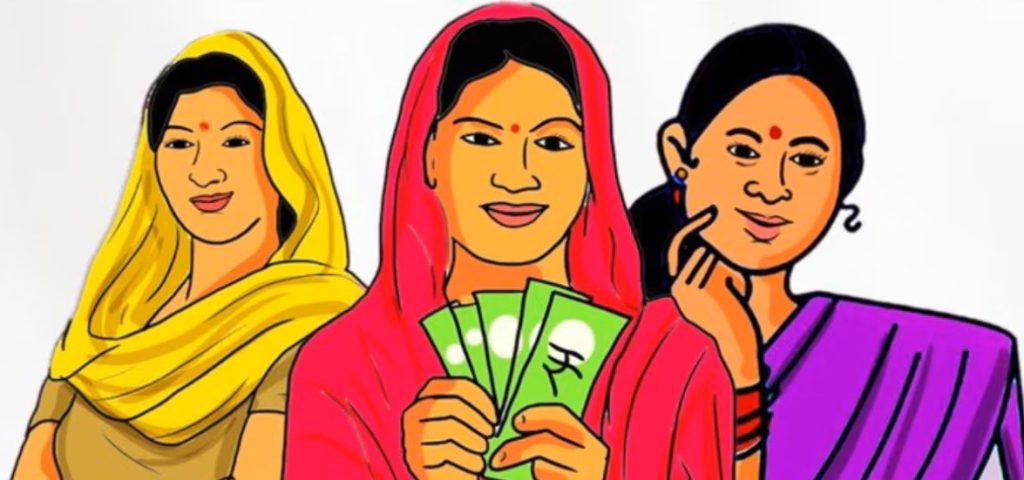
New Delhi : The Bharatiya Janata Party and its National Democratic Alliance partners are considering implementing the Ladki Bahin Yojana-like direct benefit transfer scheme in other states being governed by the saffron alliance, after the resounding success of the policy in the recent Maharashtra Assembly polls.

After the success of Ladki Bahin Yojana in securing an unprecedented victory for the MahaYuti, it is understood that several other NDA governments across the country are likely to replicate the policy. 

Sources stated that the top leadership in NDA is actively considering recreating the women centric policy in other states under its rule. “The Uttar Pradesh government is understood to be studying the impact of possible implementation of the women centric welfare measure in the state,” sources said.        

It is believed that apart from Uttar Pradesh, other states including Uttarakhand, Chhattisgarh, Rajasthan and Odisha governments are also soon likely to launch impact assessment on the implications of the welfare policy in their respective regions.

The scheme targeted women voters and aimed to secure their allegiance for the saffron alliance. The success of women centric welfare measures has ensured that other state governments are reviewing the scheme’s impact in their respective regions. It is believed that these governments are likely to implement the direct benefit transfer scheme, aimed at women, over the next few months in a phased manner.  

Ahead of the crucial Maharashtra Assembly polls, the ruling MahaYuti had wooed women voters with a direct benefit transfer scheme named Mukhyamantri Ladki Bahin Yojana. It is believed that the scheme was implemented after the alliance’s poor show in the 2024 Lok Sabha polls. The MahaYuti also promised to increase the monthly dole from Rs 1,500 at present to Rs 2,100 on returning to power, an act that has seemingly created a strong support base amongst the women voters of the state.

The Ladki Bahin Yojana, introduced in July 2024, offers monthly stipends of Rs 1,500 to women between the ages of 18 and 65 years who are facing financial hardships. Notably, the government had already disbursed the funds for October and November in advance during the month of October.

Speaking to Tehelka.com, Maharashtra Deputy Chief Minister Ajit Pawar said former Madhya Pradesh Chief Minister Shivraj Singh Chouhan had briefed the state government about the Ladli Behna Yojna ahead of state assembly polls. “Chouhan had told us that this scheme had enabled BJP to make a direct connection with the women voters. Which later enabled them to beat heavy anti-incumbency and return to power,” Pawar said.  

The senior Nationalist Congress Party leader acknowledged that successful implementation of Ladki Bahin Yojana was one of the reasons for the impressive performance of MahaYuti in the Assembly polls.

The MahaYuti alliance, comprising the BJP, Shiv Sena, and NCP, secured an unprecedented 235 seats in the 288 member Maharashtra Assembly polls.

The women centric scheme’s implementation was pioneered by Shivraj Singh Chouhan’s Madhya Pradesh government. Under the Ladli Behna Yojna the Madhya Pradesh government currently transfers Rs 1,250 per month to bank accounts of women beneficiaries of this scheme, which was launched ahead of last year’s assembly elections. The incumbent Mohan Yadav government is now understood to be considering increasing the monthly installment under the scheme. 

Delhi BJP to campaign against AAP Govt over Ayushman Bharat implementation

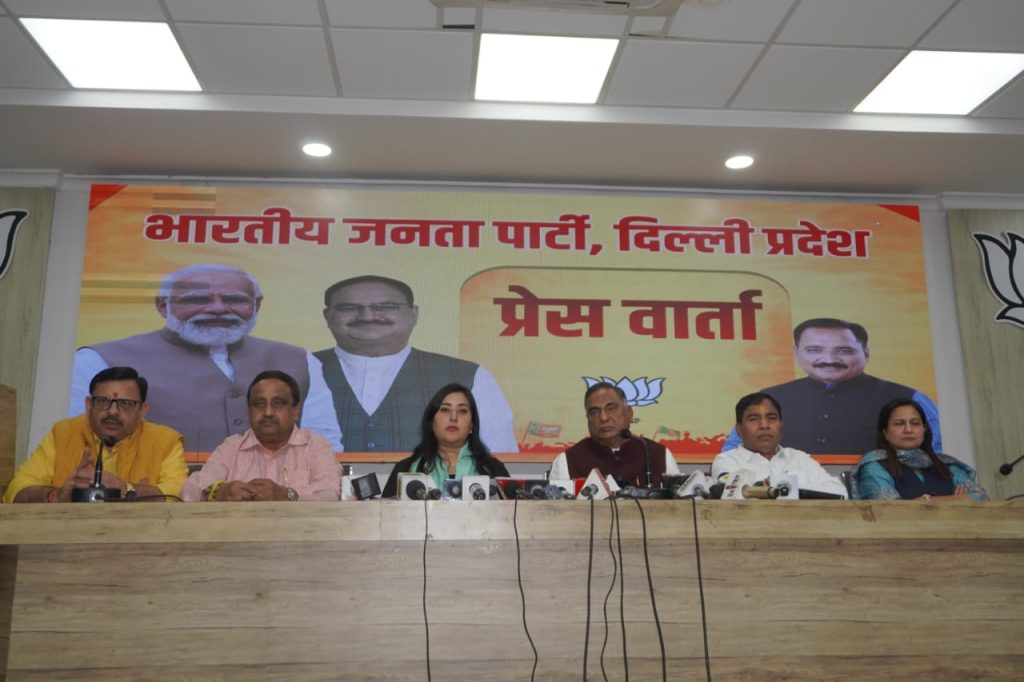
Ahead of Delhi assembly polls, the Bharatiya Janata Party (BJP) is all set to launch a campaign to make senior citizen of the national capital aware of central government’ Ayushman Bharat Pradhan Mantri Jan Arogya Yojana (AB-PMJAY) which is not being implemented by the Aam Aadmi Party regime.

The Delhi BJP is set to launch a signature and awareness campaign on December 1. South Delhi MP Ramvir Singh Bidhuri alleged that AAP conveyer Arvind Kejriwal has stopped the implementation of  Ayushman Bharat scheme, denying benefits to senior citizens of the national capital.

He said, “Not once but many times he has said in the Delhi Assembly that he will not let this be implemented in Delhi. All the seven MPs of Delhi have approached the High Court regarding this.”

“A door to door signature campaign will be run from December 1 in which signatures will be taken from all senior citizens who fall under the scheme criteria. We want to give information about this Ayushman Yojana to all,” he added.

Earlier today, the Delhi High Court issued a notice to Delhi Government regarding the implementation of the AB-PMJAY in the national capital.

This comes after the seven MPs from BJP filed a Public Interest Litigation (PIL) seeking directions for the implementation of the scheme in Delhi.

Chief Justice Manmohan linked the case with a similar ongoing matter in terms of healthcare infrastructure in Delhi and scheduled the next hearing for December 11.

Meanwhile, BJP MP Bansuri Swaraj quoted union Health Minister Mansukh Mandaviya and said that if AAP signs MoU to implement the scheme in Delhi, it will incur the benefit of Rs. 2,406.77 crore.

“The central government is ready to give Rs 47 crore to Delhi every year and is repeatedly saying that it should be implemented in Delhi so that 30 lakh people can be benefited with this scheme,” she added.

She further said that during the elections, all of us MPs had said in our manifestos that we will not let the people of Delhi be deprived of the AB-PMJAY and for this we will not let the people of Delhi be sacrificed.

On Octorber 29, 2024 Prime Minister Narednra Modi launched the expanded AB-PMJAY scheme which will apply to all aged 70 and above irrespective of their socio-economic status. The scheme will cover benefits of Rs 5 lakh per year in empanelled hospitals in India.

The expansion was part of the health projects worth Rs 12,850 crore launched by PM Modi, and is expected to benefit 60 million senior citizens. 

Under the expanded scope of the scheme, eligible senior citizens, who belong to families already covered under AB-PMJAY, will get an additional top-up cover up to Rs 5 lakh per year for themselves, over the Rs 5 lakh already given to the family.

Cold wave grips J&K and Ladakh; Nyoma freezes at -14.2°C

A severe cold wave continues to sweep across Jammu and Kashmir and Ladakh, with Nyoma in Ladakh recording a bone-chilling -14.2°C, according to the Meteorological Department (MeT). South Kashmir’s Shopian emerged as the coldest area in the valley, registering -5.5°C.

Sub-zero temperatures were reported across the region, including Pahalgam at -5.0°C and Srinagar at -2.1°C, marking the coldest night of the season in the summer capital. Other locations in South Kashmir, such as Anantnag (-5.1°C) and Pulwama (-4.8°C), also recorded freezing conditions, while Kulgam remained steady at 0°C for the third consecutive day.

In North Kashmir, Kupwara saw a low of -2.3°C, with Bandipora and Baramulla at -3.3°C and -3.2°C, respectively. Central Kashmir towns like Budgam (-3.6°C) and Ganderbal (-2.1°C) were similarly affected by the cold.

The Jammu division experienced comparatively milder temperatures, with Bhaderwah recording the lowest at 1.2°C. Jammu city reported 10.1°C, while Katra and Kathua recorded 9.2°C and 10.2°C, respectively.

In Ladakh, besides Nyoma’s extreme low, Stakna registered -13.4°C, Tangste -12.8°C, and Drass -12.2°C. Leh and Kargil recorded -8.8°C and -8.3°C, respectively.

The MeT department has predicted clear skies for Thursday but expects moderate rain in parts of the Kashmir Valley between November 29 and December 3. Isolated rainfall is also forecasted for Jammu on December 2 and 3.

Priyanka Gandhi Vadra takes oath as Lok Sabha MP

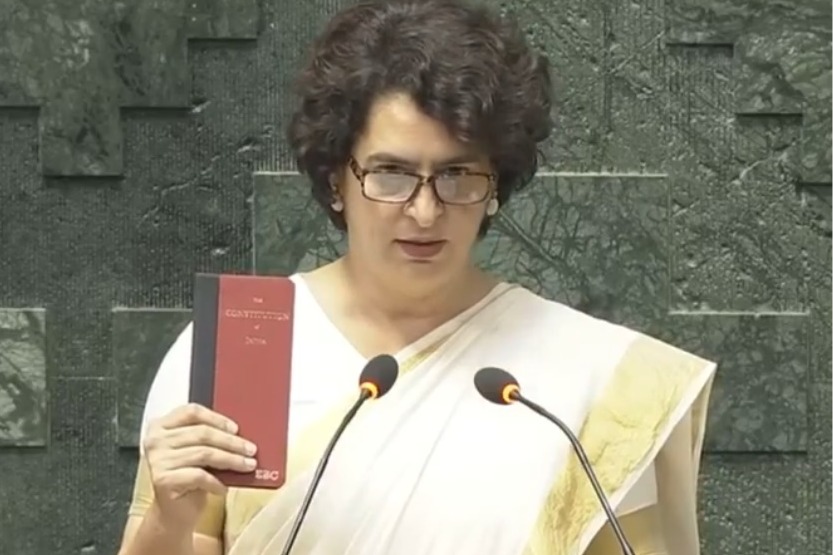
New Delhi : It is another milestone for the Nehru-Gandhi family as Priyanka Gandhi Vadra took the oath of affirmation as a member in the Lok Sabha on Thursday.

Wearing an off-white saree with a golden border and holding the Constitution booklet, which has become a familiar sight in this Parliament session after Rahul Gandhi and other MPs of the INDIA bloc started carrying it, Priyanka Gandhi was greeted with loud cheers and chants of Bharat Jodo as she took the oath.

Earlier, she was accompanied by her mother Sonia Gandhi, brother Rahul Gandhi and Congress MPs when she reached the Parliament House, saying, “I am very happy today”.

Her resounding victory in the Wayanad bypoll is not only her successful electoral debut but another big achievement for the family as for the first time, three members of the Nehru-Gandhi family are simultaneously in the Parliament.

Her brother Rahul Gandhi – the former Wayanad MP – is present as the MP from the family through Rae Bareli, which he chose to retain after winning both in the Lok Sabha elections this year. Their mother Sonia Gandhi is a member of the Rajya Sabha.

This marks a significant step for Priyanka Gandhi, aligning her political journey with her mother Sonia Gandhi and brother Rahul Gandhi, both pivotal figures in the Congress party.

The bypoll in Wayanad was necessitated after Rahul Gandhi vacated the seat. The only talking point during the campaign was whether Priyanka Gandhi could surpass her brother’s impressive 2019 victory margin of 4.30 lakh votes. Although she fell slightly short, she still achieved a remarkable win, securing the seat with a margin of over 4.10 lakh votes. Her dynamic campaign, focused on grassroots issues, underscored her growing influence within the Congress.

Her debut into the electoral fray comes 20 years after she campaigned for Sonia Gandhi in Rae Bareli and Rahul Gandhi in Amethi during the 2004 Lok Sabha elections.

Priyanka Gandhi initially stayed away from direct involvement in politics, focusing on her family and personal life. However, her deep bond with the Congress party saw her finally take the political plunge. And she soon became a key figure in the party’s campaigns.

Though she had been actively campaigning for her mother and brother, it wasn’t until 2019 that she took on a formal role when she was appointed party General Secretary for Uttar Pradesh. However, her stint as UP in-charge did not yield any positive result and the party has not been able to even sustain itself independently in the state.

Priyanka Gandhi’s parliamentary debut comes at a critical juncture for Congress, as it grapples with the political dominance of Prime Minister Narendra Modi.

However, her presence in the Lok Sabha adds a new dimension to the party’s strategy, particularly in the South.

Critics may reignite debates over dynastic politics, but her supporters highlight her strong public connect and articulate advocacy of grassroots issues. Her entry signals a renewed hope for Congress in regions where its campaigns have recently shown promise. For Wayanad, Priyanka Gandhi’s victory is more than a win; it symbolizes a fresh opportunity to bolster Congress’ position in the South, amplifying her political journey on a national stage.

JMM raises doubts on EVMs, claims party would have got more seats through ballot papers

Ranchi : The Jharkhand Mukti Morcha (JMM) has stirred a debate over the credibility of Electronic Voting Machines (EVMs), claiming that elections conducted via ballot papers would have resulted in more seats for the INDIA bloc, which would have got 75 out of 81 seats in Jharkhand.

The party made this assertion in a post on its official handle on the social media platform X, which was also shared by Acting Chief Minister Hemant Soren.

In the post, the JMM stated: “There is immense anger among the people of Jharkhand against the 11 years of BJP’s dictatorial rule, which the BJP fails to grasp. If they wish to regain Jharkhand’s trust, they should first return the Rs 1.36 lakh crore dues owed to the people of this state.”

In the recent state elections, the JMM-Congress-RJD-CPI(ML) alliance secured a historic victory, winning 56 seats — 34 by the JMM, 16 by the Congress, 4 by the RJD, and 2 by the CPI-ML-L.

This marks a record-breaking performance by any coalition in Jharkhand’s 24-year history.

Despite this success, Hemant Soren and other JMM leaders have consistently expressed concerns over the reliability of EVMs, a sentiment echoed by Congress leaders.

During the campaign, JMM General Secretary and spokesperson Supriyo Bhattacharya had highlighted instances of suspected EVM tampering, mentioning reports of EVM units maintaining 99 per cent battery levels in the Haryana elections, which he suggested was suspicious.

Congress President Mallikarjun Kharge had similarly called for the reintroduction of ballot papers, labelling EVMs as “completely unreliable.” He also announced plans for Rahul Gandhi to lead a “Ballot Paper Yatra” across the country to push for this demand. The JMM has now aligned itself with this call, intensifying the debate on EVM credibility and the election process in India.

Just a day ago, Maharashtra opposition bloc Maha Vikas Aghadi (MVA), which was routed in the November 20 Assembly elections securing just 48 seats in a 288-member House, also clamoured for an end to Electronic Voting Machines and a return to the traditional ballot paper polling in future elections.

Delhi’s air quality deteriorates, AQI in ‘very poor’ category

New Delhi : The air quality in Delhi remains a grave concern as the Air Quality Index (AQI) was recorded at 304 in the “very poor” category on Thursday at 6 a.m., according to data from the Central Pollution Control Board (CPCB).

While a slight improvement was observed earlier in the week when AQI fell to the “poor” category on Tuesday, pollution levels escalated again by Wednesday and have continued to remain critical.

Several areas in the national capital reported air quality in the “severe” range, further exacerbating the situation.

As per CPCB data, Anand Vihar recorded an AQI of 357, Ashok Vihar 318, Bawana 341, Burari Crossing 320, Jahangirpuri 354, and Mundka 364. Other locations such as Dwarka Sector 8 (332), Narela (312), and Shadipur (351) also registered severe air pollution levels. Meanwhile, areas like Chandni Chowk (293), Lodhi Road (261), and Jawaharlal Nehru Stadium (267) remained in the “poor” to “very poor” categories.

In the National Capital Region (NCR), Faridabad recorded an AQI of 176 in the “moderate” category, while Gurugram (221), Greater Noida (227), Ghaziabad (260), and Noida (282) remained in the “poor” category. The persistent smog engulfing the Delhi-NCR region has led to reduced visibility and increased health risks.

According to CPCB, an AQI between 0 and 50 is considered ‘good’, 51-100 ‘satisfactory’, 101-200 ‘moderate’, 201-300 ‘poor’, 301-400 ‘very poor’, 401-450 ‘severe’, and above 450 ‘severe plus’, as per the CPCB.

In response to the worsening air quality, the Supreme Court on Monday refused to ease restrictions imposed under Stage 4 of the Graded Response Action Plan (GRAP), which aims to reduce pollution levels. Key measures include banning the entry of non-essential trucks, except those carrying essential goods or running on cleaner fuels such as LNG, CNG, BS-VI diesel, or electricity. Construction activities on public infrastructure projects have also been suspended to curb dust pollution.

Authorities have advised residents to minimise outdoor activities and take preventive measures to safeguard their health.

The alarming pollution levels underline the urgent need for sustainable and effective pollution control initiatives to combat the ongoing crisis in the region.

It’s a political conspiracy : Bajrang Punia reacts to the four-year ban on him by NADA

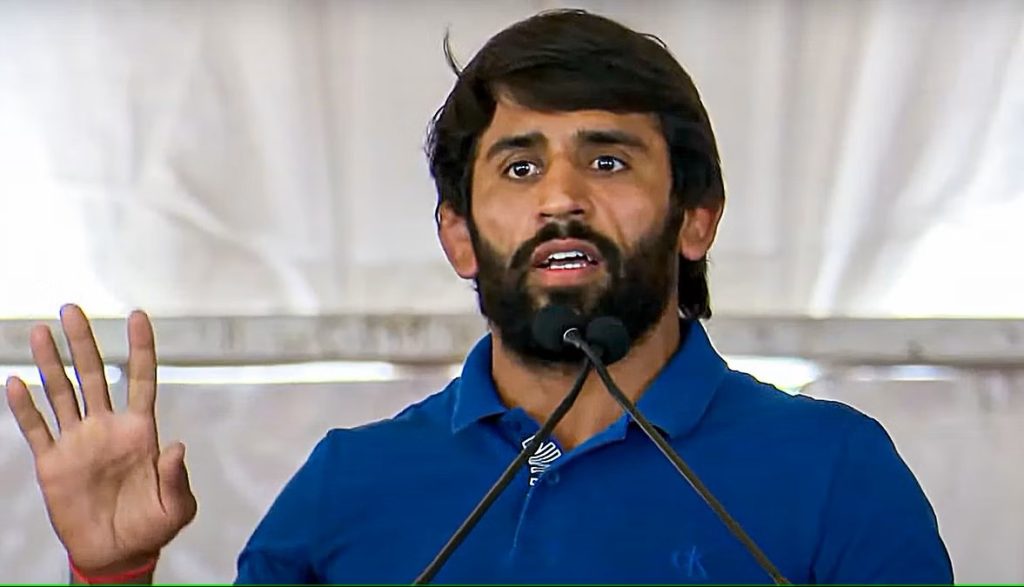
New Delhi : Tokyo Olympic Games bronze medallist wrestler Bajrang Punia has said that the four-year ban imposed on him by the National Anti-Doping Agency (NADA) is the result of “personal animosity and a political conspiracy” against him and accused the national doping body of “operating under the government’s influence.”

Punia has been suspended for four years for refusing to provide a urine sample for anti-doping testing during the trials for the national team in March 2024. Afterwards, the United World Wrestling (UWW) has also put the World and Olympic medallist wrestler under suspension until December 31, 2024.

“This four-year ban is the result of personal animosity and a political conspiracy against me. This action has been taken as revenge for the movement we led in support of women wrestlers. In that movement, we raised our voices against injustice and exploitation, ” Punia wrote in a long post on X.

“I want to make it clear that I never refused to undergo a doping test. When the NADA team came to test me, the doping kit they had was expired. This was a serious lapse, and I simply requested that the test be conducted with a valid and certified kit. This was essential for ensuring both my health and the security of my career. However, this issue was deliberately used as a weapon against me, ” he added.

The 30-year-old, who was one of the leading faces of the wrestlers’ protest against the then Wrestling Federation of India (WFI) president Brij Bhushan Sharan Singh, further accused the WFI and the ruling government of conspiring against him for his involvement in the protests against its former WFI chief.

“The BJP government and the federation have conspired to trap me and destroy my career. This decision is not fair but rather an attempt to silence me and other athletes like me, ” he wrote.

Earlier this year in July, Punia had also accused NADA of targeting him for pointing out flaws in their system. “NADA’s actions have proven that they have no regard for impartiality. Such institutions are operating entirely under the government’s influence. The real motive behind this ban is to silence me and stop me from raising my voice against injustice.

“Let me make it clear that even if I am suspended for life, I will not stop raising my voice against injustice. This fight is not just mine; it belongs to every athlete who has been silenced by the system. I will appeal against this decision and continue to fight for my rights until my last breath, ” the post concluded.

Bajrang Punia is one of India’s most decorated wrestlers with multiple medals in the World Championships, Asian Games, Commonwealth Games, Asian Championships, and Commonwealth Championships in a decade-long international career starting with the 2013 Asian Championships in New Delhi, when he came into the limelight. He has been awarded the Arjuna Award (2015), Khel Ratna, and Padma Shri in 2019.

In September this year, Punia joined the Indian National Congress ahead of the Haryana Assembly polls along with fellow Olympian Vinesh Phogat, who contested an election from the Jhulana seat and won.

Wayanad Congress leaders give election certificate to Priyanka Gandhi

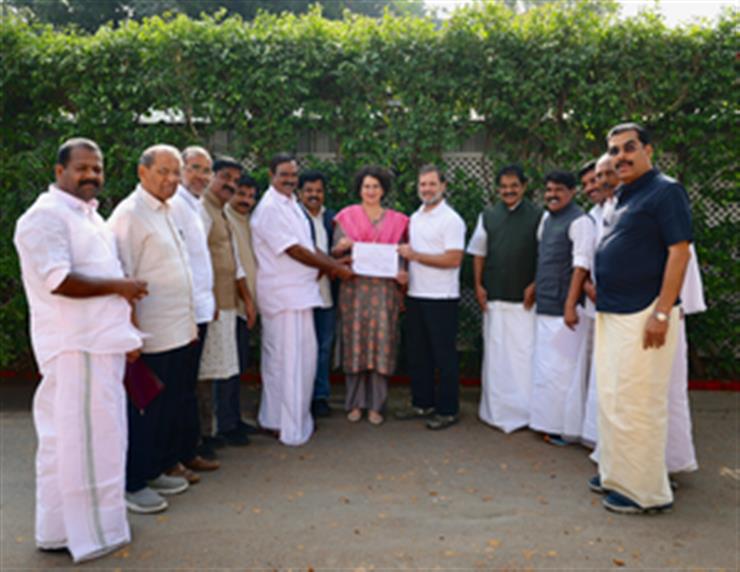
New Delhi: Congress General Secretary Priyanka Gandhi, having won her maiden Lok Sabha election from Wayanad constituency, received an election certificate from the grand old party’s leaders from her parliamentary constituency, who came calling on the MP at her Delhi residence on Wednesday.

The delegation of Congress leaders from the Wayanad Lok Sabha seat handed over the certificate to Priyanka Gandhi, in the presence of Rahul Gandhi and extended their best wishes on her maiden stint in Parliament.

The Gandhi scion also reciprocated their sweet gesture by expressing her deep appreciation for their unwavering efforts and endeavour in securing a giant victory for her in the Lok Sabha elections.

The photos of Priyanka’s meeting with the Wayanad Congress leaders were shared by the party’s social media handles.

In the pictures, Leader of Opposition in the Lok Sabha, Rahul Gandhi could also be seen treating his sister Priyanka to sweets, on her maiden victory.

“During the meeting, Priyanka Gandhi engaged in meaningful discussions with the leaders about the future course of action, focussing on addressing local concerns and working collectively for the development and welfare of Wayanad, ” the Congress said on X.

Priyanka also asked the local party leaders to convey her heartfelt gratitude to the people of Wayanad for their overwhelming support and trust.

According to reports, Priyanka Gandhi is likely to take oath as Lok Sabha member on Thursday.

Priyanka Gandhi, in her election debut from the Wayanad LS seat, won the bypolls with an overwhelming margin of over 4 lakh votes, exceeding her brother Rahul Gandhi’s victory margin in the 2024 Lok Sabha polls.

The 52-year-old Congress leader secured victory with a margin of 4, 10, 931 votes over her closest rival, Sathyan Mokeri of the CPI-M.

She polled over 6 lakh votes while her closest Left contestant got over 2 lakh votes and the BJP candidate Navya Haridas finished third with a little over 1 lakh votes.

MOST POPULAR

HOT NEWS