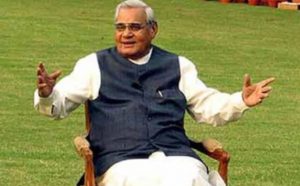
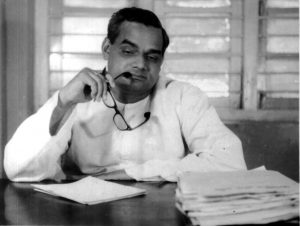
Former prime minister Atal Bihari Vajpayee was a great statesman and a true democrat who always had a heart for working classes and even stood with journalists in their struggle against their mighty and powerful management. He was a man of great convictions and always lived to his ideals. He was member of parliament from Lucknow and the management of Times group closed down part of its establishment of Hindi daily ‘Navbharat Times’ (Lucknow Edition) without any prior permission of the state government in June 1993. It rendered 92 newspaper employees including 49 journalist jobless because Times group refused to bear expenditure as per recommendations of the wage board.
The employees were demonstrating against the decision of the management and were sitting on a round the clock Dharna outside its office. Some of the journalist friends informed Atalji about this and he was so hurt that he could not resist himself to join us on Dharna. He sat with us couple of hours to protest the decision and promised all his support to the struggling journalist and employees. He tried to persuade the top management of that time but could not succeed due to their adamancy to crush the movement. Later the battle converted into lengthy litigation.
Atalji never forgot the plight of struggling journalists and used to help some of us at personal level. When he became prime minister the employees won their case in the high court and management went to Supreme Court. Our leader met him in Delhi and expressed inability to contest due to poor resources. He showered his magnanimity and spoke to his Solicitor General Harish Salve and Additional Solicitor General R.N.Trivedi to stand for us before the court. Later he requested Fali Nariman to appear for the employees without charging any fees. His personal staff including Shiv Kumar Mishra and R.P.Singh, IAS knew his sympathies for Lucknow journalists.
I remember one of his press conferences in Raj Bhawan where he broke all the security protocols and closely sat among us. He talked very intimately with journalists. Unlike todays arrogance in political leaders he used to be very humble and polite and very witty. We were just stunned when a just fresher lady journalist shot a question at him to tell, “Are you a bachelor or a virgin?” He frankly and smilingly replied, “Though I am unmarried but not a virgin.” He was a totally transparent and clean hearted person unlike many hypocrite politicos and openly acknowledged his live-in relationship.
Vajpayee worked as a journalist for varies publications including Rashtradharma (a Hindi monthly), headed by Deendayal Upadhyaya, Panchjanya (a Hindi weekly and mouthpiece of RSS) and the dailies Swadesh and Veer Arjun. He had also very close association with veteran journalists like Vachnesh Tripathi and Dr Nand Kishore Trikha. Vachneshji use to prepare him to deliver public speeches. The soul of a journalist in him had always dominated his thinking process that outshine him sometimes at divergence from party line and allowed to attain the stature of an independent and dispassionate thinker within and outside his party as a liberal leader. Perhaps this unique distinction allowed him to manage a coalition government with 23 political parties having divergent ideological streams.
Lucknow has always been close to his heart as he enjoyed tremendous confidence of the people. He was easily accessible to everybody and his closest aide Shiv Kumar and former minister Lalji Tandon proved to be his troubleshooters for addressing civic grievances of peoples of his constituency. The journalists of his times enjoyed special rapport with him as he used to identify them even in the crowded gatherings of Delhi. The people of Lucknow deeply mourned the death of a true and trusted leader who tirelessly shaped the overall development scenario of Lucknow putting it on the international map.
The Prime Minister, Shri Narendra Modi with the business leaders and captains of industry, for a discussion on issues such as economic growth, infrastructure development, policy initiatives, investment, innovation and job creation, in Mumbai on June 26, 2018.
The prime minister does not miss an opportunity to vehemently support his own point of view. The latest was his open defence for industrialists and businessmen, which attracted the Opposition’s ire.
Despite Narendra Modi led government receiving flak after fugitives like Vijay Mallya, Nirav Modi and Choksi fled the country, its staunch support for the business community has taken even the opposition by surprise. A recent investment meet provided the right venue for the prime minister to assert that there is nothing wrong in siding with businessmen. Obviously its timing was well chosen and calculated in build up to the 2019 general election. No opposition party could afford to say a word against the inflow of investment announced at the meet.
The launch of over 80 investment projects worth 60,000 crore and the presence of industrialists such as Kumar Mangalam Birla and the Gautam Adani, explained that Modi meant business. Ostensibly, PM Modi turned a business event into a political opportunity to riposte Congress president Rahul Gandhi’s accusation that his policies helped his capitalist friends. In one shot, he tried to dismiss the Congress’ allegation that the Rafale deal with France was non-transparent and would benefit one industrialist.
The economy has always been central to any political system and Modi government’s support to industry is welcome. Indeed, Prime Minister Narendra Modi went against the accepted political thought of always chiding businessmen and traders and just singing beans in praise of farmers, dalits and women being the vote bank politics.
Addressing a gathering of industrialists, Modi claimed that like labourers, farmers and bankers, businessmen were key to development. Referring to Mahatma Gandhi, who was publicly associated with big Indian industrialists, he said, “When one’s conscience is clear and intention is noble, you don’t get tainted by standing with anybody.”
With this, the spotlight is on how India perceives big businessmen because the scams driven by crony capitalism paint big businessmen as morally corrupt and untouchable. This is why it has been impossible for political leaders and political parties to be both pro-poor and pro-business. A psychosis has been created in public minds and perception that all businessmen were corrupt. There is not enough trust in the private sector because of scams and unethical practices attached with big businessmen in the past. The question is will Modi’s siding with big businessmen prove to be a gamble worth the risk? Will it change the perception how politics thinks about India Inc? Of course the talks of crony capitalism had been chosen by Congress President Rahul Gandhi on umpteenth occasions to target Modi and the NDA government at the Centre.
With the Opposition often accusing Modi government of being a “suit-boot ki sarkaar” the stand taken by the Prime Minister in favour of businessmen was well thought of. He said businessmen and industrialists played a crucial a role in nation development as a labourer, a farmer or an artisan. It was wrong to call them “chor-lutere (thieves)”, he added.
Pointing to former Rajya Sabha MP Amar Singh, who was among the guests, Modi said Singh would know all about it “Public mein milna nahin, parde ke peeche sab kuchch karna hai. Woh dartey rahtey hain . Modi said that those looking for issues to criticise him should note that whatever mistake they find dates back to 70 years ago not from his four years. “I have only four years in my account and you had 70 years.”
Referring to the ceremony as “a record-breaking ceremony instead of a ground-breaking ceremony”, the PM Modi said India had become the world’s second largest producer of cellphones, and that UP was leading this “manufacturing revolution.”
Modi attacked Rahul Gandhi for allegedly denigrating Indian businessmen, seeking to turn on its head the entire argument of the Congress party, which has been claiming that not everything is above board on the recent purchase of Rafale aircraft from France. Speaking at the launch of various development projects, Modi said industrialists too, like labourers, farmers and bankers, play an important role in nation-building and that it was wrong to hold all of them morally deficient. “Should we insult them? Should we call them thieves and burglars?,” he said, before adding, “But yes, one indulges in wrongdoing, he either has to flee the country or has to spend his life inside a jail.”
In a veiled attack on the Congress, the principal opposition party, Modi said he was not among those who feared standing beside industrialists. “When one’s conscience is clear and intention is noble, you don’t get tainted by standing with anybody. Those people have such fears who don’t want to meet in public but will do everything behind the scene,” he said.
The Congress party was quick to respond. “Congress is not against industrialists or capitalists. But it is against crony capitalists. The suit boot ki sarkaar reflects crony capitalism. PM gave a long speech on development. But the question is that if development is happening in the country then why is economy in a poor state and why are farmers selling their produce below MSP (minimum support price)?” Manish Tewari, former Union minister and Congress spokesperson told reporters.
The PM’s response is significant as it comes in the backdrop of Congress party trying to link the National Democratic Alliance to big businessmen. In early 2015, Gandhi had alleged that Modi was leading a suit boot ki sarkaar (pro-rich government). To be sure, the NDA has on several occasions clarified that its government favoured businessmen as they are a key economic agent. Indeed Prime Minister Narendra Modi has very articulately taken the battle to the opposition camp on an issue where earlier he was finding himself and his government on the defensive. The event was also attended by industry bigwigs such as Kumar Mangalam Birla, chairman of the Aditya Birla group; Gautam Adani, chairman of the Adani group; Subhash Chandra, chairman of the Essel group and a Rajya Sabha MP; and Sanjeev Puri, MD, ITC. Top executives of business houses like Walmart were also present.
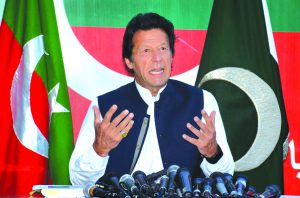
What the army in Pakistan has been aspiring for after then Prime Minister Nawaz Sharif was found to be too inconvenient to be allowed to run the government because of his independent style of functioning, particularly in matters of foreign and defence policies, has become a reality. Nawaz, who had launched a drive to keep his country’s armed forces away from the political power structure with a view to allowing democracy to strengthen its roots, has been shown the door with little chance of revival of his political career.
In this task, the army got considerable backing from the judiciary, which unseated Nawaz from the powerful position he had acquired through the democratic process. The PML(N) leader, barred from having any public office for life, has to languish in jail for 10 years with his charismatic daughter, Maryam, too, having been imprisoned by Pakistan’s anti-graft body, the National Accountability Bureau, for seven years and this may prevent her from throwing any serious challenge to the army-backed Pakistan Tehreek-e-Insaaf (PTI) government headed by cricketer-turned-politician Imran Khan.
However, what is more interesting is that the new Prime Minister is likely to attempt to do what Nawaz had been preparing to accomplish, but without taking the all-powerful army into confidence. Nawaz was believed to be looking for ways to promote India-Pakistan trade relations, and India would have welcomed it. This is what Imran Khan may also do as he has been indicating despite talking of Kashmir. Such a policy shift was not tolerable by the army earlier, whereas this may be welcome now because the people of Pakistan have hinted that they want their country to accord primacy to economic issues.
A new environment involving India and Pakistan is likely to be created with Prime Minister Narendra Modi having made a phone call to Imran Khan to greet him on his victory in the elections and Imran inviting his friends of the cricketing days like Sunil Gavaskar, Kapil Dev and Navjot Singh Sidhu to his swearing-in ceremony as Prime Minister.
With the BJP-led NDA government in India and the formation of an army-supported ministry in Islamabad is an ideal situation to go ahead with an agenda for improving India-Pakistan relations. Though India is soon going to get into an election mode, that should not make much of a difference. Developing stakes in bilateral trade suits both countries. This approach will help the Pakistan army too to acquire a people-friendly face, which it desperately needs after its past operations harmed tribal interests and clandestine moves against Nawaz Sharif.
Though nobody can say with certainty that the Imran Khan regime in Islamabad has this point in its agenda, he gave sufficient hints in his victory speech for trying to improve relations with India — “If India takes one step forward Pakistan will take two steps” to achieve this laudable objective. Of course, only time will tell whether Imran behaves as he has promised.
In any case, most people in Pakistan want their government to focus on spurring economic activity so that there is an improvement in their quality of life. This is being seen as one of the major factors behind the extremist-led parties and others opposed to normalisation of relations with India getting a good dressing-down from the electorate in Pakistan’s July 25 general elections.
The vote share of these parties, all put together, is less than 9 per cent whereas in the 2002 general elections, the Muttahida Majlis-e-Amal (MMA), an impressive conglomerate of mainstream religious parties, secured around 11 per cent votes. The only extremist party which has shown remarkable achievement is the Tehreek Labbaik Pakistan (TLP), the fifth largest group in terms of vote share. The TLP is slightly behind the MMA. The TLP has its support base among the Barelvis, opposed to Wahabis and Salafis, and has emerged as the new favourite of those having a strong religious orientation because of its having eulogised then Punjab Governor Salman Taseer’s killer, Mumtaz Qadri, his own security guard, executed for the crime he had committed.
The position of religious parties is not as strong as it was in 2002 when they captured power in Khyber-Pakhtunkhwa (KP), a province dominated by Pashtu-speaking tribal people. The electorate this time has given these parties a humiliating treatment not only in KP but also in Punjab and Sindh. By rejecting these parties the voters have sent across the message that they are for positive politics with a view to promoting economic growth and peace so that joblessness disappears not only from Pakistan but also from the rest of South Asia.
The people in general would, perhaps, prefer their leaders to give a serious thought to the cause of banishing poverty from the region, home to a large number of the world’s poor.
The global financial crisis and other factors like the war in Afghanistan and the activities of extremists have impacted Pakistan’s growth considerably. As in the case of India, poverty in Pakistan has been more widespread in the rural areas than in the cities. Imran’s speeches show that he is conscious of the fact that this needs to be given top priority.
According to one estimate, poverty rose sharply in the rural areas in the 1990s and the gap in the incomes between urban and rural areas became more pronounced.
Khyber-Pakhtunkhwa, which now includes the Federally Administered Tribal Areas (FATA), has been one of the most backward regions of South Asia. Known for harbouring extremists and terrorists, the people there seem to have realised that they today need only peace and economic development so that there are more job opportunities for the ever growing unemployed population of youth. That is why they have pinned their hopes on the Imran Khan-led PTI.
The voters’ preferences indicate that people in every province are sick of destructive activities in the name of religion. There appears to be a strong desire among the people that the government in Islamabad as well as in the provinces should launch mainly growth-oriented programmes.
The people have tried the PPP, founded by the late Zulfikar Ali Bhutto, who projected himself as the messiah of the downtrodden, Nawaz Sharif’s Pakistan Muslim League, promoting itself as a well-wisher of trade and industry, and the MMA of the mainstream religious parties, and found their performance highly disappointing. They have now shown confidence in a comparatively new party to implement the promises it has made to the people — mainly to take care of people’s economic difficulties.
The success achieved by Imran Khan’s PTI in KP proves that exploiting people’s sentiments in the name of religion is no longer possible when there is a general cry for focusing on poverty-alleviation schemes. The following words of Imran must have gone down well with the electorate, “The biggest challenge we are facing is the economic crisis … we have never had such a huge fiscal deficit. All of this is because our economy is going down because of dysfunctional institutions.”
The new government’s efforts for a bailout package from the IMF may not bear fruit so easily as the US seems to have turned its back on Pakistan as a pressure tactic to eliminate terrorist outfits from that country. There is the possibility that the new government may ignore the US coercive method as countries like China, Russia and Saudi Arabia appear to be forthcoming to help Pakistan out of the economic quagmire in which it finds itself today. This factor may impact Islamabad’s India policy too.
The Prime Minister, Shri Narendra Modi greeting people, at the ramparts of Red Fort, on the occasion of 72nd Independence Day, in Delhi on August 15, 2018.
Prime Minister Narendra Modi’s fifth and last speech during his tenure on the 72nd anniversary of Independence Day was meant to be historic in the run-up to the
Lok Sabha elections 2019. Surprisingly, PM Modi’s speech didn’t weave the same magic this time as his deliverance was nothing more than a report card devoted to his governance. He has delivered five Independence Day speeches since 2014. Like every year, PM Modi addressed the countrymen from the ramparts of the Red Fort with a slogan of ‘reform, perform and transform’.
Sharing his vision of collective growth “team India” PM Modi emphasises: “When 125 crore countrymen become partners, then each and every citizen joins us in the progress of the country. When 125 crore dreams, 125 crore resolves, 125 crore efforts, move in the right direction to attain desired goals then nothing is unattainable.”
Besides a number of other aspirations, Modi assured the nation of “doubling the farmers’ income by the 75th year of Independence, housing for all, electrification for all villages, toilets for all, Kasmiriyat,” etc.
Knowing the criticality of 2019 general elections for the NDA, Modi’s speech continued with the attacks on previous government with the mention of “policy paralysis during the UPA rule.”
In 2014 general elections, the BJP under the leadership of Modi was swept to power at the Centre by a majority and formed the government by reviving the NDA. In his maiden speech in 2014, PM Modi presented himself as an “outsider” to power corridors of Delhi and claimed of having brought a fresh perspective and vision.
Corruption, policy paralysis, unemployment, jobless youth, atrocities on Dalits, non-governance, women’s plight. etc, which was his USP during his electoral campaigns before he rode the crest of power, delivered the main highlights of his maiden speech from the Red Fort in 2014, with added emphasis on sanitation.
Nevertheless, Modi’s fifth and last speech of his tenure as PM has failed to set an agenda like 2014 and seemed to be largely bound by the exigencies of the upcoming elections as he tried to give an account of achievements of the past 50 months. The bulk part of speech looked like a report card of his government, touching upon the achievement of flagship programmes laced with unverifiable facts and reiteration of pledges for various segments of the society with the avowed objective of projecting the scenario that his party’s return to power only could ensure redeeming of those pledges.
Having offered more than 120 new schemes, spending more time in foreign visits and addressing more than 426 election rallies in poll-bound states, PM Modi could spend little time in overviewing the sincere implementation of these schemes and evaluating their monitoring. He did not walk the talk on most of the issues. Foreign policy was almost missing from PM Modi’s last Independence Day speech. Bulk part of PM Modi’s speech was a repetition of what he has been saying for the past one year and there was nothing new, and as one expert calls it “appealing rhetoric.”
While dwelling on the issue of rape and the deterrent effect of death penalty and the general importance of the rule of law, there was no reference to recurring incidents of lynching and atrocities on Dalits which have become a major blot on law and order in many states. According to one expert, PM Modi’s repeated emphasis on his so-called “impatience” and “vision of new India” was perhaps designed to send the message that his “return” to power was inevitable to fulfil that vision.
Some of the highlights from Modi’s speech
SPACE MISSION 2022
India has resolved to send manned spacecraft to the space by 2022. India will be the fourth country to do this.
FARMING SECTOR
The government promises of “doubling farmer’s income by 75th year of Independence.” New avenues of organic farming, blue revolution, sweet revolution, solar farming have emerged on which the government plan to move ahead. In fisheries, India has emerged second largest country of the world. The export of honey has doubled. The focus on Solar farming can contribute to agriculture and at the same time earn money by sale of solar energy.
AYUSHMAN BHARAT
10 crore families will get health insurance benefits. Each family will get 5 lakh rupees health coverage annually.
TRIPLE TALAQ
Those who have not faced the Talaq are spending their lives under pressure. “But I want to assure my Muslim mothers, sisters and daughters that I will not stop till they get justice. I will fulfill your aspirations.”
BLACK MONEY
Mobilised 90,000 crore money to the Government Exchequer.
DIGITAL INDIA
Modi said that Digital India is now making inroads into villages. “As a government sensitive to the needs of people, efforts are being made to turn Digital India into a reality.”
GST
On this PM Modi said: “Today, with the help of small traders, their open-mindedness and their attitude of accepting the new, the country has implemented GST. The small entrepreneurs, small businessmen who faced teething difficulties in adopting GST, accepted the challenge and the country is now moving ahead.”
BANKING SECTOR & ECONOMY
NDA government has enacted laws on Insolvency and Bankruptcy to strengthen the banking sector. Benami Property Law has been implemented with great courage and intention for the good of the country.
“There was a time when the world used to call India’s economy risky. However, today, the same people and institutions have been saying with a lot of confidence that our reform momentum has been strengthening our fundamentals.”
EASE OF DOING BUSINESS
Modi said that India has reached the 100th spot in Ease of Doing Business ranking.
POLICY PARALYSIS
There was a time when for the world India meant ‘policy paralysis’ and ‘delayed reforms’. However, today India is being discussed for ‘reform, perform and transform’.
MUDRA LOAN
13 crore people have availed Mudra loan. Of this 4 crore are youth who have availed loan for the very first time and are self-employed.
NORTH-EAST INDIA
The last village of North-East has been electrified recently. Highways, railways, airways, waterways and information ways (i-ways) coming to the region. The work of installing electric transmission lines across the North-East is progressing at a rapid pace.
Youth from the North-East are establishing BPOs in the region. New educational institutions are being set up and the North-East India is becoming the new hub for organic farming. North-East is going to host the Sports University.
J&K
With three basic elements of Insaniyat, Jamhuriyat, Kashmiriyat (humanism, democracy, Kasmiriyat) under the vison of Atal Bihari Vajpayee, the government plans to develop Jammu & Kashmir, including Ladakh or Jammu or Srinagar valley.
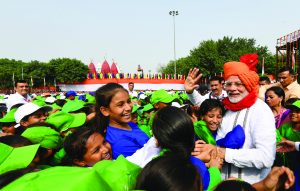
The Prime Minister, Shri Narendra Modi interacting with the school children after addressing the Nation on the occasion of 72nd Independence Day from the ramparts of Red Fort, in Delhi on August 15, 2018.
YOUNG INDIA
About 65 per cent of the population in the country is below 35 years of age. Today, our country is talking about Tier 2 and Tier 3 cities and paying attention to the youngsters engaged in modern agriculture in the rural areas. Today the youngsters of the country are taking the nation to greater heights by exploring and engaging in new fields such as Start-ups, BPOs, E-commerce, mobility etc.
Besides, other pertinent subjects that are of national interest like ‘housing for all’, ‘Swachh Bharat Abhiyan’, ‘power for all’, set up of educational intuitions, etc. were part of the highlights in his speech.
Celebrating the Independence Day is a fair idea that should continue with every citizen because it represents collective articulation of citizens’ sense of gratitude for those who sacrificed their lives to fight the mighty British empire, and imagined the possibility of freedom. It also epitomizes our collective gratitude for innumerable unknown heroes, and reminds us to emulate their example to safeguard this hard-won freedom. As one critic has opined, this occasion “reinforces some sort of group solidarity; and this secular ritual is essentially a form of ‘civic religiosity’ a modern nation needs to define itself.”
Weakening of democratic and constitutional institutions along with the fragmentation of the polity, erosion of secular values and rise of cultural nationalism have cumulatively given rise to a lamentable situation. The present state of affairs is afflicted with some disturbing characteristics which are prone to adversely impact social harmony and peace. Assertion of militant Hindutva encourages violence and intolerance in the garb of religion – be it mob lynching or cow vigilantism – and Dalits, marginalized segments and minorities fall an easy prey to such machinations.
Undoubtedly, India at 71 has come a long way; nonetheless, the defining spirit and mode of its governance and administrative structures still reek of sluggishness and ineptness. Opportunism is rife with the political class and the neo-rich class is mired in aggressive consumerism finding more solace in the material symbolic products than showing some concern for the socially deprived or disadvantaged. Most of the narratives handed out to the citizenry over the past seven decades have remained unfulfilled. Failure as well as inability of the ruling dispensation, irrespective of party politics, in delivering on to the citizens what they deserve in return for taxes they contribute to state exchequer, to liberate them from communalism and hatred, provide them a fair law and order ambience to feel secure, provide them decent and affordable healthcare, education and housing is inexcusable. Social justice still remains a far cry. A common citizen is compelled to ask himself, “Main Azaad HooN?”
One is reminded of the prophetic observation of Babasaheb Ambedkar made sixty-nine years ago: “By independence, we have lost the excuse of blaming the British for anything going wrong. If hereafter things go wrong, we will have nobody to blame except ourselves. There is great danger of things going wrong.”
Former Prime Minister and Bharat Ratna awardee Atal Bihari Vajpayee passed away at 93 on August 16 at AIIMS Delhi where he was being treated since last nine weeks. Alarm bells rang when Former Prime Minister Atal Bihari Vajpayee became critical and had been put on life support system after his health deteriorated on August 15.
Atal Bihari Vajpayee, being a diabetic had only one functional kidney. He suffered a stroke in 2009, weakening his cognitive abilities. Later, he developed dementia. He was elected as Prime Minister thrice during 1996, 1996-1999 and during 1999-2004 — when he completed the full five-year term as a non-Congress Prime Minister. As his health deteriorated, he slowly withdrew himself from public life and was confined to his residence for years.
Mourning the loss of Vajpayee, PM Narendra Modi tweeted, “India grieves the demise of our beloved Atal Ji. His passing away marks the end of an era. He lived for the nation and served it assiduously for decades. My thoughts are with his family, BJP Karyakartas and millions of admirers in this hour of sadness. Om Shanti.”
President Ram Nath Kovind, expressing his condolences, said, “Extremely sad to hear of the passing of Shri Atal Bihari Vajpayee, our former Prime Minister and a true Indian statesman. His leadership, foresight, maturity and eloquence put him in a league of his own. Atalji, the Gentle Giant, will be missed by one and all.”
Vajpayee was a charismatic statesman who navigated the field of politics with finesse, but perhaps what endeared him more to his fellow politicians and the common man alike was his poetic side that often manifested in his fiery speeches. His oratory skills combined with subtle rhetoric earned him praises even from the members of the opposition when he spoke in Parliament and his public addresses liberally laced with poetries drew thunderous applause from the crowd.
Vajpayee had in fact underlined the frailty of human body in his poem ‘Apne hin man se kuch bolen’. One of its stanzas read — ‘Prithvi lakho varsh purani, jeevan ek anant kahani; par tann ki apni seemayen; yadyapi sau shardo ki vani, itna kafi hai antim dastak par khud darwaza kholen’ (The Earth is millions of years old, life an eternal story; but body has limits; though voices of hundred winters, it is enough that one must open the door on the last knock). He had also remarked once in his speech that ‘Manushya sau sal jiye ye ashirvad hai, lekjin tann ki seema hai’ (Man may live for hundred years is a blessing, but, body has its limits).
Born in Gwalior in 1924, Vajpayee was fluent in English. However, his oratory and eloquence came in full force when he spoke in Hindi, in or out of Parliament, balancing his trenchant remarks with well-timed wit. A seasoned politician, he carefully chose his words to drive home the message and even in his sarcasm remained dignified till the end.
A veritable wordsmith, Vajpayee’s speeches were so riveting, it earned him legions of admirers and monikers like ‘shabdon ka jadugar’ (‘magician with words’). In most of his speeches, his love for the country and faith in democracy resonated with his vision for building a stronger India. In his hard-hitting May 1996 speech in Parliament, Vajpayee had famously remarked, “Satta ka to khel chalega, sarkaren ayyengi, jayengi; partiyan banegi, bigedgi; magar ye desh rahna chahiye, is desh ka loktantra amar rahna chahiye (‘governments will come and go. But this country should remain, this country’s democracy should remain eternally)”.
A prolific poet, he penned many works, including Kaidi Kavirai Ki Kundalian (collection of poems written in jail during Emergency); and Amar Aag Hai (collection of poems) and Meri Ekyavan Kavitayen.
He often felt that politics did not afford him time for his poetry. In a public event, he had once remarked that the “streams of poetry ran dry in the desert of politics (‘lekin rajniti ke registan me ye kavita ki dhara sukh gayi’)”.
But, even if couldn’t find time to write new poems, he compensated for that by liberally peppering his speeches with his poetries. In a public address, he had spoken in his charismatic style about the idea of freedom and hit out at those forces who were threatening — “Ise mitane wale ki saajish karne walon se kah do ki chingari ka khel bura hota hai; Auron ke ghar aag lagane ka jo sapna, wo apne hin ghar mey sada khara hota hai (Tell those conspiring to destroy it that playing with fire is dangerous; Those who think of burning someone else’s house, that would often happen to their own house)”.
A romantic at heart, Vajpayee, who mostly wore dhoti-kurta and bandi, wrote poetry in his spare time, and was a connoisseur of good food, but was unabashedly honest about not finding the conducive environment while being in active politics. “Poetry needs environment, concentration, poetry means self-expression, and self-expression cannot take place in noise (‘Kavita vatavran chahta hai, kavita ekagrata chahti hai kavita atmaabhivyakti ka naam hai, aur wo atmaabhivyakti shor-sharabe mey nahin ho sakti’),” he had said.
Known equally for his humour, Vajpayee had once remarked the he had wanted to leave politics but politics wouldn’t leave him (‘Main rajniti chodna chata hun par rajnti mujhe nahin chhodti’). “But, since I have entered politics, and got stuck in it, my desire was and still is that I leave it without a blemish, and, after my death, people say that he was a good man, who endeavoured to make his country and the world a better place,” he had said.
And, perhaps that is how Vajpayee would be remembered. In recognition of his contributions, he was awarded India’s highest civilian award Bharat Ratna in March 2015. A modest Vajpayee had once said that his contribution in the field of poetry was “almost nil”.
“If I had not entered politics, I would have recited and listened to poetries, attended ‘mushairas’ and ‘kavi sammelans’; would have been in the mood of writing and the poet’s sentiments would have kept expressing,” he said.
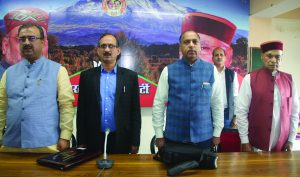
BJP state in-charge Mangal Pandey, state president Satpal Satti and chief Minster Jai Ram Thakur during meeting at chakkar in Shimla.
The state BJP will soon choose a new state chief as the second term of Satpal Satti is ending in September. Though BJP had won December 2017 assembly polls with thumping majority (44 seats), there are talks among the party leaders and workers in the state about the performance of Jai Ram Thakur government.
Sources told the Tehelka that the chief minister may adjust few of the leaders and MLAs in various boards and corporations to end the unrest among them. Party president Amit Shah is expected to visit Himachal soon. State BJP in-charge Mangal Pandey has already visited Shimla and held meetings with top BJP brass and other senior functionaries along with the chief minister. A senior BJP leader told Tehelka that the party has to replace Satti as he has completed two terms as state president. “We won assembly elections under his leadership, however according to the party constitution one can not hold state president post for more than two terms,’’ he added.
The problem in front of the party leadership is that after September they will have only six months before the parliamentary elections. Insiders say that party may appoint an ad-hoc president or may extend the term of Satti for few more months. Many in the party feel that a senior and influential leader should be given command of state chief so that party could perform well in the coming Lok Sabha polls.
It is important to mention here that BJP had won all the four Lok Sabha seats in 2014 and popularity of Prime Minister Narendra Modi had played a major role in that. However, things have changed now and few political observers feel that Modi’s popularity alone will not be able to give BJP that success in 2019 general elections.
The problem in the party is that there are at least four power centres in the state BJP. Union Health Minister Jagat Prakash Nadda is considered to be the most powerful as he enjoys the support of party chief Amit Shah and prime minister Modi. However, if one talks about the strength on the ground, former chief minister Prem Kumar Dhumal is the most influential leader. Despite losing previous assembly election he held a larger chunk of voters. He is considered to be the most powerful Rajput leader in state BJP.
Many in the party feel that giving responsibility to Dhumal will increase the possibilities of BJP performance in the Lok Sabha polls. On the condition of anonymity, a senior BJP leader said, ‘’If Dhumal is given bigger responsibility in any shape, this will also help in covering the alleged weaknesses of BJP government in the state’’. He is need of the party before the parliamentary polls, he added.
Interestingly, Dhumal has visited Delhi for more than two times in the recent days. Party leaders are curious about his visits to Delhi. Though a bigger chunk of the party is supporting a pro-active role of Dhumal in the state, it is said that former chief minister Shanta Kumar’s camp is opposite to this opinion. It is pertinent to mention that Shanta and Dhumal camps are considered like north and south poles in the state BJP.
Though Shanta Kumar is not considered influential in the state now, it was he who had strongly opposed the appointment of Dhumal as chief minister in December 2017. It is said that even a section in the party high command was also in favour of appointing two time chief minister Dhumal (who was declared as party’s CM candidate before the elections) as the CM was keeping in view his services to the party in tough times but consensus was if a defeated leader is made chief minister this will send wrong message among the masses. However, now many in the state party feel that Dhumal would have been better choice as CM.
It is said that Chief Minister Jai Ram Thakur may appoint few MLAs and party leaders as chairmen and vice chairmen in the boards and corporations in the coming days to give representation to those areas which could not get ministerial berths during the formation of the cabinet. With the total strength of 68 member assembly Himachal can have only 12 ministers including the chief minister according to the laws and all the berths in the ministry are already occupied. So, CM will adjust his aspirants on the boards and corporations.
Keeping in view the controversy over the appointments of parliamentary and chief parliamentary secretaries, Thakur has already made it clear that he has no intention of appointing CPS in the state. Sources said that if the party decides to appoint ad-hoc state BJP chief, present state chief Satpal Satti may be ‘’adjusted’’ in the government.
Sources say that he may be given the coveted post of the Chairman of 20 Point Programme Committee.
The coming days are also important for chief minister Jai Ram Thakur. There is all possibility that Shah may indicate about party high command view on the functioning of Jai Ram government. Jai Ram is well aware of his main opponents who are within the BJP. He has also visited Delhi and met various union ministers to stress on clearance of various state projects. Though Jai Ram is chief minister, he didn’t have any strong group in the state BJP.
His supporters, though are making all efforts that when Shah visits the state, they present an impressive show. They are also highlighting various achievements of Jai Ram government on various fronts. Sources said that some senior party leaders may raise the issue of performance of the party government in front of Shah. There seems to be very less possibility of removing him though despite questions on his capabilities have worried the Jai Ram camp. It is said that the RSS has played a role in making Jai Ram the chief minister after BJP got a thumping majority in 2017 assembly elections, though the party had fought under the leadership of Dhumal, who otherwise lost his own election.
South-West Monsoon is in full bloom in most parts of India. An initial phase of anxiety about deficit monsoon has subsided and rainfall is expected to be normal. The four months — June, July, August and September — receive 70 per cent of annual rainfall of the country and any deviation from normal is painful. A lifeline for the rural population, monsoon has a multiplier effect on all sectors of the economy. Though monsoon has taken almost entire country in its fold, the unpredictable weather God is over generous at some places. The state of Kerala has been facing a fierce flood fury. Many districts in the state have been submerged in water and several people (167 dead till this report was filed) have lost their lives. Relief and rescue operation may provide an immediate succor but the extensive damage caused to public and private property inter alia may derail the lives of the people.
Cloudbursts and landslides in the state of Himachal Pradesh, Uttarakhand and Leh in Jammu and Kashmir have been reported. Amidst the reports of chaos and misery, the revival of monsoon has restored the hopes of a good kharif crop.
Kharif crops constitute a major proportion of food grains production in India for crops like Paddy, Cotton, Sugarcane, Maize, Moong, Millets (Jowar and Bajra), Groundnuts, Soyabean and Chilies are grown in this season. Of the total cropped area in the country, approximately 65 per cent of the net sown area comes under rain fed crops. India ranks first among the rain fed countries in the world in terms of area but performs poor in the rain fed yield (less than 1 tonne per hectare).
According to Niti Ayog, of the total pulses, oilseeds and cotton produced in the country-80 per cent pulses, 73 per cent oil seeds and 68 per cent cotton come from rain-fed agriculture.
The Economic Survey of year 2017-18 projected the annual growth of agriculture sector at 2.1 per cent, lagging miserably behind industry (4.4 per cent) and services(8.3 per cent). The economists endorse that almost 52 per cent of the cropped area in India remains without irrigation and some areas are chronically water stressed. The share of canal in net-irrigated area has declined from 39.8 per cent to 23.6 per cent and at the same time, underground sources have increased from 29.7 per cent to 62.4 per cent between 1950-51 to 2012-13. This describes the increasing dependence of farmers on rain-fed agriculture.
A good monsoon not only irrigates the field crops but also fills the reservoirs for the rabi crops and recharges the underground water. According to Central Groundwater Board, the ground water situation in the states of Ahdhra Pradesh, Gujarat, Haryana, Karnataka, Punjab, Rajasthan, Tamilnadu and Telengana has reached a critical level. The monsoon plays a vital role in recharge and replenish of underground water.
Monsoon rains are essential, not only for agriculture but for the economy of the country as a whole. Timely arrival of monsoon and equitable distribution of rain ensure the income generation in hinterland and adequate availability of raw material for the textile and food processing industry.
Rural sector has tangible effects of monsoon but its intangible effects are all pervasive — from business, economy, and policy making to politics. The monsoon may not have any direct bearing on poll outcome but it plays a vital role in the penultimate election year; particularly in a country like India where the largest section of voter hails from agricultural backdrop.
The recent announcement about the revision of Minimum Support Price of the 14 kharif crops may bear fruit only if the rainfall is adequate. The ruling NDA alliance has evidently played a political card by substantially revising the MSP of crops and the procurement agencies have also been given an indication to pull up the socks. An elusive monsoon, at this juncture may smash the hopes of the ruling Bharatiya Janata Party and its partners. If the monsoon remains consistent, this will propel sentiments on all fronts. Earlier this year, backed by the prediction of Indian Meteorological Department (IMD) of a normal rainfall this season (June to September 2018), the Union Ministry of Agriculture has set a tentative target of 283.7 MT of food grain production for next year. This indicates a 4MT increase from 279.51 MT (the third advanced estimate of country’s food grain production for the crop year July 2017-June 2018). The Union Agriculture Minister Radha Mohan Singh had informed that the country was able to save 9,775 cr in foreign exchange with the help of record output of pulses.
A good monsoon, coupled with perfect market conditions and proper implementation of farmer welfare schemes are the necessary ingredients for actual well-being of the farmers and prosperity of the nation.
The acute agricultural distress, farmers’ unrest, growing number of farmers’ suicides in the country may abate for some time in the wake of favorable climate conditions.
According to the sources in Meteorological Department, a rainfall deficit of up to 19 per cent is considered normal presuming the standard deviation and error due to a large area under rain. He told that reservoirs at most of the places were filled up to the capacity and there are few more weeks to go, so there is no need to worry.
Whether floods or draughts, political parties explore the silver lining in every situation. If monsoon is conducive, perceptions are positive, businesses are up and the ruling parties take the credit of framing suitable policies and woo the voters. On the flip side, a deficit monsoon may also turn the tide in their favour by announcing doles and financial stimulus packages to gratify voters.
The former Governor of Reserve Bank of India D Subbarao had said that RBI chases the monsoon like millions of farmers in the country as monsoon performance is an important factor in determining the RBI policies. The food inflation is directly related to a good harvest and a good harvest ensures moderate rate of inflation to sustain the desirable growth rate in the economy.
For Corporate sector, there are more than one benefits of normal rain. On one hand good rains spur the production-keeping price of inputs in control; at the same time it invigorates the demand in rural and semi-urban areas. A good cotton crop this year may revitalise the textile sector (ginning and spinning) as the demand of cotton in global market (especially from China) is expected to be high, informed a Gujarat based trader. This will enable the mills to run at full capacity thus cutting average cost of production along with higher employment generation.
The corporate sector is also busy drawing up plans to cash in good monsoon. The automobile manufacturers (two wheelers, tractors), agriculture implements, fertilisers, FMCG, tourism and hospitality all are keeping their hopes high post the revival of monsoon.
The banking sector of the country, that is under an appalling fund crunch due to colossal NPAs in general and debt waivers announced for the agriculture sector in particular also feels the pinch of any discrepancy in monsoon. The good monsoon translates into credit expansion and smooth repayment and vice-versa.
Monsoon is the single common factor in the life of every individual Indian and every interest group. Every citizen of the country stands to gain from monsoon rain but its richest dividends would be reaped by the incumbent government in the penultimate year of general elections.
Political pundits are convinced that the state of Tamil Nadu (TN) is in for a political turmoil in the absence of two of its tallest leaders — M Karunanidhi and J Jayalalithaa. The state, in the recent years, has seen a fall in its status as a front-ranking state in economic performance, suffered dent in industrial might and good governance.
On the face of it, things may look that conditions are fav ourable, new players to enter state politics to occupy the apparent vacuum in political leadership — given the fact that the ruling AIADMK is only held together by the greed and need of power and the anticipation that its principal rival DMK will be hit by internal squabbles that its chief-to-be and Karunanidhi’s declared political heir, MK Stalin, cannot control.
This supposition could very well come true if not for the fact that the DMK is a well-oiled cadre-based party, which is still intact. Another fact is that Stalin has in the last two years since Karunanidhi was out of political action due to illness, took complete control over the party and is a leader acceptable to the party rank and file.
With a firm succession plan in place, the DMK will not find the passing away of Karunanidhi earlier this month affecting the party structure in a large way. The succession of Stalin, in the works for the past two years, will be smooth barring the odd regional satrap exerting more pressure to up his or her bargaining power.
Knifes will be out if Stalin fails to win in the 2021 general elections to state assembly, but his first test will be 2019 general elections that will cement his position in the party and Tamil Nadu politics. The DMK is already prepared for local body polls and has been demanding they be held.
Flexing of muscles by the local chieftains is something that Stalin will have to deal with, but even on this count he managed to put in place men of his choice in key party positions in all the districts of Tamil Nadu. He has been working hard, raising issues of concern of the common man and also attacking the ruling AIADMK and the government, but cadres are a bit restless over his seeming inability to deliver the killer punch.
Now, after a 40-year plus stint as an understudy to his father, it is for the first time that Stalin will have the chance to be the authority in the party to take all decisions as far as the DMK and its affairs are concerned. Since it is an open secret in Chennai and Tamil Nadu that Stalin was the chosen one as the political heir by Karunanidhi, he is not expected to be facing trouble from DMK leaders, activists and cadres.
Trouble for him could be coming from within the family – and the first taste of it is in the growing emotional demand from within family members for taking back his elder brother MK Alagari into the party fold. Alagiri, who was also a union minister in the UPA government, was dismissed from the DMK’s primary membership for anti-party activities three years ago by Karunanidhi himself.
Alagiri has been trying for a re-entry into the party and had met Karunanidhi several times, but to no avail. How emotions played out was on display during the burial ceremony at Marina Beach when Kanimozhi, Stalin’s sister noticed Alagiri in the back rows, went up to him and escorted him to the front row and sit next to Stalin. Of course, she took permission from Stalin the moment she noticed Alagiri was missing from the front row.
Stalin is expected to address this very issue — whether to allow Alagiri return to party or not — as he takes complete and formal charge of the party that is yet to formally elect him as the leader in place of his father Karunanidhi, who was the unquestioned President of the party he was co-founder of for 50 years at a stretch.
Politics within the Karunanidhi family or the DMK’s first family is what that could cramp Stalin somewhat as he plots the future course of action and how it fights the forthcoming 2019 Lok Sabha general elections.
But, one thing is clear. It is certainly an end of an era in Tamil Nadu politics with the demise of the state’s tallest leaders Karunanidhi and Jayalalithaa.
What ails the ruling AIADMK is that unlike in DMK, there was no succession plan in place and her death sparked off an intense power struggle within the party. Even today, the party is plagued with internal squabbles that will grow in intensity as elections — assembly elections of 2021 — approach. For the present it is the power that is acting like a glue and also for the reason that most of the MLAs know that without an Amma, their individual chances of winning seats were highly doubtful.
This is not so in DMK, which is on an upswing and has been highly active as an opposition party, raising issues of concern and taking an anti-Centre stand, at a time when the perception of the people of the state was that the ruling AIADMK was working as the B team of the BJP.
“It is no secret that BJP is backseat driving the government,” said political analyst Prof Ramu Manivannan of the Madras University.
The two national parties — Congress and the BJP — largely irrelevant politically in Tamil Nadu for the past over three decades may like to try and occupy the political vacuum created by the departure of the two leaders. The political situation on the ground, with ruling AIADMK losing popularity with each passing day and DMK without its sharpest political brain seems ripe for national parties to exploit. But the Congress is hardly in a position to make any serious bid and is content with playing second fiddle to the DMK, with whom it has an alliance going. Whether it will continue or not, time will decide, but so far indications have been that DMK will fight against the BJP.
The BJP on the other hand sees in Tamil Nadu a chance of a lifetime to enter Tamil Nadu, and may work out an alliance or an understanding with the dominant faction of the ruling AIADMK. The BJP is also seriously trying to woo Rajinikanth into its fold, with a tie up, for the elections should he enter politics as he announced he would.
Then there is the other superstar, Kamal Haasan, who can articulate his ideas and thoughts well, who has announced he will be working with the Congress and has endorsed the idea of Rahul Gandhi as the Prime Minister candidate.
But in all these permutations and combinations will be side play as the main political battle in Tamil Nadu still will be between the two Dravidian rivals — ruling AIADMK and opposition DMK. Whether the superstars can win enough votes and seats is something that remains to be seen whether they are serious long-term players or disrupters at best.
Peace is a dirty word in Kashmir. You can certainly land in a serious trouble if you are deemed to be a votary of it. Your arguments, your write-ups, your social media posts in its support will count for nothing and on the contrary only deepen suspicions about your motivations.
But this apparently weird response has a rationale too. And an eminently understandable one at that. Peace, in the context of Kashmir, is not seen as a condition to be sought for its own sake. It is not about seeking to stop violence one fine morning and living happily ever after, a kind of thinking that seemed to inform the recent unilateral ceasefire by New Delhi in the state. Peace is seen as a function of the resolution of the conflict that breeds violence.
So, if you seek peace in Kashmir, you better champion the resolution. And for anyone interested in Kashmir, or genuinely working to make a redeeming difference to the troubled state of affairs, knowing this distinction is critical to winning the confidence of a majority of Kashmiris and reassuring them as to your intentions.
One reason that has bred this deep hatred of peace is the recurrent efforts by the successive central and state governments to dress the state up as peaceful to pass it off as their respective achievement. And this is done by holding an election, a conference or a large political rally in Srinagar with people being bused from across the Valley to attend it.
For example, in November 2015, the PDP ferried its workers from across the Valley at Sher-i-Kashmir Stadium in Srinagar for the Prime minister Narendra Modi’s to deliver his speech. But while Modi spoke to a stadium-full crowd, Srinagar was under a complete lockdown to prevent separatist groups lead their parallel Million March. Police and paramilitary personnel had fanned out across the city setting up checkpoints and laying concertina rolls to prevent easy movement. As the stadium throbbed with activity, reverberating to the cries of “Modi, Modi”, the silence beyond its modest confines was deafening.
Early this year the J&K Government also held a tourism convention to create an illusion of peace in its bid to draw tourists to the Valley. While the convention was a success, its purpose was defeated by the escalating violence in the state. Both events, meticulously stage-managed, made some news but had little to do with the ground situation.
Such examples are galore: In the mid-nineties, when Farooq Abdullah government had tried to flaunt peace by reopening a cinema on Srinagar’s Residency Road there was a grenade attack during the first show itself, leading to the death of a person.
That is about the state government. There have also been attempts to hold events in the Valley from outside the state and which have been resisted for the same reason: a widespread perception that the secret motive behind them is to demonstrate peace where none existed. In August 2011, the then proposed “apolitical” Harud Literary Festival was called off by its organisers Teamwork Productions after it met a strong resistance by the civil society groups including the renowned Kashmiri writers Basharat Peer and Mirza Waheed who refused to be a part of it. Besides, an online campaign to boycott the event went viral threatening to spill over onto the streets.
The idea of an “apolitical” literary festival grated on the sensitivities in the Valley where people saw it as a covert effort to show to world that everything was hunky-dory in the state. One major reason for the anger was that only a year before the Valley had witnessed a five month long unrest leading to the killing of 120 persons. Writers and a majority of the people in Valley took serious exception to the word “apolitical” and read it as a deliberate attempt to limit the scope of the readings and dialogue at the festival.
Similarly, a music concert by Zubin Mehta at Nishat in September 2013 got mired in deep controversy. The concert was also opposed by the civil society and separatist groups who argued it was designed to project a false peaceful image of the troubled state to the world. But the concert went ahead nevertheless, under a heavy security. On the day it was held, however, a parallel concert Haqeeqat-e-Kashmir (reality of Kashmir) was organised by civil society members to protest Mehta’s concert.
While people tend to see the motives behind these events, there is little they can do about them except complain, protest or simply resign to the state of affairs. But, the situation could be less forgiving when an individual starts talking about peace — or a defence of peace becomes a part of his outlook or activity. It breeds more scepticism. That is, if such an advocacy is seen to be unqualified by the requisite stress on the resolution. Or if the peace is seen to be defended only as the means rather than a consequence of the resolution you are in a dangerous place.
Kashmir is on edge and set to tip into fresh turmoil. And this time the trigger has little to do with the militancy but the ongoing case about Article 35A in Supreme Court. The apex court is hearing a clutch of petitions challenging the validity of the constitutional provision that grants special citizenship rights to people of J&K and forbids people from other parts of the country to settle in the state.
On August 6, the court deferred the crucial hearing on the petition to the last week of this month. The run-up to the hearing witnessed protests and shutdowns in Kashmir. Hurriyat had even issued a call for a sustained agitation in case the Court issued an adverse judgement. The adjournment of the case, therefore, offered a breather but did not address the apprehension which has since only further deepened. Civil society groups have mobilised to resist any change. Hurriyat has called for the continuance of the protests. And what is more, the mainstream political parties have also joined in and supported the protests. This has created a broad across-the-board alignment on the issue.
There are also voices which support the abrogation of the Article 35A but they are confined to Jammu and a part of Ladakh. Among the political parties, the BJP is the leading voice supporting the repeal of the crucial constitutional safeguard arguing it is ultra-vires of the constitution as it was applied directly through a presidential order and not enacted by the parliament.
But a predominant majority of the state opposes removal or any tinkering with the law. And the anxiety runs so deep that any adverse decision could throw the state into disorder. What has reinforced the unease is that the centre has refused to defend the law in the court and the Governor led state government isn’t expected to be in a position to put up the best defence.
“We owe it to our future generations to safeguard and protect our political identity and special status that our ancestors and our founding leaders fought for,” the National Conference Omar Abdullah said while addressing his party workers in central Kashmir district of Budgam. “The forces that are sponsoring these elaborate assaults on the state’s special status have been inimical to the state’s interests and political identity from the very first day and we fought them then and we will fight them now.”
Similarly, the former J&K Chief Minister Mehbooba Mufti said the scrapping of the law would be against the “basic structure of the constitution.” After the Supreme Court deferred the hearing of the case, Mehbooba took to Twitter to articulate the grave situation prevailing in the state.
“The constitution of India is the supreme law of India which has conferred special status to J&K. Any attempt to fiddle with it will amount to violating its basic structure,” Mehbooba wrote. “The people of J&K placed great faith in our country by rejecting the two-nation theory which was divisive & driven by religion. Instead, we chose a democratic and secular India. Now it is for the nation to respect that decision in its entirety. Instead of attempting to dilute J&K’s special status they should embrace it and treat Kashmiris with dignity”.
But on ground it is the mainly the separatist and civil society groups which are leading the campaign. Tension and tempers run high. The local newspapers is filled with news about the protests, statements, editorials and analysis in defence of the Article 35A.
“The court judgements, as warned by the legal experts in the Valley, tend to be unpredictable. But the stakes in case of the Article 35A are too high to be left to perceived capriciousness of the court orders,” an editorial in a local daily said. “The implications of an adverse judgement will be horrific. It confronts the majority of the people of the state with an existential challenge”.
Everybody is looking forward to next hearing of the case in the Supreme Court. A sense of suspense looms large. The majority of the people of the state believe that the attempt to abrogate the constitutional provision is designed to alter the demographic character of the state.
“By taking away this safeguard, BJP-RSS combine is trying to make settlements in Kashmir like Israel in Palestine to change the demography and hence to bury the Kashmir dispute for all times,” a statement issued by the Kashmir Centre for Social and Development Studies said. “Even a layman understands that any change in the demographics of the state by removing the safeguard to our exclusive rights on our land will alter the ratio of population.”
On the other hand, justifying their fight for retention of Article 35A, separatists have said that doing away with constitutional provision will detrimentally impact their struggle for Azadi (freedom).
“We want the rulers of India to know that every Kashmiri would protect the state subject law with his blood and life,” JKLF supremo Yasin Malik said while addressing a protest. “They know their right to self-determination will be automatically snatched from them if state subject law is scrapped”.

 Former prime minister Atal Bihari Vajpayee was a great statesman and a true democrat who always had a heart for working classes and even stood with journalists in their struggle against their mighty and powerful management. He was a man of great convictions and always lived to his ideals. He was member of parliament from Lucknow and the management of Times group closed down part of its establishment of Hindi daily ‘Navbharat Times’ (Lucknow Edition) without any prior permission of the state government in June 1993. It rendered 92 newspaper employees including 49 journalist jobless because Times group refused to bear expenditure as per recommendations of the wage board.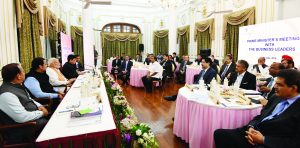
 What the army in Pakistan has been aspiring for after then Prime Minister Nawaz Sharif was found to be too inconvenient to be allowed to run the government because of his independent style of functioning, particularly in matters of foreign and defence policies, has become a reality. Nawaz, who had launched a drive to keep his country’s armed forces away from the political power structure with a view to allowing democracy to strengthen its roots, has been shown the door with little chance of revival of his political career.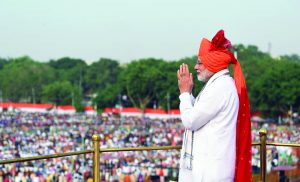
 South-West Monsoon is in full bloom in most parts of
 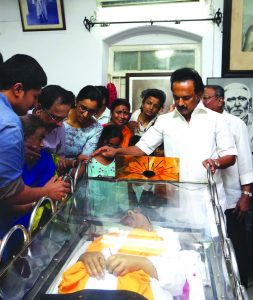 Political pundits are convinced that the state of Tamil Nadu (TN) is in for a political turmoil in the absence of two of its tallest leaders — M Karunanidhi and J Jayalalithaa. The state, in the recent years, has seen a fall in its status as a front-ranking state in economic performance, suffered dent in industrial might and good governance.
 Peace is a dirty word in Kashmir. You can certainly land in a serious trouble if you are deemed to be a votary of it. Your arguments, your write-ups, your social media posts in its support will count for nothing and on the contrary only deepen suspicions about your motivations.
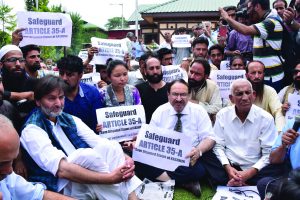 Kashmir is on edge and set to tip into fresh turmoil. And this time the trigger has little to do with the militancy but the ongoing case about Article 35A in Supreme Court. The apex court is hearing a clutch of petitions challenging the validity of the constitutional provision that grants special citizenship rights to people of J&K and forbids people from other parts of the country to settle in the state.