Sunday, December 28, 2025

Does Maharashtra verdict signal further delay for J&K statehood ?

Observers in the Union Territory believe that the BJP, buoyed by a landslide win in Maharashtra following the recent setback in the general elections, is under no pressure to restore J&K’s statehood and relinquish its indirect control over the region in a hurry.  A report by Riyaz Wani
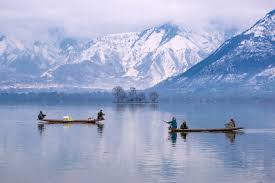
Now that the BJP has won Maharashtra election by a landslide, will the outcome impact Jammu and Kashmir? A section of opinion in the union territory believes that it will. One of the significant outcomes could be the delay in restoration of statehood. With the saffron party back in the ascendant after a setback in general elections, it will be under no pressure to let go of the control of J&K that it indirectly rules. 

The BJP is the second largest party in the J&K Assembly with 29 seats, all of them from Jammu where it continues to wield significant influence. The only thing that prevented it from forming the government in the UT was that the voters in Kashmir largely rallied around the National Conference that got 42 seats. The NC-Congress-CPI(M) have 49 seats between them. And in the case of any unlikely defection in the NC in future, the BJP could very well be forming J&K’s first Jammu-dominated elected government.  However, even otherwise, the BJP-led central government is a de-facto ruler in the existing hybrid arrangement with power being shared between the Lieutenant Governor Manoj Sinha and the NC-Congress alliance – albeit unequally in favour of the former.

Will New Delhi let the newly elected government call the shots by restoring statehood? It seems unlikely in the near term. The BJP-led centre has been in complete control of J&K over the past six years. It abrogated Article 370 in August 2019, stripping J&K of its special status and reorganizing the region into two Union Territories—Jammu & Kashmir and Ladakh.  Both Prime Minister Narendra Modi and the home minister Amit Shah have time and again assured the restoration of statehood to J&K at an appropriate time. What, however, they have not given so far is a timeline. So, there is a section of people who believe that statehood might take longer than expected.  And if and when statehood is restored, it is expected to be more or less a truncated one just like that of Delhi. 

Considering the troubled state of affairs prevailing in the UT, the Centre, it is believed, is unlikely to let go of control on the security agencies and the allied security related matters, lest it unravel the gains made in recent years. The recent rise in militancy-related violence is likely to further dissuade the central government from handing over complete control over the region to an elected government. Should this happen, a future governor will continue to wield a strong say in the affairs of J&K. 

However, the NC remains hopeful of an earlier reinstatement of the statehood after Omar Abdullah met the PM Narendra Modi and the HM Amit Shah soon after taking over as the chief minister and presented them the statehood resolution passed by his cabinet. 

“I have had successful meetings in Delhi where I received assurances at the highest level that the commitments made to Jammu and Kashmir, particularly with regard to our governance model, will change. Once full statehood is restored, there will be no loopholes to exploit,” he said while speaking to administrative secretaries in Srinagar in early November.

Newly-elected CM Abdullah emphasised on his government’s “commitment” to restoring full statehood and reforming the region’s governance model. Without naming anyone, he said, “Some people may try to exploit the system and find loopholes in the system that we have in J&K at the moment. But this is very much a temporary phase.”  

If there has to be a follow-up on these assurances, it has to be now.  The BJP has no electoral compulsions in the next few months. That is until Bihar and Delhi polls next year. December will be the month to watch out for. 
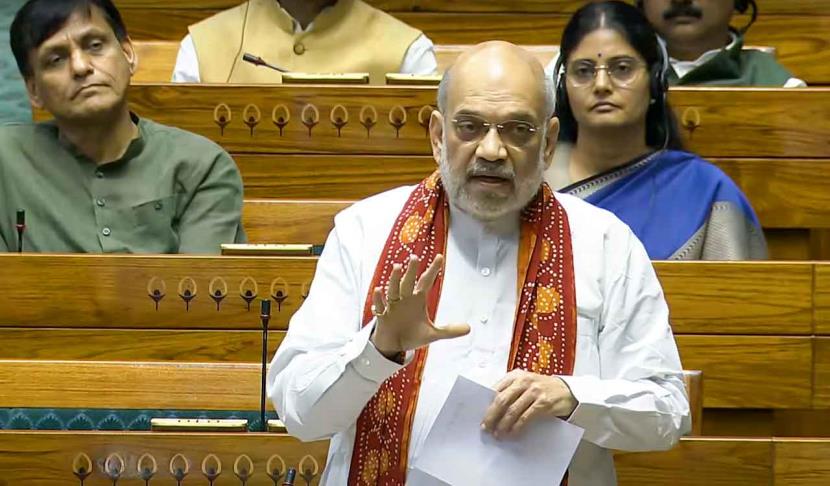
OBC Committee to present reports, HM Shah to move Disaster Management Bill

New Delhi: Both Houses of Parliament have lists of various businesses scheduled for Thursday. Union Home Minister will move a Bill to amend the Disaster Management Act, 2005 in the Lok Sabha and a Committee on the welfare of the OBCs will present their reports in both Houses.

The Disaster Management (Amendment) Bill seeks to amend the Disaster Management Act, 2005, bringing more clarity to roles and empowering authorities at the national and state levels. The Bill was introduced in the Lok Sabha on August 1 and seeks to amend the existing Act which was originally enacted to ensure effective management of disasters in India by creating institutional mechanisms, disaster management plans, and strategies for preventing and mitigating disaster impacts.

Union Railway Minister Ashwini Vaishnaw, who moved a motion for The Railways (Amendment) Bill, 2024 on Wednesday seeks consideration and passing of the Bill.

The Bill aims to amend the Railways Act of 1989 to enhance the powers of the Railways Board and improve operational efficiency. Key provisions of the Bill include the integration of the Indian Railway Board Act, of 1905 into the Railways Act, of 1989. This move seeks to simplify the legal framework governing Indian Railways by repealing the Indian Railway Board Act, of 1905 and incorporating its provisions into the Railways Act. The changes are intended to streamline the constitution and composition of the Railway Board, thereby boosting the overall efficiency of railway operations.

Members of the Committee on Welfare of Other Backward Classes (2024-25), Ganesh Singh and Rodmal Nagar will present the Action Taken Reports on securing the representation of OBCs in employment and for their welfare in All India Institute of Medical Sciences, Steel Authority of India Limited (SAIL) and Rashtriya Ispat Nigam Limited(RINL). The report also presents the observations/recommendations contained in the 30th Report (17th Lok Sabha) of the Committee on measures undertaken to secure the representation of OBCs in employment and for their welfare in various departments/ organisations/institutions under the Department of Personnel and Training (DoPT) pertaining to the Ministry of Personnel, Public Grievances and Pensions. The fourth Report is on the Action Taken by the Government on the observations/recommendations contained in the 33rd Report (17th Lok Sabha) of the Committee on measures undertaken to secure the representation of OBCs in employment and for their welfare in Central Reserve Police Force (CRPF)‟ under the Ministry of Home Affairs.

Nine Union Ministers will lay papers in the Lower House concerning their departments.

In the Rajya Sabha, the members of the Committee on Welfare of Other Backward Classes (2024-25), Kavita Patidar and Shambhu Sharan Patel will lay on the table various reports on the OBC recruitments in various government departments.

Union Minister Kirti Vardhan Singh will make statements regarding the “status of implementation of the recommendations contained in the 15th Report of the Department-related Parliamentary Standing Committee on External Affairs on ‘Welfare of Indian Diaspora; Policies/ Schemes’; Status of implementation of the recommendations contained in the 20th Report of the Department-related Parliamentary Standing Committee on External Affairs ‘Demands for Grants for the year 2023-24’; Status of implementation of the recommendations contained in the 22nd Report of the Department-related Parliamentary Standing Committee on External Affairs on ‘India’s Neighbourhood First Policy “

On Wednesday, the Rajya Sabha cleared a bill to replace the 100-year-old Boiler Act, passed by Lok Sabha earlier in the day. The Bill, which aims to decriminalise seven offences and promote ease of doing business, was cleared in the Upper House by a voice vote. External Affairs Minister S. Jaishankar made a statement in Rajya Sabha on the recent developments in India-China relations.

Nitish Kumar to start Mahila Samvad Yatra on Dec 15 ahead of Assembly polls

New Delhi : Bihar Chief Minister Nitish Kumar will start his Mahila Samvad Yatra on December 15 ahead of Assembly polls and will also interact with five women at the commencement of the yatra.

The yatra will kick off from Bagaha in West Champaran, a tribal-dominated region that has historically benefited from his government’s initiatives.

Nitish Kumar will engage directly with tribal women to understand their challenges and gather feedback on his administration’s performance.

Five tribal women, including Mita Devi and Hema Devi, have been chosen to discuss local developmental concerns with the Chief Minister.

Meeta Devi emphasised the strides women have made under Nitish Kumar’s leadership, noting significant progress in education, health, and employment.

Hema Devi, a participant, praised Nitish Kumar’s policies such as the seven Nischay schemes, which have improved village infrastructure, reduced atrocities on women through liquor prohibition, and provided employment via Jeevika.

Senior officials are preparing venues across Mushari Semaria Panchayats, including Ghothawa Tola and Taruanwa, to ensure a smooth program. The areas are being spruced up, reflecting the government’s focus on addressing grievances and showcasing development.

The Mahila Samvad Yatra is being seen as a calculated move to consolidate support among women voters. Nitish Kumar has often credited his pro-women policies—such as liquor prohibition, improved education opportunities, and healthcare reforms—for his previous electoral successes.

Political analysts suggest that this initiative is part of a larger strategy to counter opposition narratives and strengthen the JD(U)’s position ahead of the elections.

The yatra is also aimed at reinvigorating Nitish Kumar’s development agenda amid changing political dynamics in the state.

Centre’s move for new Haryana House in Chandigarh irks Punjab

The Centre’s fresh move to allot land to Haryana for its separate Assembly building in Chandigarh has whipped up a political storm with all the political parties of Punjab joining hands to protest against it even as Haryana digs its heels on the issue. A report by Rajesh Moudgil

Out of ninety seats, Congress won thirty seven seats, only nine short for forming a government. It has accused BJP of manipulating EVMs by quoting CM Nayab Saini’s statement three days before polling to buttress its claim of manipulations of EVMs that ‘we were forming the government as “system” was with us’.

Now as many as 17 defeated candidates have filed separate petitions in Punjab and Haryana High Court challenging the election-results. For the first time in the history of Haryana, such a large number of separate writ- petitions have been filed. Earlier, a high-level delegation of the Congress Party had met and formally complained to the Election Commission of India which rejected the allegations of manipulation of EVMs. 

Political analyst Devinder Surjewala said that the delay in choosing a leader of the legislature party by the Congress speaks poorly for the party. The Observers of Congress have met the legislators to know their viewpoint about the choice of leader of the party. It is believed that as many as 30 legislators have supported Bhupinder Singh Hooda, but no decision could be taken as party high- command, particularly Rahul Gandhi, is not clearing Hooda’s name as it is believed that mishandling of election campaign by him had resulted in the Congress defeat. First, the decision was kept pending due to Maharashtra assembly elections, but now the debacle in Maharashtra has further demoralised the Party.

The Haryana incharge of the Congress, Deepak Babaria, has resigned owing moral responsibility for the defeat. The party has yet to appoint a leader of its legislative party and appoint a new chief of Pradesh Congress Committee to replace present chief Uday Bhan, a supporter of Bhupinder Singh Hooda.

Being the largest opposition party, the Leader of Congress Legislative Party will be the leader of a recognised opposition party, enjoying the perks of a cabinet minister. Kumari Selja, the National General Secretary of the Party is opposing the appointment of Hooda as leader of Congress legislature party. According to Congress sources, instead of Hooda, his nominee will be appointed as leader of the legislature party as the party cannot afford to ignore Hooda considering the support of the party MLAs he enjoys. Selja is pressing the name of Chander Mohan for the post. It is believed that to maintain a balance between both the groups, the leader of the legislature party will be a nominee of Hooda and Selja is likely to be appointed as Chief of Pradesh Congress Committee replacing Uday bhan.

For the first time since Haryana became a separate State, the assembly session went without a formal Leader of Opposition. Haryana Chief Minister Nayab Singh Saini had a dig at Bhupinder Singh Hooda that he was waiting for a letter from boss for his appointment as Leader of his Party. An embarrassed Hooda shot back and told Nayab Saini that appointment of the leader was the party’s internal matter.

Political analyst Devinder Surjewala said that indecisiveness of Congress high-command, particularly of Rahul Gandhi, in maintaining balance between Hooda and Selja wa responsible for the defeat of Congress, adding that the party could not dissuade about a dozen rebel candidates from contesting polls, resulting in the defeat of official nominees in these constituencies. Moreover, Hooda was given a free hand in the selection of party candidates ensuring seventy two out of ninety tickets for his supporters even denying ticket to Ajay Chaudhry, a close confidant of Kumari Selja from Narnaund constituency.

Rahul Gandhi’s plan of having an alliance with Aam Aadmi Party was also sabotaged by Hooda . It is believed that alliance with AAP would have resulted in victory of the alliance,  which would have given a major boost to the party, even in Maharashtra assembly elections. But the BJP’s victory in Haryana boosted the saffron party to the extent that Prime Minister Narendra Modi appealed to the electorate of Maharashtra to repeat the ‘Haryana model’ by defeating the Congress-led alliance. With a strength of 37 MLAs, Congress can play an effective role of Opposition and corner the ruling party on the crucial issue facing the state.

Cong falters again in Haryana as impasse persists on CLP leader

It seems that Congress has not learnt any lesson from its defeat in assembly elections. With the party yet to appoint its CLP leader amid stand-off among its leaders, the first assembly session under the newly installed BJP government was conducted without LoP.  A report by Pawan Kumar Bansal

Out of ninety seats, Congress won thirty seven seats, only nine short for forming a government. It has accused BJP of manipulating EVMs by quoting CM Nayab Saini’s statement three days before polling to buttress its claim of manipulations of EVMs that ‘we were forming the government as “system” was with us’.

Now as many as 17 defeated candidates have filed separate petitions in Punjab and Haryana High Court challenging the election-results. For the first time in the history of Haryana, such a large number of separate writ- petitions have been filed. Earlier, a high-level delegation of the Congress Party had met and formally complained to the Election Commission of India which rejected the allegations of manipulation of EVMs. 

Political analyst Devinder Surjewala said that the delay in choosing a leader of the legislature party by the Congress speaks poorly for the party. The Observers of Congress have met the legislators to know their viewpoint about the choice of leader of the party. It is believed that as many as 30 legislators have supported Bhupinder Singh Hooda, but no decision could be taken as party high- command, particularly Rahul Gandhi, is not clearing Hooda’s name as it is believed that mishandling of election campaign by him had resulted in the Congress defeat. First, the decision was kept pending due to Maharashtra assembly elections, but now the debacle in Maharashtra has further demoralised the Party.

The Haryana incharge of the Congress, Deepak Babaria, has resigned owing moral responsibility for the defeat. The party has yet to appoint a leader of its legislative party and appoint a new chief of Pradesh Congress Committee to replace present chief Uday Bhan, a supporter of Bhupinder Singh Hooda.

Being the largest opposition party, the Leader of Congress Legislative Party will be the leader of a recognised opposition party, enjoying the perks of a cabinet minister. Kumari Selja, the National General Secretary of the Party is opposing the appointment of Hooda as leader of Congress legislature party. According to Congress sources, instead of Hooda, his nominee will be appointed as leader of the legislature party as the party cannot afford to ignore Hooda considering the support of the party MLAs he enjoys. Selja is pressing the name of Chander Mohan for the post. It is believed that to maintain a balance between both the groups, the leader of the legislature party will be a nominee of Hooda and Selja is likely to be appointed as Chief of Pradesh Congress Committee replacing Uday bhan.

For the first time since Haryana became a separate State, the assembly session went without a formal Leader of Opposition. Haryana Chief Minister Nayab Singh Saini had a dig at Bhupinder Singh Hooda that he was waiting for a letter from boss for his appointment as Leader of his Party. An embarrassed Hooda shot back and told Nayab Saini that appointment of the leader was the party’s internal matter.

Political analyst Devinder Surjewala said that indecisiveness of Congress high-command, particularly of Rahul Gandhi, in maintaining balance between Hooda and Selja wa responsible for the defeat of Congress, adding that the party could not dissuade about a dozen rebel candidates from contesting polls, resulting in the defeat of official nominees in these constituencies. Moreover, Hooda was given a free hand in the selection of party candidates ensuring seventy two out of ninety tickets for his supporters even denying ticket to Ajay Chaudhry, a close confidant of Kumari Selja from Narnaund constituency.

Rahul Gandhi’s plan of having an alliance with Aam Aadmi Party was also sabotaged by Hooda . It is believed that alliance with AAP would have resulted in victory of the alliance,  which would have given a major boost to the party, even in Maharashtra assembly elections. But the BJP’s victory in Haryana boosted the saffron party to the extent that Prime Minister Narendra Modi appealed to the electorate of Maharashtra to repeat the ‘Haryana model’ by defeating the Congress-led alliance. With a strength of 37 MLAs, Congress can play an effective role of Opposition and corner the ruling party on the crucial issue facing the state.

Delhi breathes easier as air quality enters ‘moderate’ category

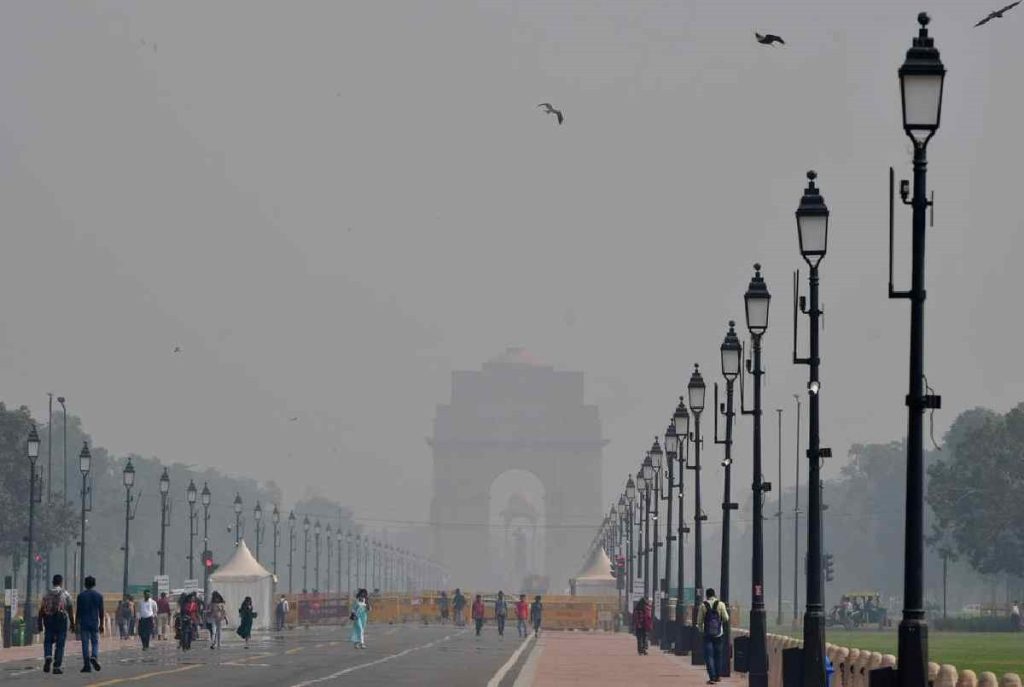
New Delhi : After nearly two months of grappling with “very poor” and “severe” air quality, Delhi’s pollution levels dropped significantly. On Thursday morning, the city recorded an Air Quality Index (AQI) of 161, placing it in the “moderate” category, the cleanest air day of December so far.

According to data from the Central Pollution Control Board (CPCB), AQI readings in the morning included 145 in Ashok Vihar, 147 in Wajipur, 220 in Mundka, 198 in Jahangirpuri, 184 in Narela, 204 in R.K. Puram, 178 in Anand Vihar, 169 in Pusa, and 152 in Punjabi Bagh. By 4 p.m. on Wednesday, the city’s 24-hour average AQI had improved to 178, marking a considerable drop from the hazardous levels seen in recent weeks.

The improvement began on Wednesday afternoon, with AQI levels falling from 211 in the morning to 178 by the evening. Residents experienced clearer skies and better visibility, offering a much-needed respite from the prolonged period of toxic air.

The Supreme Court, closely monitoring the pollution crisis, has directed the Delhi government and law enforcement agencies to strictly implement anti-pollution measures. These include restrictions on construction activities, tighter controls on vehicle emissions, and mitigation of industrial pollutants.

However, the India Meteorological Department (IMD) has warned of a potential rise in pollution levels after December 7 due to an incoming western disturbance. Moderate fog and reduced wind speeds are expected to exacerbate conditions, with wind speeds having already slowed to 20 km/hr on Wednesday. The Early Warning System (EWS) for Delhi indicates heightened vigilance will be required in the coming days.

Authorities are enforcing the Graded Action Response Plan (GRAP) to manage the winter surge in pollution levels. With these stringent measures and ongoing monitoring, efforts continue to safeguard the air quality and public health in the capital city.

Fadnavis back in command in Maharashtra

The Bharatiya Janata Party finally ended days of suspense today as its legislators decided to elect Devendra Fadnavis as their nominee for Maharashtra Chief Minister. 

The leaders of Shiv Sena and Nationalist Congress Party accompanied Fadnavis to the Raj Bhawan to stake claim to form the MahaYuti government. 

Fadnavis is considered as one of the main architects of the MahaYuti’s stunning victory in Maharashtra polls. The senior BJP leader is set to take oath as Chief Minister for the third time tomorrow after the BJP’s central leadership’s go ahead and stamp of approval from party’s legislators.

Preparations for the grand event at Mumbai’s Azad Maidan are in the final phase, which is scheduled to be attended by Prime Minister Narendra Modi, several Union Ministers and Chief Ministers of National Democratic Alliance-ruled states. 

The MahaYuti alliance, comprising the BJP, Shiv Sena, and NCP, secured an unprecedented 230 out of 288 seats in the Maharashtra Assembly polls, with the BJP winning 132, Shiv Sena securing 57, and the NCP taking 41. While the MVA only managed to win 46 seats. 

Fadnavis’ elevation to the CM’s post is considered to be an important development for the BJP, as he reclaimed the top political job after the backstabbing by long time ally Uddhav Thackeray-led Shiv Sena. 

Maharashtra, one of the biggest states in the country, elects 48 MPs to the Lok Sabha and is high on priority for the BJP due to its political and economic influence. 

Delhi BJP condemns attack on Sukhbir Singh Badal

Delhi BJP on Wednesday condemned the attack on former chief minister of Punjab Sukhbir Singh Badal who has been serving his penance at the entrance of the Golden Temple in Amritsar.

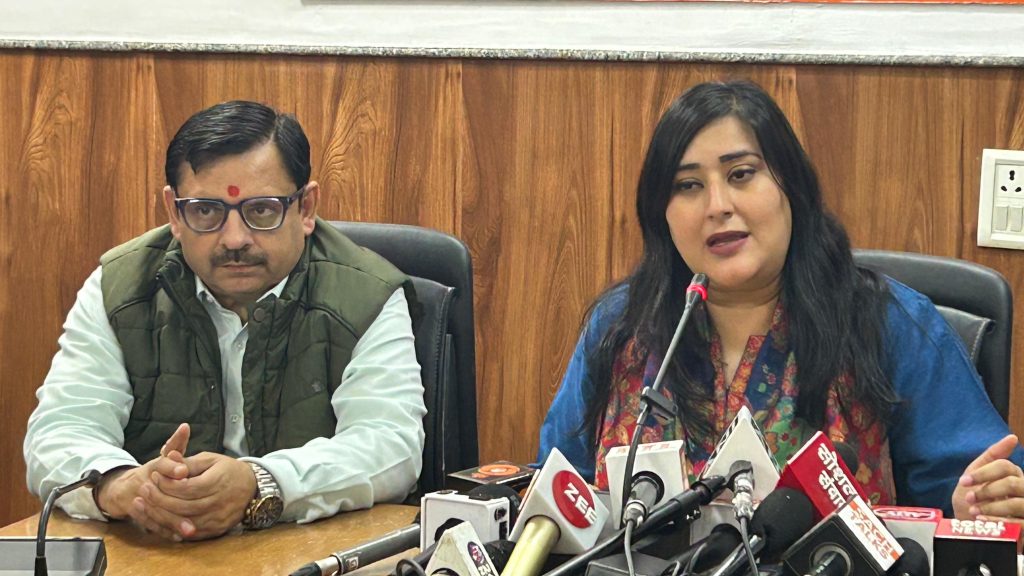
BJP MP Bansuri Swaraj slammed the Punjab government and demanded Aam Aadmi Party president Arvind Kejriwal to break his silence on the matter.

Speaking to Tehelka.com she said, “My direct question to Arvind Kejriwal and Bhagwant Mann is that if a former Chief Minister of Punjab is not safe in the Golden Temple complex, then how will the people of Punjab be safe?”

She said that if the state government cannot ensure safety in the Golden Temple complex then what should common people expect from them.

Highlighting the crime rate in Punjab, she said that crime against women have increased by over 10 per cent and the conviction rate in cases against women is less than 20 per cent.

She further said that if the track record of Aam Aadmi Party is seen in Punjab, it has not done anything special in the name of security so far, that is why the Punjab High Court has to repeatedly reprimand the Punjab government, the police, and the investigating agencies.

Meanwhile, Punjab chief minister Bhagwant Mann condemned that attack on Badal and said that investigation into the matter has been ordered.

“We strongly condemn the attack on Sukhbir Badal ji at Sri Darbar Sahib. Due to the promptness of the Punjab Police, a major incident was avoided. We have issued orders to the police officials to conduct a thorough investigation,” Mann wrote on X.

Earlier in the day, a man was arrested for trying to shoot Sukhbir Singh Badal, sitting in a wheelchair due to a fractured leg, performing his religious duty as part of a penance, following a verdict from the Sikh clergy. 

India launches antibiotic for drug-resistant bacteria

India has launched the first indigenous antibiotic for drug-resistant infections. The drug marketed under the trade name Miqnaf, has been developed indigenously by Wockhardt, with critical support from the Biotechnology Industry Research Assistance Council (BIRAC).

Drug-resistant pneumonia causes over two million deaths worldwide. India, accounting for 23 per cent of the global community pneumonia cases, struggles with treatment challenges, including rising resistance to drugs like azithromycin.

According to the Ministry of Science & Technology, Nafithromycin is 10 times more effective than azithromycin and achieves comparable outcomes with a shortened three-day regimen.

It effectively treats both typical and atypical drug-resistant bacteria. It is an oral drug developed with the aim of tackling community respiratory infections.

Developed in India after 14 years of research and an investment of Rs 500 crore, Nafithromycin is designed to tackle multi-drug-resistant pathogens. This drug stands as testament to India’s growing capabilities in biotechnology, exemplifying how public-private collaboration can deliver life-saving innovations. As antimicrobial resistance escalates globally, this breakthrough positions India at the forefront of addressing a critical healthcare

Uber launches shikara booking service on Kashmir’s Dal lake

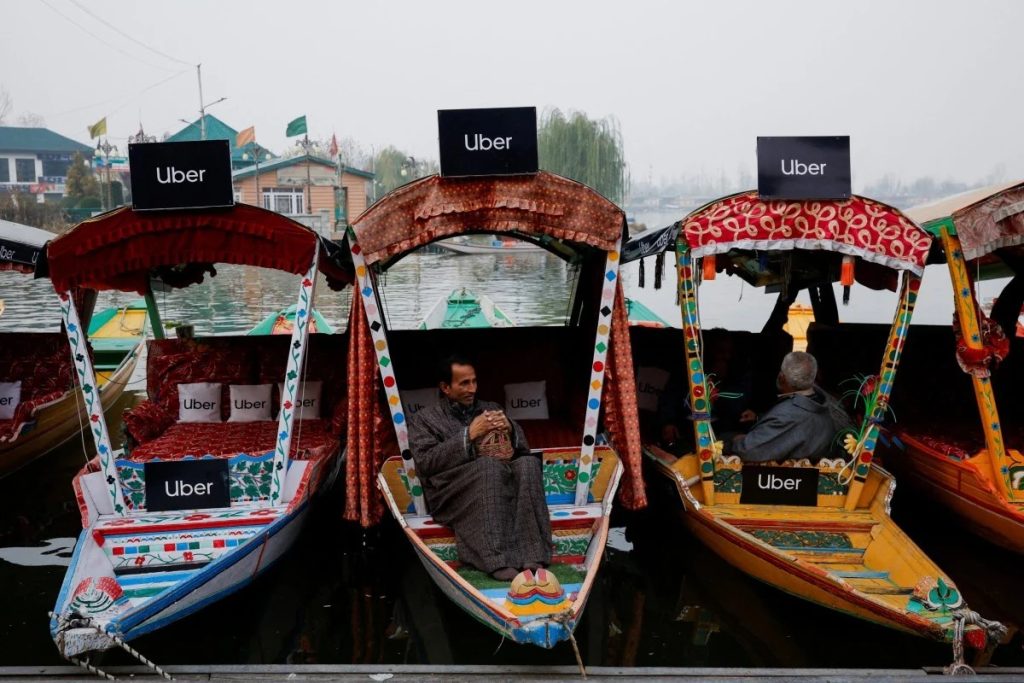
Uber has introduced a water transport service on the picturesque Dal Lake in Srinagar, Jammu and Kashmir, enabling tourists and locals to book rides on the region’s iconic shikaras through its app.

This marks Uber’s first water transport venture in India, joining similar services it operates in cities like London. Travelers can reserve rides on the traditional wooden boats, known for their vibrant canopies and intricate decorations, at least 12 hours and up to 15 days in advance.

Dal Lake is home to around 4,000 shikaras, which have long been a staple for both local commutes and tourism. While Uber will facilitate bookings, it will not charge a fee, ensuring that operators receive the full fare paid by passengers.

The move has received mixed reactions from shikara operators. Wali Mohammad Bhatt, president of the Shikara Owners Association, welcomed the development, highlighting fixed pricing and convenience for customers as key benefits. However, some operators were skeptical, believing it would have little impact on their established customer base.

Dal Lake, surrounded by houseboats and the Himalayas, remains one of Kashmir’s most prominent attractions, and Uber’s new service may further boost the region’s recovering tourism industry.

MOST POPULAR

HOT NEWS