Will updated NRC lead to humanitarian crisis?

Many, perhaps the entire country started to look at Assam with shock and surprise after July 30 morning when the second draft of National Register of Citizens (NRC), 1951, was released with over 40.07 lakh residents missing in the draft. NRC is believed to solve the illegal Bangladeshi migrants problem that Assam is facing since the Partition.

Sailesh, the Register General of India (RGI), releasing the draft in Guwahati said of the total 3, 29, 91, 384 applicants, 2, 89, 83, 677 were found to be eligible for inclusion in the draft NRC with March 24, 1971, as the cut-off date. This means 4,007,707 applicants allegedly “failed” to prove that they or their forefathers came in Assam on or before March 24, 1971, as per the cut-off date in Assam Accord , 1985, signed by former Prime Minister Rajiv Gandhi and those leading the “historic” Assam Agitation or the anti-foreigners movement between 1979 and 1985.

This sparked strong criticism from international media, many of whom projected it as an “anti-Muslim” despite the fact that those who missed the draft NRC belonged to different religions and the indigenous people too. It is to note that the work on NRC began following an order of the Supreme Court in 2013 and is being monitored by the apex court.

The Centre and Assam government have repeatedly assured that those who were left out had nothing to worry and could submit their claims of citizenship between August 30 and September 28 for the inclusion of their names in the final updated NRC, likely to be released in December. 

Many in Assam now fear that this would turn into a “humanitarian crisis” once the final NRC is out as India is unable to deport the migrants due to lack of a deportation or repatriation treaty with neighbouring Bangladesh.

“If the number of foreign nationals who settled in Assam after March 24, 1971, is huge and their country of origin do not want to take them, what will be their fate? They are India’s
liability: whether we like them or not. It will be a humanitarian crisis for India,” said former director general of Assam police, Harekrishna Deka, in his post on Facebook.  Deka, also a Sahitya Akademi awardee, was a superintendent of police and a deputy inspector general of police during the Assam Agitation.

Confusion and fear of being declared “Bangladeshis” was all prevalent at Hatisola and four other neighbouring villages having maximum Bengali Muslim population in Kamrup district, about 80-km west of Guwahati where nearly 5,000 residents missed their names in the draft NRC.

Ainal Hoque, a 47-year-old farmer looked confused as he came rushing to NRC Seva Kendra at Hatisola with documents. Names of him and a son, Aminul, 8, were there in the first draft of NRC released on December 31 last year but the final draft saw names of all six members of his family missing.

“On August 6, I got a letter saying that the names of my family were dropped as a case is registered in the Foreigner Tribunal where I have to prove that I am not a foreigner. But, I did not receive any notice neither from a tribunal nor from police about the case earlier. I had submitted 1966 voters list which had my father’s name (Asmut Sheikh) as a legacy data to prove our citizenship and inclusion in the NRC,” a visibly worried Ainal told the Tehelka at Hatisola.

“Names of my elder brother’s family is there who had submitted the same legacy data of our father. Now, I am clueless what to do,” he said.

Many like Ainal crowded the Seva Kendra on August 10 when the process began to collect forms for submission of claims for inclusion in the NRC.

Large number of Muslims like Ainal’s forefather were welcomed by the British to Assam in the 19th century to grow food in the vast barren lands in the state. Bengali Hindus migrated during and after the partition, mainly due to “religious persecution” in East Pakistan, which became Bangladesh in March 1971. Many returned after Bangladesh was liberated but some stayed back fearing threat in their home. 

The flow of the migrants to Assam, however, continued even after 1971 as vast stretch of the 263-km border with Bangladesh remained unfenced and those who settled in Assam got “support” from some political parties. The continuous infiltration of illegal migrants from Bangladesh left the indigenous people increasingly threatened of losing their identity, culture and become politically weak against the fast-growing population of the “Bangladeshis.” This triggered the Assam Agitation mainly led by All Assam Students’ Union (AASU) between 1979 and 1985, in which 855 indigenous people sacrificed their lives while thousands of suspected Bangladeshi migrants had also died in attacks by the anti-foreigner agitators. The agitation ended with the signing of the Assam Accord in 1985 which primarily agreed to detect and deport illegal migrants from Bangladesh and safeguard the identity of the indigenous Assamese.

The updated NRC is likely to detect the post-1971 migrants, as agreed in the Assam Accord but their deportation is a challenge before the country.

So what would be the fate of those to be identified as “foreigners” through NRC?

“They can’t be treated like Rohingyas of Myanmar. They should be specifically given opportunities to earn the livelihood for survival, dignity or existence and opportunities for their children’s future. In such a circumstance, the government of India will have to treat them as a special category of foreigners as it was done for the Tibetan refugees. They have to be given a special identity card as resident foreigners by bringing in an amendment in the Foreigner’s Act. But there should be the restriction on voting and transfer of land for them,” suggested Deka.

Many, however, said such a mechanism was possible for the Tibetans as their number was less.

Former union home secretary, G K Pillai recently said in New Delhi that those be identified as foreigners could be given a work permit, a suggestion quickly rejected by local organisations including the influential AASU, which continued to demand implementation of the Assam Accord in letter and spirit: detection and deportation of the foreigners.

Assam’s experience of dealing with the foreigners so far has not been easy. Of the 79,000 persons declared foreigners by tribunals since 1985, more than 30,000 have gone missing while another 30,000 were “pushed back,” in which the foreigners are taken to the border and sent back across. More than 1,000 others are lodged in detention camps in six jails across Assam while another 2 lakh cases of suspected foreigners are pending in 100 foreigner tribunals, a quasi-judicial body dealing with suspected foreigners.

The humanitarian crisis situation

Assam is staring at the situation due to lack of an action plan about the fate of the foreigners to be identified in the NRC, according to many, could result in further conflicts similar to those during the Assam Agitation. Hindu hardliner groups like Vishwa Hindu Parishad or Antarrashtriya Hindu Parishad led by former VHP leader Pravin Togaida, said those to be identified as Bangladeshis should be “thrown into the sea” or Indian army should capture a portion of Bangladesh and settle the migrants there. Many, however, termed the statements as “communal and divisive” with a political motive.

Upamanyu Hazarika, a Supreme Court lawyer who leads Prabajan Virodhi Manch has a straight answer: “The foreigners would leave Assam of their own if Assam government passes a legislation by reserving jobs, seats in educational institutes and land only for those whose forefathers were residents of Assam in 1951.”

Post-NRC way forward

Update of the National Register of Citizens (NRC), 1951, in Assam with March 24, 1971 cut-off will fulfil the 33-year-long promise in the 1985 Assam Accord signed between former Prime Minister Rajiv Gandhi and the anti-foreigner agitators led by All Assam Students’ Union.

Many in Assam, however, say a correct NRC would only be a partial implementation of the historic Accord that promised detection and deportation of the foreigners, sealing of the India-Bangladesh borders in Assam and constitutional, legislative and administrative safeguards to indigenous Assamese population.

“The ultimate solution to the threat posed by influx to Assamese identity and culture lies in the implementation of the Assam Accord in to,” AASU leaders said in Guwahati, days after the second draft of NRC was released.

While the BJP-led government in the state said the 48-km (still unfenced borders) of the total 262-km Assam-Bangladesh border, would be fenced by December this year, many in Assam believe that the demand for constitutional and administrative safeguards would step up after the publication of the updated NRC.

Clause 6 of Assam Accord says Constitutional, legislative and administrative safeguards, as may be appropriate, shall be provided to protect, preserve and promote the cultural, social, linguistic identity and heritage of the Assamese people. The clause, however, has remained unimplemented mainly due to lack of a definition of who is an indigenous Assamese.

Assam government in 2015 had said that the term Assamese people shall mean and include all indigenous tribals, non-tribals and local linguistic population of Assam living within the four geographical boundaries of the state and all genuine Indian citizens who have permanently settled within the four geographical boundaries of Assam and accepted practices, propagated and patronised the local language and culture of Assam as their own. This definition, however, has not yet been accepted by many including AASU which proposed that those enlisted in the 1951 NRC and their descendants are Assamese.

The ever growing fear of the indigenous people about the threat posed to their identity and culture by “foreigners” was evident when Narendra Modi-led government introduced the Citizenship (Amendment) Bill, 2016 in the Parliament. The bill seeks to expedite the process of granting citizenship by naturalisation to persecuted Hindu, Sikh, Buddhist, Jain, Parsi and Christian communities who entered India from Pakistan, Bangladesh and Afghanistan before December 31, 2014. Thousands spilled onto the streets in May this year when the Joint Parliamentary Committee held its hearing in Guwahati and Silchar in Barak Valley. Although BJP is eager to pass the Bill to fulfil its pre-poll promise of citizenship to the “persecuted Hindus,” Asom Gana Parishad, its ally in Assam and student bodies like AASU is strongly against it.

Many in the Bengali dominate Barak Valley (three districts in South Assam), however, are in favour of the Bill.

“The basic fear of the ethnic people of Assam is that the language of migrated people from East Pakistan or Bangladesh: be it Hindu or Muslims is Bengali. The proposed provision in the Citizenship Act 1955 will give the illegal migrants the citizenship right despite even coming to Assam after March 24, 1971, and this will affect the entire ethnic people because of the threat faced by the indigenous people in their language, culture and heritage,” said a memorandum submitted to the JPC by Prafulla Kumar Mahanta, who lead the AASU during the agitation. Mahanta contested and won elections after signing the Accord in 1985 and became chief minister twice.

So, what could be the nature of safeguarding the indigenous Assamese as promised in Clause 6 of Assam Accord?

On this, Harekrishna Deka said, “It could be reservation of seats in the Legislative Assembly, in government jobs, in educational institutions, in government contracts up to a financial limit, restriction on transfer of land prohibiting non-indigenous from purchasing land, which is a utmost importance.” Many have been demanding that the safeguards be applicable to those who were Assam citizens in 1951 or before.

Amid the efforts to finalise the draft NRC, groups representing indigenous communities have stepped up agitation demanding Scheduled Tribe status to six more ethnic communities in the state: Tai Ahom, Moran, Mottock, Chutia, Koch Rajbongshi and Adivasis or those working in tea gardens. The Centre has set up a committee to work out modalities but the delay in filing its report has angered the groups.

The Centre has also decided to set up a committee to finalise the definition of who is an indigenous Assamese and till then the state’s population is set to be divided into three categories: the post-1951 citizens, those between 1951 to 1971 and the post-March 24, 1971 or the illegal migrants.

letters@tehelka.com

I didn’t lose gold, I won silver: Sindhu

This is the confidence which PV Sindhu was showing after the defeat in the finals of World Badminton Championship at Nanjing (China). Had she shown this grit in the finals against Spanish giant Carolina Marin, the result could have been different.

Sindhu has been losing all the finals continuously. She lost Rio Olympic final, then Hong Kong Open final twice in 2017 and 2018, Super Series Final 2017, Indian Open and Thailand Open finals in 2018 and now this Golden Girl of Indian Badminton PV Sindhu once again failed to clinch World title as she lost to Carolina Marin of Spain 19-21, 10-21 in 46 minutes in the women’s singles final of the BWF World Badminton Championships 2018 at Nanjing, China on Sunday. Sindhu, lost in the finals last year also but then her opponent was Japan’s Nozomi Okuhara, whom she beat here in quarterfinals. After the match, Sindhu said, “It is frustrating to lose in the final again. I will have to come back stronger and prepare for the next tournament”.

The first game was played on equal terms. Sindhu was moving quickly and compelling the Marin to commit mistakes. Her long serves and deep tosses making it difficult for the Marin to execute aggressive strokes. At one stage Sindhu was leading 14-9 this was the turning point. Here she let Marin off the hooks and gifted two points through unforced errors. This changed the whole scenario. Now Sindhu was dancing on Marin’s tune. The length of Sindhu’s parabolic tosses lost length; this made the Spaniard play her powerful smashes and deceptive drops quite easily. This made Sindhu upset and she lost her concentration. The focus Sindhu once lost could never be regained. This made the second game a one-sided affair. Sindhu was never in the contention. Marin wrapped up the match by conceding 10 points only.

With this medal, Sindhu has become the only Indian to have four world championship medals. Besides two silvers she had won two bronze medals at the 2013 Guangzhou and 2014 Copenhagen.

On the other hand, it is another feather in the cap of Marin. With this win, she has become the first women in the history of women badminton to win the world championships thrice — 2014, 2015 and 2018.

Sindhu started on a positive note. She was returning everything thrown on her by Marin. She was covering the court with agility. She matched the Spaniard stroke by stroke. She was pushing Marin to the baseline with her deep tosses and earning points with crosscourt delectable drops shots. Her net dribbles were effective and Marin was pushing most of them in the net. On the other hand, Marin’s crosscourt down the line strokes were falling wide. Her tosses were not deep enough to upset Sindhu.

Sindhu’s long services were troubling Marin continuously. She had no other choice than to clear the shuttle safely. This involved two players in long and exhausting rallies. Sindhu was in dominating position leading 14-9 and then 15-11.

Now, signs of fatigue started appearing on Sindhu’s face. Her body language changed. She started consuming more time in receiving service and more time in towelling; even umpire had to warn (not officially) her to come back quickly to the court. At that juncture perhaps her mind-body coordination got disturbed, and she started making unforced errors. Her state of mind was evident from her gestures. She was looking at Pullela Gopichand for some heavenly support after losing every point. She lost her confidence and the game at 19-21.

In fact, the match was over in first game itself. Her body language was very negative. She was exhausted mentally and physically. She never showed any signs of come back and surrendered the match in first five points which she gave in the start of the second game. This made Marin lead 5-0. This was the lead which never neutralized and Spaniard had no trouble in wrapping up the game 21-10 and thus clinched the world title the third time.  

This was the second consecutive defeat for Sindhu in the final of World Badminton Championship. After the match, Sindhu had shown the signs of frustration. Now after few days of the championship she has shown a confidence and took the things positively. She quoted Dough Williams, “Never give up, never give in, and when the upper hand is ours, may we have the ability to handle the win with the dignity that we absorbed the loss.”

letters@tehelka.com

Divisive tactics seen behind targeted eviction in Manipur

The modus operandi of selective targeting of minority Muslim community in the name of illegally encroachment and construction at the reserve forest area appears to be the new ‘divisive’ tactic of the present government in Manipur in particular. The issue of Kshetri Bengoon Awang Ching Mamang is an encroached illegally constructed area based on government perspective which needs to be discussed at length. Some relevant questions need to be asked constructively while discussing the argument here. Why did the government evict the Kshetri Bengoon Awang Ching Mamang areas? What are the role and responsibility of the government in the process of eviction through the undergoing process of demolition of many houses? What are the roles of Civil Society Organisations in this eviction process? Are there any hidden political and ideological agendas towards the demolition of many minority houses in the name of reserve forest area? Why did the government not evict the other community’s areas despite the fact that some of those were included in the reserve forest area and paddy agricultural wet land act? What are the rehabilitation programmes arranged by the government for the evicted people? All these questions need to be answered in the present hour.

As far as the question of historical background of Kshetri Bengoon Awang Ching Mamang issue is concerned, it is necessitated that there are around 74 houses including Masjid, Madarsas, government schools, etc. They obtained all the government facilities like water supply, aadhaar card, enrolling in the electoral roll since their settlement in the region, establishment of government anganwadhi centre, etc. Their total number of population is approximately 410 members. All of them drifted and relocated from other parts of Manipur such as Irong, Mayang Imphal, Kairang, Hatta, Golapati, Kshetri Bengoon and its adjoining areas. They started settling in that region since the beginning of 1970s. Why they made their dragging is probably because of the point that they could not get the bounteous space in their earlier settlement areas and search for inhabitation. They are yelhoumees (indigenous community) of the state not the ‘illegal’ migrants with the exception of three as claimed by the government skeptically. On the other hand, it is distinctly evident that no one even including the historians, anthropologists, sociologists, ethnologists has knowledge and put a question with respect to the large number of ‘illegal’ migrants around 400 members from Bangladesh and its contiguous territories particularly belonging to the local community of Manipur. They started settling in Durgapur (presently Lamdai Khunou) of Jiribam constituency since 2003 after being displaced all the earlier settlers who had inhabited in it since 1920s. They obtained all the government facilities. How and why they settled there is one serious question that needs to be addressed. This is possibly due to politics of displacement.

When the question of the roles of government towards the eviction process has been being asked time and again, it is stated out that this area is under forest reserve land. They claimed that they sent numbers of notification to the villagers to shift to other areas for resettlement. They started eviction process since 2015 in different places such as 15 houses in Langol area, 78 houses in Heigang reserve forest, etc. It stated that ‘the eviction drive is not vested against any person or community but in the interest of people of the state and to conserve the environment. The Government needs full cooperation of the people.’ This issue is being stayed back by the High Court of Manipur for some time. Without informing to them and untouchably other houses belonging to local community and tribes, they started demolishing forcibly all the 74 houses with the help of thousands of paramilitary forces. The problem is that the evicted area is only covered under the forest reserve land in 1990. Thus the question comes as how many of the reserve forest areas have not been evicted and how many got evicted in other local community and tribal areas. There are 2,799 illegally encroached constructed houses in different areas of Manipur as shown some of them in the Statistical Handbook of Manipur 2002. Even a step has not been taken so far with respect to the eviction process but they targeted the minority dominated areas. Why is it so? This is quite surprising seeing the step done by the government towards the minority community. The response is not yet confirmed from the government side. Moreover, it is not covered the so-called Lamyanba Robinhood cemetery area. Why is it so? The issue is cast doubt upon and not answerable.

All Manipur Muslim Organisation’s Coordinating Committee (AMMOCOC) and other representatives of Pangal’s CSOs through the 36 hours total shutdown all over the state on April 10, 2018, have been firstly opposing on the recent opaque and cloudy operation of government stunt emphasising on the displacement of some houses approximately 74 houses of minority community numbering around 410 (yelhoumees/Pangals) from several places under the pretext of reserve forest land. There was hue and cry all over the state regarding this issue. There was hugely lathi charged of police who used tear gas to drive out the masses in the assembled areas. Many persons got serious injured in the police brutality and lathi-charged. They have not paid the compensation for the serious injury caused to them. This total shutdown was called off due to the mutual understanding and signed an agreement that there would be an amicable solution within three weeks between the government and the CSOs of Pangals particularly under the leadership of AMMOCOC emphasising on the knowing of the sentiments of the affected villagers.

By violating the above signed agreement, not informing about the final case verdict undergoing in the High Court of Manipur and betraying the CSOs, full of heavy paramilitary forces exercised by the government of Manipur camped in the evening and grouped stage by stage towards the surrounding area for the demolition of Kshetri Bengoon Awang Ching Mamang areas houses except the mosque. There was resistant from some sections of the nearby areas including the CSOs of the representatives of the Manipuri Muslims but could not get enough strength to fight with the government forces for stoppage of the eviction process. Instead of trying to bring a peaceful solution, government enforced huge security forces and started demolishing houses without showing any mercy. Police fired shots and tear gas shells against those who stood against the demolition. Against such illegally eviction process, all the CSOs under the representative CSOs of Pangals particularly under the leadership of AMMOCOC president SM Jalal started second time total shutdown all over the state in which the on-going 24 hours total shut down strike would be extended for another 48 hours all over the state on July 3, 2018. Police behaved beastly character and beat them like animals while trying to stop the peaceful protest called by the CSOs and police even tried to kill one person.

Till now no arrangement of rehabilitation or alternative arrangement from the government side is there. Those affected villagers are staying as homeless in the relief camp opened in the primary school of Kshetri Bengoon Awang Leikai, Imphal East. Then the question comes to as right to life is lesser than right to forest. This is in gross violation of Article 21 of the Indian Constitution. Some club organisations, professional bodies, and other groups from different backgrounds help them in terms of giving cash, food, clothes, drinking water, etc. Subsequently, one quandary trait based on the eviction episode at Kshetri Bengoon Awang Ching Mamang is that some persons consciously or unconsciously tried to take the political edge on the issue in such a way that they even electrified the government step for the wrecking of proposed illegally constructed houses at the reserve forest area for their equitable interests. This is firmly affirmative that right to life and livelihood has been deprived through the different channelization of state sponsored activities towards the minority Muslim community.

So easy to make out that there are politico-religious hidden agendas towards the eviction process at the above said area. Nothing happened positively in the local dominated areas except the minority Muslim dominated areas. There is hardly any valid justification to eviction process at the local and tribal dominated areas. The eviction circumstance shows the present government’s leaning stance that there is a sidelining and inbred xenophobia in the politico-religious affairs on the state’s indigenous people that can be effortlessly divulged. Some enticements and interference from the current government side like the preceding government should be there to relocate or rehabilitate the affected villagers based on constitutional and humanitarian criterion and corpus juris. On hindsight, there is a need on part of the government to prepare a remedial framework before implementing any policy on a particular community.

letters@tehelka.com

Mere birth shall not be linked to citizenship

She threw the sari end on her shoulders, as the knocks on the door of her dwelling intensified…accelerating by the second. Till, of course, she was there, on the muddy-filthy patch, just outside the door. Looking about hassled and hyper, as her ageing husband sat back on that filth, with just about lisping, “Papers…they want to see papers to prove that we were born here!”
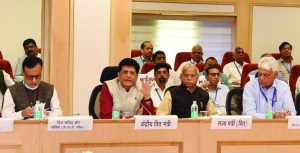
“What!” she could barely quiver.

“To prove you and I belong to this land, otherwise we will be thrown out…our names are not in that list of citizens Do not know what would happen to us?”

“But don’t you know last year’s floods ruined all our belongings, boxes washed away and so…”

“Now…the whole village knows but not the sarkaar (government)! We are ruined …we would be thrown into the sea or jungles or killed.” Her husband couldn’t utter any further as by then he had collapsed.

Hundreds and thousands of Assam’s residents are slowly dying every single day, even before getting deported. After all, in the latest draft of Assam’s National Register of Citizens, names of 40 lakh people are not included. Yes, 12 per cent of Assam’s population has been left out.

The sheer shock of being off the citizens’ list would be enough to kill. Though till date no health-related research has been conducted on these 40 lakh residents of Assam, to study the rising numbers hit by heart attacks or diabetes or blood pressure levels, but this could be a very important finding. Also, it would be significant to know if the sarkaar of the day has appointed healers and health care givers for those falling ill or slowly dying because of the severity of the sarkaar – induced shockers.

Though those excluded from the NRC are given a second chance to prove their Indian citizenship but this in itself is a very tedious process. Does the establishment expect these marginalised people to be keeping papers and records of their births or of their ancestral backgrounders? Tomorrow, if the NRC were to conduct citizenship surveys in other states of the country, civil war could spread out. If lakhs and lakhs of human beings were to be unaccepted as Indian citizens, then what happens to their lives. Are we going to deport lakhs because they cannot prove that they belong to this land?

To quote Professor VK Tripathi, who until very recently was teaching Physics at IIT Delhi. He also runs the Sadbhav Mission and has been focusing on the Assam crisis. “Son of the soil is not the one born in the soil of the nation, but the one who lives in the soil, works in the soil, feeds the nation with food and comforts and shares ups and downs with the people around. Be they Hindus or Muslims, speaking Assamese, Bangla, Bodo, Hindi or any other language, all working class masses are true sons of the soil, children of India. They are born here, their forefathers lived here for millennia, they laid their sweat and blood in the soil here and contributed half of their earnings to the nation. The piece of land where they live belongs to them. They never grabbed or robbed any one’s property, but fallen prey many a times to the exploiters and oppressors. They have the fundamental right to live in the motherland with freedom and dignity, much more than those who rule, dictate and exploit.”

Professor Tripathi argues with facts and figures at his command – “In 1871 census, Muslim population in Assam was 28.7 per cent; in 1941, 25.72 per cent; in 1971, 24.56 per cent; in 1991, 28.43 per cent; in 2001, 30.92 per cent and in 2011, 34.2 per cent (in total state population of 32 million).

However, their percentage share in land and assets is far less. Only 7.9 per cent of them in cities and 5.8 per cent in rural areas are in the formal (organised) sector. For Hindus, these figures are 23.1 per cent and 12.3 per cent.

“Rest Hindu and Muslim masses are in the low income informal sector… 36 per cent people in Assam are below the poverty line (against 26 per cent All India average). In districts where Muslim population is above 45 per cent, with the exception of Dhubri, the percentage of people below poverty line is higher (Dhubri 28.6 per cent, Goalpara 60.3 per cent, Barpeta 50.19 per cent, Kaila Kandi 43.79 per cent, Karimganj 48.23 per cent, Nagaon 38.96 per cent, Marigaon 80.14 per cent).

He further said,“The per capita income in Assam is only 60 per cent of the national average while growth rate is half of the national average.

The annual growth rate of wages in Assam during 1991-2000 has been negative (-0.12 per cent) while for the country it was +3.36 per cent. To this if we add the fear of insecurity (heightened by massive riots like Nellie massacre of 1983 that killed 2800 people), Assam can’t be a lucrative destination for working classes from elsewhere. In fact, in last two decades sizeable people from Assam have migrated to Kerala as many locals from Kerala moved to Middle East…”

Tripathi added that Partition of India can’t be made an excuse to attack the citizenship of working classes. The partition was merely the division of ruling authority — few states came to be ruled by the Muslim League and remaining by the Congress.

People could live where ever they wanted. There was no consideration for the interests and plight of the working classes. Justice demands that any one among the working classes born in India be treated as Indian citizen.

“In fact, the 2003 amendment (Section 3) to Citizenship Act 1955 says any one born i) between 1950 and 1987, irrespective of the citizenship of the parents, is Indian by birth, ii) between 1987 and 2003, is Indian if one parent is Indian citizen, iii) after 2003 would be Indian if both the parents are Indian citizen.

The NRC must look afresh the drop out cases in view of this amendment. The government must strive to make India-Pakistan-Bangladesh borders porus for the working classes as these classes were never given their rightful due in British India or new born nations…Indians going abroad get the citizenship of that nation after working for few years. Many countries give full citizenship to the children of illegal migrants born there. Here we are dealing with people whose forefathers, for millennia, lived here and served this land. They deserve at least the rights we demand for NRIs in other nations, concluded Tripathi.

 letters@tehelka.com

Youngsters need confidence to overcome heinous crimes

Edited Excerpts from an interview

Any backgrounder or special reason for writing the short stories of The Other – Stories With A Difference?

I work a lot with young people — both in difficult circumstances as well as the very privileged. Much of my work is based on them, their voices, their concerns, their confusions. I am a very proficient eavesdropper and pick up on their conversations…What I write is not new information for my reader. Rather, a way to process that information, to empathise with the other in that situation and to re-assure them that they are not alone in their crises. And most of all, to empower them to be instruments of change. I think stories are a powerful tool for all of the above.

You write for the young adult. Have your own children been one of the motivating factors or do you feel today’s youngsters do need that focus?

My own children have been an important guide to me. And that continued after they grew up through my own interactions with a wide variety of young people. I have worked with over three lakh young people over the course of my career. Young adults today have very easy access to any kind of information… converting that raw information and processing it into knowledge is where a good story can prove most useful.

There is nothing called pure fiction. How many of these stories are based on real life happenings and incidents?

What I write is best described as ‘reality fiction’. Which is why the question I am most often asked is, “are these stories true?” The honest answer is yes, the situation is a common one. The broad strokes are reality, the characters and the exact detail is fiction. That is why this genre is so very powerful. In The Other, the stories Inner Circle, Outer Circle and Going off the Grid are both based on the myriad instances where the apathy of bystanders allows crime to happen. When CCTV clips show the crime being committed, there are people who watched it happen and didn’t lift a finger. These stories came out of an article on a study that had found India to be one of the most apathetic countries of the world. The story Best Friends Forever explores a real test of friendship in a very difficult circumstance. One, that must be occurring regularly. Grief (Is a Beast) is based on my own struggles with grief and loss. Because Superman had better Things to Do is based on my observations of young people’s attitudes towards those who have come through the EWS scheme as well as the ways in which we treat anyone who we consider The Other My stories and books on Kashmir are very much informed by my interactions with young people there, as well as the attitudes of young people in urban centres towards people in conflict zones.

Have you come across instances when children or say young adults have been betrayed by their own families?

I fear that a great damage is being done in the way children are imbibing hate. Parents are often careless in the way they ‘otherize’ a whole group of people. That is why I had a 12-year-old say, “I hate Muslims’. I am sure this wasn’t really his own opinion, but rather one that has been overheard around the family dining table. Heard hatred is a dangerous thing which we must all try and counter in our own ways.

In your interactions with the young adults, what comes across as the most hitting aspect?

Apathy and arrogance on one hand and a sense of hopelessness on the other hand. Both are very painful to see in young people who should have a fire in their belly.

Do you feel we Indians don’t really connect with the young in the family? And with that, bypass their emotional wants and aspirations.

I don’t think I am in a position to pass judgement as a whole. But certainly, I think families need to re-define what they consider as ‘protection’ of their children. Of course, all parents want their children to be safe. We would all love for our children to live in a perfect world where everyone is safe and happy. But as long as we have an imperfect world, we need to equip and empower our children. There is no point in cotton-wooling them.

Tell us an incident that touched you the deepest.

One of my best friends, an English girl, had come on her annual visit to India. We were both in college at the time. She returned from a holiday in Rajasthan and I noticed she was very subdued and there were bruises over her arms, over her back and stomach. She told me that she had been assaulted by a group of men. She begged me not to talk to my parents who were friends with her parents in England. It was only years later, when the post December 16 Nirbhaya marches were going on that I started to cry, realizing that my friend had been raped. Even in college, I hadn’t had a word for what had happened to her and I had kept quiet. I wrote an article on the need for stories for young adults around the issue of rape and was overwhelmed with responses from strangers and good friends who said that they too had been raped when young and never had the tools to talk to anyone about it or that they were told to keep it quiet. Through my tears, I promised that I would hush no more. I would give young people the words they needed, the confidence they needed to overcome even such a heinous crime. I wanted to show them that there is a light at the end of the tunnel, no matter how dark that tunnel may seem.

What’s your view on children and young adults living in our rural belts and with that deprived of the basics?

In Kupwara, Northern Kashmir, I was conducting a creative writing and storytelling workshop in a school. I told a story, the children greatly enjoyed it. But they were uncomfortable when I finished. When I probed them, one child asked if the story was true. Now this was a story about a bear who climbs onto the moon, so obviously, the answer was ‘no’. They gasped and almost physically recoiled as though I had just done a very bad thing.

I probed further and was surprised with their response, “If it’s not the truth, then it’s a lie and a lie is a very bad thing.” I told them, no, this was just a story. But they didn’t know what a story was. I had never interacted with children who didn’t know what a story was. Their only stories, songs and poetry were either in praise of Allah or the beauty of Kashmir. Other than that, their imaginations were frozen.

I know there are worse deprivations in life, but to me, the deprivation of imagination and story from a child was so unbearable. When I finally managed to get them to write stories of their own, the difference in the kids was palpable. The smiles were wider, the laughter louder. A teacher, with tears in her eyes, said to me that she’d never seen them so happy, so openly happy. That’s the power of stories.

letters@tehelka.com

FRDI Bill Withdrawn From Parliament Under Pressure

After much hue and cry by the opposition over “bail-in” clause in the legislation, the government, on August 7, finally decided to withdraw the controversial Financial Resolution and Deposit Insurance Bill (FRDI), 2017, from the Parliament. Depositors were worried that a proposed law would force them to lose their lifetime savings if their banks turn insolvent or bankrupt.
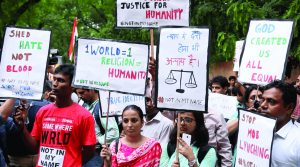
The government had an obligation to allay such fears but it acted only when the frenzy against the legislation reached the streets. It is the moral duty of any government at the centre to ensure that rightful savings of citizens are fully protected in case a bank goes down under bankruptcy. Secured creditors, who lend money against collaterals, easily get their money back in case of a default or when an entity goes bankrupt.  But, millions of savings accounts holders who deposited their lifetime savings in banks without any collateral were naturally aggrieved and concerned about their lifetime savings. They do so because they have trust in the robustness of Indian banks under the watchful eyes of the government. As such when the proposed legislation came into public domain, there was all-round criticism. The political class too raised its guns against the government.

The government has done well to nip the evil in the bud now and has withdrawn the proposed legislation — the Financial Resolution and Deposit Insurance (FRDI) Bill — to fully protect the public’s deposits in banks and financial institutions. The dangerous point of the proposed legislation was the “bail-in” clause, whereby, depositors’ money could be used to salvage a bank going bust.  At present, taxpayers do such “bailouts”. Let’s maintain the status quo if the government believes that there is no fundamental difference between the present and the proposed law. Public trust is the very basis of any government that comes to power and it has done well to retreat that now. That banks, by the very nature of their business, are essentially dependent on the funds deposited by the depositors but the later can’t be used to function like guinea pigs to offset the losses suffered by some unscrupulous bankers. So when a depositor fears that his or her hard-earned funds parked in a bank may be at risk from a law that allows these financial institutions to offset the loses,  the depositors would feel panicked. And this is what exactly happened in this case.

Union Minister Piyush Goyal has apprised the joint parliamentary committee that a “resolution of these issues would require a comprehensive examination and reconsideration”, and that therefore the government deemed it “appropriate” that the Bill be withdrawn. Idea is to ensure that such legislation is not attempted in the future by the government. We need a robust banking system and any measure that strengthens confidence in institutions like the Reserve Bank of India and public and private sector banks should be a matter to gloat over and laud the government.

letters@tehelka.com

No Official Records Of Hate Crimes Yet

India witnessed a disturbing 100 incidents of hate crimes with the rise of Sangh Pariwar during the first half of the current year ending June 2018. With this, incidents of hate crimes have gone up to 603 since Akhlaq was lynched in Dadri, Uttar Pradesh, in September 2015, for allegedly killing a cow and storing its meat in his fridge. This is based on data collected by various social research organisations in the country and the global human rights watchdog, the Amnesty International. The Union Government’s National Crime Records Bureau (NCRB) in the Ministry of Home Affairs does not maintain records of hate crimes in the country.

Cow-related violence and ‘honour’ killings are the most common hate crimes. Hate crimes are committed against Dalits, Adivasis, racial or religious minorities, transgender and other marginalized people. It is pointed out that most of hate crimes are not reported in the media. Hate crimes are criminal acts against people based on their real or perceived connection with particular caste, religion or ethnicity. Such crimes are different from other crimes as there is underlying discriminatory motive of majoritarian bullying behind such crimes. Hate crimes are motivated by intolerance and majoritarian bullying of Dalits, Adivasis and minorities. However, Indian law, with some exceptions, does not recognise hate crimes as separate offences, which is why the extent of hate crimes in the country is unknown.

According to the reports, Uttar Pradesh recorded the highest hate crimes in 2016 and 2017, followed by Gujarat, Rajasthan and Tamil Nadu. Bihar also recorded a high number of hate crimes. With the NDA Union Government and State Governments concerned having been seemingly complicit in hate crimes, its prosecution has been vitiated by the police playing partisan and not investigating such crimes with attendant fairness, uprightness and seriousness that results in the accused being let off on bail and the victims harassed and prosecuted on make-believe frame up charges. Many of hate crimes are deeply disturbing. Dalits are attacked for merely riding horses, Muslims lynched on rumours of cattle slaughter and Dalit women raped and burnt to death.

The Union Ministry of Home Affairs has once again sent Advisories to the States and Union Territories to curb mob lynching and mob violence. It may be noted that such Advisories are a mere formality exhibiting lack of seriousness in the Central Government.

No wonder, coming on the heels of ever rising hate crimes in the country, the Supreme Court of India (SCI)  has come heavily on the Central Government and State Governments directing it to enact a separate law to deal effectively with spiraling mob lynching and other targeted mob violence against the marginalized before India slides into mobocracy. The apex court, in a recent orders by a bench headed by the Chief Justice of India, Justice Deepak Misra, has condemned mob lynching incidents across the country and directed the Union Government to enact a law to deal with such crimes that threaten the rule of law and the country’s social fabric.

In 11-point measures that include preventive, remedial and punitive steps against hate crimes of mob lynching and mob violence, the Supreme Court has directed the State Governments to designate district Superintendent of Police in each district to ensure precautionary, preventive and protective measures against hate crimes, intensive checks on social media contents, expeditious trial of the accused by designated fast track courts within a time frame of six months in each districts, a financial compensation package for victims of such crimes and accountability of the governments through their instruments of governance, among others. Stating that “horrendous acts of mobocracy” cannot be allowed to become a new norm, the SCI said if it is found that a police officer or an officer of the district administration has failed to fulfill his duty, it will be considered an act of deliberate negligence.

Now that there is a glimmer of hopes that the NDA Union Government will enact a deterrent law, people of India are exuding confidence that social fabric of the country will not erode further under the watch of the apex court which has always stood by the people in upholding their fundamental right to life and personal liberty amidst social harmony, diversity and co-existence. This is the state of the nation on the occasion of 72nd Independence Day on August 15, 2018 on completion of 71 years of India’s Independence from the British rule!

letters@tehelka.com

SAADA: Redefining tales of South Asian American

Meet Samip Mallick — Co-Founder and Executive Director of SAADA — the South Asian American Digital Archive, formerly, the Director of the Ranganathan Center for Digital Information at the University of Chicago Library, with an M.S. in Library and Information Sciences from the University of Illinois and a Bachelors degree in Computer Science from the University of Michigan College of Engineering. I encountered the South Asian American Digital Archive accidentally while searching for information on a pioneering Indian dancer who taught Indian dance to an early generation of Americans in America but is conspicuous by his absence in any accounts of Indian dance. The only image I found of this dancer was in the SAADA cachet. An email to its Director got me a prompt reply, and a chance to understand why Samip Mallick, a ‘born in America’ citizen of USA, thought of creating this archive.
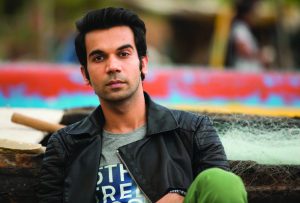
“My parents immigrated to the US from India in the late 1960s, part of the initial wave of immigrants following the Immigration and Nationality Act of 1965. I was born in Michigan, in the suburbs of Detroit, and raised there for most of my childhood. I say most because we did move to Pune when I was 8 and lived there for two years. But, other than that time, most of my formative experiences were in the US” explains Mallick.

They say that you can take an Indian out of India but not India out of him. So was the case with Mallick. “Through my parents, I was always conscious of my South Asian identity. We would attend religious and cultural functions throughout the year and had many family friends from the community. What I was less aware of, however, was my South Asian American identity. And it was not until college that I became aware of it”.

Ancestry, identity and citizenship in the immigrant population of the American melting pot, occupies the consciousness of most Americans. Immigration, ever a hot topic in the United States, has been a seminal part of the historical and political discourse here, since the founding of the nation, making up an enormous part of the history and heritage of America. Tracing ancestry, ethnicity, genealogy through DNA testing is a big industry in USA occupying considerable media advertising space. Among one of the reasons for this, is to seek a sense of community.

“Realising, that South Asians had started arriving in the US in larger numbers beginning in the late 1800s and early 1900s and that South Asians were barred from US citizenship from 1923 to 1946 was completely new information to me” said Mallick, who was previously the Assistant Bibliographer for the Southern Asia Collection at the University of Chicago Library and has worked for the South Asia and International Migration Programs at the Social Science Research Council. “It made me begin to wonder why it was that I didn’t know these histories growing up here in the US. What I realized is that these stories, like those of so many other minoritized communities, have been overlooked and excluded. Our stories are not included in textbooks, they are not taught in classrooms, and they are not reflected in media”.

This realization and learning more about the South Asian American community and its history was transformative for him personally and helped him re-imagine his place in the mosaic of American society. Dr. Michelle Caswell, the other co-founder of SAADA, and Mallick worked together to create this organization from the ground up. “Together we had the right backgrounds to set up an archive. I have worked with technology and non profits and Michelle is now an Assistant Professor of Archival Studies at UCLA. The two of us shared a deep interest in the ways that archives can empower communities. In 2008 we created SAADA and for the last nine years the organization has been working to digitally document, preserve, and share stories of those in the US who trace their heritage to India, Pakistan, Bangladesh, Nepal, Sri Lanka, Bhutan, Maldives, and the many South Asian Diaspora communities around the globe,” explains Mallick.

So, it is not just people from South Asia but South Asian origin people from the large global diaspora that SAADA caters to, I asked. “Yes. This is a large and diverse community. In the US there are now more than 4.3 million individuals who trace their heritage to South Asia. And it is also a community with a very rich history, with a presence in the US going back more than one hundred and thirty years”.

SAADA’s digital archives now include more than 3,000 unique items, constituting rare historical photographs, letters, postcards, newspaper clippings, and ephemera. Over five lakh visitors from around the globe have visited the website over just the last three years. They also bring out an online magazine called ‘Tides’ that carries original articles by scholars of South Asian American studies. “We also include oral history interviews, videos, archived websites, and other born-digital materials”, explains Mallick proud about the variety of its cachet. What is more, each item in the archive is digitized according to preservation standards and has associated metadata so that it can be easily searched and browsed. “We know that the archive has been used extensively by scholars, students, journalists, artists, activists, and other members of the community,” said Mallick acknowledging the user base of the archive. “This archive is now, in fact, the largest publicly accessible collection of materials related to the experiences of South Asians in the US” he said with a justifiable sense of pride.

SAADA approaches its work with a creative and imaginative flair to ensure that it is netting multi-vocal histories. In addition to the archive of historical materials, they have also created other participatory digital storytelling initiatives that allow community members to submit their stories directly to the archive.

‘The First Days Project’, which we started four years ago, now includes more than 350 stories from immigrants and refugees about their first experiences in the country. ‘The Road Trips Project’, which we launched earlier this summer, includes photographs and stories from South Asians travelling across the country by road as a way to help us re-imagine the tradition of the American road trip. In both of these projects, community members can go to our website to see the stories that have been submitted and then directly upload their own” an acknowledgement of the fact that archives are in effect owned by people. “Our goal is for SAADA’s work to reflect the diversity of the South Asian American community itself. And in doing so, we want to ensure that stories from within the community that are often overlooked are also given the importance they deserve,” said Mallick.

SAADA is a community-based effort, and accordingly, the vast majority of its support comes from individual donors who believe in the importance of this work and contribute small amounts— $50 or $100 — to support it. “Over the last four years, more than 800 individuals, not all of them South Asian American, have supported SAADA through individual donations” claimed Mallick. “But we also have also received financial support from government agencies, such as the National Endowment for the Humanities, private foundations, such as the Pew Center for Arts & Heritage, and community-based funders, such as the Asian Mosaic Fund (in Philadelphia) and the Asian Giving Circle (in Chicago) in the past. Grants from these funders have allowed us to take on bigger and more ambitious projects.” For example, they recently completed a one-year discovery project, supported by the Pew Center for Arts & Heritage, titled ‘Where We Belong: Artists in the Archive’. “In this project, we partnered with five contemporary South Asian American artists from different artistic disciplines who engaged with SAADA’s archive to create new artistic works. These new works were presented to the public at a symposium in Philadelphia in April 2017 and also shared nationally through community gatherings in people’s homes on August 5, 2017, the fifth anniversary of the 2012 mass shooting at the Oak Creek Gurudwara in Wisconsin,” said Mallick.

letters@tehelka.com

Charismatic Rajkummar Rao as mainstream Hindi film hero

Rajkummar Rao’s story in cinema sounds like the lives of Hindi cinema’s greatest icons. Rao has grown up in Gurgaon in a middle-class family, trained himself in dance and martial arts before being selected for the coveted acting course at FTII, Pune. Graduating with top honours, his struggle began when he started to audition for bit parts and made rounds of film studios and offices of casting directors after that. For the first year, a 10,000 rupee pay cheque was rewarding and meals were often shared. But as he often says, “I was persistent. I called Atul Mongia, who was casting for Love, Sex Aur Dhokha to try me out for a bigger role. “
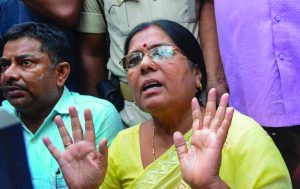
His continuous phone calls paid off. An audition later, Rao landed his first film; and immediately rose to the attention of filmmakers that mattered. Here was an actor that could become a character and raise it as a screen person.

But Rao’s achievement goes beyond that of being a character actor. Today, he is the leading man in mainstream films. His looks don’t sync with the image of a Hindi film hero till date. Yet, for films that hold promise, he happens to be playing the pivotal part of a leading man. His forthcoming film, Stree, a first of its kind horror comedy, casts him with Shraddha Kapoor. A funny and promising trailer, Stree has gotten audience interest right from its first looks. Rao will also be starring in Ek Ladki Ko Dekha To Aisa Laga, alongside Sonam Kapoor and Anil Kapoor. Slated to release next February, it’s a romantic drama with an extended cast of Juhi Chawla and Regina Cassandra. Next year also sees him star opposite Kangana Ranaut, reuniting the actors from Queen, in the dramedy Mental HaiKya. Rao also appears in Love Sonia, Tabrez Noorani’s hard-hitting film on sex trafficking that is currently the toast of the festival circuit. In brief, Rajkummar Rao seems to be everywhere, in a good way.

Rao’s exponential growth in Hindi cinema is largely due to his phenomenal talent. But it is also a result of changing audience tastes that have compelled the mainstream to accept talented filmmakers with fresh ideas and innovative casting. Acting takes precedence in the current landscape as poorly performing actors have little room for survival, even if they bring in star value. Rao’s recent release, Fanney Khan, serves for a good example. While both Anil Kapoor and Rajkummar Rao have been praised for decent performances in an incoherent, poorly made film, Aishwarya Rai Bachchan has been unanimously panned. Her performance has been criticised as has been her visible inability to grow as an actor. Being a star alone doesn’t matter much when an audience can choose from global content on streaming giants, or switch to engaging and quality regional films. Actors that audiences root for and connect with are crucial to make films succeed.

In the past, talented actors like Manoj Bajpai and Irrfan Khan have had to struggle for long years before they have found validation. They found just enough work to pay their bills in expensive Mumbai and kept plodding to find roles that did justice to their merit. In their cases too, filmmakers with fresh thinking gave them their visible roles. Ram Gopal Verma established Bajpai’s prowess as a brilliant actor with Satya; and in pivotal roles in Maqbool and New York, Irrfan Khan hit the mainstream thanks to Vishal Bharadwaj and Kabir Khan. He hit bullseye with Paan Singh Tomar, more than a decade since he began to act in films.

That Rajkummar Rao has found substantial roles today is because films that feel different and tell a good story, tend to do well. Rao has often stated that for him, the length of a role and its scope in a film rarely matters; it’s the quality of the story that makes him choose a film. He has said no to hero roles in mediocre films. He prefers to play a key character or second lead in a promising film with a solid script. Rao’s choices- Shahid, Omerta, Newton- reflect that quiet confidence that he stands ahead of the game as an actor. In his desperate performance in Trapped, a film riding entirely on his acting, Rao has proven his versatility and command over his craft. It’s his ability to be malleable that sets him ahead of his contemporaries. In Newton, where he plays a committed honest election officer, Rao delivered such a convincing performance that a film meant for the festival circuit went on to make money in theatres. Filmmakers that are keen to explore facets of storytelling beyond the conventional go to him first; he leads the new wave of Hindi cinema without much competition. When Shah Rukh Khan heaped praise on Rajkummar Rao at the opening ceremony of IFFI Goa 2017, he stated that he is the finest today; from Khan that’s rich praise for it indicates that the movers and shakers of Hindi cinema have come to recognise the value and immense potential of this young actor.

While doing a round of interviews recently, Rao has expressed keen interest in working on an action film soon. He wants to put his training in martial arts to use in a good, convincing story. So far, at 33, he has a National Film Award to his credit. With him eyeing a typical action entertainer, his confidence in his abilities to be a movie icon shine through yet again. As he displays his prowess over comedy, drama and different emotions with each film, one can hope for many more memorable roles from this talented actor who has successfully dented the star system of Hindi films.

letters@tehelka.com

Muzaffarpur rape scandal taints Nitish Kumar governance

A horrific incident of 34 girls being raped in a Muzaffarpur shelter home run by a local newspaper owner and power broker, Brajesh Thakur surfaced. Accused Thakur was found to be highly connected with considerable clout in the state capital. His call details revealed his close connections with the husband of the state social welfare minister Manju Verma. Verma was shocking. Verma was looking at the shelter homes in the state and her department was responsible for providing funds to the NGOs which run shelter homes across the state. 

The incident forced her to step down from her post immediately though Bihar Chief Minister Nitish Kumar tried to shield the minister by saying that there was no question about her resignation. He had political equations in mind because Verma belongs to the caste of Kushwaha and the chief minister was grooming her against his arch rival and Minister of State in the Union Cabinet, Upendra Kushwaha. When the revelations of Verma’s husband receiving regular calls from the main accused came to light, Kumar was left with no option than to ask her to resign.

Muzaffarpur rape scandal has exposed the vulnerability of the state apparatus to manipulations by vested interests that can go to the extent of indulging in heinous crimes of raping helpless poor girls. Some media, as usual, being friendly with the ruling regime didn’t show the anger of the people in Bihar properly.

The fact that a notorious journalist involved in the rape scandal and having access to the top brass in the state capital and being saved even after an adverse report from the Tata Institute of Social Sciences, the third-party auditor of shelter homes in Bihar, is unacceptable to the people. Protests are going on in every part of the state. However, the media supporting the ruling party is largely ignoring it.

In this case, the role of BJP is also important. The party does not want to own up the failures of a governing state. The leaders of the party view this incident as an opportunity to denigrate the chief minister and dethrone him, a desire that has been nursing since long.  Senior leader and former union minister CP Thakur has demanded Nitish’s resignation. Thakur suggested that the minister should not be on the post till the investigations are on. Here, former minister Verma has also warned the chief minister that other leaders involved in the scandal should also be brought to book.

Kumar, expressing remorse said that he is ashamed of the incident. His assertion that it was a failure in the system appears to have some element of truth. But, how can this logic be accepted when he is in the ruling of the state for over one and half decade? 

In an attempt to balance the equation which is changing fast in the wake of 2019 elections, the Bihar chief minister installed his confidant and former journalist Harivansh Narayan Singh as the Deputy Chairman of Rajya Sabha. His success in doing so has proved that he has some clout among the non-Congress and non-BJP chief ministers. Orissa chief minister Naveen Patnaik obliged him by supporting JDU candidate Harivansh Narayan Singh despite the fact that he would be facing BJP as its main opponent in assembly and parliamentary elections in his state. 

However, this clout will hardly work in the state. His falling image has made him vulnerable to all sorts of bargain in the party and outside it. The BJP is bound to take advantage of his vulnerability. The party is facing difficulty in finalising the candidates of parliamentary elections owing to the demand from JDU for more seats. It is causing irritations to the state leadership which considers the demand as exaggerated. It is the confidant of BJP that they would win the election on Prime Minister Narendra Modi’s image. It hardly matters for the party whether Nitish stays with them or not.  

The future

His political rival Lalu Prasad is in jail and Nitish has quelled dissidence within the party. But his calculations are now in jeopardy as he will have to struggle hard to put his development plank on track. This is necessary because he is left with no time to jump into the campaign for 2019 polls. Bihar would be one of the sites where a fierce battle is to be fought. The state is not only important in terms of numbers but also for the political equations that has developed nationally. The Congress led Mahagathbandhan would try its best to capture it. On the other hand, the BJP is trying to repeat its performance of 2014.

This cannot be denied that after a long period of poor governance and anarchic political scenario, Kumar had brought peace and stability. People were tired of the rule of Lalu Prasad. However, Prasad had certainly brought a social revolution by empowering Dalits and OBCs but failed in maintaining law and order. He was also accused of patronising anti-social elements in the state. People give credit to Kumar for the brought the state to the stage where it could join the race of development.

His image as the man of development made him able to win an election in which he had his fierce enemy Lalu Prasad by his side. He had successfully forged a social equation to give the much required stability to the state. Kumar could not continue with the arrangement and deserted the Mahagathbandhan (alliance) that was formed to provide a national alternative to BJP. He himself was being seen as a potential candidate for the post of prime minister.

Nitish Kumar has also effectively put down the fire that had broken out of  Srijan scam which involved embezzlement of huge government funds. The scandal with the patronage of bigwigs and many heads were expected to roll off. However, nothing of the sort happened and Kumar seemed to have controlled the damage. However, the Srijan Scandal severely dented his image.  The scandal reduced Kumar’s bargaining power. He does not have any scope in the opposition camp either because Tejaswi Yadav is completely opposed to his entry in his party. He has asserted more than once that he could not be accommodated in the Mahagathbandhan. Left with only one of option of staying in the NDA, Kumar is trying to influence the equation within the BJP. However, his main supporter in the BJP, Arun Jaitley, is unwell and not being able to do much. By putting Harivansh in an important office, Kumar is hoping to influence the BJP leadership. But these politics may not work because both PM Narendra Modi and BJP president Amit Shah were never comfortable with him. The case of Srijan Scam may also get a hearing very soon. These all will add to another embarrassment to him. It would be difficult for him to maintain the image of Sushasan Babu in such an adverse situation. The 2019 polls may prove to be a nightmare for the Bihar chief minister.

letters@tehelka.com

MOST POPULAR

HOT NEWS