External Affairs Minister (EAM) Sushma Swaraj on September 13 met her Russian counterpart Sergey Lavrov in Moscow and held talks on bilateral and regional issues to boost strategic partnership. She is on a two-day visit to Russia and this visit is her third visit in past 11 months.
EAM spokesperson Raveesh Kumar tweeted, “Always a pleasure to meet a good friend of India! EAM @SushmaSwaraj with Foreign Minister of Russia Sergey Lavrov in her 1st engagement since arriving in Moscow. Both leaders had a good exchange of views on bilateral & regional issues. FM Lavrov hosted a dinner in honour of EAM.”
During her visit Swaraj will attend the 23rd India-Russia Inter-Governmental Commission on Technical and Economic Cooperation (IRIGC-TEC) which is co-chaired by her and Yuri Borisov, Deputy Prime Minister of the Russian Federation.
Swaraj said, “I have come here for a bilateral meeting. I had no idea that he (Lavrov) would be coming to meet me. I am obliged and thank him for finding time to meet me. India-Russia relations are warm and cordial. President (Vladimir) Putin and Prime Minister Narendra Modi’s meetings have further strengthened our ties.”
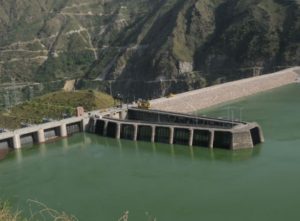
The water storage available in 91 major reservoirs of the country for the week ending on September 13, 2018, was measured at 121.655 BCM which is 75% of the total storage capacity of these reservoirs.
The total storage capacity of these 91 reservoirs is 161.993 BCM which is about 63% of the total storage capacity of 257.812 BCM which is estimated to have been created in the country. 37 Reservoirs out of these 91 have hydropower benefit with an installed capacity of more than 60 MW.
REGION WISE STORAGE STATUS:-
NORTHERN REGION
The northern region includes States of Himachal Pradesh, Punjab and Rajasthan. There are six reservoirs under CWC monitoring having a total live storage capacity of 18.01 BCM. The total live storage available in these reservoirs is 13.81 BCM which is 77% of the total live storage capacity of these reservoirs. The storage during the corresponding period of last year was 86% and average storage of the last ten years during the corresponding period was 82%.
EASTERN REGION
The Eastern region includes States of Jharkhand, Odisha, West Bengal and Tripura. There are 15 reservoirs under CWC monitoring having the total live storage capacity of 18.83 BCM. The total live storage available in these reservoirs is 15.90 BCM which is 84% of the total live storage capacity of these reservoirs. The storage during the corresponding period of last year was 61% and average storage of the last ten years during the corresponding period was 66%.
WESTERN REGION
The Western region includes the States of Gujarat and Maharashtra. There are 27 reservoirs under CWC monitoring having a total live storage capacity of 31.26 BCM. The total live storage available in these reservoirs is 17.17 BCM which is 55% of the total live storage capacity of these reservoirs. The storage during the corresponding period of last year was 64% and the average storage of the last ten years during the corresponding period was 63%.
CENTRAL REGION
The Central region includes States of Uttar Pradesh, Uttarakhand, Madhya Pradesh and Chhattisgarh. There are 12 reservoirs under CWC monitoring having a total live storage capacity of 42.30 BCM. The total live storage available in these reservoirs is33.17 BCM which is 78% of the total live storage capacity of these reservoirs. The storage during the corresponding period of last year was 59% and average storage of the last ten years during the corresponding period was 70%.
SOUTHERN REGION
The Southern region includes States of Andhra Pradesh, Telangana, AP&TG (Two combined projects in both states), Karnataka, Kerala and Tamil Nadu. There are 31 reservoirs under CWC monitoring having a total live storage capacity of 51.59 BCM. The total live storage available in these reservoirs is 41.60 BCM which is 81% of the total live storage capacity of these reservoirs. The storage during the corresponding period of last year was 41% and average storage of the last ten years during the corresponding period was 65%.
States having better storage than last year for the corresponding period are Jharkhand, Odisha, Uttar Pradesh, Uttarakhand, Madhya Pradesh, Chhattisgarh, AP&TG (Two combined projects in both states), Andhra Pradesh, Telangana, Karnataka, Kerala and Tamil Nadu. States having lesser storage than last year for the corresponding period are Punjab, Himachal Pradesh, Rajasthan, Maharashtra, West Bengal, Tripura and Gujarat.
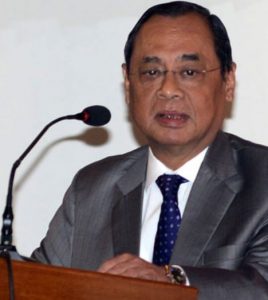
President Ram Nath Kovind on September 13 appointed Justice Ranjan Gogoi as the next Chief Justice of India (CJI). Justice Gogoi will assume the office of Chief Justice on October 3, 2018, after current CJI Dipak Mishra’s retirement.
CJI Mishra endorsed the name of the senior-most judge Justice Gogoi as his successor on September 1, putting to rest all speculations around the next CJI.
Justice Gogoi is from Assam and was enrolled as an advocate in 1978. He practiced in the Guwahati High Court on constitutional, taxation and company matters.
He was appointed as a Permanent Judge of the Guwahati High Court on 28th February, 2001.
Justice Gogoi also headed the special bench that is monitoring the updation of National Register of Citizens to identify citizens and weed out illegally settled foreigners.
He has been part of a body of important judgments and orders in the Supreme Court.
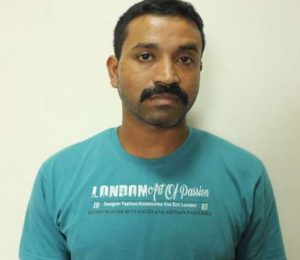
The Anti-Terrorism Squad (ATS) of Uttar Pradesh on Thursday arrested an alleged terrorist of Hizbul Mujahideen from Kanpur.
The suspect named as Qamar Uj Zama was arrested on the basis of leads collected over a period of time by Intelligence agencies.
According to Uttar Pradesh Director General of Police (DGP) O P Singh, the arrested Hizbul Mujahideen terrorist had plans to launch an attack on the occasion of Ganesh Chaturthi.
“During questioning he told us that April last year, he had gone for training to Kashmir. He is of Indian nationality and a literate person,” the DGP added.
Singh further said that Qamar Uj Zama was active from April 2018 after he posted his pictures on social media with AK 47.
The ATS is now trying to find out from him about the duration of his stay in Uttar Pradesh, if he has more accomplices, what were his other targets and from where did he get funds, the DGP added.
A Tanzanian national was apprehended at the Mumbai airport for allegedly trying to smuggle out 6 kgs of drugs, an official said Thursday.
As per the report, I A Shabani, who was supposed to travel to Muscat, was apprehended by CISF personnel at around 2 am, he added.
Shabani was intercepted on the basis of suspicion by security personnel, when he was about to enter the Chhatrapati Shivaji Maharaj International (CSMI) Airport and was taken for detailed frisking.
According to an official, “around six kilograms of Ephedrine, a stimulant category drug, was recovered in the form of crystalline shape from the bag of the man who holds a Tanzanian passport. Later he was handed over to anti-narcotics sleuths.”
Parents willingly give up luxuries to provide a bright future for their children. Furthermore, with the cost of education rising at a fast pace, it just adds to their troubles, yet that can never be a reason to give up on it.
As far as investing for children is concerned, parents are trying to explore new avenues. Be it school education or higher education – there is indeed an urgent need to have long-term investments for children. In the following section, we will discuss innovative and realistic ways which can be immensely helpful in planning small investments for your children.
Investing in Mutual Funds through SIP
You can opt to invest in mutual funds through Systematic Investment Plan (SIP), which is now the most favoured method to invest in a mutual fund scheme that aligns with your goals. By investing a small amount every month, SIP route helps to inculcate the required investment discipline and also rides out the market fluctuations. And not to forget, the benefits provided by rupee cost averaging, wherein more units are purchased when the market is down, and fewer units are purchased when it is high.
Investing in Child Plans (ULIPs)
You can invest in child plans, or ULIP plans to secure your child’s future as well. Several life insurance companies are offering ULIP plans to fulfil your child’s needs and requirement during his/her growing stages. All you need to do is choose the ULIP plan for your kid that appears the most convenient for your family and your finances. Moreover, ULIP plans provide you with features such as switching between various funds (equity to debt and vice-versa), top-up facility, tax benefits and options of surrender.
Investing in Public Provident Fund (PPF)
Public Provident Fund (PPF) is another long-term option which definitely caters to future plans of your loved ones. The maturity period for this specific perspective is 15 years, which is lucrative, and it offers tax benefits as well. In case of an urgent need, PPF authorities now allow partial withdrawal of sum without any hassle. One of the basic reasons which make PPF a lucrative investment option is the EEE feature and the flexibility associated with it. Yearly, a minimum investment of Rs 500 is required, and the upper limit is Rs 1.5 lakh per account. Additionally, if required, the maturity period can be extended by 5 years at a time.
Investing in Sukanya Samriddhi Scheme
The Sukanya Samriddhi Scheme was launched as part of ‘Beti Bachao Beti Padhao’ campaign. It is exclusively for girl child of the family. An account can be opened any time after the birth of a girl till she turns 10. The good thing about this scheme is, the account remains operative for 21 years from the date of opening or till the marriage of the girl. Similar to PPF, Rs 1.5 lakh can be deposited in this specific account. The good thing is, currently the scheme gives 8.1% interest, and there are income tax benefits as well. The tax benefit feature of this scheme gives it the required edge.
Investing in Gold
Investing in gold is considered to be the most traditional method of investing for long term. Be it gold ornaments or Gold ETFs, investing in gold is lucrative as gold prices rarely go down even in volatile moments of share market. Even if the market crashes out, gold gives a better purchase than most other shares. Side by side, it also acts as a hedge against equity. Even gold jewellery is considered to be profitable in this aspect. But in case of jewellery, be prudent and choose only the hallmarked one.
Conclusion:
The multitude of different investment plans for a child’s future provides a situation that is vital to take advantage of. While trying to invest, time is always an asset, and tax-sheltered investments help to ensure that your earnings are not slowly eaten away. So, prioritise the goals of your kids and invest in the instruments mentioned above to carve a better future for them.
Two Pakistani Jaish-e-Muhammed (JeM) terrorists were killed in an encounter between security forces and militants in Jammu and Kashmir’s Sopore town on Thursday.
A gunfight was erupted between the militants and security forces upon receiving specific information about the presence of militants. The security forces including Army, the state police’s Special Operations Group (SOG) and the Central Reserve Police Force (CRPF), launched the search operation and cordoned off the area.
As the cordon was tightened and security forces were closed in on the hiding militants, the latter fired at the security forces triggering the encounter, in which two militants killed.
Informing about the incident Jammu and Kashmir Police tweeted, “Sopore Encounter Update. Two foreign terrorists of JeM killed. Both of them were from Pakistan. They have been identified as Ali @ Athar & Zia-ur-Rehman. Ali was mastermind behind the Sopore IED blast in which four policemen were martyred.”
Meanwhile, in another encounter at Kakriyal, two terrorists were killed and SDPO Nagrota and some jawans of CRPF got injured as the encounter is underway.
Internet services have been suspended in the area as a precautionary measure.
Myanmar government leader Aung San Suu Kyi, on September 13 strongly defended a Burmese court decision to jail two Reuters news agency reporters who were arrested while investigating alleged war crimes against Rohingya Muslims, adding that they can appeal their seven-year jail sentence.
Suu Kyi said, “They were not jailed because they were journalists, they were jailed because … the court has decided that they have broken the Official Secrets Act.”
She said this while attending an international economics conference in Vietnam. During her address she also admitted that her government could in hindsight have handled the Rohingya crisis differently.
Two Reuters journalists named Wa Lone, 32, and Kyaw Soe Oo, 28, were imprisoned last week after the court found them guilty of breaching the country’s hardline Official Secrets Act while reporting on atrocities committed by security forces during the brutal crackdown in Rakhine state.
Suu Kyi further added, “I wonder whether many people have actually read the summary of the judgement which had nothing to do with freedom of expression at all, it had to do with an Official Secrets Act.”
“If we believe in the rule of law, they have every right to appeal the judgment and to point out why the judgement was wrong,” Suu Kyi said.
Congress President Rahul Gandhi on Thursday in a press conference alleged that Congress leader PL Puniya saw Vijay Mallya and Finance Minister Arun Jaitley having a discussion in parliament just two days before Mallya went to UK.
Addressing the media in the same conference, PL Punia said “On 1st March 2016, when I was in Central Hall of Parliament House, I witnessed Arun Jaitley and Vijay Mallya talking discretely. On 3rd March, we heard from media that he fled the country on 2nd March, 2016.”
“I have clearly stated about this in each of my interview with media. There are CCTV cameras, we can all see that for proof. If I’m wrong I’ll resign from politics,” Punia added.
Accusing Arun Jaitley of knowing Mallya’s motive, Rahul said, “The absconder informed Finance Minister about fleeing the country. Why wasn’t this notified to CBI or ED? The notice issued for Vijay Mallya was changed to the inform notice. No one can do this other than CBI. They should clarify if they did this on their own or were orders given to CBI?” Rahul added.
Further attacking Jaitley, Rahul said, “Yesterday, Arun Jaitley said that Vijay Mallya had formally approached him in Parliament, but why did he not mention any of this before, why Jaitley first claimed that he never met Vijay Mallya, but Mr. Mallya met him in the corridor and informed that he was going to London. Why didn’t FM then inform CBI or ED,” Rahul said.
Asking to investigate the matter, Congress President said, “This is a clear-cut case of collusion. There is some deal between them. Arun Jaitley must resign and this should be investigated.”
Liquor baron and former parliamentarian Vijay Mallya, who is accused of fraud and money-laundering told reporters on Wednesday outside a UK court hearing a case on his extradition to India: “I left because I had a scheduled meeting in Geneva. I met the finance minister before I left, repeated my offer to settle with the banks. That is the truth.”
Arun Jaitley, who was the finance minister in 2016 when Mallya left India, clarified his stand, in a post on his official FB account. Jaitley said, “My attention has been drawn to a statement made to the media by Vijay Mallaya on having met me with an offer of settlement. The statement is factually false in as much as it does not reflect truth. Since 2014, I have never given him any appointment to meet me and the question of his having met me does not arise. However, since he was a Member of Rajya Sabha and he occasionally attended the House, he misused that privilege on one occasion while I was walking out of the House to go to my room. He paced up to catch up with me and while walking uttered a sentence that “I am making an offer of settlement”. Having been fully briefed about his earlier “bluff offers”, without allowing him to proceed with the conversation, I curtly told him “there was no point talking to me and he must make offers to his bankers.” I did not even receive the papers that he was holding in his hand. Besides this one sentence exchange where he misused his privilege as a Rajya Sabha Member, in order to further his commercial interest as a bank debtor, there is no question of my having ever given him an appointment to meet me.”
Navjot Singh Sidhu, former cricketer-turned-politician and Punjab minister, is facing the possibility of receiving harsher punishment in a 1988 road rage case, in which a man named Gurnam Singh died 20 years ago. Sidhu was sentenced in the case four months ago, with a nominal fine of Rs. 1,000.
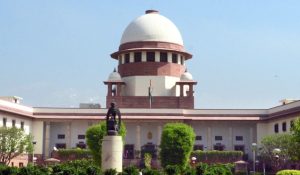
The Supreme Court (SC) has now agreed to entertain a petition filed by the family members of deceased Gurnam Singh seeking review of its May 15 verdict that let off Sidhu with Rs 1,000 fine in a 1988 road rage case citing there was no sufficient evidence to prove the harsher charges of culpable homicide not amounting to murder against him.
A SC bench of justices AM Khanwilkar and Sanjay Kishan Kaul issued notice to Punjab Minister Sidhu on September 12. “Issue notice restricted to quantum of sentence qua respondent no. 1 – Navjot Singh Sidhu,” the bench said in an order.
Sidhu refused to comment on ‘reopening’ of the case.
In May, a bench of Justices J Chelameswar and Sanjay Kishan Kaul sentenced the Congress leader with a fine. The May verdict allowed the cricketer-turned-politician to continue as a minister in the Punjab government.

 External Affairs Minister (EAM) Sushma Swaraj on September 13 met her Russian counterpart Sergey Lavrov in Moscow and held talks on bilateral and regional issues to boost strategic partnership. She is on a two-day visit to Russia and this visit is her third visit in past 11 months.