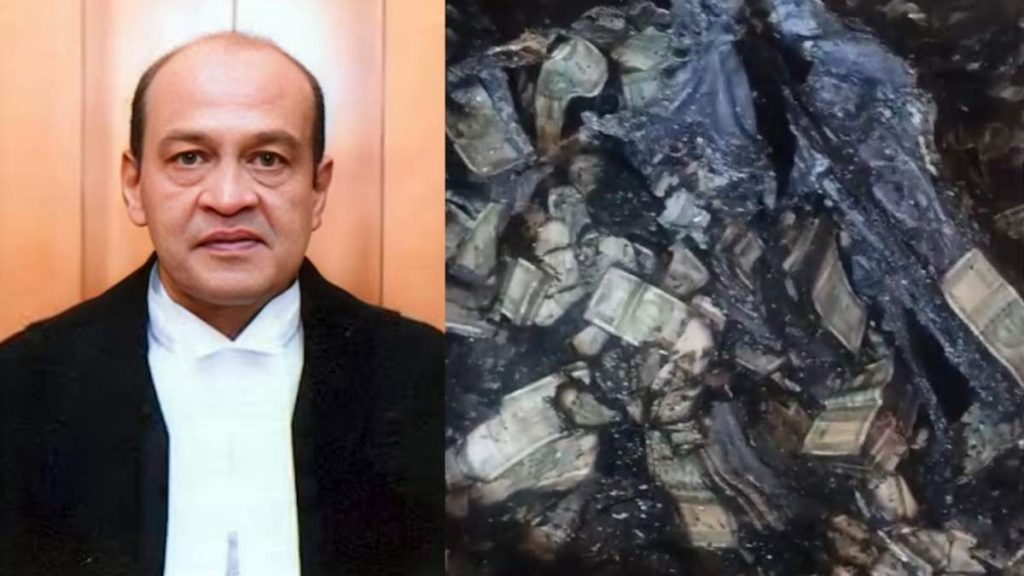
William Shakespeare famously wrote in Julius Caesar that “Caesar’s wife must be above suspicion,” underscoring the expectation that those in positions of authority must remain beyond even the slightest appearance of impropriety. This principle is particularly crucial in the judiciary, where trust and integrity form the foundation of justice. However, the recent alleged discovery of unaccounted cash in a storeroom at the official residence of Justice Yashwant Varma, a judge of the Delhi High Court, has sparked serious concerns. The Supreme Court has appointed a probe committee consisting of the Chief Justice of the Punjab & Haryana High Court Justice Sheel Nagu, Chief Justice of the Himachal Pradesh High Court Justice G.S. Sandhawalia, and Karnataka High Court Judge Justice Anu Sivaraman, to conduct a transparent and expeditious probe.
Justice Varma, who was appointed to the Allahabad High Court in October 2014 and transferred to the Delhi High Court in October 2021, is set to retire in 2031 unless elevated to the Supreme Court, in which case his tenure would extend until 2034. Given the gravity of the situation, the Supreme Court has taken an unprecedented step by making the inquiry report, submitted by the Chief Justice of the Delhi High Court, publicly available. The report’s conclusion that the “entire matter warrants a deeper probe” has only intensified scrutiny. Further, a short video recording of a firefighter gathering together a mound of charred currency notes in the still smouldering store room, adds an element of mystery to the unfolding case.
At the core of this controversy lies the credibility and integrity of the judiciary. Justice Varma has maintained that neither he nor his family members were responsible for storing the cash, raising critical questions: Was the money placed there without his knowledge? If so, was it part of a larger conspiracy to frame and tarnish the judge’s reputation? If foul play is involved, who orchestrated it?
The judiciary, being the guardian of justice, must not allow any ambiguity to persist. This is not the first instance of financial irregularities linked to the judiciary. In March 2025, former Punjab and Haryana High Court judge Justice Nirmal Yadav was acquitted after a 17-year-long corruption case involving Rs 15 lakh found at another judge’s residence. Likewise, allegations of sexual harassment against former Chief Justice of India Ranjan Gogoi in 2019 raised serious concerns when he participated in his own case proceedings, leading to the internal committee’s dismissal of the allegations. Similarly, accusations against Justice N.V. Ramana by former Andhra Pradesh Chief Minister Jagan Mohan Reddy in 2020 were handled through an internal inquiry whose findings were never disclosed.
The importance of openness in this matter cannot be overstated. Ultimately, the judiciary must uphold the highest ethical standards, ensuring that justice is not only done but seen to be done. The outcome of this case will serve as a crucial litmus test for the Indian judicial system’s commitment to integrity, impartiality, and transparency.
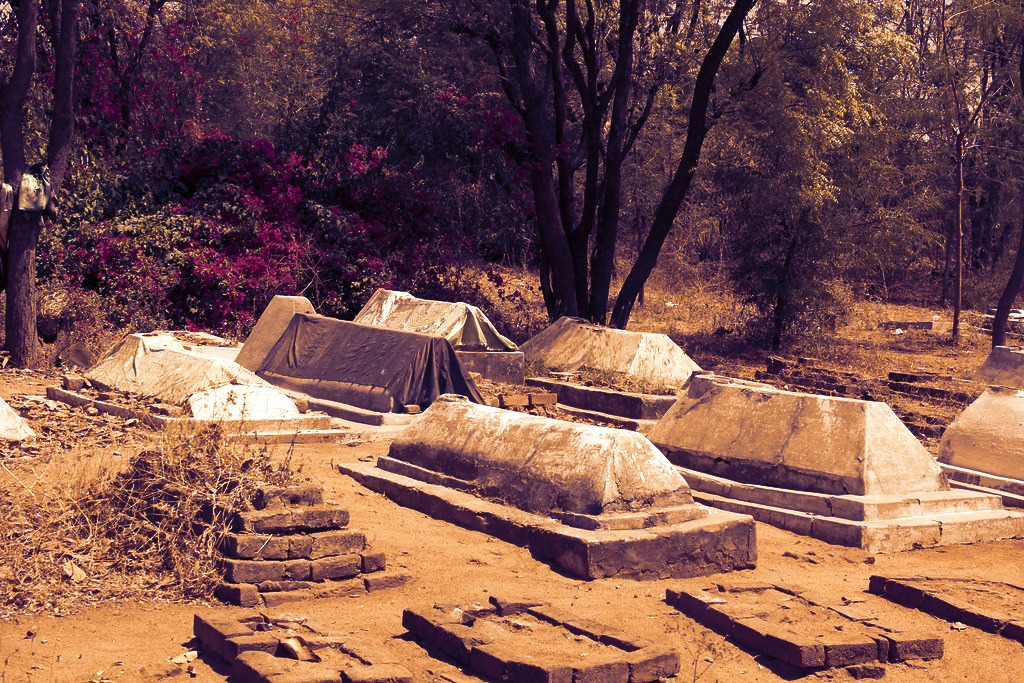
In Delhi’s historic Mehndiyan graveyard, burial plots are sold like real estate, with advance bookings at times going for lakhs of rupees as families scramble to book prime spots, seeking status even in death. A report by Tehelka SIT
Booking flats, cars and marriage halls is commonplace, but some people now book graves for their loved ones to secure a premium spot for eternity. The trend, earlier prevalent in Gulf countries, is catching on among Muslims and Christians in India. Ironically, even resting in peace now demands planning — and a price.
Razi-uddin Ahmad lives in a two-bedroom flat near Jama Masjid in old Delhi with his wife and four children. Sky-high property rates have forced him to stay in the house he grew up in, but in death, he has ensured that his family has adequate space. The 52-year-old businessman booked 12 graves for Rs 48,000 so that his family members wouldn’t have trouble finding space when they die. “Who would want to be buried next to a stranger? We will all be together,” said Ahmad, who made the booking over a decade ago.
Ahmed’s cousin, Shafeeq Rehman, has booked 88 graves in his grandfather’s name. According to Ahmed, it is considered a status symbol to own as many graves as possible. He comes from a large family. Another businessman from the walled city, Akhmal Jamal, has booked 58 graves in Delhi’s Mehndiyan graveyard.
Some graveyards allow advance booking of graves, with rates starting from Rs 5,000 and running into lakhs, depending on the location—much like buying property. The earlier you book, the higher the discount!
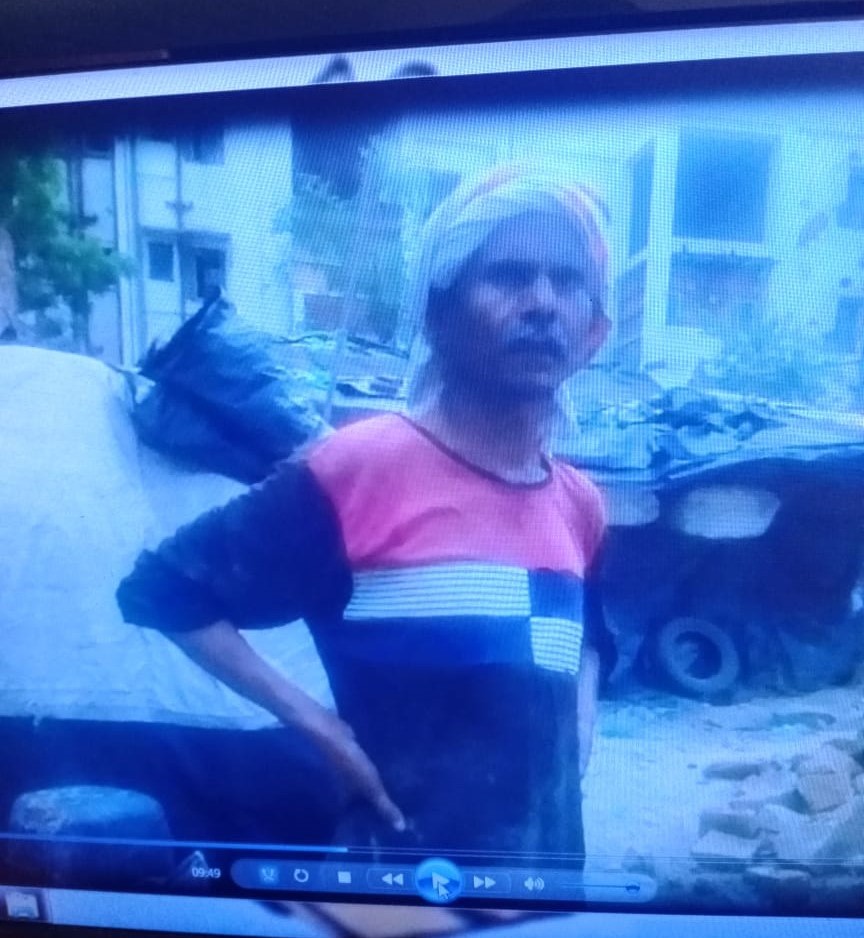
“You cannot bury your dead in this graveyard without booking a grave in advance. Once booked, no one else can use that spot for burial. There are instances where people have booked graves 10 years in advance here. One can even do bulk booking in this graveyard. Several grave plots here were sold for Rs 1 lakh,” said Mushtaq, a gravedigger at Mehndiyan graveyard, speaking to the Tehelka reporter.
Mushtaq
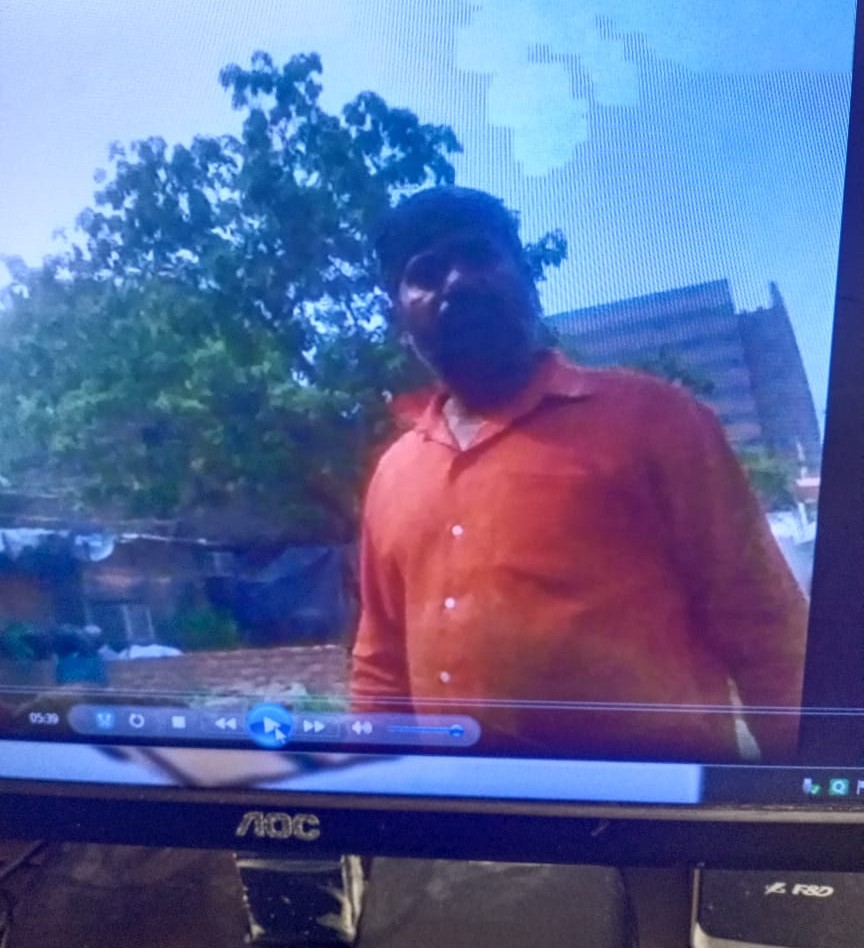
“I live in this graveyard and have been preparing graves for the last 10-12 years. Advance booking is a must here. The rate of a grave depends on the location of the plot. All the preferred plots are either sold or booked. The only available plots now cost Rs 30,000,” said Pappu to our reporter.
Pappu
“For advance booking, we take the full Rs 30,000 upfront, book the spot and issue a receipt against the payment. Whenever the family comes with the dead body, they show us the advance payment slip and take their booked spot for burial. If someone comes with proof that a family member was buried here 20-22 years ago, we bury the dead in the same grave after re-digging it,” said Mohammed Chand, a caretaker of Mehndiyan graveyard.
Mohammed Chand
Mehndiyan, a Muslim graveyard known as a VIP Qabristan, is a historical site situated behind Lok Nayak Jai Prakash Narain (LNJP) Hospital, near Delhi Gate in New Delhi. It is one of the country’s most prominent graveyards.
Rana Safvi, author and historian, has written about the compound in her book The Forgotten Cities of Delhi. She states that the Qabristan-e-Mehndiyan was once a vast area, home to the graves of many saints and ordinary people. Mehndiyan boasts a striking history—when Shah Waliullah Dehlawi, the renowned Islamic scholar, historiographer and philosopher, died in the late eighteenth century, he was buried here.
Born four years before the death of Aurangzeb, at a time marking the beginning of the end of the Mughal dynasty, Shah Waliullah Dehlawi is considered the greatest Islamic scholar of India. Claiming descent on his father’s side from Umar bin Khattab [R], the second caliph of Islam, his entire family is buried alongside him in this cemetery. Even today, people can be seen sitting for hours in front of his grave, praying and meditating.
Momin Khan Momin, one of the greatest Urdu poets, is also buried inside the same compound. Other prominent graves include that of freedom fighter and Islamic scholar Maulana Hifzur Rahman Seoharwi, Younus Dehlvi, former editor of Shama, an old and now out-of-print Urdu film magazine, and BJP member Sikander Bakht.
The entire compound consists of graves, the Dargah of Shah Waliullah Dehlawi, and a madarsa. Madrasah-i-Rahimiyah, established inside the Mehndiyan compound by Shah Abdur Rahim, father of Shah Waliullah, went on to become one of the greatest educational centres in India.
Among the many prominent graves at Mehndiyan, those of Mona Ahmad—considered India’s most iconic transgender—and her guru Chaman lie side by side in a small room with Quranic verses inscribed on its bright blue walls. A large, faded painting of Mona in a long white dress is etched on a purple wall. She died in 2017, but her nephew and caretaker, Jahanara, still lives there.
Since Mehndiyan is one of India’s most historical and prominent Muslim graveyards, it houses the graves of several Islamic scholars, freedom fighters, Urdu poets, journalists, politicians—and above all—the Dargah of Shah Waliullah Dehlawi. With so many revered figures buried here, it is believed that resting next to a holy person helps transport the soul to heaven, as the neighbour is expected to seek God’s forgiveness for those buried nearby. This belief is also why graves next to religious figures command higher prices.
Sources say that a grave near the feet of Shah Waliullah Dehlawi was sold for Rs 1.8 lakh. For many Muslims, it is a matter of pride to be buried in this graveyard alongside such luminaries. Sensing the rush among Muslims to secure a final resting place here, some people have begun taking advantage of the situation by offering advance bookings of graves in Mehndiyan graveyard.
Tehelka reporter visited Mehndiyan graveyard posing as a potential customer to investigate. Just to the left of the entrance gate, we spotted the office of the Ali-Mohammed Shere Mewat Foundation board, registered in 2018, with the names of its office-bearers displayed. A tea vendor at the gate guided us to a man named Mohammed Chand, who introduced himself as the caretaker of the graveyard.
We told Chand that we wanted to book two graves in advance at Mehndiyan. Chand was initially confused but understood once told it was for advance booking — not for an immediate burial. He took us around to show potential plots where we could choose graves.
Reporter- Jagah ke liye aaye they.
Chand- Jagah.. matlab?
Reporter- Qabr ki jagah.
Chand- Inteqal hua hai?
Reporter- Intekal nahi.. matlab wo advance mein chah rahe hain..qabr ki jagah.
[The brief exchange underlines how common advance bookings for burials have become. It also reflects how afterlife, like life, is increasingly being planned and secured well in advance.]
While he was showing us the sites for graves, we asked Chand whether we could get place for burial inside the Dargah of Shah Waliullah — considered most honurable thing for any Muslim. Chand, however, made it clear that such a spot was not available.
Chand- Yahan mil jayegi….
Reporter- Ander Hazrat ke yahan nahi mil jayegi…?
Chand- Nahi
Reporter- Aapka naam?
Chand- Mohd Chand.
Reporter- Aap Aligarh se hain, kaunsi jagah se..?
Chand- Jamalpur.
[The dialogue reveals that even caretakers draw a line when it comes to the most coveted spots. It also hints at the unspoken hierarchy within graveyards, where some spaces remain out of reach.]
While we were visiting the graveyard to choose a plot for booking a grave in advance, we came across two vacant plots. When asked about them, Chand said they were already sold, though no one from their families had come yet.
Reporter- Ye jo jagah hain sab biki hui hain?
Chand- Ye sab biki hui hain..
Reporter- Ye bhi biki hui hai?
Chand- Haan… abhi tak yahan koi aaya nahi hai..
Reporter- Advance mein!
[The brief conversation lays bare the scale of the dealings, with the man confirming that all the plots in the area have already been sold. It reflects the brisk nature of these transactions—ownership changing hands long before any visible activity.]
Then, Chand showed us another plot for the graves and assured us that it could accommodate three to four graves. The reporter then sought clarity on the ownership of the available plots. Chand confirmed that most spots were already sold, though some remained unclaimed as they had been booked in advance.
Reporter- Accha ek ye jagah hai.?
Chand- Ye qabr hai iske barabar mein ek ye jagah hai..
Reporter- Accha ek jagah ye hai…to ye to ek hi hui na?
Chand- Aur ho jayengi.
Reporter- 3-4 ho jayengi.?
[The interaction makes it evident that graves here are treated like real estate — bought, reserved, and waiting. It reveals how the scramble for space extends even into death!]
Curious about those buried at Mehndiyan, we asked if politicians found space here. Chand replied that the graveyard mostly housed ulema and wealthy families from old Delhi.
Reporter- To is Qabristan mein bade log dafan honge..MPs, MLAs.. ?
[The response reveals how lineage, scholarship, and wealth shape even burial grounds. Resting among the learned and affluent seems to carry a significance that survives beyond life.]
The reporter then asked Chand if he was a committee member. Chand clarified that he was merely a caretaker, tasked with shifting graves and deciding where each body should be buried.
Reporter- Committee member hain aap?
Chand- Nahi hum to caretaker hain..kahan kya karna hai. Kaunsi maiyat ko change karna hai, idhar se nikal kar idhar karna hai..ye sab.
Reporter- Acha maiyat bhi change ho jaati hai ?
[What stands out is the casual mention of shifting bodies — an unsettling reminder of how even the dead aren’t spared adjustments when space and demand collide.]
The conversation soon turned to rates. Chand quoted a fixed price — Rs 36,000 per grave —including digging, stonework, and constructing the box. Any additional rituals or tasks later would attract extra charges, he added.
Reporter- 30 hazar qabr ka aur 6000 uper ka mistry wistry ka..36 hazar ki ek qabr ?
Chand- Dafnane tak.. uske baad kuch karwayenge.. alag se to uska alag charge hoga
Reporter- Pakka karwayenge to?
Chand- Jo bhi karwayenge.
[It turns out there’s a clear price list even for the afterlife. Resting in peace now depends on how much you can pay.]
When asked if the price would change if we booked a grave today but the burial happened after 3-4 years, Chand said he would issue a receipt. At the time of burial, producing the receipt would ensure the price remains the same. He assured that future hikes wouldn’t affect the advance buyer holding the slip.
Reporter- Accha agar hume aaj booking karwa li aur intekaal hua 3-4 saal baad.. to keemat badhti hai?
Chand- Haan badegi kyun nahi badegi..
Reporter- To wo kis hisab se hogi?
Chand- Nahi aapko wo matlab nahi hai..aapke pass to parchi hogi..
Reporter- Aap slip de denge advance booking ki..aur aagey jo keemat badegi wo bhi humko deni hogi ?
Chand- Nahi uski koi zaroorat nahi hai.. humne aapko aaj ek cheez ek rate pe de di…aagey jo bhi rate badega 10-5 hazar ussey hame kya…aapne koi business karne ke liye thodi le rakhi hai..
[What emerges is the rare certainty that once a grave is booked, the price is locked forever. In a world where inflation spares nothing, death, it seems, remains a rare exception!.]
When asked if a receipt for advance booking of the grave could be issued after paying some token money, Chand said the receipt is issued only after full payment, or at least Rs 10,000 must be paid. He also clarified that receipts were only issued during official hours.
Reporter- To abhi mein koi token de jaaon.. raseed kaat do aap?
Chand- Raseed jab poora paisa aata hai tab detey hain..
Reporter- Abhi mein aapko 1000- 2000 rupaye de jaoon?
Chand- Kam se kam 10 hazar to dena hoga.
Reporter- To raseed kat jayegi ?
Chand- Is time to wo bhi nahi kategi…offce band ho gaya ab..subah 8 baje se 1 baje tak hota hai..
[It shows how money changes hands quietly, while official work sticks to fixed timings — revealing even death’s business follows its own rules of convenience.]
As the discussion progressed, the reporter enquired about documentation for the advance booking. Chand confirmed that submission of an Aadhaar card was mandatory to finalise the grave reservation.
Reporter- To Chand saheb hame bhi documents dene padenge kya..hum jo advance booking karwa rahe hain qabr ki uske liye docs dene padenge?
Chand- Haan
Reporter- Kya kya ?
Chand- Aadhar ki photocopy.
[It becomes clear that while money secures the spot for grave, they still ask for identity proof—maybe to keep some order in a trade where emotions run high and accountability is weak.]
While we were talking to Chand, two men arrived and handed over Rs 30,000 for the advance booking of their graves. The reporter asked whether those who had just paid were also advance bookings, Chand confirmed that they were indeed advance bookings for graves.
Reporter- Ye bhi advance booking hain jo de gaye hain abhi paise.
Chand- Ji haan.
[It reinforces how the graveyard has turned into a transactional space where even death is booked in advance—reflecting the commercialisation of sacred grounds.]
We booked two graves for Rs 72,000 and asked for a discount, which Chand refused. He then took us to show another plot — this time at the feet of the Shah Waliullah dargah, a prestigious burial spot that he had earlier declined to offer. Nevertheless, the deal was finalized at Rs 72,000.
Reporter- Kuch kam nahi hoga 72 hazar se?
Chand- Nahin..chaliye hum aapko ek aur jagah dikhatey hain shayad wo aapko pasand aa jaye..
Reporter- Kal mein aa jaata hoon subah kynki abhi to raseed milegi nahi..
Chand- Kal hi lena
Reporter- 2 Qabron ka 72 hazar ho gaya hamara…?
Chand- Haan.
[The discussion exposes how graves here are openly priced and negotiated—reminding us how even in death, financial deals dictate where one rests.]
Meanwhile, this is not the first time Chand was caught on camera taking advance bookings for graves. During the Covid pandemic in 2020, we had struck a similar deal with him—booking a grave in advance at Mehndiyan graveyard for Rs 30,000, but leaving without making any payment. Even then, Chand had promised to reserve the plot after receiving the full amount and said he would issue a receipt, which we would need to produce at the time of burial. In the meeting, the Tehelka reporter not only posed as a fake customer seeking advance booking but also gave Chand a false story that someone in the family had died with a specific wish to be buried at Mehndiyan, and they had come to Mehndiyan graveyard for the burial.
Reporter- Ek inke rishtedar hain unki khwaish yehi hai ki wo Mehndiyan mein hi dafan ho..to uske liye koi advance dena padega jagah k liye..?
Chand- Poora paisa dena padega.
Reporter- Chahe unka kabhi bhi intekaal ho?
Chand- Haan uske liye hum aapko ek parchi denge, wo aap lekar jana usko sambhal kar rakhna, jab bhi zaroorat ho..aa jana.
Reporter- Aur wo qabr ki jagah advance mein book ho jayegi..
Chand – Us time par jab bhi aapko zaroorat padegi to labour charges 2-2.5 hazar rupiya dena hoga.
Reporter- Accha…uska hame kitna advance dena hoga?
Chand- Wohi 30 hazar..
Reporter- Theek hai.
[The interaction reveals how death itself is monetised—peace in the afterlife seemingly assured only through advance payments and receipts. It reflects a growing trend of commercialisation in graveyards.]
In that meeting, before allotting a grave to us in advance, Chand asked whether we had any relatives buried in Mehndiyan graveyard 20-22 years ago. If so, he said he could dig up that grave and bury the dead there. But we refused.
Reporter- Wo maiyat ko lekar aana tha.
Chand- Kahan se?
Reporter- Shakarpur..cancer se maut hui hai, ghar par.
Reporter (continues)- Doctor se elaj chal raha tha 1-2 saal pehle , doctor ne jawab de diya tha.
Chand- Ladies hain gents?
Reporter- Gents.
Chand- Jagah dekh lijiye yahan.
Reporter- Ander nahi mil sakti ?
Chand- Kisi ki hai kya?.. aapke dada pardada ki?
Reporter- Na…kya ander nahi mil payegi jagah?
Chand- Agar hoti aapke kisi dada pardada ki 20-22 saal pehle to usko khudwa dete..
Reporter- Kitna kharcha hoga Chand bhai ?
Chand- 30 hazar..yehi sabse achi jagah hai.
[Here, Chand bluntly states that without ancestral claim, an inner spot is impossible. Instead, he offers an available plot outside for Rs 30,000, revealing how even space for the dead is bound by lineage and commerce.]
The extent of open and rampant advance booking of graves at Mehndiyan qabristan becomes clear from our meeting with Mushtaq, a gravedigger there for the past 20-22 years. He told us that without advance booking, burial in the graveyard is not possible. He then directed us to contact Chand for the booking. In this brief exchange, the reporter confirms that the Mehndiyan graveyard is privately managed, with Chand acting as the contractor overseeing grave digging. Mushtaq clarifies that unlike government graveyards, here one must purchase burial space in advance.
Mushtaq- Chand naam hai… thekedar hai yahan ka.
Reporter- Qabre wo hi khudwatey hain.?
Mushtaq- Haan.
Reporter- Ye Mehndiyaan kabristan hai na?
Mushtaq- Haan.
Reporter- Kuch kya advance wagera?
Mushtaq- Ye to wo hi batayenge..aapki jagah yahan pehle se hai ?
Reporter- Nahi hamari nahi hai…pehle jagah leni padti hai kya?
Mushtaq- Haan..yahan sarkari nahi hai..
Reporter- Private hai ye?
Mushtaq- Haan.. to yahan jagah aapko lena padega.
Reporter- Acha qabr ki advance booking karwani padegi…kitna advance dena hoga ?
Maushtaq- Ladka aa raha hai.. ye batayega.
[It emerges from the dialogue that even resting places are commercialised in private graveyards. It highlights the irony — land, whether for the living or the dead, must first be bought.]
The reporter now enquires about the inner burial spots, once priced at Rs 1 lakh. Mushtaq curtly responds that those prime spots are no longer available—indicating both scarcity and the premium attached to certain burial spaces.
Reporter- Ander wali jagah kitne ki hai… 1 lakh ki thi ?
Mushtaq- Nahi thi ab khatam ho gayi.
[The prized inner spots, once priced at Rs1 lakh, are no longer available. It reflects how even burial space runs out, turning graves into a commodity chased by the living.]
The conversation now turns to the business of advance bookings for graves, with Mushtaq revealing that people secure burial spots even a decade in advance. He also shares his own experience—digging graves for over two decades—for a meagre Rs 400 per grave.
Mushtaq- Ek baar jagah mol le logey to hamesha tumhari ho jayegi…koi aur nahi aayega.
Reporter- Matlab ki advance booking karwani padti hai tab dafan hoga.
Mushtaq- Haan.
Reporter- Matlab ek saal pehle bhi kara saktey hain log advance booking.
Mushtaq- 10-10 saal pehle bhi kara letey hain log.
Reporter- Aap kya kartey ho ?
Mushtaq- Kabr khodtey hain.
Reporter- Kitne saal ho gaye?
Mushtaq- 20-22 saal.
Reporter- Kitna paisa milta hai aapko?
Mushtaq- 400 rupees.
Reporter- Ek qabr ka..? Mushtaq- Haan.
[The conversation brings to light a grim reality—while grave spots are sold at premium rates, the men who dig them toil for paltry sums. Death, here, is commerce layered with irony.]
The following exchange shows that burial here is possible only if the grave is bought in advance. Mushtaq says many graves are pre-booked, and without booking a spot, even burial is refused — turning death into a matter of ownership.
Reporter- Ye jo aage wali qabrein hain ye aapne khodi hain..?
Mushtaq- Haan.
Reporter- Ye sari advance booking wali hain?
Mushtaq- Sari nahi.. ab jaise tum aaye ho….ab jaise tum a gaye ho.. yahan to tum teen ki le lo.. 4 ki le lo jagah.
Reporter- Bina jagah liye dafna nahi sakte?
Mushtaq- Haan.
[What emerges is a telling picture — even resting in peace comes at a price, and ownership of land extends beyond life. Death, too, feeds a growing business, with phrases like ‘advance booking’ casually thrown around.]
Mushtaq then introduces us to Pappu, a mason who has been building permanent graves in the graveyard for the past 10–12 years. Pappu also asked us to book a grave in advance for Rs 30,000. It becomes evident that even the masons here, like Pappu, are closely tied to the business of graves. For over a decade, he has been building permanent graves, living within the graveyard itself—a witness to many transactions of mortality.
Reporter- Kab se kar rahe ho aap ye kaam?
Pappu- 10-12 saal ho gaye..mera hai mistry ka kaam, qabr ko pakka banate hain.
Reporter- Aap yaha rehtey ho qabristan mein?
Pappu- Haan.
Reporter- Aap mujhe total kharcha bata do?
Pappu- Total yahan ka 30 hazar aa jayega..aur waise aap jaiye Chand bhai bethey hue hain, unse baat kar lijiye, number de raha hoon.
Reporter- Kya hain wo?
Pappu- Yahan ke main hi samjho.
Reporter- Ye Mewat foundation kiski hai?
Papu- Unhi ki hai.
[Mehndiyan Qabristan, it turns out, is treated like a private estate. With caretakers, masons, and middlemen in place, an informal trade thrives around it, where even one’s final resting place is carefully priced and marked out.]
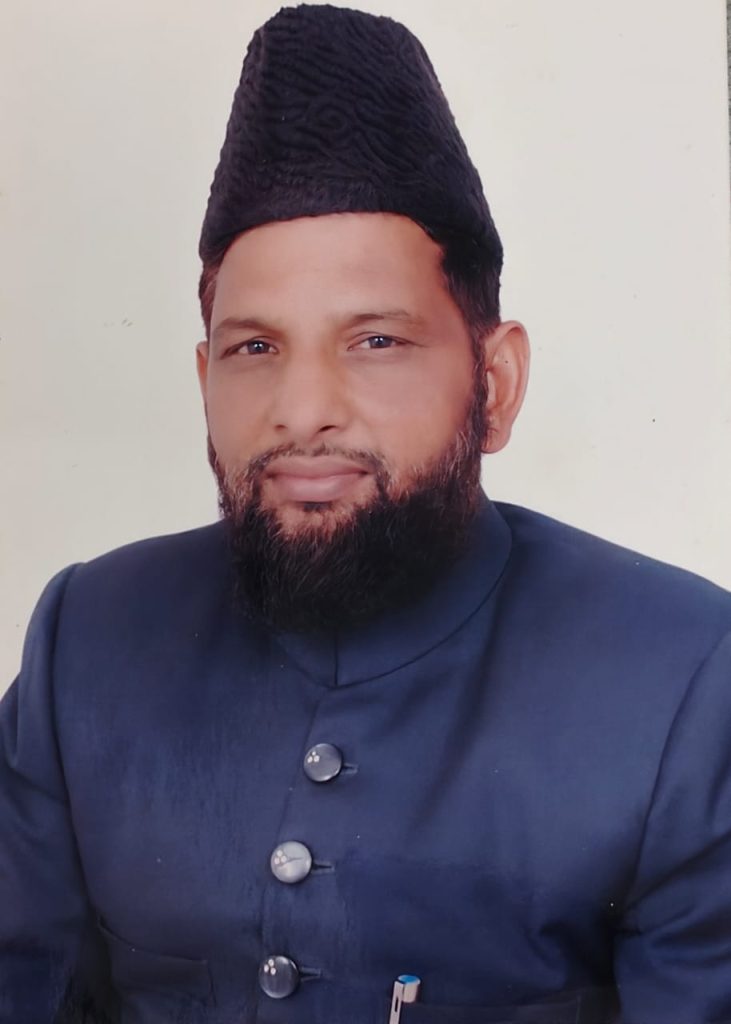
Dr Maqsood ul Hasan Qasmi
While commenting on the advance booking of graves in the Mehndiyan graveyard, renowned Islamic scholar, Dr Maqsood ul Hasan Qasmi says, “This is a very shocking practice going on in Mehndiyan graveyard. It should be stopped immediately. The entire place is being encroached upon by illegal occupants and must be freed from them.”
“Mehndiyan is a historic graveyard of India that houses the Dargah of Shah Waliullah Dehlvi, a renowned Islamic scholar. Every Muslim takes pride in getting buried there after death. Where is the money collected from advance grave bookings going—this must be investigated,” adds Dr Qasmi.
He further told Tehelka that all graveyards in India come under the Waqf Board, and Mehndiyan graveyard should also be a Waqf property. Waqf officials must immediately check and curb this advance booking practice at Mehndiyan, he said.
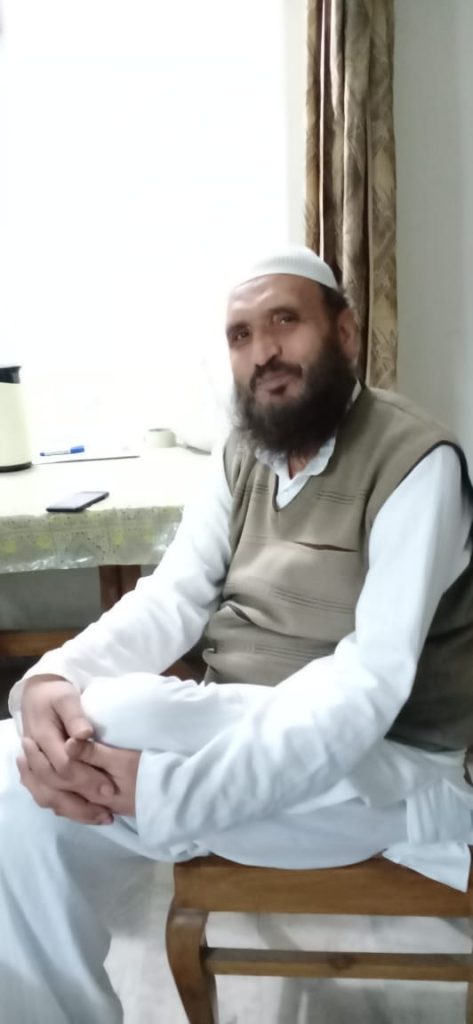
Khalid Saleem
Another Islamic scholar, Khalid Saleem, told Tehelka that the advance booking of graves is illegal and Mehndiyan graveyard is indeed a Waqf property. Saleem said that the Ali Mohammed Shere Mewat Foundation was started by Islamic leader Ali Mohammed, who came from Mewat, Haryana, and settled at Mehndiyan, Delhi. He said that he was a politically connected man with close ties to Congress leaders of that time, including Indira Gandhi. It was under the banner of this foundation that he took control of the land, he added.
What to say of Muslim graveyards, even Christian cemeteries are facing the same issue—skyrocketing grave rates and shrinking space are fuelling the demand. As the population grows, space to bury the dead is fast vanishing. Burials have truly become a grave matter, especially for the poor. Reports of advance grave bookings are pouring in from many cities, yet no concrete action has been taken to stop this practice.
According to a media report, a TDP leader, Mohammed Ahmed, informed Waqf Board officials in Hyderabad about such illegal deals, but no action followed. Also, allegations of fraud in grave deals are rampant. One man claimed his father had booked a grave, but when he passed away, the quabristan caretaker sold the plot to someone else and even refused to refund the money.
Sources also reveal that when BJP leader Sikander Bakht died in 2004, he was buried in a grave that had already been booked for Rs 75,000. The amount was later refunded to the original buyer. Now, with the government pushing to ensure the Waqf Amendment Bill 2024 sails through both Houses of Parliament, there is hope that this Tehelka investigation into Muslim graveyards—where graves are sold in advance despite being Waqf properties—will catch the authorities’ eye and prompt action against such unlawful practices.
Refusing to give credit for uninterrupted power supply to the Aam Aadmi Party (AAP) government, Delhi BJP chief Virendra Sachdeva said that the electricity supply was laid down in 2014 during President’s Rule in Delhi and previous government was only indulged in corruption on the pretext of providing electricity.
He said that people of Delhi clearly remember Arun Jaitley’s budget speech in which he mentioned the poor state of Delhi’s electricity supply and emphasized investments in electricity infrastructure.
“The Central government allocated Rs 675 crores for new power plants and Rs 200 crores for strengthening power transformers and wires in Delhi,” he added.
Sachdeva further said that private companies involved in power distribution also made efforts to improve power production and supply. However, it is unfortunate that the Arvind Kejriwal government, between 2015 and 2025, has only been involved in corruption under the guise of electricity supply.
The comments came after AAP leader Atishi accused the BJP of failing to ensure power supply, alleging that outages have surged since the party has formed government in the national capital.
“Before the AAP government came to power, long power cuts were normal in the national capital. Every household used to have inverters. But after Arvind Kejriwal became the chief minister of Delhi in February 2015, power cuts became history,” she had said in a press conference.
In a counter attack, Sachdeva said that providing round-the-clock electricity is a fundamental duty of any government.
He also questioned Atishi, asking her whether it is not true that while showcasing 24-hour electricity supply in Delhi, the Arvind Kejriwal government colluded with private companies to engage in electricity subsidy and PPA scams.
The AAP and BJP have been at loggerheads on various issues related to Delhi, ever since the BJP assumed office in the city.
The place, a tropical paradise two hours from Goa, lies in Maharashtra’s Sindhudurg, known for its Konkani and Malvani culinary traditions, tropical climate and a thousand sacred groves. A report by Deepanwita Gita Niyogi
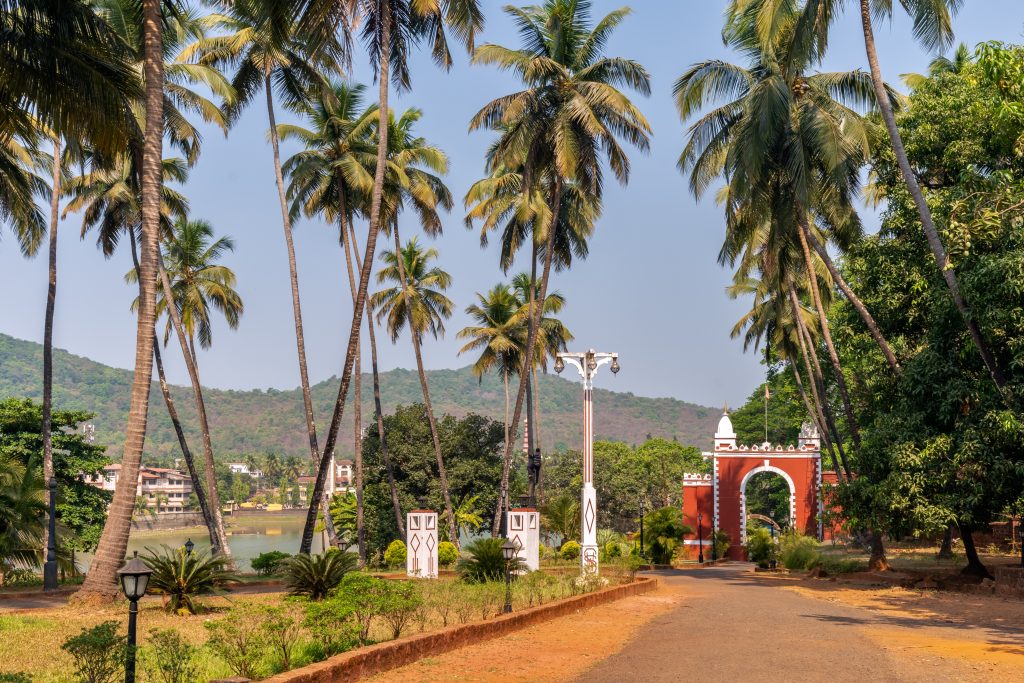
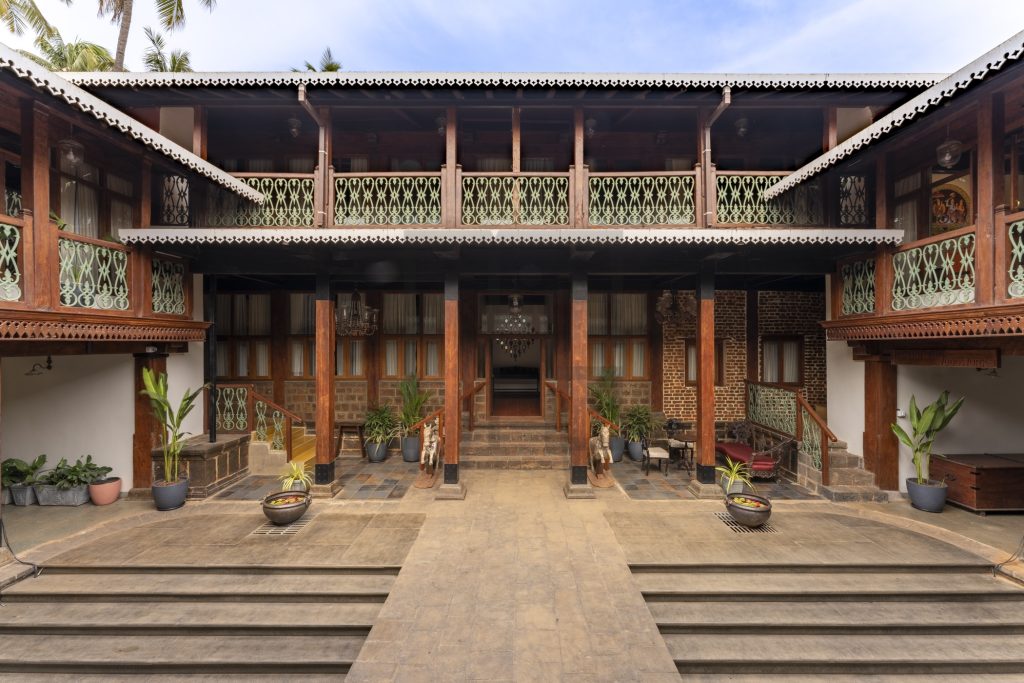
A glimpse through the coconut trees reveals the facade of Sawantwadi. Built by Khem Sawant III, a royal of the Sawant Bhonsle family during his reign from 1755 to 1803, the palace’s colonial-style architecture makes use of red laterite, a regional building material.
The place, a tropical paradise two hours from Goa, lies in Maharashtra’s Sindhudurg, known for its Konkani and Malvani culinary traditions, tropical climate and a thousand sacred groves. There are also two beaches within 30 km, Shiroda and Vengurla, along the Arabian Sea.
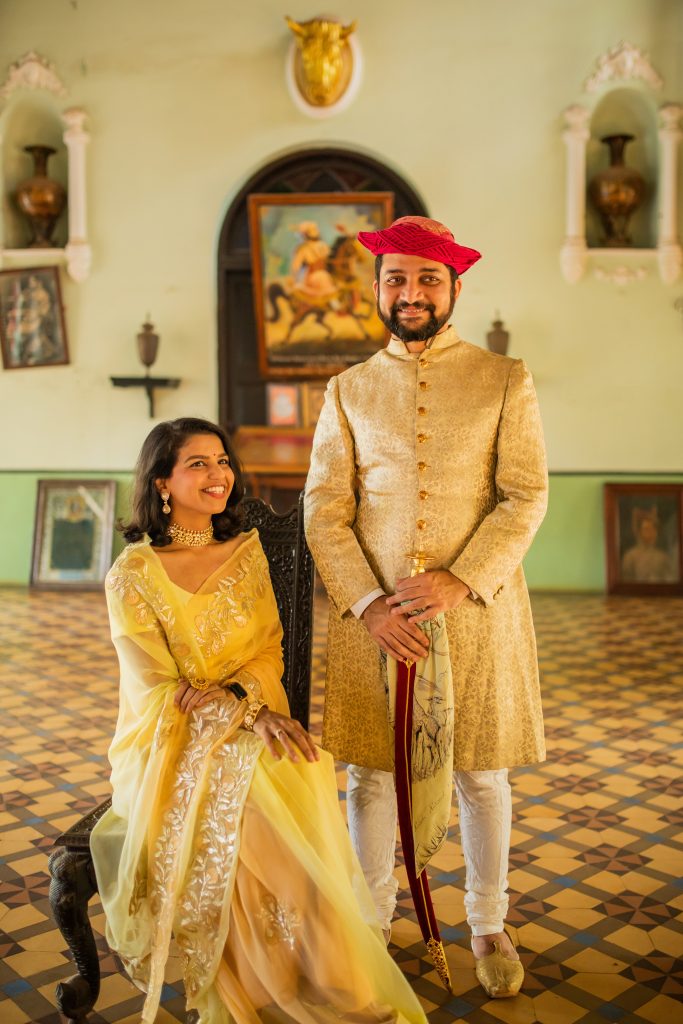
Though the palace’s museum and Darbar Hall had drawn history buffs over the years, it is now a gourmet destination. This became possible when the 19th generation royal couple, Prince Lakham Bhonsle and his wife Shraddha, turned it into the Sawantwadi Palace Boutique Art Hotel two years ago.
Lakham and Shraddha knew each other in New York where they both trained at the Culinary Institute of America. But the couple’s love story hit off in Mumbai, Theirs was a romance where two hearts met and hands were held, but the taste buds accomplished the rest. For two professional chefs, it could not have been a more perfect walk down the aisle.
“As our vision for the future matched, we fell in love. Our passion for food played a part in bringing us together. Initially, the plan was to settle down either in Mumbai or Goa and run a restaurant. But then the idea of converting the palace into a hotel crossed our minds,” Prince Lakham shared over a phone conversation.
A gourmet destination
Today, the royal family’s labour-intensive and flavourful recipes are no more limited to its kitchen. Food connoisseurs get to taste the delicate Sunti Gola, a dish of boneless mutton meatballs, and the Kesari Maas, a delicacy in which the mutton is shredded into thin strands similar to saffron, after touring the 6.5-acre palace.
Apart from two of these Sawantwadi’s royal dishes, a few recipes also travelled from Baroda’s Gaikwad family as a result of marital alliances in the past. One such import is the Bagra Kadha Masala used to cook crabs, said Shraddha, who is from a business family in Mumbai, and moved in to Sawantwadi after marriage.
“Palaces are meant to be lived in. But at one time, there were just the four of us here at night. Besides Lakham and myself, there were my in-laws. This has now changed with our guests,” she said.
Sawantwadi guarantees visitors a taste of home away from home. Right from its sauces to pickles, to the breads and croissants, everything is prepared fresh. There is also a great variety to try from. From the Rajwada recipe Mutton Sukha, to the simple Bhogichi Bhaji, a Maharashtrian curry made with winter vegetables, to Shraddha’s soul-stirring Ramen, food here promises diversity.
An added attraction is Sawantwadi’s fusion food, combining the best of Asian and Western cuisines. This has been made possible due to Shraddha’s interest in Japanese and Korean food. As a tribute to her student days in America, the princess has given a twist to the classic Po Boy sandwich. Spicy, but with a cooling effect perfect for the summers, it is made with fried rawa (semolina coated) prawns, Vietnamese pickles and herbs, Thecha or garlic herb butter and Sol Kadhi (kokum) sauce.
Fusion food need not be complicated, as Yuvraj Lakham shows visitors with his skill at plated desserts. Taking time off from his busy schedule, he makes the Flavours of Sawantwadi which incorporates a chocolate shell resembling that of a coconut and filled with coconut mousse. Along with it, cashew soil in powder form, a pineapple sorbet and kokum jelly are served. Kokum and cashew are popular in this region. The different ingredients come together to make a wholesome dessert, the prince explained.
“I grew up in Belgaum, Karnataka. My maternal grandmother was passionate about baking and entertained orders for Christmas and birthday cakes. Even my mother did the same. So, I was inclined towards desserts since childhood,” he said. As often “people eat with eyes”desserts have to look attractive. For this, the prince observes nature and sketches for culinary inspiration.
Prince Lakham’s future plan is to introduce a dessert tasting menu where visitors will be able to taste small portions of four to five sweet dishes. “Indians love sweets but the varying tastes of something sweet and sour served together in a plated dessert still don’t tempt them that much.” His favourite ingredients are cashew, coconut, pineapple and kokum, all found in abundance in Sawantwadi.
However, some ingredients are not readily available. Shraddha agreed that it is a challenge. “But luckily Goa is nearby. The palace’s kitchen garden ensures a fresh supply of herbs and greens.”
Engaging locals
True to its tradition of boosting regional employment, the palace hotel employs local staff, who belong to nearby houses. There are about 60 of them at present. Along with the palace food, they enliven the place by carrying forward their cultural traits. For instance, the women still sport bindi seen with western outfits like pants.
Shraddha, who worked at a Michelin Star restaurant in America, pointed out that though it was easy to hire employees from Metro cities as part of the palace restoration process, the royals took this opportunity to do something for Sawantwadi’s population and its economy. It has also helped the princess to learn. She learnt to make the Bhogichi Bhaji after daily visits to local houses.
Head chef Gautam Balchandra Mathekar’s family has always enjoyed its ties with the palace. Mathekar returned to Sawantwadi after a four-year stint in one of Kochi’s five-star hotels. Before that he completed his degree in catering science from Goa. “Around 2016-2017, I had an idea that Sawantwadi may eventually turn into a hotel. As my grandfather had also worked at the palace during his time, it was a natural choice to try my luck here. So, when the interviews opened in 2022, I came back.”
Becoming a chef was natural on Mathekar’s part. As a child, he helped his mother by chopping onions in the kitchen. The professional, whose interest lies in non-vegetarian dishes, underlined the importance of coconut in Sawantwadi’s recipes. He shared an easy recipe suitable for breakfast. Just add vermicelli or rice noodles in coconut milk and temper it with cardamom and jaggery. This is the famous Malvani region recipe Shirvale Ras, of which the Sawantwadi palace touched by swaying coconut trees, is a timeless testimony.
The Punjab government’s action against protesting farmers, seemingly wary of the stir’s impact on the Ludhiana by-election, has sparked political ripples. With many farm leaders detained and anger mounting, the fallout could test AAP’s standing in the state. A report by Rajesh Moudgil
The eviction of the protesting farmers from the Shambhu and Khanauri barriers protest sites on two national highways in Punjab and the subsequent detention of their several senior farm leaders including Jagjit Singh Dallewal and Sarwan Singh Pandher on March 19, last, did not come as a surprise.
Nor the change of heart of the chief minister Bhagwant Mann – otherwise a staunch supporter of farmers till a month ago – was sudden. For, he had made it immensely clear to the protesting farmers over a fortnight ago that a stern action against them was on the way.
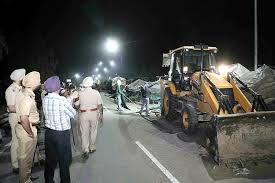
Finally, the traffic was thus resumed on the Shambhu and Khanauri stretches of the national highways after over a year of blockades by farmers.
For record, a score of farmers had been camping at the said two protest sites since February 13, 2024, to press for their various demands including MSP and debt waiver. They made several attempts to take their “Delhi chalo’’ tractor/foot march towards Delhi but the same were thwarted by Haryana police and Central forces by raining tear-gas shells leaving several of them injured as the Centre’s repeated talks with the protesting farmers last year in Chandigarh, had remained inconclusive.
However, a showdown between the farmers and state government was looming since March 4, 2025, when the meeting between the farm leaders and Mann fell through and he stormed out of the meeting after farmers told him that they would go ahead with their scheduled March 5 protest in Chandigarh, irrespective of their meeting with him.
That very night, Punjab police carried out raids across the state detaining a score of farm leaders.
After the meeting, Mann had told newspersons that he left the meeting as farmers remained adamant that they would continue their protest till their demands were met irrespective of the meeting with him. Ruing frequent protests and demonstrations in the state, he said that Punjab was turning into a “dharna state’’. He also told farm leaders that Punjab was suffering massive economic losses due to frequent road blockades or rail blockades.
The stand-off between protesting farmers and ruling Aam Aadmi Party (AAP) government escalated further as not only the AAP government thwarted the farmers from entering Chandigarh, but even detained more senior leaders Joginder Singh Ugrahan, Mukesh Sharma, Balbir Singh Rajewal and Ruldu Singh Mansa, the next day – March 5.
On March 19, Mann government got another chance when several senior farm leaders including Jagjit Singh Dallewal and Sarwan Singh Pandher were in Chandigarh to take part in the meeting with three Central ministers including Shivraj Singh Chauhan. It was the seventh round of talks between farmers and Central ministers since February, last year. The presence of farmers at the two barriers was thin.
The Punjab police, which had deployed heavy police at the two protest sites and suspended the internet services a day ago, evicted the farmers and detained some more leaders as they entered Punjab March 19 evening after attending the meeting in Chandigarh, though amid mild confrontation between the two sides.
Ludhiana by-election
The move, the political observers opine, was given a final shape after the recent meeting of the Ludhiana industrialist and traders with AAP supremo Arvind Kejriwal and Mann on March 18 last in Ludhiana, in the wake of upcoming Ludhiana west assembly by-election. This election was crucial for AAP as it had recently faced a drubbing in Delhi assembly polls.
The Ludhiana seat had fallen vacant following the death of AAP MLA Gurpreet Bassi Gogi on January 10 at his home of a gunshot injury after his licensed weapon went off accidentally.
Mann and Kejriwal were reportedly told by the business community members that AAP’s win seemed difficult because of the anger of the traders and industrialists of the state; the blocked highways at Shambhu and Khanauri barriers had been causing humungous losses to them for over a year. Political analyst Prof Ashutosh Kumar, faculty at the department of political science, Panjab University, Chandigarh, also agrees that huge financial losses to the state because of the highways’ blockade could be a reason behind the government action.
The AAP MP Gurmeet Singh Meet Hayer who held that the AAP had always supported farmers, said that due to the border closures, an environment has developed where even the industries that were established in Punjab are now leaving. He had urged the farmers to open one side of the border, stating that the BJP government sitting in Delhi will not suffer any losses due to this. Instead, it was directly harming Punjab, causing the state government to lose hundreds of crores of rupees in revenue, and industries are leaving Punjab.
Issue rocks budget session on day one
The Governor’s address on the opening day of the Punjab assembly budget session on March 21 was also marred by the Congress walkout over the police action against farmers.
Led by the Leader of the Opposition, Partap Singh Bajwa, the Congress legislators raised slogans against the ruling Aam Aadmi Party (AAP) government and entered the Well of the House amid Governor Gulab Chand Kataria’s address. It was barely a few minutes after the governor started his address, that Bajwa got up and sought his attention over the issue, besides the issue of assault of an Army Colonel by 12 Punjab police personnel in Patiala.
However, when the governor continued to read his speech, Bajwa and other Congress MLAs, who displayed placards flaying chief minister Bhagwant Mann government, entered the Well of the House and started raising slogans against the AAP government. They continued raising slogans for a few minutes before staging the walkout.
Farmers burn CM’s effigies
The farmers’ stir intensified on March 22 as several farmers’ organizations held protests against the police action and burnt the effigies of state AAP government and chief minister’s effigies. They demanded the release of the detained farm leaders and also claimed that several belongings of the farmers, such as tractors, tractor trolleys, LPG cylinders, washing machines, fans, air-conditioners, refrigerators and inverters, had gone missing from the two protest sites.
The Punjab government on March 24 released 450 more farmers from police detention amid allegations from various farmer unions that several protesting farmers detained last week by the police are still missing. They also alleged that several farmers and their various belongings including tractor trolleys, had also gone missing since.
Besides, farm unions had also filed habeas corpus petitions in the Punjab and Haryana High Court demanding release and whereabouts of the missing farmers.
Stating that the state government has already released about 800 farmers from police custody, Inspector General of Police, (IGP), Headquarters, Sukhchain Singh Gill, said that the released farmers included women, differently-abled individuals, farmers with medical conditions, and those above the age of 60.
In another case in the high court, the state government also said that its action was on the basis of its intelligence inputs indicating a potential escalation at the two farmers protest sites. Elaborating on the reasons, the government held that the inputs indicated warnings that the protesters might attempt to break the barricades and resume their march towards Delhi.
Protests ahead
Meanwhile, condemning the police action, farm leaders have given a call to farmers across India to hold protests on March 28. In Punjab they have threatened to hold protests in front of residences of AAP legislators and ministers on March 31.
Separatism in Kashmir is witnessing a dramatic decline, with political groups severing ties with the separatist ideology and violence statistics plummeting. As Union Home Minister Amit Shah declares separatism a “history,” the question remains—will this newfound calm endure? A report by Riyaz Wani
On March 25, Home Minister Amit Shah told Rajya Sabha that separatism in Kashmir had become history. He had some more proof to offer, announcing that two more separatist political outfits had renounced ties to separatism, identifying them as J&K People’s Movement and Democratic Political Movement (DPM). He urged all such groups to come forward and shed separatism once and for all.
“Two organizations associated with the Hurriyat have announced the severing of all ties with separatism. I welcome this step towards strengthening Bharat’s unity and urge all such groups to come forward and shed separatism once and for all,” he posted on X.
On the same day, senior leader of the DPM, Advocate Mohammad Shafi Reshi declared that he has cut all links to separatism.
“I have severed all ties with the DPM in 2018 during my tenure as chairman and have no connection with these organisations or any separatist entity since then,” Reshi said.
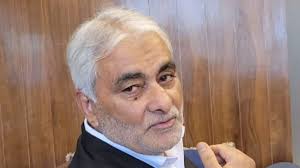
Incidentally, Reshi was a former aide of late Hurriyat leader Syed Ali Geelani. Criticising Hurriyat ideology, Reshi said that it has failed to address the legitimate aspirations and grievances of people of Jammu and Kashmir.
He reaffirmed his allegiance to India, calling himself a bonafide citizen committed to the supremacy of the Indian constitution.
J&K People’s Movement, on the other hand, was launched by the bureaucrat Shah Faesal in early 2019 and it was not a separatist party. However, within months of its formation, the centre abrogated Article 370, which granted J&K its special position in the Indian constitution. The party lost its raison d’etre when Faesal went back to the IAS, and shelved its activities.
The DPM leader Reshi’s change of heart does have a symbolic value. It reflects a profound change in the ongoing situation in the Valley, something that was unthinkable a few years ago. It is rarely that a political outfit has severed ties to separatism. However, last year, a major politico-religious party Jamaat-i-Islami decided to contest the Assembly election, effectively distancing itself from its separatist moorings. The party failed to win a single seat but did create some buzz in its strongholds in South Kashmir. In February, the same Jamaat leaders floated a new party christened as the Justice and Development Front (JDF), which will contest the upcoming grassroots elections. It is the third new political party in Kashmir since the abrogation of Article 370 in August 2019. First two were the Apni Party led by Altaf Bukhari and the Democratic Progressive Azad Party (DPAP) founded by the former Congress veteran Ghulam Nabi Azad. Both of them have not been able to make any mark since their advent. However, there are no full stops in politics and the past performance is never an indicator of what might happen in future.
Shah also highlighted some data to underline the redeeming change in ground situation. While in 2004, 1,587 incidents of violence were reported in J&K, the number dropped to just 85. Similarly, civilian deaths, according to home ministry figures, have fallen from 733 to 26, and security personnel casualties have declined from 331 to 31 over the same period. It is also obvious that the stone-pelting is now virtually non-existent. Strikes, once a routine method of expressing dissent, have also disappeared.
Going forward, will the existing calm hold? This is not an easy question to answer. While separatist politics has truly become extinct, separatist violence lingered and won’t as easily be quelled. It has already lasted for 35 years, going through its rise and fall, and may persist in the near future.
All the schemes implemented by former chief minister Arvind Kejriwal under the name of public welfare, turned out to be avenues for scams, Delhi BJP chief Virendra Sachdeva said.
He also said that the Farishte Scheme exposes the claims of the previous government about having a world class health model.
“Since 2015, the Kejriwal government has been claiming world-class healthcare services and efficient hospitals. In this context, the people of Delhi are asking why, if all services were available in government hospitals, the government had to introduce the Farishte Scheme in 2017 to provide immediate free treatment to road accident victims?” he said.
He said that it was clear that either the government hospitals were non-functional, or the government’s intention was to send accident victims to private hospitals, where hefty bills could be generated under the pretext of providing services, thus enabling commission-based corruption.
Sachdeva mentioned that in mid-2017, the Arvind Kejriwal government introduced the Farishte Scheme, but by mid-2023, this scheme had almost come to a halt. In other words, this scheme lasted for about 2,000 days in six years, and according to Saurabh Bhardwaj, only 22,000 people benefited from it. This means that during this period, there were about 11 serious accidents every day in Delhi, and all the victims had to be taken to private hospitals. This clearly indicates that either the government hospitals were non-functional or that there was collaboration between private hospitals and Aam Aadmi Party workers for manipulation, resulting in the siphoning of government funds.
He assured that the BJP government and Delhi Police would provide the best medical facilities to road accident victims through government hospitals.
The comments came after the Aam Aadmi Party (AAP) accused the BJP-led Delhi government of discontinuing the former’s “Farishtey Dilli Ke” scheme, which was meant to provide free medical treatment to road accident victims in private hospitals.
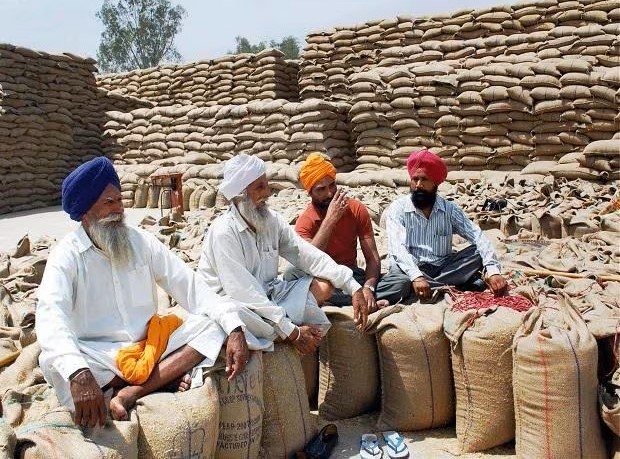
Chandigarh: The Punjab government is fully prepared for the wheat procurement that will begin on April 1. Punjab’s Food, Civil Supplies, and Consumer Affairs Minister Lal Chand Kataruchakk stated that all arrangements in the mandis have been completed, and now the government is just waiting for the arrival of wheat in mandis.
Kataruchakk said the Punjab government has secured a cash credit limit (CCL) of ₹28,000 crore for wheat procurement. Therefore, farmers will face no difficulties in receiving payments for their crops.
He added that adequate arrangements for gunny bags have been made, and these have been delivered in sufficient quantities to all procurement centers. A total of 1,864 mandis and procurement centers have been equipped with all necessary arrangements to ensure that farmers face no inconvenience. Facilities such as water and medical treatment have been ensured in the mandis, along with several other essential amenities.Additionally, around 700 temporary mandis have been prepared to be used if needed. Strict instructions have been issued to all departments involved in the procurement process. Kataruchakk emphasized that farmers are the backbone of Punjab, and the state’s economy and rural development are based on agriculture. Hence, the Punjab government is working with full dedication to ensure the prosperity of farmers.
To ensure uninterrupted power supply, instructions have been issued to the Power Board, and the Punjab DGP has been tasked with maintaining law and order. All Deputy Commissioners have also been notified to ensure that farmers do not face any issues during the procurement process.
Minister Kataruchakk referred to the directives of Chief Minister Bhagwant Mann, stating that the Chief Minister has clearly ordered that farmers should receive the full price for their crops, as per the MSP, within 24 hours. Kataruchakk mentioned that he has been visiting various mandis as a minister and holding meetings with relevant officials to review arrangements. This year, the government will ensure that farmers face no difficulties at all.
Kataruchakk assured that the Chief Minister’s orders will be strictly followed and that the wheat procurement process will be made seamless and convenient for farmers. He warned that any department or official found negligent during the procurement process would face strict action from the government.
Kataruchakk reiterated that the Aam Aadmi Party is fully committed to the Punjab’s farmers. “Working under the guidance of AAP supremo Arvind Kejriwal and Chief Minister Bhagwant Mann, we will ensure that farmers face no challenges during this year’s procurement process, ” he said.
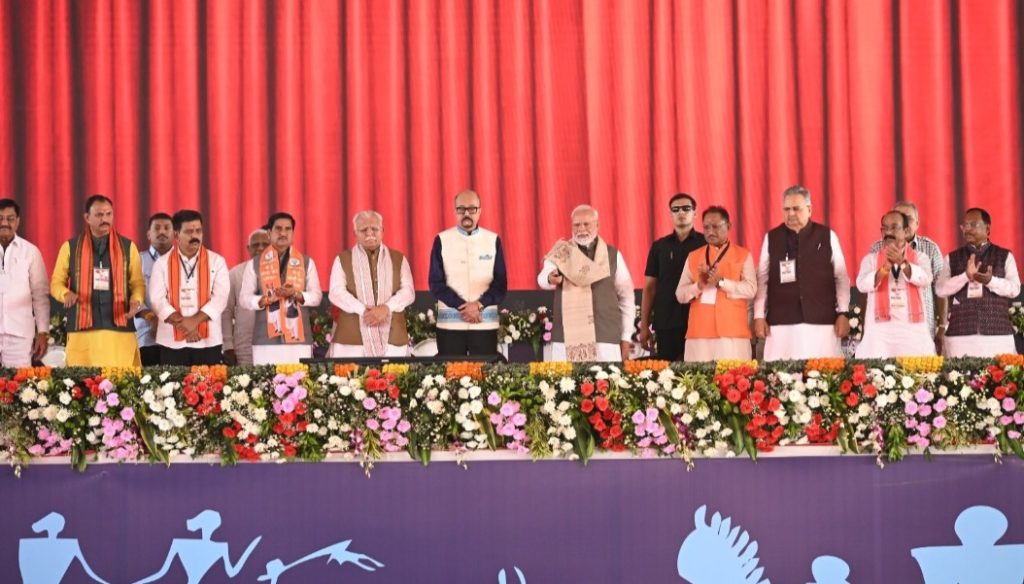
Prime Minister Narendra Modi dedicated 100 per cent electrification of the rail network of Indian Railways in Chhattisgarh on Sunday by pressing a remote button in Mohbhatta village of Bilaspur district of the state, where he dedicated several other projects in key sectors.
With a focus on improving connectivity in the region, the Prime Minister laid the foundation stone of seven railway projects with a total length of 108 km and dedicated to the nation the three railway projects with a total length of 111 km, worth over Rs 2, 690 crore.
The Prime Minister also flagged off the MEMU train service in the Abhanpur- Raipur section via Mandir Hasaud through remote control.
These projects will reduce congestion, improve connectivity, and enhance social and economic growth across the region.
With the inauguration of these multiple railway projects as part of this transformative journey to attain Net Zero Carbon Emission by 2030, Chhattisgarh has successfully achieved the complete electrification of its Broad Gauge (BG) railways, marking a significant milestone.
Indian Railways has set forth an ambitious vision to achieve Net Zero Carbon Emissions by 2030, with electrification of all Broad Gauge (BG) networks across the nation as its cornerstone.
During the event, Prime Minister Modi highlighted the wide-ranging advantages of this initiative. He mentioned that multiple rail projects worth Rs 40, 000 crore are underway in Chhattisgarh.
Emphasising the availability of funds, he noted that Rs 7, 000 crore has been earmarked in this year’s budget to improve the state’s rail connectivity.
The Prime Minister also stated that faster train speeds and shorter travel times between stations are among the immediate benefits
Recently, the states of Uttarakhand and Uttar Pradesh attained full electrification of their BG networks, with Uttarakhand’s 347-kilometer route expected to lower transportation costs.
Presently, seven railway zones, including ECoR, North Central Railway (NCR), and Central Railway (CR), have accomplished the goal of 100 percent electrification.
Furthermore, the electrification of 1, 170 kilometers of BG routes within Chhattisgarh will bolster train capacity, curtail dependence on imported crude oil, conserve foreign exchange, and lower operational and maintenance expenditures for electric locomotives.
Chhattisgarh holds a pivotal position in India’s railway operations. The state, which falls under the jurisdictions of the South East Central Railway (SECR) and East Coast Railway (ECoR), boasts the highest freight loading in the country, making it a cornerstone of railway revenue generation.
Key railway stations include Bilaspur, Raipur, Durg, Bhilai, and Korba. Notably, Bilaspur—situated on the Mumbai-Howrah main line—is the state’s largest railway hub, linking major cities such as Mumbai, Delhi, Kolkata, Chennai, Hyderabad, and Bangalore.
A variety of trains, including the Durg-Jagdalpur Express, Chhattisgarh Express, and Kalinga Utkal Express, ensure efficient connectivity both within and beyond the state.
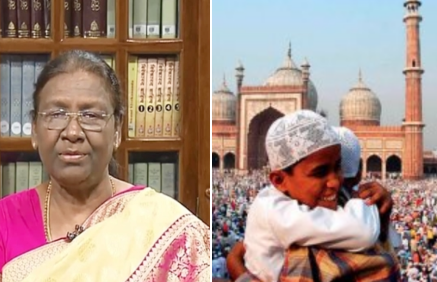
New Delhi: President Droupadi Murmu on Monday extended her heartfelt greetings on the auspicious occasion of Eid-ul-Fitr, emphasising that the festival strengthens the spirit of brotherhood and promotes compassion and charity.
Taking to social media platform X, President Murmu conveyed her wishes, stating, “Greetings to all countrymen, especially Muslim brothers and sisters on the auspicious occasion of Eid-ul-Fitr. This festival strengthens the feeling of brotherhood and gives the message of adopting compassion and charity. I wish that this festival brings peace, prosperity, and happiness in everyone’s life and strengthens the spirit of moving forward on the path of goodness in everyone’s hearts.”
Several prominent leaders also extended their wishes on the occasion.
Defence Minister Rajnath Singh shared his greetings, saying, “Greetings on Eid-ul-Fitr. May this festival bring happiness, peace, and prosperity to all. Hope this day further strengthens the bonds of harmony and brotherhood all across society. Eid Mubarak!”
Minister of Road Transport & Highways, Nitin Gadkari, also took to X to express his wishes, posting, “Warmest wishes for Eid-ul-Fitr. May this joyous occasion fill every heart with peace, love, and endless blessings. Eid Mubarak!”
Similarly, Minister of Parliamentary Affairs Kiren Rijiju extended his greetings on Eid.
He wrote in a post on X, “Wishing everyone a joyous & blessed Eid-ul-Fitr! May this special day bring happiness, prosperity & new opportunities for all. Let’s celebrate the spirit of togetherness & gratitude with our loved ones.”
Eid-ul-Fitr, marking the end of the holy month of Ramadan, is celebrated with great fervor across India and the world.
The festival signifies a time of joy, generosity, and unity, as people come together to share meals, exchange gifts, and offer prayers for peace and harmony.