August 1 is the deadline for implementation of reciprocal tariffs on various trading partners, including India; Sources familiar with developments say the US President may speak with Prime Minister Narendra Modi before the final nod to the long-anticipated deal.
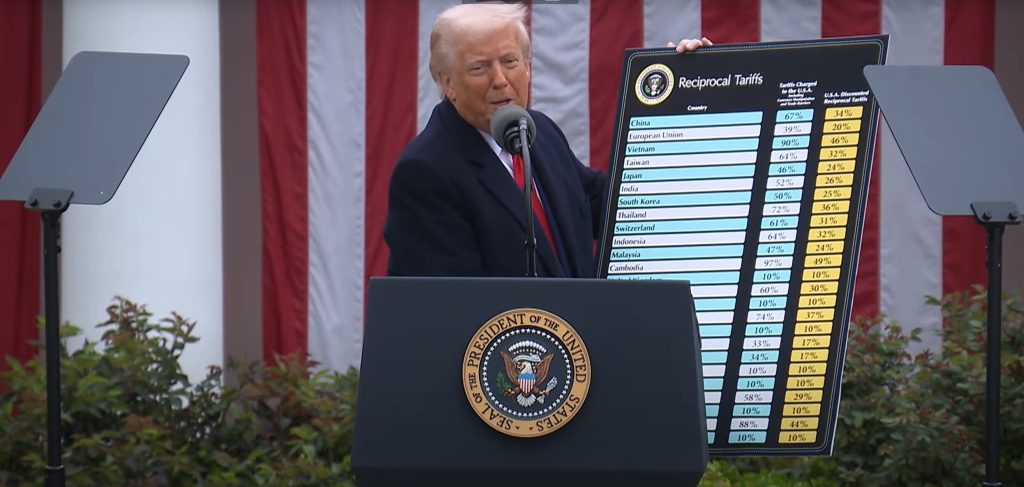
US President Donald Trump on Tuesday said that imports from India might be hit with a tariff rate of 20 to 25 per cent as the trade agreement between the two nations has not yet been finalised yet. Travelling back to Washington after a five-day visit to Scotland, Trump told reporters on-board the Air Force One “I think so,” when asked if 20-25 per cent would be a possible tariff rate for India.
“…India is my friend. They ended the war with Pakistan at my request… India has been a good friend, but India has charged basically more tariffs than almost any other country. You just can’t do that,” Trump was quoted as saying.
Coming just ahead of the August-1 deadline for the implementation of reciprocal tariffs on various trading partners, including India, Trump’s comments are significant. Sources familiar with the developments say that Trump may speak with Prime Minister Narendra Modi before the final nod to the long-anticipated deal.
Meanwhile, Indian equity benchmark indices—Sensex and Nifty—traded higher on Wednesday, supported by strong earnings from Larsen & Toubro, boosting investor sentiment. However, upside remained limited amid caution ahead of the US Fed’s policy decision and lingering uncertainty over the much-delayed agreement.The outcome of the US Federal Open Market Committee meeting is expected later today. Its next policy meeting is scheduled for September 16-17.
Gold and silver prices also remained bullish in the domestic futures market on the back of persistent uncertainty over the deal, driving investors into safe-haven assets. However, a stable dollar and weak demand limited the gains.
Trump in April announced increased tariffs with an objective to reduce the US’ trade deficit, which he later paused at a reduced 10 % till negotiations.
According to US Trade Representative Jamieson Greer, additional time was required for negotiations with India to assess the country’s readiness to expand the market to American exports. Agricultural products and genetically modified crops remain some of the main sticking points from the India side. A key point of contention is America’s insistence on greater access to Indian markets for its agricultural, dairy, and GM products, India argues that such access could negatively impact the livelihoods of its farmers.
The US is pushing for reduced tariffs on its industrial goods, electric vehicles, dairy products, wines, apples, tree nuts and In contrast while India wants high tariffs on agricultural and dairy products. Some farmer groups are also urging the government to exclude agriculture from the agreement entirely.
The tariffs on Indian products could hurt India’s export as the US is India’s top export destination with nearly 20 per cent share in the country’s total outbound shipments.
The deal remains unfinalised despite several rounds of discussions. Delays could negatively impact the Indian economy and stock market.