The suspension of IAS officer Abhishek Prakash over bribery allegations exposes a deep nexus of corruption in project approvals, with possible links to money laundering now under ED scrutiny, threatening to derail UP CM Yogi’s ambitious investment drive. A report by Mudit Mathur
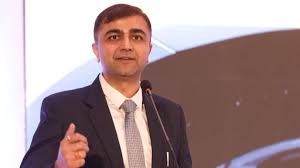
Uttar Pradesh chief minister Yogi Adityanath has suspended Industrial Development Department secretary and Invest UP chief executive officer (CEO) Abhishek Prakash, a 2006-batch IAS officer, over serious allegations of soliciting a bribe from a businessman in exchange for project approval. The incident underscores how corruption and irregularities in project clearances continue to hinder development plans in the state, despite mega-investment summits organised by the chief minister to attract investors. The Enforcement Directorate has also stepped in to investigate possible money laundering in the case.
The chief minister received a complaint from Vishwajit Dutt of SAEL Solar P6 Private Limited, stating that his group had approached Invest UP to set up a plant for manufacturing spare parts for solar cells and solar energy. They submitted their proposal both online and offline. An officer from the organisation provided Dutt with the mobile number of a private individual, Nikant Jain, who allegedly facilitates bribe payments for Abhishek Prakash. When Dutt contacted Jain, he was asked to pay a 5% advance commission for project approval. Upon refusing, Jain allegedly warned, “Your project will not be approved in the high-powered committee, and ultimately, you will have to route it through me.”
The chief minister immediately deputed senior officers to verify the allegations. After the preliminary inquiry confirmed them, the government filed an FIR against Abhishek Prakash and middleman Nikant Jain. Jain allegedly demanded a 5% commission on behalf of Prakash to facilitate approvals for the solar manufacturing project.
The FIR against Abhishek Prakash includes charges under Section 308(5) (extortion) and Sections 7, 12, and 13 of the Prevention of Corruption Act. It also states that Jain pressured the applicant to pay an advance, suggesting that bureaucratic hurdles were deliberately created to extract bribes. Police have arrested Nikant Jain and intensified their investigation to identify other officials involved in the case. They also revealed that Jain has a history of fraud and financial crimes.
The Enforcement Directorate (ED) has launched a probe into the alleged 5% commission demand that led to Abhishek Prakash’s suspension. The Lucknow Zone office of the ED has sought full details from city police regarding the FIR and the arrest of Nikant Jain.
The ED is likely to take Nikant Jain into custody once relevant records are scrutinised. Jain and his brother, Sukant Jain, have been linked to 12 registered companies. The agency plans to analyse their transactions and business models to track the money trail, suspecting that some of these firms may be shell companies used for money laundering. IAS officer Abhishek Prakash may also be summoned for questioning once sufficient evidence is gathered.
The ED is examining the Detailed Project Report (DPR) of the solar plant, the approval process, and the officials involved. Investigators plan to interrogate Nikant Jain after reviewing his bank account details and may then summon Abhishek Prakash to record his statement.
Abhishek Prakash’s name had earlier surfaced in the Defence Corridor land acquisition scam in Lucknow’s Bhatgaon area, which involved fraudulent disbursement of compensation claims and the misuse of government funds. A total of 16 officials, including Prakash, were initially found guilty in the matter.
Chief minister Yogi Adityanath has reiterated his government’s zero-tolerance stance on corruption, warning IAS and PCS officers of strict consequences if found involved in malpractice. Over the past eight years, the Uttar Pradesh government has suspended 11 IAS officers on corruption charges.