Critics have raised alarms over the recent proposal to amend the Mahatma Gandhi National Rural Employment Guarantee Scheme (MGNREGS), arguing that the changes go beyond a mere renaming and threaten to alter the scheme’s character fundamentally. The shift, they contend, is part of a broader effort by the BJP-led central government to centralize control over rural development programs, reducing the autonomy of state governments.
One of the key motivations behind the name change is believed to be ideological, with the ruling government seeking to distance itself from the legacy of Mahatma Gandhi, whose vision of Gram Swaraj emphasized the importance of local governance and decentralization. The MGNREGS, introduced over 20 years ago, bore Gandhi’s name as a symbol of this principle; however, the new bill shifts the focus away from this philosophy.
Under the revised proposal, the Union government would hold significant authority in decision-making processes, effectively sidelining state governments. Supporters of the bill argue that an increase in the number of workdays to 125 annually would benefit rural workers by providing more employment opportunities. However, data from previous years paints a less optimistic picture. During the pandemic year of 2020-21, only 9.5% of households—about 7.2 million—met the 100-day work target. Over the past two years, fewer than 7% of families have managed to secure the full allotment of workdays.
Another major change introduced by the bill is the reclassification of the MGNREGS as a “centrally sponsored scheme,” replacing its previous status as a centrally funded program. This alteration means that the central government will no longer absorb the full cost of unskilled manual labor wages. Instead, the financial burden will now be shared between the Centre and states, with a proposed 60:40 split. This shift could have significant consequences, especially given the financial constraints many states currently face, exacerbated by the ongoing challenges of GST restructuring.
Perhaps the most significant concern is the loss of the scheme’s original demand-driven structure, which allowed rural communities to request employment based on local needs. The new framework, by contrast, introduces a supply-driven model where funding allocations will be capped by the Union government, limiting the scope of the program. In addition, any excess expenditure will now fall on state governments, further complicating the fiscal landscape for already struggling state budgets.
States like Tamil Nadu and Kerala have already voiced strong opposition to the proposed bill, citing concerns that it undermines state sovereignty and reduces their ability to effectively manage rural development projects. One provision in the bill, which aims to prevent the overlap of MGNREGS work with agricultural sowing and harvesting seasons, could be included in the scheme after further consultations with state governments.
Despite claims from Union Rural Development Minister Shivraj Singh Chouhan that the new law aligns with Gandhi’s vision of “good governance” and reflects the ideals of Ram Rajya, critics argue that such principles cannot be realized without a robust grassroots democracy. In its current form, the bill is seen as falling short of promoting the decentralized, bottom-up approach that has been the hallmark of MGNREGS for over two decades.
Key Takeaways
Concerns over centralization: The bill shifts control over MGNREGS from the state to the central government, reducing states’ autonomy in rural development initiatives.
Financial and operational impact: Changes in funding structure and the introduction of caps on allocations could strain state budgets and limit programme effectiveness.
Opposition from states: Several states, including Tamil Nadu and Kerala, have voiced concerns about the erosion of state rights and fiscal responsibilities.
Gandhi’s Vision vs Modern Politics: Critics argue that the bill undermines the core principles of decentralization that Gandhi championed, replacing them with a more centralized, top-down approach.
In a move that has triggered both intrigue and scepticism, the government has introduced the G RAM-G Bill (Viksit Bharat Guarantee for Rozgar and Ajeevika Mission (Gramin) Bill) as a replacement for the much-loved MGNREGA (Mahatma Gandhi National Rural Employment Guarantee Act). While the name change might seem superficial, the underlying shift is significant.
The transition from MGNREGA to G-RAM-G is not just a rebranding but a rethinking of how rural development and employment will be handled in India. The new Bill promises to offer a more modern, effective, and sustainable framework, but questions about its long-term impact and effectiveness remain.
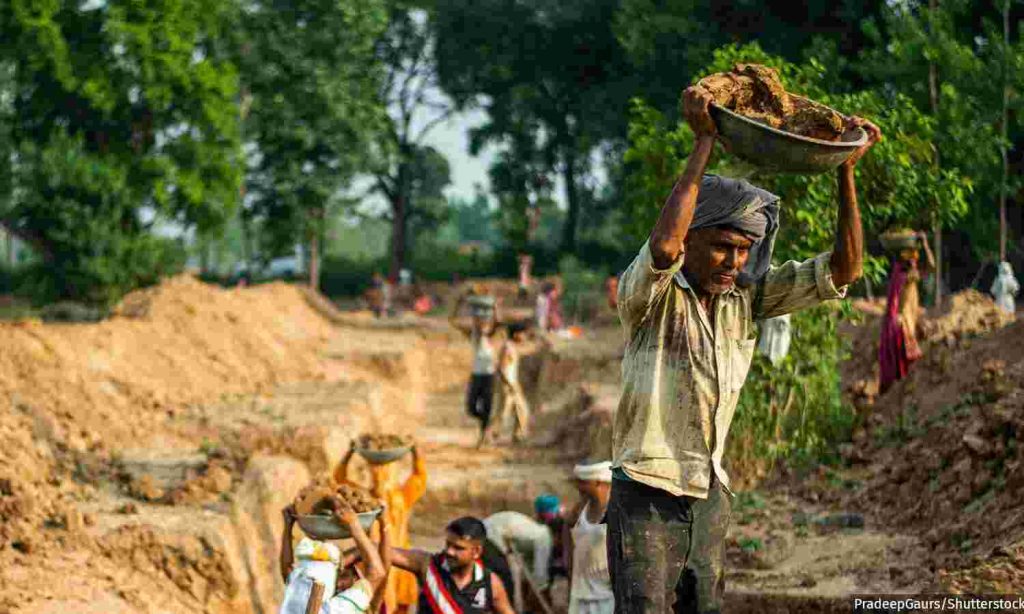
Before Tehelka delves into the specifics of the G-RAM-G Bill, it’s important to first understand the significance of MGNREGA, which has been a key part of India’s rural development strategy since its inception in 2005. MGNREGA was established to guarantee at least 100 days of wage employment per year to rural households, thereby alleviating poverty and boosting rural infrastructure.
Key features of MGNREGA
Employment guarantee: MGNREGA guarantees 100 days of work per household in rural areas. This was revolutionary at the time of its launch because it provided an income safety net to the rural poor, particularly during lean agricultural seasons.
Focus on rural infrastructure: The program has created thousands of kilometers of rural roads, irrigation systems, and water conservation projects. It encouraged community-driven projects that were often designed by local villagers themselves.
Decentralized implementation: One of the standout features of MGNREGA was its decentralization. It allowed for local bodies like Panchayats to play a role in project planning and execution, making the programme more locally relevant and responsive.
Wage payment: The payment was often made through direct bank transfers, which aimed to provide transparency and reduce corruption. However, delays in payments and inefficiencies in disbursing funds have been common criticisms.
Despite its successes in alleviating poverty and creating rural infrastructure, MGNREGA had its share of problems. Implementation challenges such as wage delays, corrupt practices, and misuse of funds persisted. The program was also often criticized for not providing sufficient skills development or sustainable long-term economic growth. These limitations are believed to have contributed to the shift toward the G-RAM-G framework.
The G-RAM-G Bill
The G-RAM-G Bill, while sharing some similarities with MGNREGA, brings new dimensions to rural employment and development. The name itself — G-RAM-G — is symbolic of a shift in focus from Mahatma Gandhi (whose name has been used to represent rural welfare) to RAM, an acronym that signifies a new approach: Rural Agricultural and Manufacturing Growth. The introduction of RAM indicates a broader vision that moves beyond mere employment to creating self-sustaining rural economies
Broader economic focus: Unlike MGNREGA, which primarily focused on creating manual labor opportunities, G-RAM-G emphasizes a holistic economic approach. The bill aims to integrate agriculture and manufacturing to provide long-term growth opportunities. This is aligned with the government’s vision of a “Atmanirbhar Bharat” (self-reliant India), encouraging rural communities to become self-sustaining in various sectors.
Skilled employment: One of the major changes is the focus on skill development. G-RAM-G intends to create a workforce that is not only involved in manual labor but is also equipped with vocational and technical skills. Training in areas like agri-tech, machine operations, and digital literacy will be key components. This upskilling would ideally make rural workers more employable in diverse sectors.
Technology integration: G-RAM-G aims to bring in technological innovation. The programme encourages the use of drones, satellite mapping, and mobile apps to enhance productivity, manage resources, and ensure transparency. This focus on technology could transform the rural economy by optimizing resource management and increasing agricultural yields.
Private sector involvement: Another key difference is the increased role of the private sector. While MGNREGA was predominantly a government-run initiative, G-RAM-G encourages private-public partnerships (PPPs) to create better infrastructure and long-term employment opportunities. This could include collaborations with agri-businesses, manufacturing companies, and even tech startups.
Rural entrepreneurship: Instead of focusing solely on wage labor, G-RAM-G also places a significant emphasis on fostering entrepreneurship in rural areas. The bill includes provisions for low-interest loans and grants to encourage small businesses, local manufacturing, and agri-startups. This shift aims to generate not just employment but also wealth in rural communities.
Sustainability and green Initiatives: The G-RAM-G Bill emphasizes sustainability by encouraging green practices. Rural development under this framework will prioritize eco-friendly methods in agriculture, water conservation, and energy use. Projects like organic farming, renewable energy solutions, and waste-to-energy technologies will be promoted.
Increased fund allocation and monitoring: The new bill provides for better fund management and allocation. While the government promises more funding for G-RAM-G compared to MGNREGA, the monitoring of the fund’s use will be more stringent. Technology-driven monitoring systems are expected to improve transparency and reduce the chances of misuse of resources.
Performance-based incentives: G-RAM-G also includes an innovative approach to performance-based rewards. If local bodies and communities meet specific goals, such as increasing agricultural productivity or boosting manufacturing output, they will receive incentives in the form of additional funding or grants for new projects.
A Comparative Analysis
Nature of employment: MGNREGA was primarily about providing wage-based employment, often in the form of manual labor. G-RAM-G, on the other hand, seeks to diversify rural employment by integrating agriculture, manufacturing, and entrepreneurship. The focus shifts from merely providing temporary employment to creating sustainable, skill-based employment opportunities.
Role of technology: While MGNREGA made some use of technology for fund transfers and project monitoring, G-RAM-G intends to harness cutting-edge technology for resource management, agricultural improvements, and digital training. The integration of AI, drones, and mobile platforms is aimed at transforming how rural projects are planned and executed.
Long-term economic goals: MGNREGA’s focus was primarily on immediate relief through wages and infrastructure projects. G-RAM-G, however, is designed to foster long-term economic development by promoting skill-building, entrepreneurship, and rural manufacturing. It aligns more closely with India’s aspirations to become a self-sufficient economy.
Private sector and entrepreneurship: The G-RAM-G Bill is more attuned to the idea of rural entrepreneurship and partnerships with the private sector. MGNREGA, in contrast, remained more government-centric, with limited involvement from the private sector. The move towards fostering businesses in rural areas could stimulate innovation and create diverse income sources for the population.
Funding and efficiency: One of the criticisms of MGNREGA was the inefficient use of funds and the delay in payments. G-RAM-G promises more rigorous financial oversight, along with the introduction of performance-based incentives, which could improve the program’s overall effectiveness.
The shift from MGNREGA to the G-RAM-G Bill marks a pivotal moment in India’s approach to rural employment and development. By focusing on skill development, entrepreneurship, and technology, G-RAM-G aims to transform rural India into a hub of sustainable growth.
However, questions remain about whether the government can effectively implement this ambitious plan. The success of G-RAM-G will depend on local capacities, the willingness of communities to adopt new technologies, and the ability to foster genuine public-private partnerships.
Indeed, MGNREGA will always be remembered as a landmark initiative in rural welfare; the G-RAM-G Bill offers a bold new direction. It promises to bridge the gap between rural poverty and self-sufficiency — but the journey from theory to practice will be a challenging one. Whether it will live up to its ambitious goals remains to be seen.
The crux is that the proposed changes to the MGNREGS raise concerns about centralization and the erosion of the scheme’s core principles of decentralization, with critics arguing that the bill undermines state autonomy and shifts the focus away from Gandhi’s vision of grassroots democracy, and its future will tell about its efficacy. This is aptly summed up by the aphorism “time is a great healer but a poor beautician”.