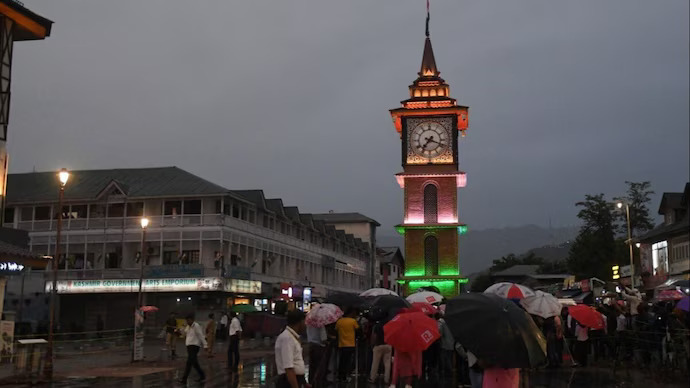
For decades the white coat in Kashmir signified a ticket to professional respect, income security and social mobility. Thousands of aspirants sit the entrance exams every year; hundreds travel abroad — to Bangladesh, Iran, China, Ukraine, Russia and until recently Pakistan — to earn medical degrees, often at great cost. For many Kashmiris these “MBBS flights” are literally the migration of resources. But this hasn’t stopped the race to get an MBBS degree, no matter from where, and often at a great expense for the families. This is because the degree is seen as a means to career growth and financial stability.
To understand why medical education is such an investment in Kashmir, consider the mechanics: NEET has become a sharp sieve and the competition for seats brutal. Unable to access enough quality seats at home, families seek options across borders and oceans. These are expensive choices. But for parents this is worth the expense and the effort: because study of medicine gives you a prestige in Kashmir unparalleled by any other profession.
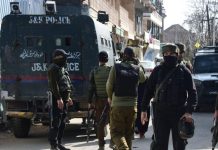
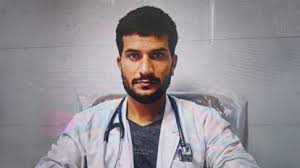
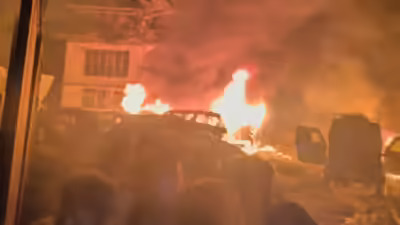
It is this faith in medicine which has been jolted by recent events. The car explosion near Delhi’s Red Fort on November 10, and subsequent arrests tied to a “white-collar” terror module have drawn attention to the alleged involvement of several doctors from Jammu & Kashmir.
This has come as a shock to not just people in mainland India but in Kashmir too. Kashmir’s professional classes – lawyers, teachers, doctors – have generally been imagined as slightly removed from the separatist militancy if not its narrative. They were hardly ever the foot soldiers of militancy. The Red Fort blast where an MBBS doctor blew himself up in his car on a busy thoroughfare and the subsequent arrests therefore break an implicit social contract.
This is not to say doctors were always outside the region’s political churn. Kashmir’s politics has seeped into every corridor of public life; the professions were affected in the general sort of way – for example, the moral dilemmas of treating opposed parties in the conflict, and the pressure of being first responders in a conflict zone. But there has been a firm sense that medical identity was separate: doctors were “elite” in social terms, with reputations and responsibilities that discouraged open participation in violent politics. Militancy among practising physicians had, until now, been unthinkable in public discourse.
Political leaders from the Valley have been quick to respond to the Red Fort shock — and their comments reveal the tightrope Kashmir’s politicians walk between condemning violence and defending their people from stereotyping. Chief minister Omar Abdullah condemned the attack and urged that the guilty face “the strictest punishment,” while warning that “not every resident of Jammu & Kashmir is a terrorist” and cautioned against collective blame.
Mehbooba Mufti, leader of the PDP, chose a different tack: she blamed central policies and suggested that the “troubles of Kashmir echoed right in front of the Red Fort,” arguing that an atmosphere of grievance and neglect feeds unsafety. Her critique landed badly with political opponents, but it echoes a long-standing narrative in the Valley that political marginalisation and punitive governance are part of the ecosystem in which radical ideas sometimes germinate.
What explains the leap of a few individuals from white coats to alleged conspirators and suicide bombing? Social scientists and security analysts point to the plurality of pathways to radicalisation: grievance, networks, online material, identity alarms and often personal ruptures. In Kashmir’s case, the region’s long history of turmoil and militarised politics has left institutions and loyalties frayed. Yet reductionist narratives that the professional class or that doctors are immune are misleading. Professional training does not inoculate graduates from the same socio-political grievances and pressures everyone else faces: familial loss, economic frustration, ideological persuasion. That is why the current probe demands both forensic rigour and empathetic public explanation.
Practically, the consequences are already evident: families of accused doctors in the Valley report shock and grief; institutions and alumni groups find themselves vetting membership; and students and professionals outside Kashmir worry about administrative checks. There are longer-term risks too. If the state responds with overly broad suspicions, this could alienate large swathes of population and thus backfire.
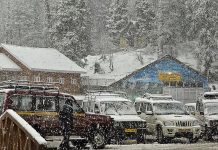
That said, two successive terror incidents this year – first at Pahalgam in Kashmir where 25 tourists and one civilian were killed and second at Red Fort in New Delhi where suicide blast by a Kashmiri doctor Umar Nabi killed nine people – have come as a double whammy for Kashmir economy. The Pahalgam attack left behind a valley reeling from trauma and economic uncertainty. The impact was immediate and wide-ranging. Within hours, Kashmir’s bustling spring tourist season, once full of promise after two relatively peaceful years, collapsed. Over 15,000 flights to Srinagar were cancelled. Hotels, which had seen nearly full occupancy in April, emptied out overnight. On social media, images of families hurriedly exiting Kashmir and heartbreaking videos from survivors circulated widely, further fuelling fear.
The Jammu and Kashmir administration responded with sweeping precautionary measures. Forty-eight tourist sites across the Valley, including Pahalgam’s key attractions like Baisaran, Aru, and Betaab Valley, were shut down for at least two weeks. The closure, while necessary for security assessments, struck a blow to locals whose livelihoods depend on the spring and summer tourist influx.
Tourism in Jammu and Kashmir had witnessed a resurgence over the past three years. In 2024 alone, nearly 3 million tourists, including thousands of foreigners, flocked to the region. This surge had become symbolic of a return to normalcy. But in the span of a day, the brutal killings of 26 people in Pahalgam and the heightened security situation undid much of this progress.
In recent months, though, tourists had started making their way back to Kashmir. The businesses impacted by Pahagam and the subsequent operation Sindoor had also started to recover. But the Red Fort blast and subsequent accidental explosion at police station Nowgam, which had cracked the entire conspiracy, killing nine people including six police personnel, have threatened to once again reverse the gains. For the tourism stakeholders and the other businesses, the year 2025 has largely been a wasted opportunity.
As investigations continue, Kashmir now faces the twin task of containing the security fallout and rebuilding public trust. For a region still recovering from the Pahalgam shock, the Red Fort blast threatens another setback to its economy, and a profession once seen as above suspicion.