Sunday, December 28, 2025

Israel-Iran war: Will Trump’s truce hold?

With Israel pressing ahead despite Trump’s ceasefire appeal, the spotlight now shifts to Russia and China, whose growing influence may prove decisive in easing tensions—and containing escalation. A report by Gopal Misra
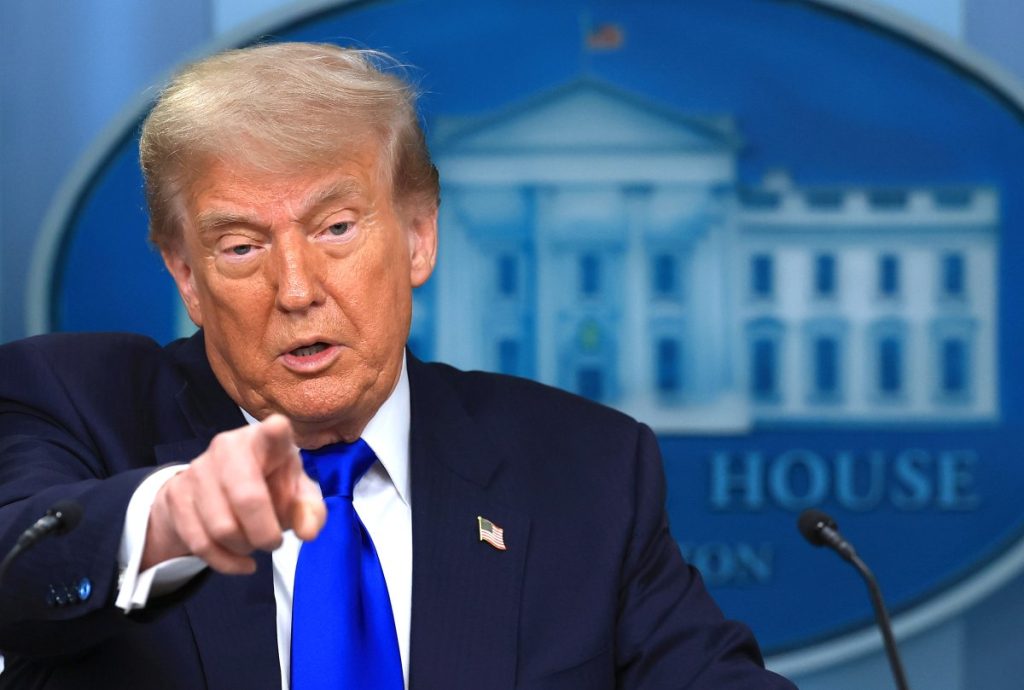
In spite of US President Donald Trump’s openly expressed anguish, it appears that the other two major world powers, Russia and China, may succeed in bringing a pause, at least for now, to the ongoing breathtaking confrontation between Israel and Iran that threatens to engulf the entire region. A key role in ensuring peace for Russian President Vladimir Putin and Chinese President Xi Jinping has suddenly become imperative, following Israel’s decision to ignore Trump’s advice to adhere to the ceasefire.

Earlier, both Russia and China had taken the initiative at the Security Council meeting held in New York, calling for an immediate ceasefire. Meanwhile, reports published in the American media, quoting a preliminary classified U.S. assessment, suggest that American airstrikes had not fully destroyed Iranian nuclear sites, as President Trump has claimed. In other words, despite the olive branch from the White House, Trump’s ambition for a Nobel Peace Prize—recently championed by his close aides—might remain elusive. Meanwhile, Iran has signalled that the country would be open to talks about its nuclear ambitions.
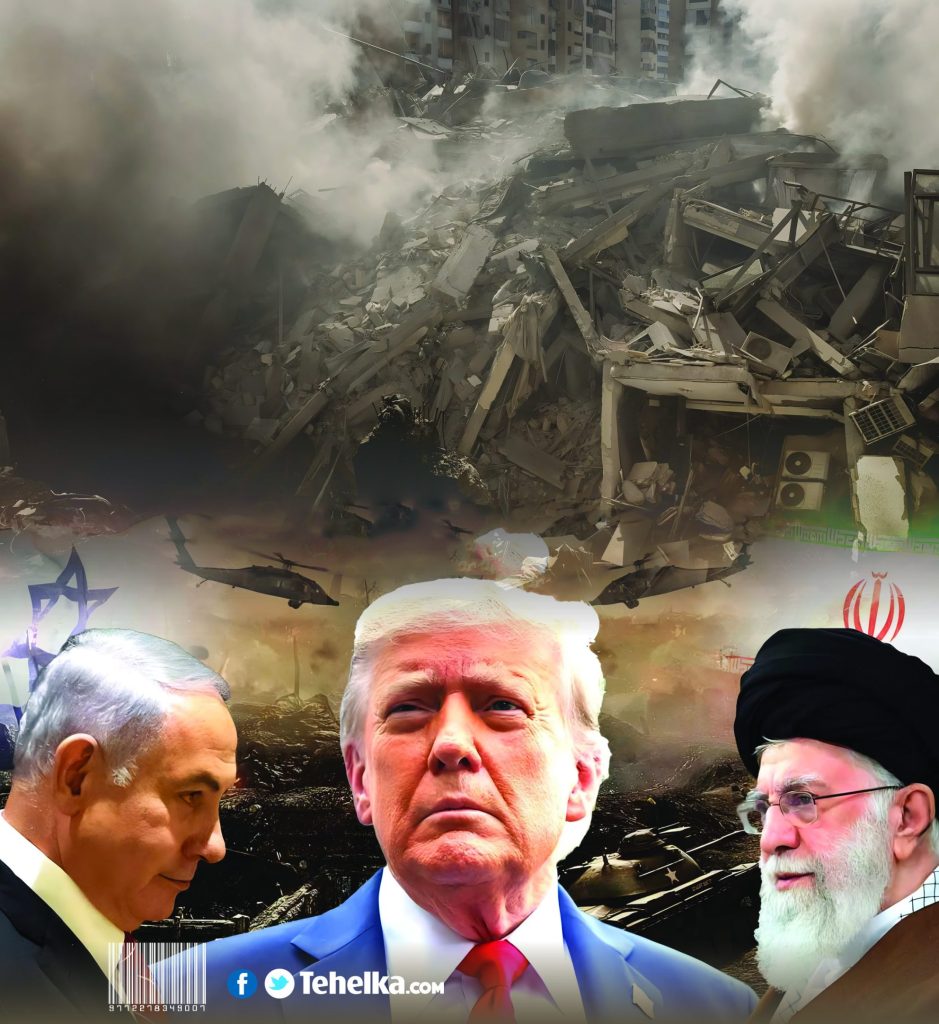
Indeed, the violation of the ceasefire has created a piquant situation for Trump, who was on his way to The Hague on June 24 to attend the NATO meeting. Earlier, the UN Security Council (UNSC) meeting held in New York was aimed at discussing U.S. strikes on Iran’s nuclear sites, but American support for an immediate ceasefire has since altered the situation. At the UNSC, Russia and China had proposed a resolution calling for an immediate and unconditional ceasefire in West Asia. With U.S. backing for ending the conflict without delay, a greater role has now emerged for China and Russia in bringing about peace in the region.

Also at the UNSC, UN Secretary-General António Guterres cautioned the world body: “We must act immediately and decisively to halt the fighting and return to serious, sustained negotiations on Iran’s nuclear programme. The bombing of Iranian nuclear facilities by the United States marks a perilous turn.”
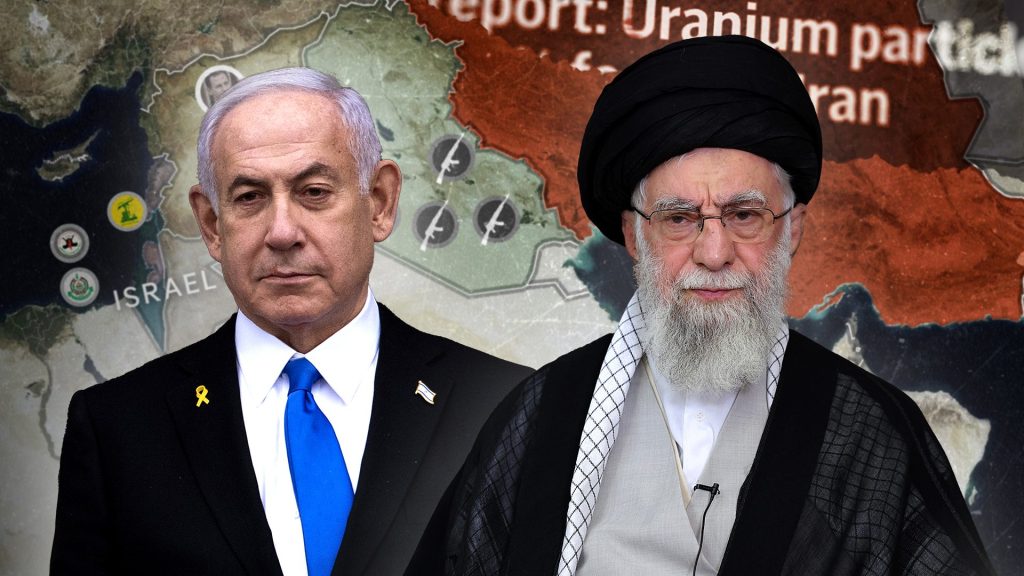
Meanwhile, within hours of Trump expressing displeasure and scolding both Iran and Israel for early violations of the truce he had announced, Israel bombed a target near Tehran on June 24. It appeared that despite a furious rebuke from Trump, who was on his way to a NATO summit in The Hague, Israel had launched airstrikes just hours after agreeing to a ceasefire deal with Iran. Israel has accused Iran of violating the ceasefire, prompting the retaliation. On the other hand, Iran’s President Masoud Pezeshkian has assured that his country would not violate the ceasefire unless Israel does so, and that Iran is prepared to return to negotiations.

Russia and China’s role crucial

In fact, the role of Russia and China has become more pronounced after Israel’s bombing of Iran. This took place despite Trump’s stinging criticism of Israel, Washington’s close ally in the region, over the scale of its strikes. He also advised Israel to “calm down now”, but Tel Aviv appears to be ignoring even his ardent supporters in America. Also, China is perhaps a bigger buyer of Iranian oil. Reports suggest that the threat to global trade and supply lines has grown following the intense bombing of Iran by the US and Israel.

The situation appears to be worsening with each passing day, as the world’s 20 per cent energy supply route faces disruption if Iran decides to close the Strait of Hormuz. Following the airstrikes, several top Iranian officials threatened retaliation. Iran launched barrages of missiles at U.S. bases in the Middle East, while state media reported that Iran’s Parliament had voted to close the Strait of Hormuz, a key global shipping chokepoint. Trump’s anguish was evident when he stated, “I didn’t like plenty of things I saw yesterday. I didn’t like the fact that Israel unloaded right after we made the deal. They didn’t have to unload, and I didn’t like the fact that the retaliation was very strong.”

With the support of China and Russia, the ceasefire announced by Trump cannot be ignored by Israel and Iran. Thus, with backing from the two global powers, Trump’s announcement of a ceasefire between Iran and Israel has officially come into effect and cannot be easily violated. It is hoped that the UNSC will soon endorse it, urging both parties to uphold the truce. There is worldwide appreciation for Trump’s statement: “The ceasefire is now in effect. Please do not violate it!”—a message he posted on Truth Social that cannot be taken lightly. Earlier, both sides had exchanged heavy fire overnight.

It remains to be seen whether the fragile ceasefire can be supervised by the UN, especially in light of Israel accusing Iran of violating the agreement just hours after it was reached. Israeli Defence Minister Israel Katz claimed on June 24 that Iran had “completely violated” the ceasefire and vowed retaliation. However, Iran has denied any such violation. The state-run Tasnim News Agency has reported that the General Staff of the Iranian Armed Forces has refuted Israeli media claims that Iran had fired missiles at Israel.

Bottom of Form

Trump’s reaction to the violation of the ceasefire appeared to be quite judicious. While acknowledging Iran’s violation of the truce, he expressed frustration with the scale of Israel’s response, observing: “In all fairness, Israel unloaded a lot. And now I hear Israel just went out because they felt it was violated by one rocket that didn’t land anywhere. That’s not what we want.”

Trump told media persons, “They (Israel) came out and they dropped a load of bombs, the likes of which I’ve never seen before—the biggest load that we’ve seen. I’m not happy with Israel.”

Later, Trump voiced his frustration on Truth Social, warning Tel Aviv not to bomb Iran: “Do not drop those bombs. If you do it is a major violation. Bring your pilots home, now!” Trump wrote in all caps.

US climb down on regime change

 Meanwhile, it appears that Trump, who wrote on Truth Social, has climbed down from his earlier statement that Iranian government—which has ruled the country as an Islamic theocratic autocracy since 1979—could be toppled amid more than a week of airstrikes between Iran and Israel. The Tehran regime has survived the US bombing of multiple nuclear sites in an attempt to prevent Iran from producing a nuclear weapon.

Earlier, Trump and a few White House officials had indicated that the administration was open to regime change after the United States bombed the country’s nuclear facilities. It was stated that, “It’s not politically correct to use the term ‘regime change,’ but if the current Iranian regime is unable to MAKE IRAN GREAT AGAIN, why wouldn’t there be a regime change?”

However, US Vice-President JD Vance did not endorse this view. He stated, “We don’t want to achieve regime change. We want to achieve the end of the Iranian nuclear program—that’s what the president set us out to do.”

Further, Secretary of State Marco Rubio told a news channel that the airstrikes were not “an attack on Iran” and “not an attack on the Iranian people,” adding, “this wasn’t a regime change move.”

Trump’s suggestion for regime change was not appreciated by many lawmakers. Representative Marjorie Taylor Greene of the Republican Party said that the United States should not get involved in the Israel–Iran conflict. According to her, she doesn’t want any further American participation in foreign conflicts. She observed that “Americans now fear Iranian terrorist attacks on our own soil and that our country might be dragged into another war.” She recalled that “American troops have been killed and forever torn apart—physically and mentally—for regime change, foreign wars, and for military-industrial base profits.”

Vance has also clarified that there will be “no boots on the ground” in Iran, meaning no U.S. troops will be deployed. He further said that Trump has been clear that the United States does not want a lengthy conflict with Iran. “I think that we have really pushed their (nuclear) program back by a very long time,” he said. “I think that it’s going to be many, many years before the Iranians are able to develop a nuclear weapon.”

Meanwhile, in spite of Iran’s barrages of missiles at U.S. bases in the Middle East, the US appears to be in no mood to retaliate. Earlier, Iranian Army Maj. Gen. Amir Hatami stated, through state-run Iranian media, that the United States would face Iranian repercussions, while Iran’s foreign minister asserted that “all options” are on the table.

It cannot be denied that India and China will be directly and adversely affected if the conflict continues. Questions are also being raised about whether the region is heading towards a repeat of the Gulf Wars, which consisted of two phases: Operation Desert Shield (August 2, 1990 to January 17, 1991), and the second phase, codenamed Desert Storm (January 17, 1991 to February 28, 1991).

The estimated cost of these wars was USD 120 billion, largely borne by the Gulf countries, which had to part with revenues earned from petroleum exports. US taxpayers, too, contributed to these conflicts.

Another dimension of these wars was the massive oil spill, which severely impacted 700 kilometres of marine life along the Saudi Arabian coastline. The cleanup operation is expected to continue until 2031.

Hamas attack a flashpoint

The Hamas-led attack on innocent Israeli civilians on the morning of October 7, 2023, and the subsequent Israeli retaliation—now known as the ongoing Gaza War—form the root of the present conflict in West Asia. The US supported Israel with the latest weapons and financial assistance. The US Congress extended financial support to the Israeli forces by approving funds, which included USD 19.3 billion, with USD 14 billion allocated for military operations (USD 4 billion for air defence and USD 1.2 billion for the Iron Beam defence system). The legislation also included USD 9.2 billion in humanitarian assistance for civilians in Gaza and the West Bank, as well as for those caught in war zones across the globe.

It may be mentioned that for the US-led West, there was little hesitation in selling weapons to Iran. It is said that the State Department changed its policy towards Iran following the siege of the US Embassy in Tehran in 1979. In 1980, it allowed Israel to sell American armaments to Iran during the Gulf War.

This support to Iran was initially explained as a strategy to secure the release of American hostages. Yet, the hostages were freed before the US began supplying weapons to Iran. American hypocrisy was later exposed, as it became clear that the US had supplied weapons to Iran through Israel to secure financial gains for its military-industrial complex.

In recent months, the US-Saudi Arabia defence ties have further expanded.In 2017, Saudi Arabia had purchased defence equipment worth 115 billion USD including tanks, combat ships and missile defence systems. It is stated that the Saudi-led coalition fighting terrorism in Yemen had attacked a school bus killing 40 children, with a bomb provided by the US in 2018. It is estimated that the American weapons enabled Saudi Arabia to attack the civilian population killing 10,000 children.

In an effort to eradicate Russian influence in Syria, US involvement can be traced back to the Obama administration in 2015. It continued under the Trump presidency, during which the Syrian government under a controversial figure, Ahmad al-Sharaa, was eventually recognised.

The situation became more complicated in 2019, when Turkey struck an agreement with Russia—posing a challenge to the White House, as the US and its Western allies were supporting the Kurdish liberation forces. Trump addressed the issue by recognising the Ahmad al-Sharaa regime.

Despite this turnabout, it remains doubtful whether US companies will be able to gain control of the oilfields located in Syria’s north-eastern province.

US interests shape its Mideast role

The United States’ foreign policy in the Middle East has its roots in the early 19th-century Tripolitan War. This occurred shortly after 1776, when the US emerged as a sovereign state. During the post–World War II decades, its purpose was to retain control over the oil fields under the pretext of an anti-Communist movement. As a successor to the British Empire, it became the main security patron of both Saudi Arabia and Israel. After the 1979 Islamic Revolution, its ties with Iran were disrupted. It may be noted that the US and Persia (Iran) had established commercial relations as early as 1857.

During the 1950s, in response to the power vacuum in the Middle East following the Suez Crisis, the Eisenhower administration developed a new policy aimed at stabilising the region against Soviet threats or internal turmoil. Given the collapse of British prestige and the rise of Soviet interest in the region, the President informed Congress on January 5, 1957, that it was essential for the US to assume new responsibilities for the security of West Asia. Under the policy, known as the Eisenhower Doctrine, any Middle Eastern country could request American economic assistance or military aid if it was being threatened by armed aggression.

Owing to their monopolistic mindset, American oil companies such as Standard Oil of New Jersey and Socony-Vacuum were opposed to the Red Line Agreement signed in 1928. The US companies argued that, after World War II, they were no longer bound by the agreement. After a prolonged legal battle and negotiations, Saudi Arabia finally signed an accord with ARAMCO to develop its oil resources.

For the past eight decades or so, American troops have been deployed in the region to protect US strategic and economic interests. It is estimated that the US currently has approximately 45,000 troops in the region, including around 2,500 stationed in Iraq, 900 in Syria, and others in Bahrain, Djibouti, Jordan, Kuwait, Qatar, and the United Arab Emirates. In 2010, the US had more than 100,000 troops in Iraq, about 70,000 in Afghanistan, and many more in neighbouring countries.

Hammer or Hype?

US Defence Secretary Pete Hegseth revealed during a Pentagon news briefing that the U.S. strike on three Iranian nuclear facilities overnight on June 21–22 followed a highly intricate plan involving more than 125 U.S. aircraft and warships, along with multiple layers of deception. The mission—dubbed Operation Midnight Hammer—was developed over weeks and months, “so that we could be ready when the President of the United States called.”
Meanwhile, some reports suggest that American airstrikes had not fully destroyed Iranian nuclear sites, as President Trump has claimed.

The U.S. strikes, launched a week after Israel carried out a series of surprise airstrikes across Iran, were aimed primarily at Iran’s Fordow uranium enrichment facility. Since Israel lacked the capacity to penetrate the site—located hundreds of feet underground in a mountainous region of Iran—the U.S. Air Force deployed B-2 Spirit stealth bombers equipped with 30,000-pound bunker-busting bombs, known as GBU-57A/B Massive Ordnance Penetrators.
India’s Uncompromising Stand: No Room for Terror in Global Diplomacy in a Divided World

In a world where strategic convenience often trumps moral clarity, India has taken a firm and unapologetic stance: those who support terrorism must never be rewarded. Prime Minister Narendra Modi delivered a veiled but unmistakable message to the United States at the recent G7 Summit, criticizing the red-carpet treatment accorded to Pakistan’s Army Chief. His words underscored a growing Indian frustration—that the international community, in its quest for balance, is at times willing to blur the line between perpetrators of terror and their victims.

Modi’s assertion—that terrorists and victims can never be equated—was more than rhetoric; it was a signal. And India’s Defence Minister Rajnath Singh followed through with action. At the Shanghai Cooperation Organization (SCO) Defence Ministers’ conclave, hosted on Chinese soil, Singh refused to sign the joint communique. With his Chinese and Pakistani counterparts seated across from him, Singh criticized the SCO’s reluctance to call out cross-border terrorism and rejected what he called “double standards” on the issue.

This move came after China, chairing the SCO this year, allegedly blocked the inclusion of the Pahalgam massacre—a brutal terrorist attack on Indian soil—from the joint statement. Instead, Beijing and Islamabad pushed for the inclusion of issues such as Baluchistan and the situation in Jammu and Kashmir, which India rightly saw as a deliberate attempt to deflect attention.

Meanwhile, the duplicity surrounding global terror diplomacy was once again on full display, this time involving U.S. President Donald Trump. Just six weeks after controversially claiming credit for a ceasefire agreement between India and Pakistan, Trump made a similar claim regarding an alleged U.S.-brokered peace deal between Israel and Iran. But reality swiftly caught up with rhetoric.

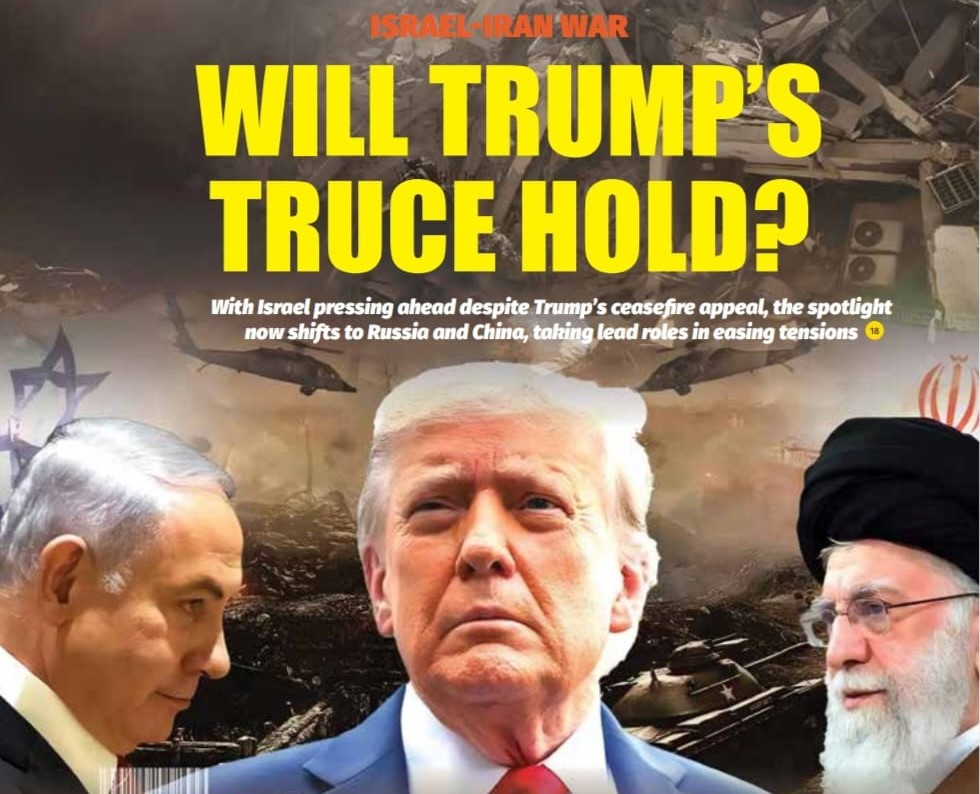
Tehelka’s cover story, “Israel-Iran war: Will Trump’s truce hold?” explains how U.S. airstrikes on suspected Iranian nuclear sites only added fuel to the fire. Tehran had anticipated the move, relocating enriched uranium to undisclosed sites. In retaliation, Iran launched a missile strike on a U.S. military base in Qatar—an aggressive counterpunch that left Washington stunned and reinforced how fragile and combustible the region remains. Trump’s gamble backfired, exposing the futility of brute force in matters demanding diplomacy and mutual respect.

The lesson is clear: sustainable peace cannot be dictated from above. It requires consistent, principled diplomacy—something India appears to understand better than most. As the U.S. stumbles through one foreign policy blunder after another, India is quietly but firmly asserting its moral authority on the world stage.

Amidst these global tensions, India also had cause for celebration. The SpaceX Dragon spacecraft, carrying Group Captain Shubhanshu Shukla and three other astronauts, successfully docked with the International Space Station (ISS). This milestone not only marks India’s deepening involvement in international space exploration but also symbolizes its growing stature as a global leader, one rooted in ethics, science, and a steadfast commitment to peace.

India returns to space after 41 yrs; Shubhanshu Shukla first Indian aboard ISS

Four decades after Rakesh Sharma’s historic flight, India has returned to human spaceflight. Group Captain Shubhanshu Shukla’s journey aboard Axiom Mission 4 marks not just personal glory but heralds a new chapter in the nation’s cosmic ambitions. A report by Priyanka Tanwer

Forty-one years after Rakesh Sharma etched his name in history as the first Indian in space, another Indian name now echoes among the stars. On June 25, 2025, Group Captain Shubhanshu Shukla, an accomplished Indian Air Force pilot, soared into orbit aboard Axiom Mission 4—a privately funded international mission launched by SpaceX—becoming only the second Indian ever to travel into space.

The launch, which took place from NASA’s iconic launch complex 39A at the Kennedy Space Center, carried four astronauts to the International Space Station (ISS) aboard the Dragon capsule “Grace.”

For Shukla, the journey was not just personal. It symbolized the rekindling of India’s long-dormant human spaceflight programme and heralded a new chapter in the nation’s cosmic ambitions.

The rocket’s white flame cut across the sky at 2:34 pm, carrying with it the aspirations of 1.4 billion Indians. Shukla’s participation in Axiom-4 (Ax-4) is historic in more ways than one. Not only is he the first Indian in space since 1984, but he is also the first Indian astronaut aboard the ISS, a floating laboratory where nations collaborate on humanity’s greatest scientific frontiers.

For many, the mission marks the end of a four-decade drought in Indian crewed spaceflight. After Rakesh Sharma’s week-long mission aboard the Soviet Soyuz T-11 in April 1984, India’s focus had largely remained on satellite development and unmanned exploration.

However, that changed in recent years as India’s space agency, Indian Space Research Organisation (ISRO) began developing its indigenous human spaceflight programme — Gaganyaan. But with crewed Gaganyaan missions still two years away, partnering with Axiom Space gave India a shortcut to experience the rigors of life in orbit.

Shubhanshu Shukla, 39, joined three other astronauts on the Ax-4 mission, including Peggy Whitson, veteran American astronaut and mission commander, Sławosz Uznanski-Wiśniewski, an ESA-backed scientist from Poland, and Tibor Kapu, a mechanical engineer from Hungary.

The team docked with the ISS on June 26 at 16.01 IST, nearly 28 hours after launch. They were greeted by the Expedition 71 crew already aboard the station. Over the course of their two-week mission, the Ax-4 astronauts will conduct more than 60 scientific experiments—ranging from microgravity’s effects on cancer cell growth to DNA repair and microbial resistance.

Shukla’s research portfolio includes experiments designed by Indian scientists, offering insights into physiology, material science, and even traditional Indian medicine in microgravity. Symbolically, he also carried with him Indian culinary items such as mango nectar and curry—blending culture and science in a voyage that reflects India’s distinct voice in the cosmos.

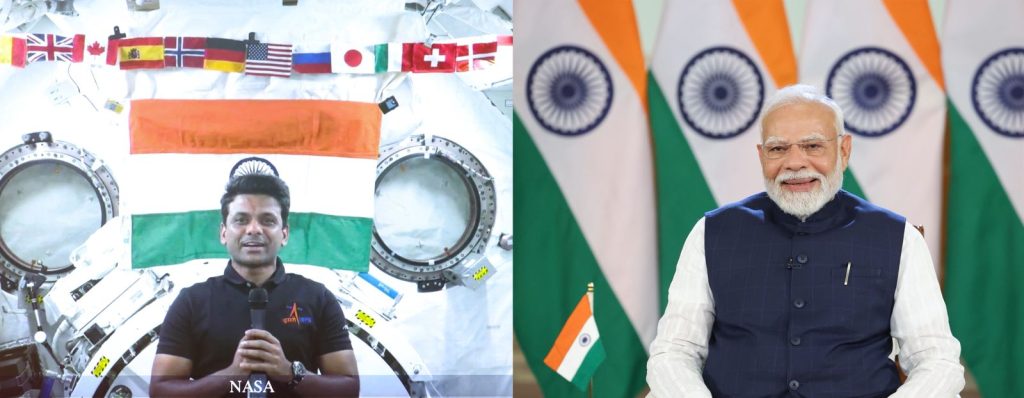
During a live video call from space, Prime Minister Narendra Modi congratulated Shukla, calling him “India’s pride in orbit.”

“You may be far from the motherland,” Modi said, “but you are closest to every Indian heart today.”

Shukla, floating in zero gravity and wrapped in the Indian Tricolor, responded with humility and said, “This is not my journey alone. It is the journey of 1.4 billion people. I am here because of decades of dreams, training, and the hard work of thousands of scientists and citizens.”

India’s participation in Axiom-4 is more than symbolic—it is strategic. With the Gaganyaan mission facing technical and safety-related delays, this international collaboration allows India to gather live training data for future astronauts, experiment in space-borne sciences, and test protocols and life support systems.

ISRO, meanwhile, is preparing for its own uncrewed Gaganyaan test flight later this year, with a crewed mission expected in 2027. In parallel, the agency has announced plans to build its own space station, the Bharatiya Antariksh Station, by 2028—a project that would place India alongside the US, Russia, and China as one of the few nations with permanent human presence in orbit.

India’s increasing engagement with commercial spaceflight, especially with private players like Axiom and SpaceX, is part of a global trend where governments leverage private innovation for public goals. As the International Space Station nears retirement by 2030, private space stations and lunar gateways are expected to become the next frontier—and India intends to be part of it.

India’s return to human spaceflight after 41 years is not just a story of one man’s journey—it’s a national milestone. As Shubhanshu Shukla orbits above us, he carries a legacy begun by Sharma, nurtured by ISRO, and now propelled by global collaboration. The message is clear: India is back in space—and this time, it’s here to stay.

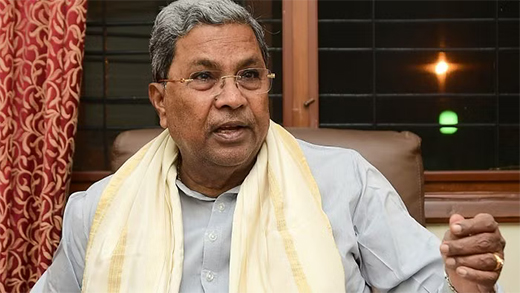
Karnataka—Surjewala in state, to meet MLAs amid speculations about change of guard

There appears to be a strong buzz about a change of guard in the Congress-ruled Karnataka fuelled by some recent developments, including meetings between Chief Minister Siddaramaiah and Deputy CM DK Shivakumar and Home Minister G Parameshwara.

While Siddaramaiah is expected to try his best to continue as CM, others in the race are also leaving no stone unturned to dislodge him, say sources. However, after the feedback from MLAs and state leaders on crucial issues, the situation may also change.  In case there is pressure from the central leadership, Siddaramaiah would prefer to have Parameshwara as his successor, they add.

Leaders close to Siddaramaiah dismissed the speculations but of late there were also rumours of AICC president Mallikarjun Kharge taking over as the CM.

According to Shivakumar loyalists, the Deputy CM will take over as the next CM.

There was an agreement at the high command level that there would be a change in leadership after two and a half years. Siddaramaiah must pass the baton so that Shivakumar can become the CM, they add.

Some Congress MLAs have also been raising voices against Siddaramaiah and Congress’ Karnataka in-charge Randeep Singh Surjewala is also in the state capital to hear their grievances over the next couple of days, sources confirm

Amid speculations about a change in leadership in the government and  the state party leadership, Surjewala is also expected to assess the mood of the MLAs and others and report to the party high command.

Sources said, Surjewala may also evaluate the performance of the government and its ministers so that the high command can decide whether to reshuffle the Siddaramaiah cabinet or bring about a change in the Chief Minister. He is also expected to gather information on the implementation of the guarantees and the party’s organisational strength at the grassroots level.

Recently, Cooperation Minister KN Rajanna also predicted changes in state politics after September but according to Siddaramaia’s loyalists the high command has not issued any instructions for his father to step down.

J&K: LG Sinha meets families of civilian victims in Pahalgam, promises justice and support

SRINAGAR — Lieutenant Governor Manoj Sinha on Sunday met more than 80 families of civilians killed by militants over the past three decades in Jammu and Kashmir. The outreach event, held in Pahalgam marks a renewed push by the government to acknowledge long-ignored victims of terrorism and provide them with justice and institutional support.

During the gathering, Sinha paid homage to the deceased civilians and said their suffering had been overlooked for too long. “For years, the pain of these families was ignored, and their stories buried,” he said, calling it a grave injustice that the state now aims to correct.

The LG pointed to what he described as a shift in narrative, contrasting the past era—when militant funerals were publicly allowed—with the silence around civilian deaths. He said the administration is now working to “bring the truth to light” and break the silence around those killed by what the government terms cross-border terrorism.

Sinha said district officials would be instructed to file First Information Reports (FIRs) in cases where they were never registered. He also promised action to reclaim properties of the victims’ families allegedly encroached upon by separatist elements or militant sympathisers.

In terms of rehabilitation, the LG said families entitled to government jobs should submit their claims to district administrations, promising that the appointment process would be completed within a month. Those interested in starting businesses would be provided financial aid and administrative assistance.

He added that this initiative is part of the Centre’s broader goal to dismantle the “terror ecosystem” that, according to the government, glorified militancy while silencing the voices of actual victims.

Several family members who attended the event said they had waited decades to share their stories. They accused separatist networks of hijacking the public narrative and erasing their suffering from the mainstream discourse.

Sinha also made broader political remarks, drawing a sharp contrast between India’s economic growth and what he described as Pakistan’s instability. He criticised Pakistan for continuing to recruit Kashmiri youth into militant ranks and warned of strong retaliation against any future cross-border aggression.

The meeting comes in the backdrop of heightened security concerns following the April attack in Pahalgam that claimed 26 lives, including 25 tourists. Officials say the latest outreach aims to provide not just reassurance, but overdue recognition to families who have long lived in silence.

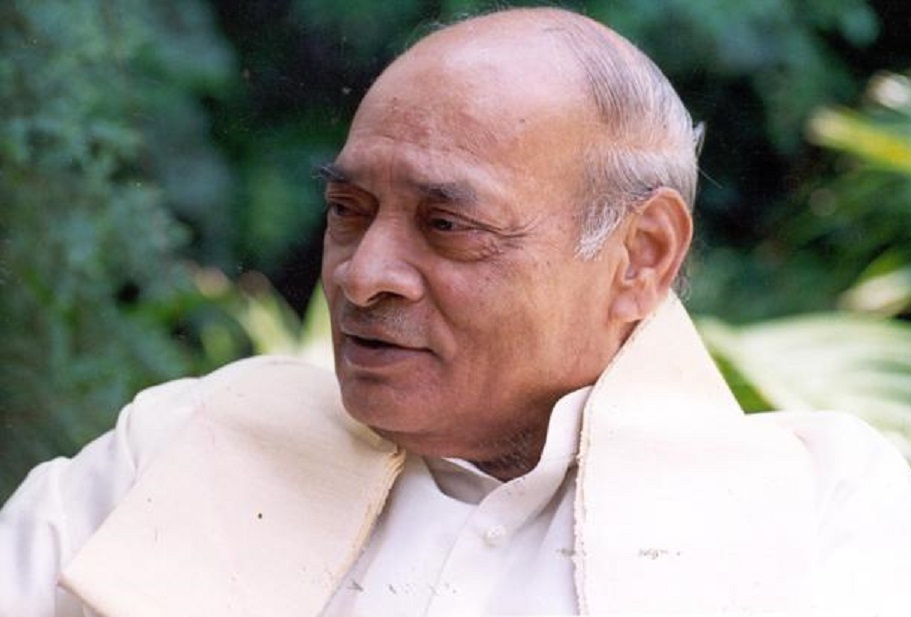
PM recalls former PM Narsimha Rao’s pivotal role in shaping India’s development path

The ruling BJP, which has often accused Congress of “disrespecting and insulting” Rao, also conferred upon him the Bharat Ratna last year

Vibha Sharma, June 28- Prime Minister Narendra Modi today paid rich tribute to former Prime Minister PV Narasimha Rao on his birth anniversary, recalling his pivotal role in shaping India’s development path during a crucial phase of the nation’s economic and political transformation.

“Remembering Shri PV Narasimha Rao Garu on his birth anniversary. India is grateful to him for his effective leadership during a crucial phase of our development trajectory. His intellect, wisdom and scholarly nature are also widely admired,” he wrote on X

The ruling BJP, which has often accused Congress party for “disrespecting and insulting” the late PM,  in 2024 also conferred upon him the Bharat Ratna, the country’s highest civilian honour.

Rao had almost retired in 1991, but came back to active politics after the assassination of the then Congress president Rajiv Gandhi. He was the first Congress PM outside the Nehru-Gandhi family and is someone who is also praised for ushering in economic liberalisation,

After his death, the Congress leadership almost kept his memories off limits from the 24, Akbar Road office. There were no photographs of the late PM at the party headquarters  and it was only  20 years after his death in December 2004, that his legacy finally found a place in the new headquarters of the Congress.

SCO developments again proves growing China- Pakistan ties

Rakha Mantri Rajnath Singh on Thursday refused to sign the draft statement at the Shanghai Cooperation Organisation (SCO) meeting

In an action underlining India’s strong stance on the issue, Rakha Mantri Rajnath Singh on Thursday refused to sign the draft statement at the Shanghai Cooperation Organisation (SCO) meeting.

The document omitted the reference to the Pahalgam terror attack on April 22 but mentioned the Jaffar Express hijacking in Pakistan’s Balochistan. India accuses Pakistan of having masterminded, aided and abetted the Pahalgam terror attack and equivocally trashes allegations about any involvement in Balochistan. 

The RM’s refusing to sign the SCO draft document was a significant development as no joint statement emerged from this year’s SCO meeting.

Those familiar with the recent happenings saw it as a proof of India’s sustained stance ‘no compromise on terrorism’ and also of increasing proximity between China and Pakistan. 

China is the present Chair of the SCO 

Basically SCO comprises 10 countries, including India, China, Russia, Pakistan, Kazakhstan, Kyrgyzstan, Tajikistan, Uzbekistan, Iran, and Belarus.

Pakistan is a major ally of China.  

Beijing also provided aid to Pakistan in the recent  military confrontation with India. Pahalgam’s exclusion from the document seemed to have been done at Pakistan’s behest, said analysts.

Earlier, in his speech at the SCO, the RM had spoken about the Pahalgam terror attack of April 22 and Operation Sindoor. He also said that peace and prosperity cannot co-exist with terrorism and proliferation of Weapons of Mass Destruction in the hands of non-state actors and terror groups. 

 “During the Pahalgam terror attack, victims were shot after they were profiled on religious identity. The Resistance Front, a proxy of UN-designated terror group Lashkar-e-Taiba (LeT) claimed responsibility for the attack. The pattern of Pahalgam attack matches with LeT’s previous terror attacks in India. India’s zero tolerance for terrorism was demonstrated through its actions,” he said.

However, the SCO draft statement did not mention Pahalgam but talked about the train hijacking in Balochistan

According to MEA spokesperson Randhir Jaiswal said, “India wanted concerns on terrorism to be reflected in the document, which was not acceptable to one particular country, and therefore, the statement was not adopted,” in an apparent reference to Pakistan, China’s new best friend.

Rekha Gupta inaugurates bus terminal, flags-off over 100 DEVI buses

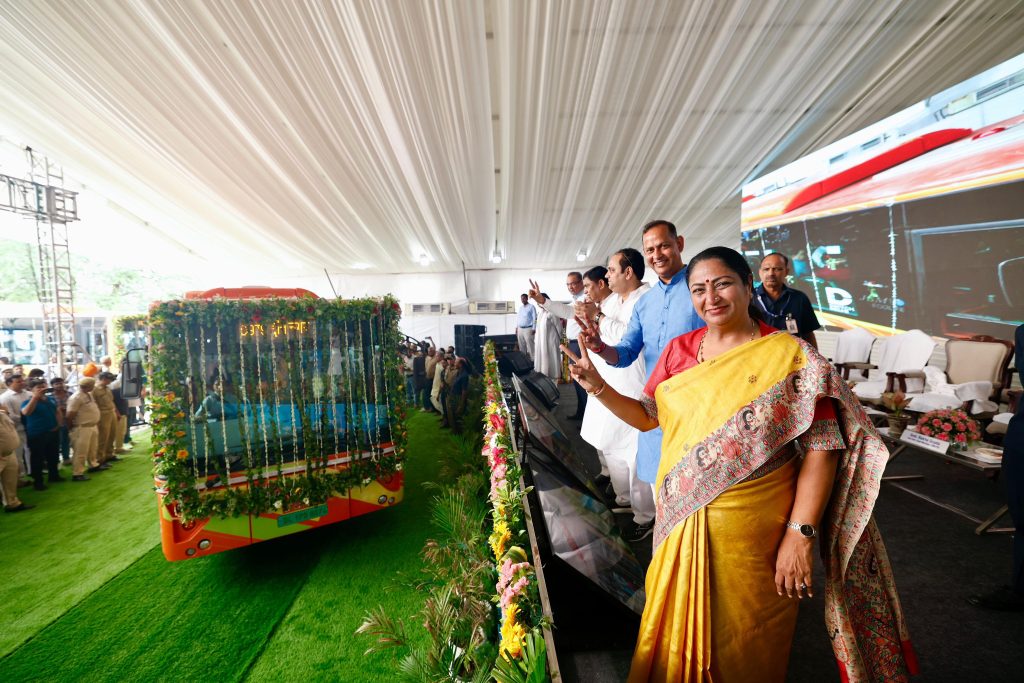
In order to provide smooth transport services to Delhiites, Delhi chief minister Rekha Gupta on Friday inaugurated the state-of-the-art bus terminal in Narela.

She also dedicated over 100 Delhi EV Interconnector (DEVI) buses to the service of the residents. “This project is not just a new facility but a strong step towards taking Delhi to a better, safer, and more inclusive future,” Gupta said.

Spread over an area of 4000 square meters in Narela, this terminal is equipped with all basic amenities like three bus bays, a spacious shed, clean toilets, an RO water plant, a canteen-pantry, and an EV charging station.

“Passengers will now travel with a better experience,” she said while inaugurating the terminal.

The new DEVI buses are equipped with modern facilities like CCTV cameras, emergency panic buttons, and live tracking. Additionally, these buses are fully accessible with a wheelchair-friendly design for the convenience of differently-abled individuals.

Photo: Naveen Bansal

Gupta said, “Today, more than 2000 electric buses are running on Delhi’s roads. Our resolve is to make the capital’s public transport system fully electric by 2027, realizing the vision of “Developed Delhi” set by Prime Minister Narendra Modi.”

She claimed that the terminal was completed in just 90 days and it reflects the government’s commitment to deliver on promises made to Delhi residents.

 She also attacked the previous Aam Aadmi Party (AAP) government, accusing it of pushing Delhi Transport Corporation (DTC) into losses and fostering a corrupt system.

“Buses are Delhi’s lifeline. But under the previous government, routes were cut, buses reduced, and corruption seeped in. DTC had incurred losses amounting to Rs 65,000 crore during the earlier regime,” she added.

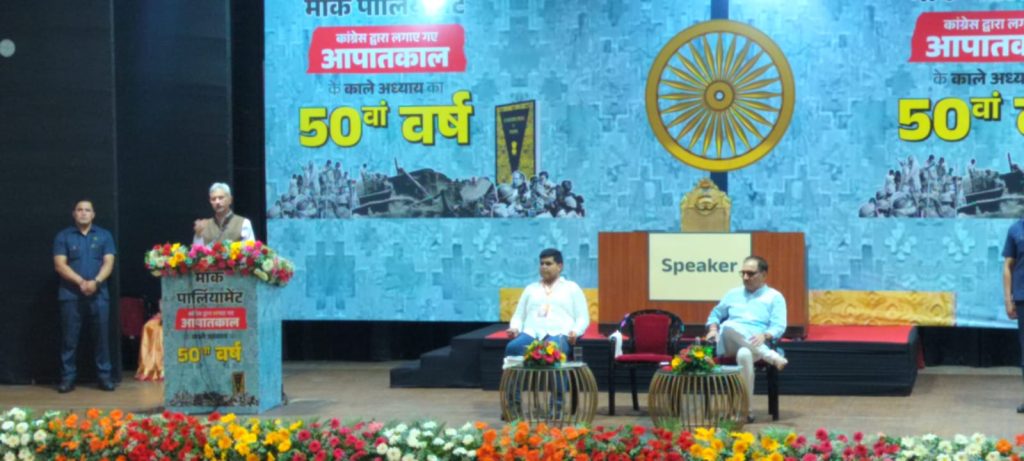
Emergency50: Freedom should not be taken for granted, says S Jaishankar

Photo: Naveen Bansal

Union external minister S Jaishankar on Friday inaugurated a mock Parliament session in Delhi to register the government’s protest against 50 years of Emergency implemented by the then government.

The event which was held at NDMC Convention Centre saw the participation of Delhi BJP president Virendra Sachdeva and & Delhi BJYM president Sagar Tyagi.

Addressing the gathering here, Jaishankar said during Emergency we have learnt that freedom should not be taken for granted.

“Some people think that Emergency was a political activity; but it was beyond politics which had impacted our Constitution, institutions, Media, and culture. Our way of life was attacked in the Emergency,” Jaishankar added.

Slamming the Congress he said that when one family is considered bigger than the nation, there comes a situation like Emergency.

“The dark chapter of Emergency and its realities needs to be discussed and debated upon among our young minds and society. It’s very much a reminder how democracy is in India’s DNA,” he said.

The union cabinet passed a resolution to commemorate and honour the sacrifices of those who fought against the suspension of democratic rights, and the Constitution.

The cabinet observed a two-minute silence as a tribute to the victims of the Emergency, which was declared on June 25, 1975.

2025 marks 50 years of the ‘Samvidhan Hatya Diwas’ (‘Constitution murder day’) as it is now being marked by the government, Union Information and Broadcasting Minister Ashwini Vaishnaw said on June 25.

India for permanent solution of border with China

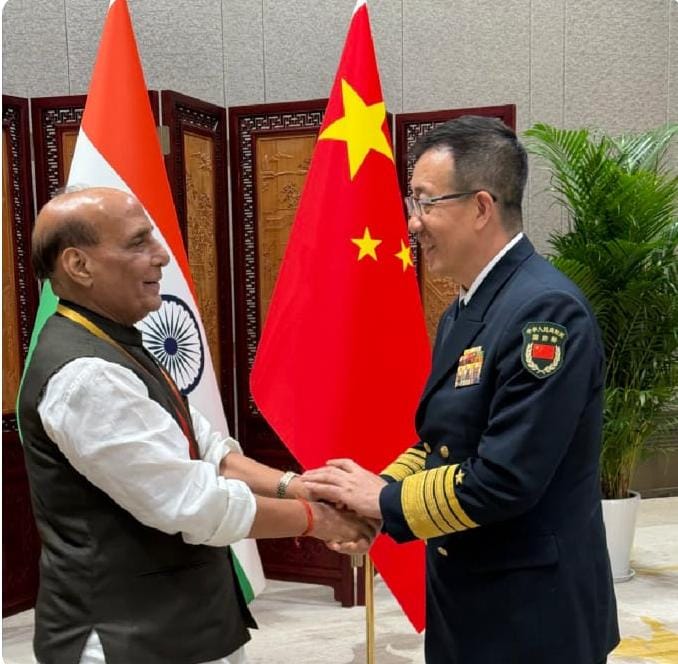
Defence Minister Rajnath Singh meets Chinese counterpart Admiral Dong Jun,. also suggests a roadmap for permanent de-escalation of troops from along the Line of Actual Control (LAC)

Raksha Mantri Rajnath Singh on Thursday stressed on the need for India and China to have a permanent solution of border

In a meeting with his Chinese counterpart Admiral Dong Jun, the RM also suggested a roadmap for permanent de-escalation of troops from along the Line of Actual Control (LAC), the  Ministry of Defence said on Friday.

Meeting on the sidelines of Shanghai Cooperation Organisation (SCO) Defence Ministers’ meeting in Qingdao, China the two ministers held in-depth discussions on the need to maintain peace and tranquility along the India-China border, the MoD said 

Rajnath Singh stressed on “border management and (on the need)  to have a permanent solution of border demarcation by rejuvenating the established mechanism on the issue, ” according to the MoD statement 

The Defence Minister highlighted the necessity of solving the complex issues at the Line of Actual Control (LAC) and “have a  structured roadmap of permanent engagement and de-escalation”.

Referring to the April 2020 military stand off along the LAC in Eastern Ladakh, he also called for bridging the trust deficit created after the standoff, by taking action on ground. 

The two ministers acknowledged the work being undertaken by both sides to bring back semblance of normalcy in the bilateral relations.

 Rajnath Singh emphasised the need to create good neighbourly conditions to achieve best mutual benefits as well as to cooperate for stability in Asia and the world, the MoD stated 

The two Ministers agreed to continue consultations at various levels to achieve progress on issues related to disengagement, de-escalation, border management and eventual de-limitation through existing mechanisms.

Rajnath Singh appreciated the resumption of Kailash Manasarovar yatra after a gap of five years and  briefed his counterpart on the heinous terrorist attack carried out against innocent civilians in Pahalgam on April 22, 2025, and India’s Operation Sindoor aimed at dismantling terrorist networks in Pakistan.

MOST POPULAR

HOT NEWS