Pilibhit fake encounter: HC denies bail to 34 former cops

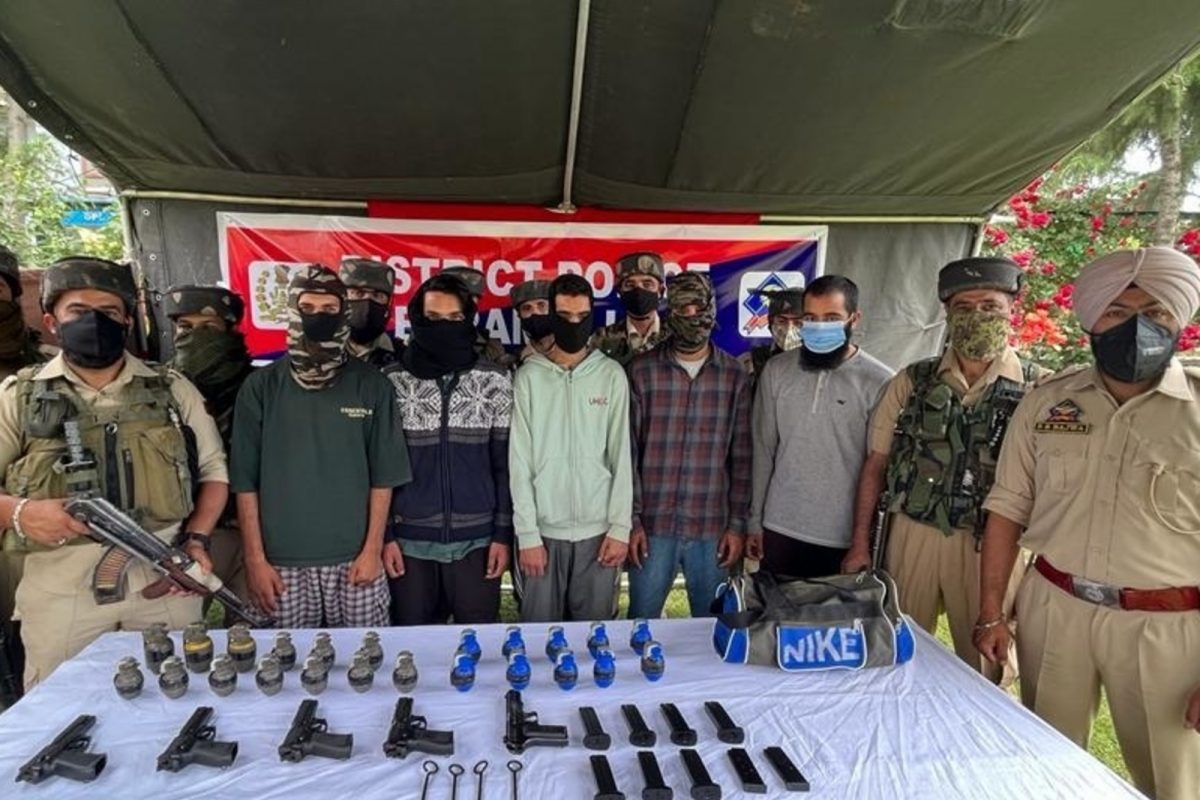
The Allahabad High Court has rejected the bail pleas of 34 former constables of the Provincial Armed Constabulary (PAC) who were convicted of killing 10 Sikh youth who were returning after offering prayers at a pilgrimage site in the area in 1991. A report by Mudit Mathur

The Lucknow bench of Allahabad High Court has rejected the bail pleas of 34 former constables of the Provincial Armed Constabulary (PAC) who were convicted of killing ten youth Sikh pilgrims in a fake encounter in 1991 when they were returning after offering prayers at their holy pilgrimage site in the area. They were pulled down from a bus by police and later they were shot dead in fake encounters at three different spots in the dense forest areas.

A bench of Justice Ramesh Sinha and Justice Brij Raj Singh passed the order while deciding the bail pleas moved by the appellants individually, along with their appeals preferred against their conviction and sentence awarded by a special CBI court at Lucknow in 2016.The court fixed July 25 as the next date for hearing.

Initially, the investigation was conducted by local Pilibhit police, and a closure report was filed to hush up the matter but rejecting the closure report, the Supreme Court had entrusted the investigation to CBI. The orders were passed on a writ petition filed by eminent Supreme Court lawyer R.S. Sodhi, who demanded the re-investigation of the alleged encounter of 11 suspected terrorists. Thus, the probe was entrusted to Central Bureau of Investigation (C.B.I.). The CBI booked 57 accused, but 10 of them died pending trial. All the 47 convicts moved the high court against the judgment of a special CBI judge of which 12 got released on bail.

“The instant case is serious of nature and cannot be treated like an ordinary case. The convicts/appellants, who are policemen, are supposed to uphold the law, but the allegation against them is that they functioned as contract killers,” the bench remarked.

“The gruesome murder of the deceased who had no criminal antecedents along with some of the deceased who had criminal antecedents, cannot be in any manner justified treating all the deceased to be the terrorists by separating them from their wives and children, who were going to a pilgrimage in the bus, by the appellants and taking them in another bus and killing them in a fake encounter at three different places of district Pilibhit,” the court held.

“More so, if some of the deceased were involved in anti-social activities and criminal cases were registered against them, then too procedure established by law should have been adhered to, to bring them to task instead of indulging in such barbaric and inhuman killing of the innocent persons,” the court observed.

According to CBI, the bus was on its way to Pilibhit on July 12, when a police team stopped it at Kachlapul ghat. Eleven Sikh men were allegedly dragged out of the vehicle. The other passengers, including women and children, were taken to a gurdwara in Pilibhit while the men were made to sit in another vehicle. Late in the evening, additional force joined the police team and they divided the Sikh men in three groups.

On the intervening night of July 12 and 13, the policemen in cold blood gunned down the Sikh youths in three fake encounters in the thickets falling under three different police station areas — Bilsanda, Niuria and Pooranpur— in Pilibhit. The police then claimed that these men had criminal cases against them and claimed to have recovered arms and ammunition from their possession. The CBI probe found that the police got the autopsy done on 10 of the bodies and got them cremated the same day. One body could not be found.

The High Court rejected the bail pleas after hearing detailed submissions of Nagendra Mohan, Daya Shankar Mishra, Senior Advocates, assisted by Atul Verma, R.P. Mishra, Indu Prakash Singh, Sheikh Wali-Uz Zamanon behalf of convicted applicants and Anurag Singh, learned Counsel for the C.B.I. and I.B. Singh, Senior Advocate, assisted by Vivek Kumar Rai for the victim families opposing bail applications.


There is more to Puri heritage project row than meets the eye

CM Patnaik’s focus on the development of major temples is a calculated move to tap into Hindu religious sentiments which can keep the BJP at bay. This seems to have alarmed the BJP leaders who are finding fault with the various projects launched by CM, writes Arabinda Mohapatra

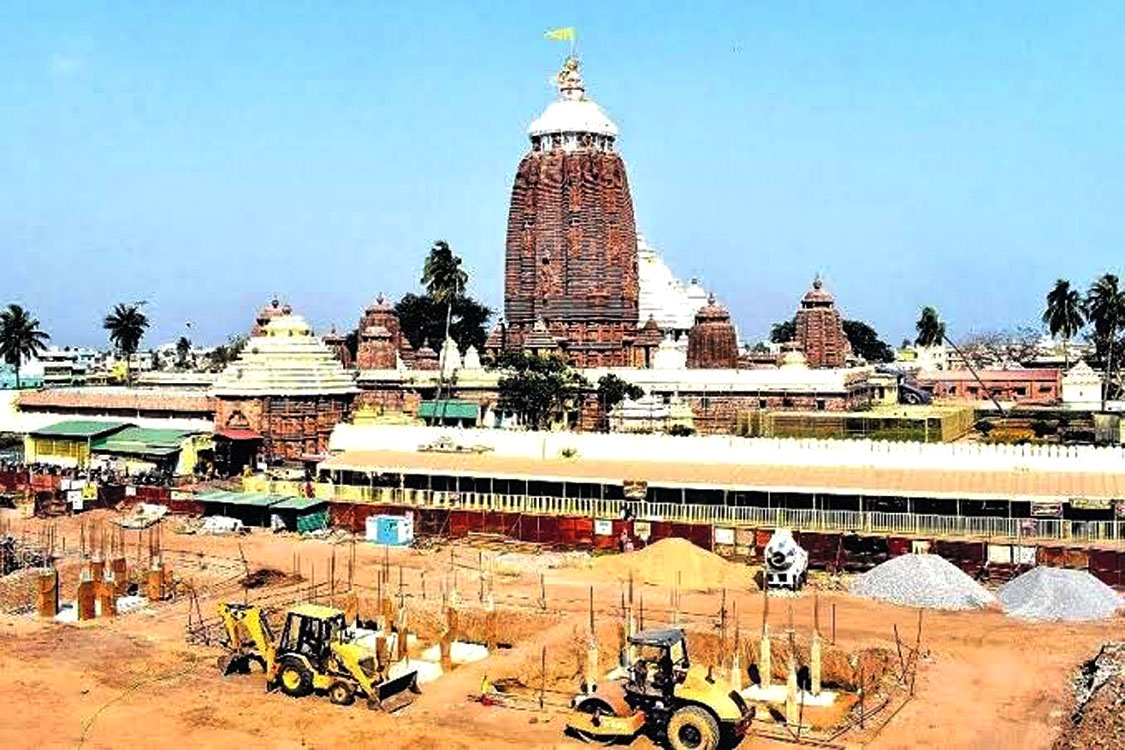
The ambitious Puri heritage corridor project has turned controversial with ruling Biju Janata Dal (BJD) and BJP coming face to face on the issue. While the state BJP has launched a full-fledged campaign against the manner in which the BJD is carrying out the project, the Naveen Patnaik-led regional party maintains that the saffron leaders are trying to politicize the issue. The BJP has accused the Patnaik government of violating the rules relating to ancient monuments while carrying out the project. But BJD has refuted the allegation asserting that nothing illegal has been done in the execution of the project. The party has also taken potshots at the BJP leadership for trying to block the development of Puri and the 12th century Jagannath temple, the most famous shrine of the state which is visited every year by lakhs of devotees.

Conceived in 2016, the Puri Heritage Corridor Project is aimed at transforming the holy town into an international heritage city with several ancient temples and enough amenities for the visitors to enjoy their stay in Puri which is not only a great centre of pilgrimage but also a major attraction for tourists who love beaches and bathing in the sea. The project includes redeveloping major portions of the town and in the vicinity of the temple for visitors and tourists. The project includes multiple developmental initiatives with the cost running into several crores. After the initial Rs 800 crore from the state government’s Augmentation of Basic Amenities and Development of Heritage and Architecture at Puri (ABADHA) scheme, another Rs 265 crore will be provided in the first phase of the project which includes Shree Jagannath Temple Administration (SJTA) building redevelopment, a 600-capacity Srimandir reception centre, Jagannath cultural centre including Raghunandan library, integrated command, and control centre etc.

The 12th century Jagannath temple, which is Puri’s biggest attraction and also at the centre of the present controversy, is a centrally protected monument with the ASI in-charge of its maintenance. As per rules laid down under the Ancient Monuments and Archaeological Sites and Remains (Amendment and validation) Act, construction activities within a 100 metre around such a monument’s perimeter are restricted. Constructions can only be carried out with approval from the National Monuments Authority (NMA) which is a body under the Union Ministry of Culture. It was set up under the provisions of AMSAR Act for the protection and preservation of monuments and sites through management of the prohibited and regulated area around the centrally protected monuments.

The Jagannath temple is spread over a huge area and any developmental work concerning the temple has to be carried out with extreme caution considering the importance and antiquity of the temple. The BJP and some voluntary organisations of Puri have also alleged that rules are being violated in the execution of the project. Besides, there is growing concern over the structural stability of the 12th-century monument as JCB machines are being used to dig up the area within the 75 metre radius of the shrine to set up public amenities.

The controversy surrounding excavations for developmental work around Jagannath temple has deepened further with a broken stone sculpture resembling a lion being found on the premises of the historic Emmar mutt near the 12th century shrine recently. Local people found the sculpture near the demolished mutt which is closely connected with Jagannath temple and its culture.

Locals brought it to the notice of Archeological Survey of India which has submitted its photograph to the Orissa High Court as part of its affidavit in the

A PIL has been filed in the court raising objections to digging as it was affecting the structural safety of the famous shrine.  The petition alleges that any construction within 100 meters area of a protected Monument like Jagannath teme violate the Ancient Monuments and Archeological Sites and Remains Act. The ASI, however,  is yet to determine the exact age of the damaged lion sculpture.

The 900 year old Emar Mutt was among the many old heritage buildings demolished for the Puri heritage corridor project. After demolition of the mutt, Odisha Bridge Construction Corporation had started digging deep in the area for the construction of a reception centre as part of the Rs.800 crore project.

The BJP MP from Bhubaneswar Aparajita Sarangi has raised the issue at different forums including Parliament and had also visited the temple town recently in this connection. Her visit created a stir after she was stopped at the entry point of the town by the police for some time. Later, BJP national spokesperson Sambit Patra, who had contested the last Lok Sabha election from Puri unsuccessfully, also raised the issue.

However, within the state BJP itself there seems to be difference of opinion over the issue with party’s Puri MLA Jayant Sarangi recently being quoted by the media as saying that the ongoing developmental work in the temple town should be completed at the earliest as it was in the interest of the town residents.

Independent observers and common people visiting Puri are, however, happy with the developmental work being carried out and want the city to be developed into an international pilgrim centre with best possible amenities. Most of them feel that this is in the interest of people and this is unlikely to affect the structure of the temple in any major way.

Independent observers also cite the example of the developmental work carried out around the 11th century Lingaraj temple in Bhubaneswar. The beautification drive has changed the landscape around the temple which is now visited by a large number of people belonging to all age groups. Some go there only to enjoy the beauty of the surroundings. This is also bound to increase the tourist inflow into the area.

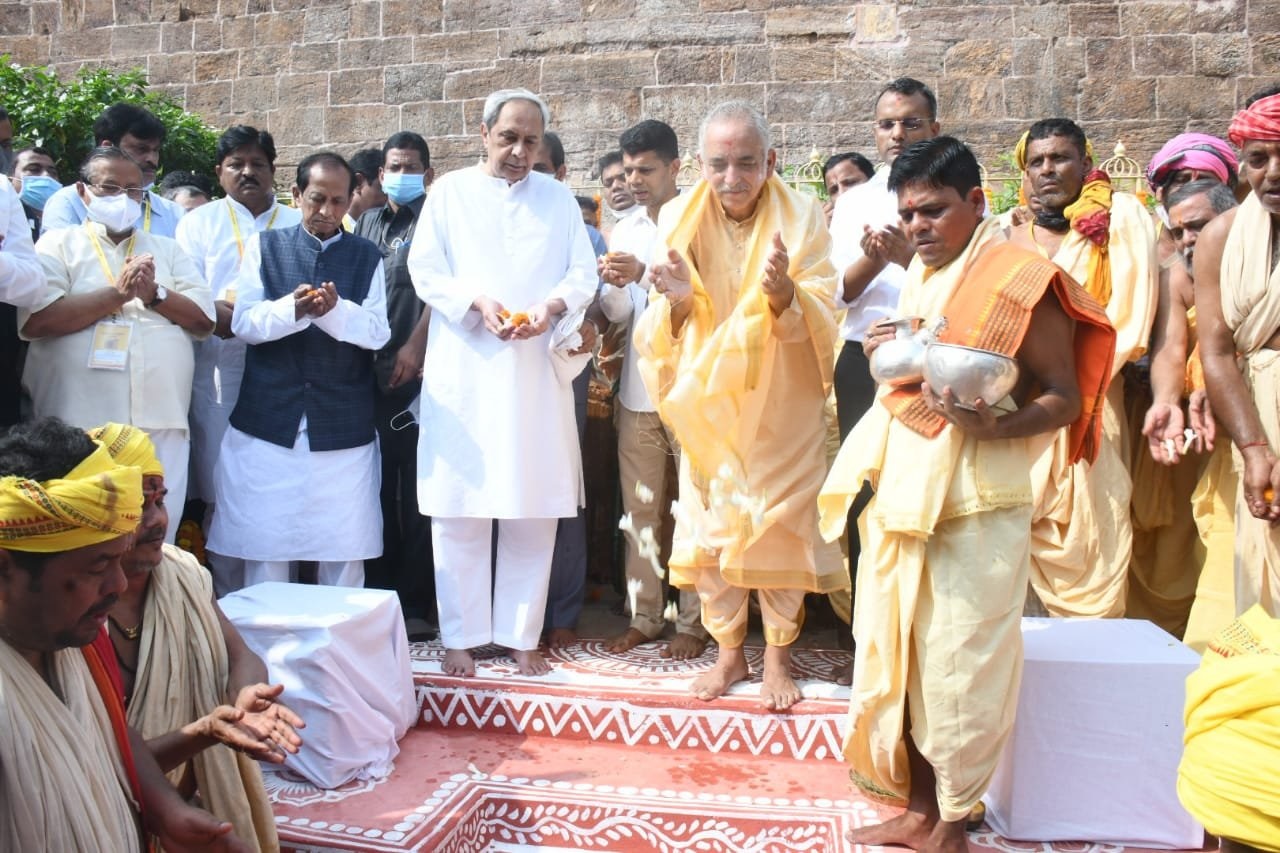
There is also another dimension to the Puri controversy. Some political observers feel that chief minister Naveen Patnaik is trying to counter the influence of BJP, his principal rival in the state, by taking up developmental work at most of the famous shrines of the state to win over the support of Hindus. In fact, one of the highlights of Naveen’s fifth innings as chief minister has been his special emphasis on the development and beautification of major temples of the state including the Puri Jagannath temple and the Lingraj temple in Bhubaneswar.

Recently the chief minister, who is also the president of ruling Biju Janata Dal (BJD), flew to Ganjam to attend the Mandira Pratisahta of Maa Tarini, the most famous temple of southern Odisha, which draws lakhs of devotees. The chief minister described Odisha as Deva Bhumi.

According to some observers Patnaik’s focus on the development of major temples is a calculated move to tap into Hindu religious sentiments which is the best way of keeping the BJP at bay and increasing BJD’s vote share. Despite his secular image, Naveen is keenly aware of the fact that Hindus constitute an overwhelming majority in the state.

This seems to have alarmed the BJP leaders who are not only finding fault with the various developmental projects launched by the chief minister at major temples but also trying to politicize it. The ambitious  Puri Heritage corridor project for the beautification of the 12th century Shree Jagananth Temple is an example of this. The BJP has raised the issue of violation of OMSAR Act and alleged that the ongoing digging work near the shrine would adversely affect the temple itself. However, common people are not only happy but have been lending full support to the chief minister who is personally monitoring the heritage corridor project.

The Patnaik government is also working for the infrastructure development of Chandi Mandir at Cuttack, Maa Sarala temple in Jagatsinghpur district and the Samaleshwari temple in western Odisha. All these initiatives have been appreciated by common people which makes it evident that the protest against the Puri project is more political in nature and the controversy surrounding the issue should be buried in the interest of all.


Water crisis: Haryana farmers may walk away from their farms

As per the Haryana Water Resources Authority around 3,000 of 6885 villages are water stressed while around two thousand others are headed for doom. The authority has identified 1,780 villages in the red category or severely groundwater stressed villages, reports Aayush Goel

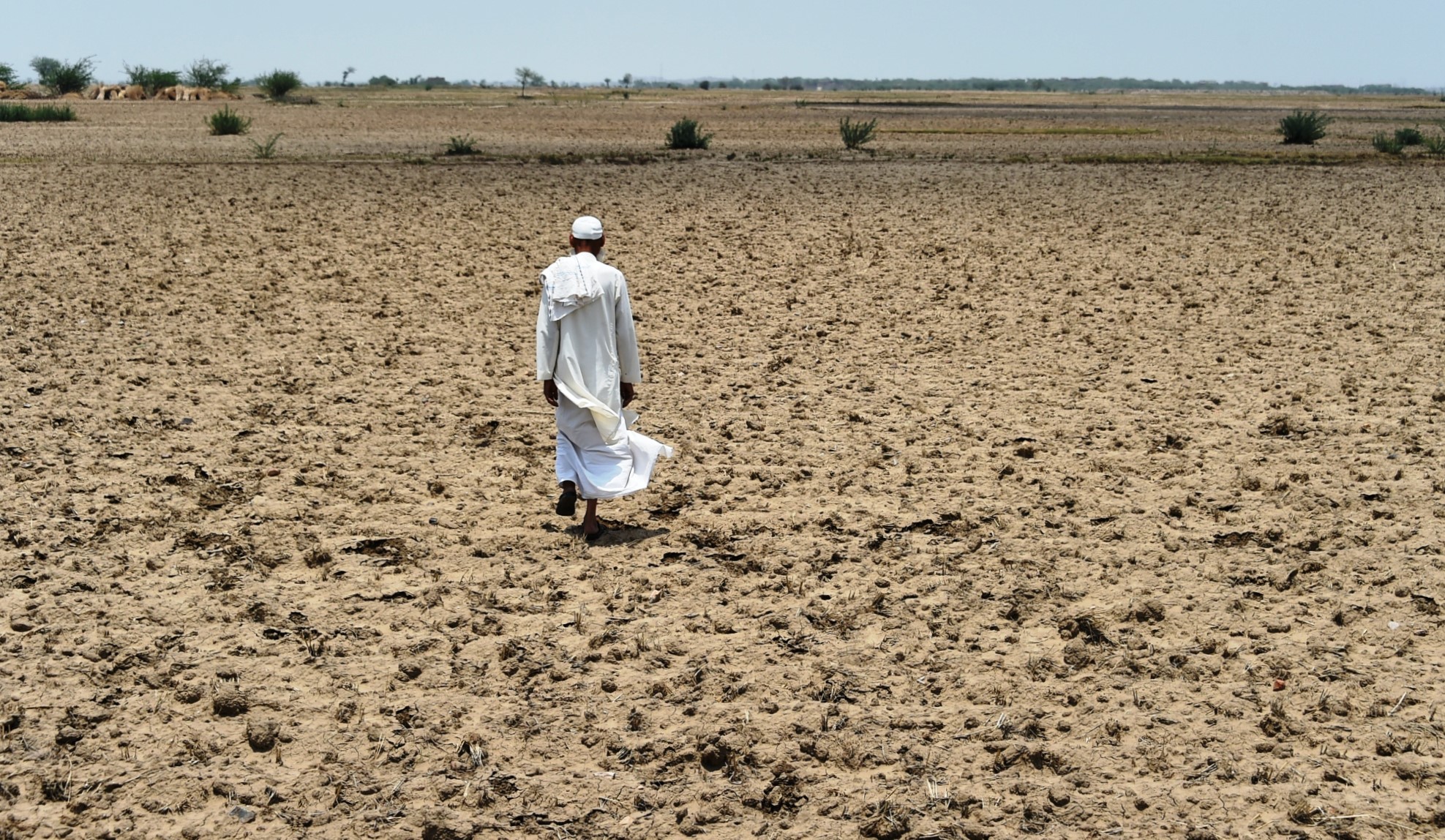
His families have tilled this land for generations and even harvested bumper crops. The land paid for their celebrations and sorrows but 50 year old Shahabuddin has no option but to bid adieu to what he calls piece of his soul.

Despite all hope the water level in his village Pathkhori has dropped and a boring of 1200 feet is his last hope to keep his farms this year.

“We have tried for years waiting for irrigation channels or hoping that bore wells don’t go dry but water keeps going down every year. This time its 1200 feet and that’s our limit we can’t keep incurring this cost every year. My son will sell this land set up an auto workshop in Gurgaon. He says this will change our fate but not being a ‘kisaan’ will kill me,” he says.

Shahabuddin is not a lone case but is one among thousands of farmers in Mewat region who have long fought the water crisis but cannot brave the aqua doom engulfing them. The farmers in his neighbouring villages of Belond and Nangal have announced a mass sale of their lands as majority claim have no resources or patience to keep digging for water.

The CM Manohar Lal Khattar had recently visited Pathkhori village in district Nuh to encourage dam construction but that has failed to give much hope to desperate farmers.

“The water is below 1000 feet and it’s impossible to get it. We used tankers to manage crop somehow but it’s no longer feasible. The tubewells, borewells and ponds are going dry and majority of farmers are in no mood of sowing for next season so putting everything up for sale,” said local Sarpanch Zakir Khan.

Nuh, the quaint and most backward district of sterling state of Haryana still thrives on rain fed agriculture with 70 percent of villages with no irrigation facilities. Things have crawled fine for the district for years but went downhill since a decade. The water table has constantly been dipping since decade and entire Mewat stretched from districts of Nuh, Palwal, Faridabad upto Rajasthan is giving up with reduced water table levels at an average of 800 feets.

Disappearing Aravalis, reduced rainfall and unchecked commercialisation of cosmos like Gurugram doomed this agrarian region to aqua crisis which is now forcing many to give up farming.

“Visit any village of this district and all that you will find are dried ponds, water tankers parked in farms of big farmers and sale notices on farm lands. We are an agrarian district but despite all tall promises of government, 70 percent has no irrigation facility. The underground water is depleting and local farmer can no longer sustain himself,” says Nuh MLA Aftab Ahmed.

Ironically it’s not tale of just one cluster of villages but as per the Haryana Water Resources Authority around 3,000 of 6885 villages are undergoing water crises while around two thousand others are headed for doom. The authority has identified 1,780 villages in the red category or severely groundwater stressed villages. In these villages, the extraction of groundwater is far greater than the recharge, taking their water table down to more than 30 metres. Similarly,  1,041 villages have been categorised as pink zone with  the groundwater table at more than 20 metres. As many as 1,807 villages have been identified in potential groundwater stressed category with water  table in  range of 10-20 metres. The state has only 1,261 good groundwater potential villages


14 out of 22 districts water stressed; Kurukshtera worst

Fourteen of the 22 districts of Haryana are battling water crisis as the  annual groundwater withdrawal in Haryana is 137% of its annual extractable groundwater resources which is the third-highest in the country. The national average is at 63%. Ironically topping the charts of Ground water crisis is agriculturally prosperous district of Kurukshetra, which, all thanks to Paddy cultivation, has now gone down to using its static water and headed to be without ground water soon. In Kurukshetra district, 422 villages are severely groundwater stressed spots. The groundwater level has depleted by up to 13 meters since 2010 in these villages. There is a shortfall (water gap between availability and extraction) of about 500 million cubic meters of water per year in Kurukshetra. The second in list is Mahendergarh with 308 red zone villages. Kaithal district is third worst affected district with 170 such villages. Districts of Fatehabad and Sirsa have 151 and 103 such villages in the red zone. Gurugram has 99 villages in red zone. Bhiwani has 96 villages categorised as red zones. Rewari district has 91 water stressed villages. The water overexploitation has been found in 85 of the 141 blocks in the state.

Paddy Cultivation a major challenge

While there is a lack of irrigation facility for districts like Nuh, for the majority its lure of Paddy cultivation. Currently the state has around 14  lakh hectare land under the paddy crop in Haryana. The area under paddy in Haryana went up sharply from 8.5 lakh (850,000) hectares in 1996 to 13.87 lakh (1.38 million) hectares in 2018, before coming down to 12 lakh (1.2 million) hectares in 2020-21 and has increased ever since. Haryana produces about 68 lakh MT of paddy, including over 25 MT of the basmati variety, across the state. The government under the Mera Pani-Meri Virasat Scheme is offering  Rs 7,000 per acre to the farmers for sowing alternate crops in place of paddy to save water for irrigation purposes. Same amount is also being given under ‘Khet Khali fir bhi Khushali’ scheme if farmers don’t sow anything and leave land empty in Paddy season. However with a well oiled MSP Mechanism not many are ready to give up. Thus the farmers have this year been offered to switch to Direct Seeding of Rice or DSR. The department will give an incentive of Rs 4,000 per acre to farmers opting for the DSR technique through direct benefit transfer. The technique involves the direct seeding of rice rather than the conservative transplantation method. It requires lesser use of water, labour and power, and is considered a better technique for the depleting water table. But the reluctance of the farmers to leave conservative methods for adopting newer ones and excessive weeds in this technique are the major issues, besides the timely availability of the DSR machines. The government has set targets  of 7,000 acre for Ambala; 6,000 acre each for Yamunanagar, Panipat and Sonepat; 10,000 acre each for Karnal and Kurukshetra; 11,000 acre each for Kaithal and Jind; 9,000acre for Fatehabad; and 8,000 acre each to Sirsa, Hisar and Rohtak districts. An amount of Rs 40 crore has been allocated under the scheme.


Not just water scarcity but water logging too pushing out farmers

While Fourteen districts struggle with low water tables, those of  Jhajjar, Rohtak and Charkhi Dadri are dealing with water logging and ground water salinity. There are 85 villages in Haryana that are severely waterlogged, having water table depths of less than 1.5 metres.  19 villages in Haryana are potential waterlogged villages, with water table depths ranging from 1.5 to 3 metres.

Jasvir Kalkal, 39, a farmer who owns over 15 acres of land in Imlota village has put it up for sale.

“The village land used to be quite fertile but love for paddy disturbed our water table and today our fields are nothing but saline marshes. No matter what we do, we have to soon give up and sell these prized land of ours,” says Kalkal.

Continuous sowing of paddy by the farmers, over a long period of time, upset the groundwater table and it raised to 2 feet below the ground from being at a depth 20 feet in 2008.

Imlota is a part of a cluster of seven villages in Haryana’s Charkhi Dadri district, that have been facing perennial water logging issues since 2008. The other six villages are Swaroopgarh, Sattor, Morwala, Kanheti, Bigowa and Badvi.

Trying to deal with this issue the government has invited applications from farmers in Jhajjar, Rohtak and Charkhi Dadri, applications have been invited from farmers who want to free their land from salinity and waterlogging. The farmers would have to bear 20 percent of the cost while the rest would be borne by the government. The state government is also considering adopting vertical farming technology and farmers are encouraged to adopt crop diversification and irrigate land through sprinklers, replacing the traditional flooding method. The panchayats have been given free land to be leased out for fisheries.


Fighting tooth and Nail

The state has woken to the aqua crises which threatens its very core and went on to set up Haryana Water Resources (Conservation, regulation and Management ) Authority in 2020. The authority also has started a proper water audit, for which 1,700 piezometers are being installed in critical red blocks for real-time monitoring of the groundwater table. The state has gone ahead with plans of reviving 8000 village ponds in the first phase of the Amrit Sarovar project. The government has mooted a plan to construct six small dams in Morni (Panchkula) area of Shivalik hills in the coming year, a similar number of dams were constructed earlier too under Kandi project.

Haryana is the best-performing state in the country in terms of implementation of the Atal Bhujal Yojana. The main objective of this scheme is to create hydrological data of ground water resources and reduce scarcity by almost 50 percent. Water stressed zones of 14 districts have so far been covered.

“We have reached a stage where we need to focus on water usage efficiency and concentrate on rationalisation of use of groundwater through methods like micro-irrigation and crop diversification. There is also a dire need to increase recharge points or digging the canals to prevent the groundwater from further depletion. We have come a long way in two years with point wise identification of water issues and resolution. So while on one hand we are working on recharging and maintaining water tables we are also dealing with salinity and water logging . Things have improved showing encouraging results in many areas and we hope to stabilize the issue soon ,” said Keshni Anand Arora, Chairperson, Haryana Water Resources Authority .


Cold shouldered by party brass, Sibal snaps ties with Congress

A member of Group-23 which has raised a voice of dissent against Congress leadership, Sibal filed his nomination for the upcoming Rajya Sabha election with support of the Samajwadi Party after announcing that he had resigned from the Congress, writes Mudit Mathur

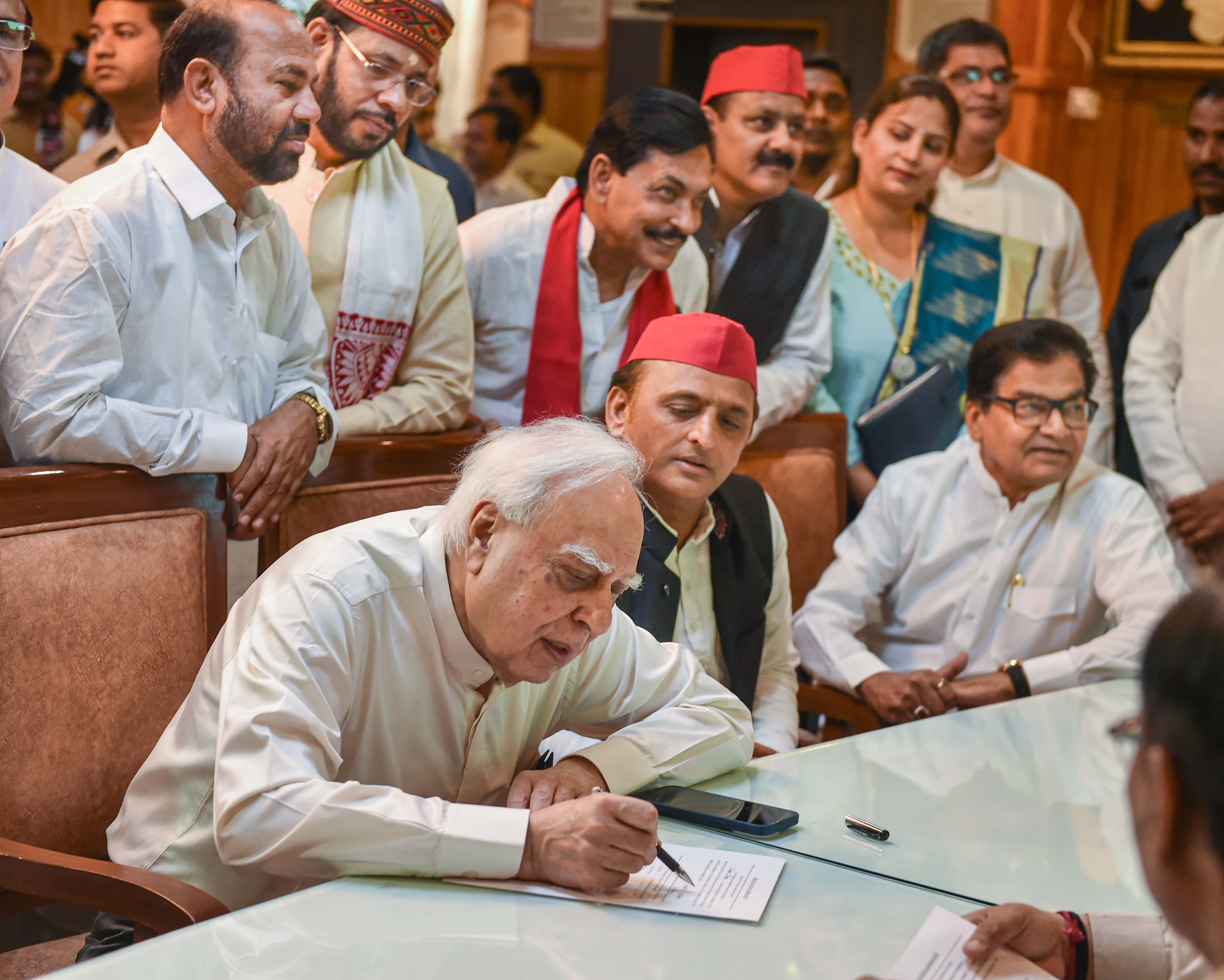
“I was a Congress leader. But not anymore. I had resigned from Congress on May 16. I am thankful to Akhilesh Yadav ji…Many people are coming together for 2024 (general elections). We will expose the shortcomings of the central government ahead of 2024,” said Kapil Sibal after filing nomination papers for Rajya Sabha in the presence of Akhilesh Yadav and senior party leader Ram Gopal Yadav in Lucknow.

Sibal filed his nomination for the upcoming Rajya Sabha election with support of the Samajwadi Party. After filing his nomination, Sibal said, “I would like to thank Akhilesh Yadav, Azam Khan and Prof Ram Gopal Yadav, who had helped me last time as well.”  “I will continue to raise the voice of UP in the Rajya Sabha without any party. I will continue to be a voice in the House against every injustice,” he added.

Sibal recently represented jailed Azam Khan in the Supreme Court and helped him secure an interim bail. He also helped Akhilesh retain the party’s bicycle symbol in 2017 when the first family was locked in an intense feud, probably the worst in the SP’s existence so far.The Rajya Sabha berth to Kapil Sibal is being considered as a big reward to him by the Samajwadi Party for fighting the legal battle for Azam Khan in the Supreme Court.

The Samajwadi Party chief Akhilesh Yadav along with his father Mulayam Singh Yadav and foster brother Prateek Yadav have to come out clean in the cases, allegedly acquiring immovable assets disproportionate to their known source of income while holding public offices of power. These cases are under investigation on a complaint of Congress leader Vishwanath Chaturvedi, wherein CBI denied filing of any final report before a Delhi court with regard to dropping the cases against Yadav clan giving them a clean chit. So,Sibal has become a mutual need of the hour at the cost of betrayal with RLD leader Jayant Chaudhry.

Kapil Sibal desertion from Congress Party was imminent after he demanded Gandhi family to step down from leadership roles, handing over the command to some other party leader. Sibal who saw greener pastures of power with the blessings of Sonia Gandhi for almost three decades actually ditched her in bad times. Sibal has no mass following of his own due to elite lifestyle, therefore, it is hardly going to make a material difference to the Congress party.

Sibal joined Congress in 1996 and is considered to be close to some of the regional leaders like Lalu Prasad yadav, Mulayam Singh Yadav and later his son Akhilesh Yadav. In the Congress party, he had close proximity with the late Ahmed Patel who brought him in close proximity to Sonia Gandhi. But he failed to establish a good rapport with Rahul Gandhi though Priyanka played a balancing role between the two.

Soon after subscribing to the oath of the member of legislative assembly, the Samajwadi Party (SP) leader Azam Khan said, “It is Kapil Sibal’s ‘right’ to be nominated to the Rajya Sabha and it would be an honour for any political party to do so.” Sibal was one among the G-23 Congress members who are demanding reforms and accountability from the top Congress leadership . But he was cornered and feeling isolated in the party. His Rajya Sabha term ends in July 2022.

Sibal is believed to share a warm relationship with many SP leaders, including Akhilesh Yadav and Azam Khan. In 2016, Sibal was elected to the Rajya Sabha from Uttar Pradesh as a Congress candidate with the support of the SP. However, with the Congress now reduced to only 2 MLAs in the state, it is not in a position to elect anyone from UP, where 11 Rajya Sabha seats will soon fall vacant.


How our writers would have reacted to these bulldozer times!

Govt’s sudden announcement of a complete lockdown when Covid struck, without even the basic level of preparedness, was akin to dictating: from this hour onwards, no food and water and shelter!

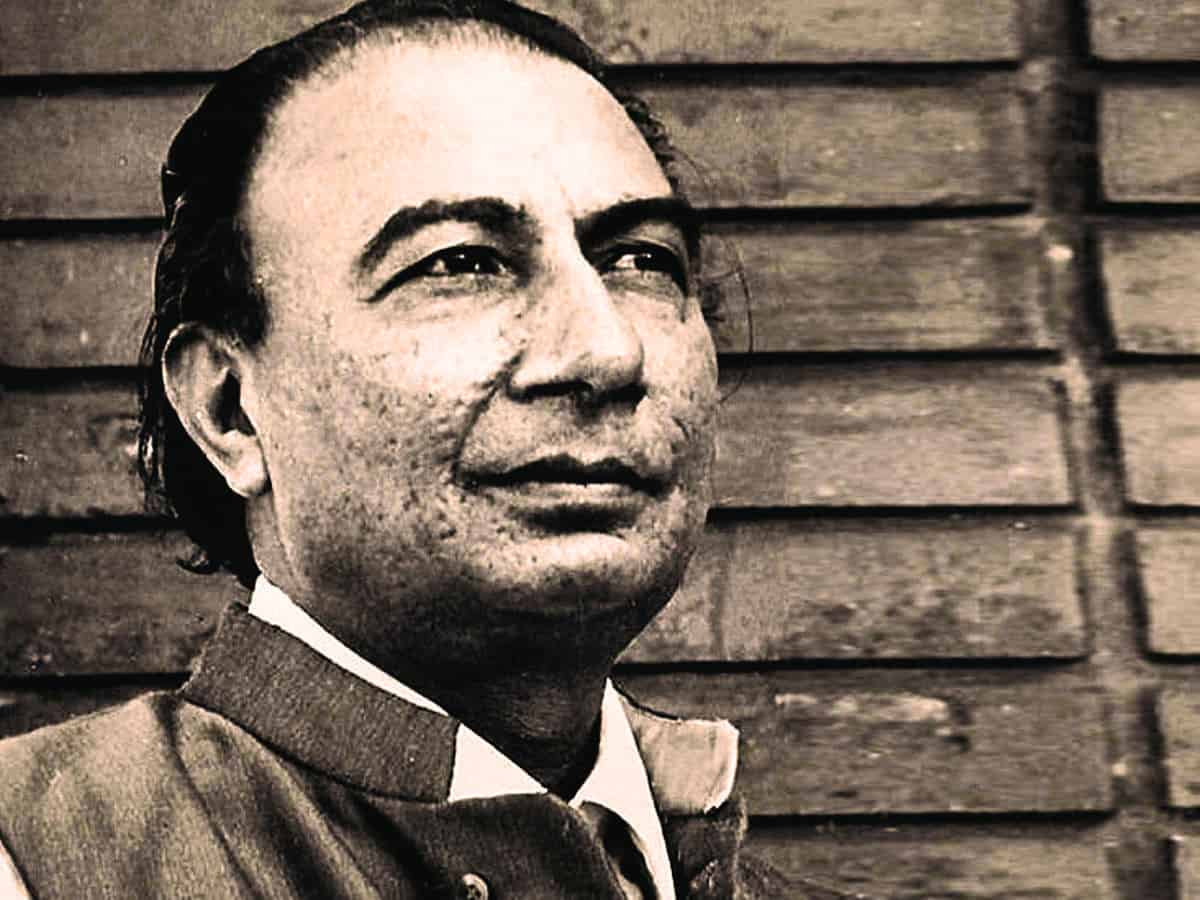
I’m just back from a radio talk-discussion on Mulk Raj Anand. And that’s got me thinking how our  best  known writers like Munshi Premchand, Mulk Raj Anand, Saadat Hasan  Manto, and the so many  other writers of that era would have reacted to these bulldozer times.

Don’t know how Munshi Premchand and Manto’s stories would have shaped. How very dark the colours and strains of grief and pain would have got… penetrating deep in their long and short stories. After all, these writers would have been just too upset and pained and grief-stricken.

Mulk Raj Anand would have been just too agitated and vocal, as he was all for the disadvantaged and the neglected and bypassed.  He would have been out there in the lanes and by-lanes, standing in those marked localities; probably standing in front of the bulldozers, trying to prevent destruction of homes and livelihoods.

In fact, our destruction, as a people, has been on and accelerating in these recent years. I recall just before 2017 ended, Gulzar saab didn’t mince words whilst describing in his own special way, the halaats around. Commenting, that if one were to pick up the day’s newspapers and squeeze those newspaper pages, drops of blood would spread around, because those pages would be so heavily laced with news reports of violent killings!

And as the winter peaked in 2019, so did the protests against CAA-NRC- NPR. Students and activists took to the streets, protesting, making it absolutely clear that they do not trust this government’s controversial policies. Indians settled in the different lands of the world echoed similar sentiments halt the dangerous destructive moves, so that the country and its citizens could remain intact.

Coronavirus hit…hit hard at the start of 2020. It dragged along with it darker realities. With the police-wallahs overtaking all possible roles. Controlling human forms by the brute force. Unsparing even the young. Two images hit and hurt so much that it gets difficult to even describe. One image — that of a cop writing details to the lockdown on a young man’s forehead; a huge pen clutched in that cop’s hand went all over the forehead! It seemed worse than those dark ages! The other image — cops ruthlessly thrashing a group of Muslim men who had walked to the nearest mosque for namaaz. Instead of explaining or even scolding them for stepping out of their homes, they unleashed threats and abuses and lathis! Barbaric!

The political rulers of the day had stood exposed. To have suddenly announced a complete lockdown, without even the basic level of preparedness, was akin to dictating: from this hour onwards, no food and water and shelter! With that sudden announcement, our migrant workers and daily-wagers and  labourers  were subjected to the worst forms of abuse — poisonous chemical sprays sprayed on them even as they walked hungry and weary and forlorn, blatantly humiliated and thrashed by the lathi-wielding constables.

I’m told that even during the Partitioning times, relief-camps were functioning with food and shelter bandobast. If that level of preparedness was in place in 1947, then why not in these so called developed times!

And as one saw our hapless migrant workers and labourers and their entire families fleeing from here to there, it was frightening to say the least. One cried out: Is this the way the sarkar of the day should unleash … treat its citizens so very brutally and shabbily! Is this the way to silence the hapless workers and labourers and minorities? Is this the way to treat the citizens of this country?  Is this the way to rule, rather misrule, to such an extent that the masses, want azaadi from all possible viruses — corona and fascism!

How I wish the progressive writers’ movement gets revived!

Maybe, just maybe, the destructive forces stand countered to a great extent if  the Progressive Writers Movement gets  revived and spreads out. After all, the Progressive Writers Movement wasn’t confined to any particular language or locale. Its strength lay in its strong base amongst the poets and writers from the different regions …with the very first session of the PWM chaired by Munshi Premchand. Not to be overlooked the significant fact that PWM was the very offshoot of the anti-colonial struggle; with that, it expressed the aspirations of the exploited masses.

Our leading poets, Ali Sardar Jafri and Sahir Ludhianvi, wrote verse after verse in solidarity with the Africans.

These  lines of Ali Sardar Jafri: “This African,  my  brother /Picks flowers,  in  forest   after forest/ My  brother, whose  feet are red /Red  as  roses…”

Also these  lines of Sahir Ludhianvi written  when Patrice Lumumba, the  first  prime  minister of  Congo and who was also a  “staunch anti-imperialist” was  deposed from office and then murdered:  “Tyranny has  no caste, no community, no status  nor dignity/Tyranny is simply  tyranny, from  its beginning to its end /Blood  however is blood, it  becomes a  hundred   things  /Shapes that  cannot  be  obliterated /Flames that  can  never  be  extinguished /Chants that can  never be suppressed.”

Today, sitting sad and forlorn, I’m reading, rather re-reading this verse of Sahir Ludhianvi (tucked in the pages of ‘Anthems of Resistance’ (India Ink/ Roli Books) by Ali Husain Mir and Raza Mir.)

This verse of Sahir seems so very apt for us, for the turbulent times we are destined to be surviving in:

“If there is a reason for my angry songs, it is this

That when I see the hungry farmers

The poor, the oppressed, the destitute, the helpless

My heart cannot participate in assemblies of pleasure

Even if I wish, I cannot write dreamy songs of love.”

*****

Of course, in the 1930s we were not as divided as we are today, with an ongoing partitioning of psyches, if not of forms.

I do realize these writers aren’t around but the pen is still around.

Let it bring to the fore the dark realities of the day, to as many as possible.


Concern over weaponry from Af making its way into valley

While there has been a spurt in the militant violence in Kashmir, there is a fresh evidence that proves that more foreign militants, armed with an array of weapons left behind by the US in Afghanistan, are infiltrating into the valley, reports Riyaz Wani

The recent past has witnessed a sudden spurt in the militancy-related incidents in Kashmir, with militants escalating their attacks on minorities and outsiders. What is more, there is now evidence of more foreign militants infiltrating into Kashmir and that too with an array of arms left behind in Afghanistan by the US.

Several attacks in recent weeks have made the situation very challenging for the security forces. On May 17, a burqa-clad militant hurled a grenade at a wine shop in a high-security zone in North Kashmir town of Baramulla, killing one person and injuring three others.

Earlier on  May 13, a bus full of pilgrims headed from Katra to Jammu caught fire near Kharmal killing four people and injuring 22 others. Later, preliminary investigations revealed that a sticky bomb was used to blow up the bus.

A little-known militant outfit  Jammu & Kashmir Freedom Fighters (JKFF) claimed responsibility for the bus blast. In a 46-second video, JKFF Commander Nadeem Chaudhary has not only claimed a hand of the outfit in the attack but has also warned of more such attacks in near future.
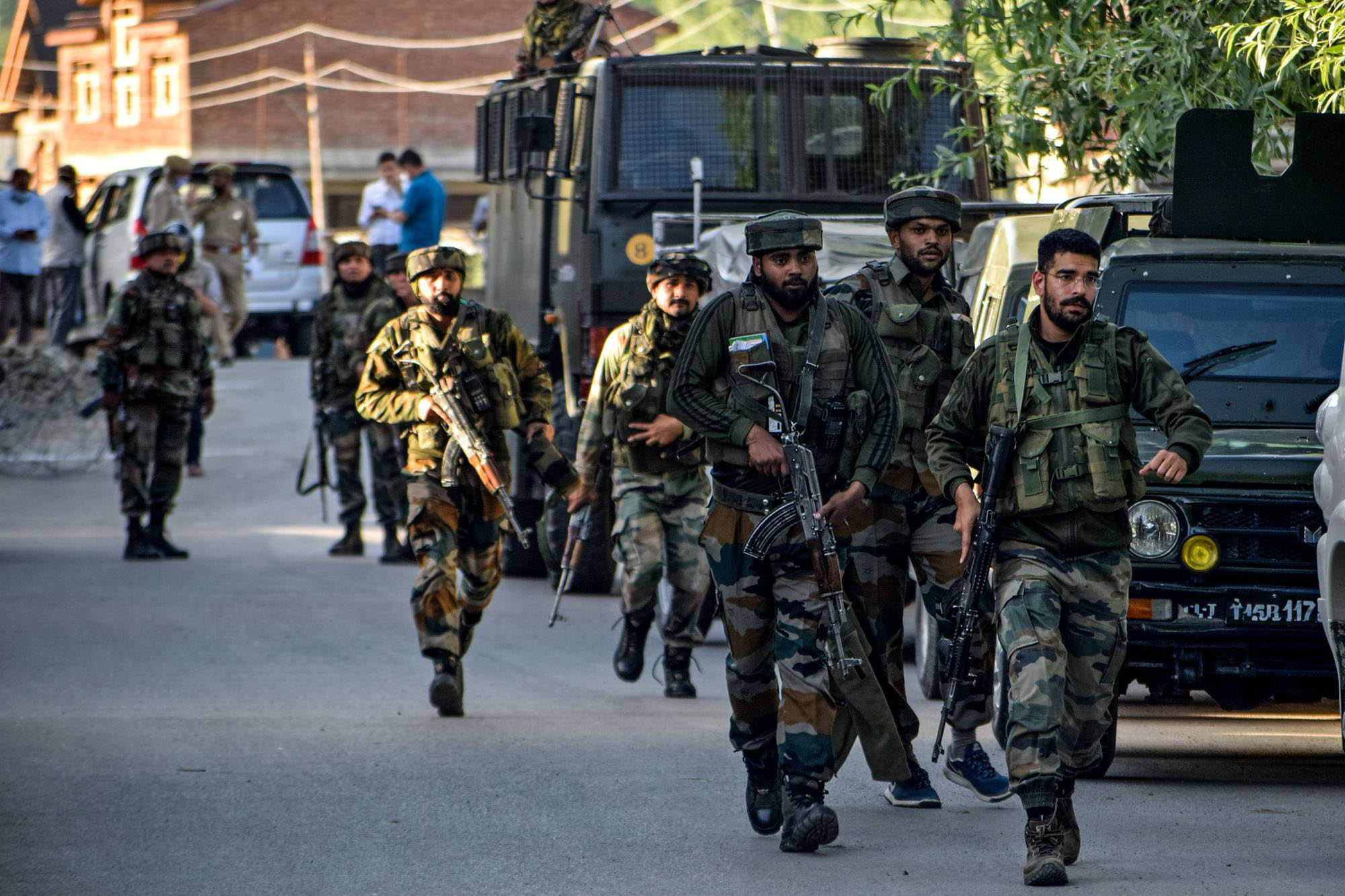
Attacks like these went alongside the targeted killings of the policemen and the minorities. One such killing was of the revenue employee Rahul Bhat which triggered protests by Kashmiri Pandits. In Bhat’s case, militants went inside the tehsil office in the central Kashmir town of Budgam and killed him.

Bhat was one of the several thousand Kashmiri Pandit employees working in various government departments of Kashmir. The attack has endangered the lives of all of them, forcing the government to shift them from the vulnerable areas to “safer places”.  But it seems unlikely to be of much help considering the security situation in the Valley is worsening by the day. This has only further raised the security responsibilities of the UT government which is already bogged down in fighting the militancy.

More militancy, less militants

The surge in violence has come despite the fact that the number of militants has dwindled under 200 over the last year, the first time this has happened since 2015 when the slain militant commander Burhan Wani reinvigorated the then flagging militancy.

“It is an open thing that militant numbers have come down. For the first time, militant numbers have reduced below 200 and we will bring it further down,” the Inspector General of Police Kashmir Vijay Kumar said recently. “Some people had guessed that numbers will rise but there is nothing of this sort.”

Ever since the withdrawal of J&K autonomy in August 2019, around 500 militants have been killed in the UT, most of them local youth. Though this has reduced the number of militants, the violence has continued unchanged. And over the last year, the violence has increased as militants have chosen to attack soft targets – civilians, panchayat workers, J&K police personnel visiting home, outsiders and minorities – instead of engaging security personnel. Security forces, as a result, now not only have to combat militancy but also protect a large section of population including many from among their own ranks.

Overall normalcy holds

The resurgence in the violence hasn’t, however, dented the larger drift of normalcy in the Valley yet. While the violence has become more conspicuous in recent months, it is still on the margins in so far as its impact on the daily life is concerned. Tourism is at an all time high after many years. Between January and May 15 of 2022, the tourist arrivals in the Valley have jumped to 700,000 – over four times the 125,0000 seen in the the same period during pandemic-hit last year – according to the data  from the Jammu and Kashmir Tourism Department and the Union Tourism Ministry. Most hotels, according to UT’s tourism department, are booked through the summer.

The biggest draws for the tourists are the resorts like Gulmarg, Pahalgam and Dal lake. Tourism sector forms 6.8 percent of Kashmir’s GDP and employs 2 million people. The sector has also been helped by the ban on international travel that was in force for the better part of the last two years.

Everyday rush of tourists and their movement in Srinagar and presence in the city’s restaurants has  made things look quite normal.

What has made this possible? A combination of factors: One, there is this perception across the country that after revocation of Article 370, J&K has been fully integrated into India; second,  Covid-19 fallout which severely reduced the options to go abroad; and third  the ongoing sweltering summer in the mainland India which has forced people to escape to colder places like Kashmir. And if the veteran Congress leader Ghulam Nabi Azad is to be believed, the tourism boom in the Valley is certainly not the test of “better situation.”

““I give full credit for the tourism boom to the Almighty as the rising temperatures in Delhi and the rest of the country prompted people to look for cooler environs in Kashmir, Shimla and elsewhere,” Azad said during his recent trip to Jammu.

Upcoming Yatra

With annual Amarnath Yatra scheduled to kick off by the end of June, the government is not leaving anything to chance in view of the deteriorating security situation.

On May 21, the Lieutnant Governor Manoj Sinha reviewed the Yatra arrangements.  He said his administration’s priority is to ensure best facilities for the pilgrims participating in the pilgrimage.

Earlier, Inspector General of Police Vijay Kumar also reviewed security arrangements for the Yatra and among other dangers, the meeting also discussed  the threat of sticky bombs and drones. The IGP stressed on generating specific intelligence and conducting anti-militant operations along the Yatra route.

Making the situation  more challenging is that earlier in May, security forces killed Hizbul Mujahideen’s oldest commander Mohammad Ashraf Khan, 57, and two more militants in a shootout inside the forests of Srichand Top in Pahalgam, close to the Amarnath Yatra route in south Kashmir’s Anantnag district.

The government has now decided to track all pilgrims using Radio Frequency Identification (RFID) tags. The RFID is a wireless tracking system that consists of tags and readers. The decision to track all Amarnath pilgrims using RFID tags was taken following a security review meeting chaired by the Union Home Minister Amit Shah.

“The Chief Secretary of Jammu and Kashmir said that for the first time every Amarnath Yatri would be given a RIFD card and would be insured for Rs. 5 lakh. A tent city, WiFi hotspots and proper lighting will be arranged on the Yatra’s travel route,” a statement by the MHA said.

The Centre has reportedly decided to deploy additional 15,000 paramilitary troops in the Kashmir Valley, in addition to a large number of forces already on Yatra duty.

Weapons from Afghanistan

The coming weeks and months of summer will be thus crucial in terms of the evolving security situation in the Valley. Summer is usually the time when the infiltration takes place and a little more escalation in the influx of the fully equipped militants could change the ground situation in Kashmir for the worse.

Already, according to security officials, some weaponry from Afghanistan has found its way into Kashmir. Videos showing militants carrying M249 automatic rifles, 509 tactical guns, M1911 pistols, and M4 carbine rifles have surfaced in recent weeks. Security forces have also found over a dozen Iridium satellite phones and Wifi-enabled thermal imagery devices that help militants to infiltrate safely and circumvent security cordons during the night.

Speaking at the recent Raisina Dialogue, former Army chief General MM Naravane had also confirmed that the Afghan war weapons had made their way into Kashmir  “There is definitely an increase in the number of weapons and other equipment, especially night-vision devices that we are capturing or unearthing, which definitely have come from Afghanistan,” General Naravane had said.



Did Mountbatten-Nehru fool  Jinnah into accepting a truncated nation?

India’s story of partition will remain shrouded in the vaults of British Archives as British Home Office rejects British author Andrew Lownie’s plea seeking release of the personal diaries of the power couple, Lord Louis Mountbatten and Edwina

Initially, it was reluctance of the British Home Office, but finally came the refusal, when the appellate tribunal turned down the repeated pleas for the release of the crucial parts of the Mountbatten Diaries. These documents drawing worldwide attention of the researchers might have unravelled the truth of India’s partition, an avoidable human tragedy. The request for the release of the documents was declined that it might adversely affect the relationships among three countries, India, Pakistan and Britain. The petition was submitted on behalf of Andrew Lownie, a British author, seeking the release of the personal diaries of the power couple, Lord Louis Mountbatten and Edwina, who were the key players during the tumultuous period during 1946-47, when the transfer of power took place from Britain to India. For seeking the information, Lownie had coughed up a whopping sum of £370,000 (equivalent to Rs. 3,51,63,732.46) on legal fees.

Louis Mountbatten, the last Viceroy and Governor General of India, had arrived on the Indian shores accompanied by Edwina, a woman with her knock-out charm blended with a rare talent. Being an heiress inheriting a rich Jewish-German family background, she belonged to the upper crust of British society. Her grandfather Sir Ernest Cassel, a German-Jewish-born financier, had become best friends with King Edward VII, who was also Edwina’s godfather. Edwina was not one of the dumb vicereines of India, but a woman of substance.

Edwina had a large number of admirers across the continents, but in India her proximity with Pandit Jawaharlal Nehru, India’s first Prime Minister, a statesman and visionary, became a legend in their lifetime like a fairy tale expressed in their passionate 12-year correspondence. It could not have been just an infatuation towards Nehru, who was well-versed in the English etiquette, their relationship had political and strategic dimensions too. The confidential documents, perhaps, might have revealed how the trio, Louis, Edwina and Nehru cleverly played their respective roles during the country’s partition. Did they deliberately concede a Pakistan to Jinnah, a deformed country, carved out in the name of Islam? It was further fragmented, when in 1971 its majority population seceded to form Bangladesh.

The Initial British Plan

The scholars of the contemporary history of the Indian sub-continent are aware of the fact that the partition of India in 1947 was the outcome of a well thought out colonial design to fragment the country, if the British have ever to leave the sub-continent. The initial plan was to allow 500 native kingdoms to assume sovereignty, the north-eastern region, comprising present day Indian states of Meghalaya, Mizoram and Nagaland, to be converted into an independent dominion, ‘crown country’ and Muslim enclaves to be set up in different parts of the country having sovereign status. The British plan, however, remained on the paper. The colonial power had weakened so much during the post World War-II years that they were in no position to implement the fragmentation of India as conceived earlier.

There appears to be some substance in the tribunal’s claim that the release of the documents might adversely affect the relationships among the three countries, Britain, India and Pakistan. It should have also mentioned Bangladesh. The documents, if revealed, perhaps, might give the details about the respective roles of Louis and Edwina during the 1946-47. The inside story of their political acumen in manipulating India’s freedom struggle icons, Mahatma Gandhi, Jawaharlal Nehru and Sardar Vallabhbhai Patel, is still in wraps. It is also asked whether the British proxy, Muhammad Ali Jinnah, was led to accept a Pakistan having two wings, the East and the West separated with each other by a distance of 1500 kilometres. The majority population of Pakistan was in its eastern wing, which separated to become Bangladesh in 1971.

This possibility cannot be ruled out that the Mountbatten couple and Nehru had cleverly managed Jinnah to accept a truncated nation. The documents, perhaps, might have answered these questions. It is, however, quite known that Nehru’s proximity with Louis and Edwina was quite natural. Like them, Nehru, who studied in the top British schools, had become one of the most acceptable Indians in the higher echelons of the English society as well as he also enjoyed respect among the British intellectuals. He was also one of the founders of the London School of Economics. Similarly, Edwina’s frequent interactions with the war victims in hospitals and drawing the attention of the concerned authorities towards the plight of the sick and wounded had drawn her towards Nehru. They shared the pain of the war victims.

Jinnah Accomplishes Pakistan

It is stated that often truth is stranger than fiction. Jinnah might have agreed to the Cabinet Mission Plan, which could have preserved India’s unity. However, the behaviour of the Muslim League ministers in the interim government, perhaps, getting direct instructions from the British intelligence, finally paved the way for India’s partition. The Congress Party leaders were convinced that it was not possible to share power with them, and thus Pakistan was conceded. In a bid to resolve this standoff between the Indian National Congress and the Muslim League, Louis Mountbatten was sent to India for finding a solution acceptable to all the parties.

Interestingly, the British have also kept the truth about Jinnah under wraps that why a person, who could not recite even a stanza of Holy Koran, was projected as the sole Muslim leader of India and also became a darling of the British rulers. Another British proxy, Razakars (the earlier version of the present Islamists or Taliban during the colonial era), and their relationship with the Muslim League too needs a thorough investigation. Jinnah’s ‘Direct Action’ in Kolkata, which had led to the massive communal riots, could have been engineered with the help of the Razakars. Their relationship with Jinnah’s Muslim League too needs to be researched that how was it done at the cost of the innocent Muslims across India.

The Key Role of Mountbatten

Thus, the inside story of the power couple and their strategy in India’s partition might have also exposed that how they manipulated Jinnah to finally seek the partition of the country, thus turning Hindus and Muslims, who were living as peaceful neighbours for hundreds of years,  against each other and becoming blood thirsty arch enemies of each other.

The British narrative is silent about the fact that Jinnah belatedly realized his Himalayan blunder, and might have tried to retrace from fragmenting his motherland. However, in this context, the role of Edwina needs to be studied whether she really charmed Jawaharlal Nehru to accept the outgoing colonial power’s agenda of India’s partition or the Mountbatten couple had finally entrapped a reluctant Mohammed Ali Jinnah to accept the country’s fragmentation on the basis of religion, who might have been satisfied with a number of autonomous Muslim enclaves within India. On her part, she prevailed upon Mountbatten that Andaman Islands should be given to India for keeping Nehru in good humour. Sardar Vallbhbhai Patel was assured that if partition is accepted, the full basket of the princely states will come to India. Even the boundary commission headed by Radcliff accepted Nehru’s suggestion that the Muslim enclave in the Punjab, Malerkotla, will remain in India, as there cannot be any Pakistan in the east of Sutlej.

It is highly unlikely that the reported romance between Jawaharlal Nehru and Edwina, could have been the only reason for the refusal of the tribunal in releasing the documents. In the statecraft money and romance could be just a comic relief in a political drama; they are often projected to camouflage the agenda. In this case too, it appears that the element of romance was a side story of the cruel game of the partition which resulted in killing of thousands of innocent people in India turning a large number of people refugees in their own country overnight.

Therefore, it is not surprising that the British Government is keen to keep the vital Mountbatten files away from the public gaze. The Mountbatten couple, perhaps, had played the role of a midwife that the twins, present day India and Pakistan, born out of a white mother. The outgoing imperial power’s, Parliament, the British House of Commons, had enacted the India Independence Act 1947 granting independence to its subjects in the Indian sub-continent.


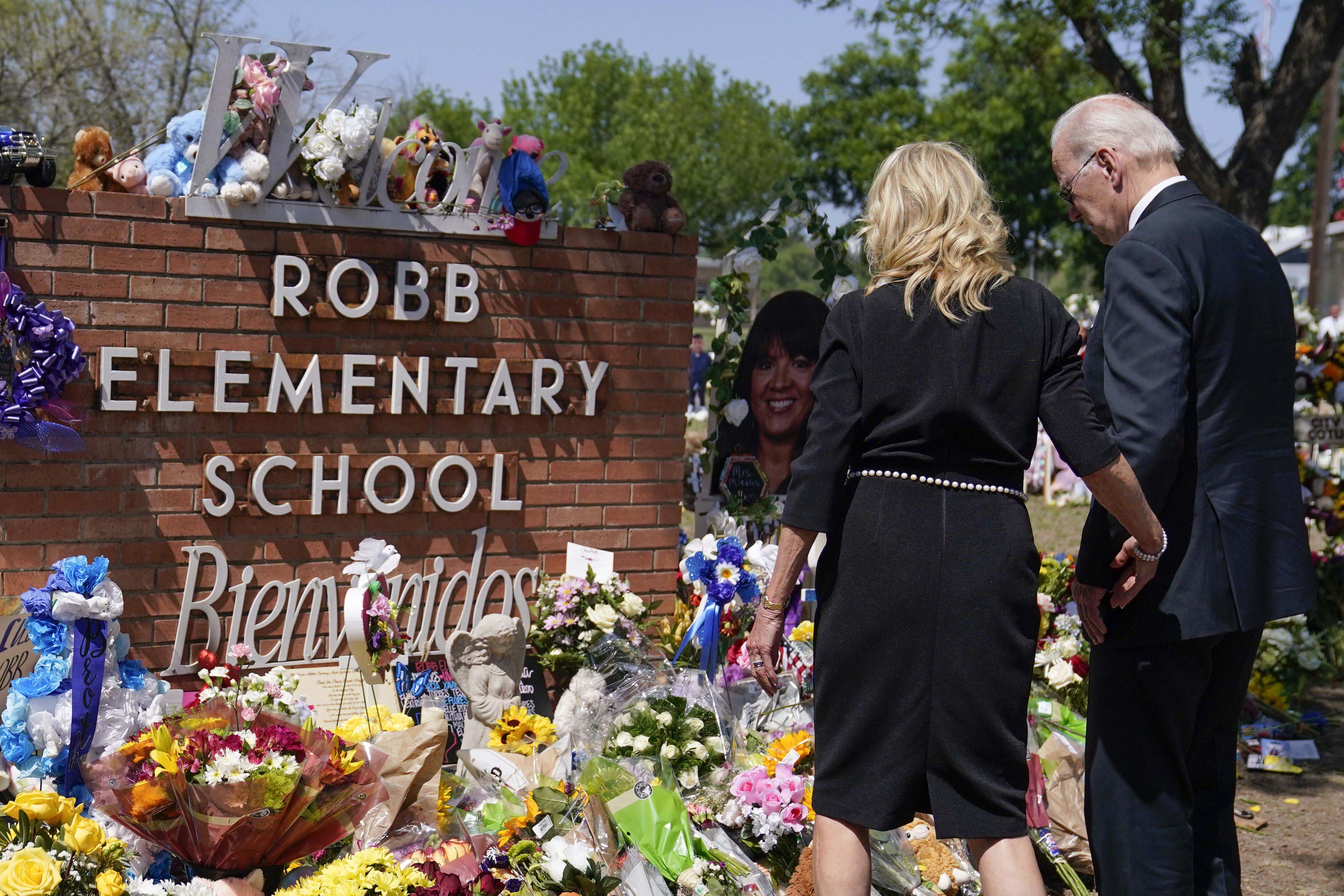
Texas school killings renew question over free sale of arms

The world is shocked by the Texas tragedy. It, however, hopes that the law makers at the Capitol would adhere to the saner voice of their President, Joe Biden, who has asked them to stand up and support limits on powerful weapons. A report by Gopal Misra

The Americans are mourning, the killings of innocent children in a Texas schools. Their national flag is half-mast. The world is shocked and shares the agony of the tragedy with the people. It, however, hopes that the law makers at the Capitol would adhere to the saner voice of their President, Joe Biden, who has asked the law makers to stand up and support limits on powerful weapons.

In his address to the nation, Biden, who has already lost a young daughter, Naomi, in a car crash and an adult son, Beau, to a brain tumour, shared the sad news with the parents of the 19 school children with his appeal to regulate the free sales of weapons to the buyers with ill intent. The tragedy has taken place following the trigger-happy action of a teen aged boy, who obtains assault rifles, indulges in indiscriminate firings ending the lives of “beautiful, innocent second, third, fourth graders. ” He tells the people and says that “he knows the pain of the parents in Uvalde whose children will never return home.”

The suspected shooter, who might have had a handgun and a rifle, was also killed when law enforcement confronted him at Robb Elementary School in Uvalde. It is about 83 miles west of San Antonio. The six victims, who were initially identified by family members included two teachers, Eva Mireles, a 17-year educator who taught fourth grade, and Irma Garcia, who taught at the school for 23 years. Amid the chaos, parents were seen searching for children, “It’s like a horror movie,” Rosa Arizmendia, one of the mothers of the victims told media.

Does the statistics matter, whether a few children were killed or over 20 succumbed and 15 maimed by a ‘desperate’ youth? He obtains two assault rifles, kills his own grandmother, posts his ghastly act on the facebook, and then rushes to the school to mow down innocent children in a primary school. It could have been much easier to explain the motive of the youth, if he had belonged to a different race or religion, but the issue, perhaps, is much deeper, the social alienation or isolation appears to have deeply wounded our 21st century civilization especially in the USA, where the violence is brewing among all sections of the younger generation irrespective of their race or creed. The pictures of Ramos, reveal that like other Latino youths, Ramos too have been suffering merciless ridicule from his peers, but it had remained unnoticed. The initial reports reveal that Ramos used to lash out at others with verbal outbursts; a common phenomenon seldom noticed by adults. The tragedy in Uvalde, thus, disproves what white supremacists say about Latinos and other minorities. They are unable to assimilate in American society, but the incident reaffirms that their sufferings are common with the rest of the American youths.

Initially, it was a natural reaction that the ‘white supremacists’ have done it again, but later it was learnt that the violence was triggered off by a teen aged Latino youth. Earlier incidents were caused by a white man killing people from other races.  Just a month ago, a white man had reportedly murdered 10 Black people in Buffalo, New York. Earlier, in 2019, another white man radicalized by neo-Nazi literature drove hundreds of miles to a Wal-Mart in El Paso with the mission to kill Latinos. It is estimated as many as 23 people died in that massacre.

With the Texas killings, it appears that the American Society is on the edge, because in this case a Latino kills his own people. It could be attributed to the alienation and psychological humiliation, perhaps hitting the mental state of the common people of the world’s most powerful country.


Poll looms as court throws a spanner in Pak govt’s works

The interference of the Supreme Court in the routine administration work of a month old coalition government has forced PML leadership’s hands to seek fresh mandate. A report by Gopal Misra

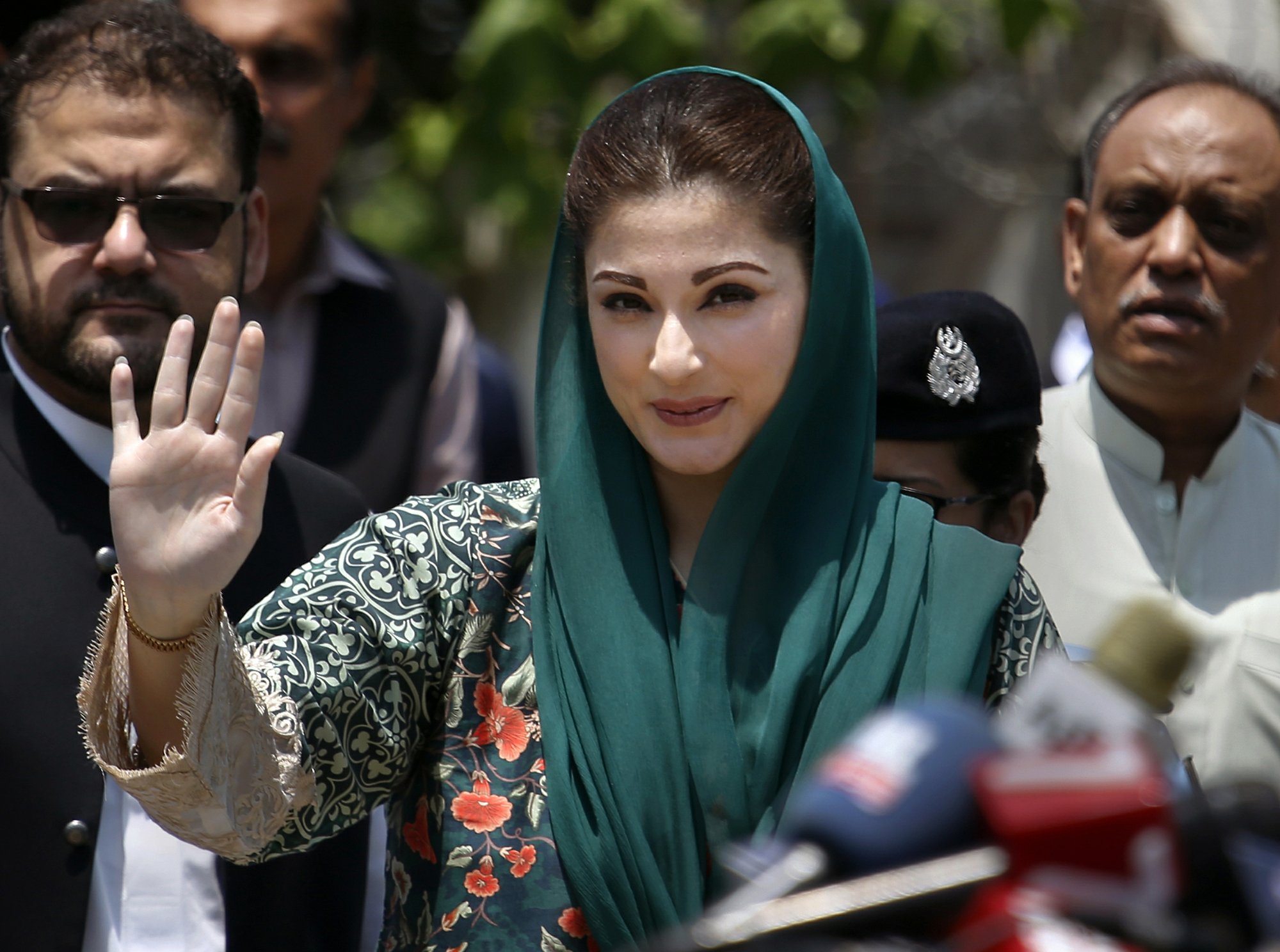
With Maryam’s endorsement for immediate general elections in Pakistan, the one-month old coalition regime of Prime Minister Shahbaz Sharif is now inching towards the general elections.

With this daring decision, Maryam, the irrepressible daughter of the Nawaz Sharif, a three-time prime minister, and his political successor in the ruling Pakistan Muslim League-Noon (PML-N),  also foils the ongoing conspiracies against the recently formed coalition government.

In Pakistan’s volatile politics, the army with its powerful secret police, Inter-Services Intelligence (ISI), had been grooming Imran Khan, a cricketer-turned politician, to become a proxy for the armed forces, which had been ruling the country during most of the years since it was partitioned from India in 1947. Khan, who was considered a novice in the cesspool of the country’s politics, appears to have successfully stumped two important institutions of the state, the army and the judiciary.

These two key branches of the government had helped him to trounce his formidable political rival, Nawaz Sharif, in 2018. The judiciary had convicted Sharif in trumped up unsubstantial charges, and the ISI had rigged the elections for ensuring majority to the Khan’s political outfit, Pakistan Tahreek-i-Insaf (PTI).  The ISI had also lined up small political parties for ensuring Khan’s majority in the National Assembly. Under the pressure of the opposition parties, the ISI chief, Faize Hameed, was shifted to become the corps commander of Peshawar, but his cronies in the secret police continue to help Khan. The present Chief Justice of Pakistan, Umar Ata Bandial, was a part of the Supreme Court’s three-member bench, which had called Nawaz Sharif a crook in its judicial verdict, has now prevented new Prime Minister, Shahbaz Sharif government taking any decision regarding the postings and appointments in higher echelons of the National Accountability Bureau (NAB) and Federal Investigating Agency (FIA).

The ruling PML-N led coalition was keen to restore economic health of the country before going to the polls, but the mischief of the ISI’s proxies in media and suo-moto interference of the Supreme Court in the routine administration has prompted the leadership of the PML and its allies in the government to seek fresh mandate. Amidst these developments, the PML supremo, Nawaz Sharif, has sought clear assurance from the GHQ that after the elections the civilian government would be allowed the necessary freedom to serve the people.

Maryam Nawaz, who is now a key leader of the PML-N and holds the key portfolio of the Information Minister in the Federal Government, is now openly campaigning for new elections. During the past one week she has been addressing massive political rallies in different parts of the country preparing people for the new elections.

Since the constitution of the new government, the ousted Prime Minister, Imran Khan, and his political outfit, PTI, has intensified political activities, but the immediate provocation was the suo-moto cognizance by a five-member bench regarding the transfers and postings of the officials of the NAB and the FIA. The apex court also took note of the relaxation of the Exit Control Order benefitting thousands of people to leave the country without any hassle. This order was enacted empowering the government to include anyone in the ‘Exit Control List’, if a case or allegation in appropriating wealth at the cost of the state exchequer were framed.

It is now being widely discussed in various Pakistani social media platforms that Maryam’s statements reveal a belated realization regarding a well-planned agenda for entrapping the coalition government by weaving web jointly created by a section of the ISI loyal to its former chief, Faize Hameed, now the corps commander at Peshawar, and a few Supreme Court justices. In this power game, the role of the President Arif Alvi too is quite crucial. He had refused to give oath to Shabaz Sharif of the office of the Prime Minister under the pretext of being sick.

It appears to be a repeat of the happenings in 2014, when the then Prime Minister, Nawaz Sharif’s refusal to give extension to the army chief, Raheel Sharif, had finally led to his  removal under some cooked up unsubstantial charges. It was then decided that instead of imposing the martial law, army should usher in a regime of proxies. In a bid to facilitate Imran Khan to become the prime minister, the ISI had embarked upon its plan for maligning the Sharif clan and many prominent leaders of the opposition parties. The ISI had also rigged the elections on an unprecedented scale to ensure his victory.

In an effort to save the image of the army among the electorate, the present army chief, Qamar Jawed Bajwa, had assured that the army and its ISI would be now politically neutral. The assurance is now being violated. Meanwhile, the erstwhile ISI chief, Faize Hameed, now the corps commander at Peshawar, who had played a key-role in ensuring majority to the PTI, has suddenly become politically active.

He has recently been to Kabul to strike a ‘peace deal’ with the Tahreek-i-Taliban Pakistan (TTP). It is not known whether he had obtained the permission of the civilian government in Islamabad before visiting Kabul and signing the peace agreement. It appears that he is in an assertive mood for seeking his elevation as the army chief, though he is the junior most in the panel of the officers to be considered for the coveted position.

Amidst these developments, a feverish competition for the new army chief post has begun following the indication of the present incumbent, General Qamar Jawed Bajwa, that he will not be seeking further extension of his tenure, when his terms finally expires in November this year. There are four top generals running for the coveted post are Lt Generals Sahir Shamshad Mirza, Azhar Abbas, Nauman Mahmood Raja and Faize Hamid.


Women’s self-help group spells magic with mahua cookies

The Sangwari Mahila Swasahayta Samuh, a self-help group based in Chhattisgarh, is giving the traditional use of mahua for making liquor a twist by creating value-added products
out of it, writes Deepanwita Gita Niyogi

Come summer, and the grounds of Bastar’s villages are dotted with small pale yellow flowers, which fall from trees. Known as mahua, these are collected by tribal communities during the months of March-April in small baskets. After collection, the flowers are exposed to the sun for a few days during which they turn brown and taste like raisins. It is at this time that the dried flowers are sold in the market where they fetch a good price, sometimes as high as Rs 50-60 per kg.

Mahua, an important minor forest produce in Chhattisgarh, ensures a steady source of livelihood to rural communities, especially Adivasis. Besides selling the dried flowers, a part of it is kept for future use by collectors for making mahua liquor for daily consumption. In fact, drinking mahua liquor is Bastar region’s quintessential culture. It is served to guests on almost all occasions and also sold in bottles across rural markets. But mahua is nutritious too, and can be used to make value-added food products.

And this is where Raziya Shaikh of Bastar Food Firm came in two years ago. Shaikh researched on tribal foods and came up with various interesting recipes prepared from mahua. She had technical knowledge related to products’ shelf life, safety measures and quality parameters. Armed with a degree in microbiology, which has food technology as part of the syllabus, Shaikh trained members of a women’s self-help group based in Dantewada district of Bastar region to bake mahua cookies which have a distinct black colour and sweet taste.

The forest department approached Shaikh and organised a month-long training two years back. Its members were trained on the processing of important minor forest produces like mahua. Primary level processing is important for value addition and centres dedicated to this have been set up across Chhattisgarh.

According to Shaikh, making products is easy but turning it into a business model is difficult. “It took me a year to understand the entire cycle of mahua and make people aware that it can be used in various ways apart from alcohol,” she said.

Shaikh’s idea became a hit and the women of the Sangwari Mahila Swasahayta Samuh started making mahua laddoo, mahua halwa, tamarind sauce, masala gur or jaggery and kodo and kutki cookies. The latter two are small millets.

For this initiative, it is important that only clean food grade mahua flowers are used. Flowers which are traditionally collected from the ground are full of dust, said K Raju, the deputy ranger of Dantewada forest range. To collect the flowers used in making food items nets are used. The nets are tied to trees which ensure that flowers fall in them. Later, collection is carried out twice a day in clean plastic trays and the flowers dried using dryer machines.

One flower, many uses

Besides cookies, mahua laddoos and mahua halwa are much in demand. There are 20 women associated with the Sangwari group formed on November 27, 2020.

Commenting on the formation of her group, leader Malti Kunjam said all members who are currently part of Sangwari initially belonged to other self-help groups, but came together for the mahua initiative. Many of them come to work daily from far-off villages. For their convenience, an e-rickshaw has been provided by the forest department

The products, a good option for the health conscious, are made from whole wheat flour and jaggery. These are sent to Raipur and from there to every district of the state. Initially, the women used to sell the products in the village market.

“The women make up to five kg laddoos and four kg of mahua cookies daily. Several ingredients are needed like chocolate, milk, spices, ghee, butter and cashews. Initially, the forest department supplied the raw materials but now we buy it with the loan amount of Rs 10 lakh received as part of Van Dhan Yojana,” Kunjam added. Van Dhan is a scheme of the central government to increase livelihood opportunities in tribal areas of India.

Till now, the women’s group has earned a profit Rs 3 lakh from the sale of various products. A 100 gm box of mahua cookies costs Rs 70. Same is the price for ones made from millets. The laddoo costs Rs 750 per kg. It is in demand at the Danteshwari temple where it is given as an offering to devotees. Another unique product is tamarind sauce sold in bottles. It costs Rs 60.

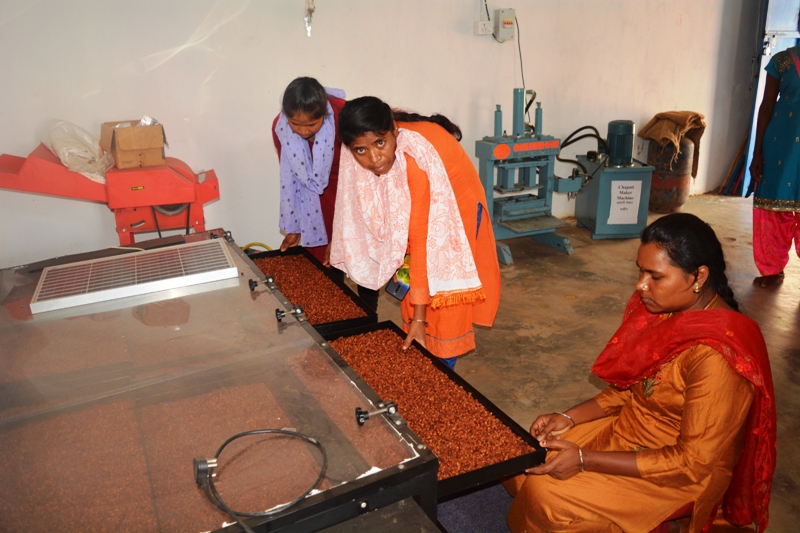
There are three rooms in the centre where the women’s self-help group works. One is stacked with finished products. Another has raw materials and a microwave oven for baking cookies. The third room has a de-seeder machine for tamarind seed removal, a solar dryer for drying mahua flowers and other machines. There is also a sauce filler for filling up tamarind sauce in bottles.

A new direction

Kunjam added that nobody in the group had any prior knowledge of baking cookies but now that everyone has learnt, it is a good thing to work together. She is looking forward to expand the activities. The cookies are selling fast. The centre functions on all days except Wednesday when it is shut for the local rural market. “The women get about Rs 100-150 per day for their labour and work from 10.30 am to 5.30 pm,” Kunjam said.

Though mahua cookies are in high demand, the women try to get raw materials as per orders. Dried mahua flowers are kept in cold storage for future use. When used in cookies, it is crushed to make powder. The finished laddoos can be stored for six months and consumed. Kunjam wants to take the products outside Chhattisgarh. Orders would be placed through TRIFED in future.

Apart from Sangwari, the forest department has many self-help groups which are involved in buying mahua and tamarind from Adivasi families. This has been introduced to do away with middlemen who pay less than the minimum support price for minor forest produces. The department transfers money as advance to the women’s groups so that they can make the purchase.

Dantewada divisional forest officer Sundeep Balaga said the intervention is targeted at youths living in cities, who will enjoy mahua in the form of cookies and laddoos rather than the traditional ways of consumption popular in villages. The machines, given to the women for use, are worth Rs 12 lakh and have been procured using DMF funds.

Mahua 16: The members of the Sangwari Mahila Swasahayta Samuh display the products made by them. These include mahua laddoo, mahua halwa, masala gur and millet cookies.

Mahua 17: Freshly baked cookies made of millets and mahua are popular with customers.

Mahua 18: Sun dried mahua is stored like this. The flowers are crushed to a powder form for cookies.


MOST POPULAR

HOT NEWS