It’s time to let the man cry

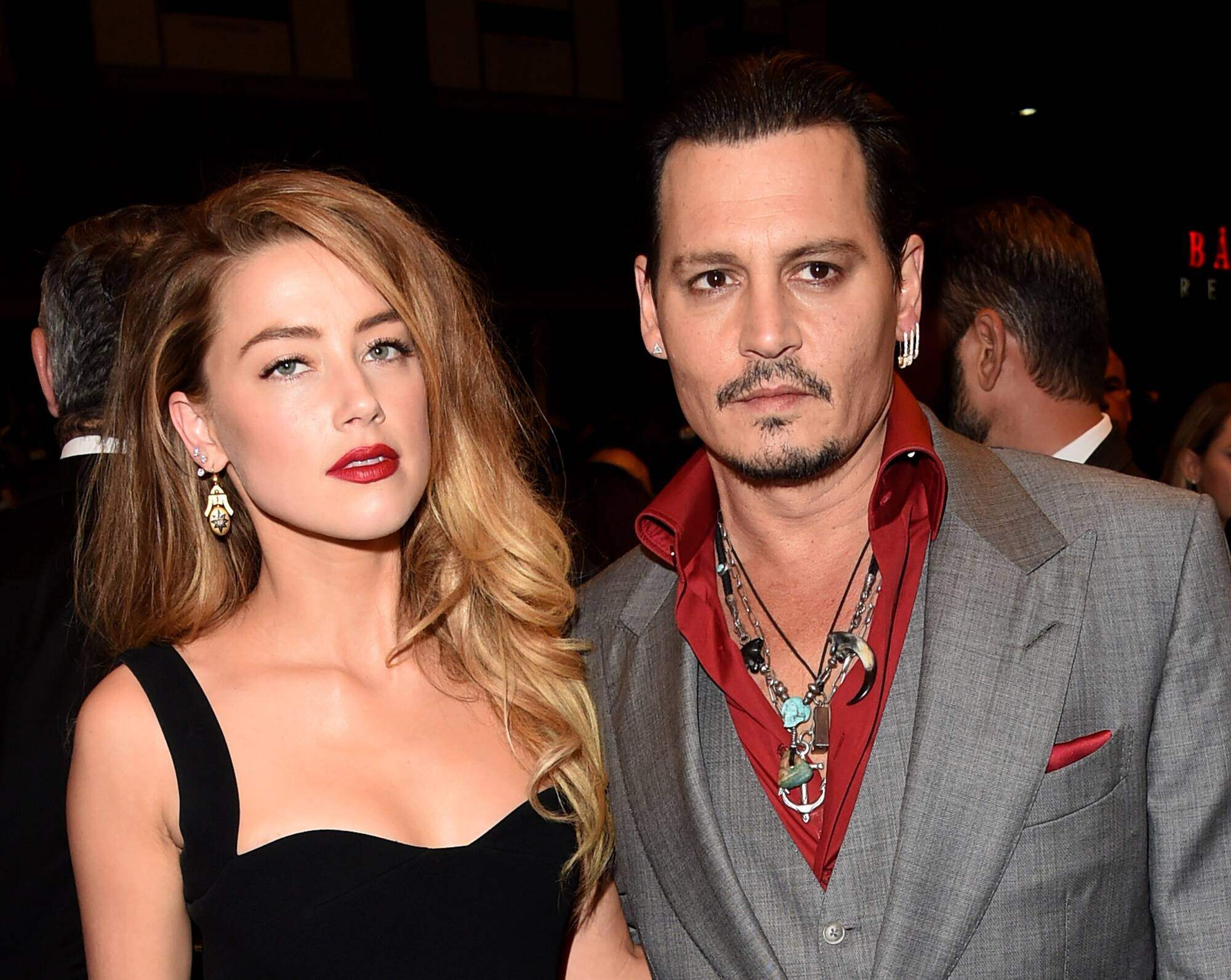
How many more Johnny Depps or Amber Heards do we need to realize that physical and emotional abuse of a man is a reality and we need to address it? And that it’s ok for men to give vent to their feelings?

When news of the Johnny Depp and Amber Heard case burst upon the world, everyone sat up and took notice. First, because it was two celebrities fighting it out in a highly-publicised court battle. Second, and this really caught the world’s attention, was the fact that the man, a highly-successful and much-loved Hollywood actor at that, was accusing his ex-wife of Intimate Partner Violence (IPV) and was openly talking about the mental and emotional abuse that she meted out to him.

It’s no breaking news that even men suffer physically, emotionally and mentally at the hands of violent, emotionally and mentally abusive spouses. However, hardly any man comes out and talks about it, because most of the time they are in denial of the abuse being meted out to them. And if by some chance, they are willing to face up to the fact that they are in an abusive relationship, particularly physical abuse, it is even more mortifying and traumatizing for a man to admit to IPV because of the unhelpful social response. In our patriarchal society it is considered “unmanly” to be dominated and abused by one’s wife, physically. So, if it comes out that one is facing IPV, then sadly, instead of getting any sympathy, the man will become a butt of unsavoury jokes.

So, when Hollywood superstar Depp revealed in court some shocking details of what his personal life was like, everyone sat up and took notice. His voice against IPV and emotional abuse by Amber when she was his wife was heard and taken seriously.

Talking about the violence he faced, Depp revealed that it was Amber who would “strike out” with a slap or a shove. During one argument, she threw a Vodka bottle at Depp, and when he tried to deflect it, the bottle cut off the top of his right middle finger, exposing the bone. The actor said he would remove himself from heated arguments, sometimes locking himself in a bedroom or bathroom, and never struck Heard. “My main goal was to retreat,” he testified.

However, Depp was not just at the receiving end of IPV, he was suffering emotional abuse too. He said they had frequent arguments that included “name calling” and “bullying” by Amber. “It seemed like pure hatred for me,” Depp said.

The fact that Depp came out on top in this case will hopefully give other men silently suffering in a similar way the courage to open up and seek help.  Because the woman is not always the victim! Men are abused too. And we, as a society, need to admit that.

Ask Save Indian Family Foundation, a men’s rights group where husbands, who are facing violence, mental and emotional harassment by their spouses go for counseling, help and support. Self-admittedly their numbers are growing exponentially, with “four or five people joining the group each week.”

The 2004 National Family Health Survey (NFHS) revealed that about 1.8% women in the country had resorted to violence against their husbands.

The story in rural India seems to be no different if data are anything to go by. Sample this! In a study of married men in the age group of 21-49 in rural Haryana, 51.5% men have experienced torture or IPV while 10.5% men have experienced violence at the hands of their wives.

However, abusive relationships are not just about violence, they include emotional and mental abuse too. According to relationship experts, it is not easy for people to identify that they are in a psychologically and emotionally abusive relationship. Half the time they are not even aware of it. However, there are certain behavioural traits that marriage counselors and clinical psychologists identify with psychological and emotional abuse being perpetrated by a spouse.

For instance, you are in an abusive marriage if your spouse is hyper-critical or judgmental towards you. Nothing you achieve or do for them and your family is enough. They are rarely appreciative of your efforts to make them happy. Your spouse gets angry or upset when you don’t agree to something they want. They are controlling, ignoring boundaries and invading your privacy by checking your emails, texts messages, social media, laptop or phone without permission.

You must realize that you are in an emotionally abusive relationship if your spouse is possessive and unreasonably jealous and constantly calls when you are not around, gets upset when you want to spend time by yourself or with family or friends alone. They are being abusive if they want to be the centre of your world and isolate you from other important people in your life like your parents, siblings, extended family, friends and/or activities you enjoy.

An abusive spouse accuses you of infidelity, checks up on you frequently and gives you guilt trips by telling you they have made a million sacrifices for you. They make you doubt yourself all the time, make you feel inadequate and threaten to commit suicide, or take the kids away from you. The emotionally abusive spouse generally tries to bring you down by belittling your achievements, hopes and dreams. They refuse to talk about their irrational behaviour or take responsibility for their own mistakes and actions. They blame you or someone else for their failure, are unreasonable, argumentative and withdraw affection when “you’ve done something wrong.”

Research shows that close to 43% husbands have contemplated suicide due to humiliation, harassment and frustration due to the ill-treatment meted out to them by the spouse! But even more shocking is the fact that according to the WHO, globally, the number of men who commit suicide is double than that of women.

I’m not saying that all suicides are because of an abusive spouse, but a very large percentage of them are, if statistics are anything to go by. As the numbers show, men are more vulnerable because they refuse to acknowledge that they are in an abusive relationship. They are in a state of denial and don’t talk about it. Even if they realize that they are in an abusive relationship they don’t seek help because they feel embarrassed to admit it even to themselves, let alone share it with another person. After all, how can a manly man be vulnerable or be manipulated or ill-treated by someone, especially a mere woman!!

But many more continue to suffer in silence as they have been raised to take suffering “like a man.” “Real men don’t cry.” “Real men don’t talk about their feelings.” Then there is the fear of “what will people say? They will call me a whimp or hen pecked if I let anyone know that my wife beats me or is emotionally abusing me.” Much like women, men, too, worry about the social and economic consequences of divorce, of the protracted legal battle, of losing access to their kids, of losing respect in the eyes of their peers and colleagues.

Worst of all is the fear of getting themselves and their families embroiled in a false case, because quite a few of the laws are skewed in the favour of women under the Indian Penal Code. And for good reason too, because a large majority of the women do need its protection! However, we cannot ignore the fact that quite a few women do tend to misuse the laws meant to protect them. Ask the family of the 31-year-old man from Gurugram who committed suicide in a hotel on May 6 because his wife and her family were harassing him and threatening to implicate him in a false case?

You may say that this argument about the need for more gender-neutral domestic violence laws and misuse of laws by women and the need to introduce the misuse provision in laws like Section 498A (Husband or relative of husband of a woman subjecting her to cruelty) or Section 4 of the Dowry Act, has been done to death. But there is a crying need to hammer it in each time because sadly, the men who face violence and emotional abuse, at the hands of their spouse in India have nowhere to go, since the law doesn’t treat them as victims. Unlike most countries around the world, the laws in India against domestic violence don’t provide protection to both the sexes. For instance, harassed and abused husbands abroad can seek restraining orders from courts, but in India abused husbands don’t have that option. We are seeing so many positive changes in Indian society legally. Now, India, too, must be more supportive of men facing domestic violence or emotional and mental abuse at the hands of their spouses or family members, legally.

However, an unhelpful and unsympathetic legal system aside, can we, as a society, absolve ourselves of all blame? Are we also not equally at fault? Don’t we bring up our boys with an antiquated, even medieval notion of masculinity by always telling them to “be tough” and “take it like a man”? Don’t we also make fun of men who are in touch with their feelings and label them sissies? More than anyone, it is the men to blame for this because when a woman complains of IPV or mental abuse, the women in her life don’t laugh at her or dismiss her. They take it seriously and sympathise with her, comfort her and band about her. They even advise her to seek help and in certain cases get help for her. What do the men do? They laugh in disbelief and derision when they come to know that a man was beaten up by his wife and label him a wimp. So, is the bro-code only meant for drinking rounds and getting up to mischief? Where does the man-code go when another man is suffering domestic abuse? Why don’t men support each other in this area?

Have we ever thought that it is time to change this medieval mindset that “mard ko dard nahi hota” or “boys don’t cry”? Isn’t it high time that we, as a society become more sympathetic towards men who are suffering at the hands of their spouses? Just because a man keeps quiet to keep the peace or because he doesn’t want to lose his kids, does not make him less of a man. We should lend a helping hand or a sympathetic shoulder and not snigger or make fun of a man who is brave enough to admit that he is facing physical or emotional abuse from his spouse. Because it takes guts to even admit it to oneself, let alone others.

How many more Johnny Depps or Amber Heards do we need to realize that physical and emotional abuse of a man is a reality and we need to address it? How many more suicides do we need before we tell our men that it’s ok to talk about problems and seek help if they are in a physically and emotionally abusive relationship? It’s ok to cry and give vent to feelings?

It’s time to let the man cry!
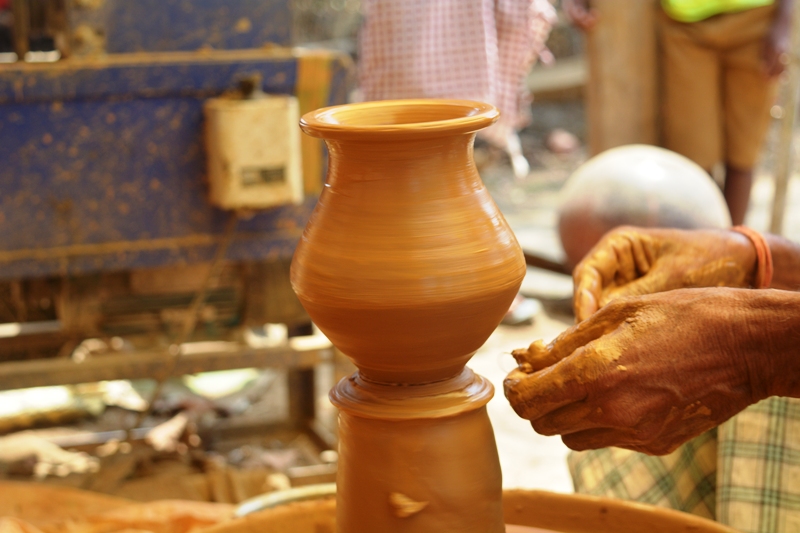
 

Lending a helping hand to potters

The state government has stepped in to help the Kumhar community of Dantewada district in Chhattisgarh by giving them access to new machinery, work space and training, writes Deepanwita Gita Niyogi

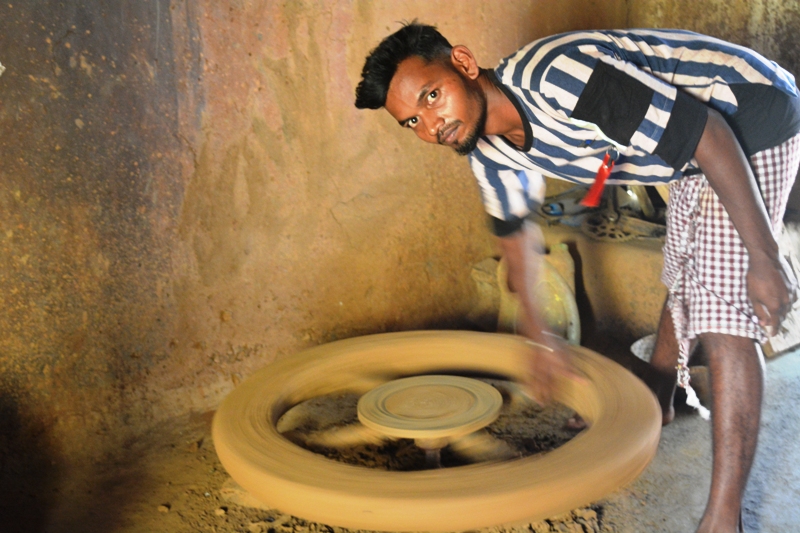
Kumharras is a unique place. Here, clay pots are found lying all around. Some are even haphazardly stacked in dingy corners. In this village in Dantewada district of Chhattisgarh, there are 100 houses which belong to the potter community known as Kumhar.

Elderly Budhram Sori, a seasoned potter who picked up the pottery-making skills from his father and grandfather, came out of the house smiling. Sori creates many items, ranging from water containers to diyas (traditional lamps). The potter sells his products in nearby rural markets. About 20,000 diyas and kalash or water vessels are needed in temples on a daily basis.

To reduce the labour of Sori and other potters like him, the state government has stepped in. Many potters in the village now use the potter’s wheel which runs on electricity instead of the traditional cumbersome wheels which are bulky. The former ensures less effort, and is labour as well as time saving.

Besides the innovation in the wheel, a building to be used as a workshop by potters of Kumharras just a few metres away from the village, is also nearing completion. This will help store many finished products, thus solving the problem of space crunch at individual homes. As many as 100 families will benefit from the new place where potters can sit together and make products.

Moulding clay

In the midst of conversation on a hot noon, Sori’s agile fingers lightly pressed a traditional lamp to mould it into perfect shape on the electric potter’s wheel. The work needs skill and patience as the wet diya may easily break if not handled properly. The trick is to ensure that the hand remains soft and not much pressure is applied to maintain the desired shape.

“My father and grandfather have done the same thing. But whereas they worked using traditional wheels, the electric wheel is easy to work on,” the potter said. Sori is adept at making small clay items within a few minutes, and mostly prefers, to work half bent rather than seated. All the items in the village are made of red-coloured mud which is excavated from a nearby site.

The potter showed off his skill at the conventional wheel even though he admitted that more potters prefer the electric machine nowadays. The large wheels can injure legs but are still used to make big items like water containers.

It takes an hour to dry the products. After that they are baked in the traditional brick kiln once a week. Some products also take two to three days for drying. “We have to keep them in the shade or else direct sunlight produces cracks,” Sori added.

????????????????????????????????????

Apart from pottery, which fetches Rs 6000-7000 a month, potters in Kumharras own lands for paddy, the dominant crop of Chhattisgarh mostly sown in the kharif season.

A few potters admitted that the money earned by the community is low. To keep things going, collective help is desirable. While some bring mud, others work on wheels. It takes about five minutes to make medium-sized products.

New beginnings

Apart from the electric machine, the upcoming building will benefit potters of Kumharras. For this, the initial budget stands at Rs 1 crore. Madhusudan Kumkar, a member of the Kumhar Samaj from Kumharras, said meetings are organised every month to discuss and address issues. He hoped that the construction work of the building would be completed in a short time.

To help potters in Dantewada, a tender worth Rs 67 lakh has been floated for machinery. “Training is being given to potters through the Matikala board which is also trying to spread awareness and carry out design development programmes under the guidance of AK Gupta, a ceramics consultant and expert from Kanpur,” said HN Murthy, an officer at the board.

The Matikala Board based in Raipur takes care of potters across Chhattisgarh. Working units for the community are already present in Mahasamund, Surajpur and Dhamtari districts of the state. Apart from the building coming up in Dantewada where machines would be provided, another is in the offing in Durg district.

Sudhakar Khalkho, the managing director of Matikala Board, explained that red clay pottery is traditionally made in Chhattisgarh. But a shift should be made towards white clay which has more market value. “The potters have been making conventional designs but the board wants to change the system by giving them training to help make new things like coffee mugs, flower vases and decorative pieces.”

According to pottery expert Gupta, a major problem faced by potters in Chhattisgarh is the lack of modern furnaces. The traditional kilns need to be upgraded. Potters also handle far less amount of clay. A potter in Chhattisgarh uses about 200 kg of mud per day which is less compared to other places. Sometimes, they lack access to good quality and adequate quantity of mud.


Prophet remarks row: India needs to do more to mollify Muslim world

The remarks made by BJP spokesperson Nupur Sharma on Prophet Muhammad during a TV debate has pushed India into a diplomatic tight corner with entire Muslim world coming together to express its outrage over the comments,

It, perhaps, was unintended, but an ‘irresponsible observation’ regarding Prophet Muhammad, from the spokesperson of the ruling Bharatiya Janata Party (BJP), caused an international embarrassment, a nation-wide resentment among those who believe in a ‘plural’ society, finally pulling down India from the high pedestal of her much-acclaimed world-view. The first Indian victim of this fierce controversy was the Vice-President, Venkaiah Naidu, on a visit to Qatar on the fateful day, when BJP’s spokesperson Nupur Sharma made her derogatory remark in New Delhi. The lunch being hosted at Doha in the honour of the visiting Indian dignitary was cancelled under the pretext of some un-specified health issue of the hosts, and the Indian envoy was promptly summoned to register a strong protest over the  remarks.

The issue has now snow-balled into a bigger controversy, with the entire Muslim world coming together to condemn the remark. There were few takers for the clarification issued by the foreign office in India that the government does not subscribe to the views of Nupur Sharma. It was considered just a ‘damage-control’ exercise for bailing the out of the embarrassing situation caused by a remark, which just undermined the Indian efforts of evolving a strong constituency and support base in the Gulf as well as forging strong ties with the nations of the region.

There is a ‘trust deficit’ in India’s political spectrum even within the ruling party. It is being asked whether Nupur Sharma’s comment was a part of some grand design for aggravating Hindu-Muslim divide or was it just ‘political naivete’ on her part as he indulged in a political-religious rhetoric, a common feature in India’s social media platforms. In recent years, these platforms have mushroomed for furthering a divisive agenda believed to be having the blessings of a powerful section within the ruling party.

With the eclipse of the founders of the BJP, most of them now consigned to the “Marg darshak mandal”, popularly known as the old-age home designed by the ruling group, which is managing the party these days. It appears that these power-hungry elements have even ‘muzzled’ the political voices within the cabinet often attributed to Gadkari and Rajnath Singh, the Union Ministers of Surface Transport and Defence respectively. It is also being asked whether Sushma Swaraj would have ever accepted to utter such words even asked by the party’s existing leadership or why the present party leadership could not induct or find people like L.K.Advani or Dr. Murli Manohar Joshi or intellectuals like Govindaharya.

There are reports that enlightened sections of the party, though many of them not holding any power position either in the government or the organization, feel frustrated due to the delay in inducting heavy weight political persons in the system. They appear to be hopeful that sooner or later, Prime Minister Naredra Modi and Union Home Minister Amit Shah would learn the lesson that if the key positions in the government and the organization are not assigned on merit, the outcome could be politically disastrous for the ruling party and result in embarrassment to the country. It is being pointed out that the opposition parties, perhaps, may afford mediocrity for the time being, but for the ruling party it is just suicidal.


The Midlife Challenges 

The ideological confusion has aggravated due to inability of the ruling BJP to replace the character of the Indian state with the much-trumpeted RSS world-view. It goes to the credit of Modi that he has been trying to synthesis the two perspectives. It is difficult to state, whether he would ever succeed or it would remain a non-starter in ideological terms, but his inability to achieve the objective has set in a trail of confusion, which has gripped contemporary India. His speech on the occasion of the completion of 100 years of the Aligarh Muslim University in 2021 should have been lamp post for ending the party’s ideological confusion, but unlike the founders of modern India, Modi does not have the much-needed constituency of a large reservoir of committed scholars for carrying forward his mission. Even the RSS umbrella under Bhagwat appears to be groping in the dark in quest of a suitable narrative. Nupur Sharma’s claim that “She was asked to speak that controversial remark” is indicative of the growing say of the non-political ideologues in the BJP and its government, which continues to be dependent on the superannuated police, military and civil officials and the think tanks or the corporate world. Most of them have now occupied key position is the government for sympathising with the BJP during their respective tenures in the administration or had been instrumental in funding the party since 2014 polls.

The ideological crisis in the system was reflected, when the career diplomats, India’s envoys in Qatar and Kuwait, were summoned to be given the protest notes. It is indicative of the perception that the there is no difference between the ruling party and the government. It, therefore, is not surprising that there were few takers to the claim of the Indian foreign office that the government does not subscribe to the sectarian views of a BJP functionary. Even within the country few are ready to accept the official view that the remarks against Prophet Muhammad are the “views of fringe elements.”

It is yet to be seen whether in future, the party leadership and the government will genuinely make efforts to work together for evolving a plural approach. The choice before them is difficult i.e to continue the policy of running with the hare and hunting with the hound or abandon it for the national interest.


The Genie is Unleashed

It is stated that in the medical world that the immunity in human body prevents one from infections of viruses. It is true about body politic too. The media management accompanied by well-funded social media has been attacking the basic character of the Indian state. The issue is whether the fanning up of the caste politics unleashed in the northern India during nineties or countering it by the Hindutva is justified. It is for the country’s major political outfits to find a way to come out from this never-ending cesspool of the ‘opportunistic politics’. It has already triggered off communal virus adversely affecting India’s position as a symbol of all-inclusive democracy.

The spin off the controversy is now in the public domain. It had flared up during the first week of June, following the remarks of the BJP national spokesperson, Nupur Sharma, on a TV debate and the party’s Delhi media head Naveen Kumar Jindal’s now deleted tweets against Prophet Muhammad, have adversely affected the India-Arab world ties. The last minute cancellation of the lunch being hosted in the honour of Venkaiah Naidu by the deputy Amir Sheik Abdullah Bin Ahmed al Thani, at Doha has indicated the impact of the unnecessary irresponsible comments from the ruling party’s spokesperson.

It may be recalled that it was the rulers of Qatar, who had extended invitation to India during the crucial negotiations between the USA and the Taliban much against the wishes of Pakistan.

Apart from the protests from the governments of the Gulf region, the outrage over the remarks has spread in the Arab world with a trending Twitter hash-tag calling for a boycott of Indian products in some countries. It has defeated the personal effort of Modi in cultivating close ties with the countries of the region. The damage control is not possible only by the expulsion of Nupur and Naveen Kumar Jindal. The party must counter their claim that they were told by some ‘higher-ups’ to make the comment with adequate visible initiative. The clarifications issued by the two BJP leaders that it was never their intention to hurt anyone’s religious feelings. She has withdrawn her controversial statement, but her comment that her reaction was to “continuous insult and disrespect towards our Mahadev (Lord Shiva)” has defeated the purpose of the apology.

A Delight for Pakistan

Pakistan, perhaps, was awaiting an opportunity to regain its credibility in the Muslim world. Nupur Sharma and her associates, have not only maligned India’s liberal image, but they have done immeasurable collateral damage to the Indian state. It is just not a case of keeping your foot in the mouth that one expresses something thing inadvertently, but it is the outcome of the ‘negative narrative’ expressed in the name of ‘strong nationalism’ blended with Hindutva being weaved in during the past couple of years.

One is just reminded of an earlier incident, when the then BJP president, Bangaru Laxman, was found accepting bribe in a defence deal. Did the party learn any lesson? One of the persons, who was defending the accused, Ram Nath Kovind, was rewarded for his support to the accused. He was rewarded by a governorship and was finally elevated as the President of India. It may also be noted that this rallying around the corrupt finally sealed the fate of Atal Bihari Vajpayee government. The trial court did not endorse Kovind’s assertion that Laxman was an innocent person, he was beign trapped by a media house. Eleven years later, the court not only rejected Kovind’s evidence but Laxamn was finally convicted. In this case Laxman was found accepting the bribe of Rs one lakh in a sting operation. There are reports that the Qatar Government has accepted the BJP’s decision to remove Nupur Sharma, but it may continue to press for a public apology for the controversial remarks.

Anti-India proxies invigorated

Nupur Sharma and her supporters in the social media appear to have reinstated Pakistan’s fragile position in the Arab World.  It has joined the powerful emirates of the Gulf region and kingdoms like Saudi Arabia and UAE in condemning India. With the 57-memebr OIC (organization of Islamic Cooperation) having its membership across four continents also condemning India shows that the anti-India proxies have suddenly been invigorated. The ongoing efforts for the damage control is not only inadequate, it also lacks direction.


Desertions continue to plague the Congress in Punjab

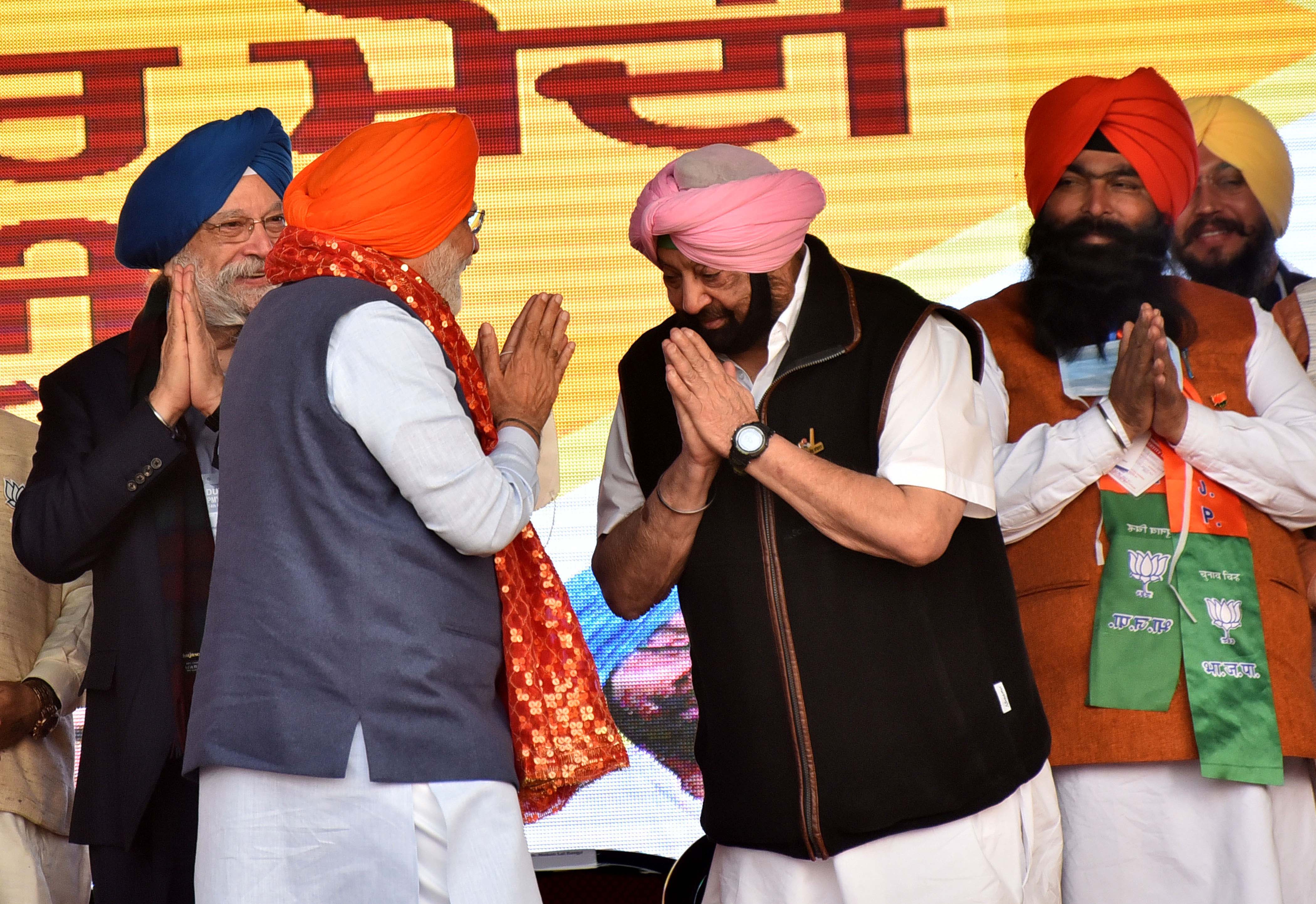
The unceremonious exit of the then chief minister Capt Amarinder Singh from the party ahead of February assembly polls was just the beginning. A numbing jolt came a few days ago when five of the party’s senior leaders quit the party and joined BJP. A report by Rajesh Moudgil

It was in September last year when the then Punjab chief minister Capt Amarinder was forced to first vacate his seat and soon after quit the party due to the rumblings against him from several of his detractors within his government and the party.

This was just the beginning. The prevailing bad blood in the party had the worst coming before and after the state assembly elections which were then just five months away.

Capt Amarinder Singh minced no words in his resignation letter sent to the party president Sonia Gandhi that he was deeply hurt by her and her children’s conduct over the past few months.

Referring to his arch-rival Navjot Singh Sidhu, he said it was unfortunate rather than being reined in, he was patronised by Rahul and Priyanka. He added that while he was aided and abetted by the general secretary in-charge Harish Rawat, who was perhaps the most dubious individual he (Capt Amarinder Singh) had the occasion to make the acquaintance of.

Infighting led to party’s rout in polls

Courtesy infighting in the party, Congress which had come to power with a thumping majority of 77 seats out of the total 117 seats in the 2017, was reduced to humiliating 18 seats in the state this time while the then Sangrur MP Bhagwant Mann-led Aam Aadmi Party (AAP) made a landslide win with 92 seats.

Congress alone was to blame for its debacle.

Subsequent to the unceremonious exit of the then CM Capt Amarinder Singh, Congress, nonetheless, made a tactical shift in its original strategy of going into the polls under a collective leadership, by declaring incumbent chief minister Charanjit Singh Channi, a Dalit, as its CM candidate.

Though the decision was taken by the Congress with an eye on the 32% Dalit votes in the state, the highest in the country, but the move ended up sparking fresh bickerings in the party.

Its top leaders including state unit president Navjot Singh Sidhu, election campaign committee chairman Sunil Jakhar, and deputy chief minister Sukhjinder Singh Randhawa, were among the front-runners to replace Capt Amarinder Singh, were nowhere to be seen during the election campaign of the Congress candidates or even CM face Channi’s campaign.

There were many others who rebelled and fought against Congress candidates finally contributing to the AAP candidates’ win.

Patiala MP Preneet Kaur who obviously campaigned for her husband Capt Amarinder Singh’s Punjab Lok Congress and Khadoor Sahib MP Jasbir Singh Dimpa, whose brother Harpinder Singh Gill recently had switched loyalties to the SAD, were vocal against Punjab affairs in-charge for creating what he termed as the mess in the state party. The party’s Rajya Sabha member and SC leader Shamsher Dullo, too, hit out at the Central leadership and Channi, looking askance at the ticket distribution.

Interestingly enough, among the other party rebels was Channi’s brother Dr Manohar Singh, who fought from Bassi Pathana constituency (district Fatehgarh Sahib) against Congress’ sitting MLA Gurpreet Singh and lost. The Congress’ four-time MLA Amrik Singh Dhillon fought as an independent from his Samrala (district Ludhiana) seat after the party decided to replace him with Rupinder Singh Raja Gill.

In Talwandi Sabo constituency, the three-time former MLA Harminder Singh Jassi, a relative of jailed Dera Sacha Sauda head Gurmeet Ram Rahim Singh, contested against party candidate Khushbaz Singh Jattana, while the sitting MLA at Nawanshahr seat Angad Singh contested as independent after being replaced with Satvir Singh Palli Jhikki.

Also, in one of the most notable contests, the Cabinet minister Rana Gurjeet’s son Rana Inder Partap Singh, fought from Sultanpur Lodhi in Kapurthala district as an independent against the party candidate Navtej Singh Cheema and won. Besides, former state Congress president Mohinder Singh Kaypee and former minister Jagmohan Singh Kang were also said to be anguished with the party’s selection for candidates in their respective seats and reportedly worked against the party candidates.

Jakhar leaves the party

The poll results were out on March 10. About two months later, the party suffered a major blow on May 14, when the party’s senior leader and former party state president Sunil Jakhar snapped his association with the party.

Sunil, 68, a three-time former legislator and MP, is the son of veteran parliamentarian Balram Jakhar while his elder brother Sajjan Kumar Jakhar was also a Punjab minister. Besides being the party state president in 2017, Sunil was one of the tallest Hindu leaders of the party in Punjab. However, his nephew Sandeep Jakhar is currently Congress MLA from the Abohar assembly seat.

Jakhar had frozen ties with the Congress for about two months after he was removed from all party posts for his alleged anti-party activities about a month ago by the party’s Central leadership.


The action against Sunil Jakhar was taken for his comments against former chief minister Charanjit Singh Channi and Ambika Soni.

A few days later, he joined BJP.

Latest, severest blow

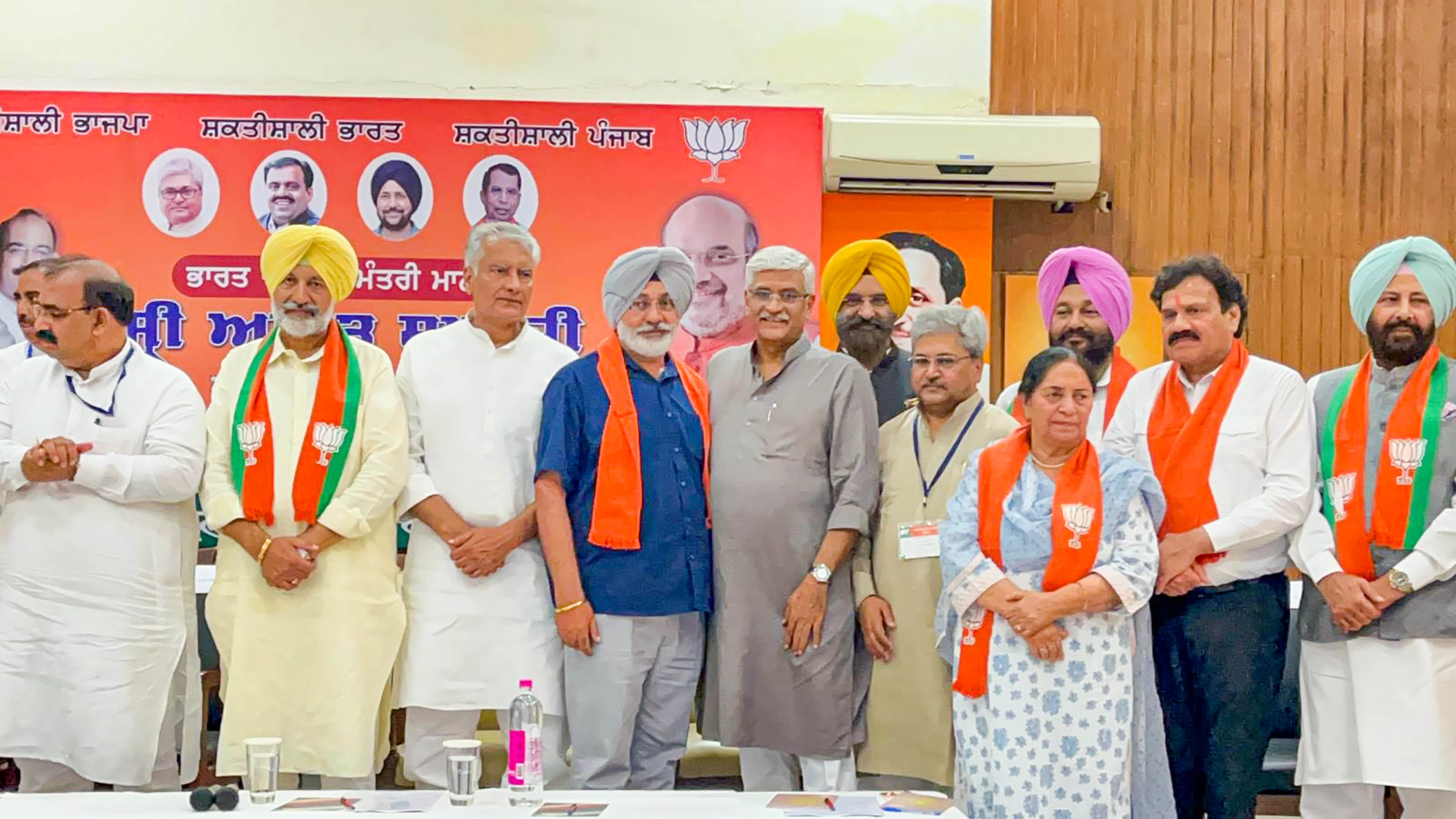
A numbing blow, however, came to the Congress in Punjab on June 4 when its four former ministers, besides several other leaders, joined BJP.

The four former ministers are Balbir Sidhu, Gurpreet Kangar, Shyam Sunder Arora and Raj Kumar Verka. Another senior leader and the former senior Barnala legislator who joined the saffron party was Kewal Singh Dhillon.

Verka was one of the tall Dalit leaders of Congress and also a former vice-chairperson of the national commission for scheduled castes, Sundar Sham Arora was working president of state Congress, and Balbir Singh Sidhu and Gurpreet Singh Kangar were tall Jat Sikh leaders of the Punjab Congress.

With their induction, the BJP eyes to enhance its presence in the state, especially in the Malwa region, the stronghold of the ruling AAP, as Kangar is a former MLA from Rampura Phul, district Bathinda, and Sidhu, former MLA from Mohali.

Likewise, Arora is a former MLA from Hoshiarpur (Doaba region), Verka is a former MLA from Amritsar (west) which falls in the Majha region. While Verka was a Dalit face of the Congress, Singla and Arora were Hindu faces of Congress in the Sikh majority state.

Interestingly enough, several others who joined the BJP included former Congress MLA Amrik Dhilon, former Shiromani Akali Dal (SAD) MLA Sarup Chand Singla, and expelled SAD leader Mohinder Kaur Josh. Sitting Mohali mayor Amarjit Singh Sidhu, who is the brother of former minister Balbir Sidhu, along with about 35 councillors also joined BJP.


How I became a writer of obituaries


Writing an obituary offers its author a wide-angle view of the deceased and the flexibility to underscore his many good qualities that had remained somewhat obscure during his lifetime. Here Raj Kanwar shares his thoughts on the art of obituary writing.

IS writing of an obituary as easy as doing the profile of a living person? Can writing of obituaries be turned into a niche genre? And what is the difference between the writing of an obituary of a dear friend and that of an unrelated individual? Even when one knows all about his dear departed friend, still it becomes disturbing experience in many ways.

I discovered all this in ample measure in 2012 when I wrote my first obituary on the New Year day, I had not imagined that it might be a forerunner of many more obituaries in the months to come. In my long and chequered career in journalism, interrupted by some professional and business detours, I have had many occasions to write obituaries but then it was just once in a while, and even the obituaries were mostly ‘matter of fact’ without any embellishments. But now after all these years, both my friends and readers expected from me obituaries that would match ‘gourmet’ standards, no less from a master chef.

Most rookie journalists would view writing of obituaries as a distasteful exercise. What is an obituary then? In short, an obituary is nothing but a narrative of a life already lived; the difference between writing a profile of a living person and an obituary of a deceased individual is primarily a matter of ‘Tense’. The living person is referred to in the ‘Present’ and the dead person in the ‘Past’ tense. The facts remain essentially the same.

I soon discovered that writing an obituary offers its author a wide-angle view of the deceased and the flexibility to underscore his many good qualities that had remained somewhat obscure during his lifetime. Also an obituary writer tends to ignore some of his negative traits and unseemly incidents and events from his life, thereby presenting a positive image of him. For me, writing of obituary of my friends became an emotionally-wrenching experience. Many scenes from the lives of those departing friends would flit before my mind’s eyes; I remembered the unfulfilled wishes or dreams of some of them and wished they had lived a little longer to see at least the fruition of those wishes or dreams. I also recalled that a few of those late friends had nurtured grudges against some of their friends or even against their spouses, but I suppressed all such thoughts since bringing into open those private grudges or unrealized wishes is not part of an ideal obituary.


Obituaries in vogue since time immemorial

Obituary writing, as it is generally believed, is neither a recent nor modern practice. The ritual of writing obituaries has been in vogue since time immemorial; it is as old as Death though its format changed from era to era. Even though those obituaries were different both in format and content, they nonetheless served their purpose. One of the earliest obituaries dates back to early Roman era (around 59 BC). Daily newspapers were printed on Papyrus newspapers known as ‘Acta Diurna’ (Daily Events) and distributed in Rome.

Invention of Printing machine

However, the published obituary in newspapers came with the invention in 1450 of Gutenberg’s Printing machine. The credit for invention or development of printing machine goes to Gutenberg, a political exile from Mainz Germany. He had successfully done his experiments in making a Printing machine in Strasbourg, France in 1440. In a way it was the invention of printing technology that brought in its wake religious text books and sundry literature. Thus publication of both books and the news of deaths became a regular practice. However, writing of obituaries assumed greater importance during the American Civil War when it was the only source of news about deaths of near and dear ones. Thereafter obituaries became common enough not only to inform relatives and friends of the death but also of the funeral services and other post-death rituals. It wasn’t until the second half of the 20th century that the detailed obituaries outlining the lives of leading politicians and other celebrities began to be written.

It was not before long that obituaries came to be regarded as the most important post-death liturgy. Leading newspapers set up ‘Special Desks’ and Archives containing ready-to-publish instant obituaries. They also appointed dedicated obituary writers with fancy titles such as ‘Obituary Editor’ whose responsibility was to ensure that the obituary of everyone who is someone in the community is readily available when the time comes. In fact, this job of the obituary editor assumed so much importance that he soon became better known among the readers than the chief editor.

Obituary writing becomes a niche genre

Soon enough writing of obituaries became a niche genre in journalism. And in 2007, an international organization, “The Society of Professional Obituary Writers” (SPOW) which wrote about the dead as a living was founded. One of its principal functions is to provide professional training and resources to journalists so that they developed their special reporting skills for interviewing and writing outstanding obituaries.

Obituary writing, in fact, is no longer the prerogative of an amateur family member of the deceased. Numerous professional companies both in India and other parts of the world have now entered what has become a lucrative Business of  Death’. As soon as someone dies, these companies take over the entire responsibility, like event management companies, not only of writing an appropriate obituary but also getting it prominently published. They will also make all the required arrangements for funeral, cremation, religious ceremonies and organize all the necessary rituals beginning with uthala or chautha and tehervin, leaving the bereaved family in peace to mourn the death of their departed kin. Of course all these Services are at a cost, and a good one at that.


Death is a million dollar business

Death is no longer a ritual merely confined to the family and its near and dear ones. Death has now become a billion dollar business worldwide.” Today, the business of Death has assumed multiple dimensions. It starts with a notice of death, publication of obituary, making arrangements for funeral, cremation or burial and followed by many post-cremation rituals that vary from religion to religion, caste to caste and of course from family to family.


Life’s journey is like ‘merry-go-round’

Life and Death are, in fact, like passengers at a Railway Station or Airport, and  the journey of life is more like a ‘merry-go-round’. Tens of thousands passengers arrive daily at and depart from these Airports and Railway Stations. Just consider those Arrivals and Departures signs prominently displayed there. Everyday some people depart and others arrive. Life  and Death are the two sides of the same coin. Toss it – you can never influence or even predict which side will come up. Head or tail is not in your hand. That is what our life is all about. It is the Fate, stupid. We are just Pawns in the game of Life. Death, like Birth is inevitable; then why fear the inevitable?


(Raj Kanwar is a 92-year old Dehra Dun-based veteran journalist, writer and author.)


India reports 12213 new COVID-19 cases,11 deaths

The single day rise in new coronavirus infections were recorded over 12,000 after 111 days, registering 38.4 per cent jump in daily cases while the active cases have increased to 58,215, according to the Union Health Ministry data on Thursday at 8 am.

According to Health ministry A total 12,213 cases were reported in a span of 24 hours, taking India’s total tally of COVID-19 cases to 4,32,57,730 while the death toll has climbed to 5,24,803 with 11 fatalities.

The active cases comprise 0.13 % of the total infections, while the national COVID-19 recovery rate was recorded at 98.65 %, the health ministry said.

An increase of 4,578 cases has been recorded in the active COVID-19 caseload in a span of 24 hours.

The daily positivity rate was recorded at 2.35 % while the weekly positivity rate was at 2.38 %, according to the health ministry.

The number of people who have recuperated from the disease surged to 4,26,74,712 while the case fatality rate was recorded at 1.21 %.

According to the ministry, cumulatively 195.67 doses of Covid vaccine have been administered in the country so far under the nationwide COVID-19 vaccination drive.

India’s COVID-19 tally had crossed the 20-lakh mark on August 7, 2020, 30 lakh on August 23, 40 lakh on September 5 and 50 lakh on September 16. It went past 60 lakh on September 28, 70 lakh on October 11, crossed 80 lakh on October 29, 90 lakh on November 20 and surpassed the one-crore mark on December 19. India crossed the grim milestone of two crore on May 4 and three crore on June 23.

Government should reconsider Agnipath scheme : Hooda

Chandigarh: Senior Congress leader Bhupinder Singh Hooda on Wednesday lashed out at the Centre over its “Agnipath” scheme, saying it neither favours the the country nor the youth.
He requested the government to reconsider and rationalise it by ensuring permanent jobs to soldiers who complete their four-year term in the armed forces.

The Centre on Tuesday unveiled the ambitious “Agnipath” scheme for recruitment of the youth aged between 17 and a half and 21 in the Army, Navy and the Air Force, largely on a four-year short-term contractual basis.

The youth recruited under the scheme will be known as ‘Agniveers’. After the completion of the four-year tenure, 25 per cent of the recruits from each specific batch will be offered regular service.

“It has far-reaching consequences and these have not been fully considered while preparing this scheme. In the long run, the policy would have a detrimental impact on our national security,” Hooda claimed in a statement here.

“It seems the government is compromising with the security of the country with the intention of saving money on salary, pension, gratuity and halving the strength of the armed forces,” the former Haryana chief minister alleged.

Hooda claimed that a large number of youth have become overage due to the closure of Army recruitment for the past three years due to the Covid pandemic. “The hopes of the youth who had been waiting for the Army recruitment for the last many years and also those who had given written examination, physical test for Army recruitment and were waiting for the results have been dashed after the implementation of this new policy,” he said.

The Congress leader demanded that the government should consider giving relaxation in age limit to the youth who have become overage in the past three years.

Counting the shortcomings of the scheme, Hooda said 75 per cent of the soldiers who will be recruited in the army as Agniveers will be retired after four years.

“No care has been taken about what will happen to their future. This plan does not live up to the tradition, nature, morals and values of the Army,” he said.

“The period of training prescribed under the scheme is insufficient. Insufficient training can have a negative impact on the capability and effectiveness of the military. With just four years of service, the Army will start being treated as a tourist organisation,” he claimed.

Hooda, who is Leader of Opposition in the Haryana Assembly, said regimental honour is very strong part of the tradition of our armed forces and recruits would lose their attachment to the name, insignia and the emotional connect with the regiment.

“The government is talking about giving a lumpsum amount of Rs 11.71 lakh as a service fund to the Agniveers who will be forced out from the Army after four years while the truth is that only half of this fund belongs to the government and half will be the money of the soldiers’ earnings,” he said.
He asked the government to clearly answer if an Agniveer, who is unemployed after four years of service, will be able to spend his entire life with Rs 11.71 lakh.

“They will get neither pension, military hospital nor canteen facility after four years of service,” he said.

The army of the youth who have completed four years of service will be forced to search for jobs, he said.
“Such unemployed youth who know how to use weapons can easily be misled, which can prove to be a serious threat to society. I urge the government to reconsider this scheme and take a decision keeping in mind the larger interest of the country and society,” he said.

Debt-ridden tempo driver ends his life in Greater Noida

A 28-year-old tempo driver, reeling under financial debt, was found dead in a Greater Noida park on Wednesday in a suspected case of suicide, police officials said.

The body was found in the park in front of Ansal Mall, under Knowledge Park police station limits, the officials said.

A police spokesperson said a purse was found from his clothes after which the identity of the dead could be established.

“The man was identified as a native of Kannauj district in Uttar Pradesh. His family was contacted and they said he worked as a tempo driver,” the official said.

“The man was reeling under financial debt. He had purchased the tempo on loan but was unable to payback the money and the lender had impounded the tempo also. Recently he had called up his family and informed them that he was under stress and considering suicide,” the official said, citing information from his family.

The body has been sent for a post-mortem and further legal proceedings in the matter are being carried out, police said.

ED quizzes Rahul for 3rd consecutive day in money laundering case

New Delhi: Congress leader Rahul Gandhi appeared before the Enforcement Directorate (ED) on Wednesday for the third consecutive day of questioning in the National Herald money laundering case.
Rahul Gandhi (51) arrived at the ED headquarters on APJ Abdul Kalam Road in central Delhi around 11.35 am with his “Z+” category CRPF security escort. He was accompanied by his sister and Congress general secretary Priyanka Gandhi Vadra.
He had left this office at 11:30 pm on Tuesday night after being questioned for over 11 hours.
A huge contingent of police and paramilitary personnel was deployed around the federal agency’s office, and prohibitory orders under section 144 of the Code of Criminal Procedure (CrPC) is in force.

The Congress MP from Wayanad has spent around 21 hours at the ED’s office over the last two days where he was questioned over multiple sessions and his statement recorded under the Prevention of Money Laundering Act (PMLA).

Officials said Gandhi’s questioning could not be completed on Tuesday, and hence, he was asked to continue the recording of his statement on Wednesday.

About 15-16 questions about the incorporation of the Young Indian company, the operations of the National Herald newspaper, the loan given by the Congress to the Associated Journals Limited (AJL) and the funds transfer within the news media establishment have been put to Gandhi during the questioning held till now, sources indicated.
The probe pertains to alleged financial irregularities in the Congress-promoted Young Indian Private Limited, which owns the National Herald newspaper.
The newspaper is published by the Associated Journals Limited (AJL) and owned by Young Indian Private Limited.
Rahul Gandhi’s mother and Congress president Sonia Gandhi, who is currently admitted to a hospital here due to Covid-related issues, has also been summoned by the agency for questioning in the case on June 23.
The Congress has accused the Centre of targeting opposition leaders by misusing investigative agencies and has termed the entire action a political vendetta.

`Agnipath’ will provide good opportunity to NCC cadets’

The new `Agnipath’ scheme for recruitment in the armed forces will provide a good opportunity to National Cadet Corps cadets, Director General of the NCC Lt Gen Gurbirpal Singh said here on Wednesday.

He was speaking to reporters on the sidelines of the passing-out parade of Associate NCC Officers at Kamptee here. To a question about the new recruitment scheme, Lt Gen Singh said ‘B’ and ‘C’ certificate holders of the NCC get a special weightage for recruitment in the armed forces. Under the Agnipath scheme, NCC cadets have a good opportunity to become `Agniveer’ for four years and they can follow other professions afterwards, he said. The main objective of the NCC is to make youths and cadets responsible citizens, and NCC cadets who become Agniveer will become more responsible citizens when go back to civilian life, Singh added.

India on Tuesday unveiled the `Agnipath’ scheme for the recruitment of soldiers into the army, navy and air force, largely on a short-term contractual basis with an aim to cut the ballooning salary and pension bills and enable a youthful profile of the armed forces.

MOST POPULAR

HOT NEWS