Is a fresh exodus in the works?

A spurt in targeted killings of civilians by militants deals a blow to the govt plan to facilitate Pandits’ return to the valley, writes Riyaz Wani

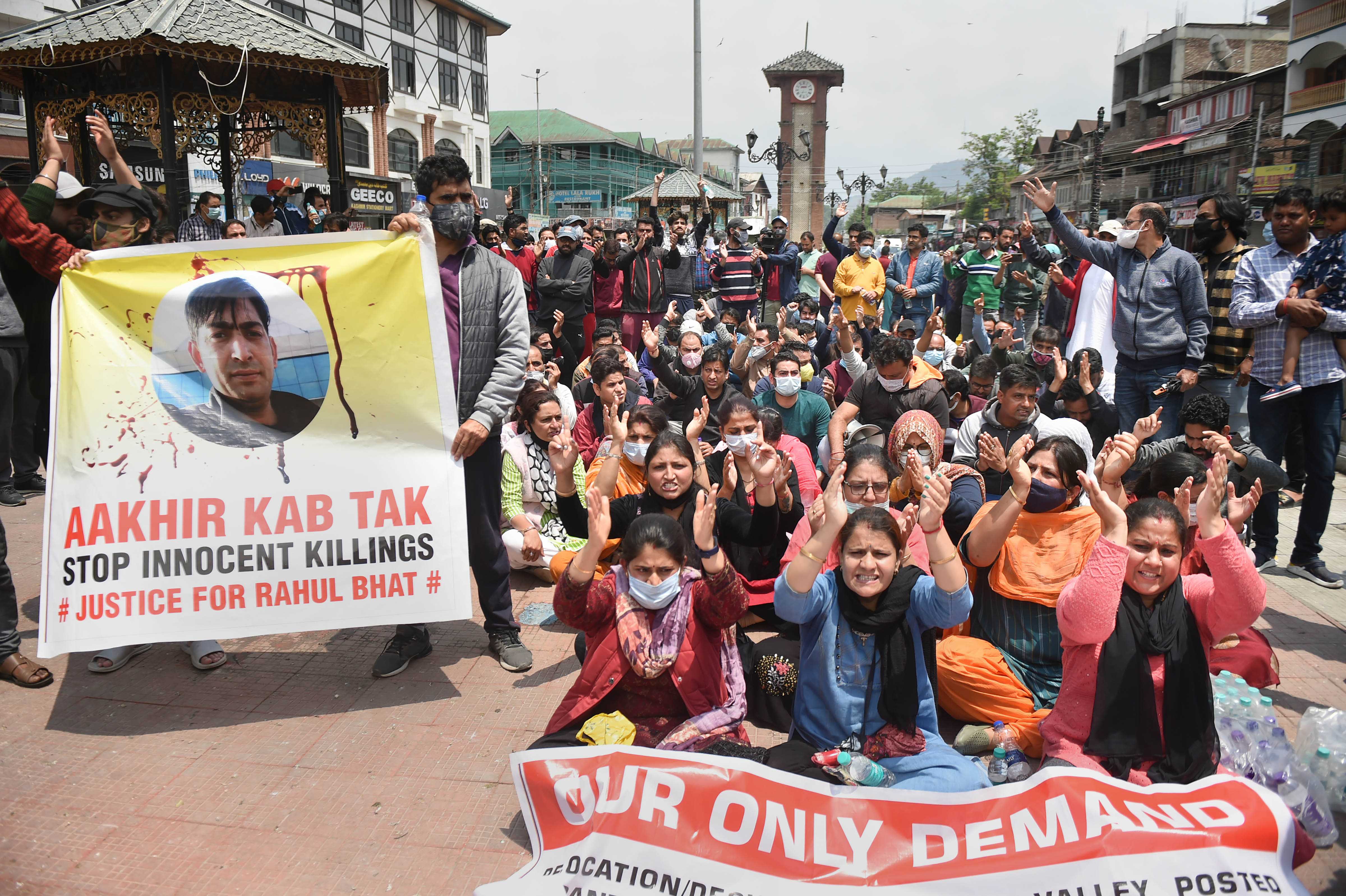
The killings of civilians and Kashmiri Pandits in Kashmir have triggered an outcry across the country. Many Pandits who had returned to Kashmir to take up jobs under the Prime Minister’s Package have left the Valley, putting the central government’s project to resettle them in their homeland in jeopardy.

However, Kashmiri Pandits have not been the only ones who have been attacked: militants have killed Kashmiri Muslim civilians, Jammu and Kashmir Police personnel, migrant labourers, and also Hindus from Jammu and the other parts of India.

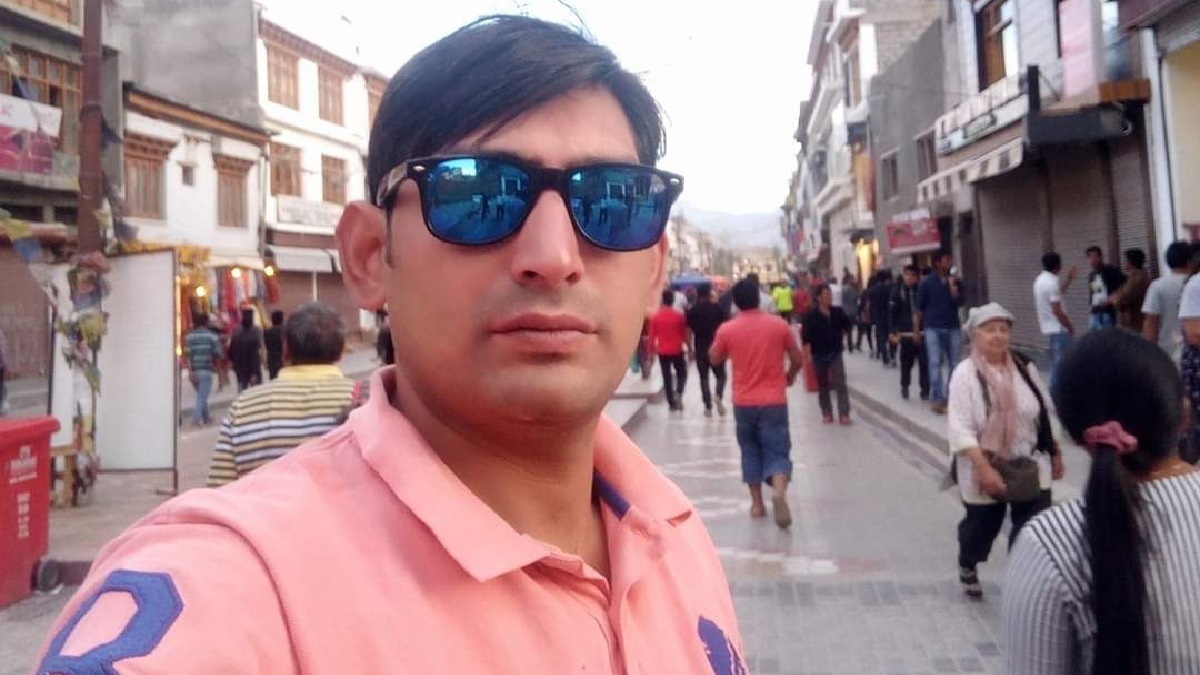
In the latest incidents, militants killed Rajini Bala, a school teacher from Samba in Jammu division and Vijay Kumar Beniwal from Rajasthan, the bank manager of Ellaquai Dehati Bank. Nine civilians have been killed by militants in targeted attacks, including one Kashmiri Pandit, in the last month. And the security forces have so far been unsuccessful in stopping the killing spree. And understandably so. It will not be easy for them to secure each and every member of the minority community in the Valley.

Making things further difficult for the J&K government is that there are 4000 Pandit employees recruited under a special package and all of them are on the brink of a fresh exodus. Similarly, nearly 8,000 employees from different districts of the Jammu division are working in Kashmir under an inter-district transfer policy and a predominant majority of them are non-Muslims. Though the government has given them assurances, they find little reason to trust it. Pandit employees now want the government to revoke the bond that obliges them to stay permanently in the Valley during their employment. They want the post to be made transferable.

Avtar Krishan Bhat, president of a Hindu Kashmiri Pandit colony in northern Kashmir’s Baramulla, told the media that in the absence of a sense of security, Pandits were forced to flee.  He said that around half of the 300 families living in the colony had left the Valley after the recent killing spree.

Kashmiri Pandits have also staged protests across Jammu and Kashmir demanding protection and posting outside Kashmir.

PM package

Around 2008, the then UPA government headed by Prime Minister Manmohan Singh offered Kashmiri Pandits jobs and financial support in lieu of their return to Kashmir. The Pandits were given initial financial assistance of Rs 7.5 lakh per family, which was later increased to Rs 20-Rs 25 lakh, in three instalments, for those who settled in the Valley.

The government built secure, segregated enclaves for the returning employees and their families in different parts of the Valley. The scheme proved successful. The Pandits were employed and their families took up residence in these enclaves. They would also attend to their respective duties in different areas along with Muslims. But no one touched them.
The killings of outsiders and minorities began after New Delhi revoked Article 370, which gave Jammu and Kashmir a semi-autonomous status within Indian Union. Within two months after the withdrawal of the special constitutional position on August 5, 2019, militants killed three non-locals associated with the apple trade. This temporarily plunged into crisis the fruit industry which at Rs 10,000 crore annual turnover is the backbone of the Valley’s economy. The killings triggered an exodus of truckers and apple traders from outside and it took time for the situation to normalize again.  There were reports then of the militants telling local fruit growers not to hire outsiders.

Though the killings subsequently subsided, they surfaced soon again with the killings of labourers from Bihar and other parts of India. The situation came to a head when the militants killed a Hindu goldsmith on December 31, 2020 and also the last year when they shot dead the noted Kashmiri Pandit chemist Makhan Lal Bindroo.  Overall, Kashmiri Muslims remain the majority of those killed over the last three years but such killings are generally considered par for the course in the media.

Government measures

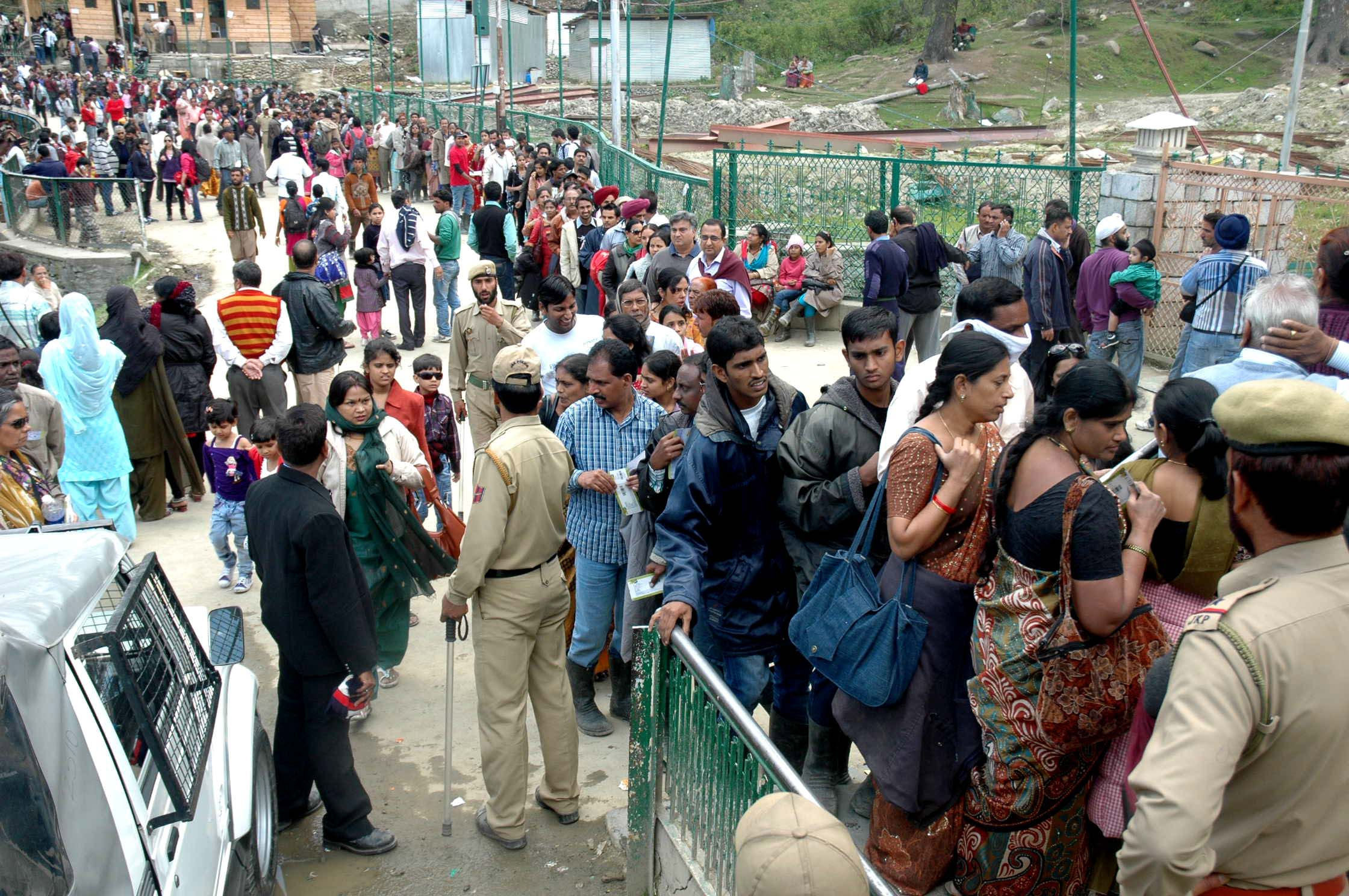
The rise in minority killings has galvanized the union government to take steps to reassure Kashmiri Pandits and Hindu employees in the Valley. The union home minister, Amit Shah held a high-level meeting on May 17 which was attended by Lieutenant Governor Manoj Sinha, Union Home Secretary Ajay Bhalla and the heads of intelligence and security agencies to take stock of the preparedness for the ongoing situation in the Valley and the upcoming Amarnath yatra that is scheduled to begin on June 30 after two years. In 2020 and 2021, the pilgrimage was cancelled due to the Covid-19 lockdown. About three lakh pilgrims are likely to take part in the yatra, which is expected to end on August 11.

The Central government is now going to deploy at least 12,000 paramilitary personnel as well as thousands of Jammu and Kashmir Police to secure the yatra

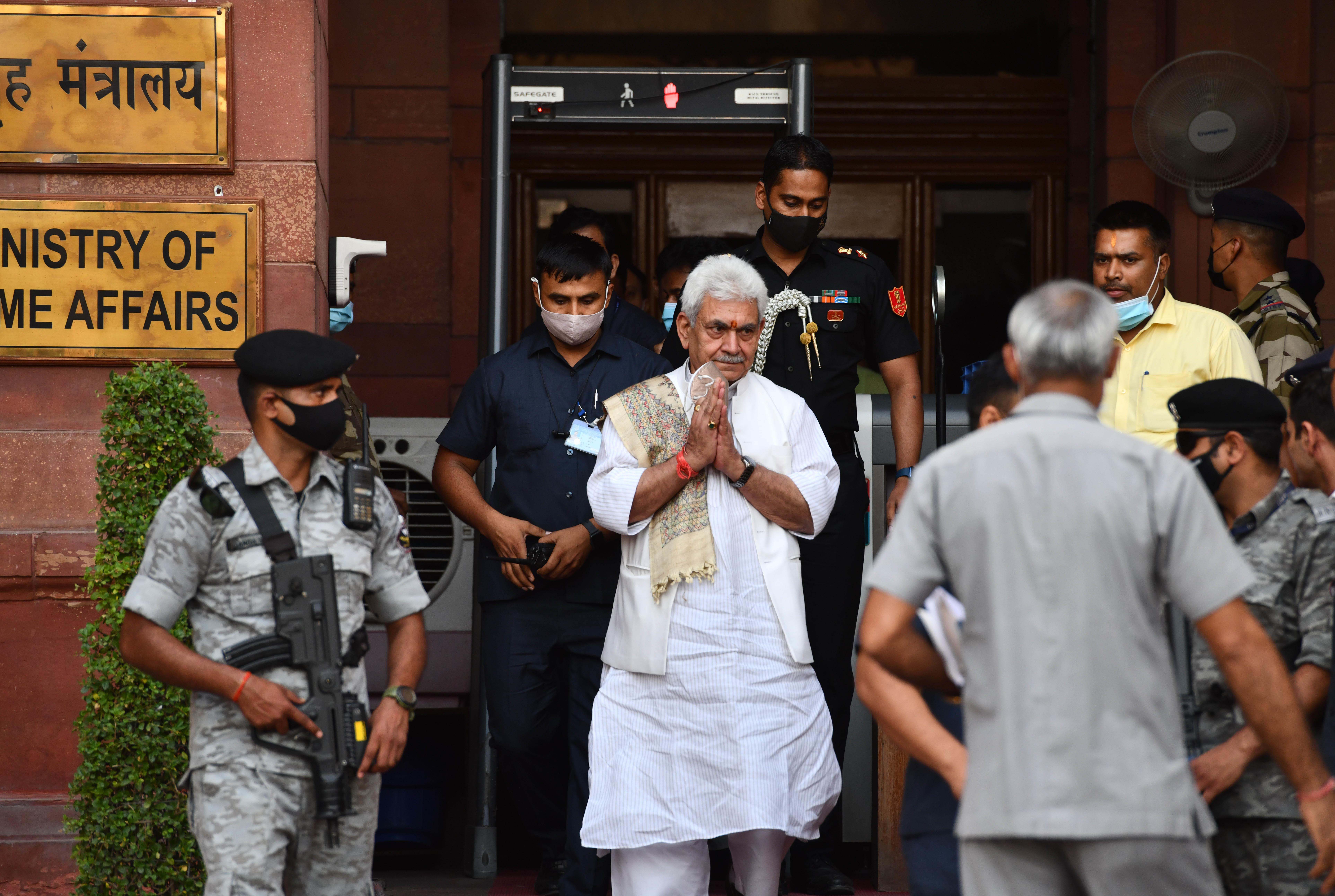
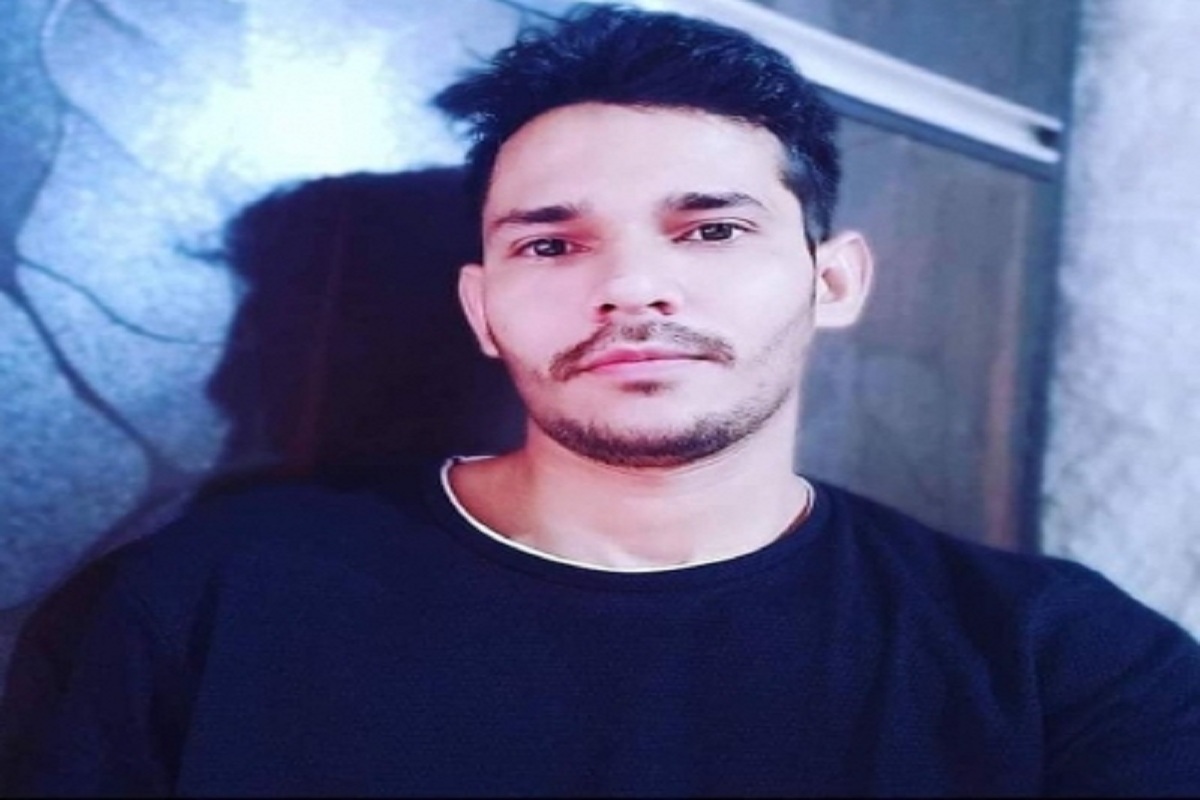
In a vain attempt to offer a sense of security to Kashmiri Pandits, Jammu and Kashmir Lieutenant Governor Manoj Sinha also said that Pandit employees will be posted in safer districts following the killing of Rahul Bhat, a Kashmiri Pandit who worked in the revenue department in the Valley’s Budgam district.

The government also took a serious view of the transfer of 177 Kashmir Pandit employees being made public by the Education Department, so did the BJP. The saffron party said that the government was taking serious steps for the protection of Kashmiri Pandits, but added that some officials were playing spoilsport, without identifying them.

Also, J&K Government has directed some government and private schools to teach children from minority communities online till the situation normalizes.

“Learning level Assessment of students in each subject should be conducted virtually through Google Form questionnaire or any other feasible virtual format and record of that be incorporated in learning level register,” a recent official  communication by a senior education department official to government and private schools in North Kashmir district of Baramulla read.

The district education authorities also directed the school teachers to prepare action plans for online teaching and e-materials as per their syllabus.

“Online presence of students be recorded on the attendance register,” the order reads.

Reaction from Kashmir Parties

People’s Alliance for Gupkar Declaration (PAGD issued an appeal to Kashmiri Pandit employees not to leave the Valley. The alliance also said Kashmir was Pandits’ home and their departure from here would be “painful for all”. ’

“If Rahul was killed, Riyaz was also killed. Where will Riyaz’s family and relatives go? You don’t have to leave your home. This is your home. This is my home. We will bear this tragedy together and try to safeguard each other,” the PAGD spokesman Mohammad Yusuf Tarigami said, adding that LG Sinha shared the same view about migration.
 

On the other hand, senior National Conference leader Ali Mohammad Sagar, expressed his sadness at the turn of events.

”It’s a matter of concern and it needs to be looked into. The community has been living here for years and a lot of work was done to bring them back. It should not go to waste,” Sagar said, adding, “Our party also worked a lot on it and it’s sad to see what is happening now.”

Population of Kashmiri Pandits, migrant labour

Before their exodus in the early nineties, Kashmiri Pandits formed around 2 percent of the Valley’s population. According to a research paper published on Kashmir in the late nineties by Alexander Evans, who later rose to become the British deputy high commissioner to India, “Some 95% of the 160,000-170,000 community left in what is often described as a case of ethnic cleansing.

“But the small minority who remain in the Kashmir Valley may be more important in determining what kind of society Kashmir becomes,” Evans, a researcher then, wrote in his paper.

Fewer than over 3000 Kashmiri Pandits are now in the Valley. They never migrated but stayed back and lived with Muslims. In recent years, however, the government has brought back several thousand Kashmiri Pandits and put them up in the fortified government-built enclaves. Most of them are government employees working in different departments. If we go by the union government figures, more Pandits had started returning to the Valley over the last three years.

In February, the Ministry of Home Affairs informed Parliament that 1,697 Kashmiri Pandits had been appointed in various government departments by the Jammu and Kashmir administration since August 5, 2019, when article 370 was abrogated from the erstwhile state and it was broken up into two union territories.

“In order to rehabilitate Kashmiri migrant families, the government of Jammu and Kashmir has appointed 1,697 such persons since August 5, 2019 and selected additional 1,140 persons in this regard,” union minister of state for home affairs Nityanand Rai told Parliament.


Giving details about the total number of Pandits who left Kashmir, Rai said that as per data provided by the government of Jammu and Kashmir, 44,684 Kashmiri migrant families were registered with the Office of the Relief and Rehabilitation Commissioner (Migrants), Jammu, comprising 1,54,712 individuals.

Later in April, Rai told Parliament that about 2,105 migrants (Kashmiri Pandits) had returned to Kashmir valley for taking up jobs provided under Prime Minister’s Development Package.  In a written reply to a question, the Minister said a total of 841 appointments were made in 2020-2021 followed by 1,264 in 2021-2022.

On the killing of Hindus along with Kashmiri Pandits in Jammu and Kashmir since August 2019, Rai said, “A total of 14 people, including 4 Kashmiri Pandits and 10 other Hindus, were killed by the terrorists in Jammu and Kashmir from August 5, 2019, till March 24, 2022”.

As per the data shared by the Minister, three Hindus were killed between August 5, 2009, and December 31, 2019; two people including one Kashmiri Pandit in 2020; nine people including three Kashmiri Pandits (among them noted chemist Makhan Lal Bindroo) and six other Hindus were killed in 2021.

On the other hand, until February this year, 439 militants, 109 security personnel and a total of 98 civilians (84 of them Muslims) were killed in Jammu and Kashmir since Article 370 was repealed.

Last year, Rai had told Parliament that the government had prepared “a comprehensive policy” to provide residential accommodation to the returning Kashmiri migrants, disclosing that 6,000 residential units were being constructed for them at an “accelerated pace” and 1,000 residential units were already being used by these employees.

He gave the total number of Kashmiri Pandits who had returned to the Valley as “900 families.”

But the recent killings have threatened this project. Not only are the Pandits who had just returned are mulling escape, with many of them already having fled but also those who never migrated also want to leave.  This has created a tricky situation for the union government which has been peddling a narrative that everything is hunky-dory in Kashmir following the withdrawal of Article 370 on August 5, 2019. Recent events have challenged this narrative.

“The government needs to do a tightrope walk to ensure both of its ends are served: killings stop altogether and Pandits also don’t leave,” read part of a recent editorial in a local newspaper. “But the achievement of these twin goals will hardly be made possible by an exclusively security-centric approach. Loosening rather than further tightening the stranglehold (in Kashmir) is the answer.”

Where do we go from here? 

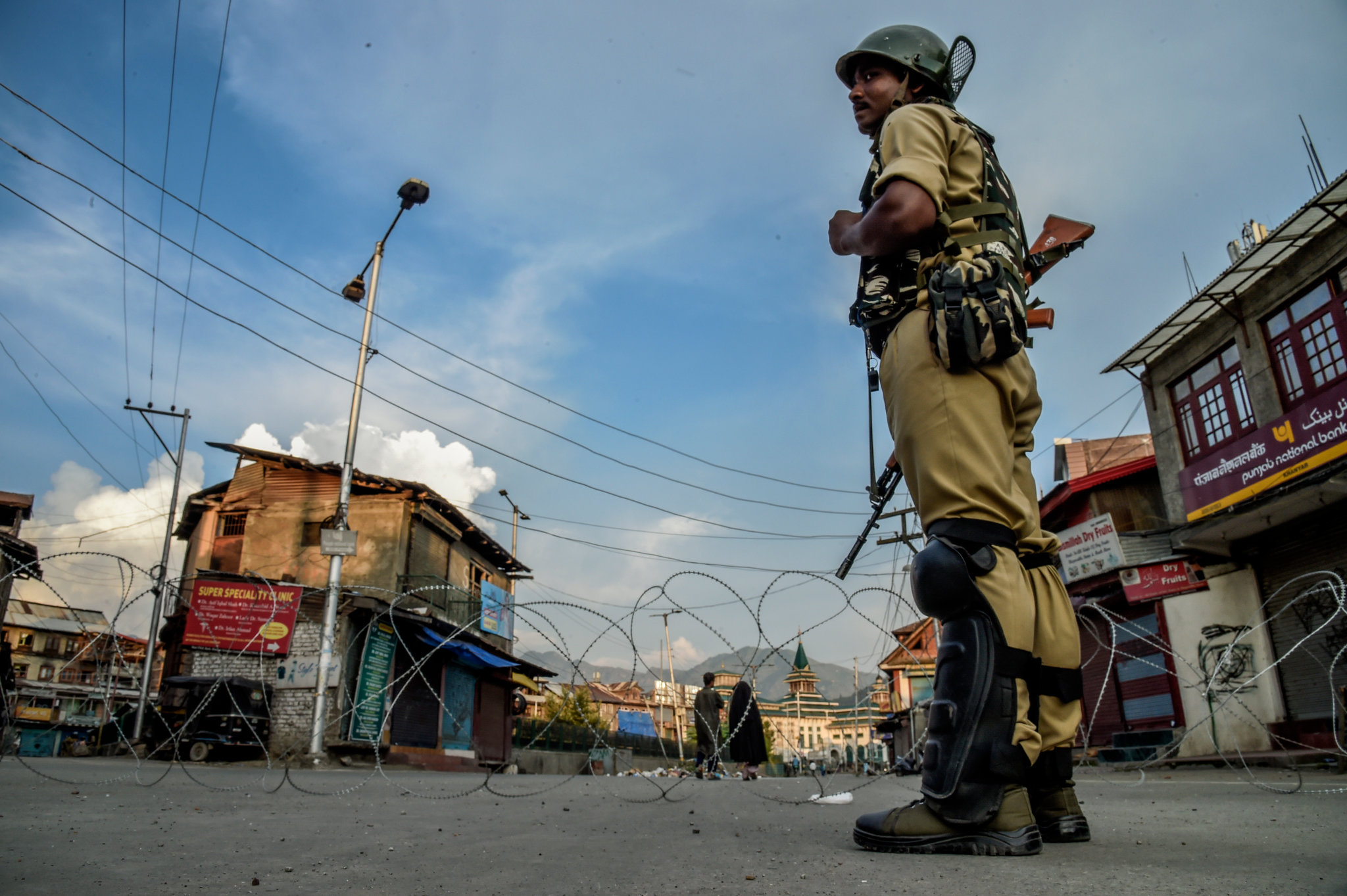
There is a sense of déjà vu in Kashmir, more so for Kashmiri Pandits. Suddenly, it is like the early nineties once more. The government’s only way to deal with the deteriorating state of affairs is to double down on security management of the situation which, in turn, has created a siege-like atmosphere. Despite the unprecedented success in operations against militants, the militancy has survived and thrived in Kashmir. In recent months, militants have also changed tack by targeting civilians and minorities more than the security forces.

Another challenge for the security agencies is the rise of what they call “hybrid militancy.” Militants are believed to enlist youth with no militant record for an occasional attack and then letting them return to their regular lives. This has, in some cases, made it challenging for the police to identify the people behind the killings. This has made it difficult for the security forces to completely eliminate the chances of civilian killings.

The militancy in Kashmir is now mainly composed of the local youth who are untrained in armed combat and have fewer weapons to use.  So, they have posed little challenge to the security forces beyond some occasional attacks on the policemen.
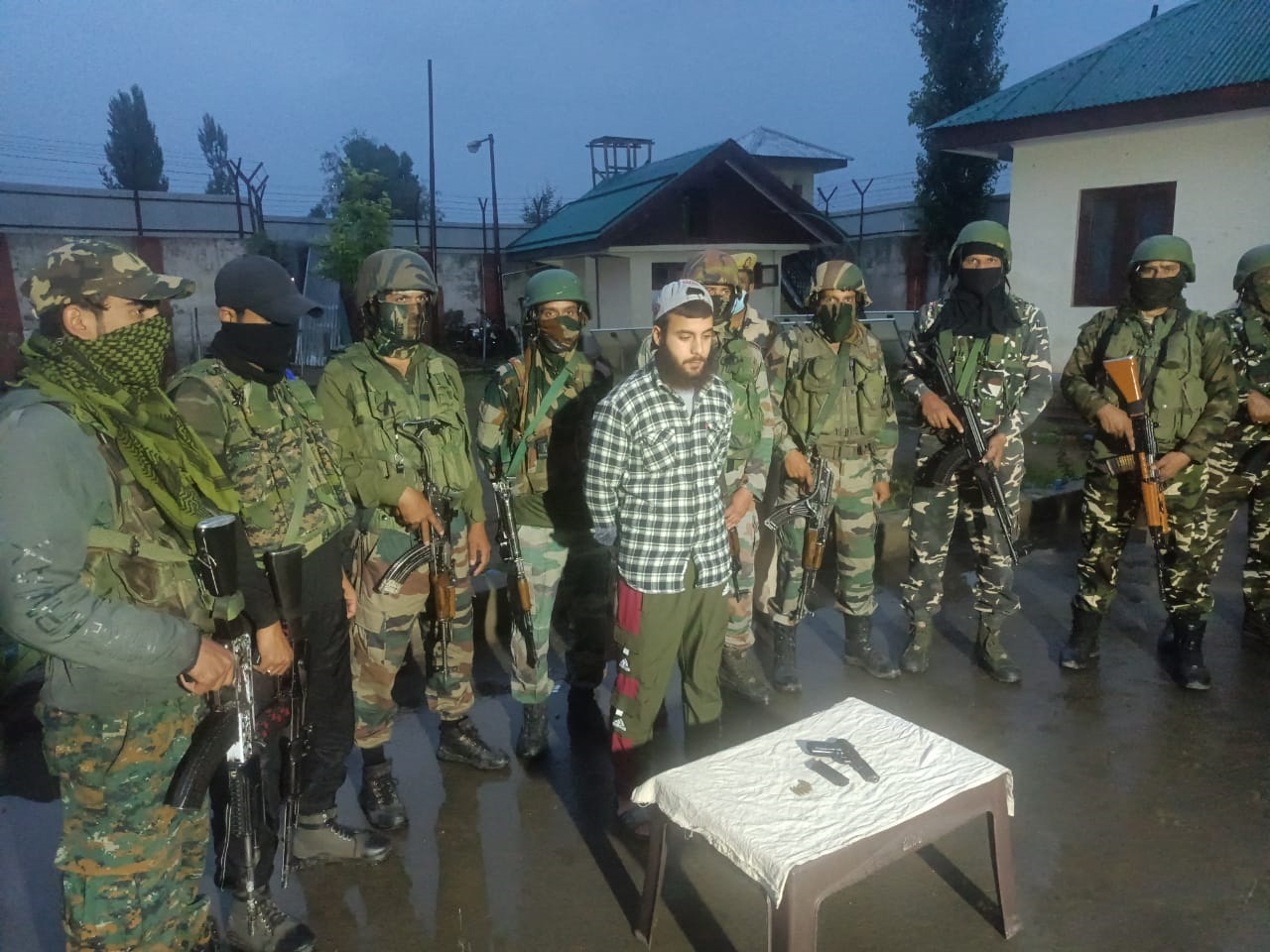
But killings of the civilians and members of the minority communities have become an instrument in their hands to reassert their presence by changing the battlefield. Incidentally, this is the first time after almost over two decades that the killings of this nature have resurfaced.  And they have come at a time when J&K is under the direct central rule and the security domination is unprecedented.

Some analysts see the killings in the light of the developments of the last three years that are seen as geared to alter the demographic character of the Valley. The paranoia about a perceived hostile centre allegedly conspiring “to dilute Valley’s Muslim majority character” is redrawing the discourse in Valley like never before. It is bringing into full play the issues of land and identity, hitherto more or less dormant elements of the ongoing conflict which operated so far largely along political dimensions. This is pitting militants not only against New Delhi but also against Pandits who have their own powerful narrative and seek a dignified return to their motherland insured against a future flight in the event of a resurgence in separatist militancy.  But the demand for Pandit-only townships, safeguarded by the security personnel is stoking deep apprehensions among Muslims.

Some of the measures announced by the government include the domicile law that after it was introduced in April 2020 opened up Kashmir to settlement by outsiders. The new law entitles to a domicile status anyone who has stayed in the region for fifteen years. The period is just ten years for central government officials and their children and seven years for students who have done high schooling in the region.
The government’s move last year for time-bound redressal of grievances related to Kashmir migrants’ immovable properties have exacerbated the anxieties in Kashmir. The objective of the order primarily is to revoke “distress sales” of properties by Kashmiri Pandits since 1990: The buyers of Pandit properties in the 1990s will have to return them at the same price they had paid, if their sellers claim they did so under duress. It has, in turn, created deep resentment among a segment of the population that, in turn, has rubbed off on the majority community already anxious about what they see as an impending demographic change.

The killings have taken place in this fraught climate, making Pandits once again despair of their long-held dream of settling back into their motherland. Over the last year, the government has struggled to reassure Pandits in the Valley of their security and dissuade them from fleeing in view of the intermittent killings. And the fresh killings have made its job even more difficult.

 

Targeted Kashmir killings, denigrating Prophet, a national humiliation

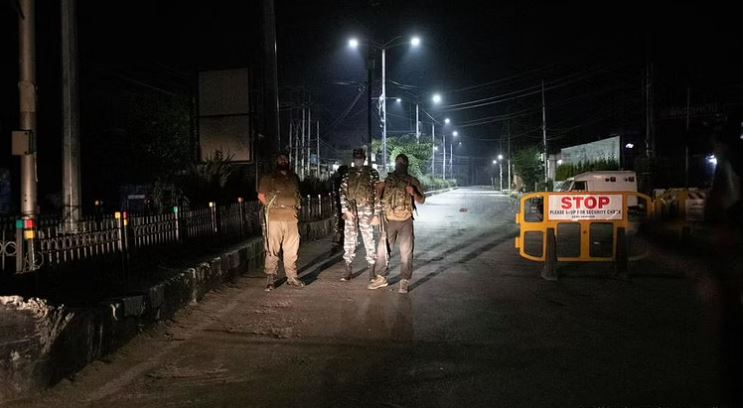
The targeted killing of minorities, migrant workers and employees from other states in Kashmir has led to migration to safer places.  The situation is akin to the 1990s, when there was a mass exodus from the Valley. This is a national humiliation and comes days after the present government celebrated eight years in power as a tenure that did not allow Indians to hang their heads in shame. And mind it, it’s not only what is being called ethnic cleansing by fringe elements in Kashmir that has caused embarrassment for us all.  A simultaneous storm has been created by two spokespersons of the ruling party because of their despairing and uncalled comments about the Prophet of Islam.

Our Cover Story, “Kashmir Conundrum:  Is a fresh Kashmiri Pandit exodus in the works?” by Riyaz Wani, Tehelka’s Srinagar based Special Correspondent, is a ground zero report from the Valley. Our other important story by Lucknow based Special Correspondent Mudit Mathur who wrote that “communal riots broke out in the Kanpur district of the Uttar Pradesh at a time when President Ram Nath Kovind, Prime Minister Narendra Modi, Governor Anandi Ben Patel and chief minister Yogi Adityanath were present in a function in Kanpur (Rural), which is less than 100 kilometres away from the violence spot”. It coincided with the state capital hosting a mega ground breaking ceremony to attract investments with top Industrialists claiming a congenial atmosphere after it had bulldozed crime and criminals. We can’t afford to keep the country on the boil.

The anger in the Gulf Cooperation Council countries or back home was pulpable against the now suspended BJP national spokesperson, and expelled Delhi media cell head for denigrating Islam and its prophet.  This happened when the Vice President Venkaiah Naidu was in Qatar and its Deputy Emir abruptly cancelled the official lunch for the visiting Indian Vice President and summoned the Indian envoy, seeking a public apology. It may be noted that the GCC countries are important not just for the trade worth $87 billion but also for the opportunities they offer to Indian expats.

While the Arab outrage is a wake-up call for us to weed out hatred that has seeped into our midst, the situation in Kashmir calls for all the stake – holders to consolidate the gains of peace rather than allowing the fringe radical groups to push them again to the sordid period of insurgency.   The task at hand is onerous because hardliners have now turned all the more radicalised and the modus operandi of these perverted elements is to shoot-and-scoot, with the avowed aim of  killing some and terrorising thousands.  With the upcoming Amarnath Yatra from June 30 to August 11,  there is an all the more need to rework the security requirements to dissipate the sense of fear and anxiety.


Punjab’s OOAT plan goes awry, addicts get hooked on treatment pills!

People who came to government and private OOAT centres to get rid of addiction problem, ended up getting hooked on the very drug prescribed to wean them off habit-forming opium, poppy husk or heroin.  A report by Aayush Goel

“Me and my husband met in school. He was into heroin then and got me also hooked. Our parents got to know of our affair and addiction in 2017 and we were married off after being taken to the newly launched OOAT (outpatient opioid assisted treatment) clinic in Kapurthala. We were given our magic pill then and ever since we both have been on BPN 4 mg and it’s part of our weekly grocery list you can say. We no longer go to the clinic but get it from a nearby private centre and get our high. They had said it will stop soon but it didn’t and now it doesn’t matter as we know this will not kill us and we still get our high without our family even knowing about it,” says Japneet Kaur (name changed) a 27-year old housewife from village Chola Sahib, Taran Taran district.

Kaur and her husband Sukhjinder (name changed) are not lone cases but part of around 1 lakh strong brigade of alternate or prescription addicts.

“I have been on pills since 2015 and take them with my diabetes medicine. They at the clinic say I have to take it life long, it will keep me alive and without withdrawals. I sometimes mix it with alcohol and it gives the same high but cheap. People say I am off drugs but I know I am still an addict and you know I want to die sober,” adds 58 years old Teg Singh (name changed) of Mansa.

These are people who went to government or private centres to leave addiction but all thanks to lack of expertise, enforcement, tapering guidelines, staff and psychiatrist crunch, unchecked sale at mushrooming private centres went on get hooked on the very drug that was being used to wean them off habit-forming opium, poppy husk or heroin. The people who have reported this addiction constitute around 17 percent of total registered addicts every year but the number may be way higher owing to the fact that many are not even accepting the same.

OOAT Plan

The drug that was meant only for government-run centres hit an all-time high in 2017 with Congress government’s ambitious OOAT plan.

Aimed to change the lives of over 7 lakh addicts, the government opened over 200 OOAT centres. A combination of Buprenorphine-Naloxone was introduced for treating addicts by giving them take-home doses, a common practice followed across the world. Around 204 privately owned de addiction centres too came up which were allowed to dispense the tablet.

While mixing it with Naloxone was a good idea to keep any overdose or high effects at bay but four years down the line the plan is still headed downhill as the drug meant to de-addict went on to become an alternate and cheap addiction and even found its way to the open market. Today it’s not just the addicts who have added BPN (buprenorphine) to their list of addictions but even the newbies on board are skipping conventional drugs and going right away for these pills mixed with alcohol available at a cheaper rate with promise of no death by overdose.


Addiction: Not curable but manageable: STF psychiatrist

“You never go to a doctor and say how many diabetics are cured but ask how many are managed? Same is the case with addiction. There are two major approaches to wean away opioid dependent persons. One is the abstinence approach and other alternate medication approaches. There are more chances of relapse in an abstinence based approach as compared to alternate medication for de-addiction which is more effective. These medicines take them off illicit drugs, heap to wean off the idea of high or enjoyment through those drugs. They are better scientifically for management and rehabilitation,” says Dr Rana Ranbir Singh, consultant psychiatrist and technical advisor to Punjab’s anti-drug Special Task Force. He adds a minimum of 18 months to 24 months of treatment is required to get the best results.


Recognising the Crisis

The state probably woke up to crisis in 2019 when it conducted a survey and reported about 67,000 addicts seeking treatment reported that they were addicted to buprenorphine. Besides, the report observed that buprenorphine must be given under the supervision of a psychiatrist and also report misuse of the tablet.

The private centres have been recklessly dispensing the medicine even to patients addicted to alcohol and low potency opioids such as poppy husk. The high profit margins make it vulnerable to misuse. The health department in 2019 detected diversion of 5 crore tablets of Buprenorphine worth Rs 200 crore by private centres. The matter drew the attention of the Enforcement Directorate (ED) too. But before it could do anything the Covid crisis stuck and this was forgotten in this pandemic and then government transition.


Buprenorphine: Double Edged Sword

Buprenorphine (BPN), the drug has long been part of the state government’s then oral substitution therapy (OST) and now revamped outpatient opioid assisted treatment (OOAT). Buprenorphine is an opioid agonist and its effects mimic that of opium. In medical science, it has been termed as a “high addiction potential” drug. The medicine is highly potent and available in strengths of 0.4mg and 2mg tablets and is effective in suppressing withdrawal symptoms after discontinuation of opioid use, especially heroin. While framing treatment guidelines, experts of Postgraduate Institute of Medical Education and Research (PGI), Chandigarh, had termed it as a “double-edged sword”. If used properly, such medicines can “save and rebuild lives”. If not, they can have a negative impact, like any other opiate.

Poor Retention on Treatment

Although oral opioid agonist therapies (OATs) like buprenorphine are effective first-line treatments, OOAT remains largely underutilized due to low retention rates.

As per the  records of Health Department, 2 lakh 45 thousand 595 people registered for treatment at OOAT Clinics from October 2017 to 31st may 2022. Out of these only 43,104 were retained on the treatment for more than 30 days. Similarly in private clinics for same period 5,48,741 patients were registered and only 12,824 were retained for more than 30 days. As per researches across the globe in settings where buprenorphine is widely available, many eligible persons with Opioid Use Disorder (OUD) are unable to access care, decline treatment with these medications if OOAT is started—are often not retained in care beyond 12 months which defeats the purpose and often pushed into relapse or addiction of OOAT.


Lack of Psychiatrists

While the BPN prescription tapering and plan demands supervision of a Psychiatrist, crunch of the same in Punjab is the first challenge that fails the program. Due to shortage of psychiatrists, the government deployed MBBS doctors in OOAT clinics, were given five days training and their role largely remained to dispense Buprenorphine to patients. The doctors, according to experts, are not qualified to diagnose mental health symptoms of a substance-use disorder patient which are key in medicine abuse and relapse. These clinics are also short of counsellors.

“Psychiatrist is vital to administering any de-addiction treatment. The patient has complex mental state or issues which may be either be cause or symptom of addiction, analysing the same and working out dosage according to it is very important,” says psychiatrist and Deputy Medical Commissioner, health dept, Govt of Punjab Dr Sandeep Bhola

The Quality of Buprenorphine

As the OOAT continues to be the only workable option for the state, the AAP government wants to ensure the best quality of medicine. In a first in the last many years, the state health department went on to get the samples of medicine (provided by two firms), which are given to addicts at the de-addiction centres tested this month. Both have failed the quality test. According to department officials the amount of salt has been found to be more than the prescribed limit in the tablets of psychotropic drug which is a combination of buprenorphine and naloxone salts. These batches belong to 2019 and 2020. Earlier, the same companies were awarded contracts for supplying the de-addiction medicine, despite being under suspicion of fleecing the government by raising the price through “price pooling”.

The Economics of Buprenorphine

The government procures around eight crore buprenorphine tablets every year for OOAT clinics and de-addiction centres. Procured between 4 to 6 rupees by the government this medicine is given free at government clinics. In private clinics the number according to department sources is around 18 crores tablets. These tablets are sold at around Rs 38 per tablet. The same tablet is available at Rs 70 in grey market. The Punjab government in 2019 made a failed attempt to control the price of Buprenorphine by fixing the price of one tablet at Rs 7.5. The government had also subsequently written to the National Pharmaceutical Pricing Authority (NPPA) for regulating the price of Buprenorphine-Naloxone under the Essential Commodities Act. The government later took a U-turn by doing away with the price capping.

Data show decline

The data of the National Crime Records Bureau (NCRB) showed that the deaths caused by drug overdose in Punjab dropped by more than two times from 2017 to 2020. As many as 71 persons had died of drug abuse in 2017 while in 2018 the number came down to 55. Drug overdose claimed 45 lives in 2019 and 34 in 2020.

Policy to rein in private de-addiction centres, occupancy down by 30 percent in last 3 years

In its fight against drugs, the Punjab government has been adopting standard operating procedures for checking private de addiction centres like selling OOATS medicine over the counter without proper requisite etc. and has also been trying to regulate mushrooming in the state by imposing restrictions on the issuance of new licence. However despite all efforts, majority of de-addiction centres have transformed into an OOAT dispensing counter. No occupancy mandation for validity of license has made majority to shun rehabilitation plans and just hand out medicine and make profits. Interestingly many of these clinics are being run by the firms providing OOAT medicine to the government which is against propriety. Faced by a resource crunch, the government encouraged private de-addiction centres, which have mushroomed in recent years, establishing their monopoly. Due to poor enforcement, many private centres started to recklessly dispense the medicine against norms. There are reports of the medicine being prescribed in routine for low-potency opioids like poppy husk, low-quality opium, codeine cough syrups and propoxyphene capsules.


Recovery or Harm Reduction : The Big Question 

Today in 2022 the new AAP government faces the challenge of ‘deep rooted’ addiction in the state with legacy addict count of over 7 lakhs and around 4000 rehabilitation beds but majority are underutilised. It is a wonder drug which has achieved results in terms of low mortality but the addiction is constantly rising. It however has hardly any expert means or action plan to work with BPN which PGIMER in its report had called a ‘doubled edged sword’. At present, the state has around 500 infrastructure crunched OOAT clinics. Like its predecessors it is yet to define the line of treatment and choose between current ‘harm reduction’ and rehabilitation. Unlike the western countries, the state still does not have a timeline for termination tapering of dose for OOAT medicine which should be a key goal of any line of treatment. Published literature by psychiatrists across the world and India emphasises that OST / OOAT should be “recovery oriented” rather than ‘time unlimited’. They conclude that especially for natural and pharmaceutical opioids and for all age groups, optimum dose and duration of OST, and mode of treatment delivery including the frequency of dispensing cannot be generalised. Additionally in Punjab, time-unlimited OST or OOAT would impose a huge burden on already limited health-care resources.


Undeterred, tourists continue to swarm Kashmir

Targeted killings of non-Kashmiris and Kashmiri Pandits have failed to dampen the spirit of tourists who continue to throng the scenic valley giving a strong rebuff to those trying to disturb the peace. A report by Sunny Sharma.

As against about 7 lakh tourists who visited in 2021, the Kashmir valley has seen over 8 Lakh tourists bewitched by its enchanting beauty between January and May 2022. What does this indicate?

The Director, Tourism, Kashmir, G.N. Itoo said that the department has started promoting all the seasons in Kashmir. Itoo added that this is the first time that spring season is being promoted in Kashmir.

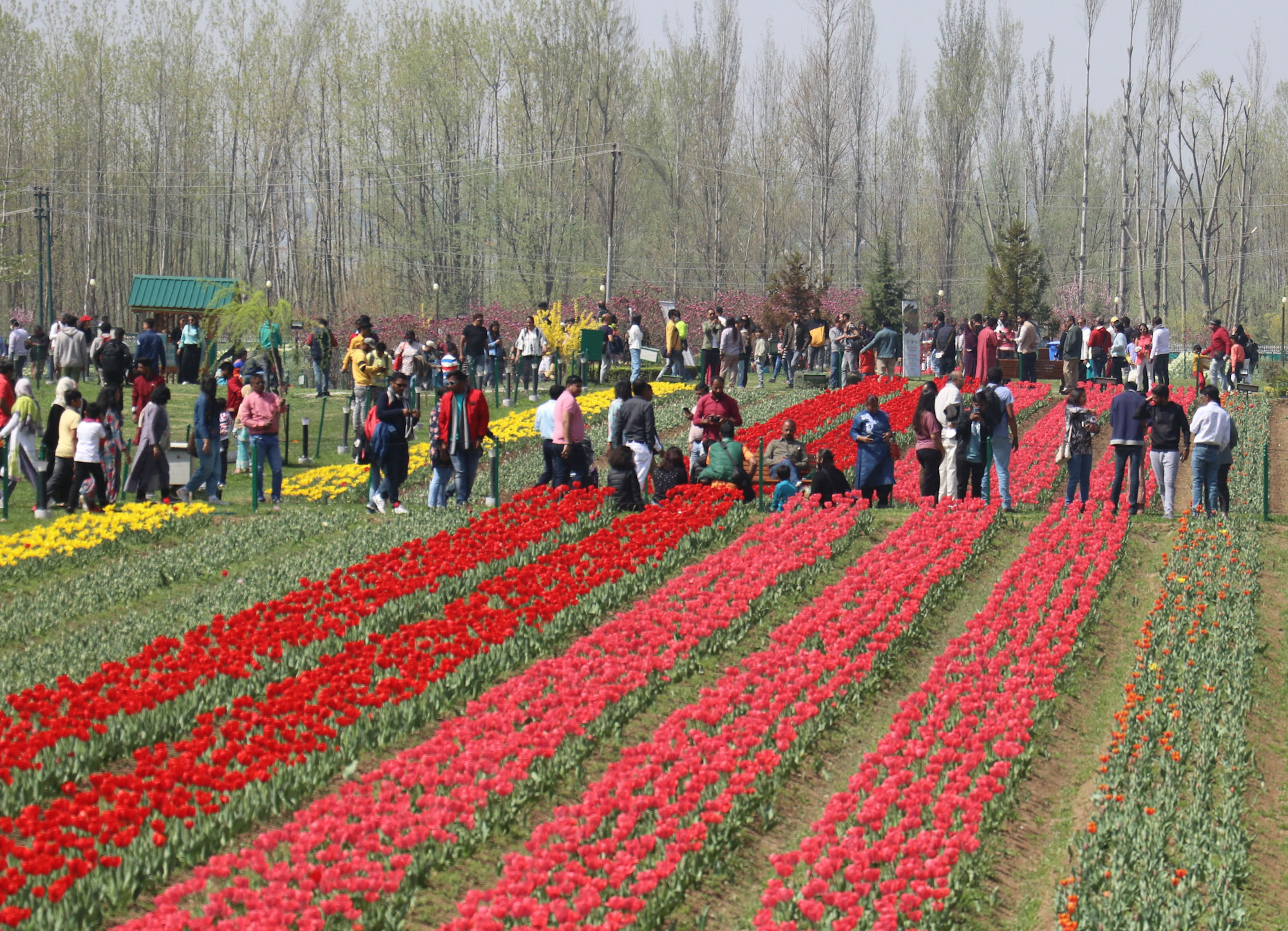
Last year, Kashmir tourism found unusual brand Ambassadors in the persons of Prime Minister Narendra Modi and Home Minister Amit Shah. The PM had tweeted, “Whenever you get the opportunity, do visit Jammu and Kashmir [J&K] and witness the scenic Tulip festival. In addition to the Tulips, you will experience the warm hospitality of the people of J&K,” Modi highlighted the uniqueness of both the place and its people. Shah’s post-J&K visit tweet also echoed similar sentiments.

Data shows that 1,62,664 domestic travellers and 490 foreigners visited the Kashmir Valley in January and February. During the first three months of 2022, more than 3 lakh tourists arrived in Kashmir to enjoy the snow in Gulmarg, Sonamarg and Pahalgam followed by the spring tourism around Srinagar’s Dal Lake. Officials add that Kashmir’s Tulip Garden at the foothills of the Zabarwan range in Srinagar had received 2 lakh visitors within 10 days of opening for the season.

On 4 April, the Srinagar Airport saw its busiest day ever in history, with 15,014 people travelling on 90 flights in and out of Kashmir. And in Srinagar, almost all 60,000 hotel rooms that can accommodate nearly a lakh visitors are booked until the first week of June. Actually Kashmir is witnessing a record footfall of tourists this year. After a slump of three years, nearly two lakh tourists visited the Valley in March alone. And between January and 15 May 2022, it saw 700,000 visitors, the highest in the last 10 years. Such is the rush this time that hotels are fully booked till mid-June this year, industry sources said.

Data from the Jammu and Kashmir Tourism Department and the Union Tourism Ministry indicate that the number of tourists between January and 15 May 2022 jumped to 700,000, the highest in the last 10 years. This is more than four times the 125,000 people seen in the same period last year. As per media reports citing a tourism ministry official, between October 2021 and March 2022, at least 80 lakh people visited the union territory.

Currently 80-90 percent high-end hotels are occupied in Srinagar, said Abdul Wahid Malik, President, Kashmir Hotels and Restaurants Owners Federation. Amid the tourist influx, the Srinagar International Airport has registered record flight operations. For example, on March 28, Srinagar airport operated 90 incoming and outgoing flights which ferried more than 15,014 visitors, the most so far in the airport’s history.

Director, Srinagar Airport, Kuldeep Singh said, “We had record-breaking 45 arriving flights with 7,824 passengers and 45 departing flights with 7,190 passengers on March 28. A total of 90 flights with 15,014 passengers makes it the busiest day in the airport’s history.”

Kashmir has in recent times seen targeted killings of non-Kashmiris. Kashmiri Pandits and non-locals have been killed by terrorists in the Valley since Article 370 was abrogated in August 2019. The article granted special status to the erstwhile state of J&K. News reports suggest that Kashmiri Pandits are desperate to leave the valley while the government machinery is trying to prevent them from what appears to be the final exodus. Social media is flooded with desperate comments that talk about the deteriorating situation in Kashmir on the one hand and The Kashmir Files movie and similar topics on the other.

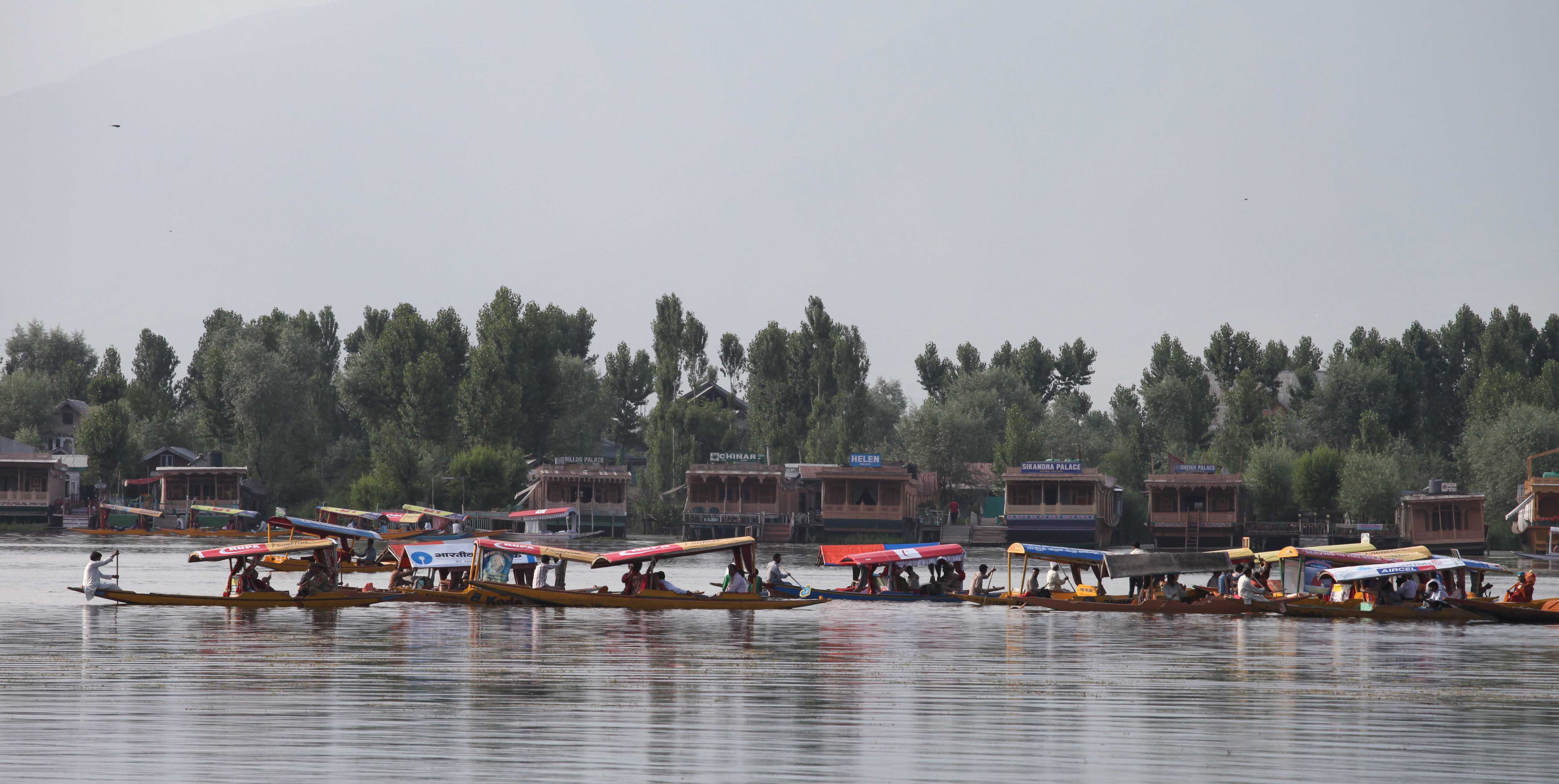
However, undaunted by the spate of targeted killings, tourists have visited the valley in record numbers this summer. As against a little shy of 7 lakh tourists last year, the Kashmir valley has seen over 8 lakh tourists between January and May 2022. Tourism is booming in Kashmir! The Dal Lake resembles a busy city of colorful shikaras, the Srinagar airport has handled a record number of flights and tourists this season — long queues being a new normal at the airport. Reports suggest that hotels are running at full occupancy and markets are bustling with tourists. Restaurants are packed and Kashmiri cuisine is having its best moments in decades.

The valley saw a record 2.8 lakh tourists in April 2022, the highest in nearly 3 decades. The tourism department officials expect the rush to continue until June and the uptick in tourist arrival throughout the year.

From 30 June, the Amarnath Yatra will begin and over eight lakh pilgrims are expected to make the pilgrimage this year.

Besides the main destinations that draw the maximum number of tourists including Gulmarg, Sonamarg, Pahalgam, Dal Lake, and Wular Lake, the state tourism department has opened 75 new destinations that include Bungus, Lolab Gurez, and Dodipathri. Adventure tourism and adventure sports activities are becoming more popular as more tourists are choosing trekking, camping, mountain biking, river rafting, paragliding, and hot air balloon rides during their stay in the valley. Quoting tour operators, media reports tell that the average stay of tourists is from one to two weeks. Finding hotel rooms in tourist hotspots is not easy as they are seeing 100% occupancy even at double rates.

The rebound of tourism in Kashmir kicked off in the post-Covid period when tourism in the premier Indian tourist destination, Kerala, took a hit from Covid-related slump and complications. Tourism department officials attribute the success to aggressive marketing, pan-India promotion, and effective Covid management that saw all stakeholders from cab drivers to hotel owners getting vaccinated. Introduction of direct evening flights have given a shot in the arm to tourism in J&K and night flight operations have already begun at Srinagar’s Sheikh Ul Alam airport, thus allowing travellers to get into the Valley at all times of the day.

Various reports suggest that the sense of normalcy in the Kashmir valley has strengthened and the targeted killing of non-Kashmiris and Kashmiri Pundits could be desperate attempts by the militants to disturb emerging peace and confidence. As per the government data, at least 80 lakh people visited Jammu & Kashmir between October 2021 and March 2022.

Secretary, Tourism and Culture, Sarmad Hafeez, said that since the J&K government has taken tourism as a priority, advertising campaigns have been launched across India to encourage tourists to come to Kashmir. “The government has identified 75 lesser-known destinations across J&K which have potential to become top tourist places.”

However, all said and done, the infrastructure continues to be a weak link in the chain of the development process. While main roads are well laid, the peripherals are in a state of neglect. It is known that every year, heavy snow takes a toll on the roads, however, some solution to the problem needs to be found. There is also the issue of erratic electricity supply and lack of other modern amenities. Lack of infrastructure is always a deterrent to visitors and the sooner this situation is rectified, the better. A tense security situation is no longer an excuse to stall movement in this direction, it is imperative for Kashmir to witness a considerable facelift in case the tourist and business potential is to be fully exploited.

This is the time for all genuine stakeholders who have the good of Kashmir in mind to join hands in isolating those who have inimical designs. This is the time to be mature and work towards consolidating the gains accrued as a result of diligent hard work and great sacrifice. J&K needs constructive contribution and not opportunism. Nothing can be gained by reliving or lamenting a traumatised past in a manner that overshadows a bright future. Instead, it’s time to look ahead and to work for a bright future. The influx of tourists even during targeted killings shows Kashmir can entice tourists despite odds.


A mystifying tale of two Rahuls

One has to concede that Rahul Gandhi does have the capacity to steal the show. He may have made innumerable gaffes but equally he has shone several times.

What is it about Gandhi scion Rahul, which makes him a target each time he opens his mouth? Is it the BJP’s social media machinery which is hell bent on discrediting him? Or is it that he actually puts his foot in the mouth? Why is it that bad news about him grabs more eyeballs than the sensible things he says? Is he more damned than the others? Or is this the story of a Prince versus a chaiwala: Prime Minister Narendra Modi’s humble beginnings pitched against the Gandhi heir who is born with the proverbial silver spoon, to put it simply.

That apart, one has to concede that Rahul Gandhi does have the capacity to steal the show. He may have made innumerable gaffes but equally he has shone several times. And how?

Rewind to his there are two Indias  speech in Parliament during the Motion of Thanks to the President’s address: “The result of the flawed vision of the Centre is two Indias being created…There is now no longer one India” and so on and so forth.

Targeting Modi he said: “Now the idea of king has come back. Now there is a king, a Shahenshah, a ruler of rulers and master of masters”.

There is more: “There is the idea that India can be ruled by a stick from the Centre. Every time that has happened, that stick has been broken”, Gandhi said even as he underlined the need to unite the “two Indias”.

Gandhi’s  speech made many sit up; some termed this as his “defining moment”.

The speech grabbed headlines. It made the ruling BJP so nervous that the Party had to rein in ministers to take on Gandhi.

Union Minister Kiren Rijiju spoke about Rahul Gandhi behaving like a King of India instead of a Yuvraj, whatever that may mean; criticised him for taking “frequent vacations” and leading a “colourful life”.

Foreign Minister S. Jaishankar refuted Gandhi’s claim about the ruling Party bringing Pakistan and China together, on grounds that the two had collaborated since the seventies.

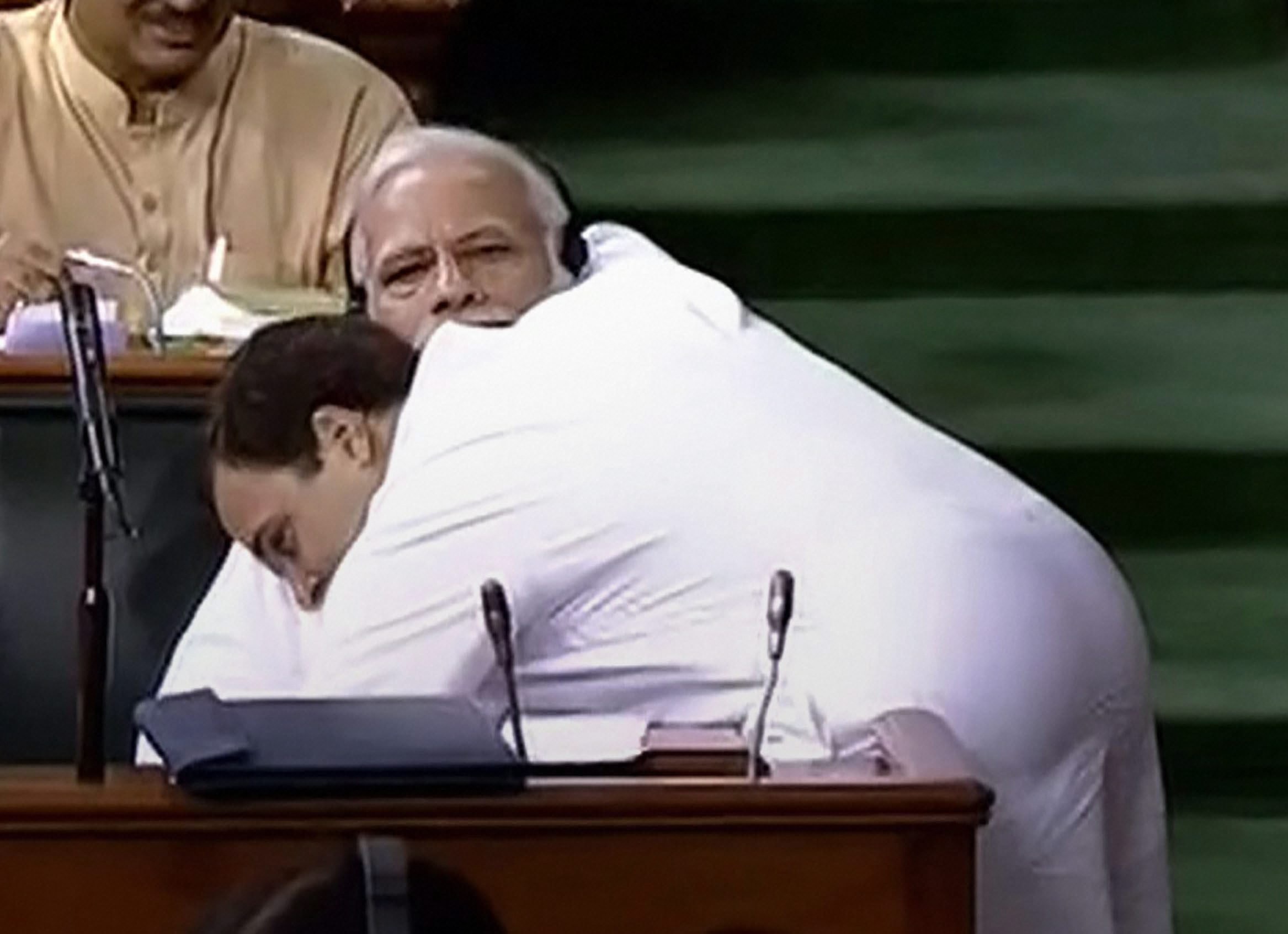
That apart, how can one forget Rahul Gandhi’s Modi hug?

That one move rattled the usually over confident Prime Minister who could not handle Gandhi’s well-crafted spontaneity, to say the least.

Known the world over for his hugging diplomacy, there are images galore of Prime Minister Modi giving a bear hug to international leaders including former US Presidents Barack Obama and Donald Trump and  Russian President Vladimir Putin.

But when Rahul Gandhi did a Modi on Modi as it were, he stumped almost everyone.

At the end of his fiery speech in Parliament, Rahul Gandhi walked right across to where the Prime Minister was sitting and gave him a tight hug. A startled Modi nearly lost his balance.

As a prelude to the hug, Gandhi told a full-House: “It means that even if someone attacks you, ridicules you, and calls you ‘Pappu’, you love them”.

For record, Rahul Gandhi is often mocked at, as Pappu  with the BJP taking a swipe at him.

During an election campaign, Amit Shah, then merely Narendra Modi’s aide, had said:  “The Congress thinks the Prime minister’s chair is Pappu’s birth right”.

As for the hug, confusion continues between it being spontaneous or part of a strategy.

Irrespective, that afternoon emotion scored over politics.

The BJP was clearly at a disadvantage because Rahul Gandhi made headlines. The Modi-hug pushed to the background whatever political points the Government had tried to score through the crucial debate.

That afternoon, Rahul Gandhi stepped out of his Pappu persona and donned a mantle wherein he stood tall.

But such moments in Rahul Gandhi’s political journey are few and far between.

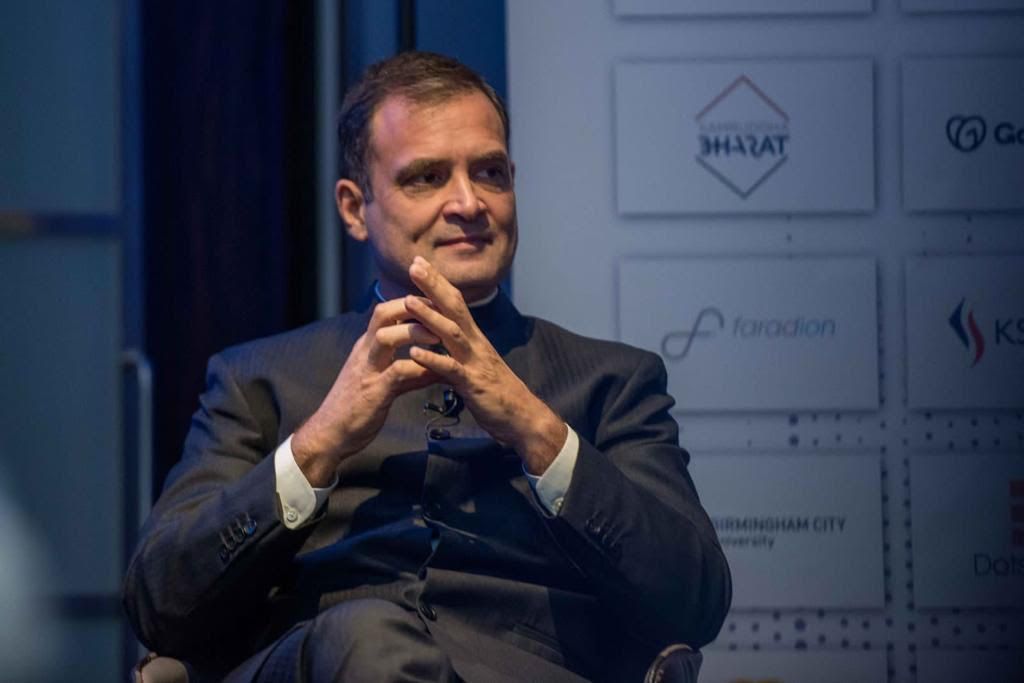
What explanation can there be for his awkward silence over the violence-question in the event for Cambridge members in London recently.

Unable to handle it, he shifted it to the assassination of his father and former prime minister Rajiv Gandhi and termed it  as  the “single biggest learning experience” of his life: “…As a son I lost my father, and that’s very painful. But then I can’t get away from the fact that the same event also made me learn things that I would never ever have learnt otherwise….”

His emotional outreach may have touched a chord with a handful, but for most present there, Rahul  came across as clueless: “I think… I mean, the word that comes to mind is forgiveness. It is not precisely accurate,” Rahul Gandhi said before going silent again.

Like it was with his father Rajiv Gandhi, emotion plays out better with Rahul than hard-core politics. He scores when he speaks from his heart, quite like his dad.

If Rajiv Gandhi was a gentleman in the wrong profession, so is Rahul. Rajiv shunned politics, loved his annual vacation to exotic places with family and friends.

Ditto Rahul  who takes more holidays than his father ever did. Rajiv Gandhi learnt it the hard way; his son, Rahul, too is getting there.

It is premature to politically write off Rahul Gandhi; as it is to conclude that he is the uncrowned Prince, awaiting his turn.

However, this is not to suggest that Rahul Gandhi may never be Prime Minister. Politics being a game of probabilities, nothing can ever be ruled out.

Remember P.V. Narasimha Rao who had packed his bags to go back home? Or  Dr. Manmohan Singh for that matter who had not foreseen the future Mrs Sonia Gandhi had scripted for him? Fortunately for the country, both Rao and Singh were competent. Having served as Union Ministers they were also old hands at governance.

But then what about the likes of the unlettered Rabri Devi who succeeded her husband, Laloo Prasad Yadav as Chief Minister, after he was jailed?

Comparisons apart, a question that stares in the face vis a vis Gandhi is whether he has what it takes to lead the country? Can this  nation be entrusted to a suave young man who knows little about India and even less about governance, its intricacies and challenges?.

Of course, the plus point of a non-BJP government will be an India free of communalism, hatred, divisiveness, bulldozer and mandir politics; it will be one where a particular  community is not baying for the blood of another; where dissenters are not thrown in prison and where those who speak freely are not charged with sedition.

The flip side could be sluggish governance, pending projects and perhaps a  decision paralysis.

One has to grant that the Modi led government is not only proactive but one that is easily on an overdrive.

Yet this is not a toss-up between Modi and Gandhi. As of now, Rahul Gandhi is neither the answer to the country’s problems nor is he an antidote to Modi.

In the highly unlikely scenario of the BJP being trounced, the mantle is unlikely to fall on the Gandhi scion. Since he took over the reins of the Congress, the Party is on a downslide. Therefore the popular vote is not in his favour.

That apart, there are several contenders who have actually roughed it out and braved the heat and dust. Also they inspire more confidence than Gandhi does.

Yet it would be foolhardy to write him off. He may be a political novice but he has the strength of a national Party behind him. There may be misgivings but at one call, the rank and file would pitch for him. Thanks to the Gandhi-glue as it were, they are well aware that the name spells magic and the only one in the Congress that can garner votes. Therefore they will stick together unless of course greener pastures beckon.

To be fair to Gandhi, he has sparks of brightness and whenever they show up, he steals the show. His suit boot ki sarkar or the chowkidar  chor hai  jibe, showed Prime Minister Modi in poor light.

But Rahul Gandhi also has himself to blame when he speaks about potatoes turning into gold or “this morning I got up at night” like he did in Madhya Pradesh and in Parliament respectively.

Therefore, like Modi’s two Indias, there are two sides to Rahul: one is Rahul the politician rubbing shoulders with the average Indian and the other is a modern young man who takes off on a holiday at the drop of a hat, dons an expensive jacket and believes in enjoying life to the full.

If the leader Rahul Gandhi has the capacity to make the House sit up and listen, then the apolitical Pappu is a laughing stock when he mixes up words like brashtachar, corruption and balatkar, rape;  refers to Congress’ Indira canteens, as Amma canteens, set up by  the then Chief Minister Jayalalithaa; talks of “every single city” in Bengaluru; or describes poverty  “just a state of mind”.

The list of bloopers is long but there are enough examples of Rahul the man who means well, intends and even tries to make a difference.

Equally, in a toss-up between Rahul and Pappu, the first has the potential to unnerve Modi but it is the caricature that provides enough ammunition to be ridiculed on a daily basis.


Kanpur clashes demolish UP police claim on law and order

The violence happened on a day when President Ram Nath Kovind, PM Modi and CM Yogi Adityanath were in Kanpur (rural), just 100 km away, for an official function in the native village of the President reflecting shocking intelligence failure, writes Mudit Mathur

The claims of self-sycophant state police were demolished during the high alert visit of top constitutional heads of nation and the state when communal riots broke out in the Kanpur district of the Uttar Pradesh. It happened when President Ram Nath Kovind, Prime Minister Narendra Modi, Governor Anandi Ben Patel and Chief Minister Yogi Adityanath were present in a function in Kanpur (Rural), which is less than 100 kilometres away from the violence spot and state capital was busy hosting mega ground breaking ceremony to attract investments from top industrialists claiming a congenial atmosphere after it had bulldozed crime and criminals.

The well-defined security and intelligence protocols in the rule books start operating weeks before presidential and prime ministerial visits in a state. Despite that such communal clashes reflect shocking intelligence failure of policing networks which resulted in such a big fiasco in Kanpur.

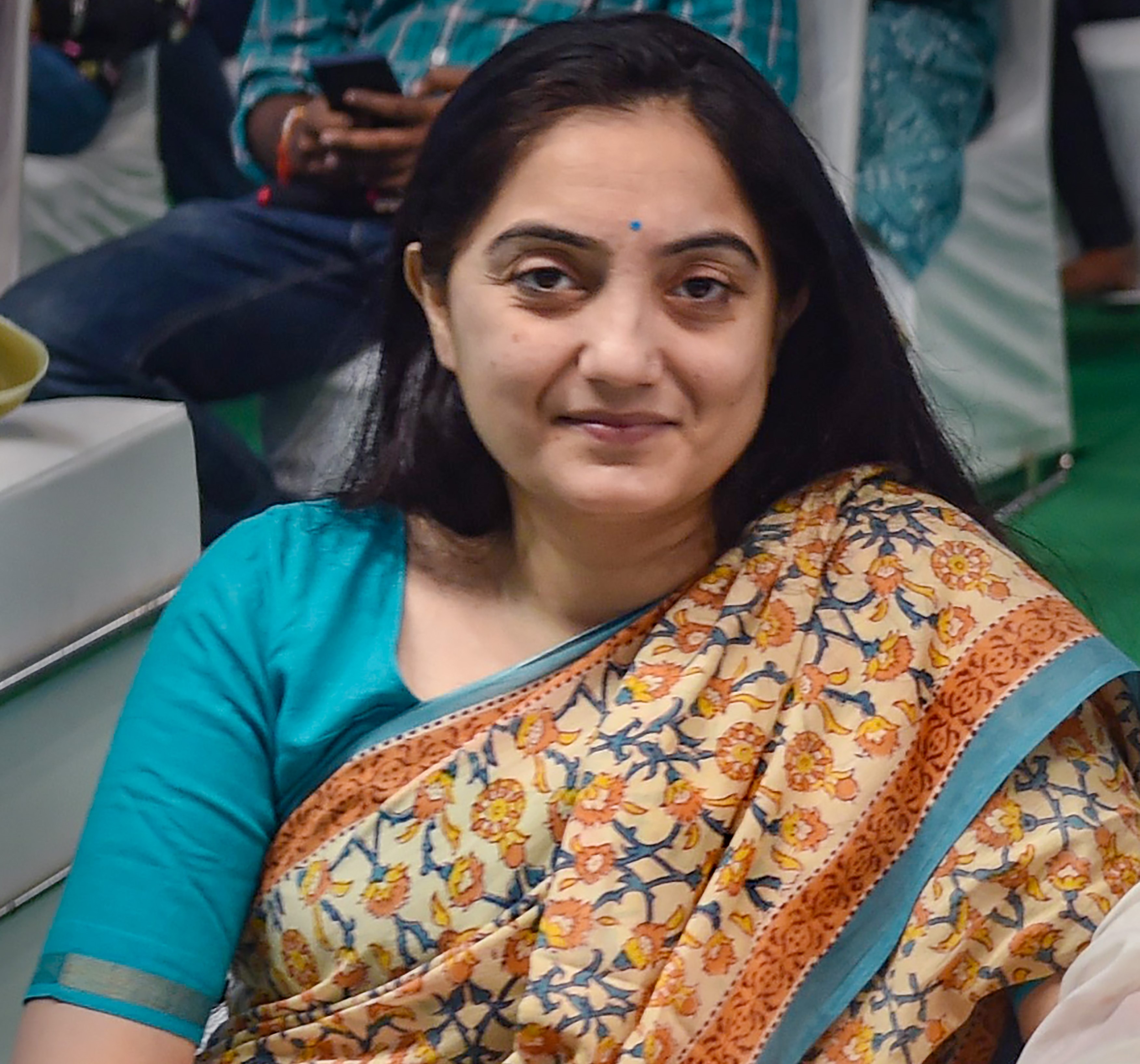
Meanwhile, the BJP’s hate campaign backfired as it was adversely affecting India’s ties with the Islamic world that PM Modi had forged with lot of labour and diplomatic moves. Days after controversial remark, Kuwait, Qatar and Iran summoned Indian diplomats over the comments made by Nupur Sharma and Naveen Jindal. Several other Islamic countries including Indonesia, Saudi Arabia, the UAE, Jordan, Bahrain, Maldives, Oman and Afghanistan also denounced the comments while some of them welcomed BJP’s punitive action against the duo.

The ground strategy suddenly changed on the back of outrage from West Asian countries including Kuwait, Qatar, Iran and other Gulf nations conveyed their displeasure to Indian envoys or issued statements condemning the disparaging comments of BJP spokesperson Nupur Sharma about Prophet Muhammad.

Initially, Prime Minister Narendra Modi seemed unmoved by the growing turmoil but quickly realised targeting Indian Muslims may provoke the broader Muslim world at large and democracies in particular. The anticipated repercussions of threat to Indian exports to the region including the well-being of Indians working there in huge numbers, apparently, forced him to dilute tough stand for a while. The outcome was obvious with the decision of the BJP suspending spokesperson Nupur Sharma from the party and expelled another leader, Delhi media head Naveen Kumar Jindal claiming that BJP respects for all religions.

Meanwhile, the suspension of Nupur Sharma and the expulsion of Naveen Kumar Jindal also drew angry reactions from BJP’s faithful army of cyber supporters on social media platforms. Reflecting their dissension over the decision of the BJP leadership, they expressed solidarity and sympathy with Nupur Sharma, who was unceremoniously removed to pacify angry Gulf countries. They wrote on social media that the BJP has let down the Hindus by buckling under pressure from Muslims.

The action precipitated keeping in view the conciliatory advice of Rashtriya Swayamsevak Sangh (RSS) chief Mohan Bhagwat addressing his cadre, “There was no need to find a “Shivling” in every mosque.” While recognizing that the Gyanvapi dispute involves the issue of faith, he stressed, “The court’s decision on it should be accepted by all and we should go for amicable resolution of disputes.” He sought to distance his organisation from high-pitched and confrontational religious rhetoric, even as it has brought to fore conflict within its wide spectrum of  ideological support.

In view of such circumstances at domestic front and as well as international outrage over the controversy, the red-faced Yogi government removed Kanpur DM Neha Sharma after the riots. She became the first scapegoat in an aftermath of communal riots, though gathering intelligence and leading policing operations comes under the exclusive domain of Kanpur Police Commissionerate. Special Secretary and a close aide to the chief minister Yogi Adityanath, Vishakh G (2011 batch IAS) has replaced her and assumed the charge of DM Kanpur where he had served earlier in the same position. He has begun peace initiatives by involving respectable people from both the communities through meetings of peace committee.

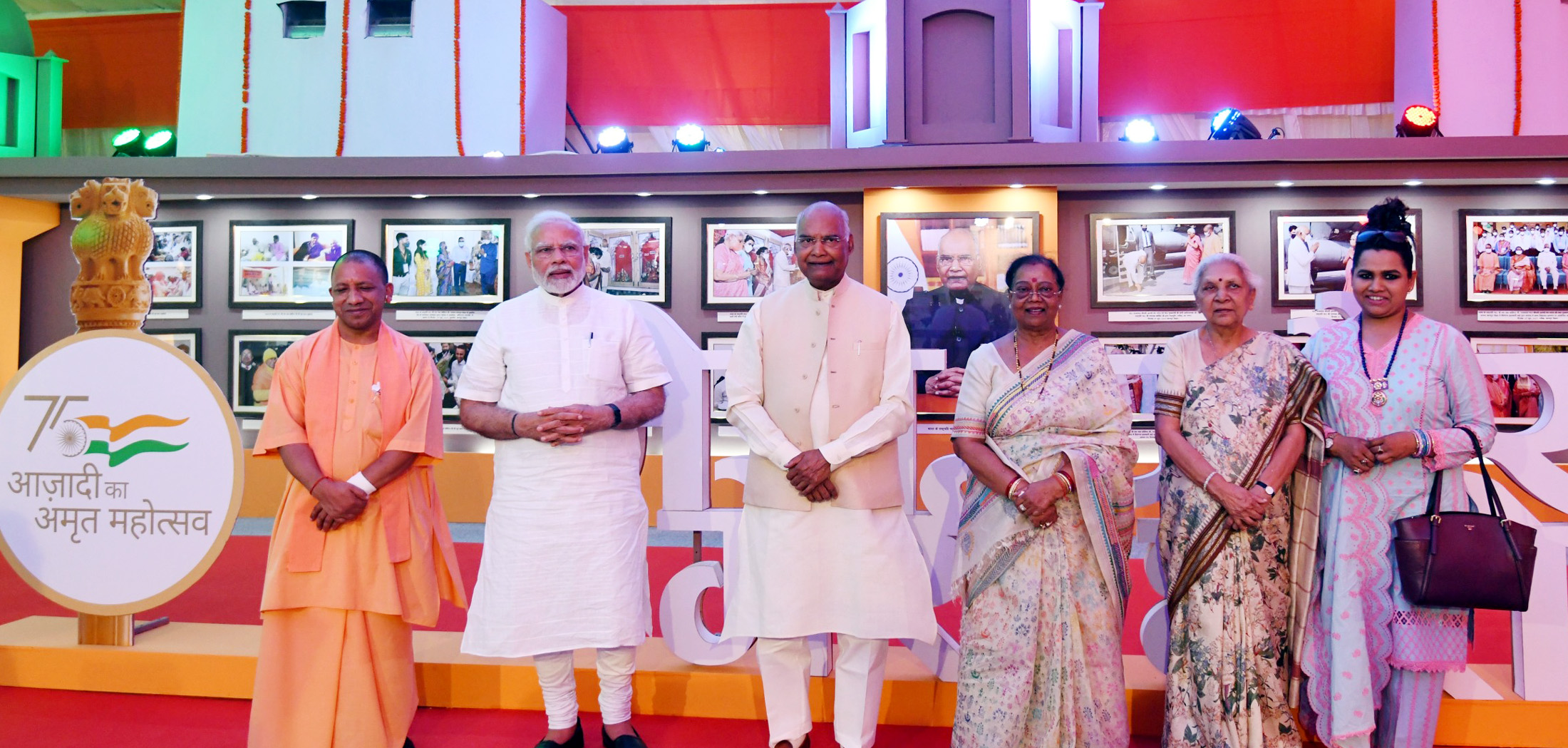
The President, Shri Ram Nath Kovind and PM visits the exhibition, in Paraunkh, Kanpur on June 03, 2022.

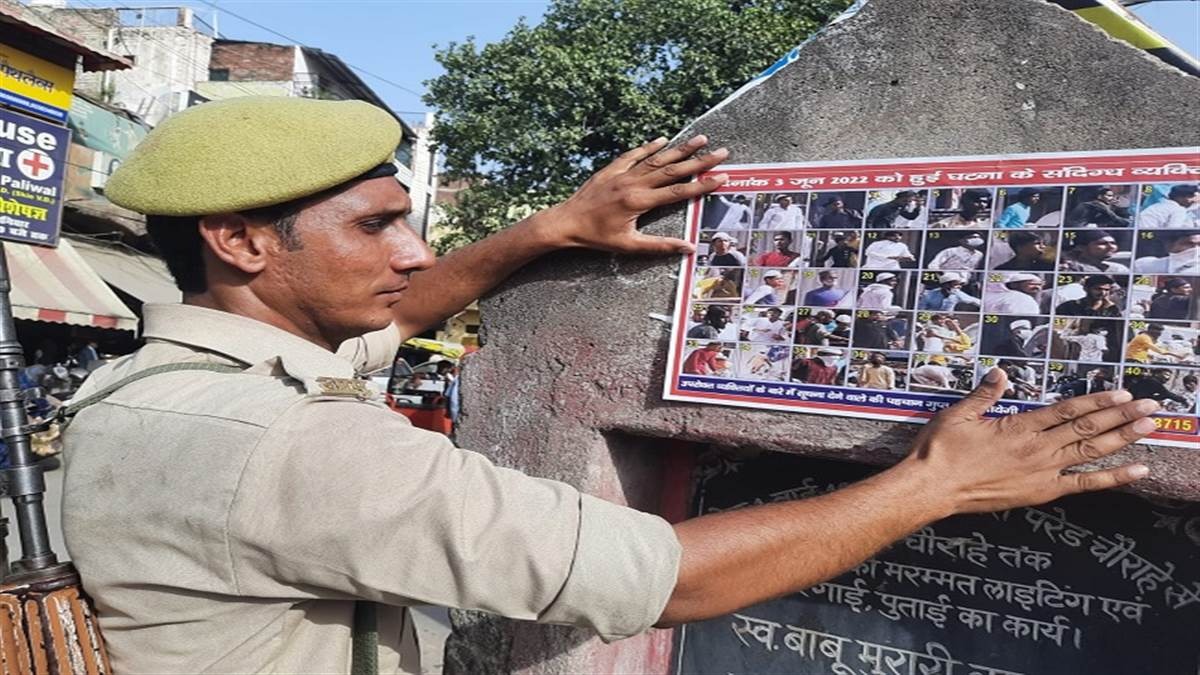
Police has arrested around 55 persons in connection with violence and for inciting hatred besides FIR against eight twitter handles including some media persons. Police released a poster of 40 suspects involved in the Kanpur violence on June 3 containing all the Muslim faces which further evoked severe criticism by the community leaders alleging partisan approach of the administration. But now in a damage control exercise, the police has arrested some BJP functionaries and Hindu outfit leaders as well. The administration has invoked orders under Section 144 CrPC in view of prevailing tension in the sensitive areas. The section 144 of CrPC restricts the assembly of more than four persons.

In terms of the security situation, personnel from Provincial Armed Constabulary (PAC), Rapid Action Force (RAF) and Quick Response Team have been deployed in Muslim-dominated pockets.

According to the officials, Kanpur district magistrate Vishak G and police commissioner Vijay Singh Meena also held a meeting with religious leaders, including Muslim clerics and Hindu priests, to take them into confidence.

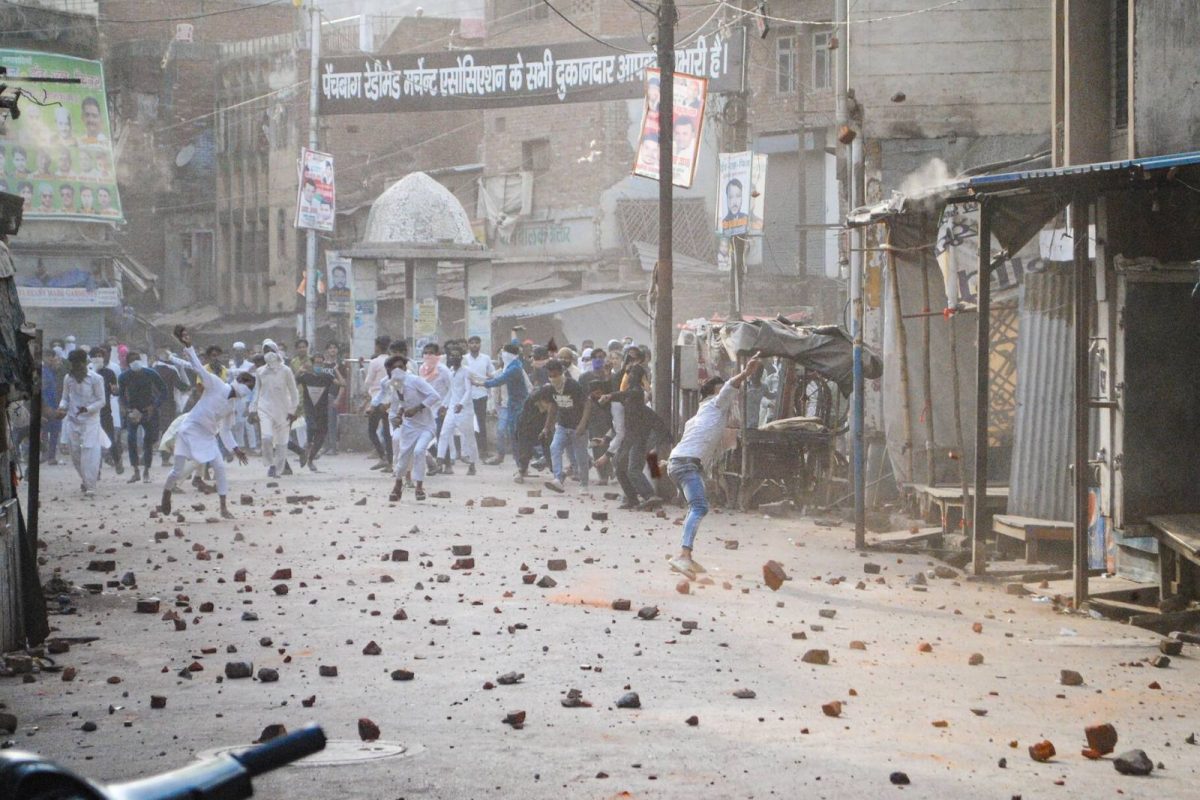
Earlier, communal riots broke out in Kanpur on June 3 after Friday prayers when row erupted over the closure of shops during a bandh call given by Muslims to protest against BJP spokesperson Nupur Sharma for her alleged derogatory remarks against Prophet Muhammad during a TV debate on ‘Times Now’ over ongoing sub judice matter in the courts about Gyanvapi mosque of Kashi (Varanasi). Several people were injured during the clashes as mobs hurled bombs and pelted each other with stones and damaged vehicles.

The violence erupted after a group of protesters forced the closure of shops in the Beconganj area but the shopkeepers refused to close their business for the day. The altercation turned into brawl between the protesters and the business community. A few videos of the incident show that members of the Hindutva groups also participated in the clashes but administration largely booked Muslims in the FIRs filed by police.

It is being revealed that initially the local police had controlled the situation by baton-charging the protesters. Later, the situation escalated when some unknown persons fired two shots in the air, and soon, people started hurling bricks and stones at each other. In the stone-pelting incident, at least six people were gravely injured. Some vehicles were also damaged during the clashes. However, police commissioner Vijay Singh Meena denied the incident of firing and hurling of petrol bombs.

Meena said that the accused were being identified on the basis of over 20 viral videos of the clashes which broke out in Parade, NaiSadak and Yateemkhana areas. After getting footage from CCTV cameras installed inside shops, action will be taken against all accused. The situation had returned to normal and all shops will be duly opened, the police commissioner added.

Earlier on June 2, Thursday, posters were put up in town to close the market in protest against remarks made by BJP leader Nupur Sharma. Markets at Talaq Mahal, Colonelganj, Hiraman Purwa, Chamanganj, Beganganj, Dalel Purwa, Meston Road, Babu Purwa, Rawatpur and Jajmau were shut since Friday morning. According to the sources, some local leaders had given a call for a bandh. Maulana Mohammed Ali (MMA) Jauhar Fans Association chief, Hayat Zafar Hashmi, supported the bandh.

MMA is nearly a decade old Kanpur-based NGO that has a very limited influence in the community. It runs many humanitarian programmes relating to health and education, and has been involved in various social movements such as atrocities against women, etc.

The police on June 4 registered three FIRs against more than 1,000 unknown persons, out of which 55 people have been named as accused, all of whom are Muslims. The FIRs were filed against them in connection with the violence which erupted on June 3. Police has arrested 55 persons so far and looking out for more who were shown in different video footages.

Police are identifying more accused with the help of video footage. They have warned that action will be taken against them under the Gangster Act. The senior police officials have also allegedly planned to seize and demolish the properties of the accused.

Additional Director General (law and order) Prashant Kumar told media through a video massage, “Those involved in the violence are being identified with the help of video footage of the incident.” “The accused and the conspirators of the violence will be booked under the Gangster Act and their properties will be seized or demolished,” Kumar added,

Taking cognizance of a video, the police registered an FIR and arrested the accused identified as Tushar Shukla who was caught harassing an old Muslim shopkeeper under Govind Nagar police station. Police also arrested BJP youth wing functionary Harshit Srivastava for his inflammatory tweet on Kanpur riots.

UP’s Saharanpur-based Islamic seminary Darul Uloom Deoband condemned the remarks made by Nupur Sharma and demanded strict action against her. Deoband Vice-Chancellor Maulana Mufti Abul QasimNomani said, “Any gustakhi (disrespect) in the glory of Prophet Hazrat Mohammad is absolutely unbearable on which it is not possible to remain silent.” “India is a secular country which provides security to all religions. But, in the past few years it has become common practice among the communal elements to hurt religious sentiments and the pride of eminent personalities,” Nomani said in a media interaction.

Demanding immediate arrest of BJP spokesperson Nupur Sharma, the Samajwadi Party chief and former chief minister Akhilesh Yadav took a dig at the state government, saying that the Kanpur violence is a “failure of intelligence”. He appealed to the people to “maintain the peace and harmony.

The UP Police had put Samajwadi Party national spokesperson Sumaiya Rana under house arrest on June 4 in Lucknow. Rana had announced to protest over the objectionable comments of Nupur Sharmaa bout Prophet Muhammad on 5th June, Saturday at the 1090 crossing of Gomtinagar area. “Heavy police force has been deployed outside her residence in the Qaiserbagh locality,” she alleged.

“The ruling BJP planned such incidents to divert the minds of the public from the real issues of unemployment, agrarian distress, inflation, etc.,” the Congress MLC Deepak Singh said. “The violence in Kanpur occurred at a time when the president, prime minister and the chief minister were present there, which showed the failure of the law-and-order situation in the state,” he asserted.

The All India Mohammadi Mission condemned the violence and appealed for peace. Syed Mohammad Ahmad Mia, president of the youth wing of the mission, asked, “Why has the government not yet arrested BJP leader Nupur Sharma, despite evidence against her blasphemous comments about the prophet?”

Subhashni Ali, a former member of parliament from Kanpur and politburo member of the Communist Party of India (Marxist), demanded legal action against Sharma as well as the TV channel and its news anchor, who allowed them to broadcast “blasphemous comments” about the revered Islamic figure.

Violent protests in many states for Nupur-Jindal arrests

The protests also turned violent in Prayagraj in Uttar Pradesh, Ranchi in Jharkhand and West Bengal’s Howrah. The protests in other parts of Uttar Pradesh, Delhi and parts of Madhya Pradesh, Telangana, Gujarat, Bihar and Maharashtra were by and large peaceful even as a shutdown was observed in Srinagar demanding arrest of Nupur Sharma and Naveen Kumar Jindal.

After last Friday in Kanpur this Friday, June 10 Prayagraj saw protests also turning out of control, where heavy brickbat hurling resulted in minor injuries to several police personnel. Taking stock of the situation, Chief Minister Yogi Adityanath directed senior officials to take the “strictest action against those involved in incidents of violence and unlawful protests in the state.” Yogi also asked officials to initiate recovery proceedings where damage was done to public or private property.

In Prayagraj, the violence broke out in Khuldabad police station area when youths gathered on the streets long after the afternoon prayers were over. “There were many minors among them. We used light force to disperse them. Even after this, people kept coming out in lanes and raising slogans. Some minor injuries have been sustained by the forces. The situation is under control,” SSP Ajay Kumar said. “One rickshaw’s tyre was set on fire but it was doused. There was also an attempt to set a PAC vehicle on fire. The Rapid Action Force and four companies of PAC have been deployed,” he added.

The UP Police said that a total of 136 people were arrested over the protests, including 45 in Saharanpur, 37 in Prayagraj, 23 in Ambedkar Nagar, 20 in Hathras, seven in Moradabad and four in Firozabad. The Lucknow Police Commissioner Dhruv Kant Thakur worked day and night to manage peace and harmony working with Muslim religious leaders. Kanpur, Bareilly, Moradabad, Saharanpur, Meerut, Ghaziabad, Bulandshahr, Hapur, Bagpat, Shamli and Muzaffarnagar remained peaceful which are considered as communally sensitive districts.

In Ranchi, one of the protesters died of a bullet injury in police firing to control unruly mob and twelve others sustained injuries due to stone-pelting as well as pellets. Injured have been admitted to the Rajendra Institute of Medical Sciences.

Violence broke out in Ranchi on Friday June 10, during a protest march when the agitators indulged in stone pelting over comments made by now suspended BJP leader Nupur Sharma. The protestors were marching on the Main Road area of Ranchi between 2.30 pm and 3 pm when the violence broke out and the police were unable to control them. The police had to resort to firing in the air to disperse the crowd. A Station House Officer (SHO) and a few other police personnel were also injured along with protestors.

In West Bengal’s Howrah, prohibitory orders were imposed in several areas after protesters attacked a police station and also set fire to a few kiosks, and several two-wheelers and vehicles. Officials said at least 12 policemen were injured.

In Dhulagarh, the police used batons and fired tear gas shells to disperse a mob that had blocked a national highway. The protesters attacked and vandalised a police station in Domjur. “There was damage to property but no serious injuries were reported.

In Kolkata, protesters blocked the Park Circus seven-point crossing for over two hours demanding the arrest of Nupur Sharma. State Transport Minister and Kolkata Mayor Firhad Hakim said: “What Nupur Sharma said is highly condemnable. But that does not mean you come out on the roads and agitate. There is no place for hooliganism.”

Earlier, Governor Jagdeep Dhankhar tweeted, “Expect CM Smt. Mamata Banerjee to sternly warn law violators — they will not be spared.”  Dhankhar also summoned the state’s chief secretary H K Dwivedi even as the opposition BJP alleged that its offices were targeted in the Uluberia and Panchla areas.

In Maharashtra, peaceful protests were held in 14 districts, with large gatherings reported from Solapur, Navi Mumbai, Nandurbar, Aurangabad, Parbhani and Jalna.

In J&K, all business establishments remained shut in Srinagar while authorities snapped mobile internet services for most of the day before restoring them late in the evening. The protests came a day after an indefinite curfew was imposed in Kishtwar district and Bhaderwah town in Doda district while prohibitory orders were imposed in the rest of the Chenab Valley.

In Hyderabad, people protested in front of Makka Masjid against utterances of BJP spokesperson Nupur Sharma. Police removed protesters and heavy police force including CRPF was been deployed in the area.

In Delhi, the police said almost 1,500 people had gathered at Jama Masjid for Friday prayers after which nearly 300 staged a protest. The Shahi Imam of Jama Masjid said Masjid has not issued any call for protests.

Neanwhile Former BJP national spokesperson Nupur Sharma has finally issued an apology. She unconditionally withdrew her statement noting that it was never her intention to hurt anyone’s religious feelings. Right after the BJP expelled its Delhi media head Naveen Kumar Jindal from the party over alleged controversial remarks against minorities, he clarified that he respects people of all faiths.

After the BJP suspended Nupur Sharma over her remarks on Prophet Muhammad during a TV debate on Times Now, she took to Twitter to issue an apology. She wrote, “If my words have caused discomfort or hurt religious feelings of anyone whatsoever, I hereby unconditionally withdraw my statement. It was never my intention to hurt anyone’s religious feelings.”

She said, “I have been attending TV debates for the past many days where our Mahadev was being insulted and disrespected continuously. It was mockingly being said that it is not Shivling [at Gyanvapi mosque] but a fountain. The Shivling was also being ridiculed by comparing it to roadside signs and poles in Delhi.” “I could not tolerate this continuous insult and disrespect towards our Mahadev and I said some things in response to it,” Sharma said.

The suspension of these leaders being seen as an attempt to rein in big mouth spokespersons who violate Bharatiya Janata Party’s official line on sensitive matters. The strict action against the two leaders came as an attempt to prevent any further damage to the party’s image over their controversial remarks.

Nupur Sharma further tweeted: “I request all media houses and everybody else not to make my address public. There is a security threat to my family.”

Delhi Police book Nupur-Naveen-Owaisi and others for hate messages on social media

Deputy Commissioner of Police Intelligence Fusion and Strategic Operation (IFSO), KPS Malhotra said cutting across religious leanings, the Delhi Police on Wednesday June 8, has registered FIRs against several individuals and some people who are allegedly spreading messages of  hate, inciting various groups and creating situations which is detrimental for the maintenance of public tranquillity.

Among those named in the FIRs include suspended BJP spokesperson Nupur Sharma, Naveen Kumar Jindal, the expelled head of Delhi BJP’s media unit, AIMIM chief Asaduddin Owaisi, Peace Party chief spokesperson Shadab Chauhan, Hindu Mahasabha office bearer Pooja Shakun Pandey, Maulana Mufti Nadeem and journalist Saba Naqvi.

The unit will investigate the roles of various social media entities in promoting false and wrong information with an intention to create unrest on the cyber space and that have ramifications on the physical space thereby compromising with the social fabric of the country, Malhotra said.

Earlier, Mumbra police in Thane district and the Pydonie police in Mumbai had already registered FIRs against Nupur Sharma,who was recently embroiled in a controversy over the objectionable comments she had made on Prophet Mohammad during a television debate on May 28.

Maulana Mufti Nadeem, named in IFSO’s FIR, is from Rajasthan’s Bundi and featured in a viral video where he can purportedly be heard threatening violence against those who will speak against the Prophet.

Hindu Mahasabha office bearer Pooja Shakun Pandey faces an FIR by Aligarh police over objectionable remarks against Friday namaz made on social media. The 41-year-old national secretary of Hindu Mahasabha was also arrested in 2019 along with her husband and national spokesperson of Hindu Mahasabha, Ashok Pandey, for allegedly recreating the assassination of Mahatma Gandhi on his death anniversary.


“I have been selectively targeted”: Saba Naqvi

“I am committed to the secular and liberal ethos of India and stand against any fundamentalism, hate speech and injustice,” said journalist Saba Naqvi who has been recently named in a case of spreading hate online by Delhi Police. “Currently I am abroad and will comply with due process on my return in mid-July,” she told.

In a statement, Naqvi also said: “I am a journalist and tasked with speaking truth to power. Social media and news sites suggest the FIR has been filed because of a whatsapp forward that I shared only to delete it a few hours later.  Many others also shared the same image yet I have been selectively targeted in the FIR”.

The Press Club of India (PCI) demanded immediate withdrawal of FIR against senior journalist and columnist Saba Naqvi, and all on-going enquiries against her be stopped forthwith.

In a tweet, PCI vehemently condemned the lopsided and highhanded manner of Delhi Police in lodging FIR against Saba Naqvi. “The whimsical way of Delhi Police in reaching out to her posts reflects Delhi Police’s more-than-eagerness to make her posts blasphemous thereby registering her as accused for a crime which she has not committed at all,” it added.


Kanpur clashes main accuse under SIT scanner

The UP Police have launched a probe into the possibilities of foreign funding to prime accused Hayat Zafar Hashmi, following revelations that he had received a total of Rs 3.54 crore into one of his four bank account since July 2019. So far, details of one of his accounts at a private bank in Babupurwa area of Kanpur reveal that a transaction of Rs 3.54 crore was made in his account on July 30, 2019.

An amount of Rs 98 lakh was similarly withdrawn from the same account in September 2021, said an official of the special investigation team. At present, Rs 1.27 crore are left in this account. Hayat owns a fair price shop. “First, we are looking into the sources of money and then the purpose for which it was being used. Later, we will ascertain if the transactions were legal,” the SIT official said.

Police official said that Hayat has two more bank accounts. Transactions have also been made from these bank accounts. “Till now, transactions worth Rs 47.6 crore have been made from the other three accounts in the last three years. Now, the accounts show a balance of just Rs 11 lakh. ED teams may also interrogate him and his associates regarding the foreign funding if any,” the SIT official said.

However, the family of Hashmi alleged that he was being falsely implicated, and he had taken back the bandh call in front of  police officers. Police arrested him from Hazratganj area of Lucknow and taken in for questioning. Hashmi is accused of calling for a “jail bharo movement” through a Facebook post and for demanding that markets should be closed down, police said. He also allegedly put-up posters in and around Kanpur.


Global food shortage: Are US, IMF barking up the wrong tree?

India is being asked by the US and the IMF to reconsider its decision to suspend wheat exports. But their cited concern that export curbs will exacerbate food shortages does not hold water

India is being asked by the United States and the International Monetary Fund to reconsider its decision to suspend wheat exports. The data studied reveals that not India but the US itself is to be blamed for the impending food crisis.

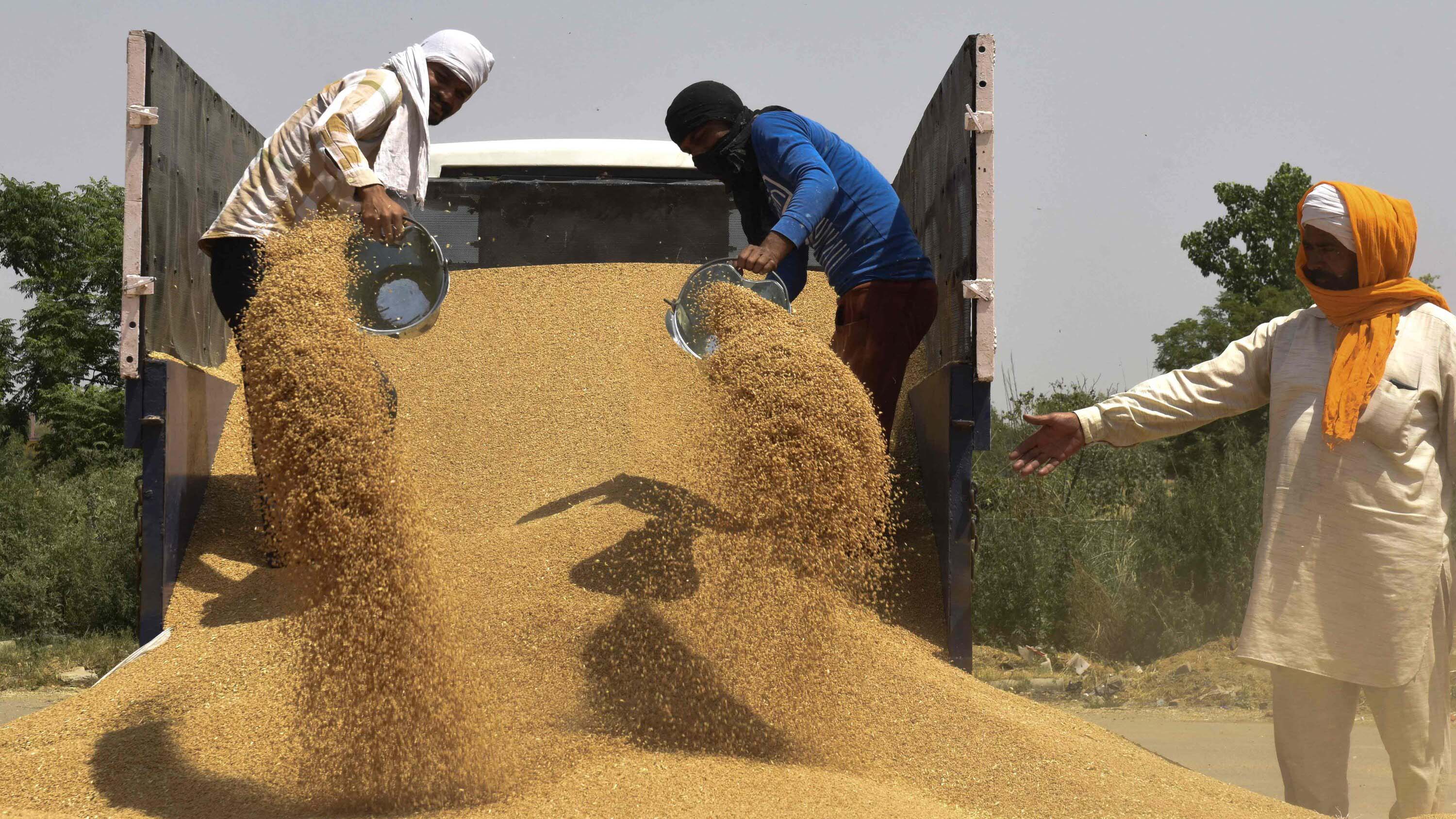
Cereals are meant to be consumed by humans but the US government-funded ethanol industry uses an equivalent of 35 percent of the global world trade of cereals of 473 million tonnes. The Indian export ban set to prevent hunger will affect less than 2 percent of this amount.

The real culprit is use of food for animal feed as well as for other non-food uses, mainly agro-fuels. Ironically, India is being asked by the US government and the International Monetary Fund to reconsider its decision to suspend wheat exports. Their cited concern is that export restrictions will exacerbate food shortages amidst Russia’s invasion of Ukraine. But the argument does not stand ground technically or morally.
Santosh Kumar Sarangi, Director General, Foreign Trade, disclosed that “there is a sudden spike globally in the prices of wheat as a result of which the food security of India and neighbouring vulnerable countries is at risk. As a result, the government had made some amendments in its export policy.”

However, the government announced some relaxation to its order dated 13th May issued by Directorate General of Foreign Trade (DGFT), Department of Commerce, on restricting wheat exports. It has been decided that wherever wheat consignments have been handed over to Customs for examination and have been registered into their systems on or prior to May 13, such consignments would be allowed to be exported.

The government also allowed a wheat shipment headed for Egypt, which was already under loading at the Kandla port. This followed a request by the Egyptian government to permit the wheat cargo being loaded at the Kandla port. Meera International India, the company engaged for export of the wheat to Egypt, had also given a representation for completion of loading of 61,500 MT of wheat of which 44,340 MT of wheat had already been loaded and only 17,160 MT was left to be loaded. The government decided to permit the full consignment of 61,500 MT and allowed it to sail from Kandla to Egypt.

The government had earlier restricted wheat exports to manage the overall food security situation in India and to support the needs of neighbouring and vulnerable countries that are adversely affected by the sudden changes in the global market for wheat and are unable to access adequate wheat supplies. According to this order, this restriction would not apply in cases where prior commitments have been made by private trade through Letter of Credit as well as in situations where permission is granted by the Government of India to other countries to meet their food security needs and on the requests of their governments.

The order served three main purposes: ensure India’s food security and check inflation, it helps other countries facing food deficit, and it maintains India’s reliability as a supplier. The order also aimed to provide a clear direction to the wheat market to prevent hoarding of wheat supplies.

Interestingly Frederic Mousseau, Policy Director at The Oakland Institute, San Francisco, quoting a May 6, 2022 report by the United Nations Food and Agriculture Organization (FAO), observed that the world enjoys “a relatively comfortable supply level” of cereals. This is also confirmed by the World Bank which noted that global stocks of cereals are at historically high levels and that about three-quarters of Russian and Ukrainian wheat exports had already been delivered before the war started. All this means that actually there is no food shortage.  These numbers are consistent with data from the Ukrainian Ministry of Agriculture that reported on May 19 that the country exported 46.51 million tons of cereals in the 2021/22 season, versus 40.85 million the previous year.

Also food crisis could be due to speculation because speculators flood the commodity markets in attempts to make a profit out of escalating prices. A striking example are two top commodity-linked “exchange traded funds” (ETFs) which have received US$1.2 billion of investments – compared to just US$197 million for the whole of 2021 – a 600 percent increase. Reports point out that in April, speculators were responsible for 72 per cent of the buying activity on the Paris wheat market, up from 25 percent before the pandemic just to bet on hunger to make money out of self-created shortage.

Instead of food shortage, the reality is that the world produces far more food than we eat. Over 33 percent of the food produced globally is used for animal feed as well as for other non-food uses, mainly agro-fuels. Over 40 per cent of the roughly 400 million tons of corn – 160 million tons – goes to ethanol production. Another 40 per cent goes to animal feed. Only 10 per cent is used as food whereas another 10 per cent is exported. India was not expected to export more than 10 million tons of wheat in 2022-2023, which is insignificant in comparison to the US numbers. Indeed the increasing amount of food diverted to the production of agro-fuels –is a major factor fuelling tension in the global cereal markets.
In the US, ethanol production had increased from 3.6 million barrels in 2001 to over 102 million barrels by now. This is despite the fact that ethanol is at least 24 percent more carbon intensive than gasoline. This is nothing short of hypocrisy and the World Bank, the International Monetary Fund, the World Food Programme, and the World Trade Organization, are urging “all countries to keep trade open and avoid restrictive measures such as export bans on food or fertilizer that further exacerbate the suffering of the most vulnerable people.”

But if governments and international institutions are serious about eliminating human suffering caused by high food prices, they should abstain from pressuring countries who are trying to maintain food supply at a level which will allow national food security. It is essential that they recognize and respect the food sovereignty of all nations.
Immediate key measures that countries should be taking to relieve pressure on world markets are to reduce the amount of food used as fuel, curb speculation on food products – specifically restricting the so-called future commodity markets where speculators bet on future prices. The only reasonable decision would be for them to act decisively on the broader causes of the high food prices and curb speculation on food commodities and diversion of food for the production of fuel.
On its part, India has been successful in preventing price transmission to domestic markets through trade regulation measures and by supporting its farmers by regulating markets.  India’s achievement comes at a time when it has achieved 10% ethnol blending of petrol five months ahead of schedule. Prime Minister Narendra Modi during his address to a ‘Save Soil’ programme organised by the Isha Foundation run by spiritual leader Sadhguru to mark World Environment Day on June 6 himself confirmed that the achievement has reduced carbon emission by 27 lakh tonne, saved the country Rs 41,000 crore in foreign exchange spending (on oil imports) and boosted income of farmers by Rs 40,000 crore in eight years.

Challenges ahead for Cong as it sets in motion party revamp plan

Over the past weeks, the grand old party lost key leaders like Sunil Jakhar in Punjab, Hardik Patel in Gujarat and Kapil Sibal in Delhi, indicating the organization is not able to retain talent at a time when the Congress is planning to get a new look, reports Amit Agnihotri

The Congress is trying hard to revamp its organization to take on the ruling BJP ahead of the 2024 Lok Sabha elections but the opposition party still faces several challenges before it can become a strong national alternative.

Over the past weeks, the grand old party lost key leaders like Sunil Jakhar in Punjab, Hardik Patel in Gujarat and Kapil Sibal in Delhi, indicating the organization was not able to retain talent at a time when the Congress is planning to get a new look.

Further, the party has to deal with the Enforcement Directorate’s questioning of party chief Sonia Gandhi and former chief Rahul Gandhi in the National Herald case, which will bring negative publicity to the top leadership.

The Congress claims the case itself and the ED summons resulted from BJP’s “vendetta” politics as the charges of money laundering against the Gandhis are “false.”

To express solidarity with Rahul, the top party leaders accompanied him to the ED office in Delhi, while the state units staged satyagraha outside the agency offices across the country in a show of strength.

Though there was no obvious link between the two issues, the summons in the old case came days after Rahul slammed the central government during public events in London.

The notices are also related to the opposition party’s plans to launch a Kashmir to Kanyakumari foot march on October 2, the birth anniversary of Mahatma Gandhi, to counter the central government, said party insiders.

Before the yatra, the Congress is working on revamping the party structure and bringing in more younger leaders as office bearers.

The exit of former Punjab chief Sunil Jakhar came while the party was busy preparing its roadmap for the 2024 Lok Sabha polls at Udaipur from May 13-15.

Jakhar, who later joined the BJP, took away five more Congress leaders, including four former ministers, and claimed that many more were waiting to leave the Congress.

Former Punjab chief minister Amarinder Singh, who was forced to resign by the high command last year and who later formed his own party the Punjab Lok Congress, welcomed the decision of the former ministers to leave the Congress saying that their exit was only the tip of the iceberg.

The Congress lost the state to AAP in March and though it is the main opposition party, the grand old party is struggling to regain ground in Punjab.

New Punjab Congress chief Amrinder Singh Brar feels the defections are good for the grand old party and will pave the way for the younger leaders to emerge.

In Gujarat, which will have assembly polls later this year, the Congress high command ignored the warning signals when its dynamic Patel community leader Hardik Patel has expressed his frustration with the senior state leaders. He later joined the BJP. In Hardik’s exit, the Congress will have to find a suitable face to woo the crucial Patel community which has 15 percent votes in Gujarat.

Former union minister Kapil Sibal left the Congress as he felt sidelined in the party after he was not invited for the Udaipur strategy session.

Sibal later contested the Rajya Sabha polls as an independent candidate from UP backed by the Samajwadi Party. He had notably questioned the leadership and suggested that the Congress should elect a non-Gandhi president after the party performed badly in the five assembly polls in March.

The exit of the senior leaders is not the only problem being faced by the Congress. The ED summons for both Sonia and Rahul in the National Herald case indicates the high command will continue to be in the government’s focus.

Though there is no link between the two developments, the ED summons came after Rahul slammed the central government at two separate interactions – one organised by NGO Bridge India on the theme “Ideas for India’ and the second in the Cambridge University on the theme ‘India at 75’.

During his interactions, Rahul blamed the BJP for playing divisive politics. He said the ruling party had spread kerosene all around and even a single spark could lead to a big problem. He also noted that people were suffering due to a sliding economy, lack of jobs, high prices of fuel and essential food items. His statements provoked the central government which reacted strongly to the allegations.


Red-faced Congress

An embarrassed Congress sought to play down the resignation of Kapil Sibal. “It has been proved now that Kapil Sibal was raising questions over the leadership due to personal interests. We had in mind that he might leave the party. Delhi had sent him to Parliament but he ignored the party workers and raised questions on leadership,” Delhi Congress chief Anil Chaudhary said.

Former MP and senior UP Congress leader Rajesh Mishra said, “Kapil Sibal’s leaving the party will not impact the Congress. A leader who cannot get votes in Delhi, won’t be able to harm the party nationally.”

Earlier, former law minister Ashwini Kumar had resigned from the Congress before the Punjab assembly polls while former ministers RPN Singh and Jitin Prasada had quit the grand old party ahead of UP polls.

The timing of Sibal’s announcement was crucial as it also came a day after Sonia Gandhi’s Task Force 2024, headed by P Chidambaram, held its first meeting to discuss a roadmap for the party’s revival after a series of devastating election defeats.

Sibal had resigned on May 16.

The revelation from Sibal came a day after two other G23 members, Ghulam Nabi Azad and Anand Sharma. were named by party chief Sonia Gandhi in a key Congress panel to prepare for the 2024 national elections.

Sibal’s Rajya Sabha nomination is likely to create a tiff between the Congress and the former ally SP as he filed his nomination papers in the presence of Samajwadi Party chief Akhilesh Yadav. Sibal had represented Azam Khan, who was recently released on interim bail by the Supreme Court after two years in prison. Sibal however claimed he is an independent nominee for the Rajya Sabha polls.

In 2020, Sibal was one of the signatories to the G23 letter to Sonia demanding a complete overhaul of the organization and a full-time elected president. Sibal, a noted lawyer, had defended the Congress in various cases in the Supreme Court, including the one related to the National Herald newspaper started by former prime minister Jawaharlal Nehru.

But he got into the bad books of the Congress high command after he recently suggested that the Gandhis should leave the grand old party to pave way for a better leadership.

In Gujarat, too the party will face a difficult situation, said party insiders. Hardik had shot into fame after leading the Patel quota movement in 2015 and was later roped in by Rahul Gandhi. However, he had been miffed over the Congress’ attempts to rope in another community leader Naresh Patel.

Naresh Patel, known as a social worker and chairman of the Khodaldham trust, widely regarded by his Leuva Patel community, was being wooed by the Congress on the suggestion of poll manager Prashant Kishor. But the plan suffered a setback when Kishor decided to part ways with the Congress in April.

Congress strategists said though the withdrawal of cases against Hardik and his supporters was linked to the young leader’s resignation, his style of functioning had miffed several senior leaders.


Bharat Jodo Yatra

The Congress plans to get into an agitation mode over the coming months and plans to launch its nationwide Bharat Jodo Yatra from Kashmir in the north to Kanyakumari in the south.

The yatra is an attempt to counter the BJP’s divisive politics and revive the Congress across the country.

Before that, the AICC in charge held workshops across the states to brief local leaders on how to implement the Udaipur declaration which aims at reforming the party.

According to party insiders, the key challenge before the central leadership is to implement the decision of having half of all office bearers under 50 years of age.

The party has targeted to complete the roll out of the plan over the next three-four months but is facing resistance from the seniors who have been around for decades and are not comfortable with the changes.

At the same time, there are several promising youngsters who have been waiting to get key party roles and need to be roped in now, said party insiders.

The changes are important for the grand old party to bring in fresh talent, give it a more youthful look and change the way its functions ahead of the 2024 Lok Sabha polls.

Organisational gaps were identified as one of the reasons behind the party’s poor performance in the five states, Uttar Pradesh, Uttarakhand, Goa, Punjab and Manipur.

Besides, lack of strong connection with the voters was identified as the other key reason for the poll losses, said sources.

As part of the exercise to restructure the organization, Uttar Pradesh in charge Priyanka Gandhi Vadra reached capital Lucknow for the first time since the recent assembly polls to pep-up the party workers.

The grand old party, which could win just 2/403 assembly seats in UP, is trying hard to regroup and motivate the workers, said party insiders. Of  late, the party rank and file in UP had been feeling low as there was no communication from the top on how to move ahead.

The party is also in the process of sprucing up its communications besides having proper systems to assess current political situations and evaluate the work being done by the party functionaries across the country.


The backlash was just waiting to happen

Nupur Sharma’s obnoxious unleash against the Prophet of Islam, was not just blatantly communal but against all the basics of civility. Aren’t we taught in our homes that one should respect all faiths ?

This had to happen! This backlash had to come whether from the foreign lands and their rulers or from the Indian Muslim community.

Nupur Sharma’s obnoxious-communal-horrific unleash against the Prophet of Islam, was not just blatantly communal but against all the basics of civility. Aren’t we taught in our homes, right from the very childhood, that one should respect all faiths and religions and beliefs…In fact, in all civilized societies the very basic concept of respect and love for the other forms the very basics to the very existence. But see what dismal lows we have reached, with communal poisoning ruining us. I would go to the extent of stating that more worrying is this communal poisoning than any of the pollutants in the atmosphere! As this poisonous unleash is destroying our age old civilization, our diverse culture, our everyday living, our infrastructure, our children and us, our very future.

I’m not being very original in stating that if you stretch a bit too much there’s bound to be reaction. Under the present ruling Right-Wing government, the hounding and humiliation of the largest minority community of India, the Musalmaans, has been on …ongoing.

Even a day back, news reports surfaced of blatant targeted communal attacks on Muslim fakirs in Uttar Pradesh’s Gonda district. And last week one of the barbaric instances of police torture was reported from Uttar Pradesh’s district Badaun – when a 22-year-old Muslim vegetable vendor was tortured by the Uttar Pradesh police and two unidentified people, over suspicion of smuggling cow meat…the tortured man’s mother stated that Sub-inspector Satya Pal inserted a stick inside her son’s rectum and gave him electric shocks several times. And when the cops realized that they  had  picked up a ‘wrong person’ they gave him Rs 100 and  sent him home …that tortured- injured  man suffering from seizures, is  now admitted in a  hospital, where  the doctors have stated his  nervous system  has been left severely damaged because of the police  torture! Shouldn’t the accused cops and the two ‘unidentified men’ be charged with semi-murder of an innocent young man. After all, once the nervous system is destroyed, what’s left of the person! Shouldn’t the victim be provided the best medical care by the State! Yes. That’s the least the establishment could do.

The communal situation has deteriorated to such an extent that every possible alibi is put forth to hound and humiliate a Musalmaan. Alibis range from his or her ‘terror links ‘, ‘anti–national’ stand, ‘ hijab or the head scarf and  the skull cap, ‘cow slaughter…beef’,  ‘As- salaam – alaikum’ greetings (May peace  be on you).

Alibis could range from a this to that, but the targeted attacks are only compounding. And because of the poisonous propaganda and communal perceptions, innocents are targeted and tortured and ruined.

New Delhi: In this file photo dated Sunday, May 1, 2022, BJP Spokesperson Nupur Sharma during a programme at Delhi University. BJP suspended Sharma from party membership over her alleged remarks about Prophet Muhammad, on Sunday, June 5, 2022. (PTI Photo/Manvender Vashist)(PTI06_05_2022_000167B)

In fact, weeks after the Modi government took charge the second time, in the summer of 2019,  there were blatant attacks on the  Muslims. The most blatant was the killing of the 24- year-old Muslim man, Tabrez Ansari, in Jharkhand. An orphan, he was visiting his ancestral village to get married but  before he could get back  to his place of work, Pune, he was lynched by a  mob of  Right-Wing goons, after forcing  him to chant  ‘Jai Shri  Ram…Jai Shri Hanuman’ slogans. Tying him to an electric pole, they beat him the entire night. Even when the police came on the scene, instead of shifting Tabrez to the nearest hospital, they threw him into a prison hell-hole. Not just that, they did not arrest any of the Hindutva goons who had assaulted Tabrez. Only much later, after Tabrez was declared dead and videos of those goons thrashing him went viral, that those typical reactions did the rounds…There’d been no lessening of communal attacks even after that brutal killing of Tabrez Ansari. News reports surfaced of Muslim men forced to chant Hindutva slogans. Mind you, even after they chanted those slogans, there was little guarantee of their survival.

Mind you, I have been a witness to several communally surcharged phases in the recent history of the country, but the communal unleash had never been so blatant and brutal and barbaric as it is today.With the political climate turning murkier and blatantly communal by the day, strangest possible twisted notions of the ‘other’ are doing the rounds. Myths are manufactured and facts get twisted to dent the very image of the Muslims. All sorts of wild notions about the Muslims are being made to circulate among the masses so that there’s  negativity hovering around…so that Muslims stand bypassed and boycotted, if not  hounded and humiliated.

Why should the largest minority community of this country sit reduced to this third-class status by the political rulers who want to rule just about somehow! By distorting if not changing the very narrative, spreading the communal virus, unleashing violence. And then speak in different voices, to confuse the masses and with that halt a collective outcry. …There seems a blatant strategy by the Right-Wing lobbies to portray Islam and its followers in dark shades. The visual media misses no opportunity to dwell on the negatives to the community. Also, non-issues are churned overtime. Wrong perceptions and misconceptions are projected. All sort of wild theories in circulation.

If only the concerned and responsible citizen groups in the country insist on this  basic essential  corrective measure: The various myths and misconceptions and wrong negative portrayals about the Indian Muslims should  stand corrected. If this happens, then perhaps, the communal onslaughts and growing hate for the ‘other’ would lessen.

The concerned citizens of the country will have to step in. Now and immediately. It is time to cry halt to the dangerous communal build-ups!


( end of the column  –  HUMRA  QURAISHI)


Moosewala’s murder turns focus on Punjab’s deadly gang rivalries

A broad daylight murder of popular Punjabi singer Sidhu Moosewala has brought back the glare on the numerous gangs operating in Punjab. If the gun culture is not stopped at this stage it could result in more gruesome outcomes in the days to come, writes Rajendra Khatry

The heady mix of drugs, guns and music with a combination of machismo and alcohol that promote violence is taking a heavy toll on the Punjabi entertainment industry, artists and celebrities. A broad daylight murder of popular singer Sidhu Moosewala has brought back focus on the numerous gangs operating in Punjab extorting money and killing for revenge. If the gun culture and violent gun fights are not stopped at this stage they could result in more gruesome outcomes in the days to come.

Sidhu Moosewala was shot dead by gangsters on May 29 in Jawahar village of Mansa district in a daylight shooting. The incident occurred a day after the Punjab Police Department removed the protection of 424 persons, including Punjabi artist Sidhu Moosewala. Immediately afterwards, the Canada-based gangster Goldy Brar from the Lawrence Bishnoi gang claimed responsibility for Sidhu’s murder.

Meanwhile the Punjab police sought Red Corner Notice for Satinderjit Singh alias Goldy Brar the alleged conspirator of Sidhu Moosewala’s murder. Satinderjit Singh alias Goldy Brar, an active member of Lawrence Bishnoi gang, a native of Muktsar, had gone to Canada on student visa in 2017. Earlier, the Punjab police had sent a proposal to the CBI on May 19, 2022, to issue a Red-Corner notice against Goldy Brar, to pave the way for his extradition to India. Incidentally, the proposal was sent 10 days before Moosewala’s murder.

Punjab Police also sought issuance of Red Corner Notices (RCNs) against gangster-turned-terrorist Harwinder Singh Sandhu alias Rinda of village Rattoke, Tarn Taran, which was sent to the Crime Bureau of Investigation (CBI) on May 5, 2022. Rinda, responsible for setting up several terrorist modules in Punjab is now based in Pakistan. He is allegedly responsible for many terrorist activities in India.

Rinda is allegedly backed by Pakistan’s ISI. He has been responsible for smuggling in huge quantities of arms and ammunition in India. Huge quantity of Arms/Ammunition and IEDs recovered from four terrorists arrested in Karnal recently in a joint operation with Punjab and Haryana police, reportedly belonged to Rinda.

According to the Punjab police records, Rinda was also responsible for the RPG attack on Punjab Intelligence Headquarters in Mohali recently through his operatives, grenade attack on CIA Office, SBS Nagar in November, 2021 and IED attack on police post Kahlwan in Anandpur Sahib, Rupnagar.

Earlier the Punjab Police disclosed the identity of eight shooters involved in the killing of Sidhu Moosewala. Of these, two shooters were from Maharashtra, two from Haryana, three from Punjab and one from Rajasthan. According to the police, all the shooters belonged to the Lawrence Bishnoi gang. Punjab Police contacted the police of the respective states and sought their help. Punjab Police even conducted raids in Haryana-Punjab, Rajasthan and Maharashtra in search of gangsters.

The shooters who were identified by the police include Manpreet Manu and Jagroop Singh Roopa of Tarn Taran, Harkamal alias Ranu of Bathinda, Priyavrata Fauji and Manjit Bholu from Sonepat, Saurav Mahakal and Santosh Jadhav from Pune, Maharashtra and Subhash Banoda of Sikar, Rajasthan. Pictures of all these shooters had been released. The Punjab Police suspects that these same shooters had killed Sidhu Moosewala in Mansa on May 29. All these shooters had gathered on the Kotkapura highway three days before their operation.

The Punjab Police managed to arrest Sandeep alias Kekra of Kalanwali, Sirsa for allegedly doing recce of Sidhu Moosewala by becoming a fan. When Sidhu came out of the house, Kekra took a selfie with him and also took a photo of his Thar which he drove. He then informed the shooters that Sidhu had left his house. The killers followed and shot Sidhu dead. So far eight alleged gansters supposed to be suspects have already been arrested from Punjab and Haryana in connection with Sidhu’s murder.

Many Experts feel that there is a certain link between the gangsters and terrorists and there is exchange of drugs as well among them. Many claim that the gangsters of Punjab are these days better armed than the policemen in Punjab. The gangsters are said to possess the latest technology weapons allegedly supplied to them by the terrorists.

The gangster reportedly have the latest technology Russian weapon AN-94 also which was allegedly used in the murder of Sidhu Moosewala. The police suspects that the murder of Sidhu Moosewala was a result of an alliance of gangsters and terrorists. The SIT was set up by Punjab DGP V.K. Bhavra on the instructions of Bhagwant Mann’s AAP government in Punjab was also asked to look into this aspect of the alliance of terrorists and gangsters.

It is true that the frightful gun culture and violent gang fights in Punjab is visible again with the murder of Sidhu Moosewala. According to an estimate, Punjab has around 70 gangs operating. These gangs are reportedly involved in crimes like kidnapping, robbery and even murders. The gangs play a big role in state elections as well. Not that the state government has been inactive in trying to control these gangs, but the government measures have not been very effective against the dreaded gangsters which operate without any fear of the law.

Gangsters and extortionists are also after the Punjabi artists because the Punjabi music industry has become very rich and is the number one music industry in India now. Singers easily get names as well as fame and lots of money but it also becomes easy for gangsters to target them for extortion. Singers like Mankirat Aulakh and Parmish Verma had received death threats and attempts were made to kill them.

The Punjabi music industry often promotes guns and violence through their songs, and the gangsters find Punjabi singers as their soft target. At the same time, Youth is inclined towards these professions. To build an image among the youth the gangsters often target Kabaddi players and singers.

But there is also a fierce cut-throat competition between the gangs and time and again they clash among themselves to gain upper hand. No wonder the death of Sidhu Moosewala is getting linked to a turf war between the Lawrence Bishnoi and the Davinder Bambhia gang.

Incidentally, the notorious gangster Bambhia was killed in an encounter in 2016 but his gang has continued operations. Now this group is led by gangster Gaurav Lucky Patial who is reportedly staying in Armenia. It was the Bambiha gang which had earlier claimed responsibility for the killing of Youth Akali Dal leader Vicky Middukhera who reportedly was said to be a part of Lawrence Bishnoi gang.

According to sources, a theory making rounds in Punjab is that Moose Wala’s murder was actually a revenge for the killing of Middukhera. It is said that Moosewala had reportedly given protection to those who killed Middukhera.  On an online social media post it was said that Davinder Bambhia gang had allegedly condemned Bishnoi and Brar gang for killing of Moose Wala.

Davinder Bambhia gang was set up by Bambhia whose original name was Davinder Singh Sindhu. The gang has been involved in extorting money from industrialists and invested in the music industry. Lawrence Bishnoi, whose gang claimed to have killed singer Sidhu Moosewala belongs to Punjab’s Ferozepur district.

Gangsters often claim to be social workers. In that capacity they also dispense justice. According to the facebook profile of Lawrence Bishnoi currently lodged in the high-security ward in jail number 8 of Delhi’s Tihar jail, he performs “Samaj Sewa with a different style”.

But according to police records, his gang includes professional shooters and operates from Punjab, Haryana, Rajasthan, Delhi, and Himachal Pradesh. He allegedly has a network spread across the world. The gang allegedly extorts money from people, Punjabi singers and the liquor mafia. Charges on Bishnoi under IPC sections are attempt to murder, assault, robbery and trespassing.


Some dreaded gangsters of Punjab

Some of the known dreaded gangsters of Punjab are Lawrence Bishnoi, Goldy Brar, Vicky Gounder, Dilpreet Singh Dhahan, Gurpreet Singh Sekhon, Tirath Singh Dhilwan, Prema Lahoria, Ravi Deol, Kulpreet Singh Neeta Deol, Jaipal, Saraj Mintoo, Prabhdeep Singh, Jaspreet Singh Goppy and many others.

Lawrence Bishnoi is lodged in Tihar jail. He is accused of killing Sidhu Moosewala through his henchmen. Bishnoi has revealed names of many other gangsters involved in crime in Punjab and other states. Bishnoi’s father was a constable with the Haryana Police. Later, his father had quit the job and took up farming when Lawrence was very young.

Bishnoi graduated with an LLB from Panjab University. In 2009, he joined the student organisation of Punjab University and met the then president of the student body, Goldy Brar. But after his early college years, Bishnoi started getting involved in illegal activities and some cases against him were lodged in Chandigarh as well.

According to police records, the first FIR against Bishnoi was of an attempt to murder. Then there was a case of house-trespassing in April 2010. Later in February 2011, a case of assault and robbery was also registered against him. Bishnoi gained notoriety soon.

Bishnoi made national headlines in 2018 when one of his associates, Sampat Nehra, was arrested for allegedly planning to kill Bollywood filmstar Salman Khan. Bishnois are a community in Haryana and consider blackbucks to be sacred. On the other hand, Salman Khan had been convicted in a blackbuck poaching case way back in 1998. At that time Bishnoi was lodged in Rajasthan’s Bharatpur jail. He allegedly ran his `business’ activities using mobile phones from inside the prison itself.

Gangster Goldy Brar’s real name is Satinder Singh and he is considered a close aide of Lawrence Bishnoi. Brar is also from Punjab, He belongs to Faridkot district. Brar and Bishnoi were reportedly college friends. Last year in September 2021, Brar had taken responsibility on a Facebook post for another murder – that  of  Sham Lal alias Shama, who had five criminal cases registered against him.

According to Punjab police records, it has neutralised 14 dreaded gangsters active in Punjab in the last two years. Dilpreet Singh Dhahan was arrested in Chandigarh this year. Seven gangsters were killed and seven were arrested. But three notorious gangsters are still out of reach of the police.

In a tough encounter, Punjab’s most wanted gangster Harjinder Singh Bhullar, alias Vicky Gounder was killed at Pakki village in Sriganganagar district of Rajasthan, close to the Punjab border. Vicky was wanted in 20 cases in different states.

Another gangster Tirath Singh Dhilwan is also now in police custody. Gangster Gurbaksh Sewewala is now in police custody. He was a member of the Davinder Bambiha Group. He was arrested after an encounter in Bathinda in May 2017. Gurbaksh faced 12 cases of murder, attempt to murder, loot, and ransom in Punjab. Gangster Tirath Singh Dhilwan is also now in police custody. Tirath was wanted for 10 contract killings and highway robberies.

One of the most powerful gangsters, Jaipal is on the run now. He is son of a former police officer from Ferozepur district.  It was Jaipal who reportedly killed gangster Jaswinder Rocky in Himachal Pradesh.

Another gangster Prema Lahoria was also killed in an encounter.  Yet another gangster Gurpreet Sekhon was arrested  by the Punjab police in February 2017. Sekhon reportedly was a mastermind of the Nabha jailbreak.

Davinder Bambiha was said to be one of the most dangerous gangsters in Punjab. He was killed in encounter by Punjab Police in 2016 because of his alleged criminal activities. His group is still active in Punjab. Recently, the Davinder Bambiha group claimed responsibility for threatening Punjabi singer Mankirt Aulakh in their Facebook post. The Gangs of Punjab are known to target Punjabi singers and Kabaddi players.

The growing promotion of gun culture and drugs in Punjabi music videos and songs is a matter of great concern for the society. Now Punjab Chief Minister Bhagwant Mann has appealed to the singers not to promote violence in their songs. Many of these singers have a huge fan following and they easily influence the younger generation drawing them towards violence and drugs. The CM has even warned of strict action if the artists continue to neglect the ‘ethical’ codes.

It is sad that the Rs 700 crore Punjabi music industry has been under the scanner with popular singers releasing songs and videos that glorify violence, enmity, drugs and gun culture. Over the years, Punjab has been known for its rich heritage, valor, traditions, but the gun culture is destroying that image. Punjabi artists can play a constructive role in restoring the glorious culture of the state.


MOST POPULAR

HOT NEWS