Saturday, December 27, 2025

Joe Biden’s dramatic Ukraine visit puts paid to peace plans

US President Biden during his short visit has vowed ‘unflagging commitment’ to Ukraine. But whether he will concede Ukraine’s demand to arm it with more offensive  weapons to take the war to Russian soil is yet not known.

During the initial weeks of January, 2023, the world was hopeful that the goddess of peace would finally prevail upon, and the avoidable unfortunate ongoing war between Russia and Ukraine would end before the conflict completes one year on February 24. Amidst the reports of informal peace talks, the optimism for an immediate ceasefire was expected, but the hope for an immediate truce vanished on February 20, just four days before the first anniversary of the conflict following the surprise visit of the US President, Joe Biden to Kiev, capital of Ukraine. Earlier, some unconfirmed in various media outlets were indicating that Washington had sent a secret mission involving some CIA functionaries to Moscow offering Russia to retain almost one fifth territory of Ukraine, mostly Russian speaking, it has already occupied. It is not known whether the Russian President, Vladimir Putin, rejected the offer, because Russia wants to control the Ukrainian ports.

There were also some reports in the Indian media that with a brief from the American security establishment, India’s National Security Advisor,  Ajit Doval, too had explored the possibilities of peace with the Kremlin. Most of these reports, however, remain unconfirmed. Amidst these reports for peace initiatives, Biden’s sudden visit to Kiev has upset the prospects of an immediate peace in Europe. It is yet to ascertain whether, it would be paving the way for peace or it might be making the ongoing war more dangerous and fatal. The initial figures indicate that nearly 200,000 soldiers either have been killed or wounded in this conflict. The available UN statistics reveal that the Ukrainian side suffered casualties estimated to be 7199 civilians and 11756 other people including children. Gen Mark Milley, chairman of the US Joint Chiefs of Staff, has stated that around 40,000 civilians had died after being caught up in the conflict. He estimates that both sides have suffered an equal number of casualties, 100,000 each.

No wish to take war to Russian soil

On the eve of Biden’s visit to Ukraine, France and Germany, two major European powers, have announced larger supplies of weapons and ammunition to their ally. They, however, do not want to take the war to Russian soil. French President Emmanuel Macron has recently stated that he wanted Russia to be defeated in its war with Ukraine, but not “crushed”. After attending the Munich Security Conference, where he had pledged to intensify support to Ukraine, he, however, did not endorse the suggestion that the fight be taken on to Russian soil. After weeks of reluctance, Germany has agreed to send Leopard-2 tanks to Ukraine.

There were sharp reactions from the Russian side to the move. A government spokesman in Moscow, Dmitry Peskov, asserted that there was an overestimation of the potential of the new generation tanks and new weapons, but they would “burn like all the rest”. Anatoly Antonov, the Russian ambassador to Washington, has warned, “If the United States decides to supply tanks, then justifying such a step with arguments about ‘defensive weapons’ will definitely not work. This would be another blatant provocation against the Russian Federation.”

In spite of Biden’s visit to Ukraine, Macron states, “I am convinced that, in the end, this will not conclude militarily.” He said that neither side could fully prevail in the conflict.

The impact of the visit

During his short visit, Biden has vowed ‘unflagging commitment’ to Ukraine. He decided to travel to the war-torn country at a crucial moment in the war which is expected to intensify with both sides preparing for new offensives. However, it is yet to be assessed whether he would concede the demand of Ukraine to arm it with more offensive and fatal weapons to take the war to Russian soil.

It is not surprising that Biden has been eager to visit Ukraine for months. Earlier, his predecessors had been visiting the conflict zones. Obama, while secretly planning to evacuate NATO forces from Afghanistan had made a surprise visit to Kabul. Biden’s urge to visit Kyiv might have intensified following the visit of Macron, German Chancellor Olaf Scholz, Canadian Prime Minister Justin Trudeau, British Prime Minister Rishi Sunak, and others to Ukraine. He also experienced the air raids sirens howling over, when he and the Ukrainian president, Volodymyr Zelenskyy, were exiting the gold-domed St. Michael’s Cathedral during the brief visit.

It was natural for Zelenskyy to feel the security umbrella of the West, when the U.S. president was standing by his side on Ukrainian land. It, however, is to be seen whether this symbolism is materialised with the supplies of more advanced weaponry.

It is not known whether Moscow was given advance notice of the trip to avoid any miscalculation that could have brought the two nuclear-armed nations into direct conflict. It is rightly stated that the visit was a rare occasion where a U.S. president has travelled to a conflict zone where the U.S. or its allies did not have control over the airspace.

China accused of arming Russia

Beijing has strongly denied US claims that China was considering arming Russia in its war against Ukraine. It has reiterated for a dialogue to end the conflict. Just on the eve of Biden’s visit to Ukraine, US Secretary of State Antony Blinken had accused Beijing that it was now “considering providing lethal support” to Moscow ranging “from ammunition to the weapons themselves”. This allegation has been effectively countered by China’s foreign ministry spokesman Wang Wenbin that it is the United States and not China that is endlessly shipping weapons to the battlefield.

Biden’s unannounced visit to Ukraine is being stated to be a gesture of solidarity on behalf of the West. It was accompanied by an additional half-billion dollars in U.S. assistance with a promise that critical equipment, including artillery ammunition, anti-armour systems, and air surveillance radars to help protect the Ukrainian people from aerial bombardments,” would soon be delivered. It, however, is not known whether Zelensky’s demand for fighter jets to Ukraine would be conceded by White House.

The recent visit of Biden has not added to any peace initiative. The world is apprehensive of further expansion of the conflict in 2023.

BOX

NATO snub for Russia

Following the end of the communist regime in the USSR, the Russian Federation had dismantled the Warsaw Pact, and expected that the US-led western powers either would also end the security alliance, NATO, or allow Russia to join it. However, it appears that the traditional prejudices against the Russians resurfaced; Russia was denied entry into NATO, but most of the members of the erstwhile Warsaw Pact, were lured to the defence pact. Putin was alarmed when NATO tried to enrol Ukraine underlining the Russian strategic interests.  It had alarmed Moscow so much that in 2014, Russia was forced to annex Crimea.

Russia flaunts weaponry

The sales of Russian defence equipment at the International Defence Exhibition and Conference, held in February at Abu Dhabi, Russia continues to occupy the position of a key player in the armament market. Much to the discomfiture of the USA, the Arab powers too have evinced their interests in Russian air defence systems — short, medium and long-range. The Turkish company, Baykar, had also displayed its giant armed drone along with the Russian helicopters in the exhibition.
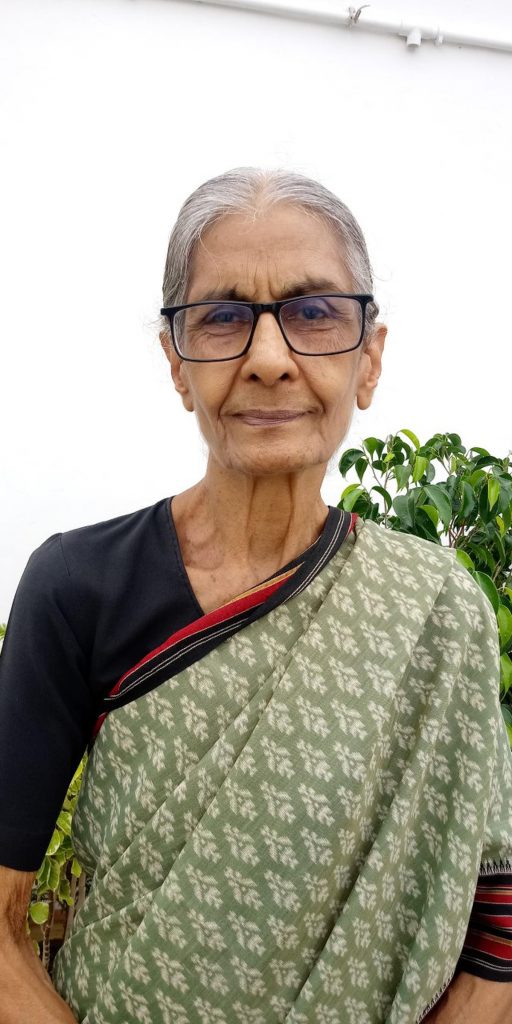
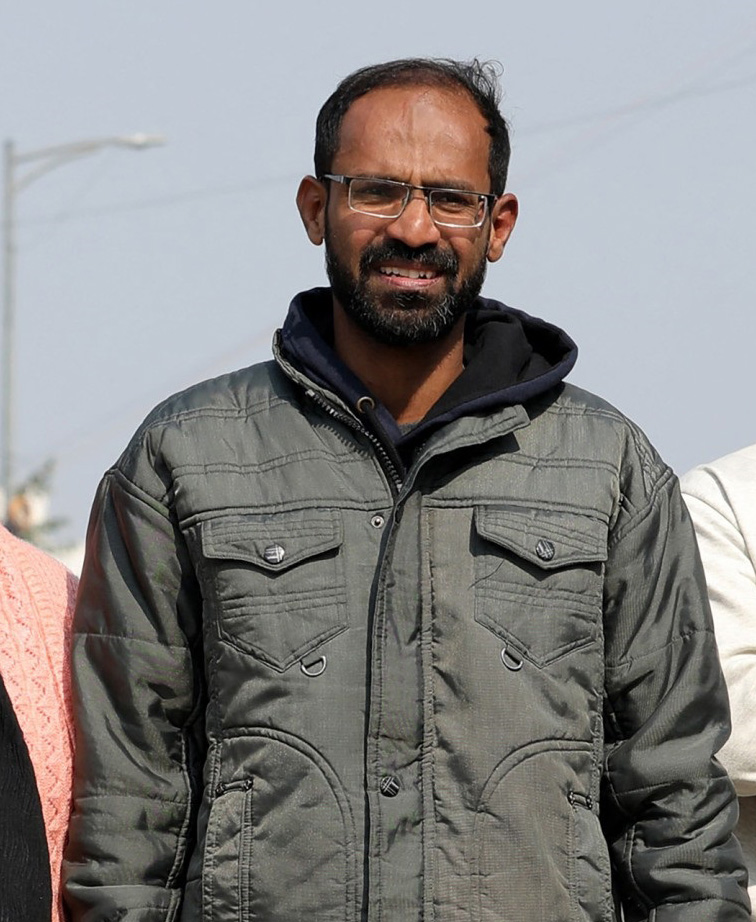
Her courage and grace shine amid gloomy times

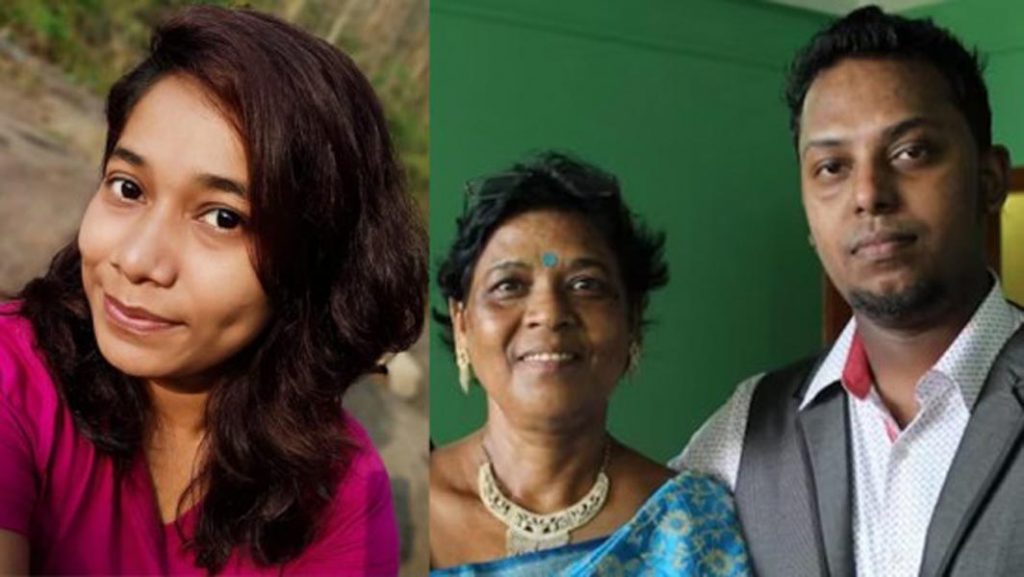
Prof Roop Rekha Verma, former acting V-C of Lucknow University, carried the courage to stand as surety for the release on bail of scribe Siddique Kappan, who had been languishing in jail for months

Upcoming on 8 March, the International Women’s Day. And perhaps I’m expected to focus on this day. But as I’ve been writing all along, this day is of little or nil significance for me, because it’s been hijacked by the political-opportunist lot to deliver fancy-fashionable speeches and more along the strain.

Prof Roop Rekha Verma

How can one even dare think in terms of ‘celebrating’ this day when blatant violations are taking place! When raped women are finding it tough to get their convicted rapists kept lodged in prisons cells. Yes, I’m referring to Bilkis Bano, whose rapists and killers of her daughter and other family members, have managed to get released from the prison cells, roaming out freely whilst she and the alive members of her clan are surviving in sheer anxiety and apprehensions.

There would be hundreds and thousands of our women whose survival is at stake whilst we go on giving speech after speech!The ground realities are so alarming that after sunset it getsdifficult for an unescorted woman to even walk down the street; chances of getting molested and abused hold out. More so, in the so called developed smart cities!

And though the Women’s Day is still days ahead but I can well imagine the speeches and skits and sessions lined up; with the speakers trying to outdo the other in terms of flowery speeches, that is!

If was I to vote for the one particular woman who truly deserves an award on this day, it ought to be the Lucknow-based Professor Roop Rekha Verma.

Siddique Kappan

Last summer, in 2022, Professor Roop Rekha Verma, former acting vice chancellor of the Lucknow University, carried the courage to stand as surety for the release on bail of Siddique Kappan – the journalist from Kerala, who had been languishing in jail for several months in Uttar Pradesh.

The bail conditions required the surety of two residents of the state, and with the prevailing political climate, nobody seemed keen to come forward. Till, of course, Verma volunteered to stand surety for this journalist. According to me it’s a huge gesture to reach out to a prisoner in deep distress.

Today women of the stature of Verma are rare. Though she must be in her late 70s but not letting age come in way, she  is there to help out  citizens of the country, whose  basic human rights  have  been  bypassed or sabotaged  or violated by the system and by those manning it.

And what particularly impressed me about her is the fact that she keeps an extremely lowprofile. Far, far away from the media glare. Always dressed in simple cottons, sans any trace of make-up, she stands out with her personality- modest and humble and so very dignified.

What if Empress Razia Sultan was still ruling Delhi!

Reading, rather re-reading, verse after verse on the erstwhile ruler of Delhi, Razia Sultan. What if she was still ruling here, in the capital city? Not to be overlooked the fact that she lived hundreds of years back. Perhaps, over 800 years back, but till date she stands out.

In fact, today’s modern-day poets have been writing verse after verse on her, on her courageous brilliant moves. Quoting verse on her, from Bushra Alvi Razzack edited anthology -‘Dilliwali – Celebrating the woman of Delhi through poetry – A multilingual anthology’:

These lines of Aabha Vatsa, from her poem- Mallika Delhi: Razia Sultan –

“Razia Sultan, the darling daughter/

Of Iltutmish, the Sultan of Delhi/

Was born with a meteoric destiny/

That blazed Medieval India. /

Her reign of less than four years/

A torch bearer/

Not just for women of the contemporary world/

But as long as life exists/

Razia/

No Sultana/

But the Supreme Sultan herself/

Grew up as a princess/

Regal and beautiful/

Totally aware of the destiny/

That Allah had bestowed on her…”

And this verse of poet Rajesh Joshi, titled – Razia Sultan:

“Though soft at heart/

Melting at a glance/

Of that big black man, Altunia/

A slave /

And she a princess/

She was a woman of substance/

Razia Sultan/

Reigning her rule over Delhi/

The first ever Muslim woman ruler/

Surpassing her two brothers/

In matters of mind /

In matters of might /

Holding the sword in her young hands /

Dropping off the veil/

And donning the garb of a man/

Refusing to be called Sultana/

Just the wife of a king/

Sultan herself was she/

Fighting till the end/

Never surrendering/

Though soft was she at heart/

To fall in love/

To look into the sorrows of her people/

Yet strong enough/

To be remembered till day/

The Razia Sultan/

Not only ruling over the sultanate of Delhi/

But the heart of people too.”

And also these lines of poet Abhay K.:

“Razia Sultan/

Queen and king fused in one/

As Ardhnarishwar- Parvati and Shiva/

I ruled the court dominated by men/

With my seductive charm/

As a tigress/

Gently turning the wheel of time/

Delhi eagerly awaits my return/

To rescue her women/

Raped in moving vehicles/

To answer their distress calls.”

After land retrieval drive, property tax move raises hackles in J-K

The imposition of the property tax by the administration has invited criticism from the people and political parties in Jammu and Kashmir. PDP president Mehbooba Mufti has even urged people of J-K to peacefully refuse to pay property tax, writes Riyaz Wani

Close on the heels of an all-out drive to retrieve government land, a move that involved the bulldozing of the houses and commercial establishments, the imposition of the property tax by the administration has run up against widespread criticism from the people and political parties in Jammu and Kashmir. More so in the Jammu division where the move has also triggered sporadic public protests and severe opposition from civil society groups. 

National Conference leader Omer Abdullah has asked the administration to leave this important decision for an elected government to decide, saying there should be “no taxation without representation.” 

Peoples Democratic Party (PDP) president Mehbooba Mufti urged people of Jammu and Kashmir to peacefully refuse to pay property tax. She said that the levying of the tax was part of the BJP’s agenda of impoverishing the people of the Union Territory.

“The real aim is to make people of Jammu and Kashmir so poor that they don’t demand anything. Look at the rest of the country, 80 crore people are getting free ration. They don’t ask for jobs or cheaper fuel,” Mehbooba said at a recent press conference in Srinagar. “They just wait for the 5 kg grain so that they can feed their children. They want to bring Jammu and Kashmir also to the same level.” 

Similarly, in the Jammu division, the tax has been opposed by parties other than the BJP. Democratic Azad Party leader Ghulam Nazi Azad has urged the administration to postpone it for a few years until the economic situation in the union territory improves. Congress has also opposed the measure. 

In a related development, the mayors of the twin capitals of the Union Territory have also spoken out against the tax. Srinagar City Mayor, Junaid Azim Mattu, termed the step “arbitrary” saying that it was not approved by the elected urban local body. Jammu Mayor, Rajinder Sharma, said that the property tax was imposed by the administration and not by the Jammu Municipal Committee. 

Though the BJP in the UT hasn’t publicly opposed the move, it hasn’t also supported it. The party’s J&K president Ravinder Raina was seen maintaining silence in response to a question by a reporter, the video clip of which has since gone viral. 

However, Lieutenant General Manoj Sinha has defended the move, saying the uproar over the minimal property tax was unjustified. 

“In J&K, people pay to use internet data, buy I-phones and play videos, I wonder why there is a hue and cry over the imposition of property tax,” Sinha said while addressing a function in Jammu. “It is the responsibility of the government to serve the interests of the citizens in the best manner possible. But if the affluent sections won’t pay taxes for services availed, this is a matter which needs a loud thinking.” 

The property tax rates will be 5 percent of taxable annual value (TAV) for residential properties and 6 percent for commercial properties. The tax follows the still ongoing campaign to retrieve the government land occupied by people which too has generated a deep public unease. The land being retrieved includes the Roshni land, which was earlier handed over by the previous governments to its occupiers under a scheme.  The scheme, which was meant to raise Rs 25,000 crore to finance the purchase of hydropower projects from the centre by selling state land under unauthorized occupation turned out to be a damp squib. It has fetched only a few hundred crores since it was enacted in 2002 which makes the revenue earned from the land disproportionately less than the target. The administration is now citing this as a rationale to retrieve the land. 

However, unlike the recovery of government land, levying a property tax touches everyone’s skin, so it is facing a bigger public backlash. 

“People of Jammu and Kashmir have suffered over the last four years due to troubled situation and Covid lockdowns. This has badly affected our economy,” said Sunil Dimple, president of Mission Statehood, an organization in Jammu. “So, we are not in a position to pay the property tax and will protest it until it is withdrawn.” 

Demand for release of ‘Bandi Singhs’ stirs passions in Punjab 

The delay in the release of Sikh prisoners, who are lodged in jails despite having served their terms, is an emotional issue for a section of state’s people. While Congress and SAD support their release, the AAP government is non-committal on the issue. A report by Rajendra Khatry

The issue of the release of `Bandi Singhs, is rocking Punjab of late. A section of activists and political parties has stepped up pressure on the Bhagwant Mann-led Aam Aadmi Party (AAP) government to demand the release of Sikh prisoners who have been languishing in prison for several years now. They were convicted of involvement in militancy in Punjab years ago.

The release of ‘Bandi Singhs’ in jails despite having served their terms, is a very emotional issue for a section of people in Punjab. The Congress and the Shiromani Akali Dal have been supporting their release, but the ruling AAP government in the state is non-committal yet. 

Bandi Singhs are Sikhs of Punjab who were arrested for their alleged involvement in militant activities. They were charged under law and found guilty of various crimes. They were meted out sentences which ranged from death to different terms of imprisonment. 

Militancy led to a lot of suffering for the people of Punjab.The era marked the concept of state terrorism in its most notorious form. According to sources, the Bandi Sikhs were not actually criminals. Many of them were said to be some misguided youth who took up arms to further their political and religious beliefs.

Unfortunately, their means and actions were not correct and proper. Some also resorted to violence.They deserved punishment no doubt, but they have been in various prisons for a long time now and have not yet been released.

A section of people very strongly feels that once the period of militancy waned in Punjab and gradually ended, these Bandi Singhs should have been given clemency. It could have been based on good behaviour, assurance to live in accordance with constitutional norms and a commitment to abjure violence of any kind. As they were not regular criminals, they could have been pardoned also.

According to reports, most of the prisoners continue to remain in jails even after completing their prison terms. Most of them are old now and can hardly pose any threat to society. Many actually need help and emotional support from their respective families which otherwise they are denied now.

It is true that a movement for release of the Bandi Singhs has been going on for a long time now. Many political parties and Sikh Panthic (religious) organisations have raised their demand from time to time. Unfortunately such moves are often to gain political mileage.

One can ask if there have been real intentions and moves on the part of the political parties, social groups or sections of people to work for their release. The half-hearted approach therefore has not served the purpose and in turn the government too has not paid much attention in the past. 

According to Jaspal Singh Manjhpur, a lawyer and champion for the cause of Sikh prisoners, there are around 21 Sikh prisoners, serving life sentences in the jails. The Qaumi Insaaf Morcha is seeking the release of nine “Bandi Singhs”.

Recently, several armed members of a Sikh organisation, including Nihangs on horseback, under the banner of ‘Qaumi Insaaf Morcha’ injured around 40 Chandigarh policemen as they clashed with the police at the Chandigarh-Mohali border in Punjab while trying to force their way through the barricades. This raised serious questions of law and order in Punjab. 

The ‘Qaumi Insaaf Morcha’ members have been protesting for the release of `Bandi Singhs’ or Sikh prisoners who they claim are lodged in different prisons across the country although they have already completed their sentences.

The videos of the incident clearly showed how the protesters, which included Nihangs, attacked Chandigarh police with swords and sticks. The protestors fought with the Chandigarh police and beat them up even as they tried to force their way through the barricades. They also damaged several police and private vehicles.

The Chandigarh police had put up barricades near the Chandigarh-Mohali border to prevent the protesters who have been protesting for more than a month. The protesters tried several times to move towards Punjab Chief MInister Bhagwant Mann’s residence but were stopped at the Chandigarh-Punjab border. But violent clashes made the intention of the protesters very clear.

Now bulletproof tractors have been deployed by Punjab Police at the border of Chandigarh where 31 members of the “Qaumi Inssaf Morcha” had performed `Jaap’ (religious rituals), in Chandigarh on February 13 last.

Incidentally, among the prominent Sikhs whose release are being demanded by the Bandi Singhs are Devinder Pal Singh Bhullar, Balwant Singh Rajaona, Lakhwinder Singh, Gurmeet Singh, Shamsher Singh, Gurdeep Singh Khera, Jagtar Singh Hawara, Paramjit Singh Behora and Jagtar Singh Tara besides others.

 are in Burail jail, Chandigarh, Lal Singh, Waryam Singh and many others. 

Devinder Pal Singh Bhullar was held guilty by a Delhi court and was  jailed in Tihar.  He is now said to be in Nabha jail. Gurmeet Singh, Lakhwinder Singh, Shamsher Singh were tried by the court of the UT Chandigarh. They were convicted. They are now serving a jail term in Burail Jail, Chandigarh. 

Another prisoner, Balwant Singh Rajaona was held guilty for the assassination of Punjab Chief Minister Beant Singh in 1995. Earlier he was scheduled to be hanged on March 31, 2012. But his execution was stayed on 28 March, 2012, by the then UPA government because of a mercy petition to the President filed by the SGPC.

Yet another prisoner, Gurdeep Singh Khera was held guilty by a court in Karnataka. Gurdeep was lodged in a jail in the state earlier. He is reported to be in Amritsar jail now. 

Similarly,Jagtar Singh Hawara was also found guilty of being a conspirator in the assassination of former Punjab Chief Minister Beant Singh. He is presently serving a jail term in Tihar jail, Delhi. Hawara is also a high-level member of Babbar Khalsa and was declared Jathedar of the Akal Takht by the rival SAD (Amritsar) group. However, the declaration was contested by the SGPC.

Through legal process and due to the notification of the Union Government, the six Bandi Singhs released from 2019 to date are Nand Singh, Subeg Singh, Balbir Singh, Harjinder Singh, Lal Singh. Kulvir Singh is currently lodged in Central Jail, Ferozepur (Punjab) and has no case pending against him.

Many of the prisoners were convicted under the Terrorist and Disruptive Activities Act (TADA) that was first enacted in 1985 to tackle terrorism in Punjab. The act was removed in 1995 due to increasing public opposition. 

From time to time, many organisations have demanded release of Bandi Singhs. It is said their requests went unheard by the government because they could not provide correct details of the prisoners. Due to this the government’s response was also not as expected. 

Earlier, the Supreme Court stayed the remission (or partial relief) by state governments in the case of convicts sentenced to life terms. However, according to the legal experts there are two options still available to the Punjab government in case it wants to extend some relief to prisoners. These options are pardon or suspension of punishment (by way of parole or furlough).

Ajnala violence brings back Punjab’s ‘dark days’ memories

In releasing one of the close aides of radical leader Amritpal Singh in a kidnapping case, a day after a massive attack on a police station in Amritsar by his supporters, the AAP government in Punjab seems to have caved in to the pressure of radical elements. A report by Rajesh Moudgil

Just about a fortnight ago, the Punjab police had nabbed one Lovepreet Toofan, accused in kidnapping and assault case and an aide of radical preacher Amritpal Singh, little aware of its ramifications.

On February 23, virtually hundreds of supporters of radical leader and a Khalistan sympathiser Amritpal, attacked Ajnala police station and injured several police personnel, demanding Toofan’s release, till night on that day. Led by their leader Amritpal, the supporters stormed into Ajnala police station, carrying swords, traditional weapons and even guns, breaking through heavy police deployment and barricading, demanding Toofan’s release, who they held was falsely implicated.

Next day – February 24 – Lovepreet Toofan walked out of jail on the basis of an application filed by Amritsar police for his release in which the police said the lawyer of the accused had given evidence in the court that the accused was not present at the spot in the alleged case of kidnapping.

Amritpal, Toofan and several others were booked by police on February 16, 2023, in a case in which he had allegedly kidnapped one Barinder Singh from Ajnala, taken him to an unknown place and brutally beaten him.

Dubai-returned radical preacher, Amritpal, 29, was made the head of the Sikh organisation “Waris Punjab De’’, which was set up and funded by Punjabi singer Deep Sidhu, who died in a road accident in February last year. Amritpal was also in news recently for his alleged threat that Union Home minister Amit Shah would meet the same fate as that of former Prime Minister Indira Gandhi.

Reminiscent of dark days

The incident has put the ruling Aam Aadmi Party (AAP) government in poor light even as it has come under heavy fire from opposition with the president of the principal opposition party Congress president Amarinder Singh Raja Warring condemning it.

While warning the AAP government against letting such incidents go without law taking its own course, Warring said, people of Punjab had not elected the AAP government to push Punjab back to the dark days of violence. “What we are seeing today is reminiscent of the past which every Punjabi is scared of”, he said, while asking the Chief Minister Bhagwant Mann to take firm action.

Warring further warned that Punjab could not afford another era of darkness and violence which, he held, people like Amritpal were trying to thrust on the state. Lashing out at the AAP government for succumbing to the pressure of the protesters and deciding to withdraw the cases of violence, he warned chief minister Bhagwant Mann that the latter was setting a dangerous precedent and there would be no end to it. He asked him to let the law take its own course and not surrender to lawlessness.

Condemning Amritpal for carrying holy Bir of Guru Granth Sahib to the police station, Warring said, it showed only his (Amritpal Singh) cowardice.

Another opposition party, Shiromani Akali Dal (SAD), president Sukhbir Singh Badal also came down heavily on the incident stating “the sacrilege committed by lawless elements at Ajnala trying to use the Holy Sri Guru Granth Sahib Ji as a shield for their selfish motives and by taking the sacred scripture to a police station’’. He lashed out at both the BJP government at the Centre and the AAP government in Punjab for vitiating the atmosphere and ruining the hard earned atmosphere of peace and communal harmony in the state.

The BJP also blasted the AAP government with its senior leader Capt Amarinder Singh stating the Ajnala incident not only indicated a complete collapse of the law and order situation in Punjab but was more serious than that. The state BJP vice president Subhash Sharma said that the incident was an open challenge to the state government and Punjab police.

However, the AAP Cabinet minister Kuldeep Dhaliwal held that police personnel were attacked by the protesters by using holy Guru Granth Sahib as a shield and that the police acted with restraint. Accusing opposition of running slanderous campaigns to tarnish AAP government image, cabinet minister Kuldeep Dhaliwal held that the law and order situation was intact in Punjab.

Guv-Mann ties sour further

Meanwhile, another worrying scenario in Punjab is that instead of any thaw, the relationship between the governor Banwarilal Purohit and the chief minister Bhagwant Mann continues to sour.

Sample this: In response to a governor’s letter expressing his displeasure over not replying to his queries, Mann said in a Tweet (in Punjabi) that he had received his letter through media ….. all the subjects mentioned in the letter were all state subjects. He said that he and his government were accountable to three crore Punjabis according to the Constitution and not to any Governor appointed by the Central Government. Mann went on to add that this may be seen as his reply.

Last week, Purohit held that he would allow the budget session to take place only after receiving legal advice on the chief minister’s “extremely derogatory and patently unconstitutional tweets’’ in response to a February 13 letter from Raj Bhavan. The Punjab Cabinet had decided to hold the session on March 3 and had thus requested the Governor to summon the House.

The governor had, in a letter to Mann on February 13, raised questions about the selection of school principals for a training trip to Singapore, saying he had received complaints of “malpractices and illegalities” in this regard. He had also questioned the appointment of Guninderjit Jawandha as the Punjab Information and Communication Technology chairman pointing out that his name figured in a kidnapping and property grabbing case.

The governor also looked askance at the promotion and posting of IPS officer Kuldeep Singh Chahal as the Jalandhar police commissioner and the Naval Aggarwal, a non-official, attending the meetings of senior officers where sensitive and confidential matters of security of the country were discussed. Purohit had also raised questions over the non-disbursal of scholarships to 2 lakh SC students.

 The governor told the chief minister that the people of Punjab had elected him (Mann) to run the administration as per constitution and not according to his “whims and fancies’’.

 However, Mann in his written reply, said: “You have asked me on what basis the principals selected for training in Singapore. The People of Punjab want to ask, on what basis are the governors in different states selected by the central government in the absence of any specific qualification in the Indian Constitution?” he wrote.

 Meanwhile, the AAP government is also said to be upset with the governor over the latter’s interactions with the media about the complaints he had received about the rampant availability of drugs in the state and the criminals indulging in grave crimes from inside jails.

Odisha govt faces oppn barbs over probe into Minister Das’s death

The BJD government has come under fire from the BJP and the Congress with former alleging that portraying the accused police officer Gopal Das as a mental patient was a deliberate plan of the government to make the court take a lenient view on his crime, writes Aravind Mohapatra

Even as Odisha police delve deeper into the motive behind the sensational murder of former health minister Naba Kishore Das on January 29 in the western Odisha town of Brajrajnagar, a war of words has erupted between the ruling Biju Janata Dal (BJD) and the opposition over the state government’s move to seek the help of the Federal Bureau of Investigation (FBI) of the United States to crack the case  by finding out what was the exact mental state of the assassin, Gopal Das, a sub-inspector of police.

Making a statement in the state Assembly on the case, Chief Minister Naveen Patnaik recently said, “The State Crime Branch is seeking the help of the Federal Bureau of Investigation of the United States of America, as they have the best expertise in behavioral analysis in such cases.”

“We have requested the Ministry of Home Affairs, Government of India, to facilitate an evaluation of the behavior of the accused by the Behavioral Support Unit of the FBI of the United States of America. I want to reassure the House that no stone will be left unturned in ensuring a full, fair and open investigation in the case with the assistance of the best forensic experts in India and abroad,” Patnaik added.

Patnaik also expressed his shock over the politicization of the sensitive case. “In the aftermath of this terrible incident, the manner in which this very sensitive case is being politicized has shocked me as well as the people of Odisha. It is disturbing to see the baseless and malicious allegations that are being made. Independent judiciary is one of the strongest pillars of our democracy. After the honourable High Court has appointed a retired High Court Judge to monitor the investigation of the case, the whole police investigation will be subjected to judicial scrutiny. So, what is the need to do politics in the case and make baseless and malicious allegations? We should all respect and have faith in our independent judiciary,” said the Chief Minister, who expressed shock over the fact that the killer was a policeman.

However, opposition appears unfazed by Patnaik’s statement that some leaders of opposition, especially those belonging to the BJP, have been pointing accusing fingers on the entire state police force. Senior BJP leader and Leader of Opposition in the state assembly, Jayanarayan Mishra hit out at the ruling party. “The Chief Minister woke up after 24 days of Naba Das’s death. There is nothing new in his statement. The Crime Branch investigation is still revolving around Gopal Das. The CB is shying away from investigating the motive behind the murder. CM is still not willing to hand over the investigation to the CBI, and instead has put his faith in the FBI,” said Mishra who was one of the first to question how an official gun was issued to the accused police officer if he was of unstable mind and under treatment for a mental illness.

The ongoing budget session of the Odisha Legislative Assembly has been witnessing repeated ruckus over the issue with both BJP and Congress attacking the government. The BJP has also been raising heat over the issue outside the assembly. Senior BJP leader and former director general of police Prakash Mishra has alleged that portraying the accused police officer Gopal Das as a mental patient was a deliberate plan of the Odisha government to make the court take a lenient view on his crime. Mishra said, “I have gone through the media reports and have been closely observing the developments after the murder of the minister. I feel that the prosecution will present before the court that since Gopal is a mental patient, his punishment can be relaxed.”

Mishra further said while the police are yet to find the bullet that pierced Naba Das heart, the announcement of his death was delayed to save dismissed ASI Gopal. “Now Gopal can tell the court that if he fired at Naba, where is the bullet? Besides, if his bullet pierced the minister’s heart, he would have died instantly. Since Naba was alive till 7 pm, he did not die due to firing from Gopal’s gun. About his presence near the minister, Gopal can say that when he heard the gun firing, he rushed to the place to find out what happened. Since Naba was taken to Bhubaneswar, he does not know how he died,” said the former cop-turned-politician.

Mishra said it was in the light of these facts that BJP was demanding investigation into the case by an impartial agency like CBI. The BJP leaders also criticized the chief minister. The BJP MP from Bargarh, Suresh Pujari said, “We are not politicising the issue. The State should have faith in the CBI.  Time may come when they will seek the help of other international agencies like Russia’s KGB and Israel’s Mossad.”

Reacting to BJP’s allegation, BJD spokesperson and MP SasmitPatra said, “ The CBI had also referred cases earlier to the FBI. There are more than 25 cases like Bhanwari Devi Murder Case, SunandaPushkar Death Case and murder of national-level shooter Sippy Sidhu, where FBI help was requested.”

On the other hand a local court in Odisha recently refused permission for further mental evaluation of Gopal Krishna Das, the prime accused in murder of former Odisha Minister Naba Kishore Das.  The court’s refusal to examine Gopal Das came as a blow to the Crime Branch of Odisha Police, which is under tremendous pressure to find the motive behind the high profile murder. “Accused Gopal Krishna Das had a prolonged history of mental illness. Due to the mental ailment of the accused a Special Medical Board was constituted consisting of four psychiatric experts. The board examined him and carried out the analysis at Jharsuguda,” said the Crime Branch in a statement. The board later opined that there was a need to have a detailed examination of the accused to come to a definite conclusion about his mental health, it said.

“Subsequently, further comprehensive psychological, psychometrical and mental evaluation in National Institute of Mental Health and Neurosciences (NIMHANS), Bengaluru was prayed for by the prosecution before Judicial Magistrate First Class-1, Jharsuguda on Monday, in accordance with the advice of the medical board of four expert doctors who had previously examined and evaluated the psychological or mental condition of the accused,” said the Crime Branch. However, the court rejected the plea.  The investigating agency will now examine the certified copy of the court order and take further legal steps in the matter.

Meanwhile even as the ruling and opposition leaders continue to exchange barbs over the issue with leader of opposition Jaynarayan Mishra calling the Crime Branch probe directionless and Congress Legislature Party leader Narasingha Mishra questioning why the investigating agency was busy trying to prove the accused mentally ill people seem to have great faith in the ability of additional director general (ADG), Crime Branch, ArunBothra who has earned a name for himself by solving some high profile cases in the past. He was the officer who solved the infamous Patnagarh“ wedding bomb” case of 2018. After a massive search and investigation led by Bothra, the police in 2020 finally arrested a college teacher in connection with the case. It was one of the most complicated cases in the crime history of Odisha.  

Bothra, who hails from Rajasthan, also solved the sensational murder case of a 5-year-old girl Pari in Nayagarh in 2020. The minor girl’s body was found in a gunny sack near a pond in her village in July that year. The 1996 batch IPS officer unearthed the plot behind the sensational murder and arrested an 18-year-old student for the crime. Bothra was subsequently promoted to additional director general of police (ADGP) rank.

While serving as a police officer, Bothra has also been in charge of Odisha State Road Transport Corporation (OSRTC) as its CMD. As the managing director of Capital Region Urban Transport (CRUT), Bothra is credited with making the city bus service, called Mo Bus, in Bhubaneswar, Cuttack and Puri comfortable and dependable. The Ministry of Housing and Urban Affairs declared this bus service as the Best City Bus Service Project in 2019.

Love in times of instant gratification and the clash between two Indias

Vastly different values are pulling a young and aspirational India in two different directions. Till we are able to find a common meeting ground, there will be a lot more Nikkies, Shraddhas and Amarjyotis

“The course of true love never did run smooth.” These lines from the ‘Midsummer Night’s Dream’ by William Shakespeare are the universal truth. But when the world-famous bard was writing about misunderstandings between lovers, little did he imagine that a few centuries down the line, the path of true love would be slick with blood, gore and mind-numbing cruelty!

Dishearteningly, every other day one hears gruesome tales of love gone wrong and betrayal of the worst kind.

Take the case of Nikki Yadav for instance. Her husband Sahil Gehlot, is accused of killing her, stuffing her body into a fridge, and then marrying another woman the same day! What lack of respect for life, love, and human relationships? How can you kill someone you once loved and then callously go and marry someone else the same day? Where do you get the chutzpah to do that from?

And what was Nikki’s crime? She had married Sahil for love and was resisting his attempts to leave her and marry someone else. In her desperation, she had threatened to post the marriage certificate of the Arya Samaj temple where they got married, on social media and to show it to the family of the prospective bride. So, Sahil decided to eliminate her. No fear of the law. No remorse. And in the process, he ruined another woman’s life too. I wonder what the new bride is going through right now.

We also have the case of Vandana Kalita, a woman from Assam who killed her husband Amarjyoti Dey and mother-in-law Shankari Dey, chopped up their bodies and kept them inside a fridge in Assam’s Noonmati, a neighbourhood in Guwahati before throwing the body parts some 150 km away in Meghalaya’s Cherrapunji area. Kalita’s relationship with her husband was strained as she was having an extramarital affair. So, she chose to end her marriage this way.

In both these cases, the people were married and had obviously fallen out of love with their spouses. They murdered their spouses just because they wanted the relationship to end. A lot of people seem to have forgotten what American author Jodi Picoult has so simply put, “You don’t love someone because they’re perfect, you love in spite of the fact that they’re not.”

Nobody is perfect. You aren’t either. So work on the relationship, talk to each other, and opt for counseling. Make it work. But in today’s fast-paced world, people are increasingly becoming commitment-phobic. And even if they do make a commitment they tire of it easily. Worse, their tolerance threshold is low and they seem to fall in and out of love very quickly.

So, the big question is, are we turning into a society of selfish, self-centred individuals who are little princes and princesses in our own minds? Has Gen X brought up people who have difficulties in navigating life’s vagaries and facing the curve balls that invariably come our way? 

One question that always comes to mind when I read about people in an unhappy or failed marriage killing their spouse is: Why kill? Why can’t you simply seek a divorce if you can’t make it work?

I think the answer lies in the fact that we are living in times of “instant gratification.” We are so used to instant coffee, instant tea, instant noodles, and instant food being delivered online, instant shopping where there is instant gratification! We can book tickets online in an instant. We can order transportation online in a jiffy. We have high-speed Internet where your patience is not tested by having to wait for connectivity. Society seems to have forgotten the virtue of patience and waiting and working towards making something perfect. 

So, in these times of instant gratification, people, especially the young and restless, do not want to opt for the long, time-consuming, and hard path of trying to make things work in a relationship or even divorcing an estranged spouse. Because they know that in the Indian justice system getting a divorce is a time-consuming process. The courts, rightfully so, are in no hurry to tear a family asunder. They want to give an estranged couple as much time as possible to work toward reconciliation. So, the young and restless find it easier to get rid of the “problem” instantly by taking the law into their own hands. Whether they took the time to think of the consequences of their actions, only they can tell. But to them, it was an instant solution to their pressing “problem.”

Then there is the phenomenon of easy access to multiple partners and finding love on dating sites. Gone are the times when people took months to woo a person or even work up the courage to talk to them. Dating was hard and access to the opposite sex was limited. As people had to work hard to win that love, it was precious.

Don’t get me wrong. Dating sites are good because they bring so many people together who in real life would not have a chance or confidence of finding love. But the flip side of it is that their arrival has changed the dating scene. They have become an extension of the “instant” culture. You have access to thousands of like-minded people looking for love, so choices are fast and limitless. The value of that hard-won prize has gone down because of the easy and instant access to a host of other “fish in the sea”. The attitude is if it won’t work out with this one I can always get someone else. Just like Aftab Poonawala did, when he started dating other women and even brought them home while Shraddha Walker’s body parts were lying in the fridge. I bet that young lady who was with Aftab at that time must now be having nightmares about what happened and thanking her stars that she came out of the whole thing alive!

Then there is this other aspect which is the clash between the old and the new, the mismatch between traditional expectations and modern aspirations. The dichotomy between the two Indias we are living in. We are a country with a very young demographic. Hence, we are going through a major social and cultural transition where there is bound to be disjunction and polarity between culture and value. So, while at one level the younger generation’s mindset has changed extensively, their apron strings are still tied to those rooted in our traditions and culture.

So while there are lakhs of people who will genuinely be in love with the person they chose to live with or marry on their own without parental consent, the remainder of them are still struggling to cope with this new India. While on their own, they are happy to meet, date and live-in with a modern, financially independent person of their choice but when it comes to marriage they will either willingly marry a person who will gel well with the family or they will give in to parental pressure and marry a person of their parents’ choice. Some, like Sahil Gehlot, will think nothing of dumping or killing their live-in partner to please the parents.

Whether we admit it or not, these vastly different values and mindsets are pulling a young and aspirational India in two different directions. The result is that many are confused and some are falling victim to this upheaval which is pulling our social fabric asunder.

There will be a great many casualties in the fight between these two different Indias that we live in. Till we are able to find a common meeting ground, there will be a lot more Nikkies and Shraddhas and Amarjyotis. How long will it take us to strike a working balance or whether we will ever be able to do it, only time will tell! I just hope we can strike that balance sooner than later.  

How to deal with challenges posed by burgeoning population of elderly?

As of today the population of the  jobless and pensionless elderly, as compared to the youngsters, has been on the rise in most countries of the world. They are only waiting to be declared persona non grata by their near and dear ones any moment, writes Amitabh Srivastva

Japan may be the first country where the elderly are being told to commit harakiri or become more open to euthanasia, as Yusuke Narita, a Yale professor suggested recently but it puts its finger on a raw nerve and may  have reverberations across the globe.

Going by the way better health care and early detection of diseases is increasing the average life span of the elderly, drastically  altering the demographic divide in most countries, the day is not far when a ‘Shoot at sight’ would be the order of the day.

As of today the population of the useless, jobless and pensionless elderly, as compared to the youngsters, has been on the rise in most countries of the world. They are only waiting to be declared persona non grata by their near and dear ones any moment.

Monaco with 36 % population above age 65 tops the list followed by Japan at 29% and Italy with 24% being the top three countries with a burgeoning population of the elderly.

World economists had been warning for almost a decade that lesser young working hands who have all the purchasing power would upset the table for growth.

It was predicted that at this rate India, with the biggest young population in the world would beat the US as the most prosperous country of the world by 2050, beating the nearest contender China hollow.

The Western countries did not take this seriously because they all thought this was only about China which had enforced a strict one child norm for over a decade and a half. China did change the rules, even offering incentives for producing more babies, but it came too late as India has already overtaken China in numbers this year.

However no one had planned for the after effects of the two year pandemic on the entire world economy since 2020 which ruined all the plans and forecasts of fortune tellers and we are living in desperate times. Revolt against the elderly who are increasingly seen as parasites is in the rise across the globe and it is infectious.

In this very year 2023, thousands descended the streets in France to protest President Emanuel Macron’s decision to raise the retirement age from 62 to 64. Besides, this decision sparked heated debates in Parliament showing that the divide was much deeper among the politicians.

The idea is catching roots and there is no going back. A Japanese Oscar nominated film  ‘Plan 75’ made in 2022 by first time director Chie Hayakawa talks about a chilling future when the elders of the country would be left in the forests or a mountain top to die because they had outlived their utility.

Does this remind us of the Hindu Varn Ashram system which divides a man’s life in four parts Brahmcharya (birth to 25 years), Grihasthya (25 to 50), Vanprastha (50 to 75) and Sanyas (75 to 100).

The Merriam Webster dictionary describes Vanprastha as a forest dwelling Hindu hermit especially: one in the third stage of the Brahmanic scheme of life.

Unlike Shakespeare, who declared that there were seven stages in a man’s life the Hindu Varna system held in high esteem, assuming the average age of humans at 100 says that there are only four stages as described above. What is important here is that it decrees that a normal man must renounce his family, his profession, his belongings and retire to become a hermit and go to a forest at 50.

We don’t know what future this suggests for the fate of the elderly or the Vanprastha but a news published in the ‘Times of India’ five years back is very disturbing.

In the Pilibhit Tiger Reserve in Uttar Pradesh forest officers were surprised to find a number of body parts of old men eaten up by tigers in the forests, according to the Times of India report of 2017.

They discovered to their horror that the villagers near Pilibhit would leave their elders in the forests to be eaten up by tigers. They would then spread their bones and body parts in the fields to claim hefty compensation from the government.

When confronted by the authorities, instead of being ashamed or guilty the villagers said that the elders were a willing part of this deal. We can only imagine how they must have ‘volunteered’ for this harakiri.

Not to be left behind, Bollywood too came out with its own version of the horrifying story in 2022 titled’ Sherdil: The Pilibhit Saga’ written and directed by Srijit Mukherjee starting Pankaj Tripathi, Sayani Gupta and Nereraj Kabi in the lead roles.

Incidentally, even though this is not related, the population of tigers in India has been steadily on the rise. The human population had been matching this which is proved by the fact that India has overtaken traditional rival China as far as population is concerned. But talking about tigers, the statistics of Project Tiger run by the National Tiger Conservation Authority (NTCA) showed that there were 1411 tigers in 2006 which went up to 2967 in 2018.

And again incidentally eight more Cheetahs were added to India’s already growing population of Tigers in 2022 brought from Namibia and released in Kuno National Park in Madhya Pradesh. A dozen more were added three days back.But as said earlier that is only incidental.

When noted humour writer Jonathan Swift suggested cannibalism as a means to prevent Ireland’s kids “from being a burden on their parents or country for making them beneficial to the publick” in ‘A modest proposal’ in 1729 it was taken as a satire.

But no one seems to be shocked when mass suicides, or leaving the ‘useless elderly’ increasingly seen as parasites, in the forest, is in the news. It just reads like an item in a crime bulletin issued by the local police.

Eucalyptus plantation poses threat to farmlands

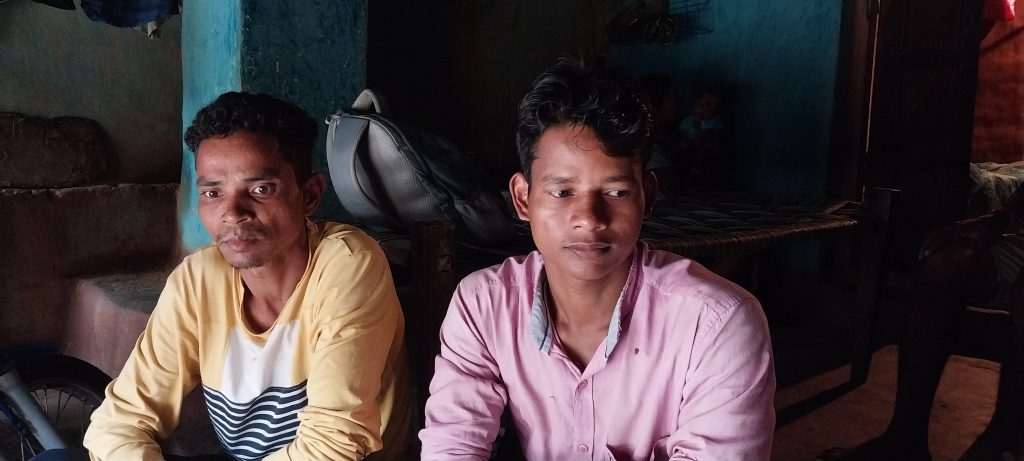
In several villages of Odisha’s Rayagada district, tribal farmers have handed over their lands on lease for the cultivation of eucalyptus. But it is giving rise to soil infertility and water shortage, writes Deepanwita Gita Niyogi

As the sun slowly set in, two Kondh tribal women led the way to their dongar lands in Muniguda block of Rayagada district in Odisha. These are traditionally situated in hilly slopes and the women climb daily to reach them. Here, they grow millets and pulses. Dongar plots are known for their mixed cropping system where 10-12 types of crops are cultivated.

But though dongar cultivation is continuing, a change has come about in the low-lying lands in Muniguda where plots, once owned by tribals, are now being used for eucalyptus cultivation for paper mills. As a result, lands are becoming infertile and the soil moisture content is reducing. As eucalyptus needs a lot of water in order to survive, this is affecting water availability.

“In case there are lands surrounding a plot having eucalyptus, farming suffers as the trees suck a huge quantity of water. But many tribals are giving away their lands on lease for the crop to people coming from Andhra Pradesh and Telangana at a minimal rate for ready cash. Often, it is Rs 3,000 per acre for 12 months. There are local middlemen at play,” Jagannath Manjhi, a resident of Muniguda, said. In the beginning, the rate offered was Rs 1,500 per acre for a year. Then it was increased to Rs 2,000 per acre annually.

Trinath Hikaka, a resident of Boriguda village of Rayagada, is aware about this situation and is worried. According to him, it is happening in villages like Purikona, Badameridi and Shibarampurtoo. “The people who are growing eucalyptus on lands after taking them on lease are outsiders. They are taking the lands for 15-20 years.”Over a chat at his home, Hikaka informed that a few of his friends have given over cultivable lands for eucalyptus and even cotton cultivation. According to him, such monoculture plantations are leading to severe ecological implications.

Adverse impacts

In Muniguda block, the dominance of eucalyptus plantations is leading to problems like soil infertility and groundwater shortage, a few residents of Bhimpur village informed. In the village, eucalyptus plantations have been started on leased out lands and at least four families have given over their lands. Bhimpur comes under the Agulo gram panchayat.

“Middlemen came to the village asking for our lands. They came over a year ago, took our lands on lease and offered very less money to farmers,” said Bhimpur resident Domrudhar Poushika. He added that farmers have given their lands on lease for 12 years. But due to this, those having lands nearby plantations are facing water scarcity. Poushika also handed over his land on lease spread over five acres for 12 years. He used to cultivate millets. “At first locals came and held discussions with me. Then people from outside came.”

Doneshti Kadraka from Bhimpur is facing issues in cultivation. He is a Kondh tribal and grows paddy on six acres of land along with pulses. “Mostly non-tribals come and urge tribal farmers to give up their lands. Chemicals are used for eucalyptus. Tribal farmers never use pesticides to grow millets and paddy,” said Poushika. According to Manjhi, some farmers who have given their lands on lease are thinking of taking legal aid to get them back.

A grave issue

Tribals are attached to their lands. When lands become infertile, crops fail and income suffers. The issue is becoming serious day by day. Citing the instance of a farmer, Poushika pointed out that he has not carried out cultivation for a year. Many who have leased their lands are working as labourers. In Bhimpur, which has 37 households, out of three borewells one is not yielding water anymore.

Hari Gouro, a resident of Telangapodor village in Muniguda, said in the block farmers of about 10 villages have given lands on lease for eucalyptus. Persuasion is mainly done through soft words. He cultivates cotton on his land as there is water shortage. He has six acres.

Pradeep Anajaraka of Telangapodor is into farming. His family has eight acres of land in his grandfather’s name. “Some outsiders came and threatened us. They also damaged a tree. It was there for years marking the land boundary. Another farmer, Munna Anajaraka, said land sharks are snatching tribal lands. “First they buy non-tribal lands and then try to encroach upon tribal lands. This is a common technique. But some tribals too are leasing lands on their own.”

In Telangapodor, Domru Dhakpraska has given his land on lease for 12 years. He had six acres. However, unlike others, he has a separate paddy land. “But as eucalyptus impacts lands nearby one cannot grow anything if there are plantations all around. Many farmers are suffering because of this,” he said.

An article published in 2019 in The Journal of Peasant Studies by Amit Mitra and Nitya Rao talks about eucalyptus plantations triggering a change in cropping patterns in the tribal-dominated Koraput district of Odisha. This has implications for control over land and decision-making, gendered work and diets. It is titled “Contract farming, ecological change and the transformations of reciprocal gendered social relations in Eastern India.”

Sibabrata Choudhury, chief executive at Odisha-based non-profit Living Farms, which works in Rayagada, said the organisation is laying emphasis on sustainable alternatives through seed conservation and agro-ecological farming to help farmers ride over the crisis.

Manish Sisodia’s portfolios given to Kailash Gahlot, Raaj Kumar Anand

New Delhi: After Manish Sisodia’s resignation from the Delhi cabinet, the AAP government has decided to assign his departments to two of his cabinet colleagues – Kailash Gahlot and Raaj Kumar Anand – till the new ministers are inducted into the cabinet.

Out of 18 departments that Sisodia was leading, the responsibilities of eight departments, including Finance and PWD, have been given to Gahlot, while the remaining ten departments that includes Education and Health have been assigned to Anand.

With the new responsibilities given to Gehlot and Anand, both ministers will have now 14 departments each.

Gahlot was already handling six departments that includes Law, Justice and Legislative affairs, Transportation, Administrative Reforms, Information Technology, Revenue, and Women and Child Development.

While Rajkumar Anand was the minister of four departments – Gurudwara Elections, SC & ST, Social Welfare, and Cooperative.

Meanwhile, Gopal Rai currently handles three departments – Development, General Administration Department, and Environment, Forest and Wild life. Imran Hussain has the responsibility of two departments – Food & Supplies and Election.

MOST POPULAR

HOT NEWS