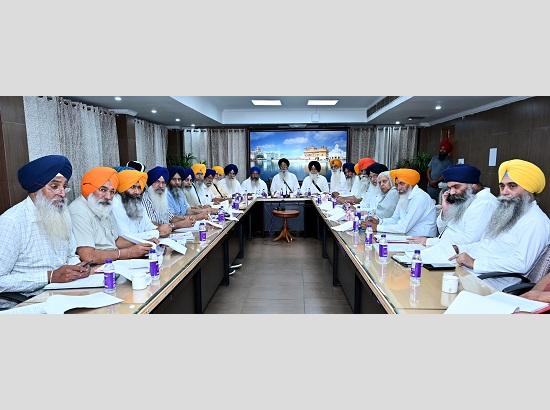
Amritsar: The Shiromani Gurdwara Parbandhak Committee (SGPC) has registered opposition on behalf of the Sikh community, declaring the Uniform Civil Code (UCC) proposed by the Bharatiya Janata Party-led Centre government as unnecessary in the country.
After a serious discussion about the UCC in the SGPC’s Executive Committee (EC) meeting presided over by SGPC President Harjinder Singh Dhami, it has been decided that there is no need for UCC in the country, while the Constitution recognizes the principle of unity in diversity.
Speaking to the media after the EC meeting, Dhami said that there is an apprehension among the minorities in the country regarding the Uniform Civil Code that this code will hurt their identity, originality, and principles. On the issue of UCC, the SGPC has constituted a sub-committee of Sikh intellectuals, historians, scholars, and lawyers, which at the preliminary stage considered the UCC as suppression for the existence of minorities, their religious rites, traditions, and culture. This sub-committee includes SGPC general secretary Bhai Gurcharan Singh Grewal, senior Sikh lawyer Puran Singh Hundal, SGPC members Advocate Bhagwant Singh Sialka, Advocate Paramjit Kaur Landran, and Bibi Kiranjot Kaur, Prof Kashmir Singh, Dr Inderjit Singh Gogoani, Dr Paramveer Singh, and Dr Chamkaur Singh. He said that as per the opinion of this sub-committee, the SGPC EC has expressed opposition against the UCC.
Dhami said that any challenge to bani bana (Gurbani and traditional Sikh attire), bol baale (words or thoughts which are sublime or supreme as well as high and true), principles, traditions, values, lifestyle, culture, independent existence and distinct entity of Sikhs can never be accepted and the Sikh Maryada (code of conduct) cannot be tested by the worldly law. Therefore, the Sikh community opposes the UCC. He said that the 21st Law Commission had also rejected the UCC terming it as neither desirable nor feasible.
About the other decisions at the EC meeting, the SGPC President said that the case against Congress leader Jagdish Tytler, accused of murdering three Sikhs at Pulbangash Gurdwara Sahib in Delhi in 1984, will be pursued by the SGPC. He said that the CBI has filed a chargesheet in the court against Tytler and the fees of the lawyers fighting this case will be paid by the SGPC. He said that after the Delhi Sikh Gurdwara Management Committee (DSGMC) backed down on this matter, now the SGPC has decided to pursue this case.
Dhami said that the EC has also approved setting up a project to digitize the old handwritten holy saroops (scriptures) at Gurdwara Sri Goindwal Sahib. He said that old handwritten holy saroops of Sri Guru Granth Sahib arriving for the last rites at Goindwal Sahib will be identified and digitized under this project. This decision has been taken from the perspective of preserving the old valuable Sikh heritage.
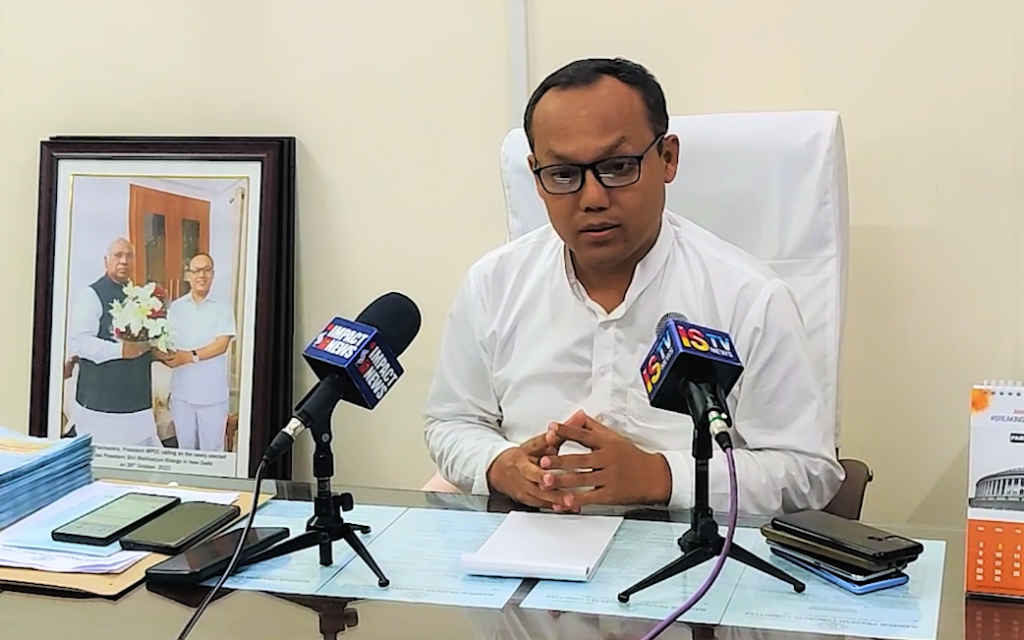
Manipur Pradesh Congress Committee President Keisham Meghachandra has expressed his doubts regarding the ability of the state government to effectively address the ongoing unrest in Manipur. In a press conference held at Congress Bhavan in Imphal on Thursday evening, Meghachandra strongly criticized Chief Minister N Biren Singh led incumbent government, labeling them as the weakest in the political history of Manipur.
During the press conference held at Congress Bhavan in Imphal, Meghachandra highlighted the Bharatiya Janata Party’s (BJP) recent meeting in Guwahati, which aimed to strategize for the upcoming 2024 Lok Sabha polls. He deemed the meeting irrelevant and accused the BJP of sidestepping discussions about the critical situation in Manipur. Meghachandra emphasized that organizing such a meeting was inappropriate given the crisis gripping the state.
One of the major points of contention raised by Meghachandra was the silence of Prime Minister Narendra Modi on the violence unfolding in Manipur. The state has experienced significant loss of life, widespread destruction of homes, and the displacement of over 50,000 people. Expressing deep concern, Meghachandra lamented the Prime Minister’s silence, questioning his priorities, citing instances of engaging in cabinet meetings and election campaigning in other states instead of addressing the plight of the people in Manipur.
Expressing his frustration over Mr. Modi’s perceived indifference to Manipur and prioritization of other states, Meghachandra, who is also an MLA of the Wangkhem assembly constituency, raised the question of the significance of Indian citizenship, saying, “What is the meaning of citizens of India? Here, our children are displaced, and thousands of houses have been torched. At this crucial junction, if they are discussing political strategy for the election, what’s the need for Manipur to be a part of India? This is the question people are raising. Our political party, the Congress, is asking.”
Expressing grave concerns about the government’s inability to restore normalcy, Meghachandra stated, “Under this government, we are all going to die. This is the weakest government I have ever seen in my life and in the political history of Manipur.”
He further criticized the unified command and the government, saying: “This weak government. The unified command is not in the hand of the state government but with the central government. Then, what’s the need of having a state government and governance? Are we under the democratic system? These questions have erupted. That’s why we are skeptical of these political game plans that have been unfolding.”
Meghachandra asserted that the Congress party has refrained from politicizing the current crisis in Manipur. He emphasized their continuous efforts to initiate peace and seek assistance from central leaders. However, he expressed disappointment over discussions about election strategies during such a critical situation. He suggested that this focus on the upcoming elections validates people’s perception that the turmoil in Manipur is part of the Bharatiya Janata Party’s game plan. Meghachandra characterized this situation as unfortunate, as it diverts attention away from the immediate concerns and hardships faced by the people.
Commenting on the recent visit of Congress senior leader Rahul Gandhi to Manipur, Meghachandra accused the BJP of criticizing the visit during their meeting in Guwahati. He defended Gandhi’s visit, highlighting that it was solely intended to assess the conditions and empathize with the pain and sorrow of both communities affected by the unrest. Gandhi refrained from making any political statements and instead appealed to the government and the Hon’ble Governor to provide necessary care for the injured and displaced individuals. Meghachandra strongly condemned the BJP’s act of criticizing Gandhi’s visit in their meeting.
Meghachandra shed light on the hardships faced by the people of Manipur and emphasized the urgent need for the state government to find a solution. He criticized the government’s failure to address the issue, which has persisted for over two months, resulting in a paralyzed state with halted activities in every sector. The soaring prices of essential commodities and the prevailing unrest have caused immense hardships for the people.
Furthermore, Meghachandra highlighted the negative consequences of the internet ban, including communication gaps, disruptions to student’s online work, hindered banking services, and adverse effects on businesses and job opportunities. He expressed dismay over the BJP’s focus on election strategies and their criticism of the Congress party, Rahul Gandhi, and his peace mission, deeming it immature in light of the current circumstances.
In his concluding remark, Meghachandra reiterated the Congress Party’s condemnation of the BJP’s meeting, which allegedly failed to address the issue in Manipur. He expressed deep disappointment over the absence of discussions on how to quell the violence, alleviate the hardships faced by the displaced, and aid those suffering in relief camps. Meghachandra emphasized the unfortunate nature of this situation in the present context.
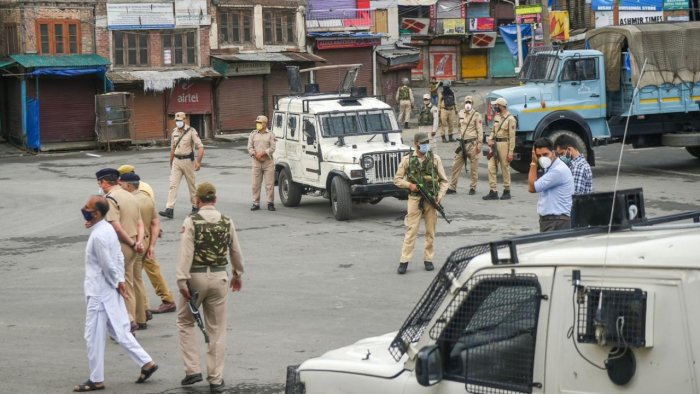
The Additional Director General of Police (ADGP) Kashmir, Vijay Kumar on Wednesday directed officers to adopt new mechanisms to ensure the neutralization of remaining militants during his visit to the South Kashmir districts of Shopian and Pulwama.
The ADGP Kashmir instructed the officers to focus on gathering human intelligence (Humint) and to collaborate with security forces in launching anti-terrorist operations. He emphasized the importance of taking preventive legal measures to curb recruitment into terrorist ranks. Each police officer in the district was assigned to work on different terror modules under the close supervision of the district SSP.
The district police chief of Shopian briefed the ADGP on the modified joint area domination and zero terror plan.
At Pulwama, the ADGP held a meeting with the DIG Police, Commanding Officers of 182 and 183 Battalions of the Central Reserve Police Force (CRPF), and the district police chief Pulwama. He commended the officers for their efforts in eradicating the remnants of terrorism and urged them to continue working together to conduct precision-based operations.
The ADGP stressed the need for special teams and innovative mechanisms to ensure the neutralization of terrorists.
The SSP Pulwama received specific directions to identify and take strict action against Over Ground Workers (OGWs) involved in the recent recruitment of two individuals into terror ranks in the district.
During the meetings, an overview of the districts was provided, and specific guidelines were issued to the officers to achieve targeted outcomes.
In addition to the security measures already in place, the ADGP directed additional measures to prevent terror incidents. The meeting also addressed the identification of hybrid terrorists and discussed appropriate actions to be taken against them.
The ADGP highlighted the importance of strengthening police-public relations and adopting a service-oriented policing approach. These measures are aimed at gaining the confidence and trust of the general public.
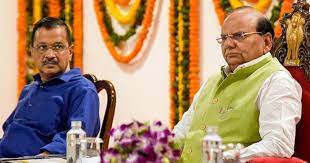
Delhi Chief Minister Arvind Kejriwal has responded strongly to an order issued by the Services Department of the Delhi government, which has halted the engagement of Fellows, Associate Fellows, Advisors, Deputy Advisors, Specialists, Senior Research Officers, and Consultants.
The order stipulates that prior approval from the Lieutenant Governor is mandatory for all such appointments.
“This will completely strangle the Delhi government and its services. I don’t know what the Hon’ble LG aims to achieve by doing all this. I hope the Hon’ble Supreme Court immediately quashes it, ” Arvind Kejriwal tweeted on Thursday.
The Services Department of the Delhi government has issued a directive, instructing all departments to halt the engagement of various positions, including Fellows, Associate Fellows, Advisors, Deputy Advisors, Specialists, Senior Research Officers, and Consultants.
This order explicitly states that these appointments can no longer be made without obtaining prior approval from the Lieutenant Governor.
The latest order has sparked a fresh controversy between the L-G and the Delhi government.
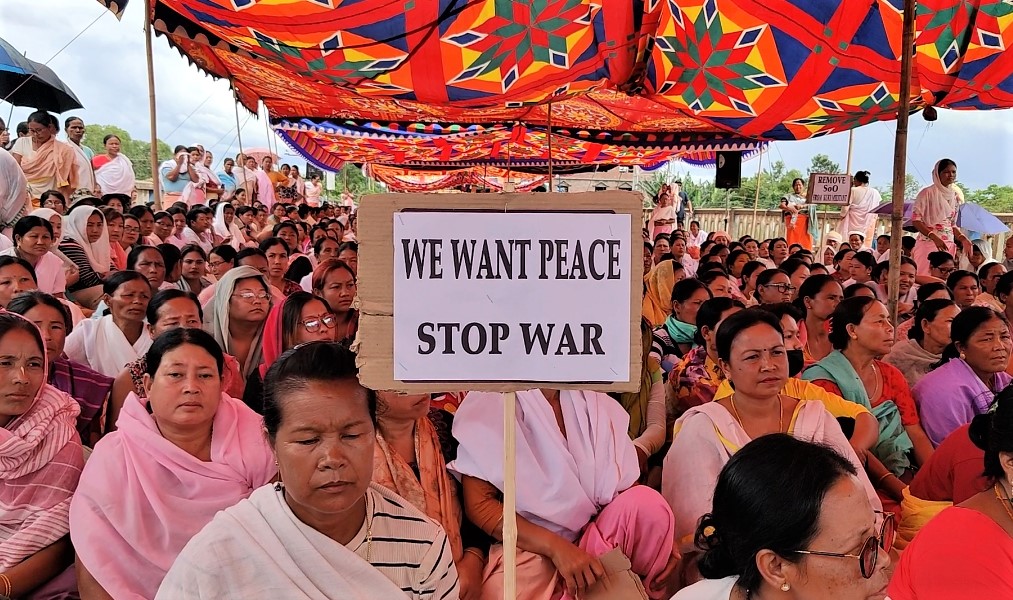
In a powerful display of unity and determination, thousands of women gathered at the Sekmaijin Bazar bridge to stage a sit-in protest, effectively blocking the road. The demonstration was prompted by the shocking disappearance of two young individuals from the area, whose brutal killings were captured in videos circulating on Facebook, allegedly at the hands of Kuki militants. The missing youths, Sagolsem Ngaliba and Irengbam Chinkheingamba, both from Sekmaijin Khunou in Kakching district were last seen on July 4, and their whereabouts remained unknown.
Thounaojam Ayangleima Chanu, one of the women protesters, expressed her outrage at the viral videos, stating, “We have been deeply concerned about the safety of these two youths since July 4, given the ongoing situation in the state. To our dismay and horror, we witnessed on Facebook two viral videos showing our children being tortured and mercilessly slain by Kuki militants, shot in the head and dumped into a pit. We have witnessed this brutality, and it is unbearable.”
Ms. Chanu stressed the significance of the sit-in protest, emphasizing that they could not allow their youth to perish in such a manner. “We cannot stay silent. That’s why we organized this protest, to voice our anguish. We are deeply hurt by the way the state and central governments are handling the situation in Manipur.”
Furthermore, the protester criticized the state government for its failure to control the situation when it initially erupted in the Churachandpur district on May 3. Pointing out that the state government could have sought assistance from central forces to quell the violence in its early stages, Ms. Chanu questioned the “silence” of the state government as the violence continued, wreaking havoc on lives for over two months.
“Is the chief minister of Manipur a mere puppet of the central government?” Mr. Chanu asked, posing the question they wanted to ask the union government. She voiced the growing belief that the state government was dancing to the tune of the central government and questioned why Prime Minister Narendra Modi had remained silent, failing to address the current situation where both Kuki and Meitei communities have suffered casualties and witnessed their homes reduced to ashes.
Ms. Chanu further questioned the motive behind Mr. Modi’s foreign visits while state leaders, womenfolk, and lawmakers of Manipur went to meet him in New Delhi. She challenged his audacity to leave India, giving importance to foreign affairs, by asking, “Isn’t this his land? Isn’t Manipur a part of India?”
Emphasizing the bravery of the women force, Ms. Chanu declared, “If the government is unable to control the situation, they should remove all security forces. We, the women, are ready to pick up arms, be it a spade or a dao, and confront the Kuki militants. Withdraw the Indian security forces, Assam Rifles, and let us save our land ourselves.”
The protesters announced their intention to submit a memorandum to the Manipur Chief Minister and Deputy Commissioner, demanding that all available resources be deployed to locate the remains of the two youths within three days so that their families can perform their last rites.
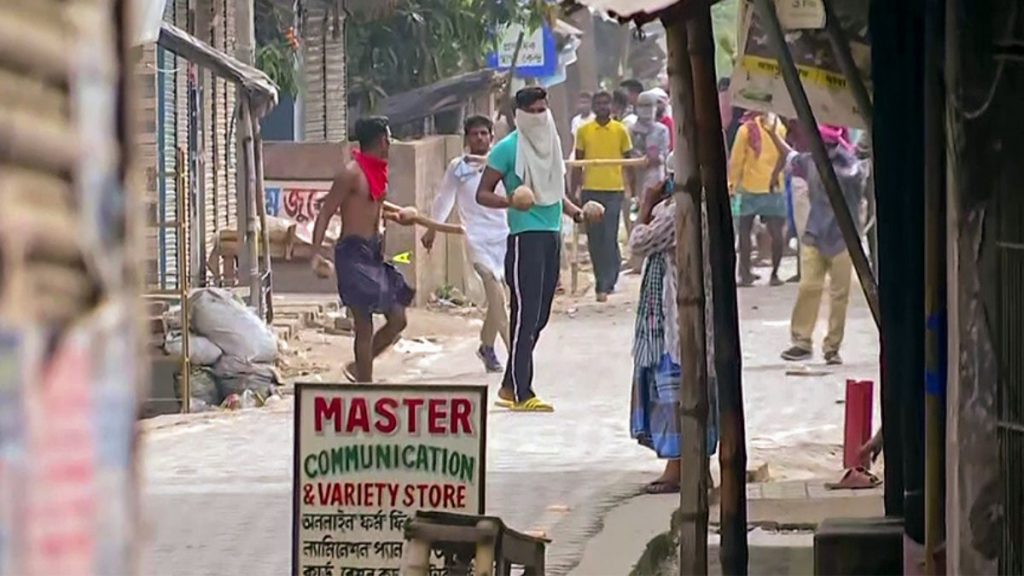
Kolkata: The overall death toll in connection to the pre-poll violence in West Bengal over the upcoming panchayat elections has increased to 15 after the nephew of a local Trinamool Congress leader was killed in a crude bomb explosion.
The blast took place at Deganga in North 24 Parganas district on Tuesday night amid clashes between activists of the ruling and opposition parties.
The victim has been identified as Ibram Hossain (17), the nephew of Trinamool Congress leader Md Arsadul Hoque.
The 15 fatalities have occured since the polling date for the rural civic body elections was announced on June 8.
Addressing mediapersons, Hoque claimed that he and his nephew were attacked a joint team of CPI(M) and All India Secular Front (AISF) activists while they were returning home on Tuesday night.
“They hurled crude bombs towards us, killing my nephew. My appeal to the administration is to arrest the assassins and take strong action against them, ” he said.
However, the lone AISF representative in the state Assembly, Naushad Siddique has denied the charges and said that the unfortunate incident was a result of infighting in the ruling party.
Trinamool Congress Rajya Sabha member, Santanu Sen said it has become a trend of the opposition parties to first attack and kill the ruling party workers and then cry violence in the state to mislead people.
Police on Wednesday morning arrested five persons in connection with the murder.
They will be presented at a lower court at Barasat in North 24 Parganas later in the day.
The development took place a day after the state DGP Manoj Malviya described the incidents of violence and clashes as sporadic.
“Stray incidents of violence and clashes are being blown out of proportion and projected in a big way. There had been a couple of incidents, where the police had taken prompt action. We are working as per guidelines. The situation is well under control and incidents of violence have come down. The media is projecting minor incidents as major ones. This is not done, ” Malviya said.
The panchayat elections will be held on Saturday and the counting of votes will take place on July 11.
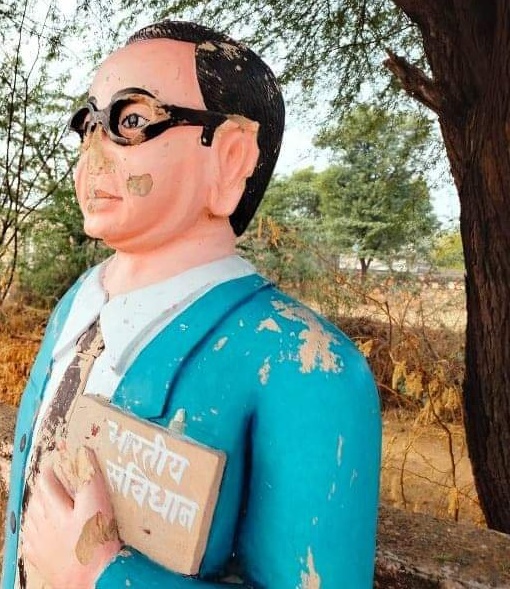
Lucknow: A statue of Dr B.R. Ambedkar was vandalised in Lucknow after which the locals staged a protest against the incident.
The incident took place on Tuesday in Bargadi Kalan village.
The villagers have demanded the arrest of the miscreants before allowing the statue to be repaired.
“Till the time the police arrest the person who vandalised the idol of Dr Ambedkar, the idol will not be allowed to be repaired. The idol will not be touched in any manner because the accused will not be apprehended and jailed, ” the villagers said.
They added that the same statue was vandalised some 10 years ago as well.
However, the police somehow pacified the matter and got the statue repaired.
Later, a case was also registered against unknown people.
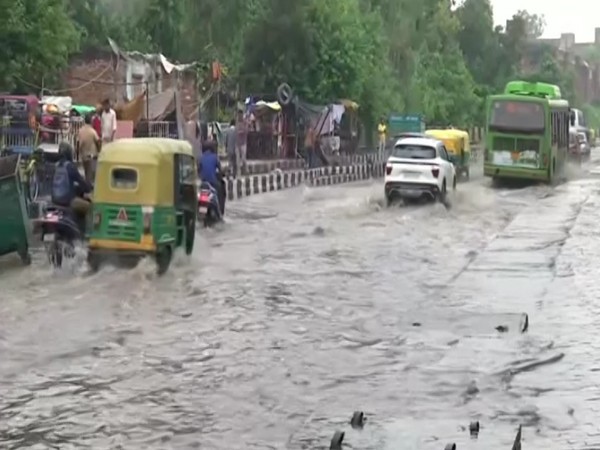
New Delhi : The national capital is likely to receive moderate rainfall on Wednesday, as per the India Meteorological Department (IMD).
While the minimum temperature this morning settled at 27 degrees Celsius, two notches below than Tuesday, the maximum is expected to hover around 35 degrees, it said.
The weatherman has issued a yellow alert, warning flooding on low-lying areas leading to disruption of traffic on key roads. Moreover, the relative humidity at 8.30 a.m. this morning was recorded at 85 per cent.
Over the next few days, the maximum temperature is likely to be above 31 degrees and below 34 degrees, and the minimum temperature to be less than 29 degrees but above 25.
Also in the coming days, the IMD has predicted moderate rain, light rain, drizzle or thundershowers.
Meanwhile, Delhi’s Air Quality Index (AQI) was recorded in the “moderate” category with a reading of 123 at 9 a.m., the Central Pollution Control Board data showed.
Notably, an AQI between zero and 50 is considered “good”; 51 and 100 “satisfactory”; 101 and 200 “moderate”; 201 and 300 “poor”; 301 and 400 “very poor”; and 401 and 500 “severe”.
An intense spell of rainfall is likely to continue over south Peninsular India and north Maharashtra till July 6 and over Gujarat till July 8.
The weather agency has forecast isolated heavy to very heavy rainfall over Konkan and Goa and ghat areas of Madhya Maharashtra during next five days.
Children anxiously await their share of food as volunteers distribute meals, at the relief camp in Praja Higher Secondary School, Lamsang.
Amidst the ongoing violence that shows no signs of abating, the people of Manipur continue to bear the brunt of the conflict. Displaced and left with no choice but to seek refuge in relief camps, thousands of individuals struggle to rebuild their lives. Barely seven kilometers away from the bustling heart of Imphal, a ray of hope flickers at Praja Higher Secondary School in Lamsang, where a relief camp has been established by the resilient residents of the area. Within its walls, over 80 individuals, including more than 45 school-going children, find solace and safety from the attacks and arson orchestrated by suspected Kuki militants.
Volunteers of Matai Society, Moirang, operating a Trauma Response Center (TRC), gather for a group photo after sharing their experiences.
The majority of the camp’s residents hail from Phayeng, and many of the children arrived without their parents. These young ones are being looked after by volunteers and a handful of guardians who have come from their respective villages to offer their assistance. Most parents made the difficult decision to send their children to the relief camp in order to protect them from the violence. These kids have big dreams and lofty ambitions, but their future hangs in the balance as the state government, led by N Biren Singh, has been unable to extinguish the fire that has engulfed Manipur for over two months. The continued violence has cast a dark cloud over the hopes and aspirations of these children.
Jackson Huirem, just 11 years old, watched helplessly as his house was set ablaze by a violent mob in Phoubakchao Ikhai, Bishnupur district. Despite this harrowing experience, he still aspires to become an IAS officer. Another child, Rojia Thingom from Phayeng, dreams of becoming a politician and one day serving as a minister. The dreams and aspirations of these children, and many others like them, are being stifled by the current situation and the government’s inability to regain control. As the violence persists, the government keeps postponing the reopening of schools, which only further dampens the children’s hopes.
In a commendable effort to help the children in the camp, Rupachandra Anoubam, a volunteer with a Postgraduate degree in Physical Education, has been conducting physical training classes. Recognizing the need to keep the children healthy and mentally sound, Anoubam started these classes at 6 am every morning, focusing on physical fitness and mental well-being. In addition to physical training, he also provides lessons on various subjects.
Another dedicated volunteer, Roosevelt Irungbam, who is pursuing a Ph.D. in Mathematics at Manipur University, teaches science and mathematics to students from grades 1 to 12. He aims to ensure that these children remain academically engaged and ready to transition back to formal education when normalcy returns to Manipur.
While Mr. Anoubam and Mr. Irungbam are doing their best to make a difference in the lives of these school-going students, Anganwadi workers from the area, including Ms. Mandakini Koijam, Mrs. Bhanu Aribam, and Mrs. Priya Anoubam, have also recognized the importance of providing classes to the younger age groups. Their efforts have been supported by government officials, including MLA Sorokhaibam Rajen Singh, who granted permission to start classes at the relief camp from June 1. Through singing, painting, and other preschool activities, these dedicated individuals are helping the children subside the conflicts in their young minds.
Although the volunteers and Anganwadi officials are doing their best to provide education and support to the children, their efforts alone are not enough. The relief camp relies on the tireless work of women from nearby areas who remain stationed there 24/7, caring for the kids and also tending to the needs of women and young girls, including their health concerns.
Laija Thokchom, one of the volunteers, explains their commitment: “A group of women, including myself, have been staying in the relief camp around the clock to look after the young kids and girls. I even brought my own kids to stay and play with them, making the relief camp feel like a home away from home.”
With over 80 inmates, including more than 45 children, the relief camp requires special attention regarding food, education, and other necessities. The camp’s sustainability depends on support from a few government offices as well as contributions from friends, family, and concerned individuals who have learned about the camp’s plight.
Joykumar Namoijam, another volunteer, appeals to people for help in running the relief camp smoothly. He emphasizes the camp’s independence from any club or organization and states that the current government assistance is insufficient. To provide essentials such as milk, tea, and items for infants, Mr. Namoijam requests support from the public.
Amidst these challenging circumstances, parents and guardians in the relief camp worry about their children’s future. Tilotama Huirem, whose house was burned in Phoubakchao Ikhai, expresses concern for her grandchildren: “Our house has been burned, and so has my grandchildren’s school. Given the ongoing violence, it is unlikely that classes will resume anytime soon. I worry about their future and the education they are missing out on due to the conflict. The government should prioritize restoring normalcy and initiating the rehabilitation process.”
Another relief camp, located 45 kilometers from Imphal at Moirang Lamkhai, just around 500 meters from the historic INA Headquarters, Moirang, was established to accommodate those fleeing clashes in Churachandpur and nearby Bishnupur areas. This camp, alongside a Trauma Response Center (TRC), was set up by Matai Society, an organization focused on skill building and economic development. The Trauma Response Center provides services to approximately 15 young children.
Balleck Moirangthem, a volunteer with the society, highlights the need for government intervention and support for TRC. He states that the center requires various materials, nutritional items, and training for volunteers to better assist the children. Mr. Moirangthem appeals to the government and potential donors to enable the camp and the Trauma Response Center to function optimally, ultimately helping the children return to a sense of normalcy and access proper education. This story sheds light on just two of the more than 300 relief camps that have been established throughout Manipur, providing shelter for over 50,000 displaced individuals. The ongoing conflict has taken a toll on both the people and the students, leaving parents and guardians from Kuki and Meitei communities deeply concerned about their children’s future. While it appears that the government is struggling to quell the violence, it is now crucial for lawmakers to take decisive action in restoring normalcy. In addition, it is vital for individuals to step up as responsible citizens, supporting the government’s efforts to find democratic solutions and bring an end to the suffering.
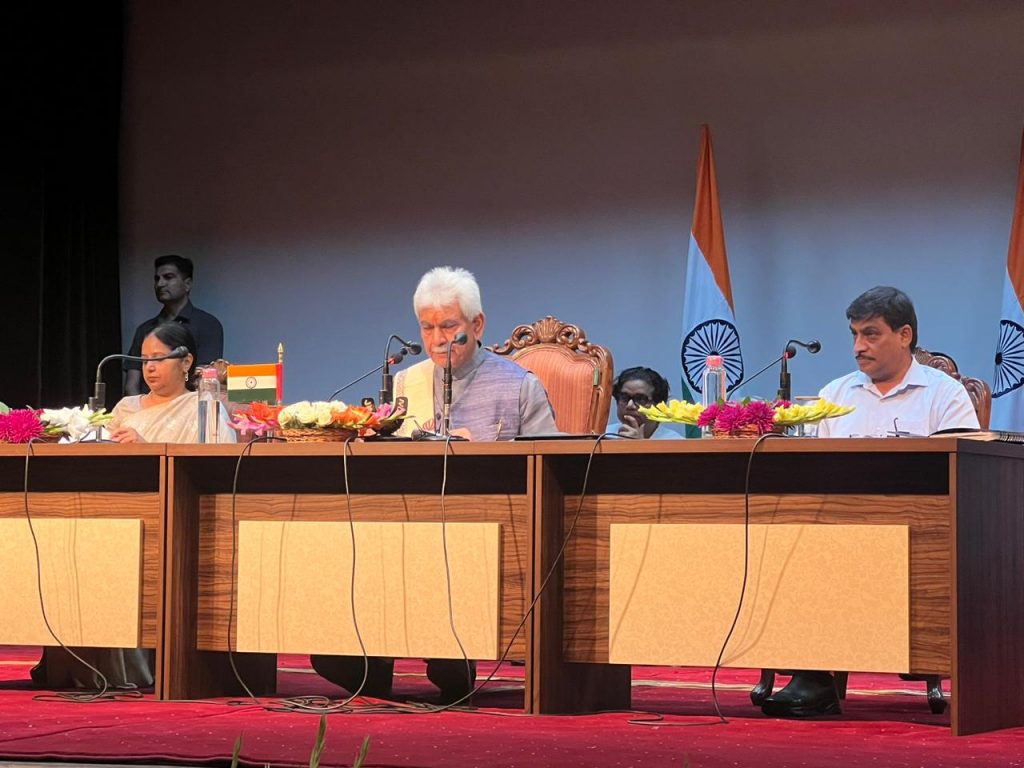
Jammu and Kashmir approves a proposal to provide land to landless people residing in the union territory. Under the Pradhan Mantri Awas Yojana-Gramin (PMAY-G), each landless family will be allocated 5 marlas of land.
The Lieutenant Governor, Manoj Sinha, expressed his enthusiasm, stating that this decision marks a historic day for Jammu and Kashmir and a new beginning for thousands of landless families.
“It is a historic day for Jammu and Kashmir and a new beginning for thousands of landless families,” L-G Manoj Sinha said. “This historic decision will prove to be a golden chapter in the administration’s effort for social justice, equality, respect, and equal opportunities to all citizens.”
He emphasized that this initiative will not only grant land ownership and housing to the landless poor but also contribute to improving their livelihoods, raising their living standards, and fulfilling their dreams and aspirations.
The allotted land will be provided to familes who are landless and those who reside in state and forest areas or any other prohibited construction zones.
Initially, the allotment will be limited to the remaining cases from the Permanent Waiting List (PWL) of 2018-19. However, in the future, during the launch of the next phase of the PMAY-G scheme in 2024-25, the same categories of landless beneficiaries who become eligible under the PMAY-G Phase-III may also be considered for land allotment.
To proceed with the allotment process, Deputy Commissioners have been instructed to review and assess the cases based on revenue laws. The Ministry of Rural Development has allocated an additional target of 1,99,550 houses for the union territory of Jammu and Kashmir for the fiscal year 2023-24.
To facilitate the allotment process, block-level camps were conducted from June 4 to 10 to collect the necessary documents from households. These documents include bank details, Aadhaar cards, MGNREGA job cards, ration cards, revenue documents, contact numbers, and a declaration stating that the beneficiaries have not already constructed a house and meet the scheme’s guidelines.
As of now, 1,44,385 houses have been registered, and 1,41,371 houses have been sanctioned to eligible households enlisted in Awaas Plus PWL, fulfilling a portion of the aforementioned target.