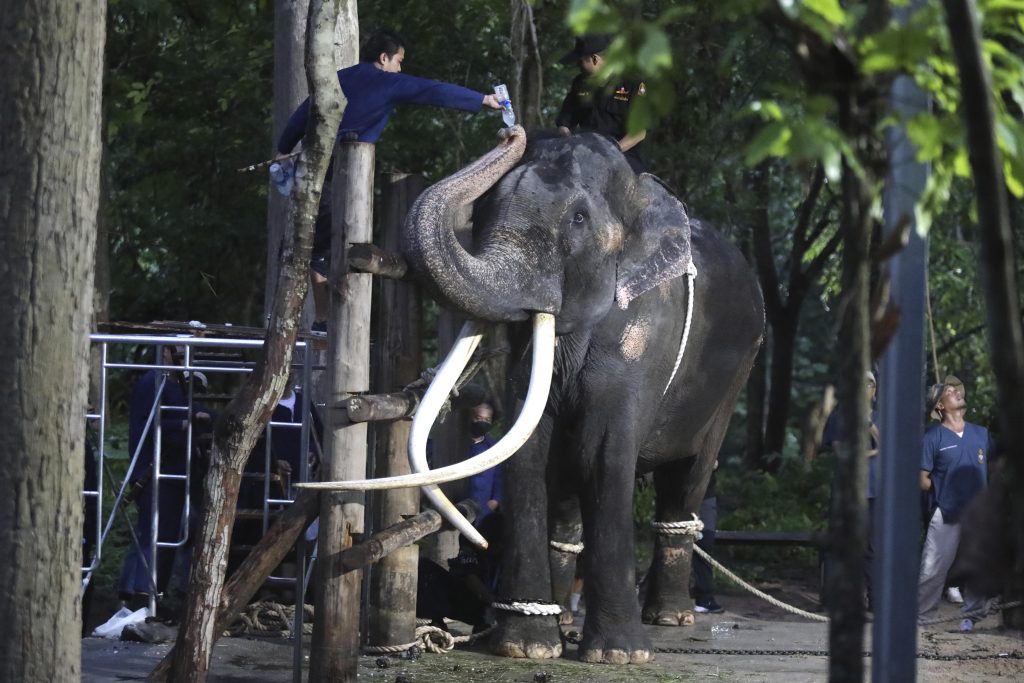
Animals are not objects to be used as diplomatic gifts

Kudos to Thai Govt for its jumbo effort to get its ailing elephant back. More countries should do what the Thai Government has done and bring back the animals that they have gifted if they are being treated badly.

As a journalist who goes through thousands of news items on a daily basis, I can safely say that it’s not often that I come across positive, heart-warming stories. So imagine my delight when I read this particular news item that stated that an “elephant that Thailand had presented to Sri Lanka more than two decades ago returned to his native land for medical treatment on June 2 following allegations that the animal was badly abused while living at a Buddhist temple.”


So, the story goes that the male elephant called Muthu Raja in Sri Lanka and Sak Surin in Thailand, was sent to Sri Lanka in 2001 when he was around 10 years old as a diplomatic gift from the Thai royal family. Muthu Raja was one of three elephants that Thailand gave to the Sri Lankan Government for training as a carrier of religious relics and he was placed in the care of the aforementioned Buddhist temple.
Then in 2020, a Sri Lanka-based animal rights group, ‘Rally for Animal Rights and Environment’ (RARE) revealed that Muthu Raja was in poor health due to years of hard labour and abuse, and needed urgent medical care.

RARE reported that the pachyderm was underweight, had rough skin and abscesses all over, thinning foot pads, and a stiff left foreleg, making it difficult for him to walk and stand. He was urgently in need of medical attention and some tender, loving care.

When the Sri Lankan Government allegedly ignored the activists’ complaints and calls for help for Muthu Raja, RARE began a petition calling for the pachyderm to be rescued. When all cries for help for the animal went unheard, they upped the ante and called for the elephant’s return to Thailand, its home country.

Fortunately for the poor, tortured soul, the Thai Government heard about his travails and in November 2022, Thailand’s Foreign Affairs Ministry released a statement saying a preliminary investigation was conducted into Muthu Raja’s state by the Thai Embassy in Sri Lanka and they came to the conclusion that the pachyderm “was not in good health and was enduring poor living conditions.”
They also declared that Thailand would seek Sri Lanka’s approval to take the elephant back home for treatment. But before he could be moved to Thailand for treatment they had to ensure that Muthu Raja was fit enough to undertake a plane journey. So, he was moved from the Buddhist temple to Sri Lanka’s National Zoological Garden for preliminary treatment where he was given care to help him revive.

After it was decided that Muthu Raja would be flown directly to northern Thailand’s Chiang Mai province from Colombo, the Thai Government began the jumbo task of getting him ready for the journey that would last roughly six hours.

Several mahouts were sent to Sri Lanka by Thailand to get the elephant accustomed to being caged so he wouldn’t panic during the long trip back to his home country.

A special container was built to hold the nine-foot-tall, four-ton pachyderm and a six-person team that included two veterinarians and four mahouts, on the flight back to Thailand on a Russian Ilyushin IL-76 cargo plane.

Consequently, when Muthu Raja arrived in Chiang Mai he was conscious and calm and was received by Thai Environment Minister Varawut Silpa-archa at the airport.

According to media reports, the pachyderm could be heard trumpeting from inside the container that was loaded onto a truck’s flatbed trailer to transport him to the Government’s Thai Elephant Conservation Center in Lampang province, where he will be quarantined for at least 30 days and stay for rehabilitation.
Thai officials have said the main purpose of bringing Muthu Raja back to the country was for medical care and whether he returns to Sri Lanka remains a subject to be discussed with the Government in Colombo.
One cannot help but commend the action taken by a small country like Thailand for standing up for the rights of one of its own, even if it was a four-legged citizen. They had to spend a whopping million baht (USD 540,000) for the elephant’s repatriation but they showed the largeness of heart and did it.

In fact, so gravely did Thailand take the ill-treatment of the poor elephant that had been given away as a gift to a friendly country that Sri Lankan Prime Minister Dinesh Gunawardena had to express regret to his Thai counterpart over what had happened to the elephant, during his visit to Thailand in May. And it was only right that Gunawardena apologised because Muthu Raja was in pain and covered in abscesses when he was rescued from the Buddhist temple last year. Animal welfare groups said the elephant had been forced to work with a logging crew and that its wounds, some allegedly inflicted by its handler, had been neglected. Now, Muthu Raja will undergo hydrotherapy in Thailand to treat an injury on its left front leg and hopefully have many years of rest and a good life till the end of his days.

Thankfully, export of Thai elephants is already banned for conservation reasons and now, according to Thai Environment Minister Varawut Silpa, -archa authorities would start surveying the health condition of other Thai elephants in foreign countries which had been given away as diplomatic gifts.

I wish more countries would do what the Thai Government has done and bring back the animals that they have given to other nations if they are being treated badly. Sri Lanka’s Wildlife Minister Pavithra Wanniarachchi said Thailand was “adamant” in its demands for the elephant’s return, which is remarkable and shows the humane nature of the Thai King and Government that they did not ignore the plight of the poor animal just because of the fear of souring diplomatic ties.

It takes a  lot of spine, conviction and gumption to stand up for animal rights especially where government-to-government relations are concerned. Thailand made their displeasure known to another Buddhist nation instead of brushing the issue under the carpet for fear of causing a diplomatic row.

Sadly, not many Governments are willing to do that. Once an animal has been “gifted” and the photo ops are over, everyone forgets about that hapless soul left behind to suffer the consequences of this unfortunate exchange.

While I’m not saying that all animals that are given away as “diplomatic gifts” suffer the same fate as Muthu Raja, there are too many examples in India and around the world for this issue to be ignored. There are too many instances where hapless animals exchanged between two nations are forced to lead a life of imprisonment and loneliness in small enclosures, far away from verdant jungles and families.

Take for example the case of Shankar the elephant who is leading a lonely life in Delhi Zoo ever since his mate Bombai died. Poor Shankar and Bombai were also victims of this animal gifting culture and at a tender age of 26 months he and Bombai were presented as a diplomatic gift to the Indian President Dr Shankar Dayal Sharma in 1998. Life was OK till Shankar had his partner but after Bombai died in 2005 he has been alone. All efforts by animal rights activists to send the lonely and distressed elephant back to his home country or to a bio-reserve to live with his own kind have been thwarted by courts who consider a live, feeling being “our property.” Sadly, the search for a wife for Shankar, too, has been full of hurdles, legal as well as diplomatic. The result is that Shankar continues to live out his days in solitary confinement as does Richie, an African bull elephant in its 20s that has been living alone at the Mysuru zoo since 2016 after its father Timbo died.

Then, who in the world doesn’t know the fate of that unfortunate, young soul Noor Jehan who died of torture and neglect at the young age of 17 after spending almost all her life in the living hell that is Karachi Zoo. Sadly, Noor Jehan was not the only animal brought from around the world to that house of horrors, there are still many others like lions, jackals, zebras and other species who are waiting for the mercy of death in that torture chamber. Incidentally, Noor Jehan and her sole companion Madhubala had been brought from Tanzania as wee babies slightly over one year of age, under a controversial agreement with Pakistan.

Then, there is Lucy, who was captured at the age of two from the tropical forests of Sri Lanka in 1977 and has been forced to live behind bars at the Edmonton Valley Zoo in Canada ever since in an enclosure that is absolutely inappropriate for any animal, let alone for one from a warm place like Sri Lanka. There has been no effort by Edmonton Valley Zoo to create an enclosure that is closer to Lucy’s habitat. There has been no effort by them to make her feel welcome or at home or provide any stimulation or comfort. She is literally a prisoner in a cold, unwelcome, concrete prison cell which has resulted in 40 years of mental and physical trauma to the poor elephant.

These are just a few well-known examples of animals suffering from animal gifting diplomacy. There would be thousands upon thousands of animals all around the world who have been presented as diplomatic gifts and then conveniently forgotten by the Government that presented them.

But it’s time that this reprehensible practice is stopped. Just like dog owners ensure that puppies born in their homes to their pets are given to loving homes, it is incumbent upon Governments to see the track record of the nation they are sending the animal to and to keep checking to see how they are being treated.

Also, it’s time this horrible form of “diplomacy” is stopped because it is cruel to snatch an animal from its natural environment, family and condemn it to a life of cruelty, deprivation, loneliness and in most cases lifelong solitary confinement for the sake of diplomacy and fleeting photo ops.

Because animals are not objects to be gifted! They are cognisant beings that feel pain, fear, hunger, love and loneliness. They need attention and care. They miss their families, and suffer when they are confined to small, cramped spaces. Just because they are voiceless doesn’t mean they don’t suffer and feel as we do. How can anyone sleep easy after condemning an animal to a life as horrible as Muthu Raja, Shankar, Lucy, Noor Jehan or Madhubala. Kudos to the Government of Thailand that it has stuck its neck out and has brought Muthu Raja home and also for the fact that it has decided to check in on the welfare of other animals gifted by it to other nations. To quote Mahatma Gandhi, “The greatness of a nation and its moral progress can be judged by the way its animals are treated.” Thailand can stand tall after this decision.


The age game: Ageist Ajit and pugnacious Pawar

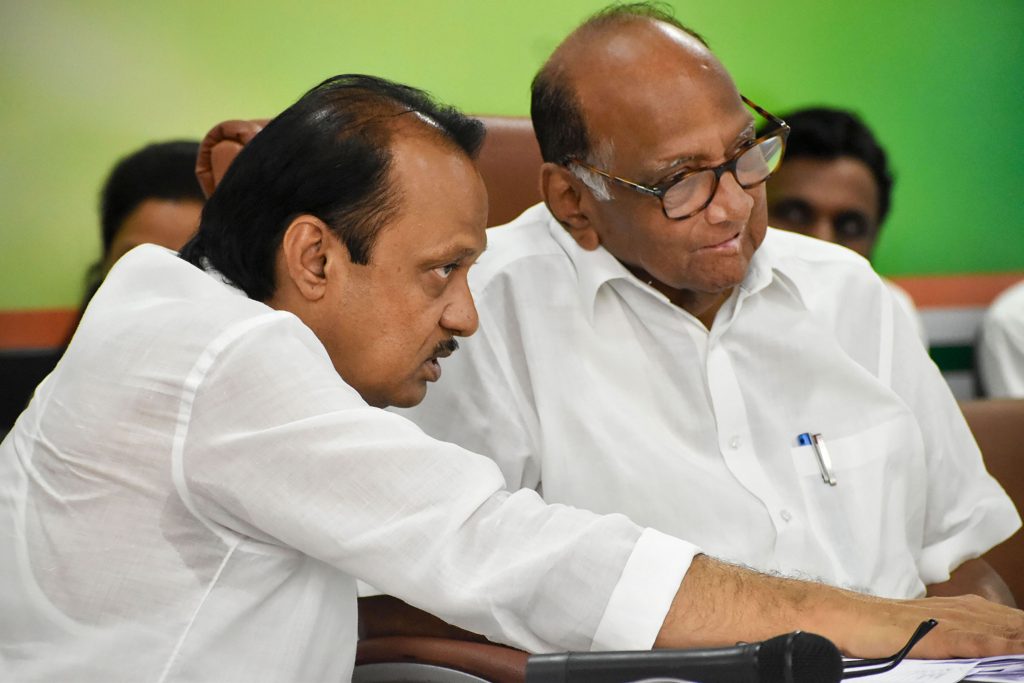
Ajit Pawar and Sharad Pawar

“Who are they to tell me to retire? I can still work,” retorted NCP stalwart Sharad Pawar after his nephew, Ajit, questioned his continuing to be the functional head of the Party he founded 24 yrs ago

 “Na tired hoon, na retired”, neither tired nor retired: This is how Nationalist Congress Party patriarch Sharad Pawar responded to jibes about his age. 

 The “age drama” began with Sharad Pawar’s nephew, Ajit, questioning his uncle over his continuing to be the functional head of the Party he founded twenty four years ago.   

The timing couldn’t have been worse, given that the NCP was only days away from completing 24 years: June 10, 1999 is a day marked in the political history of the country when Sharad Pawar broke ranks with the Congress and floated his own Party on the issue of Sonia Gandhi’s foreign origin. 

Much water has flown under the bridge since then. Pawar has weathered many a storm but continued to hold sway in his home state and also remain a player on the national scene. It was always his experience rather than age which mattered. 

However, it is one of his bloodline who has raked up the issue: Ajit Pawar his nephew to be precise: 

“You are 83, aren’t you going to stop? Give us your blessings and we will pray that you live a long life”.

Not the one to give in or give up, Pawar retorted: “Be it 82 or 92, I am still effective”. Perhaps he is right because for many of his supporters, Sharad Pawar is a lion who continues to roar. 

“Who are they to tell me to retire? I can still work,” Pawar told media persons in Mumbai even as the crisis within the NCP appeared to be full blown.

On the face of it, Sharad Pawar’s rebellious nephew has upstaged him. Yet, he is no match to his Machiavellian uncle. In fact when he crossed over to shake hands with the BJP, many felt that he had his uncle’s blessings. 

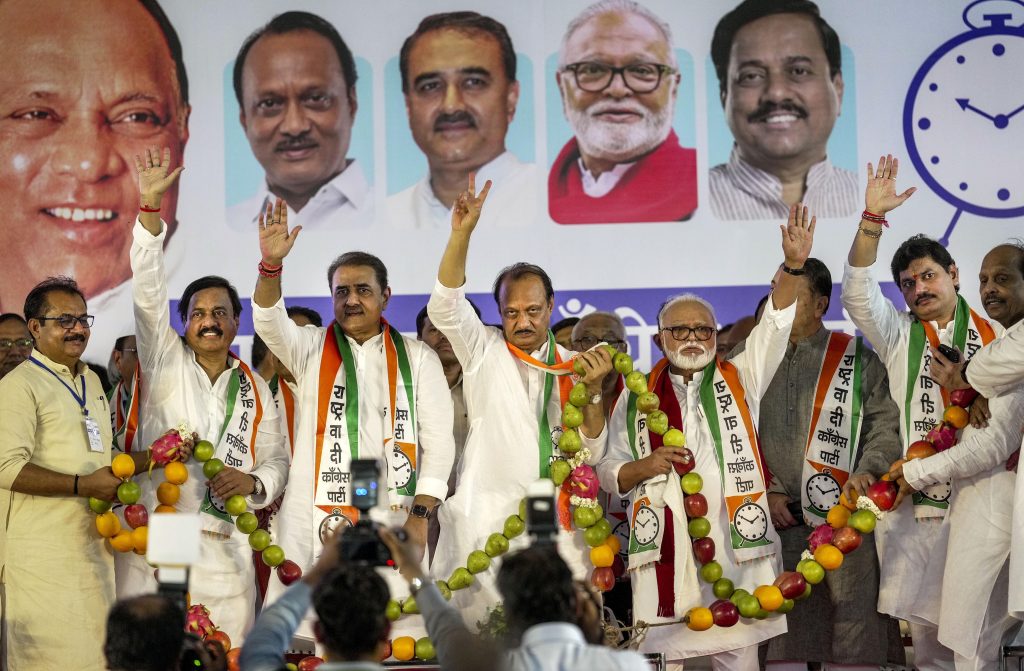
Ajit is now Deputy Chief Minister in the Eknath Shinde government in Maharashtra while senior Pawar is fighting yet another battle to keep his flock together.

While ostensibly parting ways, Ajit not only took with him a substantial number of MLAs but even bargained to have eight others inducted into the state Cabinet and maybe he is still counting. 

As if that was not all, Ajit also declared himself as the Party Chief with his faction claiming to be the “real NCP”. 

If the numbers game is anything to go by, then Ajit does have a basis for projecting himself as the “new leader” of a Party his uncle founded and one he is trying to re-chisel. Meanwhile, Sharad Pawar asserted that he is the chief of the NCP.  

Claims and counterclaims apart, as of now, Ajit has the support of over 30 of the 52 NCP MLAs, even though Praful Patel has claimed the number to be much more: “40 plus MLAs support us” is what Patel said a few days ago. 

Whether this number remains or not, only time will tell because the Sharad Pawar faction is doing what it takes to woo some of the estranged MLAs back.  

Till the recent crisis, Patel was considered to be Sharad Pawar’s right hand man. Hence his leaving and openly coming out in support of Ajit was a bit of a surprise. 

Insiders have confirmed that Patel’s leaving was a “shock”. This is substantiated by what senior leader P.C. Chacko, told media persons: “Pawar did not expect Patel to leave him. When Praful Patel went to see Pawar, he told Praful, the impression outside is that you are closest to me. If you leave me, what will be the message it will convey?”

In fact more than Ajit, it was Patel’s parting ways that sent rumour mills working overtime to fathom whether the crisis was real or whether it was stage-managed.

Equally, it is no secret that Patel was all for an alliance with the BJP. 

Patel is on record to state that last year 51 out of 53 party MLAs had told NCP chief Sharad Pawar that he should explore the possibility of joining hands with the BJP. 

Patel said that then there was a discussion among the MLAs, “but no decision was arrived at”, adding that “now a shape has been given”. 

Whether this new “shape” also means doors opening for accommodating him in the Union Cabinet, Patel was non-committal on the issue.

To say that Patel would grab the first opportunity to join the Modi government would be an understatement.  While this is a given, the fact also remains that Patel was under pressure from the law enforcing agencies. To quote Chacko yet again: “Patel went because he was constantly under threat…his residential building was sealed…the investigative agencies had shifted their office to his house…he was almost in tears”. 

For record, the Enforcement Directorate (ED) has attached four floors of a commercial building belonging to Patel in connection with a money laundering case involving the late gangster Iqbal Mirchi. Patel had earlier been questioned by ED for several hours. 

 But back to the repartee and the age game, Sharad Pawar shot back dragging Morarji Desai into the controversy: “Do you know at what age Morarji Desai became Prime Minister?”. 

 Defending her father, Pawar’s  daughter Supriya Sule, an MP, and according to Patel, “the fulcrum of Sharad Pawar’s actions”,  pointed out that Amitabh Bachchan is 82 and “still working”. 

So also politicians 

Take the example of Mallikarjun Kharge who was elected Congress President at 80; Farooq Abdullah, an MP, is 85; at 90, former Prime Minister H.D.Deve Gowda, campaigned in the state elections held earlier this year; Prakash Singh Badal, who died at 95, contested an election a year before his death; K. Karunanidhi headed the DMK till his death at the age of 94. By these standards, Pawar still has time at hand. 

The BJP, however, has a different set of rules.  

Soon after coming to power in 2014, Prime Minister Narendra Modi brought in a rule barring 75 plus leaders from holding any post either in the Party or Government.

Among the first to bear the brunt were party veterans L.K.Advani and Murli Manohar Joshi followed by a few others.  

However an exception was made in the case of Yeddyurappa who continued as Chief Minister even after he was 75; and ‘Metroman’ E. Sreedharan, who contested an election on a BJP ticket when he was 88 years. 

It is against this backdrop that many stop to ask whether the age bar will apply to Prime Minister Modi or will an exception be made? 

In two years from now Prime Minister Modi will turn 75. This roughly calculates to his being into his third term as Prime Minister in case the BJP wins the 2024 elections and forms the Government at the Centre. 

This could pose a tricky situation given that violating a rule which he himself brought in may not go down well with the people and his image may thus suffer. 

This is something Prime Minister Modi may not settle for given that his supporters have worked 24×7 to give a positive spin to his persona. 

On the other hand, stepping down may be counterproductive both for him and the Party because after wielding so much power it may not be easy for him to walk into the sunset. Also the BJP will lose its only vote-catcher. 

It may thus be a Catch-22 situation and one that Modi may find difficult to juggle around. 

 Irrespective of how things pan out, the countdown has surely begun. 

Will Maharashtra crisis cast its shadow on 2024 General Election?

The on-going political unrest that began in the middle of 2022, when Shiv Sena leader Eknath Shinde revolted against CM Thackeray, undermines the state’s political stability and pace of economic expansion, which is bad news for the entire country

In the past year, there have been a number of political upheavals in Maharashtra, the second-most populous state in India, which have resulted in a realignment of political forces and a change of government. Forty eight seats in the Lok Sabha and a 288-member legislature make up Maharashtra. The National Democratic Alliance (NDA) won 161 seats in the 2019 assembly elections, with the BJP taking the top spot with 105 seats. Shiv Sena (SS), the Nationalist Congress Party (NCP), and the Indian National Congress (INC) each received 56 seats. Other parties and independents won the remaining 29 seats.

However, the Shiv Sena’s demand for a rotating chief ministerial position, which the BJP rejected, prevented the NDA from forming the government. Uddhav Thackeray, the leader of Shiv Sena was appointed chief minister in November 2019 after the group split from the NDA and partnered with the NCP and INC to form the MVA government.

Trigger to crisis

When Eknath Shinde, a senior SS leader and cabinet minister, revolted against Thackeray in June 2022 and accused him of nepotism, corruption, and mishandling the COVID-19 pandemic, the MVA government was in full swing. He asserted that 35 SS MLAs and a number of independents supported him.

Shinde also made contact with the BJP and offered to work together to form a new government. Devendra Fadnavis, the head of the BJP, consented to support Shinde on the understanding that he would serve as the deputy chief minister. In order to stake out his claim to form the government, Shinde accepted the offer and met with the then-Governor of Maharashtra.

 Thackeray was given 48 hours by the governor to demonstrate his majority in the assembly. Thackeray was unable to accomplish this because he lost the backing of the NCP and INC, who opted to remain impartial. With the help of the BJP and other parties, Shinde then demonstrated his majority, and on June 30, 2022, he was sworn in as the chief minister.

A political crisis in Maharashtra was brought on by Shinde’s decision to leave his party and form his own faction with the support of the BJP. The Shinde group and the Thackeray group were now the two opposing factions within the Shiv Sena. The Thackeray group then petitioned the SC in July 2022 in relation to the state’s political crisis.

The Supreme Court ruled against the Shinde government in Maharashtra on May 11, 2023, concluding that the MVA government’s demise was caused by the then Governor, Bhagat Singh Koshyari’s “error” in calling for a trust vote. Additionally, the court formally started the disqualification process against Shinde for leaving the Shiv Sena party.

Ajit Pawar’s rebellion

Ajit Pawar, a prominent NCP figure and the nephew of party leader Sharad Pawar, joined Shinde’s administration on July 3, 2023, and was sworn in as the deputy chief minister. In addition, he named Praful Patel as the NCP’s national working president while claiming the support of nine NCP MLAs. Sharad Pawar allegedly ignored Ajit Pawar in party matters, according to Ajit Pawar, who expressed dissatisfaction with Sharad Pawar’s leadership. Additionally, he charged that Sharad Pawar had compromised NCP interests and was soft on Thackeray. He declared his desire to collaborate with Shinde and the BJP for Maharashtra’s development.

Ajit Pawar’s rebellion was denounced by Sharad Pawar, who claimed that he had betrayed the party and its principles. Along with admitting his mistake in believing some people, he also promised to rebuild NCP with the help of devoted employees. In order to strengthen his base, he also began his state-wide tour from Yeola in the Nashik district.

In Maharashtra, as things stand right now, the Shinde-led government has a majority of 174 MLAs, while the MVA has lost some support, falling to 110 MLAs. The other four MLAs are independents who have not endorsed a particular cause.

Several national leaders and parties have responded to the political crisis in Maharashtra. Shinde and Ajit Pawar have been accepted into the BJP, but INC has denounced them for abandoning their platform and allying with the party. SS (Thackeray) referred to Shinde as a traitor and charged the BJP with orchestrating defections. The NCP has stated that it is confident that the majority of its MLAs will re-join the party, and that it will oppose Ajit Pawar’s claim to the party’s name and symbol before the Election Commission.

Political fallout

Following the political developments in Maharashtra, uncertainty has been cast over the stability of the government, the future of MVA, Sharad Pawar’s role, the impact on national politics, and the aspirations of the Maharashtrian people.

Given that Maharashtra is one of the biggest and most influential states in the nation, recent developments there could have a significant impact on the 2024 Lok Sabha elections. The BJP anticipates that its coalition with the Ajit Pawar-led NCP and the Shinde-led SS will help it win more seats in the Lok Sabha, strengthen its support among the Maratha-Kunbi community, which is the state’s dominant caste, and draw voters from other castes and regions. The BJP might need to make up for potential losses in other states, so seat distribution in Maharashtra could have a significant impact on the overall result of the 2024 Lok Sabha elections.

The MVA, which was viewed as a potential role model for opposition unity at the national level before the split in the NCP and SS, has been weakened. It might be challenging for the MVA to rekindle its alliance and win back the support of the public. Some observers believe that Thackeray and Sharad Pawar may both win over the public and inspire greater political acceptance than in the past.

Due to their alleged partisan actions in favour of the BJP, the Governor and central agencies like the ED have come under fire following the Maharashtra incident.

The political developments in Maharashtra have also made clear how unethical the parties and leaders involved in politics are. The pre-election alliances, electoral mandates, ideological ties, and public welfare have all been disregarded by the parties and leaders. Without consulting the voters, they have changed sides for personal reasons. Indulging in opportunism and horse-trading, they have attracted MLAs with promises of wealth and influence. Additionally, they have denigrated their rivals by using hate speech and insults. The public’s faith and confidence in the political system and its representatives have been damaged by these developments.


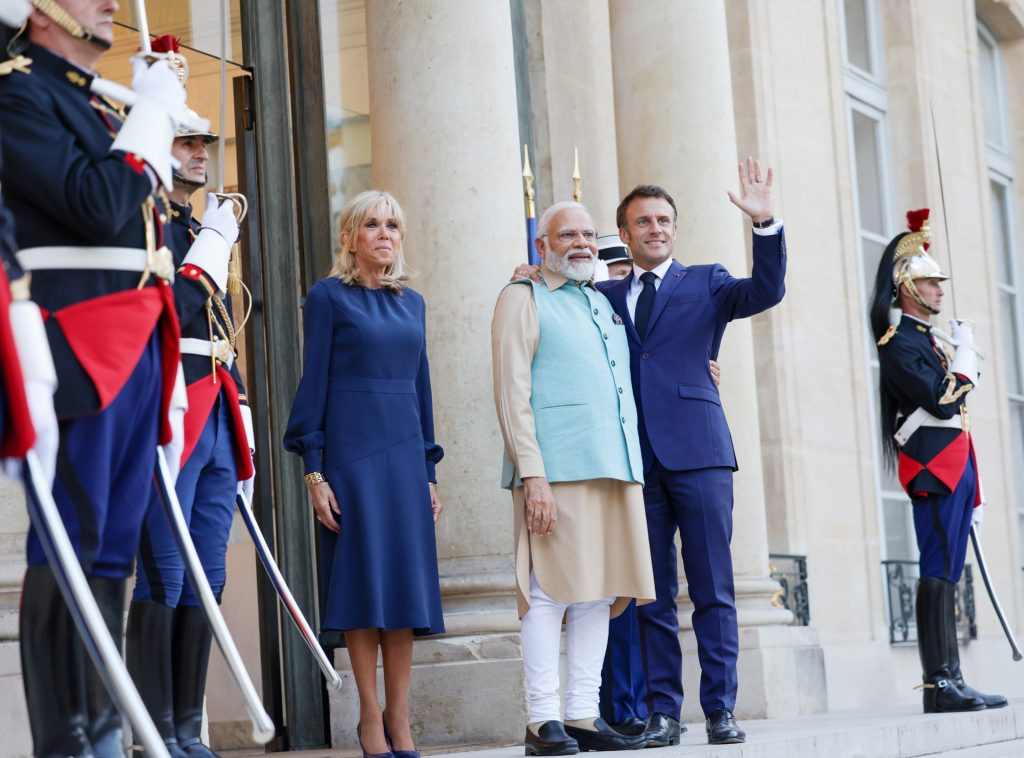
India, France look to build more robust partnership in future

Indian Prime Minister Narendra Modi’s presence as a chief guest at the Batilles or National Day parade in Paris on July 14 marked the celebration of the 25-year old strategic partnership between the two countries

In 1998, India and France re-invented their strategic ties, which could be traced to the reign of Maharaja Ranjit Singh in India’ north-west region comprising present-day Indian as well as Pakistani territories of Punjab. The army of Maharaja Ranjit Singh was trained by French officers. India and France re-invented their close ties by inking a strategic partnership in 1998. It was done within a decade of the collapse of the Soviet Union.

The two countries are now celebrating their 25-year old strategic partnership, when the Indian PM Narendra Modi would be the chief guest at the Batilles or National Day parade in Paris on July 14.

It may be recalled that in 1789, the people of Paris had marched against the cruel administration of their king Louis XVI. The protesters not only had captured weapons from armouries, they had shown extreme courage by joining the protest. In spite of heavy casualties, they had marched to the Royal Fort to get the prisoners released. It has also become an important milestone of the French Revolution; that freedom cannot be compromised, and for this people should be ready to make sacrifices.

It is not known whether Modi would be meeting the descendants of General Jean-Francois Allard, who according to the known details, had joined Maharaja’s army in 1822. It was the period when the socio-economic upheaval was taking place in France.

General Allard had joined Ranjit Singh’s army and played a key-role in training his forces on European pattern. In 2022, this old story of the Indian -French cooperation was recalled at the ancestral city of Allard, Saint Topez, a coastal town, when an Indian minister, Anurag Thakur, visited the city and paid rich tributes to the general. The city’s deputy mayor, Henry Prevost-Allard, a descendant of the general, proposed installation of statues of Maharaja Ranjit Singh and his great grandfather General Allard and his great grandmother, Bannu Pan Dei, a princess of Chamba in Himachal Pradesh in India.

Next Level of Partnership

Modi’s visit to France is taking place when the racial issues have hit France following the riots in July 2023. It is being stated that the killing of a youth by police had triggered off the violence. A large-scale violence has hit the country causing loss to property on an unprecedented scale.

It has caused the apprehension, mostly shared among liberals and proponents of equality and fraternity across the world, that it might negate the social-political achievements made in France during the past two centuries or so as a plural society, under the influence of the French Revolution.

During the 20th century, France was known as a more open society than any European country. It had become the symbol of equality, and fraternity, where no discrimination was allowed to be practiced in the name of religion or faith. The recent country-wide riots, however, have shaken the fundamentals of French polity. The visit of the Indian Prime Minister might enable France to work out a state policy to prevent the rise of rightists in French politics. In other words, it means that the plural character of the French state, a lighthouse for the democratic values worldwide, is under threat. Interestingly, in India, the so-called liberal parties and left outfits accuse Modi of following a pro-Hindutva agenda compromising the secular character of the Indian state, especially following the enactment of the Citizenship Amendment Act and the proposal for UCC or common civil code. The Muslim clerics oppose the UCC, because it empowers a Muslim woman having  rights being enjoyed by the women of other communities in India. These religious leaders had forced the then PM Rajiv Gandhi to amend the Constitution to deny a divorced Muslim woman to be regularly paid by her former husband till she gets a job or remarries. The clergies succeeded in getting the country’s basic law amended.

Later, a number of Muslims privately confessed their mistake of opposing the verdict of the Supreme Court in Shah Bano case, which had ultimately led to the Constitutional Amendment.

Interestingly, both Indian and French media are discussing the closer partnership in strategic affairs between the two countries, but the issue of the communal flare-up, which could also be on the agenda, during the visit has not received attention of the media.

It is hoped that France might like to share the Indian experience of tackling radical Islamists for its own survival with its ideals of democracy.

The next level of Indo-French partnership is likely to be on much wider issues than just strategic partnership or defence deals regarding manufacturing in India or the transfer of technology.

Decks cleared for joint ventures

Just a few weeks before Modi’s visit to France, the French outfit, Safran, has announced its decision to set up its facilities at Hyderabad. It may be noted that the facilities for repairing A-320 and Boeing-737 aircrafts have already been set up in Hyderabad. India is also keen for this collaboration. Mainly, because in spite of the country’s defence research outfit, Defence Research Development Organization (DRDO), India could not develop Kaveri jet engines for powering Indian multi-role advanced aircraft (AMCA) projects.

The most exciting deal, which has already been approved by the French President, Emmanuel Macron, is the offer of developing 110 kilo Newton engines to be fully made in India. It is believed that it would not be violating the US legislation regarding International Trade in Arms Regulations. The French offer is considered better than the US-GE-414 engines. It is being stated that the collaboration between the two countries will create a 360-degree capability in India, as the Safran facilities at Hyderabad will enable the two countries to jointly design, develop, test, manufacture and certify new generation aviation engines.

Multilateralism is the essence

One of the veterans in French politics is the country’s foreign minister, Catherine Colonna. She had played a key-role in the country’s strategic ties with India during the tenure of  President Jacques Chirac in 1998, and is now hopeful of much intimate cooperation between India and France in a multilateral cooperation. In 1998, she was the spokesperson of the President.

In an interview to an Indian news magazine, she has expressed her satisfaction that the two countries are now poised for intensifying their cooperation for peace and stability. She, however, didn’t mention that the two countries might also be cooperating with each other for their respective social and ethnic stability in their respective countries.

France and India will not only be cooperating with each other for peace and stability in the world, they might soon be sharing their respective experiences in tackling radical Islamist forces.

Both India and France agree to co-operate against international terrorism, like New Zealand, they are opposed to hate speeches.

Assimilation of races

One reason for Indian cooperation with the US could be her capacity to evolve a plural society amidst diversity. In the USA, its 24 per cent population is of immigrants, and now they enrich America. On the other hand, in France, the migrants from Algeria, Arab countries and from the French colonies in Africa have a sizable presence. Among them is also a large number of illegal migrants. These non-whites live in ghettos. Therefore, the recent violence should be studied, especially in the context of the refusal or reluctance of the French to assimilate them in their society. It could also be one of the reasons for their inability to adjust in French society. The French might find the Indian experience useful to them, but for this they have to work genuinely for improving the life of migrants.


Mystery clouds death of 4 Sikh ultras amid surge in Khalistani protests abroad

Finger pointing apart, there is not an iota of  evidence to substantiate the charge that India’s security agencies are involved in any of the deaths of Khalistani terrorists which occurred in Pakistan, UK and Canada during the last six months or so.  A report by Gopal Misra

There is no evidence to substantiate the charge that India’s security agencies are directly involved in eliminating some dreaded Khalistani terrorists in Pakistan, UK and Canada, except that the National Investigating Agency (NIA) has obtained video footage of the Khalistanis involved in the violence against Indian diplomatic missions in these countries.

The video footage is being used for identification of the separatists for deleting their names from the list of the People of Indian Origin (PIO) and also to attach their properties in India for indulging in anti-India activities.

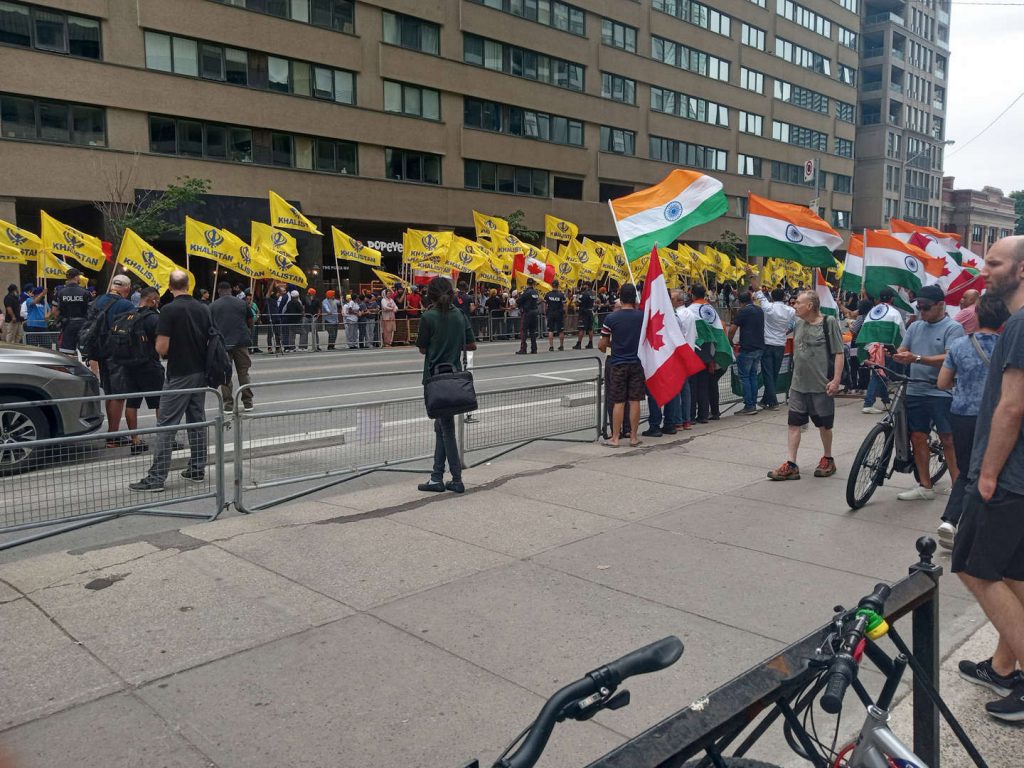
The claim that India’s intelligence agency, Research Analysis Wing (RAW) has been instrumental in making the July 8 demonstrations across the continents announced by Khalistanis, a non-event or low-key programme needs to be studied further.  The presence of a large number of Sikhs with other people of Indian origin countering the Khalistanis by waving tricolour in front of the Indian consulate at Toronto, has further eroded the claim of Khalistanis.

The presence of local police finally disheartened the demonstrators. They finally wrapped up their agitation on July eight.

The charge that India’s Deep State is being involved in tackling the Khalistanis could be traced to the recent killing of three dreaded terrorists in Pakistan, UK and Canada. Also, there were a series of meetings between India’s National Security Adviser Ajit Doval recently with his counterparts of UK and Canada on this issue. The possibility of a detailed plan for countering the separatist movement could not be ruled out. The separatists have resurfaced after a gap of nearly four decades, but they do not want the territories which were under Maharaja Ranjit Singh, but claim vast lands of Haryana and UP to be a part of the Sikh state. Meanwhile, the Modi Government has sought cooperation from the partner countries, especially USA, UK, Canada and Australia in tackling the recent movement of Khalistanis.

The Saparatist Movement

The Sikh separatist movement was initiated, during the tenure of PM Indira Gandhi in eighties. She was advised by Giani Zail Singh, who was later elevated as the President, for promoting the Khalistanis to politically counter Shiromani Akali Dal.

The proponents of Khalistan were so emboldened that they had made the basement of the Golden Temple in Amritsar, as their headquarters. The Khalistanis finally were evicted from the holy shrine, but during the military operation, a part of the temple was damaged, thus enraging the Sikhs, which eventually led to the assassination of Indira Gandhi.

It is widely believed that the movement is being promoted by Pakistani intelligence agency, Inter-Services Intelligence (ISI) with its resources obtained through the drug trade. It is also quite known that the Khalistanis, who are active in Canada, do not have any professional education or skills, for obtaining jobs or setting up a business. They have been targeted by the ISI and with its help they have made Canada the epicenter of the Khalistani movement. They have also successfully made strong network of supporters to hold rallies in America, Australia, U.K. and Italy.

It appears that there is a belated realisation in India that the movement is being used and encouraged by Pakistan to use the agitators as a new offensive against India. It might also adversely affect her aspirations to have a pivotal role in geo-politics.

India has taken a number of measures for improving her economy and defence systems, especially when China, with its formidable economy is becoming more assertive in the world politics, especially in South Asia. It is already challenging the supremacy of the US-led western powers.

Indians detest deep state

In India, the civil society is not impressed with the reported move to use the Deep State comprising NIA, Raw and other investigative agencies against the separatists. They believe that instead of using them for tackling the separatist movement, the issue, if any, should be resolved by initiating political dialogue. The role of the agencies should be linked only to the job already assigned to them. There are reports that the Indian agencies are already in touch with intelligence agencies of the USA,UK, Canada, Australia and Italy, including  CIA, FBI and MI-five.

It is also being stated that India should not hesitate in using its agencies against the ISI-sponsored separatist movement. The country has suffered in the past due to our reluctance to use their expertise. It is also being recalled that during the era of prime ministers like Atal Bihari Vajpayee and Dr. Manmohan Singh, the political leaders were reluctant to adopt any aggressive counter action against the Khalistanis and Islamic radicals.

Even during a crisis such as hijacking of Indian planes or attack on Parliament and Mumbai, the governments did not take effective steps against the hostile country i.e. Pakistan. It is quite known that following the hijacking of the plane with passengers in 1999, the request of the Special Forces of the Indian Army, specially trained to tackle such challenges, the then PM Vajpayee and his deputy, the Home Minister, L .K.Advani, developed cold feet in allowing them to rescue the Indian Airlines aircraft, IC-814, hijacked from Kathmandu, which was taken to Kandhar. Instead, the Indian government finally agreed to release Islamic terrorists, including Ahmad Omar Sheikh and Massod Azhar, who were also responsible for the attacks on Indian Parliament, Mumbai and Pathankot etc..

With India adopting tough posture, the recent upsurge of the Khalistanis in the western world, might not serve Pakistan’s anti-India designs.

Uzara Zeya’s Visit

Amidst these developments, the visit of an Indian-origin American diplomat, Uzara Zeya, under secretary of state for civilian security, democracy and human rights, is being noticed in India. The visit has suddenly gained importance, because she is well-versed about India. Her parents had migrated to the US from Bihar, and she has also served in the US embassy in New Delhi. Apart from meeting Tibetan leader, Dalai Lama, she would be meeting a number of NGOs and others engaged in the protection of human rights and other civil liberties. It is not known whether she would also be visiting Punjab.

It is being ruled out that at least for the present, Pakistan would not be able to harvest any political or diplomatic mileage from the Khalistani movement.

The recent recovery of huge quanties of drugs, estmated to be worth more than Rs 6000 crores, during the past two years off the Gujarat coast has already alerted the state as well as the Union Government. Since 2019, Jammu and Kashmir was in focus, and little attention was being paid to the separatists in Punjab. There was also laxity in India because it was being stated that the ISI, due to financial crunch, might not be able to initiate any mischief in Punjab. The assessment, however, has been proved wrong with the Khalistani movement resurfacing in Australia, U K., USA and Italy, perhaps reinvigorated by the drug money.

It is being rightly asked whether the Indian diplomacy has failed in tackling the Khalistanis threatening the security of Indian diplomatic missions in the West. It has also been pointed out that by engaging and giving a key role to the security agencies in tackling the Khalistanis, the weakness of the Indian diplomacy is being revealed. The Indian sources, however, assert that the Modi government has adopted a multi-pronged approach in tackling this menace. It is also stated that Modi has been personally coordinating the foreign office and the security agencies for curbing the menace.

The security around diplomatic missions in the US, Canada, Australia and UK has been beefed up following the circulation of the “Kill India” posters. A few posters are doing the rounds carrying the pictures of the Indian diplomats, whom they blame for death of Khalistanis ultras such as Hardeep Singh Nijjar and others.

The London metropolitan police has beefed up security at the Indian High Commission. The Indian High Commissioner, Dorai Swami, has also been given security cover.

The Indian diplomats assessed to be under  threat include the Indian Ambassador to US, Taranjit Singh Sandhu, Consulate General at San Francisco, T.V Rajendra Prasad, Indian diplomats in Canada, Sanjay Kumar Verma, Apoorva Shrivastav, Indian High Commissioner in Australia, Manpreet Vohra and Consulate General at Melbourne, Sushil Kumar.

In spite of verbal assurances, the host countries have so far not cared to arrest the violent protesters or prosecute them.

……..

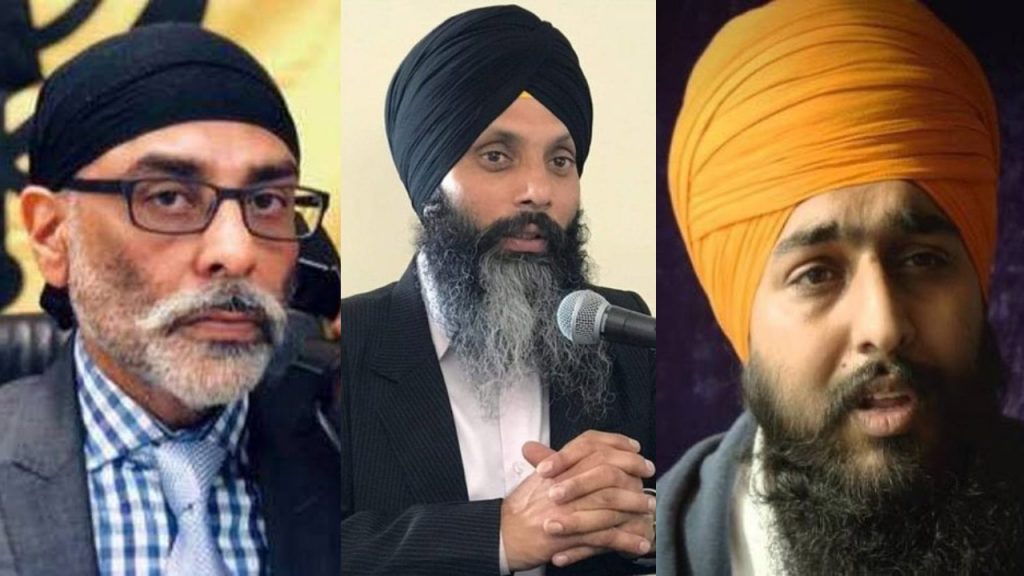
The Indian agencies, especially RAW, have been blamed for the recent death of  three terrorists, the killing of chief of the Khalistan Commando Force, Paramjit Singh Panwar in Lahore, the death of Avatar Singh Khanda of Khalistan Liberation Force at a hospital in Birmingham, UK, and killing of Nijjar in Canada. Since Panwar was staying in Pakistan since 1995, he might have become a liability to his ISI handlers and was accordingly eliminated. Similarly, Khanda had taken political asylum in 2012 during the tenure of PM Manmohan Singh, too had become useless for the ISI handlers. According to the doctors, he died of blood cancer, but Khalistanis claim that he was poisoned. They quoted the statement of Ravi Singh of Khalsa Aid that he was quite healthy before his death. Hardeep Singh Nijjhar’s killing at a Gurdwara in Canada might have been shocking to the Khalistanis. There is also another dimension to the recent killings; since, their movement is being liberally funded by foreign agencies and drug money, the possibility of internal conflicts among them cannot be ruled out for a higher share in the ill-gotten money.

Meanwhile, in a recent video released on social media, Guptwant Singh Pannu, a Khalistani separatist spearhead and the president of the Sikhs for Justice, was seen standing before the massive UN headquarters at New York. It has caused confusion about his whereabouts. Earlier, it was claimed that he died in a road accident on July five on Highway 101 in the USA.

In 2020, the Indian government had declared him as a designated terrorist.

Hype around UCC reeks of a political design

Regarding the Uniform Civil Code, there ought to exist an atmosphere where the Muslims  feel safe and secure and not wary of the  ‘right-wing agenda’ moves to strip them of their very  identity.

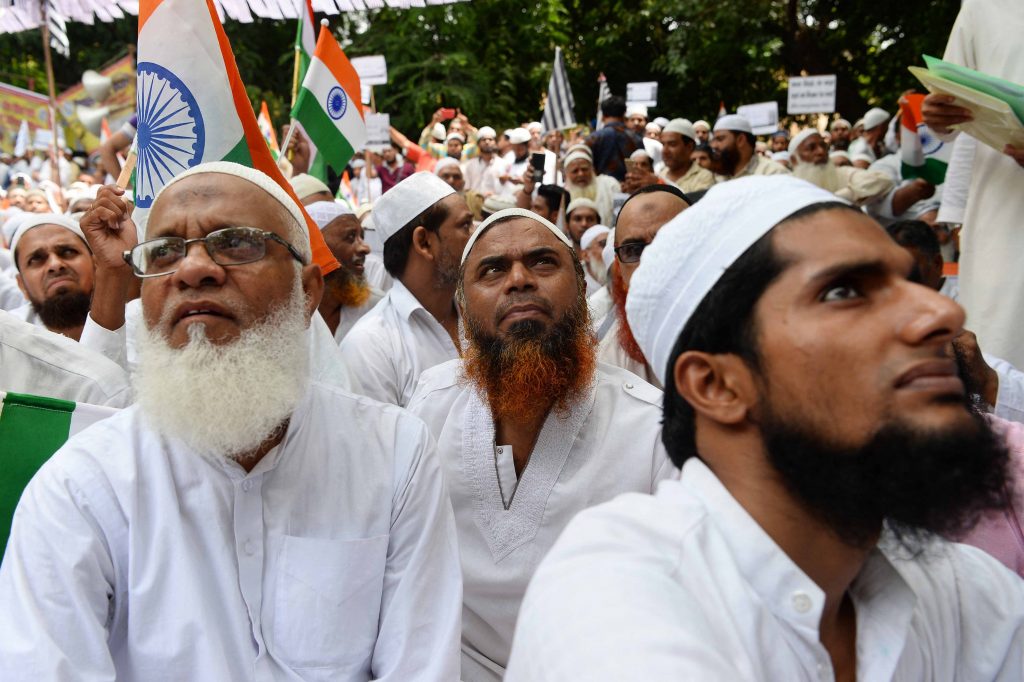
Muslims in the country are shocked to hear the right-wing rulers of the country talking so enthusiastically of implementing the Uniform Civil Code!

It seems a well planned strategy. Before the 2017 elections in Uttar Pradesh, television  channels had started holding elaborate discussions on Triple Talaq, building  up the hype for  the Uniform Civil Code.


Regarding the Uniform Civil Code, there ought to exist an atmosphere where the Muslims  feel safe and secure and not wary of the  right-wing agenda that moves to strip them of their very  identity.

Today, Indian Muslims are wary of the right-wing, with adequate reasons for this aversion. Facts and figures go to show that Muslims are positioned in the most disadvantaged position, right from government jobs to educational facilities. Not to overlook the biases cum myths cum misconceptions against them. The basic conditions have only worsened for the community in these recent years. Discriminations and disparities and insecurities are increasing.

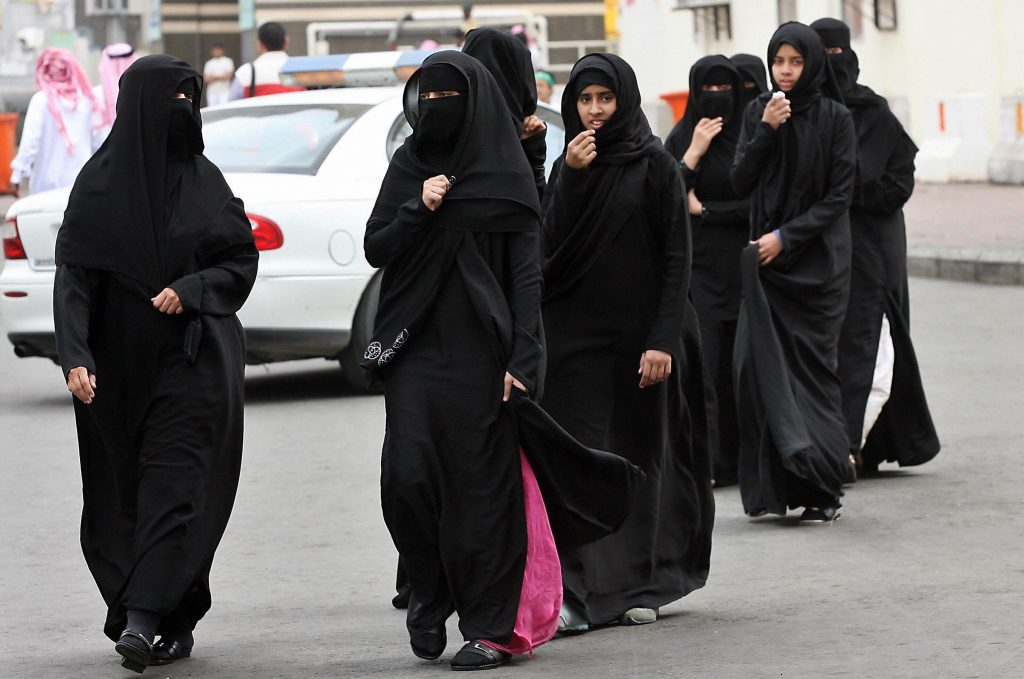
Today, as steady deterioration spreads out on several fronts, affecting the masses, when I’m asked  what’s the difference between a  Muslim poor and a Hindu poor, my answer is this:  no difference except that the  Muslim is surviving amidst  insecurity. Yes, the Indian Muslim is apprehensive, living in fear. Mind you, not from his fellow countrymen but from terror unleashed in the form and shape of goon brigades, political mafia, and the blatant biases spreading around.

Muslims cannot openly voice their disgust or dissent for fear of the aftermath. They could be branded militants or anti-nationals. Apprehensive is the Muslim community, as dents mount on the very identity of the Muslims.

Gone are the days of living-on-par. The anti-Muslim propaganda is not just on, but gaining momentum, getting well seeped into psyches. The Muslim is viewed with suspicion. And this hatred and distrust for the Muslim is on the rise. And if one were to read the disparities that the Muslim faces on any given front – housing, education, jobs, healthcare – you would realize the biases and discriminations. The Muslim sits disadvantaged; like a second class citizen. Elements of insecurity are bound to creep in, paving way for the connected aftermath. And the double or triple whammy is that since the Muslim is near-shunned and with that forced to survive in a ghetto. So where is the chance of  intermingling and getting to know the community! Also, shrinking are the forums and platforms from where he or she could be heard. This in itself is a worrying sign.

With this in the background or foreground, BJP–RSS’s ‘concern’ for the Muslim women seems unbelievable! Those who seem obsessed with the so-called ‘triple talaq’ ought to shed layers of hypocrisy! Instead, travel to the homes of the lynch victims and see for themselves the plight of their widows and children. Also, BJP rulers have done little to arrest rapists and tormentors of Muslim women during the 2002 Gujarat pogrom and also during the  Muzaffarnagar riots of 2013 and  in the other riotous conditions where goon brigades targeted the Muslim community!


I would also point out the two very basics: If the right-wing had been even one percent  genuine in their  concern for the Muslim women, there’d be no rioting. To be nearer precision, riots wouldn’t get manufactured! Each time a riot is ‘made’ to occur, the worst affected is the minority community, definitely the women and children. Reports on riots show this hard-hitting reality. The aftermath of riots is so severe in certain locales that the affected are too petrified to even speak out!

The ‘Triple Talaq’ issue was played up to such an extent that it reeked of a political agenda. Foremost, Triple Talaq is un-Quranic and with that un-Islamic, so it isn’t a religious issue but more along the social strains. Not to be overlooked is this basic factor – Muslim community in today’s political scenario is going through very harsh times. Compounding the mess, the Hindutva forces seem to be making sure that more Muslim men sit jobless if not arrested along the range of alibis. Hundreds of Muslim men are languishing in jails and prisons in the country … These deteriorating conditions have a trickle-down effect.

It gets relevant to mention that the notion of  Triple Talaq is played up although such incidents, of  men divorcing  their wives in this bizarre fashion, are rare and against the very  essence of Islam. Needless to  say that if and when such  incidents take place, they are  blown  out  of  proportion and the  impression that’s relayed  is that  the Muslim men are  a barbaric lot and their women a herd of cattle!  Needless to add that today’s political rulers miss no opportunity to paint ‘Islam’ in all  possible negative shades. Why has this propaganda been allowed to flourish?  This could be  because the Indian Muslims  are lagging on the socio-economic front, and together with that there’s a  lack of confidence  to  counter  the communal elements in the  very  governance. Also, actual issues get lost in an atmosphere where only non-issues are allowed to flourish, so much so it’s become highly fashionable to bash Islam! A national pastime!

*****

Another fall-out of the political climate of the day is that ghettoization is on the rise. Though this trend has been on for years, it has picked up, in keeping with the communal virus spreading out.

Muslim families are living under that constant fear of right-wing goon brigades attacking their women and children. And with that, men folk also put restrictions on the woman and  children moving away from homes without a male escort. Patriarchal holds have furthered in these recent years. Also, a considerable rise in the school drop put figures, more so in localities where schools are not too close to the ghettos.

 
*****

 The  reality is that  Islam has actually  provided  enough  guidelines and  precautions and codes  of conduct  but most sit unaware. As Zeenat Shaukat Ali, who was teaching Islamic Studies  at Mumbai’s St  Xaviers, had  put  across: “Wrong interpretations and then wrong perceptions are  given.”

And as Danial Latifi had detailed  the  crucial ‘why’ he  had  decided  to  take up  the controversial Shah Bano case. I quote from the interview he gave  me, “I found  Shah Bano  to be an over smart woman who took  full mileage out of the  case. Why did I take up her case? It  was not as though I opted to  fight for her…I was watching  the  proceedings  of this case  with a  whole  galaxy  of  lawyers, including  the then Chief  Justice of India, Justice  Chandrachud . It was then,  whilst  her  case was  being  argued by a  junior lawyer, that the chief  justice  intervened  and asked  me,  why don’t  I, as a senior  lawyer, fight  for  her. So I had no choice but to fight  for her.”

 Latifi had made  it very clear that  Shah Bano  had got her due  maintenance on the basis and  “strength of Quran’s provisions.”  

As he’d detailed to me, “First of all, despite the contrary  belief, marriage is a very serious business  in  Islam. Coming to the chapter on talaq, it is this chapter that lays down all the  details including the procedure for talaq and the  importance given to the arbitration aspect and, of course, the  maintenance aspect.  The fact is that triple talaq is un-quranic. In fact,  one  particular line from the  Quran  – wa  lil  mutha  laqati  mataun bil  maroof  haqqam alal  mutaqqin (unto the divorced  woman, a  provision  that  is  reasonable  in the  eyes  of  God,  is  obligatory, an  obligation for the   righteous ) – is enough to   provide  her  status and a decent  maintenance. And  whilst  fighting  for the  Shah Bano case, I quoted this  line and   the  minute I showed this  line to the chief  justice, he said that line was enough to get her due, her maintenance. So Shah Bano got her due maintenance on the strength of Quran’s provisions.”

Latifi was  against the Common or the Uniform  Civil  Code and  blamed the BJP for  making  it  into some sort of  a political  issue – “I  repeat that I’m not in favour of a Common Civil  Code. It is not needed . Also, because  it  has  become a political  issue and the  BJP and  its  allies  are  looking for an  issue and want to  rake  it  up. I personally feel the Muslims do not need it.”


*****

The  New Delhi sociologist of  international repute,  who passed away  last month, Professor Imtiaz Ahmad, was absolutely firm and constant in his stand against the implementation of the Uniform Civil Code. He’d spoken out that it’s another of right-wing ploys to cause upheavals and disruptions. Also, his  basic argument  against the  Uniform Civil  Code was this: There  is  no   uniform definition  of marriage in the communities, so why and  how will the Uniform Civil Code be implemented! Not to be overlooked is the basic fact that for the Muslim community, marriage is a contract.

*****

Whilst on the Uniform Civil Code I have been speaking to a cross section. And all the Muslims I’d spoken to, are totally against the Uniform Civil Code. They told me the Quran carries ample provisions to safeguard the rights of the women in situations of divorce and maintenance and connected factors.

They do not want any changes or interference in their Personal Laws. Also, they do not trust this ‘sarkar’, as blows and dents are inflicted on the Muslim community on a daily basis and their very identity and survival is at stake. The young Muslims sounded very upset as the blatant targeting and communal assaults on them by the right-wing brigades are increasing and yet there is no protection or remedy from the government.

Making a peace pitch in Maoist-hit Bastar

Across the Bastar region, activists take up cudgels for peace through Shanti Yatra even as the setting up of security camps and the opening up of mines have sparked spontaneous Adivasi protests at a number of places, writes Deepanwita Gita Niyogi

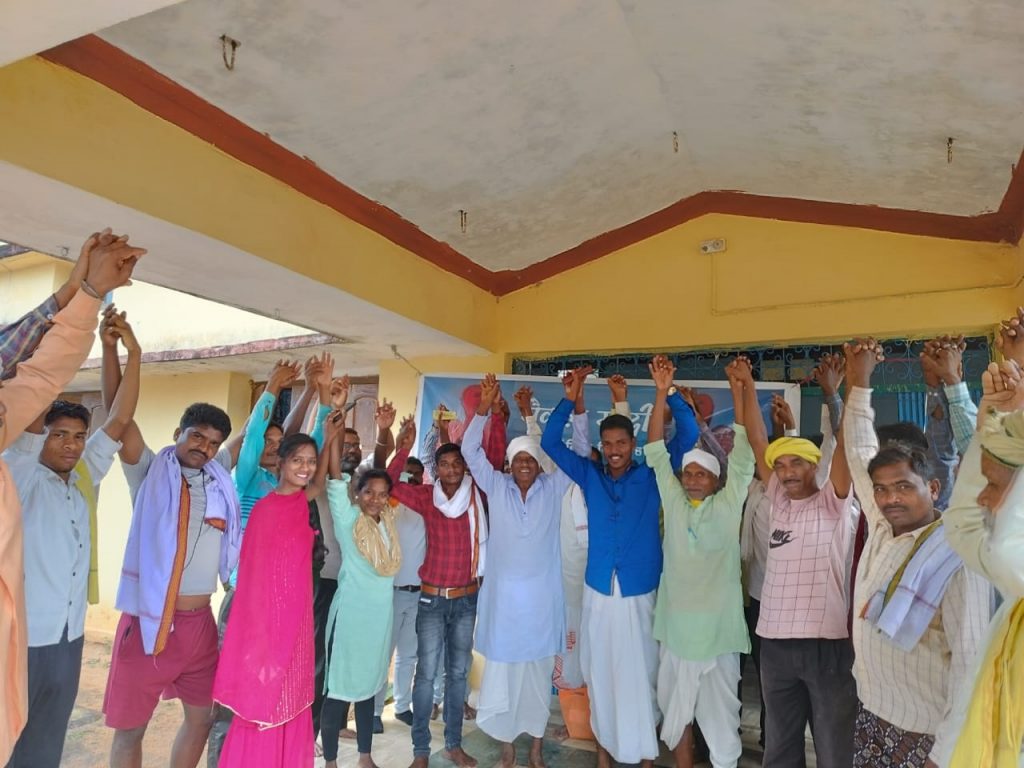
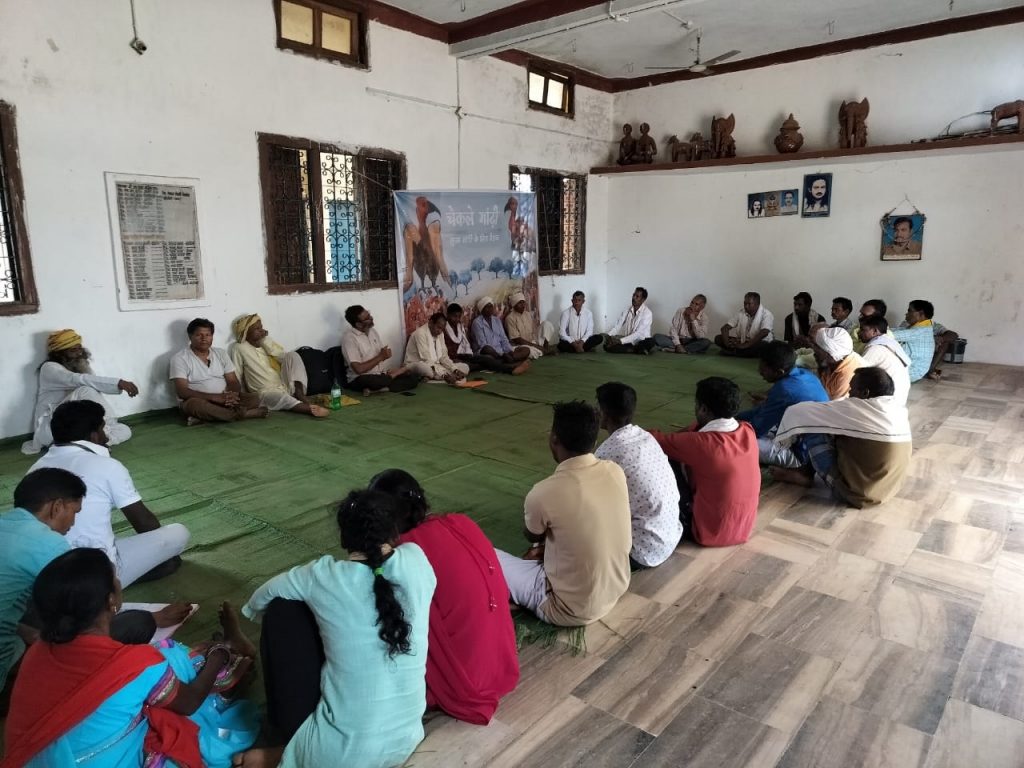
A peace march which started in March this year and concluded last month pushed for meaningful dialogue on ending violence in a trouble-torn region. Through a series of meetings organised in all the seven Maoist-affected districts of Bastar sub-division in Chhattisgarh, Chaikle Maandi, which stands for peace and prosperity in the Gondi language, urged people to come out and resolve their differences.

The initiative came at a time when Maoists have been finally democratising for the past one and a half years through the United Front strategy on the lines of Nepal. This means going the soft way on important issues. For instance, rather than directly opposing security camps in the interiors, the idea is to term these camps as illegal in Fifth Schedule areas having a vast tribal population.

In the light of this development, the Shanti Yatra conducted under the leadership of Raipur-based peace activist Shubhranshu Choudhary assumes significance. Choudhary informed that besides meetings which were organised in the Bastar region, Mohla-Manpur-Ambagarh Chowki district of Chhattisgarh, which shares border with Maharashtra, was also included. In the last few meetings, people passed a resolution for initiating a dialogue with Maoists. At the same time, they decided that the rebels would also be urged to consider Adivasi rights at a time when their identity is at stake. Many victims of conflict participated in these meetings.

“Chaikle Maandi started on March 15 from Awapalli village of Bijapur in the Bastar sub-division, a Maoist-impacted district, but no one turned up. Many people collected leaflets which were distributed but nobody assembled for any significant amount of time to start a dialogue. But things changed from the second meeting in Katekalyan in Dantewada district where around 30 people assembled,” Choudhary said.

Caught in the crossfire

Across Bastar, the setting up of security camps and the opening up of mines have resulted in Adivasi protests in a number of places. Sarva Adivasi Samaj vice-president of Bastar, Sarju Tekam has been leading these protests at a number of places.

“Violence isn’t what the common people of Bastar region want but Adivasis are being attacked day and night. People think if they are opposing camps then they must be either Maoists or their sympathisers. But since camps have been set up, people in the villages have lost their independence. They cannot move about freely and access forest produce for livelihood,” he said. Tekam added that the state government should support the peace process.


Data shared by the Chhattisgarh police shows that from 2019 to 2022, 1157 Naxal-related incidents took place in Bastar region in which 175 civilians lost their lives. A total of 117 security personnel were killed in attacks.

On his part, Choudhary pointed out towards the government’s complete silence over the ongoing violence in Chhattisgarh and the lack of efforts to end the deadlock. Along with Chaikle Maandi, the peach march also concentrated on a collection of Gondi words for a dictionary. This was supported by the state education department. Many people are working to safeguard the Gondi language as they feel that in the face of continued violence, many Gonds may not survive in the long run.

Masaram Kunjam, a resident of an interior village called Koriras in Dantewada district, took part in the peace process and attended the march for five days. “Everyone wants peace here but many don’t know how to go about it. I feel peace can come through meaningful talks only between the Maoists and the government. People are dying daily in the region and many become unnecessary targets of violence. It’s not at all true that all those who are opposing camps are Maoists. There have been instances where gram sabhas haven’t given permission, but camps have been opened nevertheless. In such cases people will protest.”

Aiming for a peaceful future

After Chaikle Maandi started, there was a brief break of about 15 days. Choudhary said it was resumed after receiving good response from many supporters. Shiv Kumar Patra, a resident of Kondagaon district and member of the Halba Adivasi Samaj, feels that peace efforts like this should be praised as in the long run these would yield positive results. Patra lists two main reasons for the protracted violence in this region. Many people lack good education and are low on awareness; and this is being turned into an advantage by the insurgents.

“There should be more attempts like this in this region to end violence. There is an ongoing conflict with the plunder of natural resources for development and ordinary villagers being labelled as informants. There is immense pressure from both sides on tribals,” Patra added.

A monk’s views on varying aspects to life and everyday survival and living

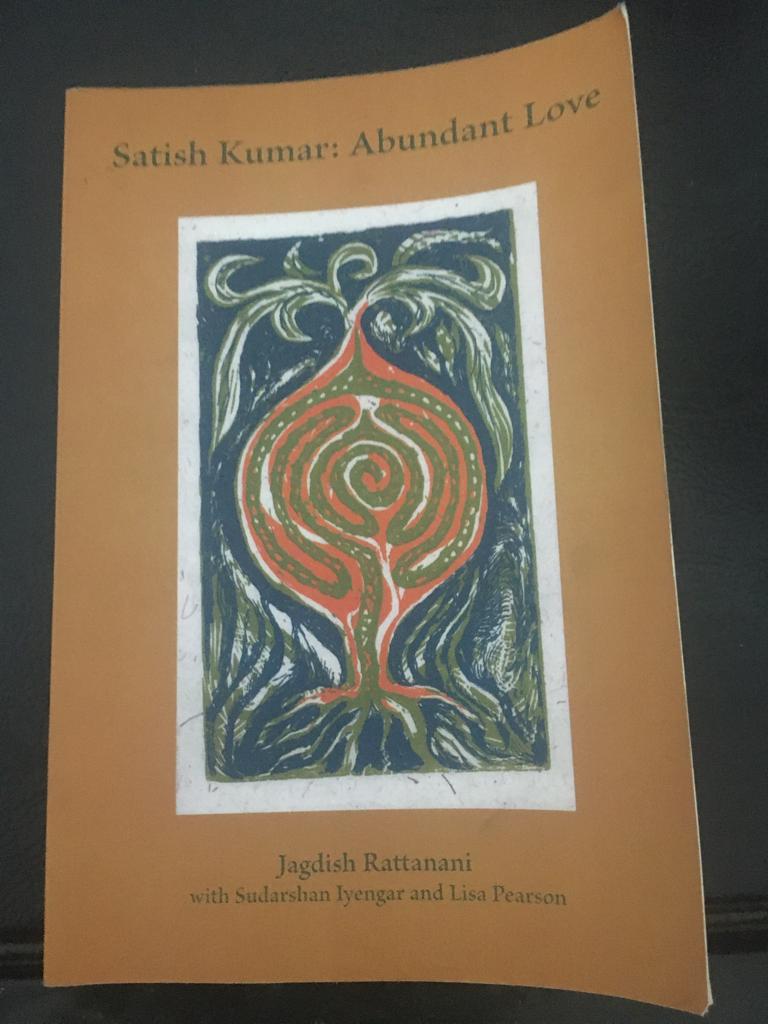
The author, Satish Kumar became a monk at the age of nine. Today, he is environmental activist with honorary doctorates from five UK universities. Drawn to Mahatma Gandhi’s vision-cum- commitment to  reach out to the fellow beings and the environment they  survive in. It is a must read for all those of us who are trying to survive in today’s world …amidst changing times. A book review by Humra Quraishi

Title  of the  book-  Satish Kumar : Abundant  Love

Authors-  Jagdish  Rattanani  with  Sudarshan Iyengar and Lisa  Pearson.

Publishers – Triarchy Press

Pages – 196

Price – Rs 1000

Book Review

This book was launched earlier this week, in New Delhi, at the India International Centre. And even before I could hold a copy of this book and read it, I loved the discussion that took place at the launch evening. Though all possible aspects were discussed – religion, faith, happiness, sorrow, beliefs, cultural forms and anchorages, but there was that maturity-cum- grace-cum-balance-cum-wisdom to discuss and talk and put forth views and viewpoints, without shrieking or shouting sessions. It was indeed a great take off! Serene and powerful!

Not to be overlooked that prime fact that this book centres around none other than the monk of international repute and fame – Satish Kumar. Described as a ‘peace pilgrim’, he is the co-founder of Schumacher College and also long time editor of the Resurgence magazine.

Satish Kumar became a monk at the age of nine. Today, he is environmental activist with honorary doctorates from five UK universities. Drawn to Mahatma Gandhi’s vision-cum- commitment to  reach out to the fellow beings and the environment they  survive in, this  book is focused on Satish Kumar’s views on the  different and  varying aspects to life and everyday survival and living –  the  very purpose of  our  life, Sarvodaya (living in  harmony with all existence), the spiritual path and  our  daily  life, health and  technology, capitalism, beauty and aesthetic, caste- politics, soil-soul-society …

It is an important book. Yes, a must read for all those of us who are trying to survive in today’s world …amidst changing times.

Another significant factor to this book is the fact that it is first book in the series of what’s termed ‘Longform Conversations’. A  great concept, as it’s not just full of  spontaneity but  all too direct and forthright, quick to read and absorb.

To quote the publishers, ‘Longform  Conversations of the  kind presented in this book were conceived  by  journalists Lekha  Rattanani and Jagdish  Rattanani, first as an anti-dote to ‘soundbite journalism’…Longform Conversations seek to celebrate a 30-hour  (or even longer) conversation, not a 30-second  soundbite. Here, we want to take time and space to listen to people to help draw experiences, reflections and insights.  We can raise doubts, revisit positions and understand  multiple perspectives…’

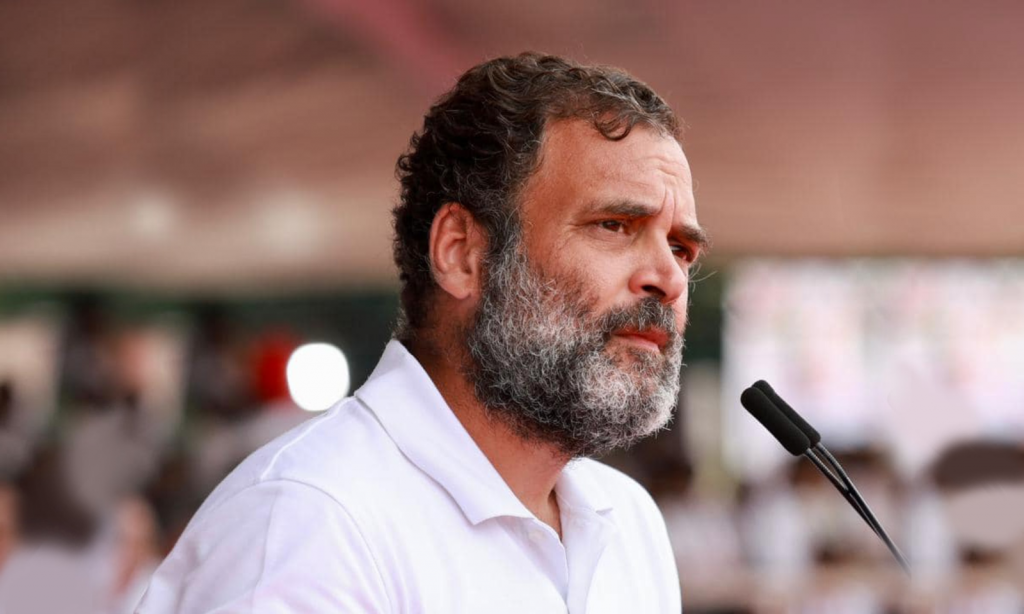
Defamation Case: Rahul Gandhi moves SC against Gujarat HC refusing to stay his conviction

New Delhi- Former Congress President Rahul Gandhi has filed a plea before the Supreme Court against the Gujarat High Court’s verdict denying to put a stay on his conviction in the ‘Modi surname’ defamation case.

The Gujarat High Court had refused to stay Rahul Gandhi’s conviction and two-year jail term in a criminal defamation case, which cost the Congress leader his Lok Sabha membership. A bench of Justice Hemant Prachchhak had observed that granting a stay on his conviction would be an exception, and not a rule.

Congress leader and senior lawyer Abhishek Manu Singhvi had termed the high court judgement as “disappointing but not unexpected”, and indicated that the former Congress President will approach the Supreme Court.

Rahul Gandhi was disqualified as a Member of Parliament in March, after a Surat court convicted him and sentenced him to two years in prison for his “How come all thieves have Modi as the common surname” remark made during an election rally in Karnataka in April 2019.

In anticipation, Purnesh Modi, a BJP MLA and the complainant in the defamation case against Gandhi, had submitted a caveat in the Supreme Court requesting for a chance to present his case if the Congress leader challenges the high court verdict.

A caveat serves as a notice submitted to an appellate court by a litigant who wishes to be heard in case any orders are issued regarding an opponent’s appeal that challenges the decision or judgment made by the lower court.

Rahul Gandhi’s 2019 remark was interpreted as an attempt to draw an implicit connection between Prime Minister Narendra Modi and fugitive businessmen Nirav Modi and Lalit Modi.

In March, the sessions court in Surat had dismissed Rahul Gandhi’s plea seeking suspension of his conviction by the magistrate court, stating that his disqualification will not result in an irreversible loss to him.

According to legal experts, if the top court stays Rahul Gandhi’s conviction, it would be sufficient to restore his Lok Sabha membership. The Congress leader was disqualified under a rule that bars convicted MPs from holding Lok Sabha membership.

Live Gurbani broadcast to start on SGPC’s own web channel from July 24

Amritsar :  The Shiromani Gurdwara Parbandhak Committee (SGPC) has approved to start Gurbani broadcast from Sachkhand Sri Harmandar Sahib on its own web channel from July 24, 2023.

The report of the sub-committee constituted in this regard was presented today in the special meeting of the SGPC’s Executive Committee (EC), which has been unanimously accepted by the members present. The EC has also decided to start SGPC’s own satellite channel.

Speaking to the media after the EC meeting, SGPC President Harjinder Singh Dhami said that the Gurbani broadcast agreement with GNext Media (PTC channel) is expiring on July 23, 2023, after which the SGPC will start Gurbani broadcast services through its own YouTube channel and other web/social media platforms from July 24. He said that the SGPC received directive from Akal Takht Sahib to start its own YouTube channel, following which a sub-committee was formed and the process has been completed.

“As these tasks are technical, therefore, various aspects were discussed and for the time being, the sub-committee has recommended taking services of a company on monthly charges, which has been approved by the Executive Committee”, said Dhami. He clarified that the services being taken by the company are related to required technology, equipment, and staff, while the broadcast rights will remain with the SGPC.

He said that all the rights of Gurbani broadcast will be reserved with the SGPC only and no channel, YouTube channel, website, or social media platform will be able to broadcast Gurbani at their own will.

He said that the name of the SGPC’s web/YouTube channel for the Gurbani broadcast will be ‘Sachkhand Sri Harmandir Sahib Sri Amritsar’ and the logo of the ‘SGPC’ will be used on it.

Setting up the SGPC’s own satellite channel, the SGPC President said that in-principle approval has also been given to start this work and a letter has been written to the Union Minister of Information and Broadcasting as part of the preliminary action. In this regard, a request will also be made to the MIB minister to provide an appointment to the SGPC delegation. He also said that since this work is technical, the services of experts will also be taken. “A systematic approach will be followed to obtain SGPC’s own license to operate the satellite channel. If it is necessary to set up a separate company for this purpose, then the process will be completed for that also”, said Dhami.

MOST POPULAR

HOT NEWS