Colonial-era criminal justice laws in for a complete overhaul

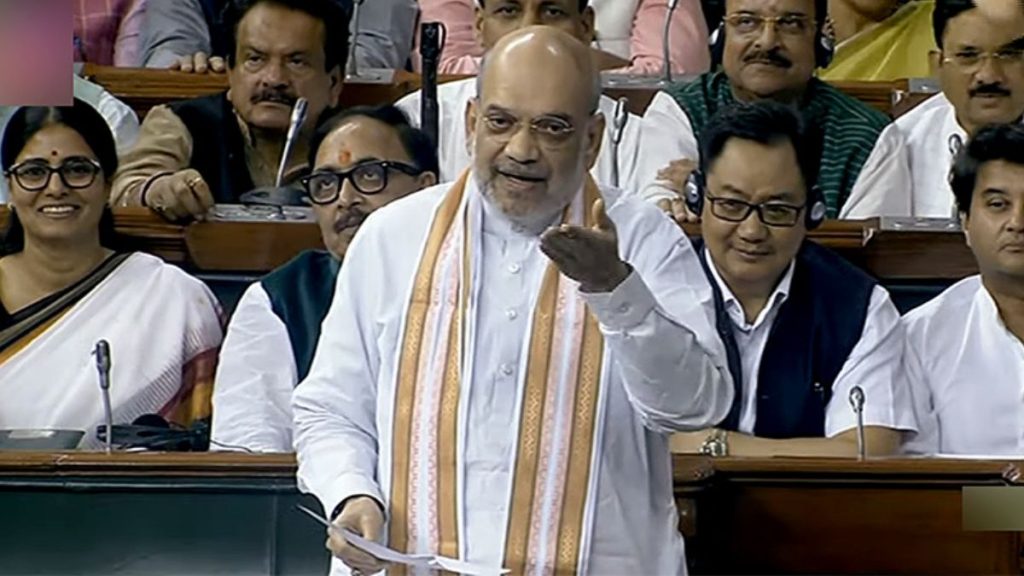
Amit Shah, Union Home Minister

Union Home Minister Amit Shah  said that changes have been brought in the laws to provide speedy justice and create a legal system that meets contemporary needs and aspirations of people

The British era sedition law against which there have been allegations that it is often being misused against activists, journalists and adversaries will soon become history.  Among the proposed amendments are capital punishment for mob lynching, imprisonment for sexual intercourse on false promise of marriage. When Union Home Minister Amit Shah introduced three Bills in the Lok Sabha to replace the Indian Penal Code, the Criminal Procedure Code, the Indian Evidence Act and to repeal the sedition law, the decision came as a surprise.

The Indian Penal Code, 1860, will be replaced by Bharatiya Nyaya Sanhita Bill, 2023, the Criminal Procedure Code, 1898, will be replaced by the Bhartiya Nagarik Suraksha Sanhita Bill, 2023, and the Indian Evidence Act, 1872, will be replaced by the Bharatiya Sakshya Bill, 2023.  Sources say that the soul of the three new laws will be to protect all the rights given to Indian citizens by the constitution, and, their purpose will not be to punish but to give justice. These three laws made with Indian thought process are likely to bring a huge change in our criminal justice system.

The Union Government claimed that 18 States, 6 Union Territories, the Supreme Court, 16 High Courts, 5 Judicial Academies, 22 Law Universities, 142 Members of Parliament, around 270 MLAs and public have given their suggestions on these new laws.  The Home Minister said that for 4 years intense discussions were held on these laws and he himself was present in 158 consultation meetings.  

The Bhartiya Nagarik Suraksha Sanhita Bill, which will replace CrPC, now has 533 sections, 160 sections of old law have been changed, 9 new sections have been added and 9 sections have been repealed.  Bharatiya Nyaya Sanhita Bill 2023, which will replace the Indian Penal Code, will have 356 sections instead of the earlier 511 sections, 175 sections have been changed, 8 new sections have been added and 22 sections have been repealed. Bharatiya Sakshya Bill, which will replace the Evidence Act, will now have 170 sections instead of the earlier 167, 23 sections have been changed, one new section has been added and 5 have been repealed.

The law expands the definition of documents to include electronic or digital records, e-mails, server logs, computers, smart phones, laptops, SMS, websites, locational evidence, mails, messages on devices.  Provision has been made in this law to digitize the entire process from FIR to case diary, case diary to charge sheet and charge sheet to judgement. Videography has been made compulsory at the time of search and seizure which will be part of the case and will not implicate innocent citizens. Without such recording by the police no charge sheet will be valid. On the one hand, laws like sedition have been repealed, while provision of punishment for heinous crimes like exploiting women by cheating and mob lynching have been made, provisions have also  been made for crack down on organized crimes and terrorism.

 Union Home Minister Amit Shah who introduced the Bharatiya Nyaya Sanhita Bill, 2023, Bharatiya Nagarik Suraksha Sanhita Bill, 2023 and Bharatiya Sakhshya Bill, 2023, in the Lok Sabha observed that from 1860 to 2023, the criminal justice system of India continued to be operated on the basis of the laws made by the British Parliament. He said that in August 2019, he had written letters to all the judges of the Supreme Court, the Chief Justices of all the High Courts of the country and all the law universities of the country. In 2020, letters were written to all MPs, Chief Ministers, Governors and Administrators of Union Territories.

Amit Shah said that “these three old laws were full of signs of slavery, they were passed by the British Parliament and we only adopted them. These laws refer to Parliament of the United Kingdom, Provincial Acts, Notifications by the Crown Representative, London Gazette, Jury and Barristers, Lahore Government, Commonwealth Resolutions, United Kingdom of Great Britain and Ireland Parliament. These laws include the references to Her Majesty’s and by the Privy Council, these laws were based on the Copies and Extracts Content in the London Gazette and Possession of the British Crown, Court of Justice in England and Her Majesty’s Dominions are also mentioned at many places in these laws. He said that by ending these 475 signs of slavery, we have brought new laws today. We have tried to connect the new era with these laws. Our criminal justice system takes a long time, justice is delivered so late that justice has no meaning, people have lost faith and are afraid to approach the court”.

The Home Minister said that even after 75 years of independence, our conviction rate is very low, that is why we have worked to promote forensic science. Now in a span of  three years, the country will get 33,000 forensic science experts and scientists every year. The government has set a target to take the conviction ratio above 90 percent. For this, an important provision has been provided which will make the visit of the forensic team to the crime scene compulsory for offences punishable for seven years or more. Through this, the police will have scientific evidence, after which the chances of acquittal of the culprits in the court will be significantly reduced. All the courts in the country are expected to be computerized before the year 2027.

Zero FIRs are being facilitated to ensure the convenience of the citizens and wherever the crime may have happened, the citizens will be able to lodge complaints even outside of their police station area. Within 15 days of the registration of crime, it will have to be forwarded to the concerned police station.

The provision of e-FIR is being started and each district and police station will designate a police officer who will inform online and in person about the arrest to the family of the arrested person. The statement of the victim has been made compulsory in the case of sexual violence and video recording of the statement has also been made compulsory in the case of sexual harassment. It will be compulsory for the police to give the status of the complaint to the complainant in 90 days and thereafter in every 15 days. No government will be able to withdraw a case of imprisonment of seven years or more without hearing the victim, this will protect the rights of the citizens.

A time limit of 90 days has been fixed for filing the charge sheet and depending on the situation, the court will be able to give permission for further 90 days. In this way, within 180 days, the investigation will have to be completed and will be forwarded for trial. The courts will now be bound to give notice of framing of charges to the accused person within 60 days. The judges will have to give the decision within 30 days of the completion of the argument, this will not keep the decision pending for years, and the decision will have to be made available online within seven days.
Punjab Governor threatens President’s rule, CM hits back: ‘don’t test patience’

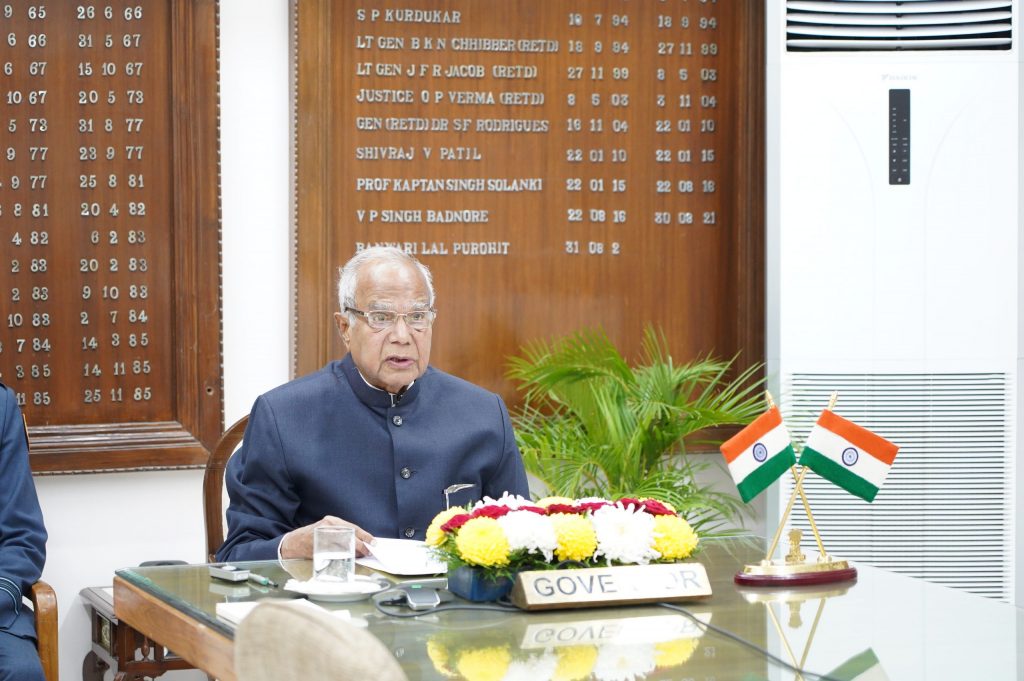
Banwarilal Purohit, Governor of Punjab

Amid the ongoing row between Punjab Governor and CM – the former threatening to impose Prez  rule in the State and the latter retaliating: ‘‘patience of 3.5 crore Punjabis shouldn’t be tested,’’ the AAP government has received support from an unexpected quarter. A report by Maninder Singh

Punjab Congress chief Amrinder Singh Raja Warring has termed the governor’s warning of recommending President’s rule in the state “wrong and unacceptable”, and suggested that he and Chief Minister Bhagwant Mann should sit together to find a solution. The Congress leader also said that if Governor Banwarilal Purohit had any issue with Mann, he should use some other constitutional powers and seek a reply from the chief secretary.

 Warring posted on ‘X’, previously Twitter, “(Warning of) recommending the President’s rule and that too because of mutual grudges is very wrong and completely unacceptable. Nothing is going to come out of this fight. Sit down, speak to each other and find a solution because it is only hurting Punjabis.”

 Interestingly, however, the Opposition Shiromani Akali Dal accused the AAP of deliberately adopting a “confrontationist attitude”.

 A state is brought under direct rule of the Centre with the invocation of Article 356, usually after a report is sent by the Governor, while Section 124 of the IPC relates to assaulting or wrongfully restraining the President or a governor from exercising their lawful powers.

 Purohit, in a letter to Mann, wrote that he could recommend the President’s rule in the state and also launch criminal proceedings if his letters were not answered. The governor indicated he was upset over not getting any reply from the chief minister on his previous letters, and warned of sending a report to the President on the failure of the constitutional mechanism.

 Bhagwant Mann had often called the Governor’s letters as “love letters.”

“Before I… take final decision regarding sending a report to the President of India under Article 356 about the failure of the Constitutional mechanism and take a decision about initiating criminal proceedings under Section 124 of the IPC, I ask you to send me the requisite information sought for under my letters… as also in the matter of the steps taken by you concerning the problem of drugs in the state, failing which I would have no choice but to take action according to law and the Constitution,” the Governor said in his letter.

Purohit said he is bound by the “duty placed on the Governor under the Constitution to see that the administration is carried on a level, which would be regarded as good, efficient, impartial and honest,” and that proposals enunciated by the government are not contrary to the law of the land.

“I have, therefore, to advise you, warn you and ask you to respond to my letters and give me the information sought by me,” Purohit said in the letter, which was also released to the media.

Reminding Mann of a letter he wrote on August 1, the Governor said, “It appears that you are deliberately refusing to give the information asked by me.” He said that Article 167 of the Constitution makes it mandatory for the Chief Minister “to furnish all such information relating to the administration of affairs of the state as the Governor may call for”.

In his letter, the Governor claimed he had received reports from various agencies on rampant drug abuse in Punjab.

“It is common knowledge that they are available in chemist shops, a new trend is observed that they are being sold in government-controlled liquor vends”. He also cited a Parliamentary standing committee report on drug addiction in Punjab. “These facts point to the “breaking down of the law and order system in Punjab” to the extent that villagers have now started protesting on the streets “setting up their own village defence committees” to protect themselves from drugs. “Please send a report concerning the action taken by you in the matter of these drugs to my office immediately,” Purohit said.

“Far from supplying the information, you have exhibited an absence of grace and decorum when you proceeded to make unnecessary and unwarranted observations demonstrating what may only be described as extreme animosity and personal prejudice against me personally, as also the office of the Governor,” Purohit wrote.

He also reminded Mann that “based on legal opinion”, he had informed the government that holding the two-day special session of Vidhan Sabha in June “without any agenda… would be unlawful, (but) you went ahead with the extended budget session and proceeded to make derogatory remarks.”

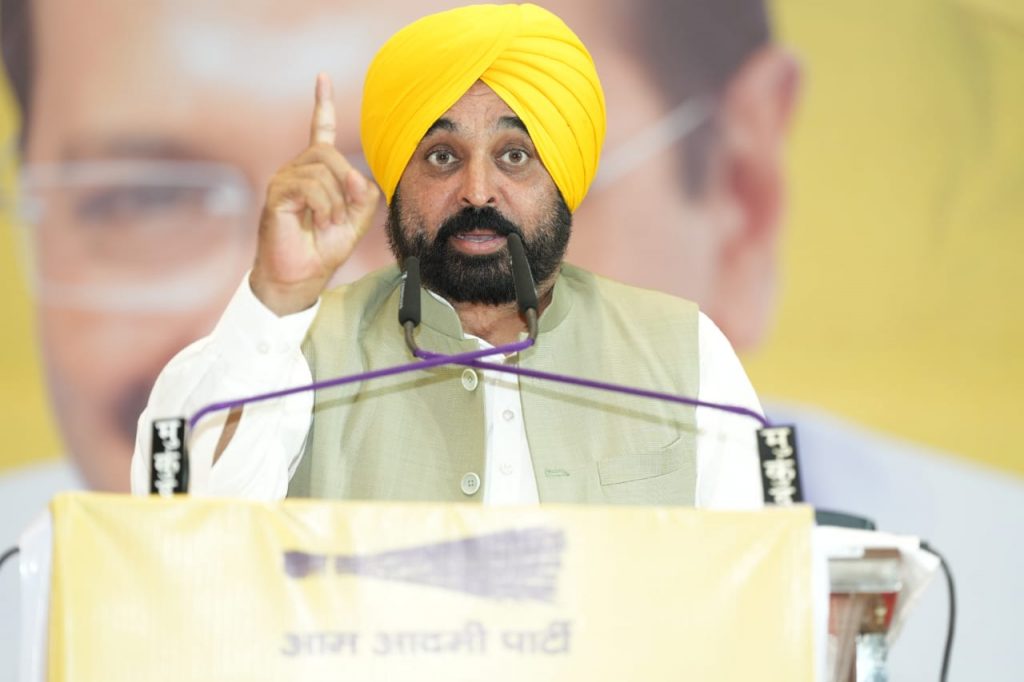
 After the Governor “threatened” to recommend the President’s rule in Punjab in case the state government did not answer his questions, Chief Minister Bhagwant Mann said, “Don’t test our patience. As a representative of 3.5 crore Punjabis, and not as the Chief Minister, I’ll like to point out that we have played a major role in the freedom struggle… We have defended the country’s borders against foreign aggression and have also fed the nation for decades after the Green Revolution,” said CM Mann, addressing the media here.

The Chief Minister said the government had replied to nine of the 16 questions asked by the Governor, and that the rest too would be replied shortly. At the same time, he questioned the Governor’s “intentions”, asking where he got such orders from. “It exhibits a hunger for grabbing power…. We (Punjabis) also know how to fight back when suppressed. Whatever you are doing is unconstitutional. Don’t rub salt into our wounds,” he said.

CM Mann alleged that the BJP, through the Governor, was trying to destabilise governments in states, including West Bengal, Delhi, Kerala and Tamil Nadu, where the saffron party was unable to purchase MLAs to topple regimes. “I want to ask our Governor whether his counterpart in neighbouring Haryana issued any notice to CM Manohar Lal Khattar during the recent communal clashes in Nuh. We also did not hear anything from the Manipur Governor in the aftermath of the Kuki-Meitei clashes. Is that so only because both the states have BJP governments?” he said.

Mann also reminded the Governor that he had not yet signed at least six Bills passed by the government. “The Governor did not show any interest in taking up with the Centre the issue of Punjab not getting its due share of the RDF (Rural Development Fund) or the GST. He has also not bothered to voice the cause of farmers with the Centre, which is responsible for addressing 99 per cent of their demands…. A ‘selected’ Governor does not have any moral right to threaten a democratically ‘elected’ government,” he said.

Tough to find apt words to describe these dark build-ups

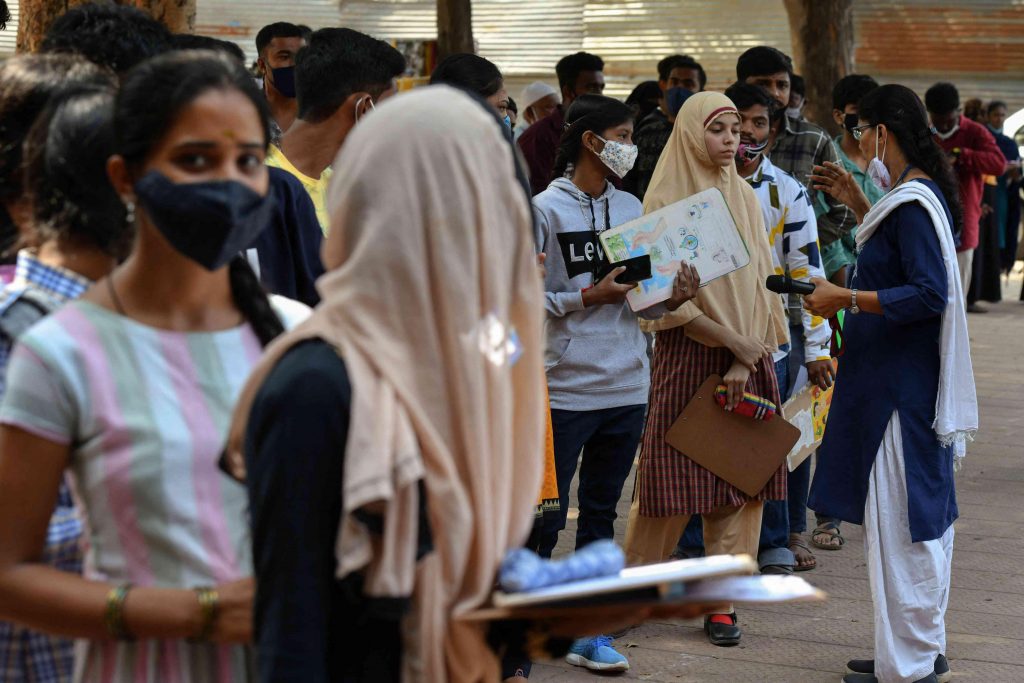
As it is, the Muslim community in the country is lagging in the education sphere and incidents like the one which happened in a school in UP’s Muzaffarnagar district  will only add to this dismal reality!

On  25 August evening, I viewed the video of a school teacher in a school in Uttar  Pradesh’s Muzaffarnagar district, ordering – provoking children of  her class to come up to the centre of the  classroom and slap and  beat a Muslim child! It seemed so very horrific and communal, that I felt unwell…no, couldn’t sleep the entire night as images of that hapless Muslim student stood out.

What agony-humiliation and mental and emotional and physical torture the child must have gone through. To be precise: must be going through. He and his entire family… In fact, his father’s statement which came soon after the video went viral, went along the strain that he doesn’t want to pursue the case against the teacher and school! Quite obviously, he would be worried and apprehensive of the  backlash and also there’d be immense pressure on him by the Hindutva groups and the political mafia to keep shut.

What strong action has been taken against the teacher, Tripti Tyagi, and also her male colleague, whose voice is coming through in the video though his face is not focused on. Shouldn’t this teacher and her male colleague get arrested and also dismissed from service. For,  if this  level  of communally  surcharged  teachers are around then they would  make  sure to cause  massive communal divides right  at the  junior school level. Instead of teaching ABCD, they are teaching violence and fascism and destructive tactics to young children.

And what are we doing to reach out to the emotionally battered- shattered Muslim child?  Where are the Child Rights forums and Commissions and the concerned Ministries to reach out to the poor child and his family?

Needless for me to focus on the fact that this incident will leave its imprint and carry off shoots. As it is, the Muslim community in the country is lagging on the education sphere and these shameful and ugly communal incidents will only add to this dismal reality!

 
The worst victim of communalism is the Muslim child


Together with the Saffron strains intruding into education, there’s been an ongoing shrinkage of space for the Muslim child in school and even out of it. The already dis-advantaged Muslim child is drifting away from the classroom, because of dismal conditions he faces in schools and also the ongoing vicious communally-surcharged atmosphere spreading around.

In the early 90s, Saiyid  Hamid, bureaucrat-educationist (former VC of AMU ) who had been heading the Hamdard  Education Society, told me that during his work on the dismal education scenario for  Muslims in North  India, he  stumbled upon a grim  fact:  In Bihar,  the areas  allocated to build schools for Muslim children were converted  into police- chowkies and  police-thanas! He  had detailed several other factors responsible for the Muslim child lagging behind on the education front…He had told me, “A prime reason is that  riots  after  riots push them away  from the  mainstream and each riot comes as a major setback  for the community and leads to  the feeling of  insecurity. Also, people who set the  curriculum in schools and  colleges  have  surreptitiously  introduced  material  derogatory  to  Islam and  this factor scares away the orthodox  from formal  learning  …the government  has not bothered  to set  up schools in or  near Muslim dominated areas .Instead, there are  police  posts! The majority  of  Muslims are artisans  and small shopkeepers  who are tempted to withdraw  their children early from school so that they can learn the trade  instead  of the  alphabet… But I would say that riots have a very adverse effect on the Muslim child; it affects him in many ways.”

From the early 90s, the situation stands worsened. There’s saffronisation of the very ABCD! Soon after the destruction of the Babri Masjid, I had  done a series of writings  focusing the fall-out of that destruction on school-level education. How communal bias hits the Muslim child, keeping him or her away from the school classroom. I had also been focusing on what was happening on the education scene: an increase in communal taunts heaped on the child by teachers and even fellow-students and also communal slants in the very teachings.

Many Gujarat pogrom survivors told me they stopped sending their children to school as there was fear of the Hindutva goons attacking their children, on the way to school. And I’d  heard similar worries and apprehensions from riot  survivors from  several other riot-affected  locales of the country. Hitting comments! Death of education for the children of the Muslim riot survivors!

The situation gets compounded in locales where Muslim families are forced to get uprooted and flee for their lives. In the 2013 Muzaffarnagar riots, entire Muslim families became refugees overnight …survivors stuffed in makeshift refugee camps. Mind you, till those  Muzaffarnagar  riots were ‘made to  happen,’ a majority  of the Muslim children were enrolled in their village schools, but then,  the  ‘riot  manufacturers’ saw to it that education was pulled off from the reach of the Muslims of that area.

Communal unleashes and polarized atmosphere affect the Muslim child in more than one way.  In these recent  years,  I have  been meeting Muslims narrating absolutely  horrifying details as to the why they  have had to  pull out their children  from schools – details ranging from shifting overnight from their ancestral homes and villages/mohalas/qasbahs, to getting threatening calls from the land and political mafia brigades, to seeking refuge in unknown terrain.

Also, one should not be under the impression that elitist public schools would be safe for the Muslim student. One report after another emerges of harassment faced by Muslim students by school teachers. One of the reported cases was of the  Kanpur teenaged student, Arsh Mohammad, who tried to kill himself after his school teachers not just taunted and ridiculed him in front of his fellow students but even ‘searched for a gun’ in his school bag! This happened on the premises of one of the branches of the Delhi Public School  (Kanpur).

Today, there are new forms of bullying of the Muslim children in schools if  they are not comfortable in singing Vande Mataram, doing  Surya Namaskar and reciting Gayatri Mantra.

Do we realize the  havoc created  on the  minority psyche as Muslim children are getting  taunted and humiliated by school teachers –  mind you, all this taking place in today’s developed India!

Well, such are the ground realities of the day! Can’t find adequate words and phrases and terms to describe these dark buildups.

Major parties smell rat in J-K admin’s ‘land to landless’ plan

Manoj Sinha, Lieutenant Governor of Jammu and Kashmir

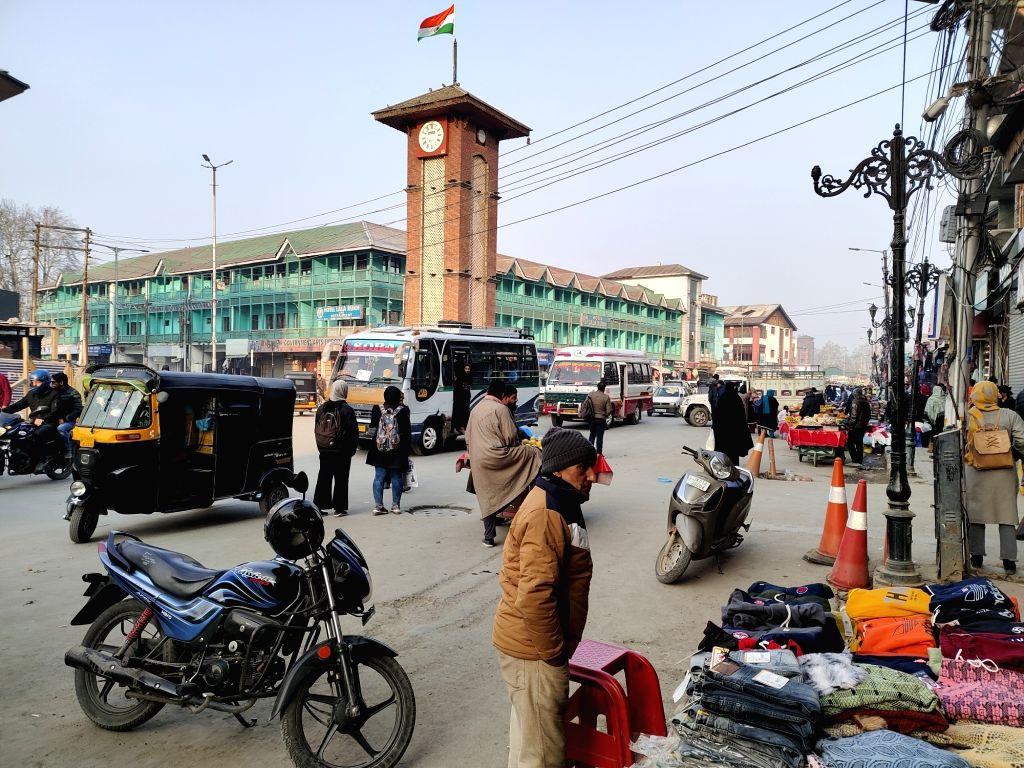
The initiative by the Jammu and Kashmir administration to grant ‘land to the landless’ has stirred a heated political debate within the union territory with major political parties alleging that the scheme is aimed at altering the demography of Kashmir.  A report by Riaz Wani

The initiative by the Jammu and Kashmir administration to grant “land to the landless” has stirred a heated political debate within the union territory, with major political parties insisting that the administration identify the people set to receive this allocation. They have called for transparency and clarity from the administration regarding the intentions and implications of the scheme.

The parties such as the PDP led by Mehbooba Mufti have expressed apprehensions that the scheme is geared to alter the demography of Kashmir as, according to the party, the number of landless in J&K is disproportionately less than the two lakh people estimated by the government.

Earlier, Mehbooba said that under the government data of 2021, only 19,047 persons are landless in the union territory. “When Lt Governor Manoj Sinha says he is giving houses to two lakh people and has sanctioned the houses for 1.45 lakh already, it means if five members are in each family, the number will be 10 lakhs,” she alleged in July when the scheme was first announced by the government.

“Jammu and Kashmir after the abrogation of Article 370 is being treated as a war bounty. In the old times after the war between the two countries, the people and land of the defeated nation were treated by the conquered as a bounty. In the same manner, after the abrogation of Article 370, our land and our resources are being treated as bounty,” Mehbooba added

However, the government has denied Mehbooba’s claim that the outsiders were being settled in J&K through the scheme, saying only domiciles were being given the land.

But the controversy has refused to die down. Now the parties are seeking to know who these domiciles are.

National Conference chief spokesperson Tanvir Sadiq said while the scheme is “not bad”, the government needs to explain more about who the beneficiaries are.

“Such decisions are usually taken by an elected government,” Sadiq said. “The most important question that the people are asking is whether these beneficiaries were domiciles before August 2019 (when Article 370 was abrogated) or after that. And if it is the later, then it raises a question on the entire process.”

PDP’s chief spokesperson, Suhail Bukhari called for more transparency from the administration regarding the scheme.

“Well, this whole policy which is purportedly called ‘land to landless’ is shrouded in mystery,” he said. “Because, there have been statements coming from here and there, but the essential information that should have come out is still evading the people of Jammu and Kashmir.”

Bukhari further expressed concerns about the lack of clarity surrounding the policy’s objectives and outcomes, saying, initially, the administration informed that there were two lakh landless families, but later, they admitted that the number was lesser.

“And now, when the administration has issued the guidelines, they said that the eligibility of this scheme would be the domicile of Jammu and Kashmir. Now, we know that this administration has issued domicile certificates to a number of people who essentially are not originally the residents of Jammu and Kashmir. But, by means of this order they would be eligible for this scheme,” Bukhari said.

As it is, the question of whether the beneficiaries were domiciles before or after the abrogation of Article 370 in August 2019 has become crucial to the debate. The timeline also holds significance as it marks a turning point in the region’s legal and political landscape.

Meanwhile, the administration is going ahead with the implementation of the scheme. It hasn’t chosen to explain its position beyond a point, accusing the opposition of trying to mislead people.

“A person shall be considered landless if he is a domicile of J&K having a separate family and doesn’t have land in his own name or in the name of any of his family members or is not entitled to inherit five Marlas or more land,” reads the latest government order. “The land shall be granted on lease on payment of a token amount of Rs 100 per Marla as a one-time premium and a nominal amount of Rs 1 per marla per annum as ground rent, in relaxation of Jammu and Kashmir Land Grant Rules, 2022.”  

Hate a hurdle on road to India’s $5 trillion economy

Pakistan is a failed nation as development and prosperity of a country go hand-in-hand with peace and communal harmony

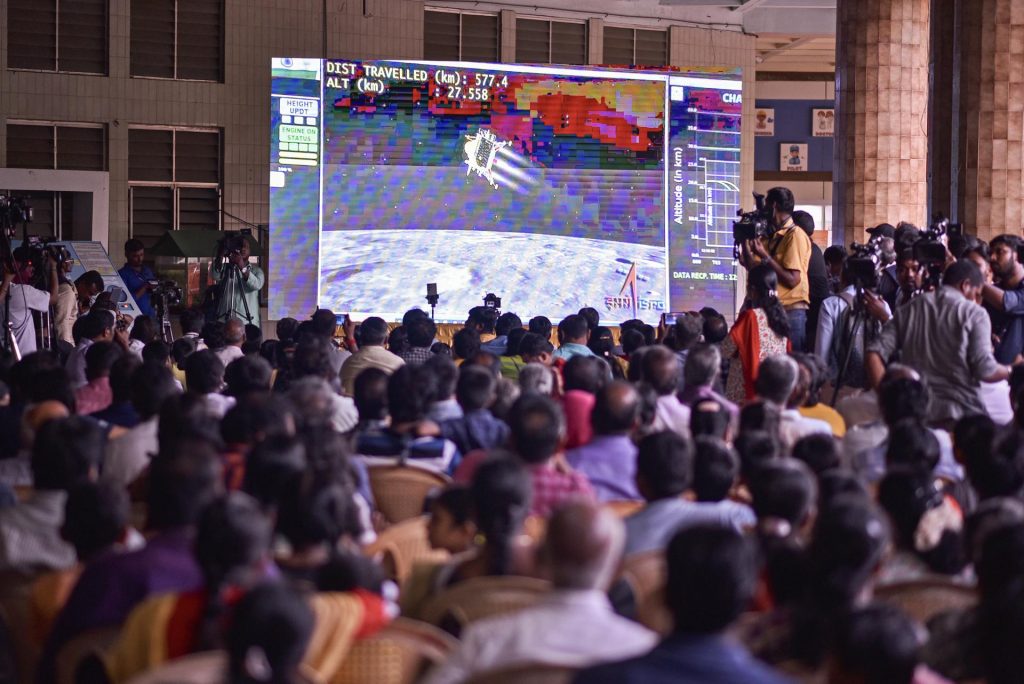
August 23, 2023 was a historic day for India, as it laid claim to the unique distinction of being the first nation to put its lander Vikram with the 26-kg rover Pragyan on the unconquered South Pole of the Moon at 6.04 pm. As accolades of world leaders poured in, it made the heart of every patriotic Indian swell with pride. For one day, all troubles and differences, political or otherwise, were forgotten as the country celebrated the landmark event as one. Emotions ran high, as people prayed and watched the soft landing with bated breath. Some shed tears of happiness at India’s stupendous victory, I was one of them. This, right here, was the India of my dreams. An aspirational and inspirational country that seeks to make progress in every sphere and stand up and be counted among the nations that matter on the global stage.

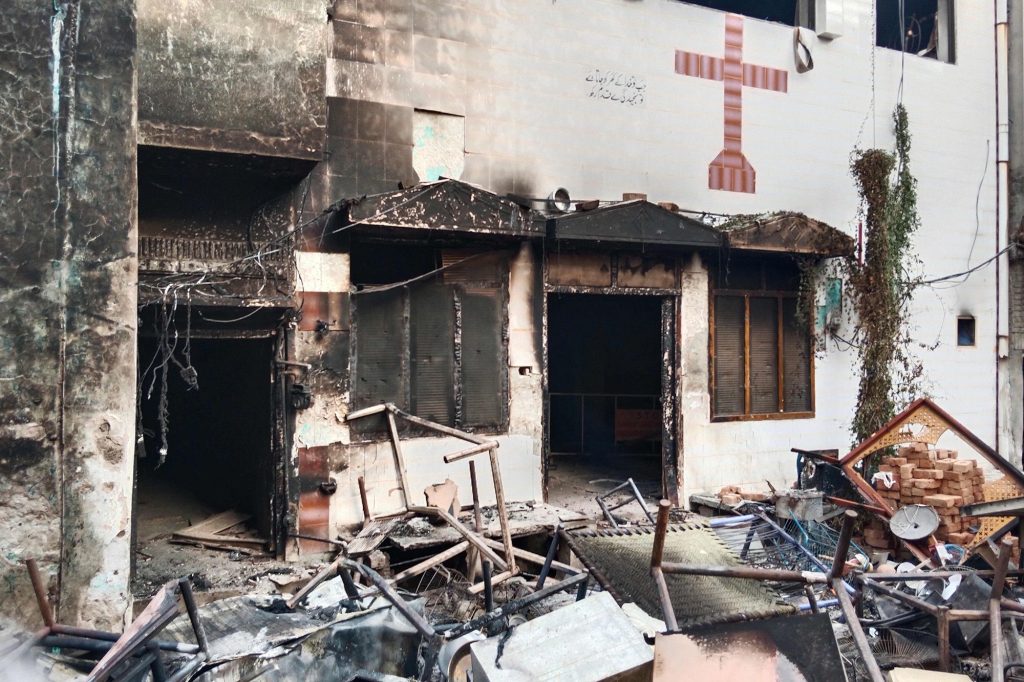
Sadly, just three days before this, I shed tears after reading about an attack on a place of worship in GTB Nagar. According to news reports, on August 20, when members of the Christian community were praying at the Siyyon Prarthna Bhawan in Delhi’s Tahirpur area, a group of 15-20 people armed with sticks, rods and knives allegedly entered the building and disrupted the Sunday prayers. A photo of Christ and his disciples was broken, a Holy Bible was torn, musical instruments and furniture were broken and women and men were beaten up, say news reports.

Though the mob allegedly entered the area with promises of a ‘Hindu nation’ blaring over loudspeakers, no one came to the aid of the small group of people, predominantly women, who were praying there, say media reports. When the pastor and Christian community members attempted to register a police complaint, a crowd of over 100 Right-wing activists gathered outside the police station in a bid to prevent them from doing so and the pastor was accused of  “conversion.” News reports quote the pastor as saying that the people who had gathered for the Sunday service were all Christians and there were no “conversions” happening there. Till the writing of this column, one person was arrested in connection with the shameful incident and it is not clear which community the person belonged to.

What is concerning is that it took many hours, from morning till evening, if news reports are anything to go by, for the First Information Report (FIR) to be registered when it should have been filed immediately.

 It is sad that the people of a nation that has always believed in Ahimsa, tolerance and which wants to be a ‘Vishwa Guru’ and build a $5 trillion economy by 2030, is letting itself be sucked into the mire of such hateful incidents that threaten to tear the social fabric of the country apart and also prove detrimental to its economic growth.

In an interview to PTI a few months ago, former World Bank Chief Economist Kaushik Basu said that even though the fundamentals of the Indian economy are strong, the rise in divisiveness and polarisation in the country is damaging the ‘foundations’ of the nation’s growth. Basu pointed out that India’s big challenge is unemployment and joblessness as youth unemployment in the country is over 24 per cent, which is among the highest in the world.

 “A nation’s growth does not depend on economic policy alone. There is mounting evidence that trust among people is a big determinant of a nation’s economic success. The rise in divisiveness and polarization in Indian society is sad not just in itself but also because it is damaging the foundations of the nation’s growth,” the eminent economist said in the interview.

India would do well to heed the words of Basu, and also learn from the economic mess our immediate neighbour Pakistan finds itself in, because it failed to foster peace and amity within and without. The dreaded Blasphemy Law in Pakistan is used as a weapon by the majority community to browbeat, subjugate, take revenge and harass the minorities. The minorities are persecuted there to the extent that the Indian Government extended a helping hand to Hindus, Sikhs and Christians from Pakistan and we now have some Pakistani minorities taking refuge here. Historically, Pakistan has spent much of its time and resources trying to foment trouble across its borders, particularly in India, instead of looking after its economy, development and people.

The result is before us. Pakistan is a failed nation as development and prosperity of a country go hand-in-hand with peace and communal harmony.

The British statesman Winston Churchill famously wrote, “Those that fail to learn from history are doomed to repeat it.” So we, as a progressive, aspirational nation, with a $5 trillion economy target before us, must not allow ourselves to fall into the polarization trap laid by politicians and vested interests.

While most of the nation looks towards development and prosperity, sadly, there are elements within the country who are trying to follow in the footsteps of our neighbour.

If data compiled by the United Christian Forum (UCF) till the middle of this year is to be believed, violence against Christians occurred in 23 States in 2023. Uttar Pradesh leads with 155 incidents, followed by Chhattisgarh with 84 incidents, Jharkhand with 35, Haryana with 32, Madhya Pradesh with 21, Punjab with 12, Karnataka with 10, Bihar with 9, Jammu & Kashmir with 8, Gujarat with 7, Uttarakhand with 4, Tamil Nadu with 3, West Bengal with 3, Himachal Pradesh with 3, Maharashtra with 3, Odisha with 2, Delhi with 2, and Andhra Pradesh, Assam, Chandigarh, and Goa with one incident each. The UCF has filed a petition with the Supreme Court decrying the increasing number of attacks and police cases against minority community members, a trend coinciding with the enactment of anti-conversion laws in multiple states.

All this, in a country, where the Government aims to become a developed nation and by its own admission wants to focus on inclusive growth. In the recently-concluded Monsoon Session of Parliament, Minister of State for Finance Pankaj Chaudhary told the House that “The Government’s roadmap to making India a $5 trillion economy comprises measures like focusing on inclusive growth, promoting digital economy, fintech, technology-enabled development, energy transition and climate action, and relying on a virtuous cycle of investment and growth.”

But, if we tear our social fabric apart, how will we achieve this inclusive growth and $5 trillion economy?

The Government has to spend crores in keeping the peace in strife-torn areas of our country. Precious funds in a developing nation, that could be better utilized for development projects. Take Kashmir for instance, to quote a report from Outlook, “There is no definite figure but informed guesstimates put the money spent by the Indian Army and paramilitary forces in Kashmir, including Siachen, at Rs 6 crore a day. That is Rs 2,190 crore a year.” And this is the cost of peace in just one State!

Think how much the Government would have spent in keeping the peace in Nuh after the communal violence there and if such incidents keep recurring then the cost of peace will keep on going up exponentially.

Each community contributes towards nation-building in its own unique way. The Christian community in particular is a peaceful, educated, tax-paying community that is known to participate wholeheartedly in nation-building through its stellar education institutes like schools and colleges, hospitals, medical colleges, polytechnics, old-age homes, orphanages, leprosy missions and destitute homes across the country.

This small and productive community is under attack on accusations of conversion, but the numbers speak differently. When India became Independent the percentage of Christians in the country was 2.3 and 77 years down the line it is still 2.3 per cent of the total population of India. Even if we make concessions for underreporting during the census because of the lure of the quota system, the underreporting cannot be that huge! Then, if the population of Indian Christians is by and large stable then how many conversions are actually happening in this country is a question that every logical Indian should be asking of those who claim otherwise.

Plus, there are laws that the Government has made to ensure that the change of faith does not happen under any allurement and coercion, and those who wish to proselytise or opt for another faith do and must follow those laws.

India is a country that has its own problems to solve. We have the world’s highest unemployment rate, 10 per cent of our population lives Below the Poverty Line, we are a water-stressed nation and we are already facing the effects of climate change as is evident by the freak rains, floods and heatwaves we are experiencing. The RBI has estimated that our country could account for about 3.4 crore of the projected eight crore global job losses from heat stress by 2030. According to a Reserve Bank of India report, up to 4.5 per cent of India’s GDP could be at risk by 2030, owing to lost labour hours from extreme heat and humidity.

And all this while we are still developing, we are still struggling to take quality education, drinking water, internet and digital penetration, affordable and quality healthcare to the remotest corners of our country.

Our biggest strength as a nation has always been unity in diversity and also the fact that along with the issues that we are faced with as a developing nation, we are also aspirational. We stand tall today as one of the three nations in the world who are truly in the space race and ISRO has many more missions up its sleeve. India is gearing up for its first-ever mission to study the Sun and it’s expected to launch in September. The observatory, called Aditya-L1 is already at its launch site on the island of Sriharikota.

We are making our voice heard in international forums; we are trying to provide food security to our people and we are trying to create world-class infrastructure in order to invite more FDI and we are trying to replace China as a manufacturing and supply chain hub. We cannot let polarization, communal strife and hate pull us back like they have done in Pakistan.

 According to Basu, India has strong fundamentals – a large entrepreneurial class, highly skilled workers, and high investment-to-GDP ratio. So, while we have our problems, we have huge potential too. So let’s not let politicians and disruptive elements use religion to create a chasm so wide that we cannot make a bridge to the India of our dreams. A developed, happy, united India that is a Vishwa Guru and that can with a clear conscience teach the world the principles of Ahimsa and the meaning of Vasudhaiva Kutumbakam by being one family itself is what will make us a $5 trillion economy. Not hate, strife and communalism. Let’s not allow hate to divert our attention from our goal of becoming a $5 trillion economy. We don’t want to be a failed State like Pakistan.  

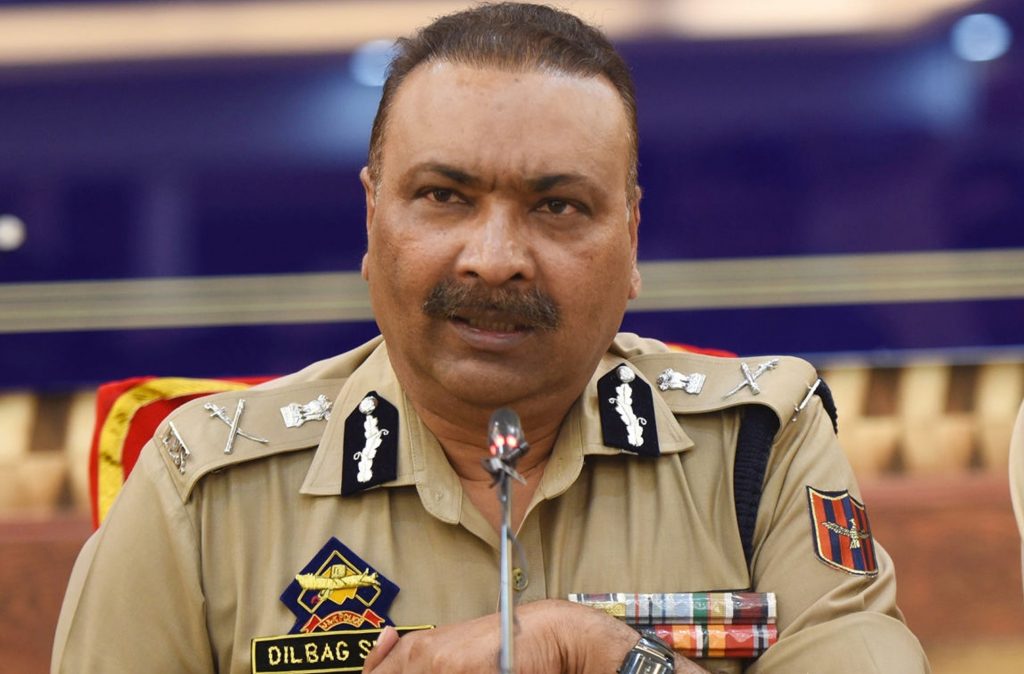
With shift in security dynamics, J-K cops ride two horses at once

After managing to put down the ultra violence with a heavy hand in Kashmir, the government is now considering using the counter-insurgency strategy adopted in the valley to deal with revival of militancy in Jammu’s twin districts of Poonch and Rajouri,  reports Riaz Wani


Speaking at a function on August 23, J&K DGP Dilbagh Singh said that the security forces were working to not just contain but to eliminate militancy in the union territory. And according to him, the security agencies had come close to doing this, with 99 percent of the infiltration attempts successfully thwarted this year.  

The border security grid, he said, has been reinforced with new elements, making it “much stronger than ever”.  And as a result, although infiltration attempts have persisted, there has been no discernible upward trend, the DGP asserted.

It is true that the militancy has progressively declined in J&K since the abrogation of Article 370 on August 5, 2019. Earlier this year, the DGP Singh said,  the number of militants is at an “all time low”. Some estimates put the number under 50, and if the killings of the militants continue at the current rate, the militancy could be over before the end of this year.

The consequent overall transformation in the situation is borne out by the drastic reduction in the militancy related incidents.

 
Official figures

According to the government figures reported in the media, as against the 930 militancy-related incidents witnessed in the Valley in the three years prior to the withdrawal of Article 370, only 617 such incidents were reported in the same period after the revocation.

According to police data, 174 police and security personnel were killed in militancy violence in Kashmir between  August 5, 2019 to August 4, 2022, compared to the killing of 290 personnel over the three years prior to the revocation.

From  January 1 to August 5 this year, 35 militants were killed in different operations. In comparison, last year, 186 militants, including 56 foreigners, were killed.

The number of civilians killed in militancy related violence has also gone down. While 191 civilians died in three years before revocation of Article 370, 110 civilians were killed in the same period after the abrogation.

 The period after abrogation has witnessed a steep rise in the arrests of over-ground workers (OGWs) of the militant groups. According to data of Ministry of Home Affairs,   82 OGWs were arrested from January to July in 2019 but the number went up to 178 over the same period in 2021.

More importantly, the number of local youths joining militant groups has also declined. From 206 in 2018 and 143 in 2019, only 100 Kashmiri youth were recruited by militants in 2022. The number is expected to have gone further down this year.

This has made a massive difference to the prevailing law and order situation. The union territory has witnessed a 32 percent decline in encounters and counter-militancy operations, from 539 in the three years before the abrogation of Article 370 to 369 in the same period after it

There has also been a reduction in civilian casualties during law and order situations such as encounters, stone-throwing and protests. No such killings were recorded after the Article 370 revocation, as compared to 132 in the few years before.

However, the number of IED blasts has remained more or less unchanged, with 19 incidents reported in the three years before and after the abrogation period.

 Challenges persist

Despite the conspicuous change in overall security situation  the region continues to grapple with the challenge of militancy. One such challenge has been the revival of militancy in Poonch and Rajouri districts of Jammu division.

More than a decade ago, the twin districts were declared free of militancy by the government. However, since October 2021, the region has witnessed a surge in militant attacks which has resulted in the killing of 35 people, 26 of them soldiers.

No doubt, an uneasy calm prevailed in Jammu in 2022, but this year the region has once again become a hotspot for militancy, with around security personnel being killed in two ambushes. This has raised concerns about the number of militants in the area. It is believed that the militants have infiltrated from across the border, although the exact number is unknown. The dense forests of the region have made it difficult for security forces to trace them. The situation has been made even more concerning by the fact that the forest area where the militants are hiding extends to Shopian in South Kashmir, the district that has been a hotbed of militancy in recent years. But the militants have chosen to stay in Jammu only, possibly because the region has a lower concentration of security forces than the Valley and also a warmer climate throughout the year.

One reason being offered for the growing militant activity in Jammu areas is the thinning of the presence of security forces in the region in the last two years, a fact being exploited by the militants. Two reasons are offered for this state of affairs:  one, the ceasefire along the Line of Control between India and Pakistan, which was renewed in early 2021, and has since held despite predictions to the contrary. Second the consequent redeployment of the Rashtriya Rifles, the main counter-insurgency force in Jammu and Kashmir (J&K), to the Line of Actual Control in Ladakh following China’s incursions along the border. This is believed to have created a void along the border in Jammu, which may have been taken advantage of by militants, resulting in a resurgence of violence in Jammu.

The government is now working on a plan to replicate the counterinsurgency strategy adopted in Kashmir Valley, to curb the rising violence in Jammu. This includes identification and arrest of over-ground supporters of militants, proactive counter-insurgency operations, deployment of police, Army, Central Armed Police Force (CAPF) and night patrolling and area domination, which are believed to have helped check infiltration to a large extent in the Kashmir region.

“In Kashmir, we adopted a 360-degree approach to maintain peace. My government succeeded to a large extent,” Lieutenant Governor Manoj Sinha said in a recent statement  “Jammu was peaceful earlier, but Rajouri and Poonch districts witnessed some unfortunate incidents in the recent past. However, the plans adopted by security and intelligence agencies to finish terrorism in the Kashmir Valley are now being  implemented in the twin border districts of Rajouri and Poonch to ensure that peace returns in these regions as well.”

However, it may be some time before security forces succeed in doing so. The challenge of militancy in Jammu is of a different nature than in Kashmir: a case in point is the recent instance of timely detection of an IED found near Nagrota along the Jammu-Srinagar national highway. If anything, this shows that the challenge isn’t limited to Poonch and Rajouri only.

Why India is cold to Pak’s peace overtures

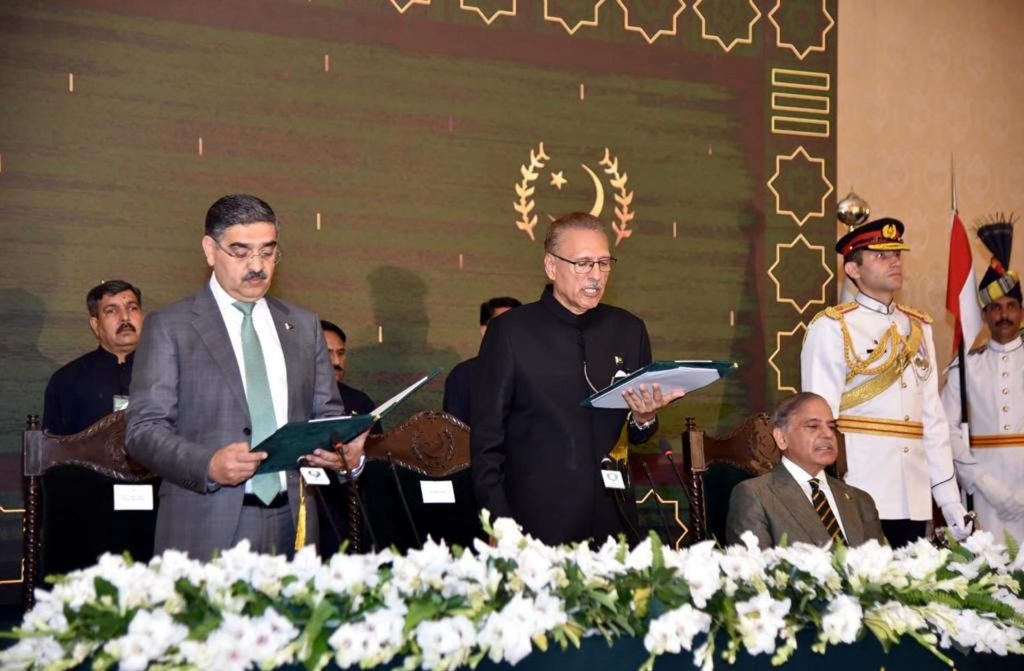
The Centre is maintaining a studied silence even as the interim Pakistan PM Anwaar-ul-Haq Kakar and his foreign minister, Jalil Abbas Jilani, a career diplomat elevated to the coveted office, have been talking about peace talks with India.

India’s reluctance to negotiate peace with Pakistan under a caretaker regime though having blessings of its powerful army and secret police, Inter Services Intelligence (ISI) could be attributed to the trust deficit between the estranged neighbours.

It is a known fact that whenever India-Pakistan tries to negotiate peace, India either faces full-scale invasion from her neighbour or terrorist attack on her sensitive installations. The much trumpeted visit of the then Indian PM, Atal Bihari Vajpayee to Lahore riding on bus from India to Pakistan in February 1999, was reciprocated by the Kargil war, and later the hijacking of an Indian Airlines jetliner to Kandahar, Afghanistan and an attack on the Parliament building in 2001.

All  in New Delhi, including the leaders of the opposition parties, are maintaining silence on the possibility of resuming any peace dialogue with Pakistan despite its recent peace overtures. The caretaker PM, Anwaar-ul-Haq Kakar and his foreign minister, Jalil Abbas Jilani, a career diplomat elevated to the coveted office, have been talking about peace talks with India, but there is no Indian response so far.

There could be several reasons for India’s reluctance to resume any negotiations with her hostile neighbour, but the main factor could be attributed to the sudden rise of terrorist activities in the Pakistan Occupied Kashmir (POK). On the basis of such information, India’s Special Forces has neutralized as many as eight terrorists and destroyed their camps in POK.

An Indian newspaper has claimed it a surgical strike, but the army has denied. It, however, has stated that an infiltration bid along the LoC in Hamirpur area of Balakote Sector in Kashmir’s Poonch district was foiled. It was done just on the eve of the two-day BRICS conference, August 22-24, comprising Brazil, Russia, India, China and South Africa being held in South Africa.

Apart from his proximity with the army, Kakar has also inducted Mushaal Hussain, 34, winsome wife of a dreaded terrorist, Yasin Malik, 57, undergoing a life-term in Delhi’s Tihar jail, in his cabinet. It may be recalled that in February 2013, Yasin Malik was seen sharing the dais with the banned Lashkar-e-Taiba chief Hafiz Muhammad Saeed at a protest rally in Islamabad.

It took decades, but finally Malik was convicted on 19 May 2022, by a NIA (National Investigation Agency) Court in New Delhi on charges of conspiracy and waging war against the state. Subsequently, he was sentenced to the two counts life imprisonment and five 10-year prison sentences, all to be held concurrently. During the trial, he did not engage any lawyer and also pleaded guilty before the court.

In personal interview with the BBC, he had confessed to the killing of Kashmiri Pandit judge, Justice Neelkanth Ganjoo, for delivering death sentence to terrorist Maqbool Bhat, the founder of Azad Kashmir Plebiscite Front, a forerunner to the present day Jammu Kashmir Liberation Front (JKLF). He had also got killed four Indian Air Force officers and had a role in the kidnapping of Rubiya Sayeed, younger daughter of the then Union Home Minister, Mufti Mohammad Sayeed.

The marriage between Mushaal, who belongs to a well-known Karachi family and a graduate of the London School of Economics, and Yasin Malik, a terrorist, has always been intriguing to the Indian authorities.

Repeat of Rhetoric

Mushaal’s induction in the Pakistan cabinet to lead the human rights campaign  might also lead to a worldwide campaign against India in coming months. It is also believed that by creating confrontation with India, the caretaker government might postpone the elections to next year. Under the law, the caretaker government should ensure free and impartial elections within three months of the dissolution of the National Assembly; but indications are that it is in no mood to conduct early polls as scheduled in the law.

The massive preparations for inducting a large number of terrorists at the LoC accompanied by the recent statement of Kakar, a confidante of the GHQ, ruling  out any peace talks with India unless the Article 370 of the Constitution was restored indicate that  early peace talks between them are being ruled out.

Indians’ bitter experience with Pakistan has taught them that it is irrelevant who wins the forthcoming polls in Pakistan, the peace could be negotiated only with the consent of the GHQ. It is a bygone conclusion that the political face of the new government would be subservient to the army and ISI. Earlier, in January this year, the outgoing PM, Shehbaz Sharif, had offered an olive branch for holding talks with New Delhi on all unresolved issues; but later, his office, perhaps chastised by the GHQ, clarified that such talks could only occur after the retraction of the August 5, 2019 decision on abrogation of the Article 370, which according to Pakistan, has altered the constitutional status of Jammu and Kashmir. Similarly, it has also asked for the restoration of Article 35A, which had denied thousands of Jammu-Kashmir residents living in the state for decades any civil rights.

The Indian response has been consistent that she is keen for having  good relations with all its neighbours but for that, a terror-free environment was needed. Another reason for any   prospects of bilateral talks between New Delhi and Islamabad to be kept in the cold storage is due to the refusal of Pakistan in taking any action against the terrorists, including those who had attacked Mumbai on November 26, 2008, also referred to as 26/11 attacks.

Return of the Old Hat

Few in India are amused at the elevation of Jilani as the new foreign minister. Earlier, he had served as his country’s Deputy High Commissioner in New Delhi in 2003, but was given marching orders, when he was found funnelling funds for separatist activities in Jammu and Kashmir. He was declared persona non grata. However, in his new avatar as foreign minister, he has proposed the revival of a decade-old peace plan for laying out a framework for ending hostilities between the two countries. The proposals were made during the regime of the military dictator, Gen Pervez Musharraf, and the then Indian PM  Manmohan Singh.

Jilani recently told a Pakistani newspaper, The Express Tribune, that he is in favour of improving relations with India, which according to him, was contingent upon the resolution of all outstanding issues, including the long-standing issue of Jammu and Kashmir. It is being stated that the agreements were to be signed during the visit of Prime Minister Manmohan Singh to Pakistan in early 2007, but due to internal crisis within Pakistan, finally leading to the exit of Musharraf from power, the proposed accord could not be signed.

India’s Silence

In spite of being immediate neighbours, India has chosen to follow a no-reaction policy towards the ongoing turmoil in Pakistan. It could be attributed to India’s no-reaction policy approach for not being dragged into the cesspool of Pakistani politics. Also, since the abrogation of Jammu and Kashmir’s “special status” in August 2019, India has shown a greater degree of indifference towards Pakistan and is now broadly interested in maintaining limited contact with Islamabad.

There is near unanimity among the policymakers in New Delhi that in spite of talking about peace, Islamabad’s behaviour towards India might remain hostile in coming years. They do not want to commit the mistakes of the Vajpayee regime or his home minister, L.K. Advani, calling Muhammad Ali Jinnah a secular Muslim leader.


Assembly polls: Can Cong upset BJP, BRS applecart? 

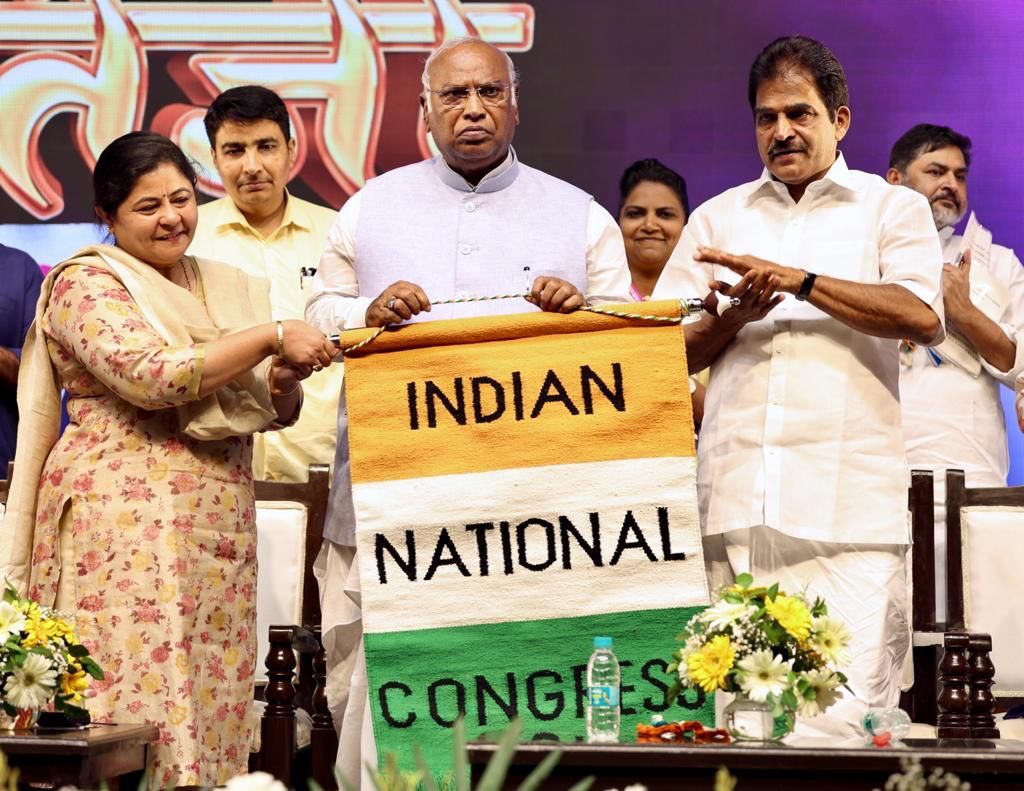
Congress President Mallikarjun Kharge (middle), Netta D’Souza, Mahila Congress (right), K C Venugopal, General Secretary (left).

In response to aggressive campaigning by the Congress in MP and Telangana, the ruling parties in the two states, BJP and BRS, respectively, try to steal the grand old party’s thunder by announcing the first list of candidates even before the election schedule is announced, writes Amit Agnihotri

The Congress has finally announced its reconstituted Working Committee which will take on the BJP in the coming five assembly polls this year ahead of the 2024 Lok Sabha polls.

The states that will have assembly polls later this year are Madhya Pradesh ruled by BJP, Rajasthan and Chhattisgarh ruled by Congress, Telangana ruled by BRS and Mizoram ruled by MNF. The Congress directly fights the BJP in three states Rajasthan, Chhattisgarh and MP.

After getting elected to the top party post, Congress chief Mallikarjun Kharge had dissolved the previous CWC as per party rules. The new CWC had been awaited since the election of Kharge was approved during the Plenary Session held at Chhattisgarh’s Raipur in February.

The recast CWC has 39 full time members, 18 permanent invitees and 9 special invitees. Earlier, the party used to have 24 members in the top body.

In a first, the CWC has 15 women members including former party chief Sonia Gandhi and Priyanka Gandhi Vadra besides veterans like Ambika Soni, Kumari Selja, Meira Kumar, Rajani Patil, Deepa Das Munshi, Pratibha Singh, Meenakshi Natarajan, Phulo Devi Netam, Yashomati Thakur, Praniti Shinde, Supriya Shrinate, Alka Lamba and Netta D’Souza.

“Our leader Sonia Gandhi has always been committed to women’s empowerment through greater representation within the party and during ticket distribution. The reconstituted CWC which has 15 women members is a step in that direction. It is historic,” CWC member Kumari Selja said.

“This inclusion will go a long way towards encouraging women workers in the party and will attract women outside the party to join and support us,” she said.

Over the past year, under the guidance of Priyanka Gandhi, the Congress has been coming out with separate manifestos for the women voters in states like Himachal Pradesh, Gujarat and Karnataka where its focused approach brought in rich electoral dividends. The party is adopting the similar strategy for poll bound Rajasthan, Chhattisgarh, Madhya Pradesh, Mizoram and Telangana in a bid to defeat the BJP, which rules in MP.

The Congress inducted former deputy chief minister of Rajasthan Sachin Pilot in the CWC in an attempt to achieve balance between him and chief minister Ashok Gehlot. The Gehlot-Pilot power tussle has been bothering the Congress party for long and Pilot’s promotion as a CWC member would send the right signal among his supporters in Rajasthan.

The Congress has launched aggressive campaigns in Madhya Pradesh and Telangana where it is in the opposition against the ruling BJP and BRS respectively.

The party is repeating its template of social welfare guarantees and corruption charges which it had tried successfully in Karnataka, to turn the tables on the ruling parties in Telangana and MP.


Impacted by the Congress aggression, the BJP held a strategy session to discuss the coming assembly polls. In a surprise move, the BJP announced the first list of candidates for Chhattisgarh and Madya Pradesh much ahead of the polls likely to be held later this year.

Union home minister Amit Shah is directly supervising the MP polls and has made several visits to the state over the past weeks. The MP BJP leaders lodged 41 FIRs against Congress leader Priyanka Gandhi Vadra and other senior party leaders which the opposition said was part of political vendetta.

The Congress became aggressive and instead came out with a detailed corruption rate card of Shivraj Singh Chouhan government, alleging it was charging 50 percent commission for all types of work.

Later, during a rally, Amit Shah challenged the Congress to give a report card of the past 50 years even as the PM blamed the opposition party for indulging in corruption.

Congress chief Mallikarjun Kharge hit back at Shah, without naming him, pointing that the various IITs, IIMs, and other institutions had been built by the previous Congress governments in the state.

Kharge also targeted the BJP by saying that the saffron party was avoiding the caste census and promised that if the Congress came to power it will conduct a caste census in the state. The attempt of the grand old party is to rake up the OBC reservation issue and mobilize the community in the poll-bound state.

The Congress has said it is facing a rush of ticket seekers in the poll-bound states and has intensified surveys to identify the most suitable candidates in the respective states.

According to party leaders, the names that will be shortlisted by the state units based on these field surveys will soon be scrutinized by the respective screening committees and will then be forwarded to the Central Election Committee headed by Kharge for final approval.

The Congress which is campaigning in the four states aggressively plans to announce the first list of candidates in Madhya Pradesh and Telangana, where the party is in opposition, in September to have an early bird advantage.

On August 18, the BJP tweaked strategy and announced its first list of 21/90 names in Congress-ruled Chhattisgarh and 39/230 names in Madhya Pradesh, where the grand old party was attacking the ruling BJP aggressively.

A day after the BJP’s move, the Congress held a meeting of the political affairs committee for Chhattisgarh on Aug 19 to discuss the selection of candidates, among other things.

“The party is strong and the government has delivered on most of the poll promises. We are confident of winning 75/90 seats this time,” AICC secretary in charge of organization KC Venugopal said.

The political affairs committees for Madhya Pradesh, Rajasthan and Telangana have already met over the past week to discuss selection of candidates.

“The focus is on winnability. There is a rush of ticket seekers as they see the Congress is on a comeback trail. A lot of surveys are going on in the state. Some are being carried out by the state unit, some by the ticket aspirants but the one being conducted by PCC chief Kamal Nath alone will carry weight. We plan to announce the first list in September which will mostly cover the difficult seats the party has not been winning for long,” senior MP Congress leader Shobha Oza said.

In Rajasthan, the AICC managers have received a suggestion from a section of the workers that MLAs who are suffering from anti-incumbency should not be given tickets this time. To deal with this problem, the three AICC secretaries in charge of the state Qazi Nizamuddin, Virendra Rathore and Amrita Dhawan have toured across the constituencies over the past weeks to get a feel of the situation on the ground.

In Telangana, the Congress has started taking applications from the ticket aspirants who have to pay a fee of Rs 50,000. However, the fee is Rs 25,000 for aspirants belonging to the SC/ST category.

“There is a rush of aspirants. The idea behind the fee is to get applications only from serious candidates. A lot of surveys are being conducted to identify the potential candidates,” AICC in charge of Telangana Manikrao Thakre said.

Feeling the pressure from an aggressive Congress, the ruling BRS has announced candidates for the coming assembly polls ahead of its rivals to put up a brave front. But the BRS suffers from infighting and several party leaders have joined the Congress over the past weeks. The Congress says this is an indicator of which way the political wind was blowing.

Chhattisgarh chief minister Bhupesh Baghel slammed the Centre over the ED raids on his aides and said that the BJP was trying to defame the state government and misusing the central agencies to harass the Congress workers.

Patnaik govt in a pickle as female cop blames suicide bid on DIG’s wife

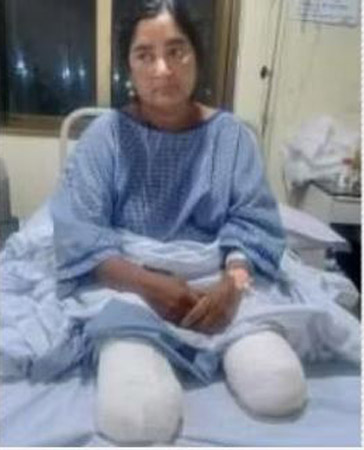
The incident of alleged harassment and humiliation of a woman Home Guard, who lost both her legs following a suicide bid before a running train, at the hands of the wife of Talcher-based DIG B.K. Rai threatens to snowball into major political controversy, writes Arabinda Mohapatra

The controversy surrounding the alleged torture of a woman Home Guard who lost both her legs under the wheels of a running train after trying to commit suicide out of shame and frustration continues to snowball. This has also become a source of embarrassment for the Odisha government led by Naveen Patnaik which has already switched into the election mode.

The home guard Sairindri Sahu ( 47), a widow, is undergoing treatment at a private hospital in Cuttack. Following her allegations about alleged torture and humiliation at the hands of wife of Talcher-based north central range DIG,  Brijesh Kumar Rai, the officer has been shifted to the police headquarters in Cuttack. Sahu, who hails from Angul district, had been serving as a Home Guard for the last 19 years.

Sahu has alleged that she was continuously tortured by the wife of the DIG in whose house she was working. The DIG denied the allegations but the government shifted him in the interest of a fair probe. The issue has now taken a serious turn with human rights activist, Jayanata Das filing a complaint in this connection with the National Human Rights Commission (NHRC).

In his complaint, Das has demanded stern action against the Police DIG and his wife and a compensation of Rs 30 lakh for the home guard. The petitioner demanded that the compensation amount be sourced from the salary of the police officer. The complaint was filed after the female home guard claimed that she lost both her legs in a suicide attempt after failing to bear the torture at the hands of Rai’s wife.

Sairindri alleged that the wife of DIG Rai asked her to do all kinds of menial work and tortured her in various ways including beating her up and even threatening her to take her job away. She didn’t even allow Sahu to take leave. Describing the sequence of events, the home guard said in her complaint that on a particular day, the DIG’s wife pushed her and asked her to go and end her life somewhere when she refused to wash some clothes.

Sources said that Sairindri had already informed about her ordeal to the Home Guard DG in writing on August 13. She alleged that no action has so far been taken in this regard. On the other hand, Rai termed the allegations brought against his wife as baseless and motivated. The officer said that Sahu had been upset due to family issues. She was never mistreated by his wife or any of his family members. He hinted that someone could have instigated the home guard to lodge a complaint against his family.

Sources said Sairindri had taken up the matter with not only the Home Guard DG but also with the Chief Minister, the Governor, the Secretary and other concerned officers. This seems to have made the issue all the more serious because while allegations have been made against a senior IPS officer, the complaint is supposed to have reached some of the most powerful people in the state who ought to have redressed the home guard’s grievances and provided her relief.

Significantly, the issue has taken a political turn with the Bharatiya Janata Party (BJP) terming the incident as shameful. Senior BJP leader Lekhashree Samantsinghar said, “This is unacceptable. I condemn this and I demand strong action against the persons involved in this. Action should be taken so that such kinds of incidents never occur again.” The ruling Biju Janata Dal (BJD) MLA on the other hand said, “The government will definitely take action. It has never protected any wrong doing.”

It is significant to note that in her written complaint to state Home Guard Director General Sudhanshu Sarangi, Sahu had accused the senior IPS officer’s wife of verbally abusing her and beating her if she failed to perform her job properly.

While the 2009-batch IPS, Rai dismissed the allegations as motivated Sahu’s elder daughter, Suchismita, denied family issues being the reason behind her mother’s attempt to die by suicide. “My mother was upset because of the torture being inflicted upon her by the officer’s wife. Unable to come to terms with the stress, she decided to end her life,” she said.

Rai was transferred to the state police headquarters in Cuttack after the allegations were raised to ensure a fair probe. It may be mentioned that Rai had been promoted and transferred as DIG, north-central range, Talcher, in December 2022. The home guard Sahu was posted at his official residence. The DG (Homeguard) has asked the commandant, Home Guards, Angul, to look into the matter and submit a factual report on the issue. The Odisha Human Rights Commission has directed the state DGP to inquire into the allegations and submit a report by September 15.

According to the home guard, on the day of the incident — August 4 — the DIG’s wife asked her to wash some clothes. When she said she could not do that, as she had a leg injury, the officer’s wife allegedly dragged her out of the house by her neck and abused her, Sahu wrote in the complaint. She also stated that the humiliation, mental and physical torture prompted her to try and end her life. According to her complaint, Sahu had gone to the railway tracks to die by suicide and fell on the tracks due to strong vibration triggered by an approaching high-speed train. Although her body fell outside the tracks, her legs got crushed under the train’s wheels. In her complaint, Sahu has demanded compensation of Rs 5 lakh and a job as Home Guard for her elder daughter. The furore over the issue is unlikely to die anytime soon.

India’s ‘just transition’ riddled with challenges

As India pledges to work on phasing out coal, there is a huge workload of informal workers who have to be taken care of. It will also mean working keenly on green energy, especially wind, alongside solar energy, writes Deepanwita Gita Niyogi

At the 26th United Nations climate summit in Glasgow, Prime Minister Narendra Modi announced that India will achieve net zero emissions by 2070. In order to tackle climate change, transitioning to greener economies and renewables is the need of the hour. But India is still dependent on coal and it is a huge ecosystem.

Odisha, Jharkhand and Chhattisgarh are top coal-bearing states of India where mining has given rise to severe air pollution, human-animal conflict, displacement of indigenous communities, loss of biodiversity, deforestation and threats to the country’s art and heritage sites like the megaliths of Jharkhand.

According to a report by American non-profit, Global Energy Monitor, new coal projects threaten to displace at least 165 villages and affect 87,630 families, of which 41,508 live in scheduled areas of India. Protests have erupted over coal mining in the Hasdeo Arand area of Chhattisgarh, a place rich in biodiversity.

The pollution level in coal mine areas is high which impacts clean water sources and air quality. Women and children are more vulnerable to poor air quality. During a workshop held in Kolkata last year on ‘just transition’, experts pointed out air pollution causes infertility among both men and women and should be treated as a health crisis. A ‘just transition’ seeks to ensure that the substantial benefits of a green economy transition are shared widely, while also supporting those who stand to lose economically – be they countries, regions, industries, communities, workers or consumers.

Towards renewables

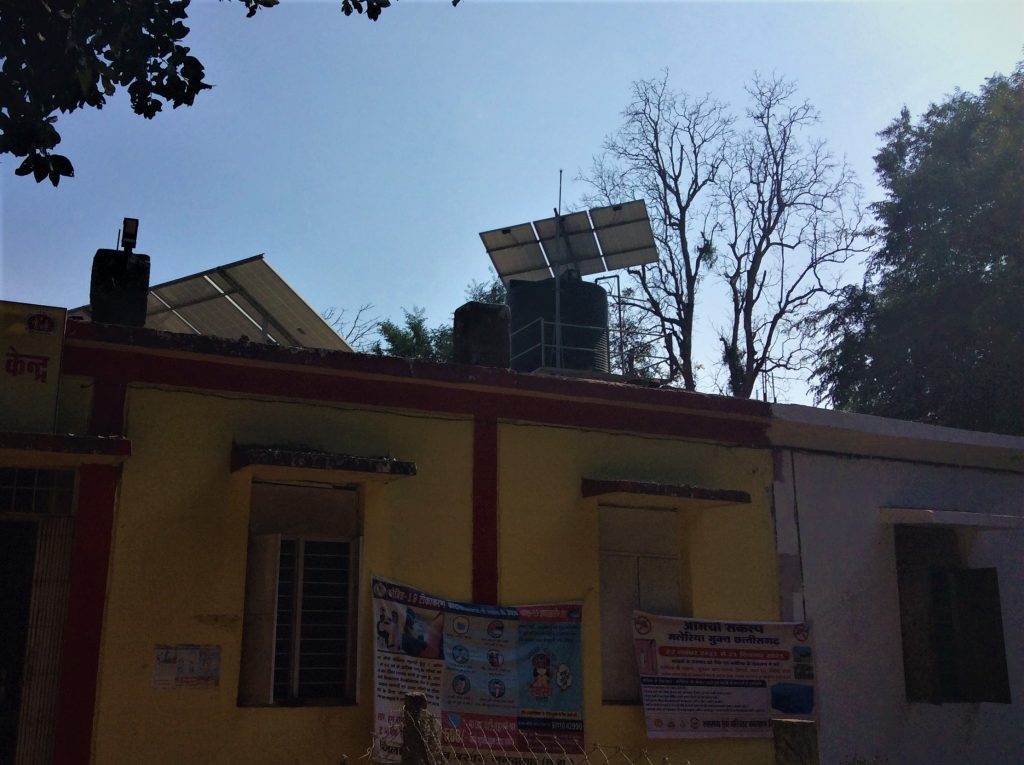
As India pledges to work on phasing out coal, there is a huge workload of informal workers who have to be taken care of. Coal phase out will impact communities who depend on it for livelihood. Phasing out coal will also mean working keenly on green energy. But India has not progressed much on its renewable target except solar. Solar too has limitations. Sometimes, there is a lack of space for mounting ground structures. Silicon used in solar panels has to be imported from outside.

There are other setbacks too. When energy ministers of G20 countries gathered in India in July for a meeting on energy transition, they were unable to decide on an outcome to phase out fossil fuels equitably at a time when setting ambitious phase out strategies should be a top priority for countries. In India, transition to green energy is possible with the help of District Mineral Foundation and coal cess.

According to Sanjay Vashist at CANSA (Climate Action Network South Asia), India is focussing on solar and wind almost equally as the break of renewable target of 175 GW is 100 GW from solar and 60 GW from wind. “However there is less focus on wind due to increased cyclone activities in coastal areas that threaten wind  infrastructure. Also, the price per unit from solar (1.7 INR/unit) is more competitive than that of wind (2.70 INR/unit).”

Putting and end to coal usage

The Indian government will not consider new coal power plants in the next five years. “In my opinion, this will be a testing time for India to invite investments for renewable energy and trigger a transition towards energy security with no need to add more coal in the future,” Vashist added.

According to the expert on climate policies, abandoned coal areas need urgent attention to initiate India’s energy transition. To ensure the right foot forward, the government needs to announce the complete closure of mines, launch policies and provide support for enterprise revolution which is sustainable and support communities.

Mines which are low producing and unprofitable have to be taken into account. In Jharkhand, several coal mines have closed down in Ramgarh district, the hub of illegal coal supplies, according to a study done by non-profit iForest. Experts feel there is a need for re-skilling of coal mine workers. “Communities dependent on coal need to have voices through social dialogue. The alternative livelihoods framework needs to be the basis for energy transition in abandoned coal areas,” explained Vashist.

Jharkhand social activist Mithilesh Dangi said in many cases, permanent coal workers are forced to retire early with full payment in case of public sector mines. Some of these workers have opened shops to support themselves. “But the problem is that workers mostly don’t consider their future and concentrate on the present. They are happy to receive two-three years’ payment without work when made to retire before time. It needs to be seen in such cases how successfully these workers have transitioned into other means of livelihood.”

Alok Shukla, member of the Chhattisgarh Bachao Andolan, pointed out that though some underground mines were closed after deposits got over, in comparison many new blocks have been developed. “There is a need to think about how to generate new jobs and I see no such plan in this direction.”

Coal theft is a major problem and mostly happens when coal is transported through trucks. This will also make India’a net zero target difficult to achieve, Shukla said. In Ramgarh, there is the issue of illegal coal transportation on bicycles.

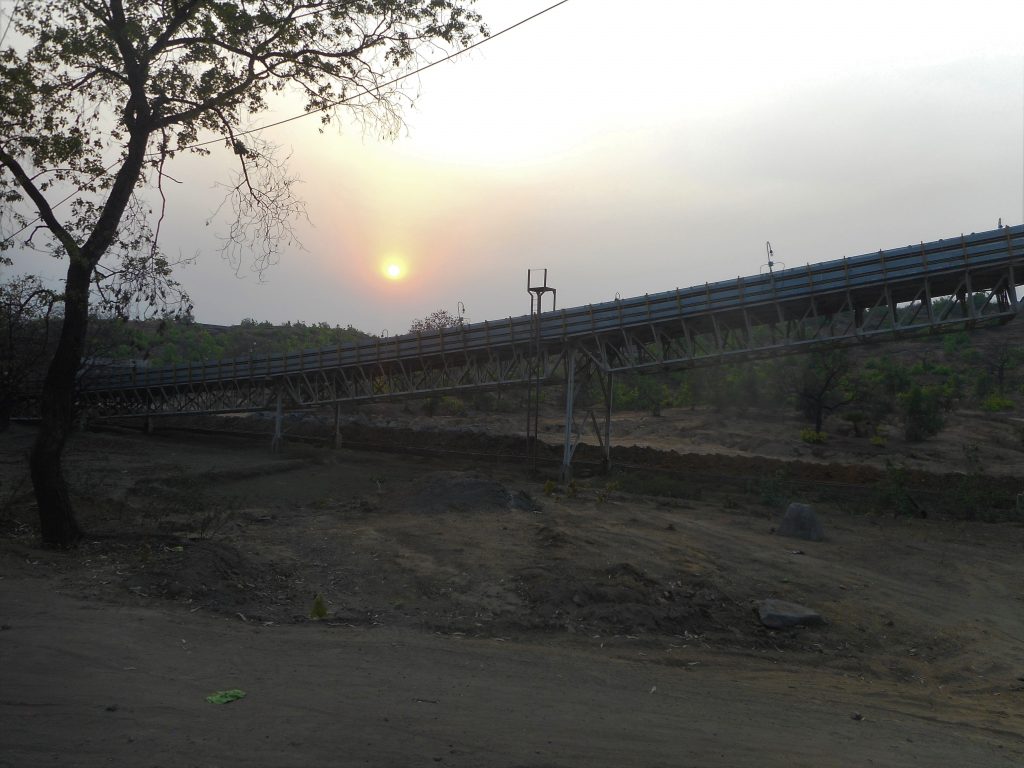
In places like Chhattisgarh, railway lines are being developed for coal transportation. For instance, the two-phased East Rail Corridor project will facilitate coal transportation from the Mand-Raigarh coal field of the state. The project is a joint venture between the South Eastern Coalfields Limited, IRCON, the construction arm of the railways, and the Chhattisgarh government.

MOST POPULAR

HOT NEWS