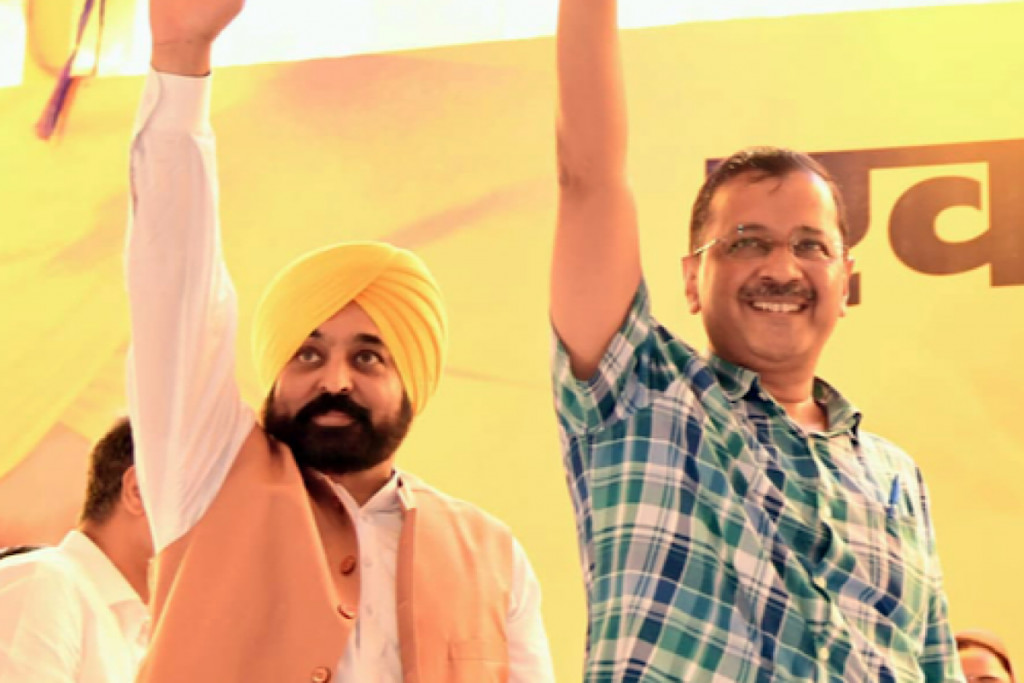
Jaipur : As the Aam Aadmi Party (AAP) has intensified preparations for the Assembly elections in Rajasthan, Delhi and Punjab Chief Ministers Arvind Kejriwal and Bhagwant Mann will launch the guarantee card at a programme in Jaipur on Monday.
AAP state president Naveen Paliwal said: “Through the Town Hall programme, Arvind Kejriwal will give guarantees that are directly related to the people of Rajasthan. Issues related to the life of the common man like education, medicine, farmers, electricity, water, getting rid of corruption are the biggest needs of the public. Guarantees will be given on these only.
Paliwal further said that on the lines of Delhi and Punjab, the AAP convenor will now present his vision among the people of Rajasthan.
“Kejriwal will give such guarantees to the public which will play an important role in bringing a positive change in the lives of the people of Rajasthan. The guarantee card will be an election promise to the public. This will be like an election manifesto, ” he added.
The AAP had earlier issued guarantee cards in Madhya Pradesh and Chhattisgarh.
As the party’s election preparations are in full swing, Kejriwal and Mann also did a road show in Jaipur.
The party has announced to contest elections on all 200 seats, with a special focus on Sriganganagar and Hanumangarh districts.
Meanwhile Rajasthan, Chief Minister Ashok Gehlot has also distributed guarantee cards of 10 major government schemes by setting up inflation relief camps.
A campaign to distribute guarantee cards was run for two months.
Now in the next phase, the Gehlot government will distribute guarantee cards for free smartphones to 1 crore women.
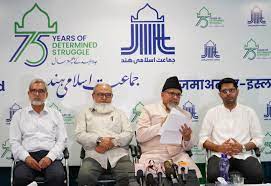
New Delhi- : Jamaat – e- Islami Hind raises serious concern over new criminal laws that will replace the old ones like Indian Penal Code, Code of Criminal Procedure and Indian Evidence Act. The organization feels that these laws can be amended but not replaced. Jamaat also raised their concern over Manipur Violence and incidents of Islamophobia in educational institutions in the country.
Addressing mediapersons in their monthly press-conference in New Delhi, Jamaat-e- Islami Hind leaders, Vice President Professor Salim Engineer, Secretary Shafi Madani and Media Secretary KK Suhail spoke on the three new bills introduced in the Lok Sabha, aiming to improve India’s Criminal justice system. Although the new bills, repeals Section 124A of the IPC, it has made provision for punishing acts of “sedition” in a new form, which is as dangerous as the old law. Jamaat leaders do not find any need of redrafting the three bills rather some amendments can be made. They also have objection on language imposition. According to Media Secretary KK Suhail, all the three new laws are in Hindi language which is understood only by 44% of the population and 56% of the people residing in India are Non Hindi.
Talking about Bhartiya Nyaya Sanhita Bill, the leaders said The bill has a provision for “Love Jihad”, which has been defined as “concealing your identity before marriage”. It has been made a separate offence with a sentence of 10 years. The term “Love Jihad” is deeply offensive to Muslims and carries a derogatory reference to an important tenet of Islam. The only positive aspect in the bill is the Capital punishment for mob lynching incidents, they added.
Expressing their concern over the New Data Protection Bill, Jamaat leaders said by the increased surveillance of the Government, the privacy of citizen data will be compromised as the bill allows companies to transfer some users data abroad. The new Bill will have the power to seek information from firms to personal data of individuals without their consent. The Bill gives power to the government to exempt state agencies from data protection provisions of the law in the name of investigation and state security, which will weaken our democracy, they said.
Reacting to the Manipur violence, JIH Secretary Shafi Madani said they are concerned about the future of Children in Manipur that are deprived of education as their schools are turned into relief camps. Condemning the violence incidents happening in the state between Meiteis and Kukis , since 3 May, Madani said “ Women and Children are the most affected ones when such violence occurs”. Considering the inability of the state govt. to control the situation in the state, the Central government must intervene and encourage civil society representatives from various ethnic backgrounds to initiate genuine reconciliation and peace efforts in the state, JIH leaders who recently visited Manipur said.
They also raised their voices against the incidents of Islamophobia in the Indian educational institutions. They feel that islamophobia in schools and colleges should be addressed by the government and appropriate laws should be draft to end this menace.
September is expected to be one of the driest months of the year for Jammu and Kashmir as well as Ladakh, with no significant precipitation predicted for the first two weeks of the month, the Meteorological Department has said.
“September is climatologically the driest month of the year for J&K and Ladakh. No significant weather is expected for the next 2 weeks,” stated MeT Director Sonam Lotus in a recent update.
This announcement comes in the wake of severe heat wave conditions that have persisted since the start of the summer season in Kashmir, with temperatures reaching as high as 34.6 degrees Celsius in Srinagar. May, June, and July of this year witnessed early and unprecedented heat conditions, making them the warmest months.
While heatwaves are typical for large parts of north and central India in May, the abnormally high maximum temperatures in places like Jammu and Kashmir have been a cause for concern. Urban areas like Srinagar have recorded day temperatures ranging from 30 to 40 degrees Celsius, exacerbated by various local weather conditions and man-made factors.
One significant factor contributing to the ongoing heat wave is the feeble Western Disturbances, which typically bring rainfall and cloudy skies to Jammu and Kashmir while regulating temperatures during this time of the year. However, this year, these disturbances have lacked sufficient moisture, allowing temperatures to remain high. Additionally, the absence of cloud cover, coupled with dry westerly winds, has contributed to soaring temperatures.
MeT data indicates that Jammu and Kashmir received 171.4 mm of precipitation in the 43 days starting June 1 this year due to Western Disturbances and the monsoon, compared to the normal 135.2 mm rainfall typically observed during this period. Both Kashmir and Jammu divisions experienced above-average rainfall during this period.
Jammu division’s 10 districts recorded an average rainfall of 235.6 mm during the 1.5-month period, which is 23.7 percent above the normal of 190.5 mm. Similarly, Kashmir valley’s 10 districts received an average rainfall of 107.2 mm, surpassing the usual 80 mm by 34.1 percent.
Despite these above-average rainfall figures, in the second week of July, Jammu and Kashmir faced a flood-like situation following heavy rainfall for two days. The water level of the Jhelum River in Kashmir breached flood alert levels in south Kashmir and Srinagar during this period.
While exposing serious procedural and financial irregularities in the performance of the government’s flagship schemes, the regulator underlines a critical need for a robust oversight mechanism to safeguard public funds, and ensure effective execution of government initiatives, writes Mudit Mathur.
Comptroller and Auditor General (CAG) has red flagged and exposed serious procedural and financial anomalies in the functioning and performance of Prime Minister Narendra Modi’s flagship schemes. Financial discrepancies in key projects and welfare schemes have triggered harsh criticism from the opposition parties, and have put a question mark on the hyperbolic electoral promises of PM Modi with the people of India for providing corruption-free and transparent governance, and proper allocation of public funds.
The CAG has released 12 audit reports which were tabled in Parliament as a part of constitutional requirement under Article 151 of the constitution of India during the last phase of the noisy Monsoon Session, which was adjourned sine die last fortnight. These reports shed light on financial discrepancies and call for increased transparency and accountability in public governance.
The Constitution of India has mandated the CAG, the apex public funds auditor, to act as a watchdog and to keep strict vigil on revenue receipts and spending of public funds, and report to Parliament if any misuse or misappropriation occurs from the consolidated funds of Union and state governments.
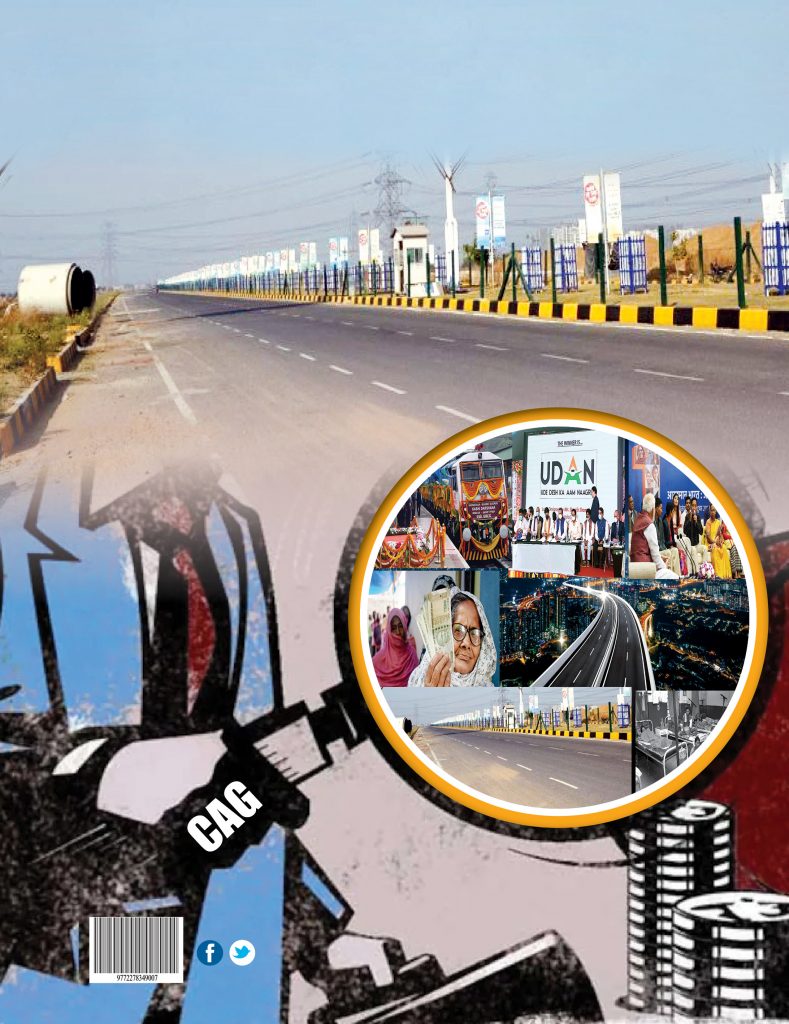
While auditing funds utilisation of various priority sectors, it highlighted major fiscal flaws in the implementation of “Bharatmala”, “Ayuashman Bharat”, “UDAN” and “Swadesh Darshan Scheme” besides red flagging diversion of National Social Assistance Programme (NSAP) funds meant for pension for BPL people to publicity of other schemes of the ministry. The auditor also underlined the decline in operating ratio of Railways performance besides incurring unsanctioned expenditure in 2021-22 financial year, the trend which continued despite being pointed out by the CAG earlier.
‘Bharatmala Pariyojana’ (BPP-I)
In its audit report on ‘Implementation of Phase-I of Bharatmala Pariyojana’ (or BPP-I) — conducted for the period 2017-18 to 2020-21, the Audior highlighted serious anomalies in the implementation of highway projects under Bharatmala Pariyojana Phase-I (BPP-1). The report quotes:
“Instances of irregularities in award of projects by implementing agencies were observed in clear violation of the prescribed processes of tendering, viz., successful bidder not fulfilling tender condition or bidder selected on the basis of falsified documents, award of works without there being approved detailed project reports or based on faulty detailed project report,” it said.
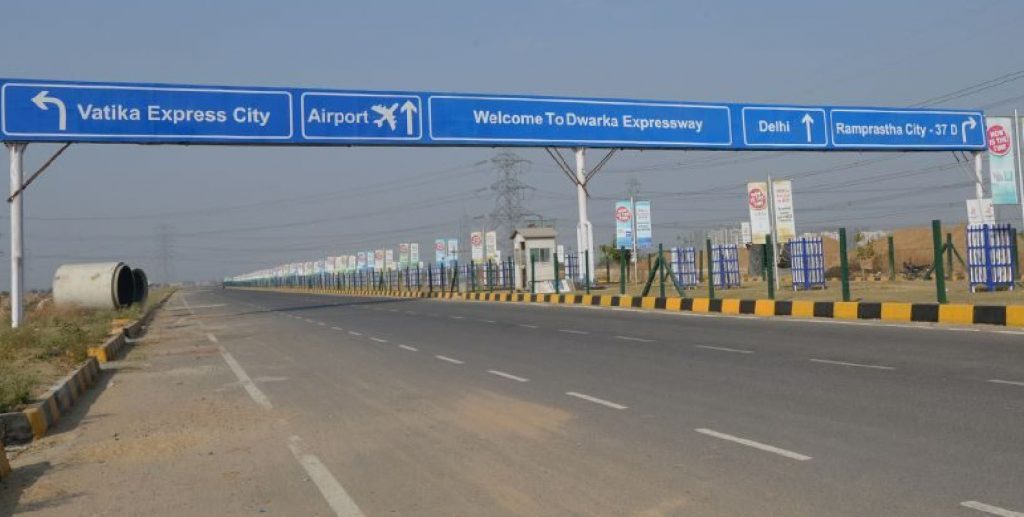
The report also found huge overrun costs in the Dwarka Expressway project which was prioritised to decongest NH-48 between Delhi to Gurugram by developing it into a 14-lane national highway.
In October 2017, Cabinet Committee on Economic Affairs (CCEA) approved a new umbrella program called Bharatmala Pariyojana for the development of 74,942 km of national highways. The primary focus of the program was on optimising efficiency of the movement of freight and people across the country. Out of above length, national highways length of 34,800 km, including the Residual National Highways Development Program (NHDP) length of 10,000 km, was approved under Phase-I of Bharatmala Pariyojana (BPP-I), for development up to September 2022, at an investment outlay of Rs 5,35,000 crore.
There are seven components under the Pariyojana viz., Economic Corridors, Inter-Corridor and Feeder Roads, National Corridors/National Corridors Efficiency Improvements Programme, Border and International Connectivity Roads, Coastal and Port Connectivity Roads, Green-field Expressways and Residual NHDP projects. The Pariyojana is implemented by Ministry of Road Transport and Highways (MoRTH) through its implementing agencies viz., National Highways Authority of India (NHAI), National Highways and Infrastructure Development Corporation Limited (NHIDCL), Road Wing of MoRTH and State Public Works Departments.
Dwarka Expressway
The report notes that Dwarka Expressway was initially planned by the Haryana government under its Gurgaon-Manesar Urban Construction Plan-2031. For that, Haryana acquired right of way (width of a road) of 150 metres to construct the main carriage way of 25 metres, with a 7-m-wide median and a dedicated utility corridor for trunk services.
“However, with no further progress being made by the Haryana government, this project was later approved in BPP-I by CCEA,” the report noted. For this purpose, 90 m right of way was handed over by Haryana to the National Highways Authority of India (NHAI) free of cost, the audit report stated.
The report highlighted, “The audit observed that up to 70-75 metre right of way was required to build a 14-lane national highway at grade. However, for no reasons on record, the project in Haryana region, where its length was 19 km, was planned with eight-lane elevated main carriageway and six lanes at grade road, when NHAI already had 90 m right of way and the same was sufficient for building 14 lanes at grade…. Due to such massive structures, this project, constructed on EPC (Engineering, Procurement, and Construction) mode, for a length of 29.06 km had sanctioned civil construction cost of Rs 7,287.29 crore i.e., Rs 250.77 crore/km as against per-km civil construction cost of Rs 18.20 crore approved by CCEA…”
MoRTH prioritised (November 2018) the construction of Dwarka Expressway by dividing it into four projects. NHAI approved (January-March 2018) the construction of these four projects with a civil cost of Rs 7,287.29 crore. The scheduled completion dates of these projects were falling between November 2020 to September 2022. These projects had achieved physical progress ranging between 60.50 per cent to 99.25 per cent as on 31 March 2023.
Dwarka Expressway was prioritised to decongest NH-48 between Delhi to Gurugram by developing it into 14 lane national highway running parallel to NH-48 at per km cost of Rs 250.77 crore as against Cabinet Committee on Economic Affairs (CCEA) approved per km cost of Rs 18.20 crore for National Corridors/National Corridors Efficiency Improvements Programme, under which this project was being constructed.
As per the project’s feasibility study, the average daily traffic of 3,11,041 moving on NH-48 between Delhi to Gurugram consisted of 2,88,391 passenger vehicles (i.e., 92.72 per cent). Of these 2,32,959 passenger vehicles (i.e., 80.78 per cent) were inter-city traffic only i.e., the traffic not crossing the Kherki-Daula toll on NH-48 (Delhi-Gurugram traffic only which did not cross Gurugram boundary).
While reviewing the prioritisation of Dwarka Expressway under BPP-I, the Audit observed the following:
No detailed project report (DPR)
The individual projects of Dwarka Expressway were appraised (December 2017/February 2018) by Project Appraisal & Technical Scrutiny Committee and approved (January/March 2018) by NHAI Board without any detailed project report for the project being prepared (not prepared till date) and even the final feasibility report of the project was submitted (September 2018) after approval of the project by NHAI.
The audit observed that the four projects of Dwarka Expressway were appraised and approved by Competent Authority based on a brief presentation by the concerned technical division of NHAI. Thus, Dwarka Expressway was appraised and approved without any detailed project report. Effects of non-preparation of detailed project report were manifested in following ways:
“Inspite of sufficient right of way being available with NHAI for constructing all 14 lanes of Dwarka Expressway at grade, for no reasons on record, it was being constructed with eight lane elevated road and six lane at grade road resulting in a very high per km civil cost of Rs 250.77 crore for this project”;
“The planned toll rates and tolling mechanism of Dwarka Expressway might hinder the recovery of capital cost of the project and might also result in undue financial burden on commuters moving between Delhi-Gurugram (up to Kherki Daula toll plaza)”;
“Lane configurations of Dwarka-Expressway were determined without analysing the development of competing infrastructure in the form of development of RRTS SNB”;
“Inspite of heavy Delhi-Gurugram traffic, which was expected to use the six lane at grade portion of this project falling in Haryana region, this at grade portion was being constructed with sub-optimal specifications of 20 Million Standard Axles traffic; and California Bearing Ratio value of soil estimated, in feasibility study of Dwarka Expressway, was on lower side as compared to California Bearing Ratio value considered by contractor resulting in savings to the contractor in the cost of construction.”
“BJP’s corruption & loot is taking the nation on a Highway to Hell ! In a scathing report against Modi Govt, CAG has pointed that Bharatmala Pariyojana is being built with innumerable deficiencies, non-compliance of outcome parameters, clear violation of tender bidding process, and huge funding mismanagement,” said Congress president Mallikarjun Kharge in his statement on X (formerly Twitter).
“One of the stark examples of the fraud, in this scheme, is the Dwarka Expressway. CAG has exposed that the cost of this project was originally estimated at Rs 528.8 Cr but later zoomed to Rs 7287.2 Cr — a whopping 1278% increase!! Dwarka Expressway was appraised and approved without any detailed project report,” Kharge commented.
“The planned toll rates shall hinder the recovery of capital cost of the project and result in undue financial burden on commuters. Lane configurations of Dwarka-Expressway were determined without analysing the development of nearby competing infrastructure. Construction was done with suboptimal specifications,” questioned Kharge, adding, “Pradhan Mantri ji, You need to look within, before you harp about corruption against your opponents, because you are overseeing it yourself!! In 2024, INDIA will make your government accountable.”
Responding to a political row erupted over the CAG report which red flagged the high cost of construction of the Dwarka Expressway, Union Road Transport and Highways Minister Nitin Gadkari rejected the auditor’s observation that Rs 250 crore was spent per kilometre. CAG report mentioned 29.06 kilometres long Dwarka Expressway is being built at an exorbitant cost of Rs 250.77 crore per kilometre, exceeding the Rs 18.2 crore per kilometre that was sanctioned by the Cabinet Committee on Economic Affairs (CCEA).
Refuting the allegations of “high cost of construction”, Nitin Gadkari said that the Dwarka Expressway was not 29 kilometres-long as mentioned in the CAG report but around 230 kilometres-long, as it had tunnels included in it as well.
Gadkari said that according to this, Rs 9.5 crore was being spent per kilometre. Gadkari claimed that he told the same to the CAG officials, and they were “convinced” by the clarification. However, he said, they still went ahead with the report.
Gadkari has conveyed his displeasure with the lopsided attitude adopted by certain officials responsible for responding to queries raised by the CAG with regard to the cost of construction of the Dwarka Expressway at a high-level review meeting. The minister also directed to fix the responsibility for this lapse on the part of senior concerned officials of his ministry.
Commuters pinched for Rs 150 cr at toll plazas
The CAG report on the Union Ministry of Road Transport and Highways Toll Operations of National Highways Authority of India (NHAI) in Southern India has found that at five toll plazas, a total amount of Rs 132.05 crore was collected from commuters in violation of toll plaza rules.
The audit was conducted on 41 randomly selected toll plazas across the five southern states of Andhra Pradesh, Karnataka, Tamil Nadu, Kerala and Telangana which stated that due to “non-implementation of NH Fee Amendment Rules 2013 dated 16 December 2013 with respect to upgradation of existing four lane highways, NHAI continued to collect user fee in three toll plazas (namely Nathavalasa, Chalageri and Hebbalu) during delayed period of construction though the amended rule stated that no user fee shall be levied for the delayed period.”
The report said that this resulted in the collection of user fees of Rs 124.18 crore during the period May 2020 to March 2021 in “violation of the amended toll fee rules”. The report found that at the Paranur toll plaza, the NHAI delayed reduction in user fee to 75% of fee applicable. At the Madpam toll plaza, the NHAI annually revised the user fee despite the stipulation of no revision during upgradation as per the amended Fee Rules. NHAI collected Rs 7.87 crore from road users on the two toll plazas from August 2018 to March 2021.
“Thus toll collection in these five toll plazas led to undue burden of Rs 132.05 crore on road users,” the report stated. The report also found that NHAI collected excess toll fees of Rs 22.10 crore from road users during 2017-2018 to 2020-2021 at the Paranur public-funded toll plaza.
A bridge had been constructed in 1954 and a user fee was being collected for it, again in violation of the NH Fee Second Amendment Rules 2011. Under the rules, since the bridge was constructed prior to 1956, the user fee was not to be levied.
The audit also found that delays in toll collection according to time limits prescribed by NH Fee Rules, 2008, in four stretches of public funded projects led to a loss of NHAI revenue amounting to Rs 64.60 crore.
AB-PMJAY: Howlers galore
PM-JAY is much flaunted to be the world’s largest fully government-funded health insurance scheme that was launched in September 2018 just prior to 2019 Lok Sabha elections as a major booster plank of welfare measures. The scheme aims to provide free healthcare to over 50 crore poor families. The scheme provides funding of up to Rs five lakh per family annually in cases of medical emergencies.
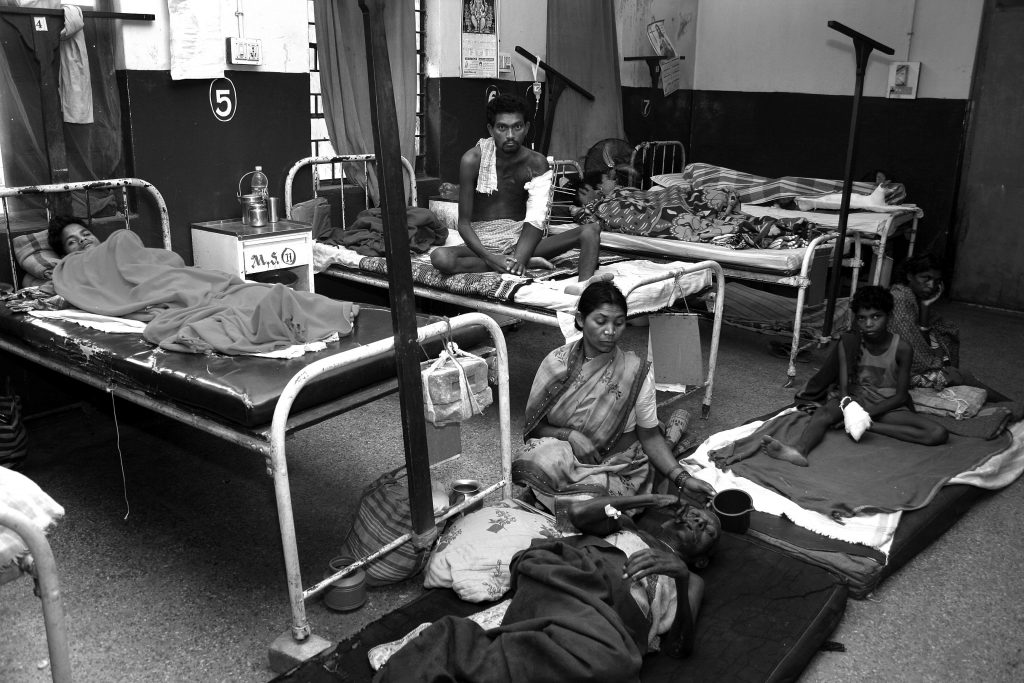
The CAG in its report revealed alarming facts that all is not well with the government’s flagship health insurance scheme, Ayushman Bharat Pradhan Mantri Jan Arogya Yojana (AB-PMJAY). It has found glaring loopholes in implementation of the scheme including misappropriation of funds, fake accounts, releasing funds without proper evidence and even claims paid in the name of patients who were already dead!
In its Performance Audit of Ayushman Bharat — PMJAY, the CAG said that overall, 7,49,820 beneficiaries were linked with a single mobile number in the Beneficiary Identification System (BIS) of the scheme. Also, 4,761 registrations were made against seven Aadhar numbers and non-existent hospitals were enrolled under a public health insurance scheme.
“Data analysis of the BIS database revealed that there were large numbers of beneficiaries registered against the same or invalid mobile number. Overall, 1119 to 7,49,820 beneficiaries were linked with a single mobile number in the BIS database…,” the report states.
Besides 7,49,820 beneficiaries were linked with 9999999999, 1,39,300 beneficiaries were linked to the phone number 8888888888; and 96,046 others were linked to the number 9000000000. There were also at least 20 cell phone numbers to which between 10,001 and 50,000 beneficiaries were linked, the report revealed.
The report stated that 7.87 crore beneficiary households were registered, constituting 73% of the targeted households of 10.74 crore (November 2022). Later, the government increased the target to 12 crore. The report noted, “Mobile numbers are significant for searching records related to any beneficiary in the database, who may approach the registration desk without the ID.”
“In case of loss of e-card, identification of the beneficiary may also become difficult. This may result in denial of scheme benefits to eligible beneficiaries as well as denial of pre- and post-admission communication causing inconvenience to them.”
Interestingly, the report of the constitutional audit agency found that such cases are relatively high in Kerala, which ranks first in the NITI Aayog Health Index and other social health parameters.
The scheme offers that a patient can avail of treatment only once without an Aadhar or an Aadhar enrolment slip. They are further mandated to provide a signed declaration saying that they will produce the Aadhar before their next treatment. However, the CAG report found that 8.2 lakh patients availed of treatment for two or more times without an Aadhar or any other biometric proof for a cumulative claim settlement worth Rs1,678.68 crore.
Kerala cases
Kerala tops the list with the highest number of such cases. The State saw 2.02 lakh patients availing treatments two or more times without biometric verification between September 2018 and March 2021. Cumulatively, they were paid Rs 472.64 crore. It was followed by Chhattisgarh which saw Rs 234.86 crore in claim payments to such patients. The report also highlighted something rather weird. Thousands of claims are made against patient names, who were shown ‘dead’ earlier. “The audit noted that patients earlier shown as ‘died’ in the system continued to avail treatment under the Scheme. Data analysis of mortality cases revealed that 88,760 patients died during treatment specified under the Scheme. A total of 2,14,923 claims shown as paid in the system, related to fresh treatment in respect of these patients [sic],” reveals the CAG report.
In 3,903 of such cases, claims amounting to Rs 6.97 crore pertaining to 3,446 patients were paid to hospitals. Strangely, in these cases too, Kerala tops the list. In the state, such claims were made in the names of 966 ‘already dead patients”. They were paid a claim amount worth Rs 2.61 crore. Madhya Pradesh comes next with 403 claims in the name of dead patients.
“The implementation of the Scheme needs improvement in light of the findings made in the report. It is expected that the compliance to the observations and recommendations made in this Report will help in improving the implementation of the Scheme,” the report added.
UDAN a non-starter
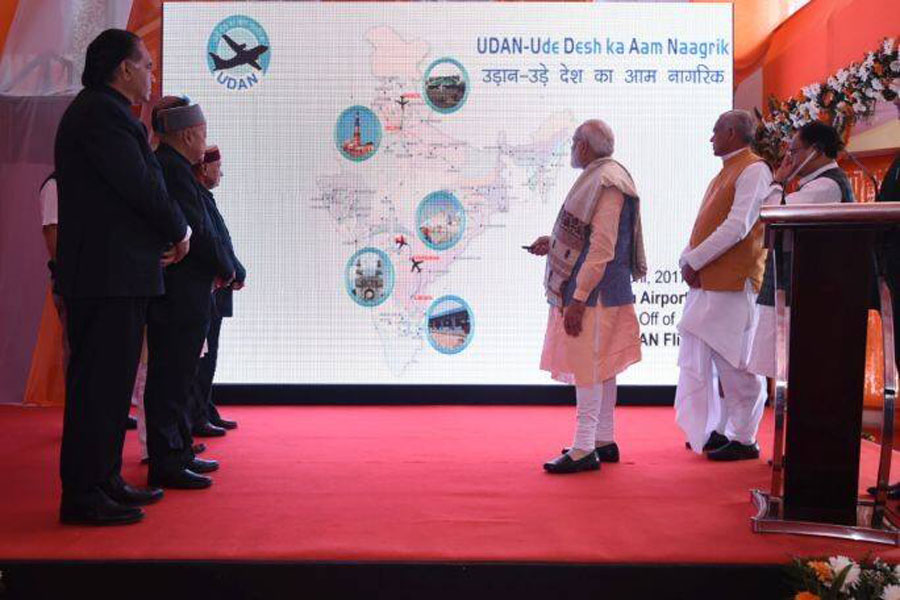
This CAG Report contains significant results of the compliance audit of Regional Connectivity Scheme – UDAN of the Ministry of Civil Aviation launched in pursuance of the provisions of the National Civil Aviation Policy 2016. The instances mentioned in the report are those which came to notice in the course of audit for the period from October 2016 to March 2021; figures relating to the period up to March 2023 have been updated, wherever necessary.
National Civil Aviation Policy (NCAP), 2016 envisaged a Regional Connectivity Scheme (RCS) to enhance regional air connectivity through fiscal support and infrastructure development. Accordingly, the Ministry of Civil Aviation (MoCA) launched (October 2016) the scheme – Regional Connectivity Scheme – UDAN (Ude Desh ka Aam Naagrik). The scheme aimed to promote affordability of regional air connectivity through a series of measures.
Up to UDAN-3, 52 per cent (403 out of 774 routes) of the awarded routes could not commence operations and from the 371 commenced routes, only 112 routes (30 per cent) completed the full concession period of three years. Further, out of these 112 routes, only 54 routes (i.e., 7 per cent of the awarded routes) connecting 17 RCS Airports could sustain the operations beyond the concession period of three years, as of March 2023. The scheme launched in 2016 is aimed at promoting affordability of regional air connectivity and refurbishing underserved airports.
“Further, out of these 112 routes, only 54 routes (7% of the awarded routes) connecting 17 RCS [regional connectivity scheme] airports could sustain the operations beyond the concession period of three years, as of March 2023,” the report stated.
The report also found “significant delays” in revival or development of identified RCS airports out of the budgetary support sanctioned by Cabinet Committee on Economic Affairs in March 2017. For accounting of transactions of Regional Air Connectivity Fund, Standard Operating Procedure (SoP) as per laid down procedure of CAG of India was not formulated even after a lapse of more than five years. Further, the accounts of Regional Air Connectivity Fund Trust (since inception) were also not submitted for CAG audit.
“Out of the 116 airports/heliports/water aerodromes where expenditure was incurred, operations commenced at only 71 (61%) airports/heliports/water aerodromes,” the report said. “Operations could not be commenced or were discontinued at 83 airports/heliports/water aerodromes even after incurring an expenditure of Rs 1,089 crore.”
Swadesh Darshan Scheme
The Swadesh Darshan Scheme is a 100 per cent Central Sector flagship scheme launched (January 2015) by the Ministry of Tourism for the development of tourism infrastructure in the country. The Ministry identified 15 tourist circuits for development under the scheme and a total of 76 projects were sanctioned under the scheme since its inception.
The scheme was formulated for integrated development of theme-based tourist circuits. The Ministry identified 15 tourist circuits for development under the scheme, namely Himalayan circuit, North-East circuit, Krishna circuit, Buddhist circuit, Coastal circuit, Desert circuit, Tribal circuit, Eco circuit, Wildlife circuit, Rural circuit, Spiritual circuit, Ramayana circuit, Heritage circuit, Tirthankar circuit and Sufi circuit.
“The Ministry launched the Scheme despite objections of the Planning Commission/Ministry of Finance and did not act upon the recommendation of the Standing Finance Committee to formulate an Umbrella scheme by merging the schemes having overlapping objectives. As a result, there was overlapping of scope across various schemes implemented by the Ministry. Most of these schemes were still ongoing in 2021-22. Thus, the objective of the government to contain the proliferation and rationalisation of schemes was not achieved,” CAG report said.
The Ministry of Tourism sanctioned funds for the Swadesh Darshan scheme without the cabinet approval. A performance audit of the Swadesh Darshan Scheme implemented by the Ministry of Tourism for the period from the scheme’s inception in January 2015 to March 2022 revealed that while the scheme was launched with an initial outlay of Rs 500 crore, the Ministry continued to sanction projects and the amount sanctioned had exceeded Rs 4,000 crore by 2016-17.
The funds were sanctioned by the ministry “without obtaining approval of the Cabinet, which was necessary for sanctioning projects costing above Rs 1,000 crore.” The report added that the scheme was implemented “without conducting any feasibility study.”
The report said that the ministry identified 15 tourist circuits for development under the scheme and a total of 76 projects were sanctioned under the scheme since its inception. “Non-preparation of the feasibility report resulted in poor identification of sites and deficiencies in execution of projects, such as delay in completion of the projects and non-utilisation of funds,” CAG report stated.
“As on 31 March 2022, the total expenditure incurred under the rural circuit was only Rs 30.84 crore, which constituted only 0.73% of the total expenditure incurred under the scheme.” The rural circuit did not receive suitable attention from the ministry because it did not develop a formal mechanism for evaluation and approval of projects. There was a lack of “proper planning on the part of the ministry” as it did not ensure the preparation of a national or state-level plan before launching the scheme.
Promoting schemes at NSAP expense
The CAG report on the Performance Audit of the National Social Assistance Programme – Union Government (Civil), Ministry of Rural Development, has found that funds meant to publicise the scheme were diverted for publicity of other schemes by the ministry. The audit covered the period between 2017-18 to 2020-21.
The National Social Assistance Programme (NSAP) is meant to provide social assistance benefits to the below poverty line (BPL) households in the case of old age, disabled, widows, and the death of the primary breadwinner.
The NSAP includes five sub-schemes, of which, three are pension schemes, including the Indira Gandhi National Old Age Pension Scheme (IGNOAPS), Indira Gandhi National Widow Pension Scheme (IGNWPS), and Indira Gandhi National Disability Pension Scheme (IGNDPS). The other two sub-schemes are the National Family Benefit Scheme (NFBS) – a one-time assistance to the bereaved family in the event of the death of the breadwinner, and the Annapurna scheme – food security to the eligible old age persons who have remained uncovered under IGNOAPS.
The report said that funds of Rs 2.83 crore earmarked for IEC (Information, Education, and Communication) activities under NSAP were diverted for “campaigning of other schemes”. The audit reported that the absence of a prescribed procedure for proactive identification of beneficiaries coupled with the lack of IEC activities resulted in delayed/non-coverage of eligible beneficiaries from the ambit of NSAP and non-achievement of the objective of universal coverage of beneficiaries.
The report said that the Ministry of Rural Development in January 2017 decided to campaign through hoardings in states and Union territories for giving due publicity to all programmes/schemes of the Ministry. “Administrative approval and financial sanction of Rs 39.15 lakh was taken (June 2017) for a publicity campaign through hoardings with a limit of 10 hoardings at each capital city of the state and UT.
Administrative approval and expenditure sanction of Rs 2.44 crore was taken (August 2017) for campaigning Gram Samriddhi, Swachh Bharat Pakhawada and publicity material of multiple schemes of the Ministry through five hoardings in each District for 19 states. “Subsequently, work orders were issued in June and September 2017 and publicity campaigns were to be undertaken in September 2017.
“The funds for the said campaign were stated to be available under National Rural Employment Guarantee Scheme and were approved by the competent authority to be incurred under the same head; however, the audit observed that funds were actually incurred from social security welfare-NSAP schemes,” the report said.
“However, the advertisement of only PMAY-G (Pradhan Mantri Awaas Yojana- Gramin) and DDU-GKY(Deen Dayal Upadhyaya Grameen Kaushalya Yojana) schemes were mentioned in the work order and no schemes of NSAP were included in the work order. “Further, the campaigns were to be undertaken by DAVP (Directorate of Advertising & Visual Publicity) under intimation to the department; however, the payment to DAVP was made without confirmation of the execution of the work.”
“Later, planned IEC activities under NSAP were not undertaken as envisaged and funds of Rs 2.83 crore were diverted for campaigning in respect of other schemes of the Ministry. Hence, IEC activities intended to create awareness among potential beneficiaries of NSAP could not be taken up even though there was earmarking of funds for IEC activities.”
In addition, the report said that while the scheme is meant to include universal coverage, the report found that it was being implemented in a “demand-driven mode where benefits were provided to only those beneficiaries who applied for pensions/benefits under NSAP themselves”. The report also found “idling of funds of Rs 18.78 crore”.
It said that while one of the key principles of NSAP is regular monthly disbursement of pension, in eight States/UTs, funds received under NSAP were lying idle either with the states/Union territories concerned or with implementing agencies. This included Bihar, Sikkim, Arunachal Pradesh, Goa, Kerala, Andaman and Nicobar Islands, Jammu and Kashmir, and Tripura. The report found “Rs 18.78 crore were lying idle in eight states for a period ranging from one to five years”.
“The reasons for idling of funds were such as the release of funds at the fag end of the financial year, non-revalidation of funds from administrative department, duplication and non-permissible age limit of the beneficiaries,” it said. The report added that this also shows lack of financial monitoring on part of the states/UTs which manifested in irregular payment of pension to the beneficiaries.
Railway spent Rs 6082 cr sans sanction
The Indian Railways’ finances have slipped into a “concern zone”, with the national railway operator spending Rs 107 to earn Rs 100 during 2021-22 owing to higher appropriation to fund pensions, CAG said in its report containing audit observations on matters arising from examination of Finance Accounts of Indian Railways for the year ended 31 March 2022. It focuses on the financial health of the Railways based on various parameters and contains the audit findings on the appropriation of its accounts.
While the capital expenditure of Railways has been on the rise in recent years, its financial performance has shown a decline in the “excess of earning over expenditure”, or surplus, in the six years from 2016-17 to 2021-22.
The CAG report on the financial audit of the accounts of the Union government found that the Ministry of Railways had incurred unsanctioned expenditure. During the financial year (FY) 2021-22, the ministry had incurred unsanctioned expenditure of Rs 6082.77crore, encompassing 1,937 cases.
In 2021-22, Railways’ finances slipped into ‘concern zone’ against the target of 96.15 per cent in the Budget Estimates, the Operating Ratio of Railways was 107.39 per cent in 2021-22. As compared to the Operating Ratio of 97.45 per cent during 2020-21, there was deterioration in 2021-22.
“Similar audit comments were made in the previous C&AG audit reports for the year 2018-19 to 2020-21. Thus, it is evident that no steps had been taken by the Ministry to reduce the cases of unsanctioned expenditure despite being pointed out in the previous CAG audit reports,” it said.
CAG audit found inadequate generation of internal resources by Railways resulted in greater dependence on Gross Budgetary Support (GBS) and Extra Budgetary Resources (EBR). The amount of EBR was Rs 71,065.86 crore, which represented a decrease of 42.31% as compared with 2020-21.
The report also said passenger fares are cross-subsidised using profits generated on freight operations. This cross-subsidisation continues to be a concern, as railways has not been able to raise fares in the sleeper class.
According to the CAG, in FY22, the railways’ loss decreased over the previous year but the entire profit of Rs 36,196 crore from freight traffic was utilised to cross-subsidise and compensate the loss on operation of passenger and other coach services.
Trend analysis of object head wise expenditure in respect of Department of Agriculture, Cooperation and Farmers’ Welfare revealed persistent savings of 40% to 96% of the Budget Estimate during the last five years. The report said that this indicates deficient planning at the Budget Estimate stage without taking into account previous years’ trends.
All these reports collectively highlight the critical need for accountable governance, adherence to financial guidelines, and the implementation of robust oversight mechanisms to safeguard public funds and ensure the effective execution of various government initiatives.
Our country took a giant leap to become the first country in the space domain with Chandrayaan-3’s lander module making a soft landing on the moon’s uncharted south pole. Up next is the Indian Space Research Organisation’s first spacecraft to survey the Sun on September 2.
Little doubt, the proud nation is in a celebratory mood. Apparently, what escaped the scrutiny of discerning media and public is the recent damning report of the Comptroller and Auditor General of India casting aspersions on the implementation of some much touted schemes of the Union Government. The report has detected glaring irregularities and deficiencies in their implementation. The most bizarre is the finding of the report that about 7.5 lakh beneficiaries under the Ayushman Bharat scheme were linked to one mobile number, 9999999999. Also 1285 beneficiaries were linked to one Aadhaar number 000000000000! Under the same flagship scheme tabled in Parliament, Rs 6.97 crore was paid for the treatment of 3,446 patients who had earlier been shown as dead in the database of the same Ayushman Bharat-Pradhan Mantri Jan Arogya Yojana (AB-PMJAY).
Tehelka Cover Story “CAG Report: Flagship Schemes Red Flagged” by Mudit Mathur deciphers and dissects what went amiss with the schemes launched with fanfare for vulnerable sections covering around 55 crore people in the country. The CAG, which has been mandated to act as a watchdog, has also highlighted irregularities in other projects in its 12 audit reports which were tabled on the records of Parliament as a part of constitutional requirement under Article 151 of the Constitution.
Alleged discrepancies were observed in some other schemes and projects too. For instance, the original construction cost of Dwarka Expressway was approved at Rs 18.20 crore per kilometre, but it skyrocketed to Rs 250.77 crore per kilometre. The CAG report has also highlighted diversion of about Rs 2.83 crore from the National Social Assistance Programme by the Ministry of Rural Development to promote other schemes. The report also unravelled alleged financial misallocations in six States amounting to Rs 57.45 crore. It noticed that the Hindustan Aeronautics Ltd caused a loss of Rs 159.23 crore due to faulty planning of projects while Bharat Electronics Limited incurred a loss of Rs 142 crore as the electronic circuit boards could not be indigenised.
Acting fast, the government has already de-empanelled 210 hospitals while licences of 188 others had been suspended for “non-compliance” with the guidelines issued by the National Health Authority (NHA). However, for the government which boasts of its commitment to eradicate corruption, there is a need to come clean on all the points red-flagged by the CAG. There is an urgent need to prioritise the smooth functioning of welfare schemes without any taint. The audit findings underscore a need for a robust mechanism to safeguard public funds, and to bring in more transparency to ensure effective execution of public welfare schemes!
Any party would want that it well cashes in on the advantage it can accrue from the success of a scientific mission. Therefore to expect the BJP not to do so would only betray one’s political naïvety
When an elated Indian Space Research Organisation Chief S. Somnath told the country that “India is on the moon”, it resonated with every nation loving Indian. That evening many jumped with joy. This, of course, preceded many nervous moments, with one question staring hard: “Will we make it?”
Clearly it was “15 minutes of terror” as former ISRO Chairman K.Sivan has dubbed soft landings because they present a challenge due to the precision in timing that is required for the rocket engine to fire.
If figures are anything to go by, only 37% soft landings have so far been successful: enough to give anyone the jitters.
Moon landings, in any case, are a challenge because of the limited atmosphere and dust. Add to this the fact that the surface has rocks and craters: a far cry from the poetic chand sa chehra, moon-like face analogies which most romantics have grown up believing.
The nervousness was palpable given that Chadrayan-2, India’s last mission, was a failure. The lander called Vikram just did not make it.
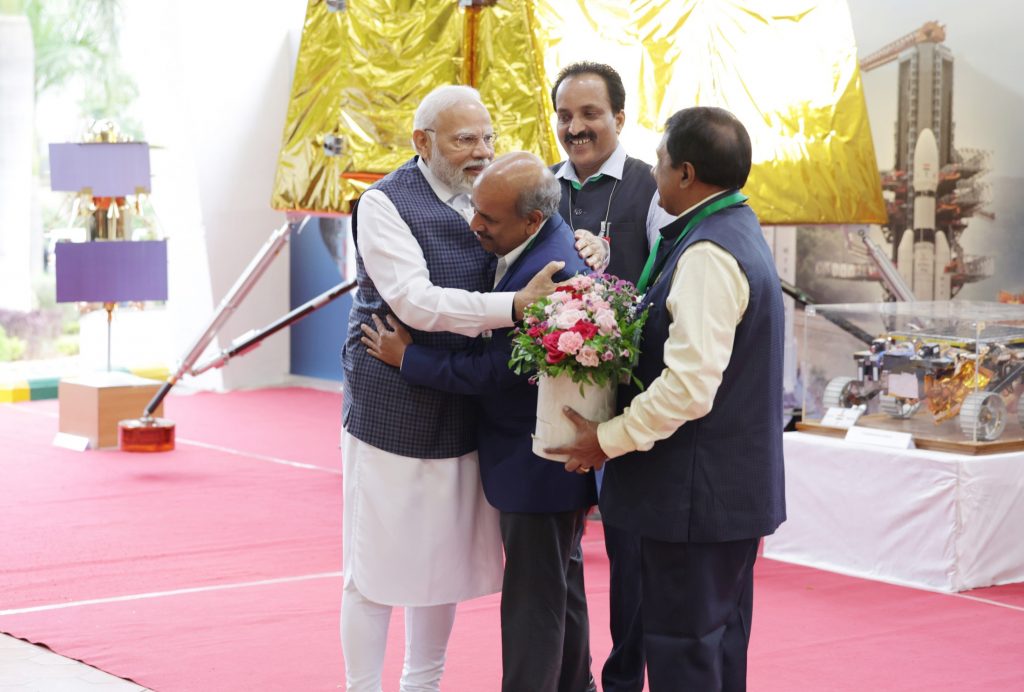
Images of Prime Minister Narendra Modi hugging a distraught ISRO Chief, then K Sivan, flashed across minds. Sivan had fought back tears after the space agency lost contact with the lander just when its descent to the moon was initiated.
But with tears came lessons but more importantly the determination to make it happen which ultimately led to a safe landing this time around.
A few days before the Chandrayan-3 mission, was the launch of Russia’s latest Luna 25. Unfortunately that crashed on the Moon’s surface making it Russia’s first failure in 47 years: reason enough to give the world, including India, the jitters.
Luna 25 spacecraft spun out of control and crashed into the moon following a problem even as it prepared for pre-landing orbit.
Given Russia’s space prestige, it was indeed a setback.
Remember Soviet cosmonaut Yuri Gagarin: the first man to travel to space in 1961? And Moscow being the first to launch a satellite, Sputnik 1, to orbit the Earth, way back in 1961: clear examples of Russia’s enviable space programme.
So it was fingers crossed even as India and the world, in that order, waited with bated breath.
And once it happened, India became the first country to soft-land a spacecraft near the lunar south pole, something Prime Minister Narendra Modi made known during his address to the citizens following the remarkable feat.
With the success of this mission, India is the fourth country to land on the Moon and join the ranks of the United States, China and Russia.
As per reports, through the mission, India will not only gain access to a wealth of knowledge about the lunar surface but also acquire its potential for human habitation in the future.
Chandrayaan will collect data on the composition and geology of the moon as well as conduct experiments to study the lunar atmosphere, including its history, geology and resource potential.
ISRO’s former Chairman, G. Madhavan Nair is on record stating Chandrayaan-3 mission’s landing a “complex manoeuvre”. There are, he had said, a host of things that must work in unison and any glitch could mean trouble.
However, fears were put to rest with the successful landing; prayers offered by different faiths finally answered; and History created.
History has certainly been created but it is a History that has its share of challenges and a road map for the future. It is also one from which the BJP intends to send across a political message. And this is not without reason.
Any political party worth its name would give its right arm to ensure that it well cashes in on the advantage it can accrue from the success of a scientific mission: particularly one that places India in an enviable position on the world map as well as places it as being the first country to soft land near the lunar south pole.
Scientific jargon apart, the fact that the world is looking at India is reason enough to make sane Indians smile and hold their heads high.
It is a proud moment to demonstrate that we have arrived and reached where others could not or did not, the more recent Russian failure being top of the mind.
Therefore when Prime Minister Modi said that with this moon mission, ISRO was elevating “the dreams and ambitions of every Indian” he was not off the mark.
The statement may be a bit exaggerated given that “every Indian” would include his critics and the cynics, yet it is not a statement devoid of truth.
Every right minded Indian is elated and proud of the feat so even while cynics are questioning the necessity and are busy calculating the cost of such a mission in the face of the hunger and poverty issues dogging the country, there is no denying the fact that the mission has made majority of Indians swell with pride: a moment of glory for us and the country as one would say.
Therefore to expect the BJP not to make capital of a god sent opportunity would be politically naïve to say the least.
The general elections are less than a year away and the political slugfest has already started.
For starters, a credit war broke out between the Congress and the BJP.
Congress chief Mallikarjun Kharge, said that ISRO’s accomplishments were a testament to India’s first Prime Minister Pandit Jawaharlal Nehru.
The BJP was quick to respond saying the Congress was “stuck in the past” for crediting Nehru.
Congress general secretary KC Venugopal, meanwhile, asked the PM to explain his “hypocrisy” accusing the Government of not supporting the scientists. He also accused it of not paying salaries to some scientists.
Ditto West Bengal minister Aroop Biswas who alleged that ISRO scientists had not been paid for 17 months: a claim that has been debunked.
Irrespective, the BJP is all geared up to milk the feat as far as possible.
TMC’s Mahua Moitra has already said that the mission will be used to whip up nationalistic frenzy before elections.
Media reports too indicate that the mission’s success will be the main campaign message for the 2024 elections.
And why not? With the Party’s spin doctors at work, they would ensure that they accrue political advantage from a scientific achievement.
On the face of it, Modi will, therefore, use the tools of religion and science in that order.
With the Ram Mandir in Ayodhya scheduled to be completed early next year, the Ram and Modi bhakts, devotees, will be on seventh heaven. In all likelihood, they would go to town with the Modi hai to mumkin hai spiel.
In India, nothing works like religion. Therefore the Mandir frenzy will, in all probability, bring together Ram lovers. On its part, the BJP would prop up Modi as the doer and a promise keeper, as it were.
For the others, there is the moon mission which has internationally enhanced India’s image and made the world sit up and look at it with the seriousness it deserves.
Therefore, for Modi to dedicate the achievement to the “world” and say that the mission’s success is not India’s alone but “a success for all humanity” did touch a chord.
Armed with these two tools, the BJP seems all geared up to face the 2024 challenge: a challenge because on many counts the elections may not be a cake walk for the BJP.
But the moon mission has certainly given it the heft it badly needed. This, plus the temple, would come handy in the elections for Modi to once again thump his chappan inch ka seena, or the 56 inches chest.
ISRO has given opportunity to a number of women scientists who have worked shoulder to shoulder with their male counterparts. The field of space exploration continues to see more women breaking barriers and making their mark in space science, writes Pawan Kumar Bansal
Indian women have made significant contributions to space exploration. Kalpana Chawla, for example, was the first woman of Indian origin to go into space and flew on the Space Shuttle Columbia in 1997.
In addition to Kalpana Chawla, there have been other Indian women who have made notable contributions to space exploration like Sunita Williams. Born in the United States to Indian parents, Sunita Williams is a NASA astronaut. She has spent a total of 321 days in space, including long-duration missions on the International Space Station (ISS). She’s known for her achievements in spacewalks and her passion for science communication.
ISRO has given a break to a number of women scientists who have worked shoulder to shoulder with their male counterparts and excelled in their chosen fields. The field of space exploration continues to see more women breaking barriers and making their mark in space science and engineering. All Chandrayaan missions, like other space missions, are a collaborative effort involving scientists, engineers, and professionals from diverse backgrounds, including women. While specific contributions of women to the Chandrayaan-3 mission might not be publicly highlighted, it’s important to recognize that women have been playing significant roles in India’s space program. Their involvement reflects the broader progress in gender equality and empowerment.
Over the years, women empowerment in space research in India has been steadily increasing. Indian Space Research Organisation (ISRO) has made efforts to encourage and support the participation of women in various roles within the field. Women scientists and engineers have held key positions, from research and development to project management.
ISRO has been actively working on promoting gender diversity and inclusivity within its workforce. They have implemented policies to provide equal opportunities and support for women employees, along with initiatives to create a conducive work environment. This has led to more women participating in space research, not only in India but also internationally.
The success stories of women scientists like Dr. Tessy Thomas, often referred to as the “Missile Woman of India,” and Ritu Karidhal, the Deputy Operations Director of the Mars Orbiter Mission, serve as inspirations to many aspiring women in space research.
In recent years, more women have been taking up roles in various space-related projects, contributing their expertise to missions ranging from Earth observation to planetary exploration. This progress showcases the increasing recognition of women’s capabilities and potential in the field of space research in India
Some of the illustrated women who have donned the space colours include:
1. Dr. M. Vanitha: She gained prominence as the Project Director of Chandrayaan-2, India’s second lunar exploration mission. Her leadership role was crucial in overseeing the entire project, from design to execution. The mission was aimed at exploring the Moon’s south polar region, and Dr.Vanitha’s contribution played a pivotal role in its launch and orbit insertion.
2. Ritu Karidhal: Known as the “Rocket woman of India,” RituKaridhal was the Deputy Operations Director for Chandrayaan-2. Her expertise in spacecraft navigation and mission planning was vital for the mission’s success. Her involvement inspired many young women to pursue careers in space science and engineering. She actively participated in Chandrayan-3 mission as well.
3. Anuradha TK: Anuradha TK served as the Program Director for Communication Satellites at ISRO. While not directly associated with the Chandrayaan missions, her contribution to the organization has been significant. She is an advocate of gender equality in science and technology fields.
4. Nandini Harinath: Nandini Harinath is another notable figure who worked on ISRO’s missions, including Mars Orbiter Mission (Mangalyaan) and Chandrayaan-2. Her expertise in systems engineering and mission planning highlights the crucial roles women play in space exploration.
5. Minal Sampath: Minal Sampath was the lead engineer for the launch of Chandrayaan-2. Her technical expertise in mission integration was a key to the mission’s success. She is an exemplar of the growing number of women who are breaking barriers in traditionally male-dominated fields.
6. Tessy Thomas: While not directly associated with Chandrayaan missions, Tessy Thomas, also known as the “Missile woman of India,” has been a significant figure in ISRO. Her contributions to the development of ballistic missile technology underline the diverse roles women can play in scientific research.
7. Kalpana K: She is the associate director of ISRO and was actively involved in Chandrayaan-3 mission. She is an engineer who has also worked in Chandrayaan-2 and Mangalyaan also.
These are just a few examples of the talented and dedicated women who have contributed to India’s space program and its Chandrayaan missions. Their presence and achievements send a powerful message about gender equality, women’s empowerment, and the importance of diversity in advancing scientific and technological frontiers.
As early as 1901, the then Viceroy of India Lord Curzon had cautioned the Public Works Department with regard to the kind of buildings that could be constructed in Shimla. The city got a railway connection in 1903; within a year, it added 1,400 buildings. By 1905, Shimla’s summer population had touched about 38,000. This was shocking by the standards of the times. Shimla’s overcrowding has been a concern for over 120 years now.
I joined a boarding school in Shimla — Bishop Cotton School (BCS) — as a six-year-old in 1961 (passing out in 1970). My first view of the once-beautiful town is fresh in memory even today. As one crossed the then small hamlet, Tara Devi, the train track moved west of the hill and the motor road to the east. The moment one crossed Tara Devi by road was when one got the first glimpse of the town. In 1961, just a handful of buildings were actually visible on the drive to the town. The buildings that stood out in the dense deodar forests included the church, the Western Command premises, the General Post Office, a part of The Mall and the Middle Bazaar and, perhaps, a few others. The rest of Shimla appeared as dots of little green and red roofs.
Bishop Cotton School was surrounded by apple orchards and strawberry fields. It was common to trek down to the streams that abounded in the area. Waters were crystal clear. The place where New Shimla stands today was where we tested our paper planes that would glide over the fields into the valley. Just below the heritage Secretariat building (Chhota Shimla) was the Tibetan school, which we often visited to assist refugee children.
Just a few sundry shops and the police station made up Chhota Shimla. The walk from our school to Chhota Shimla was through the dense deodar forests. The annual school marathon had Sanjauli as the starting point. Either side of the road was forested — deodars clinging to the cliff, right down to the St Bede’s crossing. The narrow road that led to The Mall from St Bede’s was so densely forested that it carried along several ghostly stories.
The area of Summer Hill that recently saw a tragic and devastating landslide, too, was a dense forest. We used to return to school in March and the train passed through the forest, often with the last residues of snow.
The stories of Kullu, Manali and even the then ‘lowly regarded’ Solan have unfolded on a common path. Himachal Pradesh has been taking the wrong road mainly because of corruption and greed or simply lack of vision. In the ‘The dying deodars of Naldehra’ (The Tribune, August 18, 1996), I wrote about the ravages of the excessive footfall and also the unfortunate decision of handing over Himachal Tourism’s prime property (after a fire mysteriously burnt it down) to the Oberoi chain — where stands Wildflower Hall today. I had also written: “The magnificent deodars appear to be crying for attention….The roots of most trees have been exposed due to the erosion of the top soil… the grass on the hill side has withered.”
In ‘Shimla: Another age, another time’ (The Tribune, May 26, 2001), I had said: “For those who have seen Shimla in its prime, its state today leaves them with a sad and hollow feeling. Shimla is a good example of what so-called development and progress can do to nature and its beauty.”
If we observe carefully, it is not difficult to note that the basic architectural character of the town has undergone dramatic and disastrous changes. The British usually used stones/bricks to build where land was flat and there was no possibility of any slipping soil. On the slopes of eligible gradient, it was wood that was always used. The roofs were almost of wood frames and tin. Not one old building had RCC slabs. The idea, obviously, was to keep the weight of the buildings on the slopes as low as possible. The concept of erecting multi-floor buildings on steep slopes with the support of stilts or columns was unthinkable.
It is obviously unfair to suggest that multi-floor buildings are the result of the work being done by ‘Bihari’ architects and masons. How can we forget that it is these ‘Biharis’ who travel long distances to come to this part of the country to help in our agricultural tasks, build our roads and buildings, and so much more? Most of the tasks of building roads and tunnels at high altitudes are being done by these hardworking people. Travel to any construction site in Himachal Pradesh, Jammu & Kashmir and even Ladakh, and the role and importance of the migrant labour would strike a right-thinking mind.
The building spree that is now putting stress on the slopes is the result of high demand. Himachal is primarily an agrarian state and it is only natural for people to aspire to own a home in places that have decent educational, medical and other facilities. Shimla has been attracting people from other states as well. Some years ago, there was talk of a new township being developed, not far from Shimla. The idea was to decongest the town and strictly restrict new construction.
It makes me shudder to imagine what could happen to towns like Shimla as a result of even a low-intensity earthquake. What has happened in the past few weeks in Himachal and Uttarakhand is just the beginning, unless governments take the crisis seriously. It is a wake-up call.
(The author is Chairman, Indian Council of Historical Research and the article first appeared in the Tribune)
To address concerns over sustainability of the hill towns in the wake of frequently occurring ecological disasters there, the court has decided to form a panel of experts to study the load carrying capacity of tourist spots in 12 states. A report by Mudit Mathur
The Supreme Court will set up panel of experts on environment, hydrology, ecology and climate studies drawn from government institutes to assess the “carrying capacity” of overcrowded hill stations in twelve states/UTs including Uttarakhand, Himachal Pradesh, Jammu and Kashmir, Ladakh and other Himalayan states.
The Court was considering the plight of the people facing serious threat to their lives, livelihood and properties due to frequent incidents of land subsistence, landslides and disasters happening mainly because of unplanned growth, overcrowding and ambitious heavy construction activities in violation of ecological norms and recommendations of expert geologists and environmental scientists.
While hearing preliminary submission advanced by Akash Vashishtha, Advocate appearing for Greater Noida-based Dr Ashok Kumar Raghav in a Public Interest Litigation (PIL), said unless load carrying capacity of tourist spots in hill states was assessed for a reformulation of master plans, such environmental and ecological disasters would continue to endanger the sustainability of these towns. A bench headed by CJI DY Chandrachud remarked, “It is a very important issue.”
The court asked the Union of India and the petitioner to suggest what should be the remit of the committee. “We’ll confine the panel’s work to the Himalayan states. Give us draft suggestions and we will take it up on 28 August,” the SC said. Can’t wait for all states to respond to Centre’s template, says apex court.
Responding to the Supreme Court’s suggestion that a committee of experts be formed to assess the “carrying capacity” of hill stations, additional solicitor general Aishwarya Bhati informed the bench that the Union government, based on several directions from the National Green Tribunal, had framed a template for hill stations in all states and sought their responses as “land” fell within the constitutional jurisdiction of the states.
The bench said it would adopt a two-pronged strategy. On the one hand, the Union government can seek response in eight weeks from all the states to its template for sustainable development and urbanisation of hill stations while on the other, it would constitute an expert body for determining the carrying capacity of the Himalayan states.
The Supreme Court has issued notices to Environment, Jal Shakti and Earth Sciences ministries of Union of India and governments of 11 states including Himachal Pradesh, Manipur, Sikkim, Mizoram, Assam, Meghalaya, Arunachal Pradesh, Tripura, Nagaland, West Bengal, Uttarakhand and Union Territories of Jammu and Kashmir and Ladakh. But some of these states including Himachal Pradesh, Manipur, Uttarakhand and Ministry of Jal Shakti have filed their counter affidavits but some states have just filed their powers. Though notice has been served to the Ministry of Earth Sciences, Nagaland, Jammu and Kashmir and Ladakh, however, no response has been given by them to the apex court.
“We cannot wait for all the states to respond to the Centre’s template. After the Centre receives the responses from the states, it can collate it and give the court its suggestions. Simultaneously, the expert body can assess the carrying capacity of the Himalayan states,” said the bench headed by Chief Justice, Justice J.B. Pardiwala and Justice Manoj Mishra and posted the matter for passing of orders on August 28.
The bench asked the Centre to suggest the names of institutes with expertise to carry out such a study. “Tell us which are these institutes and their broad terms of reference,” the court said. “We will nominate 3-4 institutes, which can nominate their representatives to the committee, which can study on the carrying capacity.”
The petitioner had sought a direction to the Centre to determine the “carrying capacity of all ecologically fragile areas, hill stations, high-altitude areas, highly visited areas and tourist destinations in all the 12 states/UTs in the Himalayan region in terms of tourist inflow and its impact, vehicular traffic, scarcity of ground and surface water, impact on air, water, trees, forests and biodiversity as well as climate, along with availability of waste management infrastructure and healthcare facilities.
Petitioner said he frequently visited hill stations which are situated in ecologically fragile areas and despite the heavy flow of tourists, the cities do not have a master plan, area development plan, or a zonal development plan to ensure planned growth.
The petition stressed on determining carrying capacity for a realistic assessment of the availability of drinking water, sewerage, infrastructure, parking space, health and emergency services that could help fix a cap on the inflow of tourists and vehicles and take corrective measures to preserve the ecological balance around these places.
The developments came after traumatic tragedy during heavy monsoon floods that wreaked havoc in Himachal Pradesh and Uttarakhand, resulting in the deaths of at least 103 people across the two states in landslides, building collapses, and damage to roads and other infrastructure.
Joshimath faces threat to its survival
In Uttarakhand, the high-powered committee on the all-weather Char Dham Road headed by Ravi Chopra, which was formed in August 2019, had red-flagged construction of a Helang bypass in its report. However, after the matter went to court, the Supreme Court in May 2022 gave permission to go ahead with this stretch.
Overlooking geo-scientific reports and the threat of increasing global warming on glaciers, the successive governments have played havoc on the poor people of the town with their properties acquired in Joshimath by spending their lifelong savings facing a grave danger now. Hundreds of houses, hospitals, Army establishments, temples, roads are under a continuous threat of sinking which is aggravating with each passing day.
Initial studies about fragile slopes of Joshimath were done after Heim and Gansserway way back in 1939, noticed that Joshimath town is situated on an old landslide deposit. According to them, the slopes dominated by massive boulders between Joshimath and Tapovan were triggered by a landslide in the geological past from a mountain crest located at 4000 m in the east of Kuari pass.
These slopes were subsequently inhabited in the historical period as they provided required soil cover for agriculture, vegetation for fuel and fodder. Most importantly, the multiple streams and natural springs having the recharge area in the upper alpine catchment provided much needed water for irrigation and domestic consumption. Instead of accepting the geological fragility, the town began to grow rapidly after 1962 due to various urgent strategic requirements.
Joshimath in Chamoli district of Uttarakhand is the gateway to famous pilgrimage sites like Badrinath Dham, Tung Nath and Hemkund Sahib besides Chopta, Valley of Flowers and international skiing destination of Auli for winter sports. The place became strategically important after the 1962 Indo-China war with many of its territories bordering China and Tibet. Since then, it has been a strong base of the Indian Army and Indo-Tibetan Border Police (ITBP). Therefore, the need to cater logistics at Joshimath was quite natural but successive governments failed to develop the structural township in accordance with an eco-sensitive well-planned master plan providing quality infrastructure of drainage, sewage and water supply system.
The ancient township of Joshimath – inhabited on the dip slopes of Alaknanda River at the confluence of Dhauliganga river (at an altitude of over 6,107 feet) had last year suddenly redeveloped cracks in the households, streets and retaining walls affecting around 40 percent of the area.
In view of unforeseen mishap due to the unstoppable deteriorating situation on grounds, more than 725 residential houses, many hotels and public utilities are being evacuated that developed dangerous cracks in the walls, floors and roofs affecting thousands of the town’s residents. The administration demolished two hotels which have dangerously dislocated after developing major cracks besides declaring more than hundred houses uninhabitable.
While the continuous torrential rains have already claimed many lives and caused extensive damage to properties and crops in HP and neighbouring Punjab, experts wonder whether the widespread devastation should be blamed on the downpour alone. A report by Rajesh Moudgil
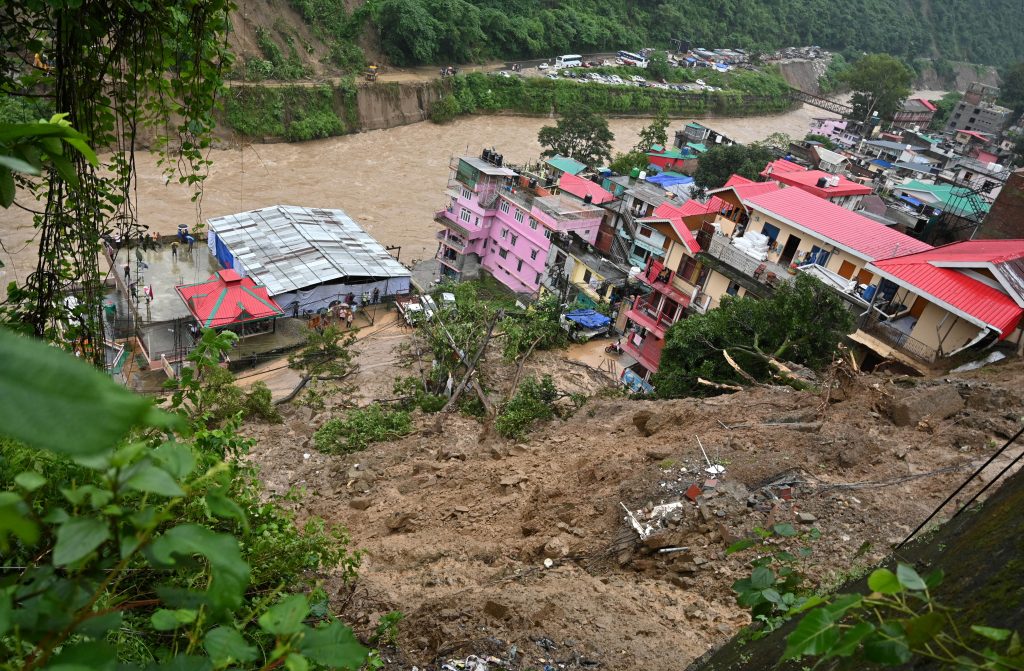
The massive downpour this monsoon so far has left Himachal Pradesh in a state of shock and mourning; flash floods, landslides and cloudburst have already claimed over 360 lives while at least 40 persons are still reported missing. The missing people include the ones who either got washed away in the sudden flooding in rivers and rivulets across the hill state and the ones who got buried under the debris of landslides.
On the other hand, the number of people injured in these catastrophic accidents has already crossed 340. While over 2,300 houses in different districts of the state – including Shimla, Kullu and Manali and Mandi – have been completely lost, the number of houses partially damaged has crossed 10,000. These are besides over 300 shops and over 5,000 cowsheds.
According to state estimates, it has suffered monetary loss of over Rs 8,500 crore in over 156 incidents of landslides and 63 incidents of flash floods in which the hilly state has also lost a plethora of human, cattle lives and official and commercial buildings.
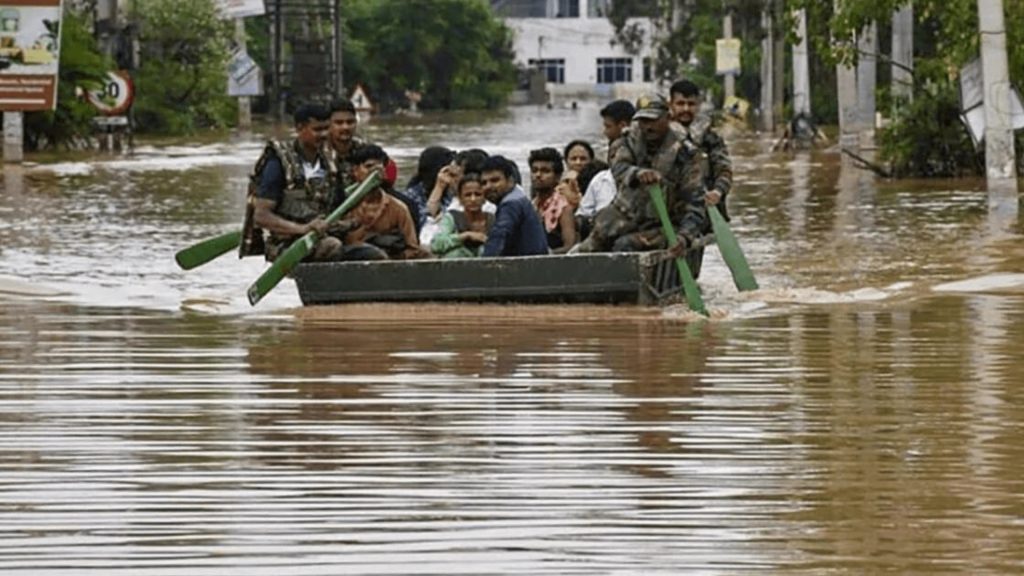
And even though the teams of National Disaster Response Force (NDRF) as well as various state agencies promptly responded to the havoc caused by plural factors, rescue works are still in progress at several rural interiors and urban locations of Shimla, Kullu and Mandi districts, besides other places.
Many factors behind catastrophe: Experts
Bemoaning the losses, Prof Sushil Kumar Sharma, an expert on sustainable development and communication, says the devastation in the Western Himalayas region of Himachal Pradesh and Uttarakhand is a result of many factors like unprecedented rains due to adverse weather conditions, haphazard construction, inactions of regulatory authorities, building of large hydro-power and road projects, and over-aged forest stands.
The colossal destruction in Himachal Pradesh and Uttarakhand was created by rise in temperature and the warming-up land which enhanced humidity ultimately resulting in increasing the intensity of rains. Hence heavy rains that have been received by these hilly states so far. The spells of heavy rainfall were also caused due to Northside movement of the axis of the monsoon trough or low-pressure, causing heavy or very heavy rains all over the Himalayas.
Also, this year the active Western Disturbances travelled across the Himalayas during the monsoon trough periods, which resulted in very heavy rainfall and flash floods, causing more devastation in view of the haphazard construction of houses and ongoing and completed larger power and road projects. The land use planning for urban and rural areas for inhabitation and other purposes have not been done.
There are multiple authorities to provide permission for projects and houses. State authorities give clearance to all state run projects, completing the paper formalities. For example, see Shimla and Solan, not the riverside towns, and Kullu and Mandi, the riverside towns, which received high devastation. The constructions in these towns were not only haphazard, but throwing all norms away due to political interference or other material influences. River waters are over-exploited to get more energy.
Hills are destabilised during the construction of big and small road projects. Debris from these projects may be disposed of anywhere, this ultimately goes to the waters. The unscientific construction activities in larger hydro-power or road projects have added to the severity of destruction.
Also, the over-aged tree-lands, forests, standing for over two to three centuries, need to be replaced with new trees after a century, to allow the flora to provide lively and fullest environment services. Immediate actions are required in a holistic manner to create the sustainability in development systems and to avoid unfortunate heavy and huge loss of life and property.
Situation grim in Punjab
The heavy rains leading to flash floods in Himachal Pradesh has also had adverse impact on its immediate neighbour Punjab vast areas of which also got inundated due to ongoing heavy rains in the region as well as release of water – though in a controlled manner – from the Pong dam on the Beas river and Bhakra dam on Sutlej – due to torrential rains in the catchment areas of neighbouring Himachal Pradesh.
According to information, Punjab has already seen more than 40 deaths, many reported missing, and flooding in literally tens of thousands of acres of farm land – and ruining the standing crops – across the state. According to reports, while more than 18,000 villages were severely affected due to water-logging, the NDRF and state agencies had rescued over 20,000 people or shifted them to safer places.
Punjab too had torrential rains and in addition had spates in Sutlej and Beas rivers which also affected numerous rivulets and drains.
Pertinently, the Bhakra and Pong dams which had huge and excessive water inflow in their respective catchment areas due to torrential rains. The inflow was said to be 1.28 lakh cusecs into Bhakra Dam and 1.58 lakh cusecs into Pong Dam on August 23 last and it was 1.05 lakh cusecs and 58,702, respectively, a little earlier.
The dams had to, thus, release the water downstream Punjab. The water is released so as to check the rising water level almost up to the brim of the reservoirs of the two dams. Both these dams are built on hilly state’s borders with Punjab. The most affected areas have been Ropar, Nawanshahr, Kapurthala, Jalandhar, Hoshiarpur, Sangrur, Moga, Ferozepur Mansa, Ferozepur, Gurdaspur, Amritsar and Tarn Taran.