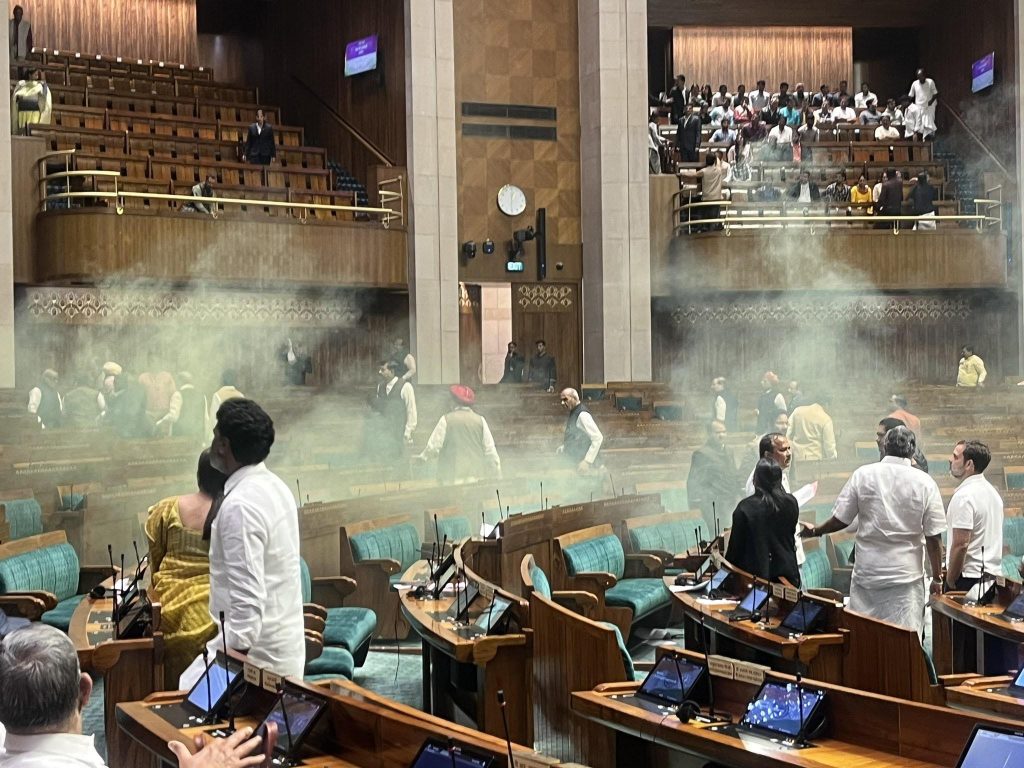
Were the intruders who jumped into the Lok Sabha hall from the visitors’ gallery and opened smoke canisters on the 22nd anniversary of the 2001 Parliament attack, inspired by iconic freedom fighter and revolutionary Shaheed Bhagat Singh? A report by Bharat Hiteshi
A common thread connects all the intruders though on the surface, little ties them together and that thread is their reverence for Shaheed Bhagat Singh. The intruders include the son of a carpenter who drove an e-rickshaw to eke out a living; the son of daily wage labourers; an engineering graduate who returned to farm in his village; a qualified daughter of a ‘halwai’ who hunted for a government job for years. They come from different parts of the country — Lucknow in Uttar Pradesh, Latur in Maharashtra, Mysore in Karnataka, and Jind in Haryana.
The 37-year old Neelam Devi from Ghaso Khurd village in Uchana in Haryana has her profile picture on social media with the cut-out of Shaheed Bhagat Singh. Daughter of a “halwai” she was unemployed and had failed to find work despite qualifying the National Eligibility Test, and the Haryana Teacher Eligibility Test. Her mother, Saraswati Devi, said that her inability to find a job had left her despondent, and her daughter once told her, “it is better to die”. She used to run a library in the village and had also taken to protests, participating in both the farmers’ stir and the wrestlers’ protest in the wake of sexual harassment allegations against WFI president. She was also preparing for the Haryana civil services.
Amol Dhanraj Shinde, apprehended while protesting with Neelam Devi outside Parliament, had studied only till Class 12, and was preparing for the army and police recruitment examinations. He had once passed the physical examinations for the state police services, but failed the written test. He had told his father, a daily wage labourer Dhanraj Shinde, that it was for these examinations that he would intermittently travel to Delhi, and visited the Capital three times in the last few months. Investigators now believe that at least one of these trips was a reconnaissance mission for the group of intruders. The Lok Sabha Secretariat has suspended eight security personnel for lapses, a probe initiated on the orders of the Ministry of Home Affairs and the intruders have been arrested and booked under the anti-terror law UAPA (Unlawful Activities Prevention Act).
The incident has glaringly exposed the vulnerability of the parliamentary security system. The intruders had gained access to the gallery through visitor passes arranged by BJP MP Pratap Simha. Parliamentarians invariably entertain requests for such passes from members of their constituencies. As per the Parliament rulebook, the MP has to certify that ‘the visitor is my relation/personal friend/known to me personally and I take full responsibility for her/him’. It is apparent that due diligence was not exercised by the MP and his personal staff while processing applications.
In Lucknow’s Ramnagar locality of Alambagh, the family members of 27-year-old Sagar Sharma, one of the accomplices who entered Parliament, is son of Roshan Sharma, a carpenter. When he left Lucknow for Delhi, he told his mother Rani Sharma that he was going to a protest. In Mysuru, the father of Manoranjan D, Deveraje Gowda insisted that his son was a “good boy” who wanted to “do good for society”. Gowda, who owns farmland in Mallapura village in Hassan district, said that Manoranjan had finished an engineering degree from a Bengaluru college.
Questions remain how the group, reportedly fans of freedom fighter Bhagat Singh who bonded on social media, could go under the intelligence radar and plan, evade security checks, enter the House and execute the operation on the 22nd anniversary of the 2001 terrorist attack on Parliament?
However, major parties in J&K like NC and the PDP have made it known that Article 370 is not a closed chapter for them. Both Omar and Mehbooba have said that although they are disappointed by the judgment, they will continue the political struggle for its restoration. A report by Riyaz Wani
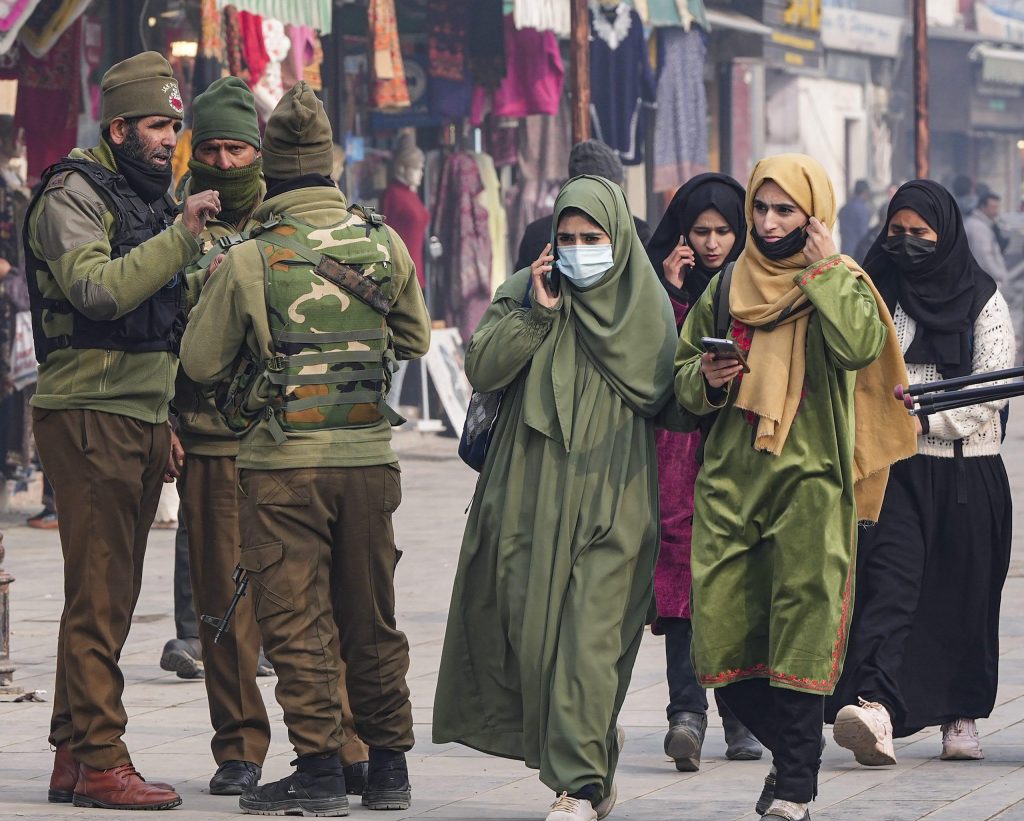
The tense anticipation and fear of upheaval in Kashmir preceding the revocation of Article 370 by Parliament on August 5, 2019, sharply contrasted with the muted response in the region following the Supreme Court’s affirmation of the decision. However, the reason for this was not that people were indifferent, just that they weren’t allowed to express their opinion publicly. Three days before the judgment, the administration beefed up the security checks on the roads. Police launched a campaign against the alleged misuse of social media. Several people were booked for either uploading ‘hateful content’ or spreading rumours. On the day, judgment was announced, leading political figures like former chief ministers Omar Abdullah and Mehbooba Mufti were put under house arrest, a throwback to the day when Parliament revoked the constitutional provision.
However, now that the apex court has validated the abrogation of Article 370, a decision that was along expected lines, Jammu and Kashmir has formally entered the new era of ‘Naya Kashmir’ – a term coined by Prime Minister Narendra Modi for post-Article 370 period in the region. The judgment has, however, not brought any closure or sought to address the situation as it has existed since the outbreak of separatist movement in 1989.
It is true that the situation in Kashmir has visibly improved over the past four years, but it is also true that this has not been an organic process. On the face of it, the union territory looks like any other normal place. Kashmir Valley is no longer a witness to frequent protests, stone-pelting and shutdowns. Separatist politics has all but disappeared. Tourism is booming, with over one crore tourists having visited the union territory up to November. Tourists are also visiting the hitherto no-go zones near the border with Pakistan.
Does this constitute normalcy? Apparently yes. But look deeper, and the situation appears contrary to its outward appearance. While mass protests may have vanished, the overall sense of uncertainty hasn’t. And if there has to be real peace in the Valley, the government will need to reach out to people to make them a part of the ongoing process rather than go about doing things without taking them into confidence.
The ongoing transformation is principally driven by the suppression of separatist politics, decline in militancy and the growth in tourism. The once-vaunted separatist conglomerate, Hurriyat Conference has become extinct. Many of the grouping’s top leaders continue to be in jail or are under house arrest. This has hobbled its capacity to organize any political activity.
But even if the separatist leaders were free – and some of them are free – the situation would hardly be different. The government has outlawed any sign of separatist activity in whatever form and disproportionately raised the costs for any leader or an activist to go out and champion the cause.
There have been other far-reaching administrative and legal changes right from the domicile laws to new land laws. As a result, J&K citizenship and the right to own a land have been thrown open to outsiders. The government has also overturned the Roshni Act whereby occupants of state land were allowed to own it against payment determined by the government. Scores of other laws have been extended to the former state that is aiding the process of fundamentally altering the facts on the ground.
In the Kashmir Valley, the number of militants, according to an estimate, has dwindled to around 100. Ever since the withdrawal of Article 370, over 550 militants have been killed in the region, most of them local youth. But despite the reduction in the number of militants, violence has persisted, flaring up only now and then.
Wherever do we go from here? The answer to this is complex. Though an uneasy peace has held in the Valley since August 2019, people are far from reconciling to the loss of autonomy as a fait accompli. They have been watching the unfolding state of affairs silently. The public protests have ceased, so have the incidents of stone pelting and hartals. But despite these outward manifestations of peace, the Valley is more alienated than ever.
So what is the solution? Under the circumstances, the holding of polls should go a long way to engage and involve people in the new state of affairs spawned by the revocation of Article 370. But that is not happening. The central government has been showing reluctance to hold polls, lest all it has accomplished in the UT over the past four years might unravel. But given the prevailing situation in the Valley, it is about time that New Delhi confronts and overcomes this reluctance.
Will the Supreme Court’s Article 370 build on the gains?
It is premature to say what formalizing the abrogation of Article 370 by the Supreme Court would lead to. The Court has upheld the application of all Indian Constitution provisions to Jammu and Kashmir, deeming Article 370 a temporary provision. At the same time, it has supported the restoration of statehood to J&K, also directing the Election Commission to conduct Assembly polls and expedite the state’s reinstatement.
The major political parties in Jammu and Kashmir like National Conference and the PDP have made it known that Article 370 is not a closed chapter for them. Both Omar and Mehbooba have said that although they are disappointed by the judgment, they will continue the political struggle for its restoration. A statement by the Hurriyat faction led by Mirwaiz Umar Farooq blamed the Kashmiri leaders who facilitated accession of J&K in 1947 for the turn of events.
“Those people who at the time of the partition of the subcontinent, facilitated the accession of J&K and reposed their faith in the promises and assurances given to them by the Indian leadership must feel deeply betrayed,” the conglomerate said in a statement.
The verdict also created a sense of despondence among ordinary people in Kashmir but their response has been marked by a sullen silence. The court’s upholding of the abrogation of Article 370 has been marked by lack of any protests or any social media outpouring. Similarly there has been no celebration of the judgment.
Local media has dutifully carried the government version of the development. One editorial in a local daily blamed Kashmiri political parties for their decision to litigate the revocation of Article 370, saying they should have instead pursued a political course of action.
“The recourse taken by Kashmiri leaders to challenge this in court raises pertinent questions about their strategy. The legal battle waged by them, while seeking to contest the constitutional validity of the government’s decision, perhaps missed an opportunity for a more robust political struggle,” read an editorial in a local daily.
Elections and statehood
Although the Supreme Court has sought Assembly elections in J&K until September 2024 and called for restoration of statehood “as soon as possible,” there is little hope in the UT that it will be carried through in the set timeline. More so, in case of statehood where the direction is without any timeframe. And should the BJP return to power in general elections, as seems likely, both elections and statehood are likely to be endlessly postponed.
Takeaways from the judgment
1. J&K does not retain any element of sovereignty after instrument of accession was signed
2. No internal sovereignty for Jammu and Kashmir
3. Challenge to the proclamation of presidential rule is not valid
4. Exercise of power of President must have a reasonable nexus with the object of presidential rule
5. Power of Parliament to legislate for state cannot exclude law making power
6. Article 370 was a temporary provision
7. When constituent assembly was dissolved only the transitory power of the assembly ceased to exist and no restriction on presidential order
8. Para 2 of co 272 by which article 370 was amended by amending article 367 was ultra vires as interpretation clause cannot be used for amendment
9. President use of power was not mala fide and no concurrence needed with state
10. Para 2 of co 272 in exercise of power under 370(1)(d) applying all provisions of Indian constitution to Jammu and Kashmir was valid
11. The continuous exercise of power by the President shows the gradual process of integration was ongoing, thus co 273 is valid
12. Constitution of Jammu and Kashmir is operative and is declared to have become redundant
13. Presidential use of power not mala fide
14. Solicitor general made a statement that statehood will be restored to Jammu and Kashmir. We uphold the decision to carve out union territory of Ladakh. We direct the Election Commission of India to hold polls under section 14 of the Reorganisation Act and statehood at the earliest.
Also, the term ‘rat- hole miners’ ought to be changed to our hero-miners! Researchers and writers ought to focus on the lives of the miners, whose work seems so very tough and risky. Unsung they live!
The year is ending on a rather dismal note. What, with violence and injustices and anarchy and brutality spreading out.
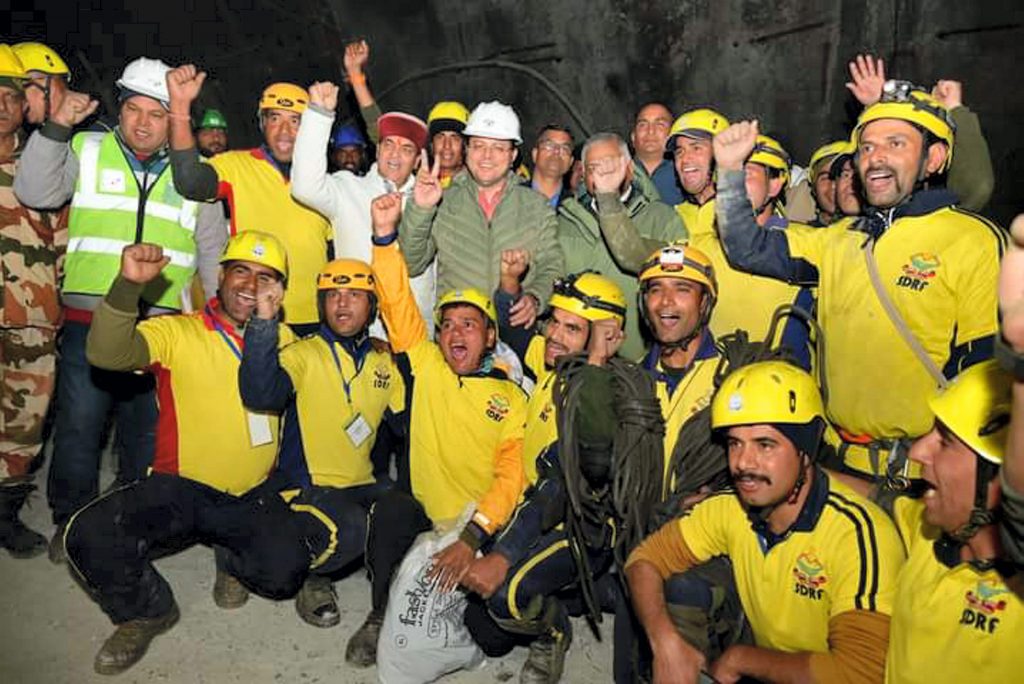
Here in our country the only positive news that came through was that the trapped miners in Uttarakhand’s Silkyara tunnel were rescued. Nah, not by any of those high tech strategies manned by the so called experts but by a team of earnest rescuers: Rat-hole miners! The rescuers, including Waqeel Hasan, Munna Qureshi, Naseem Malik, Monu Kumar, Saurabh, Jatin Kumar, Ankur, Nasir Khan, Devendra, Firoz Qureshi, Rashid Ansari, and Irshad Ansari, worked tirelessly in four shifts of six hours each. They dug approximately 12 meters in just 26-27 hours, a task that would typically take 10-15 days under normal circumstances.
These rescuers should be declared national heroes. Yes, they should be honoured, and soon.
Also, the very term ‘rat- hole miners’ ought to be changed to our hero-miners!
Researchers and writers ought to focus on the lives of the miners, whose work seems so very tough and risky. Unsung they live!
Getting back to the realities of the day!
Ground realities have worsened in the country, from the day the Babri Masjid was demolished on 6 December 1992. The Right-Wing forces, within and outside the government, sowed the poisonous seeds of polarization and deep divisions. Thereafter, there’s been little peace and much decay, in terms of our everyday co-existence.
Today, of course, elections are fought and even won on the basis of communal politics and poisonous propaganda. This lethal combination has been made to get in, right into the various segments and sections, with an aftermath that’s hard to describe.
Alas, when the realisation creeps in of the disasters linked and interlinked with this level of third class politics, it might prove to be late or let’s say too late! In fact, in Rajasthan, just a day or say hours after the BJP won in these recently held elections, there was that gruesome murder of Karni Sena chief Sukhdev Singh Gogamedi in Jaipur. And the following day one of the freshly elected BJP MLAs went around the city, ordering and threatening and rebuking all roadside vendors who were putting up carts or small shops along the roadside, selling the so-called “non-vegetarian food items”.
Making sure that hundreds of our fellow citizens stand or squat jobless and penniless and at the complete mercy of the political doles or charity or manipulative schemes! It’s a different matter altogether that within hours this freshly elected person had to eat his own words. He took a complete U-turn. In all probability, he didn’t quite realize that a very large percentage of those vendors whom he was threatening to shut shop were non-Muslims. Ignorance coupled with the communal poisoning unleashed all around is not just lethal but based on myths and misconceptions and utter lies to cause frictions and hatred for the other. One of the widely unleashed propaganda Agenda items is that only and only Muslims consume or sell non-vegetarian stuff!
Don’t know what lies ahead, what more disasters to be seen and experienced. And the worrying aspect is that anyone who dares to question or query or raise a dissenting voice is made to shut up along the various alibis.
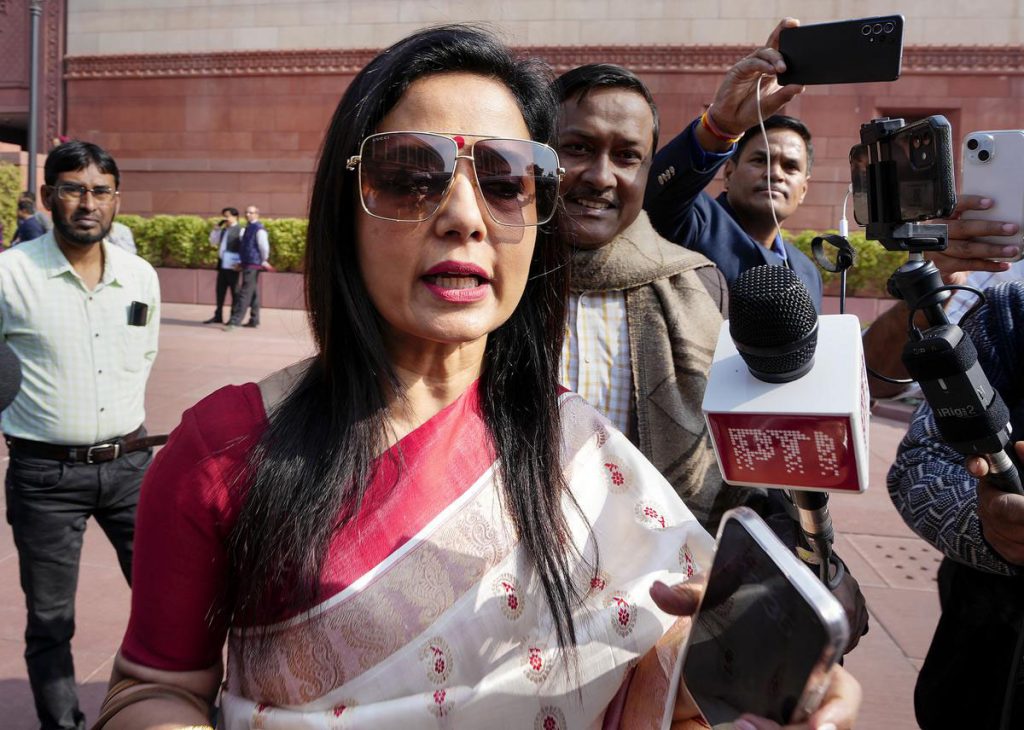
Double standards writ large in today’s set-up. TMC’s Mahua Moitra expelled from the Parliament whereas nobody even dare question the particular BJP parliamentarian Ramesh Bidhuri, who just weeks back openly abused and taunted along the communal strain, a fellow parliamentarian, Danish Ali, right inside the Parliament…The list of double standards in the very governance is long! Who is there to pay heed to such blatant violations! The atmosphere seems ever so suffocating and stifling!
*****
As genocide continues in Gaza, leaving you leaving you with this verse of the Palestinian poet Mahmoud Darwish (1941-2008)
Mahmoud Darwish wrote ‘Under Siege’, a collection of poems on the Israeli invasion of the West Bank, in 2002 while he was under siege himself in Ramallah:
‘Here on the slopes of hills, facing the dusk and the cannon of time Close to the gardens of broken shadows, We do what prisoners do, And what the jobless do: We cultivate hope.’
The two recent back-to-back incidents of two Haryana government schools’ principals held for sexually harassing the girl students have brought infamy to the state from where the PM Modi had launched “Beti bachao, beti padhao’’ campaign in 2015. A report by Rajesh Moudgil
The two cases of the alleged sexual harassment of girl students by the principals of government schools of Jind and Kaithal districts, reported in less than a month’s time, has shamed Haryana, albeit the state government has cracked the whip on both the accused.
Sadly, the first case came to light after the suicide by a class XI student of a Government Senior Secondary School for Girls in Jind district on September 30 and there were talks that it could be linked to her sexual harassment by the accused principal of the school, Kartar Singh, 56.
Soon, an inquiry committee set up by the state government started interacting with the students of the school and found that more than 140 girl students – out of total 390 students of classes IX to XII it talked to – testified against the accused principal Kartar Singh.
On November 28, chief minister Manohar Lal Khattar ordered Singh’s termination from service.
The decision to sack him was taken following the investigation report submitted by the Education Department against the accused principal. The Education Department issued the dismissal orders following approval from the Chief Minister under Article 311 of the Constitution. The reports of the Education Department and the district administration formed the basis of his dismissal from the service.
The report sent by the sub-divisional magistrate (civil) highlighted statements from several students against the principal’s misconduct. Subsequently, considering the gravity of the case and the allegations against the principal, this action was taken. Notably, the accused had already been arrested by the police, and a female principal had been appointed at the respective school, along with the appointment of 16 new staff members.
Meanwhile, the accused was also booked under SC/ST (prevention of atrocities) Act, after a girl belonging to scheduled caste, had deposed against the principal. With this, there were now six girls who had deposed against the principal under Section 164 CrPC.
The accused principal, who was earlier booked under Sections 341, 342, 354A and 506 and Sections 8 and 10 of the Protection of Children from Sexual Offences (POCSO) Act, and was arrested on November 4, is currently in jail in Jind.
A special investigation team (SIT) is also investigating into a case in which the class XI student of the school had ended her life at her residence on September 30 and there were allegations that the suicide could be linked to the sexual harassment of the students by principal.
The Kaithal School Case
Even as the state government was going whole hog to control the damage caused by the Jind case, another case, this time from Kaithal district, surfaced on December 7 when the principal of the government senior secondary school was arrested for allegedly molesting some girl students of class XII.
The accused principal, Ravi Kumar, 52, was booked a day before under section 10 of the Protection of Children from Sexual Offences Act (POCSO) and under section 354 (assault or criminal force to woman with intent to outrage her modesty) and 354-A (sexual harassment) of IPC.
Meanwhile, even though a contractor, who had been hired for some construction work in the same school, had also been booked for the same offence, he was said to be absconding.
The case had initially come to light after several girl students of the school decided to break their silence on December 4 and gave a written complaint to the village sarpanch. It was at this point that the villagers decided to stand by the victims and approach the Haryana State Commission for Women (HSCW) and apprised its chairperson, Renu Bhatia, about the same as well as the district superintendent of police (SP).
The district SP, Upasana said that four girls had accused the principal of sexual harassment in their statements before the magistrate following which the police arrested the accused, who was sent to the judicial custody.
She said that a special investigation team (SIT) has also been formed to probe the case. Meanwhile, the state government has also suspended the accused principal.
Meanwhile, there were also reports that the accused principal used to misbehave with not only students but also with the teachers and used abusive language. The students and teachers, who did not want to be named, held that the district education office was also informed about the same following which the accused principal had gone for 10-day leave.
According to information, an eight-member committee of Haryana Vidyalaya Adhyapak Sangh had also visited the school following the complaints against the accused. However, the committee had to face protests from students and the villagers who alleged inaction against the accused. Also, the local sarpanch and several villagers had also approached the HSCW about the incident and alleged that even police was not taking any action on their complaints. The chairperson, subsequently, contacted the district SP in the context.
Meanwhile, the state government has asked the chairperson of the HSWC, Renu Bhatia, to organise seminars with the police to prevent such incidents in future.
However, even as all the political parties and senior Congress leaders including Bhupinder Singh Hooda and Kumari Selja have assailed the ruling BJP-Jannayak Janta Party (JJP) over the worsening law and order situation as well as deteriorating educational standards, sparks are set to fly over the issues pertaining Jind and Kaithal girl schools in the upcoming winter session of Haryana assembly.
Prime Minister Justin Trudeau-led government’s decision to double the cost of living for study permit applicants may deter students from choosing Canada for higher education. Nearly 40 pc of the total number of foreigners who seek admission are Indians. A report by Gopal Misra
For Indians, especially for the promising youth of Punjab, Canada is a coveted destination; perhaps, a Shangri-La, where human life is precious, a place for pursuing knowledge, or to do business without any hassle and work with respect and dignity. However, the steep enhancement of the cost of living for the new aspirants seeking admission in Canada from January 1, 2024, has shattered their Canadian dream.
The present regime of Prime Minister Justin Trudeau is a coalition of Liberal Party with Jagmeet Singh’s Democratic Party having presence of Sikh separatists. This is the third term for Trudeau, but this time, his political survival depends upon the coalition partner. Earlier, he had tried to get a clear majority by going for a snap poll in 2021. He, however, failed to get a mandate, thus forcing him to take a series of populist measures, including patronizing the separatists, Sikh militants. He even violated all diplomatic norms by accusing India on the floor of Parliament of getting a Khalistani terrorist Hardeep Singh Nijjar killed in British Columbia’s Surrey without giving any substantial evidence.
Trudeau’s regime’s key policies reflect political expediency rather than the country’s long-term as well short-term interests. His government’s decision to double the cost of living for foreign students seeking admission in Canada could not be called an anti-India measure. It, however, could be an attempt to dissuade Indian students, who already have substantial presence at Canadian universities to pursue higher education there. It is also being stated that the new policy might add some cash relief to his country’s finances, but in the long-term, it might adversely affect the country’s international role or influence.
Indian scholars comprise nearly 40 percent of the total numbers of foreigners seeking admission. Of them nearly 60 per cent hail from Punjab contributing nearly Rs. 68,000 crores per year. The enhanced cost-of-living for study permit applicants, from 10,000 CAN dollars to CAN 20,635 dollars might be expected to augment resources of Canada, but if their numbers dwindle, its purpose will be defeated. It means, they would not be coughing up Rs.110, 000 crores as being estimated in 2024.
During the past half-a-century, there has never been any dispute between India and Canada. On the other hand, Indians fondly remember Canada’s help in setting up a research reactor in Trombay, Mumbai, known as Canada-India Utility Services (CIRUS) research reactor. The reactor has helped Indians to conduct research in this crucial field and earn international reputation. They feel saddened due to the failure of the Canadian authorities to take effective measures against the hooligans under the umbrella of Khalistanis for targeting Hindus and attacking their places of worship.
The Indian authorities are convinced that Trudeau’s encouragement to separatists’ waging campaign against India is a belated attempt to camouflage his failure to handle economic challenges. It is also believed that the hike, which, perhaps, is intended to help Canada’s economy, might prove counterproductive with a lesser number of Indian students going to Canada.
For a short period, Canadian policy may shatter the dream of many Indian students to study abroad, but India’s Ministry of Human Resource Development has already embarked upon an ambitious plan for collaborating with well-established universities abroad, especially in the USA and U.K. A number of private universities in India have already partnered with foreign institutions.
These close interactions with the best of academia worldwide are expected to enable Indian students to get a global perspective on their respective streams. The Indian government is also encouraging collaborations to enable Indian students to study in part at the foreign universities and acquire formal recognition in the form of a degree. It means that Indian students may not be required to travel abroad in quest of a degree. More than 10 private universities in India already have tie-ups with reputed foreign universities and institutes.
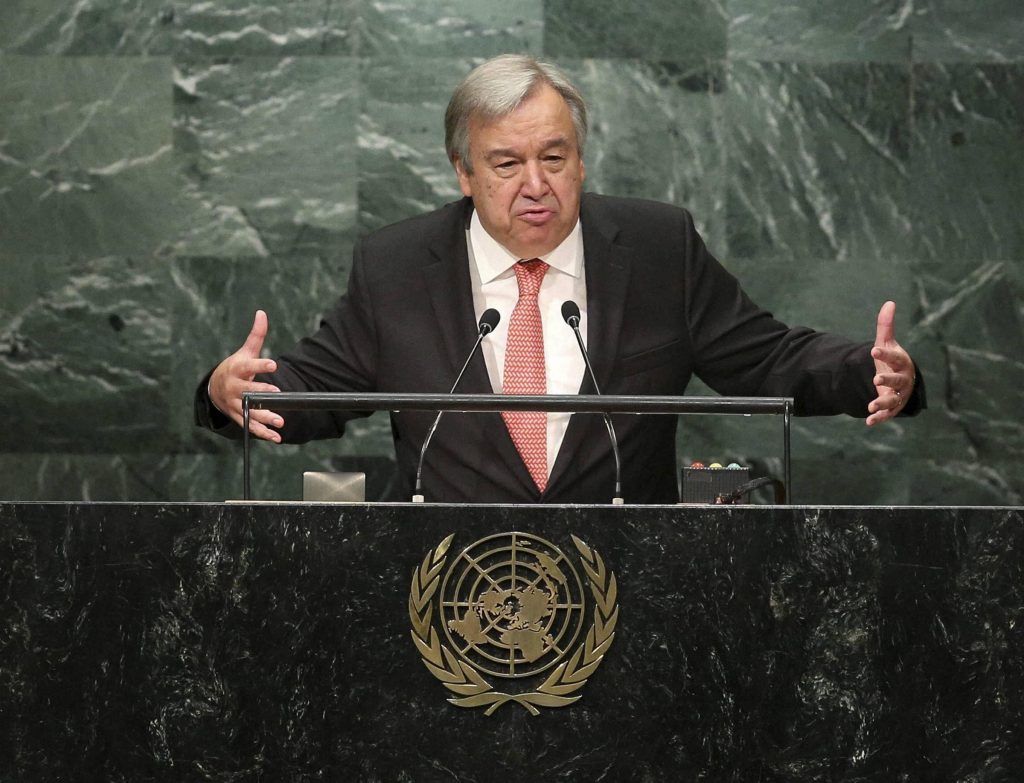
The Gaza situation has prompted UN Secretary-General António Guterres to invoke Article 99 of the UN Charter as he called on the Security Council to act. The initiative comes following the failure of the world powers to broker peace in the raging strife. A report by Gopal Misra
It is genocide. Even the US-led western powers are aghast and feel helpless before the retributive onslaught of Israel; it cannot justify the killings, estimated to be more than 10 times of the terror victims of 1200 dead, scores of them wounded and more than 300 kidnapped after the surprise Hamas attack of October 7. It is being stated on behalf of Hamas that more than 17,000 have been killed and 46,000 wounded in Gaza in Israel’s ongoing counter attack.
The pathetic ground situation in Gaza, which is worsening with each passing day, has prompted UN Secretary-General Guterres to invoke Article 99 of the UN Charter for reawakening the conscience of the mankind centred in UN Security Council, the super cabinet of the world body comprising five most powerful nations of the earth, US, Russia, China, France and U.K. and ten non-veto members elected on rotational basis for two years. The initiative has come following the inability of the world powers to broker peace in the avoidable strife. It cannot be denied that despite Hamas’s proximity to Pakistan, India perhaps has emerged as the only voice for peace in the region. Interestingly, Hamas chief, Ismail Haniyeh, who reportedly had engaged Pakistan’s Inter services Intelligence (ISI) for training its volunteers, has further sought help from “brave” Pakistan while addressing a gathering of radical Islamists on the internet.
Haniyeh’s appeal for the implementation of 2004 Oslo Award also appears to be intriguing, because he had rejected the award and captured Gaza undermining the Palestinian Authority. India has so far has not declared Hamas, a terrorist outfit, perhaps to intensify peace efforts. However, it may be recalled that Indian PM Narendra Modi was one of world leaders who promptly condemned the Hamas aggression. Meanwhile, Guterres’s efforts has further been endorsed with the recent statement of US President Joe Biden that “I think the only available solution is a two-state solution.” Finally, it appears that the formation of a sovereign Palestinian state might get the crucial support of Russia, China, France and the UK.
In spite of a section of western media stating that the visit of the Russian President, Vladimir Putin, during the first week of December 2023 to West Asia, could be Moscow’s attempt to reassert in the regional politics, many believe that the visit has rekindled hope for a permanent peace in West Asia. The Russian support would be ensuring defence of the proposed Palestine state; at the same time Israel too would be reassured against any misadventure by its neighbour in future, if legitimate elected government rule instead of a terrorist outfit like Hamas continuously subjugating people in the name of religion.
Putin’s visit could help in further cementing ties between Saudi Arabia and Iran having recently renewed their diplomatic relations under Beijing’s umbrella. The presence of the American warships in the Eastern Mediterranean could just be a reminder of the pre-dominant Anglo-American presence in the region. Meanwhile, the US Senate has already decided not to extend further military-financial support to Israel, which might discourage it to continue its Gaza operations.
There is yet another dimension to Putin’s West Asia visit; that of focussing on the reduction of the dependence of the petroleum producing countries on fossil fuel. They may go for nuclear power stations on a larger scale with Russian help. It, however, may cause discomfiture to the US-led western powers. They have been denying nuclear power houses to Saudi Arabia and its allies in the region. The Russian support to Riyadh might be supporting Saudi Vision 2030.
The region is undergoing paradigm changes. Guterres cannot force the UN Security Council to adopt a resolution, but his peace initiative cannot be undermined. He has invoked the cause of humanity.
The National Crime Records Bureau report that was released on December 4, 2023 revealed that crimes against children have gone up in India from 33.6 per cent in 2021 to 36.6 per cent in 2022.
Many of us in our late 50s, 60s, 70s and 80s remember our childhood with great nostalgia. We recall it as an idyllic time when we were free to roam in the colonies we grew up in and the by-lanes and parks we played in. We fondly recall the markets we visited on our own to buy that ice cream or cold drink. It was a time when our mothers could ask us to run an errand to the shop close by and we could play till the street lights came on. The only thing we were afraid of back then was the dark and father’s scoldings for some misdemeanour.
Fast forward to the India of today and by and large in the urban areas we see that there is almost no unsupervised play time for children. Mothers don’t let their kids out of their sight. For those who can afford it, the children are accompanied everywhere by their mothers, grandparents, or nannies and those who can’t, just make sure that the children stay inside. By and large, it is only the children of the underprivileged or those who live in rural areas, who can still be seen playing outside the house unsupervised.
The answer as to why our children are living under the shadow of fear is very disturbing and shameful.
While India is blessed with a young population, out of the 142 crore people, a whopping 26 per cent are children between the ages of 0 to 14 years, which is a very vulnerable age group. Though this means that unlike China and some European nations with ageing populations, our future is secure in our children, we are not being able to secure the future of these very children. If official data is anything to go by, crimes against children are going up in India each passing year.
According to the National Crime Records Bureau (NCRB) report that was released on December 4, 2023, the crimes against children have gone up in India from 33.6 per cent in 2021 to 36.6 per cent in 2022.
NCRB data reveals that 99 children were raped and murdered in 2022, while another 1,340 were murdered. And these are just the official figures as so many cases go unreported or undetected.
Disturbingly, there were 64,469 victims in 2022 under the POCSO (Protection of Children from Sexual Offences) Act. What a reprehensible thing to happen! We are preying on our children and ruining their innocence and mental, physical and emotional security forever!
Just look at these appalling figures. In 2022, a total of 38,444 victims were registered under Sections 4 and 6 (punishment for penetrative sexual assault), a surge as compared to 33,348 in 2021. The data showed aggravated penetrative sexual assault under the POCSO Act and in these cases 38,030 were girls while 414 were boys.
Uttar Pradesh recorded the highest number of assaults under the POCSO Act (8,151) followed by Maharashtra (7,572), Madhya Pradesh (5,996), Tamil Nadu (4,968) and Rajasthan (3,371).
Among Union Territories, Delhi witnessed 1,512 incidents under POCSO Act in 2022, followed by Jammu and Kashmir (316), Puducherry (105), Andaman and Nicobar Islands (109) and Dadra and Nagar Haveli and Daman and Diu (55).
There were 76,069 cases of kidnapping of children in 2022 and Uttar Pradesh topped the list among states in abductions.
There were 102 cases of foeticide registered last year with the maximum cases being reported in Gujarat (18) followed by Maharashtra (17) and Chhattisgarh (16) and Rajasthan (13).
The data also revealed that 13,927 minor girls were abducted last year from across the country in a bid to force them into marriage. Bihar (4,070) topped the list followed by Uttar Pradesh (3,846).
The figures and the news stories that we read daily paint an ugly picture. We are killing our girls in the womb and we are using babies as a commodity for making money by selling them after birth. We are also abducting children for the sex trade, human trafficking, child labour, organ harvesting, beggary and thievery.
We are also making and watching pornographic content involving children. Consequently, they are being raped and murdered by their family members, neighbours, acquaintances and strangers alike making it a very unsafe world for them.
They are being used for bootlegging and in unsafe factories just because they are small and helpless and can be easily subdued. Girls are being sold into “marriage” in many states, particularly Haryana, where they are exploited sexually by all the male members of the family. Look at the travesty, first we kill off the girls in the womb due to a misguided preference for the male child and then we indulge in abduction and trafficking of girls because there are no girls left to marry in certain areas. The list of crimes and atrocities that we commit on our young and helpless citizens is endless.
The big question is what kind of a Hell are we creating for our children, and why?
One simplistic explanation is that though poverty was always there, people were not so aspirational. ‘Thoda hai, thode ki zaroorat hai’ a song from a film from yesteryears defines the generations of baby boomers. Now, with increasing education and awareness, people have become materialistic, whether they have the means to fulfil their material desires or not. So they commit crimes to augment income, which includes trafficking for organs, sex, child labour, selling of babies and so on.
The problem is also compounded by the fact that drug addiction is growing exponentially and addicts tend to commit crimes so that they can get a fix, even if it means harming a child.
Easy access to porn in a country where there are almost no jobs in the rural areas and in small towns, forcing people to stay away from their families for months on end, results in men preying on children who can be easily subdued. The migrating population doesn’t hesitate to commit a crime in a city where they are nameless and faceless, unlike on their own turf where they are known to all and committing a heinous crime can upend the life of the entire family, not just the perpetrator.
We have the laws to protect our children but in a huge country like ours, the police forces are overworked as are the courts and the security apparatus around us.
So, while the security apparatus can’t be exonerated of all responsibility on the plea of overwork, the onus on protecting our kids falls on us too. The parents, extended family and society, are responsible too. Remember it takes a village to raise a child and with the joint family system going into oblivion in most metropolitans, the kids who stay alone with both parents working are vulnerable. Even those with stay at home moms are vulnerable both in the house and outside.
So keep alert and speak up if you see something wrong, spread awareness and teach young parents and children how to protect themselves from crimes. You’ll be surprised how ignorant or innocent even the most educated people are where basic safety issues are concerned.
Also, the world as we know it has changed. While on the macro level we are all connected with the information superhighway, on the micro level we are all living on isolated islands. So while gangs of criminals are making use of social media and the net, particularly the dark net to connect and communicate with each other and get into our homes via technology to abduct, traffic and kill our children, the people-to-people connection is getting lost on the ground.
The only way to keep our precious young demographic safe is to make strong social and societal connections and keep our eyes peeled as a first line of defence. If it takes a village to raise one child it takes the whole country to raise millions of them. Let’s protect our precious demographic dividend.
The increase in imports from neighbouring countries of Iran and Afghanistan has led to a massive 40 percent reduction in demand for Kashmiri apples. Though authorities are trying to gauge the impact and quantity of these imports, not much is expected to change. A report by Riyaz Wani
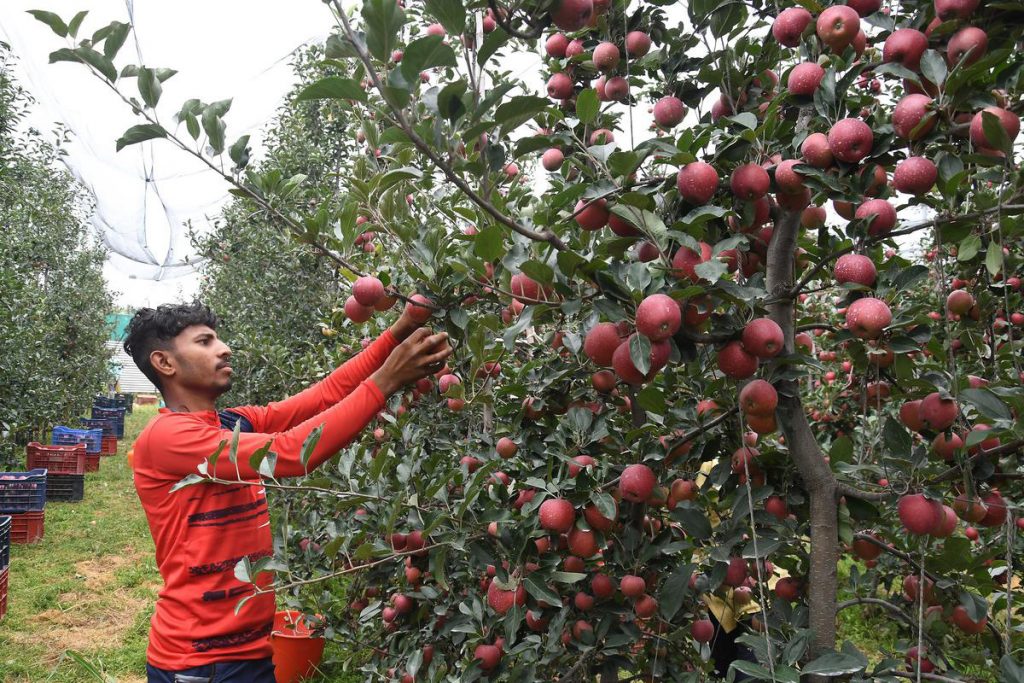
The influx of Iranian and Afghan apples into India’s largest fruit market, Azadpur, has sparked concerns among Kashmir’s fruit growers and dealers. In a period of 35 days across October and November, a total of 7,267 metric tonnes of apples arrived from Iran and Afghanistan, contrasting sharply with the shipment of 89,000 MTs of Kashmiri apples during the same period.
The increase in imports from these neighboring countries has led to a massive 40 percent reduction in demand for Kashmiri apples,according to fruit growers in Kashmir. Though authorities have taken notice, initiating assessments to gauge the impact and quantity of these imports, not much is expected to change.
However, concerns persist among growers and dealers who have expressed worry over the flow of Iranian apples via the Wagah border. In a recent letter, they’ve sought intervention of the Prime Minister Narendra Modi, urging him to consider measures such as imposing a ban or 100 percent excise duty on Iranian apples to alleviate the challenges faced by fruit growers not only in Kashmir but also in Himachal and Uttarakhand.
The central government’s decision to waive off a 20 percent tariff on apples imported from the United States has made things even more difficult for the farmers.
These challenges compound existing issues within the Kashmiri apple industry. Apart from market competition, growers grapple with price crashes, unpredictable weather, insufficient cold storage facilities, and the escalating costs of pesticides and transportation. The cost-intensive process of protecting crops from ailments like scab and mites has significantly reduced returns, adding financial strain on growers.
While the industry faces multifaceted challenges, there’s a glimmer of hope in export prospects. Initiatives like exporting Kashmiri apples to Dubai by groups like the Lulu Group and plans for setting up fruit processing centers signal a potential avenue for market expansion and growth.
Growers remain optimistic about future improvements but emphasize the critical role of government support in addressing transportation hurdles and ensuring fair pricing. With the livelihoods of numerous families linked to the apple trade, local media and industry representatives have called upon the government to play a more active role in safeguarding and fostering the sector’s growth without politicizing its challenges.
Horticulture which is spread across 1.87 lakh acres of land employs more than three million people in Kashmir, earning over Rs 10000 crore for the region
Reduction in production
The price of Kashmir apples surged by 50% this year compared to 2022, hitting a decadal high due to a significant drop in production and a supply shortage exceeding demand. The drop in local apple production itself has created a demand for imported apples from Iran and other places.
According to an estimate, there has been a 20-30% reduction in apple production in both Jammu and Kashmir and Himachal Pradesh. Himachal Pradesh faced crop damage due to a disrupted monsoon, causing a drastic decline in apple output from the usual 800,000 tonnes to merely 300,000 tonnes this year. The estimated losses in the Himachal apple industry due to floods triggered by irregular rains stand at Rs 240 crore.
Similarly, J&K experienced adverse weather conditions that affected apple crops at different growth stages. Basharat Rasool, an apple farmer from Sopore, highlighted the irregular weather’s impact, resulting in an unexpected surge in apple prices due to supply deficits.
“We have had a significant percentage of C grade apples this year,” Rasool said.
C-grade apples are those infected with some disease, or do not grow to have an optimum size and colour. B-grade is slightly better than this while A-grade is the finest quality apple.
Kashmir, which contributes around 75% of India’s total apple production and exports approximately 1.8 million tonnes annually, has witnessed a notable price escalation.
In Sopore, Asia’s second-largest fruit market, Grade-A apple prices have doubled compared to the previous year.
The unprecedented spike in apple prices, fueled by diminished production and increased demand, paints a challenging picture for consumers and industry stakeholders grappling with the supply crunch in the region.
“Unlike last year, when we had a bumper crop, apple production this year declined, largely due to unfavourable weather,” Rasool said. “However, while higher prices compensated for the reduced production, the increasing imports of apples are playing spoilsport. This is where we need the intervention of the government.”
Amid opposition’s push for caste census, Tamil Nadu CM M.K. Stalin recently got a statue of former PM and Mandal messiah VP Singh installed in Chennai. Pawan Kumar Bansal takes a deep dive into political compulsions behind VP Singh’s decision to implement the Mandal report.
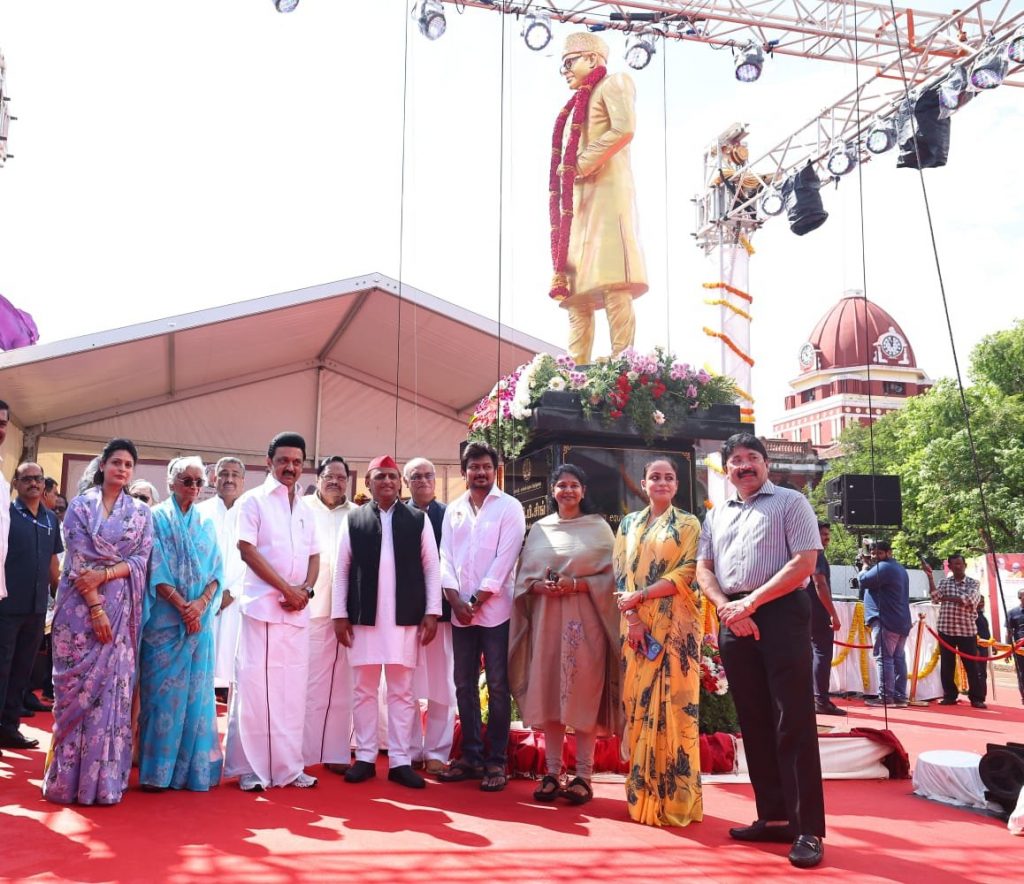
Did V.P. Singh implement the Mandal Commission report out of his genuine concern for the OBCs or was it out of fear of dismissed Deputy Prime Minister Devi Lal’s proposed Delhi rally? V.P. Singh’s name popped up again when Tamil Nadu CM, M.K. Stalin recently inaugurated his statue in the presence of Samajwadi Party chief Akhilesh Yadav in Chennai. V.P. Singh, known as a messiah of the OBCs, is credited with changing the face of Indian politics by unleashing forces that led to the irreversible rise of OBCs, which is an important factor that may even influence the 2024 elections.
Although the caste census issue didn’t pay any benefits to Congress party in just concluded assembly polls, still INDIA alliance is banking on caste census to take on the mighty BJP in the upcoming elections.
But the million dollar question is what made V.P. Singh to take the call on Mandal?
It is believed that V.P. Singh was worried over the proposed rally as he feared that lakhs would lay siege to Delhi. The scene now shifted to the PM house in Delhi where V.P. Singh was discussing the likely fallout of the rally. The Director, IB, arrived and he opined that if the Haryana Government headed by Master Hukam Singh, a protege of Devi Lal, was dismissed, very few people from Haryana would come to Delhi to attend the rally
But V.P Singh, who had seen the popularity and support of Devi Lal during his nationwide campaign against Rajiv Gandhi, could not dare to take this drastic step. In the meantime, Ram Vilas Paswan, Lalu Prasad Yadav and Sharad Yadav, taking advantage of the weak position of V.P. Singh advised him to implement the Mandal Commission report to cut into Devi Lal’s support base. Besides, this will project him as the messiah of OBCs. Rest, as they say, is history. The Mandal Commission report was implemented in haste leading to agitation in northern India particularly in Haryana.
Ran Singh Maan, Political Advisor of Devi Lal, recalls one interesting incident which proved beyond doubt the clout of Devi Lal in those times. “A meeting of anti-Congress parties was to be held at Suraj Kund, bordering Delhi. Devi Lal headed for a meeting and asked me to accompany him in his car from Delhi to SurajKund,” said Mann
“Both V.P. Singh and Chandra Shekhar also accompanied Devi Lal, who asked me to sit with him in the back seat as he had to discuss some issues with me. So, both V.P. Singh and Chandra Shekhar had no option but to sit in the front seat of the car with a driver and a gunman, albeit quite uncomfortably. After a few minutes, Devi Lal dozed off. When we reached near India Gate, Devi Lal invited Chandra Shekhar to sit in the rear seat. Perhaps, Devi Lal had shown both V.P. Singh and Chandra Shekhar their worth. When I enquired that nothing was discussed, Devi Lal told me that, “they were claimants for the PM post and I wanted to show them their worth,” added Mann while narrating the incident.
It may be mentioned that Devi Lal had projected V.P. Singh as the next PM. At that time, Devi Lal used to praise him in public meetings “Raja nahin, fakir hai, Desh ki takdeer hai ”. But after the large-scale violence in the Meham assembly by-election from where his son and the then CM of Haryana, Om Parkash Chautala, had faced independent candidate Anand Singh Dangi, supported by historic Meham Chaubisi Panchayat, his relations got strained.
Under pressure from the High Command, Om Parkash Chautala had to resign and Hukam Singh was chosen as his successor. Due to his anti-V.P. Singh utterances, Devi Lal was dismissed from the post of the Deputy Prime Minister. Devi Lal announced a big rally of his supporters at Delhi which frightened V.P. Singh and his political compulsions forced him to implement the Mandal Commission report which had been lying in limbo.
After successive governments’ apathy towards the need for conservation, a ray of hope emerged after the Apex Court directed the Haryana govt to ensure that no damage is caused at the Aravalli site where the ASI has set up a team to study Palaeolithic era stone carvings, writes Aayush Goel
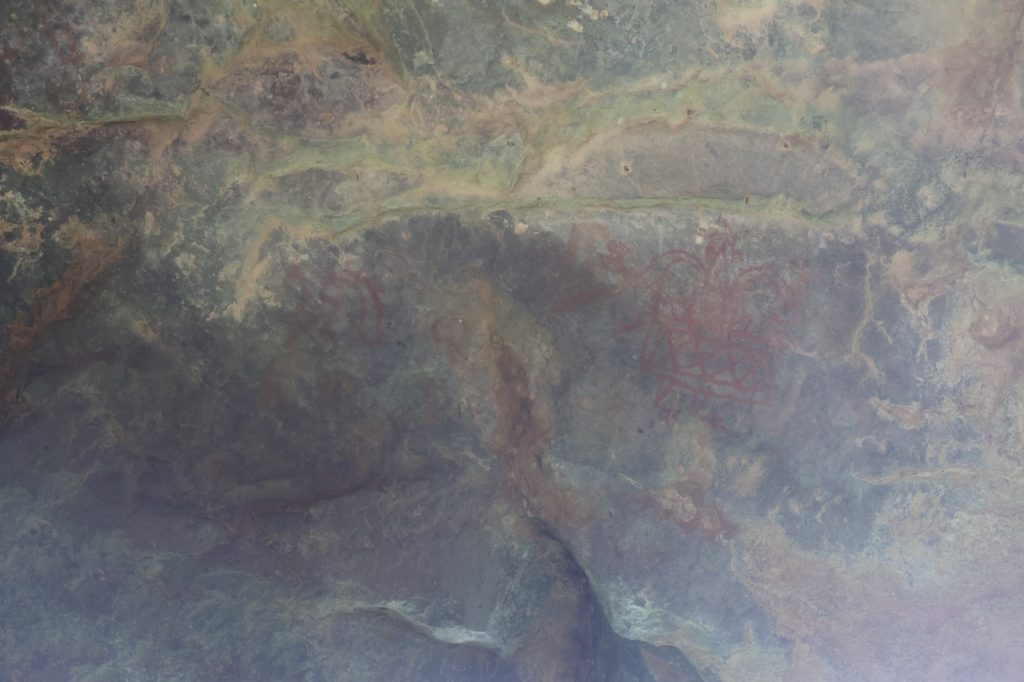
It takes an 80-minute trek through the terrain lined with thorny bushes, sharp rocks and slippery pebbles near Badshahpur Tethar village of Sohna in Gurugram, Haryana to reach atop what seems like yet another dying hillock of the Aravali range. A closer look at it reveals graffiti, hand and footprints of humans and animals and it takes a while to realise that we are looking at what could be a pre-Palaeolithic petroglyph spread across a 2 km radius. The Paleolithic era spans from about 25 lakh years to 10,000 BP (before present, the carbon dating marker that archaeologists use with 1950 treated as the base year).
Discovered in 2023, the site lies unattended in utter negligence and symbolises the poor state of Aravalis which may hold troves of archaeological treasure but is awaiting its due recognition and attention.
Prior to this, in 2021 the famous cave paintings were discovered in Mangar grove in Faridabad and while it caught national attention and was even compared to Bhimbetka caves, they too lie unconserved. There might have been, and could still be, more treasures waiting to be discovered in ancient ranges.
Much might have been lost to mining, ground to dust in the cavernous pits carved into the hills, but nobody seems to care in the state of Haryana. With no major progress made in either surveying or protecting prehistoric sites discovered in Aravalis, around 5000 hectares of the archaeologically valuable land lies vulnerable to encroachment and damage. It may be noted that around 20 pre historic sites have so far been discovered but all face the same threats from deterioration, illegal visits, theft and encroachment by the mining mafia.
“Aravalis is an archaeological treasure awaiting to be discovered. These sites are precious and we have written to authorities for umpteen times but nothing has happened on ground for the conservation. In addition to threats like weather, there are challenges of these being lost to thefts, illegal mining and land mafia. With word spreading around, many visitors visit these sites on their own and take away stones which may be of great archaeological value,” says Sunila Hasrana, a local ecologist who has discovered the majority of these sites, while speaking to Tehelka.
The state has since 2021 on various occasions announced a detailed carbon dating and survey, but continues to sit over the same announcing new projects like Jungle safari, while the locals and ecologists are fighting to safeguard the national treasure hidden in these hills. The Aravallis have been a subject of pre-historic research for several decades. In 1986, stone paintings were discovered in the Anangpur area of Faridabad. A total of 43 sites were traced then, prompting researchers to start surveys of the area every now and then.
Mangar Bani cave paintings
In 2021, the archaeological department acknowledged the discovery of a 5,000-hectare site in Faridabad’s Mangar, where cave paintings were found along with rock shelters and tools. Among the items that were found were pebbles and flake-based tools, hinting at a site where stone tools were manufactured — this ‘Acheulean’ industry was the first tradition of standardised tool-making, according to archaeologists. They also believe that the Mangar stone paintings could be the largest in the Indian subcontinent. The caves are nestled amid a maze of quartzite rocks in the Aravalli mountain ranges and locals have been aware of them for decades while it was in 2021 that Haryana government’s museum and archaeology department took note of them. Despite initial plans and announcements these paintings are yet to be dated.
Archaeologists in Haryana have estimated that a prehistoric site Faridabad’s Mangar Bani hill forest, from where cave paintings were discovered recently, may be up to a lakh years old.
“On the basis of tool topology, it can be said that the date of prehistoric habitation at the site may be from about 1,00,000 to about 15,000 years ago. But we have also found evidence of later habitation, even up to 8th-9th century AD,” Banani Bhattacharyya, Deputy Director of Haryana Archaeology & Museums Department told Tehelka. “It can be said that it may be one of the biggest Palaeolithic sites in the Indian subcontinent, where Stone Age tools were recovered from different open air sites as well as from rock shelters”, she adds. These paintings are yet to be dated out.
After the discovery of these caves, the department sent a proposal for a detailed survey of about 5,000 hectares of Mangar Bani region and an announcement was also made about setting up of ecology forest and conserving the site under state protection to Mangar Bani forests under the Ancient and Historical Monuments and Archaeological Sites and Remains Act, 1964, but nothing ever materialised. Harsana said the paintings and the caves in which they are made have been a part of his life for many years, but it never struck him that they could be this old. It was a few pictures of these caves posted on social media during the lockdown that caught the attention of archaeologists and Haryana woke up to the treasure it was losing to mining and land mafia.
“The caves are in an area that is difficult to reach, so we have to plan before going. It is on a high cliff and the terrain is very difficult, it poses the maximum difficulty level in terms of climbing. This is probably why the caves and the art survived as well, because people don’t normally go there. Some of the caves have rock art while others have paintings, but only a few of the paintings are in good condition, the others have deteriorated. The art includes what appear to be symbols, markings, some are drawings that are very old, but what exactly it is, only the archaeology department will be able to tell,” he said.
Supreme Court steps in
While successive governments have slept over the need for conservation, a ray of hope emerged as the Supreme Court in November this year took cognizance of the same. The Supreme Court has directed the Haryana government to ensure that no damage is caused at the Aravalli site where the Archaeological Survey of India (ASI) has set up a team to study Palaeolithic era stone carvings and determine its antiquity through carbon dating.
A bench headed by Justice Sanjay Kishan Kaul passed the order on November 7. The court was informed that a five-member team of ASI will carry out carbon dating of the ancient stone carvings believed to be from the upper Palaeolithic era. The bench, also comprising Justice Sudhanshu Dhulia, said, “This area may require protection” as it issued notice to the Haryana government seeking response. Posting the matter for January 9, the bench said, “The state of Haryana will file a response on this behalf and ensure that if the news report is correct, no damage is caused in the area.”
“We have already submitted a detailed survey and conservation proposal and await the government’s nod on the same. This is the biggest archaeological trove in Delhi NCR and if we manage to tap the potential we will not just be able to conserve and revisit the history but will also have a major scope of archaeological tourism. Currently unregulated visits and safaris to these sites are being held and sooner we stop it and take reigns, the better for the state and these sites,” added Banani.