Gratuitous’ : SC gives HC judge slap on wrist for mocking its order

A CJI-headed five-judge bench of the Supreme Court while expunging the observations made against the top court by Justice Sehrawat of the Punjab and Haryana High Court, said that discipline of hierarchy should be maintained. A report by Mudit Mathur
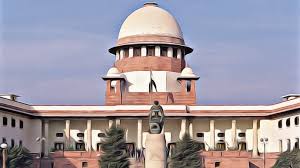
A five-judge bench of the Supreme Court headed by Chief Justice D.Y. Chandrachud took suo motu cognizance over widely circulated remarks made by the Punjab and Haryana High Court judge, Justice Rajbir Sehrawat during an online hearing, wherein he passed a detailed order against an earlier Supreme Court order staying contempt proceedings before him. Expunging the remarks, the top court pointed out that “discipline of hierarchy should be maintained”.

Justice Rajbir Sehrawat, in an order passed on July 17, had criticised a top court’s order given on May 3. He had said that the order “turns out to be simply in the nature of putting an estoppel on the powers of the High Court”. There was a tendency on the part of the Supreme Court to presume that it was “more Supreme”, the judge had remarked.

Heading the Bench comprising CJI DY Chandrachud along with Justices Sanjiv Khanna, B R Gavai, Surya Kant and Hrishikesh Roy, said that it was “pained” by the High Court judge’s remarks and said, “The order dated 17 July 2024 is compounded by a video which has been circulating indicating random, gratuitous and unwarranted remarks made by Justice Rajbir Sehrawat during the course of the hearing.”

“In an age where there is widespread reporting of every proceeding which takes place in the Court, particularly in the context of live streaming, which is intended to provide access to justice to citizens, it is all the more necessary that Judges should exercise due restraint and responsibility in the observations which are made in the course of proceedings. Observations of the nature which have proliferated in the video of the proceedings of the Single Judge can cause incalculable harm to the sanctity of the judicial process. We hope and trust that circumspection shall be exercised in the future,” the bench remarked.

“Justice Rajbir Sehrawat has made observations with regard to the Supreme Court of India, which are a matter of grave concern. Judicial discipline in the context of the hierarchical nature of the judicial system is intended to preserve the dignity of all institutions whether at the level of District Court, or High Court or Supreme Court”, the CJI-led bench said in its order.

“This Court is constrained to take suo motu notice of the contents of the order dated 17 July 2024 passed by the Single Judge in view of the fact that such observations tend to bring the entire judicial machinery into disrepute. This affects not only the dignity of this Court but of the high court’s as well. We are accordingly of the view that such observations were wholly unnecessary for the conduct of the judicial proceedings before the High Court and ought to have been eschewed,” the bench ruled.

“Compliance with the orders passed by the Supreme Court is not a matter of choice, but a matter of bounden constitutional obligation, bearing in mind the structure of the Indian legal system and the authority of the Supreme Court which heads the process of judicial adjudication of the country.” “Parties may be aggrieved by an order. Judges are never aggrieved by an order which is passed by a higher constitutional or appellate forum,” the SC orders said.

“We are of the view that in a situation where the authority of this Court is undermined by gratuitous observations made by the single Judge, it is the plain function of this Court to set right any attempt to dislocate the sanctity of judicial authority, and maintenance of judicial discipline. We, accordingly, expunge the observations which have been made by Justice Rajbir Sehrawat in the order dated 17 July 2024 and expect that greater caution should be exercised in the future while dealing with orders of the Supreme Court and, for that matter, the orders passed by the Division Bench of the High Court,” the bench held.
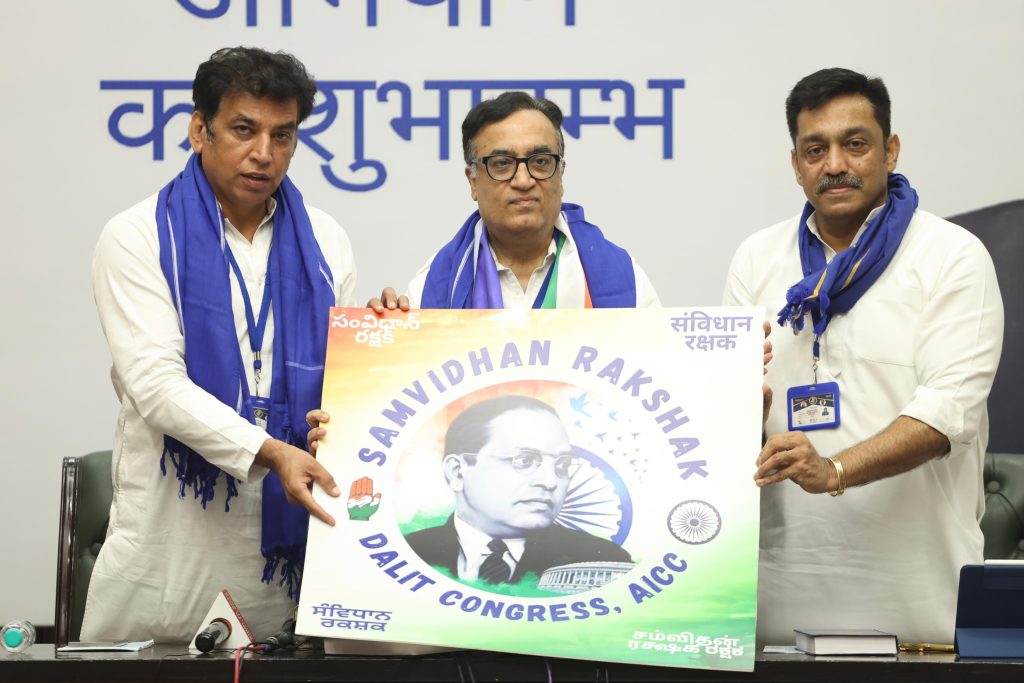
Congress launches 100 day ‘Save Constitution Campaign

New Delhi : The Congress today launched 100-day ‘Samvidhan Rakshak Campaign’ to enrol people as protectors of the Constitution, who will work to protect Constitution at all costs. This campaign will conclude on November 26, 2024, to coincide with 75 years of the adoption of the Constitution of India.

Launching the campaign here today, senior Congress leader and Treasurer Ajay Maken, along with the Delhi Congress president Devender Yadav and Chairman of the SC department of the AICC, Rajesh Lilothia, said that the campaign will cover all the seventy assembly segments in Delhi.

Maken said, the challenges and threats to the Constitution were still prevailing as the same people were in power who wanted to change the Constitution before the elections.

Maken pointed out, India was the only country in the region, which was strong and stable while all others were facing turmoil and unrest. He observed that India succeeded as a democracy just because of the Constitution.

Maken said, as Congress leader Rahul Gandhi had committed during his campaign that the party will ensure to defend and protect the constitution at all costs, the campaign was being launched all across the country.

Maken said, so far three lakh Constitution Protection Volunteers had enrolled themselves. He said, the Congress president Mallikarjun Kharge and he himself had also enrolled as the Constitution Protection Volunteers.

Giving further details of the campaign, Chairman of the SC department of the AICC Rajesh Lilothia said that the same forces who had opposed the Constitution while it was being drafted and had even burnt its copies were in power today. He said there was a continuous threat to the Constitution.

Lilothia disclosed that the campaign will be extended across the country to every village. He said, two Constitution Protection Volunteers, one male and one female, will be identified in every village who will be trained for the purpose.

He said the campaign in Delhi will conclude on November 26 with a massive programme in Talkatora Stadium. This will also mark 75 years of the adoption of the Constitution.

Delhi Pradesh Congress Committee president Devender Yadav said, the campaign was being launched at the right time since the forces who wanted to change it were still in power and the threat to the Constitution was very much there.

SC admonishes courts for balking at bail as it sets Sisodia free

While granting bail to former Delhi Dy CM Sisodia after 17-month-long incarceration, the Supreme Court observed that it is high time that the trial courts and the high courts should recognize the principle that “bail is rule and jail is exception”. A report by Mudit Mathur

After 17-month-long incarceration, the Supreme Court of India at last granted bail to former Deputy Chief Minister of Delhi and Aam Aadmi Party leader Manish Sisodia, lamenting that trial courts and high courts in the country have forgotten the principle that ‘bail is the rule, jail an exception’ and attempt to play safe. The Court observed that to ensure the right to a fair trial, an accused cannot be denied the right to have an inspection of prosecution documents, including the un-relied upon documents. The Court allowed the bail applications filed by Sisodia in both the CBI and ED cases considering the delay in commencing the trial in the liquor policy case.

The bench of Justices B.R. Gavai and K.V. Viswanathan observed, “Over a period of time, the trial courts and the High Courts have forgotten a very well-settled principle of law that bail is not to be withheld as a punishment. From our experience, we can say that it appears that the trial courts and the High Courts attempt to play safe in matters of grant of bail. The principle that bail is a rule and refusal is an exception is, at times, followed in breach. On account of non-grant of bail even in straight forward open and shut cases, this Court is flooded with a huge number of bail petitions thereby adding to the huge pendency. It is high time that the trial courts and the High Courts should recognize the principle that “bail is rule and jail is exception”.

“It is to be noted that there are around 69,000 pages of documents involved in both the CBI and the ED matters. Taking into consideration the huge magnitude of the documents involved, it cannot be stated that the accused is not entitled to take a reasonable time for inspection of the said documents. In order to avail the right to fair trial, the accused cannot be denied the right to have inspection of the documents including the “un-relied upon documents,” said the bench.

The finding that an accused must be allowed inspection of Un-relied Upon Documents to ensure free trial deems significance in the context of allegations levelled in Manish Sisodia’s and Arvind Kejriwal’s cases that ED put certain documents in Un-relied Upon Documents and withheld exculpatory material.

Stressing on Sisodia’s long incarceration of about 18 months, and the delay in trial occasioned despite an assurance given by Solicitor General Tushar Mehta on June 4, 2024 that investigation would be concluded and chargesheet filed by July 3, the Court remarked that relegating Sisodia back to the trial Court and the High Court (as suggested by ASG SV Raju) would amount to putting him through a game of snakes and ladders.

“In the present case, 493 witnesses have been named. The case involves thousands of pages of documents and over a lakh pages of digitalized documents. It is thus clear that there is not even a remotest possibility of the trial being concluded in the near future. In our view, keeping the appellant behind the bars for an unlimited period of time in the hope of speedy completion of trial would deprive the fundamental right to liberty under Article 21 of the Constitution,” the Bench observed.

“As observed time and again, the prolonged incarceration before being pronounced guilty of an offence should not be permitted to become punishment without trial,” the Bench held.

Arguing the third round of bail application on the merits of the case, senior Advocate Dr.Abhishek Manu Singhvi, appearing for Sisodia, submitted that this Court, vide its first order dated 30th October 2023, has given various findings in favour of the appellant. It is submitted that a perusal of the same would clearly reveal that at a number of places, this Court has given findings that would show that the respondents have not been in a position to make out a prima facie case.

Dr Singhvi further submitted that a perusal of the record would reveal that even the investigation in the case is not complete. He therefore submitted that unless the investigation is complete, the trial cannot proceed. He submitted that three more supplementary complaints have been filed on 10th May 2024, 17th May 2024, and 20th June 2024 in the ED matter, and as on 27th July 2024, 40 persons have been arrayed as accused in the proceedings with more than 8 complaints.

He further submitted that, in the ED matter, the ED has cited 224 witnesses and produced 32,000 pages of documents. He further submitted that, in the CBI matter, the CBI has cited 269 witnesses and produced around 37,000 pages of documents. It is therefore submitted that in all there are 493 witnesses, excluding the ones in the 4th Supplementary Charge-sheet filed by the CBI, who will have to be examined and that in total the documents are running into around 69,000 pages.

Dr. Singhvi submitted that the ED has deliberately concealed the documents it acquired during investigation by putting documents exculpating the accused persons in the category of “un-relied upon documents”. It is submitted that, as such, it was necessary for the appellant to inspect such “un-relied upon documents”. He further submitted that there was an inordinate delay on the part of the ED and the CBI in producing the list of “un-relied upon documents”.

Dr. Singhvi submitted that, taking into consideration the voluminous number of witnesses and documents, there is no possibility of the trial seeing the light of the day and therefore the appeals filed by the appellant deserve to be allowed.

Earlier, the same bench of the Supreme Court of Justices B.R. Gavai and KV Viswanathan did not interfere in the challenge to Jharkhand High Court orders granting bail to former Jharkhand Chief Minister Hemant Soren in a case related to money laundering in a land scam and dismissed the Enforcement Directorate’s plea challenging it. He was arrested by the Enforcement Directorate on January 31 on accusations of manipulating records with fictitious transactions and using forged documents to acquire land. Soren resigned as the Chief Minister after ED’s arrest on the same day.

Shiv Sena (Uddhav Balasaheb Thackery) MP Sanjay Raut and his close aide Pravin Raut were  also released on bail after a special court under the Prevention of Money Laundering Act (PMLA) in Mumbai granted him bail and the Bombay High Court refused to grant a stay against the bail orders. In its detailed 122-page order, special judge MG Deshpande held their arrest as “illegal”. Sanjay Raut was arrested on August 1, 2023, under the Prevention of Money Laundering Act (PMLA) in connection with alleged financial irregularities in the re-development of the Patra ‘chawl’ in sub-urban Goregaon.

“Basically, there was no reason nor any occasion to arrest both of them (Sanjay Raut and co-accused Pravin Raut)….for the allegations which are basically nothing but a civil dispute,” the court held, while also slamming the ED for not taking its cases to the logical conclusion. The court allowed bail to Shiv Sena leader Sanjay Raut and his close aide Pravin Raut.

Amid many cases before the court containing allegations of misuse of the Enforcement Directorate motivated by political vendetta, a special bench of the Supreme Court comprising Justices Surya Kant, CT Ravikumar, and Ujjal Bhuyan will hear petitions seeking a review of the 2022 judgment in Vijay Madanlal Choudhary versus Union of India case in the open court on 28th, August. In this case, the apex court had upheld the various provisions of the Prevention of Money Laundering Act (PMLA) relating to arrest, search, seizure, bail etc. The lead review petition was filed by Congress MP Karti P Chidambaram.

How Haryana’s Olympic heroes are shaping election discourse

Haryana has contributed four out of the six medals secured by India in the Paris Olympics. While the sports cradle of the country missed out on a gold medal, it has struck a ‘goldmine’ in pre-election action, with the Olympic Games becoming a key focus. A report by Aayush Goel

As the Paris Olympics conclude, Haryana has four out of six medals secured by India to its credit. While the sports cradle of the country missed out on a gold medal, it has struck a ‘goldmine’ in pre-election action, with the Olympic Games becoming a key focus. The parties all set for the Vidhan Sabha elections in October this year are battling it out over sports with Vinesh Phogat emerging as the biggest catch.

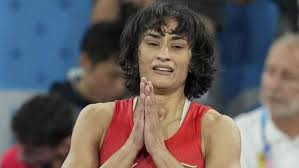
Phogat, who had hit headlines in 2023 for taking on the BJP government by leading the wrestler protest at Jantar Mantar, resonated with national sentiments with her victory in the semi-final and denial of a medal for being overweight by almost 100 grams in the 50kg category. While CAS (Court of Arbitration for Sport) is yet to decide her fate, the parties have lined up to woo her and are in one voice recommending her for Rajya Sabha nomination. Vinesh’s Olympic stint has given Haryana’s poll pitch more masala than the regular allegations and counter-allegations. Not just Vinesh but Manu Bhakar who has secured the double medal in shooting and become the only women athlete from the country to do so too has been creating ripples with her meetings with party leaders. While Congress is flaunting her pictures with Rahul and Sonia Gandhi crediting the party’s sports policy in Haryana during the Bhupinder Singh Hooda regime for nurturing talents like her, the BJP is circulating the mega awards benefits for the sports persons.

Oneupmanship over Phogat

The BJP which was branded as anti-sportsperson for not supporting wrestler’s protest against Brij Bhushan is in a damage control mode as Haryana Chief Minister Nayab Singh Saini has announced that Phogat would be honored at par with a silver medalist and accorded a grand welcome on her return. “She is Haryana’s courageous daughter who gave a brilliant performance in the Olympics and reached the finals. She might not have been able to contest the final match but she is a champion for all of us. Our government has taken this decision that we shall honor and welcome her in the same way as we do for a medalist. The Haryana government will honor her at par with a silver medal winner and provide all awards and facilities”, Saini announced on X. According to the government’s sports policy, Rs 6 crore is given to Olympic gold medalists, while silver medalists are given Rs 4 crore, and bronze medal winners receive Rs 2.5 crore.

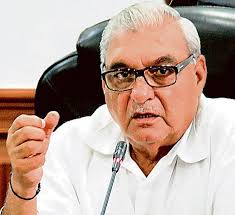
Congress Leader of the Opposition and former CM Bhupinder Singh Hooda however calls it pre-poll drama and seeks the benefits of a gold medalist for Vinesh. In what is being called a political masterstroke, as Haryana gears up for Rajya Sabha elections on September 03, Hooda has appealed for the nomination of Vinesh for the seat vacated by his son Rohtak MP Deepender Hooda. “There should be an investigation into the reason for disqualifying Vinesh Phogat. Today, a Rajya Sabha seat is vacant in Haryana. If I had the majority, I would have sent her to the Rajya Sabha” said Hooda.

Deepender, supporting his father’s statement, said, “Vinesh has not lost, but she has won the hearts of crores of people. The sports system has lost. The government should give her all the facilities that are given to a gold medalist. Today, a Rajya Sabha seat is vacant in Haryana. We do not have a majority, but if there is any suitable person in the country to become an MP, it is Vinesh. She has emerged as a symbol of inspiration and courage for the world and the country”.

Vinesh’s uncle, father of celebrated wrestlers Geeta and Babita Phogat, Mahavir Singh Phogat however called it a political stunt saying Hooda didn’t do enough for his daughters when he was in power. Responding to the father-son duo, Mahavir said that all this was just politically motivated. He further asked the former chief minister why he did not send his daughter and wrestler Geeta Phogat to the Rajya Sabha.

“Geeta and Babita are torchbearers of women wrestling in the country.  In 2010 when it was the Hooda government during the Commonwealth games, Geeta won the gold. She was the first Indian female wrestler to do so. Babita won a silver. The sports policy mandated that both be appointed DSPs but he made Geeta an inspector while Babita a Sub-Inspector. I had to go to court to get them their rightful and due positions according to policy. They were in government and Geeta had opened a new sports avenue for women in a patriarchal state. Why didn’t this thought come when they were in power? Saying such things today doesn’t look good”, he said.

The issue has created ripples but may not be of much relevance as according to norms, a Rajya Sabha MP should be of a minimum age of 29 years. According to the schedule released by the EC, nominations can be filed from August 14 to August 21. Candidates have until August 27 to withdraw their nominations. Voting and ballot counting will take place on September 3. Vinesh, who is 29 now, was born on August 25, 1994. She will turn 30 four days after the last date of nomination (August 21, 2024), and is thus not eligible to be elected for the vacant Rajya Sabha seat (Haryana).

Nevertheless, jumping on the bandwagon, former Haryana Deputy CM and JJP leader Dushyant Chautala too has demanded her nomination like the cricket legend Sachin Tendulkar. He appealed in this regard to President Droupadi Murmu and Prime Minister Narender Modi.

Dushyant Chautala posted about his demands on ‘X’ on Monday, “Four nominated members’ seats are vacant in Rajya Sabha for which the President will soon nominate four members. I request the President and the Prime Minister to nominate the country’s brave daughter, Vinesh Phogat to the Rajya Sabha like Sachin Tendulkar so that a strong voice of youth, women, and sportspersons reaches the country’s Parliament.”

 Reacting to the political drama over Vinesh Phogat, wrestler Bajrang Punia said, “That’s how the world changes. We have not forgotten how she was dragged on the streets and written off as a rebellious Jat girl. Today she has become Desh ki Beti.”

The ‘other’ four medalists

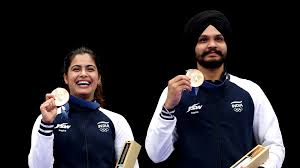
With the disqualification episode and political drama around it, Vinesh may be the most talked about Olympian this year but it does not take the limelight away from others. Shooter Manu Bhaker has done the country proud by winning two bronze medals in the Paris Olympics. This is the first time since Independence and the second in India’s Olympic history if Norman Pritchard’s two silvers in the 1900 Paris Olympics are considered. Bhaker won a medal in the women’s 10m air pistol and another for the 10m air pistol mixed team event along with Sarabjot Singh, also from Haryana. India’s own Javelin star Neeraj Chopra won a silver medal, missing out on gold to Pakistan’s Arshad Nadeem while Aman Sehrawat won a bronze in the Men’s 57kg freestyle event. Haryana has also contributed to the hockey bronze medal with three players of the hockey team being from the state.

Medal surge, minimal support

With four out of six medals to its credit Haryana constituting just 2.09 percent of the country’s population has yet again proven its supremacy in Indian sports. The Olympics 2024 in addition to the celebration has highlighted the disparity in fund allocation to states under the Khelo India scheme. Despite sending the maximum number of athletes for the Olympics and getting maximum medals, Haryana got only 66 crores under the scheme while states like Gujarat who sent only 2 athletes and got no medals managed to get 426 crores. Similarly, UP managed to get over 438 crores though it sent only 6 athletes.

SAD in deep crisis as senior leaders take on Sukhbir Badal

With the SAD expelling several of its senior leaders for ‘rebelling’ against the party leadership – whom they held it responsible for ‘anti-Panthic sentiments’ that resulted in party’s poll drubbing – the country’s oldest regional party is now headed for a bigger showdown, writes Rajesh Moudgil

The 103-year old Shiromani Akali Dal (SAD) is again facing a major crisis – after 1989-1990 strife which had led to a split within. A section of its senior leaders, including its patron, former MPs, ex-ministers, former MLAs and office-holders have approached Akal Takht, the supreme Sikh temporal seat, gunning for party president Sukhbir Badal.

Before Akal Takht on July 1 last, they apologised for being part of SAD government from 2007 to 2017 when, they held, the top leadership committed “mistakes’’ and failed to represent Panthic sentiments that also led to SAD’s drubbing in the election.

The SAD along with its ally BJP, ruled the state between 2007 and 2017, but “due to the said reasons’’, its number fell to 15 MLAs out of total 117 in 2017 and just three in 2022 in assembly polls. In the 2024 Lok Sabha polls, it could win just one out of 13 seats and 10 of its candidates failed to even save their deposits.

The SAD’s  rebel leaders included former MP Prem Singh Chandumajra, former SGPC chief Jagir Kaur and former ministers – Surjit Singh Rakhra, Parminder Singh Dhindsa and other leaders including Gurpartap Singh Wadala, Karnail Singh Panjauli and Manjit Singh.

They held that the “mistakes” included revocation of the case registered against Sirsa-based Dera Sacha Sauda head Gurmeet Ram Rahim Singh for blasphemous act of imitating Guru Gobind Singh in 2007, failing to punish perpetrators of Bargari sacrilege and police officers for the Kotkapura and Behbal Kalan firing incidents, allowing appointments of controversial IPS officer Sumedh Saini as DGP besides giving Farzana Alam, the wife of controversial police officer Izhar Alam, the party ticket in 2012 assembly polls and appointing her chief parliamentary secretary and failing to deliver justice to the victims of the fake encounter cases.

Subsequent to this, the five high priests – called “Panj Singh Sahiban’’ – summoned Sukhbir Badal and said in its resolution that according to the complaint received by the Akal Takht from some senior SAD leaders, the SAD president did not represent Panthic sentiments and has thus been asked to appear before the Akal Takht within 15 days with written clarification on the allegations. Sukhbir Badal, held the post of deputy chief minister when the party was in power in Punjab.

Sukhbir’s unconditional apology

Akal Takht on August 5 made public the apology letter submitted by Sukhbir Badal to Akal Takht Jathedar Jathedar Giani Raghbir Singh on July 24. Sukhbir Badal tendered an unconditional apology for “all mistakes committed by the party and its government’’. He said he was seeking an apology from the “Guru’’ and the “Guru Panth’’. He wrote in his letter that as the head of the family, he was taking full responsibility for all the mistakes that were committed knowingly or unknowingly. Even though the decisions taken at that time were of the party and the government, he sought forgiveness for all the mistakes that were committed, he said.

According to media reports, Sukhbir also cited a letter handed over to the Akal Takht by his father, the then Punjab chief minister Parkash Singh Badal in 2015 in the wake of incidents of sacrilege of Guru Granth Sahib and grant of pardon to Dera Sacha Sauda head; Sr Badal had in this letter had said that though he did his best to lead Punjab humbly and wisely, some circumstances were beyond his control and that it was that feeling of regret and pain that he was going through right now. With such feelings in my heart, I humbly bow before my Guru and pray that Waheguru grants strength and grace to endure all this, his letter read.

Notably, the Shiromani Gurdwara Parbandhak Committee (SGPC) clarification was also made public in which SGPC president Harjinder Singh Dhami responded to the SAD `rebel’ leaders’ charges over the newspapers advertisements to justify the pardon granted to Dera head in the blasphemy case. Dhami clarified that the advertisements were released by the then chief secretary on the orders of then president Avtar Singh Makkar to uphold the maryada and respect of Akal Takht.

`Rebel’ leaders expelled

Meanwhile, acting tough, the Shiromani Akali Dal (SAD) on July 31 expelled eight senior leaders including Prem Singh Chandumajra and Bibi Jagir Kaur from the primary membership of the party for indulging in anti-party activities with immediate effect.

Apart from the two leaders named above, other senior leaders who have been expelled from the primary membership of the party are Gurpartap Singh Wadala, Parminder Singh Dhindsa, Sikander Singh Maluka, Surjit Singh Rakhra, Surinder Singh Thekedar and Charanjit Singh Brar.

Two days later, the SAD expelled party patron Sukhdev Singh Dhindsa from the party’s primary membership for indulging in anti-party activities including taking on the leadership of expelled leaders.

The decision to expel Dhindsa was taken by the disciplinary committee which was presided over by its chairman Balwinder Singh Bhundur and which included both the other two members – Maheshinder Singh Grewal and Gulzar Singh Ranike.

Grewal said that “the committee was of the opinion that Sukhdev Singh Dhindsa was not upholding the honour of his post. He was not only issuing unauthorised statements but was also acting against the party’s constitutions. He said the disciplinary committee also took into account the manner in which he took on the leadership of the eight expelled party leaders.

Akal Takht meet on Aug 30

Meanwhile, a crucial meeting of the Akal Takht has been scheduled for August 30 in which Jathedar Giani Raghbir Singh-led Sikh clergy is likely to decide on the issue of “forgiveness’’ sought by Sukhbir Badal for the said “mistakes’’ committed by the SAD and its government.

According to media reports, the meeting would also discuss various Panthic issues as well as the said “explanation’’ given by SAD president in which he had tendered the unconditional apology for all “mistakes’’ of the party and its government between 2007 and 2017.

Haryana Cong alleges vendetta as ED turns the heat on Hooda

Four Congress MLAs, including former Haryana CM Bhupinder Hooda, face investigations by the ED and CBI in various cases. The Congress claims that the BJP is unleashing agencies because it anticipates a certain defeat in the upcoming assembly poll.  A report by Pawan Kumar Bansal

Deepender Singh Hooda, MP, and son of Bhupinder Singh Hooda, has started the campaign “Congress mange Hisaab” in the state. The Congress is seeking the BJP government’s account of various acts, of omissions and commissions of its nine and half years rule in Haryana. Responding to this campaign, Union Home Minister Amit Shah thundered at a rally organised by the OBC cell of the party in the premises of Central University, Pali, in Mohindergarh. “Who are they to ask for Hisaab? I am the son of Bania and will seek Hisaab from them. It is a mere coincidence that two days after this, the Enforcement Directorate teams conducted raids at several places owned by Congress MLA from Mohindergarh constituency, Rao Daan Singh and his family members alleging ‘misuse of bank loan’. This was followed by the arrest of Sonipat Congress MLA Surinder Panwar and his son by ED in an illegal mining scam. Both Daan Singh and Surinder Panwar are confidants of Bhupinder Singh Hooda.

In the last Lok Sabha elections, Daan Singh was given a party ticket from Bhiwani-Mohindergarh Lok Sabha constituency on recommendation of Bhupinder Singh Hooda. Shruti Chaudhary, former MP and granddaughter of former Chief Minister Bansi Lal and daughter of former Haryana Minister Kiran Chaudhry, was also claimant to the ticket. But Hooda ensured it was given to Daan Singh, forcing Kiran Chaudhry and her daughter Shruti Chaudhary to quit the party and join the BJP.

Questioning the timing of arrests and raids by ED, Deepender Hooda while daring the BJP government said that they will not be pressurised by such tactics and continue their programme of seeking account of various acts of omissions and commissions of the BJP government.

Political analyst Devinder Singh Surjewala said that people of Haryana have made up their mind to defeat the BJP in the coming assembly elections. The BJP, out of fear, is playing and applying all methods and tactics to defame the main opposition party, the Congress. On the other hand Haryana CM, Naib Saini, while reacting to raids and arrest of Congress MLA Surinder Panwar by ED, said that wrong-doers will have to face music adding that ED is an independent agency which decides its course of action itself. Saini asked Deepender Hooda to give account of various actions during his father’s “ten years” rule in Haryana as CM. Saini alleged that corruption in recruitments was rampant during ten years of Congress rule.

Congress MLA from Samalkha assembly constituency, Dharam Chokar, and his family members are already facing investigation by ED in Mahira Homes affordable housing society scheme, Gurugram. About 5000 middle-class flat buyers who have invested their lives’ savings in quest for flats are running from pillar to post for justice for the last five years. Interestingly, the Haryana BJP government is also being accused of shielding Dharma Chokar and his family members. Kamal Bhardwaj, the spokesman of flat-buyers confederation, alleged that the Haryana Government has restored their licence which was suspended amid allegations of submission of forged documents while applying for licence.

Dilbag Singh, the former INLD MLA and close relative of INLD leader Abhay Chautala, was arrested by ED in an illegal mining case and is currently on bail. Bhupinder Singh Hooda too is on bail from CBI Court, Panchkula, in what is known as Manesar Land Scam in which farmers were forced to sell their ancestral agricultural land to builders under threat of acquisitions under land acquisition Act.

Besides Hooda, half a dozen retired IAS officers, close to Hooda, are also on bail. Apart from Manesar Land Scam, Hooda is also facing court cases in about half a dozen matters including allotment of industrial plots etc. Recently, he was summoned by the ED. Hooda has also dubbed the cases as ‘political vendetta’.

Highly placed sources told Tehelka that in coming days more Congress leaders will face heat from central investigating agencies as BJP has nothing to show to the voters about its achievements and since it is assembly elections, the Modi factor will not work. Local issues will be more important and certainly affect the election results. It may be mentioned that oppressive ED, CBI had failed to get BJP favourable results in UP Karnataka Jharkhand Maharashtra

Bangladesh in turmoil: What it means for India

India, deeply concerned about the situation in Bangladesh, will have to adopt a holistic and strategic approach, pieced together with cooperation, mutual support, and long-term planning, to help the neighbouring country emerge from the current crisis by Anil Singh

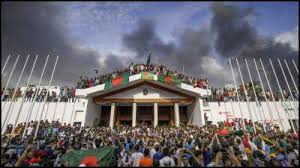
The dramatic ousting of Prime Minister Sheikh Hasina has thrown the country into deep political instability. The event brought both hope and trepidation, more so for the significant garment industry in Bangladesh. What started as mass protests against politicized admission quotas for government jobs snowballed into full-scale violence, with at least 174 killed and more than 2,500 arrested. The government imposed a curfew, deployed soldiers, and shut down internet access nationwide to control the situation. Despite these measures, protests continue, with demonstrators demanding the resignation of Prime Minister Sheikh Hasina.

These protests have come at a high cost in terms of lives; it is said that more than 200 people have lost their lives, and several thousands have been injured. The government’s stance has been widely condemned, with Nobel Peace Prize winner Muhammad Yunus calling for international intervention to put a stop to the violence. The worst incidents amidst all this chaos include attacks on religious centers, like the burning down of an ISKCON temple in Meherpur. Equally, the state of Bangladesh is now equated to some of the global mass protests leading to the overthrow of major governments, such as Sri Lanka in 2022 and Egypt in 2011.

Twists and Turns

The streets of Dhaka are saturated with military presence, with sandbagged bunkers set up at junctions and key roads already blocked by barbed wire. Defying the curfew, people have taken to the streets once again, driven by necessity. The countrywide blackout of internet services has severely banned the flow of information, which has impeded day-to-day life and communication. The international community has expressed its concern regarding the situation in Bangladesh. Many global leaders and organizations have called for intervention and support to put an end to the violence. Economic uncertainty looms over Bangladesh, the second-biggest garment exporter in the world, due to this political instability. Because of the turmoil, question mark hangs over the fate of the apparel production industry in the country.

The mayhem has brought together different factions of the opposition, including the Bangladesh Nationalist Party and some smaller groups. They have been very vocal against the Awami League-led government and took to the streets in several rallies and demonstrations. Those protesting include many young people at heart—students and young professionals alike. This shows that there is something of a generational change and a great demand for better, cleaner governance. The government has faced allegations of suppressing media reports on protests. The authorities have detained a number of journalists, while some news houses have been banned. Amidst the internet blackouts, some information is still finding its way to social media sites as protesters use VPNs and other means to bypass restrictions.

Unfortunately, the level of violence and agitation has now forced hundreds of families, especially those from the urban areas of Dhaka, to move. Relief is on its way, although, for many, life remains rather pathetic as of now. Hospitals and clinics are swamped with injured protestors and civilians, while some reports indicate a shortage of medical supplies and personnel. This turmoil is likely to have long-term implications for the political landscape of Bangladesh. It may cause the systems of leadership and management to change dramatically. However, the economic recovery will be long and painful, especially for industries like the garment manufacturing sector, which are highly troubled by this instability. Innumerable international organizations have pledged humanitarian aid to the millions of people who have been adversely affected by this turmoil. This aid includes medication, food, and shelter. Efforts are now being made in the realm of diplomacy to negotiate the situation and bring about a peaceful settlement. Neighboring countries and other global powers are observing developments with a hawk’s eye.

Other potential ways out of the current crisis include a compromise by the government with opposition groups, further escalation, or even international intervention. Again, public sentiment is a very critical factor. In a time of widespread dissatisfaction with the current government, any resolution must address the root issues of corruption, governance and economic inequality.”

Impact on India

The political unrest in Bangladesh brings along with it definite threats to the healthy trade relations with India. Both have been major trading partners with a wide exchange of goods and services. Any disruption in the trade routes and supply chain may hit industries such as textiles, pharmaceuticals, and even agriculture. Indian businesses investing in Bangladesh are bound to be full of uncertainties. Instability might, in turn, discourage future investment and influence projects under implementation, especially in sectors such as infrastructure and energy. The other important and sensitive issue for India is the 4,096-km-long border shared with Bangladesh. As the turmoil fosters, the cross-border movement could intensify, opening up scope for refugee influxes. Border security and managing the subsequent humanitarian issue will pose great challenges for India. The instability in Bangladesh also raises concerns over the resurgence of extremist groups. India had been working very closely with the Sheikh Hasina-led government on counter-terrorism activities that emanated from Bangladesh. All these efforts could get derailed with the change of guard, and therefore calls for greater vigil.

Sheikh Hasina has been a dependable friend to India in building strong bilateral ties. Her ouster has created a vacuum in the diplomatic scene, and India will have to tread cautiously in its relations with the new interim regime in Bangladesh. The crisis within Bangladesh is part of the larger looming regional instability over South Asia, amid the ongoing conflicts in Myanmar, Pakistan, and Sri Lanka. The country will have to strike a delicate balance in its diplomatic effort on many fronts to keep the regional stability intact.

With increasing violence against minorities in Bangladesh, mass exodus cannot be ruled out. It would then become incumbent upon India to be prepared to handle such an influx through humanitarian assistance and managing its social and economic fall-out. The situation can resonate with the Bangladeshi diaspora living in India, especially West Bengal and Assam. Attention will have to be paid to the safe existence and well-being of these communities.

The way forward

The turmoil in Bangladesh has consequences for stability in the region, most particularly for South Asia. Neighboring countries such as India and Myanmar are watching this situation. It is in the best interest of Bangladesh that the continuous instability may not affect its international partnerships in terms of trade agreements and diplomatic relations. The country will need to tread these challenges very carefully if it wants to retain its global standing. The steps in this direction may include negotiation between the government and opposition groups that can lead to fresh elections with changing leadership. If it is not resolved, the unrest could continue and spiral further down into bits of violence and instability. This can deal a heavy blow to the economy and social fabric of the country. In the worst-case scenario, the international community may have to step in with military intervention to quell the situation and ensure a peaceful resolution. These could be through diplomatic means, economic sanctions, or even peacekeeping forces.

The change in leadership in Bangladesh may alter the geopolitical dynamics of the region. India will need to take stock of its strategic interests and alliances in the wake of increasing Chinese influence in South Asia. In other words, India shall undertake some efforts at the diplomatic level that will sustain its moral support for a peaceful resolution to come through in Bangladesh. To this end, it could collaborate with international organizations or other regional powers toward stabilizing the situation. The situation in Bangladesh is of immense concern to India, impinging on almost all aspects of bilateral relations, regional stability, and economic development. While tackling such problems, a holistic and strategic approach has to be pieced together with cooperation, mutual support, and long-term planning. In offering a hand through cultural connections, sustainable development, and diplomatic initiatives, India shall play an important role in supporting Bangladesh at this juncture of its life and working towards a stable and prosperous future for the region.

‘Taken away’: A lama’s journey through loss and discovery

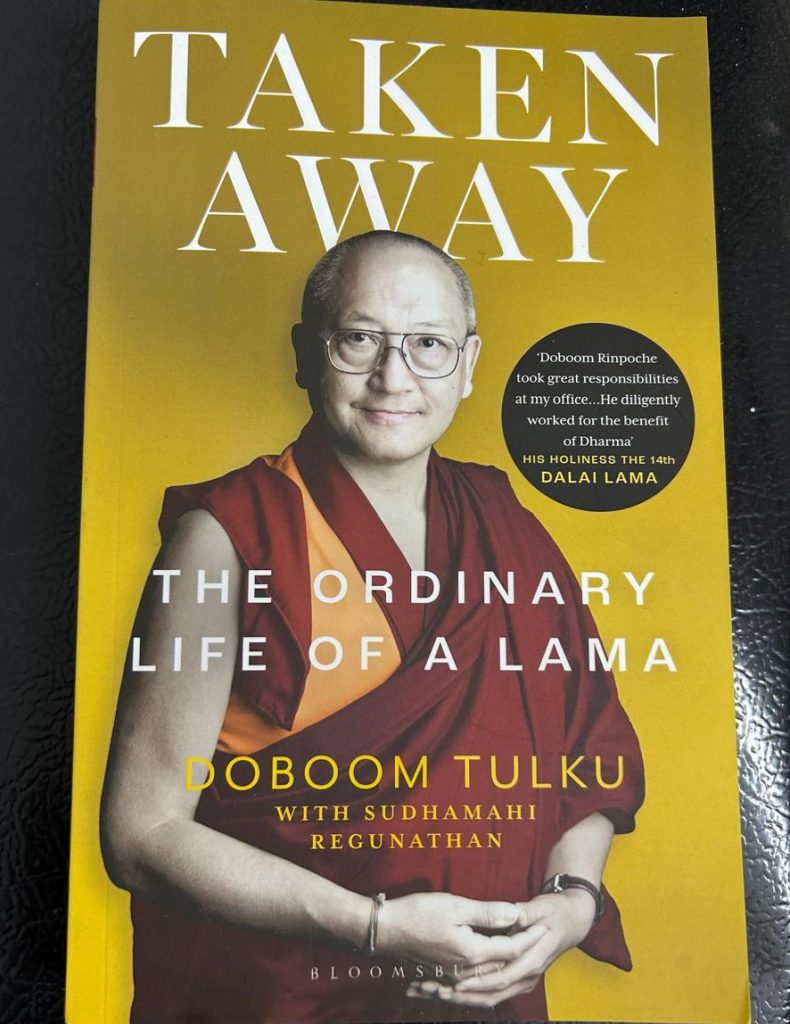
This is the book on the life and times of no ordinary man but that of Lama Doboom Tulku …and the  best part is the fact  that he’s written it himself together with the well -known New Delhi-based academic Sudhamahi Regunathan. And it’s written in such an uncomplicated and simple way …nudging one to read it all at one go. A book review by Humra Quraishi

BOOK-REVIEW

Title – TAKEN AWAY –  THE  ORDINARY  LIFE  OF  A  LAMA

Authors –  Doboom  Tulku with  Sudhamahi  Regunathan

Publisher –  Bloomsbury

 Pages – 350

Price – Rs 599

Book  Review

 By  Humra Quraishi

If you are wondering like I am why this title ‘Taken Away’ to the  memoirs of a Lama, then in the very  opening  page to this book, Lama Doboom Tulku explains it all in such a simple and uncomplicated way –  “I did not  plan my  life. That is why I decided to title my memoirs Taken Away. At a very young age, I was identified as a reincarnation and taken away from my home where I was born. And the rest of my life unfolded similarly. My monastery, my horse, my  country  –  to  name just  a  few – were all taken away over  time…Do I not  miss my country, I am  asked? Of course, I do. That was a sad separation. But life continued to be full of variety and showed me new things along the way.  I think, if I had not left when I did, I would now be a nomad perhaps, tending to animals …”

Well, this is the book on the life and times of no ordinary man but that of Lama Doboom Tulku …and the  best part is the fact  that he’s written it himself together with the well -known New Delhi-based academic Sudhamahi Regunathan.

And it’s written in such an uncomplicated and simple way …nudging one to read it all at one go …absorb all the destined turns in the life of Lama Doboom Tulku. A huge range of turns! To quote from this book – “Venerable Doboom Lobsang Tenzin Tulku was born in 1942 in Kham in eastern Tibet. At the age of two or three, he was recognized as the reincarnation of the second Doboom Tulku. In 1953, Doboom Tulku entered Drepung Monastry in Lhasa, where he studied Buddhist philosophy until the Chinese invasion of Tibet in 1959 forced him into exile in India at the age of seventeen…” 

Thereafter, he worked and studied and resided in the different cities in India …He also served as director of the New Delhi-based Tibet House and he’d also worked with the Dalai Lama’s Private Office.

What seems unfortunate and tragic is the fact he passed away months before this book could be published. To quote Sudhamahi Regunathan on this, “Even as the manuscript was being edited,  Rinpoche’s health worsened. Is it poetic irony that he was taken away by his multiple illnesses before the book was published? Early on the morning of 29 January 2024, Rinpoche Lama Duboom Tulku breathed  his last. He  had spent  last six or  seven years trying  to convince me that  though a  monk, he was an  ordinary  person. He forgot to do so after 29  January when he lay in deep meditation or thukdam for  a week after  his  last  breath. Thukdam is a Buddhist phenomenon where the realized monk’s consciousness remains in the body even after his passing. So, the decomposition of the body does not begin. On 4 February, the last rites were held in the grounds of  Tehor Khangtsen, Mundgod, in a grand ceremony and the relics  taken to his residence in Drete Dhargyon, Mundgod,  Karnataka. ”

EC to announce Assembly poll dates today, may include J&K elections too

The Election Commission (EC) is set to announce the schedule for the upcoming Legislative Assembly elections at a press conference scheduled for 3 PM today. While the EC has not officially named the states, it is widely anticipated that the announcement will cover elections in Jammu and Kashmir as well as Haryana.

The term of the Haryana Assembly is set to conclude in November 2024, while a Supreme Court ruling mandates that elections in Jammu and Kashmir must be held by September 30, 2024. Jammu and Kashmir has been without an elected Legislative Assembly for the past five years.

Historically, the EC has synchronized the elections in Maharashtra and Haryana, given the close proximity of their assembly terms. However, there is a possibility that the EC may choose to separately hold otherwise joint state polls this time around.

Earlier this month, an EC delegation led by Chief Election Commissioner Rajiv Kumar visited both Jammu and Kashmir and Haryana to assess the readiness for the upcoming elections. Additionally, a high-level meeting was held with Home Secretary Ajay Bhalla to address security concerns, particularly in Jammu and Kashmir, where the security situation remains sensitive.

No interim bail to CM Kejriwal, SC issues notice to CBI

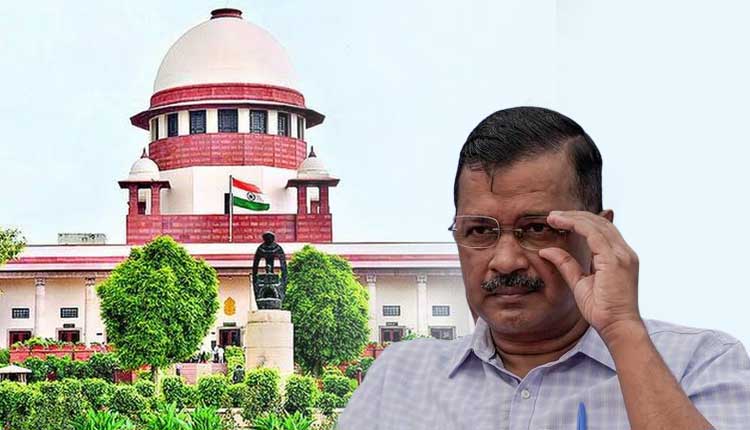
New Delhi : The Supreme Court on Wednesday refused to release Delhi Chief Minister Arvind Kejriwal on interim bail from Tihar jail in connection with the Central Bureau of Investigation (CBI) case linked to alleged excise policy scam.

Issuing notice on CM Kejriwal’s plea challenging his arrest in the corruption case as well on a distinct petition seeking bail, a bench of Justices Surya Kant sought a response from the central investigative agency and posted the matter for further hearing on August 23.

However, the Bench, also comprising Justice Ujjal Bhuyan, declined to pass any order to release the petitioner on interim bail.

Senior advocate Abhishek Manu Singhvi, representing the Aam Aadmi Party (AAP) supremo, submitted that the top court, on July 12, ordered CM Kejriwal to be released on interim bail in connection with the money laundering case lodged by the Enforcement Directorate (ED). However, he was not able to walk out of jail because of the “insurance arrest” made by the CBI, said Singhvi.

The senior counsel also referred to the trial court order granting CM Kejriwal bail under the Prevention of Money Laundering Act (PMLA), which was subsequently stayed by the Delhi High Court on “oral mention” made by the ED.

In his special leave petition filed before the apex court, CM Kejriwal has challenged his arrest and subsequent remand orders, while also pressing for bail.

He assailed the Delhi High Court’s August 5 judgment, which ruled that his arrest was neither illegal nor without justifiable grounds because CBI presented “evidently enough evidence” to warrant his detention and remand.

In its impugned decision, the bench of Justice Neena Bansal Krishna of the Delhi High Court asked CM Kejriwal to approach the trial court for interim bail.

On Monday, senior advocate Abhishek Manu Singhvi mentioned CM Kejriwal’s petitions before Chief Justice of India (CJI) D.Y. Chandrachud for urgent listing.

In response, CJI Chandrachud assured the senior counsel of the urgent listing of the matter and asked him to send an email to the apex court registry.

“Send an email, I will examine it, ” the CJI said.

The Delhi High Court is yet to pronounce its decision on a bail plea filed by CM Kejriwal in connection with the CBI case. Before it reserved its verdict on July 29, the CBI had filed its charge sheet before a special court here against the AAP supremo and other accused persons in the excise policy case.

The ED had already filed its prosecution complaint in the money laundering case, naming AAP and its national convenor Kejriwal as accused.

Meanwhile, a court here has extended the judicial custody of CM Kejriwal till August 20 in the excise policy case.

MOST POPULAR

HOT NEWS