Some observers feel that the centre may be reluctant to hold polls in the UT not just because of the renewed militancy in Jammu but also because of the prospect of the elected government asserting itself against the centre’s ongoing policies in the region. A report by Riyaz Wani
On August 5, as India observed the fifth anniversary of the abrogation of Article 370 that granted J&K its semi-autonomous status within India Union, the erstwhile state was largely indifferent to the occasion. In both Kashmir Valley and Jammu division, it was just another day for the ordinary people. There was some political activity though with the parties split in their support or opposition to the move.
The BJP organized the ‘Ekatma Mahotsav’ rally at Bana Singh Stadium in RS Pura in Jammu, to celebrate what it said “the complete integration of Jammu and Kashmir with India.” A similar rally was held by the party in Kashmir Valley.
On the other hand, several leaders of Jammu and Kashmir regional political parties, including former Chief Minister Mehbooba Mufti, accused the Lieutenant Governor’s administration of placing them under house arrest on the day.
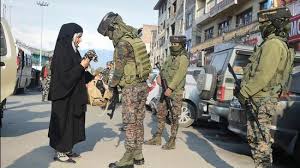
The administration also beefed up security across the Union Territory. Extra security measures and checkpoints were put in place in Srinagar and Jammu, the twin capitals of J&K. The Amarnath yatra was halted in Jammu “as a precautionary measure”.
On the face of it, this didn’t make for a good advertisement for the union government’s achievements in J&K over the past five years. But it is also true that much has changed in the UT in this period. Kashmir Valley is no longer a witness to frequent protests, stone-pelting and shutdowns. Separatist politics has all but disappeared. Tourism is booming, with over one crore tourists having visited the union territory in the first six months of this year. Tourists are also visiting the hitherto no-go zones near the border with Pakistan.
But does this constitute normalcy? Apparently yes. But look deeper, and the situation appears contrary to its outward appearance. While mass protests may have vanished, the overall sense of uncertainty hasn’t. And if there has to be real peace in the Valley, the government will need to reach out to people to make them a part of the ongoing process rather than go about doing things without their consent.
The ongoing transformation is principally driven by the suppression of separatist politics, decline in militancy and the growth in tourism.
No space for separatist politics
The once-vaunted separatist conglomerate Hurriyat Conference has become extinct. Many of the grouping’s top leaders continue to be in jail or are under house arrest. This has hobbled its capacity to organize any political activity.
Although, chief of the moderate Hurriyat Mirwaiz Umar Farooq is largely free, the government continues to control his movements outside his home, including his Friday sermons at Srinagar’s Grand Mosque. This, despite the fact that he has stayed short of making any separatist sounding statements.
The government has outlawed any sign of separatist activity in whatever form and disproportionately raised the costs for any leader or an activist to go out and champion the cause. Top separatist leaders such as Yaseen Malik , Shabir Shah, Masarat Alam, Naeem Khan, Shahidul Islam and the others have been in jail since the abrogation of Article 370. This has had a chilling effect on the separatist politics in Kashmir Valley.
Administrative, legal changes
There have also been far-reaching administrative and legal changes right from the domicile laws to new land laws. As a result, J&K citizenship and the buying of land have been thrown open to outsiders. The government has also overturned the Roshni Act whereby occupants of state land were allowed to own it against payment determined by the government. Scores of other laws have been extended to the former state that is aiding the process of fundamentally altering the facts on the ground.
At the same time, the government has changed the electoral map of J&K by creating District Development Councils, a third tier of the grassroots democracy, whose members unlike in any other state in India are being directly elected. The DDCs are expected to not only undermine the role of the gram sabhas and the Block Development Councils – the first and second tier of Panchayati Raj respectively – but also detract from the powers of the Assembly. The 14-member DDC headed by a chairperson is largely in charge of the district. Their decisions override those of a panch, sarpanch, and a BDC member. Similarly, a future Member of Assembly despite being a member of the DDC will have no role in the election or removal of its chairperson.
Renewed challenge of militancy
Despite the conspicuous change in overall security situation, the region continues to grapple with the challenge of militancy. One such challenge has been the revival of militancy in Poonch and Rajouri districts of Jammu division.
More than a decade ago, the twin districts were declared free of militancy by the government. However, since October 2021, the region has witnessed a surge in militant attacks.
No doubt, an uneasy calm prevailed in Jammu in 2022, but this year the region has once again become a hotspot for militancy, with around 52 security personnel being killed in ambushes so far. This has raised concerns about the number of militants in the area. It is believed that the militants have infiltrated from across the border, although the exact number is unknown. The dense forests of the region have made it difficult for security forces to trace them. The situation has been made even more concerning by the fact that the forest area where the militants are hiding extends to Shopian in South Kashmir, the district that has been a hotbed of militancy in recent years.
One reason being offered for the growing militant activity in Jammu areas is the thinning of the presence of security forces in the region in the last two years, a fact being exploited by the militants. Two reasons are offered for this state of affairs: One, the ceasefire along the Line of Control between India and Pakistan, which was renewed in early 2021, and has since held despite predictions to the contrary. Second, the consequent redeployment of the Rashtriya Rifles, the main counter-insurgency force in Jammu and Kashmir (J&K), to the Line of Actual Control in Ladakh following China’s incursions along the border. This is believed to have created a void along the border in Jammu, which may have been taken advantage of by militants, resulting in a resurgence of violence in Jammu.
The government is now working on a plan to replicate the counter-insurgency strategy adopted in the Kashmir Valley, to curb the rising violence in Jammu. This, in a sense, has effectively compensated for the uneasy calm and the diminishing militancy in Kashmir Valley. In security terms, Kashmir is back on edge. Only difference is that the militancy-related violence has now moved from Kashmir to Jammu.
Kolkata : The post-mortem report of the woman doctor of state-run R.G. Kar Medical College & Hospital in Kolkata, who was raped and murdered on August 9, has suggested that the body had 14 injuries.
Sources said the report mentioned that all the injuries were antemortem.
As per the post-mortem report, sources said that multiple injuries were traced in different parts of the body including the head, cheeks, lips, nose, right jaw, chin, neck, left arm, left shoulder, left knee, ankle and inside genitalia.
Haemorrhage was noted in the lungs, with blood clots in other parts of the body as well as a white thick viscid liquid present inside the genitalia. The findings of the report suggest that the death of the victim was due to the effect of manual strangulation associated with smothering with the manner of death being homicidal, said the sources.
Medical evidence of the forceful penetration of the victim’s genitals has also been mentioned in the report which suggests sexual assault, the sources added. Blood and other samples have been sent for further analysis.
Medical experts say that the findings of the report conform with the claims of the protesting medical students and junior doctors, that the ghastly rape and murder had not been the handiwork of one individual and multiple partners were involved in the crime.
So far, only one individual, a civic volunteer Sanjay Roy has been taken into custody.
He was arrested by the Kolkata Police and later handed over to the Central Bureau of Investigation.
The CBI took over the investigation on Calcutta High Court’s order.
The investigating CBI sleuths, sources said, are also trying hard to track other partners in the crime, by questioning multiple individuals and more especially the former and controversial principal of R.G. Kar Medical College & Hospital Sandip Ghosh.
Ghosh has been interrogated by the CBI’s Salt Lake office in the northern outskirts of Kolkata for a marathon of 12 to 13 hours during the last three days.
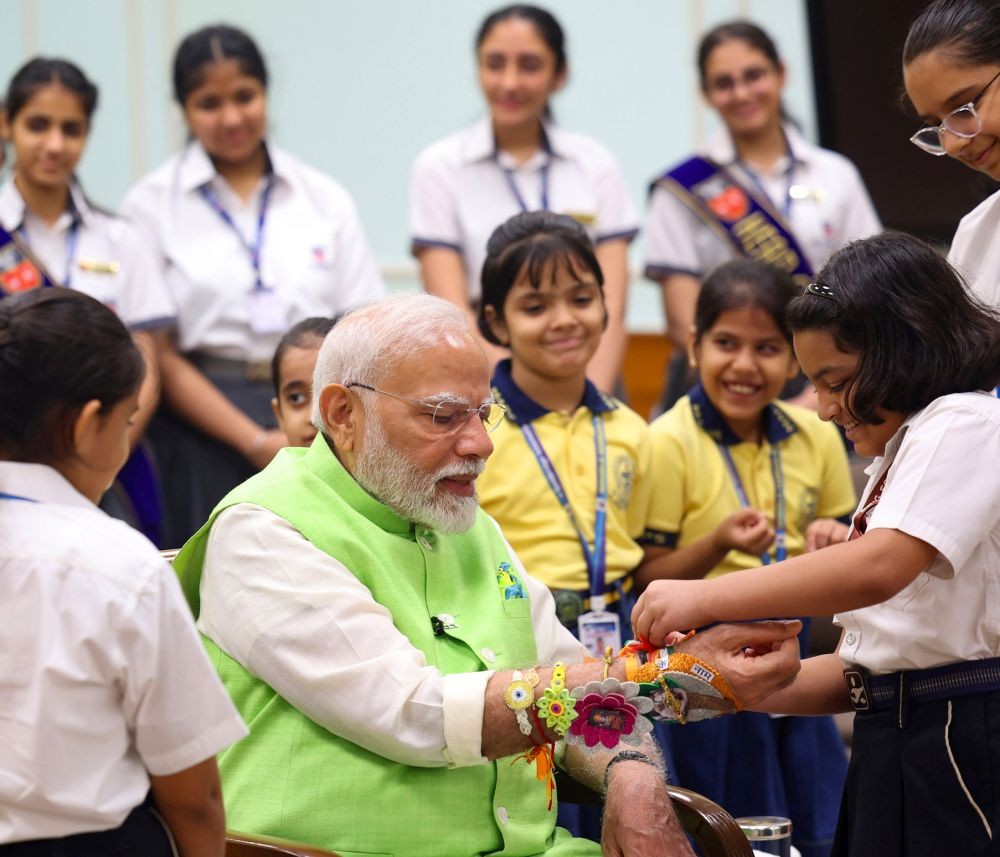
New Delhi :Prime Minister Narendra Modi on Monday celebrated the festival of Raksha Bandhan with many schoolchildren, who tied rakhis on his wrist and also shared a memorable and gratifying moment with him.
The school children not only tied rakhis to PM Modi but also engaged in a brief banter where some sought his suggestions on contributing in nation-building while others recited small poems and bhajan. PM Modi had a light-hearted conversation with many children, as the latter posed a series of questions ranging from his favourite colour to suggestions on staying fit.
In a video released by the Prime Minister’s Office (PMO), many school children could be seen making a beeline for the 7 Lok Kalyan Marg, with their eyes beaming and faces brimming with joy.
Many young girls from various schools arrived at PM’s residence on Monday and tied the sacred thread on his wrist. A specially designed rakhi captured the attention of all, as it featured PM Modi and his mother Heeraben’s picture, highlighting the theme of ‘Ek Ped Maa Ke Naam’.
“You made a very beautiful rakhi, ” an elated PM Modi said while the girl tied rakhi on his wrist.
Many students, who brought flowers, sweets and even a hand-made portrait of PM Modi, also shared their excitement and joy of meeting the Prime Minister for the first time and celebrate the special occasion with him.
“I am feeling overjoyed as I will meet him for the first time, ” said a girl student while another said, “He looked like a friend to me, I felt very good.”
A girl student enquired from the Prime Minister on how they can contribute to his Viksit Bharat vision, to which he replied, “keep yourself and society fit and healthy.”
“Whatever we do, there should a feeling of greater well-being for the society, ” he further advised.
PM Modi also gave an autograph to a girl child and shared a hearty laugh when she sought ‘one more’ for her sister.
Earlier in the day, Prime Minister extended his heartfelt wishes to the nation on the occasion of Raksha Bandhan.
“Best wishes to all countrymen on the occasion of Raksha Bandhan, a festival symbolizing the immense love between brother and sister. May this holy festival bring new sweetness in your relationships and happiness, prosperity, and good fortune in life, ” he wrote on X.
The festival of Raksha Bandhan celebrates the bond of love between brothers and sisters.
The unceremonious removal of Sheikh Hasina has dealt a blow to the hope—rekindled during her regime—of a much-awaited renaissance of an all-inclusive Bengali state, envisioned by poets like Nazrul Islam and Rabindranath Tagore by Gopal Misra
The recent mass violence in Bangladesh has not only dealt a blow to its fragile democracy, but has also undermined the state’s nascent secular character. The century-old struggle for fair play, progressive ideas and democratic values, however, cannot be subdued forever; they might flare up in a confrontation like the upheaval the country had witnessed in 1971.
It wasn’t just the illegal removal of an elected prime minister, Sheikh Hasina, conspired by the country’s army, the liberally funded radical Islamists by international forces comprising the US and China, and a section of its much trumpeted academia represented by Muhammad Yunus, a noted economist and Nobel laureate.
During the past 250 years, the region was being targeted by the newly emerging colonial forces of Europe. It was natural for them to be lured by vast fertile lands and having precious minerals in its belly such as coal, bauxite and many others. It was the ‘Sonar Bengal’. The scholars of these golden lands have also led the world in pursuit of knowledge whether it was humanities, literature or the frontier of science. In spite of the natural and human resources, the region has been suffering a political crisis for decades in recent years, a hotbed of international conspirators.
Exit of Hasina
The unceremonious removal of Sheikh Hasina, who had rekindled the hope of a much-awaited renaissance of an all inclusive Bangali state, dreamt by poets like Nazrul Islam, Ravindra Nath Tagore, and the revolutionaries like Ras Bihari Bose, Arvind Ghosh and many known and unknown soldiers has given a death blow to the contributions of Bengal in every field of the Indian renaissance. Therefore, in this context, Muhammad Yunus’s veiled warning regarding her taking refuge in India is not only uncalled for, but also reflects his poor understanding of his country’s history. The world acclaimed economist, respected for his initiative in extending much needed financial support to the poor, perhaps, has sullied his image by hobnobbing with forces inimical to his own country.
Being just a banker, Yunus, perhaps, considers Bangladesh just a physical territory; he forgets that Bengal is the symbol that has led to the concept of modern India. Even in the contemporary world , the Bose particle has re-scripted our traditional understanding of the universe. The history of modern India cannot be presented without the contributions of Bengal. The soldiers for India’s independence have always been inspired by the vibrant Bengali culture. The clarion call – Dill Chalo – of Subhash Chandra Bose had reaffirmed the irrepressible spirit of Bengal. Therefore, the unceremonious eviction of Hasina on August 5 was not only a setback to the democracy in Bengal, but it has angered democracy-loving people even in Lahore and Peshawar across the Indian subcontinent. Hasina might have lost the battle for democracy, but the war, perhaps on a much bigger scale than the 1971 uprising, could be awaiting to engulf Bangladesh.
The recent political developments in Dhaka must have dismayed the country’s most respected political scientist, Imtiyaz Ahemed, who is known across counties for his deep studies regarding mass violence. He might have never expected that his country’s chiefs of army, navy and air force would physically remove an elected prime minister. Her forced resignation was announced by the army chief instead of the country’s president. The army chief was scared that the President, Shabuddin, might refuse to accept the resignation obtained forcefully. He announced her so-called voluntary resignation only after the departure of her helicopter.
No ‘Subah’ in Dhaka
The Mughal documents describe the extension of their Empire in the east as ‘Bengal Subah’ meaning the sunrise in Bengal. It didn’t refer to the prosperity of the people of Bengal blessed by fertile lands, who were also respected for their scholarship and knowledge. The ‘sonar Bangla’ means a land where people have forward-looking vision in every walk of life.
With the decline of the central authority in Delhi, the local governors or subedars became independent rulers as the nawabs, but they continued to pursue the policy of economic emancipation of their subjects.
In Bengal, the local nawab, Siraj-ud-Daula, was pressured by the East India Company to set up a trade center with more powers. A few traders, mostly Hindus, too wanted to develop trade in South Asia by associating with the company. They also sought more concessions from the nawab. They joined hands with Robert Clive, the commander of the forces of the company, who attacked the capital of the Nawab, Murshidabad, just 150 kilometers from the present day Kolkata. For this, they had liberally funded Clive.
For the past a little more than 100 years, Bengal saw two conflicting ideologies i.e. how to preserve the Bengali values expressed by seers, scholars, public figures and the colonial agenda of using Islam to fracture a coherent society, which accepted the basic secular values and lived with peace irrespective of the religious divisions. The similar policy was adopted by the British in the undivided Punjab, where Maharaja Ranjit Singh had established an all-inclusive secular state. Thus, India’s two key -regions have been suffering from the colonial agenda almost during the same timeframe. In the Pakistani Punjab, their culture has been subdued under the formidable pressure of Islamists having the blessings of the erstwhile colonial powers, UK, and now its successor state in contemporary geopolitics, the US.
Both the regions continue to be the hotbeds of conspiracies. They have been facing an eclipse even before dawn or subah, the symbol of hope being awaited since the end of the Mughal era.
The perspective
The recent toppling of Sheikh Hasina, despite being a democratically elected leader, reinforces the apprehension that the mindset of those controlling the world since the colonial period has not diminished in the 21st century. The emergence of China as an economic power is contributing to their agenda of controlling the world politics with new allies. The cheap Chinese labour has been contributing to their wealth accompanied by regional conflicts giving them opportunities to invent new weapons for enriching their war industries.
Therefore, the emergence of any region having talent and resources has to be subdued by the time-tested political approach of divide and rule. Initially, Bengal was targeted for expanding trade in the region, but its strategic importance never diminished.
On 23 June 1757, the British had won the Battle of Plassey with the help of traitors like Mir Jafar and a Hindu businessman, Jagat Seth. Seth had bribed with one million pounds , equivalent to Rs 352 crores today, Robert Clive to subjugate the then ruler of Bengal, Nawab Siraj-ud-Daullah. Thus, the colonial power was given an initial walkover to subjugate and conquer India in later years by these traitors.
A section of scholars, especially in the West, while defining a state believe in the uniformity of culture, religion and language. Yet India is a state, a mosaic of different cultures and faiths despite being attacked for supporting a plural society, because they have a narrow sectarian worldview.
It has also been dispelling the misgivings regarding the role of sub-nationalism, and it has successfully proved the key role of varieties in the emergence of the Indian state. In India, it is natural to be worried about the emergence of the colonial agenda for using sectarian doctrine for achieving political power in the sub-continent. The Indian worry is about the growing role of China in crushing and conniving democracies in the region. Even the West must realize that its democratic institutions too would collapse if they continue their colonial agenda. Their conspiracies in ousting democratically elected leaders in other countries might finally end their own systems achieved by various revolutions.
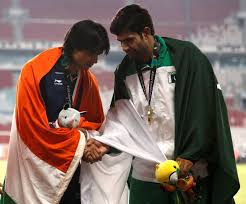
The statements of the mothers of the two podium finishers at Paris Olympics oozed maturity and grace, as they said that winning gold or silver medal would never come in the way of their bond by Humra Quraishi
Two positives stood out last week. Foremost, the statements of the two Olympic stars, India’s Neeraj Chopra and Pakistan’s Arshad Nadeem and also of their mothers greatly impressed. Their statements dripped with maturity and grace, relaying sentiments along the strain that winning gold or silver medals wouldn’t ever come in way of their bonding. Both the Javelin throwers worked very hard and so it’s okay if one won silver and the other gold…both are like brothers. Nationalities or regions or religions shouldn’t come in the way of human bonding and definitely not in the lives of true sportsmen!
Then, the interim prime minister of Bangladesh, Muhammad Yunus, also held out some hope for humans, when in his address he dwelt on protection of the minority population in Bangladesh and to halt violence …refrain from all kinds of violence. And the way he emphasized on this, showed the much required urgency. Minority population and properties ought to be protected in every civilized country. Vulnerable, they find it difficult to protect themselves from mob attacks coupled with destruction and loot. It’s the establishment’s foremost duty to save lives and livelihoods of the minority communities. Otherwise there’s little point in having a government!
Getting back to our country, let us dwell on the dark realities that continue to stand out. Little point repeating that infrastructures are failing and falling apart, and to compound the gravity, the much hyped assurances by the sarkar of the day too seem failing. And this holds out in almost every sector; and definitely vis-à-vis the farmers. They haven’t got their much promised dues. The sore fact is that we, sitting in the urban locales, are not even aware of the disadvantages faced by our farmers as they suffer huge setbacks and risks.
The last week’s documentary film – Seed Stories – was screened at the IIC here in New Delhi. The documentary, directed by Chitrangada Choudhury and Aniket Aga, focuses on a particular village in the Niyamgiri mountains of the Eastern Ghats of Odisha.
It highlighted how this village and the wider region are “changing irreversibly due to the arrival of genetically modified cotton seeds and their associated agrochemicals…how this is reshaping a geography and people immersed in agro-ecological knowledge, and altering their attitudes towards agriculture, food and ecology.”
Dwelling on the aftermath caused by the usage of pesticides and also the moving away from the cultivation of the traditional crops, it was indeed an eye-opener.
The only hope for this region and its farmers is that there’s an effort underway to counter this: Ecologist Dr. Debal Deb and his 3-member team are conserving over a thousand endangered ancient rice varieties. Not to be overlooked the fact that the Eastern Ghats region of Odisha is one of the surviving biodiversity hotspots in the world, where (indigenous) Adivasi communities, such as the Kondhs, possess knowledge that allows them to grow multiple crops with their seeds, which have evolved over the centuries.
Celebrating August icons
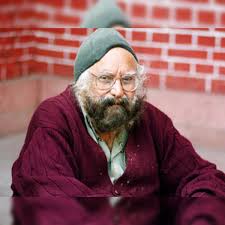
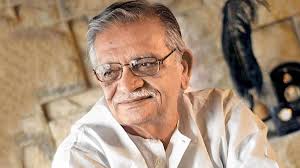
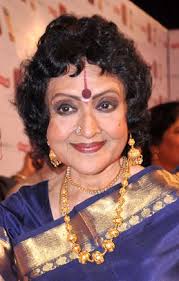
Come August and stand out the birthdays of three extraordinary persons – writer Khushwant Singh, poet Gulzar and veteran actress Vyjayanthimala Bali.
Khushwant Singh – Khushwant Singh celebrated two birthdays – February 2 and August 15. Before I write any further, let me hasten to add the ‘why’ to the two birthday celebrations. As he would explain: My father was certain that I was born at the start of spring, so February 2, my birthday date. But my paternal grandmother was more than sure that I was born in the midst of bhandon/ monsoon, so August 15th my second birthday!
Born in 1915, in village Hadali in the undivided Punjab, Khushwant lived life at his own terms. He spoke fearlessly. He wrote along the same strain. No contradictions. Just no hypocrisy. None of the modern day complications nor gadgets. Till the end, he hadn’t got himself a computer nor a secretary and not a mobile phone. As he would say, “Mere bas ka naheen hai yeh sab …I’m happy writing on a notepad.”
The years that I’d been interacting with him, there were several of those offbeat aspects that had stood out. There were never any sermons. Only subtle relays — No wasting time in gossip or in those useless wanderings. No facades, no communal biases, no lies and no deceit.
Khushwant detested the communal lot. “Today, my only worry is the rise in Right-wing fascist forces in the country … the present generation should be aware of the rise in communal politics and the dangers involved.”
In an interview given to me shortly after his book ‘The End of India ‘( Penguin) was published in the spring of 2003, he had said, “If we love our country we have to save it from communal forces. And though the liberal class is shrinking, I do hope the present generation rejects the communal and fascist policies.”
Khushwant’s views on death were stark, “I’m not scared of death. Death is inevitable, so no brooding about it, be prepared for it, as Asadullah Khan Ghalib has aptly put across – ‘rau mein hai raksh-e-umar kahaan deykheeye thammey /nai haath baag par hai nah pa hai rakaab mein (age travels at a galloping pace /who knows where will it stop /we do not have the reins in our hands /we do not have our feet in the stirrups.)”
“I see death as nothing to be worried or scared about. Earlier whenever I ‘d feel upset or low I used to go to the cremation grounds. It has a cleansing effect, worked as a therapy for me…Yes, I do think of death …No , don’t believe in the any of the rebirth theories …Often I tell Bade Mian (God) that He’s got to wait for me, as I still have work to complete!”
“Yes, I do fear incapacitated by old age – high blood pressure, prostrate, deafness, loss of vision …What I dread is thought of if I go blind or stone deaf or end up with a stroke.”
“Why I was keen for burial, because with that you give back to the earth what you have taken …now it will be the electric crematorium.”
Gulzar – It’s rare to come across a poet whose eyes relay poetry. Look towards Gulzar saab’s emotion laden eyes …there’s something about his eyes, his very personality that impacts.
The more I read his verse, I am left amazed by the expanse, that sheer sensitivity…. Also, there’s that stark simplicity in his words and verse. With that, that instant connect… Little wonder, his fans are spread out, right from our land to those other lands. After all, poets don’t believe in boundaries or barriers.
The very first time I met Gulzar saab, it was an experience in itself. This was almost twenty years back, around the summer of 2005, when I met him for an interview for a national daily. He was putting up at New Delhi’s India International Centre, so it was decided that I would meet him over breakfast at the tea lounge.
And within minutes as our conversation moved towards the Kashmir Valley, Gulzar saab was quietly crying in that emotional way. Telling me, “The Kashmir Valley had always fascinated me to such an extent that Raakhee and I decided to go to Srinagar for our honeymoon …Raakhee and I often tease our daughter Bosky that she was conceived there in the Kashmir valley… In Srinagar, we stayed at the Oberoi hotel and the garden had two majestic Chinars. I called them Badshah and Begum, or Jehangir and Noorjehan,… I saw them again and they looked so forlorn …Kashmir is an integral part of my emotions, it’s a region close to the region of my heart. I was earlier even planning to make a film on the Valley. I’d even named the film – it was to be titled ‘Iss Vaadi Mein’ and it was based on Krishna Chander’s short story collection ‘Kitaab ka Kafan’, and it dealt with two lovers in the two parts of the Valley and how they try to overcome the military barriers. Sadly, the film could not be made as the Kargil war had broken out.”
And several years back when Gulzar’s story collection – ‘Half a Rupee Stories’ ( Penguin) was launched in New Delhi, I couldn’t attend its launch as one of my cousins had met with a fatal road accident in Uttar Pradesh so I had to rush there. On getting back, it was touching to see Gulzar saab dedicated one of his short stories in this collection, to me, with this accompanying one-liner – “We shared a lot of Kashmir though neither of us is from there.”
Vyjayanthimala Bali – After more than 54 films, Vyjayanthimala Bali quit films, when she opted for marriage. As she’d quipped, “Thereafter, I did not retire but relinquished films.” Later, she made inroads into the political sphere and as Member of Parliament she represented the South Madras constituency.
During the course of an interview, when I’d asked her why she moved towards the political sphere, she’d detailed: “Well, my husband thought that I had the makings of a politician, so he wanted me to join politics. In fact, it happened slowly — in the beginning we toured Tamil Nadu and saw the then ground realities and that people were disillusioned ….Wherever we toured, we saw for ourselves another reality: how people loved Mrs Indira Gandhi and so when we visited New Delhi, we met Indira Gandhi and told her the state of affairs in Tamil Nadu, and even told her about my own inclination towards joining politics. She’d smiled encouragingly …and that’s how I joined politics.”
The HM not only asserted that the NDA will complete its full five-year term but also predicted its re-run in 2029, with PM Modi at the helm. Was this an off-the-cuff remark, or is there a game plan?” by KUMKUM CHADHA
When Congress leader Salman Khurshid said that what is happening in Bangladesh “could happen in India” too, he went a bit too far.
Khurshid was referring to the anti-government protests that have rocked Bangladesh leading to the ouster of Prime Minister Sheikh Hasina.
While the stir was triggered by the job quota issue, it ended up demanding Hasina’s resignation.
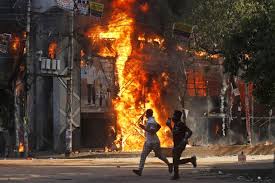
Under attack was her dictatorial rule; her throwing political opponents in jail and crushing dissent. Such was the rage against her that irate mobs stormed her house, broke and looted whatever came their way.
Khurshid, it is clear, was trying to draw a parallel between India and Bangladesh. But to suggest that a duly elected government can be overthrown in India is a bit of a stretch.
There may be traces of authoritarian rule or attempts to quell dissent or even throw opponents in jail, but it would be foolhardy to suggest that India could see a repeat of Bangladesh.
In fact, it was Khurshid’s colleague, Shashi Tharoor, who put it in context. The larger message, Tharoor said, is about the importance of democracy and free and fair elections.
Events in Bangladesh that have unfolded in past weeks, particularly the ouster of Hasina, have compelled Indians to draw a parallel: If institutions were compromised in Bangladesh, dissent quelled, Opposition leaders jailed and a dictator breathing down the neck, then India has a similar script.
But the consequences are unlikely to be what Bangladesh has suffered: India is not Bangladesh; its people may take to the streets like they did during the farmers’ agitation but if given a choice, they would opt for the ballot rather than the bullet. Like, they would for democracy versus development.
It is well known that the Modi government in its last two terms launched a substantial number of schemes to help the poor, particularly women. But once the Opposition flagged the possibility of the BJP tinkering with the Constitution, people pitched for safeguarding democracy.
Similarly, Modi’s Bangladesh counterpart, Sheikh Hasina, had turned Bangladesh around and to quote her son, Sajeed Wazed, transformed it from a poor country to “one of the rising tigers of Asia”.
Yet in a toss-up between development and democracy, the people of Bangladesh chose democracy.
Parallels apart, what should one make of the googly bowled by Union Minister Amit Shah?
Barely has the government settled in after an election that Shah has sounded the 2029 bugle.
What exactly did Amit Shah say? He said that the NDA will not only complete its full five-year term but will also form the Government at the Centre in 2029.
Add to this, his assertion that Prime Minister Narendra Modi will be sworn in yet again, and the INDIA bloc parties should learn to work effectively as Opposition as they have a long innings to play; and the years from 2014 to 2024 deserve to qualify as the golden era in the country’s development history.
At this juncture, one needs to stop and ask: is this an off the cuff remark or is there a game plan? Had it been anyone other than Shah making it, one could have dismissed it as political rhetoric. But coming from Shah, one needs to go into the why and how of it.
Of course one explanation is that Shah was responding to the Opposition questioning the stability of the NDA government. Maybe, but did he have to go as far as 2029? Or anoint Narendra Modi as Prime Minister?
On the face of it, it could be wishful thinking: while the 2029 spiel may fit in, Narendra Modi as Prime Minister perhaps does not.
There could be several reasons for this: less substantiated but those that make more political sense.
On the 2029 return, everyone in the BJP who has a share in the power pie would like the Party’s come back yet again: the fourth time since the year 2000. On this the RSS, too, will be on the same page.
But as far as who will lead the pack, there are different views.
For starters, Modi himself may not pitch himself as a frontrunner knowing that the odds are stacked against him.
If the writing on the wall is any indication, then the countdown, both for the Party and Modi, has begun.
An astute politician that Modi is, he would leave nothing to chance. Nor would he want events to guide his Destiny or the RSS to force its hand.
It is no secret that the RSS would like to call the shots in governance. However, this is a tough call given that Modi is not a pushover.
Equally, the RSS is aware that Modi’s image has taken a hit and therefore this is the best time to move in and demand a pound of flesh.
In this context, it would not be wrong to say that while the results were a shocker for the Modi camp, for the RSS they were kind of good news.
It is no one’s case to suggest that the RSS wanted the saffron party to lose. Yet a fractured BJP and a weakened Modi is more than they could have asked for.
However, the RSS would not go for the kill. They would tread with caution and take one step at a time.
Rather than pushing out adversaries, the RSS would, as a first step, focus on pushing in some of their own to dominating positions.
No guesses for its frontrunners. The obvious names: Nitin Gadkari, Rajnath Singh and of course Uttar Pradesh Chief Minister Yogi Adityanath. How much the RSS is able to or how much would Modi let it, only Time will tell.
As of now, the immediate issue is to handpick the Party President. Even though J.P.Nadda is holding the reins, he is on borrowed time. His term ended in January this year.
With his new assignment as a Union Minister and Leader of the Upper House, he is kind of functioning as a part time Party Chief.
That said, it is crucial to decode Modi’s moves, strategy and future.
As for the future, the three-time Prime Minister would not wait to be elbowed out. He would rather carve a niche for himself and chalk out a meaningful role. This may translate into remaining relevant even while sacrificing day-to-day governance.
Would that mean that Modi would eye the office of President of India? Would it mean he would like to emerge as a world leader? Would it mean an Obama-like role who, even post-Presidency, has a say in the way things shape up in the United States?
Or nearer home, would Modi prefer to be like Sonia Gandhi, who even without a defined role virtually ran the UPA Government? Of course Mrs Gandhi’s advantage was a subservient Party and not a force like the RSS to contend with. In contrast Modi has an enemy within.
Irrespective, Modi is not a man who can be written off easily. Or one who will have the door shut on him.
If past events are any indication, he is unlikely to walk into the sunset. Or wait till 2029 for Shah’s prediction to take shape, if at all it will.
Modi is well aware that the clock is ticking and he is unlikely to let events overtake him. If anything, he would have a strategy in place before the enemy comes knocking.
In the backdrop of the tragic drowning of three IAS aspirants at a coaching centre in Delhi recently, and amid rising cases of student suicides, Tehelka SIT report exposes how these institutes make a mockery of government guidelines intended to ensure students’ safety and well-being
“Coaching centres have become “death chambers” and are playing with the lives of students,” the Supreme Court said as it issued notices to the Centre and the Delhi government regarding the drowning incident involving three IAS aspirants in the basement of a coaching institute in Old Rajinder Nagar, Delhi. Taking suo motu cognizance of the matter, a bench of Justices Surya Kant and Ujjal Bhuyan said the incident was an eye-opener for all. “This is horrible, what we are reading. If need be, we will even close down these coaching centres. For the time being, the coaching should go online, unless there is meticulous compliance with building regulations and other safety norms. These places [coaching centres] have become death chambers. Coaching centres are playing with the lives of these aspirants who come from different parts of the country with dreams, and are working hard,” the bench said.
“The government officers come for surprise checks around 11 am, 12:30 or a maximum by 1:30 pm. After that, they don’t come for checking. So, I would admit minor students below 16 years of age to my coaching centre and would conduct their classes at 3 pm, the time at which no government officer comes for checking. One day, a few government officials came to my coaching centre for inspection, but I bribed them to pre-empt any action against my centre,” said Prashant [goes by his first name], an owner of multiple coaching centres named Eklavya in Delhi-NCR, to Tehelka’s undercover reporter.
The reporter met Prashant in Sector 15, Noida’s branch of Eklavya, on the pretext of admitting his friend’s children, who are below 16 years of age, for NEET preparation. Prashant agreed to admit them, in violation of the Ministry of Education guidelines, which prohibit the intake of students below 16 years in any coaching institute across India. The guidelines were issued in January this year following complaints about rising cases of student suicides, fire incidents, lack of facilities in coaching centres, and the methodologies of teaching adopted by them.
As per the central government guidelines, coaching centres cannot enroll students below 16 years of age, make misleading promises, or guarantee ranks or good marks. The guidelines for regulating coaching institutes were framed to address the need for a legal framework and manage the unregulated growth of private coaching centres. After these guidelines, Tehelka carried out an investigation to see how many coaching centres are following government guidelines. To our surprise, none of the coaching centres we contacted during this investigation bothered to follow government guidelines. Almost all of them are blatantly flouting government norms.
Prashant not only violated government guidelines but even described how he dodged authorities during the COVID-19 lockdown by making his coaching centre operational clandestinely. “During the COVID-19 lockdown, I was clandestinely running my coaching centre. I posted one man at the gate to inform me if a policeman came. I used to switch off all the lights of my centre to mislead authorities into thinking my coaching centre was shut. But I was taking all the classes at my centre. I asked students to come with a copy and pen, and not with a bag. This way, I managed to hoodwink the authorities during the lockdown,” said Prashant while talking to our reporter.
The tragic incident at a coaching centre in Old Rajinder Nagar, New Delhi, where three UPSC aspirants were killed due to flooding, could have been averted if the authorities in charge had been vigilant about the safety violations committed by many coaching centres across the city. After the incident, there are reports that many unregulated coaching institutes in Noida and Gurugram are under scrutiny. It is learnt that over 300 coaching centres in Gurugram are operating without the mandatory no-objection certificate (NOC) from the fire department.
To expose how coaching centres are violating government guidelines, we met Prashant at his Eklavya coaching centre in Sector 15, Noida. We proposed a fictitious deal to him that our friend’s children, who are below 16 years of age, wanted to enroll at his coaching centre for NEET preparation. Prashant agreed to enroll the children, in a clear violation of the government guidelines that no coaching centre can enroll children below 16 years of age.
Reporter- Theek hai kyunki unko thoda ye tha ke guidelines aayi hain na..
Prashant- Kitne students hain?
Reporter- Kam se kam 8-10 mil jayenge..
Prashant- Le aaiye.. visit kara dijiye..
Reporter- Dikha deta hoon bacchon ko bhi.. parents ko bhi, hain sab 14-15 saal ke..
Prashant- Kaho to mein apne teachers se kahun counseling kar aaye..aise koi jagah hai jahan saare parents beth jaaye..?
Reporter- Nahi aisi to nahi hai..kaho to park mein.?
Prashant- Haan park bhi chalega.. hum khade hokar speech de saktey hain..
Reporter- Thoda sa wo yahi soch rahe they.. jab se sarkar ki guidelines aayi hain na.. 16 saal se kam age ke coaching centre mein admission nahi le saktey..kahin aisa na ho dikkat pareshani ho jaaye..ye hai..
Prashant- Teen baje ke baad hum kar saktey hain.. aap unko bata dijiye, aware kar dijiye..
Reporter- Confirm kar doon ?
Prashant- Ek dum..kar dijiye sir..
[Our sting operation reveals how coaching centres are violating government guidelines by enrolling underage students. Despite clear rules, Prashant from Eklavya coaching centre agrees to admit children under 16. This exposes the disregard for regulations, highlighting the need for stricter enforcement.]
After Prashant agreed to enroll children below 16 years of age, he shared with our reporter his plan for managing those students at his centre. He mentioned that government officials typically conduct surprise visits before 2 p.m. So to avoid detection, he would schedule these classes at 3 p.m.
Reporter- Accha hamarey society mein kai bacche hain jinko NEET aur JEE ki coaching chahiye.. par hain wo 9th mein age hain unki kam, 15 saal se 9th ke hain..16 saal se kam, to kaise karoge phir aap..?
Prashant- Ek baar pooch leta hoon XXXXXX sir se..
Reporter- XXXXXX kaun ?
Prashant- XXXXX sir authority mein XXXXX hain…wo keh rahe they aisa hoga to mere ko batana..baat kar lunga.. yahan Noida authority mein hain..ho sakta hai..
Reporter- Theek.
Prashant- School se baccha kai baje aata hai..?
Reporter- School se aata hai 1-1.30 pm.
Prashant- To hum 3 baje ke baad hi class kar sakte hain..
Reporter- Theek hai.. 3 pm ke baad rakh lenge..
Prashant- Rakh lenge..kyunki 3 baje tak generally saare officers ghoom kar chale jaatey hain..visit jo hoti hain na officer ki wo 11 baje, 12 baje, mostly zyada se zyada 1.30 pm se pehle..
Reporter- Accha…Iska matlab sham ko nahi aatey, sham ko koi darr nahi hai..?
Prashant – Darr nahi hai.
Reporter – Ok sham ko rakhtey hain.. 3 baje ke baad.
Prashant- Done sir..
Reporter- Final karun?
Prashant- Haan sir.
[Prashant reveals plans to bypass government inspections by scheduling classes for underage students after 3 p.m., when officials typically finish their visits. This highlights a systematic effort to flout regulations, emphasizing the need for stricter enforcement.]
Prashant mentioned that one of his classrooms remains empty after 4 p.m., prompting the reporter to ask about the officials responsible for inspecting the premises.He explained that these inspections are conducted by officials from the Basic Education Office (BO), who act on orders from the District Education Officer (DO).
Prashant- Aur mera ek room khali bhi rehta hai abhi.. 4 baje se poori class khali hai..
Reporter- Ye check karne wale kahan se aatey hain..?
Prashant- Sir ye BO se aatey hain..
Reporter- BO matlab ?
Prashant- Basic Education officer..ye block level par hota hai.. aur DO usko order deta hai.. District Education Officer..DO
[As Prashant explains that these checks are conducted by the Basic Education Officer (BO) at the block level, the conversation highlights that while the oversight mechanisms are in place, there is a question mark over their effectiveness.]
Prashant now admitted to our reporter the extent to which he manipulates the system to keep his illicit activities under wraps. He recounted a particularly instance where he bribed government officials during a surprise inspection at his coaching centre, concealing the fact that he was instructing students under the age of 16. He revealed how he had identified officials posing as parents during the surprise inspection, and how he had managed the situation by withholding information and later bribing the Basic Education Officer (BSO).
Reporter- Wo aa chuke hain yahan aapke institution mein?
Prashant- Haan ek baar aaye they BO aur 2 police officers..
Reporter- Aajkal bachon ko dekhkar age hi pata nahi chalti, baccho ki physique hi aisi hai..sab bacchey nahi lagte..
Prashant (continues)- Haan asal mein teeno bande, ek yahan baithey aur do yahan sofe par..acha baad mein bataya mein basic education ka adhikari hoon…bahut baad mein bataya, poora jayza le liya mere se..wo to acha hua maine bataya nahi mein padahta bhi hoon school ke.. ye 9th -10th ke bacchon ko..
Reporter- Aapne nahi bataya ?
Prashant- Haan nahi bataya..
Prashant (continues) – Boley aap padhatey ho..maine kahan nahi sir..phir bole aap registration dikhaiye, maine bola as a parent aap registration kaise dekh saktey ho, aap mere website par jao. Sara usmein diya hua hai aap dekho sir.
Prashant (continues) – Maine kaha maine local authority mein karaya hua hai, aur MCR ke liye file diya hua hai sir.
Prashant (continues) – Wahan bhi sir ho jayegi.. maine CA se baat kar li hai. Bole local authority mein karaya hai. Maine kaha karaya hai sir. Maine kahan local authority to chodo maine Bharat sarkar ka Ati Suksham Laghu Udyog hota hai.. usmein bhi karaya hai. Boley acha dikhaiye uski copy. Drawer khola nikala dikha diya.
Prashant (continues) – Accha course ka kuch pooch hi nahi raha hai, jaise aap pooch rahe ho, mein bhi sochu banda course nahi pooch raha hai, ool julool pooch raha hai.
Prashant (continues) – Ye nahi karaya wo, nahi.. idhar udhar ka pooch raha hai.
Reporter (continues) – Aapko doubt nahi hua ?
Prashant (continues) – Mere ko doubt hua.
Reporter- Ye bhi to paise ugai ke sadhan hai..?
Prashant – Phir doubt tab hua jab doosra jo hai na coaching wala, Career Launcher, uska phone aaya mere pass. Aise hai, hum log ki coaching ki ek team hai, meeting hoti hai na hamari Saturday-Sunday ko, ya to saptah mein ek din.. ya 15 din mein. Hum log aapas mein miltey hain ek jagah coaching sanchalak hotey hain.
Prashant (continues) – Unka phone aaya, Prashant sir, wo check karne wala aapke yahan aaya kya, maine poocha kaun.. kitne bande hain, ke sir teen bande hain, do sir principal aur ek sir check shirt mein, peela peela shirt mein wo hain BSO sahab. Wahi they.
Prashant (continues) – Maine kahan sir BSO Sahab, aapko jo jo poochana hai direct poocho…mein sir pehchan gaya aapko.
Reporter- Ab to chehra pehchan gaye aap, ab to aa hi nahi sakta koi.
Prashant- Maine kaha aapko maine pehchan liya ab batao kya logey.. chai-coffee.
Prashant (continues) – Wo sir kuch nahi mein baat kar lunga, usko sir paisa bhi to diya tha
Reporter- Kisko diya ?
Prashant- BSO ko, kuch de diya maine manage karne ko.
Reporter- Maine yahi to bola aapko ye sadhan hain paisa ugai ke…
Prashant- Haan!
[Prashant’saccount sheds light on the covert measures he employs to maintain the facade of legitimacy while circumventing regulations designed to protect young learners. Regarding the inspection conducted at his coaching centre, it seemssuch surveys sometimes serve as a pretext for some officials to extract bribes]
Prashant further threw some light on the tactics he used to prevent government officials from discovering students below 16 years of age at his center during surprise visits. For example, he mentioned conducting classes in the last cabin, a location that inspection teams rarely reach.
Reporter- 9th 10th ki classes aap kaise karate ho ?
Prashant- Classes sir ander hoti hain, last cabin mein, agar 9th ka baccha hoga uska class alag lunga, 10th ka hoga uska alag lunga, ek saath merge nahi kiya jayega..
Reporter- Haan to 9th 10th ki age hogi 15-16 saal.
Prashant- Haan usko alag alag class mein karwaiyenge.
Reporter- To aap 9th aur 10th ki yahi karatey hain class
Prashant- Haan ander hai.. thora theek rahega…
[Prashant explains that he conducts separate classes for 9th and 10th-grade students in the last cabin of his centre to avoid detection during inspections. He emphasizes keeping the students in different classes to minimize risk. The conversation reveals the deliberate measures Prashant takes to conceal his illegal activities, such as isolating underage students.]
While revealing how he violates government guidelines by enrolling students below 16 years of age, Prashant also bragged how he had also flouted regulations during the COVID-19 lockdown. He recounted how he conducted classes at his center with the lights off and stationing someone at the gate to warn him in advance of any police arrival.
Prashant- Corona mein 3 baar check karne aaya ..mein dheeth hoon ander se band karke padha raha tha bacchon ko..
Reporter- Corona mein ?
Prashant- Ji sir.. wo bade wala room mein..matlab yahan par sab light off kar diye..ek office boy ladka gate per rakh diya maine..maine bola siren bajta dekhe to mujhe bolna aakar..
Prashant- Mein baccho ko bolta tha, ek copy lekar aana, koi bag wag nahi…copy baccha lata tha, ladke bhi ladkiyan bhi, khali ek copy..wo bhi chupa ke shaq na ho… [Prashant’s admission to holding secret classes during the COVID-19 lockdown with lights off reflects his determination to continue operations despite the restrictions besides his blatant disregard for government regulations.]
Now, Prashant sheds light on the immense pressure placed on students in Kota, a city known for its intense coaching culture. He explains how long and grueling hours of study, combined with high expectations from both parents and teachers, create a mentally taxing environment for students. This, he suggests, can push students to the brink, leading to severe stress and, in some cases, even suicide. Prashant also touches on the importance of offering personal mentorship to help students navigate this challenging landscape.
Reporter- Kota mein itna dabav kyun bana detey hain baccho par..
Prashant- Sir 4 ghantey kaun class leta hain, lagataar 4-4.30 ghante.. 4 ghanta 5 ghanta, parents ka uper se bhi dabav rehta hai..is baar test mein acche number nahi laya na, main bataunga abhi..aur teacher bhi dabav mein..teacher isliye dabav karta hai, teacher ko result chahiye..baccho par mentally pressure aa jata hai..suicide karega.. kya kare..?
Prashant (continues)- Ab mein is ladki ko baar baar bolun arey tu fail hogi, fail hogi….mein isliye betha hoon kya, mein to kahunga na aap acha karogey, bahut accha karogey, is tarah se bolunga .. is liye hum apne book mein likhtey hain personal mentorship..personal level par bhi guidance detey rehte hain..
[As Prashant discusses the intense pressure on students in Kota, it emerges that both the concealment of illegal activities and the extreme academic pressure contribute to atmosphere of fear and anxiety among students at the coaching centres.]
Prashant then quoted the rates for providing coaching to minors, initially demanding Rs 82,000 for one year of NEET coaching. After some negotiation, he reduced the price to Rs 71,500, offering a discount to secure the enrollment. The conversation also reveals Prashant’s careful coordination with his faculty, who work on a percentage basis, and his reassurance that there would be no issues with scheduling the classes.
Reporter- Charges kitna hoga sir..?
Prashant- Charge… sir ek baar mein baat kar leta hoon apne faculty se kyunki wo percentage base par hamare yahan kaam kartey hain..
Reporter- Phir bhi.. ek idea tentative?
Prashant-Sir 2 minute ka samay dijiye pooch leta hoon…..sir baccha 9th se, 10th mein jayega..?
Reporter- Haan sir..
Prashant- Ismein sir ye hi hai…82 thousand letey hain…82K per year..
Reporter- Accha 82K..iski zyada hai..?
Prashant- Bata raha hoon kaise zyada hai.. aur abhi sir hum uska le lenge 71, 500 mein..discount de rahe hain..
Prashant- Haan kar dijiye….dekh lenge abhi chemistry wale ko bhi bula lenge..physics wale ki class chal rahi hai.
Reporter- Aapke coaching centre mein koi dikkat to nahi hogi?
Prashant – Nahi koi dikkat nahi hai..
Prashant – 3.30 pm baje ke baad kabhi bhi usko le saktey hain..
[As Prashant discusses the pricing for NEET coaching, it becomes clear that he is willing to negotiate prices and accommodate the student’s schedule.]
It is learnt that 15 students preparing for NEET-JEE have died by suicide in Kota this year alone, while the city saw 27 such deaths last year. Authorities are working to address the mental health issues arising from the high-pressure environment of coaching centers.
On July 27, three students allegedly died and several others were trapped when a nearby drain burst, leading to flooding in the basement of a coaching institute for UPSC aspirants in Old Rajinder Nagar, Delhi. Reacting to the shocking incident, students protested and raised slogans outside the coaching centre, demanding accountability for the fatalities.
In an effort to regulate coaching centers nationwide, the Ministry of Education had introduced guidelines in January this year prohibiting the enrollment of students below 16 years of age. However, our investigation has exposed how coaching centres flagrantly violate these guidelines, even in the capital, Delhi. This raises concerns about the situation in cities like Kota, located over 500 kilometers away.
The tragic deaths in Old Rajinder Nagar and the ongoing reports of suicides in Kota have garnered national media attention. Despite the government’s introduction of regulations aimed at addressing these issues and imposing restrictions on coaching centers, the latter seem to have turned a blind eye, while authorities appear reluctant to enforce the guidelines with a firm hand.
The Supreme Court has described these coaching centres as “death chambers” endangering students’ lives. Will Tehelka’s investigation galvanize the government to enforce stricter actions against these centers for not adhering to the guidelines? Only time will tell.
Just six months ago, the Union Ministry of Education came up with guidelines on infrastructure prerequisites, fire and building safety codes, and other standards to regulate coaching centers across the country. However, Tehelka’s investigations revealed that no state and UT is taking these norms seriously. That was enough food for thought for the Tehelka Special Investigation Team to unravel how coaching centers are operating in flagrant violations of the rules and an equal trigger was the observation by the Supreme Court while issuing notices to the Centre and Delhi government that coaching centers had become “death chambers” and in Rajya Sabha, Vice-President Jagdeep Dhankhar asserting that these centres had become no less than gas chambers.
Tehelka’s cover story “Coaching conundrum,” coming in the wake of the tragic drowning of three IAS aspirants at a coaching center in Delhi recently, and amid rising cases of student suicides, exposes how these institutes make a mockery of government guidelines intended to ensure students’ safety and well-being. The information provided by the Minister of State for Education, Dr. Sukanta Majumdar, in Parliament revealed the massive growth in business of coaching centres — in 2023-24 it had increased 149 times over the previous year. The New Education Policy professed to introduce systems that would reduce dependence on coaching centers, but exactly the opposite happened.
Tehelka’s undercover reporter was told by the owner of multiple coaching centers as to how the government officers come for surprise checks at a particular time and after that, there is no checking. Even if there is some inspection, the officials manage to pre-empt any action. In complete violation of guidelines, prohibiting the intake of students below 16 years in any coaching institute, one can find a large number of students in this age group in coaching centers. The guidelines were issued in January this year following complaints about rising cases of student suicides, fire incidents, lack of facilities in coaching centers, and the methodologies of teaching adopted by them. It is alleged that over 300 coaching centers in Gurugram are operating without the NOC from the fire department.
While our team was working on the cover story, the rape and murder of a post-graduate trainee doctor at a state-run medical college and hospital in Kolkata shocked the nation and triggered countrywide protests by doctors and medical students. Shockingly, countless doctors put their lives on the line to save patients; yet the medical community remains unprotected. Another news unfolded during the same time was Hindenburg Research training its guns on the chairperson of SEBI, Madhabi Buch, and her husband. Hindenburg, a U.S. investment research firm with a focus on short-selling, might not be completely above board itself, but one cannot turn a blind eye to the accusations.
Let’s wait and watch how the government reacts after Tehelka investigations and other developments around. After all, Caesar’s wife must be above suspicion. Will there be the much-needed reforms?
Some observers feel that the centre may be reluctant to hold polls in the UT not just because of the renewed militancy in Jammu but also because of the prospect of the elected government asserting itself against the centre’s ongoing policies in the region. A report by Riyaz Wani
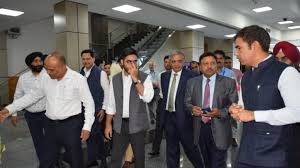
Chief Election Commissioner Rajiv Kumar made all the right noises on his visit to Jammu and Kashmir on August 8-9, but the skepticism about the Election Commission of India’s seriousness about holding Assembly polls in the union territory persists.
“Time has come to give the people of J&K its own government through elections. We are committed to conducting elections at the earliest. We are sure that people of J&K will give a befitting response to disruptive forces,” said CEC Rajiv Kumar, who was accompanied by Election Commissioners Gyanesh Kumar and S.S. Sandhu. “No internal or external intervention will be allowed to derail the democratic process. We are all prepared for it.”
On the face of it, this meant that elections are set to be announced in the near term in line with the Supreme Court deadline to hold the exercise in the UT before the September 30 deadline. But people in the UT are keeping their fingers crossed.
This is because both the central and the UT governments have exhibited little urgency to hold Assembly elections. This, despite the fact that the situation has visibly improved in the region. The militancy in Kashmir Valley has progressively reduced over the last five years which is borne out strikingly by the drastic drop in the number of militants and by the disappearance of unrest and stone throwing. And by that yardstick this is the most conducive atmosphere imaginable for a free and fair electoral exercise.
However, over the past some months, parts of Jammu division have witnessed a spurt in militant activity creating a degree of uncertainty about the poll process based on enhanced security threat perception.
In the run up to the ECI visit, the united Opposition recently staged a massive protest in Jammu, demanding restoration of J&K’s statehood with full powers and withdrawal of powers granted to Lieutenant Governor Manoj Sinha.
The protest was staged by All Party United Front (APUF), a Jammu-based alliance of over a dozen opposition political parties and social groups. Senior leaders of Congress, NC, PDP, CPI(M), Shiv Sena (UBT), AAP and Jammu-based parties gathered near the statue of Maharaja Hari Singh at Tawi bridge in the heart of Jammu city and participated in the protest.
National Conference leader and Member of Parliament Ruhullah Mehdi has also called for immediate assembly elections in Jammu and Kashmir, stressing that only one month remains before the Supreme Court’s deadline.
But all fingers remain crossed. Some Kashmir observers argue that the centre may be reluctant to hold polls in the UT not just because of the renewed militancy in Jammu but also because of the prospect of the elected government asserting itself against the centre’s ongoing policies in the region.
“Since 1989, Kashmir has witnessed all its elections during militancy. In 1996, we had runaway militancy, still elections were held,” said a political analyst, who didn’t want to be identified. “Besides, today’s militancy is largely confined to forests and is mostly populated by foreigners, with little to no impact on everyday life in J&K.”
However, in apparent counter to the anticipated assertion of its role by an elected UT government, the central government has already granted more powers to J&K Lieutenant Governor. By increasing the LG’s control over the transfers and postings of all-India service officers like the IAS and IPS, as well as appointments of judicial officers, police, and law and order matters, the central government appears to be paving the way for a more centralized administration ahead of potential elections. The move effectively restricts the new government’s ability to reverse the changes of the past five years, thereby securing New Delhi’s long-term agenda for the region.
The central government has thus apparently nothing to fear and this should normally pave the way for holding Assembly elections in the near future. And this may very well happen. For once, the ECI’s assurances about elections being held on time may actually come true.
Odisha’s Millet Shakti cafes and outlets are 21 in number, of which seven are in the capital city Bhubaneswar. The first set up was planned in the tribal-dominated Keonjhar district. A report by Deepanwita Gita Niyogi
Before her café was inaugurated, Debjani Das only knew about ragi or finger millet cultivated on a large-scale in Odisha. “As this millet is common in my state, many people know about it. But now apart from ragi, I am aware about other millets as well. It is amazing how such a wide range of food items can be prepared from millets. At one time, it was frankly beyond my imagination.”
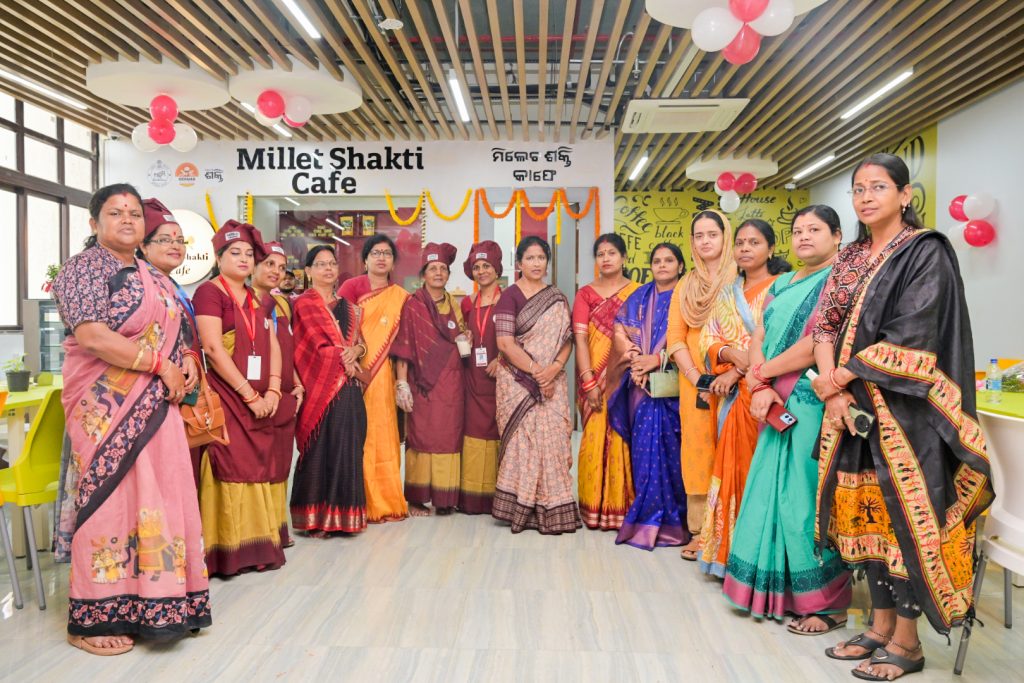
Debjani’s Millet Shakti Café was launched in Bhubaneswar in March this year. Run by a few women from 8 a.m. to 10.30 p.m. daily, the café, located near a prominent bus stand in the state capital, serves both hot food and value-added items to customers.
Items are priced as low as Rs 10, and the rate goes up to touch Rs 150 for the delicious chicken biriyani made from kodo millet. Millet dosa and idli are much in demand at the cafe. Vada and samosa also sell fast. In value-added items, customers can choose from laddoo, murukku and mixture which are ideal as snacks.
Besides Debjani’s café, there are four other Millet Shakti Cafes in Bhubaneswar which are run by women. There are two outlets. “Through these cafes situated at strategic areas, the idea is to popularise millet-based foods and empower women at the same time,” said Anurag Tripathi of Wassan. The organisation works with the Odisha government to promote millets.
“The idea was that when people visit these cafes and outlets, they will invariably try out millet food items. As part of the mission, there is a plan to set up one millet cafe in each prominent location of Bhubaneswar,” Tripathi added.
On his part, Tripathi looks after the Millet Shakti Cafes, which come under Millet Shakti. At present, there are 21 cafes and outlets across the state. The first such enterprise was set up in the tribal-dominated Keonjhar district.
Millet revolution– Millets, which are ancient grains rich in nutrition, can withstand climate variability. But in the past five decades, emphasis was put on market-driven crops like paddy and wheat to achieve India’s food security which reduced the coverage under millets.
The Government of Odisha launched an initiative in 2017 for promoting millets in the state’s vast tribal areas to secure nutrition and revive millets in farms and on plates. It is known as the Special Programme for Promotion of Millets in Tribal Areas of Odisha or the Shree Anna Abhiyan. At present, the programme covers 14654 villages in 177 blocks across 30 districts of the state.
In Odisha, the millet cafes are getting a boost through Millet Shakti which is a collaboration between Shree Anna Abhiyan and Mission Shakti. Overall, Mission Shakti aims at women’s safety, security and empowerment.
Women’s self-help groups (SHGs) are playing an important role in the promotion of millet entrepreneurship and consumption. Debjani’s SHG, Radha Rani, formed in 2017, is part of the Trishakti Federation which has 70 SHGs under it. To set up a cafe, each SHG received about Rs 20 lakh.
Women at the forefront– Before Debajani’s café was launched, all the members of her SHG received training in Bhubaneswar around 2017 for a few months. At that time, others groups also received training.
“Back then, I could not imagine that we would be able to come this far. After the training, I practised making various millet-based items at home. My in-laws also encouraged me. They weighed all the materials needed,” Debjani said.
While the hot food items are prepared at the café which caters to about 200 people daily, the responsibility of making the dry items have been delegated to five groups as orders are increasing day by day. Debjani informed that while one group makes the mixture, another prepares laddoos.
Apart from the café, the women also have a millet processing unit, which was set up in 2018. The supply of raw materials comes from Koraput district where a farmer producer organisation has been engaged.
Minati Sabat’s millet outlet near the Kalinga Stadium in Bhubaneswar was inaugurated last year. Earlier, Sabat’s group, Om Sai Ram SHG, used to stitch cloth carry bags which is still on. But the women, 16 in number, now also serve delicious items like millet noodles and millet pakoda. The outlet is open on all seven days.
The millet cafes and outlets have been conceptualised for urban areas. For semi-urban and rural areas, there are tiffin centres and millet on wheels across Odisha.
Apart from the cafes and outlets, the Belgadia Palace in Mayurbhanj district also serves millet recipes to its guests. According to the manager, Soutam Pramanik, some popular items are kheer, vada and dosa, made from millets. Guests also get to taste millet cookies and namkeens which are placed in their rooms. “As millet is a healthy food, we try to include it in our menu.”