Pedaling through Pench to reduce human-wildlife conflict

This unique initiative started in the Pench Tiger Reserve after a human death occurred in December 2022. A report by Deepanwita Gita Niyogi
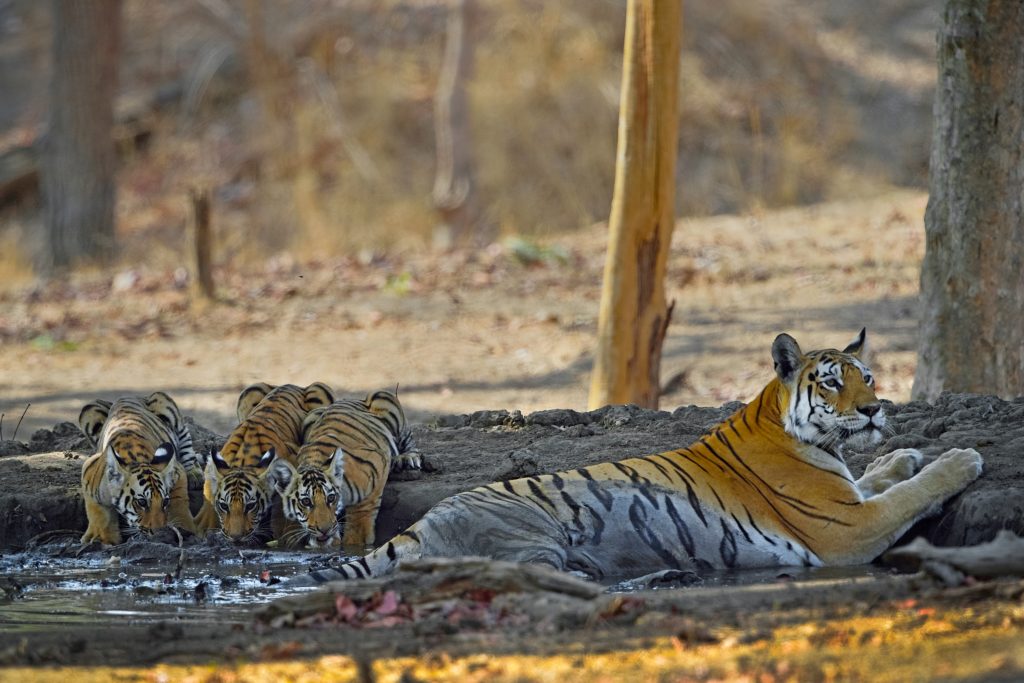
Pench in Seoni district has an estimated 123 tigers. Credit: Varun Thakkar

Prakash Uikey has been riding a bicycle in Madhya Pradesh’s Pench Tiger Reserve for the past one year. His objective is simple: to spread awareness on human-tiger conflict in the villages lying in the reserve’s buffer area.

This unique initiative started in Pench after a human death occurred in the month of December 2022, informed Shubham Baronia, range officer of Rukhad buffer area, Pench Tiger Reserve. “After a man, about 70 years of age, was killed in a tiger attack, people blamed the forest department for the incident. Many pointed out that they were never made aware about tigers. It was then the authorities decided to engage with communities so that they could learn about ways to protect themselves from animals. Earlier, 100 per cent attendance did not happen, as the elderly and women usually skipped the meetings,” Baronia said.

As part of his daily duty, Uikey visits villages like Chandrapur, Pindrai and Kurai. A considerable time is spent on engaging with the residents of a big village and in making them understand about human-wildlife conflict. “Those who are mature listen patiently. Some people demand that tigers should be removed to prevent deaths,” Uikey said.

A novel idea

The incident of December 2022 occurred when the victim, a resident of Gondegaon village in Pench, went to a nullah in the morning which is sometimes used by tigers too. At that time, an encounter happened. Usually, tigers do not launch attacks and change their course. After the incident, the deceased’s family received Rs 8 lakh as compensation.

In the buffer range of Pench dotted with villages, labourers or shramiks like Uikey ride cycles to issue warnings from time to time under the Sayane Mowgli ki Cycle initiative named after the beloved fictional character in Rudyard Kipling’s The Jungle Book. The labourers carry out their duty for the forest department and then ride cycles for a few hours to cover the villages. They get a monthly salary.

According to Baronia, four wheelers could have been engaged but cycles are better. They are eco-friendly and can stop conveniently at every village. The cycles have been made attractive so that people spare a few minutes to read the set of instructions hoisted on them and listen to what the riders have to say. The riders have been hired from the villages which makes conversation easy.

“Apart from the set of instructions, phone numbers are also mentioned so that people can contact us whenever there is a need. This initiative has helped the department form an attachment with people,” Baronia added.

The Pench Tiger Reserve in Seoni district of Madhya Pradesh has no village in its core area as all of them have been relocated. At present, there are 107 villages in its buffer. Some of the houses are still kuccha like in the old times but most of them are now pucca.

Towards a peaceful coexistence

Jile Singh Dhurwey, who has been posted in Pench since 2005, said there are four circles in the Rukhad buffer range. He is a permanent employee of the forest department.

“Under the Sayane Mowgli ki Cycle initiative, one cycle covers one circle in a week and then goes to another circle. The cycle riders are accompanied by beat guards. The rides always take place except during festivals. People question us on these visits. When a cycle rider arrives at a particular village, people surround him. They read the instructions. If they cannot understand something, detailed explanations follow,” Dhurwey said.
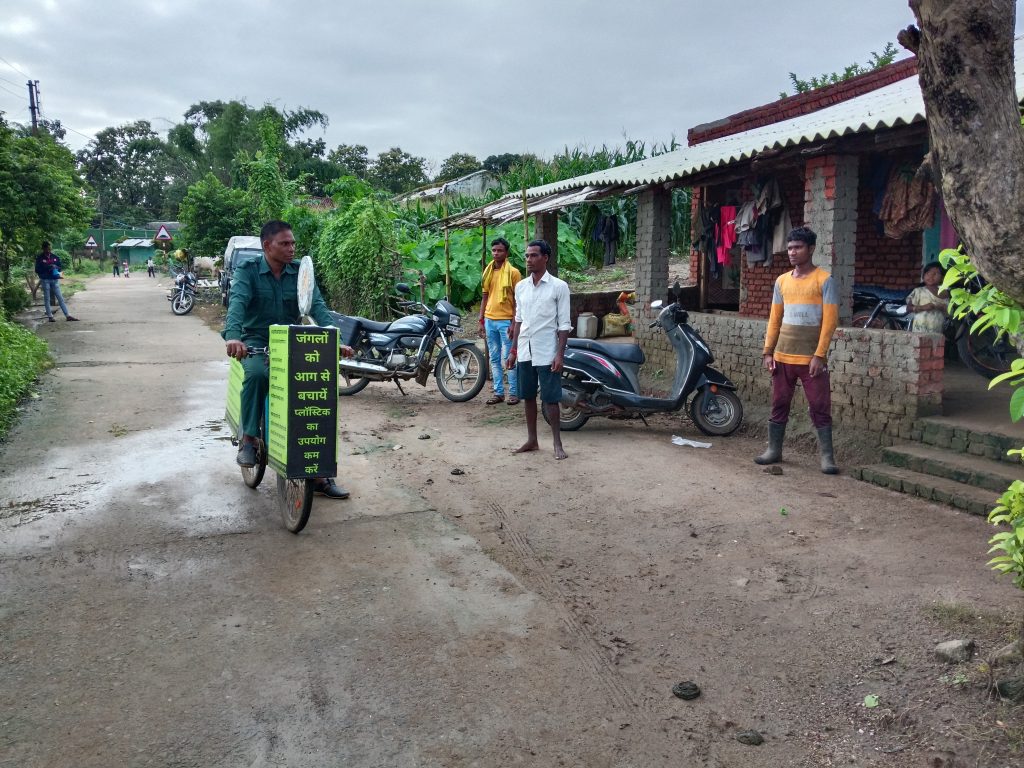
Bicycle riders spread awareness on human-tiger conflict in the villages lying in Pench’s buffer area. Credit: Pench Tiger Reserve authorities

The cycle rides start in the morning and continue till the evening. Dhurwey explained that apart from the human-wildlife conflict issue, people are asked to protect the forest from fires, reduce the usage of plastics, desist from feeding animals and discard waste in bins.

The employee admitted that the focus is more on tigers, as sometimes the animals are seen near agricultural fields which lie near the forest. People are also urged to collect mahua flowers in groups, not to go inside forests in the evening and play songs on mobiles while walking. Many people enter jungles to collect mushrooms also.

Most attacks happen during the evenings when cattle herders are on their way home. Tigers often attack cattle. “During such times, herders should not try to stop them. If tigers are spotted on roads they should not be disturbed. Sometimes, people get excited on seeing tigers.”
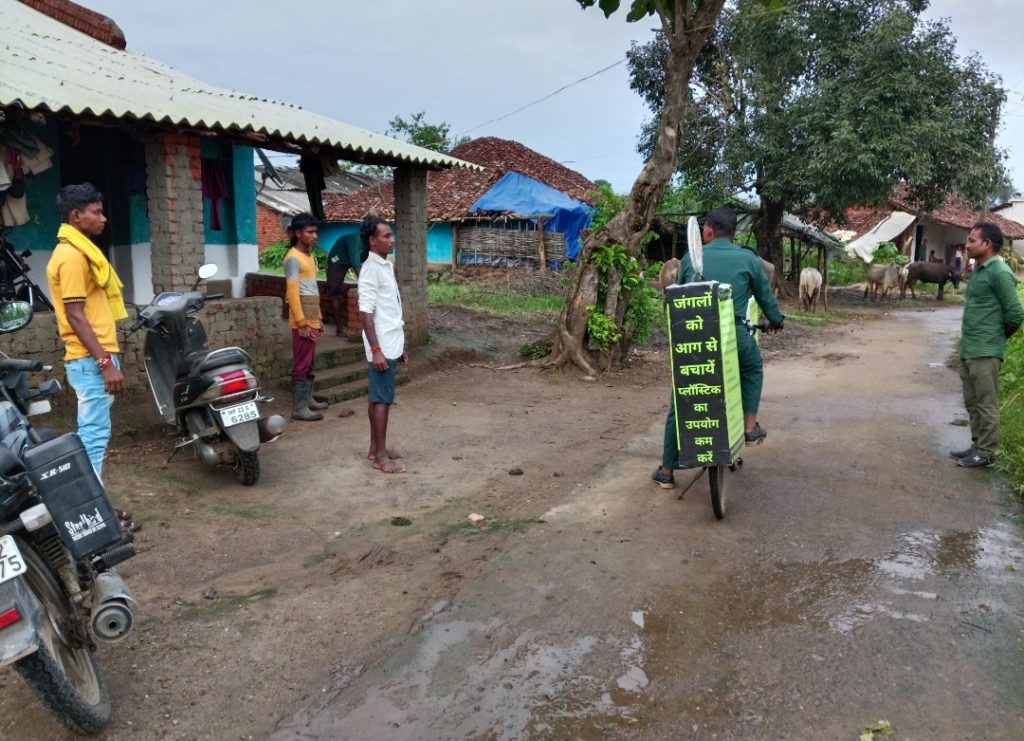
Bicycle riders spread awareness on human-tiger conflict in the villages lying in Pench’s buffer area. Credit: Pench Tiger Reserve authorities

Dhurwey admitted that earlier people used to get angry, but now they try and understand. He recalled an incident a few years ago when the mob turned violent after a human death occurred in a village. The victim had gone to the forest early in the morning to collect the seasonal mahua flowers.

“When women get angry, controlling them is difficult, especially when there are male staff. In Pench, women also take out cattle for grazing,” Dhurwey said.

At present, Pench has an estimated 123 tigers and Madhya Pradesh is India’s tiger state with about 785 tigers. Like Uikey, Vinod Bhalavi also rides cycles on a weekly basis and has seen tigers while on duty. But he affirms that he does not feel afraid even though some people become apprehensive.
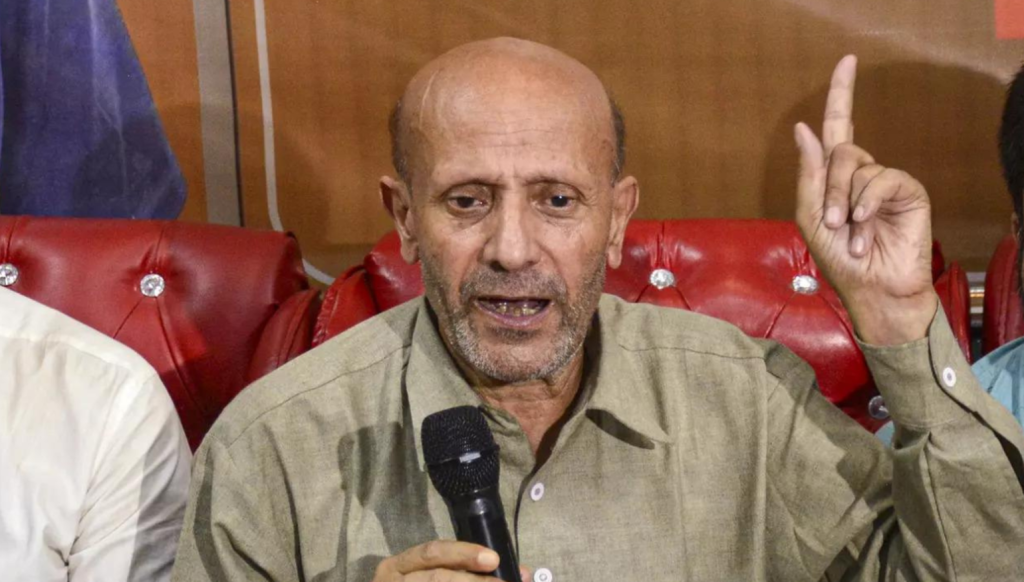
Engineer Rashid’s Awami Ittehad Party and Jamaat-e-Islami form pre-poll alliance in J&K

In a move that could reshape the political landscape in Jammu and Kashmir, the Awami Ittehad Party (AIP) and the banned Jamaat-e-Islami (JeI) announced a pre-poll alliance ahead of the upcoming Assembly elections on Sunday. The alliance is seen as a significant challenge to the region’s traditional parties, such as the Peoples Democratic Party (PDP) and the National Conference (NC).

Describing the collaboration as a “strategic alliance,” an AIP spokesperson said the partnership is aimed at advancing the interests of the people of Jammu and Kashmir. The deal was sealed following a meeting between AIP chief and Member of Parliament Engineer Rashid and a delegation from JeI, led by Ghulam Qadir Wani. Though JeI is banned from contesting elections directly, it has fielded independent candidates.

The alliance will see AIP supporting JeI-backed candidates in Kulgam and Pulwama, while JeI will support AIP candidates across other constituencies in Kashmir. Both parties have agreed to a “friendly contest” in areas like Langate, Devsar, and Zainapora, while mutual support will be extended elsewhere to strengthen their electoral prospects.

A local dispute snowballs into communal row in Shimla

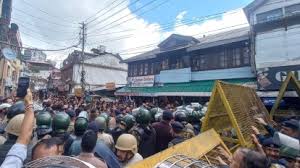
The tourist town of Shimla is at the center of the simmering communal tension  which now has spread across other parts of the state. Following the flare-ups at Sanjauli, Shimla and Mandi, the situation has aggravated and started affecting other areas of the state. A report by Aayush Goel

 Otherwise, a quaint hill station in Himachal Pradesh, Shimla is on the boil and is currently making it to national headlines for all the wrong reasons. The city is at the center of the raging communal row which now has spread across multiple regions in the state. Following a heated dispute in Sanjauli, Shimla and Mandi, the situation has intensified with protests spreading to other areas threatening to engulf the entire Himachal Pradesh.

Following Sanjauli and Mandi, protests have erupted in Sunni, Kullu, Bilaspur, and Paonta Sahib in Sirmaur district. Hindu organizations are calling for verifying people arriving from other states and increasing monitoring of their activities. A protest in Shimla on September 11 turned violent as demonstrators attempted to breach barricades surrounding a disputed (since 14 years) mosque site in Sanjauli. The situation escalated with stone-pelting and police use of water cannons and batons, resulting in injuries to six police personnel and four protesters. Himachal Pradesh Chief Minister Sukhvinder Singh Sukhu has urged citizens to maintain peace and refrain from making provocative statements. He emphasised that the state respects all religions and that no one should take the law into their own hands.

The incident that has left the residents scarred and brought all political parties to one table for peace restoration has raised an alarm. “Peace is non-negotiable in the state. It was a small fight between vendors which has turned into communal tension. All political parties in the state are on the same page that individuals of any religion should not face restrictions. However, actions must be carried out lawfully, and no statement should incite or harm religious sentiments,” said Himachal CM Sukhu. A street vendor policy for the state is on the cards in the aftermath of the incident.

While Congress CM Sukhu termed the protests against a four-story mosque in Sanjauli in Shimla as a ‘local dispute’, BJP  MLA from the area, Randhir Sharma demanded that the entire structure should be sealed if it was illegal.

“We demand the sealing of the entire structure until the final verdict is delivered by the municipal commissioner’s court in Shimla where the matter is listed for October 5. There is anger among the people regarding the mosque, which was constructed illegally. The issue at hand concerns the illegal structure”, said Sharma.

The mosque in question stands downhill from Sanjauli market en route to Kufri. The ground floor was constructed in 1960, and three other floors were added in 2010.

The Sanjauli incident is the first such flare-up in the state capital in recent history and was reportedly triggered by a squabble at a barber shop. The incident took place around 8 kilometers away, in the village of Malyana on August 31.

Local shopkeeper Vikram Singh had an altercation with a barber shop owner, Gulnawaz. Police eventually picked up six persons, including Gulnawaz and two minors, for assaulting Vikram, but the seemingly local incident snowballed as allegations emerged that the accused had taken shelter at the mosque in question. The incident soon snowballed into a controversy over the legality of the mosque reportedly built around 1960, apprehensions of “outsiders” pouring into the state, and some political wrangling inside the Himachal Pradesh Assembly.

“Muslims have been residing here for ages but things are not the same anymore. Gulnawaz is not from Shimla, he migrated here and married a local Pahadi Hindu woman. He has got three more shops in the last decade and reportedly got his friends from other states to run these. After the fight they hid in the mosque and that’s where outsiders coming in and being sheltered by mosque narrative started and soon things became communal,” says Vikas Thapta, of Civil Society Sanjauli that has been mediating peace amongst residents.

 The first protest around the mosque was on September 3 – two days after the assault. The next day Chopal’s BJP MLA Balbir Singh Verma, listed the communal tension in the area as a subject of discussion under Rule 62 in the Vidhan Sabha, where the monsoon session was underway.

Though the matter was listed by the BJP MLA, Congress minister Anirudh Singh supported the cause and spoke in favor. He received rousing applause from the entire house when he highlighted the need to defend the rights of the people of the state.

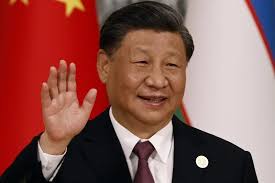
Chinese President blends economic pragmatism with religious diplomacy

Since the US and the UK are predominantly Protestant, the growing understanding between the Vatican and Beijing could lead to closer ties between the West and China., and reduce the US-led West’s resistance to China’s rising influence.Gopal Misra

Chinese President Xi Jinping, since being elevated to lead China more than a decade ago, has successfully been implementing strategies and policies for enabling his country to attain a superpower status. In other words, he is trying to accommodate other nationalities other than the Hans, and religious groups in the Chinese nation.

For this, Xi Jinping has adopted the pragmatic policies of Deng Xiaoping, the successor of Mao Zedong, while keeping dictatorial control of the founder of the communist government in the country.

It may be recalled that during his tenure 1978-79, Deng Xiaoping, as China’s paramount leader,  had introduced the market economy. Interestingly, the Chinese Communists, who had branded Nikita Khurshev a revisionist, introduced repressive systems depriving working classes of their legitimate rights being enjoyed by their counterparts in the West. During the past four decades, China has become a coveted destination of the Western capitalists for setting up their industrial units. It offers a competent trained workforce by paying a pittance of the wages they had to cough up to their industrial workers. Even by paying unemployment allowance to their people, it is much cheaper and hassle free for the West to use China as their manufacturing base for the world markets

The ruling elite in China comprising the leaders of the Communist Party of China (CPC) and the People’s Liberation Army (PLA) have also immensely benefited from the Western capital and the influx of the state-of -the art technology. The young generation, which has been fed with the ideology of the supremacy of China for years, is now being told that China is at the threshold of becoming a Superpower.

Religious tolerance

XI Jinping has to be admired for converting his country’s market economy into a strong asset for attaining the Chinese dream to become a Superpower. He has also proved his political skills in camouflaging Deng’s bid to open up the country’s financial systems as the socialist-market economy. His decision to give some breathing space to the Christians is a part of his strategy to win the world’s most popular faith to serve the Chinese agenda of extending its influence across the continents.

Over the past two decades, the Chinese have also permeated Western institutions, including the media, academia, and political bodies. In recent years, they have been recognised as outstanding achievers, whether in the fields of basic sciences or advanced technologies. Interestingly, all this is being done without introducing multiparty democracy, free press and media and independent judiciary. These institutions have been the cornerstone of the modernization of Europe having deep religious foundations. Jinping is being admired for blending the policies of the two leaders, Mao Zedong and Deng. He has evolved a powerful system of a totalitarian state, while serving China’s long-term as well as immediate agenda.

The winning of the Christians to his side confirms his agenda in recent years reconfirms his agenda to use religion for his strategic purposes. For example, China has deep relaxation with the Muslim world despite the repression unleashed against Uighur Muslims in its eastern region.

For Indians, both Islam and Christianity have blossomed together with her traditional religions, Hinduism and Jainism and Buddhism. In India, the Christianity had arrived on the Malabar coast, when the ship of St. Thomas docked in 52 AD, but in China, Christianity was introduced during the incursions of the colonial powers during the 17th century. In Mangolia, however, the Vatican had sent missionaries in the 13tn century, to prevent the growing influence of Islam, especially during the wars between the Cross and the Crescent; but the missionaries failed miserably.

The recent cooperation between Beijing and the Vatican needs to be understood in the context of geo-politics. The Chinese agenda is to end the last citadel of the West i.e. it’s strong religious traditions. If the Chinese succeed in penetrating this traditional inbuilt resistance, the developed Christian world would collapse like the Mughal Empire in Delhi, and the East India Company ruled the country for almost a century till the 1857 uprising, while retaining the Mughal crown only for a namesake.

The Shanghai Conference

Few in India have ever cared to study the role of the Christian missionaries in the renaissance of modern China. The modernization of Chinese politics began during the era of Sun Yat-sen, who was baptized in the Protestant cult. Since the US and the UK are mostly Protestant, the growing understanding between the Vatican and Beijing might further bring closer ties between the West and China. It is expected to end the resistance of the US -led West against the growing might of China. There may be differences regarding the secret pact between Beijing and Vatican, but its political spin offs give a much more acceptable image of China in the countries of Europe, Africa and Latin America. The majority population in these countries is Roman Catholic.

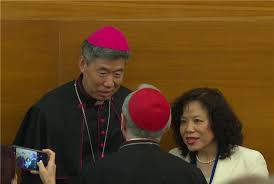
For the Vatican, the Bishops conference held in Shanghai in May this year, XI Jinping has become one of the world’s most noted religious congregations in recent years. It was attended by Cardinal Petro, foreign minister of the Vatican and a number of known religious leaders.

The Pope’s endorsement of Shan as the Bishop, an appointee of Beijing, however, has triggered off a worldwide controversy. The appointment of Bishops has always been the prerogative of the Vatican. A section of the followers of the Catholic cult is also reportedly unhappy that Pope Francis inaugurated the conference, though on video, has legitimized the appointment. For many, it is going to be an important milestone in the history of the Christianity. It is for the first time in recent history that the Vatican has accepted a Bishop without its previous clearance.

Renaissance in China

It was K.R. Narayanan, who later became President of India, had first explained to this author about the great awakening in China under the influence of the missionaries. His thorough studies on world affairs has always been inspiring to scribes like Narayan and his wife, Usha (Burmese name Maa Tint Tint), a YWCA volunteer, had a common world view. They were inspired by the famous political scientist, Herold Laski.

Narayanan, an eminent scholar of the London School of Economics and a favorite of Laski, was inducted in the Indian Foreign Service on Laski’s advice to India’s first Prime Minister, Jawahar Lal Nehru.

With this backdrop, it is natural to assume that the Vatican’s decision to renew its secret pact could be a repeat of the Great Awakening i.e. the revival of Christian missionaries, specially the Protestant cult of Christianity on the founders of modern China. The Protestant missionaries had influenced the transformation of China in the 20th. century.

The Roman Catholic missionaries could not resist the expansion of Islam in Mongolia during the middle ages, but they might be playing a bigger role in the region by collaborating with Beijing.

It is quite discouraging that India’s present ruling elite discourages any serious study on the challenges before the Indian state. In this backdrop, the evolution of an Indian narrative or analysis regarding the ongoing  changes in the middle kingdom or China now solely depends upon the Western sources. The Indian policy makers have to realize that it is not possible to understand the current Chinese policies unless we realize the vision of a modern China visualized by Sun Yat-sen.

How homes and hopes are bulldozed by bias

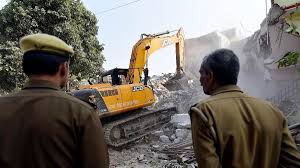
The big crucial factor that also looms large is that bulldozing of homes is seemingly done along a particular political strain, ripe with the right-wing slants! by Humra  Quraishi.

So much destruction and violence!

Today, not just homes getting bulldozed but psyches and forms and the very survival spirit! Bulldozing of homes is barbaric, as it leaves families and clans roofless, and with that affected on all possible fronts.

The big crucial factor that also looms large is that bulldozing of homes is seemingly done along a particular political strain, ripe with the right-wing slants! Why is it that homes of the minority communities and disadvantaged sections can be so very easily targeted! Look around and see that homes of Dalits and Muslims and also of Hindus from the disadvantaged socio-economic strata are bulldozed…along one alibi or the other! On mere suspicion or accusations or on the basis of those very basic findings or along political slants and biases!

It gets just too shocking to see bulldozers destroying home after home. With that, the entire families sitting on the roadside, just too baffled and shocked, and traumatized. Their refuge was destroyed in minutes! No possible means to build another one. Roofless and homeless they will have to spend whatever remains of their lives!

Together with bulldozing of homes of hundreds of our fellow citizens, deeply disturbing are the killings on …ongoing. It’s just too shocking and disgusting to see how the goon brigades are calling the shots.

Lynching and humiliating Muslims on the beef alibi is increasing by the day.  Last fortnight, an elderly Muslim gentleman was hounded and humiliated by three men inside a running train in Maharashtra, on the alibi that he was carrying beef in a packet, though later, through thorough investigation, it was confirmed that it wasn’t beef. 

Last fortnight, two stark incidents of lynch killings in Haryana, along the beef alibi, raised little hue and cry. A Muslim migrant worker from West Bengal, Sabir, was lynched to death and another worker, Asiruddin, seriously wounded, after the two were attacked by the Hindutva lot in Haryana’s Charkha Dadri, on the alibi that they had eaten  beef. And then a Hindu student, Aryan Mishra, was killed in Faridabad by the so called cow vigilante group members, on suspicion that he was a cow smuggler! He was mistaken to be Muslim!

See, how this communal madness has been spreading out and peaking in the last ten years. Killing hundreds of innocents on the various alibis along the communal strain!

Communal attacks that took off from the barbaric lynching of Mohammad Akhlaq in Uttar Pradesh’s Dadri have continued to spread out, towards the outlying locales and villages of Delhi, Rajasthan, Haryana… Towards  the  interiors of  Jharkhand, where a few years  back, at least  two  Muslim cattle  traders  were killed and  their  bodies  hung  from  trees! One of the victims was a 13-year-old boy. Yes, he was killed out there in the open, yet we sat all too quiet! No cries, not even from any of the Minority Commissions nor from the Child Rights forums! I wonder why this silence! 

One horrifying incident after another taking place in these years. In the autumn  of 2016, in district Faridabad, on  the  outskirts of  New  Delhi,  two  young Muslim  men were not  just thrashed, but forced to  eat  cow  dung and drink cow  urine! Mind you, this incident didn’t take place in some jungle land but barely 20 kilometres away from the capital city.

A few years back, it  was painful to see the plight of the four young Kashmiri  students  studying  in Rajasthan’s Mewar/ Chittorgarh region. They were made to stand as though they had committed theft or some heinous crime. All that they did was to buy 300 grams of mutton from the local market. That was enough to trigger off rumours that it was beef, followed by the expected attacks on them! Mind you, this was not an isolated incident but one of the many reported ones…

Summer of  2017 saw the  blatant  killing of the  16-year-old Mohammad Junaid on a  train  taking him and his  brothers to their  village in Haryana’s Ballabhgarh  district. Killed in public view, by fellow train passengers, before ‘beef eater’ comments hurled on his fractured skull.

Today there is a systematic communal propaganda that only Muslims and Dalits and Christians relish beef or mutton! To relay that these communities kill and devour! Mind you, this propaganda that Muslims go devouring meaty chunks is unleashed by the communal brigades, to portray the Musalmaan as ‘adamkhoors’/cannibals!

The stark fact is that the meat industry in the country is controlled by non-Muslims. I’m not talking of small-time sellers but of the well-established meat and poultry suppliers and owners of this industry. And if one were to talk to meat-suppliers and eatery owners from across the country, they would detail that the biggest consumers of the non-vegetarian fare are non-Muslims.

The ‘beef scare’ alibi has also been impacting the socio-economic patterns. Joblessness and poverty and scare of the Hindutva brigades is definitely on the rise, impacting lives and livelihoods and even the social customs. In recent years, when  I’d  attended  marriage festivities of two middle-class Muslim  families, there was no trace of a  single meat  dish. Pure vegetarian fare. Why?  The hosts were taking all possible precautions. “Who will prove to the goondas that it’s mutton or chicken. Didn’t want anyone from the Hindutva brigades to disrupt the shaadi.”

In the background, lurk around the communal unleashes. Speeches and utterances of those in  power dripping with  communal outpourings. Quite obviously it will have a trickle-down effect. In the last one fortnight, the chief minister of Assam, Himanta  Biswa Sarma, has been coming out with anti-Muslim statements and getting away with all those blatantly communal unleashes! Shocking to hear the chief minister of a state come out with such provocative statements but then he is a BJP politician! So, his utterances and speeches are along the expected lines, in these dark turbulent times!

Tell me where we are heading with these build-ups! Each single day drags along dismal happenings. Destruction is on. Facades are over …even the façade that we are living in developed times. No way! Never before one witnessed this level of  onslaughts in every  single sphere. Survival getting tough, where even the  basics are destroyed,  under  one  alibi or the other!

UpUrFit Partners with FC Goa: Becomes the Only Topical Solutions Company to Partner with 2 out of 3 top ISL Teams

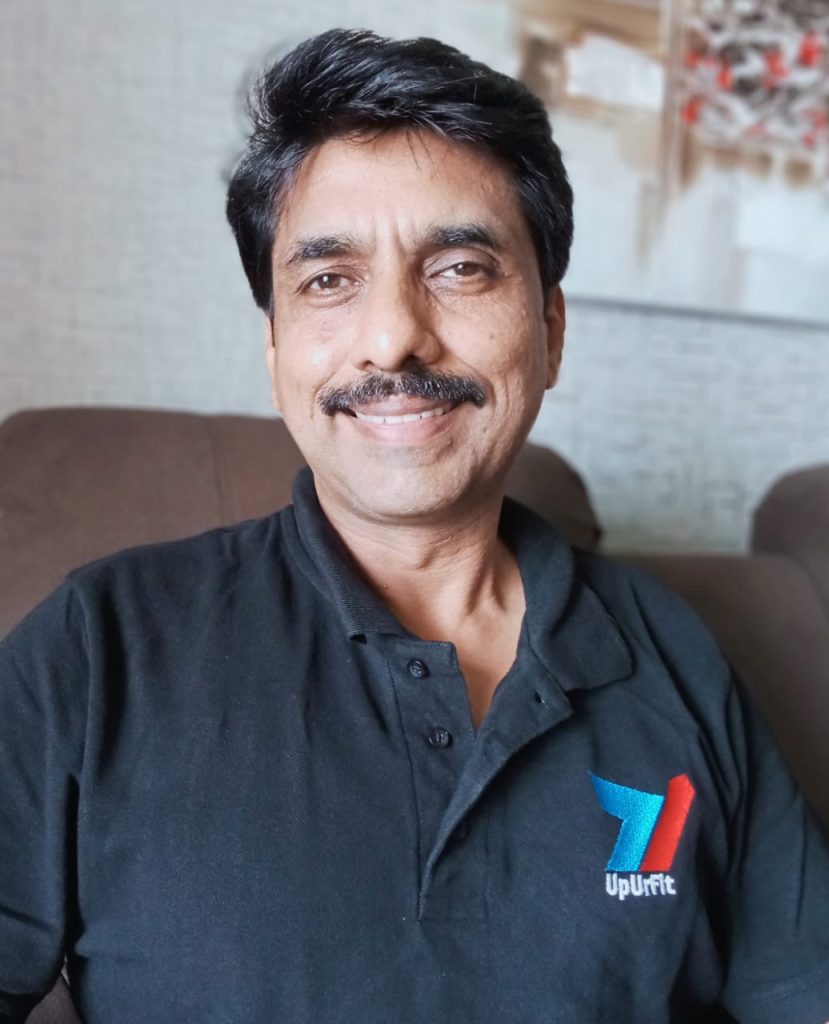
Munish Vig, Co Founder UpUrFit

UpUrFit, a Mumbai-India based company that is disrupting the sports and fitness market space through its innovative topical solutions for sports related pain, discomfort and hygiene has partnered with FC Goa from the Indian Super League (ISL)-India’s largest football league and the second largest Indian sports league overall after IPL, to propel the new category creation of Sports and Fitness Hygiene in India. With this partnership, UpUrFit has now became the first brand in the sports and fitness topical solutions segment to partner with 2 out of the top 3 Indian Super League (ISL) teams from last season-Mumbai City FC-title holders and FC Goa, the second runners up. UpUrFit is already chosen to be the Official Pain Relief and Recovery partner with Mumbai City FC and now holds the status of the Official Sports Hygiene and Sun Care Partner to FC Goa. FC Goa is co-owned by Virat Kohli, Jaydev Tandon and Akshay Tandon.

The association is specific to the sports hygiene portfolio from UpUrFit which includes innovative products like Body and Face Wipes, Shampoo Wipes and Epsom Salt Infused Body Wash.

Munish Vig, Co-founder of UpUrFit, expressed his enthusiasm for the partnership, stating, “My co-founder Vikram Gunjal and I are proud to partner with FC Goa, a club that embodies excellence and the relentless pursuit of success. The Gaurs, as we call them fondly, are the first team to represent India at the AFC Champions League. They have developed a path-breaking ecosystem of nurturing young talent. Their razor-sharp focus in evolving the sport motivates us to partner with them in bringing and furthering the category of Sports Hygiene for the first time in India.”

Commenting on UpUrFit’s partnership with FC Goa, their CEO, Ravi Puskur said, “We are excited to welcome UpUrFit to the FC Goa family as our Official Sports Hygiene and Sun Care Partner. Player health and well-being are at the forefront of our priorities, and with UpUrFit’s innovative range of products, we are confident that our players will receive the best-in-class sports hygiene and sun protection solutions during their intense practice sessions, matches and post-match recovery.”

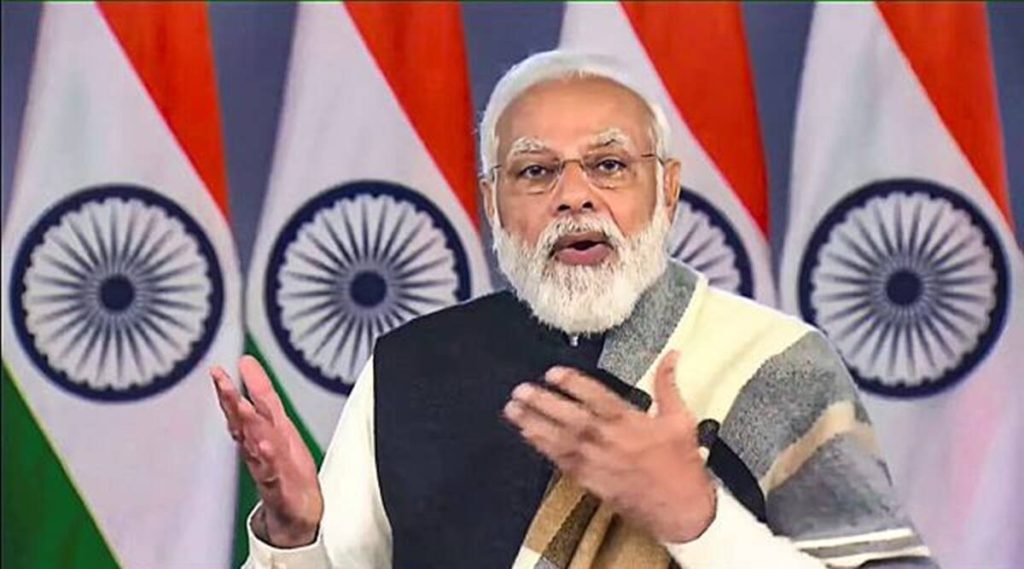
PM Modi on Hindi Diwas highlights strength of ‘Hindi Bhasha’

New Delhi: Prime Minister Narendra Modi on Saturday while extending his wishes on Hindi Diwas stated that language is the instrument of expression, it cannot be the root.

“The way there is consciousness in life, it lies in language as well, ” said PM Modi.

Reflecting on his connection with the Hindi language, the Prime Minister said, “I sometimes think that if I did not understand Hindi language, how would I have reached out to people or connected with them? I know the strength of the Hindi language personally.”

He also paid tributes to several prominent leaders who played a key role in promoting Hindi, despite not being native speakers themselves.

“In our country, the Hindi language movement was led by figures like Subhas Chandra Bose, Mahatma Gandhi, Lokmanya Tilak, Kakasaheb Kalelkar, and Rajagopalachari, whose mother tongue was not Hindi, yet they worked tirelessly for the protection, conservation, and promotion of the language. This gives us motivation, ” said PM Modi.

The Prime Minister further highlighted the value of regional languages, saying, “In the form of the mother tongue, every state has priceless treasures. How to connect all of it? In that process, Hindi can serve as a suitable medium. Working on that can strengthen the Hindi language, and we can continue our efforts in that direction.”

Defence Minister Rajnath Singh also shared his thoughts on Hindi Diwas, commemorating the day when, on September 14, 1949, the Constituent Assembly of India adopted Hindi as the official language.

Reflecting on the 75th anniversary of this decision, Rajnath Singh emphasised the role of Hindi in uniting Indian society.

“From our freedom fighters to the nation’s strategists, Hindi has been seen as a tool for promoting social unity, ” he said in a video posted on X.

He also lauded the language’s inclusiveness, noting, “Hindi’s speciality lies in its abundance. It has absorbed words from many languages in an inseparable way. This quality stems from Indian culture and tradition, where every tradition has been followed and progressed in unity.”

The Defence Minister further acknowledged the efforts made to make Hindi more people-oriented but stressed that more work remains.

“With the help of the government and societal efforts, Hindi is now becoming more people-oriented, but there is still much to be done. We must focus on making Hindi not just the language of the government but a global language, ” he added.

West Bengal Chief Minister Mamata Banerjee also shared a message extending her wishes on Hindi Diwas saying, “We respect all languages. Since 2011, we have made many efforts for the uplift of Hindi-speaking people in the state.”

“From the establishment of the Hindi Academy to the creation of Hindi University and several Hindi colleges – these are achievements we are proud of, ” she remarked o X.

Three terrorists killed in Baramulla encounter ahead of PM Modi’s Visit

Three terrorists were killed in an encounter with security forces in the Baramulla district of Jammu and Kashmir on Saturday morning, following an operation that began late Friday night. The encounter took place in the Chak Tapper Kreeri Pattan area after a cordon-and-search operation was launched.

The encounter occurred just a day after two Indian Army soldiers lost their lives in a separate operation in the Kishtwar district. The developments unfolded ahead of Prime Minister Narendra Modi’s planned visit to Doda district, where he addressed a rally as part of his election campaign.

Security forces reported that terrorists opened fire on the search team, prompting a retaliatory response. The identities of the slain terrorists are still being investigated, according to police officials.

Meanwhile, the security presence in Doda and Kishtwar has been intensified, with multi-tier arrangements in place to ensure the safety of the rally.

On Friday, two soldiers, Sepoy Arvind Singh and Naib Subedar Vipan Kumar, succumbed to injuries sustained during a gunfight in the Naidgham area of Kishtwar. Two other soldiers injured in the same encounter have been airlifted to a military hospital for treatment.

Delhi CM Kejriwal to visit Hanuman Temple, AAP headquarters

New Delhi:  A day after being granted conditional bail by the Supreme Court in the liquor policy case, Delhi Chief Minister Arvind Kejriwal will visit the Hanuman Temple in Connaught Place on Saturday.

He is scheduled to reach the temple at 12 noon, accompanied by Aam Aadmi Party (AAP) leaders and workers.

In a post on social media platform X, CM Kejriwal stated, “Today at 12 noon, I will go to Hanuman Temple at Connaught Place to thank God and seek his blessings.”

Following his prayers, the AAP National Convenor will head directly to the party’s headquarters, where he is expected to address his party leaders and workers.

Speculation is rife that the Delhi CM may unveil his plans for the Haryana elections and the days ahead during this gathering.

CM Kejriwal was released from Tihar Jail on Friday, hours after the Supreme Court granted him bail.

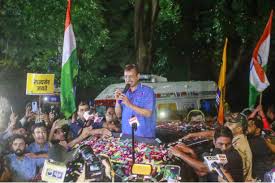
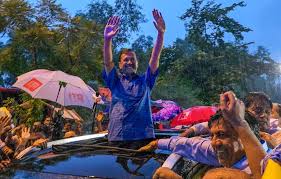
Upon CM Kejriwal’s release, hundreds of enthusiastic AAP workers and leaders who had been waiting for hours for him to come out of prison even in the driving rain, met him with cheers and slogans like ‘Bharat Mata Ki Jai’ and ‘Vande Mataram’.

While party workers celebrated his release, the Delhi CM thundered that his courage and spirit remain unfazed by the incarceration, and he feels more energised and invigorated to serve the nation.

Slamming the Centre, CM Kejriwal said that prisons won’t shackle his resolve and he would be back for the service of the people with greater determination.

“I have been fighting the anti-India forces, and today I vow to step up this fight with greater intensity than before, ” the AAP chief declared.

Despite his release, the Delhi CM’s powers have been significantly limited by the Supreme Court. He has been barred from visiting the Secretariat and signing any official files unless necessary to obtain approval from the Lieutenant Governor.

Additionally, CM Kejriwal has been prohibited from commenting publicly on the merits of the case, interacting with witnesses, or accessing any official files related to the case.

While CM Kejriwal expressed determination to continue serving the nation, his legal battle in the liquor policy case is far from over.

Kejriwal walks out of Tihar jail, vows to step up fight against ‘anti-India forces’

New Delhi: Delhi Chief Minister Arvind Kejriwal walked out of Tihar jail on Friday, hours after the Supreme Court granted him conditional bail in the Delhi liquor policy scam.

As Kejriwal got out of the jail, he was greeted by hundreds of excited AAP workers and leaders who shouted ‘Bharat Mata Ki Jai’ and Vande Mataram slogans.

While party workers celebrated his release, the Delhi CM thundered that his courage and spirit remain unfazed by the incarceration and he feels more energised and invigorated to serve the nation.

Slamming the Centre, he said that their prisons won’t shackle his resolve and he will be back at the service of people with greater determination.

“I have been fighting the anti-India forces and today I vow to step up this fight with greater intensity than before, ” the AAP chief declared.

Since evening, umpteen AAP leaders and workers had started gathering outside the Tihar jail to give a rousing reception to the party supremo.

Though Delhi CM has got a reprieve in the liquor policy case, his powers have been severely curtailed. The Apex Court has restricted him from either visiting the Secretariat or signing any files.

MOST POPULAR

HOT NEWS