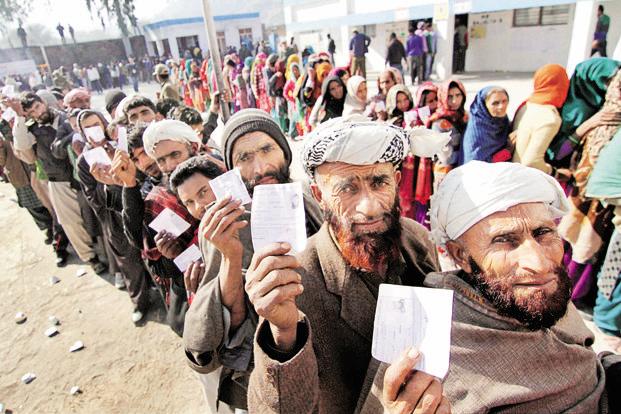
For the first time in 10 years, voters in seven districts of Jammu and Kashmir will participate in Assembly elections as phase 1 of polling begins on Wednesday.
Over 23 lakh eligible voters will cast their ballots to determine the fate of 219 candidates across 24 Assembly constituencies—eight in Jammu and 16 in Kashmir. Among the 219 candidates are 90 independents, competing for the people’s mandate.
According to the Election Commission, a total of 23,27,580 voters will take part in the polls. This includes 11.76 lakh male voters, 11.51 lakh female voters, and 60 third-gender electors. Notably, 1.23 lakh youths aged 18-19 years, 28,309 Persons with Disabilities (PwDs), and 15,774 senior citizens above the age of 85 are also eligible to vote in this phase.
A total of 14,000 polling staff will manage the election process across 3,276 polling stations, ensuring a smooth voting experience. These stations are divided into 302 urban and 2,974 rural polling sites.
Extensive security arrangements have been made by Jammu and Kashmir Police, supported by Central Armed Paramilitary Forces (CAPF) and J-K Armed Police, to ensure the safety and security of voters.
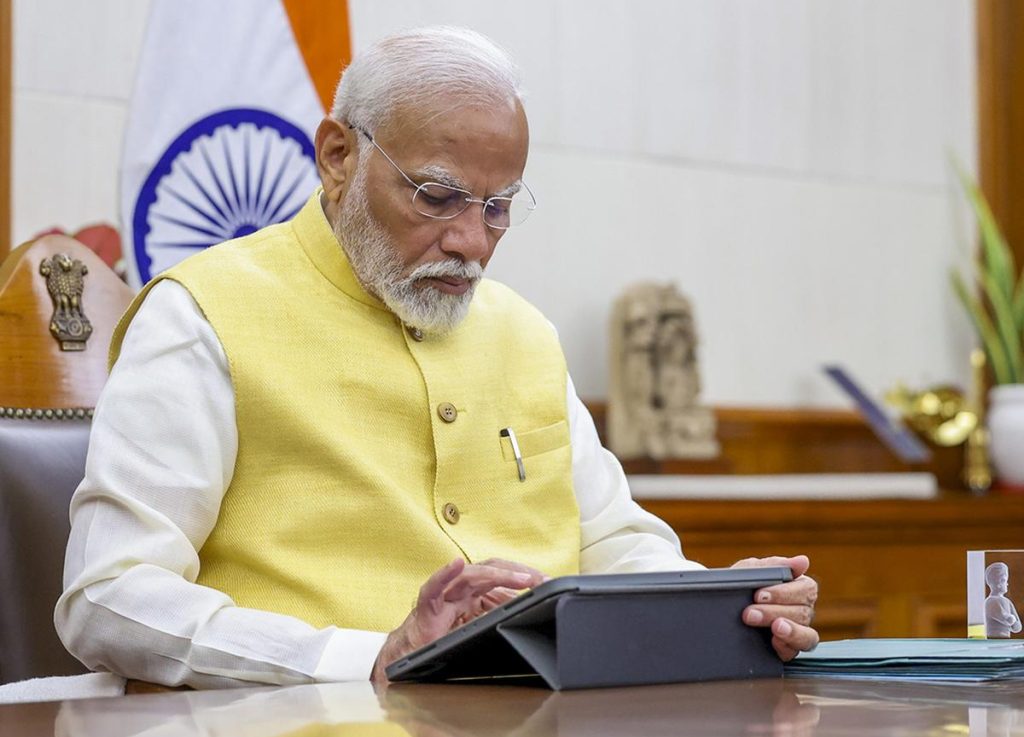
New Delhi: As Prime Minister Narendra Modi turned 74 on Tuesday, leaders from across party lines extended their birthday greeting to him.
Leader of the Opposition in Rajya Sabha and Congress President Mallikarjun Kharge took to X to wish the PM: “Best wishes to Prime Minister Shri Narendra Modi Ji on his birthday. May he be blessed with good health and long life.”
National President of the Bahujan Samaj Party, Mayawati, also shared her wishes for the PM. Her post on X translates as: “Hearty congratulations to Prime Minister Shri Narendra Modi on his birthday today and best wishes for his long life.”
Tamil Nadu Chief Minister M. K. Stalin, too, registered his greeting on the micro-blogging site: “Warmest birthday wishes to Hon’ble Prime Minister Thiru @narendramodi . Wishing you a long life with enduring health in the years ahead.”
National President of Samajwadi Party, Akhilesh Yadav also congratulated the Prime Minister on the occasion and extended his heartfelt wishes.
President Droupadi Murmu, Union Ministers and numerous Chief Ministers extended their best wishes as the Prime Minister turned 74 on Tuesday.
PM Modi is scheduled to be in Odisha during the day to attend a series of events.
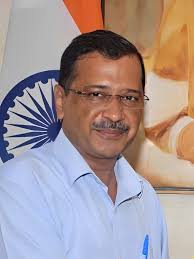
The Supreme Court granted Delhi CM Kejriwal a bail in connection with the CBI’s FIR relating to alleged corruption in the Delhi liquor policy scam. The bench was of the view that ‘completion of the trial is unlikely to occur in the immediate future.’ A report by Mudit Mathur
The Delhi Chief Minister finally came out from Tihar jail after the Supreme Court granted him bail in connection with the CBI’s FIR relating to alleged corruption in the Delhi liquor policy scam. A bench of Justices Surya Kant and Ujjal Bhuyan was of the view that ‘completion of the trial is unlikely to occur in the immediate future.’
While both judges unanimously decided to grant bail to Kejriwal, Justice Ujjal Bhuyan differed from Justice Kant regarding the CBI arrest and said it was only to “frustrate bail” granted in the Enforcement Directorate (ED) case. The bench directed that he be released on furnishing a bail bond of Rs 10 lakh and two sureties of a similar amount. It also imposed a condition that he should not make public comments on the merits of the CBI case.
Both the judges delivered separate judgments, while granting bail, the Bench of Justices Surya Kant and Ujjal Bhuyan placed certain conditions — Kejriwal will have to abide by the same conditions placed on him by the SC when he received bail in connection with the Enforcement Directorate case on July 12, 2024.
Justice Kant held that the arrest of Kejriwal was legal and did not suffer from any procedural irregularity. Justice Kant held that there is no merit in the contention that the CBI failed to comply with the mandate of Section 41 of the Code of Criminal Procedure while arresting him.
Differing with Justice Kant, Justice Bhuyan expressed a contrary view regarding the need and necessity to arrest Kejriwal. Justice Bhuyan held that the arrest by the CBI was only to frustrate the bail granted to Kejriwal in the money laundering case. Justice Bhuyan noted that the CBI did not arrest Kejriwal for 22 months and arrested Kejriwal on the cusp of his release in the ED case.
“It appears that only after the learned special judge granted regular bail to the appellant in the ED case, which was stayed by the HC on oral mentioning, that CBI became active and sought custody of the appellant. Thus, CBI did not feel the need and necessity to arrest the appellant for over 22 months,” Justice Bhuyan observed.
When Kejriwal got bail in the money laundering case despite the stringent conditions under the Prevention of Money Laundering Act (PMLA), his further detention in the predicate offence (CBI case under the Prevention of Corruption Act) became untenable. It is a travesty of justice to keep the appellant in custody on these grounds, especially as he has been granted bail in a more stringent PMLA case, Justice Bhuyan held.
“Like Caesar’s wife, an investigating agency must be above board. Not so long ago, this Court had castigated the CBI, comparing it to a caged parrot. It is imperative that the CBI dispels the notion of being a caged parrot, rather the perception should be that of an uncaged parrot,” Justice Bhuyan remarked.
Kejriwal had filed two petitions, one challenging the denial of bail and another against the upholding of his arrest by the CBI in the case. A bench of Justices Surya Kant and Ujjal Bhuyan had heard the matter and reserved their verdict on September 5, after lengthy arguments from both the sides.
Kejriwal was arrested by the Enforcement Directorate on March 21 in a money laundering case linked to the now-scrapped excise policy. On June 26, the CBI formally arrested him in a corruption case linked to the alleged scam. The Supreme Court had granted him interim bail in the money laundering case on July 12 and he was in judicial custody in the corruption case lodged by CBI. Of the 40 accused in the cases linked, only two —Kejriwal and businessman Amandeep Singh Dhall — remained behind bars.
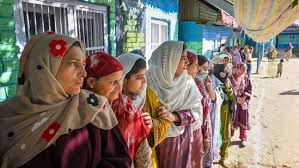
“The political parties have totally ignored women,” Zahida, a college student in Srinagar, is disappointed as first assembly elections in Jammu and Kashmir since the abrogation of Article 370.
“Leave male candidates, even women contestants are not given much importance to grave issues such as domestic violence, rape, harassment against women at workplaces and streets. So far, we have not seen any candidates discussing these issues in rallies in Srinagar,” said another student, Mehak.
Jammu and Kashmir, a region known for its intricate political and social dynamics, is witnessing its first assembly polls in a decade. The last Assembly elections were held in 2014, and since then, the political landscape has undergone significant changes. While enthusiasm for democratic exercise has gripped the Union Territory, there is a wave of dismay among women in Kashmir and the reason is election manifestos devoid of women issues despite female voters constituting nearly half of the total proportion of voters.
In Srinagar district, the number of women voters are more than men in eight assembly segments. In the first two phases of J & K polls, there are only 15 women candidates fielded by different political parties.
“it is unfortunate that political parties, particularly regional parties, ignored women safety issues in their manifestos. Like other states of India, Kashmir is also witnessing rising cases of crimes against women. The present manifestos fail to outline concrete measures for tackling violence, harassment, and discrimination, it shows women’s safety and their well-being are not priorities in our political landscape,” women’s rights activist, member women mediator from commonwealth Ezabir Ali said.
“Offering free rides in public transport does not claim safety and security for women in the valley,” Ezabir added.
The major political parties vying for power in Jammu and Kashmir—Congress, Bharatiya Janata Party (BJP), Jammu & Kashmir National Conference (JKNC), People’s Democratic Party (PDP), and various regional groups—have all unveiled their manifestos. Each party presents its own vision for the future of the valley, aiming to capture the support of the electorate with distinct promises and policy proposals.
How NC, PDP, BJP, Congress other regional parties missed the mark on women issues
All major parties share a common thread in manifestos, a focus on high-profile issues such as the restoration of Article 370, autonomy, statehood, and the revocation of the Public Safety Act (PSA). While these are undeniably significant topics for the region’s future, what turns out to be damp squib, is the absence of women’s issues.
The National Conference (NC), the oldest regional party, does mention women in its manifesto (providing govt schemes to weaker sections), but has nothing relevant to fight rising crimes against women in the Union Territory. Rather, NC focussed on restoration of Article 370, autonomy, statehood and revocation of the Public Safety Act (PSA). The People’s Democratic Party (PDP) and Bharatiya Janata Party (BJP) too have nothing extra to offer to women.
“Our party is committed to provide better facilities to people, particularly women, We have laws for the protection of women but they are not implemented. By putting protective measures, we can create an environment that not only stops crimes but also fosters respect and equality for all women,” says JKNC women’s wing president and Habba Kadal candidate Shameema Firdous.
She, however, accepted that the party manifesto must address the issues and comprehensive support systems for women. It should focus on the strong implementation of laws designed specifically to safeguard women’s rights and well-being.
Dilshad Shaheen, the women’s wing president of the J&K Apni Party claimed that the party is new and they are encouraging more women to join politics.
“Our party was formed just 4 years ago. We have been encouraging more women to join politics and provide various opportunities to ensure critical issues pertaining to women must be prioritized and addressed effectively.”
Despite being led by probably the tallest woman leader of Jammu and Kashmir, former CM Mehbooba Mufti, PDP has missed gender issues in its manifesto. Similarly, other parties as well, refused to pitch promises related to such issues at a time when Jammu and Kashmir is witnessing a disturbing rise in crimes against women. Reports from the National Crime Records Bureau (NCRB) indicate significant increases in incidents such as rape, domestic violence, and kidnapping. Despite these alarming statistics, the manifestos of the contesting parties do not adequately address the need for comprehensive strategies to tackle these issues.
NCRB data raises alarm in J&K
Jammu and Kashmir, which was considered safe for women, is now witnessing a sharp rise in the incidents of crime against women. According to the National Crime Records Bureau (NCRB), a total of 3716 cases of crime against women were reported in 2022. The report revealed 287 cases of rape, 462 cases of kidnapping and abduction and 9 dowry deaths were reported.
The data also reveals 500 cases of domestic violence. Additionally, 886 cases of kidnapping and abduction and 1606 cases of assault ‘with intent to outrage their modesty’ were registered in the erstwhile state.
Amid the heated debates on political and administrative reforms, the voices and concerns of women in the valley have taken a backseat, raising questions about how comprehensively the manifestos address the diverse needs of the electorate. With female voters constituting nearly half of the total proportion of voters, political parties seem to have largely overlooked issues affecting women. Even the historically significant JKNC, which has been a major player in regional politics, seems to focus predominantly on restoration of Article 370, statehood.
The absence of a robust discourse on women’s issues in these manifestos raises concerns about the priorities of the political parties. With elections looming, the lack of focus on gender-specific policies reflects a broader pattern of sidelining women’s voices and concerns in the political arena.
Notably, the elections in the erstwhile state of Jammu and Kashmir are being held in three phases: September 18, September 25 and October 1. The counting of votes will be held on October 8.
(Shamshad Ali is a freelance journalist based in New Delhi. He tweets @_shamshad_ali)
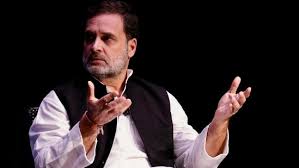
Quite frankly, it is unbecoming of a leader of a national Party to discuss domestic issues on foreign soil. Yet this is what India’s Leader of the Opposition did during his recent trip to the US. by KUMKUM CHADHA
Congress leader Rahul Gandhi has done it again. He has put his foot in his mouth and that too on foreign soil.
Gandhi recently visited the US: his first to the US as Leader of Opposition in the Lok Sabha.
Quite expectedly Gandhi made news: some good, some bad.
His underlying message: Congress spreads love, not hatred: a leaf straight out of the mohabbat kidukan book so to speak.
During his Bharat Jodi yatra last year, Gandhi had said that he would moot for a shop of love in the market of hatred: “Nafrat ke bazaar mein mohabbat ki dukan khol raha hoon” to quote him.
Yet during his recent US visit, Gandhi while professing love actually spewed venom.
So, what did he exactly say?
For starters, he targeted Prime Minister Narendra Modi and his claim of speaking to God directly: “When he said that, we knew that we had actually blown him apart” Gandhi said adding that it was, for Modi, a “psychological collapse”. Gandhi did not stop here.
He also took on the BJP and RSS and their misunderstanding the concept of India.
In this context, Gandhi used an interesting analogy: one of a course-by-course meal.
“When you have lunch here, (read the US) you get first course, second course…we don’t get that, we get a thali, and everything placed in it…it’s a jumble and every food has the same value…so this idea of mixing and merging is in India,” he said. The BJP and RSS, Gandhi said, treat India as a “bunch of separate things”.
On rhetoric, Gandhi may have scored but on making substantive points he hit a new low.
Take for instance his comment on Sikhs: “The fight is about whether a Sikh is going to be allowed to wear his turban in India or a kada in India. Or he, as a Sikh, is going to be able to go to a Gurudwara… And not just for him, for all religions.” Gandhi said.
The statement is neither factual nor justified. If anything, the BJP government has reached out to the Sikh community and addressed its concerns.
So, when Union Minister Hardeep Puri said that the Sikhs have felt “safer and more honored” under the BJP regime than any other, he was not off the mark.
As for Gandhi, he should have steered clear of a contentious and emotional issue because it reopened wounds that the Congress Party had allegedly inflicted on the Sikhs.
In 1984, after Sikh bodyguards gunned down Mrs. Indira Gandhi, Delhi witnessed a blood bath wherein Sikhs were targeted.
Rahul’s remarks not only gave fresh ammunition to the BJP but also raked an issue which has yet to find a closure.
The BJP was quick to point out that the only time when the Sikhs felt insecure and threatened was when “Rahul Gandhi’s family was in power”.
It was an obvious reference to the pogrom carried out against the Sikhs when Rajiv Gandhi had stepped in as Prime Minister, hours after his mother’s assassination.
Prominent Congress leaders were, then, in the eye of a storm for organizing and instigating mobs and actually arming them to attack the Sikh community. There is evidence of Sikhs being pulled out of their homes, beaten and burnt alive.
The organized carnage led Sikhs to run for cover and for years on they lived in fear. It is also well known that many Sikh men cut their hair and stopped wearing turbans and karas for fear of being identified and targeted.
So, if Rahul Gandhi were to turn the pages of History he would know that the Congress Party’s hands are smeared in blood.
At this point one needs to stop and ask who is advising Gandhi? Why is he raking up issues that are controversial? And in this case also erroneous because the turban and kara are not issues plaguing the mind in Modi’s regime. If anything, it was the hijab. And that too was two years ago, when the BJP state government in Karnataka had banned girls and women from wearing a hijab to college. Therefore, Gandhi needs to press the refresh button before shooting off his mouth.
Back home, Gandhi has played his cards rather well. During the recently concluded general elections, his Samvidhan khatre mein hain slogan, Constitution is in danger, resonated with the people along with other issues like the caste census.
What grabbed eyeballs was Gandhi carrying a pocket version of the Constitution of India, flashing it frequently. During the election campaigns, this worked like nothing else did.
Buoyant with confidence that his strategy has worked and in one sense uprooted the BJP, Gandhi is going all guns and firing in all directions. And needless to say, he is also succeeding in vanquishing the enemy.
Against this backdrop it would not be wrong to say that much of the credit of Opposition’s “good showing” in the elections and the drubbing that the BJP got is thanks to Gandhi’s tireless and aggressive campaigning.
Even as Leader of Opposition in the Lok Sabha, he has taken on Prime Minister Modi and hit where it hurts the most.
On that count, Gandhi is kind of unstoppable. Not only has he reinvented himself but has emerged as one who can occupy the Opposition space effectively.
But one must stop here. Even if Gandhi were to nurture ambitions of grabbing the top job, he has a long way to go. As things appear, the toss up is not between Gandhi and Modi. The BJP may have failed to secure a majority on its own and Brand Modi lost a bit of its sheen, but this turn of events should not be interpreted as a space that Gandhi will easily occupy.
Rhetoric is one part but the business of governance, quite another. Were the people of India to look for an alternative to Modi, they are unlikely to hand over the destiny of the country to Gandhi.
The electorate may see him as an ideal candidate to take on a government but he may not be their natural choice to lead the country as Prime Minister.
For that, they would back a leader who is politically mature, understands governance and has the vision to take India forward. As of now, Gandhi falls terribly short on all these counts. When it comes to attacking Modi and the BJP, he is at his best but on the issues of policy and development, there are huge gaps.
That apart, Gandhi also needs lessons in diplomacy. Being a politician and that too one from the Opposition does not give him the license to say what he wants and whenever but he too needs to draw a line somewhere.
Quite frankly, it is unbecoming of a leader of a national Party to discuss domestic issues on foreign soil.
Yet this is what Gandhi did during his recent trip to the US. He not only slammed the Government but criticized Prime Minister Modi, conveniently forgetting the dignity that should be accorded to the office of the Prime Minister of India.
So even if Gandhi’s comments on foreign soil are going viral, one must accept that in this tirade, Gandhi has compromised the dignity of the country.
Every mature politician knows that political feuds are best settled at home and not on foreign soil. Equally, it is the responsibility of every Indian, particularly elected representatives, to showcase the country’s positives rather than present its seamy side. One must remember that politics and nationalism are not interchangeable. Either Gandhi is oblivious of the golden rule or he deliberately chose to ignore it. Either way, he crossed a line.
With talks between Congress and AAP for a poll tie-up in Haryana, initiated at the instance of Rahul Gandhi, hitting a dead end after the latter stuck to its demand for a larger share of seats, the state is set to witness a multi-cornered contest in Assembly polls. A report by Pawan Kumar Bansal
The BJP, which is facing strong anti-incumbency sentiment is jubilant over the development as it feels that it will split votes which would ultimately benefit it. Indian National Lok Dal (INLD) has formed alliance with BSP and on the other hand another scion of former CM Devi Lal family, Dushyant Chautala has formed alliance with the Azad Samaj Party led by Chandrashekhar Azad.
However, Devinder Surjewala, a political analyst, has opined that anti-BJP votes would not split as people have made up their mind to defeat BJP. Besides, a large number of BJP and Congress leaders, who were denied tickets, are contesting as independent candidates. Prominent among them are former Haryana minister Prof Chhattar Pal, who had once defeated the then Deputy Prime minister Devi Lal, from Ghirai assembly constituency and former Haryana minister Ranjit Singh, son of Devi Lal, who were denied tickets by BJP. Interestingly, Ranjit Singh Chautala who was an independent MLA was made minister by BJP and had been given party ticket from Hisar Lok Sabha seat ignoring the claim of senior leader Abhimanu during Parliamentary poll. He was demanding a ticket from Rania assembly constituency.
Both Congress and BJP are facing revolt by senior leaders, who were denied party tickets. Savitri Jindal, mother of Naveen Jindal, steel-baron and MP ,openly opposed party’s decision to give ticket to the former Haryana minister Dr Kamal Gupta from Hisar for which she was also claimant. Similarly, Kavita Jain, former minister, who was denied ticket from Sonipat has blamed former CM and now Union Minister Manohar Lal for this. BJP’s OBC cell chief, Karan Dev Kamboj has also revolted blaming Manohar Lal for denial of ticket to him. Renu Bala Gupta, Mayor of Karnal Municipal Corporation and close confidant of Manohar Lal has also revolted after denial of ticket to her. The list of rebels is endless.
Subash Barala, Rajya Sabha member, is unhappy over allotment of party ticket by BJP to Devinder Babli from Tohana constituency, once represented by Barala. Devinder Babli was last elected on Jannayak Janata party ticket and was inducted into Cabinet. He resigned from his party and in recently concluded Lok Sabha polls had supported Kumari Selja, Congress candidate from Sirsa. Selja had assured him the ticket but the party turned down her request arguing that he was not even a primary member of the party. But the BJP gave him a ticket which annoyed Subash Barala. Congress is also facing revolt and Kumari Selja has reportedly complained to Sonia Gandhi that former CM, Bhupinder Singh Hooda had managed to bag a major chunk of tickets for his supporters.
The state is witnessing a contest between family members of former CMs, Bansi Lal and Devi Lal. Interestingly, while there was a beeline of claimants for BJP tickets but the party offered a ticket to former minister Krishna Gehlot from Rai constituency in Sonipat district as party-survey indicated that she is the only formidable candidate. The BJP has given ticket to former minister Rao Narbir Singh from Badshahpur constituency despite stiff opposition by Union Minister Rao Inderjit and Sudha Yadav, member of Parliamentary Board of the party.
Narbir Singh had threatened the party that if he was not given a ticket then he will contest from Congress party and his threat worked and Union Home Minister and Haryana election incharge Amit Shah called him and he was given ticket. Naveen Goyal and G.L.Sharma, senior leaders, have also quit BJP due to allotment of ticket to Mukesh Sharma form millenium-city Gurugram from where they were also claimants. While G.L Sharma has joined Congress and Naveen Goyal is contesting as an independent from Gurugram. Amit Shah has taken command of the election.
PM Narender Modi and Chief Ministers of BJP-ruled states, Rahul Gandhi, Priyanka Gandhi, Punjab CM Bhagwant Maan and Sunita Kejriwal, wife of Arvind Kejriwal, will visit as star- campaigners of their parties. Shatrujit Kapoor, DGP, said that elaborate arrangements have been made to ensure peaceful polling.
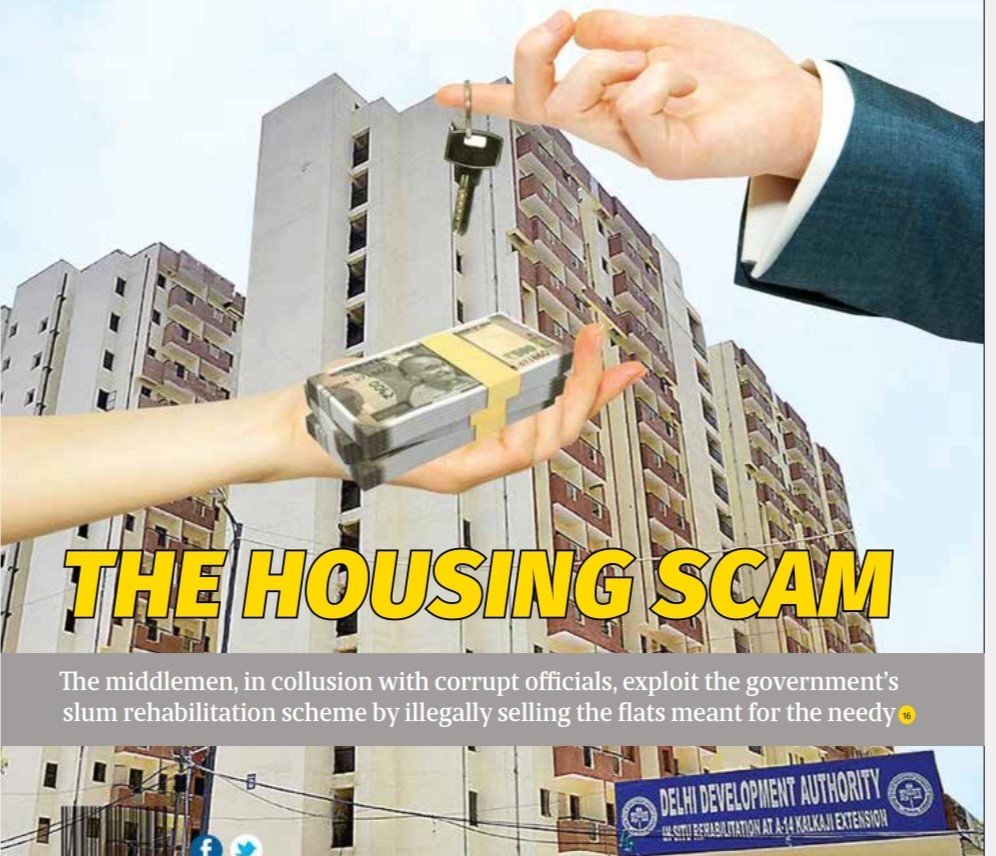
A Tehelka SIT report reveals how middlemen, in collusion with corrupt officials, exploit the government’s slum rehabilitation scheme by illegally selling flats meant for the needy to affluent beneficiaries
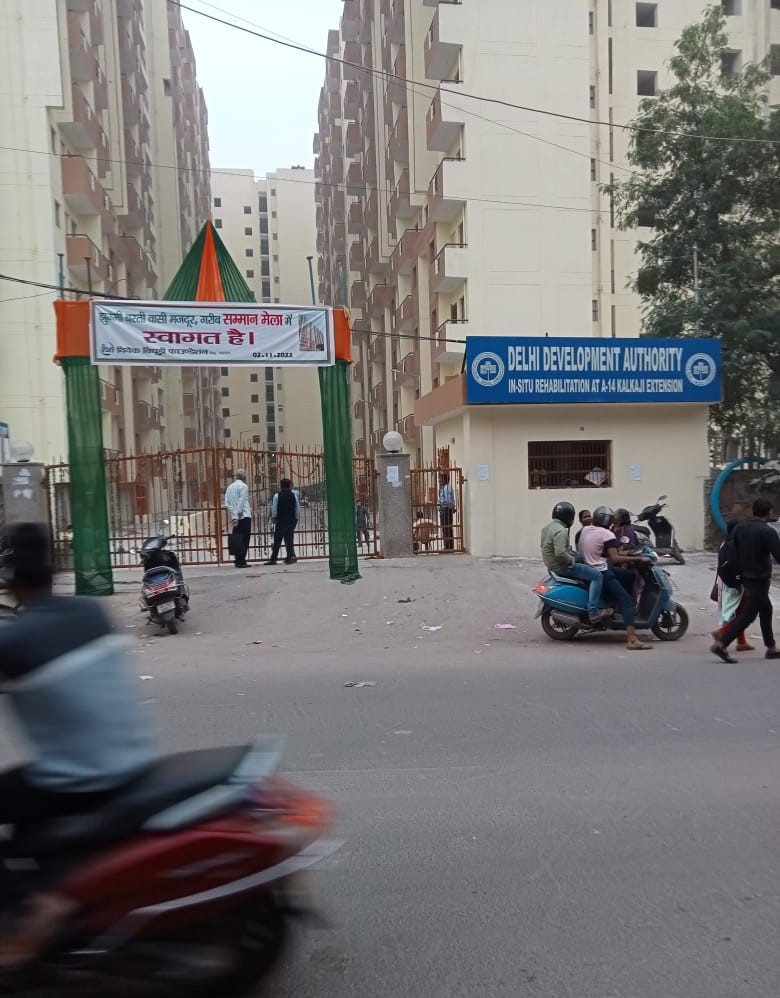
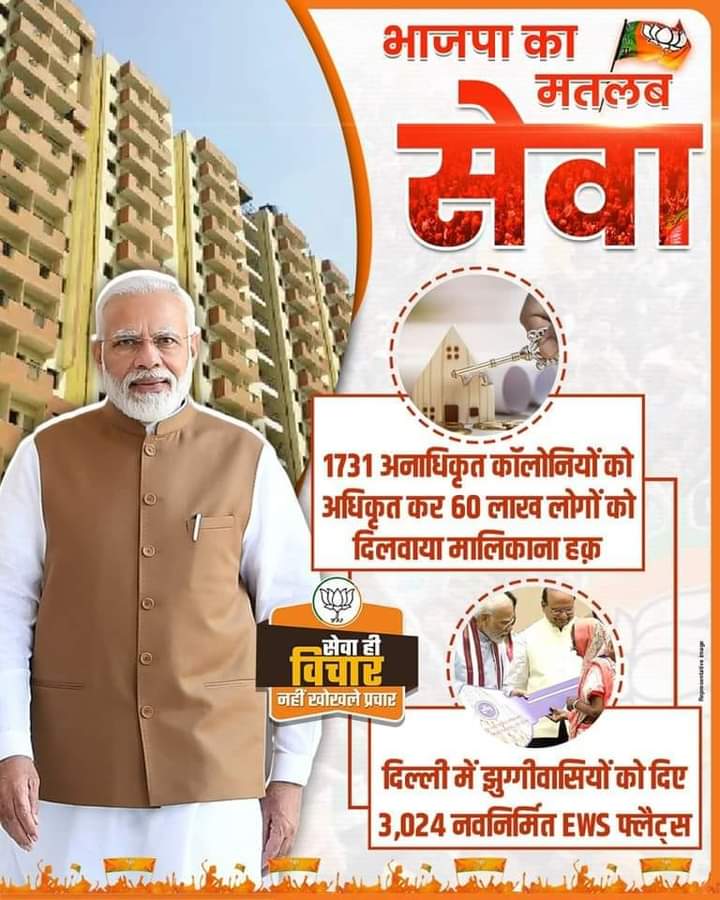
On 2nd November, 2022, Prime Minister Narendra Modi inaugurated over 3,000 flats for the rehabilitation of slum dwellers in Delhi’s Kalkaji Extension, under the Delhi Development Authority’s (DDA) “in situ slum rehabilitation project.” The Kalkaji Extension project, aimed at rehabilitating slum dwellers from Kalkaji’s Bhoomiheen Camp, Navjeevan Camp and Jawahar Camp, was conceptualized in 2011, with the foundation stone laid in 2013.
In the first phase, the DDA constructed 3,024 flats on a vacant commercial plot for those living in the Bhoomiheen Camp. However, just two years after the Prime Minister Modi inaugurated these flats, fraudsters have moved in and begun selling these flats, intended for slum dwellers, to the wealthy. These 25-square-metre, 14-story high-rise flats, which are not meant for sale, were to be provided to beneficiaries for only Rs 1.24 lakh each, with the remaining cost covered by the DDA. Despite this, middlemen are selling the flats to affluent buyers — most of whom already own homes in Delhi — for a bribe of Rs 6.50 lakh per flat, using fake slum addresses.
Investigations have revealed that middlemen have already duped many people with the promise of providing flats in this society meant for the homeless.
“These flats are meant for slum dwellers, but I will prepare documents showing that you were living in the slum before 2005. The government isn’t going to check, so no one will know you’re not from the slum. For one flat, we charge Rs 6.50 lakh, all paid in cash. This bribe is distributed from top to bottom within the authority. These flats cannot be sold, but you will get one once we show that you’re from the slum,” revealed Sanjay Kumar Pandit, a middleman, to Tehelka.
“I’ve already taken Rs 3 lakh as a bribe from a client. I need Rs 5.50 lakh more, and then he’ll receive the allotment letter for the flat. So far, I’ve sold 10 flats in this society to wealthy clients who aren’t from the slums. But through the fake documents we created, we made it appear they were,” said another middleman, Moinuddin Alvi.
“My client has paid the full amount of Rs 6.50 lakh as a bribe for one flat. He is a rich person, but I have proved – with the help of fake documents – that he belongs to the slum. He is waiting for his flat. The government cost of these flats is only Rs 1.47 lakh. The government officials have 25-30 flats in this society, which they are selling to the rich, who do not come from the slum area, by taking money,” said Sanjay Kumar Pandit.
Ali Jaan, a retired government employee from Delhi’s Public Works Department (PWD), explains how he “fell into the middlemen’s trap”. Despite owning a house in Delhi and having no connection with the slums, he booked two flats in the society for Rs 13 lakh, paying Rs 3 lakh in advance. He was promised that he would receive the flats within three months. However, when the promised flats were not delivered even after the deadline, Ali realised he had been duped by the middlemen. He approached Tehelka, posing as a whistle-blower, to expose the nexus of brokers deceiving people by offering flats meant for slum dwellers.
“I booked two flats in the names of my wife and daughter and paid Rs 3 lakh in advance as a bribe. But when the flats weren’t delivered after the stipulated time, and the middlemen started asking for more money, I became suspicious that I had been duped. That’s when I decided to expose these culprits,” said Ali Jaan.
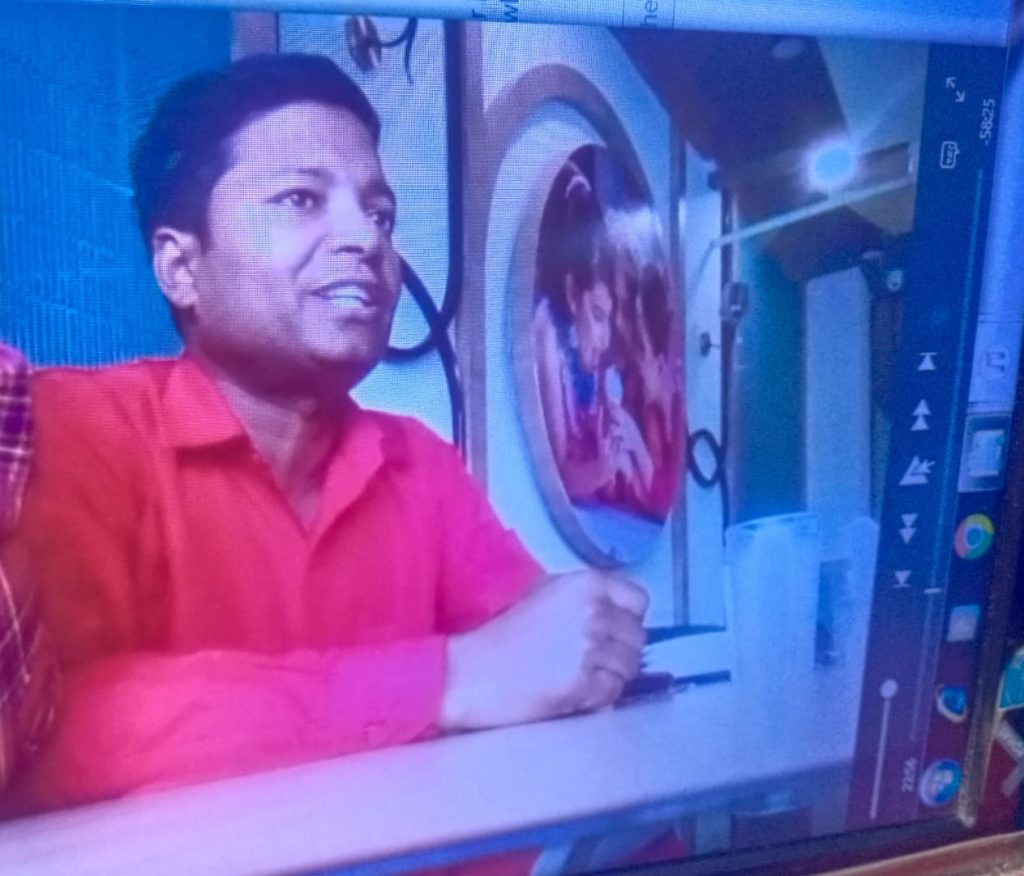
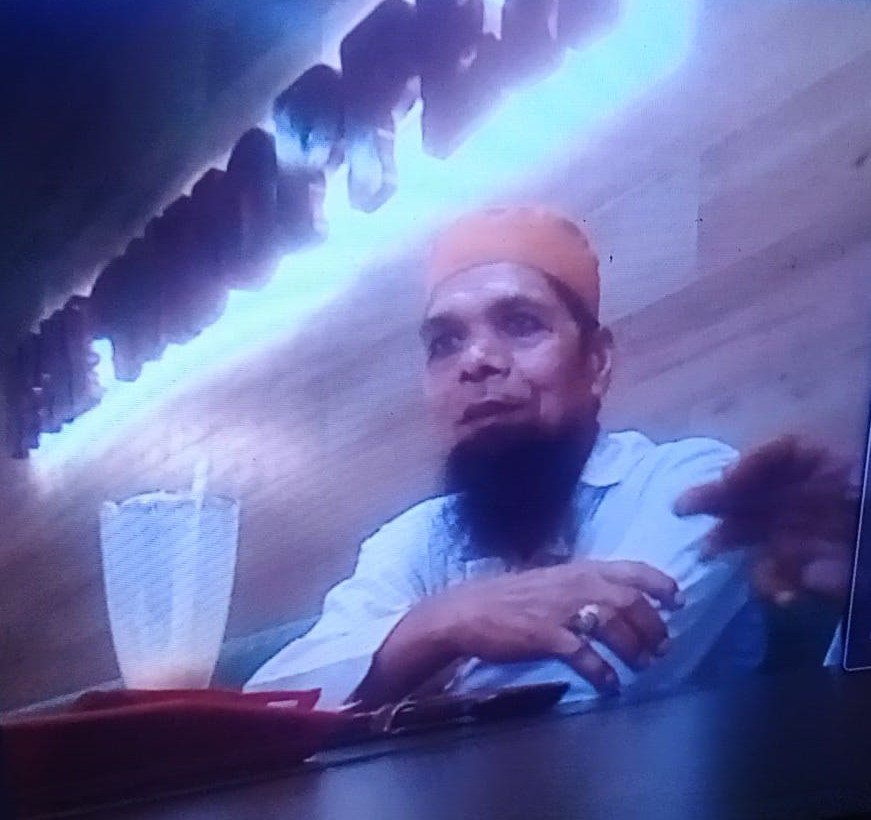
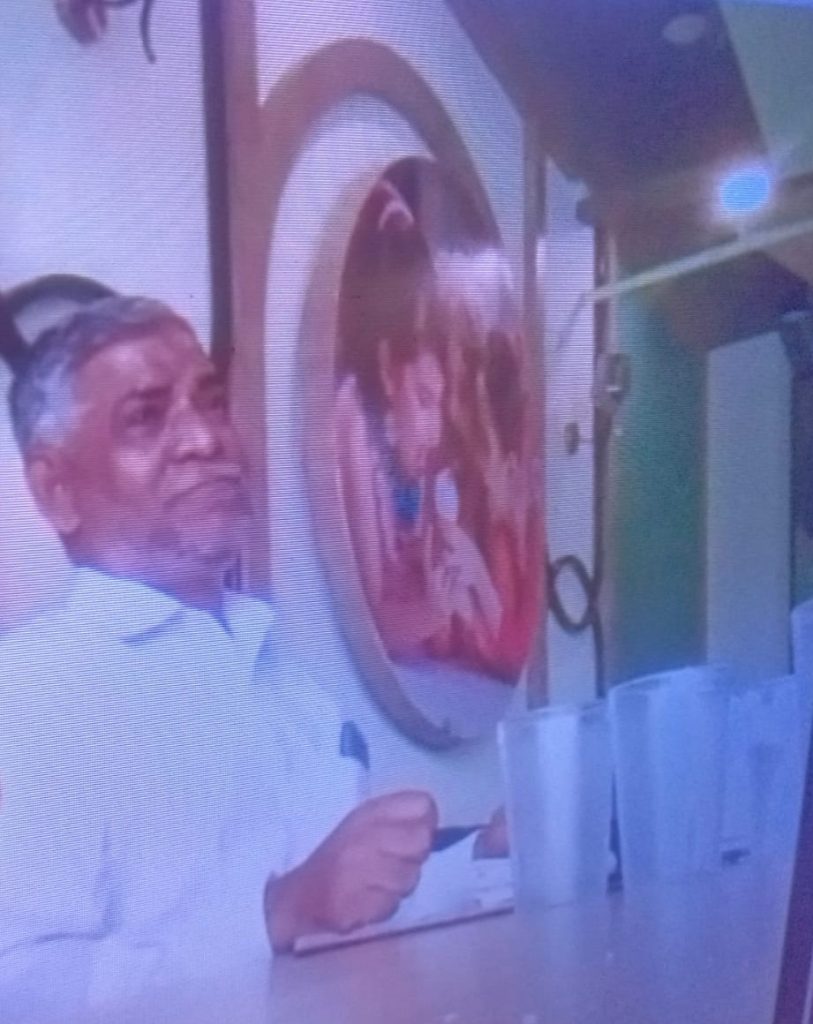
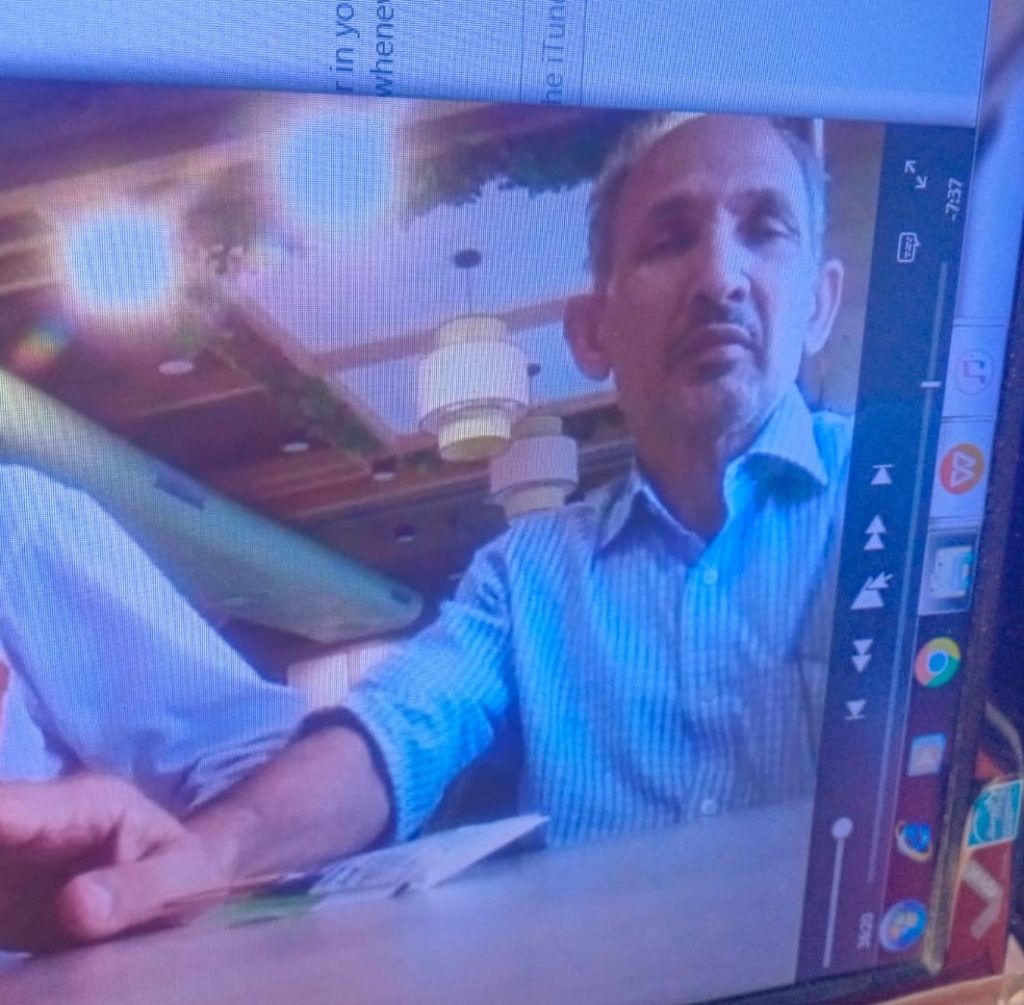
With Ali Jaan’s help, the first meeting with the brokers was organised in Noida. Ali introduced the Tehelka reporter as a businessman who would pay the remaining amount of bribe on Ali’s behalf for his flats. The two middlemen, Sanjay and Alvi, came for the meeting with our reporter. Sanjay admitted to the reporter that the flats were meant for the rehabilitation of residents from three slum clusters—Navjeevan, Bhoomiheen, and Jawahar camps in Kalkaji. He explained that he would fraudulently register Ali Jaan as a resident of the Navjeevan slum, allowing him to get a flat. Sanjay also confirmed that these flats were not for sale and that selling them was illegal. However, he claimed to know some government officials who held some flats and were willing to sell them to a select group of people they trusted. “That’s how we’re selling these flats for a price,” Sanjay explained.
Sanjay- Ye jo jhuggi jhopdi wale hain na?
Reporter- Jhuggi jhopdi walon ko basane ke liye?
Sanjay- Haan..ab unse zameen liya ja raha hai..
Sanjay (continues)- Ab hum jaankar log hain na PA ka.. hum kuch apne pass rakhtey hain, bahar nikal denge to kuch paisa ban jayega. To hum log unke saath judkar ke, unhone mere ko ye bola ke kuch khas log hon unko dila saktey ho, kyunki ye chezein sabke liye nahi hain.
Reporter- Ye aapko kisney bola?
Sanjay- Jinke through hamara kaam ho raha hai.
Reporter- XXXX ke through ?
Sanjay- Haan XXXX ke through hamara kaam ho raha hain to unhone bola sabke liye nahi hai..kuch khas log ho, kyunki bechne ke liye nahi hai ye. Legal to hai nahi bechne ke liye, kuch khas log hon to unko hum kaam kara saktey hain to usi baat ka paisa hai..
Reporter- Accha…kyunki ye makaan bechney ke liye to hotey nahi hain.
Sanjay- Aur acchi baat ye hai ke inke naam se ho kar ke mil raha hai. Sabit karke diya ja raha hai ki inka bhi wahin khata hai..
Reporter- Matlab inka makaan wahan se toda ja raha hai.?
Sanjay- Jaise jo jhuggi jhopdi todi ja rahai hai na, usmein sabit karke milega ke inka bhi hai..
Reporter- Matlab Ali bhai ka bhi aap sabit karogey ki jhuggi jhopdi mein inka ghar tha?
Sanjay- Haan
Reporter- Ye kaise kar dogey ghar to tha nahi hai inka.
Sanjay- Nahi tha na sir…abhi purana record chal raha hai.. 2005 ka record chal raha hai..to wo log apne record mein saabit karenge.
Reporter- Jhuggi jhopdi kaunsi hai jo todi gayi ?
Sanjay- Navjeevan camp ki abhi tootegi.
Reporter- Tooti nahi hai abhi, tootegi?
Sanjay- Haan tootegi..adha tooti hai, adha tootegi, ho to bahut pehle jata kaam, lekin un logon ne dharna daal diya, is chakker mein late ho gaya sara kaam.
Reporter- Inka kahan show karoge aap Navjeevan mein hi?
Sanjay- Navjeevan mein..
[In the meeting, the brokers revealed how they were fraudulently securing flats meant for slum dwellers by falsely registering wealthy clients as residents of the slums. This clearly shows how some government officials are involved in selling these flats illegally, exposing a nexus between the brokers and corrupt authorities.]
When asked how they would show me as a slum resident to make me eligible for the flat, Sanjay explained that, since I am a taxpayer and my financial records are in the official records, he would instead falsely register my brother or sister, who doesn’t pay tax or doesn’t pay as much as I do, as a slum resident to secure the flat.
Reporter- Aap mujhe jhuggi jhopdi wala kaise bata dogey.?
Sanjay- Aapko nahi… aapke family member ko.
Reporter- Mere family member ko bhi jhuggi jhopdi ka kaise sabit kar dogey.?
Sanjay- Jaise aapka ghar yahan pe hai, aapka koi bhai hai..behen hai, wo reh saktey hain.. wo to nahi bhar rahe hain tax itna, wo log itna nahi jitna aap bhar rahe ho tax, aur jhuggi jhopdi mein rehne wala tax nahi pay karta hai. Sab kuch possible hai, sir.
[The conversation reveals how the brokers navigate legal hurdles by registering family members with lower financial visibility as slum residents. It emerges that they exploit the fact that slum dwellers typically don’t pay taxes, allowing fraudulent eligibility for flats. ]
We asked Sanjay what would happen if he failed to prove me as a slum resident and whether I would lose the money invested in the flat. He reassured us by saying that government officials act carefully, so such a situation would not arise. He told us that losing the money was highly unlikely due to the involvement of the officials
Reporter- Nahi ho paya sabit to paise doob gaye na?
Sanjay- Matlab hi nahi hota sir,…sir sarkari adhikari jo hota hai na, koi bhi kadam uthata hai usmein char baar pehle sochta hai, theek hai sir?
[The conversation reveals the brokers’ ability to manipulate the system, as they are confident that government officials act cautiously and would not jeopardise the fraudulent scheme.]
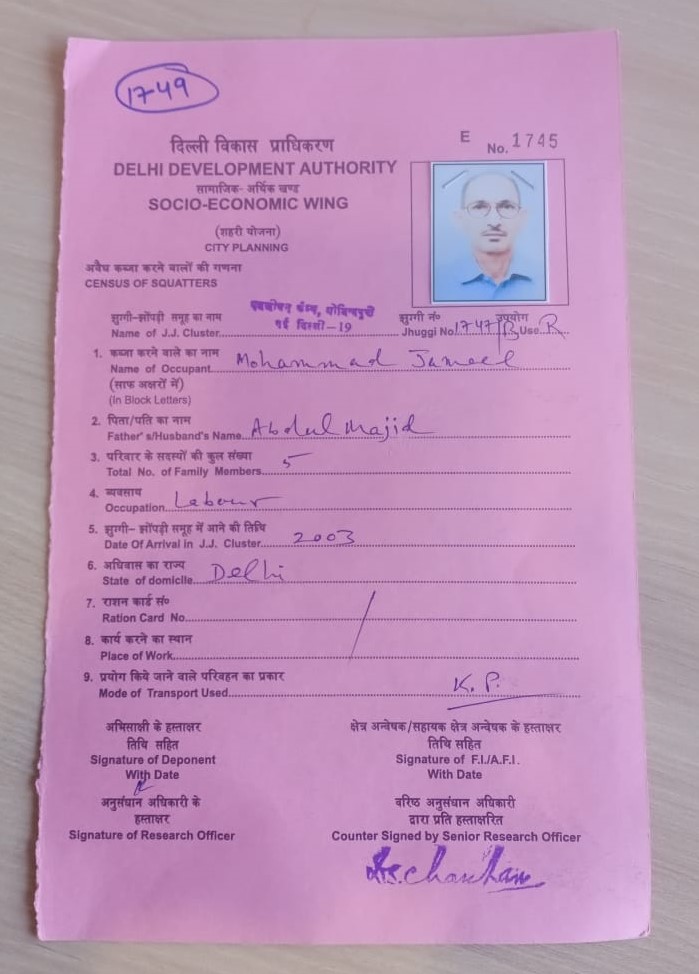
Sanjay then revealed details about the “Red Paper.” According to him, this document, issued by the government, is crucial as it proves eligibility for a flat in the society. He assured us that we would definitely receive the flat, as they were only selling units to select individuals.
Sanjay- Ek baar koi pen chal gaya na sarkari afsar ka to kaam hona hi hona hai, nahi ho aisa ho nahi sakta pehli baat,..doosri baat jo lal wala paper aapke pass aa gaya na sir..
Reporter- Lal wala..?
Sanjay- Red paper ek tarah se card hai, ismein photo bhi hota hai bande ka, government ka mohar bhi hota hai. XXX ka paper hota hai..ye paper aa gaya na jab aapke pass to kisi ka ho ya na ho aapka zaroor hoga…kyunki jo bhi karwa raha hai na usko darr hai, kal ko mera naam kharab ho sakta hai.
Sanjay (continues)- Mein to itna hi tasaali kara sakta hoon ki aapka kaam 100 percent hoga ismein do rai nahi hai. Kyunki hum log zyada logon ko bechey nahi hain, kuch khas logon ko diya hai.
[The conversation highlights the importance of the “Red Paper,” a government-issued document with a photo and official seal that guarantees eligibility for the flat. Sanjay sounds confident the flat will be secured.]
Sanjay now went into detail about the “Red Paper.” According to him, it is issued by the authorities and indicates that the bearer was a slum resident before 2005. Based on this, the bearer is eligible for a flat meant for slum dwellers. Sanjay claimed that the value of the Red Paper is Rs 35 lakh, assuring that if the flat is not secured, Rs 35 lakh would be refunded. [Tehelka cannot independently verify the authenticity of this document.]
Sanjay- Sir, Red paper jo hai na wo 2005 ke back date se dikhayega ki aapke wahan sab kuch they…wo 35 lakh ka paper hai agar nahi hua to..
Reporter- Wo kahan dikhayega sampatti hamari?
Sanjay- Slum mein, usi se..aur us paper ki value sarkar ki nazar mein 35 lakh hai, agar maan ke chalo sab ko allot ho gaya aur aapka nahi hua. Lal paper aapke pass hai, aap chale jao lene.. ya to 35 lakh return karegi sarkar ya to jahan par flat hoga allot karenge…mukar nahi saktey.
[Sanjay elaborated that the “Red Paper” confirms slum residency from before 2005 and is valued at Rs 35 lakh. He claimed that if the flat is not secured, either Rs 35 lakh will be refunded or the flat will be guaranteed.]
Sanjay assured that if the flat is acquired and an investigation arises, no issues would occur. He explained that once the government issues the flat in one’s name, they won’t investigate further. Additionally, both Sanjay and Alvi confessed that they had indeed taken Rs 3 lakh in advance as a bribe from Ali Jaan.
Reporter- Ek baat batao hamne.. ye flat le liya, kal ko koi jaanch beth gayi..sawal uth gaya?
Sanjay- Sir koi sawal nahi uthega.
Reporter- 25-30 flat jo hain, wo kaise un logon ko bik gaye..paise wale logon ko.?
Sanjay- Aisa kuch nahi hoga sir.. government ek baar issue kar degi na aapke naam, poochney nahi aayegi ki aap kya kar rahe ho usmein…kyunki wo aap ko de rahi hai..5 saal tak maintainence free rahega aapka government ki taraf se.
Reporter- Aap batao aapne cash kitna liya Ali sahib se?
Alvi- 3 lakh liya
Reporter- Poora 3 lakh liya?
Alvi- Nahi 2 lakh liya.
Reporter- 2 lakh online, 1 lakh cash. Waise is mamle mein koi online deta nahi hai.
Sanjay- Aapas ki baat hai isliye liya.
Reporter- Dekho agar 3 lakh aapne inse liya hai, theek hai.. agar kuch kagaz patri aapne de di hoti, inhe ek bharosa sa ho jata.
Sanjay- Sir us paise ka to documentation ho gaya, ab jo jayega mein itna guarantee kar sakta hoon, ki aap sirf 4 lakh rupiya online kartey ho, sirf 4 lakh online mein dilwa dunga.
[Sanjay guaranteed that no issues would arise from an investigation once the flat is issued even as he stressed that maintenance would be free for five years.]
Alvi and Sanjay now told our reporter that they are taking Rs 6.50 lakh as a bribe money for one flat. Ali has booked two flats, so he has to pay total Rs 13 lakh. But he has only paid Rs 3 lakh, so they had demanded Rs 10 lakh more from Ali.
Reporter- To ismein hame kya karna hai, ye bataiye ?
Sanjay- Payment chahiye.. inka kaam ho jayega.
Reporter- Abhi tak kitna payment ja chukka hai. ?
Sanjay- Inka payment 2 chala gaya hai, ab poora payment dengey to.
Reporter- Kitna chala gaya hai.?
Ali- 3 lakh chala gaya mera.
Reporter- Total aap kitna le rahe hain inse ek flat ka..?
Sanjay- Sadhe cheh (6.50) ke hisab se bataya aapko
Reporter- Sadhe cheh..
Reporter- Matlab total inko 13 lakh dena hai 2 apartments ka.?
Sanjay- Haan..
Reporter- 3 ja chukka hai ..10 bachta hai..
Ali Jaan, who has booked two flats, needs to pay a total of Rs 13 lakh but has only paid Rs 3 lakh so far. He is told by the brokers that he has to make full payment to secure the flats.]
When asked about the benefits of investing Rs 13 lakh for two flats on behalf of Ali, Sanjay assured us each flat could later be sold for Rs 15 lakh, generating a substantial profit. This implies that investing now could lead to significant future gains.
Reporter- Maan lijiye mein inki taraf se baki ka 10 lakh rupiya de doon..mera usme kya fayda hai..?
Sanjay- Ji..aapka kya fayda , ye aap inse poochiye..
Reporter- Ye to ye kahengey aap usko zyada paiso mein bech dijiye…
Sanjay- Bik hi jayega..wo zyada mein bik jayega..2-3 mahine ruk kar agar 15 mein bhi bechogey to bik jayega..
Reporter- Dono 15 mein ?
Sanjay- Nahi ek hi 15 lakh mein..
[Sanjay explained that investing Rs 10 lakh for two flats was profitable proposition as each flat could be resold for Rs 15 lakh in a few months from now. It is clear that the brokers are prepared with speculative figures to convince potential buyers.]
Now, Sanjay insisted on receiving Rs 10 lakh in cash and refused to accept payment by cheque. He clarified that the entire amount must be paid in a single transaction, highlighting his strict preference for cash over other payment methods.
Reporter- 10 lakh ka aap payment logey to kaise logey instalment par ya one time.
Sanjay- One time
Reporter- Poore 10 lakh ..cash.?
Sanjay- Haan.
Reporter- Cheque nahi chalega
Sanjay- Nahi sir, cheque nahi chalega..
[The conversation underscores Sanjay’s preference for cash and the straightforward nature of the deal, with the objective of leaving no trace or record.]
[At this point, Alvi remarked that although these activities are illegal, they are often carried out in an honest and transparent manner. Sanjay added that the flats are being sold with the assistance of certain government officials, without whom they wouldn’t be able to complete the transactions.]
Alvi- Ek baat maine bhi kehni hai aapse..ye jo 2 number ka kaam hai ye badi imaandari se hota hai..
Reporter- Nahi.. imaandari se hota hai.. lekin kai baar 2 number mein bhi beimani ho jaati hai..
Sanjay- Nahi …ek baat jaantey hain, har vyakti ko apni naukri ka darr hota hai..
Reporter- To aapki to kisi ki naukri nahi hai..?
Alvi- Hamari kisi ki nahi hai magar jinke liye hum kaam kara rahe hain unki to hai..
Reporter- XXXX walon ki.?.
Sanjay- Obviously, sir.
Reporter- Ye XXXX ne banwaya hai.?
Sanjay- Unke involvement ke begair hum kaise kara saktey hain.
[Alvi noted that even illegal activities are carried out with a veneer of legality, while Sanjay emphasised that the sale of the flats is dependent on the involvement of certain government officials. The implication is that these officials’ support is crucial for the transactions.]
Now, Alvi disclosed that he had sold 10 flats in the same society. To verify the brokers’ claims, we asked Sanjay to introduce us to other clients who had received their flat allotment letters. In response, Sanjay introduced us to Mohammad Jameel at a subsequent meeting, claiming that Jameel had paid the full amount of Rs 6.50 lakh for one flat but was still awaiting its delivery.
Reporter- Kitne flat aise aapne dilwa diye?
Alvi- Mere khayal mein dus ek karwa diye.
Sanjay- Mein jameel bhai ko direct milwa dunga aapko, uska ‘lal paper’ bhi dekh saktey hain aap..aur inka bhi lal paper aa jayega, Jameel bhai ka aur inka sabka ekattha aayega, flat ekatha aayega.
Reporter- Jameel bhai ka nahi aaya abhi.?
Sanjay-Paper aa jayega, flat nahi mila..
Reporter- Un se kitna paisa liya?
Sanjay- Unse poora paisa ho gaya.
Reporter—Ek hi liya hai ?
Sanjay- Kya cheez ?
Reporter- Ek hi flat liya hai. Paisa kitna?
Sanjay- Sadhe 6 (6.5 lakh).
Reporter- Sadhe 6 poora.
[Alvi claimed to have facilitated the sale of 10 flats in the society. Sanjay introduced us to Mohammad Jameel, who had paid Rs 6.50 lakh for a flat but had yet to receive it. Sanjay confirmed that Jameel had paid the full amount for one flat but was still waiting to take possession. This highlights discrepancies between payment and the actual delivery of flats]
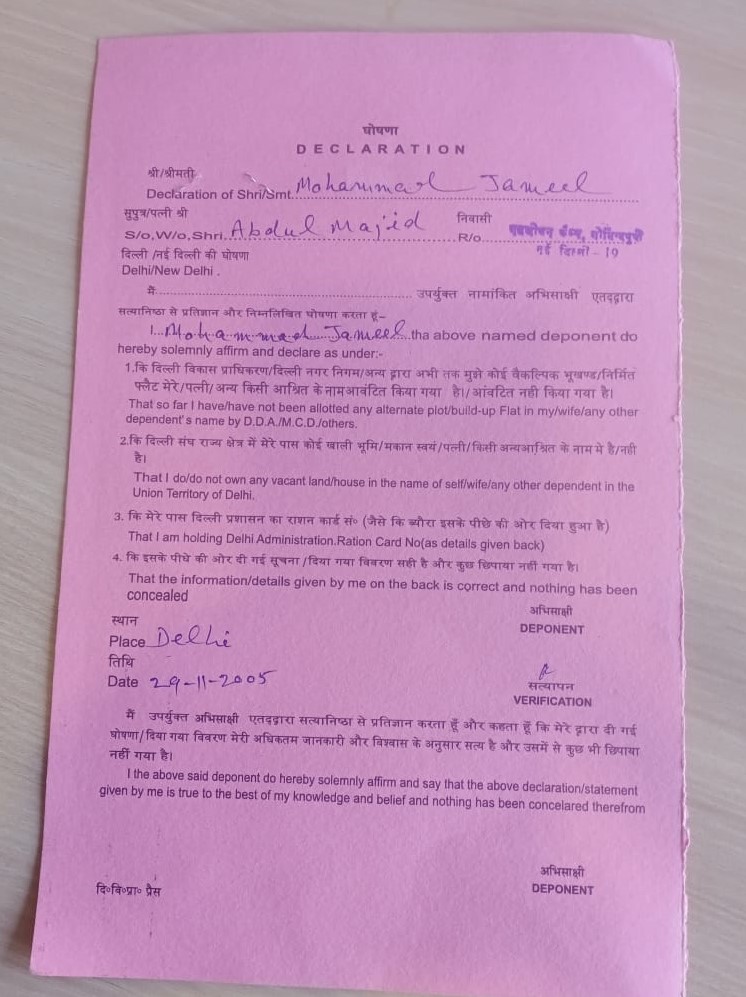
Sanjay now admitted to fraudulently listing Mohammad Jameel as a slum resident to secure a flat for him. He further revealed that Jameel had acquired another flat under the PM Awas scheme, despite not residing in a slum. This underscores the manipulation of residency requirements to obtain flat.
Reporter- Ek ismein aur le liya hai unhoney PM Awas mein.
Sanjay- Haan ek aur leliya hai..
Reporter- Jhuggi mein nahi rehtey wo?
Sanjay- Jhuggi mein kahan rahenge wo?
[Sanjay’s admission highlights that Mohammad Jameel, who was fraudulently listed as a slum resident for one flat, also secured another flat under the PM Awas scheme despite not actually living in a slum. This highlights how unscrupulous elements are blatantly exploiting the residency criteria.]
Sanjay now reveals that the flats are not officially for sale; rather, government officials are holding 25-30 flats and selling them through selected intermediaries. He stated that significant amounts of money are being distributed as bribes throughout the official hierarchy, with only a few flats remaining. This suggests a network of corruption and financial manipulation surrounding these flats.
Reporter- Accha sarkari paisa usmein 1.47 hai..?
Sanjay- Rs 1.47 lakh ki deed jaati hai, aur dedh lakh.. Rs 1.50 aise hi log letey hain..uska letey hain jiska zameen ho.
Reporter- Ye kin kin logon mein jata hai paisa ?
Sanjay- Ye uper se neeche tak jata hai….inke pass 15-20 flat bache hain, zyada nahi hain, aur wahi sab wo payment online karwa denge saara.
Reporter- Hum jaise aur bhi log hain lene wale.
Sanjay- Nahi sir, ye bechne ke liye nahi hain.
Reporter- Bechne ke liye to nahi hain par phir bhi beche jaa rahe hain na..
Sanjay- Sarkari aadmi ke haath mein 25-30 flat tha.
Reporter- Accha 25-30 the.. sab nahi hain.?
Sanjay- Jismein se kareeban 5-6 nikal gaye hain..23-24 aur bache hue hain..theek hai na….wo jaise hi niklenge usi ka paisa khayenge ye log.
[Sanjay detailed about prevalent corruption, with transactions of around Rs 1.50 lakh. He confirmed that these flats are not available for general sale, illustrating ongoing financial manipulation and selective allocation.]
Ali Jaan, after paying an initial bribe, soon realised he was being deceived by the two middlemen. Consequently, he withheld further payments and received neither the “red letter” nor the flat he was promised. Meanwhile, Mohammad Jameel, who claimed to have paid the full amount for his flat, received only a red letter and no actual flat. Jameel admitted that he had never lived in a slum, yet the red letter he obtained after paying the bribe falsely indicated a survey number showing he had resided in a slum before 2005. Sanjay Kumar Pandit and Moinuddin Alvi, the two middlemen, continue to operate, defrauding people by selling flats intended for slum dwellers to wealthy individuals.
It is time for the Delhi Development Authority (DDA) to intervene and address the alleged issues of corruption surrounding the Kalkaji Extension project for rehabilitating slum dwellers. This intervention is necessary to prevent further exploitation and ensure justice for those affected. The ongoing problems highlight the urgent need for stringent regulatory oversight and accountability in the housing sector.
Amidst the ongoing crisis in the farming sector, it is being felt that the efforts by the Modi government leave much to be desired. Unless the centre intervenes by way of acceding to their demands, farmers’ protests are likely to continue. A report by Raju Wiiliam
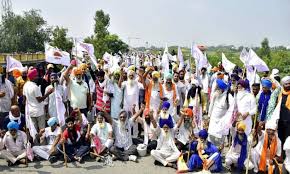
Since a year-long farmers protest on the borders of the national capital Delhi in 2020-21 and withdrawal of the three central farm laws by the BJP-led Modi government at the Centre, the second leg of their protest named Dilli Chalo since February 2024 shows no sign of ending. This time, their allegation is that the central government has backed out from the promises made to them when their previous protest was called off.
There have since been several rounds of talks between the leaders of the farmer organizations and the central government representatives, but no headway could be made so far. The main stumbling block in this entire solution seeking exercise is the farmers’ insistence on staging their protest again on the threshold of Delhi.
Unlike the previous protest, the difference this time is that the BJP government in the state of Haryana stopped their movement to Delhi on the national highway by putting up police-manned concrete barricades at its border with Punjab. Adamant on marching towards Delhi, a large number of protesters have since made the Punjab territory a venue of their temporary sit-in.
Due to this, the flow of traffic has severely been hampered for months together creating law and order problems and difficulties for all sections of people, especially for those living in the areas in Punjab and Haryana, close to their state border. The matter reached the Punjab and Haryana High Court and the Supreme Court of India seeking lifting of the curbs put up by the Haryana government to facilitate free flow of traffic.
As of now, the matter is under judicial consideration.
Even as the Supreme Court said this early September that matter should not be politicized, yet in the politically charged election year – national election 2024 and coming state elections in Haryana in October 2024 – the ongoing farmers’ protest holds electoral value for the political stakeholders in both states. “All parties are playing politics on the genuine issues of the farmers,” remarked Patiala-based eminent economist Prof. Ranjit Singh Ghuman.
Politics apart, it needs to be explored and understood as to what makes farmers sustain their protest of such long durations enduring trying weather conditions. The chilling winter in 2020-21 and scorching heat this summer has failed to deter them despite alleged high-handed measures adopted by the respective governments at the state and central levels. After resumption of the second round of their protest, it has become pertinent to look at peculiar traits of their collective character which have made them stay put in the face of the governments’ might?
In the historical perspective, human history is basically of struggles for survival and growth. The farmers and peasantry at large have brought about impactful changes through many violent and non-violent revolutions in the world and the Indian peasants are not exception to it. The role of Punjabi farmers and peasantry in pre and post independent India history is a witness of its contribution in the economy of the state and the nation building process but they remained neglected on all counts.
According to Prof. Jagrup Singh Sekhon, the former Head, Department of Political Science, Guru Nanak Dev University, Amritsar, the neo-liberal policies of the governments further marginalised them and made them vulnerable to the national and global giants to the extent never seen before. “In the contemporary period, they are facing a structural and survival crisis which is forcing them to get united and fight to assertively establish their relevance,” he pointed out.
Tracing the ideological base that sustains their long-drawn protests, one finds it is their historically shaped instinct for survival in the worst conditions. The history is full of instances of their fight against the rulers who they perceived as suppressive. In this context, the Gaddar movement and Pagri Sambhal Jatta during the country’s freedom struggle could be immediately quoted. And long before, they bore the brunt of frequent foreign invasions. All this steeled their nerves and inculcated a spirit of nationalism.
As Prof. Ghuman put it, this instinct of survival got activated when Punjab farmers thought the three farm laws would snatch their lands thereby posing a serious threat to their survival. This happened at a time when the farming was already reeling under a serious economic crisis. Its pinch was also felt by other stakeholders, especially the farm labourers.
This crisis has taken a heavy toll on life. Reportedly, more than 16,000 suicides by debt-ridden farmers and farm labourers took place till 2017, according to a study conducted by three universities in the state. This threatening number must have increased by now in the absence of measures needed to stop this, he added.
The Punjabi farmers, who are predominantly Sikhs draw their spirit of courage and sacrifice seeking justice for their cause from their religious philosophy which in essence is liberal in thought and action. Any attack on their religious identity would make them all the more determined to sustain their fight. They may be loud in speech yet would remain peaceful despite attempts of de-focussing their protests in the public perception.
Prof. Ghuman refers to this element of religious faith while tracing the roots of their unrelenting spirit behind these protests. After a sustained protest leading to withdrawal of three farm laws, their undaunting spirit, shaped by their faith and history of their community’s struggles, got boosted amidst a general perception about the Modi government being politically invincible.
Amidst the ongoing crisis in the farming sector, it is being felt that the efforts by the central government, which holds the main responsibility of diffusing it, leave much to be desired. The perception has gained ground that it lacks the will, which is why the farmers’ protest has become a sort of political football. On its part, the state government must do its bit on the economic front. The situation calls for setting up a price stabilization fund to provide financial cushion in case of fluctuations in the prices of crops.
Their major demands are legal status to MSP on all crops and debt waiver. A recent finding by National Sample Survey Organisation (NASSO) has shown an average farmer household is under debt of Rs. 2.98 lakh.
Punjab is in the throes of a vicious wheat-paddy cycle and immediately needs a diversification plan supported with adequate funds allocation by the state and the national governments. Several parts of the state are in a dark zone with the water table receding rapidly. The contamination of groundwater is a consequent serious health hazard for people in general.
The seriousness of the crisis calls for immediate central government intervention by way of acceding to farmers’ demands. Until this happens, such protests are likely to continue. “Putting it more correctly, I would say it is the central government’s cold and callous attitude which has allowed their protests to drag on. The BJP-led National Democratic Alliance government at the Centre will be committing a mistake if it underestimates the farmers’ grit and determination,” summed up Bubby Badal, a kinnow grower and a ruling party politician from the Malwa belt of the state.
The Delhi Development Authority (DDA) has found itself at the center of controversy once again, accused of turning a blind eye as housing units designated for the city’s poorest are misappropriated by the wealthy. The scheme in question, inaugurated by Prime Minister Narendra Modi on November 2, 2022, promised over 3,000 flats in Kalkaji Extension as part of the DDA’s “in situ slum rehabilitation project.” Yet, despite the high-profile launch, many residents from Bhoomiheen, Navjeevan, and Jawahar Camps remain without homes.
Tehelka’s Special Investigation Team has exposed a troubling pattern of corruption involving middlemen and unscrupulous officials. These individuals have exploited the system, illegally selling flats intended for the underprivileged to affluent buyers. Our cover story, “The Housing Scam,” reveals how the ambitious scheme has failed, leaving many of the most vulnerable still facing harsh living conditions — exposed to severe winters, sweltering summers, and relentless rains.
According to HUDCO’s guidelines on Affordable Housing, a dwelling should cost no more than five times a household’s annual income, with monthly rent or EMI capped at 30 percent of gross monthly income. The DDA’s initiative was designed with these principles in mind, but just two years after the PM’s inauguration, fraudsters have hijacked the project. Flats, initially priced at a subsidized Rs 1.24 lakh each, are being resold to the wealthy through fraudulent means.
Our investigation uncovered that these 25-square-meter flats in 14-story high-rises, which were never meant for sale, were provided to beneficiaries for only Rs 1.24 lakh each, with the remaining cost covered by the DDA. However, middlemen allegedly sell the flats to affluent buyers — most of whom already own homes in Delhi — using fake slum addresses. One middleman, recorded on hidden camera, proudly declared, “These flats are for slum dwellers, but I’ll create documents to show you lived in a slum before 2005. The government won’t check, so it will be undetectable.” Another admitted to selling ten such flats to wealthy clients through fabricated documents, including the “Red Paper,” a government-issued document that falsely certifies eligibility for the flats.
Activists argue that the Delhi government’s inaction is due to the issue being considered a “Centre’s subject,” but this cannot be an excuse for inaction. The DDA must step up, enforce stringent regulations, and ensure accountability to bridge the gap between the project’s lofty promises and its flawed execution. Immediate intervention is crucial to prevent further exploitation and to provide the justice that the city’s most vulnerable residents desperately deserve. It seems that the government has its heart at the right place given an extension of the Pradhan Mantri Awas Yojana-Urban (PMAY-U) till December 2024 but existing loopholes in providing a roof over the heads of the poorest of the poor must be removed. It’s time to bridge the gaps between a utopian idea and its fructification.
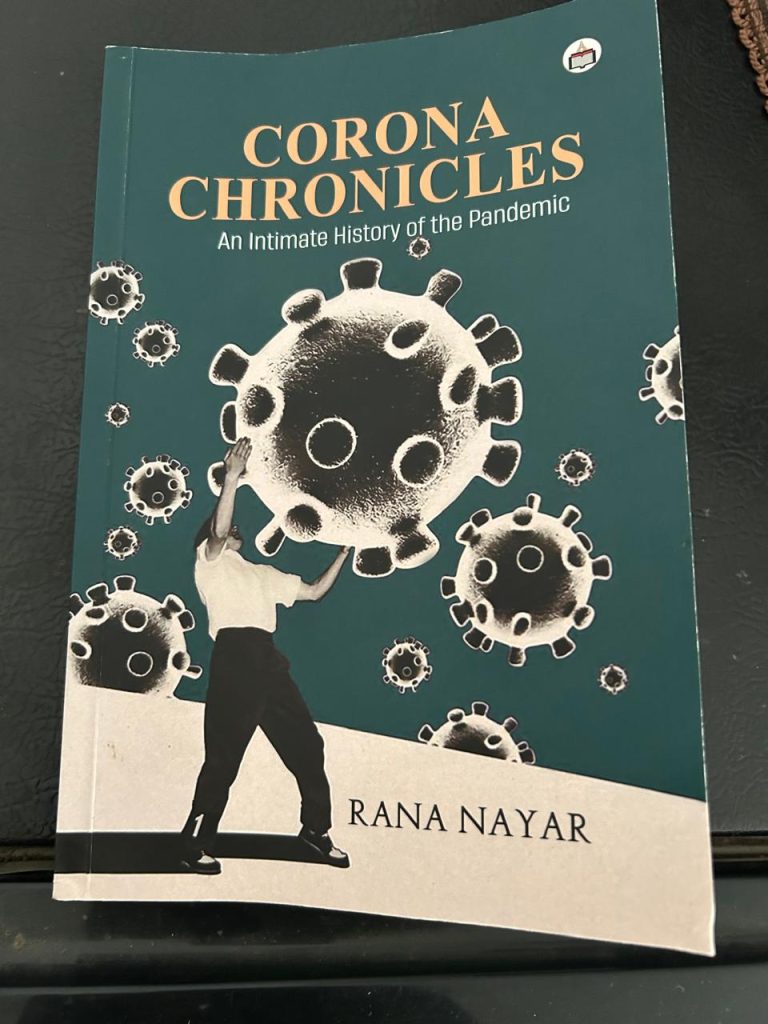
In the book – Corona Chronicles – An Intimate History of the Pandemic, author Rana Nayar has recorded every possible aspect and all possible dimensions to the corona pandemic. And he has done so in that free flowing way. An easy, absorbing read. Though the book is loaded with facts and factors and details to the big or small happenings but it just flows along. No burden on the head or on the heart! A book review by Humra Quraishi
Title of the book – Corona Chronicles – An Intimate History of the Pandemic
Author – Rana Nayar
Publishers – AuthorsPress
Pages – 164
Price – Rs 295
Book Review by Humra Quraishi
Well-known academic and theatre personality, Rana Nayar, has come out with his latest book – Corona Chronicles- An Intimate History of the Pandemic. And as the title more than relays, the focus is on Corona with all possible dimensions to it.
Before curiosity overtakes you and I, along the strain that why did he decide to write this latest book on Corona, it’s best to quote him from the Prologue,
“ It is my considered opinion that re-visiting an event, howsoever painful or traumatic, is not so much a reactivation of negative emotions associated with it, as it is an active release, a liberation from those very emotions…This book is intended for a common reader, who is prepared to take the rough, with the smooth, and is brave enough not to be intimidated by the painful memories of the pandemic…For those who are more ambitious would perhaps look for a sense of history in these chronicles as well. While writing Corona Chronicles, though I was conscious of the fact that history was literally unfolding itself right in front of my eyes, I chose the narrative over the historic method for recording my impressions …”
Yes, after reading this book I can say that Rana Nayar has recorded every possible aspect and all possible dimensions to the Corona pandemic. And he has done so in that free flowing way. An easy, absorbing read. In fact, the forte of this book is exactly this. Though it is loaded with facts and factors and details to the big or small happenings but it just flows along. No burden on the head or on the heart!
This book should come in handy for researchers and students and planners. And definitely for the survivors of that Corona phase! Not to overlook its significance for the future generations; all those who didn’t really witness that Corona phase and the upheavals it bought along and inflicted on the citizens.
And if the sarkari men and the so called medical ‘experts’ would find time to read this book, then it would portray to them details to that phase, with all possible hues and dimensions … Beneficial knowledge, just in case any further calamities and viruses hit the fragile human being!
Leaving you to introspect on what Rana Nayar comments: “If I’m making the reader walk through the ‘valley of death’ called Corona, it is mainly to provoke him into asking questions that have to do with our survival as a human race. It was a tragedy that had wrapped its head around the entire humanity.”