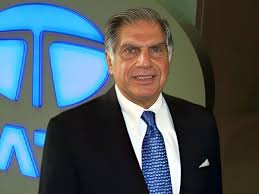
Mourning the loss of Ratan Tata: A colossus of a human being

by Julio Ribeiro

With Ratan Tata’s death, former chairman of Tata Sons, owners of the Tata legacy, the city of Mumbai has lost not only a tall leader but also, more importantly, a man who never flaunted his wealth or achievements but remained rooted in the values that a resurgent India should strive for.

In Switzerland, near Zurich, lies the university town of St Gallen. Every year, the university organises a symposium for students selected from universities outside Switzerland. Participants are selected based on their essays. The winners are invited to the University of St Gallen and exposed to the views of select individuals from across the globe on subjects ranging from business to politics to social mores.

Some years ago, student participants from India questioned Ratan Tata, one of the three invited speakers, on how the Tatas could survive with their old-world values intact in the face of competition.

I distinctly remember Ratan’s ready answer. “There is a place for us (Tatas) at the table. We will continue to perform as per our norms. We do not comment on the practices followed by our competitors, except to the extent that we will not try to emulate or adopt practices that are repugnant to our philosophy.”

On another such occasion inside India, Ratan was asked the same question. He appears to have replied more directly that time, asserting that the Tatas were “industrialists” and not “businessmen”. That, I thought, said it all.

JRD Tata, the doyen who nurtured Ratan, as well as Ratan himself, never flaunted their wealth. Money earned was distributed not only to shareholders, who had a major stake in the profits, but also to the needy and the dispossessed through various charitable channels patronized by the Tata companies.

Recently, the two Tata Trusts, which own 65 per cent of the total shares in the companies managed by the conglomerate, set up their special cell to perform the tasks that various NGOs to which they donated funds would undertake.

I met up with Ratan more closely when Mukund Rajan, a Rhodes Scholar and son of my IPS batchmate R Govind Rajan, was the Tata Chairman’s principal aide. The occasion was an inquiry into the unethical conduct of one of Ratan’s own confidantes and managing director of a Tata company. The inquiry necessitated an expert from the world of computer technology who could recapture erased data.

Some former English police officers, who had served in the Hong Kong police and whom I had met during my stint with the Indian music industry’s Protection of Copyrights Cell, were up to the task. I introduced them to Ratan.

The Chairman’s spontaneous reaction to a crime committed under his very nose awoke my desire for justice and fair play.

That the head of a big conglomerate could pursue a misdeed with such vigour and commitment restored my own fading belief in the choice of a right over a wrong that should guide a leader’s choice.

It is difficult to find corporate houses that follow the right path for fear of having to exit the business altogether if they do not comply with questionable requests. It is refreshing to know that the mighty House of Tatas is still standing tall even as many around it fall like ninepins.

Governments in power may favour those corporates which seek shelter under their powerful wings. But they will continue to respect the House of Tatas and its leader for their uncompromising adherence to ethical practices in the cut-throat world of commerce and industry.

Rest in peace, my friend. Your father Naval was fond of me. I dare say you knew this. From time to time, when I was away in Punjab and then in Romania, I received personal letters from Naval inquiring about my well-being. I cannot fathom to this day why Naval Tata took a liking to me. But, all the same, I was truly delighted. Who would not be?

The tiny Parsi community of Mumbai has lost a colossus of a human being. The citizens of Mumbai are poorer for the loss.

The men and women of India should grieve because it is more and more difficult these days to find individuals wedded to principles and values that should matter as the world becomes more complex and, alas, more cruel.

(The writer, a retired  IPS officer, was Mumbai police commissioner,  DGP Gujarat, and DGP Punjab, and is a former Indian ambassador to Romania. The article first appeared in the Tribune.)
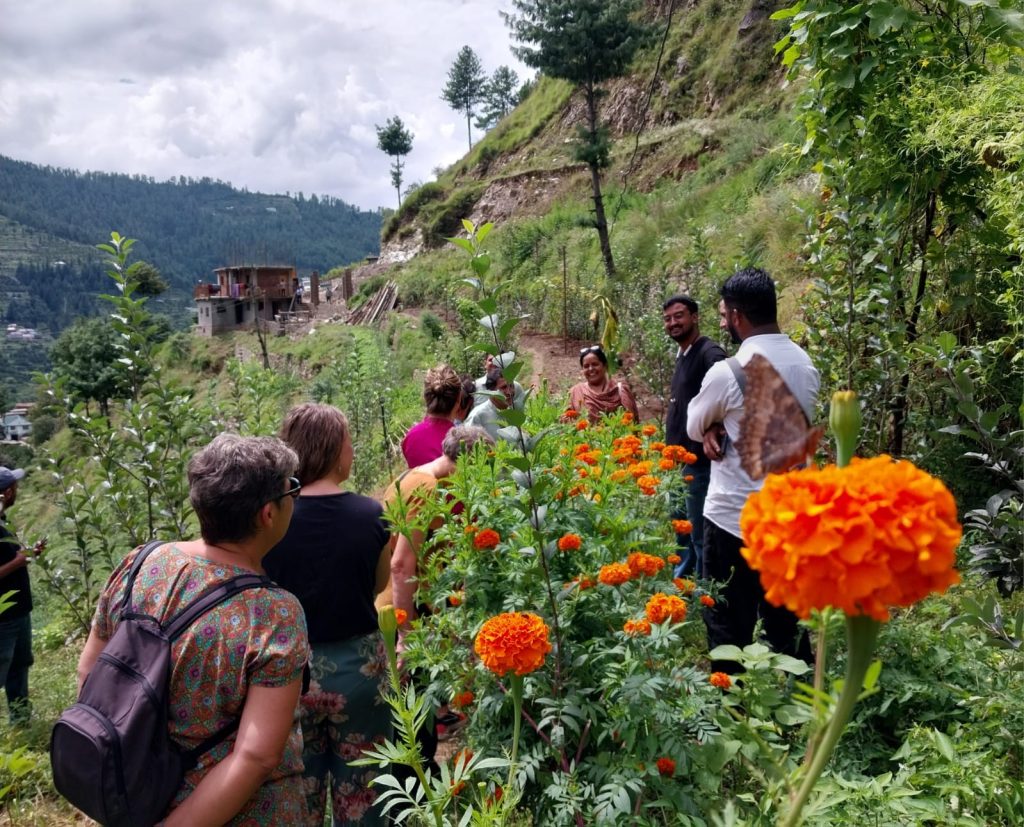
Acropics: Paving the way to a sustainable future

At a time when agriculture is facing numerous threats globally, the Acropics project, funded by the European Union, is leading the way towards holistic farming practices. A report by Deepanwita Gita Niyogi

In today’s time, scarcity of water and land plague agriculture the most. This threatens food security and nutrition. According to the Food and Agriculture Organization (FAO) of the United Nations, these two factors have placed important food production systems around the globe at risk, posing a profound challenge to the task of feeding the world.

FAO further notes that while the past few decades witnessed a three-fold increase in food production, “in too many places, achievements have been associated with management practices that have degraded the land and water systems upon which food production depends”.

When such is the scenario, there is a need to introduce sustainable practices in agriculture which arrest land degradation and water pollution by reducing the use of pesticides and chemical fertilizers in farms.

The Acropics project

The Acropics (Agroecological Crop Protection towards International Co-Innovation Dynamics and Evidence of Sustainability) project, an European Union-funded research project coordinated by France’s National Research Institute for Agriculture, Food, and Environment (INRAE) is on sustainable agricultural practices.

It is also part of the Directorate of Extension Education of Dr YS Parmar University of Horticulture and Forestry based in Himachal Pradesh’s Solan district.

The main aim of Acropics is innovation in agroecology and crop protection throughout the world. Under a collaborative effort, there are 15 members from 13 countries, 12 academic organisations and three companies as part of it.

By focusing on agroecological crop protection systems, the project seeks to minimise the use of harmful pesticides in agriculture. Towards this end, the horticulture university in Solan is promoting natural farming practices. Farmers following the natural farming method use farm-made and chemical-free concoctions. This protects the soil and water sources.

The total budget for the four-year duration Acropics project stands at €1,656,000. The funding is provided by the European Commission. Acropics is is a part of a global effort to back sustainable farming through innovative methods.

 Inder Dev, the director of extension education at the university in Solan, is in charge of the Acropics project in India. “In 2022, a call came from the European commission. After that, the university submitted the project as a partner.”

Sustainable ecosystems

Under Acropics, there are 12 sustainable agroecological ecosystems which are open to research and innovation.

“There are two sustainable agro ecosystems in Himachal Pradesh which come under the Acropics project. One is the Chaupal Naturals Farmer Producer Company and the second is the Gram Disha Trust. Gram Disha Trust takes care of three farmer producer companies,” Dev added.

He explained that the project is being implemented with effect from January 1, 2024. “The ultimate focus is on how to reduce pesticide consumption in different sustainable ecosystems by at least 50 per cent.”

In Himachal Pradesh where natural farming is the solution towards agro-ecology, farmers are looking at innovations and experimentation which can be replicated elsewhere.

For instance, the Chaupal Naturals Farmer Producer Company based in Shimla district of Himachal Pradesh produces apples which always do not fetch a high price in the market. So, the company makes bottled apple juice as an innovation. In this, the university extends support in marketing the product.

The state project implementing unit like the Agricultural Technology Management Agency also extends cooperation. Chaupal Naturals was launched two years back and at that time it did not have market support and linkage.

The Gram Disha Trust is one of the 12 global partners in sustainable agricultural systems which are part of the Acropics project. Over the past 15 years, Gram Disha Trust and its trustees have been working with smallholder farmers in Himachal Pradesh and other states on sustainable farming practices.

“The trust has been instrumental in reintroducing millets in the Pangna valley of Himachal Pradesh. In fact, since 2016, numerous training and capacity building initiatives have been organised to revive the forgotten crops of the Himalayas. The trust also ensures that not just production, but also market linkage is a key aspect of capacity building for farmers. Over the past five years it has helped over 1000 farmers in Himachal Pradesh and other states through its programmes,” said Ashish Gupta, the founder of Gram Disha Trust.

According to Gupta, one of the core aspects of Acropics is agroecological crop protection. Among the 13 principles of agroecology, there is also biodiversity and social values and diets. “These principles require that native grains, which are hardy and grow with little inputs while providing high nutritional values, should be kept at the forefront of cultivation.”

For instance, amaranth is a diverse crop. Not just its seeds, but the fresh leaves also provide a source of nutrition. It is also a suitable intercrop which grows along with millets, maize and paddy. Amaranth is also considered an ornamental crop which attracts beneficial organisms. Thus within Acropics, there is a good opportunity to study its cultivation as part of the transformation in food systems.

Congress in a Tight Spot Ahead of Key Elections

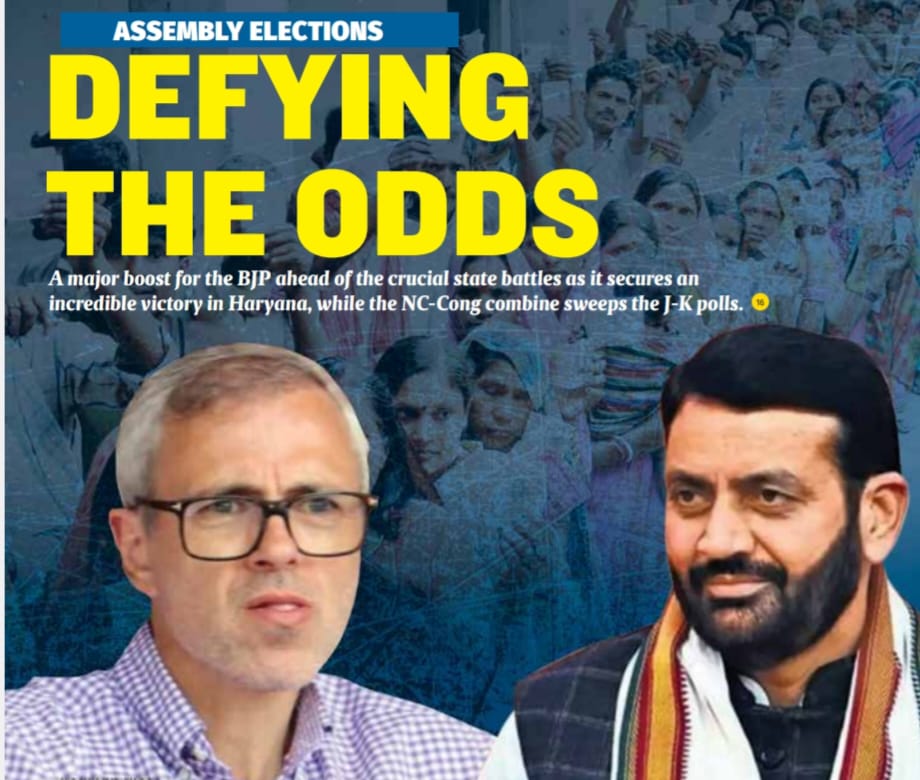
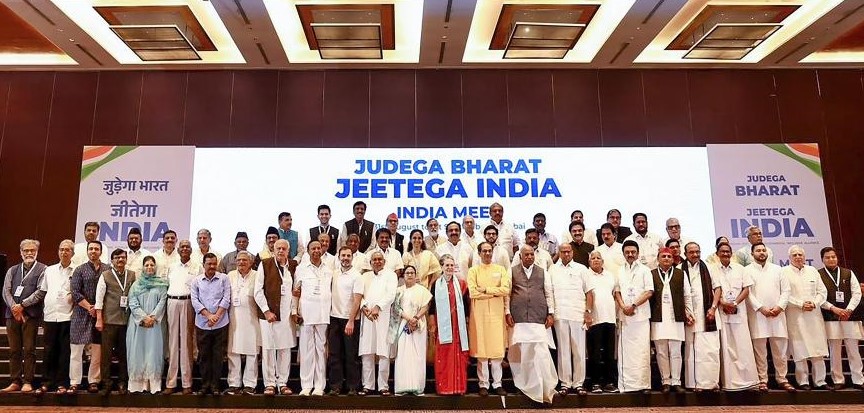
A shocking defeat in Haryana, coupled with a lackluster performance in Jammu and Kashmir, has significantly weakened Congress’ standing within the INDIA bloc as the Maharashtra and Jharkhand Assembly elections approach. Just months after an encouraging showing in the Lok Sabha elections, the party finds itself re-evaluating its strategy following the October 8 verdict. Several allies, including the Shiv Sena-UBT (Uddhav Balasaheb Thackeray), the CPI, and the Aam Aadmi Party (AAP) have urged Congress to reflect on its approach in light of the recent setbacks.

In Maharashtra, where seat-sharing talks within the Maha Vikas Aghadi (MVA) coalition are intensifying, both Shiv Sena-UBT and Sharad Pawar’s NCP are keen to leverage Congress’ vulnerability for better deals. Although Congress touts its performance in the Lok Sabha, having won 13 out of 17 contested seats, it cannot afford complacency. The party’s decision to go solo instead of partnering with AAP backfired in Haryana; AAP’s 1.79 percent vote share ultimately influenced the close contest between the BJP and Congress.

As the Congress leadership returns to the drawing board, it must adopt a more accommodating stance towards its allies. In Jharkhand, where the BJP is gaining momentum, it would be wise for Congress to play a supportive role to the Jharkhand Mukti Morcha. Similarly, in Maharashtra, prioritizing the coalition’s needs over its own interests will be crucial.

In Jammu and Kashmir, the decisive win for the National Conference-Congress alliance marks a fresh chapter for the five-year-old Union Territory. With voters finally able to participate in Assembly elections after a decade, they have opted for stability rather than a fragmented mandate. This clear majority helps dispel concerns over potential political maneuvering in a hung assembly and resolves controversies surrounding the nomination of five legislators by the Lieutenant Governor. The upcoming challenge for the winning alliance and the Centre will be to manage the transition of power responsibly and build trust as any confrontational approach would disregard the electorate’s wishes.

The region has endured trauma from violence, communal tensions, and a long-standing sense of injustice. After years of political apathy, the recent electoral engagement has revitalized the democratic process. The new government now bears the responsibility of shifting focus from political infighting to addressing the real needs of the people, improving their lives, and empowering them.

On a broader scale, the Lok Sabha results initially solidified the Prime Minister’s position, albeit with reduced political capital. The Haryana defeat serves as a crucial reminder of Modi’s enduring dominance in the political landscape, reinforcing his authority amidst growing challenges. For Congress, the Haryana verdict underscores the need for introspection; Rahul Gandhi must navigate the internal divisions more effectively to fulfill his role as the opposition leader, as the electorate looks to him for cohesive leadership.

With these challenges ahead, Congress must realign its strategies to regain its footing and effectively engage with its allies, all the while addressing the pressing concerns of the electorate in the run-up to the upcoming elections.

Will Yogi regain lost ground in forthcoming UP Assembly bypolls ?

With the bypolls for 9 Assembly constituencies in Uttar Pradesh set to take place on 13 November, the announcement of candidates by Bharatiya Janata Party is being keenly awaited amongst the political fraternity, both within and outside the saffron unit.         

The selection of candidates for the forthcoming crucial polls is expected to reveal whether UP Chief Minister Yogi Adityanath has regained lost ground in the state, or the political strategy is still being driven by the central leadership of the party. “The candidates for these bypolls are expected to be announced within the next few days,” sources stated.

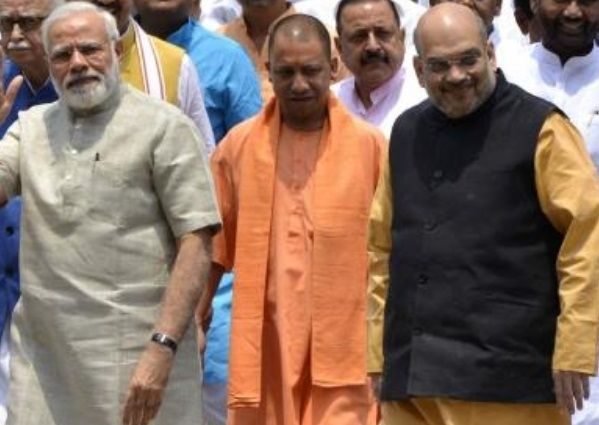
The list of candidates is expected to unveil whether the party’s top leadership has taken into consideration the suggestions made by the UP Chief Minister at a crucial meeting held earlier this week. Top central and state leaders of the BJP met at the residence of national president JP Nadda in an effort to finalize an electoral strategy for the forthcoming polls in the state. Senior leaders including Nadda, Union Home Minister Amit Shah and Yogi Adityanath, along with his two deputies Keshav Prasad Maurya and Brajesh Pathak, were present at the meeting which also discussed candidates to be fielded by the party.    

Ever since the loss of face in Lok Sabha elections, there have been reports of a rift between the Central leadership and Yogi. Though the party has denied any such friction exists between the leaders, it is understood that the Rashtriya Swayamsevak Sangh had to intervene to help resolve the issues between them. In fact, the 2024 “fiasco” in the state was blamed on bad ticket distribution, not keeping Yogi on board with political strategy and lack of coordination between the RSS and BJP.

However, with by polls to 9 legislative assemblies set to take place in UP, an upbeat BJP hopes to continue on the morale boosting path paved after its Haryana victory.  Sources stated that BJP is taking the bypolls in UP very seriously and is attempting to win a majority of these seats.

The party leadership feels that there is a chance for the BJP to regain lost ground after a below par performance during the Lok Sabha polls held just months ago. “A good show in the bypolls would also boost the morale of the cadre which has been lying low ever since the party’s worst ever performance in the state in the past three Lok Sabha polls,” sources added.  

While the BJP had secured 71 and 63 seats in the 2014 and 2019 Lok Sabha elections respectively from UP, its seat share in the crucial state had come down to 33 seats in 2024. BJP had secured 255 of the 403 Assembly seats in the state in the 2022 Assembly polls.

With 80 Lok Sabha constituencies, UP is considered to be crucial in the BJP’s political scheme of things, hence the need for the leadership to try and win the maximum possible of these constituencies. The importance that the party gives to the state can also be gauged from the fact that Prime Minister Narendra Modi has been choosing Varanasi constituency for seeking election to Lok Sabha.  

A good show in the bypolls is also expected to set the tone for the BJP in Uttar Pradesh where its arch rival, the Samajwadi Party, has been attempting to project its good performance in last Lok Sabha polls as a mandate on the Yogi Adityanath government.   

Congress appoints 11 Observers and 2 Coordinators for Maha polls

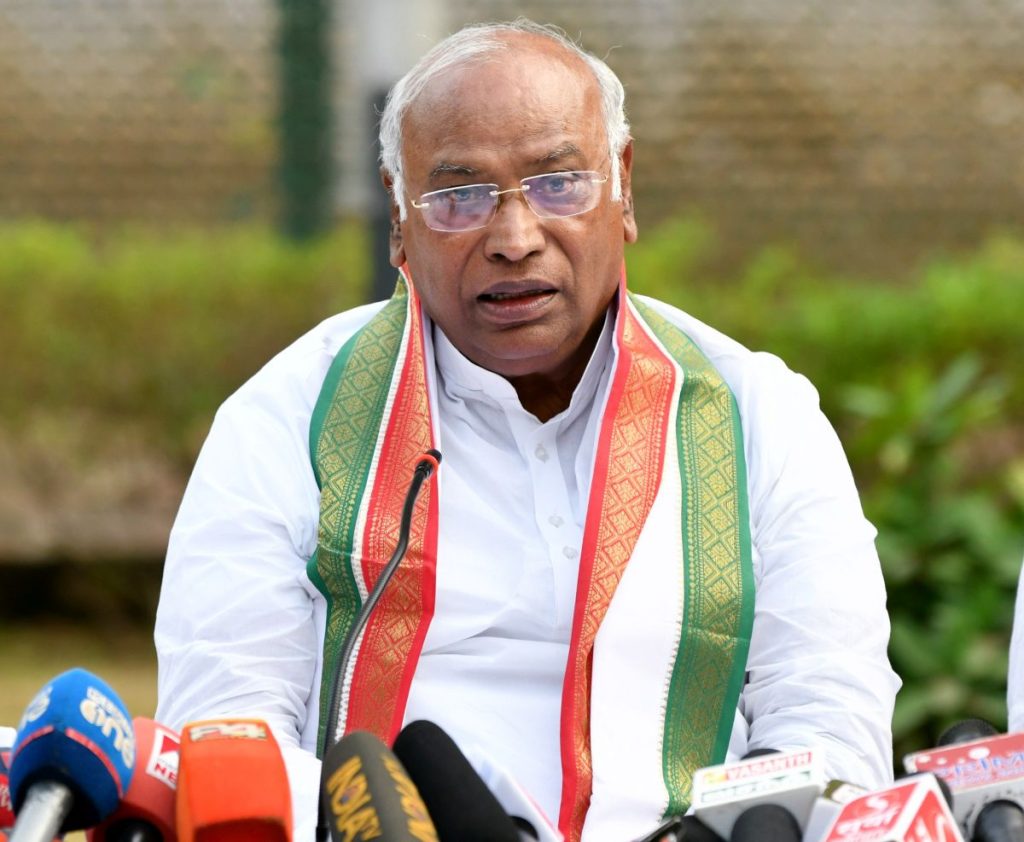
New Delhi, Oct 19 (ANI): Newly elected Congress president Mallikarjun Kharge with party leader Randeep Surjewala briefs the media after his win, at his residence, in New Delhi on Wednesday. (ANI Photo)

New Delhi :  Wary after the bitter experience in the Haryana Assembly elections recently, the Congress is apparently not taking any chances for the Maharashtra Assembly polls scheduled for November 20.

 As the first step in this endeavour, the Congress President Mallikarjun Kharge has named 11 political stalwarts from different states as “observers” for the five regions in the state and also two Election Senior Coordinators for the crucial assembly elections, coming up post-Diwali festivities.

The two state Election Senior Coordinators appointed for the state are: Mukul Wasnik and Avinash Pande, who would oversee the minute details and systematise various aspects of the Assembly elections within the party for the 288 seats, said party sources here.

For the country’s commercial capital Mumbai and coastal Konkan Division, the observers named are former Rajasthan Chief Minister Ashok Gehlot and Karnataka Home Minister Dr. G. Parameshwara.

Vidarbha region has been entrusted to former Chief Minister of Chhattisgarh Bhupesh Baghel, former Chief Minister of Punjab Charanjit Singh Channi and ex-minister and sitting MLA of Madhya Pradesh Umang Singhar.

Marathwada shall be under the observation of former Deputy Chief Minister Rajasthan Sachin Pilot and Telangana Minister Uttam Kumar Reddy.Western Maharashtra shall be looked after by T. S. Singh Deo, the former Deputy CM of Chhattisgarh and Karnataka Minister M. B. Patil.

Finally, the North Maharashtra would be handled by Rajya Sabha Member from Karnataka Syed Nasir Hussain and Telangana Minister Dansari Anasuya popularly known as Seethakka.There are demands from various quarters within and outside the party to deploy Congress’ Leader of Opposition Rahul Gandhi in a big way for Maharashtra in the high-stakes elections and organize at least two election rallies for him in each region.A party source pointed out that in the 2024 LS polls, Rahul Gandhi and Priyanka Gandhi’s genuineness had struck a chord with the state masses that helped the Maha Vikas Aghadi (MVA) allies Congress-Nationalist Congress Party (SP)-Shiv Sena (UBT) bag 31 of the 48 parliamentary seats here.However, Rahul Gandhi would also be required to campaign in the Jharkhand Assembly polls (Nov. 13-20) not to mention the Lok Sabha by-polls in Nanded (Maharashtra) and Wayanad (Kerala), which the Congress will fight to retain.

Wayanad was won by Rahul Gandhi in the 2019 and 2024 LS polls but he opted to retain the Rae Bareli seat (which he had bagged in 2024), while Nanded fell vacant after the recent demise of the sitting Congress MP Vasantrao B. Chavan.Though the candidate for Nanded is yet to be announced, Priyanka Gandhi-Vadra is expected to fight her maiden elections from Wayanad, making it another prestige issue for the party.Aware of the pitfalls in the state with a belligerent MahaYuti working to retain power, the Congress top brass had made it clear that it would not tolerate any laggard behaviour from the state party leaders or workers, at a high-level meeting held in New Delhi at Kharge’s home yesterday (October 14).

The central leadership has also stressed on the need to maintain intra-party unity at all costs, curb any signs of potential rebellion, and extend full cooperation to all the MVA allies besides the smaller supporting parties with the solitary aim of capturing Maharashtra again with the highest number of seats.

By-elections for 4 Punjab Assembly seats on Nov 13

Chandigarh: The Election Commission (EC) on Tuesday announced that by-elections for four Assembly seats in Punjab will be held on November 13. They are Dera Baba Nanak, Chabbewal (reserved), Gidderbaha and Barnala.

Divulging details, Punjab Chief Electoral Officer Sibin C. said as per the programme issued for these by-elections, the notification will be issued on October 18. The last date for filing nominations is October 25 and the scrutiny of nomination papers will be conducted on October 28, while the last date for withdrawal of candidature is October 30.

Sibin C. said voting would take place on November 13, and results will be announced on November 23.

He said with the announcement of the by-elections, the election code of conduct has come into effect in the districts where these constituencies are located: Gurdaspur, Hoshiarpur, Sri Muktsar Sahib, and Barnala. The code of conduct will remain in force until the completion of the election process till November 25.

He said the total number of voters in the four constituencies is 696, 316, with a total of 831 polling stations.

For Dera Baba Nanak, there are 193,268 voters and 241 polling stations. In Chabbewal, the number of voters is 159, 254, with 205 polling stations.

For Gidderbaha, the total number of voters is 166, 489, and 173 polling stations will be established. In Barnala, there are 177, 305 voters and 212 polling stations.

Sibin C. informed that Uma Shankar Gupta, Deputy Commissioner of Gurdaspur, has been appointed as the District Election Officer for the Dera Baba Nanak assembly constituency, while Komal Mittal, Deputy Commissioner of Hoshiarpur, will serve as the District Election Officer for Chabbewal.

Rajesh Tripathi, Deputy Commissioner of Sri Muktsar Sahib, has been appointed for the Gidderbaha constituency, and Poonamdeep Kaur, Deputy Commissioner of Barnala, will be the District Election Officer for Barnala.

He assured that the by-election will be conducted in a peaceful and impartial manner and it will be a fully transparent process.

PM Modi to inaugurate India’s first-ever ITU-WTSA event today

New Delhi Prime Minister Narendra Modi will inaugurate the International Telecommunication Union-World Telecommunication Standardisation Assembly (ITU-WTSA) 2024 at the Bharat Mandapam here on Tuesday.

The Prime Minister will also inaugurate the eighth edition of India Mobile Congress 2024 during the programme, whose focus this year is ‘The Future is Now’.

“A big day for the telecom sector! At 10 a.m. tomorrow, October 15, the International Telecommunication Union-World Telecommunication Standardisation Assembly and the India Mobile Congress 2024 will be inaugurated. These forums are important ones, bringing together leading stakeholders from across the sector, ” PM Modi said in a tweet.

The ITU-WTSA will see about 3, 000 industry leaders, policy-makers and tech experts, representing telecom, digital, and ICT sectors, from more than 190 countries descending to the Bharat Mandapam for participation.

“This historic gathering signifies a pivotal moment for India. We will be driving the future of global standards, ensuring connectivity for all and showcasing our tech prowess, ” said Union Minister of Communications, Jyotiraditya Scindia, adding that “we must ensure innovation thrives not in isolation, but in harmony”.

The Union Minister also spoke about India’s success with new technology as it rolled out 5G across 36 states and union territories within a span of just 22 months, covering 98 per cent of all the districts.

Union Minister Scindia also spoke about Global Stack – Unified Payment Interface (UPI), Aadhaar and DigiLocker which stores about 6.75 billion documents serving 300 million users.

“The roll-out of 5G is expected to inject $450 billion into the economy by 2040, ” the Minister told the gathering.

WTSA is the governing conference for the standardisation work of the International Telecommunication Union, the United Nations Agency for Digital Technologies, organised every four years. It is for the first time that the ITU-WTSA will be hosted in India and the Asia-Pacific. It is a pivotal global event that will bring together more than three thousand industry leaders, policy-makers and tech experts from over 190 countries, representing telecom, digital, and ICT sectors.

The ITU-WTSA event will provide the country with an opportunity to play a key role in shaping the global telecom agenda and also to set the course for future technologies. A lot of Indian startups and research institutions are likely to be set to get critical insights on developing Intellectual Property Rights (IPR) and Patents.

The India Mobile Congress 2024 will showcase India’s innovation ecosystem, where leading telecom companies and innovators will highlight advancements in Quantum technology and Circular Economy.

The India Mobile Congress is Asia’s largest digital technology forum and provides a platform for participating members to showcase innovative solutions, services and state-of-the-art use cases for industry, government, academics, and startups.

More than 400 exhibitors, and about 900 startups from more than 120 countries are likely to showcase their offerings and products. The event also aims to showcase more than 900 technology use case scenarios, and host more than 100 sessions and discussions with over 600 global and Indian speakers.

ECI to announce schedule for Maharashtra, Jharkhand elections today

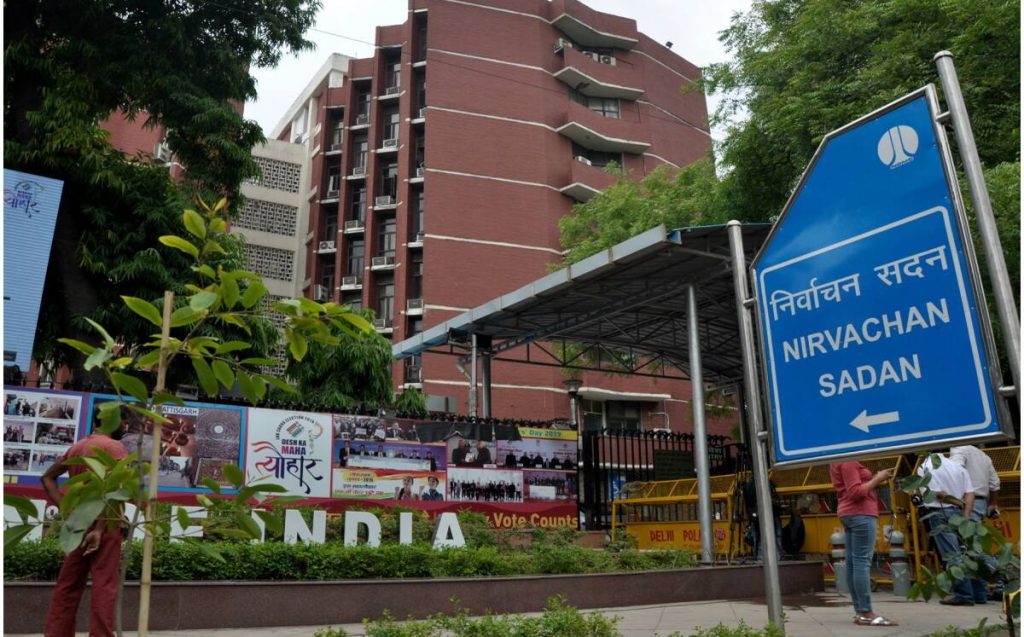
New Delhi:  The Election Commission of India (ECI) will announce the schedule for Maharashtra and Jharkhand Assembly elections on Tuesday.

The Commission will hold a press conference at 3.30 p.m. at the Plenary Hall of Vigyan Bhawan in the national capital.

The term of the 288-seat Maharashtra Assembly will end on November 26 and that of the Jharkhand Assembly, with 81 seats, will end on January 5, 2025.

The whole poll process has to be completed before that as per the rules.

Around 50 bypolls are also due and the ECI is likely to also announce the election dates for these.

In September to assess the preparations for the upcoming Assembly Elections in Maharashtra, a team comprising top officials from the ECI was in Mumbai to take stock of the situation. Chief Election Commissioner Rajiv Kumar, along with Election Commissioners Gyanesh Kumar and Sukhbir Singh Sandhu, held meetings with district collectors and superintendents of police and met the political representatives also.

The ECI team also toured Jharkhand to assess the situation there in September. The ECI team led by CEC Rajiv Kumar along with ECs Gyanesh Kumar and Sukhbir Singh Sandhu held discussions with political parties as also the officials. Representatives of six national parties, including BJP, Congress and CPI(M) and three regional parties — JMM, RJD and AJSU gave their views and submitted their representation to the Election Commission.

With the schedule to be announced by the ECI, the model code of conduct will also come into effect.

All the political parties in both states will name their candidates and begin campaigning.

In Maharashtra, the contest is chiefly between the ruling Mahayuti coalition — the BJP, Shiv Sena, and Nationalist Congress Party — and the Maha Vikas Aghadi, which includes the Congress, the Sharad Pawar-led NCP, and the Uddhav Thackeray-led Shiv Sena (UBT).

In Jharkhand, the ruling Jharkhand Mukti Morcha (JMM)-Congress alliance (the INDIA bloc) will take on the National Democratic Alliance (NDA), which includes the All Jharkhand Students Union (AJSU), Janata Dal (United), and the BJP.

India labels Canada’s latest allegations as ‘preposterous imputations’

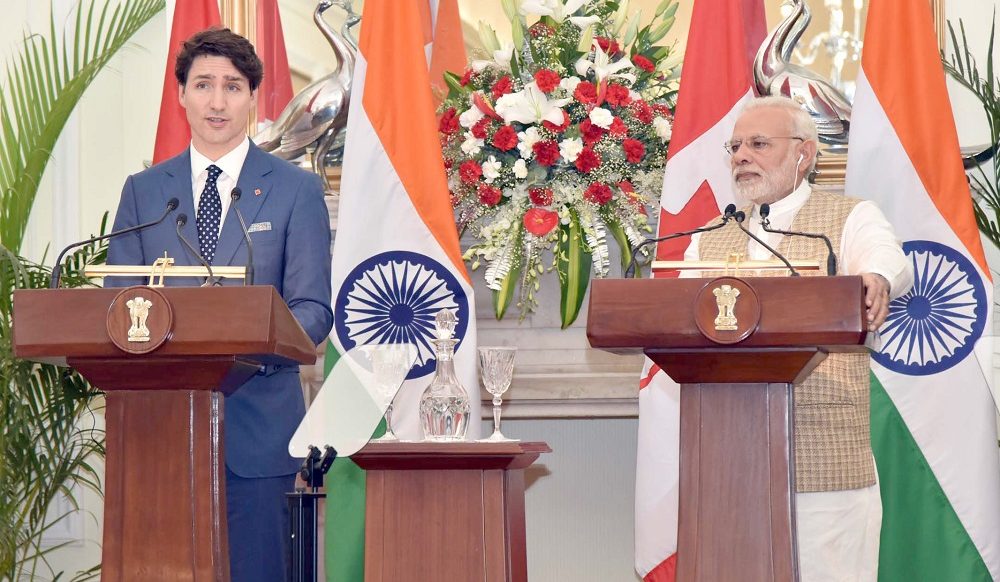
The Prime Minister, Shri Narendra Modi and the Prime Minister of Canada, Mr. Justin Trudeau, during the Joint Press Statement, at Hyderabad House, in New Delhi on February 23, 2018.

New Delhi: Labelling them as “preposterous imputations”, India on Monday slammed the Canadian government led by Prime Minister Justin Trudeau, asserting once again that it has “consciously provided” space to violent extremists and terrorists to harass, threaten and intimidate Indian diplomats and community leaders in Canada.

“We have received a diplomatic communication from Canada yesterday suggesting that the Indian High Commissioner and other diplomats are ‘persons of interest’ in a matter related to an investigation in that country. The Government of India strongly rejects these preposterous imputations and ascribes them to the political agenda of the Trudeau Government that is centered around vote bank politics, ” read a strongly-worded statement issued by the Ministry of External Affairs (MEA) on Monday afternoon.

“Since Prime Minister Trudeau made certain allegations in September 2023, the Canadian Government has not shared a shred of evidence with the Government of India, despite many requests from our side. This latest step follows interactions that have again witnessed assertions without any facts. This leaves little doubt that on the pretext of an investigation, there is a deliberate strategy of smearing India for political gains, ” it added.

With Hindu temples in Canada being constantly vandalised with hateful graffiti by Khalistani activists in Canada and Hindu-Canadians also repeatedly targeted, India has time and again made it clear that any further deterioration in bilateral ties would eventually result in a big loss for Canada.

The MEA on Monday also detailed Canadian PM Trudeau’s “hostility to India” which it said has long been in evidence.

“In 2018, his visit to India, which was aimed at currying favour with a vote bank, rebounded to his discomfort. His Cabinet has included individuals who have openly associated with an extremist and separatist agenda regarding India. His naked interference in Indian internal politics in December 2020 showed how far he was willing to go in this regard. That his Government was dependent on a political party, whose leader openly espouses a separatist ideology vis-a-vis India, only aggravated matters.

“Under criticism for turning a blind eye to foreign interference in Canadian politics, his Government has deliberately brought in India in an attempt to mitigate the damage. This latest development targeting Indian diplomats is now the next step in that direction. It is no coincidence that it takes place as Prime Minister Trudeau is to depose before a Commission on foreign interference. It also serves the anti-India separatist agenda that the Trudeau Government has constantly pandered to for narrow political gains, ” it said.

New Delhi stated that the Trudeau Government has “consciously” provided space to violent extremists and terrorists to harass, threaten and intimidate Indian diplomats and community leaders in Canada. This has included death threats to them and to Indian leaders.

“All these activities have been justified in the name of freedom of speech. Some individuals who have entered Canada illegally have been fast-tracked for citizenship. Multiple extradition requests from the Government of India in respect of terrorists and organized crime leaders living in Canada have been disregarded, ” the MEA statement mentioned.

It added that High Commissioner Sanjay Kumar Verma is India’s senior-most serving diplomat with a distinguished career spanning 36 years. Having been an Ambassador in Japan and Sudan, while also serving in Italy, Turkey, Vietnam and China, it slammed Ottawa for casting aspersions on him, terming them as “ludicrous” and deserve to be treated with contempt.

At the same time, the ministry also said that the Indian government has taken cognizance of the activities of the Canadian High Commission in India that serve the political agenda of the current regime.

“This led to the implementation of the principle of reciprocity in regard to diplomatic representation. India now reserves the right to take further steps in response to these latest efforts of the Canadian Government to concoct allegations against Indian diplomats, ” the MEA stated.

Last week, Trudeau had claimed that he had “brief exchange” with PM Modi in Laos on the sidelines of the ASEAN Summit.

Trouble for Congress as INDIA allies demand extra seats, more say in forthcoming polls

Days after losing Haryana Assembly polls, the Congress is now facing another major problem. None of its INDIA bloc allies is willing to yield as far as ticket distribution for the upcoming polls in Maharashtra, Jharkhand and Delhi are concerned and are demanding more seats in these contests. 

The grand old party is facing a major headache in these states as its allies want to increase their share of seats set to go for Assembly contests.  The defeat of Congress may have taken place in Haryana; however, the grand old party is facing its consequences across the nation. In Maharashtra, Uddhav Thackeray’s Shiv Sena and Sharad Pawar’s Nationalist Congress Party have indicated to the Congress that they would need a bigger share of seats in the forthcoming contest.

Till a few days ago, the Congress was preparing to keep about 115 seats for itself, while planning at allocating around 80-85 seats for both the allies in the contest for the 288 member Maharashtra Assembly. Earlier, the Congress’ state president Nana Patole had himself indicated this formula. However, after the defeat in Haryana Assembly polls, Uddhav Thackeray is understood to be demanding that Shiv Sena (UBT) play the role of elder brother in the state polls. With Pawar also unlikely to accept the initial offer of the Congress on seat sharing, sources said.  

Even in Jharkhand, Chief Minister Hemant Soren is understood to be not keen on allocating more seats to Congress in the forthcoming state elections. The Jharkhand Mukti Morcha doesn’t want to increase the seat allocation of its INDIA bloc ally and will maintain its big brother role in the tribal dominated state, sources said.  

Moreover, the grand old party is staring at a similar situation in Uttar Pradesh where by polls for 10 Assembly seats are set to take place.

Samajwadi party chief Akhilesh Yadav has already released a list of contestants for UP by-elections without even bothering to consult the Congress, sources pointed out.

Interestingly, immediately after the Haryana elections results, Aam Aadmi Party leader Raghav Chadha had made it clear that the party will contest the forthcoming Delhi Legislative Assembly polls without going into an alliance with the Congress. 

While Assembly polls in Maharashtra and Jharkhand are likely to take place soon, elections to Delhi legislature are scheduled to take place early next year.

Congress, which was seemingly on the rise after securing 99 seats in the 2024 Lok Sabha polls, is apparently now being made to face the harsh reality by its INDIA bloc allies. 

Ever since the Haryana polls outcome, most of INDIA bloc allies have attacked the Congress, terming the grand old party’s leadership as “arrogant” and “overconfident”.  The allies are trying hard to give a reality check to the Congress, which has often been accused by them of acting in its own self-interest instead of achieving the larger political goal of defeating the Bharatiya Janata Party. 

The upcoming polls have become interesting as the BJP is expected to go into the electoral contests with an ego boost after a win, while the Congress is left with an unenviable task to reach out and mend fences with its allies.

MOST POPULAR

HOT NEWS