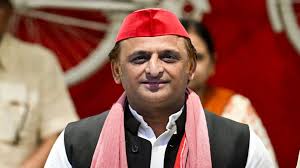
Samajwadi Party President Akhilesh Yadav and his supporters were allegedly stopped from garlanding the statue of the socialist icon Jai Prakash Narayan, installed at the JNIC in Lucknow leading to a showdown between the former CM and the BJP. A report by Mudit Mathur
A political controversy erupted after the police stopped Samajwadi Party chief Akhilesh Yadav and his thousands of supporters from garlanding the statue of the socialist icon Lok Nayak Jai Prakash Narayan, installed in Jayaprakash Narayan Interpretation Centre (Museum of Socialism) in Lucknow. Yadav blamed Yogi Adityanath-led BJP government in the state for the incident.
The BJP government led by Yogi Adityanath stopped Samajwadi Party chief Akhilesh Yadav and his thousands of supporters from garlanding the statue of the socialist icon Lok Nayak Jai Prakash Narayan, installed in Jayaprakash Narayan Interpretation Centre (Museum of Socialism) in Lucknow on the occasion of his birth anniversary by using heavy police force and putting up barricades on approach roads right from his residence.
“On the birth anniversary of Jayaprakash Narayan ji, we go to the JPNIC museum to celebrate. But I don’t know why this government stops us. This blockade by the BJP is not the first. It has blocked all good work,” Yadav told the media.“Today, standing on the road, we are paying tributes to the ‘Jan Nayak’. This government wants to stop us from garlanding but we have done it here on the road itself,” he told the gathering. Last year, Akhilesh Yadav and his supporters jumped the closed gate of JPNIC and garlanded his statue on his birth anniversary.
“Bihar Chief Minister Nitish Kumar has an opportunity to withdraw support from a government which does not allow ‘Samajwadi’ (socialists) to pay respects to JP on his anniversary and remember him. This government is insulting the socialists,” said Yadav, reminding the JD(U) chief (Kumar) that he owed his political emergence to the JP movement.
“Whether it is the BJP people or their government, their every action is a symbol of negativity. To prevent the Samajwadi people from garlanding the statue of JP Narayan Ji on his birth anniversary like last time, barricades have been put up around our private residence to stop them,”Akhilesh posted on X in Hindi.
“The BJP has always been against freedom fighters and the freedom movement. They have learnt from the colonial powers and supported them secretly. Everyone is saying today that they don’t want the BJP,” Yadav said. The SP chief accused the BJP of creating hurdles in the path of harmony, peace, reservation, farmers’ welfare, women’s safety, youth development, employment generation, and development of PDAs (Pichhde, Dalit and Alpsankhyak).
Samajwadi Party escalated a political row over garlanding the statue of socialist icon and leader of the 1942 Quit India movement, Lok Nayak Jaiprakash Narayan, who also spearheaded a mass movement named “Total Revolution” against the dictatorship of the then prime minister Indira Gandhi for imposing an “Internal Emergency” in the country by snatching fundamental rights of the citizen.
Samajwadi Party leader ST Hasan hit out at the BJP government in Uttar Pradesh over the issue. “Every Indian is proud of Jai Prakash Narayan and the SP has the right to celebrate his birth anniversary. I can’t understand why they don’t want to let us celebrate his birth anniversary,” Hasan said. “Looks like they will celebrate Godse’s birth anniversary and not of freedom fighters. We are ashamed of this government and their conduct. We condemn how Akhilesh Yadav is being stopped,” he added.
Samajwadi Party MLA Ravidas Malhotra says, “…JPNIC was built during Samajwadi Party govt… On his (Jai Prakash Narayan) birth anniversary, we wanted to garland his statue to pay tribute. But the BJP government isn’t allowing this… But we will do this by breaking all the barricades put up by the BJP govt. The BJP government can’t silence us through suppression, injustice and dictatorship…”
JD (U) national spokesman Rajiv Ranjan Prasad called Yadav’s remarks “bizarre”. “It is a bizarre remark from Akhilesh Yadav who does politics in the name of JP (Jayaprakash Narayan), but never cares for the principles of the late leader who fought against dynasty rule all his life”, he observed. He also criticized Congress leader Pawan Khera for endorsing Yadav’s statement, reminding him, “It is the Congress which had caused untold miseries to JP and his followers”.
BJP national spokesperson Pradeep Bhandari said that the Samajwadi Party had forgotten the ideals of Jai Prakash Narayan, and further alleged that after defeat in the Haryana assembly elections, the entire “INDI alliance” is resorting to a ”political stunt.” Bhandari said, “Akhilesh Yadav is doing politics. The LDA notice that has been issued makes it very clear that the construction is incomplete.”
“If Akhilesh Yadav had truly good intentions, he could have paid tribute to Jai Prakash Narayan even from his office. Today, the SP has forgotten Narayan’s ideals. If they had followed those ideals, they wouldn’t have allied with the Congress party,” Bhandari added.
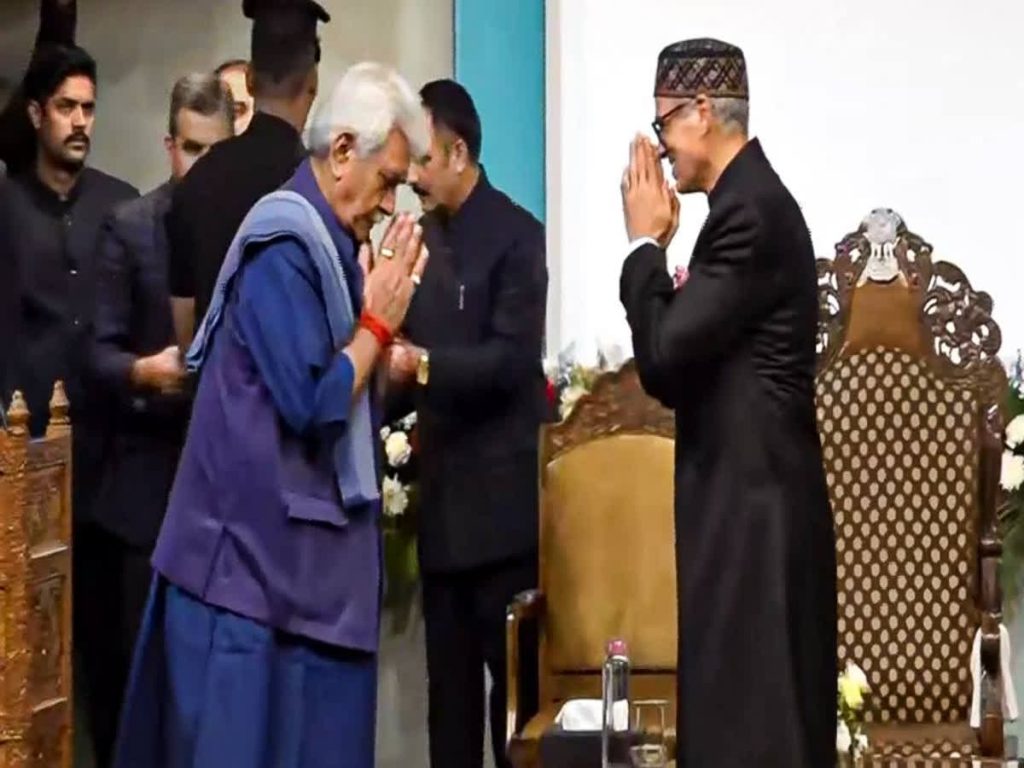
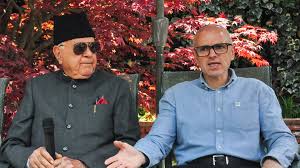
Srinagar: Omar Abdullah, vice president of the National Conference (NC), was sworn in as the new Chief Minister of Jammu and Kashmir on Wednesday, marking his second term after first holding office in 2009.
Surinder Kumar Choudhary, a prominent leader from the Jammu region, took oath as Deputy Chief Minister during the ceremony held at the Sher-i-Kashmir International Convention Centre (SKICC).
The event, presided over by Lieutenant Governor Manoj Sinha, also saw the swearing-in of five ministers: Satish Sharma, Sakina Yatoo, Javid Dar, Surinder Kumar Choudhary, and Javid Rana. Choudhary secured his position as DCM after defeating BJP’s Ravinder Raina in the Nowshera constituency.
Members of the Congress party stayed away from the ceremony in protest, demanding the restoration of J&K’s statehood.
Omar Abdullah’s return to office is significant as he becomes the first Chief Minister of Jammu and Kashmir after the abrogation of Article 370 in 2019, operating under the modified governance framework with enhanced powers granted to the Lieutenant Governor.
It is clear that BJP can be decimated by a united Opposition. But in the case of a one-on-one contest where the Congress and the BJP are pitched against each other, the Congress could hit a roadblock by KumKum Chadha
The so-called strongman of the state of Haryana is vanquished; Congress’s Bhupinder Singh Hooda was exuding the confidence of “sweeping the polls”. However, the Congress lost the state it had pegged its hopes on. The BJP, on the other hand, regained some of its lost glory.
For record, the Lok Sabha election results were kind of a shocker because the BJP which was riding on the is baar 400 paar spiel, failed to get even a majority.
In Jammu and Kashmir, democracy has won: people came out in hordes to cast their vote clearly opting for the ballot rather than the bullet; the hollowness of the PDP’s claim of being a kingmaker is there for everyone to see. Add to this the fact that protagonists for azaadi were clearly on the backfoot.
A case in point: the banned Jamaat-e-Islami and Engineer Rashid’s Awami Ittehad Party failed. Rashid, it may be recalled, had managed a spectacular win in the recent Lok Sabha elections after trouncing former Chief Minister Omar Abdullah.
But this is less about the contest in two states and more about the big picture; this is less about who won and who lost in Haryana and Jammu and Kashmir.
This is more about the national message the electorate has delivered both in the Lok Sabha in June and the state elections in October. This is also about the lessons learnt and unlearnt and the takeaways for the political parties in the fray.
For starters, it is important to understand that the toss up is not between Prime Minister Narendra Modi and Congress scion Rahul Gandhi. If one has to choose between the two, chances are that one would opt for a seasoned politician like Modi to run the country. Rahul Gandhi may have garnered support through his Bharat Jodi yatra or even firing salvos at Prime Minister Narendra Modi, but this should not be interpreted as the acceptance of the people to handpick him to lead the country. Or govern a complex nation like India.
Equally, it is true that Modi may not be India’s best bet in the long run. But in the current scenario, he surely is its immediate answer.
Therefore, one may ask: why did the electorate not support the BJP whole heartedly in the Lok Sabha elections, and why was the mandate fractured?
The answer is clear: BJP’s failure to get a majority indicates that the electorate is willing to look for options outside the BJP. And that is exactly what it did. It mooted for the India alliance but it did not push hard enough to oust the BJP from power. Therefore, it would not be wrong to conclude that in the first round, the Indian electorate was looking for a strong Opposition which could provide the necessary checks and balances to a government which was, on several occasions, riding roughshod.
This is precisely the reason why the “save the Constitution” move worked like nothing else did. Rahul Gandhi may have carried around the Indian Constitution’s pocket edition but to see him as a symbol of that appeal would be a mistake. It was a crusade helmed by a united Opposition rather than the Congress.
Equally, it is clear that the BJP can be decimated by a strong and united Opposition. But in the case of a one-on-one contest where the Congress and the BJP are pitched against each other, the Congress could hit a roadblock, like it did in Haryana. In Jammu and Kashmir too, it was in the reckoning because it rode piggyback on the National Conference.
Having said that, one cannot negate the local factors that were at play in both the states.
As for the Congress, it vacillated between a leadership vacuum and a one man show. In Jammu and Kashmir, it did not have any mass leader to campaign; neither was it able to pull out all the stops during its campaign.
As against this, in Haryana, it committed the fatal mistake of overdependence on Hooda at the cost of others, including Kumari Selja, former Union Minister and a Dalit leader in her own right. Hooda is a Jat by caste.
Backing Hooda alienated the important Dalit vote.
The BJP on its part seized the moment and branded Congress as an “anti Dalit Party” and charged it with insulting Dalit leaders including Kumari Selja.
It is well known that Kumari Selja had not campaigned actively during the polls. To add to the Party’s woes, Union Minister and former Chief Minister Manohar Lal Khattar had asked her to cross over to the BJP.
One last word on the exit polls that went horribly wrong. Yet again.
Like the Lok Sabha elections, the state elections in Haryana and Jammu and Kashmir, prove that the exit polls are completely off the mark. During Lok Sabha elections, when all polls were talking about numbers on the premise that the majority for the BJP was a given, the saffron party won only 240 seats out of 543 seats. It had to depend on allies for government formation.
Similarly, in the two states: in Haryana, the exit polls had forecast a clear majority for the Congress and a hung assembly in Jammu and Kashmir. As against this, the BJP wrested power in Haryana and the National Conference and Congress alliance secured a decisive win in J-K.
So, what does this indicate? That the Indian voter is mature enough not to give his mind. There are visible gaps between what he says and what he does.
This was true in the Lok Sabha elections as it was in the state elections where the results were contrary to expectations. If pollsters failed to grasp the undercurrent, the voter was either silent or saying contrary to what he intended to do.
This is one part but the more important and significant message is that democracy is still alive in India despite attempts to throttle it by a handful.
Intro: The CM-designate’s conciliatory tone towards the BJP reflects the significant challenges facing the about-to-be-installed NC-Congress government in the UT, writes Riyaz Wani
Soon after the National Conference (NC) secured 42 seats in the just concluded Assembly election in Jammu and Kashmir, its leader, Omar Abdullah struck a pragmatic tone. Instead of the emphasis on the restoration of Article 370, which was one of the main features of the NC’s election campaign, he prioritized the return of statehood to J&K. And to this end, instead of advocating the passage of resolution against the revocation of Article 370 on October 5, 2019, he expressed the intention to pass a resolution for the reinstatement of statehood.
“Our political position won’t change. As and when the government is formed, the Cabinet should pass a resolution and the CM should then travel to Delhi and call on the prime minister, home minister and senior leadership to press for the restoration of statehood,” said Abdullah.
He also talked about his intention to work for a cooperative relationship with the BJP-ruled New Delhi and its Lieutenant Governor in the union territory, Manoj Sinha, to ensure good governance in the erstwhile state.
Omar’s conciliatory tone towards the BJP reflected the NC-Congress alliance’s formidable challenges in the union territory. He wouldn’t be just dealing with the BJP government at the centre and its powerful Lieutenant Governor in J&K but he would also be up against the BJP as a formidable regional opposition party with the second largest number of seats. The saffron party increased its tally in the Jammu division from the 25 seats in 2014 to 29 now, making it the majority party from the Hindu-dominated region.
This makes the NC-Congress coalition amenable to accusations of leaving out Jammu region from any credible representation in the new elected government. Already such voices have reared their head in Jammu. Social media in Jammu is abuzz with the people from the region expressing resentment at being left out of the government, even after consolidating in favour of the BJP.
However, people in Kashmir don’t think it is a legitimate concern in a union territory setting.
“The new elected government is one of the weakest in the country while the real authority is vested in the LG who represents the BJP government at the centre,” said Naseer Ahmad, author of Kashmir Pending, a book on Kashmir. “So, the BJP effectively remains in charge of the UT, while the elected government will wield little control over governance, making it difficult for the NC-Congress coalition to hold its ground, let alone take steps to fulfill its promises.”
In Kashmir Valley, on the other hand, there will be enormous pressure on Omar to make the restoration of statehood a central issue of his government, as the people would want him to assert himself and deliver on his promises. But will the centre relent? That remains to be seen. Although both the Prime Minister, Narendra Modi, and the Union Home Minister, Amit Shah, time and again promised the return of statehood during their election campaign in the union territory, they aren’t expected to make the concession to a UT government other than their own.
This is likely to compound the problems of the NC-Congress government which would have to run for approval for any of their move or decision to the LG, just like the situation has been in New Delhi, creating mutual antagonism.
If anything, the outcome of the Assembly election wasn’t along predictable lines, more so, in the Valley, where a crowded electoral scene threatened to split the mandate, but ultimately didn’t. At one point in the election, the Awami Ittehad party (AIP) seemed set to replicate its parliamentary party performance where its jailed leader, Engineer Rashid won by a whopping 4,52,812 votes – two-thirds of the total – defeating political heavyweights such as former Jammu and Kashmir chief Omar Abdullah and Sajad Lone. This gave AIP a majority across almost 12 of the 15 Assembly segments in North Kashmir. But this time, the party could barely win one seat, that too despite Rashid being released from Tihar to campaign for his party.
The banned separatist outfit Jamaat-i-Islami met the same fate with not even one of the independent candidates fielded by the party managing to win. Similarly, the parties like Altaf Bukhari’s Apni Party and Ghulam Nabi Azad’s DPAP, both formed in the past five years, failed to win a single seat, while the People’s Conference (PC) led by Sajad Lone could only secure his own seat.
The PDP, once a major rival to the NC in the Valley, secured just three seats, a drastic fall from the 28 seats it won in the last Assembly election in 2014. The PDP, as per the general opinion in the Valley, suffered for running a coalition government with the BJP from 2015 to 2018. So much so that the PDP is also blamed, in part, for the BJP-led central government’s decision to revoke Article 370 in 2019. Also, unlike the NC, the PDP in recent years also faced exits of most of its senior leaders who boasted their respective support bases.
Going forward, the new government will need to perform a tight balancing act to survive. With the BJP controlling the Union government and the LG wielding considerable authority in the Union Territory, the NC-Congress coalition will have a tough time asserting its power, if any. The coalition has 49 seats between them which make for a secure majority. The BJP which was hoping to form a government by roping in the smaller parties and the independents from Kashmir Valley doesn’t have many options. And for now, the party could settle for a role in the opposition but it would be there to make the most of every opportunity to highlight the failure of the NC-Congress coalition.
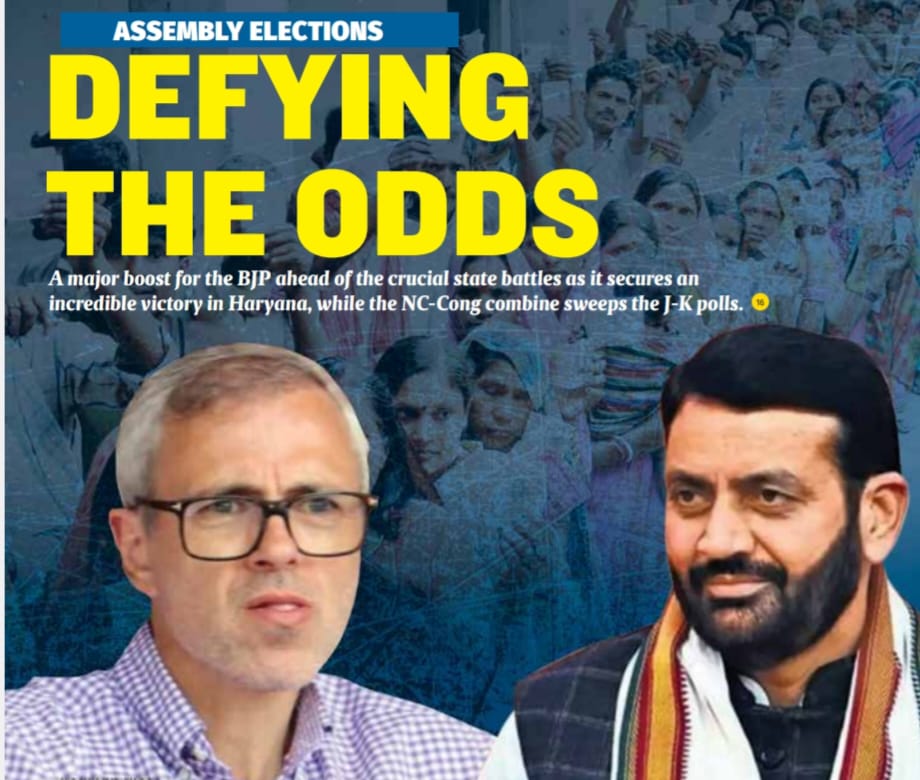
A major boost for the BJP ahead of the crucial state battles as it secures an incredible victory in Haryana, while the NC-Cong combine sweeps the J-K polls. A report by Aayush Goel
In a remarkable turn of events, the BJP has achieved a record-breaking victory in Haryana, overturning predictions of defeat that had been widely circulated in the lead-up to the elections. This unexpected win may shift momentum back in the BJP’s favour as it gears up for a series of critical state battles ahead. The results send a clear message: Prime Minister Narendra Modi continues to wield significant influence, while doubts remain regarding the efficacy of Leader of Opposition Rahul Gandhi’s campaign strategy. The Congress party, in the aftermath of this election, appears to be reeling from the shock of the BJP’s triumph.
The question now arises: was this victory a product of Home Minister Amit Shah’s strategic brilliance, the recent change in Chief Minister, or effective groundwork by the RSS? Each of these factors could be seen as pivotal in this outcome. Moreover, the behind-the-scenes support from Gurmeet Ram Rahim’s Dera Sacha Sauda, along with infighting within Congress and the party’s over-reliance on former CM Bhupinder Singh Hooda, will surely fuel animated discussions in the coming days.
As the BJP celebrated its historical success in Haryana, top party strategists attributed the win to three critical factors: a relentless Prime Minister, a humble Chief Minister, and a well-organized grassroots mobilization effort. PM Modi’s ability to set aside personal equations with Haryana CM Manohar Lal Khattar was instrumental in overcoming a decade-long anti-incumbency narrative. This strategy has yielded massive successes for the BJP in other states, including Gujarat, Uttarakhand, and Tripura.
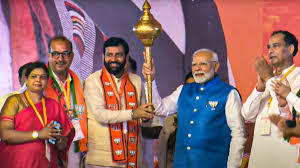
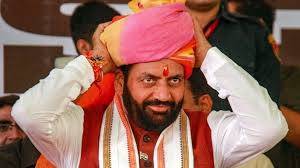
In a strategic move, the BJP appointed Kurukshetra MP Nayab Singh Saini, an OBC leader, to replace Khattar in March 2024. Saini was tasked with countering Congress’ narrative that the party was losing touch with key demographics, particularly the “jawan-pehelwan-kisan” groups. Under his leadership, significant welfare initiatives were rolled out, including reservations for Agniveers, lifting the ban on non-basmati white rice exports, and promising Rs 2,100 monthly support for women. Saini’s rapid progress in addressing these issues resonated well with the electorate.
On the eve of the elections, the BJP took a bold step by replacing 38% of its sitting MLAs. This contrast with Congress, which retained most of its incumbents and subsequently suffered losses, speaks volumes about the BJP’s strategic adaptability. The party effectively reached out to both Jat and non-Jat communities, successfully penetrating traditionally strong Jat regions. In Tosham, for example, the BJP fielded Shruti Choudhry, the daughter of former Congress leader Kiran Choudhry. After switching parties due to Congress denying her a Lok Sabha nomination, Shruti won decisively, as did BJP candidates in other Jat-dominated areas like Bhiwani and Sonepat.
In contrast, the National Conference-Congress alliance in Jammu and Kashmir marked a historic resurgence, securing a majority in the first assembly elections after the revocation of Article 370. The NC won 42 seats, sweeping the Kashmir region, while the BJP maintained its dominance in Jammu with 29 seats. These elections, held over three phases, were the first in a decade, further amplifying their significance.
Among the notable winners in Kashmir were NC vice-president Omar Abdullah and Congress UT chief Tariq Karra. In contrast, prominent figures like Mehbooba Mufti’s daughter, Iltija Mufti, and former Deputy Chief Minister Muzaffar Baig faced defeats, highlighting the shifting political landscape. The BJP’s J&K chief, Ravinder Raina, also lost in Nowshera, complicating the party’s standing in the region.
As political analysts and journalists dissect these developments, Tehelka’s cover story features in-depth reports from Srinagar by Special Correspondent Riyaz Wani, alongside contributions from Rajesh Moudgil, Pawan Kumar Bansal, and Ayush Goel, who extensively covered the Haryana elections, as well as a column by esteemed journalist Kumkum Chadha.
BJP gets the battle template -‘Haryana Hurricane.’ This is how the BJP describes the recently concluded assembly elections in the state where the party defied all exit polls and political experts by winning for the third consecutive time. The victory is significant as the party that had to go for coalition in 2019 polls managed to secure a simple majority, by winning 48 seats in the 90-member Assembly.
The victory has not only handed the reins of state government to the party but the miraculous ‘hat-trick of assembly wins’ has also infused the lost ‘Josh’ after the party agonizingly fell short of the majority mark in the Lok Sabha elections in June. Needless to say, the poll outcomes have rejuvenated the party cadre everywhere. The news was especially heartwarming for them as Haryana was one of the states where the party’s Lok Sabha tally had been halved, down from 10 in 2019 to five this year. The victory has given the party a ready template for forthcoming assembly elections in Maharashtra and Jharkhand in November.
Maharashtra has a political scenario similar to Haryana where the party had failed to weave its magic in the Lok Sabha elections. The party and its allies won just 17 of the state’s 48 parliamentary seats with an antagonistic Maratha community, factionalism and mounting anger against deputy CM Devendra Fadnavis all working against the ruling Mahayuti alliance. The next is Jharkhand, where the situation is relatively better, with the NDA winning nine of the state’s 14 LS seats. But here again, the BJP will have to work hard to regain the affections of the angry tribal communities while also reining in the massive factionalism.
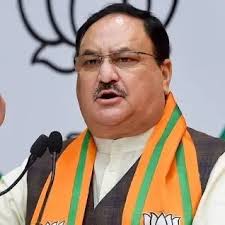
“We have sailed through Haryana and are more confident, encouraged and enthusiastic. Will win both Maharashtra and Jharkhand empowered by our victory in Haryana and performance in Jammu and Kashmir,” said National BJP President Union Health Minister JP Nadda.
The importance of RSS – The Sangh, which has been the backbone of the party, found itself fighting relevance crises in May this year. It was in the middle of the Lok Sabha election, when BJP president J. P. Nadda grabbed headlines by saying the party is now saksham (capable), and no longer needs its ideological mentor Rashtriya Swayamsevak Sangh (RSS) to campaign for it. The result of that election, which the RSS cadres largely sat out, gave the party a reality check and it was back to basics in Haryana. Battling strong anti-incumbency in the state, the BJP turned to Sangh who got on the ground and held hands right from the ground surveys to ticket allocation and campaign, and helped in achieving the impossible by getting the party a record third-time successive victory in the state.
The BJP clearly learnt its lessons and the top brass sought the RSS’s help again to rebuild trust with the voters. The mentor stepped up and left no stone unturned to campaign for the BJP in Haryana. Regular samiksha baithaks (meetings between members of the two organisations), door-to-door campaigning by RSS volunteers, efficient distribution of voter slips in every household, regular communication of feedback from the ground by karyakartas to the BJP, and even giving greater inputs on which national leader should campaign in which constituency, the RSS has had a significant say in the BJP campaign.
The Sangh units who consolidated the core cadre voters and helped the party in reversing the anti-incumbency trend to pro-incumbency have credited the success to better coordination with the party, all thanks to the Sangh’s ‘Chanakya’ — joint general secretary 60-year-old Arun Kumar. Kumar’s RSS colleagues, Atul Limaye and Alok Kumar have been asked to do the same in Maharashtra and Jharkhand, respectively.
Amidst various aspects of Haryana poll victory is how things turned around for former state CM and now Union Power Minister M.L. Khattar. The BJP, going for its tried and tested winning formula, switched CM in the state right ahead of Lok Sabha elections. The move was aimed at countering anti-incumbency in the state with the then CM, ML Khattar emerging as the face of this anti-incumbency.
Taking brick-bats and being sidelined during the Haryana poll campaign, especially during the rallies of his mentor and PM Modi, apparently to buck anti-incumbency, Khattar, a former RSS Pracharak and CM of around a decade, proved to be the poster boy of the thunderous victory.
Khattar was instrumental in the BJP’s massive OBC outreach of initiating the proposal to increase the income ceiling for the OBCs. After the Central Government notified the decision, Saini announced its implementation in June. According to political experts, it was the OBC community’s support that helped the party score over the Congress which failed terribly in giving its OBC leaders their due in elections.
The Khattar factor has got the BJP now looking for similar faces in both Maharashtra and Jharkhand. The party is now switching its campaign tone to celebrate the works of their Mahayuti coalition. The Mahayuti government has announced initiatives worth Rs 8,440 crore. These include welfare programs like free LPG cylinders and agricultural schemes. In Jharkhand, the party aims to bank on its tribal outreach. It expects Haryana’s OBC magic to be replicated by Jharkhand’s tribals. After appointing a tribal leader to head its first government in Odisha, the BJP has announced plans to establish a grand memorial in Sundargarh district to honor tribal icon and freedom fighter Birsa Munda, in celebration of his birth anniversary. The party is looking for Khattar-like RSS-backed faces to make poster boys of the campaign.
The battles ahead – Other than the two key points mentioned, there are many micro notes that BJP can take for the Maharashtra and Jharkhand elections. The party’s failure in the sole Muslim-dominated district Nuh and setbacks in J&K have pointers on how the BJP must engage with the Muslim community which will be vital for elections in Maharashtra though the community is much bigger and state politics is more complex.
The BJP leaders feel that learning from Haryana has equipped them better to deal with aggressive allies there. The ruling Mahayuti alliance comprises the BJP, Maharashtra CM Eknath Shinde-led Shiv Sena, and his deputy and Nationalist Congress Party (NCP)-Ajit Pawar faction. Both allies were eyeing more seats in the belief that the LS results had diminished the BJP, but the Haryana comeback has put the saffron party back in the game.
Maharashtra and Jharkhand are preparing for important elections. In Maharashtra, the Assembly elections are set for November 2024. The coalition is up against Maha Vikas Aghadi, a coalition of Congress, NCP (Sharadchandra Pawar), Uddhav Thackeray’s SHS (UBT) (then Shiv Sena) Samajwadi Party, CPI(M), and others. The RSS having proven its mettle in the North is now highly mobilized in Maharashtra with prominence being given to leaders like Pankaja Munde, Vinod Tawade, Sudhir Mungantiwar, and Chandrakant Patil. Even Union Minister Nitin Gadkari is apparently in the loop in the plans for the assembly polls.
In the LS election, the reservation issue had polarised the Dalits, Tribals and Marathas and hurt the BJP, especially in regions like Marathwada. Like the experiment in Haryana, where it gained non-Jat support, in Maharashtra, the BJP has revived its ‘Madhav formula’ (Malis, Dhangars and Vanjaris), the powerful OBC groups, which it has been cultivating to challenge the political hegemony of the dominant Marathas.
While Jharkhand is conventionally a BJP stronghold and banking on tribal outreach, it will face off against Jharkhand Mukti Morcha (JMM) chief and Chief Minister Hemant Soren, one of the country’s most prominent tribal leaders. The party’s state President Babulal Marandi has given the ambitious election slogan “Kyon pade ho chakkar mein, Jharkhand mein koi nahin hai BJP ki takkar mein (Why worry, there is no one in Jharkhand who can challenge the BJP)”.
The party, depending on cadre voters, has of late been facing a major challenge: securing the Scheduled Tribe (ST) reserved constituencies, a weakness that cost them dearly in the 2019 assembly poll (it won only two of the 28 seats). With last-minute SC welfare initiatives giving a major boost to the party in Haryana, the BJP has already ramped up its outreach to STs through initiatives like Rs 79,000 crore national ‘Dharti Aaba Janjatiya Gram Utkarsh Abhiyan’, designed to benefit over 50 million tribals nationwide.
A food for thought – The Haryana election results indicate that the BJP can still effectively defeat Congress in direct contests, despite facing strong opposition.
The Congress party had hoped to capitalise on anti-incumbency sentiments and internal divisions within the BJP in Haryana, but the results show that many voters remained loyal to the ruling party. The final Haryana assembly results came as a surprise for many. Congress leaders Rahul Gandhi, Mallikarjun Kharge and Bhupinder Hooda said the poll results were “unexpected” as “every exit poll and survey” showed that the Congress would win the polls. The loss in Haryana has also weakened the position of the Congress in the Maha Vikas Aghadi alliance, which will intensify the power struggle among the allies.
The Haryana results should make the Congress to introspect over dealing with allies of I.N.D.I.A block at the state level. The key ally, the AAP, has blamed the Congress, especially the leader of the opposition and former CM Bhupender Hooda for “overconfidence” for the “shocking” loss in the state. The Congress ally, the Shiv Sena (UBT) leader Sanjay Raut indicated that results “would have been different” had the Congress allied with INDIA bloc partners such as the AAP and the Samajwadi Party. It is worth noting that while the Congress was initially aiming for the lion’s share of seats in its alliance with Raut’s party, it will now be negotiating from a position of weakness in Maharashtra.
Similarly, in Jharkhand, the Congress, right after the Haryana elections, has announced all alliance partners stand united and are with the JMM-led coalition government in the state and seat sharing will be discussed only after elections are formally announced. The JMM is seeking the lion’s share after the Haryana poll debacle. Things have changed considerably even at the central level as just a day after the Haryana election results, the AAP announced that it would contest the Delhi assembly elections without an alliance with Congress. The infighting over seat sharing in upcoming assembly polls in Jharkhand and Maharashtra within the I.N.D.I.A block after the Haryana poll debacle appears to be handing BJP an advantage in both states.
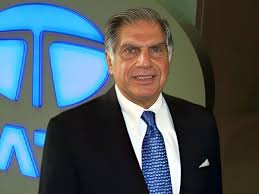
With Ratan Tata’s death, former chairman of Tata Sons, owners of the Tata legacy, the city of Mumbai has lost not only a tall leader but also, more importantly, a man who never flaunted his wealth or achievements but remained rooted in the values that a resurgent India should strive for.
In Switzerland, near Zurich, lies the university town of St Gallen. Every year, the university organises a symposium for students selected from universities outside Switzerland. Participants are selected based on their essays. The winners are invited to the University of St Gallen and exposed to the views of select individuals from across the globe on subjects ranging from business to politics to social mores.
Some years ago, student participants from India questioned Ratan Tata, one of the three invited speakers, on how the Tatas could survive with their old-world values intact in the face of competition.
I distinctly remember Ratan’s ready answer. “There is a place for us (Tatas) at the table. We will continue to perform as per our norms. We do not comment on the practices followed by our competitors, except to the extent that we will not try to emulate or adopt practices that are repugnant to our philosophy.”
On another such occasion inside India, Ratan was asked the same question. He appears to have replied more directly that time, asserting that the Tatas were “industrialists” and not “businessmen”. That, I thought, said it all.
JRD Tata, the doyen who nurtured Ratan, as well as Ratan himself, never flaunted their wealth. Money earned was distributed not only to shareholders, who had a major stake in the profits, but also to the needy and the dispossessed through various charitable channels patronized by the Tata companies.
Recently, the two Tata Trusts, which own 65 per cent of the total shares in the companies managed by the conglomerate, set up their special cell to perform the tasks that various NGOs to which they donated funds would undertake.
I met up with Ratan more closely when Mukund Rajan, a Rhodes Scholar and son of my IPS batchmate R Govind Rajan, was the Tata Chairman’s principal aide. The occasion was an inquiry into the unethical conduct of one of Ratan’s own confidantes and managing director of a Tata company. The inquiry necessitated an expert from the world of computer technology who could recapture erased data.
Some former English police officers, who had served in the Hong Kong police and whom I had met during my stint with the Indian music industry’s Protection of Copyrights Cell, were up to the task. I introduced them to Ratan.
The Chairman’s spontaneous reaction to a crime committed under his very nose awoke my desire for justice and fair play.
That the head of a big conglomerate could pursue a misdeed with such vigour and commitment restored my own fading belief in the choice of a right over a wrong that should guide a leader’s choice.
It is difficult to find corporate houses that follow the right path for fear of having to exit the business altogether if they do not comply with questionable requests. It is refreshing to know that the mighty House of Tatas is still standing tall even as many around it fall like ninepins.
Governments in power may favour those corporates which seek shelter under their powerful wings. But they will continue to respect the House of Tatas and its leader for their uncompromising adherence to ethical practices in the cut-throat world of commerce and industry.
Rest in peace, my friend. Your father Naval was fond of me. I dare say you knew this. From time to time, when I was away in Punjab and then in Romania, I received personal letters from Naval inquiring about my well-being. I cannot fathom to this day why Naval Tata took a liking to me. But, all the same, I was truly delighted. Who would not be?
The tiny Parsi community of Mumbai has lost a colossus of a human being. The citizens of Mumbai are poorer for the loss.
The men and women of India should grieve because it is more and more difficult these days to find individuals wedded to principles and values that should matter as the world becomes more complex and, alas, more cruel.
(The writer, a retired IPS officer, was Mumbai police commissioner, DGP Gujarat, and DGP Punjab, and is a former Indian ambassador to Romania. The article first appeared in the Tribune.)
At a time when agriculture is facing numerous threats globally, the Acropics project, funded by the European Union, is leading the way towards holistic farming practices. A report by Deepanwita Gita Niyogi
In today’s time, scarcity of water and land plague agriculture the most. This threatens food security and nutrition. According to the Food and Agriculture Organization (FAO) of the United Nations, these two factors have placed important food production systems around the globe at risk, posing a profound challenge to the task of feeding the world.
FAO further notes that while the past few decades witnessed a three-fold increase in food production, “in too many places, achievements have been associated with management practices that have degraded the land and water systems upon which food production depends”.
When such is the scenario, there is a need to introduce sustainable practices in agriculture which arrest land degradation and water pollution by reducing the use of pesticides and chemical fertilizers in farms.
The Acropics project
The Acropics (Agroecological Crop Protection towards International Co-Innovation Dynamics and Evidence of Sustainability) project, an European Union-funded research project coordinated by France’s National Research Institute for Agriculture, Food, and Environment (INRAE) is on sustainable agricultural practices.
It is also part of the Directorate of Extension Education of Dr YS Parmar University of Horticulture and Forestry based in Himachal Pradesh’s Solan district.
The main aim of Acropics is innovation in agroecology and crop protection throughout the world. Under a collaborative effort, there are 15 members from 13 countries, 12 academic organisations and three companies as part of it.
By focusing on agroecological crop protection systems, the project seeks to minimise the use of harmful pesticides in agriculture. Towards this end, the horticulture university in Solan is promoting natural farming practices. Farmers following the natural farming method use farm-made and chemical-free concoctions. This protects the soil and water sources.
The total budget for the four-year duration Acropics project stands at €1,656,000. The funding is provided by the European Commission. Acropics is is a part of a global effort to back sustainable farming through innovative methods.
Inder Dev, the director of extension education at the university in Solan, is in charge of the Acropics project in India. “In 2022, a call came from the European commission. After that, the university submitted the project as a partner.”
Sustainable ecosystems
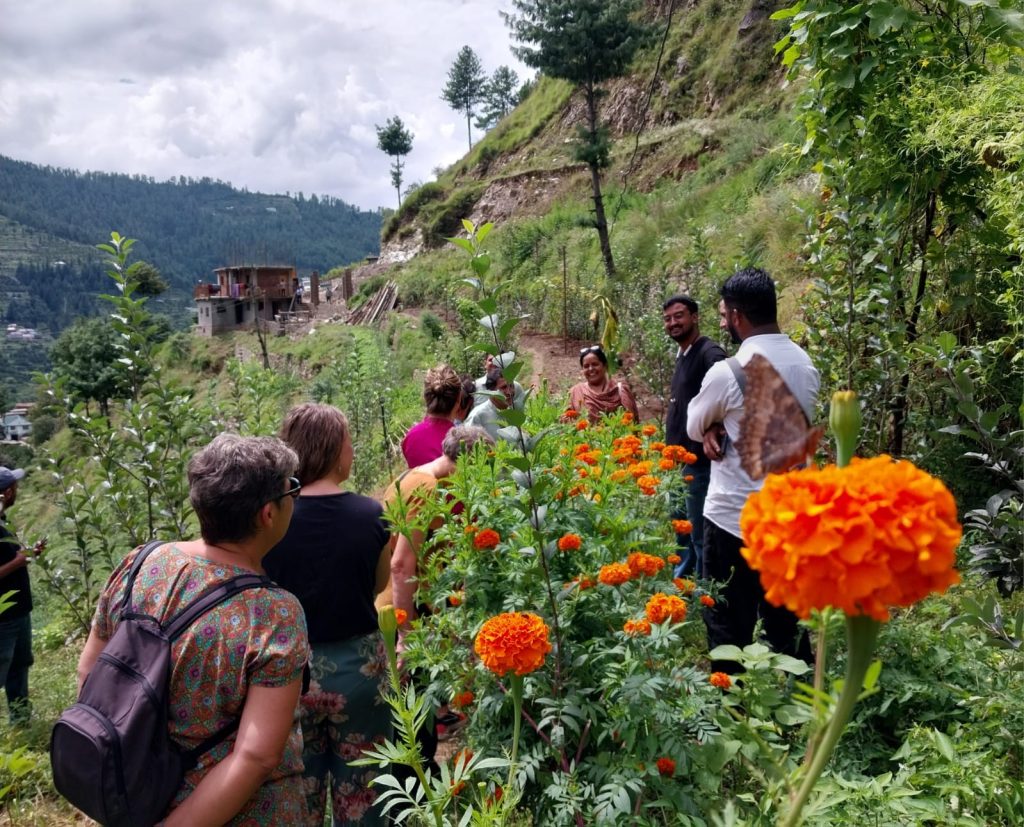
Under Acropics, there are 12 sustainable agroecological ecosystems which are open to research and innovation.
“There are two sustainable agro ecosystems in Himachal Pradesh which come under the Acropics project. One is the Chaupal Naturals Farmer Producer Company and the second is the Gram Disha Trust. Gram Disha Trust takes care of three farmer producer companies,” Dev added.
He explained that the project is being implemented with effect from January 1, 2024. “The ultimate focus is on how to reduce pesticide consumption in different sustainable ecosystems by at least 50 per cent.”
In Himachal Pradesh where natural farming is the solution towards agro-ecology, farmers are looking at innovations and experimentation which can be replicated elsewhere.
For instance, the Chaupal Naturals Farmer Producer Company based in Shimla district of Himachal Pradesh produces apples which always do not fetch a high price in the market. So, the company makes bottled apple juice as an innovation. In this, the university extends support in marketing the product.
The state project implementing unit like the Agricultural Technology Management Agency also extends cooperation. Chaupal Naturals was launched two years back and at that time it did not have market support and linkage.
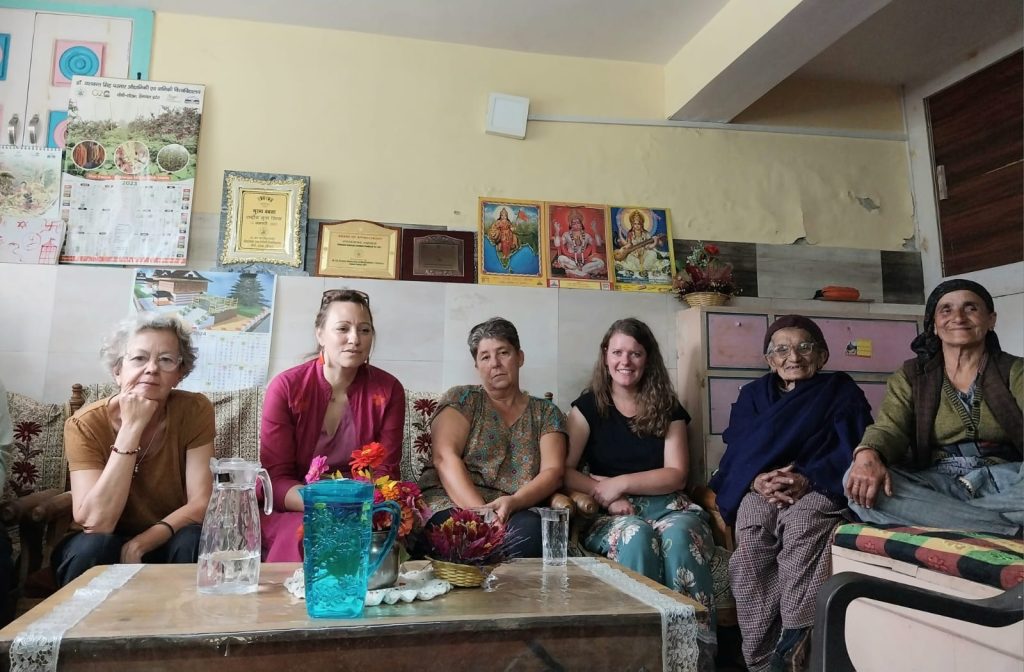
The Gram Disha Trust is one of the 12 global partners in sustainable agricultural systems which are part of the Acropics project. Over the past 15 years, Gram Disha Trust and its trustees have been working with smallholder farmers in Himachal Pradesh and other states on sustainable farming practices.
“The trust has been instrumental in reintroducing millets in the Pangna valley of Himachal Pradesh. In fact, since 2016, numerous training and capacity building initiatives have been organised to revive the forgotten crops of the Himalayas. The trust also ensures that not just production, but also market linkage is a key aspect of capacity building for farmers. Over the past five years it has helped over 1000 farmers in Himachal Pradesh and other states through its programmes,” said Ashish Gupta, the founder of Gram Disha Trust.
According to Gupta, one of the core aspects of Acropics is agroecological crop protection. Among the 13 principles of agroecology, there is also biodiversity and social values and diets. “These principles require that native grains, which are hardy and grow with little inputs while providing high nutritional values, should be kept at the forefront of cultivation.”
For instance, amaranth is a diverse crop. Not just its seeds, but the fresh leaves also provide a source of nutrition. It is also a suitable intercrop which grows along with millets, maize and paddy. Amaranth is also considered an ornamental crop which attracts beneficial organisms. Thus within Acropics, there is a good opportunity to study its cultivation as part of the transformation in food systems.
A shocking defeat in Haryana, coupled with a lackluster performance in Jammu and Kashmir, has significantly weakened Congress’ standing within the INDIA bloc as the Maharashtra and Jharkhand Assembly elections approach. Just months after an encouraging showing in the Lok Sabha elections, the party finds itself re-evaluating its strategy following the October 8 verdict. Several allies, including the Shiv Sena-UBT (Uddhav Balasaheb Thackeray), the CPI, and the Aam Aadmi Party (AAP) have urged Congress to reflect on its approach in light of the recent setbacks.
In Maharashtra, where seat-sharing talks within the Maha Vikas Aghadi (MVA) coalition are intensifying, both Shiv Sena-UBT and Sharad Pawar’s NCP are keen to leverage Congress’ vulnerability for better deals. Although Congress touts its performance in the Lok Sabha, having won 13 out of 17 contested seats, it cannot afford complacency. The party’s decision to go solo instead of partnering with AAP backfired in Haryana; AAP’s 1.79 percent vote share ultimately influenced the close contest between the BJP and Congress.
As the Congress leadership returns to the drawing board, it must adopt a more accommodating stance towards its allies. In Jharkhand, where the BJP is gaining momentum, it would be wise for Congress to play a supportive role to the Jharkhand Mukti Morcha. Similarly, in Maharashtra, prioritizing the coalition’s needs over its own interests will be crucial.
In Jammu and Kashmir, the decisive win for the National Conference-Congress alliance marks a fresh chapter for the five-year-old Union Territory. With voters finally able to participate in Assembly elections after a decade, they have opted for stability rather than a fragmented mandate. This clear majority helps dispel concerns over potential political maneuvering in a hung assembly and resolves controversies surrounding the nomination of five legislators by the Lieutenant Governor. The upcoming challenge for the winning alliance and the Centre will be to manage the transition of power responsibly and build trust as any confrontational approach would disregard the electorate’s wishes.
The region has endured trauma from violence, communal tensions, and a long-standing sense of injustice. After years of political apathy, the recent electoral engagement has revitalized the democratic process. The new government now bears the responsibility of shifting focus from political infighting to addressing the real needs of the people, improving their lives, and empowering them.
On a broader scale, the Lok Sabha results initially solidified the Prime Minister’s position, albeit with reduced political capital. The Haryana defeat serves as a crucial reminder of Modi’s enduring dominance in the political landscape, reinforcing his authority amidst growing challenges. For Congress, the Haryana verdict underscores the need for introspection; Rahul Gandhi must navigate the internal divisions more effectively to fulfill his role as the opposition leader, as the electorate looks to him for cohesive leadership.
With these challenges ahead, Congress must realign its strategies to regain its footing and effectively engage with its allies, all the while addressing the pressing concerns of the electorate in the run-up to the upcoming elections.
With the bypolls for 9 Assembly constituencies in Uttar Pradesh set to take place on 13 November, the announcement of candidates by Bharatiya Janata Party is being keenly awaited amongst the political fraternity, both within and outside the saffron unit.
The selection of candidates for the forthcoming crucial polls is expected to reveal whether UP Chief Minister Yogi Adityanath has regained lost ground in the state, or the political strategy is still being driven by the central leadership of the party. “The candidates for these bypolls are expected to be announced within the next few days,” sources stated.
The list of candidates is expected to unveil whether the party’s top leadership has taken into consideration the suggestions made by the UP Chief Minister at a crucial meeting held earlier this week. Top central and state leaders of the BJP met at the residence of national president JP Nadda in an effort to finalize an electoral strategy for the forthcoming polls in the state. Senior leaders including Nadda, Union Home Minister Amit Shah and Yogi Adityanath, along with his two deputies Keshav Prasad Maurya and Brajesh Pathak, were present at the meeting which also discussed candidates to be fielded by the party.
Ever since the loss of face in Lok Sabha elections, there have been reports of a rift between the Central leadership and Yogi. Though the party has denied any such friction exists between the leaders, it is understood that the Rashtriya Swayamsevak Sangh had to intervene to help resolve the issues between them. In fact, the 2024 “fiasco” in the state was blamed on bad ticket distribution, not keeping Yogi on board with political strategy and lack of coordination between the RSS and BJP.
However, with by polls to 9 legislative assemblies set to take place in UP, an upbeat BJP hopes to continue on the morale boosting path paved after its Haryana victory. Sources stated that BJP is taking the bypolls in UP very seriously and is attempting to win a majority of these seats.
The party leadership feels that there is a chance for the BJP to regain lost ground after a below par performance during the Lok Sabha polls held just months ago. “A good show in the bypolls would also boost the morale of the cadre which has been lying low ever since the party’s worst ever performance in the state in the past three Lok Sabha polls,” sources added.
While the BJP had secured 71 and 63 seats in the 2014 and 2019 Lok Sabha elections respectively from UP, its seat share in the crucial state had come down to 33 seats in 2024. BJP had secured 255 of the 403 Assembly seats in the state in the 2022 Assembly polls.
With 80 Lok Sabha constituencies, UP is considered to be crucial in the BJP’s political scheme of things, hence the need for the leadership to try and win the maximum possible of these constituencies. The importance that the party gives to the state can also be gauged from the fact that Prime Minister Narendra Modi has been choosing Varanasi constituency for seeking election to Lok Sabha.
A good show in the bypolls is also expected to set the tone for the BJP in Uttar Pradesh where its arch rival, the Samajwadi Party, has been attempting to project its good performance in last Lok Sabha polls as a mandate on the Yogi Adityanath government.
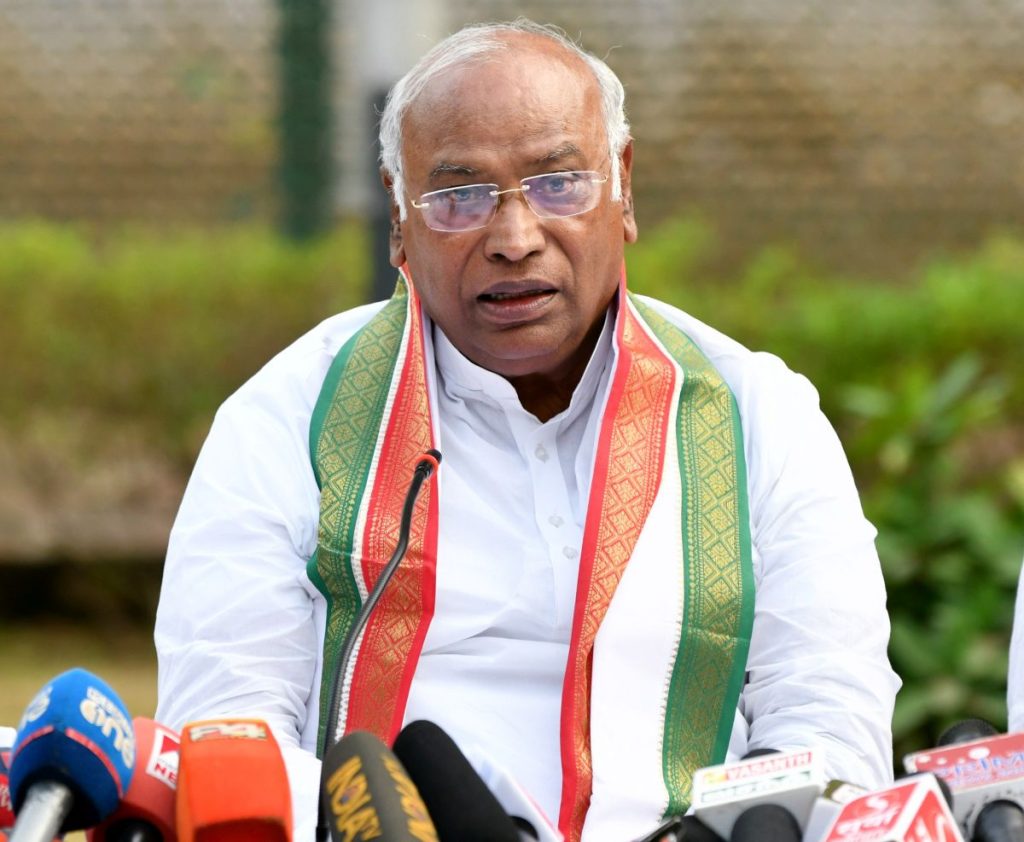
New Delhi, Oct 19 (ANI): Newly elected Congress president Mallikarjun Kharge with party leader Randeep Surjewala briefs the media after his win, at his residence, in New Delhi on Wednesday. (ANI Photo)
New Delhi : Wary after the bitter experience in the Haryana Assembly elections recently, the Congress is apparently not taking any chances for the Maharashtra Assembly polls scheduled for November 20.
As the first step in this endeavour, the Congress President Mallikarjun Kharge has named 11 political stalwarts from different states as “observers” for the five regions in the state and also two Election Senior Coordinators for the crucial assembly elections, coming up post-Diwali festivities.
The two state Election Senior Coordinators appointed for the state are: Mukul Wasnik and Avinash Pande, who would oversee the minute details and systematise various aspects of the Assembly elections within the party for the 288 seats, said party sources here.
For the country’s commercial capital Mumbai and coastal Konkan Division, the observers named are former Rajasthan Chief Minister Ashok Gehlot and Karnataka Home Minister Dr. G. Parameshwara.
Vidarbha region has been entrusted to former Chief Minister of Chhattisgarh Bhupesh Baghel, former Chief Minister of Punjab Charanjit Singh Channi and ex-minister and sitting MLA of Madhya Pradesh Umang Singhar.
Marathwada shall be under the observation of former Deputy Chief Minister Rajasthan Sachin Pilot and Telangana Minister Uttam Kumar Reddy.Western Maharashtra shall be looked after by T. S. Singh Deo, the former Deputy CM of Chhattisgarh and Karnataka Minister M. B. Patil.
Finally, the North Maharashtra would be handled by Rajya Sabha Member from Karnataka Syed Nasir Hussain and Telangana Minister Dansari Anasuya popularly known as Seethakka.There are demands from various quarters within and outside the party to deploy Congress’ Leader of Opposition Rahul Gandhi in a big way for Maharashtra in the high-stakes elections and organize at least two election rallies for him in each region.A party source pointed out that in the 2024 LS polls, Rahul Gandhi and Priyanka Gandhi’s genuineness had struck a chord with the state masses that helped the Maha Vikas Aghadi (MVA) allies Congress-Nationalist Congress Party (SP)-Shiv Sena (UBT) bag 31 of the 48 parliamentary seats here.However, Rahul Gandhi would also be required to campaign in the Jharkhand Assembly polls (Nov. 13-20) not to mention the Lok Sabha by-polls in Nanded (Maharashtra) and Wayanad (Kerala), which the Congress will fight to retain.
Wayanad was won by Rahul Gandhi in the 2019 and 2024 LS polls but he opted to retain the Rae Bareli seat (which he had bagged in 2024), while Nanded fell vacant after the recent demise of the sitting Congress MP Vasantrao B. Chavan.Though the candidate for Nanded is yet to be announced, Priyanka Gandhi-Vadra is expected to fight her maiden elections from Wayanad, making it another prestige issue for the party.Aware of the pitfalls in the state with a belligerent MahaYuti working to retain power, the Congress top brass had made it clear that it would not tolerate any laggard behaviour from the state party leaders or workers, at a high-level meeting held in New Delhi at Kharge’s home yesterday (October 14).
The central leadership has also stressed on the need to maintain intra-party unity at all costs, curb any signs of potential rebellion, and extend full cooperation to all the MVA allies besides the smaller supporting parties with the solitary aim of capturing Maharashtra again with the highest number of seats.