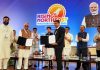
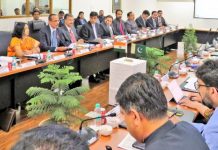
In Kerala, political processions better known as ‘jathas’ (Malayalam for march) have become a way of life. Despite major changes in the way outreach is done today, the political parties of the state are still fond of jathas to connect with people. This time also, various parties in Kerala have announced as many as eight jathas so far. Two of them, by the Congress and the CPM, have already taken off.
The Kerala Pradesh Congress Committee (KPCC) was the first to organise a procession in the state on 4 January. The Jana Raksha Yatra, as the jatha organised by KPCC is called, was led by president VM Sudheeran. The party that has been ruling the state for the last five years is presently facing multiple corruption charges including the infamous bar scandal and solar scam. Through the jatha, Sudheeran aims to polish his image and motivate the lower rungs of the party. According to Sudheeran, the jatha aims to “free the state from crime and liquor” apart from educating people about the achievements of the Oommen Chandy government and the “anti-people” policies of the central government.
The opposition, however, is critical of Sudheeran’s tall claims. Many of his political counterparts are asking why a ruling party has to conduct a procession to ‘liberate people’. “His (Sudheeran’s) yatra aims at liberating the people of Kerala from the United democratic Front’s (UDF) misrule,” said CPM state secretary Kodiyeri Balakrishnan taking a jibe at the name of the jatha which itself seems to suggest that the last five years of Chandy’s rule were “miserable” for people.
The next to hit the road was CPM leader Pinarayi Vijayan with the ‘Navakerala Yatra’ on 15 January. Vijayan is all set to lead the party in the upcoming Assembly elections. The jatha led by the former state secretary of the party has taken off in style from Manjeswaram in Kasargod. With the jatha, Vijayan also wants to change his image but the UDF government decided to move the high court seeking an early hearing of the revision petitions challenging the CBI court’s decision to acquit Vijayan in the SNC Lavalin corruption case the very day he started the campaign.
The BJP too, optimistic from electoral gains in last November’s local body elections and the alliance with caste organisations in the state, has announced a ‘Vimochna Yatra’ under the leadership of their newly inducted party president Kummanam Rajasekharan. The jatha will commence from Kasargod on 20 January with the main slogans of food, water, job, land, and justice for all. Other parties planning to take out their jathas include — The Communist Party of India (CPI), Indian Union Muslim League (IUML), Indian National League (INL), Nationalist Congress Party (NCP), Forward Bloc and Trinamool Congress.
Jathas have been an old mode for political as well as religious leaders of the state to interact with the people. Earlier, people would assemble in large numbers to listen to their leader’s address. Today, party workers are the only ones who participate in the jathas.
With the advent of electronic and social media, the relevance of these processions has come down. Today, the jathas are a show of strength and an exercise in energising party cadre rather than a medium of outreach. The political slogans these jathas raise have become redundant and the people think that they are a huge waste of money for which the burden has to be borne by the common man.
When asked about the relevance of these jathas, R Krishnakumar, a teacher by profession, says, “Everyone conducts them to show their political strength. The very slogans by political parties, especially the Congress and CPM, have become repetitive and redundant. Parties should resort to more reasonable ways to campaign; the time has come to stop these futile acts.”
And The ‘Jatha’ Season Is Back
Why Not Let Women Into Sabarimala?

The age-old bar on women at Kerala’s Sabarimala temple has once again become the topic of a legal battle and a raging debate after the Supreme Court made a sharp observation vying for a total lift of the ban. Though the temples of the state do not permit women to enter the shrines during their menstruating period, Sabarimala had imposed a total ban on women aged between 10-50 from worshipping at the temple.
The three-member special bench of the court headed by Justice Dipak Misra asked the Travancore Devaswom Board (TDB) counsel KK Venugopal on what logic the Board is not permitting women from entering the temple.
The bench also observed that no temple or governing body could bar women from entering as it is against their constitutional rights. The court has also asked the lawyer for proof to show that no women had entered the temple in its 1500-year history.
In a half-hour long debate, which saw Venugopal and the special bench engaging in a heated debate, the TDB counsel argued that the ban is based on the peculiar custom of the temple.
The devotees visit the temple after following a strict penance and austerity for 41 days and during all these days, they restrain from engaging in worldly pleasures. Moreover, the reigning deity Lord Ayyappa is a perpetual celibate, he said.
The bench has fixed the next date of hearing on 8 February. The court has also asked the state government to file a fresh affidavit before the next hearing.
The question of allowing women to Sabarimala has been debated for the last two decades in Kerala. During every pilgrim season, the topic pops up for discussion and dies a slow death once the season concludes.
During the last pilgrim season, a woman was shooed away from a government-run bus that was occupied by Sabarimala devotees. Based on the complaint filed by the woman, Kerala State Road Transport Corporation (KSRTC) now allows other passengers, including women, to travel in special Sabarimala buses.
The entry of non-Hindus in Guruvayur temple and entry of women to Sabarimala are the two religious issues that have been debated relentlessly for the past several years.
The recurrent rows have emerged as a result of the conflict between traditional beliefs and progressive thoughts.
G Sudhakaran, cpm state committee member and former Devaswom minister, says that it makes no sense to follow such discriminatory customs in this age.
He says the petition was filed by the Indian Young Lawyers Association based on the affidavit he had filed in the apex court during his tenure as a minister. He says he presented the affidavit when the court sought the opinion of the state government after a group of women lawyers questioned the custom in 2006 and had given clear proof that young women from the Travancore royal family had visited the temple.
Sudhakaran also added that if there are any security concerns about women visiting Sabarimala during the pilgrim season, a special time could be prescribed for their visit to ensure security.
“The issue cannot be solved in a day or two as it involves many stakeholders. The court should appoint a committee comprising sociologists, lawyers and Vedic experts to review the situation,” he says.
Controversy takes away the sheen of PM’s visit to Kerala

The first visit of Narendra Modi to the state of Kerala after becoming the Prime Minister of the country has already mired in a sea of protest from both the ruling front as well as opposition over the exclusion of Chief Minister Oommen Chandy from the unveiling ceremony of former CM R Sankar’s statue.Chief Minister Oommen Chandy was supposed to preside over the function that will take place on December 15. PM Modi will embark on a two day visit to the state from Monday onwards.
The state has already seen leaders from both the United Democratic Front (UDF) and Left Democratic Front (LDF) coming together against the decision of the Sree Narayana Dharma Paripalana (SNDP) Yogam, an organization of backward Ezhava community, to keep off Oommen Chandy from the programme. Leaders like N K Premachandran MP from ruling UDF, P K Gurudasan MLA and Kollam Mayor Adv V Rajendra Babu from CPM have issued separate statements that they will not take part in the programme. It is also learnt that the son and daughter of late R Sankar
is likely to take part in the programme.
P K Gurudasan MLA said in a statement that he will not take part in the programme even though he was officially invited for the programme by SNDP. “SNDP and Vellappally surrendered to the dictums of RSS and BJP and the decision to exclude Ommen Chandy from the programme is anti democratic and purely dictatorial”, said Mr Gurudasan.
Mohan Sankar, son of late R Sankar and president of SNDP Kollam, told Tehelka that he is saddened by the way which his father’s name has been dragged into a controversy after 43 years of his demise. He also said that he would take a decision whether to take part in the programme after consulting it with his sister who is living in Thiruvanathapuram by Monday evening.
It was CM Chandy in a press note revealed the other day that SNDP leader Vellappally Natesan asked him to abstain from the programme as certain section had sought the removal of CM in the function that is slated as a private programme of the SNDP. Soon after the press note hit the channels, the leaders of the Congress and CPM blamed it on BJP for conniving with Mr Natesan in the removal of Oommen Chandy.
While explaining his stand on the issue, Mr Vellappally, the other day, said that the Congress leaders have no right to shed tears for Sankar. The statue that SNDP Yogam is going to be unveiled in Kollam is not that of Congress leader R Sankar, but of SNDP leader R Sankar. “During his political tenure as a Congress leader, the state leaders of the Congress party tried not only unseat him as CM but to destroy him too .
He also added that he alone should be blamed for the exclusion of CM and ‘the reasons behind it will be revealed on 16’. Mr Natesan has been in the news for a while for all unwanted reasons. The ‘Sammathwa Munnetta Yatra’ he took for a comprehensive Hindu unity in the state saw enough turns and twists with the leader was booked for inciting
communal sentiments during the yatra. The party, Bharat Dharma Jana Sena (BDJS), formation too saw Mr Natesan throwing abusive words, purposefully to incite controversy, on the opposition leader and KPCC president V M Sudheeran.
KPCC president V M Sudheeran said that this was a concerted effort from the BJP and RSS to misappropriate the legacy of R Sankar and trying to turn him a Hindu leader. He added that that Mr Natesan has become a pawn
in the hands of RSS and BJP for this. KPCC has planned a prayer session in front of the former CM’s statue in Thiruvananathapuram in protest against the alleged discrimination of the SNDP. The prayer will take place at the same time Modi unveils the statue on Tuesday at Sree Narayana College in Kollam.
Late Mr R Sankar was a Congress leader and served as chief minister of the state from 1962-64. A visionary leader, he also was the general secretary of SNDP yogam.
The irony is that chief minister Oommen Chandy had invited Prime Minister Narendra Modi to take part in the unveiling of the statue last year December as per the request of Vellappally Natesan. Then, the SNDP leader had not finalized any aims to enter into politics and owning a party.
A new ‘sena’ prepares to join the BJP

On 6 December, over a lakh of rainsoaked people gathered at the Shanghumukham beach near Thiruvananthapuram, Kerala. Despite the downpour, the crowd patiently waited for Sree Narayana Dharma Paripalana Yogam (SNDP) general secretary Vellapally Natesan to speak. This was the grand closing ceremony of the Samathwa Munnetta Yatra (march for equality) that the Ezhava leader had begun on 23 November from Kasaragod, the northernmost district of the state, with the aim of uniting all Hindu castes of the state. It is here that Natesan finally announced the name of the political party that he is going to float. “The long awaited moment has come. I am announcing the name of our party,” said Natesan to a frenzied crowd. Music blared out of loudspeakers as Natesan said, “The name of our party is Bharat Dharma Jana Sena (BDJS).” He repeated the name a couple of times to the cheering crowd and then went on to unfurl the party flag and reveal its symbol.
Many leaders from Hindu organisations across the state such as the Yoga Kshema Sabha and the Kerala Pulaya Maha Sabha shared the stage with the SNDP leader. Though it has not officially claimed to do so yet, the new party is likely to join the National Democratic Alliance (NDA) led by the BJP in their ambitious attempt to build a third front in the southern state as an alternative to the Congress-led United Democratic Front (UDF) and the CPM-led Left Democratic Front (LDF).
After spending two weeks on the road, attempting to consolidate castes under the banner of ‘Hinduism’, Natesan said that the party would not have a Hindutva agenda: “It would be the poor man’s party while fighting for equality among all sections of society.” The objective of the newly formed party is to fight caste disparities faced by various Hindu communities, which, it believes, are a result of minority appeasement and flawed policies of both the fronts that have alternatively ruled the state for over half-a-century.
Natesan said, “The two fronts that ruled us over the years deliberately excluded the Hindus in giving due consideration while distributing various welfare schemes while the Muslim and Christian communities were showered with benefits.”
He was extremely critical of the leader of Opposition, VS Achuthanandan and Kerala Pradesh Congress Committee (KPCC) president VM Sudheeran in his speech. He indirectly said that Achuthanandan was using public money to fight the vigilance cases leveled against his son Arunkumar. On Sudheeran, he said that the Congress is digging its own grave by appointing an ‘ineligible’ person as its chief. He also criticised the media of the state for trying to malign him and his efforts as communal.
No BJP leader was present at the event. When asked about the absence of BJP leaders, the SNDP’s prospective ally, Natesan got agitated and said, “Why should a BJP representative be present at a venue where a caste organization is announcing the launch of their political party?” When asked whether the alliance with the BJP was still intact, he did not offer any comments.
Natesan made it a point to reiterate the fact that his party was not communal. However, the controversial statements he made during his ‘yatra’ are in conflict with this claim. His remarks on the death of Naushad, an auto-driver who died while trying to save two trapped in a manhole in Kozhikode, were utterly insensitive. He said that the state government had promptly compensated Naushad’s family only because he was Muslim.
Even Home Minister Ramesh Chennithala was forced to take action against the leader for allegedly stirring up communal tensions during his Yatra. Following his controversial statements, a case has been charged against Natesan under Section 153(A) of the IPC.
Many believe that the BJP is considering Natesan as a political experiment. Since the saffron party cannot come out in the open with their communal agenda in a state like Kerala, they are looking to piggy back ride on him.
Sexual allegations against Kerala CM Oommen Chandy and six other Congress leaders

The prime accused in the Solar Scam, Biju Radhakrishnan, alleged that Chief Minister Oommen Chandy and six other Congress leaders sexually used his partner, Sarita Nair. Biju Radhakrishnan, the prime accused in the infamous Solar scam, has made a startling sexual allegation against Kerala Chief Minister Oommen Chandy. He said while deposing before the G Sivarajan Commission, which inquiring the case, that Oommen Chandy had sexually exploited Sarita S Nair, the other accused in the scam. He said that he had the video of the sexual involvement of Chandy and Sarita and is ready to present that before the court at any time on demand. He also said that ministers like Shibu Baby John, A P Anilkumar, MLA Hibi Eden, Aryadan Shaukkath, son of Minister Aryadan Mohammad and Anil Kumar’s personal assistant Nazarullah sexually used Saritha and the videos of that were also with him.
He revealed that Saritha herself had recorded the videos of those involved and the five clippings were shown to chief minister. The sixth one was of Chief Minister and this was not shown to him. He also said that his life is under threat with the revelations and requested the commission to provide security for his life.
Biju had also given statement against Chief Minister Oommen Chandy that he had taken Rs 5.5 crore as bribe from him. He said before the commission that he handed over Rs 5.10 crore in person and the total amount was given in three installments.
He said that the money was given as demanded by chief minister’s ex-gunman Salim Raj. The rest amount of Rs 40 lakh was given through CM’s personal staff members Joppan and Jikkumon Jacob. The discussions in the regard had taken place at Ernakulam guest house. Biju also deposed that chief minister had a definite role in the making of the
company, Team Solar. They have also engaged in an agreement to share the profit of the company on a 60:40 proportion. A consensus was also made between the two parties to include CM’s son Chandy Oommen as one of
the partners of the company.
He also explained that the CM had given assurance to lend Kinfra’s 70 acre land to Team Solar in Palakkad and also promised another 150 acre of land to start wind mill project in Idukki. He also in his statement made it bare that he had constant contact with CM through the mobile phones of his personal staffs, Joppan and Jikku. Even after the scam was out, Biju had constant touch with CM and demanded for his security. He also said that a man named Thomas Kondadi had come to see in jail on behalf of the chief minister three times and assured all help.
The revelation made by Biju before the Solar commission has already given shockwaves across the politics of the state with opposition leaders have come out open against Oommen Chandy While responding to the news, CPI(M) leader Pinarayi Vijayan said that with the revelation of Biju Radhakrishnan all speculations that went against Oommen Chandy proved right. “A CM like his is a blotch in the face of truth”, said Pinarayi.
Biju also had levelled serious allegations of bribe against Power Minister Aryadan Mohammad, former Transport, Forest Minister K B Ganesh Kumar, and former Union Minister K C Venugopal earlier on Saturday.
—
Why hate on Kiss of Love?

There is a huge backlash across Kerala against activists and others associated with the Kiss of Love protest which opposed moral policing. What provoked the torrent of abuses — vile and misogynistic for the most part — was the arrest of two persons associated with the protest, Rahul P asupalan and his wife and model Resmi R Nair, for alleged prostitution and soliciting.
The previously unknown couple rose to prominence when they were part of a small group who were bullied and harassed at the curtain raiser of the event a year ago. As the scuffle was broadcast live on TV, Rahul and Resmi became the faces of the protest. They were routinely invited to discussions on television and featured on news stories related to the event.
The movement had just marked its first anniversary and there were discussions on the successes and failures of the movement in the social media. The arrests, however took the discourse on an abrupt new direction.
As soon as the news spread, the opponents of the movement pounced upon it with glee declaring that it was a cover for flesh trade. The Facebook walls and WhatsApp profiles of people who had supported the Kiss of Love protest were flooded with jokes, innuendos and insults.
Some news outlets of the state competed among themselves to make the story as sleazy as possible, with links of a paedophile Facebook page and sex trafficking of minors thrown in. All this made it seem as if the Kiss of Love protest movement was something that Rahul and Resmi cleverly used to further their alleged sex trade.
In a later interview to The Newsminute portal, IG of police (Crime Branch), S Sreejith said the couple had nothing to do with the paedophile page. He added that although they were not involved in trafficking of minors, they were aware that the racket was involved in it.
Although the organisers and participants are busy defending themselves and the movement, the arrests have hit the movement, which sprang up as a response to Sangh Parivar activists vandalising a restaurant in Kozhikode following a TV news report that ‘immoral activities’ were taking place there. Jolly Chirayath, a participant of the movement, says that the movement was not one which sprang up in a day or two but it was the culmination of resistance against moral policing that has been steadily on the rise.
Couples were routinely harassed for travelling together or for sitting in public parks or beaches. In some cases, people were even beaten to death because they were found in situations deemed inappropriate by the right-wing vigilante groups, which were getting emboldened by the day.
Moral policing was not confined to those on the right side of the political spectrum. Even some cadres of the youth wing of the CPM , the Democratic Youth Federation of India (DYFI), were involved in such cases. The then CPM State Secretary Pinarayi Vijayan was critical of the mode of protest chosen by the youngsters.
The idea of kissing in the streets as a form of radical protest took root among a few, who organised the first Kiss of Love event at Kochi on 2 November. The movement soon captured the imagination of the nation and was emulated in several places inside and outside Kerala. It also brought fame to those who had spearheaded the movement, including Rahul and Resmi.
Time To Look Beyond D-Company

The arrest of the Indian gangster, Chhota Rajan alias Rajendra Sadashiv Nikalje, in Bali, Indonesia, led to rumours that he will help the investigators nab Dawood Ibrahim. Dawood, who is on the run since the Mumbai blasts in 1993, was branded a ‘global terrorist’ by the US in 2003. He is India’s ‘most-wanted’ man and currently lives in Pakistan. There is a feeling that once Rajan and Dawood are behind bars and awarded death sentences they will prove to be the third nail in the mafia-terrorism’s coffin.
For the Indian experts, including Ajit Doval, the National Security Advisor who has tracked — and almost killed — Dawood for decades, the end of Rajan and Dawood will indicate the birth of a new era in domestic terror. It will take out the two individuals, who ran sprawling underworld empires, and aided by foreign intelligence agencies, like Pakistan’s ISI, planned ghastly operations in India. It will, therefore, isolate the ISI and make it easier for New Delhi to pressurise Islamabad.
Unfortunately, the bitter truth is that Dawood and Rajan are not active participants in today’s global terror networks. Their heydays were over in the early 1990s. In the past three decades, Rajan’s empire was dismantled. Although Dawood’s loyalists like Chhota Shakeel are still in play, the former don is under ‘house arrest’ in Pakistan and has little to do with D-Company. Dawood converted his black money into legitimate assets in the West Asia in the 1990s and now leads a retired life. Thus, New Delhi can only earn a few brownie points from the arrests of Rajan and Dawood.
More importantly, the faces and operations of global terror have changed twice — once with the emergence of Osama bin Laden and al Qaeda in the 1990s and 2000s, and then with the recent rise and rise of the Islamic State (IS) in Syria and adjoining areas. The recent Paris attacks, which were along the lines of Mumbai’s 26/11 and claimed 129 lives, hinted that in the new scheme of things, the old guards, such as Rajan and Dawood, have become the relics of the past.
NEW FACES OF TERROR
Within a decade after 9/11, even bin Laden also lost his relevance. In his book, The Finish: The Killing of Osama bin Laden, Mark Bowden wrote, “Nine years after his most spectacular success, things were not going as Osama bin laden had foreseen. He was cut off from his followers, frustrated and his organisation was fraying. It (9/11) had instead set al Qaeda and himself on the run… The movement had been fragmented physically and conceptually. It had become less his organisation than a franchise, a banner waved by men who did not share his precise, divine insight, and who sullied its name with acts that killed, maimed and alienated those he sought to defend and convert.”
The same is true of Dawood. Reports indicate that he was no longer in charge of his empire. The ISI controlled his moves; he couldn’t travel outside his house without ISI’s approval. After Rajan’s arrest, a report in The Hindu hinted that Rajan was a ‘nobody’ in the global mafia or terror circles. “Of late, Rajan was known more for his bluster in media than anything else. Many observers had deduced that he had withdrawn into a post-crime life of peace somewhere in Australia,” said the article.
Rajan’s fall as a gangster-terrorist was possibly the reason why he gave in meekly. One theory is that there are strong links between Doval and Rajan. In 2005, Rajan’s aide, Vicky Malhotra, was intercepted in Delhi while travelling with Doval. According to The Hindu, the US embassy in New Delhi speculated that Doval was the conduit between India’s Intelligence Bureau (IB) and Malhotra to eliminate Dawood. (Rajan was earlier a loyalist of Dawood, but switched sides and possibly became an IB agent.) So, Operation ‘Rajan Arrest’ was masterminded by New Delhi to save the gangster, who killed many of Dawood’s henchmen and now faced a threat to his life from Dawood’s loyalists.
A corollary to this is that Rajan was deliberately provided a safe route to return to India through proper legal channels, as there was an Interpol’s red corner notice against him. The feeling in New Delhi was that Rajan’s purpose was served and there was no other help it could get from him. Therefore, it was an appropriate time to bring him back so that he could share all the relevant information about Dawood. This would help Doval and company to go after Pakistan, ISI and the Mumbai blasts’ mastermind.
Finally, it is believed that Rajan’s arrest was coincidental. First, Australia managed to identify him and alerted India. However, since Australia didn’t wish to get into the mess, India waited for Rajan to travel out of the country. In Bali, Rajan complicated the issue when he identified himself with his real name, Rajendra Nikalje, which helped Indonesia to arrest him. Once that happened, India had no choice but to ask for his deportation, especially since it knew Dawood was after Rajan.
In his seminal 2006 paper, David Kilcullen, who was the special advisor for counterinsurgency in the US, wrote, “Today’s insurgencies differ significantly… Insurgents may not be seeking to overthrow the state, may have no coherent strategy… There may be numerous competing insurgencies in one theatre, meaning that the counterinsurgent must control the overall environment rather than defeat a specific enemy. The actions of individuals (insurgents) and the propaganda effect of a subjective ‘single narrative’ may far outweigh practical progress… The economic relationship between insurgent and population may be diametrically opposed to classical theory.”
HOME-GROWN RADICALISM
The late 1980s witnessed the emergence of homegrown militancy in Kashmir. Local outfits challenged the might of the State and either asked for autonomy or a merger with Pakistan. As insurgency rose, ISI supported them. The democratic Assembly polls in Jammu & Kashmir in the mid-1990s dented the might of these local outfits as there was a call for peace. Since then, most terror attacks in Kashmir and elsewhere in India were masterminded by the ISI, and even carried out by Pakistani citizens. Mumbai’s 26/11 was a prime example.