Saturday, December 27, 2025

India’s globalisation marks silver jubilee

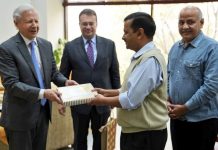
Indian Finance Minister Manmohan Singh poses for photographers in New Delhi February 27, on the eve ..
FM in focus: Manmohan Singh, the architect of the modern Indian economy, remains int he limelight even after 25 years of initiating the reforms

The reforms, put in place by the then finance minister Manmohan Singh in July 1991, had not only helped the country come out of the economic slump faced by the country 25 years ago, but it had also set a new and global framework for the future generation of policymakers, writes Charanjit Ahuja

July is a month to remember and 2016 is a year to celebrate the silver jubilee of economic reforms spearheaded by the then-finance minister, Manmohan Singh, considered the architect of reforms in India from July 1991 when PV Narasimha Rao was the Prime Minister. This was the time when India development model evoked sarcasm across the globe.

This was the year that proved the dictum that ‘coming events cast their shadows before’, wrong. The year 1991 had begun on an ominous note as the year saw political instability in India with Mandal Commission’s report on reservations leading to a crisis situation never witnessed before. Former Prime Minister, Rajiv Gandhi had been assassinated on May 21 and there was a wave of anguish and unrest.

It was under such trying circumstances when Manmohan Singh as the Finance Minister presented his budget on July 24. It was not only the political instability that had shaken the nation but there was a serious foreign exchange reserve crisis as well threatening the fundamentals of Indian economy. The foreign exchange reserves were so low that they could suffice for a maximum of 30 days only. It was this moment when Manmohan Singh delivered his historic speech that changed the destiny of Indian nation and its economic direction.

“There is no time to lose,” Singh urged, before going on to announce “essential reforms in economic policy…” Licensing, the bane of businesses, was tamed by the abolition of permits for all but a handful of industries; import-export policy radically altered and direct foreign investment was freed up.

An idea whose time had come
In his maiden speech as the union finance minister, Singh quoted one of the greatest French writers, Victor Hugo: “No power on earth can stop an idea whose time has come.” And rightly said this was an idea that changed the Indian nation for better.

Now 25 years later, India is among the world’s fastest economies and emerging third world leader. There still are issues like poverty, corruption, unemployment, lack of social security, gender inequality but there are positives like a growing middle class, gradual phasing away of subsidies and a burgeoning economy that is the envy of developed nations. Another positive is the growing literacy which will be a big advantage in the future as at present 95 per cent of children at 12 years are literate in the country, while a number of computer literates and mobile-savvy people is going up by the day.

The transition period from 1991 to 2016 has seen India emerge as a potential superpower, the only Asian power that can overtake mighty China in the 21st century. In July 1991, the Indian government for the first time devalued the rupee and thus began India’s growth story.

An International Monetary Fund bailout to steer India out of a balance of payments crisis in 1991 was the next big leap towards India growth story. The Indian rupee was devalued by 18 per cent and India’s trade policy was changed from its highly restrictive form to a system of freely tradable one allowing exporters to import 30 percent of the value of their exports. Globalisation became the buzz word when opening up of trade and investment, lowering taxes, breaking state monopolies India gave a push to private sector participation. Singh unshackled the country from the bureaucratic controls and licence-permit raj and took the economy to a high growth path of 7 percent during his five-year stint at the North Block. India’s foreign exchange reserves were barely a billion dollars and foreign direct investment was almost non-existent. Today our foreign exchange reserves are over $350 billion) and FDI is coming unabated.

The USP of Manmohan Singh was that he introduced more competition, both internal competition and external competition; simplified the tax structure and tried to create an environment conducive to the growth of business. A strong proponent of globalisation, Singh felt free to trade and India’s labor-intensive products can find markets, which will help India generate new jobs and reduce poverty. And he was proved absolutely right.

Little doubt that today the US ensured India’s entry into the nuclear club. Not only that, US-backed India to the hilt for a permanent seat in the UN Security Council. India in 2016 is a member of G20, the group of most powerful nations in the world. However, when Indian journey for globalisation began in 1991, our country was a member of G77, a group of developing countries. India was historically an economic laggard which grew at just 3.00 to 3.5 percent per annum.

A donor country
When India embarked on economic reforms in 1991, it was akin to a beggar that looked for funds from the International Development Association and the World Bank. Almost 25 years later, India today has become a donor country. A line of credit of $10 billion to Africa, $2 billion to Bangladesh shows how reforms have transformed Indian economy. Remittances from NRIs total $75 billion a year, and foreign direct and portfolio investment often exceed $60 billion per year. Commercial loans exceed $35 billion. It’s per capita income has shot up from $375 in 2011 to $1,700 today, taking it from low-income to middle-income status. India is making a serious bid to overtake China thanks to our young tech-savvy English-speaking population. The 25-years of reforms have resulted in catapulting India as the third-largest economy in the world after China and the US. The best part is that India has overtaken all European economies and Japan.

The recent budget estimates released by the Finance Minister, Arun Jaitley show that India has become the fastest-growing major economy in the world, touching 7.6 percent in 2016 after a similar rate in 2015. In fact, India accelerated to become a miracle economy, averaging 8 percent growth after the year 2003. Growth rate wise, much against what sceptics thought out, India has already overtaken China.

The transition period since 1991 has seen India emerge as a potential superpower, the only Asian power that can overtake mighty China

l2015081568562
Fiscally strong: Former prime minister Manmohan Singh with Congress chief Sonia Gandhi, Prime Minister Narendra Modi and other key leaders last year to review various legislations to make the country’s economy stronger

Manmohan recalls journey
A pat on the back now comes from the International Monetary Fund that has portrayed the US and India as two pillars holding up the wobbling world economy. Manmohan Singh in a rare interview to the Indian Express recalling the journey of economic reforms in India said that the exchange rate adjustment was done in two steps. The first step was to test the waters: what the public reaction would be, the reaction within the government and reaction from the opposition. “So I said by July 3 (1991), we must complete the full thing. C Rangarajan was the Deputy Governor (of RBI). Even then there was opposition. And Prime Minister Narasimha Rao had doubts over the second instalment of the exchange rate adjustment and told me, in fact, to stop it. But when I called up Rangarajan, he said that he had already shot the goal. Therefore, that was the end of it. He had already announced the new exchange rate,” Singh said.

“What we had announced was not any formal devaluation. We said that it was a market-driven adjustment,” Singh told the newspaper.

As reforms, the government had introduced a value added tax and started the process of reduction in customs duties in 1991. In the first Budget, the Securities Exchange Board of India was granted legislative status and Controller of Capital Issues was abolished. The National Stock Exchange was also introduced and received strong opposition from Bombay stockbrokers and the industry.
“When I took over, I said that the next three years will be nothing but blood and tears. Ultimately, I said that I had confidence that the economy would emerge victorious from this crisis but there were no shortcuts. And the economy recovered faster. Inflation came down, the Balance of Payments situation turned around sooner than I anticipated.”

Singh recalled discussions with industrialists who were opposed to the reform path the government was adopting. “In the very first week itself, there was opposition to the reforms agenda. So I managed to secure the support of P N Dhar, K N Raj, I G Patel and R N Malhotra. They came out with a statement supporting the reform process. Again, without A N Verma, the principal secretary to the Prime Minister, the support from the civil service would not have been as strong as it turned out to be,” Singh said. “Certainly, Indian industry is much more confident. They are the children of the 1991 reforms. Now they all feel that we did a good thing,” Singh said.

Singh said he found it remarkable that even if the process of change was put in place by a Congress-led government, the next United Front government, led by HD Deve Gowda and IK Gujral, carried forward the process. “In fact, Chidambaram presented what came to be known as a ‘dream budget’. Then came the BJP government which also continued the reform process.” Singh flagged India’s tendency to react to situations once they appear as a crisis as the hurdle in carrying out reforms. “I think in a crisis, we act constructively. When it is over, status quo takes over.”

A double-edged weapon
Indeed competition is a two-edged weapon as it helps those who are strong but hurts those who are weak and laggard. Manmohan Singh laid stress on macroeconomic stabilisation and opening up trade and payment system. He thus put in place a macroeconomic adjustment program with the active support of International Monetary Fund. The program combined monetary, fiscal, and exchange rate policies to reduce India’s gaping internal and external imbalances. IMF played a critical role in assisting India during its period of crisis.

l2015092771295

India shining
Between 1991 and 2016, a record 138 million Indians were raised above the poverty line and the journey is poised to be faster after 2016 in view of the current pace of growth. China was earlier hailed for raising 220 million people above the poverty line between 1978 and 2002. However, India’s rate of poverty reduction was much faster.

Before 1991, India begged for food aid if the monsoon failed. When it suffered two successive droughts in 1965 and 1966, mass starvation was avoided only by US food aid.

The Green Revolution changed that, and private seed production further improved productivity after 1991. India suffered two successive droughts in 2014 and 2015. Yet this time, it remained a net food exporter. It became the world’s largest rice exporter in 2014.

In 1991, it took years to get a telephone landline. A telephone landline connection meant having to fill up a form and then waiting for a few years for the engineer to arrive. With the mobile phone revolution, scarcely anybody bothers about landlines any longer and, today, India has emerged as the third largest Smartphone market in the world.

Today, India has a billion cell phones, instant availability and the cheapest telecom rates in the world. Even people below the poverty line have phones. In 1991, only 20 percent of Indians had a TV set. Now two-third do. In 1991, Doordarshan had a TV monopoly. Today, the country has close to 1000 TV channels.

Modi, Jaitley continue with reforms
The year 2016 is the time to quote celebrated essayist Francis Bacon who penned that “a wise man will make more opportunities than he finds” because a normal man is content with the opportunities that he gets but a wise man has to make more opportunities than he finds. It was 26th May 2014 when Narendra Modi took over as the 15th Prime Minister of India riding on a NaMo wave sweeping the country. This was the first ever swearing-in of an Indian Prime Minister to have been attended by heads of SAARC countries. The Prime Minister of Pakistan, Nawaz Sharif and President of Sri Lanka, Mahindra Rajapaksa though faced strong opposition in India and their own countries.

To mark two years, the Centre for Media Studies conducted a survey, which suggested that Modi’s performance as Prime Minister was liked by a vast majority (62 percent) and a big majority (70 per cent) wished him to continue as the Prime Minister for another five-year term. Modi’s initiatives to improve administration and country’s image globally have received big thumbs up from a majority of people. The survey encompassed 15 states and covered both the rural and urban population.

During his maiden visit to the United States as Prime Minister, Modi had held meetings with a galaxy of American corporate executives including those from Boeing, PepsiCo, Google, KKR and General Electric. He had assured American corporate honchos of tax stability and friendlier business environment back in the country. The Make In India pitch by Modi, huge Japanese investment and top executives visiting India including Satya Nadella (Microsoft), Indra Nooyi( Pepsico), Sheryl Sandberg (Facebook), Jeff Bezos ( Amazon ) and Mark Zuckerberg ( Facebook ) pointed to the success of the programme. Under Jan Dhan Yojana for financial inclusion, more than 1.5 crore bank accounts were opened on the inauguration day itself.

Rising aspirations
India is changing radically. Not just mobile phones, liberalisation’s tangible effects can also be ­measured through parameters such as the mushrooming ­shopping malls and high-rise apartment buildings, as well as growing disposable incomes. But it is also to be found in India’s attitudes, aspirations and ­ambitions, all of which have changed drastically. Between 1999-2000 and 2011-2012, spending and consumption by the poorest 5 percent in the rural areas saw a ­increase of 30 percent in contrast to an increase of 60 percent by the richest 5 percent. Urban India followed a similar pattern.

Today, India has foreign exchange reserves of around $350 billion as its economy grows at a ­enviable 7 percent. From the shoe shine boy to chief executive officer, everyone’s life has been ­impacted in one way or the other—socially, politically and ­economically—by the process of liberalisation ­unleashed 25 years ago. Old orders have broken down and new worlds are being created, though not all of it is accessible to all.

l2016022977869
Growth matters: The recent budget estimates released by Finance Minister Arun Jaitley show that India has become the fastest-growing major economy in the world, touching 7.6 percent in 2016 after a similar rate in 2015

At a glance

Globalisation
Globalisation refers to integrating the economy of a country with the economies of other countries. This necessitates free flow of trade, capital and movement of persons across borders. It includes an increase in foreign trade, export and import of techniques of production, the flow of capital and finance from one country to another and migration of people from one country to another.

Barriers
Prior to 1991, the government had put barriers to foreign trade and foreign investment to protect domestic producers from foreign competition, especially when industries had just begun to come up in the 1950s and 1960s. The overwhelming view was that competition from imports would deal a death blow to domestic industries. In the aftermath of globalisation, the government removed these barriers because in view of new thinking that domestic producers were ready to compete with multinational entities.

Labour laws
The globalisation demands flexibility in labour laws that is expected to help companies becoming competitive. By easing up on labour laws, company heads can negotiate wages and terminate employment, depending on market conditions. This leads to an increase in the company’s competitiveness. However, the trade unions and worker’s bodies have been opposing these because such a situation leads to the policy of hire and fire.

MNCs
Multinational Corporations (MNCs) set up their factories or production units close to ports and markets where they can get cheap skilled or unskilled labour. MNCs can set up production units jointly with some local companies or by buying a stake in the local companies and then expanding production using modern technology. Another way is that MNCs can place orders for small producers and sell these products under their own brand name to the customers worldwide.

Why liberalisation?
Historically, the developed countries have been looking towards developing countries to liberalise their trade and investment because then the MNCs belonging to the developed countries can set up factories in less-expensive developing nations, where labour is cheap, inputs are cheaper and there is flexibility in labour laws.

Impact of globalisation
Ironically, by and large, the impact of globalisation has not been uniform. It has only benefitted skilled and professional personnel in urban areas and not the unskilled personnel. The industrial and service sector has gained much in globalisation than in agriculture. Small local manufacturers of goods such as batteries, capacitors, plastics, toys, tyres, dairy ­products and vegetable oil have been hit hard by competition from cheaper imports.

Easier foreign trade
Liberalisation of trade and investment policies has helped the globalisation process by making a foreign trade and investment easier and providing companies ease of doing business. Earlier, several developing countries had placed barriers and restrictions on imports and investments from abroad to protect domestic production. Foreign trade provides opportunities for both producers and buyers to reach ­beyond the markets of their own countries. Goods travel from one country to another. Thus foreign trade leads to the integration of markets across countries.

letters@tehelka.com

Gender neutrality flies high in Indian Air Force

l2016061884775

“Frailty  thy name is woman,” Hamlet lamented in a soliloquy from William Shakespeare’s masterpiece. But the first three women fighter pilots who created history recently at the Air Force Academy at Dundigal on the outskirts of Hyderabad, have in a way proved the famous poet-dramatist wrong. The Indian Air Force has formally commissioned women at a combined graduation ceremony where President’s Commission was conferred on 130 graduating trainees of various branches, including 22 women.

Avani Chaturvedi, Bhavana Kant and Mohana Singh will go to Bidar in Karnataka for a year long stage-III training on Hawk advanced jet trainers. Then they would get to fly supersonic warplanes and after undergoing a one-year advanced training by June 2017, the first batch of the women pilots would be entering the fighter cockpit.

Mohana Singh hailing from Rajasthan’s Jhunjunu is carrying forward her family’s legacy. Her father is an IAF officer, while her grandfather was a flight gunner at Aviation Research Centre. Her mother is a school teacher. Armed with a BTech (Electronics and Communications) from GIMET, Amritsar, she dreamt of flying war planes ever since her childhood.

A native of Bihar’s Darbhanga, Bhavana Kant grew up in Refinery Township, Begusarai. Her father is an engineer in Indian Oil Corporation Limited and her mother a homemaker. She completed her BE (Medical Electronics) from BMS College of Engineering, Bengaluru. She always dreamt of flying and aspired to join IAF. After clearing stage I of the training, she realized she could fulfill her dream.
Avani Chaturvedi of Satna in Madhya Pradesh got inspiration from relatives serving in Services to first join the flying club in her college and then IAF. Her father is an executive engineer with the state government and she studied BTech (Computer Science) from Banasthali University, Jaipur.

Batting for gender parity in the armed forces, Defence Minister Manohar Parrikar, who was chief guest at the combined graduation ceremony, termed the event as a “milestone” as it was the first time that women had been given a combat role. The minister who was naturally elated observed that “it is a golden letter day and step by step total gender parity would be achieved in armed forces in coming years. There are technical and administrative difficulties which we are likely to face in certain areas, so, step by step we will see that this parity is achieved. The number will depend on how many we can accommodate depending on our infrastructure”.

When the Ministry of Defence allowed the Indian Air Force to induct women as fighter pilots, Indian Air Force became the first of the three services to have women in the combat role. The decision by Defence Minister Manohar Parrikar came following a proposal put forward recently by Air Chief Arup Raha. The Army and the Navy too have women officers, but in roles that are not designed for direct combat.
Air Force women officers have been flying helicopters and transport planes for two decades but fighter jets were considered dangerous for them as these ran the risk of being shot down over enemy territory in case of war.

Indian women have always stood up and are the shining beacons of hope and have displayed exemplary dedication in their respective fields. Arundhati Bhattacharya, an Indian banker, was the first woman to become the chairperson of the State Bank Of India (SBI). She has also been featured on the Forbes Most Powerful Women list in the 36th slot. Chanda Kochhar, ICICI Bank CEO, made it to the Fortune list of 25 most powerful women in the Asia-Pacific region and stands first among other Indian women. She has been featured on this list consistently since 2005. She has also been honoured with the Padma Bhushan Award in 2010, the third highest civilian honour by the Indian government, for her services to the banking sector.

Nidra Krishnamurthy Nooyi, chairperson and Chief Executive Officer of PepsiCo has consistently been ranked among the world’s most powerful women. Durga Shakti Nagpal, an IAS officer of the UP cadre came into public view when she launched an aggressive anti-corruption campaign in Gautam Budh Nagar. She was soon suspended by the UP government for allegedly demolishing an illegal mosque’s wall in Greater Noida which drew large opposition from public as it was perceived to be based on insubstantial grounds. The public and media came together and protested against her suspension, after which it was revoked.

The 35-year-old Sappar Shanti Tigga became the first Indian woman, who is a mother of two, to become a jawan in the Indian Army. Standing at par with her male counterparts, she joined the 969 Railway Engineer Regiment of Territorial Army in 2011. However, her life ended too soon as she was abducted and later found dead. Who can forget, Kalpana Chawla who was the first Indian woman to go to space. She left the world in the Columbia disaster in 2003 when the space shuttle disintegrated over Texas while re-entering the earth’s atmosphere hours before it was scheduled to conclude its 28th mission.

Coming back to the topic that the first batch of the women pilots would be entering the fighter cockpit with the Indian Air Force breaking barriers, the day is not far when other Services would follow suit. For the record, women only make up 2.5 percent of the Indian army’s million-plus personnel, mostly in medical or administrative roles. The army has largely resisted a move to induct women into combat, expressing concerns over their ability to handle the high physical strain and vulnerability in case of capture.
However, a positive change was visible in recent months, when an all-women army contingent marched at landmark Republic Day Parade, a first in country’s glorious history. With this India has joined the US which recently opened-up all combat roles to women in the military. Israel, Germany and Australia too permit women on the front lines. With India joining the league of such countries, we would find our brave women donning the uniform and protecting borders and seen in the combat role. That would be a great day for the proud Indian Nation!

letters@tehelka.com

Banking reforms: Rajan’s exit likely to wreck these

raghuram-rajan1
“In the republic of mediocrity, genius is dangerous,” said Robert Green Ingersoll, the great agnostic in the golden age of free thought, conforming to the Japanese proverb “the nail that sticks out shall be hammered down”. If you are too good and stand out in a crowd, you will find people taking shots at you.
This exactly has been the case with the Reserve Bank of India Governor Raghuram Rajan, who has jolted the nation by giving us a negative surprise, with his sudden decision to walk away after his term that ends on September 4 this year. Perhaps it was his vigorous drive to clean up banks that brought him into a dogfight with vested interests among political leadership and crony business community. The former International Monetary Fund chief economist had backed efforts to create a monetary policy committee and strongly advocated fiscal discipline to boost India’s credibility with bond investors. Rajan had taken charge of the central bank when the rupee was at a dismal low and the inflation rate was fast. After tight monetary policy and a crash in global oil prices helped damp price pressures, he began cutting borrowing costs last year and brought the benchmark rate to a five-year low of 6.5 percent. The RBI Governor is now making strenuous efforts to cleanse the stressed assets in the banking system.
Paradoxically, it is not an unexpected move as it came in the aftermath of a key ally of Prime Minister Narendra Modi criticizing him for keeping interest rates too high. When reports of Rajan’s desire to leave the post emerged, the rupee and bonds fell. As expected, at a recent conference in Singapore, investors overwhelmingly wanted Governor Raghuram Rajan to continue.
However, despite his efforts to cleanse the system, he apparently felt that he lacked support from his bosses — the Prime Minister, Narendra Modi, and Finance Minister, Arun Jaitley. To add to his woes, Subramanian Swamy, a 76-year-old former Harvard economist with a record of aggressive anti-corruption litigation, wrote an open letter to Narendra Modi accusing Raghuram Rajan of being “mentally not fully Indian” and urging on the prime minister to “terminate” him with immediate effect.
Ironically, Rajan had joked when he took over the top RBI job in September 2013 that he wasn’t expecting to win any votes or Facebook ‘likes’ in the position. But now when he has offered to quit, he was trending on Twitter with tweets like “We really have no respect for good, capable people. We deserve the mediocre lot thrust on us” and “Minimum governors, maximum government”. Alas in the midst of all this we are going to lose a good Governor!
letters@tehelka.com

Encroachers join the league of god men, gangsters in UP

Mathura Jawahar Park

Thanks to the overt and covert political patronage, godmen and gangsters have always proliferated in our country. However, the end result in all such cases has invariably been a catastrophe. This is what led to the shocking death of 27 people, including a superintendent of police, a station house officer at Mathura in Uttar Pradesh recently.

TEHELKA team that visited the site of tragic ­incident for in-depth ground reportage found that this is a classic case as to how the sects could ­operate with impunity because of political ­patronage. Of late, pictures of such camps showing brandishing rifles, grenades, explosives and swords openly proclaiming plans to expand to other parts of the country have become viral on social media sites. The rational view of every right-thinking ­person is that a modern welfare state should have no place for religious sects, goons, mafias, whether impelled by political connections or religious cult or beliefs. Private militias are a total taboo in a ­modern welfare state. So what could have been a routine anti-encroachment drive against members of the Swadheen Bharat Subhash Sena in Mathura turned into a gory incident. This left behind a trail of blazes and a scar on the system. Was it a simple case of intelligence failure? Or was it the ill-preparedness of police in handling such a situation? Ironically, the Uttar Pradesh Chief Minister Akhilesh Yadav  has admitted the mistakes and charged the police “ill- preparedness” in taking on the organised gang of encroachers. However, he has conveniently ignored the political complicity.

The political patronage and State complicity apparently emboldened the self-appointed guru and his henchmen who piled up deadly arms and ammunition. A month ago the civic authorities had cut off electricity and water supply to the park, but it was restored in 12 hours. There were 40 intelligence reports pointing to the presence of licensed and unlicensed weapons in large numbers inside the Jawahar Bagh campus.

The BJP president Amit Shah has been most vocal when he said that “if even a little bit of self-respect is left in Netaji (Mulayam), he should get minister Shivpal Yadav to resign immediately. His words of advice to Chief Minister are “Akhilesh ji, if you have to maintain only the chacha-bhatija relation, you should end all relations with public”. The BSP chief Mayawati has gone a step ahead and demanded Supreme Court monitored CBI probe into the clash in the temple town. It seems that law and order would be a major poll issue in the coming Assembly elections in Uttar Pradesh. Is Akhilesh Yadav listening?

letters@tehelka.com

Kidney racket reaches top Delhi hospitals

Apollo hospital in New Delhi photo shoot on 6th June'2006 Photo by : TTIt was not so long ago that Bollywood Superstar Aamir Khan exposed malpractices in medical profession through his popular TV show “Satyamev Jayate” leading to an uproar by the Indian Medical Association, seeking an apology from him and later saying that he was ready to face any legal action. “If the medical profession had been insulted and defamed by anybody, it is probably by those who are indulging in unethical practices and not by the show which was not against doctors or medical professions,” Aamir had said.

Today we at TEHELKA are faced with a similar piquant situation. The recent arrest of 10 persons and questioning of nephrologists of Indraprashtha Apollo Hospitals by Delhi Police points to the involvement of reputed private health institution’s complicity in unethical kidney rackets in the country.

The Apollo Hospital kidney racket reminds us of Gurgaon kidney racket of 2008, whose mastermind Amit Kumar was arrested from Nepal. Kidneys from poor people from western Uttar Pradesh were transplanted on to affluent patients from the United States, United Kingdom, etc. for large sums of money. In the early 2000s, there was the Amritsar kidney racket said to be worth 200 crore wherein poor people were being exploited. They were given a pittance for kidneys which were transplanted to rich people through fake documentats. In the year 2015, Hyderabad Police cracked a kidney racket by arresting a doctor for selling a “kidney package” for 30 lakh and above, arranging donors, taking patients abroad for surgery etc. In Jalandhar, a kidney racket was busted only last year.

According to data complied by the Indian Transplant Registry, of the 21,395 kidney transplants that have been performed in the country since 1971, a meagre 783 came from cadaver donors. The annual requirement is over two lakh kidneys in the country clearly showing a mismatch between demand and supply exposing poor unassuming victims to exploitation by the scamsters. Kidneys managed for pittance by the poor are then transplanted into patients for large sums.

The process
Organs and tissue transplants are governed by the Transplantation of Human Organs and Tissues Act, 2011. As per the Act, the organs can either be retrieved from cadavers or from brain dead patients with the family consent or may be donated by living donors. The donors that are recognised by law are near relatives like spouses, parents, siblings, grandparents, grandchildren; others who can donate out of affection and attachment or for a special reason but not for financial considerations.

A comprehensive set of documentation is required including affidavits with photographs of both the donor and the recipient certified by a first class magistrate. There are in-camera interviews too. Two separate committees for related and unrelated donors evaluate and clear cases. The committee that looks at procedures involving related donors comprises hospital staff, but people who are not part of the treating team. For unrelated donors, there are two nominees of the government who evaluate the cases. In the Apollo kidney racket, the police are still investigating. Preliminary investigations suggest that assistants of the transplant surgeon in the hospital drew up fake documents and got donors for patients who were willing to pay hefty sums for the organs. In such a scenario, the doctors naturally find an escape route and say that “We are doctors, not an investigating agency. We have to go by the documents that have been placed before us. We do not have the wherewithal and paraphernalia to check their veracity”.

In this case, the names of the three doctors of Apollo Hospitals had emerged during the interrogation of the racket’s kingpin Rajkumar Rao, who was allegedly operating in different states and had established links with similar cartels in other countries. Ten persons, including two personal assistants of a nephrologist, several middlemen, and donors including two women, besides the kingpin have been arrested in connection with the racket so far.

When Deputy Commissioner of Police Mandeep Singh Randhawa confirmed “We have detained a staff member of a doctor of the Apollo hospital and are questioning him”, he had removed the lid off the ongoing malpractice in the premier private health institution in Delhi. Police busted the kidney racket on June 2 with the arrest of two hospital employees and three suspected touts.

The arrest of the alleged mastermind T Rajkumar from Kolkata along with three donors including two women from Uttar Pradesh’s Kanpur and a man from West Bengal’s Siliguri showed that the roots of the malady had spread to other parts of the country. Brajesh Chauhan (40) was found to be involved in clearing five kidney transplant cases, which were brought to him by the kingpin, T Raj Kumar Rao. Police have sought information about transplants at four more hospitals, including two well-known ones in the city. It was also found that Rao was in touch with a former associate in Jalandhar through his Facebook profile under the pseudonym, Raj Sangam, and had also accepted advance payments for two transplants. Police suspect that few of the patients may have been medical tourists from Afghanistan and Africa. The kingpin is suspected of having run similar rackets in Nepal, Sri Lanka and Indonesia.

Apollo Hospital admitted to have unwittingly removed organs from victims and assured to help the police in the investigation of the racket. Apollo Hospitals in a statement said that “While all due precautions were conducted, fake and forged documents were used for this racket with a criminal intent”.

Genesis of kidney racket
Organ donation, specifically kidney donation that has often snowballed into a major racket, fuels the black markets is the result of a chronic shortage of organs available for transplant. The 2011 Transplantation of Human Organs and Tissues Act says that organs can either be retrieved from cadavers or from brain-dead patients with the family’s consent or may be donated by living donors. The process of organ donation involves procurement of an extensive set of documents including an affidavit. A committee then screens the documents.

In December 2015, Minister of Health and Family Welfare JP Nadda had highlighted the problem in Parliament. “There is a huge gap between the demand and supply of human organs for transplantation. The government accords a very high priority for increasing donation of cadaver organs to bridge the gap between demand and supply and save the lives of a large number of persons suffering from end-stage organ failure”. Nadda has indeed hit the nail on the head! However, he needs to act fast as the Apollo kidney racket points to how poor are being exploited and kidney racket flourishes in the National capital itself.

letters@tehelka.com

India ahead of Afghanistan, Pakistan in journalists’ killings

The recent gunning down of a senior print journalist in Bihar and a TV news reporter in Jharkhand by unidentified gunmen confirms the report of Reporters Without Borders that India has become the third most dangerous country for journalists in the world. Not only that, our country has got the dubious distinction of becoming Asia’s most deadly country for media personnel ahead of even Pakistan and Afghanistan.

TEHELKA has been in the forefront to raise issues concerning journalistic fraternity and it notes with concern that only war-torn Iraq and Syria had recorded more deaths of journalists than India.

Pooja Tiwari, a woman journalist, died under mysterious circumstances in Faridabad in the NCR earlier this month. In Jharkhand, Akhilesh Pratap Singh, a journalist of a TV news channel was gunned down at Dewaria in Chatra district. Though Pooja’s death is still shrouded in mystery, the killing of Rajdeo Ranjan, the Hindi daily Hindustan’s Bureau Chief in Siwan, Bihar, less than half a kilometer away from the Siwan Town police station points to the complicity of police and people in power. Ranjan, who used to cover local politics and crime extensively, had recently written several reports on the nexus between criminals and politicians, including on a former Member of Parliament serving a life term for murder. In February 2016, Karun Mishra, who worked with the Hindi daily Jansandesh Times, was shot dead by gunmen on motorcycles in Sultanpur, Uttar Pradesh. The journalist had been targeted for his reports on illegal soil mining. Two murders were linked to illegal mining as the journalists had exposed sand mining mafia, a sensitive environmental subject in India. In Chhattisgarh, four journalists — Santosh Yadav,
Somaru Nag, Prabhat Singh and Deepak Jaiswal — all working out of the Bastar region, have been arrested on politically motivated charges since July 2015.

Another journalist — Malini Subramaniam — who had reported extensively on human rights violations by the state government, was forced to leave Bastar in February 2016 following attacks on her home and alleged police pressure on her landlord.

Sadly stepped up crime against journalists witnessed in 2016 is a sequel to gory incidents witnessed during 2015 when nine journalists were killed during the year in India. Amnesty International India recently demanded that the Indian authorities must bring to justice those behind the killing of journalists and they must be protected from threats and allowed to function in an unhindered manner. We at TEHELKA hope that the government would respect the constitutional right to freedom of expression of its countrymen, including journalists.

letters@tehelka.com

Didi, Amma show who’s the boss

Second Innings Trinamool Congress chief Mamata Banerjee has begun her second stint in the once-Left-dominated state

“April is the cruellest month,” penned TS Eliot in The Waste Land, rated as one of the most important poems of the 20th century. However, for Congress it is May which brings the blues. Two years ago this very month, it received a historic drubbing in the 16th Lok Sabha elections. Now Congress is at a historic all-time low.
To quote from poet-dramatist William Shakespeare’s Hamlet, “When sorrows come, they come not single spies. But in battalions!” This again applies to Congress and its leaders like Sonia Gandhi and Rahul Gandhi in view of forthcoming elections in Uttar Pradesh and Punjab. The Congress, it seems, has become a party of part-timers from select, comfortably placed families who refuse to go out in the village and listen to people. It lost going solo (Assam) and also lost with alliances (West Bengal, Tamil Nadu, Kerala). As for CPM, it was like sleeping with the enemy.
Political immortality
The recent Assembly election results send a clear messages that Mamata Banerjee ‘Didi’ has achieved a political immortality of sorts, J Jayalalithaa ‘Amma’ has ended Tamil Nadu’s yo-yo trend. Prime Minister Narendra Modi and BJP party president Amit Shah, after losses in Delhi and Bihar, have silenced their critics. The only consolation for Congress has been a win with alliance partners in Puducherry.
It wouldn’t be wrong to say that Jayalalithaa has created history by returning to power for a second consecutive term in a state where such a feat has not been achieved in nearly three decades. The state has routinely seen Jayalalithaa’s AIADMK and its principal opponent, the M Karunanidhi-led DMK, alternating as the ruling and opposition parties.
For the DMK, the drubbing in the Tamil Nadu Assembly election could prove costly as the party, which is held together by the 92-year-old chief M Karunanidhi, could split in the backdrop of infighting between his three siblings though the Congress-DMK alliance has secured a simple majority of 17 seats in the 30-member state assembly. For Tarun Gogoi, however, anti-incumbency was too strong and he proved unlucky for a fourth term as Chief Minister. Traditionally too, Kerala has kept the tradition of voting out a ruling party.
The only morale booster for the Left has been the win in Kerala, where the Left Democratic Front (LDF), a coalition of Left-wing parties led by the CPM won a decisive mandate, unseating the Congress-led United Democratic Front (UDF). The results of Assembly election in Kerala have proved to be a watershed in state politics because the LDF has been able to vanquish its traditional rival, the UDF very convincingly.
‘Didi’ emerges strongest satrap
It is Mamata Banerjee who has clearly emerged as the strongest regional politician in the country. In a field that includes J Jayalalithaa, Mulayam Singh Yadav and even Nitish Kumar, ‘Didi’ is miles ahead because of the scale of her victory in West Bengal, combined with the fact that she doesn’t need anyone’s support. All others need her for their political ambitionrtts. Her pro-poor persona, personal integrity and welfare programmes like ‘Khadya Saathi’, ‘Konyashree’ and ‘Sabuj Saathi’ have won her popular support, catapulting her political fortunes. The Trinamool Congress (TMC) fought the election on her own, knowing well the political pulse of the state. Result: they recorded the biggest electoral victory in four decades.
With a substantial gain in vote share in the recent election, ‘Didi’ has established once for all her unassailable strength and invincibility in regional politics. Though it is already clear that she has moved away from the Congress, the BJP cannot take her support on everything for granted. In most cases, she will lean towards the BJP, simply to keep the party at the Centre happy, but she will demand more than her pound of flesh each time. She will also ensure that the BJP does not grow too big in West Bengal.
Might of regional players
Another clear message from the election results is that the regional parties continue to be strong. Neither the BJP nor the Congress, despite having run governments at the Centre, have the following that the regional parties have in their respective states. In crucial states like Uttar Pradesh, West Bengal, Andhra Pradesh, Telengana, Tamil Nadu and Bihar, the national parties do not enjoy the kind of support the regional parties have. In Uttar Pradesh and Punjab that go to polls next, it is again regional parties that have a major sway among voters. If Uttar Pradesh has parties like Samajwadi Party of Mulayam Singh Yadav and Akhilesh Yadav, Bahujan Samaj Party of Mayawati, in Punjab, the Shiromani Akali Dal led by Parkash Singh Badal and Sukhbir Singh Badal matters the most.
Is corruption an elite concern?
Apparently, the voter’s behaviour defied logic, as price rise was nowhere on the agenda and corruption seemed to be an elite concern. The issue that mattered most was development and launch of popular schemes by different parties. More than the issue of corruption or price rise, personalities mattered prominently in polls. The BJP grabbed Assam by presenting Union Sports Minister and former Asom Gana Parishad (AGP) leader Sarbananda Sonowal as the chief ministerial face. In West Bengal, the election revolved around one personality: that of Mamata. With no matching leader of stature and mass appeal, Congress and CPM suffered and were shown the door by the electorate. Dubbed a party of oldies, the CPM and its ideology don’t seem to enthuse young Bengalis. This led even Mamata Banerjee to make the famous comment that the alliance between Congress and CPM was a historic blunder. In Tamil Nadu, Karunanidhi’s age mattered as also his son Stalin’s unreliability.
No room for sham coalitions
The electorate now likes to give full majorities. After the BJP’s victory in May 2014 where it got a clear mandate, in all elections barring two, voters have given a decisive mandate. Delhi voted the Aam Aadmi Party but Bihar embraced the Grand Alliance. In all the five states this time, the verdict has been clear, with no room for horse-trading as was witnessed recently in Uttar khand. Obviously, the message from the voter was: ‘Don’t worry, we will give you a clear majority. In return, we want clean governance and implementation of pre-poll promises and development of the state. You slacken or forget the developmental agenda and we will look for alternatives.’
Voters can see through sham coalitions. The Congress and the Left were partners in West Bengal and opponents in Kerala. The Left has been anti-Congress for decades and their new found love in West Bengal didn’t sound right. Adjustments can be made, but full-fledged electoral partnerships among long-standing rivals will not work.
BJP has pan-India presence
The BJP now has a pan-India presence. The coalition government in Karanataka in 2005 was its first foray in the south and now it has established a government in Assam in the North-east. It has also opened its account in Kerala and has shown it can make forays into West Bengal. All this should be of a great help when it comes to 2019 general elections. By replacing the Congress’s 15-year rule with a decisive mandate in Assam, the BJP has vaulted to power in the state for the first time. With this, it will get to play a decisive role in the politics of the tumultuous North-eastern region, where it was only a marginal political force till recently.
The win will enthuse the cadres, who were demoralised after Delhi and Bihar rejected the party. The BJP’s rise in new regions, along with the steady weakening of the Congress, will have strong ramifications and impact national politics. On the other hand, the popularity of Modi remains high and the series of measures his government has taken for public welfare are beginning to bear fruit. The people have obviously liked the performance of Modi government during the two years.
Congress’ existential crisis
The Congress is now in the throes of an existentialist crisis. It retains a small support base, but that will keep eroding as more and more voters turn to other alternatives, because the Congress has little now to offer. Fingers can be pointed at the Gandhi family. Already, party MP Shashi Tharoor has aired the view that the Congress needs young faces at all levels for its rejuvenation.
The trends evident from the election are that Congress now is a vanquished house and the party’s pitiable state can be gauged from the fact that its leaders rushed to congratulate vice-president Rahul Gandhi when it won five wards in Delhi’s municipal by-elections.
The marginalisation of the Congress in the Assembly elections has put the focus back on the party leadership. The party rank and file is sure to question president Sonia Gandhi and vice-president Rahul Gandhi for the humiliating defeats coming one after the other. The fact is just two years after its historic defeat in the 2014 general election, Congress governments have been ousted from six states. Of these, five went to the BJP and its allies, signalling a clear shift in voter preferences.
Questions to ponder
Does the Congress need new faces at all levels to reinvent itself? Is it the end of dynastic Gandhi family rule in India? Will ‘Didi’ eye Delhi in the near future in view of her margin of victory, like Modi who graduated from CM to PM? Will BJP magic slogan of ‘Sabka saath, sabka vikaas’ be as successful in rest of India as in Assam? These are some of the questions political players would need to ponder over in future.
[box]
“The polls have made it clear that the BJP’s ideology is being accepted, appreciated and supported by more and more people in the country. It is great for democracy.”
— Narendra Modi
“The country has taken two more steps towards a Congress-mukt Bharat. This time a solid foundation has been laid for a building by 2019.”
— Amit Shah
“No failure is permanent if one sticks to principles. Success achieved by discarding basic principles will not last long. And if the basic principles are intact, then no failure is permanent.”
— Sonia Gandhi
“We accept the verdict of people with humility. We will work harder till we win the confidence and trust of people.”
— Rahul Gandhi said on Twitter
“The opposition had spun a web of lies and conspired against TMC which is not good for politics and public life. The coming together of CPI(M) and Congress  Party proved to be a historic blunder for both the parties”
— Mamata Banerjee
“There are no words in the dictionary to describe my gratitude to the people of the state. I have no other interest in life except to work for the people of Tamil Nadu.”
— J Jayalalithaa
[/box]
letters@tehelka.com

Didi Magic in West Bengal

MAMATA-11With increased vote share, TMC has stormed back to power for the second consecutive term, scripting a landslide victory for the common man, harping on development plank and tearing into a “web of lies” spread by the opposition.

Mamata Banerjee, affectionately called ‘didi’ by her supporters, has returned to power with the party getting a two-thirds majority in the 294-seat state assembly.

A sea of supporters and leaders reached TMC Chairperson and West Bengal Chief Minister Mamata Banerjee’s residence in Kalighat to exchange pleasantries with jubilant women and party workers blowing conch shells and smearing each other with ‘gulal’. She said coming together of CPI(M) and Congress was a “blunder” for both the parties and accused the opposition of spinning a “web of lies” to grab power.

Later at a press conference, Mamata Banerjee thanked the people of West Bengal for voting in favour of TMC.

She said, “We thank the common people of Bengal for standing in queues for long hours and voting for us. It’s an unprecedented victory of the common man. The way opposition has tried to conspire against us is not good for politics and public life.”

Do Saal Baad: Is the Modi wave waning?

Narendra Modi
Celebrated essayist Francis Bacon said that “a wise man will make more opportunities than he finds” because a normal man is content with the opportunities that he gets — but a wise man has to make more opportunities than he finds.
It was 26 May 2014 when Narendra Modi took over as the 15th Prime Minister of India, riding a wave sweeping the country. The Bharatiya Janata Party had won 282 seats. With its allies in the National Democratic Alliance, the total tally was 336 seats in the 543-seat Lok Sabha, the strongest mandate since 1984 elections, raising tremendous expectations. This was the first ever swearing-in of an Indian Prime Minister to be attended by heads of SAARC countries — though Prime Minister of Pakistan Nawaz Sharif and President of Sri Lanka Mahindra Rajapaksa faced strong opposition in India and their own countries.
To mark two years, the Centre for Media Studies has conducted a survey which suggests that Modi’s performance as prime minister is liked by a vast majority (62 percent). A big majority (70 percent) wishes him to continue as Prime Minister for another five-year term. Modi’s initiatives to improve administration and the country’s image globally have received a big thumbs up from a majority of people. The survey encompassed 15 states and covered both the rural and urban communities. Former Secretary General of Lok Sabha Subhash C Kashyap, who released the survey findings, observed that “image of the Prime Minister is very high and his performance is being liked by a vast majority.”
Top performing ministers
In the assessment of Union Ministries, Railways scored the top ranking followed by Finance and External Affairs. Arun Jaitley, Sushma Swaraj, Rajnath Singh, Suresh Prabhu and Manohar Parrikar are the top five performers. Public perception of Modi government is of corruption-free governance, a successful cleanliness drive named Swachh Bharat Abhiyaan, excellent global rapport and a positive dialogue with Pakistan.
Shourie tears into Modi again
However, in a 40-minute interview with Karan Thapar for “To The Point” programme, Arun Shourie, a Cabinet Minister in the Atal Behari Vajpayee government who has drifted away from BJP, analysed the two years of Modi government as one-man presidential government that is dangerous for India. Shourie warned that over the next three years, he expected a more systematic attempt to curb civil liberties and an increase in decentralised intimidation, besides choking of inconvenient voices. Shourie accused the prime minister of narcissism, which he described as both self-love to an exaggerated extent and insecurity — and Machiavellism, which meant that he exploits events to his benefit. The former minister, who has criticised Modi in the past also, said that the PM’s attitude to people is to use and throw them. He treats people like paper napkins and is remorseless, he alleged.
Shourie saw a clear line of logic linking Ghar Wapsi, Love Jihad, beef ban, the campaign against anti-nationalism, the focus on Bharat Mata ki jai and the students’ protests. This was deliberately orchestrated by the government. He described as unconstitutional the imposition of President’s rule in Uttarakhand and Arunachal Pradesh. Shourie was sharply critical of Modi’s handling of relations with Pakistan, saying we have made fools of ourselves in the eyes of Pakistan. Earlier also Arun Shourie had contended that Modi government believes that managing economy means managing the headlines and that people had started recalling the days of former prime minister Manmohan Singh. He had said that the way to characterise policies of the government is — Congress plus a cow, since policies are the same.
Upbeat mood
However, Modi is upbeat over the positive image of his government and asked his ministers and the BJP chief Amit Shah to prepare a list of the achievements of their ministries so that the good work can be publicised, including programmes like the Jan Dhan Yojana, Deen Dayal Gram Jyoti Yojana, LPG ‘Give it Up’, Crop Insurance Scheme, Digital India, Swachh Bharat Mission, Mudra Yojana, StartUp India and Stand Up India. We take a closer look at two years of the Modi government.
Minimum Government
By and large, the Modi government has remained free from corruption. The government has shown how it could run the country with minimum government and maximum governance. It has just 23 cabinet ministers and 23 ministers of state as against 71 of in the UPA regime. The government has been able to send a strong message to Pakistan over terrorism. During his maiden visit to the United States as Prime Minister, Modi had held meetings with a galaxy of American corporate executives including those from Boeing, PepsiCo, Google, KKR and General Electric. He had assured American corporate honchos of tax stability and friendlier business environment back. The Make in India pitch, huge Japanese investment and top executives visiting India —Satya Nadella (Microsoft), Indra Nooyi (PepsiCo), Jeff Bezos (Amazon), Sheryl Sandberg and Mark Zuckerberg (Facebook) — point to the success of the programme. Under Jan Dhan Yojana for financial inclusion, crores bank accounts were opened.
The government rightly abandoned the Planning Commission, which had lost its raison d’etre. It came up with the National Judicial Appointments Commission.
On foreign affairs, the President’s visit to Vietnam resulted in India extending $100 million export credit for defence deals. Talks with China led to discussions on finding a solution with mutual consent to reduce the hostilities between the neighbours. The Defence Cooperation agreement with the US had been extended by 10 years. A deal with Australia has been struck for more fuel, while talks with Japan have advanced to the final levels. China and the US have agreed to cooperate with civil nuclear deals. Hydroelectric project agreement has been signed with Bhutan that will also assist in flood control and irrigation.
Some unanswered questions
All said and done , some questions remain. Is Modi’s China policy of charming the dragon wrong? Would it not encourage China to claim that Kashmir is not a bilateral but a trilateral issue with Beijing being the third party? Is government’s claim of 7.6 percent growth exaggerated? Why had this government failed to appeal against the acquittal of Giuseppe Orsi and Bruno Spagnolini in the Agusta Westland helicopter deal? The two-year-old Modi government would have to answer these unanswered questions.
Modi has to live up to his image of 56” chest, a sign of political machismo!
letters@tehelka.com

Hand over Adarsh flats to Kargil war widows

ahujaAdarsh literally means ideal, but there is nothing ideal about the controversial Adarsh Society in Mumbai, the high rise building which is facing an imminent demolition.

However, the question that needs to be debated is; Will the razing of Adarsh, infamously known as the tower of corruption help? Why not take exemplary action against those who were behind this multi-crore scam and allot these flats to widows of Kargil victims? Why not a strong message that sends a chill down the spine of every corrupt politician, bureaucrat or anyone who thought that law can be twisted and he or she could get away after cornering flats meant for war widows particularly widows of Kargil victims?

The CBI list of Adarsh beneficiaries includes the then Maharashtra chief minister Ashok Chavan’s relatives who owned three flats. Details obtained through an RTI revealed that Chavan approved the sale of 40 percent of the houses to civilians.

When the case came up before the Bombay High Court, a shocked Bench called it “a clear-cut manipulation by the Collectorate, the Revenue Ministry and the Urban Development Ministry,” pointing out that “everyone who cleared the file was gifted 
with a flat.”

During probe, the CBI arrested Pradeep Vyas, Secretary (Expenditure) of the Finance Department of the Maharashtra government, making him the first serving bureaucrat to be arrested. Twelve bureaucrats and former chief minister, Ashok Chavan were named in the first CBI charge sheet. Nine of them, Jairaj Moreshwar Phatak, Ramanand Tiwari, TK Kaul, AR Kumar, MM Wanchoo, Kanhaiyalal Gidwani, JK Jagiasi and Mandar Goswami have so far been arrested.

The list included Railway Minister Suresh Prabhu, NCP leader Jitendra Avhad, former Congress MLC Kanhaiyalal Gidwani and his two sons, Congress leader Babasaheb Kupekar,BJP leader Ajay Sancheti, RC Thakur and Jayant Shah. The list also included the Indian diplomat Devyani Khobragade. Children of officers who owned flats included Jairaj Phatak, chairperson of the Rural Electrification ­Corporation; and Ramanand Tiwari, former ­secretary, Urban Development.

The Adarsh scam is a perfect example of scant respect our decision-makers have for our soldiers who lay down their lives for the motherland. Adarsh Housing scam also points to a deeper malady because of the roll call of people in high offices who collude to deny even a small benefit to Kargil war widows. Public trust in those holding public offices is abysmally low and there is a need to ensure that law-breakers are not allowed to escape and flats are restored to Kargil war widows.

letters@tehelka.com

MOST POPULAR

HOT NEWS