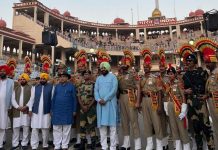
In a move to protest against the ongoing sealing drive, the traders and businessmen have decided to observe two-day bandh on February 2 and 3.
The Confederation of All India Traders (CAIT) called for a two-day bandh despite the Centre’s decision to amend the Delhi Master Plan (DMP) 2021. The association has claimed to have support of 2,000 traders’ associations in the city.
The bandh will affect markets in Connaught Place, Chandni Chowk, Karol Bagh, Kamla Nagar, Khan Market, South Extension, Greater Kailash, Lajpat Nagar, Defence Colony, Green Park, Rajouri Garden and Tilak Nagar.
According to a news report, Praveen Khandelwal, national secretary-general of CAIT, said, “To lodge a strong protest against the arbitrary sealing of commercial establishments in Delhi, the CAIT has called for a complete shutdown in which more than seven lakh business establishments and 2,500 markets will participate.”
On February 3, around 100 traders from all across India will march from Red Fort to Town Hall in Chandni Chowk. The Chamber of Trade and Industry (CTI), supported by Aam Aadmi Party (AAP) will also hold a protest march from Kashmere Gate to Old Hindu College, according to a news report.
Delhi traders call for 2-day bandh against ongoing sealing drive
Budget Updates: Focus on strengthening rural and agricultural economy

Following are the highlights of Finance Minister Arun Jaitley’s Budget 2018 presented before the Parliament on Thursday, will respond to questions on Twitter at 7 pm.
Highlights
- Rs 90,000 Crore Extra Collected as Income Tax Last Year
- Toll Booth Payments to Go Digital;
- Bengaluru Metro Gets Rs 17,000 Crore;
- Rs 11,000 Crore for Mumbai Rail Network
- President’s Salary Up to Rs 5 Lakh a Month, Veep to Get Rs 4.5 Lakh Per Month;
- Rs 150 Crore Fund to Celebrate Bapu’s 150th Anniversary
- Arun Jaitley pledges to Keep Fiscal Deficit at 3.3%, Says War on Blackmoney to Fund Welfare Schemes
- Demonetisation was received by honest taxpayers as ‘Imaandaari ka utsav’.
- Revised fiscal deficit estimate for 2017-18 is 3.5% of GDP, fiscal deficit of 3.3% expected for 2018-19.
- Automatic revision of MPs’ emoluments every five years, indexed to inflation.
- Recapitalisation to enable PSU banks to lend Rs 5 lakh crore.
- Exceeded the disinvestment target and collected Rs 1 lakh crore: FM.
- The government insurance companies to be merged into a single entity, and subsequently listed in the stock exchange, as part of the disinvestment programme.
- The government will assign every enterprise in India a unique ID on the lines of Aadhaar.
- The government has identified 372 basic business reform actions. Each state will take up these reforms.
- Explore the use of blockchain. Government to take all steps to eliminate use of cryptocurrencies which are being used to fund illegitimate transactions.
- Rs 5.97 lakh crore allocated for infrastructure spending in India.
- 5 lakh WiFi hotspots to be set up in rural areas to provide easy Internet access.
- Redevelopment of 600 major railway stations has been taken up; Mumbai transport system is being expanded; suburban network of 160 km planned for Bengaluru…
- The government proposes to revamp the system of sanctioning of loans to SMEs. The information required for sanctioning the loan will be linked with GSTN and all required information can be fetched from GSTN Portal. It will help to grant the loans quickly and will help in reducing processing time.
- Rs 3 lakh crore allocated for PM MUDRA Yojana.
- Mass formalization of MSME sector is happening after demonetization and GST.
- Total 187 projects sanctioned under the Namami Gange programme.
- 24 new government medical colleges and hospitals to be set up by upgrading existing district hospitals.
- Rs 600 crore has been announced for nutritional assistance to tuberculosis patients. 24 new government colleges have been announced which would offer free treatment to patients from the Schedule Tribes and Scheduled Tribes community.
- National health protection scheme for 10 crore poor and vulnerable families with approximately 50 crore beneficiaries by providing Rs 5 lakh per family per year for secondary and tertiary care hospitalisation. This will be the largest govt funded healthcare in the world. One medical college per every three constituency.
- RTE has been amended to enable more than 13 lakh untrained teachers to get trained. Eighteen new schools of planning and architecture will be set up. Technology will be the biggest driver in improving education. Deeksha portal to play a key role in this. By 2022 every block with more than 50% ST to have Eklavya
- Eighteen new schools of planning and architecure will be set up… I propose railway university in Vodadara.
- Eklavya schools to be started for Scheduled Tribe population… Propose to launch a scheme to revitalise school education with Rs 1 lakh crore in the next four years.
- Integrated B.Ed programme to be initiated for teachers, to improve quality of teachers.
- Technology will be the biggest driver in improving education.
- Rs 14.34 lakh crore to be spent for providing livelihood to rural India through infrastructure building.
- Loans to self help groups will increase to Rs 75,000 crore by March 2019.
- We aim that by 2022, all poor people have a house to live in.
- In the next financial year, we target the construction of two crore toilets.
- Removal of crop residue to be subsidised in order to tackle the problem of pollution due to burning of crop residue:
- Ujwala will give 8 crore women new LPG connections.
- Special scheme to address air pollution in Delhi-NCR region.
- Structural reforms will help economy achieve stronger growth
- Emphasis on generation of higher income for farmers
- Indian economy expected to become 5th largest very soon
- We are allocating natural resources in a more transparent manner
- We have worked sincerely without thinking about the political cost
- Finance Minister Arun Jaitley presents Budget 2018
- We hope to grow at 7.2% to 7.5% in second half
- Services being delivered to people at doorstep or in their accounts
- MSP to be increased to at least 1.5 times that of the production cost
- We have worked sincerely without thinking about the political cost
- Emphasis on generation of higher income for farmers
- Services being delivered to people at doorstep or in their accounts
- We are allocating natural resources in a more transparent manner
- We have placed the emphasis on higher income for farmers. Farm and non-farm employment for farmers’ remain the focus. Agriculture produce is on a record high. The government is working on farmers getting 50% more price than cost price. This will go forth to double farmer’s income by 2022. We don’t work in bits and pieces. We intend to promote MSP so that farmers get complete MSP. The govt will fix a structure in consultation with Niti Aayog and state governments to ensure farmers get MSP even when market prices are lower. MSP for Kharif cost will be 1.5 times the cost of produce
- Ujjawala yojana has provided crores of free LPG, Saubhagya Yojana has provided power to 4 crore families. Awas Yojana has worked towards providing interest rate relief to mid-level sections. We have worked sincerely without political costs. Direct Benefit Transfer is a global success story. We have controlled stent prices and there has been a production-centric thrust by the government. We have also provided free dialysis facilities for the poor
- When our government took over, our nation was considered a part of the fragile five. We have transformed the nation into the fastest growing economy in the world. We are a $2.5 Trillion economy. As a result of measures taken by the government, there is a premium on honesty. India achieved an average growth of 7.5% growth in the last 3 years. We are the third-largest economy in terms of purchasing power parity and seventh largest economy in the world in terms of growth. Manufacturing sector is back on track and services sector, which is India’s backbone, is performing well. This year’s budget will particularly concentrate on agriculture and rural economy. We will also focus on promoting education and healthcare
- Cluster-model approach to be adopted for agricultural production.
- The focus is on low-cost farming, higher MSP. Emphasis is on generating farm and non-farm employment for farmers.470 APMCs have been connected to eNAM network, the rest to be connected by March 2018… Agri-Market Development Fund with a corpus of 2000 crore to be set up for developing agricultural markets
- Agri-related stocks gain after it is said MSP for all crops to be increased by 1.5 times. Kaveri Seeds Co Ltd rose 2.4%, Jain Irrigation Systems Ltd 2.1%, Escorst Ltd rose 5%, Mahindra & Mahindra Ltd rose 2.2%.
11.09am: This year’s budget will focus on strengthening rural and agricultural economy.
11.08am: India grew at an average of 7.5% in the first three years since 2014. It is now a 2.5 trillion dollar economy.
11.07am: All the structural reforms will help the economy in the short and long-term… India is expected to become the fifth largest economy very soon.
11.06am: Our government has implemented structural reforms.
11.05am: India stands out as the fastest growing economy in the world… There is a premium on honesty.
11.04am: Finance minister Arun Jaitley begins his Budget speech.
NDA’s last full-year Budget: This is the last full-year Budget before the 2019 general elections and assembly polls that are due in eight states this year.
Farmers and poor likely in focus: The budget is expected to focus on farmers, the rural poor and small businesses.
To keep investors’ confidence, Prime Minister Narendra Modi’s government will need to be seen containing the fiscal deficit, while also increasing spending in key areas of a slowing economy.
Opposition sets strategy: UPA chairperson Sonia Gandhi is likely to chair a meeting of opposition leaders tomorrow to plan a joint strategy for the ongoing Budget Session of Parliament. According to sources, the meeting is slated to be held in the Parliament Library Building in the evening after the presentation of the Union Budget tomorrow morning by Finance Minister Arun Jaitley.
Tamil Nadu eyes ‘necessary’ funds: Tamil Nadu Deputy Chief Minister O Paneerselvam on Wednesday expressed confidence that the Union budget will allocate the required funds for Tamil Nadu.
Higher non-tax revenue eyed: Edelweiss Group chairman Rashesh Shah, who also heads the industry lobby Ficci as its president, has called for laying down a strategic road-map in the Budget to ensure higher non-tax revenue.
Markets cautious: The benchmark indices on Wednesday fell for the second consecutive day on Wednesday as traders cited weak global cues and position unwinding ahead of the Budget as the primary reasons behind the weakness. Apprehensions about a re-introduction of long-term capital gains tax weighed on sentiment.
Transparency sought: Claiming that the budgetary process in India was not transparent enough, an NGO on Wednesday urged the government to place more information related to the budget in the public domain. The Transparency International India has said on parameters of international standards on budget transparency, the Indian budget was considered “less transparent” as it put only “limited” information in the public domain. “Budgetary process in India is still non-transparent, non-participative with poor accessibility by citizenry,” it said in a press release in New Delhi.
West Bengal presents farmer-friendly budget: West Bengals budget for 2018-19, presented in the assembly on Wednesday, announced a number of relief measures targeting the agriculture sector.
Finance Minister Amit Mitra, in his budget speech, announced relief in payment of stamp duty fees for the rural sector, exemption of agriculture tax and cess on green tea leaves, mutation fees exemption for farmers, farmers pension, and creation of corpus for assisting them.
The panchayat polls in the state are due in the next three-four months, agencies reported.
The budget also announced various measures for women like increase of Kanyashri scholarship and introduction of marriage assistance under the Rupashree scheme with an initial outlay of Rs 1,500 crore.
The government also announced measures to help the physically challenged by increasing their pension amount from Rs 750 to Rs 1,000 per month that will benefit 2 lakh people.
The outlay for this scheme, named Manabik, has been pegged at Rs 250 crore.
Stamp duty payment in the rural areas for properties between Rs 40 lakh and Rs 1 crore had been reduced from 6 to 5 per cent.
For the urban sector too, the stamp duty has been reduced from 7 to 6 per cent.
The government also proposed to create an assistance corpus of Rs 100 crore for the farmers to be given out when in distress, and increase in farmers pension from Rs 750 to Rs 1,000 per month to cover 1 lakh beneficiaries.
The size of the budget for the year 2018-19 is Rs 2,14,958 crore, Mitra said, adding the state has been able to create employment for 8.92 lakh persons despite the adverse impact of the Goods and Services Tax (GST) and demonetisation.
The budget also proposed an additional resource mobilisation under tax revenue of Rs 1,870 crore during the year, agencies reported.
Expectations as per past reports:
The government may tweak income tax slabs and rates in today’s budget to bring down burden on individuals, according to a survey by tax and advisory firm Ernst & Young.
Arun Jaitley has already made it clear that the agriculture sector will be the top priority for the government in this year’s budget as the government attempts to address farmer distress ahead of the key state and national elections.
The budget will be watched closely for the fiscal deficit target for the next year. The Economic Survey, which was tabled on Monday, called for a pause in fiscal consolidation, leading to concerns that the government could widen its fiscal deficit targets for 2018-19.
Markets will be focused on how much the government widens its fiscal deficit beyond the 3 per cent of gross domestic product (GDP) projected for 2018-19. A Reuters poll showed most economists expect a 3.2 per cent deficit as the government looks to increase investments in areas like agriculture.
A modest widening of that nature would calm investors worried that the government may slip away from its judicious spending. But a deficit above 3.2 percent could hit shares and send bond yields up by 20-25 basis points, depending on the size of the blowout, on fears of populist policy ahead of next year’s elections.
A prudent budget could also soothe the Reserve Bank of India, which holds a policy review on February 6 and 7 amid worries it could raise rates in coming months after inflation hit a 17-month high in December, well above its 4 percent target.
While investors expect some spending to support an economy that’s expected to post its weakest growth in four years, they will want to see such stimulus is well-financed. Growth was impacted by the launch of the goods and service tax last year and a shock move to ban high value currency notes in late 2016, which hit tax revenues and increased the chances of a fiscal deficit shortfall.
An expected pickup in growth next fiscal year and state asset sales estimated to raise 1 trillion rupees ($15.74 billion) should boost tax revenues.
The government is also expected to stay on course with its focus on building highways and modernising the railways. Mr Jaitley had allocated a record Rs. 3.96 lakh crore to infrastructure sector in last year’s Budget.
Experts don’t see the possibility of a big cut in corporate tax rate for India Inc given the fiscal constraints. In his Budget speech of 2015-16, Mr Jaitley had said proposed reduction of the rate of corporate tax from 30 per cent to 25 per cent over the next four years.
Tremors felt in India as 6.1 magnitude quake rocks Afghanistan
A 6.1 magnitude earthquake hit Hindukush mountain of Afghanistan in the afternoon of January 31, whose tremors were felt in far away regions of India at Jammu and Kashmir, Punjab, Haryana and Delhi-NCR. Besides, Pakistan and Eastern Uzbekistan strongly felt the tremors.
One girl was reportedly killed and 11 others were injured in the quake at Quetta town in Pakistan. No damage has been reported in India.
“Delhi Metro trains were halted briefly but services were not disrupted,” said a Delhi Metro official.
India met department confirmed the news of tremors in a tweet: Earthquake of Magnitude:6.2, Occurred on:31-01-2018, 12:36:32 IST, Lat:37.4 N & Long: 69.6 E, Depth: 190 Km, Region: Afghanistan-Tajikistan Border.
Situation in Kasganj is tense but under control
After the scars of Muzaffarnagar and Saharanpur communal-caste clashes, Uttar Pradesh is once again under the heat of communal tension, as it seems to have become a growing trend for past one year. This time, it was the provocative celebrations of Republic Day in Kasganj district of western UP that spurted into violence, as clash broke out between two communities, leading to the death of a 22-year-old young boy, and leaving several people injured. Another person succumbed to his injuries next day at a local hospital. The administration, as a measure to control the riot, snapped internet and communications services to stop propagating baseless rumours.
Three Scorpio SUVs, two Magic passenger transport vehicles and about a dozen of vehicles including heavy trucks were also targeted by the mob on the Mathura-Bareilly highway. The unruly crowd also set afire a kiosk near a petrol pump and a waste dump. Fire tenders were rushed to douse the fire.
The incident was reported on January 26 when around 50-60 motorcycle riding volunteers of Vishwa Hindu Parishad (VHP) and Akhil Bhartiya Vidyarthi Parishad (ABVP) had taken out a bike rally as part of “Tiranga Yatra” (Tricolour March). To march through, they entered a road which was already occupied by another community geared up to hoist the national flag as part of R’Day celebration, and were shouting slogans like “Hindustan me Rehna Hoga to Vande Matram Kehna Hoga. Some chairs were laid out blocking the road and bikers were stopped until the flag is unfurled. The biker group were allegedly booed at while passing the locality. Soon, a clash between the two groups broke out.
Rakesh Kumar, Additional District Magistrate, Kasganj, said the “Tiranga Yatra rally was taken out without permission from the administration. On the other hand, the organiser of Tiranga Yatra claimed that no permission is required to be obtained on Republic day.”
Ripudaman Singh, Station House Officer, Kasganj, said the clash occurred after a group in Badu Nagar objected to certain slogans raised by motorcycle-borne participants of the Tiranga Yatra, which had started from the Bilram Gate area.
He said another trigger for the clash was an altercation in which a member of one group allegedly slapped a youth of the other. The group had reached the Mathura-Bareilly highway near the Bilram Gate area when some unidentified people hurled stones at them. A verbal altercation followed, which soon turned violent. The angry mob went on a rampage, damaging more than 12 vehicles and property, a district official said. The agitated people also tried to set afire a place of religious worship and some religious texts.
Briefing the media about Kasganj riots, the Principal Secretary (Home), Arvind Kumar said that in this connection two cases have been registered. The first is against four named and some unnamed accused for rioting, attempt to murder and damaging public property. All the four named accused were arrested by police along with two others in this case.
In the murder of Chandan alias Abhishek Gupta, a case has been registered against 20 named persons for riots and murder under stringent provisions of law, and three accused have been arrested so far. Apart from above 9 arrests in above two cases, 112 persons were arrested as a preventive measure for the apprehension of breach of peace and public order. While ADG Agra Zone, Commissioner Aligarh, IG Aligarh have been camping there since January 26. An IG level officer DK Thakur has reached there from Lucknow and camping there to supervise and monitor the situation closely.
“We are speaking to the people, the guilty are being arrested, and intensive checking and house-to-house searches were undertaken. We will not spare any guilty and will book them under the provisions of NSA. Our strict handling helped us to bring the situation under absolute control,” claimed new DGP OP Singh in Lucknow who had taken the charge just couple of days back.
“Sufficient back up of force has been deputed in troubled areas. Five Companies of PAC and one company of Rapid Action Force had been deployed there soon after the unfortunate incident along with additional civil police officers, policemen from the zone. One more company of RAF has been subsequently provided to control any untoward incidents,” he added.
Prohibitory orders under Section 144 Cr.PC have been imposed by District Magistrate RP Singh to defuse tension. The situation is claimed to be well under control.
After the peaceful cremation of Chandan on the morning of January 27, some miscreants have tried to disturb the peace. Sporadic attempts of arson in the outskirts were reported on January 28 also. Strict patrolling has been maintained. District administration has been directed to deal firmly and not allow anybody to take the law into their hands. Additional police forces, including Provincial Armed Constabulary (PAC) are kept on standby as a precautionary measure.
Muzaffarnagar riots had proved to be a boon for BJP who had drawn maximum benefit of polarised communal situation to exploit it to its favour in 2014 Lok Sabha elections, paving the way to Narendra Modi campaign for achieving thumping majority.
Uttar Pradesh government is considering a proposal to withdraw cases related to the 2013 Muzaffarnagar riots against pioneer campaigners of BJP, and has sought opinion of the district magistrate regarding its status, and asking if withdrawing it would be the right step in public interest.
A reference through the Law Department, had sought details on 13 points in the case. These cases were registered on August 31, 2013 but there is no mention of the leader’s name in the letter as the move could attract public ire against such a move, therefore except mention of the crime number the identity of accused politicians have been purposely concealed.
The state government had sought opinion on eight such criminal cases, lodged against BJP Budhana MLA Umesh Malik in Muzaffarnagar. Besides Malik, the others names include BJP Bijnor MP Bhartendra Singh, former Union Minister and local BJP MP Sanjeev Baliyan, and Sadhvi Prachi. Baliyan, Bhartendra Singh and Umesh Malik are all facing cases related to Muzaffarnagar riots. One of the cases against them, which also names Sadhvi Prachi, is of making inflammatory speeches at a mahapanchayat on August 31, 2013, which is believed to have been one of the triggering point responsible for large scale riots. The other BJP leaders facing riots cases include BJP MLA from Thana Bhawan, Shamli, and UP Minister Suresh Rana, and BJP MLA from Sardhana, Sangeet Singh Som. Last year, police filed a closure report in one riot case against Som citing lack of evidence. The 2013 riots had led to 63 deaths, while over 40,000 people had been displaced.
“There had been criminalisation of the ruling BJP at every level. In UP, there’s no rule or Constitution, but a jungle raj-like atmosphere is prevailing. The latest example is such riots in Kasganj. Tension is still prevailing and the state government seems to be failing here,” BSP chief Mayawati alleged.
Samajwadi Party spokesperson Sunil Singh Sajan alleged that for the past three days volunteers of the RSS, the Vishva Hindu Parishad and the ABVP were threatening people and an atmosphere of fear prevailed. “The government is quiet. The police is helpless. ”
UP witnesses 60 incidents of communal clashes in 2017, highest so far. Bengal, which recently witnessed communal violence in Basirhat, has had 26 incidents and 3 deaths until May, as compared to 32 incidents (4 deaths) for entire 2016. The nation had seen 296 incidents of communal violence last year till October, with 44 deaths, according to data released by the home ministry before the Parliament. The previous two years in their entirety saw 703 deaths (2016) and 751 (2015), with 86 and 97 deaths respectively.
Uttar Pradesh has seen the highest number of incidents with 60, while Karnataka, MP, Rajasthan and Bengal too figure high on the list. In Uttar Pradesh’s 60 incidents, 16 people have been killed and over 150 injured. In 2016, UP had 162 incidents and 29 deaths. Bengal, which recently witnessed communal violence in Basirhat, has had 26 incidents and 3 deaths until May, as compared to 32 incidents (4 deaths) for entire 2016.
“The responsibilities of dealing with communal violence, investigation, prosecution of crimes, rest primarily with the respective state governments. Details like persons arrested or convicted, action taken against them and compensation paid to the victims are not maintained centrally,” MoS (Home) Kiren Rijiju said in a statement in Lok Sabha Last year.
452 summer special trains to run from Mumbai, Pune
The Central Railways will run 452 summer special trains between April and July 2018 to clear the extra rush of passengers during summer.
The trains will run on special charges and include unreserved specials between Chhatrapati Shivaji Terminus/ Lokmanya Tilak Terminus and Gorakhpur/ Manduadih/ Jammu Tawi / Lucknow/ Varanasi /Nagpur/ Patna/ Karmali /Chennai Central/ Santragachi/ Bilaspur/ Kochuveli and Sawantwadi Road and two Teacher’s special trains between Lokmanya Tilak Terminus and Varanasi, a press release stated on January 30.
Bookings for the trains are open from January 31.
List of trains with stations:
- Lokmanya Tilak (T) – Gorakhpur Unreserved weekly Specials (24)
- Lokmanya Tilak (T) – Manduadih Unreserved weekly Specials (24)
- CSMT Mumbai – Jammu Tawi AC Superfast weekly specials (26)
- CSMT Mumbai – Lucknow AC Superfast weekly specials (24)
- Lokmanya Tilak (T) – Gorakhpur weekly Specials (16)
- Lokmanya Tilak (T) – Gorakhpur weekly Specials (16)
- Lokmanya Tilak Terminus-Varanasi Teacher’s Specials (2)
- Lokmanya Tilak Terminus –Varanasi weekly Specials (2)
- CSMT – Nagpur Superfast weekly specials (20)
- Pune- Gorakhpur Unreserved weekly Specials (22)
- Pune- Manduadih Unreserved weekly Specials (22)
- Pune-Patna Weekly Specials (34)
- Lokmanya Tilak Terminus –Karmali AC weekly Specials (20)
- Ajni –Karmali weekly Specials (18)
- Lokmanya Tilak (T) –Sawantwadi Road weekly Specials (18)
- Lokmanya Tilak Terminus –Sainagar Shirdi weekly Specials (22)
- Pune-Bilaspur Weekly Specials (26)
- Lokmanya Tilak Terminus-Karmali one way Weekly Specials (10)
- Karmali – Lokmanya Tilak Terminus one way Super fast weekly special (10)
- Lokmanya Tilak Terminus – Mangalore Junction Weekly Specials (20)
- Chhatrapati Shivaji Maharaj Terminus – Kochuveli Weekly Specials (18)
- Chhatrapati Shivaji Maharaj Terminus Mumbai – Chennai Central Air-conditioned Weekly specials (24)
- Chhatrapati Shivaji Maharaj Terminus Mumbai-Santragachi AC Superfast Weekly Specials (24)
- Chhatrapati Shivaji Maharaj Terminus-Gorakhpur Jansadharan
No orange colour passport for people with ECR status
The government has reversed its decision on the issuance of an orange-coloured passport for people having ECR status. As usual, personal details will be printed on its last page.
The decision was taken at a meeting, chaired by External Affairs Minister Sushma Swaraj and attended by one of her two deputies VK Singh among others.
Based on the recommendations of a three-member committee comprising officials of MEA and the women and child development ministry, it was decided not to print the last page of the passport booklet, the external affairs ministry said in a statement.
“After comprehensive discussions with the various stakeholders, the MEA (ministry of external affairs) has decided to continue with the current practice of printing of the last page of the passport and not to issue a separate passport with orange colour jacket to ECR (emigration check required) passport holders,” the ministry said.
Earlier, the ministry had decided to issue a passport with orange colour jacket to passport holders with ECR status, with a view to help and assist them on priority basis, it added.
However, “the MEA has received several individual and collective representations requesting to reconsider these two decisions… the decision of the MEA on both these issues was reviewed in the light of these representations,” it said.
After comprehensive discussions with the various stakeholders, “the MEA has decided to continue with the current practice of printing of the last page of the passport and not to issue a separate passport with orange colour jacket to ECR passport holders”, the release said.
The MEA decision was criticised by political parties, including the Congress which said the separate orange colour passports to ECR category shows the BJP’s “discriminatory mindset”.
On Monday, the Kerala high court had separately issued a notice to the centre following a public interest litigation challenging the move, according to PTI.
With “several individual and collective representations requesting to reconsider” the decisions, “the MEA has decided to continue with the current practice of printing of the last page of the passport and not to issue a separate passport with orange colour jacket to ECR passport holders,” the foreign ministry said.
India’s GDP will grow 7-7.5% this fiscal year: Economic Survey
India’s GDP will grow 7-7.5% in the financial year 2018-19 as the country will regain fastest growing major economy tag, said Finance Minister Arun Jaitley while tabling the Economic Survey 2017-18 in the Lok Sabha soon after President Pram Nath Kovind’s address to the joint sitting of both Houses of Parliament.
Supporting agriculture, privatising Air India and finishing bank recapitalisation would be the policy agenda for next year, the survey hinted
Here are few other highlights of the Economic Survey:
- GDP growth for FY2017-18 seen at 6.75%
- Policy vigilance required next fiscal if high oil prices persist or stock prices correct sharply
- GST data shows 50% rise in number of indirect taxpayers
- Tax collection by states, local governments significantly lower than those in other federal countries
- Demonetisation has encouraged financial savings
- Insolvency Code being actively used to resolve NPA woes
- Retail inflation averaged 3.3% in 2017-18, lowest in last 6 fiscals
- India needs to address pendency, delays and backlogs in the appellate and judicial arenas
- Urban migration leading to feminisation of farm sector
- Rs 20,339 cr approved for interest subvention for farmers in current fiscal
- FDI in services sector rises 15% in 2017-18 on reforms
- Fiscal federalism, accountability to help avoid low equilibrium trap
- India’s external sector to remain strong on likely improvement in global trade
- Technology should be used for better enforcement of labour laws
- Swachh Bharat initiative improved sanitation coverage in rural areas from 39% in 2014 to 76% in January 2018
- Priority to social infrastructure like education, health to promote inclusive growth
- Centre, states should enhance cooperation to deal with severe air pollution
- Survey 2017-18 was in pink colour to highlight gender issues
With input from agencies
Two killed as bus fell into West Bengal's river
 A bus plunged into a river after breaking the railing of a bridge in West Bengal’s Murshidabad district killing at least two and injuring seven others on January 29 morning. The injured are admitted to Murshidabad Medical College and Hospital.
The bus was travelling from Nadia to Malda district when it fell into a river in Daulatabad. The driver was allegedly talking on the phone when he lost control of the bus.
The locals immediately reached the spot with small boats to rescue the passengers. The crowd got irked when the police didn’t reach the spot in time that saw a clash between them. Police had to retort with teargas to disperse the crowd.
Woman who popularised Basement Bhangra in US
 It was the winter of 2003. We were inching to the end of the year. Plans were being made about how to celebrate New Year’s Eve. I insisted that I didn’t want to go to any Indian suburban party and would rather spend it at a happening New York party. Friends obliged and tickets were bought for the NYE party on the ‘Frying Pan’, a boat docked at Pier 66 on the Hudson River which is at West 26th street. Through the evening we danced to music belted out by DJs of many ethnicities, each playing very different music. Then about half an hour before the ball dropped, the most prestigious slot for DJs, there was a change in DJs and I found myself dancing to familiar music — Punjabi Bhangra and Bollywood, being spun by DJ Rekha. DJ Rekha pioneered merging Bhangra and Bollywood sounds with contemporary electronic dance music. That very moment I wanted to interview her to record her extraordinary journey. But I had to wait thirteen years before I got the chance. This column is based on the interview I conducted earlier this year.
Rooted in hip-hop and dub, her DJ sets range from Brazilian Baile Funk to Balkan Beats and everything in between. Her debut album ‘DJ Rekha presents Basement Bhangra’, released on E1 Music, features a track with three time Grammy winner and one time Haitian President hopeful Wycelf Jean. It has won much critical acclaim, and was nominated for the best DJ album by the 2008 Plug Awards. She is the founder of the trademarked Basement Bhangra, Bollywood Disco and co founder of Mutiny Club nights. She was named “Ambassador of Bhangra” by the New York Times. Rekha was the sound designer for the TONY award winning Broadway Show ‘Bridge and Tunnel’ and received a Drama Desk Award nomination for her work on the play ‘Rafta Rafta’ and was the associate producer for the NPR Radio Documentary ‘A Feet in Two Worlds.’ She has done remixes for artists that range from Meredith Monk to Priyanka Chopra. She has curated events for Celebrate Brooklyn, Central Park Summerstage and has performed at the White House and internationally. In January this year she was one of the official DJs for the historic Women’s March on Washington. That is a lot of achievement and we haven’t even begun counting the awards.
Rekha Malhotra was born in UK, spent her first year of life in London and the next three in India, but came of age in the Queens and Long Island boroughs on New York City. She grew up listening to Bollywood film music, like most other Diasporic Indian families. When she was eleven years old, her mother gave her a CD of Malkit Singh in which he sang his chart buster hit ‘Tutak Tutak Tutiyaan’. “Why hadn’t I heard such music before?” was the question in Rekha’s mind as she and her cousins began to lap up the music of Singh and Bally Sagoo. They decided to share this Punjabi Bhangra music with the larger community and offered to DJ for them. Before they knew it, the cousins were in business, “having scraped our nickels to buy the player and acquire a suitable library, mostly of music coming from UK,” recalls Rekha of the early years.
In 1997, she set up the iconic monthly party Basement Bhangra for which she began spinning at the Sounds of Brazil, where it stayed for fifteen years before shifting to a new venue and returning this year, growing every year in popularity. What helped her was the fact that “the Bhangra culture had begun capturing the imagination of youngsters across races, through the initial success of the ‘Bhangra Blowout’ which emerged on the George Washington University campus and preceded basement Bhangra by two years”, acknowledges Rekha. But what her Basement Bhangra party gave to all ‘desis’ was a regular weekly place to hang out and build community, and memories that still light up their lives.
More subtly it was a political statement. “The dance floor is a safe and open space. It has no place for xenophobia, racism or Islamophobia. We do not believe in walls. Music transcends boundaries, barriers and bans. Even Bhangra is bigger than the nations that claim it. It is flowering in the Diaspora so I actually have a hard time with the idea Nation. I am recognised as a Punjabi, and that goes beyond nations, in the Diaspora. But we have multiple identities, and we go with what’s comfortable” says Rekha in a rather impassioned manner, recalling to mind Black feminist poet Audre Lorde’s words — “…we do not lead single issue lives”. Rekha is well aware of the fact that the DJ culture comes out of the Black culture which is always being appropriated. “In this resistance with rhythms, I am indebted to Hip Hop culture. It is sacred to me. When I spin Punjabi music I know I am standing on far more ancient ground,” admits Rekha, not ever wanting to be accused of appropriation.
Among the proudest moments in her life are the three times she was invited to the Obama White House, the time she finally met and performed with her childhood idol Malkit Singh in 2011, and when she opened for the AR Rahman concert in Washington DC in 2015. Rekha has received numerous community awards and in 2009 was inducted into the New York City’s Peoples’ Hall of Fame, and was a Grand Marshall of the 9th Annual NYC Dance Parade in 2015.
Rekha recognises that today’s America is in need of conversations and critical lenses. She feels that people like her are the bridges that can make these conversations happen, at least in her community. America, in her opinion, changed with 9/11. She remembers that day as starting off as an unremarkable day although the night before there had been a Michael Jackson concert at Madison Square Garden. That month, September was the beginning of fall, their party barely ten days after the event went ahead. “Although we had no expectation that anyone would show up, thirty people came. They were thirty people who needed that space,” recalls Rekha. “I know I am creating a helpful space,” she acknowledges. It was in this belief that she spun soon after 26/11 in Mumbai and even on the day that her father had a stroke.
Yet after twenty years of scripting a successful South Asian story with her Basement Bhangra parties, in August this year, with one big concert in Central park featuring Apache Indian, Punjabi MC and a lot of emerging talent from North America — from both sides of the border, she closed it down. “They were twenty amazing years no doubt,” she says recognising what she has done for the Diaspora. “When I started the community had slim pickings. It has gone beyond its class consciousness of music and embraced the power of rhythms, irrespective of where they come from. The community is very robust now, generating popular local talent, and I need to follow other creative pursuits,” she says, refusing to detail them at this point. We wait to see what’s next!
letters@tehelka.com
By-elections in Rajasthan, West Bengal underway
 The bypolls for both Lok Sabha and Assembly seats in Rajasthan’s Ajmer, Alwar and Mandalgarh are underway, with a poor turnout of 5.35 per cent so far. The voting began at 8 am and will continue till 6 pm.
According to reports, Alwar recorded 5.42 per cent, Ajmer recorded 5.25 per cent, and Mandalgarh Assembly constituency recorder 6.42 per cent so far.
The EVM (Electronic Voting Machines) would be displaying the pictures of the candidates for the first time to avoid any kind of confusion among the voters, according to reports.
Meanwhile, the voting is underway in West Bengal for the Lok Sabha seat of Uluberia and Noapara Assembly constituency.
The bypolls in the three constituencies were necessitated following the deaths of Sultan Ahmed, TMC MP from Uluberia and Madhusudan Ghose, Congress MLA in Noapara.
The counting of votes in Rajasthan and West Bengal will be done on February 1, 2018.