Saturday, December 27, 2025

The big picture: Clicking the country with a class

Amit Pasricha‘s photography masterpiece in 2007-‘Monumental India’ with text by Aman Nath and a foreword by William Dalrymple, caused a sensation when it was published. Your breath stopped as you gazed at the panoramic views of North India’s famed monuments and sites. But Pasricha had been captivated not just by the grand monument- the imposing Islamic tombs, the sprawling Hindu and Jain temple complexes, royal palaces, colonial grandeur and majestic forts, but also by the lesser known architectural gems. Not just the outer architecture but the inner halls, including the magnificent darbar halls where maharajas once held a formal audience, and the opulent interiors of their private apartments, with mirrored decorations, chandeliers, and luxurious brocades, all became the subject of his monumental panoramas. It was as if he changed the way we looked at scale and buildings. He went on to change his email to include the word ‘panoramist’ in his email id- so complete was his identification with this format.

“Actually”, says Amit, a young and cool looking father of two, “‘Monumental India’ was not my first book using stitched panoramas. It was in Aman Nath’s ‘Dome over India’ that I first used this format”. On being asked how he moved to his signature panoramic format, Amit said with a laugh, “Well, first you need to be fed up with what you are doing. Then you have to be equally interested in both the scale and the detail in the world observed, and finally, you must want a svisual artist, to feel the need to convey the overall experience and not the fleeting moment, and become an experiential photographer”. It is evident that you need to be much more than that. You need to be expansive in the field of vision, as well as the imagination. As if to prove this assumption Pasricha adds “The shot has to be first composed in your head since your camera cannot do that. Your attempt is to bring your audience to where you stood as you conceived your photograph, so in viewing your picture they become partners in your production. While a regular photograph is composed by the eye through the viewfinder, the panorama can only be imagined since the human eye is totally incapable of comprehending on its own!”

“My panoramic photograph comes close to the visual impression you will carry back having spent a few minutes or hours around a certain place, influenced of course by my point of view. So, the cover of Monumental is the sum total of standing on the opposite bank of the Yamuna and experiencing a sunrise at the Taj. Incidentally, the iconic image of Vijaypath was the result of me spending several hours atop an extendable Fire ladder that I had borrowed from the Delhi Fire Services. So to those who say that one gets a good photograph through sheer luck, I would say ‘yes’, but more importantly, you need doggedness for sure!” No wonder they say about photographers that they make ordinary things look extraordinary since they do not look, but see!

You could well say that Amit Pasricha had this passion for photography in his genes. His grandfather, Fateh Chand Pasricha owned a photo studio on busy Janpath even before independence, which was well known for its portrait photography. His father is the famed and pioneering, award-winning photographer Avinash Pasricha, known for is defining dance and music images. Through his childhood he had seen his father, who was the photo editor of the magazine SPAN for 25 years, compose shots and work with cameras and lenses. A host of uncles and cousins are also well known photographers. In such a situation it is hard to resist that kind of osmotic learning, and despite a regular education from the premier college of Delhi University, St. Stephen’s College, Amit gravitated towards photography. Interestingly, while his father focuses on getting the moment right, Amit rejects the fleeting second and holds central in his composition the “sum of moments as captured in the overall impact. In effect what my photographs tend to do is to take away all distractions of heat and dust that comes with travel in India and allows you the essential experience”!

‘Monumental India’ came at the end of two and a half decades of shooting for the Ministry of Tourism and the Departments of Tourism of the many state governments. His pictures can be found worldwide inviting tourists to visit incredible India, and have been exhibited extensively in India, London and New York. In 2008 he won the India Tourism Award. Monumental India, which was co-published in many European capitals simultaneously, was acclaimed as one of the top ten coffee table books in the world and was a frequent choice of a gift for a visiting dignitary, including French president Nicolas Sarkozy.

After ‘Monumental India’, Amit produced two very special books- ‘The Sacred India Book’(2010) and ‘India at Home’ (2016). In both cases, despite the change is scale, and the fact that they are intimate looks at private practices, moments and spaces, he used the panoramic format. The text for both has been written by Amit’s wife- Bharati Motwani and both books are international bestsellers. “‘Sacred India’ is very special for me since as an Indian you are constantly engaged with the spiritual. I too found as I photographed for it that I had a special relationship with it”, admits Amit. The book won the prestigious German Photo Book Award formerly the Kodak Award.

Amit’s new project is an initiative he calls “India Lost and Found”. A line in the foreword that William Dalrymple wrote for him in ‘Monumental India’ alerted him to the fact that the several lacs of undocumented and unprotected monuments in India were in a fragile condition and vulnerable. Even local people were unaware of its value, often using it as a lavatory or a drug ‘adda’. He feared that they would be gone forever and so he began visual documentation in hope of the directory getting formed. “Many of these small monuments seem to have no name, or at least have lost them over time. How do you begin to describe the monument if you don’t know it exists”, says Amit with genuine concern.

But “India Lost and Found” is much more than that. “A monument is a living entity, almost an emotion and it makes you want to know about the people who constructed them and know about their culture and arts. In the west heritage is seen as a living tradition and so we learn about the Civil War battles or the food and clothing of the time through enactments. But in India our monuments are the preserve of architects and conservationists alone. We cannot link the tangible parts of culture with its intangible manifestations like food, music or clothes. We use our heritage at best as a set for films and serials. “India Lost and Found” is an attempt to enliven heritage monuments for the next generation through the inputs of experts and scholars. We use the digital space and social medialike Facebook and Instagram, as a ‘Crowd Collective’ project. Now over twohundredmonuments are posted on our social media platform awaiting comments and value addition by experts.

We have to first define this heritage for ourselves and then only can we leave it for our children and to use a modern term, we really need to re-brand our heritage,” says Amit who at present is investing personal time, labour and resources into this initiative. He hopes that before long he has the support of corporates and others in an exercise he believes all of India needs to do. Using modern technology, he will look towards delivering this knowledge through a youth friendly app for androidand IOS.He wants to involve the Liberal Arts colleges to drive the content and conduct phone photography workshops so that local communities become the gatekeepers of their own heritage. Like his panoramas, even this he is working in his head first!

letters@tehelka.com

2019 likely to see elections without strong narrative

The Lok Sabha polls are only months away and the campaigning is in full swing. But if anything is lacking, it is a coherent narrative. No political party has been able to neatly weave its promises in a convincing manner. The political attacks also lack sharpness and most of it comes down to an unpalatable level. The failure on the part of the ruling party is more visible. The party, which has ruled with full majority in the Lok Sabha, does not seem to have the courage to ask for votes on its performances alone. The Bhartiya Janata Party is not showing the mettle to assert that it will ask for the votes on what it has done during its rule.

Though the Modi government and the BJP has been beating its own drums since it came into the power, now it does not seem to be confident enough to pursue development plank with the same zeal. That is why it has allowed all the older issues to be part of the poll discourse. They range from Ram Temple to Gau Raksha.

The desperation is too obvious not to be noticed. The Vishwa Hindu Parishad, which has been espousing a virulent form of Hindutva, is getting into huddles very frequently. One of these huddles in Gandhi Smriti and Darshan Samiti complex has already created a controversy. The two-day event organised by the VHP caused a closure of Gandhi Samadhi on June 24-25. The Samadhi has never been closed for more than few hours since its inception. These closures are generally made during the visit of a foreign dignitary for security reasons. The Samadhi is opened to common visitors soon after the dignitary leaves the place. Obviously, Gandhi organisations protested at the Rajghat to express their displeasure at the arbitrary closure. However, the local administration or the central government which manages the monument did not come with apology or clarification only shows the tacit approval to the step. Though the step might have been taken without any political motive, it exhibits the close association of the Hindutva outfit with the government and the urgency with which the organisation is working nowadays. The Rajghat is directly governed by the Culture Ministry of the centre.

Though, the Hindutva forces have started their activities ahead of the polls is not surprising, it is indeed ironical that Prime Minister Narendra Modi, who has been projecting himself as a champion of development, should depend on it heavily. In a recent function at Ayodhya, former BJP MP Ram Vilas Vedanti declared that the construction of the temple will start without waiting for the court order. He reminded that the Babri mosque was demolished without any court order. The assertion came in the presence of Uttar Pradesh Chief Minister Yogi Adityanath and the CM supported it by saying that there should be no doubt that a Ram Temple will be constructed at the place.

The BJP and the RSS has accelerated its efforts to polarise the society can be seen in other instances also. A recent debate on Shariat Courts at district level also has their blessings. The All-India Muslim Personal Board does not have legal status has been decided by the Supreme Court. The Board too never claims it. It also denied that there is no move of setting up Shariat Courts at district level is on their agenda. But TV channels debated it zealously with the obvious motive that it should polarize the society. Interestingly, killing of Munna Bajrangi, the notorious don of Uttar Pradesh, in Baghpat jail which happened the same day was not given the required space despite that fact that the incident displays the state of law and order in the state.

The other plank the Prime Minister is banking on is the attack on “the dynasty”. The Emergency Day was celebrated as black day on a huge scale and Prime Minister Modi used it to attack the family.

“The greed of staying in power was such that democracy was sacrificed. Political leaders who were widely respected were put behind bars. It was all done so that one family, the Gandhi family , could benefit,” said the Prime Minister.

Acceleration in pursuing cases against Chidambaram and his family members or Shashi Tharror also substantiate the allegation that the government is misusing the agency for political purposes. The accelerated efforts in cases related to political opponents and dismal performance in punishing likes of Nirav Modi and Vijay Mallya only points to the intention of the government.

All these things show that the narrative of development has lost its charm for the government. Prime Minister Modi and BJP president Amit Shah seems to be working on parallel strategy. This involves polarisation of the society and denigrating the opponent.

The opposition is also faced with the same problem of failing in knitting a sound political narrative. Congress president Rahul Gandhi has been trying his hard to shape a convincing narrative, but others in his party either does not subscribe to it or they are unable to carry forward it with the same zeal. His attack on friendliness of the government towards corporate (suit-boot ki sarkar), the corruption in Rafael Deal, the apathy towards farmers and inaction in fighting unemployment has the potential of creating a strong narrative which could be effective during Lok Sabha and the state polls coming before that.

His attack gets punctured by his disgruntled leaders like Digvijay Singh and Mani Shankar Aiyar. Rahul has sidelined these leaders is a known fact and Aiyar has even been punished for his utterances. However, they are known Congressmen and know the methods of creating troubles. Their ‘secular prologues’ come handy for the BJP and RSS to brand Congress as a pro-Muslim party, the image the party has long been trying to shed off. Here too, the inability of the party is obvious that it could not come out with a sound secular narrative which should be able to counter Hindutva without taking resort to gimmickries of visiting temples.

The Congress has intelligent leaders like Mallikarjun Kharge, Ghulam Nabi Azad and Kapil Sibal who have the required articulation to build up a sound political narrative to counter the BJP, but the party is unable to use them properly.

“Prime Minister Narendra Modi has been asking, at every function, about what the Congress has done for the country in the past 70 years. A chaiwala like him could become Prime Minister because we preserved democracy,” Kharge told presspersons in Mumbai. “Modi talks about the Emergency that happened 43 years back, there has been an undeclared Emergency in the country since the BJP-led NDA came to power in 2014,” Kharge added.

Keeping in view the repeated attacks on democratic institutions, a narrative around “undeclared emergency” is of utmost importance for the coming polls.

Other players including the Left and the regional parties have failed in articulating people’s grievances and their opposition is only opportunistic. Parties like TDP and the TRS never went against the BJP in any strong way in last three and half years, but they are now attacking it keeping in view the coming polls. The TDP and the BJP are hands in glove can be seen in the disruptions in Parliament. It helps BJP to attack and discredit Congress led Opposition that it is not allowing Parliament to run. The TDP and the TRS are in fact eyeing for Muslim votes and their opposition to BJP will help in it. They are also trying to stimulate regional sentiments by alleging discrimination on the part of the Central government. The TDP deserted the union cabinet on the issue of Special Status to the state only after being part of it for around three and half years. The BJD of Navin Patnaik has a curious mix of opposition and collaboration. He is running the most corporate friendly government in a state which is by far the poorest in terms of human development. The most radical of opposition space is occupied by ultra-Left or pro-people socialists or democrats. The BJD does not have any ideological problem with the BJP but it has to oppose because it has to survive.

The CPM, the CPI and other Left parties are facing the worst phase in their history. Despite their clear opposition to communalism and the corporate-friendly economic policies, they are on the margins of political discourse. Student leaders like Kanahiya Kumar had come out with some refreshing ideas of mass mobilisation, but the Left leadership failed to promote the popular Left narrative. The same is true for senior socialist leader Sharad Yadav. He has come out with a clear stand on economic and social issues, but his party Loktantrik Janata Dal has to strengthen its organisation in a very short period to make impact on the poll equation in Bihar. Lalu’s son Tejaswi has effectively taken control of RJD and his social base also seems to be intact. However, he will have to build up a strong ideological stance to counter JDU leader Nitish Kumar who is simultaneously opposing communalism and sharing power with the BJP.

It seems that people have to wait at least for few days more to see political parties coming out with sound poll narrative or it may not come even before polls. But, ultimately, it is the people who would be the sufferer if a strong poll narrative does not emerge. Issues like unemployment, inequality, farmers’ plight and poor quality of life of millions in the cities and villages needs a strong narrative which should be discussed in the polls across the country.

letters@tehelka.com

Over-confidence in no-confidence motion

Undoubtedly, the outcome of the no-confidence motion against the BJP-led NDA government headed by Prime Minister Narendra Modi was a foregone conclusion. Nevertheless, it did afford an opportunity for the Opposition to take the government on crucial issues and concomitantly also an occasion for the Modi government to highlight its “achievements” as an anchor-sheet in run up to 2019 elections. Total 325 MPs backed the motion against 126 supports. Zero -record of abstentions after several members from Shiv Sena,  Biju Janata Dal and Telangana Rashtra Samithi left the house.

It was the first no-confidence vote in 15 years. The Opposition move for a no-confidence motion was disallowed by the speaker in the last Budget session of the Parliament. Perhaps, Modi government was ill-prepared to face such a move at that juncture in the wake of huge banking scams being fresh in the public memory. The no-trust motion literally became a parliamentary exercise for the ruling NDA and the Opposition to advance their respective electoral agendas in the run-up to the 2019 general elections.

Chowkidar vs Bhagidar

Like Congress president Rahul Gandhi, representatives of many opposition parties took on the Modi government to task for not fulfilling its promises and ignoring the genuine demands of the people, especially the farmers, Dalits and women. While opening the debate, a TDP MP recalled various promises made to Andhra Pradesh that had remained unfulfilled and demanded grant of special status for his state. While supporting the TDP MP, Congress president said: “You are a victim of the fantastic 21st century political weapon and there are many other victims like you. This weapon is called the ‘jumla strike’. The farmers, Dalits, tribals, youths and women are also victims of this weapon.”

While recalling Prime Minister Modi’s promise of providing jobs to two crore youth every year, Congress president said that only four lakh jobs had been provided. Undoubtedly, PM Modi in his reply to the debate cited Mudra Yojana and other schemes as avenues of providing jobs; nonetheless, many experts regard this plea as contentious. While alluding to the case of Jay Shah, son of the BJP president Amit Shah, who has increased his income 16, 000 times within a short span, Rahul Gandhi said prime minister claimed to be a “Chowkidar” but he was a “Bhagidar.”

In his attempt to debunk Rahul Gandhi’s criticism that the NDA served the interests of big businesses at the cost of farmers and small businessmen, Modi asserted his government’s pro-poor stance and presented a long list of schemes that he felt would benefit all. However, some experts have termed it a poor defence of a strong criticism. In response to an accusation that the BJP’s policies and cronyism have led to an unprecedented burden on Indian banks as debt-laden companies defaulted, the prime minister sought refuge in blaming the entire crisis on the Congress. 

Evasive Approach

PM Modi’s defensive speech against the no-trust motion spanning over 90 minutes was termed as a subterfuge by one critic because of its evasive intent of sidetracking major critical issues under the garb of statistical jugglery. Rahul Gandhi’s query on the price of Rafale aircraft failed to elicit any satisfactory answer either from the defence minister or the prime minister on the pretext of the secrecy clause in the Rafale agreement. Rahul Gandhi’s assertion that his talks with the French president didn’t reveal the existence of any such secret clause about the cost has been denied by the French government as well as Government of India. However, Rahul Gandhi has defended himself by saying, “I stand by what I said. Let them (France) deny if they want.”

Just like other BJP MPs who spoke through the day, the prime minister listed the “achievements” of his government, saying that they had been working for the marginalised. He touted about his government’s rural electrification programme, Ujjwala Yojana, Ayushman Bharat, agrarian policy. The bulk of his reply to the motion focused on attacking previous Congress regimes, as one expert puts it, “still in opposition mode despite having ruled for four years, the prime minister appeared convinced that highlighting the failures of the Congress before speaking about his own achievements was the winning hand to be played.” Modi attacked the opposition for being “pessimistic” and “misleading the public” through false propaganda.

In his speech, Prime Minister Modi staked claims and cited the same numbers that his part men have been touting for months and in many ways, his speech sounded repetitive. Some experts opine that most of the claims made by the BJP leaders have already become contentious. While he talked about his achievements, he did not touch upon many of the crucial issues that the opposition raised through the day. Some observers lament at the silence of prime minister over increasing mob lynching incidents, his vague answer on Rafale price, the security of Dalits and minorities. His dismissal of social concerns over demonetisation and GST as merely a part of the Opposition “pessimistic” politics is not being appreciated by some critics.

According to some analysts, the way the BJP leaders cleverly skirted concerns around demonetisations and GST is ironic as both were touted as the two most significant reforms India has ever seen. Demonetisation, once touted as the single most important decision ever taken to target black money is seemingly becoming ‘unfavourable’ even with the BJP because it has proved to be a big failure. Similarly, much-hyped GST is also losing sheen. Perhaps that is why during the debate, NDA leaders chose to not speak about either demonetization or the GST. Instead, it was the opposition that focused on both issues and stressed on the damage these two measures had caused to a large section of India’s population.

The Opposition’s persistent efforts in questioning the government on the deteriorating social fabric of the country could make the prime minister only pay lip-service to the crisis by saying that people who indulge in mob lynching should face strict action. There was no indication of any positive response to the Supreme Court’s directive of enacting legislation over mob-lynching. Concluding part of prime minister Modi’s speech was characteri sedby his old jibe against Rahul Gandhi, “naamdaar(entitled)” vs. “kaamdaar”. The Opposition was derided by him for lacking in numbers.

Way Ahead

One expert has opined that even though Modi may have won numbers game in this battle, the optics did tilt in the eyes of many today and he and the BJP may still have cause to worry in the run-up to the 2019 elections. In the early start of his speech, Modi did mention that his campaign for 2019 general elections going to be as same as 2014 elections. According to one analyst, apart from attacking the Congress’s record, Modi’s references to Rahul Gandhi made his electoral plank clear in parliament — that BJP will again push for a presidential-style race with him leading from the front against a Congress leader who will be attacked for being immature, impatient and undeserving. Modi can be expected to advance his strategic campaign through a combination of the government’s achievements and nationalistic rhetoric. 

The tone and tenor of the Opposition’s focus on the issues of farmers, Dalits, youth, small businessmen, women and vulnerable identity groups are likely to unfold the opposition campaign for 2019 elections. However, Rahul Gandhi’s “jhappi” with Modi in Lok Sabha immediately after concluding his speech reminds of Modi’s “huglomacy” and the Congress president is likely to respond to BJP’s blitzkrieg in the same coin in the run-up to 2019 elections. According to a media reports, the 2014 vote share of the parties voting for the government was 37 per cent compared to 43 per cent for the parties voting against the government and with less than a year to go before the Lok Sabha elections, this six percentage point difference represents the challenge that Narendra Modi still needs to surmount, notwithstanding the vote of confidence that he has just won comfortably.

letters@tehelka.com

There aren’t enough life savers at civil hospitals

For most of us, when we seek tender loving care, we turn to our mothers, but when it’s illness ravaging our strength, it’s doctors from whom we seek a cure. Sometimes the medicine seems worse than the disease, but they, like mothers, are lifesavers in our midst. Did you ever wonder what to do when medical practitioners are not available when we need them the most. This is the case, majority of us will agree, when it comes to government hospitals, where common people approach when ailments start hurting their health. The reason is: There are not enough doctors.

The latest Bombay High Court’s advice to the Maharashtra government may go a long way in dealing with the crisis situation in government hospitals. “Encourage private doctors to assist in civil hospitals across the state by way of charity so that poor patients can be benefited,” it suggested. At present, such initiatives are being taken only by a handful of doctors on voluntary basis. But the courts’ push may help the state governments to set strategy to get more private doctors involved in the civil hospitals.

Last year, the Uttar Pradesh government had sought proposals from director general (medical and health services) to rope in private doctors, including specialists, to treat patients at government-run district hospitals as well as community and primary health centres across the state. The move was aimed at ensuring proper and timely medicare to the sick at a time when the department was facing a shortage of around 7,000 doctors, including around 1,800 specialists, in the state. There is no update on the initiative since November 2017.

Karnataka, however, has led the way. In 2016, the state had come up with a plan to deal with acute shortage of doctors in the state. Private specialist doctors were given the option of working as “doctors on call” in government hospitals besides their private practice. Private doctors with postgraduate qualification in the southern state could work in government hospitals for two days in a week. The government, in turn, would give them an honorarium of `10,000 a month. They would also get consultation fee from the government on the basis of the number of patients they attend to.

Another way to cope with the rising demand for doctors in state-run hospitals is to fill the tens of thousands of positions that are lying vacant across the country for quite some time. In Uttar Pradesh, for example, there were around 17,000 odd sanctioned posts for doctors last year, against which only around 10,000 were appointed, while the remaining seats remained vacant. The figures may be different in different states but the situation remains the same. Almost every civil hospital in the country lacks enough human resources to look after the health of general public.

Injecting more doctors into the sector will also help reduce the shortage of medical practioners in the country. For that, the medical education should be made accessible to one and all qualified candidates at cheaper costs. Additional provisions need to made for economically weak students to make medical education affordable for them. The life savers in the making should be taught to deal their patients with compassion. After all money is not everything.

letters@tehelka.com

Jammu and Kashmir: Security forces kill two terrorists in Kupwara district

Security forces on Thursday killed two militants during an encounter in Jammu & Kashmir’s northern district of Kupwara. 

The gunfight broke out between security forces and terrorists after the latter opened fire on the security personnel in Khumriyal area of Lolab valley.

Director General of Police (DGP), SP Vaid, confirmed the attack on Twitter. “Two terrorists were killed in an encounter with J&K Police/ Security Forces in Lolab Kupwara a few minutes back,” he tweeted.

According to officials, the bodies of the deceased terrorists have been recovered from the site of the encounter.

Muzaffarpur case: SC asks Bihar government, centre to ban publishing video or images of victims

Taking note of the alleged child rapes at a shelter home in Bihar’s Muzaffarpur the Supreme Court issued a notice to the Bihar government and the Women and Child Development (WCD) Ministry on August 2 imposing a blanket ban on publishing any video or images (hidden or morphed) of minor victims.

The SC said from now publication of morphed images of the children will not be allowed. It also barred the media from conducting an interview of alleged victims, saying they cannot be compelled to relive the trauma again and again.

A bench of Justices MB Lokur and Deepak Gupta took suo motu cognizance of the exploitation and assault of more than 30 minor girls, which has shaken the country. Medical reports of 29 inmates have suggested sexual exploitation.

The charge-sheet in the case details a powerful network of police, politicians, administration, and criminals behind the racket. Till now, the police have arrested 11 people in this case, including prime accused Brajesh Thakur, owner of the NGO.

 Apex court said the investigating agency would take the help of professional councilors and qualified child psychiatrist in raising questions to the victims.

India invites US President Trump on Republic Day 2019

India extended an invitation to United States President Donald Trump to be the special guest on the Republic Day 2019. However, US Press Secretary Sarah Sanders said no decision has been taken on the matter yet.

“I know that the invitation has been extended, but I do not believe that a final decision has been made,” Sarah Sanders, the White House Press Secretary, said when asked about reports that Prime Minister Narendra Modi has invited President Trump to be the Chief Guest at the next year’s Republic Day celebrations in New Delhi.

During a press briefing, Sanders also confirmed that US Secretary of State Mike Pompeo and US Secretary of Defense James N. Mattis would be visiting India next month for 2+2 dialogue and will also discuss the process of a presidential visit next year.

“The 2+2 dialogue would begin discussion on the process of a presidential visit next year,” she said.

She further added, “The United States and India have a deep and strategic partnership and we are going to continue to build on that partnership and advance co-operation.”

Aamir Khan refuses to attend the swearing-in ceremony of Imran Khan in Pakistan

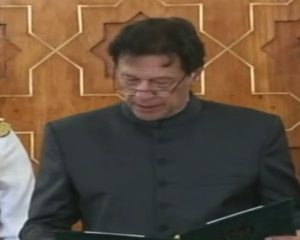
Actor Aamir Khan on Thursday said that he won’t be attending the swearing-in ceremony of cricketer-turned-politician Imran Khan in Pakistan, “Aamir said he had not received any invitation and won’t be going for the ceremony in Islamabad.”

Speaking to media, “Aamir Khan said he has a busy schedule and won’t be able to visit Pakistan for Imran Khan’s oath-taking event on August 11.

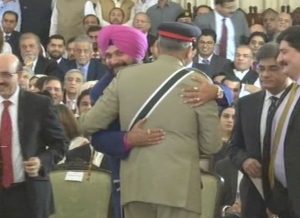
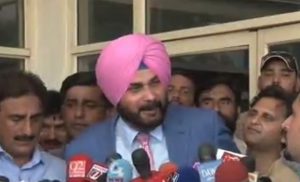
Though Aamir Khan has exempted himself from attending the event, Punjab cabinet minister and former cricketer Navjot Singh Sidhu on Wednesday accepted the invite of the Pakistan Tehreek-e-Insaf (PTI) to attend Prime Minister-elect Imran Khan’s swearing-in ceremony on August 11.

Sidhu is the first among the notables who have confirmed his acceptance to the invite. He said, “It is a great honor for him and will show his attendance at the event”.

PTI leader Imran Khan is set to become Pakistan’s next prime minister after his party emerged as the strongest in the recently held elections in Pakistan.

Sushma Swaraj embarks on 3 Central Asian nations’ visit

External Affairs Minister Sushma Swaraj will undertake a four-day visit from August 2 to 5 to three Central Asian nations, reflecting India’s pursuit of enhanced engagement with the region.

Swaraj will be visiting Kazakhstan, Kyrgyzstan, and Uzbekistan from August 2 to 5 and this is her first trip to these countries as External Affairs Minister.

“Advancing our growing engagement with an extended neighborhood! EAM @SushmaSwaraj embarks on a visit to 3 Central Asian countries – Kazakhstan, Kyrgyz & Uzbekistan – from 2-5 August. This will be her first visit to these countries as EAM,” tweeted Raveesh Kumar, spokesperson Ministry of External Affairs.

During her visit to Astana, Kazakhstan, Swaraj will hold a bilateral meeting with her Kazakh counterpart Kairat Abdrakhmanov. She will also interact with the Indian community in Kazakhstan, the statement said.

In the second leg of Swaraj’s visit, she will meet Erlan Abdyldaev, Minister of Foreign Affairs of the Kyrgyz Republic and will also call on the leadership of the country.

In her last segment of the four-day tour, Swaraj would arrive in Tashkent and interact with Foreign Affairs Minister Abdulaziz Kamilov. She will also call on the leadership of Uzbekistan. She is scheduled to address members of the Indian community in Uzbekistan.

The visit is completely aimed at enhancing India’s engagement with Central Asian Region.

Encounter breaks out in Delhi’s Sarai Kalen Khan area, criminal injured

An encounter broke out on August 2 morning at around 5.15 am between police and a criminal (Saddam Hussein) of the Neeraj Bhawania gang in New Delhi’s Sarai Kale Khan area near Millennium depot.

After receiving information via police sources regarding the movement of criminal Hussein crossing the area on a bike, the police came into action and the encounter took place at around 5:15 am.

“Through our sources, we got to know that Hussein would be passing by on a bike, so the police official ran to get hold of him during that moment he received the bullet,” the police official said.

Police official further added, “During the encounter, Hussein sustained a bullet injury on his leg and was immediately shifted to a nearby hospital for treatment. Even a police official sustained a bullet injury during the encounter but survived as he was wearing a bulletproof jacket.”

Hussein is one of the leading members of Neeraj Bhanja gang. Earlier he has been charged with more than a dozen criminal cases and has also been sentenced to five years in jail.

The criminal has been shifted to a hospital and the encounter has concluded.

More details on the same are awaited.

MOST POPULAR

HOT NEWS