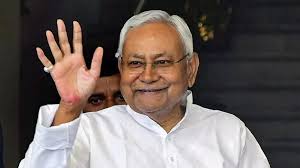
On November 20, 2025, Bihar’s chief minister, Nitish Kumar, took the oath of office for a historic tenth term, further cementing his status as one of India’s longest-serving and most consequential political leaders. The swearing-in ceremony at Patna’s iconic Gandhi Maidan, was attended by Prime Minister Narendra Modi and a host of prominent figures from the National Democratic Alliance (NDA), underscoring the national significance of this event. But beyond the grandeur of the occasion, the question now looms large: can Nitish Kumar navigate the immense challenges ahead, and can this term truly define his legacy as the architect of modern Bihar?
Nitish Kumar’s re-election to a tenth consecutive term is not just a rare political feat; it is a reflection of the unique political ecosystem that he has nurtured in Bihar over two decades. No other leader in Bihar’s history has managed to hold power for as long, let alone win five consecutive elections since 2005. Nitish’s ability to not just survive but thrive in the volatile world of state politics is a testament to his resilience and political acumen.
While his longevity in office is remarkable, the real challenge begins now. Unlike his earlier terms, where the focus was on administration, governance, and development, this tenth term brings with it unprecedented expectations from the public. Nitish Kumar now faces a delicate balancing act: delivering on promises made to an electorate that has shown immense faith in him, while managing an ever-complex political landscape.
With a commanding majority in the state assembly and a partner in the BJP that is both assertive and cooperative, Nitish Kumar begins this new innings with both power and pressure. The magnitude of the victory in the 2025 Bihar elections is underscored not only by the JD(U)’s best-ever performance but also by the BJP’s close contest to its 2010 peak. The numbers are striking: JD(U) recorded an 88.1% strike rate, winning 89 of the 101 seats it contested, while the BJP claimed 85 out of 101 contested seats for a strike rate of 84.2%. These figures place both parties among the highest in the history of Bihar’s elections.
However, while the victories are significant, they also come with heightened expectations. The stakes are higher than ever before, as Nitish Kumar faces a voter base that is now looking beyond promises to actual outcomes. The people of Bihar have placed their faith in Nitish as a steady hand capable of steering the state towards a better future. But such faith, while invaluable, must now be honored through tangible results.
This new term marks a pivotal moment in Nitish Kumar’s career. While the goodwill surrounding him is immense, it will not last forever. Voters now expect a significant push towards job creation, industrial development, and social welfare programs—especially for women and marginalized communities. Nitish’s government has committed to creating 10 million jobs, setting up mega skill centres in every district, and driving an industrial push of unprecedented scale. The ambition is admirable, but the real challenge lies in execution. Nitish must deliver on these promises if he is to maintain his political credibility and uphold the trust placed in him.
For Nitish, the 2025 term is not just another chapter in a long career—it could very well be the defining moment of his legacy. If he succeeds, it will solidify his reputation as the leader who transformed Bihar from a state mired in backwardness to one that is modern, prosperous, and politically stable. If he falters, however, the consequences could be dire—not just for his political future but for the broader political equilibrium in Bihar.
While Nitish Kumar’s position as Bihar’s tallest leader appears unassailable, the political landscape remains fraught with challenges. One of the key factors shaping this new term is the dynamics within the NDA, particularly his relationship with the BJP. Despite being the largest party in the assembly, the BJP has not sought to diminish Nitish’s stature. Instead, the two parties have forged a cooperative alliance, with Nitish continuing to work with the BJP’s two deputy chief ministers, Samrat Choudhary and Vijay Kumar Sinha. This marks a significant shift from the previous years when the BJP’s ambitions occasionally clashed with Nitish’s leadership.
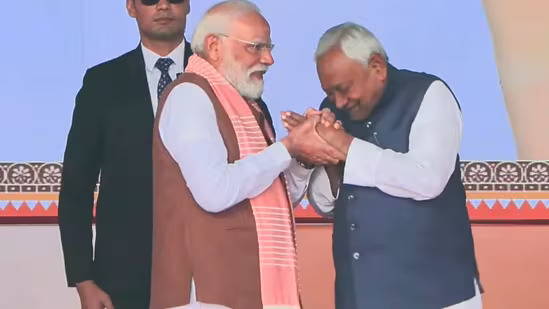
However, the NDA’s partnership will be tested by the demands of governance. Nitish must maintain his identity as a development-focused administrator while accommodating the BJP’s political and organizational aspirations. The BJP, under the leadership of Prime Minister Modi, has grown in both stature and influence, and its ambitions in Bihar cannot be dismissed. Nitish must also remain wary of the shifting dynamics within the opposition camp. While the Rashtriya Janata Dal (RJD) and other opposition parties suffered heavy losses in the 2025 election, they remain potent forces capable of mobilizing social coalitions and public discontent, particularly if Nitish’s government falters on its promises.
The BJP’s role in the NDA’s success is undeniable, but its growing political ambitions within the alliance are becoming more apparent. Nitish Kumar must ensure that the BJP’s growing influence does not overshadow his own leadership. The BJP has made inroads into Bihar’s political fabric over the years, and its influence, particularly among urban voters and the state’s business community, cannot be ignored. For Nitish, the task is to maintain the balance—keeping the BJP engaged while not allowing it to erode his authority within the state.
The NDA’s manifesto for 2025 outlines an ambitious vision for Bihar’s future. Key proposals include the creation of industrial corridors, skill hubs, and women-led enterprise schemes. There is also a focus on infrastructure development and the promotion of job creation across sectors. However, while the vision is grand, the real test will lie in its execution.
The state’s economic trajectory will depend on Nitish Kumar’s ability to leverage his government’s political capital to attract investment, foster industrial growth, and empower the workforce through skills training. Bihar’s youth, in particular, are looking to the government for opportunities that will help them secure a stable future. The promises of 10 million jobs and widespread infrastructure development must translate into real-world benefits if the administration hopes to retain the support of the people.
As Nitish Kumar embarks on his 10th term as chief minister, the challenges ahead are immense. The expectations from the electorate are sky-high, and the political dynamics both within the NDA and with the opposition will require deft management. While his longevity and political acumen are undeniable, this term will be a true test of his leadership. Bihar’s future hangs in the balance, and whether Nitish Kumar can transform the state into a modern, thriving hub of development will determine how history remembers him.
If Nitish Kumar succeeds in this monumental task, he will not only secure his place in the annals of Bihar’s political history but also solidify his legacy as the leader who transformed the state from the brink of obscurity to the frontlines of India’s development. But as history has shown, the gap between promise and delivery is often the hardest to bridge.
In the end, Nitish Kumar’s 10th term is more than just a continuation of a political journey; it is a pivotal moment that will define the course of Bihar’s future and his own place in the state’s storied political history.