As the second international airport for the Mumbai Metropolitan Region, NMIA will work in tandem with Chhatrapati Shivaji Maharaj International Airport (CSMIA) to ease congestion and elevate Mumbai into the league of global multi-airport systems
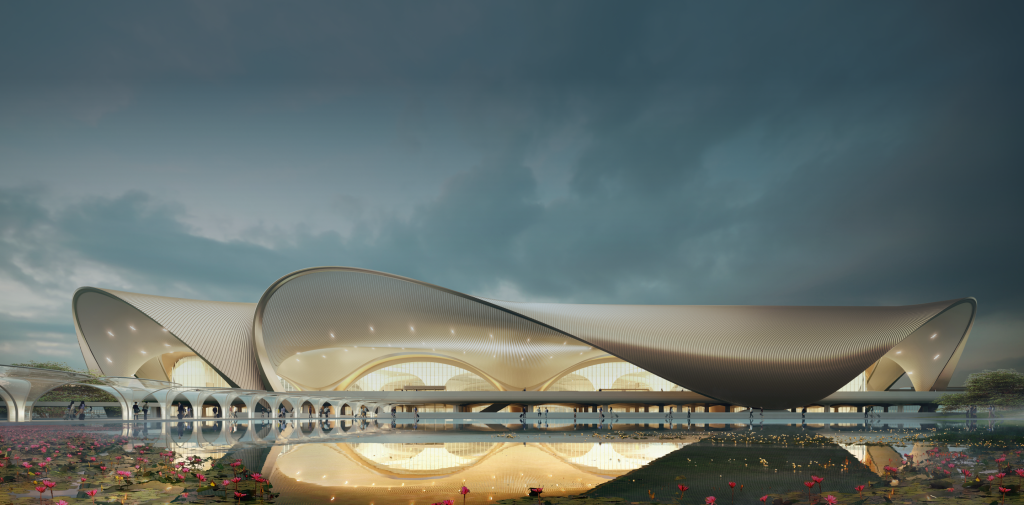
Mumbai is set to welcome its second international airport — the Navi Mumbai International Airport (NMIA) — which will ease congestion at Chhatrapati Shivaji Maharaj International Airport (CSMIA) and position Mumbai among global multi-airport systems. Prime Minister Narendra Modi will inaugurate the new airport on Wednesday, along with several other major infrastructure projects in the city. On Thursday, he will host UK Prime Minister Keir Starmer—his first official visit to India.
Developed under a Public–Private Partnership (PPP) model at a cost of Rs 19,650 crore, NMIA is India’s largest greenfield airport project. Spread over 1160 hectares, the airport is designed to handle 90 million passengers annually and 3.25 million metric tonnes of cargo. It features an Automated People Mover (APM) to connect its four terminals and the landside infrastructure, dedicated storage for Sustainable Aviation Fuel (SAF), solar power generation of about 47 MW, and EV bus services. NMIA will also be the first airport in India connected by Water Taxi.
In addition to the airport, the Prime Minister will inaugurate Phase 2B of Mumbai Metro Line-3, which runs from Acharya Atre Chowk to Cuffe Parade. This marks the full launch of the 33.5-km Aqua Line, Mumbai’s first fully underground metro corridor, built at a total cost of over Rs 37,270 crore. The line is expected to transform commuting in the Mumbai Metropolitan Region, offering a faster and more efficient transit system.
PM Modi will also launch “Mumbai One,” an Integrated Common Mobility App covering 11 public transport operators including Metro, Monorail, Suburban Railways, and various municipal bus services. The app provides integrated mobile ticketing, real-time updates, digital payments, route information, and an SOS feature for safety. It aims to streamline multimodal transport and enhance urban mobility across the city.
During the visit, PM Modi and UK PM Keir Starmer will review the progress of the India-UK Comprehensive Strategic Partnership, aligned with ‘Vision 2035’ — a 10-year roadmap covering trade, innovation, defence, climate, energy, health, education, and people-to-people ties. Discussions will focus on the India–UK Comprehensive Economic and Trade Agreement (CETA), viewed as central to future economic cooperation between the two nations.
The leaders will also participate in the 6th edition of the Global Fintech Fest 2025, which brings together global innovators, policymakers, regulators, and business leaders to explore advancements in financial technology and economic collaboration.