Violence broke out in Bangladesh after the death of a leading figure of the youth movement that toppled former Prime Minister Sheikh Hasina.
Sharif Osman Hadi, a key student/youth leader from Bangladesh’s 2024 pro-democracy movement, died on December 18 after being shot earlier in Dhaka. His death has ignited widespread protests and violence across the country.
Sharif Osman Hadi was shot by masked assailants while leaving a mosque in Dhaka last week and succumbed to his injuries on Thursday during treatment in Singapore. The attack occurred a day after authorities announced the date for the country’s first elections since the 2024 uprising, which Hadi had intended to contest as an independent.
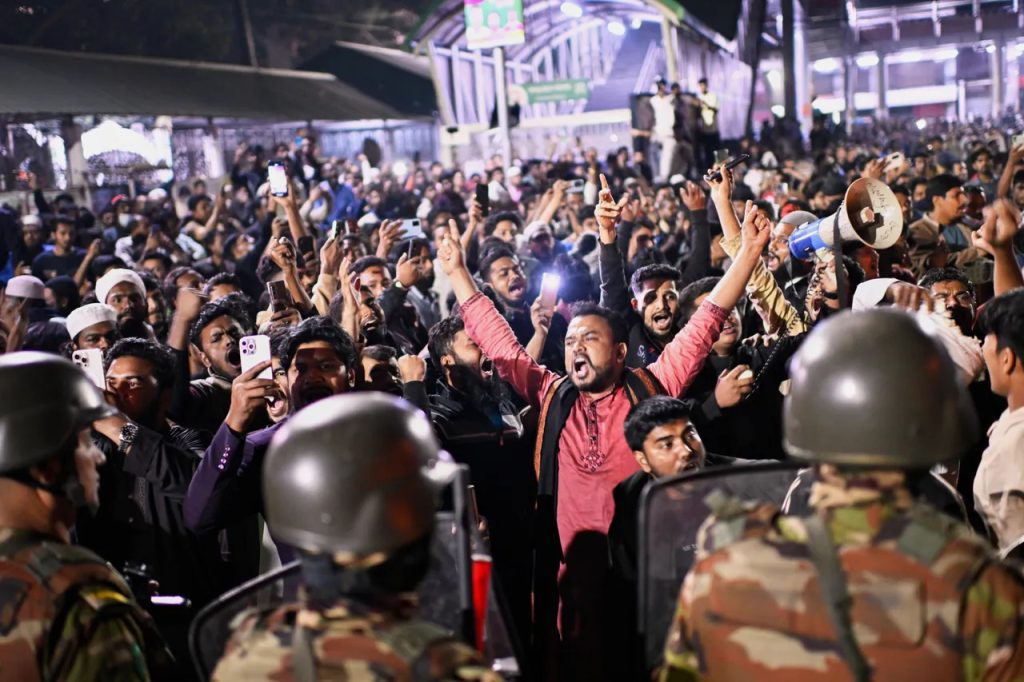
As news of his death spread on Thursday, hundreds of supporters assembled at a square in the capital to stage protests. Protests, blockades, and marches have now spread from Dhaka to Chattogram, Rajshahi, Sylhet and many other districts. Large crowds are demanding justice, arrest of those responsible, and accountability from the interim government.
Meanwhile, Slogans condemning India and demanding Hadi’s killers be brought back echoed throughout Dhaka, Rajshahi, and Chittagong.
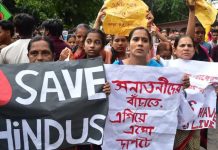
Amid the broader unrest, a Hindu man, named Dipu Chandra Das, was lynched by a mob in Mymensingh after being accused of blasphemy. The interim government has condemned the act and arrested several suspects in this connection.
The interim government, led by Nobel laureate Muhammad Yunus, has declared a national day of mourning and called for calm. It has pledged an investigation into both Hadi’s death and the incident of communal lynching.
Police and paramilitary forces have been deployed in major urban areas to try to contain the violence and restore order.
The situation remains highly volatile with daily protests, violent outbreaks, attacks on institutions, and significant pressure on the interim government. There are rising concerns about worsening communal tensions and threats to press freedom.
Students and activists have blocked highways, staged marches from university campuses, and held symbolic funeral prayers for Hadi.
Mobs torched the offices of Bangladesh’s two leading newspapers — Prothom Alo and The Daily Star — halting publication for the first time in decades. Journalists were trapped inside during the attacks before being rescued. For the first time in its history of 27 years, Prothom Alo, Bangladesh’s leading newspaper, was shut on Friday. Its online version was closed for about 17 hours after a violent mob vandalised and looted Prothom Alo’s office in Dhaka before setting it on fire.
Demonstrators also attacked cultural centers like Chhayanaut in Dhaka, causing vandalism and fires. Protesters have chanted anti-India slogans and at times targeted Indian diplomatic facilities.