


Page 17 - 31JAN2020E4
P. 17
ELECTION 2018
                                                                                                     HEALTH


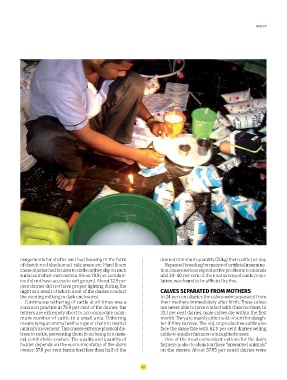
         rangements for shelter and had housing in the form    desired minimum quantity (20kg) their cattle per day.
         of thatch roof sheds, road-side areas, etc. Hard floors   Repeated breeding by means of artificial insemina-
         cause injuries and bruises to cattle as they slip on such   tion causes serious reproductive problems to animals
         surfaces in their own excreta. About 78.8 per centdair-  and 30- 40 per cent of the total surveyed cattle popu-
         ies did not have access to soft ground. About 32.9 per   lation, was found to be afflicted by this.
         cent dairies did not have proper lighting during the
         night as a result of which most of the dairies conduct   CALVES SEPARATED FROM MOTHERS
         the evening milking in dark enclosures.               In 24 per cent dairies the calves were separated from
           Continuous tethering of cattle at all times was a   their mothers immediately after birth. These calves
         common practice in 78.8 per cent of the dairies; the   are never able to have contact with their mothers. In
         tethers are extremely short to accommodate maxi-      25.1 per cent dairies, male calves die within the first
         mum number of cattle in a small area. Tethering       month. They are mainly either sold or sent for slaugh-
         means tying an animal with a rope or chain to restrict   ter if they survive. The old, unproductive cattle also
         animal’s movement. This causes extreme physical dis-  face the same fate with 62.9 per cent dairies selling
         tress to cattle, preventing them from being in a natu-  cattle to smaller farmers or slaughterhouses.
         ral, comfortable posture. The quality and quantity of   One of the most convenient options for the dairy
         fodder depends on the economic status of the dairy    farmers is also to abandon these “unwanted animals”
         owner. 57.8 per cent farms feed less than half of the   on the streets. About 57.85 per centd dairies were


                                                        17

