“Under a political conspiracy, when the central government framed me in a false case and sent me to jail, I ran the government for 160 days from jail”: Kejriwal; politics intensifies on ‘criminal netas bill’
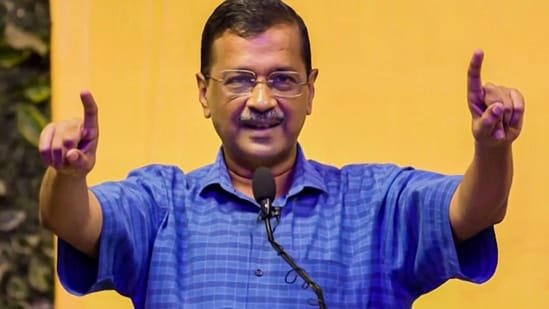
Hitting back at Home Minister Amit Shah (who is believed to have designed the ‘criminal netas bill’ while also keeping his case in mind) Aam Aadmi Party (AAP) leader Arvind Kejriwal on Monday questioned if those who frame others in false cases and are acquitted later would also face the same action.F
Taking a sharp jibe Shah and Prime Minister Narendra Modi for inducting opposition leaders facing serious corruption charges, Kejriwal wrote in Hindi on X, “the person who accepts leaders accused of serious crimes, clears the cases against them and makes them minister, Deputy Chief Minister or Chief Minister, should such a minister/Prime Minister also not resign from his position? How many years of imprisonment should such a person face?
“If someone is falsely implicated in a case, sent to jail and later acquitted, how many years of imprisonment should the minister who falsely implicated him face?” he wrote
“Under a political conspiracy, when the central government framed me in a false case and sent me to jail, I ran the government for 160 days from jail,” Kejriwal also said
Kejriwal was responding to Shah defending the proposed law to remove ministers accused of serious offences if they are jailed for more than a month in an interview with a news agency.
According to a statement posted by the Home Ministry, Shah asked if a Prime Minister, a Chief Minister, or a minister should be allowed to work if he is jailed in a serious case.
“I want to ask the entire nation and the Opposition, can a Chief Minister, Prime Minister, or any leader run the country from jail? Does that suit the dignity of our democracy?
“It is an insult to the country’s democracy that a Prime Minister, Minister and Chief Minister run the government from jail. It does not suit our democracy that the Secretary and Chief Secretary of the Government go to jail for orders from the Prime Minister, Chief Minister and Minister. My party and I completely reject the idea that this country cannot be governed without the person who is sitting in jail,” he said
There have been instances where a Chief Minister and a state minister did not resign despite their arrest in criminal cases.
Kejriwal spent over five months in jail after being arrested by the Central Bureau of Investigation (ED) and Enforcement Directorate (ED) in Delhi’s now-scrapped liquor policy related case. The AAP made it clear that Kejriwal would retain the top post, and his Cabinet colleagues will run the government on his behalf. He resigned only after he was granted interim bail by the Supreme Court, which also ordered that he will not visit the CMO and the Delhi Secretariat.
Former Tamil Nadu minister V Senthil Balaji who was arrested by the ED in June 2023 in a money laundering case remained without any portfolio but he resigned only in February 2024.
On the last day of the Monsoon Session, the BJP-led NDA government introduced the Constitution (130th Amendment) Bill, 2025, which is now colloquially referred to as the “criminal netas” bill. The proposed law states that any minister, Chief Minister, or the Prime Minister, who is arrested and is in custody for over 30 days after being accused of an offence punishable by a jail term of five years or more, shall be removed from office.
The proposed amendment mandates that a Prime Minister, Chief Minister or any minister who is arrested and remains in custody for 30 consecutive days in cases carrying a punishment of five years or more must vacate office. If the individual does not resign, they will be removed by law. The Home Minister also said that Prime Minister Narendra Modi himself insisted on including the office of the Prime Minister in the ambit of the bill