Congress hit out at the Narendra Modi government, calling it a personal failure of the Prime Minister

Effective August 1, US President Donald Trump has announced a sweeping 25% tariff on all goods imported from India—a move that will affect nearly all Indian exports to America. In addition, he also mentioned an unspecified penalty linked to India’s ongoing trade with Russia, particularly in oil and arms.
In a post on Truth Social, he talked of the penalty for procuring crude and defense equipment from Russia. India is also a part of BRICS which is a threat to the Dollar, he said. However, negotiations would continue with India, he added.
Intended to put pressure on India to strike a deal or face hefty tariffs, the announcement is expected to put a strain on economic and diplomatic ties between the countries.
Meanwhile, US Fed kept the rates on hold
According to IFA Global, the Rupee weakened 61p to end at 87.43 after trading in a 87.06-87.52 range yesterday. After the move Rupee became the “worst performing Asian currency Calendar YTD. Rupee is likely to open around 87.62 and trade a 87.45-87.90 range with weakening bias,” it said
Equity markets opened lower with tariff concerns weighing on investors’ sentiments
The duties target several of India’s top-performing export sectors. Automobiles, auto components, steel, aluminum, smartphones, solar modules, marine products, gems, jewellery, and select processed food and agricultural items are all on the 25% list, however, pharmaceuticals, semiconductors, and critical minerals have been excluded.
Opposition slams PM Modi
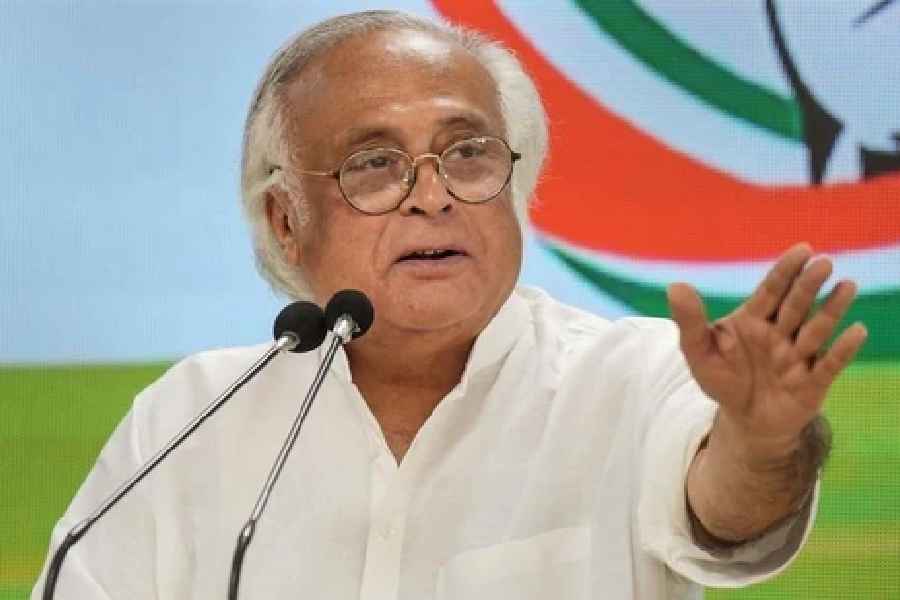
The Congress hit out at the Narendra Modi government, calling it a personal failure of the Prime Minister.
“All that ‘taarif’ between him and ‘Howdy Modi’ has meant little,” Congress general secretary Jairam Ramesh said in a post on X.
“Mr Modi thought that if he kept quiet on the insults that the US President has hurled on India—30 claims of stopping Op Sindoor, the special lunch for the Pakistan Army Chief whose inflammatory remarks provided the immediate backdrop to the brutal Pahalgam terror attacks, and US support for financial packages to Pakistan from the IMF and the World Bank—India would get special treatment at the hands of President Trump. Clearly that has NOT happened,” he said.
“The 25 per cent tariff on all Indian exports to the United States PLUS penalty for buying Russian oil is a big blow to India’s trade with the U.S. ‘Dosti’ is no substitute for diplomacy and painstaking negotiations,” Former Finance Minister P Chidambaram said in a post on X.
Responding to US President Donald Trump, the Narendra Modi government on Wednesday said it will take all “steps necessary” to secure the country’s national interests as it has been the case with other trade agreements including the latest Comprehensive Economic and Trade Agreement with the UK. In a short and clear statement issued late evening, the Ministry of Commerce said that the “Government has taken note of a statement by the US President on bilateral trade. The Government is studying its implications.”
“India and the US have been engaged in negotiations on concluding a fair, balanced and mutually beneficial bilateral trade agreement over the last few months. We remain committed to that objective.
“The Government attaches the utmost importance to protecting and promoting the welfare of our farmers, entrepreneurs, and MSMEs.
“The Government will take all steps necessary to secure our national interest, as has been the case with other trade agreements including the latest Comprehensive Economic and Trade Agreement with the UK,” it said
August 1
August 1 was the deadline for implementation of reciprocal tariffs on various trading partners, including India. The deal remains unfinalised despite several rounds of discussions and any further delays could negatively impact the Indian economy and stock market but sources in know of developments say that for a government which is facing backlash on Trump’s repeated claims on brokering ceasefire between India and Pakistan, it needs to be extra caution while finalising the deal in mind the interests of people, especially the farmers
Recently India and the United Kingdom made history by officially signing the Comprehensive Economic and Trade Agreement (CETA) which is projected to elevate bilateral trade by $34 billion annually. At a time when the India-US trade agreement was facing uncertainties, CETA was described as India’s most ambitious pact with a Western country.
Though Indian equity benchmark indices—Sensex and Nifty—traded higher on Wednesday, there continues to be a lingering uncertainty over the much-delayed agreement. Gold and silver prices also remained bullish in the domestic futures market on the back of persistent uncertainty over the deal, driving investors into safe-haven assets.
Sticking points
Agricultural products and genetically modified crops remain some of the main sticking points from the India side. A key point of contention is America’s insistence on greater access to Indian markets for its agricultural, dairy, and GM products, India argues that such access could negatively impact the livelihoods of its farmers.