A Tehelka SIT report reveals how banks and NBFCs discriminate against Muslim-majority localities in extending access to credit, exposing bias, corruption and coercive recovery practices.
On March 9, 2005, the then Prime Minister of India, Dr Manmohan Singh, issued a notification for the constitution of a High-Level Committee to prepare a report on the social, economic and educational status of the Muslim community in India.
The seven-member High-Level Committee, chaired by former Chief Justice of the Delhi High Court, Justice Rajinder Sachar, submitted its first report to the Prime Minister on November 17, 2006. The government tabled the Justice Rajinder Sachar Committee Report in Parliament on November 30.
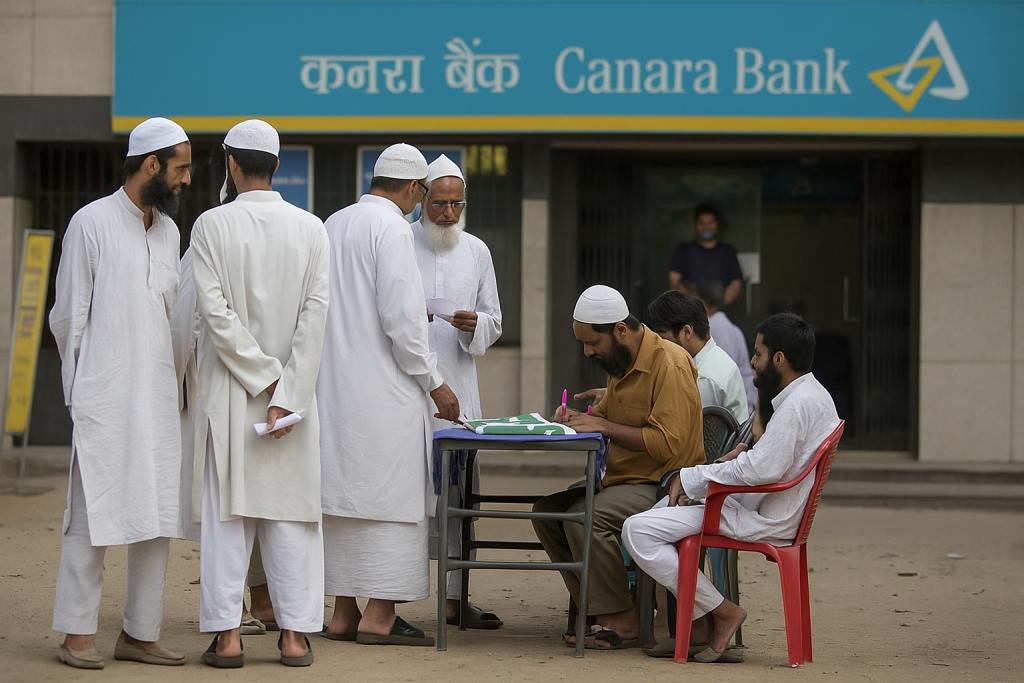
Among its many recommendations, the Sachar Committee observed that several Muslim-concentrated areas were marked by banks as “negative” or “red” zones, where they perceived a higher risk of repayment default and were therefore reluctant to extend credit. Worryingly, nineteen years after the report was tabled, little has changed. Even today, banks and Non-Banking Financial Companies (NBFCs) remain hesitant to lend to Muslims living in Muslim-dominated areas.
In fact, many believe the nation’s narrative has shifted since the NDA came to power in 2014. Financial institutions, like so many arms of the government, appear apathetic to Muslim issues and often toe the Hindutva line of “no more Muslim appeasement.” However, according to some, there has been no real difference in access to loans for Muslims in Muslim-dominated areas under the present Modi government compared to the UPA years when the Sachar Committee submitted its report.
To unearth the truth, Tehelka carried out an investigation into banks, NBFCs and Direct Selling Agents (DSAs), who act as intermediaries between these institutions and customers.
“After the Modi government came to power, the refusal rate of banks and NBFCs for Muslims living in areas like Shaheen Bagh, Okhla Vihar, Jaffrabad, Mustafabad and other Muslim-dominated parts of Delhi has gone up to 100 percent. Earlier, under the previous government, it was 25 percent. The same banks and NBFCs have no problem giving loans to Hindus in Hindu-dominated areas of Delhi,” said Shahrukh Malik, a manager in a top finance consultancy company (DSA), to Tehelka’s undercover reporter.
“If someone wants to purchase a house in front of a mosque and a mandir, banks and NBFCs will not finance the house near the mosque, but they will finance the one near the mandir. No matter whether the house is a registered property or not, if it is in a Muslim-majority area, no loan will be given. The reason cited is EMI. If a Muslim fails to pay EMI and the bank’s recovery team goes for recovery, there is a possibility the team will be chased away from the Muslim-dominated area,” added Shahrukh.
“If you are not paying GST but filing your returns, I can still get the loan amount sanctioned for you. Don’t file GST, just give me two years’ ITR. I will arrange a loan of between Rs 1.5–2 crore for you from the bank or NBFC,” Shahrukh told Tehelka.
“It is difficult to get a loan in Muslim-concentrated areas because if the applicant fails to pay EMI, recovery becomes difficult. People come together and fight with the recovery team. They are not afraid of what society will say. On the other hand, in Hindu-dominated areas loans are easily available, because recovery is easier from a person from Hindu community if he becomes defaulters,” said Anuj Pandey, direct sales manager of a top NBFC.
“Banks will not directly tell Muslim customers that they don’t provide loans in Muslim-majority areas. Instead, they give excuses like technical or legal issues. But the truth is, they simply don’t want to lend in areas dominated by Muslims,” Anuj told Tehelka.
“No loan will be given on a house right in front of a mosque, because if tomorrow the applicant gives that house to the mosque, recovery of the loan amount will become difficult. On the other hand, such issues do not exist with mandirs. That is why banks issue loans on houses in front of temples,” added Anuj.
“There is no written rule by the banks that they will not give loans in Muslim-dominated regions. But they declare such areas as negative because of many loan default cases in that area, where recovery is difficult. Banks and NBFCs will finance properties near mandirs and gurdwaras, but not near mosques,” said Ayush Chauhan to the Tehelka reporter.
“I paid a bribe to the DSA to get my loan sanctioned because the house I purchased was very close to a mosque. Banks and NBFCs don’t give loans on properties situated within 500 metres of a mosque. The same is the case with mandirs and gurdwaras. Like Muslims, even Hindus in their dominated areas find banks unwilling to give loans,” said Liyakat Ali, a relationship manager at a top private bank in the country.
Tehelka met Shahrukh Malik in his office at Rajendra Place, Delhi. Shahrukh works in a top financial consultancy firm based in South India, with multiple offices across the country, advising people and arranging loans for them from banks and NBFCs. He told the reporter, who approached him as a fictitious customer seeking a home loan, that getting a loan in Muslim-dominated areas of Delhi is impossible because recovery becomes difficult if a borrower defaults.
According to Shahrukh, even properties with proper registry are denied loans simply because they are located in Muslim-dominated areas. Hindu-dominated areas, however, face no such hurdles and loans are sanctioned without difficulty, he claimed. He added that the rate of refusal by banks for loans in Muslim-dominated areas has jumped to 100 percent under the Modi government, from 25 percent during the previous Congress government.
In the following exchange, Shahrukh bluntly lays bare how banks and NBFCs flatly refuse loans in Muslim-dominated areas of Delhi, despite properties having valid registry. He stresses that such denials are now absolute, unlike in the past. What comes through is the perception that Muslims are seen as risky borrowers, even when many do repay, while Hindus face no such blanket discrimination. The remarks also tie the escalation of rejections directly to the Modi government tenure.
Shahrukh-Total Muslim hotey hain na jahan, wahan (loan) dete hi nahi.
Reporter- Koi bank nahi deta…private, sarkari… koi nahi?
Shahrukh- Okhla mein tum registry chalu karwa do….denge hi nahi.
Reporter- Okhla Vihar mein?
Shahrukh- Okhla, Shaheen bagh, Seelampur.. kahin bhi…Jaffarabad, Mustafabad..
Reporter- Chahe registry ho, tab bhi nahi?
Shahrukh- Hmm..
Reporter- Wajah?
Shahrukh- Wajah- yahan total Muslim hain.
Reporter- Musalman kya EMI nahi de sakta?
Shahrukh- Dete hain.. bahut log dete hain.
Reporter- Usmein kya dikkat hai?
Shahrukh- Magar denge nahi na. Agar kabhi EMI nahi di, aur koi paise lene gaya to usko nasht kar diya…
Reporter- Ye Hindu ke elakey mein nahi hota kya… Hindu-dominated..?
Shahrukh- Na.
Reporter- Wahan kar detey hain loan?
Shahrukh- Haan.
Reporter- Itna bura mahaul ho gaya hai…. ye abhi hua hai… Modi (government) ke aane ke baad?
Shahrukh- Pehle 20-25 percent tha…ab 100 percent ho gaya hai.
[What comes through from the above dialogue is the perception that Muslims are seen as risky borrowers, even when many of them do repay. On the other hand, Hindus face no such blanket discrimination. What is concerning is that the denial is based not on individual credibility but on collective identity. The remarks also link the escalation of rejections directly to the duration the Modi government has been in power.]
In this exchange, Shahrukh advised us not to buy a house near a mosque, saying it would make it difficult to get a loan. On the other hand, if the house was near a temple, securing a loan would be much easier. He underlines how banks and NBFCs treat properties differently depending on whether they are located near a mosque or a mandir. Loans, he says, are readily given near temples but denied near mosques.
Reporter-Accha ye batao Masjid ke pass loan nahi hai kya? Masjid aur Mandir ke pass?
Shahrukh- Mandir ke pass hoga; Masjid ke pass nahi hoga.
Reporter- Mandir ke pass ho jayega?
Shahrukh- Haan.
Reporter- Masjid ke pass nahi kyun?
Shahrukh- Muslim issue..
Reporter- Ye pehle se tha ya abhi hua?
Shahrukh- Ab zyada craze ho gaya hai…Modi (government) ke baad zyada ho gaya hai.
[Shahrukh insists this bias has intensified in recent years, especially after the Modi-led government came to power, suggesting a clear communal tilt in lending practices. So we see here is how prejudice quietly seeps into the system, deciding even where a house can qualify for a loan. Such discrimination undermines the very fairness banking is meant to uphold.]
Shahrukh then told us about a customer for whom he managed to arrange a loan from an NBFC, even though the house he had purchased was very close to a mosque. He added that banks and NBFCs have no written rule against funding Muslims living in Muslim-dominated areas or near mosques. He points out that properties too close to a mosque—sometimes even within 50 metres—face automatic denial, while loans near temples face no such restrictions.
Shahrukh- Ramesh park mein bhi to hai inka, bas ek choti si baat hai, Masjid ke pass kar liya to issey badi kya cheez hogi, Masjid se kam se kam 200-300 metre door hona chahiye ghar; aur uska 50 m bhi nahi hai.
Reporter- Par aapne loan karwa diya?
Shahrukh- Haan.
Reporter- Tabhi to aapke pass bheja hai… acha ye bank ka written rule hai, ya koi rule nahi hai?
Shahrukh- Nahi writing mein nahi hai, mooh zubani…magar aap kuch kar bhi nahi saktey, ye unki policy hai, de ya na dein aapko . OK to nahi kiya na unhone, wo to keh dega maine check kiya tha mil hi nahi raha, paise dene chaiye nahi diye.
Reporter- Aur mandir ke pass de denge…
[Shahrukh explains the unwritten rules banks follow when approving loans near religious sites. Although not codified, these rules are strictly enforced, leaving borrowers with little recourse.]
In this exchange, Shahrukh assured us that he could arrange a loan for us even if we were not paying GST. He reveals how loans can be arranged even without formal GST filings. He explains that with just two years of ITR, amounts of Rs 1.5–2 crore can be sanctioned.
Reporter- Matkab bina GST ke, bina ITR ke aap kara dogey?
Shahrukh- Haan.
Reporter- Bina GST ke kitna ho jayega amount?
Shahrukh- ITR de dena 2 saal ki…
Reporter- Aapne alag alag cheezein batai hain, bina GST, bina ITR.
Shahrukh- Agar ITR hai to GST nahi chahiye…phir to aap le lo 1.5-2 crore.
Reporter- Bina GST file kare to aap lele 2 crore. Karwa dogey? ITR ke saath? Theek hai.
[The discussion shows the flexibility—and opacity—of the system, where rules are bent based on paperwork rather than financial credibility. It exposes how informal practices can override formal regulations, often benefiting those who know the loopholes.]
Shahrukh demanded a 2 percent commission as a bribe to arrange a loan for us in an unauthorised area of Delhi to purchase a house. He said no regular bank would give us a loan in such areas; they would make us visit the bank several times but, in the end, say ‘No.’ According to Shahrukh, it is he, as a DSA, who can arrange a loan anywhere—for a price.
After Shahrukh, Tehelka met Anuj Pandey, a direct sales manager at a top NBFC in Noida, Uttar Pradesh. To Anuj, we also presented a fake deal, saying we needed a home loan to buy a house in Delhi. Anuj told the reporter that no bank or NBFC would give a loan in a Muslim-dominated area because recovery there is difficult. He added that if someone defaults on a loan, the entire community often comes to his support, without considering how it affects society. This, he said, is not the case with Hindus, which is why loans are more easily available to them.
Reporter- Accha doosra ye bataiye, Muslim area mein ho jayega loan?
Anuj- Poora Muslim area nahi chalega, thoda Hindu bhi hona chahiye.
Reporter- Jaise Jama Masjid ho gaya, Jamia, Shaheen bagh ho gaya.
Anuj- Bahut mushkil hai.
Reporter- Koi nahi karega, NBFC?
Anuj- NBFC mein hain bahut jo kar saktey hain.
Reporter- Aisa kyun?
Anuj- Recovery nahi ho pati…check bounce ho jaata hai…wahan ladai jhagda ka mahaul zyada ho jaata hai.
Reporter- Accha, ho chukka hai pehle?
Anuj- Haan ab maan lo jahhan zyada jansankhya mein hain, wahan recovery wale 4-5 jayenge na…hamare mein kya hai…chalo dena hai, thoda samaj ke dar se, izzat se kuch na kuch daba padh jaata hai, aadmi de hi deta hai paisa. Unmein kya hai ladai jhagda kar lenge.
Reporter- Unko samaj ka darr nahi hai?
Anuj- Tension free hain.
Reporter- Agar Hindu dominated area ho, usmein ho jayega?
Anuj- Haan. Hindu mein to kar denge hum usmein koi dikkat nahi hai.
[In the above exchange, Anuj explains how loans in fully Muslim-dominated areas are extremely difficult to secure. He says a small Hindu presence makes lending slightly easier. This discussion shows how lending decisions are shaped less by financial credibility and more by communal composition.]
Like Shahrukh, Anuj also told us that no home loan would be available for a house near a mosque, because if the house were sold to a mosque in the future, it would be difficult for the bank to recover its loan. He said home loans are available for houses near a temple but not near a mosque. Similarly, Muslim-dominated areas are unlikely to get loans, while Hindu-majority areas face no such problem. According to Anuj, giving loans in Hindu-majority areas is not an issue for the bank.
Reporter- Maine ye bhi suna hai Mandir ke Masjid ke pass loan nahi hota ?
Anuj- Nahi Masjid ke pass to maximum loan nahi hota, Mandir ke pass ek baar ko ho jata hai..Masjid mein dikkat thodi zyada aa jati hai, kal ko Masjid bada diye…aap loan bharna band kar dogey to hum kuch kar bhi nahi saktey..
Anuj-Kal ko Masjid badi kar rahe ho, kahenga bhai ye de do apna paisa le lo…aap paisa lekar alag ho gaye, usne Masjid bada kar diya…Masjid pehle choti thi ab badi ho gayi..phir kya hoga isliye hum log nahi kartey, Mandir ka kya hai hum log zameen de dein tab bhi paisa dene wala koi nahi hai..
Reporter- Matlab Mandir ke pass ghar par loan kar dogey Masjid par nahi karoge ?
Anuj- Haan nahi karenge
Reporter- Aur Muslim dominated mein bhi nahi hoga, Hindu mein ho jayega ?
Anuj-Hindu mein ho jayega…
Anuj- Hindu jahan zyada hai wahan dikkat nahin hai.
[The exchange highlights how banks and NBFCs treat properties near mosques and temples differently. Loans for houses near mosques face extra hurdles, as any expansion or change in property use could make recovery difficult. By contrast, loans for houses near temples are easier to get, and Hindu-majority areas also face no such restrictions. The discussion underscores how communal composition directly influences lending decisions.]
Anuj explained that banks do not have a problem with Muslims as such; the issue is with Muslim-dominated areas. If a Muslim buys a house in a mixed-population area, they can easily get a loan. But in Muslim-majority areas, banks create false legal or technical obstacles to avoid giving loans, rather than saying “No” point blank.
Anuj- Muslim bahumat mein dikkat hai, wahi customer agar Shakarpur mein kharid raha hai to de denge.
Reporter- Haan to pehle hi experience kharab raha hoga na aapka?
Anuj- Haan, isliye pehle hi reject maar detey hain, bol detey hain nahi ho payega, kuch bhi bata denge, legal mein dikkat hai, technical wajah se nahi ho payega…
Repoter- Matlab bahana laga denge?
Anuj- Haan, bahana laga denge.
[The exchange reveals how loans are routinely denied in Muslim-majority areas, even when the same customer could get approval in Hindu-majority localities. The discussion highlights a pattern of preemptive rejection based on location rather than financial credibility.]
After Anuj, Tehelka met Ayush Chauhan, a DSA in Noida, presenting the same fake deal that we needed a home loan in Delhi. Ayush also told us that it is difficult to get a loan in Muslim-dominated areas, while mixed-population areas present a better profile for loans. He said that in Muslim-majority areas, banks find it hard to recover their loans and usually grant only a small loan amount.
Reporter- Thodey bahut main kya-kya jaisey?
Ayush- Thodey bahut dominated main jaisey apki community hai, humari community hai, ya kisi ki bhi community hai, usme kya hota hai 100 percent hotey hai.
Reporter- Matlab Hindu–Muslim mix hoga…usmein ho jayega?
Ayush- Mix thoda bahut.
Reporter- Total Muslim hoga to loan nahin hoga, aisa kyon?
Ayush- Hota hai loan, magar kum hota hai. Thoda bahut amount par ho jaata hai zyada bade amount par nahin hota.
Reporter- Aisa kyon? Reason? Wajah?
Ayush- Reason ye hota hai ki recovery nahin ho paati.
[It emerges how community composition shapes the possibility of access to loans. Ayush admits that owing to recovery concerns, mixed localities find loans easier, while areas with a single community—especially Muslim-dominated—struggle to secure bigger amounts. The candid remarks hint at the undercurrents of bias in financial dealings.]
According to Ayush Chauhan, there is no written rule stating that banks will not give loans in Muslim-dominated areas. However, they have marked these regions as “negative” due to numerous cases of loan defaults, where recovery is difficult. Banks and NBFCs provide loans for properties near temples and gurdwaras, but not near mosques, Ayush added.
In the following conversation, Ayush demanded a 2 percent commission as a bribe from us to get our home loan sanctioned in an unauthorised area of Delhi, where most major banks refuse to lend. He explains that this covers the role of the bank’s representative who manages all the formalities. The discussion exposes how extra costs are built into the loan system.
Reporter- Mujhey kitna dena hoga Ayush bhai apko?
Ayush- Mota-mota 2 percent ka kharcha hai. Yahan se banda waha jayega saari cheezein karega.
Reporter- Loan wala, bank ka hi banda hoga?
Ayush- Haan.
Repoter- Matlab jo total loan hoga jaisey 20 lakh, uska 2 percent 40k ho gaya?
Ayush –Haan.
[In the above exchange, as our reporter seeks clarity on the charges involved in processing a loan, Ayush spells it out plainly—about 2 percent of the loan amount is taken as expenses. Such charges, though presented as routine, reveal how the system quietly extracts more from those already in need of credit.]
After meeting with an NBFC representative, a financial consultant, and a DSA, the Tehelka reporter met Liyakat Ali, a relationship manager at India’s top private bank in Delhi. Liyakat confessed to Tehelka that he himself had paid a 5 percent commission as a bribe to a DSA to get his home loan sanctioned through the NBFC. According to him, he was forced to pay the bribe because the house he purchased was close to a mosque, and no banks or NBFCs provide loans for properties located so near a mosque.
Reporter- Mainey tumse kaha tha koi jugaad wala batao?
Liyakat- Sir wo diya to tha… bahut badiya hai… mera usney karaya tha. Masjid ki wajah se mujhey 5 percent dena pad gaya tha. Mera ho nahin raha tha.
Reporter- Masjid kya?
Liyakat- Masjid just saamney hai mere. 500 meter main agar Masjid hoga to NBFC loan nahin dega.
Reporter- Kaun sa bank loan nahin deta?
Liyakat- NBFC. Bank to waisey hi nahin karta.
Reporter –Kyon?
Liyakat- Kehtey hai recovery main dikkat aati hai.
Reporter- Mandir-Masjid paas main ho agar, 500 meter par?
Liyakat- Mandir–Masjid ya wo kya boltey hai gurdwara jahan par 90 percent jaisey minority hoti hai na. Hindu hai ye.. Muslim hai ya Sikh hai.. wahan loan nahin kartey.
Reporter- Kis bank se kara diya loan?
Liyakat- Bank se nahi sir, NBFC se hua tha, XXXX Housing karke hai ek.
Reporter- Kitna paisa liya isney?
Liyakat – 5 percent liya tha.
Reporter- Total ka?
Liyakat- 5 bola tha sir, lekin diya mainey 4.
[When the reporter asks Liyakat about alternative ways of getting a loan, Liyakat recalls how his own attempt faced hurdles because a mosque stood close to his house. What comes through here is the bias built into lending—religious landmarks can decide financial access. We learn how such attitude deepens exclusion, while agents profit by charging hefty fees.]
In this exchange, the reporter raises the question of whether Muslims face hurdles in getting loans. When asked why Muslims are not getting loans in their concentrated areas, Liyakat said that Muslims are known for increasing banks’ non-performing assets (NPA). In some Muslim areas of Delhi, even personal loans have become difficult to obtain. He added that banks provide loans more easily to Hindus in Hindu-majority areas compared to Muslims, though in some areas, Hindus are also facing difficulties in securing loans.
Reporter-Accha, Muslims ko loan nahi ho raha?
Liyakat- Thoda to dikkat ho jaati hai.
Reporter- Modi sarkar mein?
Liyakat- Nahi aisi baat nahi hai.
Reporter- Wo to keh raha tha….Shahrukh.
Liyakat- Sir wo NBFC ki baat kar raha tha, bank ye cheez nahi sochega, NBFC kar raha hai.
Reporter- NBFC loan nahi de raha.
Liyakat- Haan. NBFC loan nahi de raha Muslims ko, wo NPA zyada kartey hain…
Liyakatt (continues)- Ye Zakir Nagar mein loan lena zyada mushkil ho jata hai..
Reporter- Aisi to bahut sari jagah hai?
Liyakat- Jamia Okhla mein personal loan dena mushkil ho jata hai…NPA ho jata hai.
Reporter- Aur Hindu area mein ho jaata hai?
Liyakat- Haan mil jata hai.. kuch negative area Hindu area mein bhi nahi milta, jaise Buradi.
Reporter- Wo ye keh raha tha pehle 25 percent tha, ab 75 percent loan nahi milta, aisa kyun?
Liyakat- Sir, NPA zyada kartey hain hum log.
[Liyakat clarifies that the issue of Muslims facing difficulty in accessing credit is not government policy but blames it on NBFC practices, which treat Muslim-dominated areas as risky. The dialogue lays bare how lending decisions are coloured by perceptions of default.]
When asked how he could claim that Muslims are known for NPAs, Liyakat recounted an incident. He said he met a Muslim man who had taken a loan. The man admitted to Liyakat that he had defaulted, and when the bank’s recovery team came to collect the money, they were chased out of the area, Liyakat said. When asked if those teams use musclemen, he nodded in affirmative.
Reporter- Tumhe kaise pata Muslim zyada default kartey hain?
Liyakat- Arey sir hum milte rehte hain…hum jaate rehtey hain, visit kartey rehtey hain. Ek bande ne bataya tha humne bhaga diya jab recovery team aayi thi; isliye to dikkat ho gayi.
Reporter- Recovery team mein to gundey hotey hain?
Liyakat- Haan.
[When asked why Muslims are seen as defaulting more often, Liyakat explains that such views come from regular visits and stories of borrowers chasing away recovery teams. The dialogue hints at both fear and mistrust between the lender and the borrower sides shaping the lending landscape.]
Now Liyakat admitted to Tehelka about the role of bank recovery agents. He said they are goons and musclemen who use abusive tactics — that can push customers into depression— in order to recover loans. This, he noted, goes against Supreme Court guidelines, which clearly state that bank loan recovery must follow the rule of law and fair conduct, strictly forbidding the use of muscle power or aggressive tactics by recovery agents. On one occasion in 2024, the Supreme Court even referred to bank recovery agents as “gangs of gundas.”
Liyakat- Ek aaya tha recovery wala banda, wo retired tha police se, wo keh raha tha bhai koi paise na de to hum bejhijhak ghar mein ghus jaate hain, agar koi paise nahi de raha hai, ladai mein aa gaya hai to hum bina lade peeche nahi hat tey..
Reporter- Wo kya kartey hain jakar?
Liyakat- Gali galoj, ghar mein jakar kehna, aas paros mein kehna, force karenge itna… depression mein daal denge.
Reporter- Accha ji?
[In this exchange, Liyakat recounts the behaviour of a recovery agent, a retired policeman, who described how he forces repayment by barging into homes, hurling abuses, and publicly shaming defaulters. Such strong arm tactics, intended to solve defaults, crush dignity and worsen anxiety.]
In Tehelka’s investigation, bank officials, NBFC representatives, financial consultants, and DSAs admitted that securing loans in Muslim-concentrated areas of Delhi has been extremely difficult—often impossible—since the UPA government, and that this trend continues under the Modi government, now in its third term. These areas have been declared “negative” by the government, private banks, and NBFCs because of rising defaults and poor recovery prospects.
At the same time, they said financial institutions face no problem in lending to Muslims living in mixed localities or in areas not dominated by their community. They also confessed that while properties near temples or gurdwaras easily attract loans, those near mosques face stiff resistance from lending institutions. One bank representative even admitted that banks and NBFCs avoid lending to Hindus in certain Hindu-dominated areas.
Corruption in sanctioning loans also featured during the investigations. A relationship manager [RM] revealed that he had to pay a bribe to get his own loan cleared from an NBFC for a house located near a mosque. Two other representatives openly demanded commissions from the reporter as bribes for approving a home loan in unauthorised parts of Delhi, where major Indian banks do not operate.
Violations of Supreme Court guidelines were also exposed, with an RM disclosing that recovery teams often act like goons, barging into homes, intimidating borrowers, and pushing families into depression. Such revelations highlight not only discrimination but also the rot of corruption and coercion that continues to plague the lending ecosystem.