No sickness or abnormal behaviour reported till September 16 says authorities, activists describe Shankar’s premature death as heartbreaking culmination of several years of institutional apathy, neglect
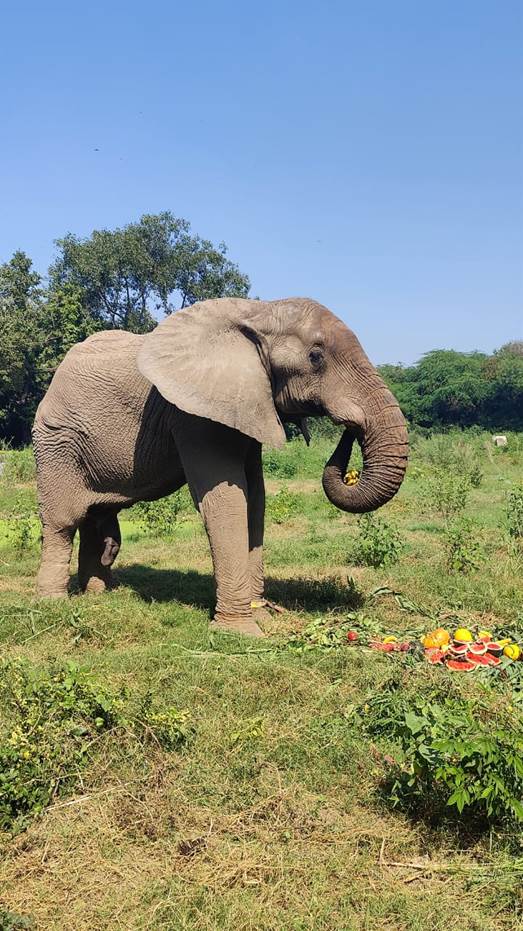
Shankar—Delhi Zoo’s lonely, male African elephant—died on Wednesday at just 29 years of age and the authorities have ordered a probe to find what happened.
Shankar’s death comes amid significant public controversy around his care and mental health—a reason why the Centre issued a press statement on Thursday to address concerns and explain steps taken by the authorities. Also, the Delhi Zoo is the only zoo in the country directly managed by the Union Ministry of Environment, Forests, and Climate Change.
Shankar had been in a solitary enclosure since 2012 and was even chained up when he began acting stubborn and aggressive, though in the press note the Delhi Zoo said Shankar was known for his “gentle nature”. For years, animal activists and welfare organisations had been criticising Shankar’s solitary confinement, mental health issues, and treatment at the zoo. The zoo had been repeatedly warned by the courts, and even the World Association of Zoos and Aquariums (WAZA) to improve Shankar’s living conditions and find him a mate, according to reports.
Shankar, at 29 years old, was relatively young for an African elephant, since they typically live 50–70 years in the wild. That means he passed away at about mid-life, well before the natural upper range of his species. In captivity, where elephants sometimes face stress, limited space, and health issues, lifespans can be shorter (around 40–50 years on average), but even then, Shankar’s death was earlier than expected. So, his sudden demise is considered premature compared to the normal lifespan of African elephants.
Shankar arrived in India in 1998 as a diplomatic gift from Zimbabwe—thereby making his affairs a matter of national and international concern.
The bull elephant had been living alone since 2005, following the death of female elephant Bambai. Over the years, he experienced recurring health problems related to musth—a condition where a bull elephant’s testosterone levels spike, leading to aggressive and unpredictable behaviour.
According to the statement, an inquiry had been ordered to determine the cause of death, with a post-mortem conducted by experts from the Indian Veterinary Research Institute (IVRI).
“On the morning of 17th September, it was observed that ‘Shankar’ was consuming fewer leaves and grasses with slight loose motion but was taking concentrate, fruits, and vegetables normally. The veterinary team of NZP provided treatment, and animal keeping staff maintained close observation. At approximately 7:25 PM on the same day, Shankar suddenly collapsed in its shed, and despite emergency treatment, succumbed to death. No sickness or abnormal behaviour was reported until 16th September 2025,” it added
Director Dr. Sanjeet Kumar described Shankar as a symbol of strength and love, whose loss leaves a deep void in the zoo and conservation community.