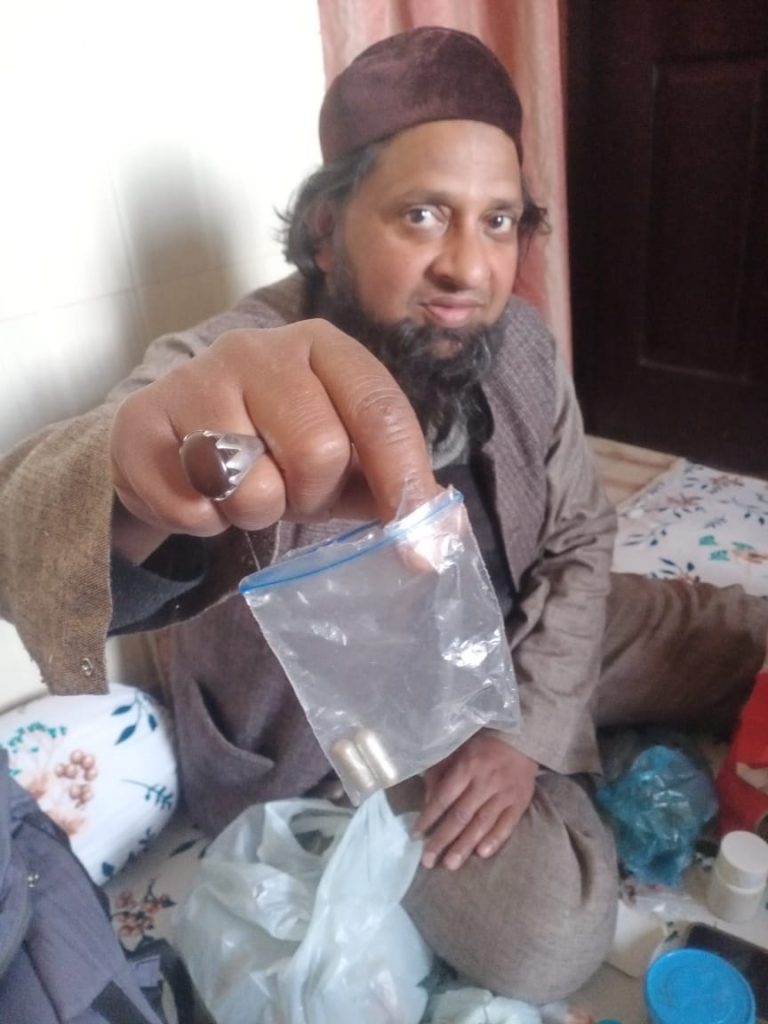
“We have three methods to heal any incurable disease, including cancer. One method is giving the patient water to drink after reciting and blowing Quranic verses over it; the second is brushing the patient’s body with neem leaves to remove evil spirits; and the third is putting black threads around the neck and waist after reciting and blowing Quranic verses over them,” Muhammad Akram from Gaada village in Saharanpur district of Uttar Pradesh told Tehelka’s undercover reporter.
“My father used to treat patients like this. He treated thousands of patients across India who were suffering from incurable diseases like cancer, diabetes and thyroid disorders. My father got this divine power of treating patients from his guru, who was a saint from a nearby village and was gifted by God to treat patients through divine powers, free of cost. My father’s guru passed on his divine powers to my father before his death. My father also died last year at the age of 112,” Akram said.
“After my father’s death, I am carrying on his legacy of treating patients, but I have also addedsome Ayurvedic medicines to the three methods through which my father was treating patients. But our treatment depends on the will of Allah. If Allah wishes, the patient will be cured; otherwise not. I have not done any course, and I only charge the cost of the medicines. The rest depends on the patient’s wish, which will be a hadiya (gift) for us,” Akram told Tehelka.
“I have removed 14 to 29 mm stones from the gallbladder of patients, which is impossible in medical science. In medical science, gallbladder stones require surgery. I am not in any way trying to challenge medical science. I am doing what Allah is guiding me to do,” Akram said.
“After being treated by me, diabetic patients’ dependence on allopathic medicine almost stops. If someone is taking two anti-sugar pills a day, that soon comes down to one pill a day after starting my medicine. After continuing with our treatment for some time, patients are not required to take any anti-sugar pills at all,” claims Akram.
“My treatment can cure diabetes permanently. It can be cured in five minutes, ten minutes, or it can also take three months. It all depends from person to person and on the will of Allah,” said Akram.
“Hindus have no objection to drinking the holy water we give them after reciting Quranic verses over it for treatment. We recite the verses over the water in front of them. In fact, Hindus in my village come asking for this water before growing brinjals in their fields in order to protect the crop from insect attacks. Hindus respect the Quran a lot,” said Akram.
“He asked me to eat four rasgullas and drink their sweet syrup when my sugar level was 600. After that, he gave me holy water to drink, then brushed my body with neem leaves and gave me two black threads to wear around my neck and waist, and asked me to wait for one hour. After one hour, my sugar level came down to 250 from 600. This was in 2019, before Covid. Till date, my sugar is under control and I have not taken any anti-sugar pill since then,” said Altaf, a patient from Noida, who had taken diabetic treatment from Akram’s father, the late Sufi Muhammad Islam, in 2019.
“I, along with four others, went to Saharanpur for treatment of diabetes when things were getting out of hand for me. My sugar level was so high that my eyesight had deteriorated significantly, and I was not able to see things properly. Someone told me about Sufi Muhammad Islam, who has since passed away. So I, along with four others—all diabetic patients—went to see him in 2019. Since then, sugar levels of all four of us have been under control and none of us has taken any anti-sugar pill. Many people from my area in Noida have benefited from Islam’s treatment,” Altaf added.
“I have been married to Muhammad Akram for the last 20 years, and I am an eyewitness to the fact that he, along with my father-in-law, has cured thousands of patients who came to see them from all over India. Recently, a cancer patient from Muzaffarnagar, Uttar Pradesh, came to see my husband on a stretcher. But after a couple of months of treatment, he walked back on his own,” said Sufia, wife of Muhammad Akram.
This is the story of a father-son duo from Gaada village in Saharanpur district of Uttar Pradesh. The father, Sufi Hakim Muhammad Islam, passed away last year, but the methods he practised are still being followed. They claim to treat patients suffering from all kinds of incurable diseases, including cancer, diabetes and thyroid disorders, using three methods. One is making the patient drink water after reciting Quranic verses over it; the second is tying a black thread around the neck and waist after reciting Quranic verses; and the third is brushing the patient’s body with neem leaves to remove any evil spirits, if present.
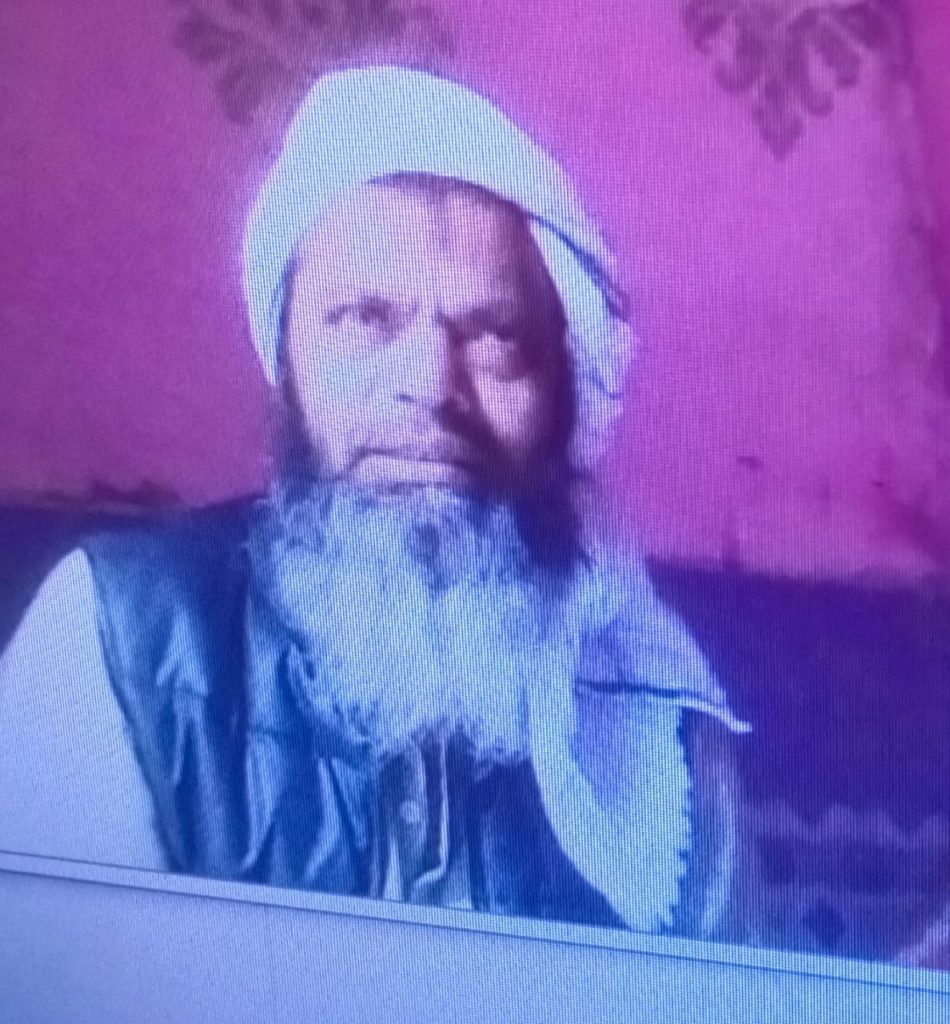
The father, Sufi Hakim Muhammad Islam, is said to have treated many patients across India, including some in Noida, Uttar Pradesh, whom Tehelka met. As narrated by his son, Sufi Muhammad Akram, Sufi Islam died last year at the age of 112, and Akram is now carrying forward his legacy. According to Akram, his father received these divine healing powers from his guru, a saint who lived in a nearby village and was himself said to possess such powers. Akram says the guru passed on these powers to his father before his death, and his father, in turn, passed them on to him.
We fixed an appointment with Muhammad Akram in Delhi and met him at a patient’s house in Okhla Vihar. Posing as attendants of a patient, we told him that our patient had diabetes and needed treatment. Akram told us that he has three methods of treatment: one using water over which Quranic verses are recited; the second using black threads worn around the neck and waist after reciting Quranic verses over them; and the third by brushing the patient’s body with neem leaves to remove evil spirits, if any. The following discussion reveals how the treatment is tailored differently for each patient.
Reporter- To aapke ilaj ke 3 tareeke hain paani, jhada aur gaanda?
Akram- Haan, 2 gande bandtey hain ek pet par bandhega aur ek galey par.
Reporter- Chahe koi bhi bimari ho?
Akram- Bimari koi si ho, magar sabka alag alag gaanda hai.
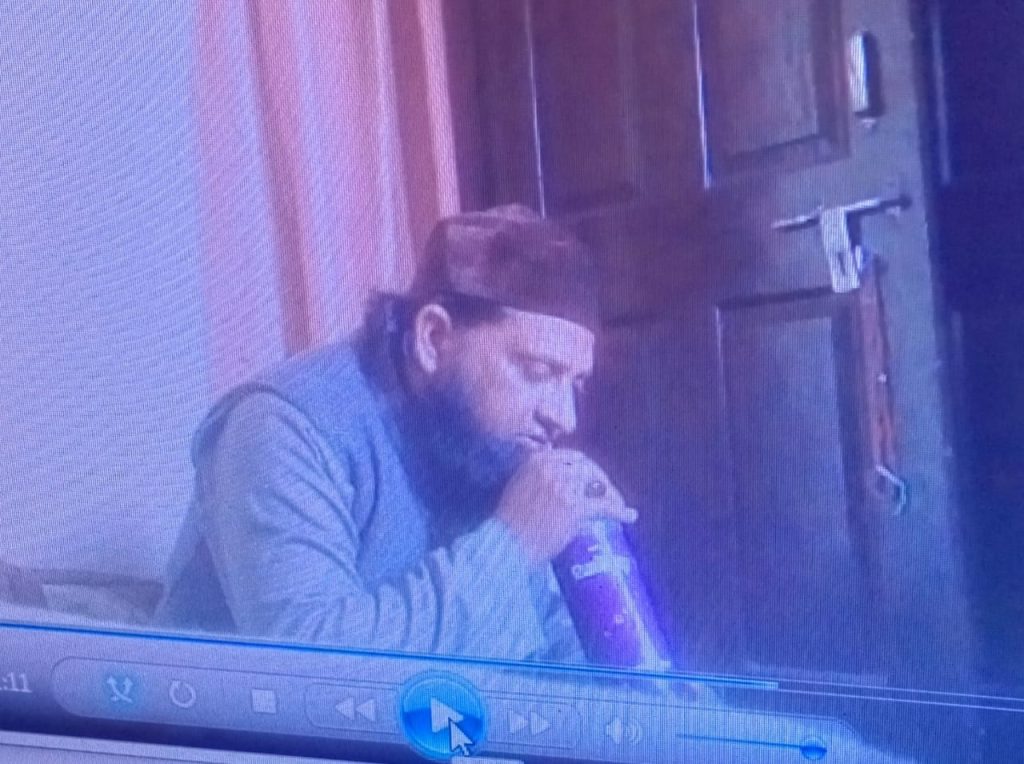
Reporter- Aur pani bhi alag?
Akram- Ji.
Reporter-Aur cancer ka?
Akram- Uska alag procedure hai. Uska pani bhi alag padha jata hai, usko koi bhi nahi pee sakta uske alawa. Haan…..uski paltan se kaat karni hoti hai, jo wo roz subah suraj nikalne se pehle, sham ko guroob hone se pehle, uske time ka hisab hai.
Reporter- Matlab sari bimariyon ka alag alag ilaj hai, koi bhi ho, gaanda bhi.
Akram- ji.
[In the above exchange, Akram explains the intricacies of his treatment methods, emphasizing that every illness has a unique procedure. From water to black threads, even cancer has its own specific regimen, carefully timed and personalised.]
According to Akram, his father, Sufi Muhammad Islam, who is no more, had received divine powers for treating patients from his guru, a saint who lived in a nearby village. His guru had many sons and grandsons, but he passed these powers specifically to Akram’s father. Using them, his father treated numerous patients with incurable diseases.
Reporter- To walid sahib kya shuru se?
Akram- Ji bahut pehle se.
Reporter- Unko kya khuda ki taraf se ye cheez mili hui thi, ya koi course kiya tha?
Akram- Nahi unke jo oopar they, hamare yahan Sirsari hai gaon pass mein, wahan ke they wo. Bahut taqdeer wale insan they wo.
Reporter- Wo bhi ye hi kartey they?
Akram- Kartey nahi they, wo bas Allah wale they, wo kapde bhi aise pehantey they, wo kabhi nazre upper utha kar nahi dekhtey they; 35 saal Imam rahe wo gaon mein, walid saheb se unka sampark tha.
Reporter- Walid saheb ko baksh gaye wo?
Akram- Ji haan. unke ye samajh lo potey bhi hain, ladke bhi hain, lekin wo walid saheb ko de gaye.
[In this discussion, Akram explains how his father’s healing abilities were inherited from the saintly guru he followed, rather than learned through any formal course. He highlights the special transmission of these powers, emphasising that only his father received them, even though the guru had many other descendants. The exchange underscores the personalised and sacred nature of the healing legacy.]
Akram then told Tehelka that he treats all kinds of incurable diseases, but credits everything to the will of Allah. He also questions modern medicine, especially for long-term illnesses like diabetes, and points to its side effects. The reporter keeps pressing him on how far his treatment really goes.
Reporter- Akram sahib, kis kis cheezo ka ilaj hai?
Akram- Dekho ji, hamare yahan ilaj jo hai, sahi maayene mein koi bhi bimari ho, lailaj bhi, cancer bhi ho, uska bhi jhada lagatey hain hum log. Alhamdulillah ka agar hokum usmein hota hai to shifa bhi hoti hai usmein.
Reporter- 100 percent?
Akram- Bas samajh lo aap meri baat ko mein khule lafzo mein kehne wala aadmi hoon, na ki dikhawa na ki advertisement. Hum to Allah se mangaingey aur Allah hi karne wala hai.
Reporter- Lekin mareez theek to ho rahe hain na aapse?
Akram- Mein ye keh raha hoon Allah kar raha hai na, ab kitno ko Allah ne likh diya hoga ki unka bulawa aane wala hai to usmein na to Allah kuch kar sakta hai, na hi doctor. Samajh lo meri baat ko, aur jiska Allah ne likh diya aakhiri saans hai, aur agar zindagi hai to milegi.
Reporter- Lekin ilaj saari bimari ka hai aapke pass, chahe koi bhi bimari ho?
Akram- Haan ji, Allah ka shukr hai chahe piles ho, bawasir ho, bhugandar ho etc, sabka jhaada lagta hai.
Reporter- Jaise sugar, thyroid ho gayi, medical science kehta hai ye theek nahi ho sakti, dawa khani hai permanent.
Akram- Mere kehne ka matlab hai medical to ye keh raha hai aap dawa khaogey jabtak aapko zinda rehna hai, lekin ek medical ke ander ye bhi hai sugar ki aap ek goli kha rahe ho, wo aapki sugar ko down or normal bhi kar raha hai aur 1 percent hai ki nahi bhi kar raha. Lekin aur cheezo ko affect bhi kar raha hai; wo jaise liver kharab, kidney kharab.
Reporter- Aap agar sugar ka elaj karenge?
Akram- Hum to dawai denge uski.
[In this exchange, Akram makes a sweeping claim about treating almost every disease, even those considered incurable as per the medical science. The exchange shows how faith is placed above both medicine and method as Akram repeatedly leaves the result to Allah’s will, saying he only makes the effort.]
Akram claimed while speaking to our reporter that with his treatment for diabetes, patients do not need to take anti-sugar pills regularly. Over time, he claims, the pills can be stopped entirely and diabetes can be cured. The discussion highlights his promise of a permanent solution for diabetes.
Reporter- Hame allopathy chodni padegi?
Akram- Haan, matlab agar zyada sugar ho, high level par pahucha hua ho, ya goli jo 2-3 time le rahe hain, uska tareeka ye hota hai ki usko daily count karni padti hai. Aur jisko jo ek hi time goli kha raha hai, usko 1 din, 2 din chodkar baki hamari jo dawai hogi wo chalni chalni hai, uske baad inshallah wo theek ho jayegi.
Reporter- Jo insulin le raha hai?
Akram- Inslulin ka ye hai ki agar 2 time ya 3 time ki insulin hai to kam kar detey hain; usko ek time lena hota hai.
Reporter- Aur dheere dheere band kar detey hain?
Akram- Inshallah, band hogi; Allah ke hokum par hai.
Reporter- Aur agar ek goli kha raha hai to wo chalti jayegi aapke ilaj ke sath, ya band ho jayegi?
Akram- Wo goli ek din chodkar khani hoti hai, aur agar ek goli kha raha hai, to wo band bhi ho jati hai, 2 ya 3 time dawa pe lo hamari.
Reporter- Accha sugar ki jo goli hai wo permanent band ho jayegi?
Akram- Haan, permanent band ho jayegi.
[In this exchange, Akram explains how his treatment gradually reduces the need for anti-sugar medication. He emphasises that ultimately, pills can be stopped completely, but all healing depends on Allah’s will. The exchange shows how faith and treatment are closely linked in Akram’s approach.]
According to Akram, his diabetes treatment usually takes around three months but varies from person to person. In some cases, it can work in 5–10 minutes, as when his late father treated a patient from Noida, Altaf, whose sugar level dropped within an hour of drinking water over which Quranic verses were recited.
Reporter- Agar kisi ko sugar hai; aapki dawa hai, khane ke baad, ganda bandhney ke baad, kitne din mein theek ho jayegi?
Akram- Jab Allah ka hokum hoga, bhai kam se kam 3 mahiney ka time hoga.
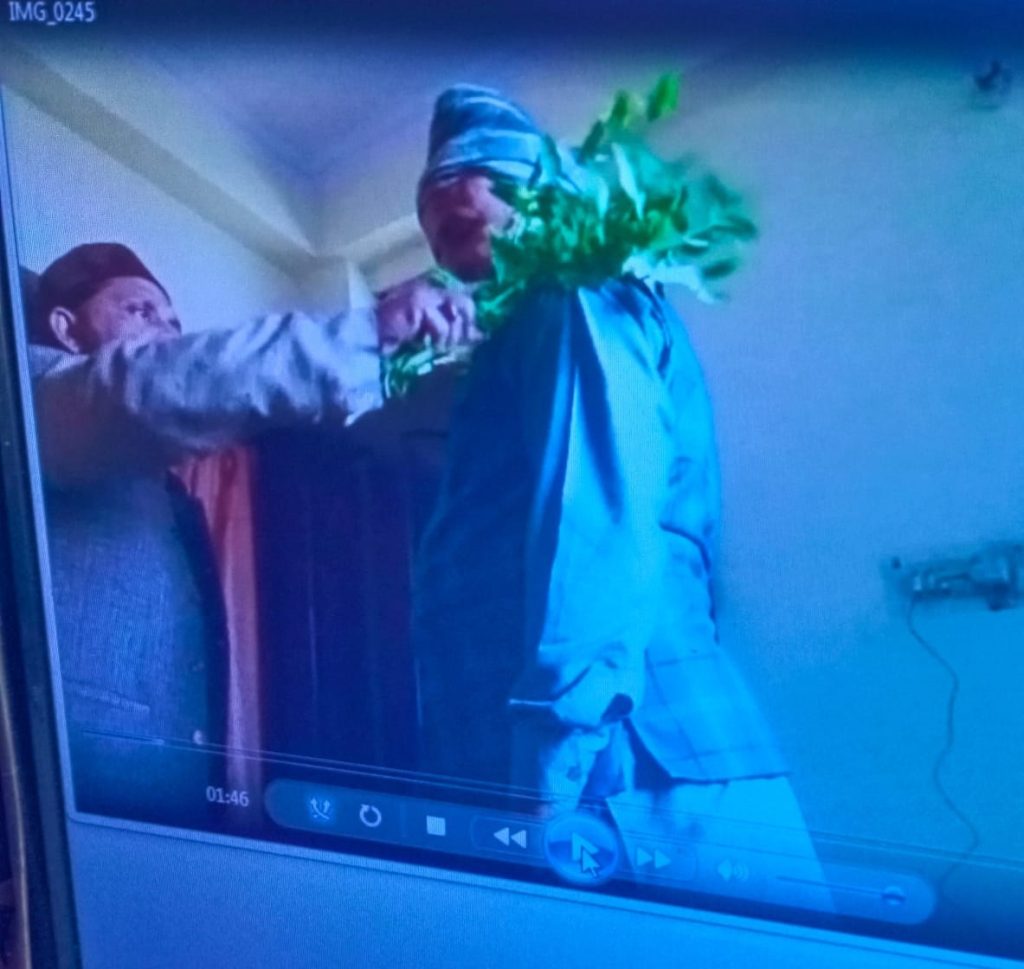
Reporter- Wo mujhe bata rahe they Altaf sahib, aapke walid sahib ne sheera khilaya char rasgulley khilaye, paani pilaya, aur uske ek ghante ke baad sugar theek ho gayi unki.
Akram- Dekhiye apka aur inka sabka body ka ‘circular’ alag alag hota hai, aur aapko 5 minutes mein bhi theek kar sakta hai aur inko 10 min mein bhi.
Reporter- Aur paanch mahine mein bhi nahi?
Akram-Jab Allah ka hokum nahi hoga, to kaise ho jayega, aap batao?
[In this exchange, Akram explains that the time for treatment varies with each person and depends on Allah’s will. While some patients may experience results in minutes, others may require months. The exchange underscores the unpredictable nature of such faith-based treatments.]
Akram told us that through his holy water and Jhaad-Phoonk (exorcism), he removed gallbladder stones measuring 14 to 29 mm—something he claimed is not possible without surgery. While crediting Allah for successful treatment of his patients, he insists no medicine was given, emphasising that the results depended entirely on his ritual practices.
Reporter- 14mm ki, 29 mm ki pathri nikali aapne?
Akram-Maine nahi, Allah ne, gurde mein agar pathri hai, uski to mein dawai bhi deta hoon.
Reporter- Sirf paani se nikali aapne?
Akram- Paani aur jhaad, aur padhne ko jo bataya wo padhte rahiye.
Reporter- Aur dawa nahi di?
Akram- Dawa nahi di.
[The exchange shows how faith and ritual are central to Akram’s healing methods. It also reveals how far removed his practices are from standard medical treatment.]
According to Akram, Hindus who come for treatment at his place also drink the holy water prepared with Quranic verses, and they have no objection. He said he recites the verses and blows on the water in front of them, and they consume it as medicine. Since Hindus cannot recite the Quran themselves, he does it on their behalf. Akram also mentioned that villagers often request the holy water before the brinjal harvest to protect their crops from insects.
Reporter- Accha jo Hindu aate hain aapke pass, wo to Quran ki aayetein nahi pad paate, unko kaise treat kartey ho aap?
Akram- Koi baat nahi, unhe to bas paani peena hota hai.
Reporter- Pe letey hain wo paani?
Akram- Kyun nahi piyenge, Bisleri ki paani ki bottle rakhi thi mere pass wahan.
Reporter- To unke saamne padh ke phoonktey ho aap?
Akram- Haan unke saamne padhkar, kya dikkat hai. Wo to aur aatey hain paani maangne mere se, kheti ke liye bhi.
Reporter- Gaon mein?
Akram- Haan baigan jo laga rakhe hain, usmein keeda na lage — ‘pani do fatafat’.
[The above discussion highlights the cross-community acceptance of his rituals and the practical role they play in villagers’ daily lives. It also shows how faith-based practices, if they are perceived as helpful, can transcend religious boundaries.]
Akram now revealed that childless couples have had children through his treatment. He narrated a case of a couple married three years ago who were unable to conceive. They approached him, and through his medicine, they were able to have a child. The discussion highlights the claimed fertility benefits of his remedies.
Reporter- Aur agar kisi ke aulad na ho?
Akram- Us ka ilaj bhi hota hai, special hota hai mere yahan Alhamdulillah!, abhi mein bata raha hoon aapko ek bacchi mere pass 3 mahine pehle aayi thi, 3 saal ho gaye they unki shaadi ko, bas ilaj kara kara ke, cyst bani hui thi rasoli mein uski. Special dawai hai mere pass Alhamdulillah! Uska ultrasound dekha, uske hisab dawai dunga, uske baad mein kategi, uske baad joshanda diya jayega, chatni bana ke denge, phir dono ke liye shauhar aur biwi dono ke liye dawai chalti hai ismein.
Reporter- Baccha ho jayega?
Akram- Alhamdulillah!
Reporter- Aise hain log?
[The discussion reflects how faith and traditional remedies are intertwined in addressing sensitive issues like infertility. However, while such treatments inspire hope, their effectiveness remains unverifiable and should be approached with caution.]
According to Akram, he also treats cases of jaadu-tona (occult practices). Akram explains how, according to him, illnesses can be caused by occult practices, jinn, or evil eye. He draws distinctions between these and says each affects the body differently. He also claims that he has remedies for all such problems, both spiritual and physical.
Reporter- Accha issey bhi bimari aati hai — hasad se?
Akram-Ji ye kaha hai ek taraf jaadu kiya, ek taraf jinnat aaya, ek taraf nazar aayi. teeno mein Allah ne farak diya. Is baat ko samajhna jo mein keh raha hoon; agar jaadu aap par kisi ne kiya jo cheeti ke mafik chalta hai body ke ander dheere dheere, jinnat aaya aapko jhatka diya aur chala gaya, nazar aayi maine yahan se goli maari teer ke mafiq ye lagi aur aap gire; aur insaan ki nazar itni khatarnak nahi hoti jitni jinnat ki hoti hai.
Akram (continues)- Do chezein hoti hai, ruhani aur jismani.
Reporter- Jadu tona ho kisi par?
Akram- Jo bhi hoga, Allah ne hame wo khazaney diye hain, imaan walon ko, kehne ka matlab sabhi ko, to hum kyun mayoos hon. Imtihan ke ander aayega aur Allah apne bando ki aajmaish leta hai, shukr ada karo; aur nashukri kar di, to peeche daal dega.
[The exchange shows how illnesses are being explained in supernatural terms. It also reveals how fear and belief are mixed with treatment claims, reminding us how easily suffering people can be pushed away from proper medical care.]
Akram said that, depending on patients’ demand, he travels from city to city to treat them. He says he is not limited to one city and goes wherever patients call him. He also makes it clear that people from different communities come to him.
Reporter- Aap sirf Delhi aate hain ya poore desh mein?
Akram- Mein to poore desh mein jaata hoon, Noida mein bhi jaata hoon, wahan Saini gaon hai, wahan bhi hain.
Reporter- Matlab Muslim, gair-Muslim, sab hai?
Akram- Ji.
[In this exchange, Akram speaks about the reach of his work and how he travels to different places for treatment. This shows how wide Akram’s network of patients is and how far his claims have travelled. It also suggests that belief, not proof, is doing most of the work here.]
Unlike his late father, who treated patients only through holy water and black threads, Akram has added Ayurvedic medicines to the three traditional methods he inherited. He has no medical degree, yet he gives medicines to patients and says these are available only with him, not in the market.
Akram- Ab meri dawai hai, mein naam nahi bataunga, meri sheeshi 400 rupees ki hai, ye 380 ki hai to usko mein kahunga, aap alag samajh kar mujhe de dein.
Reporter- Aapki dawai ek baar leni hai ya baar baar?
Akram- Dawai to leni hai.
Reporter- Altaf ye keh rahe they ‘ek hi baar paani liya tha walid saheb se, aur kaha tha phir aane ki zaroorat nahi hai.’
Akram- Dekhiye mein aapko phir kahunga koi bhi cheez ek jaisi nahi hoti. Mein aaj dawai dekar ja raha hoon, mein to ye dua karunga aapko dawa ki zaroorat hi na pade.
Akram (continues)- Syrup chalegi bas.
Reporter- Aapka syrup chalega?
Akram- Ji wo Ayurved ka hota hai, aur wo yahan bhi nahi milega.
Reporter- Phir kahan se milega?
Akram- Wo to bahar se aati hai, transport se, Indore wagera se.
Reporter- Wahan se mangwate hai aap?
Akram- Haan.
[In this exchange, Akram explains how his method is different from his father’s. He says he now uses medicines along with the old practices. This shows a clear shift from faith-based treatment to selling medicines without any qualification. It also raises a serious question as such a practice is in clear contravention of the law.]
When Akram is confronted directly with the claim that his methods go against medical science. Instead of owning the claim, he shifts the responsibility to divine will. The reply is brief, but it reveals how he frames every outcome. He packages every result — success or failure — as God’s will, rather than as something for which he is responsible.]
Reporter- Waise medical science ko challenge kar diya aapne?
Akram- Allah ne! Allah karne wala hai!
[By placing every claim and every result in God’s name, Akram avoids any personal responsibility. This also makes his promises impossible to question or verify. When success is divine and failure is fate, there is no space left for accountability.]
After speaking to us, Akram began treating the diabetic patient we had brought for our story. First, he recited Quranic verses on two black threads—one to be worn around the neck and another around the waist—and asked the patient to wear them. He then took neem leaves and brushed them against the patient’s body to remove any evil spirit. After that, he took a Bisleri water bottle, recited Quranic verses over the water and blew on it. He asked the patient to drink this water three to four times a day and advised him to mix normal water into it so that the bottle does not get empty.
After these three traditional methods, Akram also gave some ayurvedic medicines to our patient to control his sugar, for which he charged Rs 2,000. Altogether, he took Rs 4,000 from us, the rest as hadiya (gift).
Earlier, when we had gone to Saharanpur to meet Akram and did not find him there, we met his wife, Sufia. She told us that she has been married to Akram for the last 20 years and has seen thousands of patients being cured by her father-in-law and husband. She said her father-in-law had died a year ago at the age of 112. She also said that a cancer patient from Muzaffarnagar, Uttar Pradesh, had recently come on a stretcher, but after a few months of treatment, he came back on his own.
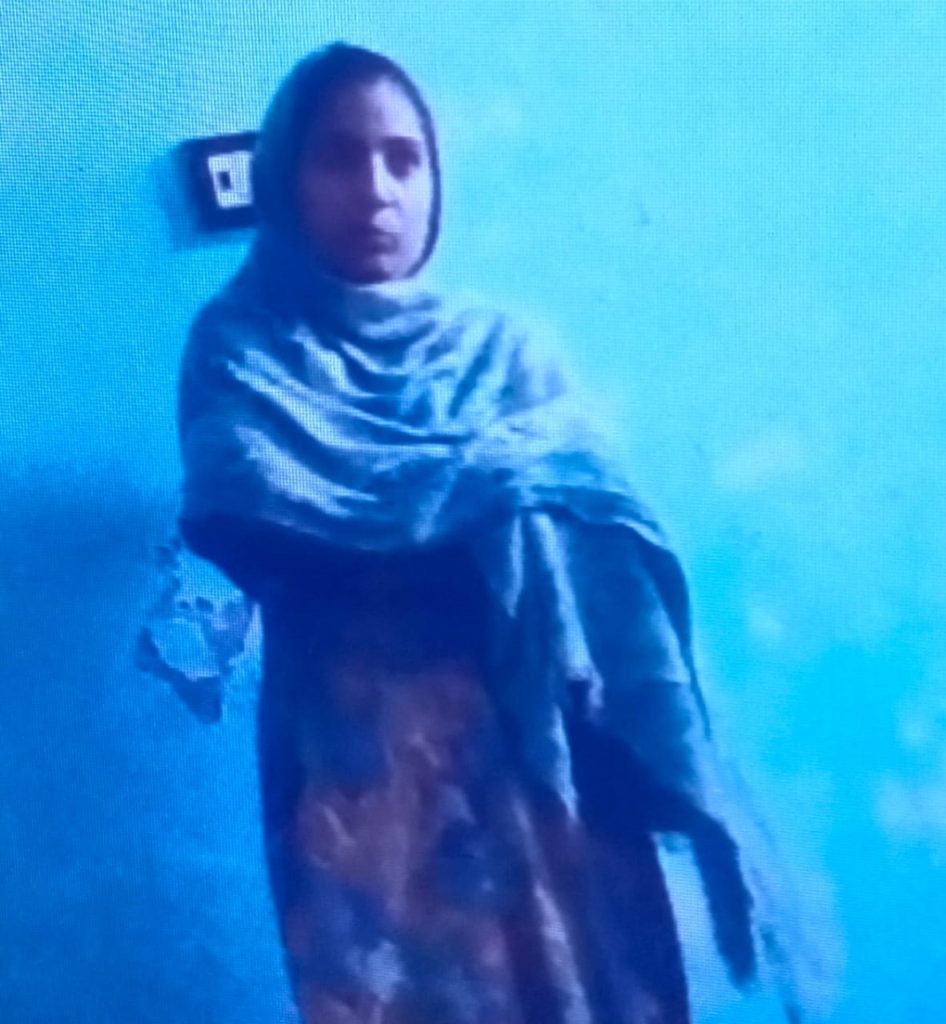
According to her, her husband and father-in-law have three methods of treatment—holy water, black threads and exorcism (jhaad-phoonk)—through which they have treated thousands of patients. She claimed there is no disease for which they do not have a treatment.
Before going to Saharanpur to cross-check treatment claims linked to Akram and his late father, we first searched for patients who had been treated by Muhammad Akram, and his late father, Sufi Muhammad Islam, in the past. We met Altaf, a resident of Sector 81, Noida, Uttar Pradesh, who had taken diabetes treatment from Akram’s father in 2019, before Covid, when he was alive. This meeting with Altaf took place before we met Akram.
Altaf told us that in 2019, his sugar level had gone so high that he had almost lost his eyesight and was finding it difficult to see anything. He said he could not even go to the washroom from his room. He said his son-in-law took him to an eye specialist, who checked his eyes and declared them fine, yet his vision remained blurred. He was unable to see properly. Altaf said his son-in-law then took him to another hospital, where doctors checked his sugar and told him it was so high that he could have died, and that it was God’s grace he was still alive. They then gave him medicines. What follows is Altaf’s account of how his health collapsed before he reached Akram’s father.
Altaf- Lockdown se pehle mein andho ho gaye sugar mein.
Reporter- Andhe ho gaye?
Altaf- Haan deekhna band ho gaya.
Altaf (continues)- Sugar meri badh gayi bahut zyada, ankhon se dikhna band ho gaye.
Reporter- Ussey pehle sugar check nahi karai thi?
Altaf- Na, karai thi, 200, 250, 270 tak pahuch jaye, ab jab deekhna band ho gaya, mein keh raha ye jhoomre se dikhai de rahe hein, mein andho ho gaye bilkul. Mujhse darwaze se na nikla jaye. Altaf (continues)- Jab andho ho gaye bilkul to jamai mera wo mujhe le gaye aankh wale key pass. Ab aankh check karai machine mein to clear aavee, key ji ankhan mein to gadbad hai na kuch, or waise dikhai na de. Doosrey jagah gaye, wahan bhi yahi haal hua. Phir le gaye Jaypee (hospital) mein, wahan jamai ka jaan pehchan ka tha doctor, wahan dekhtey hi bola usne inki sugar naapo, to sugar fail.
Reporter- Sugar fail matlab?
Altaf- Matlab doctor bola ‘Allah ki koi meharbani hai jo tum jee rahe ho, nahi tum to khatam they’.
Altaf (continues)- Unhoney phir goli di, litaya, pehle khilmile si aankh mein aayi, maine bola clear nahi hai, boley jamun khao. Jamun us time par na mil rahe, maine mandi mein phone karwayo, wo Azadpur se phir jamun laaye.
[In the exchange, Altaf describes how his eyesight failed, how doctors first ruled out an eye problem, and how dangerously high sugar levels were later detected. We learn how even qualified doctors failed to diagnose Altaf’s ailment initially.]
Altaf said that after a month of allopathic treatment, his vision again became blurred. According to him, one day he was sitting in his village with three others, including a doctor named Satish. All four were diabetic patients and were seriously worried about their rising sugar levels. Altaf said it was then that Satish told them he knew someone in Gaada village, Saharanpur, who treated diabetes with a guarantee. After hearing this, all four went to Saharanpur to meet the man for treatment.
In the following exchange, Altaf explains how, despite taking regular medicine, his eyesight began to fail again. He recalls a casual village gathering where four diabetic patients were sharing their worries. It was there that a doctor in the group mentioned a “guaranteed” cure in Gaada village. That suggestion changed their course.
Altaf- Mahine peeche phir jhilmili si hone lagi.
Reporter- Ek mahine baad?
Altaf- Jabki dawa mein theek se kha raha hoon.
Reoporter- Doctor ki?
Altaf- Phir aise hi jaise hum tum bethe hain, aise hi baith jaaye gaon dehat mei log, aag jalaye sham ko aur subah beth jaye 4-6 aadmi. To ek doctor tha Satish, ek mein tha, ek driver Ilyas, matlab aise 4-6 log bethe they…to Satish keh raha sugar bahut zyada hai kya karein, maine kaha sugar hamare bhi badh raha hai hum kya kare, bola chalo udhar chal rahe hain, Saharanpur mein bataya Gaade gaon ke jhohrey.
Reporter- Gaada gaon?
Altaf- Maine kaha chalo, hum 4-5 log aise hi chal diye.
[This account shows how worry and helplessness can push patients towards any promise of relief. When regular treatment seems to fail or feels too slow, hope begins to look for shortcuts. That is where claims of quick cures find their strongest ground.]
Altaf said that six years ago, all four of them went to Saharanpur when Akram’s father, Sufi Hakim Muhammad Islam, was still alive. His three companions were first brushed with neem leaves (jhaadna). After that, Sufi Hakim Muhammad Islam called Altaf and, according to him, made him eat four rasgullas kept on a plate. Altaf said he ate the sweets and drank the syrup after some hesitation, as his sugar level was very high. After this, Hakim Islam gave him holy water to drink, tied black threads around his neck and waist, and brushed his body with neem leaves to remove any evil spirits. After these three methods of treatment, he was asked to lie down for an hour or two. Altaf said that when he checked his sugar level after an hour, he was shocked to find that it had come down to around 250 from 600. He said Hakim Islam then told him to eat anything he wanted and advised him not to take anti-sugar pills.
Reporter- 6 sal pehle?
Altaf- Haan ji. Ab in teeno ko to jhaada, hum charon ek saath ghuse, beth gaye, boley ki isey bulao, mere liye, itni badi payali thi, usmein 4 rasgulle meethey, bole kha lo, maine kaha maryaega kya, hum ilaj ko aye hain ya marne ko marwane ko!
Altaf- Phir boley ‘khana hai’, aawaz bahut kadak, meine bheech bheech ke aise sheera nigal ke kha liya, ab maine kha to liye, phir keh rahe isey piyo maine kaha ye kya badtameezi hai, par maine pe liya.
Reporter- Pehle rasgulle kha liye, phir sheera pilwa diya?
Altaf- Peene ke bad mujhse bole ‘ghoomney kahin nahi jaaogey, chalo leto, seedhe leto’…haan wahan se utha ke jhaad laga diya aur phir paani pila diya.
Reporter- Jhaada kis se?
Altaf- Neem ki tehni se.
Reporter- Aapke jo sath they, unko bhi jhada diya?
Altaf- Haan. Uske baad ghanta ek peeche.check kari to 260.
Reporter- 260? 600 ki 260 ho gayi ek ghante baad?
Altaf- Mere mooh se ye nikal gayi ‘ye hain bhi ya yu hi,’ boley ‘inshallah itni hi rahegi, magar mere parhez honge na tumse?’
Reporter- Matlab- ‘jo mein perhez bataunga tum nahi kar paaogey.’
Altaf- Maine kaha — martey kya na kartey — kar lenge, boley haan ab kar lega, maine kaha Inshalla tala! Boley ‘kuch bhi kha liyo kuch bhi pe liyo lekin sugar ki dawa na liyo!’
[Here, Altaf describes what he says happened during his visit to Saharanpur years ago when he went to see Sufi Hakim Muhammad Islam, who has since passed away. He recalls a treatment that began with neem leaves and ended with an unexpected order to eat sweets. What followed, he says, left him stunned and convinced.]
Altaf said that Sufi Hakim Muhammad Islam gave all of them only holy water to drink and two black threads to wear—one around the neck and one around the waist—and did not give any medicines. According to Altaf, he was told to come again only if the need arose, otherwise there was no need for a follow-up visit.
Reporter- Dawa kuch nahi di unhone sirf pani aur qamar mein baandhne ko?
Altaf- Haan.
Reporer- Charon ko di?
Altaf- Haan, sabko.
Reporter- Unki sugar kitni thi?
Altaf- Wo to doctor sahib hain, dukan kar rakhi hai badi, unke to gaanthey padh jaati thai yahan.
Reporter- Itni sugar?
Altaf- Haan, kuch bhi na hua unhe?
Reporter- Wo bhi kha rahe hain dawa?
Altaf- Na, dekho ji, hame to yakeen na, Allah ne kar diya aaram.
Altaf (continues)- Aaram karna na karna Allah ke haath mein hai.
Reporter- Bas uske bad kuch nahi?
Altaf- Na ji, unhone kaha tha zyada majboori hai to aa jao aur na to kuch nahi.
[In this part, Altaf explains what the group was actually given as treatment. There were no medicines, only holy water and black threads. He also recalls what they were told about follow-up visits and what happened to the others who had gone with him. The exchange shows how little the treatment was involved, and how much depended on belief.]
Altaf said it has been six years since he took treatment for diabetes from the late Hakim Islam, and since then he and the three others who went with him have been doing fine. According to him, he has not had any diabetes test in six years because he feels no need for it. He said his eyesight is fine, his legs do not hurt, and he has none of other symptoms related to the disease. He also said he eats sweets and sugary food.
Reporter- Ab sugar check karate ho aap?
Altaf- Na maine karai na.
Reporter- Kab se?
Altaf- Tabhi se, pehle mere pairon mein dard ho jaaye, anhkhon se to kam dikhai de, sar mein dard hona, mere ko to ab kuch bhi nahi.. Allah ka shukar hai.
Reporter- 6 saal se sugar test hi nahi karai?
Altaf- Na, jis cheez ki mujhe zaroorat hi na. kyun test karaun?
Reporter- Chai meethi peete ho?
Altaf- Haan….ye to kum (sugar ki) aapki wajah se aayi hai, warna aur meethi peeta hoon.
Reporter- Aur meetha bhi kha rahe ho?
Altaf- Haan, jo bhi meetha hai sab kha raha hoon.
Reporter- Aur jo aapke saath teen saathi gae they.
Altaf- Sab kha rahe hain.
[Here, Altaf speaks about his life after the treatment. He says he has not gone for any test in years and feels completely fine. This tells us how recovery is being judged only by how a person feels, not by medical tests. When there is no check-up or record, there is no way to know what has really changed. Belief replaces proof.]
According to Altaf, many people from his village, Kakrala in Noida, later went to the late Sufi Hakim Islam for treatment of various diseases, and no one ever complained about him. He said Hakim Islam did not charge any fixed fee; people gave whatever they wished as hadiya
Reporter- Kisi ki nahi aayi shikayat?
Altaf- Bhai abhi tak to aayi na, uske baad to bisiyon aadmi chale gaye hamare gaon se unke pass.
Reporter- Kaun sa gaon hai ye?
Altaf- Kakrala.
Reporter-Bisiyon aadmi chale gaye yahan se?
Altaf- Accha, 3 cheezein thi; ek cheez mein bhi bhool raha hoon. Sugar, thyroid aur ek cheez aur pata nahi kya batai jhaada lagatey hain wo.
Reporter- Khatam kar detey hain?
Altaf- Haan.
Reporter- Paise letey hain?
Altaf- Nahi, jo marzi ho ek peti rakhi hai wahin,usmein ger aao jiski jitni khushi ho, 100, 200, 500 ya 1 rupaiya.
Reporter- Bheed lagi rehti hogi unke pass?
Altaf- Bahut log aaye, ham to yahin unke makan ke peeche se aa rahe, Rajasthan se, pata nahi kahan kahan se log aa rahe.
[Here, Altaf talks about how word spread in his village after his own visit. He says many others followed and went for treatment. He also explains how money was taken, and how people from faraway places used to come. This shows how reputation grows through stories and personal trust.]
Neither thyroid issues nor diabetes are typically “curable” according to medical science. Both are highly manageable chronic conditions, often requiring lifelong treatment. Other serious diseases, such as cancer, are generally not curable in advanced stages, and outcomes depend heavily on timely medical intervention. Yet Sufi Muhammad Hakim Islam, and now after his death, his son Sufi Muhammad Hakim Akram, have made claims suggesting they can cure diseases considered incurable by medical science.
Treatment through religious practices is widely used in India and is not a crime. Practices such as poojas, prayers, holy water, and faith healers have long addressed physical and mental health concerns. However, promoting or providing a “fake cure” is a serious offence in India, prosecutable under several laws. Practicing medicine or offering medical treatment without a valid degree and registration is also a criminal offence. In this investigation, Sufi Hakim Muhammad Akram is caught administering Ayurvedic medicines to patients, and by his own admission, without possessing any valid qualification — a clear violation of the law. His claims may inspire hope, but they also underline the risks of unregulated medical practices and the need for vigilance.