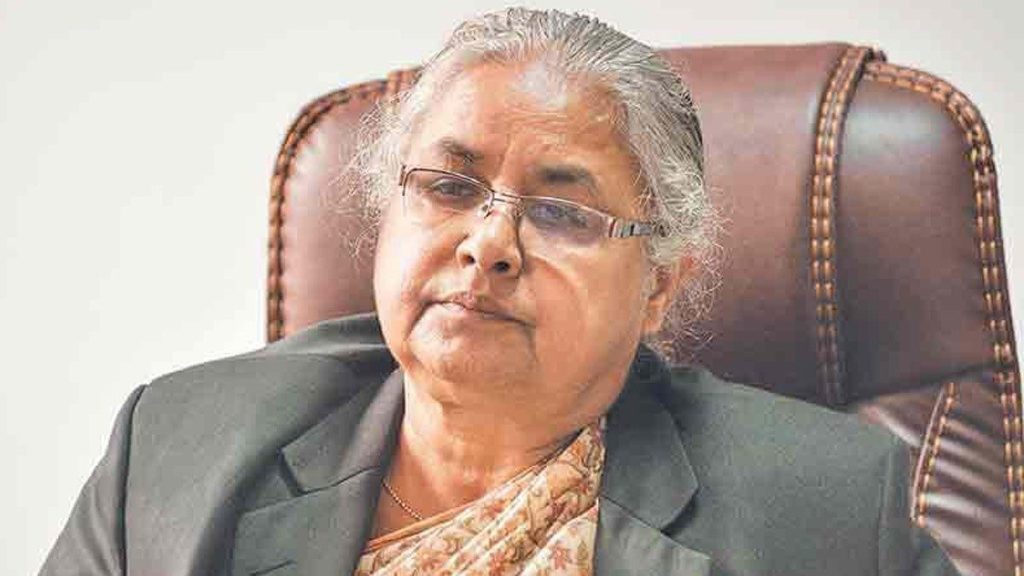
Nepal’s former Chief Justice Sushila Karki has been appointed to lead an interim government, according to an announcement from President Ramchandra Paudel’s office, ending days of political uncertainty following the resignation of Prime Minister KP Sharma Oli after widespread anti-government protests.
Karki (73) was administered oath of office by President Paudel
Karki was chosen after a meeting between President Paudel, senior military officials, and representatives of the youth-led “Gen Z” protest movement. Her immediate challenge will be to restore law and order in the strife-torn Himalayan nation.
Officials said Karki’s appointment was the outcome of a broad consensus among stakeholders. She is expected to form a small cabinet, which in its first meeting will recommend dissolution of Parliament, as per the understanding reached during consultations. President Paudel also held separate discussions with political leaders, legal experts, and civil society before making his decision.
Oli was forced to step down after the Gen Z movement staged massive demonstrations demanding an end to corruption, favouritism, and the ban on social media platforms.
Karki’s appointment has also revived interest in her family’s political history.
Her husband, Durga Prasad Subedi, was reportedly involved in Nepal’s first-ever aircraft hijacking in 1973. The Royal Nepal Airlines flight was carrying 19 people, including Bollywood actress Mala Sinha. Subedi, then a youth leader of the Nepali Congress, along with Basanta Bhattarai and Nagendra Prasad Dhungel, forced the pilot to divert the Kathmandu-bound aircraft to Forbesganj in Bihar, India, according to reports.
The hijackers’ target was not the passengers but Rs 30 lakh in cash being transported by Nepal Rastra Bank. The funds were seized to bankroll the Nepali Congress’s underground campaign to overthrow the autocratic Panchayat system under King Mahendra and restore multi-party democracy.
The hijacked plane later continued its journey with passengers unharmed, while the cash was smuggled to Darjeeling. Within a year, most of the conspirators were arrested in India, though they were released after the lifting of the Emergency in 1975. The plot was reportedly masterminded by Girija Prasad Koirala, who went on to become Nepal’s prime minister.