In a significant departure from the past, the joint declaration issued on September 1 by the SCO — of which Pakistan is a full member — explicitly condemned the April 22 terrorist attack in Pahalgam, Jammu and Kashmir, where 26 civilians were killed
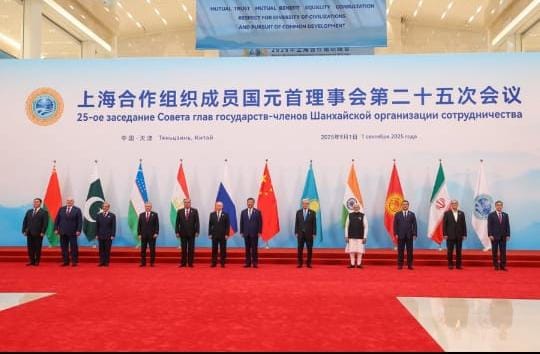
On Monday, leaders of the Shanghai Cooperation Organisation (SCO) adopted a joint statement condemning terrorism in both India and Pakistan, therby marking a notable shift in diplomatic dynamics in the region.
As the saying goes, geopolitics is a game of possibilities. It’s a field defined more by shifting interests and strategic realignments than by fixed rules or predictable outcomes. Prime Minister Narendra Modi’s recent visit to China underscores this reality.
In a significant departure from the past, the joint declaration issued on September 1 by the SCO — of which Pakistan is a full member — explicitly condemned the April 22 terrorist attack in Pahalgam, Jammu and Kashmir, where 26 civilians were killed. It was the deadliest attack on civilians in the region since 2000. Most of the victims were Indian nationals, with one victim reportedly from Nepal.
The Tianjin declaration stated: “Member States strongly condemn terrorism in all its forms and manifestations… Member States strongly condemned the terrorist attack in Pahalgam… They expressed their deepest sympathy and condolences to the families of the dead and the wounded. They further stated that perpetrators, organisers, and sponsors of such attacks must be brought to justice.”
The SCO’s latest statement may signal a step toward consensus on tackling cross-border terrorism, even if deep-rooted mistrust between India and Pakistan remains unresolved.
This stands in contrast to the SCO Defence Ministers’ Meeting held in June in Qingdao, China.
At that time, Defence Minister Rajnath Singh refused to sign the joint declaration because it omitted any mention of the Pahalgam attack, even though it referenced terrorist incidents in Pakistan. Due to India’s objection, the meeting concluded without a consensus on a final joint statement.
The recent shift suggests a diplomatic breakthrough or at least a compromise that acknowledges India’s concerns without directly naming Pakistan. While Pakistan is not explicitly blamed for the Pahalgam attack in the declaration, it is a signatory to the statement that condemns terrorism as a common threat to all SCO member states, explain analysts.
The SCO is a 10-nation Eurasian political, economic, and security alliance. Its members include China, Russia, Pakistan, India, Iran, Kazakhstan, Kyrgyzstan, Uzbekistan, Tajikistan, and Belarus.
The declaration cited recent terror incidents in Pakistan, including the hijacking of the Jaffar Express train by Balochistan Liberation Army militants. The train, carrying 440 passengers, was ambushed en route to Peshawar.It also mentioned the deadly bomb attack on a school bus near Zero Point in Khuzdar, Balochistan, killed at least six people — including three students — and injured over 40 others, most of them schoolchildren.
In all three cases — Pahalgam, Jaffar Express, and Khuzdar — both India and Pakistan accused each other of involvement or complicity in supporting the attackers, further straining bilateral ties.