Lured with visas and safe jobs, how young Indians found themselves dispatched to Russia’s frontlines, fighting a conflict they never chose. A report by Tehelka SIT
“Russian army officials first shot him in the hand, then in the leg. When he began crying out in pain, they killed him with a bullet to the head. He was not Russian but a foreigner trying to flee the ongoing Ukraine-Russia war. I was an eyewitness to this killing, as it happened in my apartment where I was staying. I had been asked to hold a torch for light since there was no electricity in the war zone. After this incident, I was so terrified that I could not sleep for many nights, and I never argued with Russian army officials when they were drunk,” said Siraj [name changed], from a city in Uttar Pradesh, who returned to India after being duped into fighting for Russian forces in the war with Ukraine.
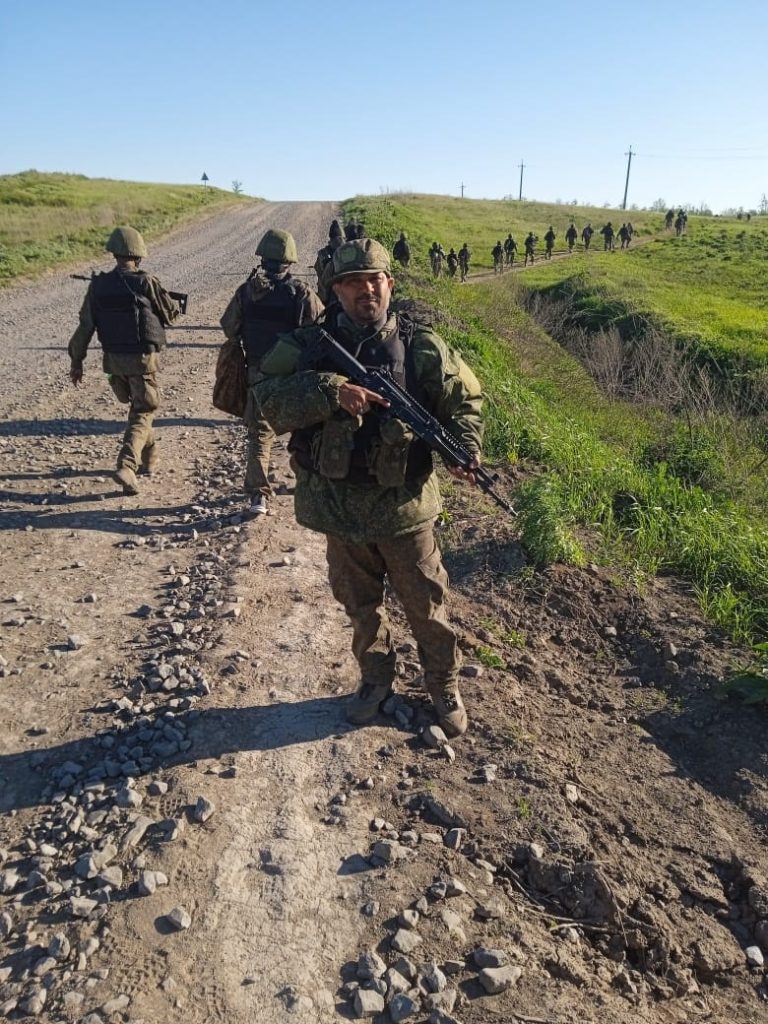
“A trainer from Gurugram, India, named Prince, who was training the Russian army, met us in Russia. He warned that by coming there we had effectively signed our own death warrant. He said that one could arrive in Russia of one’s own will, but leaving the country was not in one’s hands. After hearing this, I grew fearful and began calling the Indian Embassy in Russia,” Siraj told Tehelka’s reporter.
“For a full month, our only meal was rice soup, served once a day, and nothing else. Drinking water, too, was rationed. We were kept in a Russian-controlled Ukrainian city that was deserted, so we stayed in whichever abandoned house we could find,” said Siraj.
“I was duped by the agents. They told me I would be working as a delivery boy in Russia. They never mentioned fighting in the Ukraine-Russia war zone. They promised me a salary of 2 lakh roubles per month. I came into contact with Jitender Sahrawat, an Indian-origin agent living in Russia. He asked me to approach Sumit Dahiya, another agent with an office at Bhikaji Cama Place in Delhi. Sumit, along with a Russian woman, took me and 16–17 others from India to Russia. When I was preparing to return to India, I saw Jitender Sahrawat in a restaurant in Russia and confronted him for duping me,” added Siraj.
“I have many exclusive things to share with Tehelka that no one in India knows. The Indian media is only interested in focusing on the agents who duped us. They show no concern for the inhuman conditions we endured in the Ukraine-Russia war zone. I could bathe only once a week due to the lack of water. There was hardly any food. We were only allowed to relieve ourselves during the day, and even then with strict precautions. After 6 p.m., we were not permitted because of the fear of drone attacks,” said Jatin Ahuja, another Indian from Delhi who was duped by agents and sent to Russia to fight on the Ukraine battlefield, before returning to India in October 2024.
“I killed 10–12 Ukrainian soldiers while fighting on the Russian side. Whether it happened by accident or otherwise, I do not know. During my stay in the war zone, I was hit by a drone strike, with two pieces of shrapnel entering my left and right legs. One was removed in Russia, and the other after I returned to India two months later. According to Russian law, anyone injured in the leg by a drone strike is entitled to 30 lakh roubles as insurance money, but till date I have received nothing,” Jatin told Tehelka.
“Agents fraudulently made two ATM cards in the name of every Indian fighting on the Russian side against Ukraine. They withdrew money from our bank accounts without informing us. Some lost 20 lakh, some 14, another 13 lakh. I managed to block my card, so they failed to take my money. On the false promise of a normal warehouse job in Russia with lucrative incentives and permanent residency, these agents sold us to the Russians and forced us into fighting in the war,” Jatin said.
“The Ukraine-Russia war zone conditions were so horrific that a few Pakistani and Afghan nationals I knew stored their urine in bottles to drink if no water was available. I also saw one Pakistani national so desperatefrom hunger that he was eating tree leaves,” Jatin added.
The government is aware of at least 126 Indians who joined the Russian army to fight in the war in Ukraine. According to the latest figures, of the 126 men about whom the Indian Embassy in Moscow has been intimated, 96 have returned to India so far. Of the remainder, 12 have been killed in the conflict, while 16 are believed to be missing.
Siraj and Jatin are among the 126 Indians who were forced into fighting in the war. Most came from poor families and were lured by agents with promises of money and jobs, sometimes as “helpers” in the Russian army. Instead, they were sent straight to the war zone. Many said they were stationed in parts of Ukraine under Russian control, where they had to navigate landmines, drones, missiles and sniper fire with little to no military training. Indian authorities say they have arrested several people for human trafficking. In July 2024, Russia promised an early release of all Indians fighting in its army, following a visit by Indian Prime Minister Narendra Modi to Moscow, during which he raised the issue with Russian President Vladimir Putin. The two countries have traditionally shared a warm relationship. Since then, 96 people have been discharged and have safely returned to India, while efforts to trace the missing are underway. Tehelka’s SIT spoke to some of the men, who managed to return, about their struggles.
We first spoke to Siraj, who revealed that even a year after returning from Russia, he has not told his parents that he had been deceived by agents. He said he did not want to put them under stress. For this reason, he asked us not to reveal his real name in this report.
In his account below, Siraj describes how Russian commanders dealt with deserters—by shooting them dead without hesitation. Siraj narrates one chilling instance when a foreigner fighting in the Russian army was shot dead by Russian soldiers after an unsuccessful attempt to escape the war zone. Siraj said he was an eyewitness, as the killing took place in his apartment. He had been asked to hold a torch to provide light since there was no electricity in the war zone. He said that fear gripped him so deeply after the incident that he could not sleep for nights afterwards, and from then on, he avoided speaking to Russian soldiers whenever they were drunk.
Siraj – Headquarters mein batata hoon kya- kya hota tha…unka dimag kharab hote hi wo seedhe sar par goli maarte they.
Reporter -Kinka dimag kharab hote hi?
Siraj- Jo Russian army ke bade log hote they.
Reporter- Kisko goli maarte they?
Siraj- Jo bhagte they jung chodke.. chahe wo kisi bhi desh ka ho… uske liye maut hai.
Reporter -Aapke saamne maara kisi ko?
Siraj- Bhai mujhse hi torch pakadwai thi ek baar to.
Reporter- Torch matlab?
Siraj – Light ke liye…kyunki bijli to wahan hai nahi. Mujhe torch thama di, pitai chal rahi thi kisi ki. Ek tha koi.. bhagkar aaya tha peeche se.
Reporter- Bahar ka tha ya Russian?
Siraj – Indian nahi tha par bahar ka hi tha…..pehle uske pair mein maari goli.. phir haath mein…jab wo chillane laga to uske sar mein maar di…bhagte hue pakda gaya tha wo. Aage bhi maut hai tere peeche bhi maut hai…kahan bhagega bata! Goli to wahan roz chalati thi lekin us din uske sar mein seedhe goli maar di.
Reporter – Aapse kaha torch pakad lo?
Siraj -Mere flat mein hi to goli maari hai.
Reporter -Aap darr gaye honge?
Siraj- Bhai us din ke baad mujhe neend nahi aayi theek se..jab wo nashe mein hote they.. mein unse baat nahi krta tha. Bhai poori poori belt hoti thi goliyon ki wo khali kar dete they.
Reporter- To aapne gharwalon ko bataya hoga mere sath dhokha ho gaya?
Siraj- Nahi bhai, gharwalon ko aajtak nahi bataya.
Reporter- Aajtak nahi bataya ki aapke saath dhokha hua?
Siraj- Nahi.
Reporter -Kyun?
Siraj- Mere gharwale kya karte? Tension mein maare jaate.
Reporter- Unko aajtak nahi bataya aapke saath dhokha hua?
Siraj- Nahi.
Reporter- Phir unhone pucha nahi wapas kyun aa gaye paanch mahine ke baad?
Siraj- Itna dhayan nahi deta koi….bata diya ki contract khatam ho gaya.
[What this exchange shows is the brutality faced by Indians caught in the Ukraine–Russia war. Siraj’s silence with his family reflects how trauma often stays hidden, buried under fear, shame, and helplessness.]
Now, Siraj recalls the moment he realised he had been deceived. At the Russia-Ukraine border, where military training began, it became clear there was no return. A man from Gurugram, whose name was Prince and who was working as a trainer in the Russian army dropped a bombshell when he told Siraj that they had come there after signing their death warrants. Siraj said that from that moment he began calling the Indian embassy in Moscow, asking to be rescued.
Reporter – Aapko kab pata chala aapke saath dhokha ho gaya?
Siraj- Jab hum Russia-Ukraine border par pahuche aur army training hui…wahan jaa to sakte ho apni marzi se magar aa nhi sakte. Wahan ek Gurgaon ka trainer tha Prince.. jo Russian army mein training deta tha, usne kaha tha tum apna death warrant sign karke aaye ho. Maine to wahi se call lagana shuru kar di thi bhai Indian embassy ko Russia mein…yahan se nikal lo hame bhai….hame phasa diya gaya hai.
[From this account, we see how young men discovered too late that promises of jobs were lies. Their ordeal began not on the battlefield, but the instant they realised they were trapped—with no way back but survival.]
In the following exchange, Siraj reveals how the deception began. The agent assured him that he would not be involved in the war in any way, and promised only simple delivery work, such as carrying food from one place to another. A handsome salary of two lakh roubles a month was promised, and everything appeared genuine.
Reporter- Ye agent aapko le gaya tha.. usne bataya tha aapko Ukraine se ladna hoga?
Siraj – Usne bola tha bas delivery ka kaam karna hai… jung wang mein nahi jaana.
Reporter- Kis type ki delivery?
Siraj- Khana dekar aana hai bas.
Reporter- Usne paise kitne btaye they—tankhwa?
Siraj- Tankhwa bola tha 2 lakh milegi—Russian currency mein—per month.
[This account shows how false promises drew Indians into a war-zone. The lure of money hid the grim reality, reminding us that exploitation often starts with ordinary, harmless-sounding offers.]
In the following conversation, Siraj recounts the daily struggle for food. For an entire month, their only meal was a watery rice soup served once a day, with even drinking water strictly rationed. Regardless of nationality—Russian, Afghan, or otherwise—everyone endured the same scarcity.
Reporter- Khana peena sab badiya tha?
Siraj- Ye maan lo bhai mahine bhar to wo ek time dete they soup, matlab wo bhi paani hota tha.
Reporter -Chicken soup?
Siraj- Nahi bhai, chawal ka soup.
Reporter- Baki kuch nahi, sirf soup?
Siraj- Baki kuch nahi.. paani bhi limit mein milega sabko.
Reporter- Aise kyun?
Siraj- Russian ho ya Afghani ho.. kyunki bhai war chal rahi hai…itna khana kahan se layenge.
[What emerges is a picture of near-starvation in the war zone. Hunger spared no one, turning survival into a fight against empty stomachs and dry throats.]
In this exchange, Siraj explains how the journey to Russia unfolded. It began with the promise of a logistics job and contact through a travel agent. According to him, Jitender Sahrawat, an Indian-origin agent living in Russia, called him and asked him to meet another agent, Sumit Dahiya, who had an office at Bhikaji Cama Place in Delhi. Siraj said he met Sumit and handed over his passport. Soon after, he received a Russian visa and travelled to Russia along with 16–17 other Indians. According to Siraj, Sumit and a Russian woman took all of them from India to St. Petersburg. At Delhi airport, Siraj was told that if anyone asked about them, they should say that the Russian woman was their boss and that they were travelling to Russia.
Reporter – Aap kaise Russia pahuche?
Siraj – Pata laga tha ki logistics mein job hai…XXXX holiday karke ek travel agent ka phone aaya ….
Reporter- Aap travel agent ke sampark mein kaise aaye?
Siraj- Ek dalal tha….Russia mein rehta tha…Indian tha.
Reporter- Apke contact mein Meerut mein aaya hoga?
Siraj- Pata lag hi jata hai jab aadmi pareshan hota hai…usne bola Bhikaji Cama Place chale jana…passport de aana. Passport de aaye hum… visa lag gya… office wala hume lekar gaya…uske saath ek Russian lady bhi thi.
Reporter -XXXX wala aapko kahan tak lekar gaya?
Siraj- Russia tak lekar gaya.. St. Petersburg.
Reporter- Aap akele gaye ya koi aur bhi tha?
Siraj- Bhai mujhe to pata laga ki mein akela jaunga. Par wahan Delhi airport pahucha to dekha 16-17 log hain…Mumbai se.. Punjab se bhi they.. Punjab se zyada they; Delhi se bhi they.
Reporter- Wo sab isi travel agent ke they ya alag alag?
Siraj -Bhai ye nahi pata, magar main aadmi wahi tha jo lekar ja raha tha.
Siraj (continues) – Uska naam tha Sumit Dhaiya.
Reporter- Delhi ka rehne wala?
Siraj- Shayad Sonipat ka.
Reporter- Russian aadmi kahan chala gaya aapko issey milakar?
Siraj- – Nahi usne number diya tha Sumit Dhaiya ka. Uska naam tha Jitender Sahrawat jo Russia mein rehta tha.
Reporter- Phir Sumit Dhaiya aur Russian lady aapko Delhi airport lekar gaye?
Siraj – Haan. Un logon ne hamare paper kar rakhe they aur bola tha ke koi pooche to bol dena ki ye Russian lady hamari boss hai.. hum inke sath ja rahe hain.
Reporter – To aap St Petersburg kitne din mein pahuche?
Siraj – Rajasthan mein ruke 16 hours.. phir 1-1.5 din mein St Petersburg pahuch gaye they.
Reporter -Wahan St. Petersburg mein kya hua?
Siraj – Wahan wo humko pick up karne aaya tha jisne hame number diya tha —Jitender Sahrawat. Wo pick up karne aaya.
Reporter -Aap bhasha to samajh nahi paate honge.. unki language hai Russian?
Siraj- Nahi bhai.
Reporter- Kaise communicate karte the?
Siraj – Hum unse baat cheet hi kahan karte they.. wahi karte they ek hota tha translator unke saath.
Reporter- Wo Russian lady bhi nahi mili aapko?
Siraj- Nahi uska kaam sirf airport tak ka tha….St.Petersberg airport. Wo wahan se hi wapas chali gayi thi.
[What we see is a clear chain of deception—agents in India tied up with those in Russia. Papers, escorts, even airport cover stories were arranged to hide the trap ahead.]
In the following exchange, Siraj recounts how he ended up at a Russian training centre near the Ukraine border. He describes receiving documents, then being moved to Rostov where ten days of military training followed. The exercises included shooting, storming houses, and handling weapons. He names the guns he was trained on, and reveals he had no idea beforehand that he would be forced into such drills.
Reporter- To aapne jung ladi Ukraine mein?
Siraj – Haan ji ladi. Hum wahan rahe paanch mahine.
Reporter- Saat din wahan rahe phir kya hua? Documents bann gaye aapke?
Siraj – Document ban gaye, phir bola aapko aage jana padega. Tab tak nahi maloom tha hum kahan ja rahe hain.. Russian-Ukraine border par ek jagah hai Rostov.. wahan hamari 10 din training hui…army ki.
Reporter -Usmein kya kya sikhaya?
Siraj – Goli chalana, gharo par kabza karna, wo ek scene bana dete they ki gharo par kabza kaise karna hai..firing karna.. ye sab sikhaya.
Reporter- Ye Russian army aapko training deti thi?
Siraj- Wahin par unka centre tha. Sab wahi jaate they.
Reporter- Hatiyar kaunsa tha jissey training mili aapko?
Siraj – AK 12, AK 72 ek aur thi…Usko kholna, band karna, safai karna, sab sikha diya tha humko.
[What we learn here is chilling: ordinary Indians, duped by agents, were handed rifles and taught to fight like soldiers. The system was harsh, leaving no choice, turning lives into tools for a foreign war.]
In this conversation, Siraj is pressed about his earnings in Russia. He explains that there was no clarity on how much each recruit actually got, as the system lacked transparency. When asked directly, he mentions receiving 16 lakh roubles, which roughly translates to around ₹15 lakh.
Reporter- Paanh mahine mein kitna paisa kama liya?
Siraj – Asal mein wahan kisi ko zyada mila kisi ko kam…hame ye hi nahi pata kya hisab tha.
Reporter- Aapko kitna mila?
Siraj -16 lakh ruble.. aise kuch they.
Reporter- Mota mota 15 lakh Indian currency mein?
Siraj- Haan.
[The testimony underscores the opacity of payments—some were paid more, some less, with no proper accounting. Yet, unfortunately, the lure of lakhs, even if uncertain, was enough bait to trap desperate men into a dangerous contract.]
In the following exchange, Siraj recalls a heated face-off with the very agent who lured him to Russia under false assurances. The encounter, which turned violent inside a St. Petersburg restaurant, stemmed from deep anger and betrayal. Siraj accuses the agent of deceiving him about what awaited him in Russia.
Reporter- Agent se dobara contact nahi kiya aapne?
Siraj – Bhai agents se haathapai hui dobara. Wahi Russia mein…St Petersburg mein.
Reporter – Kya bola wo?
Siraj- Bhai usko dekhtey hi gussa aaya usne hame kya bola tha aur kahan bhej diya. Isliye haathapai hui. Ek restaurant mein betha hua mil gaya tha..
[What comes out here is the anger of those forced into a war they never chose. Their violent outburst shows how deeply the lies of traffickers still hurt them.]
In the following exchange, Siraj explains how the agents continued to exploit recruits even after sending them to Russia. He says ATM cards were taken, with one kept by the agents to siphon off money. According to him, large sums were fraudulently withdrawn from men’s accounts, including his own. Siraj also mentions the compensation structure for those injured or killed in battle, painting a picture of how human life was reduced to a cold transaction.
Reporter -Agent ka kya fayda agar inhone aapse paise nahi liye to?
Siraj- inhone ATM cards se paise nikal liye. In logon ne 2 ATM card banwaye.. ek hame de diya.. ek apne pass rakh liya. Phir inhone logon ke paise chori kiye..mere 50 hazar nikle, kisi ke 13 lakh, kisi ke 14 lakh…
Siraj (continues)-Russia mein agar kisi ke pair mein goli lagi hai na bhai ..ya agar wo zakhmi bhi ho gaya to usko 30 lakh ruble milte hain..salary se alag. Agar shaheed hua to 2 crore rupees daalte hain. Bhai un logon ne logon ke saare paise nikal liye.
Reporter- Ye ATM card do banwate they.. aapko nahi pata hota tha?
Siraj- Bhai us waqt dimag kaam nahi karta.
[What we see here is fraud beyond fake job offers. Even the little money these men had was withdrawn by agents through duplicate ATMs. It shows how their desperation was exploited at every step.]
The exchange reveals how Indian recruits were trapped in Russian contracts they could not understand, as these were in a foreign language. Siraj explains that release was secured only after intervention from Prime Minister Narendra Modi himself; otherwise, they would not have been freed. He recalls signing year-long documents written entirely in Russian, relying solely on the agent’s word.
Reporter- Ghar kaise aaye, unhone chodha kaise?
Siraj – Yahan se Modi ji gaye they.. wahan contract hua tha ke inko release karo.
Reporter -Nahi to wo chodte nahi?
Siraj- Wo nahi chodte, wo bilkul nahi chodte.
Reporter- Kitne mahine ka contact tha aapka?
Siraj- Bhai wahan contract hua tha saal bhar ka jo bataya gaya tha, saare documents Russian mein they.. hamko nahi pata usmein kya likha hai ya nahi. Jo agent tha usne kaha yahan sign kar do, yahan kar do.
[What comes through here is the near-total helplessness of those drafted. They signed papers blindly, trusting middlemen, with no idea of the commitments they were making. It shows the stark vulnerability of Indians pushed into this foreign battlefield.]
After Siraj, Tehelka spoke to Jatin Ahuja, another Indian from Delhi who had returned from Russia after taking part in the ongoing Ukraine–Russia war. According to Jatin, he killed 10–12 Ukrainian soldiers, though he said he did not know whether it happened by accident or by shooting. He told Tehelka that he was injured in the leg by a drone strike, for which he received treatment in India. In all, Jatin said he spent more than six months in the Ukraine–Russia war zone and in Russia before returning to India on 23 October 2024. He claimed that he is entitled to receive 30 lakh rubles as insurance money from the Russian government, as Russian law grants this amount to anyone who suffers a leg injury caused by a drone.
In this exchange, Jatin speaks of being forced into direct combat in Ukraine, where he admits to killing more than ten people. He describes being injured by a drone strike, leaving his leg badly damaged and untreated for months. Even promised insurance payments never came through. After nearly six months in war conditions, he finally returned to India with the help of the embassy.
Reporter – Aapne kitne Ukraine ke logon ko maara?
Jatin- Mere haath se kam se kam 10-12…pehle din to 4-5 hi gaye they…uske baad unhone mujhe 1month duty nahi di mujhe taang par lagi thi.
Reporter -Matlab 10-12 Ukraine ke logon ko aapne maar diya… matlab goli chalakar maara?
Jatin- Haan ji wo bhi front par nahi…front par to pehle hi din hui thi..12 tareek ko…wo tukkey se mare hain ya kaisey.. mujhe nahi pata.
Reporter- Accha aapke pair mein bhi laga drone?
Jatin-Wo mujhe baad mein laga..uske baad 2 mahine hum kamre se hi nahi nikle…
Reporter – Uska ilaj aapne India mein aa kar karaya?
Jatin- Haan mere pair ka, halat kharab ho gayi thi, khaal nikal gayi thi jismein mere drone ka metal nikla hai…
Jatin (continues)-Mere pair mein, haath mein drone laga hua hai.. insurance wale mere paise bhi nahi de rahe hain, jo 30 lakh ruble banta hai.
Reporter- Total kitne mahine rahe aap wahan par?
Jatin- Mere hisab se agar war zone mein laga loge to 4.5 months raha hoon mein…uske baad 1-1.5 months Russia mein.
Reporter – 6 mahina maan kar chalo.?
Jatin – 6 mahina plus lagakar chalo.
Reporter- Aap India kab aaye?
Jatin-India main aaya 23 October, 2024, ko jo flight meri Indian embassy ne karai.
[What we hear is tragic. A young man, misled into service, became a pawn in another’s war. In the end, these men fought and bled for nothing.]
According to Jatin, whatever he is telling Tehelka is exclusive information that nobody in India has. He said the Indian media is only interested in how Indian agents cheated them, not in the inhuman conditions they endured in the Ukraine-Russia war zone. Jatin revealed that a Pakistani and an Afghan national kept their urine in a bottle to drink in case they did not get water. He further added that a Pakistani ate tree leaves out of hunger in the absence of food. “We were not allowed to go to the toilet after 6 pm because of drone attacks at night. Since there was no water, I used to bathe only once a week,” said Jatin.
Jatin-Mere pass aisi bahut cheezein hain jo kisi ko pata hi nahi hai.
Reporter- Haan mujhe aisi hi cheezein chahiye.
Jatin- Jo Russian army ke ander ke haal hai.. matlab bahut cheezein hain aap sun kar dang reh jaoge. Afganistan, Pakistan sab jagah ke bande hain, ek Afghani musalman tha wo keh raha tha char din maine khana nahi khaya bathroom hota hai wo maine apni bottle mein rakah tha.. ki pani na mile to mein ye pi lunga. Wo khulasa hai jo kisi k pass na ho. Russian army ne hamko bataya tha ki army mein kaam nahi karna lekin warehouse mein karna hai…helper ka kaam hai Russian army ke warehouse mein…mere pass bahut kissey hain.
Reporter – Media walo ko interview nahi diya aapne?
Jatin-Media wale bolte hain ki bolo hamko agenton ne phasa diya. Bhai mein to poori baat bolunga…
Jatin – Ek jagah to Indian nahi liye they baki Pakistan, Afganistan wale ki baat kar raha tha…ek Pakistan ka tha usko khana nahi mila tha.. wo patte kha raha tha, usne apna bathroom bhi piya…Kai bando ne to makkhi wala pani piya tha apne haathon se utha kar….Indians ne..
Reporter – Pani ki dikkat hai wahan?
Jatin- Pani ki dikkat hai, khane ki dikkat hai..
Reporter- Khana theek milta tha?
Jatin- Shuru ko 2 mahine to dono time milta tha, uske baad jaise half plate Rajma Chawal nahi milta bazaar mein bas utna hi milta tha…2 time.. aur wo bhi ek hafte baad jaane ke…shuru mein 2-3 din to khana mila hi nahi…sirf pani ya juice ya tamatar khate they.
Reporter- Iska matlab aapko jhooth bolkar le gaye?
Jatin- Haan uske baad ek dedh mahine to theek raha jaise hi…samaj lo teen mahine to mein nahaya hi nahi…potty chup chup kar karte they?
Reporter -Kyun?
Jatin-Chup kar karte they koi drone maar jaye…raat mein potty kar nahi sakte they.. 6 baje ke baad potty jana allowed nahi tha.
Reporter- Kisi ka pet kharab ho jaye to?
Jatin- Pehle hi keh dete they system banao apna …khao mat..raat mein kya hota tha hamara commander thoda samajhdar tha. Dhai mahine mein uski wajah se hi bacha hoon…wo to marr gaya bechara.
[What comes through here is a picture of human degradation. This shows how badly human dignity was crushed. Survival became a desperate struggle for these men.]
Jatin revealed that the agent, Jitender Sahrawat alias Jeetu, threatened to have them killed in Russia. He said the agents fraudulently made two ATM cards in the name of each Indian recruit and withdrew money from their bank accounts. Jatin added that since he managed to block his card, they failed to take money from his account. According to him, the agents had promised regular jobs in a Russian warehouse, along with PR, housing and other incentives—offers that later proved to be fake. In a nutshell, Jatin said, the agents had effectively sold Indians to the Russian army.
Reporter- Aapke account mein paise aa rahe they?
Jatin – Paise aa rahe they par maine apna account block kar diya tha..meri ghar mein hi 3 mahine baad baat hui hai..mere gharwalon ko to pata hi nahi tha.
Reporter- To kitne total paise aapke account mein aa gye..5-6 mahine mein?
Jatin- Sir, mere account mein 14 lakh aaye hain total .. 14 lakh ruble they to us time India ka rate tha lagbhag 12.5 lakh….jismein se mera agent nikal nahi paya kyunki mera account block tha..card block kiya tha…mainey Dev (fellow victim) se kaha block kar de..bola dikkat ho jayegi…jo banda yahan la sakta hai wo marwa bhi sakta hai…us agent ne hamey rastey mein dhamki bhi di thi.
Reporter- Kaunse agent ne dhamki di thi aapko?
Jatin- Jeetu ne kaha tha ki mein sabko marwa dunga.
Reporter- Kahan? Russia mein?
Jatin – Haan..Russia mein. Jab hum ja rahe they to ek phone mila tha.. hum camp mein ja rahe they, ek bande ka network tha to usko phone kiya. Jeetu ne phone kiya chacha ko ki mein sabko marwa dunga…koi zinda nahi bachega..aur yahan tak ki hamara koi loan bhi nahi banaya insurance ka. Maan lo hum marr jaate to hamara paisa ye khud kha jaate….card maine block kar diye. Jeetu ne Bharat ke nikale 13 lakh ruble, Dev Bhushan ke nikale hain..7 lakh ruble nikle hain…Rahul key, jiski ungliyan kat gayi, uske nikale hain aur Srikant ke saare nikal liye..jo marr gaya bechara. (Here, Jatin named some of his fellow Indians—Chacha, Bharat, Dev Bhushan, Rahul and Srikant—who, like him, had been taken to Russia. Srikant, he said, had died in war)
Reporter – Agent ne aapko Russian army ke haathon bech diya. Russian army ne aapko war front par bhej diya?
Jatin- Haan ji war front par bhejne ke baad bhi inhone hamko nahi choda. Kai bando key card dekar paise bhi nikalwaye hain.
Reporter- Accha agents ne kitna paisa nikal liya hoga aapka?
Jatin – Bhai agents ne bahut paisa nikala hai. Ek bande ke 20 lakh rupees.. mein video bhejunga koi Yadav tha..Ek din mein gaya tha Russian embassy mein. Wo keh rahe they tum nikal rahe ho wahi bahut hai…tumhe paise ki padi hai.
Reporter – Accha aapne jo contract sign kiya tha usmein ye tha ki aap apne desh ja sakte hain?
Jatin- Hame pata hi nahi…hamne padha hi nahi..usmein kaha tha tumko PR mil jayegi desh to tum apne ja sakte ho..plus aapko Russia mein quarter milega aur aapne sirf help karni hai..aapne ladne ke liye nahi jana…agar jis hisab se ladne ke liye bulaya tha na, us hisab se 50 lac salary bhi kam hai.
[In this account, Jatin speaks of how his bank account became both a trap and a shield. He blocked it out of fear, sensing that agents could harm him and steal his money. He recalls direct threats, massive withdrawals from the accounts of others, and the shocking way agents sold Indians into war.]
Jitender Sahrawat and Sumit Dahiya, the two agents involved in taking Siraj and Jatin along with other Indians to Russia, are both missing, and their phone numbers remain switched off. According to Siraj and Jatin, both agents sold them to the Russian army and they also siphoned off large sums from their accounts. Siraj further alleges that a Russian woman, who escorted them from Delhi to St. Petersburg, was also part of this racket.
Tehelka spoke to Siraj and Jatin, who fought in the Ukraine-Russia war along with 13 other Indians stationed at Krasnohorivka city in the Donetsk region, controlled by Russia. The others had promised to speak but, at the time of writing, had not contacted this correspondent. According to Siraj and Jatin, when they were preparing to leave Russia for India, a Russian official handed cards to four of them, including Siraj and Jatin, as a form of acknowledgement from the Russian government—signifying possible eligibility for citizenship in the future. Yet, both men say they are still waiting for Russian passports. Jatin, meanwhile, who claims to have been injured by a drone strike, is expecting 30 lakh roubles in insurance money from Russia.
They also insist the Ukraine-Russia war zone is filled with foreigners. Nationals from Sri Lanka, Bangladesh, Afghanistan, Pakistan, South Africa, and elsewhere, they say, are being sold to the Russian army by agents who lured them with false promises of work as helpers, delivery boys, or warehouse staff. Instead, they were pushed into a brutal war zone against their will. Some have returned, some have died, and others remain untraceable. The search for the missing continues, and with every passing day the scale of this human tragedy only deepens.