Israel-Gaza war: Is the endgame in sight?

As Israel closes in on Gaza, Saudi Crown Prince Mohammed bin Salman, who hosted an Arab-Islamic summit, has called for an immediate end to the hostilities in Gaza while rejecting Israel’s bid to dub action against  Palestinians as ‘self-defence.’

The world witnessed the medieval concept of “revenge” or retribution, when even during a four-hour pause in the Israeli offensive in Gaza on October 11, a hospital in Gaza, Al-Shifa, was bombed killing more than two dozen patients, including young children, on the spot, and scores were severely wounded. Yet, there is little outcry in the UN and other world organizations on the large scale civilian deaths in this ongoing Israel-Hamas War.

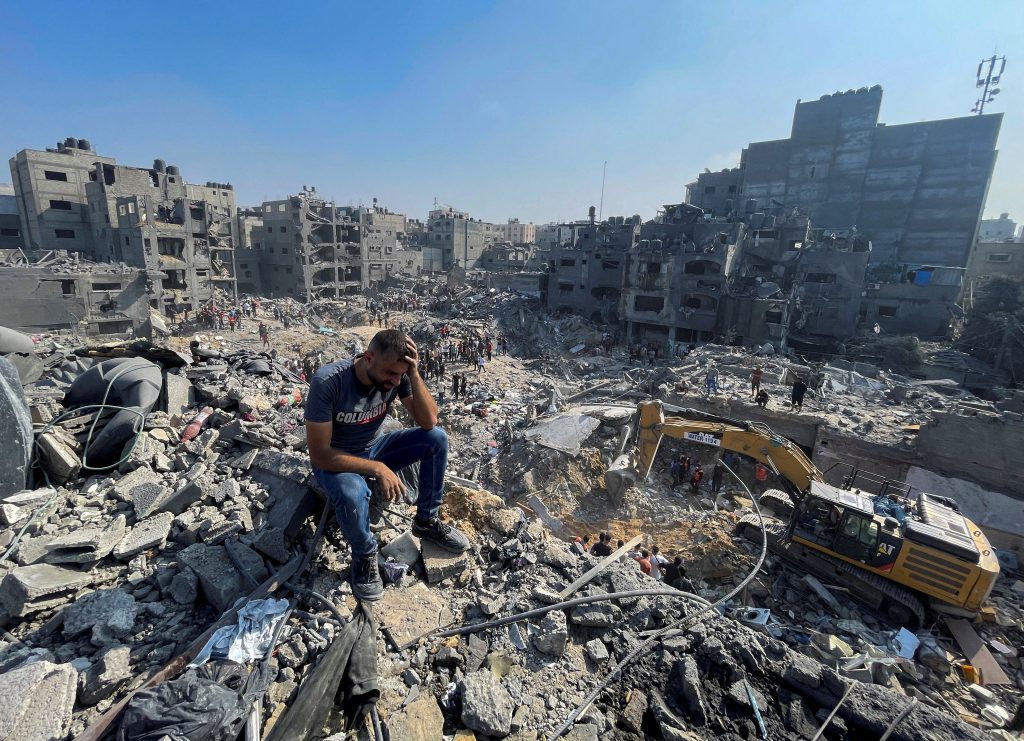
It is an unprecedented human tragedy of nearly the past half-a-century. The heart-rending conflict, which began on the morning of October 7 with the Hamas terrorists invading Israel killing more than 1300 civilians and kidnapping a large number of hostages, appears to be in the final stage with Israeli forces gearing up to re-occupy Gaza. The death toll of civilians in Gaza comprising bedridden patients, old men, women and children is already more than 12,000. The area, which had a huge civilian population estimated to be a few million just before October, would soon be giving a deserted look of a large graveyard.

Amidst these depressing developments, Saudi Crown Prince and country’s PM Mohammed bin Salman (MBS) hosted an Arab-Islamic summit on November 11, which was expected to usher in immediate ceasefire in this ongoing conflict. MBS has not only called for an immediate end to the hostilities in Gaza, he has also rejected Israel’s bid to dub action against  Palestinians as “self-defence”. He also called for the release of all captives and prisoners.

Interestingly, MBS has ensured the presence of Palestinian Authority President  Mahmoud Abbas during the summit. He, however, kindled hope for an early peace in the region by not inviting the top Hamas leaders, already branded as terrorists. They include Ismail Haniyeh, Yahya Sinwar, Mohammed Deif and Marwan Issa. It may be noted that Ismail Haniyeh had rejected the 2004 Oslo Accord recognizing Israel as a nation, and Israel had recognized Palestine as a state. It led to the election of Abbas as the president of Palestinian Authority.

Ismail Haniyeh, who had revolted against Abbas got killed hundreds of Palestinians in Gaza to form a separate new administration, was not invited to the summit. It means Abbas would now be playing the lead role in the restoration of the peace. Qatar’s Emir Sheikh Tamim bin Hamad Al Thani’s statement that “for how long the international community will treat Israel as if it is above international law,” did not impress the summit. He is known for sheltering the Hamas leadership.

A Joint Front

The Arab League and the Organization of Islamic Conference (OIC) are holding a joint conference for forming an alliance against Israeli aggression. According to Saudi Arabia’s Ministry of Foreign Affairs, it was being held “in response to the exceptional circumstances taking place in the Palestinian Gaza Strip as countries feel the need to unify efforts and come out with a unified collective position”.

The OIC includes member states from across the Islamic world, including the Palestinian territories’ neighbours Egypt and Jordan, Lebanon, Turkey and Iraq. Abdel Fattah el-Sisi, the president of Egypt, emphasised that the policy of “collective punishment” by killing, siege and forcible transfer, is unacceptable. He further stated that “this cannot be interpreted as self-defence and must be stopped immediately”.

In spite of Iranian President Ebrahim Raisi’s  warnings that the scope of war would be expanding, the mood in the summit was for rapprochement. In spite of his visit to Riyadh, first time in 11 years of an Iranian president’s visit, he indulged in his rhetoric that “Islamic governments should designate the army of the occupying and aggressor regime [Israel] as a terrorist organisation”.

India-US Talks

Amid the ongoing West Asia crisis, the two and two meet between India’s Defence Minister, Rajnath Singh and Minister of External Affairs, S. Jaishankar, and their respective American counterparts, Lloyd J. Austin III and Antony J. Blinken,  held in New Delhi on October 10 has become significant.  It has concluded without a formal joint communiqué, but it is widely believed that the West Asian crisis and the growing Chinese belligerence at India’s northern borders and in the Indo-Pacific regions were discussed in detail.   

There has been a general consensus in New Delhi that MBS is one of the saner voices of West Asia. It goes to his credit that he has been raising voice against Israel’s policy of ‘revenge’ against Hamas since the outbreak of conflict on October 7, and has been looking for a peaceful resolution of the crisis. He has so far being opposed to any military intervention in the Gaza crisis. It is being stated that India and other democracies should work together, maybe, under the UN umbrella to give immediate relief to the war-torn region. 

Though MBS has also been facing resentment against his progressive policies within his government; yet he has refused to toe the hawks’ line for a military intervention in Gaza. Earlier, on September 20, his foreign minister, Prince Faisal bin Farhan had commented at the OIC meeting in New York that the Jammu and Kashmir conflict is a “pressing challenge” to the security and stability of the region. His statement came within 10 days of the state visit of MBS to India. It means that MBS is facing the twin challenge of ushering in peace through OIC as well as restraining the aggressive elements within his kingdom.  

Sidelining Chinese Agenda

It is being hoped that MBS is going to occupy a commanding position in regional politics. It is natural for China to be upset, because its key associate in the region, Iran, might not be able to further ignite violence through its proxies such as Hamas and Hezbollah. In other words, if the Abraham Accords finally succeed, Chinese ambition to have ‘strategic depth’ in the Gulf and also to replace the USA in this oil-rich region might be foiled — at least for the time being. In spite of international media predicting the collapse of the détente being recently worked out between Israel and its estranged Arab countries following prolonged negotiations, MBS appears to be poised to lead the region.

 With the defeat of Hamas looming large, Iran’s power game operating through its proxies appears to have exhausted. Interestingly, India has appreciated Raisi’s suggestion to the Indian PM Narendra Modi for mediation, but New Delhi is keen for specific details and terms of peace, Iran would like to be stressed. There is also a larger issue, whether being a signatory to the NPT, Iran would like to abandon its nuclear weapon programme, which has already invited large scale sanctions against it.

The UN relief team has already lost nearly 90 volunteers in the conflict zone. The number of deaths is increasing with the passage of time. With more than 20,000 persons estimated to have died and 17,000 severely wounded so far, the dark shadow of this holocaust might haunt all of us for decades now.

With the passing of each hour, the death count is increasing. It is being estimated that apart from the 20,000 and more deaths, many among the 15,000 grievously injured might succumb anytime. As many as 90 members of the UN relief team have already been martyred facing the wrath of guns from both sides. More than three dozen journalists, including cameramen, have also perished in this ongoing conflict so far.

Dismal, dark realities hover around Palestinian children

Shots and videos of Palestinian children dying are just too shocking. Though most of the so called world leaders are fathers and grandfathers, they seem little bothered about the ongoing mayhem in Gaza

Focus on the young on Children’s Day, 14 November.  But the political rulers will not talk of the dismal dark realities hovering around the lives of our precious children.

This year, the tragedies are only compounding as news reports on Gaza are carrying very, very depressing details. The World Health Organization (WHO) reports that as the raging Israel-Hamas conflict has completed a month since it erupted on October 7, more than 10,000 people, or some 0.5 per cent of the total population in the besieged enclave, have reportedly been killed, with an average of 160 children dying per day.

And the evacuated  nurse from  Gaza, Emily Callahan, who works as  nursing activity  manager for  ‘Doctors without  borders’,  has been quoted as saying that there are burnt and amputated children in Gaza  because of the constant  bombardments  by the  Israeli forces. She’s also focused on the fact that there’s no food and water for hundreds of the Palestinian families and their children …many could be dying of hunger and starvation.

Yes, those shots and videos of Palestinian children dying are just too shocking. Too painful. Though most of the so-called world leaders (some could be called war-criminals… accused of war crimes!) are fathers and grandfathers but seem little bothered about the ongoing killings and deaths in Gaza. Those cries of the injured and dying children are so very traumatic and painful….I have been questioning myself:  Is this the so-called developed world? Is this the world that talks of peace whilst indulging in mass scale genocide? Is this world fit enough for humans to survive in, where even infants and new born children are not  spared?

*****

And if one were to focus on the dark realities faced by children in our country, there are significant pointers to the fact that a substantial percentage of children  in the country are subjected to abuse and mental trauma. Our children are also deprived of the basic food nutrients…severely malnourished are lakhs of our children. And though there are hundreds of  sarkari advertisements which  boast of  providing  clean  drinking water but in many  locales only muddy drops  trickle  …parched  are the stretches  and  there’s  no accountability. If the local population cries out for food and drinkable water, they are given the Hindu-Muslim lollypop! Yes, communal tensions are created by the political mafia to distract and divert attention from the basic issues.

And if one was under the impression that child marriages are a thing of the past then do try read the latest data that reveals that child marriages are still taking place. No research or  follow up on the future of those couples; many  perhaps  manipulated or  bundled off or  lured  into the  marriage  trap, as  poverty and  illiteracy holds sway.

And in many regions, there’s an increase in the numbers of the children going through various forms of disadvantages and burdens. Child trafficking is a known  reality yet where’s the halt to children getting bought and sold in the various markets!

Sheer poverty and the hopelessly failing system is killing hundreds of our children in their very childhood. What happens to the survival of thousands of such families and children who cannot afford to get the basic food and medical care? Who is responsible for their famished-hopeless-anaemic existence? Who is answerable? Who is accountable? The political and administrative who’s who ought be questioned for the sheer plight, misery and sorrow of our children.  

And as I have consistently focussed on the dismal fact that children surviving in the conflict zones, face an additional load of trauma and anxieties together with insecurities. Ask the children of Manipur and Kashmir and of the so many  other regions where conflict and civil strife  holds sway!

Also, children from the minority communities and groups face the burden of the communal virus so very systematically unleashed all around them. One case after another. The blatantly horrific one was that of that school teacher in Uttar  Pradesh, Tripti Tyagi, provoking and ordering  in the same breath the children of her class to slap one of the Muslim students of the class.

Not sure what is the condition of children inside jails – those who sit with their  imprisoned mothers and 

also those in juvenile homes. There’s little  information trickling out from across the high walls.

*****

Ending this week’s column with this  verse of  the Palestinian  poet –   Mahmoud Darwish :   ‘I COME FROM THERE

I come from there and I have memories
Born as mortals are, I have a mother
And a house with many windows,
I have brothers, friends,
And a prison cell with a cold window.
Mine is the wave, snatched by sea-gulls,
I have my own view,
And an extra blade of grass.
Mine is the moon at the far edge of the words,
And the bounty of birds,
And the immortal olive tree.
I walked this land before the swords
Turned its living body into a laden table.

I come from there. I render the sky unto her mother
When the sky weeps for her mother.
And I weep to make myself known
To a returning cloud.
I learnt all the words worthy of the court of blood
So that I could break the rule.
I learnt all the words and broke them up
To make a single word: Homeland…

Delay in justice delivery eroding people’s faith in judicial system

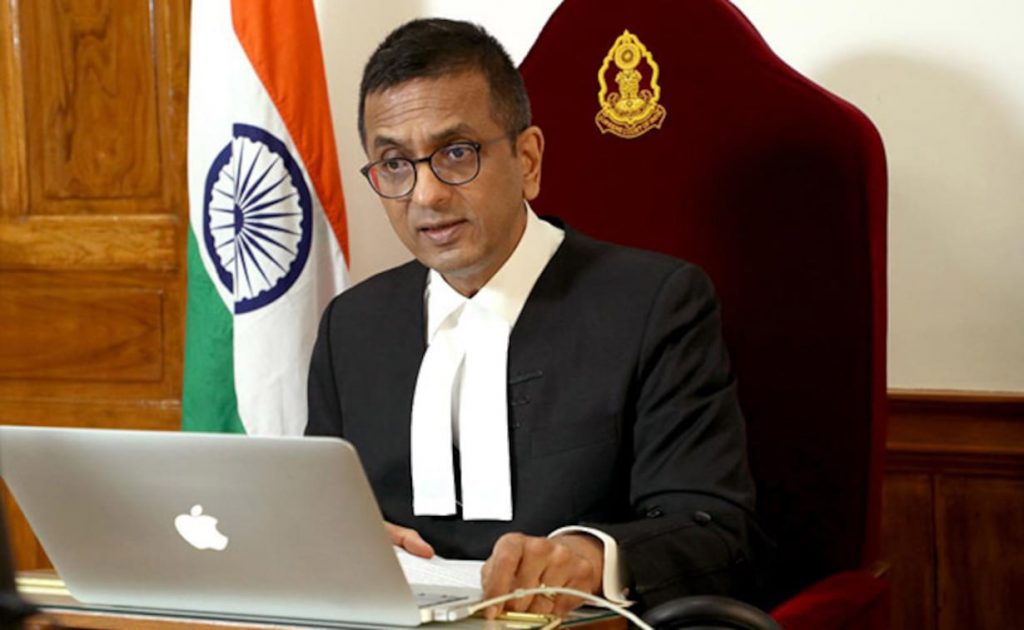
Recently, CJI DY Chandrachud expressed concern over the issue when he said that the Supreme Court must not become a ‘tareekh pe tareekh’ court. However, such sermons would be meaningless unless supported by effective judicial pronouncements to thwart such practices. A report by Mudit Mathur

The deliberate use of delaying tactics, endlessly prolonging court hearings, is gradually eroding people’s faith in the Indian judicial system. This pervasive malaise is the consequence of unethical and well-planned strategic practices that have transcended the boundaries of the lower judiciary. Even the constitutional jurisdictions of the High Courts and the Supreme Court have fallen prey to these unscrupulous tactics, resulting in a massive backlog of old cases.

The preamble of the Indian Constitution solemnly commits to justice—social, economic, and political—placing it on the highest pedestal above all other basic structures. The delay of justice is not simply the deferment of an action over some time; in its judicial context, it is an action in a process that has irreversible long-term consequences. Thus, the evils of adjournment culture gradually, surreptitiously, and silently erode the fundamental right to speedy justice.”

The right to a hearing within a reasonable time is also recognized in the Universal Declaration of Human Rights of 1948. Therefore, due to all these efforts, the right to justice within the stipulated time is accepted as a universal human right and occupies the centre stage of the national and judicial goals of all civilized democracies.

The national scenario of pending cases is alarmingly high and unmanageable with poor infrastructure and presently available strength of judges. According to available data, as many as 4,42,91,961 cases are pending across all courts in India, especially in the district and subordinate courts, out of which 1,09,87,870 are of civil nature and 3,33,04,091 are of criminal nature. The data revealed that at least 93782 are pending in the lower judiciary for more than 30 years for disposal!

The disposal rate of cases at the apex court level is better but it still has pendency of about 79,361cases including 62,041 civil and 17,320 criminal matters. The pendency of cases in the High Courts of various states is also worrisome. As many as 61,74,802 cases are pending at national level including 44,30,519 civil and 17,44,283 criminal matters. There are 70,467 cases which are pending for more than 30 years in the various High Courts.

Recently,  Chief Justice of India Dhananjaya Y Chandrachud also expressed concern over the issue when he said that the Supreme Court must not become a “Tareekh pe tareekh” (a date after date) court, but such sermons would be meaningless unless supported by effective judicial pronouncement to deprecate such practise.

Disclosing that the lawyers asked for adjournments in 3,688 cases in the last two months while most of these cases were mentioned for urgent hearings, CJI Chandrachud,    addressing the lawyers present in the court, said, “We don’t want it to become a ‘tareekh pe tareekh’ court. This defeats the trust of citizens in this court. With so many cases being asked to be adjourned, it does not send a good image of this court.”

Justice Chandrachud revealed that on an average 154 adjournments are circulated per miscellaneous day and there were a total of 3688 adjournments in the last two months which defeats the purpose of filing and listing the matters. The time lag between filing and listing before the court has been curtailed to a week with all the fresh cases but if hearings are delayed due to frequent adjournments, the purpose of fast tracking would be defeated.

“Justice delayed is justice denied” is the basic principle of justice, and inordinate delays in the disposal of litigations causes gross injustice to litigants whose interest is considered supreme. The insidious practice of unnecessary adjournments has virtually crippled the judicial system eroding the faith of the common man. The reality is not lost on the judges who preside over these courts, yet they find themselves helpless against the relentless tactics of powerful lobbies that deliberately obstruct the final adjudication of contentious litigation to further their own vested interests.

The delay in the justice delivery system had always been the burning issue at every forum of discussions on judicial reforms. It is difficult to make a decision as to where the delay begins in the justice delivery system or when the number of delayed cases becomes a backlog in the given jurisdiction and time frame. To get the solution, we need to find the roots of the problem. Some of the major issues that lead to the inefficiency of the judiciary are as follows:

Nowadays advocates are habitual of taking the adjournment in a very easy going way. A Rule should be made to allow an adjournment for sufficient cause. Seeking unnecessary adjournment on non-existent grounds with the motive of obstructing the proceedings of the case are instances of aberrant conduct, tending to interfere with the justice system. They often delay cases due to their penchant of earning higher professional fees.

There is a high inflow of cases in the judicial system of India. People approach the courts even on petty cases which could be avoided being totally unnecessary. Judges are not motivated to work to their fullest due to absence of systematic work culture in the Indian courts which leads to such delays.

While making the laws up to date, the legislature keeps on going with an endless number of amendments without realising that it creates a delay in the justice delivering system. There are always loopholes that could be used in the laws and cases and these loopholes increase the burden on the judiciary. There has been an acute shortage of staff in the courts which further leads to slowing down of the process of justice.

The Apex court interpreting the statutory time limit of 90 days to file a written statement into a mere directory guideline. It reopened the flood-gates of delays. In the matter of R.N. Jadi case with regard to the CPC amendment (2002) in Order 8, Rule1 had reiterated that, specifying a time limit of 90 days for filing a written statement was directory and not mandatory. Not filing a written statement in time was and remains (in non-Commercial Court suits) a favourite tactic to delay a civil suit in Indian Courts.

CPC uses an interesting trick to control discretion of a Judge across its rules. The device is to ask the Judge to record her reasons for exercising discretion. This trick does not ipso facto control incorrect use of discretion by a trial Judge, but it records reasons for an appeal court to review and correct in future.

The courts turn to high moral principles when they want to balance a statute’s harshness with practical realities of justice administration. For example, CPC’s Section 35(1) mandates that costs shall be at the discretion of the court, but Section 35(2) permits departure from the same norm if the court records its reasons in writing for costs not following the event.

Most of the litigants suffer on account of ongoing conflict of judicial conscience to differentiate the primacy of two thoughts: “justice delayed is justice denied,” and “justice hurried is justice buried.” It is a matter of grave challenge before the Supreme Court of India how to overcome the pendency of cases before Indian courts, keeping balance of justice in a speedy time frame to protect the fundamental rights of a common citizen.

Stubble burning: Apex Court reads the riot act to states

Even as Punjab, Haryana and Delhi spar over the annual incidence of farm fires leading to severe air pollution in the NCR, the Apex Court has reprimanded the squabbling states and ordered them to get their act together and put an end to the menace.  A report by Rajesh Moudgil

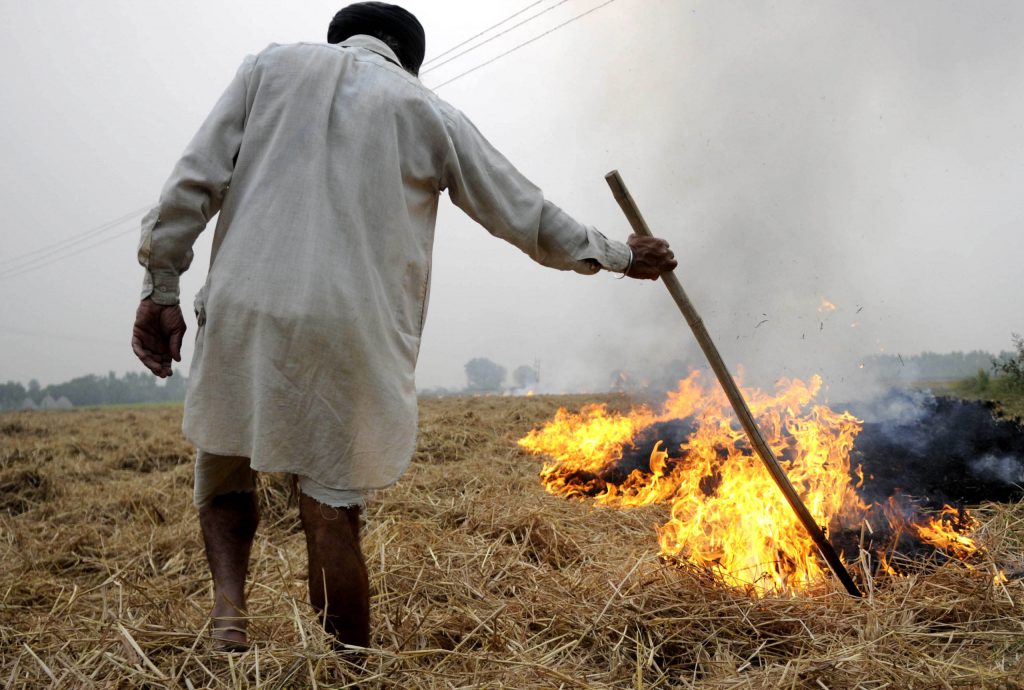
Burning of the paddy straw after every harvest season in Punjab, Haryana and a few other states leading to severe air pollution in Delhi and the national capital region (NCR) seemed to be a business as usual until November 7 when the Supreme Court took on them telling them sternly to put an end to the practice of stubble burning as it was their job.

While the Delhi-NCR choked and continued to be a virtual gas chamber due to smog primarily caused by the farm fires in the adjoining states, the top court told the governments of Punjab, Haryana, Rajasthan, Uttar Pradesh and Delhi to take immediate steps to stop the incidence of stubble burning – one of the main contributors for the severe air pollution in the region.

Here is what it held: The SC Bench led by Justice Sanjay Kishan Kaul made the local station house officer (SHO) under the supervision of the director general of police (DGP) and the chief secretary (CS) of the respective state responsible for ensuring that stubble burning was stopped. The bench asked them to work on it, right away.

It said that it wanted it (stubble burning) stopped, did not know how the states do it ….. it was their job and it should be done immediately.

“We do not care how you do it… it must stop. Whether by forceful actions and sometimes by incentives, you have to stop the fire. Your administration must do so,” it said and added that the residents of Delhi were grappling with health problems year after year as the issue had not been resolved.

The Bench said there could not be a political battle every time…. Delhi could not be made to go through this year after year.

Notably, Delhi and Punjab have the Aam Aadmi Party (AAP) governments, Haryana has BJP-Jannayak Janta Party (JJP)-combine government.

Delhi measures “all optics” 

 The apex court also questioned the effectiveness of the Delhi government’s odd-even car rationing scheme so as to check the vehicular pollution in the national capital, terming it as “all optics’’. The Supreme Court asked the Delhi government to ensure that the municipal solid waste was not burnt in the open. When the amicus curiae Aparajita Singh said that the smog towers installed by the Delhi government were not working, Justice Kaul termed it “ludicrous’’ and asked the Delhi government to have them repaired immediately.

Also, the top court during the next hearing in the case on November 10, held that the police cases against farmers were not a solution to stubble burning and suggested that the governments should consider withholding minimum support price (MSP) to the offenders of farm fires for a year besides exhorting farmers to give up stubble burning.

“You will register FIRs, then withdraw. Registering FIR is not the solution actually. It has to be incentive-based or even punitive measures. Like, just thinking out loud, some who burn stubble will not be given MSP next year. Carrot and stick is up to you. Farm fires must stop. Cannot be lackadaisical,’’, the Bench said seeking the chief secretaries of the states to find a solution. The Court, however, clarified that it was not advocating for a total removal of MSP on paddy. However, it also opined that farmers were a part of the society and they had to be responsible.

The next hearing in the case is on November 21.

Cabinet Secy pulls up Punjab

Subsequent to the top court’s November 7 reprimand, the Cabinet Secretary, Rajiv Gauba pulled up the Punjab government asking them to check the farm fires and fix responsibility of civil and police administration.

The cabinet secretary also asked the commission on air quality management (CAQM) to send its flying squads to Punjab and Haryana and submit reports on a daily basis. He held that immediate steps were needed to check the incidence of the farm fires as about 90% paddy harvest was complete in Punjab and 60% in Haryana.

The agriculture minister said that over Rs 3,300 crore had been released under the crop residue management (CRM) scheme so far, of which over Rs 1,500 crore was released to Punjab and about Rs 1,000 crore to Haryana.

According to media reports, more than 22,600 cases of stubble burning were recorded between September 15 and November 7, of which about 21,000 were said to be in Punjab and the rest – about 1,600 in Haryana, as per the data provided by the commission on air quality management (CAQM).

The SC Fiat Impact

On November 9, Punjab launched a crackdown against the offenders of the farm fires; police held over 1,300 meetings with village heads; formed over 630 flying squads; over 245 police cases were registered; fines worth over Rs 88 lakh imposed on over 3,800 farmers.

On November 8, over 2,000 farm fires were recorded in Punjab – highest in a day so far.

However, the police action was not taken well by the farmers who claimed there was a severe shortage of machines to manage stubble.

The farm leaders held that while the famers did not want to burn the stubble either, they had no choice but to do it with there being no other option. They say that while about five lakh farmers had applied for the crop residue management machines available for subsidised rates, only about 25,000 could get them till a few days ago.

Pertinently, the farmers opt to burn the paddy straw to clear off their fields as they find a very short period between paddy harvesting and sowing of the next crop – wheat. Another reason for the farmers to opt this practice is that unlike the straw management course, burning paddy straw does not cost them anything, hence the quick and cheapest way to get rid of it.

Mahua Moitra’s Mahabharata

Had Moitra played the “victim card” instead of gender, she may have had more takers. For an MP and that too one who is vocal, confident and fiery, the woman-card does not cut much ice. 

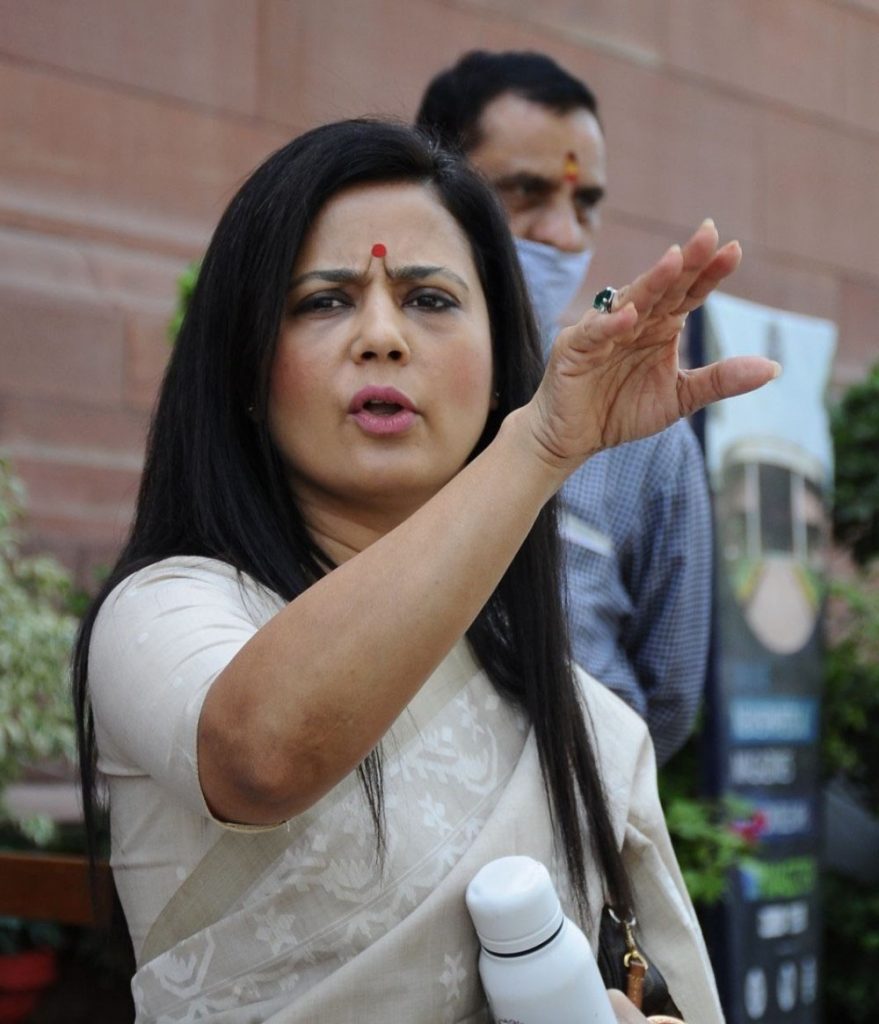
“I have been subjected to the proverbial ‘vastraharan’… in the presence of all members of the Committee,” is how Trinamool Congress MP, Mahua Moitra described the treatment meted out to her. 

In a strongly worded three-page letter to Lok Sabha Speaker Om Birla, Moitra alleged a “bias” by the Chairman of the Ethics Committee, accusing him of a ”defamatory way of questioning” her.  

Stating that “this filthy line of questioning” was against her personal dignity and rights, Moitra said that the Chairman asked her personal questions that exceeded his brief. She charged him of  “shameful conduct” and a “display of unethical, sordid, and prejudiced behaviour” towards her. 

The Chairman, Moitra alleged, came with a pre-written script from which he was reading out, which contained the most disgusting, invasive, private details about my personal life, which had nothing to do with the hearing whatsoever. 

Moitra is facing an enquiry following charges of asking questions in Parliament in exchange for gifts and money from businessman Darshan Hiranandani. 

She is alleged to have shared her official login credentials with the businessman in question to draft questions that were to be asked in Parliament. 

In an affidavit, Hiranandani has stated that he had given expensive gifts to Moitra and used her Parliament mail ID to ask questions, which targeted the Adani group. 

BJP MP Nishikant Dubey, had levelled allegations of bribery against Moitra, based on what was termed as “irrefutable” evidence provided by Supreme Court lawyer Jai Dehadrai.  

Subsequently, Moitra was questioned by the Parliament Ethics Committee, chaired by BJP MP Vinod Kumar Sonkar.  

Targeting Sonkar, Moitra said that he made “insinuations about my dignity as a woman”.  

To quote her: “Ultimately I don’t have to stand there to be humiliated as a woman…. I will not stand there and be subjected to this ‘cheerharan’  by some chairperson under his party whip”.

Moitra is on record to state that Hiranandani was a close friend, much before she was elected a Member of Parliament.

For the uninitiated, Mahua took a leaf out of the scriptures. 

The vastraharan Mahua has repeatedly referred to is a sequence in the Mahabharata. 

Also known as Panchali Cheerharan, the Draupadi Vastraharan is an important episode in the Mahabharata. 

When the Pandavas lost their wife Draupadi to the Kauravas in a game of dice, she was dragged into the court, pulled by her hair and an attempt was made to disrobe her. The five men she was married to looked helpless and did little to salvage the situation. The onus was on Draupadi to save herself. Legend has it that she prayed to Lord Krishna. Almost miraculously yards and yards of fabric appeared making the disrobing impossible.  

Moitra’s story has shades of the Mahabharata: that she is fighting a lone battle is a given. 

Like the Pandavas, her party the Trinamool Congress has done little to salvage her honour. Party General Secretary, Abhishek Banerjee said that Moitra is “competent enough to fight her own battles”. 

If anyone has shown some solidarity it is the non-BJP members in the Committee. If reports are to be believed, they staged a walk out on grounds that “unethical questions” were asked. To suggest that they doubled up for Krishna would perhaps be blasphemy. Yet the fact remains that they did stand up for her: quite unlike her own Party which kind of left her to fend for herself: quite like the Pandavas in the Mahabharata. 

While the jury is out on whether the Ethics Committee exceeded its brief, critics have lashed out at Moitra for playing the “woman card” as it were. 

To use the cheerharan analogy is a bit of a stretch given that Moitra is on record to state that the charges against her were based on a “jilted ex’s lies”. 

Against this backdrop, the Committee is well within its rights to tread personal ground and ask pointed questions about a relationship gone sour. Therefore to cry foul after willingly opening a can of worms is not only unconvincing but a desperate attempt to play to the gallery. It is also aimed at garnering public sympathy.  

Worse still, Moitra has accepted sharing her log in details and taking “secretarial and typist assistance” from Hiranandani. She has admitted that it was Hiranandani’s office that keyed in the questions that she asked in Parliament. 

Just to set the record straight, every MP is entitled to secretarial assistance and therefore does not need to go to a private entity for “assistance”. Moitra is no exception. Therefore to seek typist assistance or use a private individual’s office set up does not fit in. 

In a signed affidavit, Hiranandani has accused Moitra of accepting bribes to ask questions in Parliament. Moitra has tried to trivialize the charge: “The sum total of all gifts I have received from him are – 1. One Scarf 2. Some items of make-up 3. Use of car and driver when I have visited Bombay on maybe 4-5 occasions in the past 5 years and maybe twice in Dubai” and so on and so forth.  

The issue is not about a scarf or a lipstick but one of propriety. It is not about the quantum but the act itself. So if Moitra admits receiving gifts, then there could be more than meets the eye.  

Having said that, one cannot deny politics playing out full time or the Committee Chairman “acting on someone’s behest”. 

Moitra has been vocal about the “nexus” between Prime Minister Narendra Modi and industrialist Gautam Adani. Therefore, the BJP’s itch to “get her” is a given.

Against this backdrop, had Moitra played the “victim card” instead of gender, she may have had more takers. For an MP and that too one who is vocal, confident and fiery, the woman-card does not cut much ice.  

At the time of going to Press, while the Committee had recommended her expulsion from the House, the final scene had yet to be scripted. 

While on women, another sequence played out in the Bihar Assembly with Chief Minister Nitish Kumar in the eye of a storm. 

In a bid to advocate women’s education in population control, Kumar slipped up badly. 

Earlier this week, he told the state Assembly that a woman who is adept in sex education can restrain her husband during intercourse which can then lead to a lesser number of births. 

In a vivid description in the state assembly of how an educated woman can restrain her husband during sexual intercourse, Kumar had said: “The husband’s acts led to more births. However, with education, a woman knows how to restrain him… this is the reason the numbers (of births) are coming down…” he had said in Hindi, the explicit description nothing short of being vulgar. 

The furore that followed led him to retract: “I apologize if I have hurt anybody. It was not intended to hurt anybody” Kumar said after BJP legislators blocked entry to the Assembly. 

Kumar sure apologized but the “if” in the apology was the damaging part. To imagine that the vulgarity of both the thought, the content and the language is subject to an “if” is adding insult to injury. 

For those who heard the original version squirmed at the thought process and patriarchal mindset that the Chief Minister had displayed on the floor of the House. It was enough to make people run for cover. 

So for the Chief Minister to apologize with a rider of an if  is a shocker. 

For a head of a state to even comprehend such a vulgar thought process puts a question mark on the state and status of women under Kumar’s regime: the concept of dignity being completely alien. 

Therefore, were one were to take a dispassionate and objective view, if there was any cheerharan, it was on the floor of the Assembly in Bihar rather than in the Committee that examined Moitra.    

New motorable road to Amarnath shrine raises greens’ hackles

Amarnath shrine, situated at an elevation of 13,000 feet, finally got a motorable road after   BRO successfully widened the road from Dumail to Amarnath cave via Baltal base camp in Ganderbal district of central Kashmir drawing bouquets and brickbats. A report by Riyaz Wani

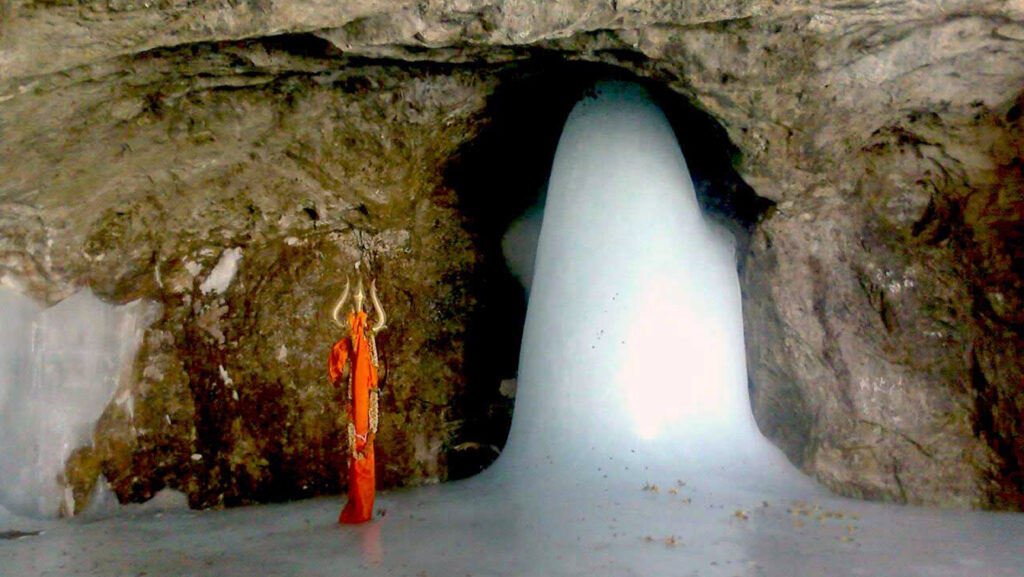
 For the first time since its discovery in 1850 by the Muslim shepherd Buta Malik, the Amarnath shrine, situated at an elevation of 13,000 feet, has got a motorable road, a development both welcomed and criticized in equal measure. 

The Border Roads Organisation (BRO) has successfully widened the road from Dumail to the Amarnath cave via Baltal base camp in Ganderbal district of central Kashmir. In a statement, the BRO shared a video showcasing the journey of the first set of vehicles reaching the Amarnath cave.

 “Project Beacon is involved in restoration and improvement of Amarnath Yatra tracks. Border Roads personnel completed the formidable task and created history with the first set of vehicles reaching the holy cave,” stated the BRO.

Earlier, the Jammu and Kashmir government’s Public Works Department (PWD) and the Pahalgam Development Authority (PDA) were responsible for maintaining the tracks leading to the Baltal and Pahalgam shrines, respectively. However, in September last year, the maintenance and upgradation responsibilities for the Amarnath Yatra tracks were handed over to the BRO.

The BRO celebrated the accomplishment in a video titled ‘Our Men Our Mission – We will either find a way or make one,’ shared by the organization on social media platform X (formerly Twitter).

The 2-minute and 27-second video showcases drone footage capturing a mini-truck accompanied by a dumper navigating the newly constructed road on the slopes of the Himalayan mountains. The video is of the construction work from the Chandanwari side in Lidder Valley, which serves as another of the two gateways to the sacred cave shrine.

The footage also features a group of BRO engineers and workers commemorating the achievement with a photo opportunity, set against the backdrop of the shrine’s entrance. The road is expected to ease access to the Amarnath Shrine, contributing to the convenience and safety of the pilgrimage route.

The shrine, which sits at an altitude of over 13000 feet, houses an ice stalagmite that is believed to be an incarnation of Lord Shiva. 

While the BJP has welcomed the road saying lakhs of people have faith in Baba Amarnath, other parties and even several Kashmiri Pandits have slammed the move, terming it detrimental for the Valley’s environment.  

Mohit Bhan, a Kashmiri Pandit and PDP spokesperson posted on X: “This is not history, it’s the biggest crime one can commit to Hinduism and its faith in nature. Hinduism is all about immersing in spiritual mother nature, that’s why our pilgrimages are in the lap of the Himalayas.”

Kashmiri Pandit activist Satish Mahaldar said that the government is “refusing to learn the lessons” from the recent climate disasters in India.

“Kedarnath was a real example where encroachment of natural ecosystems triggered nature’s fury and a humanitarian disaster,” Mahaldar said. “We saw how villages after villages sank. Sadly, the government seems intent on bringing these disasters to Kashmir.”

But according to the BJP leader Altaf Thakur, the construction of  “the concrete road to the holy cave shrine followed proper Environmental Impact Assessment, and no trees were cut during the entire process.”

The road to Amarnath cave has a political dimension also:  In 2008, over 100 people had died in three month long protest after the then state government led by Ghulam Nabi Azad transferred some forest land to Shri Amarnath Ji Shrine Board. The protest was led by separatist groups. In the fifteen years since then, Kashmir has changed beyond recognition, more so after the revocation of J&K’s special constitutional status under Article 370 in August 2019.  This status barred outsiders from buying land in Kashmir and would have made construction of this road impossible. 

Blame game on as air-proclypse grips Delhi

The governments of Delhi, Haryana and UP, despite their best efforts, failed terribly to stop air from getting severely toxic by an hour. The NCR region comprising Delhi, Gurugram, Faridabad, Noida and Ghaziabad clocked an average AQI of over 400 at a stretch for a week, writes Aayush Goel

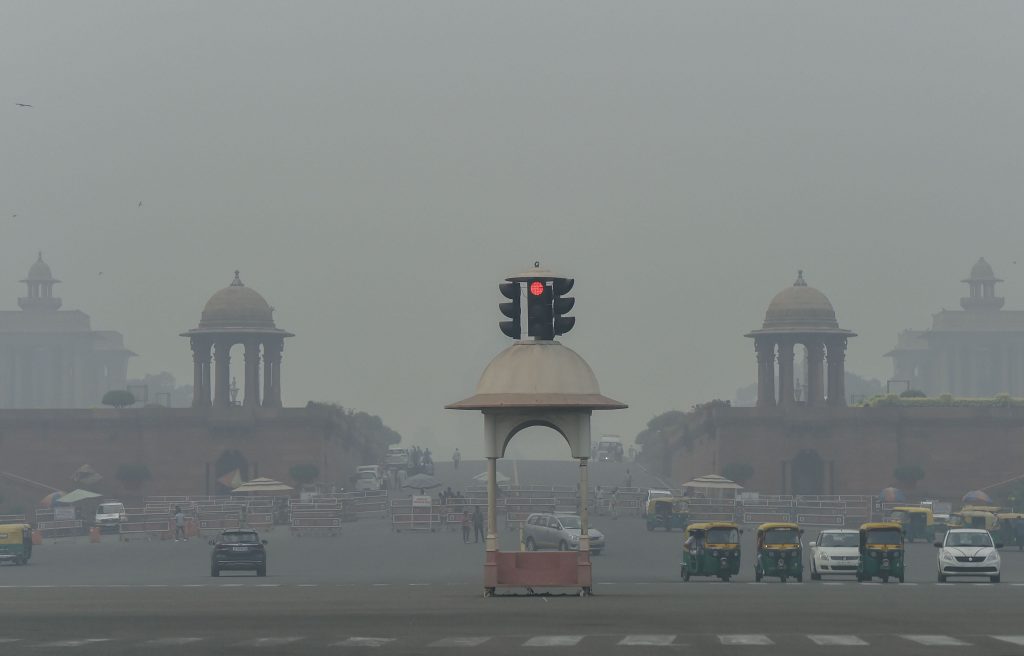
It’s that time of year again when haze grips everything in Delhi NCR be it air, news or politics. As the air quality dips, the cosmopolitan region of the country starts coming to stand still with smog weighing down the fast pace of life.

While it’s an annual affair now, the region is seeing the worst air quality in a decade forcing the Commission for Air Quality Management to impose strictest anti-pollution measures or stage 4 of Graded Response Action Plan (GRAP). The health authorities have declared an emergency with unprecedented increase in pulmonary and ophthalmic distress cases with infants and cardiac patients being the worst hit.

Amidst blame game, the governments of Delhi, Haryana and UP have done all in their might but failed terribly to stop air from getting severely toxic by an hour. What came as respite was overnight showers just before Diwali which did improve quality but it continued to be in a very poor or poor category in the majority of the regions. AQI in the range of 401-500 is categorised as ‘severe’, while 301-400 is very poor, and 201-300 is poor. The NCR region comprising Delhi, Gurugram, Faridabad, Noida and Ghaziabad clocked an average AQI of over 400 at a stretch for a week.

In the case of Delhi, there have been numerous studies, reports, papers, seminars, monographs, speeches, and explanations on the subject. A recent study has identified Delhi as the most polluted city in the world, with residents potentially losing a significant portion of their lifespan due to pollution. The study, called the Air Quality Life Index (AQLI), was published in August 2023 by the Energy Policy Institute at the University of Chicago. It also indicated that the entire Indian population of 1.3 billion people lives in areas with an annual average particulate pollution level exceeding the WHO’s limit of 5 μg/m3. While Centre for Science and Environment (CSE) holds vehicular emissions, construction dust and smoke from farm fires three major contributory factors to Air-poclypse, but the major part of the blame for the mess has been apportioned to stubble burning in Punjab. Delhi wasn’t always like this in November. It wasn’t so about a decade back. Punjab existed, and so did its farms. So what changed?

Punjab farm fires and pollution in Delhi

Like all previous years, the stubble burning in Punjab is being held as a key culprit for the crises. The state has so far reported 25,000 cases of farm fires this season with highest single day cases rising to over 2000. Just like the previous government, even the current AAP government has failed to curtail the menace. A recent video from Bhatinda showed farmers holding a government officer hostage who came to stop them from torching stubble and forcing him to do so. The video led to huge uproar and Bhagwant Mann-led

The AAP government was accused of inaction. The state had registered only 18 FIRs till November 6 and none was from CM’s constituency, Sangrur, which reports the highest number of fires every day. Following the SC rap, the FIRs rose to 51 and Rs 1.3 crore was released in fines. The Bench said, “You will register FIRs, but they will be withdrawn. This is again a political issue”.

It may be noted that Delhi environment minister Gopal Rai blames UP and Haryana stubble burning for Delhi air crises though opposition is up against the same. “Arvind Kejriwal blames Punjab every year for Delhi crises. This time, when Delhi is facing its worst crisis, he has nothing to say as it is the AAP government in Punjab that has failed terribly. They are making excuses, harassing residents in Delhi but not ready to ask the Mann government to act,” said Punjab BJP President Sunil Jakhar.

Punjab AAP chief spokesperson Malvinder Singh Kang said that stubble burning for the majority in Punjab was not a choice but compulsion and thus penalisation was the last resort.  “Stubble burning incidents were reduced by 30 percent last year; it has further declined by 40 percent this year. Farmers have to do so due to lack of alternatives. Penalisation should be the last resort. We have already started taking steps and have banned the PUSA-44 variety of paddy and getting special incentives for crop diversification,” says Kang while talking to Tehelka.

The Supreme Court bench led by Justice S.K. Kaul asked the Centre and states to find a solution to the problem. “We want farm fires stopped, we want air quality to get better, and we want long-term measures for crop replacement,” it said, adding “If you don’t, we’ll summon the Chief Secretaries and keep them here till they find a solution. I’m sure they’ll work better in their own offices, so please find a solution.”

According to experts these farmers only grow rice and wheat because they are purchased by the government at a minimum support price (MSP). They have very little time between these two crops. The alternative to stubble burning is very expensive for farmers. The shift from manual to combine harvesters to harvest and thresh paddy is a key factor. Though combine harvesters were introduced much earlier, their use went up massively after the year 2000. Experts however hold shift in paddy season as the key reason behind the worsening situation.

Worried about depleting ground water due to paddy cultivation, the Punjab Preservation of Subsoil Water Act was brought in 2009 that made farmers shift paddy-sowing time. Paddy requires a lot of water, especially in the initial weeks. It is estimated that if paddy is sown in April-May, producing a kilogram of rice would require 4,500 litres of water, but if sowing dates are shifted to mid-June, the water requirement comes down to 1,500-2,000 litres. Punjab’s 2009 law barred farmers from paddy sowing in nurseries before May 15 and transplanting before June 15. Before the law was passed, farmers were nursery-sowing paddy in April and transplanting seedlings in May. This delayed harvesting to November and thus farm fires. This coupled with low wind speed and high moisture traps the pollutants in the air.

Is Haryana any better?

“We have asked for water not air pollution or blame for the same by Punjab,” says Haryana Agriculture Minister JP Dalal. During the period from September 15 to November 7, a total of 22,644 cases of stubble burning have been recorded, out of which 20,978 (93%) were in Punjab and 1,605 (7%) in Haryana. Experts say that Haryana grows Basmati rice while Punjab farmers are more into non-Basmati Pusa 44 variety of paddy. Basmati crop needs delicate handling and so harvesting is mostly done manually. The non-Basmati paddy is harvested by combine harvesters in Punjab. Also, the size of farms in Punjab is much bigger compared to those in Haryana and Uttar Pradesh.

Vehicular emissions and construction

According to estimates by central government agency SAFAR, the percentage contribution of farm stubble fire to Delhi’s PM2.5 concentration had crossed 25 per cent on November 2. It was in the range of 10-20 per cent range in the previous week. In previous years, on the worst days, farm fires contributed up to 40 per cent to Delhi’s PM2.5 pollution, according to the CSE. That generally takes place in mid-November. Emissions from vehicles and industry and biomass burning contribute to the tinier PM2.5 pollutants while construction dust is behind the coarser PM10 pollutants.

According to the CSE. This year, the percentage share of PM2.5 in PM10 has crossed 50 per cent, indicating higher impact of combustion sources of pollution rather than just stubble burning .Vehicular emission is a perennial contributor to Delhi’s air pollution and thus as per GRAP mandate BS 3 engine petrol cars and BS 4 diesel cars have been barred from plying in NCR till further orders. According to reports, there are 75 lakh vehicles registered in Delhi and a third of those are cars. Around 20 lakh vehicles registered outside Delhi also add to the capital’s traffic load, and in turn, vehicular emission. The average level of nitrogen dioxide (NO2), emitted by vehicles, is up by 60 per cent compared to the first week of October last year, says CSE. 

Similarly Delhi NCR at a given point and time has over 20,000 registered construction projects on, with highest being in Gurugram and Noida. The AQI analysis shows that it’s the construction hotspots which report the worst air quality owing to the lack of implementation of construction norms. Not even 10 percent of these projects have so far registered themselves on dust portals even though construction dust contributes majorly to particulate matter.

70-hr work week: Life is indeed beautiful, if we strike the right balance

If people work 70 hours a week, where is the time to look after one’s emotional and physical health? So do we really want a $10 trillion economy but an unhealthy and mentally disturbed Gen X and Gen Z?

Recently, one of the country’s most famous billionaires who is ranked 48th in India’s Rich List by Forbes, sparked off a nationwide debate when he said that young Indians should work 70 hours a week to boost the nation’s economy.

Needless to say, the majority of India Inc and particularly those in the top 30 per cent who hold over 90 per cent of the country’s wealth and a majority of the entrepreneurs (not surprisingly), CEOs and industry leaders backed Infosys founder Narayana Murthy. However, there were some in the elite club who begged to differ with him and rooted in favour of a work-life balance.

Unsurprisingly, the reaction of the younger generation was by and large negative on social media because they felt that the top 30 per cent of the country’s wealth holders are not bothered about their welfare and are only looking at the bottomlines and further lining their golden nests.

I don’t blame them for thinking so, because according to the International Labour Organisation, Indians currently work an average of 47.7 hours a week, which is higher than our main economic rival China (46.1) the US (36.4), the UK (35.9), Japan (36.6) and Germany (34.4).

We must understand that what Murthy said came from a good place as he is one of the major job providers of the nation and he also burnt the candle on both ends to get where he did in life. While it is good to be concerned about the economy of the nation, we have to think about the welfare of the country’s human resources and how to maximize the demographic dividend without endangering its Mental Quotient (MQ) and Emotional Quotient (EQ). A 70-hour work week does not allow for a healthy MQ and EQ.

Also, this is an aspirational India we are living in with a predominantly young populace. Millennials and the oldest people in Gen Z make up the majority of the workforce. They want material things and they want them now. Add to that high inflation and a higher cost of living. So, any couple who wants to have a decent life has to have a “double engine” approach and both husband and wife have to work.

With most of the job opportunities being in metropolitans and Tier 1 cities, the country’s youth is forced to leave the security of the family home. A nuclear family means there is no support system for the couple and for their young children. So, the need for a working couple to strike a work-life balance is very important as they are bringing up the future of the nation, the next generation.

Children who are living alone will suffer mental health issues as will their parents, particularly mothers who will carry the double burden of emotional deprivation and a sense of guilt about being away from their kids. Mental health, which includes our emotional, psychological, and social wellbeing, impacts our feelings and actions. It also determines how we handle stress and relate to others.

India’s mental health burden is already very huge. A study titled, ‘The Burden Of Mental Disorders Across The States Of India: The Global Burden Of Disease Study 1990–2017’ released in December 2019 and published in ‘The Lancet Psychiatry’ says there were 197.3 million people with mental disorders in India in 2017, which is 14.3 per cent of the total population. Mental disorders contributed 4.7 per cent of the total DALYs in India in 2017 as compared to 2.5 per cent in 1990.

According to scientists, DALYs (Disability-adjusted life years) is a sum of the years of life lost (YLLs) due to premature mortality and the years lived with a disability (YLDs).

Dr Sagar, who is also the author of the Lancet study, has been quoted by media reports as saying that, “Our report has data starting from 1990 and it shows that in 27 years, DALYs has almost doubled and it’s a worrying trend. Also, mental disorders were the leading cause of YLDs in India, contributing 14.5 per cent of the total YLDs in 2017. The highest contribution to DALYs due to mental disorders in India in 2017 was from depressive disorders (33.8 per cent) and anxiety disorders (19 per cent).”

So, do we still want our young generation to work for 70 hours a week and burn out and have major mental health issues and lose their most productive years ahead by the time they reach their middle age? Where will that take our economy then?

Leave alone MQ and EQ. Let’s see how the country’s physical health is doing?  

According to the Indian Council of Medical Research’s report, ‘India: Health of the Nation’s States- The India State-Level Disease Burden Initiative in 2017’ it is estimated that the proportion of deaths due to Non-Communicable Diseases (NCDs) in India increased from 37.9 per cent in 1990 to 61.8 per cent in 2016. The four major NCDs are cardiovascular diseases (CVDs), cancers, chronic respiratory diseases (CRDs) and diabetes which are basically lifestyle diseases caused by unhealthy diet, lack of physical activity, and use of tobacco and alcohol.

Plus NCDs reduce productivity of people and lead to a fall in the overall economic output. Every 10 per cent increase in NCDs mortality results in a 0.5 per cent reduction in annual economic growth.

If people work 70 hour weeks, where is the time to look after one’s mental, emotional and physical health? So do we really want a $10 trillion economy but an unhealthy and mentally disturbed Gen X and Gen Z? Do we really want to erode the very demographic dividend that we keep boasting about?

Plus, 70 hour weeks that leave no time for the family will result in divorces going up because people will be short of patience, tired, irritable and mentally unable to cope with the amount of work one needs to put in a marriage.

Right now, India has the lowest divorce rate globally at 0.01 per thousand (2022 figures) while those who would have us look at the long hours people in the West and China are putting in should know that the divorce rate in the US was 2.3 per thousand, 3.2 in China, 1.7 in the UK and 1.5 in Japan.

Also, a part of the economy is also fuelled by domestic tourism, the entertainment, hospitality and leisure industry. If people work 70-hour weeks, these industries will suffer majorly. The real estate sector will also be impacted as people will prefer to shop online instead of visiting brick and mortar stores on the one day off. So, with a reduced footfall in malls and shopping centres, real estate prices will take a hit as will jobs provided by offline retail stores.

Unemployment is so high in India, so instead of asking already overworked people to work more, why can’t the top 30 per cent of the country hire more people and run double or triple shifts? Agreed that the expenses will go up with having to hire more people, but so will the productivity and consequently the profit margins. Hiring more people to reduce the unemployment rate, while at the same time speeding up India’s push towards becoming a developed nation, is much more desirable than pushing people to the brink.

Last but not the least, we all have one life; we must balance it. Fulfil ambitions and yet find the time to enjoy, spend time with family and friends, play with the kids, go on those holidays, read that book, have lunch with a dear friend or just spend a day at the spa or tinkering around at home fulfilling some hobby. Love your nation, work hard for it but don’t sacrifice your wellbeing. Strike a work-life balance.

We must take what Murthy said as an inspiration to push our boundaries and come out of our comfort zones and professionally achieve more, definitely, but we must not forget to strike that work-life balance, because life is beautiful, but only if we know how to balance it.

Lending a heĺping hand to Chenchus

Tribal communities are deeply connected to forest, and once forced out of it, they face many problems as they get disconnected from their ancestral lands, writes Deepanwita Gita Niyogi

Social worker Narasimha Reddy, who is based in Nandyal district of Andhra Pradesh, has been running the Village Renewal Organisation, a non-profit, for almost over 15 years now. It primarily works with the Chenchu tribal community of Andhra Pradesh.

The Chenchus have been notified under the category of the Particularly Vulnerable Tribal Groups by the Centre. Originally hunters and gatherers, the Chenchus struggled to survive after their displacement from the Nallamala forest after it was declared a sanctuary in 1978. The forest is part of the Nagarjunasagar-SrisailamTiger Reserve in the Eastern Ghats.

Today, the Nagarjunasagar-Srisailam tiger reserve is the largest in India spread over several districts. Here, some Chenchu tribals, who were once into hunting, have been offered protection jobs to make them conservation partners. The management employed them for protection and it has given good results, said an Andhra Pradesh forest department official.

But life outside the forest was not easy. “Once the Chenchu community was cut off from the forest, their survival outside became challenging. In some cases, a proper relocation package was absent. Though lands were distributed for farming by the government, the Chenchus were not aware of cultivation. Some lands were barren and covered with bushes. They lacked finances to turn around these lands,” Reddy said.

Displacement outside forest

Tribals are deeply connected to forest and once forced out of it, they face many problems after being disconnected from their ancestral lands. Reddy described how once Chenchu women used to enter forests for gathering forest food, but lost the privilege after the declaration of the sanctuary. “It gave rise to food insecurity among them. Many were forced to work as daily wagers for livelihood.”

The Government of India’s notification of the Nagarjunasagar-Srisailam Tiger Reserve in 1978 adversely impacted the lives of the Chenchus. Many villages were shifted out to peripheries from deep inside the forest where they had been residing for generations. As the traditional dependency on the forest wealth got broken, they struggled to cope with the unexpected change. Even today their existence is at stake.

The Village Renewal Organisation helped the Chenchus learn farming techniques through the formation of village-level committees. The committees also helped the community members by arranging meetings with government officials for entitlements and benefits like pension scheme and what to do in case of water crisis.

As the Chenchus were not familiar with agriculture, the lands were either left barren or leased out to others. Though some of the lands have a potential for cultivating multiple crops, due to the lack of irrigation facility only one crop can be grown based on seasonal rainfall.

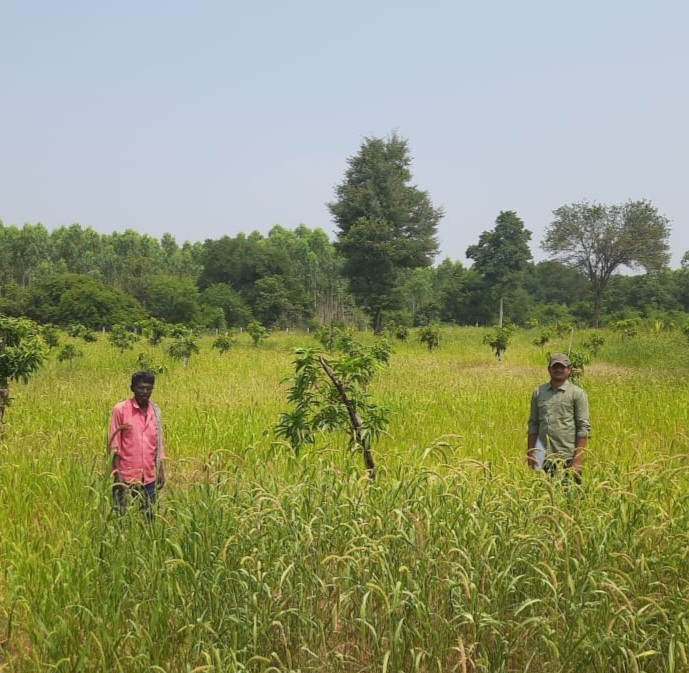
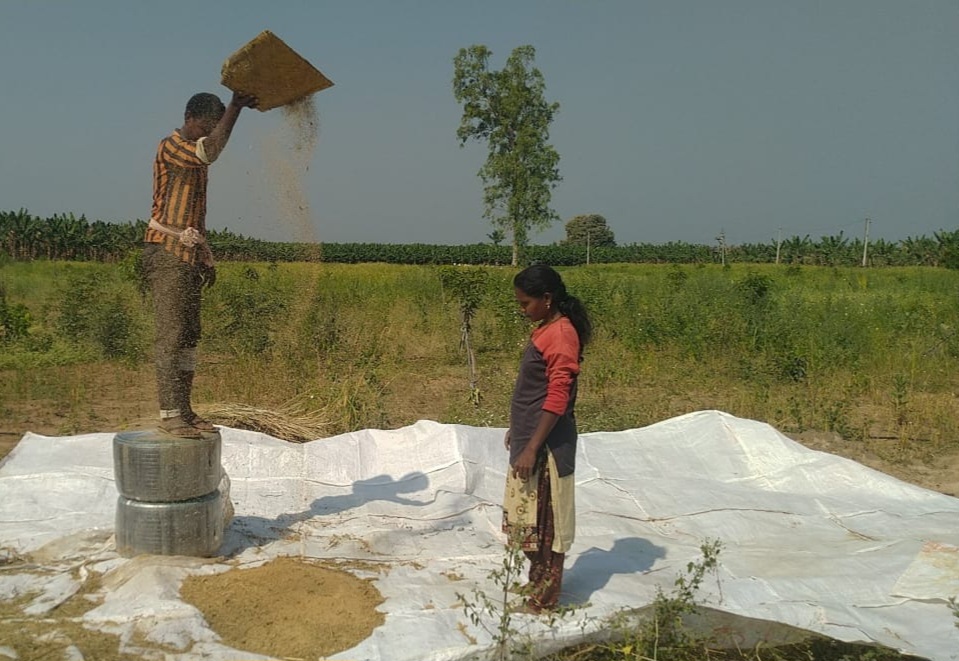
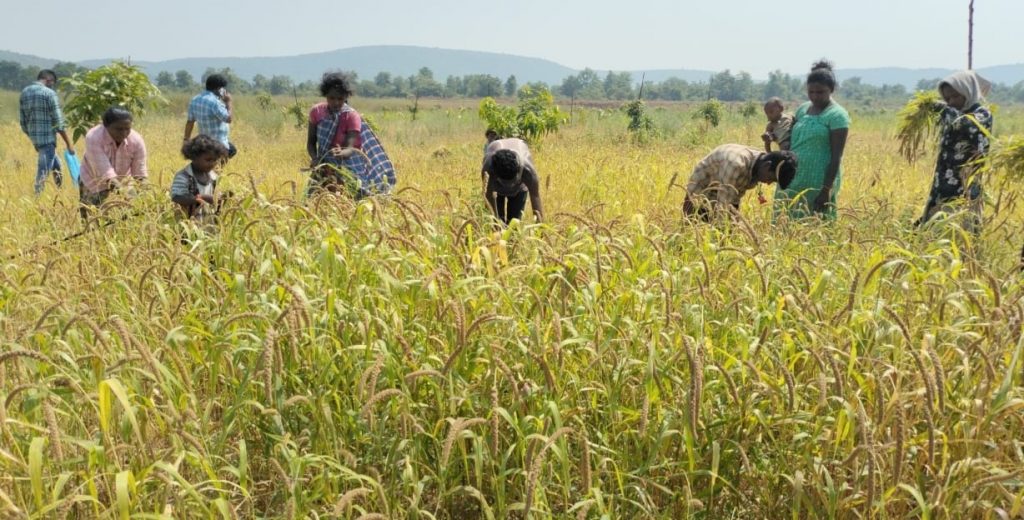
At present, many Chenchus cultivate red gram, millets and black gram under rain-fed cultivation on the lands they received after relocation. However, according to Reddy, a few of them still struggle to cultivate their lands.

Apart from farming, the Chenchus also carry out manual labour under MGNREGA and sometimes venture inside the forest for bamboo collection for making mats. Many also gather the nannari, a kind of root, and sell outside. However, digging for the root is a seasonal activity and lasts from January to June. Though most villages have been relocated, there are a few Chenchu villages still inside the forest.

Reddy admitted that a few Chenchus work in the Nagarjunasagar-Srisailam Tiger Reserve. But he pointed out that they are paid minimal wages due to being engaged in low-level jobs. 

A vulnerable community

The total population of Chenchus stands at 27897 (6912 families). There is a high rate of malnutrition among this primitive tribal community and its health status has not been studied well.

The Chenchus are one of the most vulnerable tribal groups among the tribes of Andhra Pradesh. The Integrated Tribal Development Agency was established at Srisailam in March 1976 with a focus on this community.

Neeraja Pasupuleti, an ethno botanist, has been researching on the Chenchus for a long time. She informed that the tribe is endemic to that region and not found anywhere else. “Their numbers are drastically going down. The tiger reserve is interfering with their lifestyle. They once depended on the forest for food as well as medicinal plants and herbs.”

As they are a nomadic tribe, the Chenchus prefer to live inside the forest. “From the side of the university, there is a plan to train them in the cultivation of rare and endangered medicinal plants.” Pasupuleti teaches at the KVR Government Degree College for Women based in Kurnool district.

The Chenchus symbolise the harmonious co-existence of humans in the midst of nature. According to Pasupuleti, the Deva Chenchus are not willing to come out and want to carry on living inside the forest. Many of them extract honey and walk for 30 km inside the jungles. Pasupuleti is also fascinated by their deep traditional knowledge system, especially the way they protect themselves against snake bites.

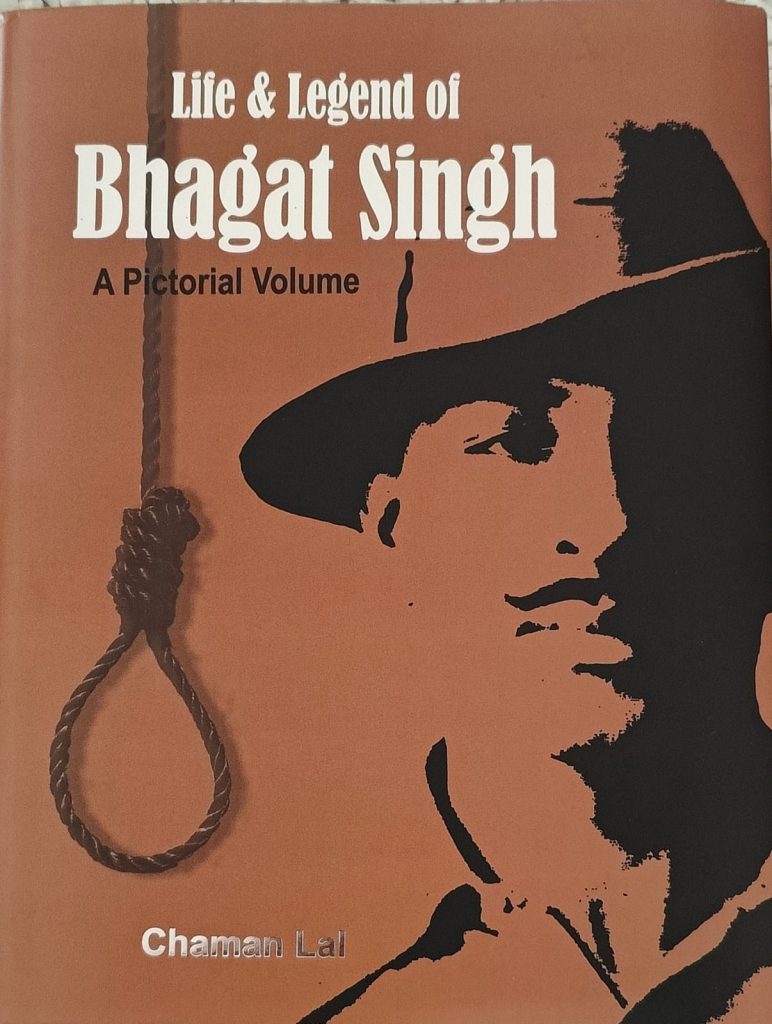
Photos add charm to Chaman Lal’s latest offering on Bhagat Singh

Professor Chaman Lal has been writing ever so consistently on the life and times of Bhagat Singh. “Continuing my career in Hindi literature from a school Hindi teacher to Professor in Hindi Translation in JNU, apart from writing and translating books of literature, Bhagat Singh remained my passion,” says the author.  A book review by Humra Quraishi.

Title– Life &Legend of Bhagat  Singh – A  Pictorial  Volume

Author –  Chaman Lal

Publisher – Publications Division, Ministry of  I&B, Government of India

Pages – 212

Price  – Rs  895

Professor Chaman Lal has been writing ever so consistently on the life and times of Bhagat Singh. This latest book from him has the added advantage of relevant photographs to go along with the prose.

And when I’d queried:  What’s drawn him to Bhagat Singh in such a  consistent  forceful way, to be  writing book after book on him, he states, “I am a student of literature, starting with Prem Chand’s Godan from 1964. In the process of reading literature, especially novels, I came across a book by Manmath Nath Gupta on revolutionaries, which absorbed me so much that I translated that book into my mother tongue Punjabi, which was serialised in legendary Ghadratie Baba Gurmukh Singh Lalton edited Desh Bhagat Yaadan. Continuing my career in Hindi literature from a school Hindi teacher to Professor in Hindi Translation in JNU, apart from writing and translating books of literature, Bhagat Singh remained my passion.”

Then he  goes  on  to detail,  “ Starting with Bhagat Singh aur Unke Sathiyon ke Dastavez, edited along with Bhagat Singh’s nephew Jagmohan Singh in 1986, which was published by the most sought publisher Rajkamal, it became an instant hit and continue to be so in the last four decades. My interest was more in the writings of Bhagat Singh, which reflected his advanced intellectual personality than in narrations of his bravery and fearlessness, which made him the most popular and loved icon of Indian people from right to left orientations. After joining the JNU faculty in 2005, getting more frequent access to the Nehru Memorial Museum and Library (NMML) and the National Archives of India, the richest sources of history of the freedom struggle of India, I focussed more on searching and collecting materials on Bhagat Singh’s ideological moorings through his own writings and through memoirs of his comrades…By now out of 65 publications in my name, including some translations of my works mostly on Bhagat Singh; of literary criticism, editing, and translation of literature, 25 relate to Bhagat Singh and other Indian revolutionaries. Since I wished to bring Bhagat Singh’s intellectual and ideological personality through his writings, not only throughout India but even to the whole world, apart from writing in Hindi and Punjabi(my mother tongue), I took to writing in English. I am happy that I have succeeded in it too. My English-published Jail Notebook and other writingsUnderstanding Bhagat SinghThe Bhagat Singh Reader (Published by Harper Collins in 2019) and now the latest Life and Legend of Bhagat Singh, published by the Publication division of India to mark the 75th anniversary of Indian independence, called Azadi ka Amrit Mahotsav, has come out.”

MOST POPULAR

HOT NEWS