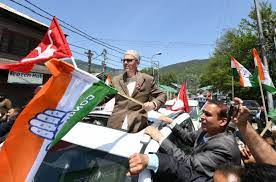
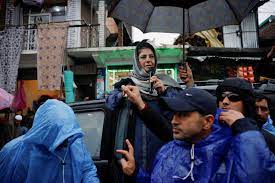
However, the absence of a boycott call does not guarantee a high voter turnout in the Valley as the poll boycott has become a default response among a significant section of people, particularly in urban areas. The over three-decade old habit may not go away easily. A report by Riyaz Wani
The ongoing parliamentary elections in Jammu and Kashmir are witnessing a notable omission: there has been no call for a boycott of the exercise from any quarters. This marks a significant departure from the norm established since the beginning of the separatist struggle in 1989.
Kashmir’s chief cleric and Hurriyat chairman Mirwaiz Umar Farooq – the only major separatist who is now out of jail but often confined to his home – has refrained from issuing a boycott call for the elections, unlike in the past.
“The government of India made drastic unilateral changes and complicated the dynamics of the Kashmir issue in 2019. In the changed circumstances, issuing a boycott call does not seem to carry the sense or yield the impact like in the past,” he said in a recent statement.
He also clarified the Hurriyat’s stance on elections, saying it never had reservations about the idea of elections.
“Constituents of the united Hurriyat did participate in elections held before 1990,” he said while reiterating his objections to the “misrepresentation” of these elections by the government of India in the context of the Kashmir conflict.
However, the absence of a boycott call does not guarantee a high voter turnout in the Valley elections. The reason is that the poll boycott has become a default response among a significant section of people, particularly in urban areas. It is an over three decade old habit which may not go away easily.
Since the early nineties, separatists have championed the boycott of elections, although this trend has seen diminishing returns over the years. The urban areas still witness significant boycotts but the rural areas generally experience higher voter turnout.
The question now arises whether people in cities and towns will vote in large numbers in the absence of a public boycott call. Many may still choose to boycott, driven by emotions or a belief that casting a vote is a betrayal of the Kashmir cause.
Moreover, generations of people in the Valley have grown up boycotting elections, and the culture is so deeply entrenched that it may be hard to shake it off, particularly in urban areas. The exercise remains deeply stigmatized for many, and others simply have no prior experience of voting.
Fallout on outcome of polls
Election boycotts have often profoundly impacted the electoral exercise in the Valley. There exists a dormant separatist voter base that, if mobilized, could significantly favour a candidate with a strong pro-Kashmir stance. However, if this constituency chooses to abstain from voting, the outcome becomes unpredictable. In such a scenario, even a candidate with little political influence could secure victory. Over the past three decades, there have been numerous instances where candidates with minimal support won elections by narrow margins, subsequently assuming prominent government positions. Should the anticipated voluntary boycott occur, this precedent might very well repeat itself.
The outcome of the ongoing exercise could be determined by the percentage of people who choose not to vote. If there is a wider boycott, the result could be distorted, potentially favouring an unpopular candidate.
Debate over boycott
The debate about whether boycotting elections by the separatists was the right strategy is not new and has been discussed within separatist ranks for years but without a resolution. While moderate separatists, such as Mirwaiz Umar Farooq, have often chosen to distance themselves from the electoral exercise, hardliners have continued to advocate for a boycott.
The upcoming election will be crucial for cities like Srinagar, which have consistently boycotted polls since 1987 Assembly polls which were widely perceived to have been rigged. The city has been in a limbo ever since. Though there has been an occasional furtive urge to re-assert its electoral power, Srinagar is still a long way off from political participation.Whether this election will bring about a change in political participation in the city will be a development of profound significance.
This is true of the larger state of affairs in the Valley. Although there have been unprecedented changes in the region in the past five years, such as politicians campaigning deep into Srinagar’s interiors, active political participation remains elusive. Kashmir may have changed beyond recognition in recent years, but it is also true that much of this change is not organic but forced and could easily unravel.
Absence of Article 370 as an issue
Another issue that has been largely absent from the electoral scene in Kashmir is the abrogation of Article 370 in August 2019. Though the revoked constitutional provision looms large on the politics of the region, it hasn’t commensurately figured in the election campaign of any party, even that of the NC and the PDP. However, the PDP has been vocal about the loss of the former state’s identity, jobs and resources as well as fear of demographic change.
“This election is not about building roads or water and electricity supply. This election is about safeguarding the identity of Jammu and Kashmir, its youngsters and their dignity, and saving Jammu and Kashmir’s resources,” the PDP chief Mehbooba Mufti told reporters during one of her election outings.
Similarly Abdullah has generally skirted the issue but in his interviews he has termed the election as a sort of referendum on the justification or lack thereof of the revocation of Article 370.
“In this election, we have to answer just one question: Whether the decision taken on August 5, 2019, was right or wrong,” said Abdullah. “Don’t vote for the National Conference if you feel the decision was right. Don’t vote for us if this decision has changed your lives for the better.”
He, however, added: “Vote for us if you feel deceived and there is a sense of injustice after August 5, 2019”.
BJP affiliation as a stigma
One of the most conspicuous electoral issues in the Valley is the stigma associated with a party’s association with the BJP. The NC and the PDP have been accusing the People’s Conference, Apni Party led by Altaf Bukhari and the Democratic Progressive Azad Party led by Ghulam Nabi Azad as being “proxies” for the BJP. Omar has been at the forefront of this allegation. He, in fact, has even called the PDP as the BJP proxy.
“The Home Minister said that they are not in a hurry for the lotus to bloom in Kashmir; that means they are supporting the B and C teams,” Omar said, with B and C teams implying the Apni Party and the People’s Conference. “Their leaders come to Srinagar, where do they go and who do they meet; that should be enough to understand that they are in the contest, but they will not use their symbol; it will be apple, bat, but that will be BJP.”
The People’s Conference and the Apni Party have unsuccessfully tried to dispel the impression that they are allied to the BJP. But if the perception catches on among people, it could severely affect their electoral prospects, something that Omar is banking on to ensure the NC’s win in the Valley.
With polling yet to take place in 18 of the 22 Lok Sabha constituencies where AAP is contesting election as part of INDIA bloc, the court order to grant interim bail to Delhi CM Kejriwal to enable him to campaign has come as a shot in the arm for the party. A report by Mudit Mathur
Brushing aside the strong objections raised by Enforcement Directorate, the Supreme Court finally granted interim bail to Delhi Chief Minister Arvind Kejriwal, who is imprisoned in connection with Delhi liquor policy scam case, allowing him to do campaigning for his Aam Aadmi Party in Lok Sabha polls till June 1st, 2024 but with certain restrictions imposed on him. He will have to surrender on the 2nd of June, 2024 after the last phase of polling.
The court order came as a shot in the arm of the Aam Aadmi Party (AAP) which was anxious about the prospects of its leader Kejriwal leading the party’s poll campaign. The court verdict has re-energized the party cadre in Delhi and Punjab where the polls are due to be held during the sixth and seventh phase respectively. Polling is yet to take place in 18 of the 22 Lok Sabha constituencies that the AAP is contesting as part of INDIA bloc.
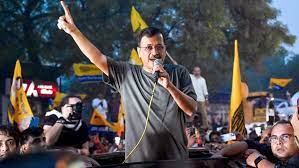
Delhi Chief Minister Arvind Kejriwal came out of Tihar Jail seconds before 7 pm on Friday after spending around 50 days in custody in an alleged case of money laundering linked to the now-scrapped Delhi excise policy. “I am feeling very good being here. I had said that I would return soon; so here I am,” Kejriwal, clad in a grey T-shirt, said while addressing the cheering party workers. While thanking Lord Hanuman, Kejriwal announced that he would visit Connaught Place’s Hanuman Temple for the god’s blessings.
In his first reaction just after coming out from prison, Kejriwal said, “Hum sabko mil kar desh ko taanashahi se bachana hai, (We all have to unite to save the country from dictatorship)”. “Main tann, mann, dhan se lad raha hoon, sangharsh kar raha hoon, taanashahi ke khilaaf. Lekin 140 crore logon ko taanashahi se ladna padega,” (I’m fighting against dictatorship with all my might, but 140 crore people will have to do the same),” he added.
Earlier in the afternoon, the Bench comprising Justice Sanjiv Khanna and Justice Dipankar Dutta directed his release on following terms and conditions: (a) he shall furnish bail bonds in the sum of Rs.50,000/- with one surety of the like amount to the satisfaction of the Jail Superintendent; (b) he shall not visit the Office of the Chief Minister and the Delhi Secretariat; (c) he shall be bound by the statement made on his behalf that he shall not sign official files unless it is required and necessary for obtaining clearance/approval of the Lieutenant Governor of Delhi; (d) he will not make any comment concerning his role in the present case; and (e) he will not interact with any of the witnesses and/or have access to any official files connected with the case.
Arvind Kejriwal had challenged his arrest by the Enforcement Directorate (ED) on March 21 in the Delhi Liquor Policy case. He filed a Special Leave Petition (Criminal) before the Supreme Court in April this year after the dismissal of his petition by the Delhi High Court on April 9.
Senior Advocate Abhishek Manu Singhvi made arguments on behalf of the AAP chief and questioned the necessity and timing of his arrest. When the matter was heard on the next day, i.e April 30, Singhvi alleged that ED withheld the material favouring Kejriwal.
While Singhvi concluded arguments on 3rd May, the ASG began leading the arguments for ED. Anticipating that the hearing might not conclude anytime soon, the bench put the ASG on notice that it may hear him on the question of Kejriwal’s interim bail given the Lok Sabha elections. The court posed five queries to ASG SV Raju, appearing for the agency, which were sought to be answered by him on May 3.
During the hearing, Justice Khanna asked Raju as to what was the first occasion when Kejriwal’s name came up during the recording of statements. In response, Raju referred to the statement of Buchi Babu made on February 23, 2023. The same was however countered by one of the counsels appearing for Kejriwal, pointing to the statement of C Arvind made in November/December 2022.
At a later point during the hearing, when witnesses’ statements were being read out by ASG Raju, Justice Khanna observed: “This will show the earliest moment in time you came to know about Kejriwal’s involvement was 12.11.2022”. He questioned the ASG as to why the agency delayed the investigation when Kejriwal’s name came up much before the date of his arrest.
Justice Khanna also criticised the agency for taking two years to investigate the case. “It is not good for an investigating agency to say that it took two years to unearth a controversy,” he observed. Justice Khanna also made it clear that the bench was not inclined to allow Kejriwal to attend office and sign official files if he got released in the interim because of Lok Sabha elections.
In response, the senior counsel Singhvi offered an undertaking on behalf of Kejriwal that he would not sign any official files, subject to a condition that the Delhi LG does not stop official work because the CM has not signed the file.
The Additional Solicitor General SV Raju argued on behalf of ED. Solicitor General Tushar Mehta supplemented Raju and was countered by Senior Advocate Dr Abhishek Manu Singhvi on behalf of Kejriwal. These counsels cumulatively addressed the court on the question of interim bail for Kejriwal for about an hour.
Soon after the news spread about the interim bail granted to Delhi Chief Minister Arvind Kejriwal, the AAP workers immediately stopped their campaign programme and started assembling at the party headquarters. While Delhi and Haryana are going to vote on May 25 in the sixth phase, Punjab goes to polls on June 1, the day Kejriwal’s interim bail expires.
Polling is yet to take place in 18 of the 22 Lok Sabha constituencies, where the AAP is contesting. It comprises four in Delhi, 13 in Punjab, and one in Haryana. As Kejriwal headed home after leaving Tihar jail, he addressed the jubilant party workers who had assembled in numbers.
Punjab has been the main focus area after Delhi for Kejriwal and his Aam Aadmi Party. It is one state where AAP is contesting the maximum number of seats and not in alliance with the Congress. Punjab Chief Minister Bhagwant Mann, who has been holding the fort in the state, rushed to Delhi to meet Kejriwal, who campaigned for his party candidates in Delhi a day after he was set free by the court.
The senior leaders of AAP have centred their campaign so far on how vindictively the Modi government used ED and CBI targeting leaders of opposition parties including Kejriwal to discredit them before the masses and fabricating cases against them. Now, a vast perception change is expected in AAP’s favour.
AAP has gained immense sympathy among the people because of the arrests of its senior leaders Manish Sisodia, Sanjay Singh and Kejriwal. Now, after Sanjay Singh, Kejriwal is set to campaign in the remaining phases of Lok Sabha polls along with other leaders of the INDIA bloc about the dictatorial behaviour and unfairness of this present government.
Reacting to the interim bail granted to Kejriwal, senior BJP leader and party national executive member Vinay Sahasrabuddhe put a question mark on the court’s motives. While talking to a national daily newspaper, he remarked, “Lordships made themselves part of the campaign. By picking a side right in the middle of elections, the lordships that be have made themselves a part of the campaign. When the billion ballots speak, they may not like it!”
Now it is to be seen how voters respond to the cries of ‘victimhood’ being made by the AAP leaders including Kejriwal.
The EAM has said that although the Canadian government had informed them about the arrest of three Indians, Karanpreet Singh, Kamalpreet Singh and Karan Brar in connection with Nijjar killing case but it is yet to provide any “specific or relevant evidence”. A report by Pawan Kumar Bansal
Relations between India and Canada are at lowest ebb with India accusing the Canadian government of promoting anti-India activities from its soil. The present situation is a far cry from the days when a decade back, Prime Minister Narender Modi was welcomed in Canada by its government when he had visited Canada on invitation of Indians living in Canada.
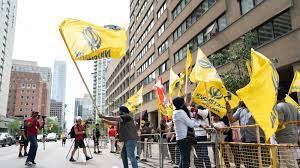
Relationship has been strained to the extent that Indian envoy in Canada, Sanjay Kumar Verma has warned that the Sikh separatists groups were crossing “a big red line” that India sees as a matter of national security and of the country’s territorial integrity. His warning came after the arrest of three Indian nationals accused of killing Khalistani separatist Hardeep Singh Nijjar. Political observers believe that both the ruling as well as opposition parties in Canada heavily depend upon support of pro-Khalistani Members of Parliament for their survival and hence they are supporting them. Ties between the two countries had nosedived when following the killing of Nijjar, the Canadian government blamed Indian agents for the crime.
On the other hand, External Affairs Ministry spokesperson Randhir Jaiswal has stated that although Canadian government had informed them about the arrest of three Indians, Karanpreet Singh, Kamalpreet Singh and Karan Brar for the murder of Nijjar but it is yet to provide any “specific or relevant evidence”.
The Canada police have charged them with first-degree murder and conspiracy to commit murder in the Nijjar case. Investigators have refused to divulge further information on the ground that it may impact the on-going investigation. What is shocking is the fact that investigators are blaming officials of the Indian government. Amandeep who has been arrested after the three others were held is accused of giving his places of residence at Brampton, Surrey and Abbotsford. The police said that the accused had entered the country on “student visas” but actually they were working on the directions of Indian Intelligence agencies which might have asked them to commit the murder.
Nijjar was killed at Guru Nanak Sikh Gurdwara. The Canadian Police believes that all the four accused were living as non-permanent residents in Canada for the last three to five years.
It may be recalled that Canadian Prime Minister Justin Trudeau has alleged that agents of the Indian government were involved in the killing of Nijjar. Randhir Jaiswal has said that we are convinced that “separatists, extremists and those advocating violence are being encouraged in Canada by the government.” Even Indian diplomats were threatened with impunity and obstructed from discharging their duties. Raising of pro-Khalistani slogans at the events in the presence of the Canadian PM has been taken very seriously in India as it encourages the anti-India elements and gives a clear message that the government is behind them. India is reportedly planning to keep the proposed trade deal with Canada in the cold storage until Canada stops encouraging anti-India activities from their soil.
Sources said that India would not tolerate any activities by pro-Khalistani elements in Canada and use all diplomatic channels on international platforms to check it.
A large number of residents of Punjab, Haryana and other parts of the country are living in Canada for the last several years as bonafide citizens and they are working as professionals and successful businessmen. The recent spurt in the activities of pro-Khalistani and anti-India forces have added to their worries as they feel that in future these elements will target them. A large number of Sikhs living in Canada do not support the activities of these elements but they are not in a position to oppose them considering their clout in the Government.
Haryanvis living in various parts of Canada have formed a group called “Haryanvi Bhaichara group” in which they keep on raising their apprehensions.
Meanwhile, the Indian government is still waiting for evidence to be provided by the Canadian government to buttress their claim that India was behind the killings. There is a feeling in India that due to political reasons, the Canadian government is unnecessarily blaming the Indian government for the killing of Nijjar. The Indian Government will react to the allegations of Canadian Police about its role in the killing of Nijjar only if the Canadian government provides evidence to support its charges.
While the issues raised by PM Modi in the recent weeks have not resonated with the voters, his charisma is also not working the way it did in 2019. The INDIA bloc led by Congress, on the other hand, has countered him with a more focussed and sustained approach. A report by Mudit Mathur
The changing narratives of Prime Minister Narendra Modi have not served the BJP’s cause after his high-profile take-off of the ambitious campaign. Focusing on his pledge to offer a “Viksit Bharat” (Developed India) he sought to turn a blind eye to the burning public issues that India faces today relating to unbearably high prices of essential commodities, farm stress, and the unprecedented levels of unemployment. His misdirected campaign has put him on the back foot on many counts giving an edge to his rival Congress-led INDIA bloc. The flickering narratives that Modi has raised in recent weeks have not resonated with the voters and his charisma is also not working the way it did in 2019.
His transitory perplexed narratives not only failed to set the nationwide tempo of BJP but sustained self-inflicted injuries, that failed to lift the mood of the nation like his slogan ‘AchcheDin Aane Wale Hain’ once did even as the INDIA bloc led by Congress countered him with a more focussed and sustained approach. The Congress manifesto talks about the poor and oppressed sections of society with affirmative action, committing welfare socialism to help women, youths, farmers and labourers.
The Congress party raised the issue of black money through the electoral bonds scheme introduced by the Modi government that was struck down by the top court for being unconstitutional. Unlawful collection of money from hidden conspicuous sources through high-level bureaucratic-political arm-twisting led to the enhanced scope of political corruption in the electoral bond scheme and deeply hurt the level-playing field for elections due to the flow of black money into the political arena.
Meanwhile, Aam Aadmi Party supremo and Delhi CM Arvind Kejriwal is hitting the streets of Delhi attracting large crowds after the Apex Court granted him interim bail and was released from the Tihar jail. Kejriwal’s release infused fresh life into AAP, whose top leaders were arrested one by one on the allegations of money laundering in liquor policy scam. After spending 50 days in prison, speeches of Kejriwal have created a political storm in the ruling BJP when he told people that Modi wanted to name Amit Shah as the prime minister after he attains the 75-year limit next year. Modi retired all the BJP senior leaders who had crossed 75 years. Modi remained tight-lipped and has not reacted to the barb as yet.
The latest PM’s salvo blaming his closest corporate aide Adanis–Ambanis for sending “tempos filled with black money in bags” to the Congress Party backfired as he has put himself in a dilemma. Targeting Rahul Gandhi, Modi said, “Congress Party’s Shehzada” had spent five years repeating the mantra “Ambani-Adani, Ambani-Adani” but stopped once the election campaign began. Why? He challenged Rahul Gandhi to declare how much money he had got from Messrs Ambani and Adani.
In his instant response, Rahul Gandhi uploaded a video saying that if the Prime Minister knew Mukesh Ambani and Gautam Adani were sending him bags full of cash, why had he not sent the ED and CBI to investigate? Valid question. Meanwhile, the Congress president put a mocking post on X about friends no longer being friends and how this was a sign of how the times were changing. All such calculations of Modi backfired and pushed him to the backfoot which is being perceived as the biggest success of the Opposition Bloc.
The fact of the matter revealed by the party claimed that Rahul had used Adani’s name 103 times after the campaign began and that proved that the Prime Minister got basic facts wrong. Everyone wonders what made him attack the two men who are supposed to be his closest friends. And what action does he plan to take against them now that he has charged them with sending bags filled with ‘black money’ to the Congress Party’s first family?
Modi’s unthinkable assertions badly exposed his failures and hollowness behind his resolve to bring back black money and the decision of demonetisation that unleashed unaccountable miseries on the common man, farmers, small and medium Industries, and small businesses resulting in huge unemployment and pay cuts. Modi never talks about demonetisation and its fallout. Similar has been his response to the Covid-19 crisis, when he declared an unplanned lockdown putting the common man and labourers walking barefoot from Mumbai their native villages thousands of kilometres away, and lakhs of people died due to a crumbled health system.
In the first phase, Prime Minister Narendra Modi offered his much-publicized vision of 2047 committing a “Viksit Bharat” (Developed India) with his big dream to rule India with a mammoth majority of over 400 seats but soon the dream seemed to have shattered after phase one. Modi adopted hardline communal polarisation soon after the release of the manifesto of the Congress party – not focusing on real issues that the country has been reeling from for the last decade since BJP came to power. He termed the Congress manifesto as an impression of the Muslim League which has been historically blamed for the division of pre-independent India.
Modi did not stop there. He launched a full-scale assault on the Congress at public rallies in Banswara and Jalore in Rajasthan where he said: “Congress is trapped in the clutches of the Leftists and urban naxals. What Congress has said in its manifesto is serious and worrying. They have said that if they form a government, then a survey of property belonging to every person will be done. It will be checked how much gold our sisters own; and how much money the government employees have. They have also said that gold owned by our sisters would be equally distributed. Does the government have the right to take your property?”
Soon, the speeches of Prime Minister Modi intensified around his new narrative losing focus on the “Viksit Bharat” (Developed India). After property, he targeted gold to mangal sutra,StreeDhan to houses. He alleged that “the Congress will seize them and distribute them to Musalmano, infiltrators, and people who have more children.” In another rally, PM Modi jumped to religion-based quotas and inheritance tax.
He even threw up new jargon of ‘inheritance tax on buffaloes’ and said that one would be taken away if a person owned two buffaloes. His utterances were aimed to polarise the electorate and consolidate the Hindu voters by tarring Indian Muslims as black sheep. After looking at the way the four phases of polling have gone, there seems to be no end to his uneasiness. Modi went to Ayodhya to pray once more at the Ram Temple and that seemed to have no resonance with voters.
Amit Shah, a trusted lieutenant of PM Modi, also stepped in to declare in an agitated tone at a public meeting that “Rahul Baba” should know that not even if his Nani came back into this world would she be able to stop the CAA. It appears that he thinks that amendment to the citizenship law is something that voters have any interest in. He also created hype about the Ram temple issue in his rallies but drew a cold response from the masses.
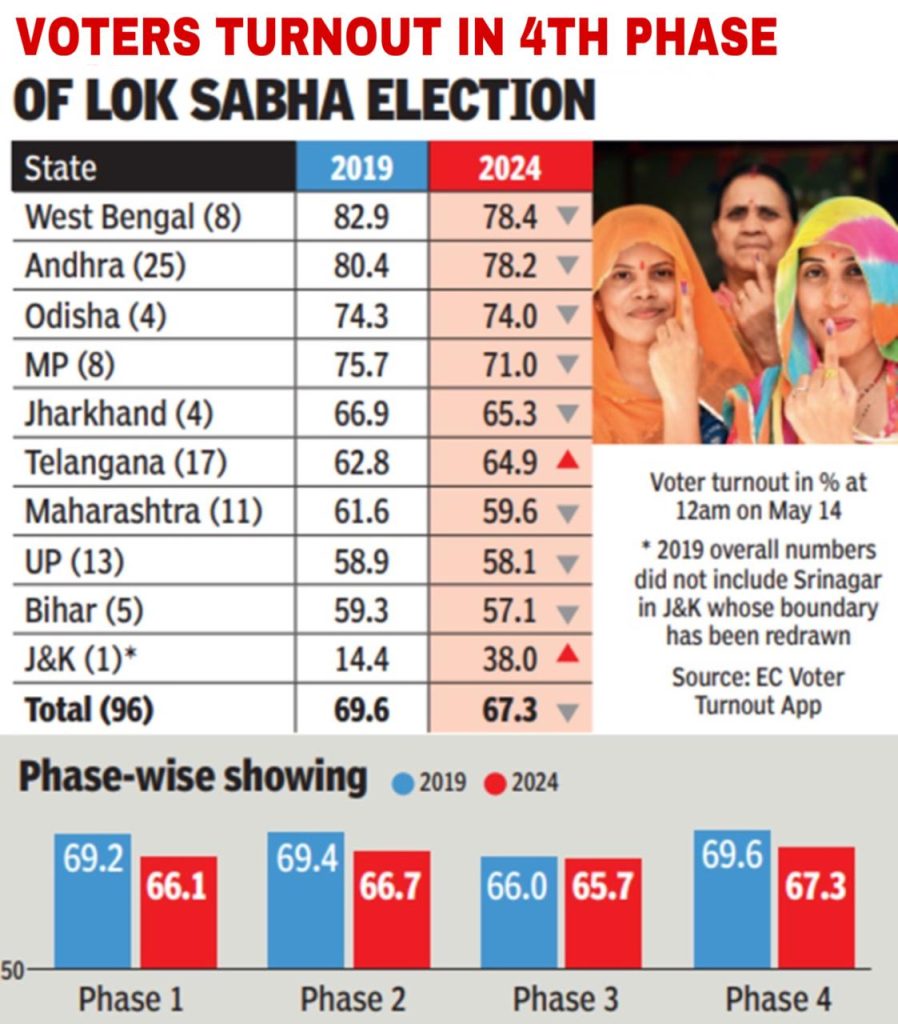
Four phases of polling were held covering 381 Lok Sabha constituencies out of 543 that witnessed not only lower turnout due to apathy of the voters but surprisingly, noticed a lack of enthusiasm among the BJP cadres who used to motivate voters to polling booths. As compared to the 2019 Lok Sabha elections, voter turnout of 69.2 percent and 66.1 percent polling took place this time. In phase 2, it was 66.7 percent as compared to previous figures of 69.4 percent. The third phase too witnessed a marginal downtrend of 65.7 as compared to 66 percent of the last tally. The trend of fourth phase voting was no different either as it was around 67.3 percent as compared to 69.6 percent polling in the last Lok Sabha elections. In scorching summer, people lose interest in inordinately long seven stretches of campaigning running six weeks and everyone starts running out of steam in terms of money and effective campaigning.
A Tehelka SIT report on voter data trading raises questions about the integrity of democratic processes, such as voting, and protection of citizens’ privacy.
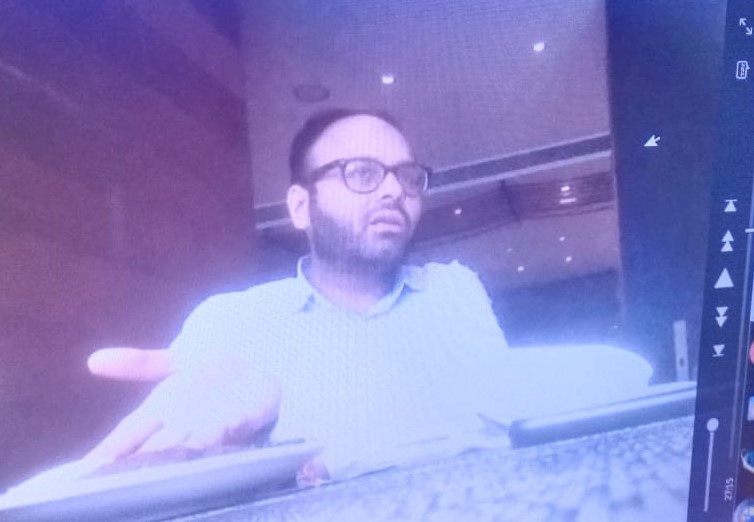
“I can provide you with personal data of the judges of Supreme Court, High Court and Lower Court. Additionally, I have data on lawyers, doctors, teachers, engineers, students, and corporate houses for the ongoing 2024 general elections. I’ve been in this business for the last 5-6 years. If you need data for 50,000 people from your constituency, the cost would be Rs 90,000. But before committing, I’ll provide you with a sample to verify the accuracy of my data,” said Animesh Kumar, a vendor working in a digital marketing company with its office in Noida.
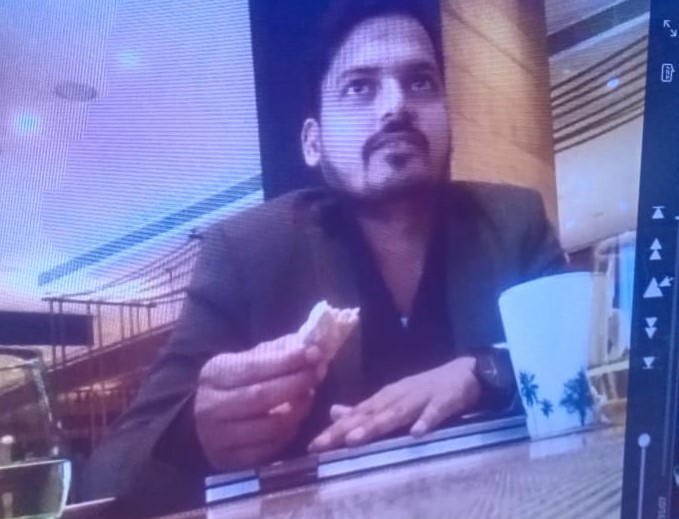
Animesh came to meet us at a five-star hotel in Delhi to discuss the voter data he can provide for our fictitious candidate contesting the Lok Sabha elections from Agra, Uttar Pradesh. In today’s political landscape, data is king—it can determine victory or defeat in any Indian election. We’ve all heard stories of voter data being sold to interested political parties and their candidates during elections. The on-going 2024 general elections are no exception. After the official announcement of the elections, vendors are back in the business, offering voter data to interested parties at a price.
As Tehelka embarked upon a much-needed investigation into vendors selling voter data for a price, we discovered, to our surprise, numerous vendors offering personal data of voters, complete with different packages that include mobile numbers, addresses, and names. Our correspondent, posing as potential client who is seeking digital company’s services for a candidate who will be contesting the 2024 Lok Sabha election from the Agra seat, met with Animesh. Animesh was introduced to us by another vendor, Niranjan Kashyap. Both Animesh and Niranjan work in separate digital marketing companies, but they met us in their personal capacities, and not as representatives of their respective firms. Animesh informed us that he manages personal clients who seek voter data in addition to his regular job.
Before delving into what Animesh and Niranjan offered us, let’s take a closer look at how significant the data-selling business has become in India, particularly during elections. In 2018, a controversy erupted in India when the UK-based Cambridge Analytica, a controversial data analytics firm, was revealed to have extensively worked for the Congress party in India, with Congress as its client. Whistle-blower Christopher Wylie made this claim while testifying before the UK Parliament. The political consultancy, as stated on its website, had worked on the Bihar assembly elections in 2010, and its clients secured a landslide victories. Fast forward to 2023, when seven individuals were arrested for stealing and selling personal data of 17 crore Indians in Hyderabad. Then, in January 2024, cyber security firm Cloud SEK revealed a startling fact: data of 750 million telecom users in India was being sold on the dark web. This breach included critical details such as names, mobile numbers, addresses, and Aadhar numbers. Even during last year’s Karnataka elections, a private firm in Bengaluru was found to be selling data of lakhs of voters to candidates in the fray. The Election Commission of India is actively investigating this case.
Now, coming back to Animesh, we told him that we need personal data of lawyers and the judges of supreme court, high court and lower court. He agreed to supply their data for the elections.
Reporter- Jaise maan lijiye hame wakilon ka data chaiye, judges ka ?
Animesh- Haan mil jayega total cheez ka.
Reporter- High court aur supreme court ke judges hain.. lower court ke..unka mil jayega ?
Animesh- Haan mil jayega
Reporter- Unki kya kya jaankari mil jayegi ?
Animesh- Jo cheez yahan par hai wahi mil jayegi
Reporter- Phone number, address..?
Animesh- Haan
Reporter- To aap data mujhe dogey kaise?
Animesh- Data hum excel sheet mein dengey..
[Animesh’s conversation with our correspondent indicates readiness on his part to provide a wide range of personal data, including information on lawyers and judges. His assurance that all required information will be available indicates depth of his access to the data.]
Furthermore, Animesh revealed that he can provide data on various professionals such as doctors, teachers, principals, students, and more. He specified that he would furnish a sample data-set for us to authenticate before proceeding with any transaction. Importantly, he emphasized that the individuals whose data he provides would remain unaware of its sale.
Reporter- To aise to aur bhi data nikal kar de dogey ?
Animesh- Haan
Reporter- Kis- kis ka data nikal saktey ho ye bata do?
Animesh- Jis-jis ka chahiye ho nikal saktey hain…marketing se related..har cheez ka data nikal saktey hain..engineer ka doctors ka total.
Reporter- Kitne doctors hai, hame mail bhejna hai..data mein unka kya kya mil jayega..
Animesh- Wahi email..
Reporter- Accha number wagera nahi milega?
Animesh- Number chahiye to one by one..find karna padega tab number hoga..naam, number, mail-Id, unka address.. sab..
Reporter- Nahi agar hum aapko ek contract de dein ki humko itne logon ka data chahiye aur data mein hame mail id chahiye, unka phone number.. mil jayega ?
Animesh- Haan
Reporter- Ye aap tie up karlo hamare saath.. Ab aap batao kis kis cheez ka data aap nikal saktey ho hamare liye…?
Animesh- Aapko kis kis cheez ka data chahiye..dekhiye koi bhi industry ho..for example doctors ka data ho gaya, school ka ho gaya, teacher ka ho gaya, hum pehle particular kuch samples aapko send karenge aap usko check kijiye.
Reporter- Hame aap schools ka de dijiye..wahan ke principal, teachers, bacchon ka..usmein unke ghar ke address, telephone numbers, unke mail id ..teen cheezein..
Reporter- Accha inka aap data nikalenge to unko pata to nahi chalega.?
Animesh- Nahi…abhi aap dekh saktey hain example aapko bhej rahe hain…nahi uske liye doosra tool hota hai…tool hota hai uske through humlog data detey hain..
Reporter- Theek hai
Animesh- Simple hai.. ya to hum aapko whatsapp kar denge ya inko share kar denge.. uske baad aap check kar lijiyega uske baad aagey phir…
Reporter- Iska kharcha kitna hoga ?
Animesh-. Ye sab cheezein dekhkar na, quotation hum aapko, kitna data chahiye, uske anusar hum aapako….pehle aap sample check kar lijiyega..uske baad confirm kijiyega.
Reporter – Matlab pehle aap sample bhejogey ?
Animesh- Haan hum aapko sample bhejengey.. usmein aapko check karna hoga.. data sahi hai ya nahi
Animesh- Jaise hum data nikale, HR ko share karenge usmein doctor ka hoga, usmein poora particulars hai ya nahi hai..wo aap google par bhi dalkar check kar saktey hain na..ussey aapko poora detail pata chal jaye..
[Animesh’s willingness to provide extensive data on various professions and his assurance of confidentiality raises serious ethical concerns. This conversation highlights the ease with which personal information can be accessed and traded, emphasizing the need for stringent regulations to protect individuals’ privacy and prevent misuse of their data.]
Expanding on his offer, Animesh informed us that he could supply data encompassing multinational companies, their employees, chartered accountants, GST registered offices, and more in the Uttar Pradesh area, where our supposed constituency is located.
Reporter- Accha ye to wo cheez ho gayi jo hame chahiye, iske alawa aap hame aur kaun kaun si cheez ka data provide karwa saktey hain ye bata dijiye, jissey mein unse pooch loon?
Animesh- Jo aapko chahiye iske alawa office staff ka ho jayega.
Reporter- Office staff ka?
Niranjan- Jaise companies ho gayi, MNCs ho gayi, jo companies UP side mein hain..jo employees working hain..
Reporter- Kis company mein kitne employee working hain unka data..
Niranjan- Employees ka ho gaya.. iske baad CAs ka.. GST registered office
Reporter- GST register matlab?
Animesh- GST registered office jo hota hai na un sabka data bhi aapko mil jayega….government data job hi hai, total cheez mil jayegi aapko
[The discussion reveals the extensive range of data Animesh can provide, including information on office staff, employees of companies, chartered accountants, and GST registered offices. His breadth of available data underscores the magnitude of information accessible through his channels, raising further concerns about the potential misuse of personal and corporate information. ]
Animesh also pledged to provide us with data from private banks, noting that accessing government bank data is challenging due to their tighter security measures compared to private banks. His explanation reveals the disparity in accessibility between government and private bank data, with government bank data being harder to obtain due to tighter security measures.
Reporter- Accha bank ka data mil sakta hai..?
Animesh- Bank ..haan.
Reporter- Govt, private dono ka?
Animesh- Government ka to nahi mil payega.. lekin private ka..
Reporter- Govt mein dikkat kyun..?
Animesh- Govt ka public domain mein nahi aata.
Reporter- Aisa kyun?
Animesh- Aisa wahan se band kiya jata hai.
Reporter- Private wale kyun nahi band kartey?
Animesh- Private wala apna saksham hai.
Reporter- Phir to private bank mein khata khulwana bekaar hai.?
[Animesh’s acknowledgment of the limitations in accessing government data underscores the complexities involved in sourcing certain types of information, highlighting the need for increased transparency and regulation in data handling practices within the banking sector.]
On camera, Animesh admitted to Tehelka that selling data is illegal and prohibited, stating that even obtaining data from Google is against the law. He bragged that despite the illegality, he has never been caught for selling data, emphasizing that nothing is private in actuality, as everything is available for sale.
Reporter- Data dena allowed nahi hai aisey.?
Niranjan- Nahi
Reporter- Illegal hai..?
Animesh- Aisey hi data bechne lage to..
Reporter- To aap ye Google se nikalogey to ye bhi to allowed nahi hai.?
Animesh- Allowed nahi lekin wahan se hamey mil jata hai..
Reporter- Kabhi koi dikkat to nahi aayi aapko, kisi ne pakad liya ho?
Animesh- Nahi aisa nahi hua
Reporter- Matlab koi bhi cheez jo hai hamari wo private nahi hai…har cheez bazaar mein bik rahi hai ?
Animesh- Haan
[The conversation with Animesh and Niranjan underscores the illicit nature of data selling as they acknowledged its illegality. Animesh’s admission that data can be obtained from sources like Google despite being unauthorized highlights the pervasive nature of data exploitation.]
Now, Animesh revealed that he has been involved in the data business for the past 5-6 years. During our interaction, he demanded Rs 90,000 from us in exchange for the personal data of 50,000 voters for the upcoming elections, reaffirming his involvement in the data-selling industry.
Reporter- Kitne time se aap ye data ka kaam kar rahe hain..?
Animesh- 5-6 saal se.
Reporter- Phir bhi ek idea kitna kharcha hoga..tentative ?
Animesh- Aapko kitna data chahiye..kareeb 1 lakh, 50,000?
Reporter- 50,000 mil jaye agar..dono ka bata do 1 lakh or 50 ka?
Animesh- Jaise 50,000 ka hai na to aapko 90 hazar ke as pass padega.
Reporter- 90 hazar..ek cheez ka?
Animesh- Nahi
Reporter- Sab ka ismein sab ka data hoga.. doctor, engineer, teacher?
Animesh- Haan- haan.
Reporter- Sari cheezein hongi total 90 hazar mein..to aapne data nikala hai pehle kabhi ?
Animesh-Yehi mein kaam karta hoon ji.
[The conversation with Animesh sheds light on his extensive experience in the data business spanning 5-6 years. His confirmation of providing data for a fee of around Rs 90k for Rs 50000 voters emphasizes the commercialization of personal information, highlighting the ethical and legal complexities surrounding data trading in electoral processes.]
Our investigation now shifts focus to a second character, Rohan Mishra, the co-founder of Tramt Technology Private Limited, a company established seven years ago with its headquarters in Noida. Tramt specializes in providing digital marketing solutions to businesses of all sizes. During our investigation, we received a call from Tramt inquiring about our purpose. Upon explaining that we were seeking brand building for a candidate contesting the 2024 General Election from Uttar Pradesh, Rohan, accompanied by his associate, Smita, agreed to meet us at a five-star hotel in Delhi.
During the meeting, Rohan assured us that he could procure data for the voters in our candidate’s constituency that was not publicly available. He specified that whatever data we required would be arranged for us, provided we informed him 24-48 hours in advance. Furthermore, he mentioned that the data would be handed over to us on a pen drive rather than being transmitted online.
Reporter- Accha kuch data hum log aapse purchase karna chahe, mil jayega?
Rohan-Mil jayega.
Reporter- Mil jayega..
Rohan- 24 to 48 hrs ka time dena padega…uska ek pen drive milega, online nahi milega.
Reporter- Accha aur kis level ka data mil sakta hai?
Rohan- Jo chahiye mil jayega..
Reporter- Matlab aisa data na ho jo easily available hai online
Rohan- Milega nahi.
Reporter- Wo nahi chahiye
Rohan- Nahi milega kahin nahi milega.
Reporter- kya cheez?
Rohan- Jo aap keh rahe ho market mein easily milega bhi nahi..
Reporter- Main ye keh raha hoon jo easily available hai online wo to hum hi le lenge..
Rohan- Phir mera kya kaam, hum wo hi denge jo nahi milega..
Reporter- Hame wo chahiye jo available nahi hai online.
[Rohan Mishra sounded sure footed as he assured us of providing data within 24 to 48 hours, emphasizing that it will be delivered on a pen drive rather than online. His preference for using a pen drive instead of an online delivery method is part of his risk mitigation strategy.]
Meanwhile, Rohan advocated for a controversial strategy, suggesting that the most effective method of promoting our candidate in the elections is by tarnishing the image of our rival candidate while simultaneously presenting our candidate in a positive light to the voters. He claimed that by the time the rival candidate becomes aware of our scheme, our objectives would have been achieved, with the Election Commission of India remaining oblivious to our actions
Reporter- Jo tareeka aapne bataya usmein best tareeka kaun sa hai.?
Rohan- Best tareeka wohi hai sir PR wala ek ko girao, doosre ko uthao..
Reporter- Kya bola aapne ?
Rohan- Ek ko neeche girao, negative bhi positive bhi sabse best ye hai..
Reporter- No 1 matlab jo saamne candidate hai ?
Rohan- Usko negative karo aur apne aap ko highlight karo.
Reporter- Ismein Rohan bhai ye bhi to ho sakta hai jab hum saamne wale ko negative karengey to wo bhi to hum ko kar sakta hai..?
Rohan-Jab tak pakdega, game khatam..
Reporter- Ismein thoda sa issue ye bhi ho sakta hai, EC ki guidelines hain. Fake news aur misinformation ke khilaf..usmein hum log na pakde jaaye to?
Rohan- Nahi pakde jayenge..isliye to mein pooch raha hoon kiske liye karna hai, apko idea mil jayega.
[Rohan’s non-chalant response regarding the potential repercussions from the Election Commission and the possibility of retaliation from the targeted candidate brings to fore ethical and legal concerns surrounding negative campaigning and misinformation in elections.]
At this juncture, Rohan confessed that he also dabbles in Artificial Intelligence (AI)-generated deepfake technology. He offered to make one deep fake for us, with the charges to be discussed later. However, he advised against opting for deepfake due to the inherent risk of detection.
Reporter- Aap deepfake bhi karwate hain kya?
Rohan- Deepfake mein aajkal pakda jata hai…pakde gaye na to aapke liye nuksaan hai..
Reporter- Matlab bann sakta hai?
Rohan- Kisi ka bhi bann sakta hai..
Reporter- Waise aap chaho to bana dogey, kitni der ka kaam hai..?
Rohan- Depend karta hai
Reporter- Charges?
Rohan- Bata dunga
[Rohan’s acknowledgment of dealing in deepfake technology gives credence to the ongoing debate over its potential for misuse and the risks associated with such manipulation. The need for vigilance and regulation in the realm of digital deception cannot be overstated.]
Once again, Rohan reiterated his offer to provide data for our voters, emphasizing that none of it is available online; instead, it is all obtained through clandestine means. He mentioned his capability to procure Aadhar data, which contains comprehensive details of cardholders. Rohan is of the view that our constituency required data for 10 lakh people.
Reporter- Data kahan se aayega..?
Rohan- Data mil jayega, Aadhar ka jo data rehta hai na, uska naam number uska address.. kitne number us Aadhar par updated hain, 4-5 number wo saare aapke pass aa jayenge..
Reporter- Aapke pass data hai ya aap kharidogey?
Rohan- Kharidenge, kisi k pass nahi hain..
Reporter- Matlab ismein to lakho mein chahiye hoga data.?
Rohan-Haan 10 lakh, 5 lakh, 7 lakh..
Reporter- Haan kyunki itni badi Lok Sabha constituency hai…
Rohan- Haan mil jata hai..
Reporter- Kuch aisa data bhi hai jo aapko online nahi milega.?
Rohan- Nahi mil jata hai, online kuch nahi milta..purchase karna padta hai backdoor se, uska tareeka hota hai..
[Rohan’s discussion unveils the clandestine nature of data procurement. His assertion that such data cannot be obtained online underscores the covert methods employed to access sensitive information, raising serious concerns about privacy and data security in electoral processes.]
As the investigation progressed, we encountered the third character in this story: Gaurav Maggo, the director of Seoage Digital Marketing Private Limited, headquartered in Dwarka, New Delhi. When we inquired whether he provided voter data, he explained that he purchases data from vendors and offered to connect us with these vendors.
Reporter- Aap data provide nahi karte?
Gaurav- Data hum log provide nahi karwatey.. mein arrange kar dunga..aap ussey baat kar lena..
Reporter- Matlab personal data mil jayega?
Gaurav- Mein aapko banda arrange kar dunga..third party hotey hain ye log.. hum bhi third party letey hain…mein aapko provide kar dunga,
Reporter- Kitna personal data mil sakta hai..?..
Gaurav- Ye to mere ko nahi pata..jo banda aayega, aap baat kar lena.
Reporter- Abhi tak aapne karaya to hoga
Gaurav- Sir dekho, hum deal nahi karte hum banda provide kartey hain.kyunki hum to services par hain insta services pe, in cheezon par jayenge to sara din kharab hoga.
[Gaurav reveals his role as a mediator in data procurement, as he emphasizes that he arranges for data through third-party vendors rather than directly providing it. His reluctance to specify the quantity of personal data available hints at the clandestine nature of such transactions.]
Gaurav now offered to provide us with contact numbers of 3-4 vendors who specialize in providing voter data. These vendors, he assured, would supply data pertaining to the voters of the Uttar Pradesh constituency from where our candidate is contesting.
Reporter- Kis level ka data hame mil jayega?
Gaurav- Sir aapko local chahiye hoga, elections ka wo to mil jayega, jo banda hoga wo hi aapse baat karega
Reporter- Wo Delhi ka hi hoga banda?
Gaurav- Sir depend karta hai.. UP ka bhi ho sakta hai..3-4 vendors hain hamare pass jo attached hain..un charon ka number mein aapko de dunga..
Reporter-Theek hai lekin Delhi mein meeting kar lega wo.?
Gaurav- Delhi mein meeting kar saktey hain.
[Gaurav’s assurance of connecting us with vendors who may be based in Uttar Pradesh highlights the importance of local contacts in accessing relevant voter data.]
As we draw to a close in this report, it is worth noting that Tehelka’s investigation into the sale of voter data marks a significant milestone in exposing the illicit practices surrounding electoral campaigns. The readiness of all three vendors to sell voter data without the consent of the individuals concerned highlights the urgent need for comprehensive data protection legislation in India. The absence of a Data Protection Bill underscores the gaps in regulatory frameworks, leaving individuals vulnerable to privacy breaches. While the prospect of a robust data protection law offers hope, the challenges of enforcement persist, emphasizing the ongoing struggle to safeguard individuals’ digital rights.
As elections evolve in the digital age, the unchecked proliferation of voter data trading raises serious questions about the integrity of democratic processes and the protection of citizens’ privacy. Our investigationhighlights the pressing need for policymakers to address these concerns and enact legislation that effectively safeguards individuals’ data rights while preserving the democratic fabric of the nation
A grandson of former PM Deve Gowda and the current MP from Hassan, Prajwal Revanna, faces a daunting road ahead as he grapples with severe accusations of multiple rapes. The scandal, which has rattled the state of Karnataka, poses a threat to the existence of JD(S). A report by Aayush Goel
Hassan, a quaint town in South Karnataka, has always been known as the epicentre of Janata Dal (Secular) growth and a testament to the giant strides former PM HD Deve Gowda had made. It is yet again in news and this time for alleged mass rape scandal involving grandson Deve Gowda, Prajwal Revanna, who is incumbent MP and the NDA candidate in the Lok Sabha election.
The scandal has rattled the state with political alleys rife with allegations and counter allegations. The Congress has trained guns on BJP and PM Narendra Modi. Rahul Gandhi has accused the BJP for not just seeking votes for ‘mass rapist’ but also allegedly letting him flee from the country on a diplomatic passport even as Prime Minister Narendra Modi has promised strictest punishment against anybody involved in such heinous acts committed regardless of his party affiliations and position. Prajwal, born on 5th August 1990, is the 3rd youngest MP in Parliament. He is the son of H.D. Revanna, former Minister for Public Works Department in Karnataka while former CM of Karnataka, H.D. Kumaraswamy, is his uncle.
H.D. Deve Gowda gave up his stronghold, Hassan district, for Prajwal’s debut into electoral politics and contested from Tumkur. In the 2019 general election, JD (S) contested 6 out of 28 Lok Sabha seats in Karnataka, with Prajwal emerging as the only winner. Today, Prajwal stands suspended from the party, being hunted by Interpol and Indian police. Meanwhile, as the political parties are fighting it out, the protests are gripping the state that awaits Prajwal’s return and Lok Sabha results. The victims are scared, scarred and stigmatised.
The scandal
The scandal which threatens to be a big blow to the political existence of JDS came to light on April 22 this year, four days before the constituency went to polls. It was the morning that residents started stumbling upon pen drives lying along the tracks of the district stadium, about 190 km from Bengaluru and in Maharaja’s Park in the heart of Hassan. As the day progressed it was raining pen drives in the city. People picked them out of curiosity and passed them on and when once downloaded they found sexually explicit video clips, photos and screenshots of video calls. Soon, this went viral. The women in the photos and videos were clearly visible, but the man was not. However, he could be seen partially in the screenshots of the video calls he made to the women.
There were at least two clips in which the women could be seen resisting the man’s advances and pleading with him even as he raped them while recording the act. Soon a word went around identifying the man as Prajwal Revanna. His father HD Revanna too has been accused of abducting one of the women in the clip. She was the same woman seen pleading in one of the videos. “Beda Anna, bitbidi (please brother, spare me),” she can be heard saying. HD is a former minister, and MLA of Holenarsipur, the home town of the Gowda clan.
The clips have opened floodgates with police estimates of victims being around 100 though so far only two have lodged complaints. Based on their complaints, Prajwal has been booked for rape in two cases. The first complainant is 44-year old JDS worker who alleged that Prajwal raped her at his official residence in Hassan when she had gone to meet him in 2021 seeking seats for some women students in a hostel. She alleged that the act was video graphed to blackmail her and they issued a threat to her life. The second complaint pertains to a former house help in the Revannas’ Holenarsipur household. A third FIR pertains to the abduction of one of these victims who was rescued by SIT (Special Investigation Team) from the farmhouse of the former personal secretary to Revanna in Hunsur, Mysuru. Prajwal’s father H D Revanna was arrested after the raid and now has been granted bail.
The investigations so far
Hassan went to the polls on April 26 and that was the last Prajwal was seen in public. The next day, he allegedly flew to Germany from Bengaluru, at 2 a.m. using his diplomatic passport. The Ministry of External Affairs (MEA) has issued a statement saying no political clearance was either sought from or issued by it in respect of travel of suspended JD(S) MP Prajwal Revanna to Germany. MEA spokesperson Randhir Jaiswal also said that no visa is required for diplomatic passport holders to travel to Germany.
Following a letter by the Karnataka State Commission for Women seeking a probe, the state government formed an SIT into the matter headed by Bijay Kumar Singh, a 1996 batch Indian Police Service (IPS) officer, who is Additional Director General of Police, Criminal Investigation Department. The SIT has since April 28 registered three FIRs. Amidst the demands to shift the probe to CBI, Karnataka CM Siddaramaiah has refuted the need saying he has faith in the SIT of the state police. The state government says Interpol has already issued a blue corner notice. Karnataka Home Minister G Parameshwara says that the SIT will not be going abroad to bring him back, and the Interpol will share information about him.
Meanwhile, in a new development, the National Commission for Women on May 10 said one of the woman complainants was forced to register a “fake case” against the Karnataka leader. NCW also added that the claims of 700 women submitting complaints against the JDS leader was false.
The politics
No matter what the outcome be, the scandal will cast its shadow on Karnataka politics for years and has put JD (S) very existence in jeopardy. The Congress has trained guns on the BJP. Former chief minister BS Yediyurappa has announced BJP-JD(S) alliance would remain unaffected despite the sex video scandal. JD (S) was formed in July 1999 after the split of Janata Dal. The party symbol, a woman in a green sari carrying a haystack on her head, has been converted to a meme with haystack replaced by pen drive. The lineage of the party patriarch, former PM and Rajya Sabha MP HD Deve Gowda has taken a blow and he has refrained from making any public appearances.
While NDA is accusing the Congress of fake propaganda, it was a local BJP leader and lawyer G. Devaraje Gowda who was the whistleblower for the case and had made first references to these crimes. He has been detained by police after being accused of sexual harassment and voyeurism, along with violation of privacy under the IT Act, by a woman. Devaraje, who had unsuccessfully contested from Holenarsipur against H.D. Revanna in 2023, is known for his scathing attacks against the Revanna family.
A letter written by him to BJP state president emerged where he had claimed that he had a pen drive containing 2,976 explicit clips of Prajwal and advised the State president not to field him as the NDA candidate. He also said a copy of the pen drive had been sent to leaders of the Congress, the ruling party in Karnataka. Two BJP workers have been arrested for circulating the clips.
A few farmers in the northern part of Bengal have shifted to tea from paddy to prevent elephant depredation. A report by Deepanwita Gita Niyogi
Across several villages of Jalpaiguri district in West Bengal, which lies in the beautiful Dooars region, elephant depredation is a major issue, keeping farmers on their toes. They are forced to guard their crops, especially paddy, from makeshift structures made of bamboo and wood.
Paddy is the dominant crop of West Bengal, favoured by fertile soil and adequate water availability. Its cultural significance in the state is also huge. The harvest festival of Nabanna, celebrated during November-December, is popular among paddy farmers.
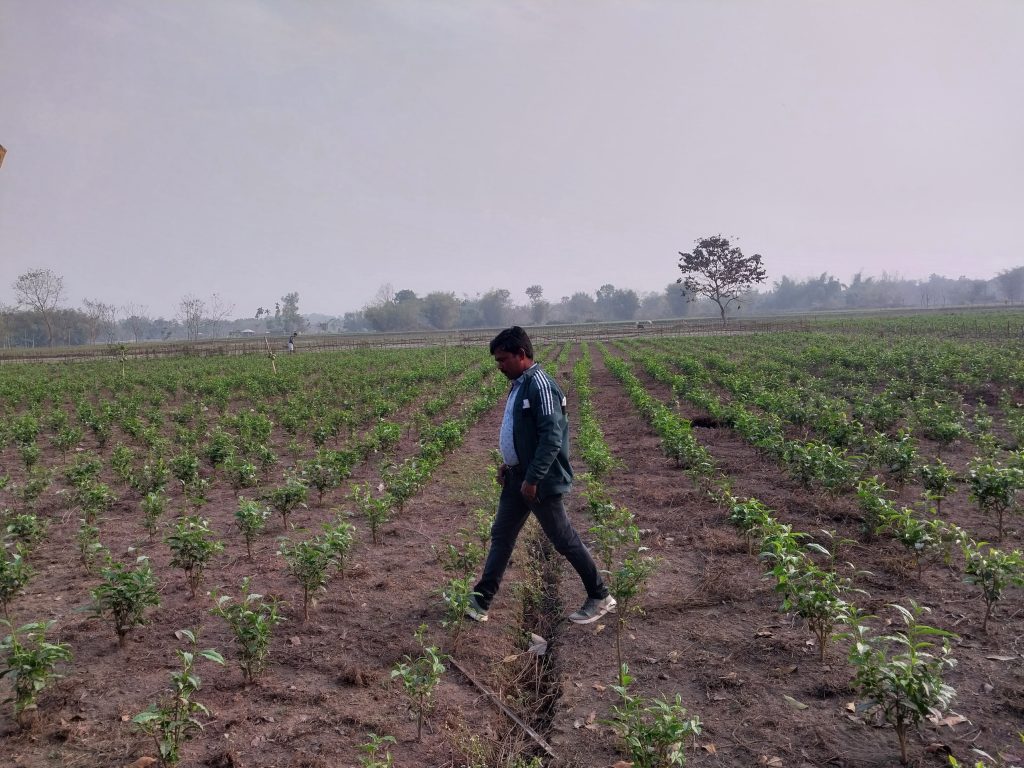
“Generally, farmers of my village Nodhabari and others nearby are used to paddy cultivation, but a few among us are now experimenting with tea. This is because elephants have a taste for paddy and often raid our fields,” farmer Lonkeshwar Ray said.
Shift towards tea
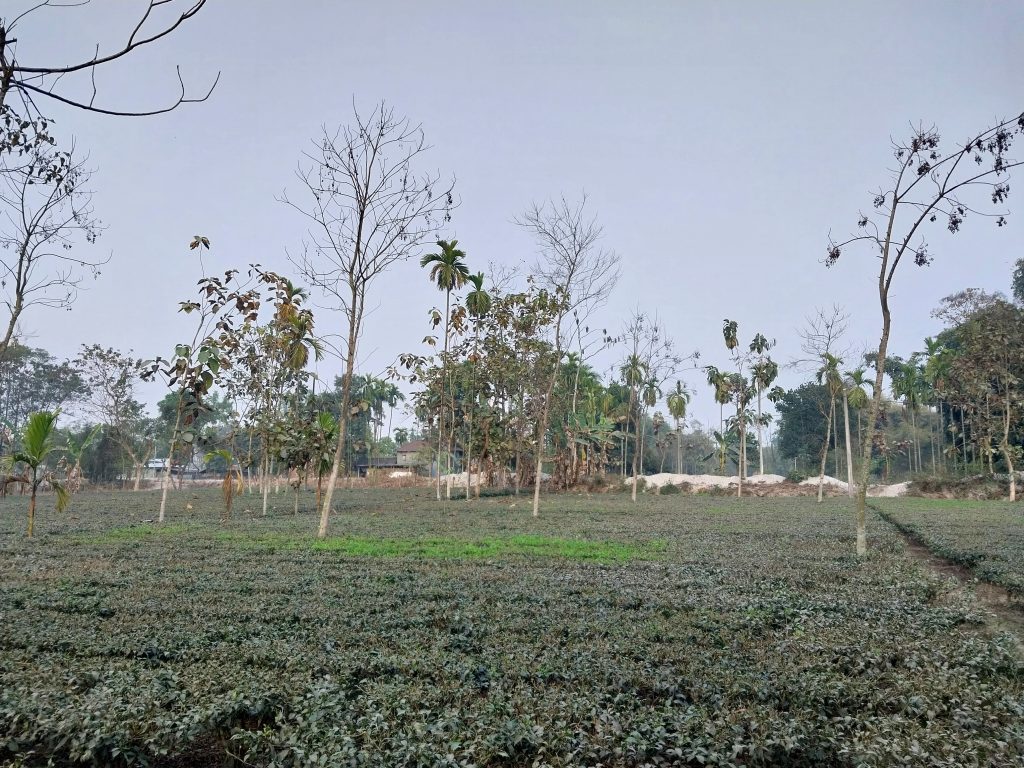
West Bengal forest department officer Chiranjit Paul explained that the cultivation pattern in many villages in this region is veering towards tea for protection from elephants, crop loss reduction and higher profits. “It is a major change, with approximately 50 to 60 percent of the landscape transformed in a few years.”
However, at times elephants also enter tea gardens for passage. This is because the entire north Bengal has become highly fragmented due to land use changes and developmental activities.
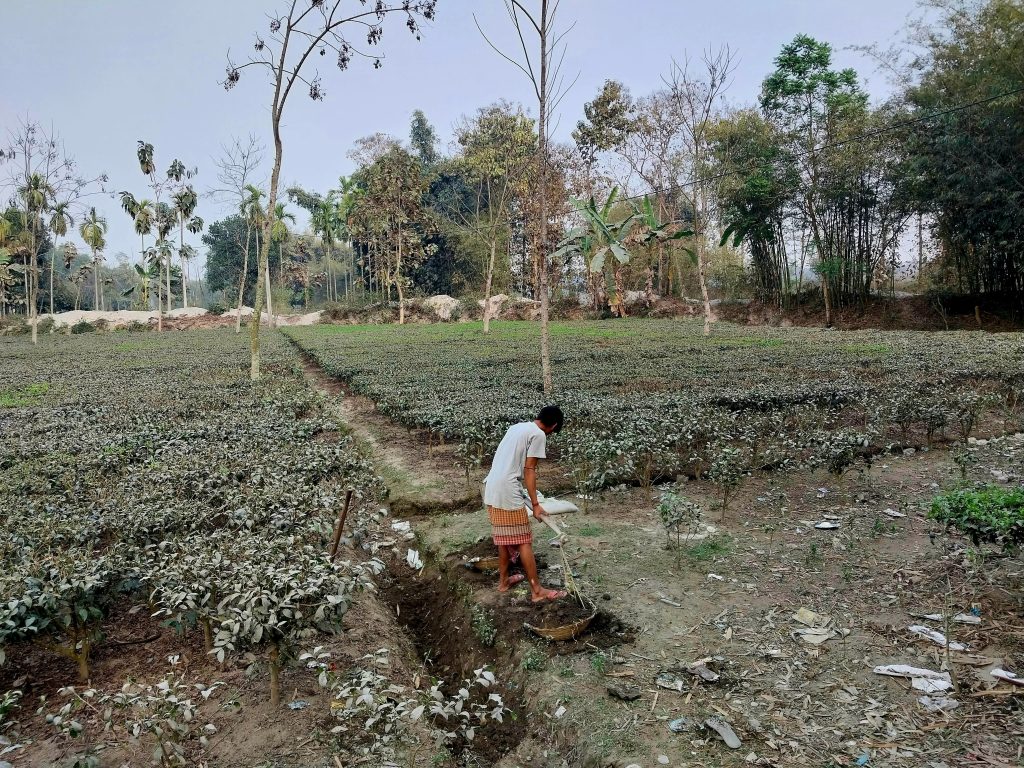
Lonkeshwar has started growing tea which is giving better profit compared to paddy cultivated twice a year. However, he admitted to facing water shortage in tea cultivation. Water is supplied through a canal from the Teesta river. His tea garden area is spread over a bigha (0.625 acres).
Nodhabari comes under the Belakoba range known for a high degree of human-elephant conflict. In another range called Diana, about an hour’s drive from Jalpaiguri district of West Bengal and close to the Bhutan border, forest ranger Ashes Paul too informed that elephant conflict is high.
In several villages in the Diana range, safety measures have been put in place. When the animals usually appear in the evening, special teams track them to ensure the safety of the local populace.
Regular awareness campaigns are organised in the villages that come under the Diana range. Solar fences and watch towers have also been set up. The total number of affected villages is 10-12, and of this, four to five are highly impacted.
Tea is the dominant crop in the entire Diana range. Here, nine to ten commercial estates span acres. “The forest department keeps a close relation with tea gardens who inform us about elephant movement. Estate managers help us to drive away the animals,” Paul added.
In the Diana range, there are three elephant corridors: Reiti-Diana, Moraghat-Diana and Gorumara-Diana. Due to human habitations, these corridors are conflict-ridden. Paul has deployed the Mumbai-based Spenta Aid Foundation to deal with the crisis.
“Though there are squads to handle any conflict situation, often reports of conflict pour in from two to three areas at a time. So, non-profits working here is a boon,” the ranger added.
Better profits
In a village called Shitaipara in Jalpaiguri, Rajesh Roy’s tea garden is spread over four bighas (2.48 acres).
Like Lonkeshwar, Rajesh is also a small-time tea grower. On an afternoon, he was spotted weighing tea leaves and loading them on a vehicle on the roadside.
“I get a good income from selling tea leaves. Paddy used to get me Rs 50,000 annually. In its place, tea ensures Rs 2 to 3 lakh a year.” It has been about two years since he has been growing tea.
But then Rajesh admitted that he was also somewhat forced into tea cultivation. “When other farmers converted their lands to grow tea, I too was forced into it due to the drains created for water flow and drainage. Paddy could not have been supported anymore as the land could not hold water.”
Along with Jalpaiguri, Alipurduar and Darjeeling are also famous for tea gardens. Many people in these districts situated in the northern part of West Bengal depend on the tea industry, either directly or indirectly. The first two districts are in Doors, the foothills of the eastern Himalayas.
Even though small-scale farmers like Lonkeshwar and Rajesh have switched over to tea, there are issues galore in the tea industry, especially the commercial estates.
A local source working with a non-profit explained that when tea gardens close, the income of families declines and workers are suddenly rendered jobless.
“Some borrow money, go abroad, work for a few years there and then return. There is migration, and with it, a disruption in the social order after the gardens close down. The daily routine breaks.”
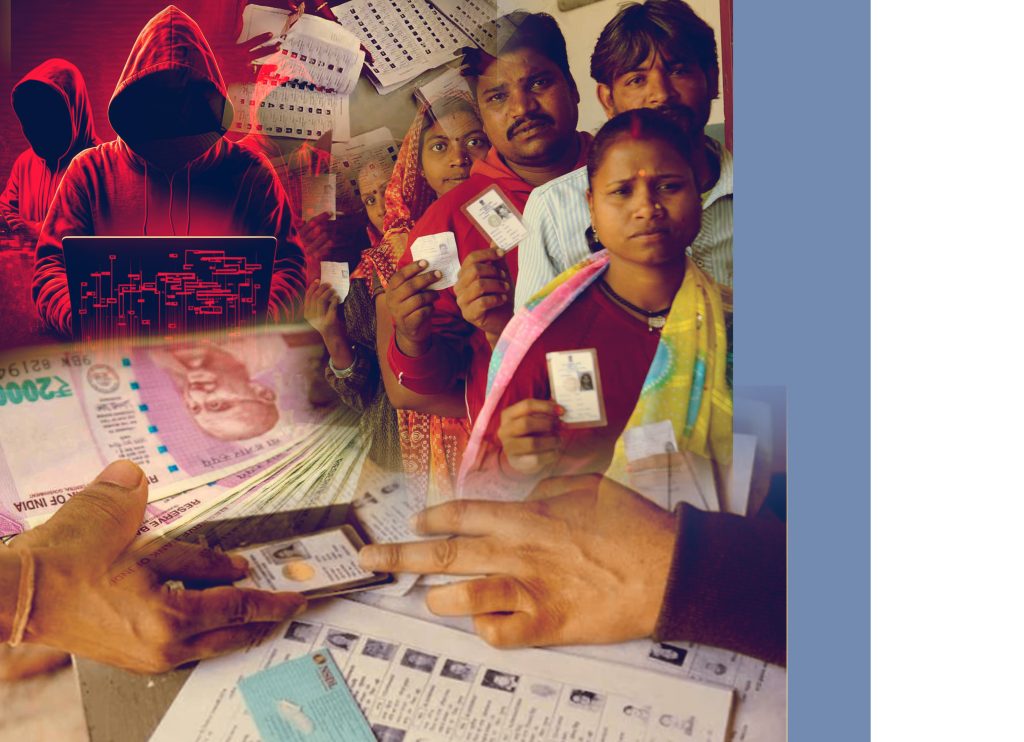
Come elections and hackers become active to steal voters data to sell it to political parties and candidates for a price! In March, a complaint was filed against a Hyderabad-based IT company which provides IT services to Andhra Pradesh’s ruling party to have stolen the data of 37 million voters from the state government database through an app. In January 2024, cyber security firm, Cloud SEK, made a startling revelation that data of 750 million telecom users in India was being sold on the dark web. In the infamous CoWIN case, there was an alleged breach of data of Covid vaccine recipients, prompting the government to initiate an in-depth inquiry. Rewind to 2018, the role of the UK-based Cambridge Analytica came under scanner when whistle-blower Christopher Wylie testified before the UK Parliament for extensively working for a political party in India.
Tehelka investigations reveal that unscrupulous firms and agents are engaged in the task of stealing personal voter data such as castes, contact numbers and complete profiles. Little doubt many voters keep receiving phone calls (not spam calls) with callers aware of personal details trying to hard sell a particular political party or a candidate in the fray. Significantly the voters data besides personal details includes political affiliations, voting history and demography for political parties to analyse voter behaviour to come up with specific strategies to woo them. The bulk data is sold to agents of political parties at a price and even the hackers take contract to send bulk voice, text and WhatsApp messages. There are companies that under the garb of providing service of psephologists for political PR,campaign management, digital services and election war room actually sell personal data of voters at a price.
Our cover story “Voter Data on Sale” raises questions about the integrity of democratic processes, such as voting, and protection of citizens’ privacy. When Tehelka Special Investigation Team approached one such agent working with a Noida-based digital marketing company, the person boasted during a meeting at a five star hotel in Delhi before a hidden spy camera that he “can provide even personal data of the judges of Supreme Court, High Court and Lower Court and also of lawyers, doctors, teachers, engineers, students, and corporate houses for the ongoing 2024 general elections at a cost”. Data is not only leaked from government websites but also from banks and telecom service providers. As we embarked upon the much-needed investigation into vendors selling voter data for a price, we discovered, to our surprise, numerous vendors offering personal data of voters, complete with different packages. The sale of voter data without the consent of the individuals highlights the urgent need for policymakers to protect digital personal data from potential misuse. Ensuring data safety and providing transparency ought to be the top priority for the government prohibiting public and private entities from collecting and using data of individuals without their consent.
The entire mission of the present day ruling lot seems to cause communal divides and strife between communities and hate for the other! One can well imagine the end result of this dangerous exercise By Humra Quraishi
Never before one heard such communal outpourings during electioneering …speeches of the political who’s who fitted with such blatantly communal provocative jumlas or those typical one-liners, that it got hard to digest. One had to vomit out all the obnoxious stuff that the ears heard!
We are reduced to such pathetic lows that the entire mission of the present day ruling lot seems to cause communal divides and strife between communities and hate for the other! One can well imagine the end result of this ever so constant vicious poisoning made to spread around, amongst the masses. Mind you, by the very rulers of the day!
Try and read these two books by academic Professor Rakesh Batabyal – Building A Free India: Defining Speeches Of Our Independence Movement that Shaped The Nation (Speaking Tiger, 2022) and also The Penguin Book of Modern Indian Speeches (Penguin,2007).
After reading these books, you’d realize what the political personalities of the years passed by, had stood for …their speeches were fitted with the much-needed and much-desired inputs to nation building, with nationalism at the very core. To quote from Building A Free India: “As the Indian independence movement progressed—from the economic critique of colonial rule by the early nationalists, to the unequivocal demand for Purna Swaraj and the immense moral authority of the Mahatma Gandhi-led resistance—the notion of an equal society that ensured dignity to all— irrespective of caste, class, gender or religion—came to occupy a central place in it. By the time, the Constituent Assembly met in December 1946, not just civil rights, but the particular rights of women, of minorities, of the Depressed Classes and the Adivasis were being articulated and demanded, not as favours but as a matter of course…the effect of the speeches delivered by the leaders of our national movement was to focus ‘political action towards scripting an ennobling nationalism that would give us a just and equal society…’ ”
Yes, those were or rather are landmark speeches by personalities such as —from Naoroji, Surendranath Banerjee, Bhikaiji Cama, Lajpat Rai and Tilak, to Gandhi, Nehru, Ambedkar, Bose, Sarojini Naidu and Maulana Azad and many such committed citizens of this country, who spoke ever so passionately and genuinely and earnestly about our welfare in the actual sense of the term, amidst a truly democratic framework where quality and justice and secure well-being would hold high.
Man-made disasters
Well, be prepared to witness the worrying aspects on the environment front. Dismaying and depressing to see the destruction of Nature and the connected offshoots.
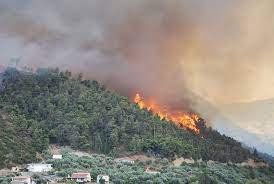
In these recent weeks as fire raged through the hills of Uttarakhand there seemed havoc spreading out. One can well imagine the plight of the tigers and rest of the animals and wildlife (human beings included!), surviving in and around the Corbett Park belt and far beyond. Not to be overlooked is this vital basic fact: according to latest estimates 44 per cent of the forest areas in Uttarakhand were affected by raging fires!
Surprisingly or not really, little focus on this man-made disaster. Nah, not even by those particular politicians who otherwise miss no opportunity having video films shot in and around tiger reserves…and coming out with stale speeches! It seems that all those utterances are reserved only for any of the hyped days! For the World Environment Day (5 June) or for the Earth Day (22 April) or any of the other hyped days. Otherwise fires can be seen spreading out, destroying life and livelihoods but it doesn’t seem to bother the ruling lot!
No way out from these daily doses of disasters hitting Nature and with that all of us, unless, of course, individuals come forth and cry hoarse at the destruction heaped on the environment and the connected factors. This brings me to focus on the New Delhi-based documentary filmmaker and green activist Suhas Borker. He is one of the founders of the Green Circle of Delhi, a volunteer group started in 1992 to protect Delhi’s green spaces. Last month, in April, the group launched the Citizens’ Action Plan for Climate and Heat (CAP) in Delhi. To quote Suhas Borker: “It’s a plan for the people, by the people of Delhi…We are heavily in campaign mode now, after months of drafting this plan…The Citizens’ Climate and Heat Action Plan is a document divided into six areas, all dealing with different sectors through which the adverse effects of heat and climate change can be tackled at the city level.”
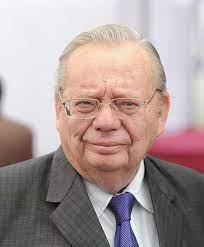
I’ve always been very backward: Ruskin Bond
I recall meeting Ruskin Bond in New Delhi and also interviewing him. Putting here details from an earlier interview with him … As I interviewed him, what I loved about him was his childlike simplicity and that uncomplicated style of conversing, discussing even complicated issues in the most ‘un-complicated’ way. Absolutely down to earth, no shying away from talking about the twists and turns and those lonely phases in his life. Even describing himself to be very backward!
“I have always been very backward. I write by hand instead of working on a computer. I listen to the radio instead of watching the television. I don’t know how to operate a cell phone…Also, sometimes, I read books upside down. If I have to read a modern novel, I will read the last chapter first, usually that’s enough. And sometimes, I walk backwards.”
And his views on loneliness are equally stark, in the backdrop of the fact he opted to stay back in India although he could have moved to the U.K. Also, he didn’t marry and has no companion, “My mother did send me to England but I returned. I wanted to be back and live here in India. I chose Dehradun and later moved to Mussoorie, because earlier my mother and step-father (my mother had re-married, a Punjabi businessman) lived there. Later, I didn’t want to live in a town which was too far from Delhi, because of my writing and meetings with my publishers…I stay in Mussoorie with an ‘adopted’ family, so that way the apartment is full of people. The apartment has four rooms and we are twelve people living in it. The family consists of a set of parents and their two sons who are both married and have children. Also, this profession – writing – is such that you can only pursue it in solitude. You have to be alone so that you can write. In the evenings I do go down to some friend’s home for a chat and a drink. I have two or three such close friends…Didn’t marry, couldn’t find love…nah, couldn’t find love. At times those weekly horoscopes in the various publications predicted love on the way but no love came up.”
And when I had asked him to comment on the near-nil portrayal of sexual romance in his writings he quipped, “You’re saying this, but once, I was hauled up in court on charges of obscenity. Yes I was, for my novella titled ‘The Sensualist’. I had to appear in court, though I was later acquitted. And I must tell you that there was nothing explicit in the book — maybe some sexual references in a romantic context.”
I had also asked him about the spurt in rape cases. ‘This could be because of sexually explicit films being screened on the television, affecting young minds. Then, they are never told that romantic love is one thing and sexual anarchy is different. Our society is too repressed; people try to break free and go on a rampage. Crime is worsening here.”
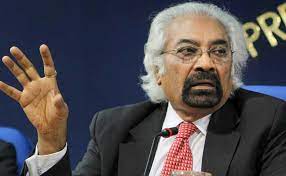
While the latest in the list of Sam Pitroda is his racist comment about Indians, the Congress needs to stop and think of the kind of people in its set up who rule the roost. BY KUMKUM CHADHA
If the Congress has an enemy it is one within: this time around the goatee sporting, English speaking Sam Pitroda.
One need not be apologetic about commenting on Pitroda’s looks: be it his goatee or all else. Because when it comes to Pitroda he is overliberal, rather uncharitable about commenting on the physical appearances of others. But a little later on that.
First his origins. Popular as Sam Pitroda, Satyanarayan Gangaram Pitroda, spent his formative years in Gujarat much before Narendra Modi started ruling it.
If one were to take away politics from his persona, Satyanarayan-turned-Sam, is a technocrat.
For those who remember, he was handpicked by Rajiv Gandhi to spearhead digital telecommunications till the last village of the country. To his credit, he did that making it known that he was working at a token salary of a rupee per month. In fact it is thanks to Pitroda that STD booths came up in every nook and corner of the country and everything was just a dial away, so to speak.
Heading half a dozen technology missions, Pitroda worked as advisor to Prime Minister Rajiv Gandhi to build the Indian information industry.
For those who credit Prime Minister Narendra Modi for the digital revolution in India perhaps forget that it was Rajiv Gandhi who kickstarted it.
In fact Pitroda is on record to state that the Narendra Modi government “snatched away” the credit for the digital revolution started by Rajiv Gandhi: “Modi didn’t start digital India…it is a journey which started 25 years ago,” Pitroda had said some years ago. Pitroda later went on to work with Prime Minister Manmohan Singh in 2004.
Sift through his autobiography and read the pages wherein he speaks about his being in India when he saw people taking out a “funeral of dead phones”. This stirred him into wanting to fix the problem and approaching the then Prime Minister Indira Gandhi through a friend. Instead he met Rajiv Gandhi to whom he sold the concept of bringing “telecom development to India in an Indian way”. The rest is history.
Fast forward from Rajiv to Rahul Gandhi and Pitroda has been in and out. He has led the Party’s overseas wing, namely the Indian Overseas Congress, and arranged most of Congress scion’s visits abroad including the one at Berkeley, Abu Dhabi and Dubai.
As Chairman, his job was to bolster the party’s global presence and enhance Gandhi’s image internationally. Whether he succeeded in that mission is a million dollar question.
Dubbed as Rahul Gandhi’s mentor, the technocrat has, politically, done more harm than good. Not only has he landed Rahul Gandhi in a soup but embarrassed the Party more than once. And this is because he shoots off his mouth when he should not be opening it at all.
For those who have watched Pitroda’s trajectory, also know that he and controversies go hand in hand. On that count, he is, to quote a media report, “repeat offender”, better still a “serial offender”.
The latest in the list is his racist comment about Indians: “We could” he said recently, “hold together the country as diverse as India, where people in the East look like Chinese, people in the West look like Arabs, people on North look like, maybe, white and people in the South look like Africans”.
It cannot get worse than this both nationally and electorally. As for the last, this was perhaps among the best things that could have happened as far as the BJP is concerned.
But more than the electoral advantage one needs to look at the damage done to the psyche of the people, particularly those belonging to the north east region and the southern part of India.
In India, the domination of the north is well known. There is a smug superiority and an unspoken sense of entitlement that automatically puts all other regions throughout the country both on the defensive and an inherent disadvantage. When one talks of India getting a Prime Minister, it is presumed that the office would be occupied by someone from the north.
There is, of course, an arithmetic at play which is about the maximum number of seats coming from the north but this alone cannot be the single factor to negate all claims from other regions, H.D. Deve Gowda being an exception.
As for the north-east, they have borne the brunt of racism much more than others ever have.
Many are victims in India’s capital city New Delhi and its neighbourhood, often referred to as chinky, because of their facial features. If some are ill-treated, often manhandled and threatened because of their origin, others are discriminated against. Many are viewed with suspicion simply “because they don’t look Indian enough”.
It is therefore not without reason that Assam Chief Minister Himanta Biswa Sarma needed to look into the mirror. To quote him: “After I heard Sam Pitroda’s statement, I looked at myself in the mirror and I appear as a proud Assamese and Indian, not as a Chinese…”
Equally, Prime Minister Narendra Modi expressed anger at the “abuse” hurled at fellow Indians. In fact he went as far as saying that Congress did not support President Droupadi Murmu’s candidature because her “skin colour is dark”.
Sure politics is being played out and no Party worth its salt would let go the opportunity that Congress has handed it on a platter. So one cannot grudge BJP the chance of playing this up and cashing in on it amid an intense and multiple-phased campaign. The Congress too has reacted by showing Pitroda the door.
Pitroda has resigned from his post as Chairman of the Indian Overseas Congress.
But this is not Pitroda’s first. And if his track record is anything to go by, it may not be his last too.
A few weeks ago he had kicked up a storm when he advocated a US type inheritance tax in India.
For the uninitiated, Inheritance Tax refers to a state levy on the assets an individual receives as part of an inheritance.
Expectedly, the BJP went to town with Pitroda’s remarks even as the Congress went into damage control mode.
While on insensitivity, there is more on Pitroda’s debit list.
A few years ago when he was questioned about the 1984 anti-Sikh riots, he dismissed the killings by saying: “hua to hua” or what happened, happened, so to speak.
Then christened as the hua hua man, Pitroda needs to reinvent himself. His recent remarks targeting Indians substantiate that he has learnt little.
But it does not stop here. Another Congress leader steps up the tirade, none other than Adhir Ranjan Chowdhury: “We have Proto Australoids, Mongoloid class, Negrita class of people…it is true that some people are white, some dark,” he said.
The debate goes beyond Pitroda and Chowdhury or what they said and meant because this is not about people but mindsets and in Chowdhury’s case about defending the indefensible. It is also not about politics or elections.
And therefore it is at this point that one needs to stop and ask oneself and more importantly the Congress: Is this done? Would a mere resignation undo the damage that an insensitive remark has caused? Would explanations suffice? And more importantly doesn’t this mindset put our country back by several years?
The Congress needs to answer this and much more. It needs to stop and think of the kind of people in its set up who rule the roost. The fact that Pitroda is among Rahul’s advisors only makes this question more relevant than ever.