Double whammy: After ED, CBI arrests Kejriwal in excise policy

The CBI arrested Delhi CM Kejriwal on June 26 after questioning him a day earlier at Tihar Jail in an alleged corruption case relating to the Delhi excise policy after his release on bail was stayed by the Delhi HC. The CM’s lawyer has accused CBI of abusing the process of law, writes Mudit Mathur
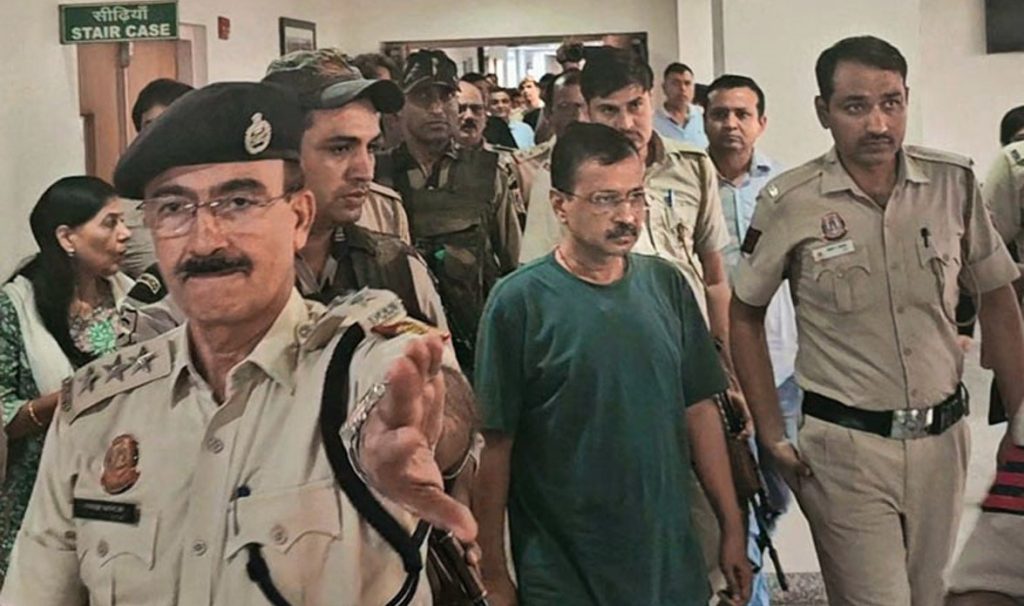
Before the apex court could hear the Delhi Chief Minister and AAP leader Arvind Kejriwal’s petition challenging the stay order passed by the Delhi High Court in an alleged money laundering case, the Rouse Avenue court of Special Judge, Amitabh Rawat remanded him to CBI custody for three days on June 26 after heated arguments over the legality of his arrest.

The agency arrested Kejriwal after questioning him a day earlier in Tihar Jail in an alleged corruption case relating to the Delhi excise policy after his release was stayed. Kejriwal was arrested in an alleged money laundering case on March 21 by the Enforcement Directorate, a few months ahead of the Lok Sabha polls.

While granting remand, Judge Rawat, however, held that the arrest was not illegal and that the agency should not be “overzealous.” “The timing may be circumspect but it is not the clear criterion for declaring an arrest illegal,” he observed.

An offence under the Prevention of Corruption Act is non-bailable and cognizable where an arrest can be made without a warrant. Since Kejriwal was already in judicial custody in the ED matter, the CBI required the court’s nod to arrest him.

Special Public Prosecutor D P Singh, representing the CBI, had a heated exchange with Kejriwal during the hearing where he was produced by CBI in its custody. He reacted to his description that “Kejriwal had said privatisation of the liquor trade was an idea of the then Deputy Chief Minister Manish Sisodia,” and clarified that “CBI sources have planted something in the media. I have not given any statement that Sisodia is responsible (for the excise policy). Yesterday, I told the CBI that neither AAP is responsible nor Sisodia.”

“You said it was Sisodia’s idea,” Singh insisted. “I didn’t say that,” Kejriwal replied, adding that the CBI was spreading such news for “sensational headlines”.

“Maine aisa koi bayan nahi diya hai ki Manish Sisodia doshi hai. Manish Sisodia nirdosh hai, AAP nirdosh hai, mein nirdosh hoon. Unka saara plan hai hume media mein badnam karne ka. CBI ke sources ne chalwaya (I never gave any statement that Manish Sisodia is guilty. Manish Sisodia is innocent, AAP is innocent, I am innocent. They aim to malign us in the media. CBI sources ran this),” he said.

“Inka idea ye hai ki kal front page pe top headline honi chahiye ki Kejriwal ne saara thekra Manish Sisodia pe foda. They are sensationalising the issue. Ye kal top headline hogi har akhba rmein. Inka aaj kewal ye maqsad hi hai (Their idea is to ensure that the front-page headline says Kejriwal has put all blame on Manish Sisodia. They want this headline in all newspapers. That is their sole aim today),” he said.“They asked me whose idea it was. I just said it wasn’t mine,” Kejriwal added.

Judge Rawat interceded and told the CM: “Aap ki statement maine padh li hai… Aisa kuch nahi kaha hai aapne (I have read your statement; you made no such remark).”

Special Public Prosecutor Singh said, “The evidence shows that the report compiled by the South Group was taken as the report of the group of ministers who were responsible for the excise policy. … Even before the policy was notified, the process began to find people to whom it will suit.”“Notification of the policy was done with haste… There was no meeting called. The CM was at the helm of affairs,” he said, adding that the investigation had uncovered a money trail of Rs 45 crore which was allegedly used by the AAP in the 2022 Goa Assembly elections.

Opposing the CBI remand, Senior Advocate Vikram Chaudhari, appearing for Kejriwal, contended that the CBI has acted in a prejudiced manner. The investigation of the case has been pending since August 2022. Chaudhari stated that Kejriwal was called as a witness once to which he cooperated, and never as an accused. He said that without any notice, the CBI made him an accused in the case. “It is the grossest abuse of process of law. They were waiting till I get bail in PMLA case,” he added.
Concern over growing ties between Ukraine and Caucasian jihadists

While it is still under the realm of speculation whether the US-led western powers really approve of the Ukrainian move to use the dreaded Jihadists against Russia, but the signals do point towards such a possibility by Gopal Misra

The growing ties between Ukraine and the Jihadists of the Caucasian region, especially Dagestan, against Moscow are expected to further fuel the ongoing war in Europe.

These Jihadists are known to be allies of the Pakistani terror outfits having financial and strategic support of its army and its Inter-Services Intelligence or ISI. India, naturally, has to be worried about this new bonhomie, especially in the wake of the recent upsurge of terrorism in Jammu and Kashmir.

The worldwide ramifications of the new found love between the ISI and the Islamists of Eastern Europe need to be studied.

Within a few months of the terrorists’ attack in Moscow, the recent shooting of policemen, beheading a Christian priest and severely wounding a number of civilians in key Dagestan towns indicates that the Ukraine, with the backing of  its US-led western allies, is keen on expanding the ongoing conflict to other areas of Eastern Europe. For many, it could be a shocking revelation to common people that how the Ukrainian President Volodymyr Zelenskyy, a Jew, could find the Jihadists his close ally. The students of strategic and international affairs, however, know that in a war or love every action is legitimate to trounce the enemy.

In this backdrop, it is quite well-known that a large section of the Muslim majority regions of Chechnya and Dagestan continues to be alienated with Moscow. These two regions are considered to be Russian President Vladimir Putin’s Achilles heel. It is true that Putin has successfully brought the Chechen to the country’s secular political system, but Dagestan having 13000 feet high mountains, now a hotbed of terrorists, continues to be a challenging task for Moscow. Russian soldiers are not trained in mountain warfare, and that too against the committed Jihadists, well-entrenched in the unfriendly hilly terrain.

 A desperate move

It is being stated that with the defeat appearing imminent of his forces in the ongoing 900-day old war with Russia, Zelenskyy has decided to tie up with Jihadists. Earlier, Ukraine had evolved strategic understanding with Pakistan by obtaining huge supplies of explosives for its artillery from the country, where the world’s most dreaded Muslim terrorists are being trained. In spite of its War against Terrorists, the US has allowed Pakistan to retain its terror training centers.

For the Pakistani army, the decision to supply the much-needed explosives to Ukraine facing Russia’s formidable firepower, became a god-sent opportunity. It enabled it to reinvigorate strategic ties with Washington. Also, its civilian face led by Prime Minister Shahbaz Sharif could now liberally access the US dominated international financial institutions such as the International Monetary Fund and the World Bank

It could not be known immediately whether the US-led western powers really approve the Ukrainian move to use the dreaded Jihadists against Russia, but the indications do not rule out such an eventuality. It may be recalled that more than a decade ago, the US announced a five million US dollars award for getting Doku, a Chechan terrorist having al-Qaeda ties in Afghanistan and Pakistan, but it could never be ascertained if Doku and his followers were eliminated or arrested.

During the past 13 years, however, the West has never condemned these Muslim terrorists attacking Russian institutions. On the other hand, all these years, the American media has been calling them freedom fighters. It needs close observation how the Russian province, Dagestan, the picturesque region of the Northern Caucasus nestling amidst high peaks, has become the new abode of Jihadists.

The Tablighi role

The role of Pakistan-based Tablighi volunteers in converting the peace-loving Cucasians against Jews and Christians is yet to be revealed. It is intriguing how the American deep state, Central Intelligence Agency or CIA, continues to influence the Jihadists worldwide. It is difficult to ascertain how much funds have been made available to them. The information is under wraps, maybe because officially the US and the western powers continue to mouth their much pronounced war against terror.

It, however, appears that it took more than a decade for the Islamists to finally percolate down in the valleys and mountains in the Northern Caucasus, a region that continues to be a part of the Russian democracy.

A section of the scholars of strategic affairs in New Delhi, suspects, perhaps rightly, that the Jihadists’ June 23 Sunday attacks on various churches and synagogues of two prominent cities, Derbent and Makhchakla of Dagestan, could be a part of a new Ukrainian strategy, blessed by the West to expand the war front against Russia in Eastern Europe. The Muslim terrorists have not only killed 15 policemen, they have beheaded a Christian priest.  The exact number of the injured could not be ascertained immediately.

India’s worries

There is a natural affinity among Indians towards the Northern Caucasus, including Dagestan, where Islam’s liberal traditions evolved in the isolated natural environment. Both Islam and Christianity flourished. The Jews too have been living in this predominant Muslim area. In India, the country has successfully evolved a plural and socially developed society, but it’s all inclusive approach giving equal rights is being sabotaged by the West, which, may still be harboring their dated colonial agenda

It is natural for the Indian security agencies to be apprehensive regarding a massive penetration of the Tablighi volunteers in the country, as they are being empowered with the liberal financial assistance obtained either directly from the West as well as the secret drug funds of the ISI. The current role of the Chinese proxies is yet to be revealed.

The cause of the Indian worries regarding the rise of radical Islam in Eastern Europe is also being attributed to the growing role of the Salafi cult among Muslims in the region. The Salafis  hate Sufism which has a long traditional presence in India. In the northern state of India, Uttar Pradesh, the earlier Samajwadi Party government led by Chief Minister Akhilesh Yadav having support of the Indian National Congress, had allowed the conservative Wahabi Sunnis, also known as Deobandi, to penetrate and occupy key positions in the management of Sufi properties. They have been opposing this interference, but the political considerations weighed in favor of the conservative elements. Like Dagestan, in India the Sufi orders like Naqshbandi and Qadiriya have a large number of followers, including among Hindus.

Another common factor between Dagestan and India is that the minorities have seldom been harassed. The communal riots began with British colonial rule. The partition was accomplished after funding Mullahs and Razakars, the hired killers. They were the predecessors of the present day Talibans. If British intelligence MI -5 took 60 years to turn Indian Muslims into separatists, the CIA, through the West’ client state, Pakistan, had been funding the Muslim terrorists against the USSR and finally evicted them from Afghanistan. In recent years, it has been targeting Russia for ending its influence in Eastern Europe and Central Asia.

Amidst these international developments, China has positioned itself as a key player without joining the war. It has quietly deploying its resources to surpass the West in scientific research and technologies

It knows that the ongoing conflict in Europe is going to weaken the economies of the US and even the Western Europe. Meanwhile,China already has surpassed Russia in industrial production. It is being stated that China already has become a Superpower, next to the US only.

India is yet to formulate it’s economic strategy, especially it has already coughed up about one thousand billion US dollars to China during the past 10 years due to her huge perennial trade deficit with her northern neighbor.

In this context, the reemergence of Jihadists from Europe to Jammu Kashmir is quite alarming.

Modi 3.0 stirs hope for early elections, statehood in Valley

During his visit to Srinagar on the occasion of Yoga Day, Prime Minister Modi’s assurance to the people of the Valley regarding Assembly elections has introduced a sense of seriousness about the likelihood of the electoral exercise being held in the near future.  A report by Riyaz Wani

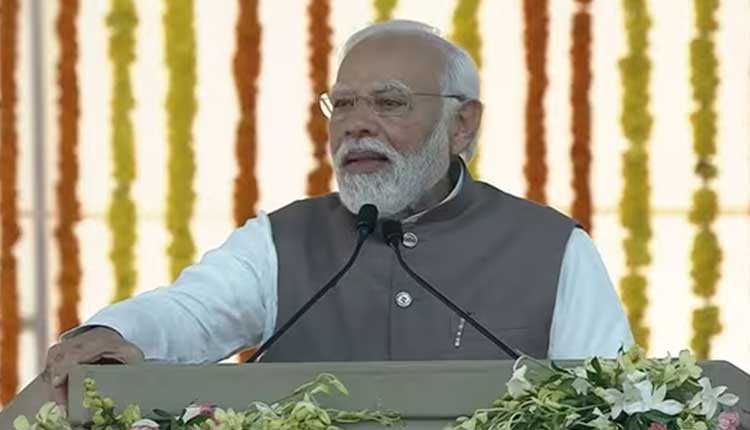
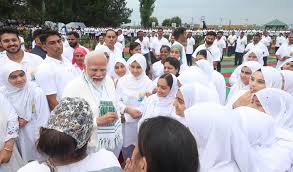
Prime Minister Narendra Modi’s visit to Srinagar to lead Yoga Day celebrations on June 21 was unlike his last one to J&K in March which was bereft of any political talk or outreach. Not this one: This time the PM sought to address the long pending demand in the union territory for Assembly elections and the restoration of statehood by assuring that both will take place “soon”.

“The time isn’t far away when, through your votes, you will be able to elect your own government in J&K,” the PM said in Srinagar on June 20. “The day will come very soon when J&K will become a state again for its bright future.”

The visit, Modi’s first since securing a third consecutive term at the Centre, was essentially geared to show off the new-found normalcy in J&K, a region with a complex political and security environment, particularly after the contentious abrogation of Article 370 in August 2019. Ever since, though the UT has come a long way on the road to normalcy, the situation isn’t completely normal. An extended period of calm is occasionally broken by sensational incidents of violence. For example, over the past three years, Jammu division has been a site of some major militant attacks. Rajouri and Poonch, the twin Jammu districts, alone accounted for 53 deaths out of 134 militancy-related killings in 2023, roughly 40 percent of total killings. Of the 53 people killed in the two districts, 19 were Army personnel, including a few officers.

 But the BJP is showcasing normalcy in Kashmir Valley as the takeaway from its direct rule of the UT over the last five years. The revocation of Article 370, which granted special status to J&K within the Indian Union, has always been projected by the saffron party as a necessary step for integrating the former state more closely with the rest of India and promoting development in the region. Conversely, critics have raised concerns about the impact on local autonomy and the human rights situation. In this context, Modi’s visit was aimed at addressing both domestic and international audiences, showcasing stability and progress in J&K.

Election promise 

The primary goal of Modi’s visit was to set the stage for the upcoming assembly elections, a goal which local people are equally invested in. With an eye on the Hindu majority Jammu division, the BJP aims to leverage its governance decisions over the past five years, particularly the abrogation of Article 370, to secure a strong mandate in the Assembly polls. 

However, following the recent militancy-related incidents, which led to the killing of nine pilgrims and a CRPF personnel, the opposition has portrayed the situation in J&K as unstable. The PM’s visit was a bid to project confidence and reassure both locals and people in the rest of the country about the government’s commitment to the region’s development and security. In his speeches in the Valley too, the PM emphasized on development and infrastructure projects, which have been central to the BJP’s narrative in J&K. 

One of the key underlying messages of Modi’s visit was the improvement in the security situation in J&K. According to data from the Union Ministry, militancy-related incidents have significantly declined since the reading down of Article 370, with the number of security personnel and militants killed showing a downward trend.  This is borne out by data: 80 security personnel lost their lives in 2019, 63 in 2020, 42 in 2021, 32 in 2022 while 30 were killed in 2023. Similarly, 157 militants were killed in 2019, 221 in 2020, 180 in 2021, 187 in 2022 and 73 in 2023. This improvement in security has been a cornerstone of the BJP’s argument for its governance model in the region. Modi’s presence in Srinagar, particularly amid heightened security measures, was designed to symbolize the government’s control and the progress made in curbing terrorism.

While the PM’s visit was also about development and celebrating Yoga, the promise of restoring statehood to J&K is important. The erstwhile state was bifurcated into two Union Territories—Jammu and Kashmir and Ladakh—in 2019. The restoration of statehood has been a persistent demand from various political parties and civil society groups in the region.

The opposition parties in J&K, including the National Conference and the People’s Democratic Party, have criticized the BJP’s approach, arguing that the focus on development projects cannot be a substitute for political engagement and restoration of local autonomy. Former J&K Chief Minister Omar Abdullah has repeatedly called for the restoration of statehood and holding of assembly elections as crucial steps towards normalcy and democracy in the region.

Moot question

The issue now is if the Assembly elections in J&K would now be held along with Maharashtra, Haryana and Jharkhand, and whether statehood would follow soon after as promised by no less than the PM himself. The skepticism on both counts runs deep in the UT, more so in the Valley. 

Reacting to the PM’s assurance of an early Assembly election, senior PDP leader Waheed Parra tweeted a cryptic “InshaAllah (God willing)” while juxtaposing the news stories about PM promising Assembly election now and in the early 2019 when Article 370 was yet to be rescinded. 

Doubts about elections being held this year have further been aggravated by the recent surge in militant violence in Jammu. Any further escalation in attacks could make the situation more  uncertain. 

Already, former Army chief, General VP Malik has advocated deferring elections in the UT. In an interview with a private TV news channel, General Malik stressed that delaying the elections by a year was crucial, warning that the situation in Kashmir could escalate if militants achieve some successes in the Jammu region.

“Don’t hasten into holding the elections in J&K by September. Focus on consolidating gains in Kashmir,” he said. “A few terrorist successes in Jammu could incite further terrorism in the Valley. More important than Assembly Elections by September 2024 is ensuring the security of J&K. Postpone the elections by a year.”

However, he was slammed by Omar Abdullah who argued that doing so would be giving in “to extremist forces so that they have a sense of achievement.” 

“What’s more surprising is that this has come from an army officer who saw Lok Sabha polls happening in J&K soon after the Kargil War and during the height of militancy in 1999. What a shame!” Abdullah said. 

However, the prime minister’s assurance about Assembly elections has introduced an element of seriousness about the likelihood of the exercise being held in near future. And should that happen, the election is likely to be overwhelmingly participated by the people unlike in the past.  “J&K’s politics since the abrogation of Article 370 in August 2019 has been in a state of flux, and the restoration of democratic processes through timely elections is crucial for the region’s stability and growth,” an editorial in a local Kashmir daily read.

Unseasonal snow, rain turn Valley into a summer travel hotspot

After the first four months of 2024 saw a record-breaking influx of over a million tourists, the gravy train continues for Kashmir’s tourism sector. While the rest of India is scorched by a heat wave, the Valley, thanks to rare June snowfall, is drawing tourists in hordes. A report by Riyaz Wani

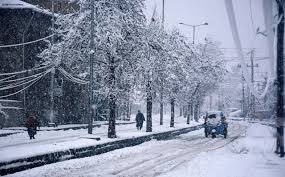
On June 21, which is the middle of summer, Peer Ki Gali, connecting Shopian district of south Kashmir with the twin districts of Poonch and Rajouri, received four inches of fresh snowfall, disrupting normal traffic movement. Similarly, the upper reaches of Zojila Pass on the Srinagar-Ladakh highway also experienced fresh snowfall.  This brought the already moderate temperature in the Kashmir Valley further down at a time when the rest of the country is reeling under a scorching heat wave. The Valley, as a result, has become a go-to place for the tourists from the mainland seeking respite.  The influx of tourists has reached a point where houseboats on Dal Lake must be reserved months in advance, reflecting the high demand for accommodation.

The first four months of 2024 alone saw over a million tourists flocking to Kashmir, breaking winter tourism records, according to official numbers. The number of foreign tourists has seen a 61 percent increase compared to the same period last year.  Srinagar International Airport data has indicated a significant rise in passenger traffic, with an average of over 18,000 visitors per day. The increased demand is reflected in the airport’s operation, with the number of flights rising from 70 to 94.

Over some days in the first week of June, several higher reaches of Kashmir, including Affarwat in Gulmarg, Razdan Top, Zojilla, Sadhna Top, and Sinthan Top, experienced unseasonal snowfall. This was accompanied by rain in the plains, leading to a significant drop in temperatures across the region. In Srinagar, temperature declined to 21.6°C, and at the tourist spots such as Pahalgam,  Kokernag, and Gulmarg, the temperature dropped to 20.4°C, 22.7°C and 11.2°C respectively.  A consequent pleasant weather in summer is drawing tourists in droves. 

The region attracted over 21.1 million tourists in 2023, propelling the local economy to new heights, according to the state Tourism Department. This surge has significantly helped the tourism sector recover from the setbacks experienced after the abrogation of Article 370 on August 5, 2019, and the subsequent restrictions imposed during the COVID-19 pandemic in 2020.

In recent years, the J&K administration has made efforts to bring more tourists to the region. Once the successive Covid lockdowns were over, the administration launched promotional efforts within and outside the country to attract tourists back to the Valley.  The government has added more tourist places, earmarking another 75 tourist destinations for tourism. The homestay facilities have attracted tourists to far-off areas once considered a no-go zone due to security concerns.The facility was introduced by the government in 2022, and it has boosted border and rural tourism.  

Authorities have recently opened the Pir Panjal region from the Yusmarg end in South Kashmir for trekking. Similarly, the Athwatoo area in Bandipora, located in the Shamsbari range—once notorious for infiltration routes—has become accessible to tourists. This shift has led high-end tourists from the rest of the country to explore beyond traditional spots like Gulmarg, Pahalgam, and Sonamarg, opting instead for trekking and visiting border areas. Gurez is one such area. Hitherto out of bounds for tourists due to militancy, Gurez is witnessing tourist inflow.  

“The situation is now so normal such that we no longer need to promote tourism in Kashmir extensively,” said Nasir Shah, chairman of the Indian Association of Tour Operators, J&K Chapter. “Tourists are now coming on their own.”

Shah added that around 100 tourists visit Gurez each day. However, the region’s growing popularity has introduced its own challenges. There are fewer hotels in Gurez and the place needs more infrastructure to accommodate the increasing inflow. 

One positive development for the Valley is that the footfall of foreign tourists has increased by nearly 300 percent as a total of 55000 tourists from outside the country have visited the union territory. Last year, the government said that it was exploring the entertainment industry to promote Jammu and Kashmir tourism worldwide.

Kashmir Valley is also benefiting from the central government’s ‘Cool Summers of India’ campaign.

Under the campaign, the centre has picked over 50 destinations in consultation with respective state governments and Union territories, and efforts are on to actively promote them as tourist attractions. And Kashmir Valley is one of the biggest beneficiaries of this campaign. 

Digital India symbolises an empowered nation: PM Modi

New Delhi: Digital India symbolises an empowered country which boosts ‘Ease of Living’ and transparency, Prime Minister Narendra Modi said on Monday.

The Prime Minister lauded the successful completion of nine years of the ‘Digital India initiative’, which was launched on July 1, 2015.

Sharing a thread on X by MyGovIndia, the Prime Minister wrote: “A Digital India is an empowered India, boosting ‘Ease of Living’ and transparency. This thread gives a glimpse of the strides made in a decade thanks to the effective usage of technology.”

MyGovIndia said in a post that from revolutionising digital payments to becoming the fastest-growing digital economy, India’s journey in the past nine years has been nothing short of extraordinary.

“The ‘Digital India’ initiative, spearheaded by the PM Modi government, has transformed the nation’s digital landscape.

“India’s trajectory exemplifies that Digital Public Infrastructure (DPI) is a fundamental driver of social transformation and progress, ” MyGovIndia posted.

The country has become a leading global fintech ecosystem thanks to robust digital public infrastructure (DPI) models like unified payments interface (UPI).

Several countries are ready to embrace the ‘India Stack’ solutions to empower the masses, PM Modi told to media in May.

The Prime Minister said that when he kicked off the ‘Digital India’ movement, opposition parties made allegations that this was being done to serve the needs of the service providers.

“They could not understand how big this area is and the 21st century is a technology-driven century. Moreover, technology today is driven by artificial intelligence (AI), ” PM Modi.

The digital revolution, driven by UPI and QR-code-based payments, has shown to the world that DPIs like UPI, Aadhaar, and DigiLocker can transform millions of lives.

In a first, Himachal showcases saffron flowering

By Dr.V.Kaul and Dr. Surender Sharma

The Institute of Horticulture Technology-IHT has successfully cultivated saffron in Shimla at village Bigri, Dhami with the support of Department of Biotechnology of Union Ministry of Science and Technology.

Saffron is an autumnal flowering geophyte- a plant propagated by means of vegetative propagation through corms and whose dried stigmas are well known for its aromatic, pharmaceutical and colouring power. It has been used as a spice in human nutrition from times immemorial. 

Saffron is an autumnal flowering geophyte – a plant propagated by means of underground buds and whose dried stigmas are well known for their aromatic and colouring power, it has been used as a spice in human nutrition from times immemorial.

No doubt in India, Kashmir has the virtual monopoly of saffron as a valuable industrial/medicinal product and contributes a lot to its agricultural economy, however very recently the crop has been introduced in some other parts of the country viz., Himachal, Assam, and Uttarakhand. 

For the first time despite facing challenges, an expert team of IHT showcased technological interventions for the cultivation of saffron in Bigri, Dhami., Himachal Pradesh using soilless media along with micro-irrigation (drip irrigation), standardized fertigation schedule, and other modern technological inputs. The area in Himachal Pradesh has a potential for bio entrepreneurship of the precious spice and is as important as Kashmir in the production of saffron.

Himachal Pradesh although having suitable areas and climate for saffron cultivation has not been successful in having a footprint as a major producer of saffron in India and is far behind Kashmir in saffron production. The adoption of modern technologies in soilless cultivation under protected conditions of saffron as demonstrated by IHT in Shimla, Himachal Pradesh is key to success for scaling up the production commercially and will reduce the cost of cultivation.

The adoption of modern technology like the soilless cultivation of saffron under protected conditions will foster the growth of production and productivity in a short period to meet the growing domestic demands. The essentiality and utilizing appropriate technology like soilless cultivation under protected conditions as demonstrated by IHT, Shimla, will result in the competitive edge in commercial production of saffron and simultaneously will meet the quality standards of the conscious consumers. 

Saffron cultivation can have a drastic transformation as it has an evident advantage over traditional crops in generating rural employment, and enhancing rural income and has a high potential to tap national and international markets.

Institute of Horticulture Technology established during the year, 2009 under the aegis of Akhil Bhartiya Gramin Vikas Sanstha. The Institute is equipped with well-qualified and dedicated faculty, including need-based visiting experts and guest faculties from Israel, the Netherlands, and Thailand. IHT’s Technology Park has several polyhouses ranging from simple walk-in-tunnels to fully Hi-Tech greenhouses, integrated computerized fertigation systems, energy-efficient greenhouses, a hi-tech nursery raising chamber with boomer irrigation facility, besides an open cultivation area under various horticultural crops.  It has undertaken several R&D projects in various states in partnership with other institutions and industries of national repute. Department of Biotechnology, Government of India has also supported IHT in Technology demonstration projects for the welfare of the farmers, especially for developing Bio entrepreneurs. One such project is being undertaken in Shimla, Himachal Pradesh on the soilless cultivation of Saffron. 

It has designed several training courses of varying durations on various aspects of horticulture. IHT has provided training to more than 68,000 trainees in all the Campuses/Centers in India. The trainees hailed from 23 states/union territories of India and abroad- Tunisia, Ethiopia, Ghana, Sudan, Tajikistan, Palestine, Vietnam, Tanzania, Sri Lanka, Kenya, Bahrain, Afghanistan, Bangladesh etc. 

Dr. V. Kaul is Associate Director and Dr. Surender is a Scientist with the Institute of Horticulture Technology

T20 World Cup: PM Modi speaks to Team India, lauds Rohit Sharma, Virat Kohli, Rahul Dravid

New Delhi:  Prime Minister Narendra Modi has spoken to the Indian Cricket Team on the phone and congratulated them.

He congratulated Rohit Sharma for his splendid captaincy and appreciated his T20 career.

The Prime Minister lauded Virat Kohli for his innings in the final and his contribution to Indian cricket.

He appreciated Hardik Pandya for his final over and Surya Kumar Yadav for his crucial catch. He also talked highly of Jaspreet Bumrah’s contribution.

The PM also thanked Rahul Dravid for his contribution to Indian cricket.

Earlier, Prime Minister Modi led his cabinet colleagues to cheer for Rohit Sharma’s Indian team as it defeated South Africa in a thriller to win the ICC Men’s T20 World Cup 2024 on Saturday.

“Congratulations to Team India from all countrymen on this majestic victory in the ICC Men’s T20 World Cup. Today 140 crore Indians will be feeling proud of your performance. You won the World Cup in the sports field but your performance in the event has captured the hearts of crores of Indian citizens, ” PM Modi said in a video message congratulating the Indian team on its victory.

Home Minister Amit Shah described it as “a glorious moment for our nation”.

Falsely implicated, I was forced to spend 5 months in jail: Hemant Soren

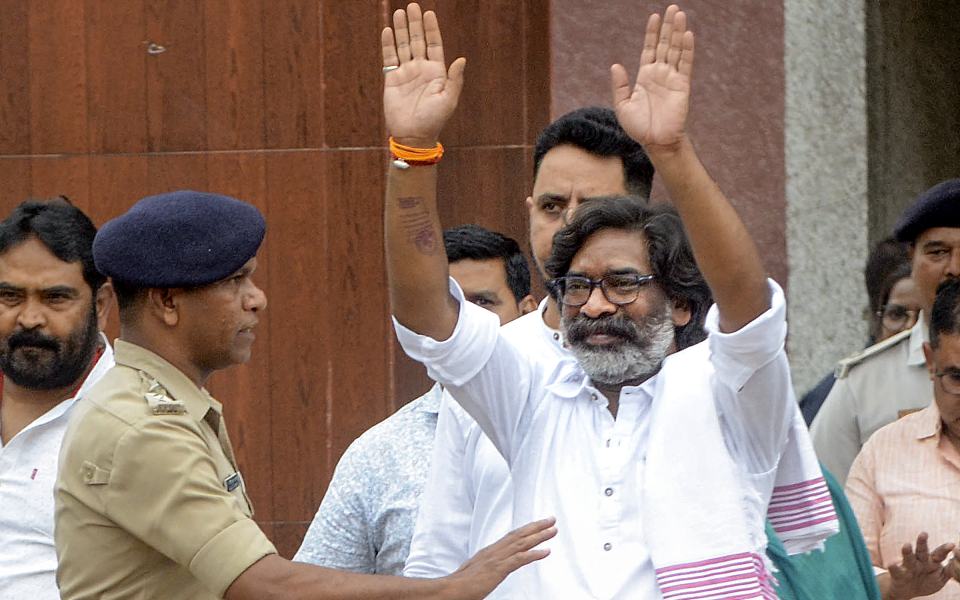
Ranchi:Former Jharkhand Chief Minister Hemant Soren on Friday claimed that he was falsely implicated in a money-laundering case and was forced to spend about five months in jail.

In a veiled attack on the BJP, the executive president of Jharkhand’s ruling JMM said he was concerned about how the voice of political leaders, social workers and journalists was being silenced in the country.

“I was falsely implicated. A conspiracy was hatched against me and I was forced to spend five months in jail,” Soren told reporters after his release from the Birsa Munda Jail here.

He was granted bail by the Jharkhand High Court in the money-laundering case linked to a land scam.

“I respect the judiciary. The court delivered its order and I am out (on bail). But the judicial process is long,” Soren said.

He alleged those who raised their voice against the Central Government were being suppressed.

“I will finish the task I started, the war I waged,” Soren said.

He was arrested by the Enforcement Directorate on January 31.

Cab driver dead, 6 injured as portion of roof collapses at Delhi airport’s Terminal-1

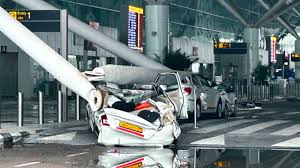
New Delhi : A cab driver died and six people were injured after a portion of a canopy at Delhi airport’s Terminal-1 collapsed on cars amid heavy rain early on Friday, leading to suspension of flight departures, according to officials.

Delhi Fire Services (DFS) officials said three fire tenders were rushed to Terminal-1 (T1) of the airport after a call about the incident was received around 5:30 am.

Besides the roof sheet, the support beams collapsed, damaging the cars parked in the pick-up and drop area of the terminal. A search operation was conducted to make sure no one was trapped inside the damaged vehicles, they said.

The injured have been admitted to Medanta Hospital near the airport. One of them was rescued from a car on which an iron beam had fallen. He was later identified as Ramesh Kumar, they added.

Work was underway to clear the debris.

Deputy Commissioner of Police (IGI) Usha Rangnani said due to heavy rain, the shed outside Terminal-1 of the Indira Gandhi International Airport (IGIA), spanning from departure gate no. 1 to gate no. 2, collapsed around 5 am, damaging four vehicles.

One person died and six people were injured in the incident. All the injured are stable, she said.

Teams of Delhi Police, DFS, Central Industrial Security Force and National Disaster Response Force are present at the spot, the DCP said.

A police official said the deceased was identified as Ramesh Kumar (45), a taxi driver and a resident of Rohini in Delhi.

The injured have been identified as Santosh Kumar Yadav (28), Subham Shah (30), Dashrat Ahirwar (25), Arvind Goswami (34), Sahil Kundan (27) and Yogesh Dhawan (44). They are residents of Delhi, Gujarat and Madhya Pradesh, the official said.

Civil Aviation Minister K Rammohan Naidu visited the airport Terminal-1 and took stock of the situation.

“Personally monitoring the roof collapse incident at T1 Delhi Airport. First responders are working at site. Also advised the airlines to assist all affected passengers at T1,” he said in a post on X.

“The injured have been evacuated to hospital. Rescue operations are still ongoing,” he added.

The Civil Aviation Ministry said flight operations at T1 have been suspended till further notice.

“Heavy rain in early morning today has resulted in the collapse of the canopy of #DelhiAirport Terminal 1. As a result of which flights to & from Terminal 1 have been closed till further notice. Alternate arrangements are being made for the smooth operation of the flights,” the ministry said in a post on X.

The flight departures were suspended soon after the roof collapse incident. Passengers who were already inside the terminal boarded their flights, sources said.

T1 has only domestic flight operations by IndiGo and SpiceJet. The airport—which has three terminals T1, T2 and T3 — handles around 1,400 flight movements daily.

A Delhi International Airport Limited (DIAL) spokesperson said, “Due to heavy rain since early this morning, a portion of the canopy at the old departure forecourt of the Delhi airport’s Terminal-1 collapsed around 5 am. There are injuries reported and emergency personnel are working to provide all necessary assistance and medical aid to those affected.”           

As a result of this incident, all departures from Terminal 1 are temporarily suspended and check-in counters have been closed as a safety measure, the spokesperson said in a statement.

The suspension of operations at the terminal also led to the cancellation of some flights.

In a statement, an IndiGo spokesperson said flight operations are impacted due to structural damage at T1 due to adverse weather conditions.

“This has led to flight cancellations in Delhi as passengers are not able to enter the terminal. Passengers already inside the terminal will be able to board their planned flights, but those with flights later in the day will be offered alternatives,” the airline said in a statement.

SpiceJet said in a post on X that flights have been cancelled as T1 will remain partially closed for operations until further notice. 

Northern Army Commander reviews operational preparedness in J&K

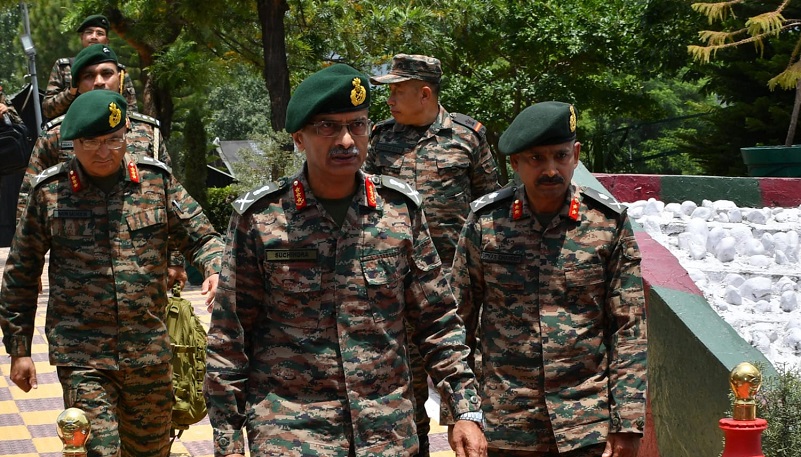
Lieutenant General M V Suchindra Kumar, the Northern Army Commander, conducted a review of various military formations in Jammu and Kashmir’s Udhampur district to assess their operational readiness, officials reported on Thursday.

During his visit on Wednesday evening, Lt Gen Kumar focused on evaluating the troops’ preparedness in light of the upcoming Amarnath Yatra and the overall security situation in the Jammu region.

“The Army commander visited local military formations in Udhampur to review their operational preparedness,” the Northern Command stated on X (formerly Twitter) on Thursday.

The briefing also covered the formation’s efforts in adopting new technologies to enhance operational efficiency.

Lt Gen Kumar’s tour includes visits to multiple corps, divisions, and military formations across the union territory, aimed at assessing the security situation and the operational readiness of troops stationed both in the hinterland and along the borders.

In addition, the Northern Army Commander reviewed the operational preparedness of the Delta Force in J&K’s Ramban district.

MOST POPULAR

HOT NEWS