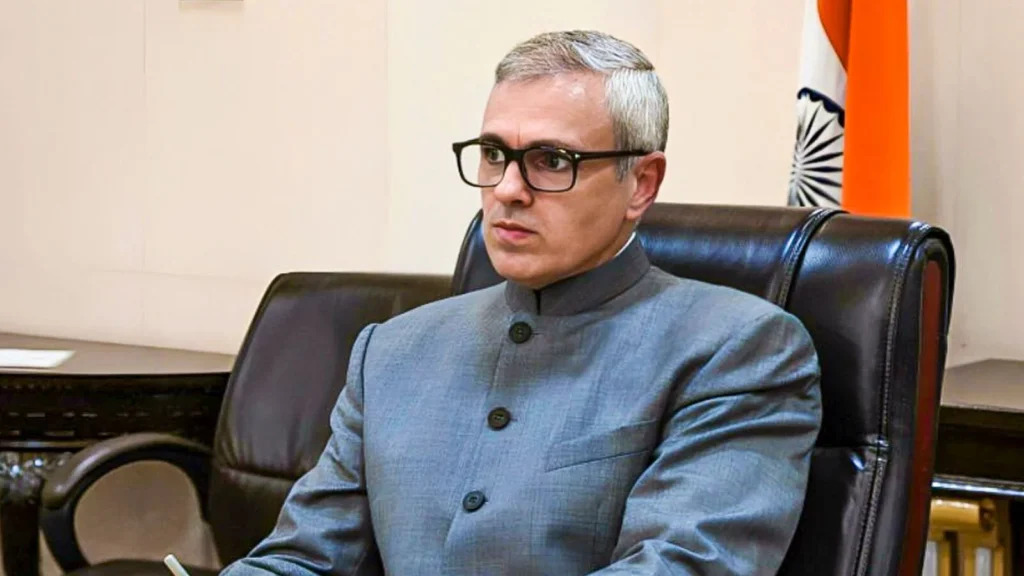
Jammu and Kashmir Chief Minister Omar Abdullah has welcomed the suspension of the Indus Waters Treaty, saying the agreement had long harmed the interests of the region and that its suspension would allow Jammu and Kashmir to utilise its own water resources.
Speaking at a news conference in Amritsar, Omar reiterated his opposition to the decades-old treaty.
“I have been against it from the very first day. The Indus Water Treaty has greatly harmed us. It is good that the treaty has been suspended,” the Chief Minister said.
He said the next step should be concrete measures to ensure Jammu and Kashmir can effectively use its water resources for the benefit of its people.
“Now I want measures to be taken so that we are able to use that water for ourselves. We have given two projects to the centre, which we think will benefit us. One is the Jhelum navigation barrage, known as the Tulbul Navigation Barrage,” Omar said.
Explaining the impact of the proposed project, he said, “Water level in Wular will increase, and as a result, water in the Jhelum will also increase. Electricity production will increase, and Jhelum will be used for navigation.”
The Chief Minister said the Jammu and Kashmir government remained in continuous communication with the Centre regarding these projects.
Omar also spoke about the challenges faced by the tourism sector in Jammu and Kashmir over the past year, describing it as particularly difficult.
“Last year was difficult for us. When tourism started reviving, the Delhi bomb blast proved to be another setback for us,” he said.
However, he noted that tourism had shown signs of recovery with the onset of snowfall in Kashmir.
“Since snowfall has begun, tourism in Kashmir has increased,” Omar said.
He added that while the government would continue to promote tourism, it would not release tourism figures this time.
“We will continue to promote tourism, but numbers and our success ratio will remain with us,” he said.
Highlighting the importance of domestic tourism, Omar said Gujarat, Maharashtra and West Bengal remain key source markets for visitors to Jammu and Kashmir.
“We are trying our best to revive tourism in these states. I cannot say that we have succeeded, but it feels like tourism has gradually revived since snowfall has started,” he said.