The war ended in India’s favour with legacy extending beyond battlefield gains, it was also a victory in the hearts and minds of common Indians. It is one of the most emotional chapters in Indian military history, a powerful reminder of the lengths our soldiers can go for the country, their valour and sacrifices which continue to fill the hearts of every Indian with respect, gratitude, and pride.
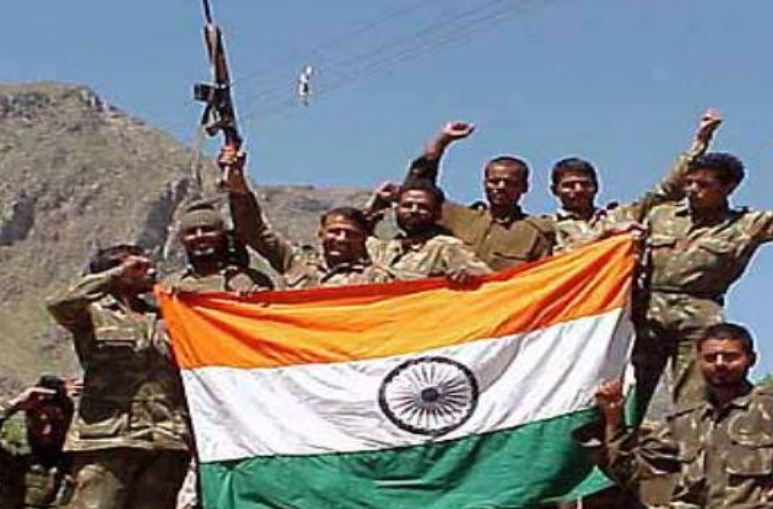
Prime Minister Shri Narendra Modi today greeted the countrymen on Kargil Vijay Diwas.
“Heartfelt greetings to the countrymen on Kargil Vijay Diwas. This occasion reminds us of the unparalleled courage and valour of those brave sons of Mother India who dedicated their lives to protect the nation’s pride. Their passion to sacrifice everything for the motherland will continue to inspire every generation. Jai Hind,” he wrote on X
Kargil Vijay Diwas
Kargil Vijay Diwas is observed on July 26 every year.
On this day in 1999, the Indian Army announced the successful culmination of ‘Operation Vijay,’ declaring victory after nearly three-month-long battle in the icy heights of Kargil, including high altitude locations like Tololing and Tiger Hill. It marks the day India regained control of the infiltrated peaks in the Kargil district of Jammu and Kashmir.

The conflict officially ended on July 26, 1999, with India emerging victorious. However, to achieve that a price had to be paid.
The official death toll on the Indian side was 527.
More than a date
But who can forget the valour of martyrs like Captain Vikram Batra who left a lasting impact on so many lives, and others who made the supreme sacrifice. At the crucial moments of the war (capture of Point 5140 and the assault on Point 4875) Batra made the final act of sacrifice with battle cry of “Durga Mata Ki Jai,”
Batra’s “Either I will come back after hoisting the Tricolour, or I will come back wrapped in it, but I will be back for sure, “yeh dil maange more!”, Captain Manoj Kumar Pandey “if death strikes before I prove my blood, I swear I’ll kill death,” continue to inspire.
As India celebrates the 26th anniversary of this triumph, tributes and memorial ceremonies are being held to honour the fallen heroes.
The war ended in India’s favour with legacy extending beyond battlefield gains, it was also a victory in the hearts and minds of common Indians. It is one of the most emotional chapters in Indian military history, a powerful reminder of the lengths our soldiers can go for the country, their valour and sacrifices which continue to fill the hearts of every Indian with respect, gratitude, and pride.
What happened in 1999
In the summer of 1999, the world watched as Pakistani soldiers, disguised as terrorists, infiltrated winter-vacated Indian Army posts atop the rugged peaks of Kargil. This brazen act was a desperate attempt by the Pakistan Army to alter the Line of Control (LoC), cut off Ladakh from Kashmir, and internationalise the Kashmir issue.
What followed was a fierce military campaign — the Kargil War — in which the Indian Army, displaying unparalleled courage and grit, evicted the intruders from every height they had occupied. The war ended in Pakistan’s tactical and diplomatic defeat, exposing not only the military adventurism of its army but also the fragility of governance in the regions it occupies.
The triumph beyond
The victory in Kargil was not just territorial, it was also symbolic of India’s long-term commitment to inclusive development in J&K
Once synonymous with the battlefield, Kargil now stands as a symbol of resilience and renewal. The under-construction 14.2-km Zojila Tunnel promises all-weather connectivity between Kargil and Srinagar. Solar power plants light up remote villages in Suru Valley and the expansion of Kargil Airport will connect this once-remote district to the rest of the country and beyond.
While India continues to build — tunnels, institutions, careers, and confidence — Pakistan focuses on strategic land use, often at the cost of its own citizens, in contrast, Pakistan-occupied Kashmir and Pakistan-occupied Gilgit-Baltistan are more like military buffers and economic corridors than homes to real people with dreams.