Kashmiris see the IWT as a historic injustice that robs them of control over their most valuable resource – water. CM Omar Abdullah has urged the Centre to clear two stalled projects—the Tulbul Navigation Project and Chenab Water Lift Scheme—to mitigate the situation, writes Riyaz Wani
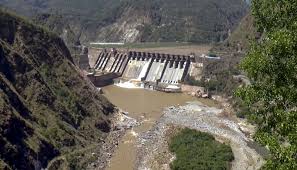
In the wake of India putting the Indus Water Treaty with Pakistan in abeyance, following the April terror attack in Pahalgam that killed 26 people, mostly tourists, Jammu and Kashmir Chief Minister Omar Abdullah has urged the central government to clear two key infrastructure projects – the Tulbul Navigation Project in Kashmir and the Chenab Water Lift Scheme in Jammu – which he said are critical to the region’s water security and development.
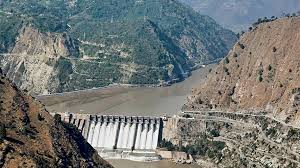
Speaking in a recent interview, Omar reiterated his criticism of the IWT, calling it unfair to Jammu and Kashmir. He said the treaty had long deprived the region of the right to regulate and store its own water, and restricted hydropower projects to run-of-the-river models, limiting their potential.
He said that his government is focusing on medium-term projects that could be implemented without delay, starting with the Tulbul Navigation Project in Sopore. Stalled since 1987 due to Pakistani objections, the project, also known as the Wular Barrage, would regulate flow on the Jhelum river, enhance navigation, and boost winter power generation.
While India revived interest in Tulbul after the 2016 Uri attack, Pakistan has refused to cooperate in five rounds of talks under the Permanent Indus Commission from 2017 to 2022. Indian officials maintain the project is within treaty limits as it is not designed for storage or irrigation, but for non-consumptive regulation.
Omar has proposed the installation of drop gates at Tulbul to manage water levels more efficiently. He said the project would ensure steady flow into Wular Lake, benefitting both tourism and employment in the Valley.
The second proposal, the Chenab Water Lift Scheme, is aimed at tackling growing water scarcity in parts of Jammu. First conceptualized in 2008, the scheme would draw drinking water from the Chenab river to serve drought-prone areas in the region. Omar said the river could support water needs for the next 20 to 30 years.
He confirmed that discussions with the Centre have taken place and a senior advisor to the Prime Minister recently visited the UT to review the proposals. The J&K government is also seeking permission to approach an international funding agency for the Chenab scheme.
The Indus Water Treaty, signed in 1960 and brokered by the World Bank, has long governed the distribution and usage of the Indus basin’s five rivers. Its suspension has brought to the fore old grievances, not just between India and Pakistan, but also from within Jammu and Kashmir, the region most affected by the treaty’s provisions.
Under the treaty, India controls the three eastern rivers (Ravi, Beas, Sutlej) and Pakistan controls the three western rivers (Indus, Jhelum, Chenab), with India allowed “limited use” of the western rivers (for hydropower, agriculture, etc.).
The ruling Bharatiya Janata Party has progressively adopted a more assertive stance on water-sharing with Pakistan. In 2019, Prime Minister Narendra Modi went as far as stating that India would prevent “every drop” of water from the eastern rivers from reaching Pakistan.
Since terminating the treaty isn’t legally feasible, J&K leaders demand that New Delhi quantify and compensate for the state’s losses under the treaty.
In short, Kashmiris see the Indus Waters Treaty as a historic injustice that robs them of control over their most valuable resource – water – and stifles their economic growth and energy independence.
Despite being the source of Indus, Jhelum, Chenab, Jammu and Kashmir has emerged as the biggest loser under the treaty. The region is struggling to meet its own irrigation and energy needs. Experts estimate that only 40% of Kashmir’s cultivable land is currently irrigated. Ironically, despite being rich in water resources, Kashmir remains a power-starved state.
Hence the demand for the clearance of the Tulbul Navigation Project and the Chenab Water Lift Scheme. However, it remains to be seen how the Centre responds to the demand.