by Charanjit Ahuja
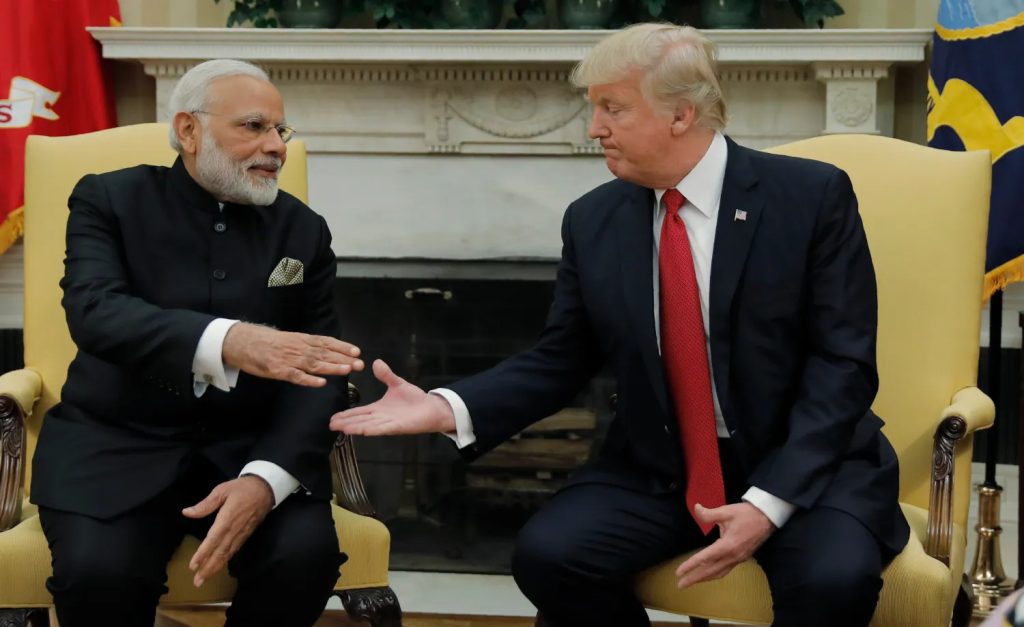
The India–US interim trade pact is more than a tariff adjustment exercise. It is a strategic wager—one that seeks to bind the world’s two largest democracies closer through commerce, technology, and calibrated interdependence.
Nearly $44 billion worth of Indian goods will enter the US duty-free. Other exports will see tariffs tumble from punitive highs of 50 per cent to a modest 1–8 per cent range. For Indian exporters in labour-intensive sectors—gems and jewellery, processed foods, spices, pharmaceuticals—this is not incremental relief. It is structural access to a $30 trillion marketplace.
In return, India has pledged to purchase $500 billion worth of American goods over five years. That asymmetry is real. But it is also deliberate. India is leveraging assured demand to unlock long-denied market entry for its producers. This is not charity; it is strategic sequencing.
What makes this pact politically viable is its careful insulation of sensitive sectors. Agriculture and dairy—historic deal-breakers in trade negotiations—remain shielded. The apple import mechanism, with its minimum price floor and additional duty, signals that liberalisation will not come at the cost of farmer livelihoods. Cotton quotas remain unchanged. The message is clear: integration abroad will not mean instability at home.
The inclusion of artificial intelligence and digital infrastructure is a forward-looking correction. For years, high duties on critical hardware quietly eroded India’s competitiveness in deep tech and AI. Lowering those barriers aligns trade policy with India’s innovation ambitions. If executed well, this could be as consequential for the next decade as tariff cuts are for the present one.
Equally transformative is the potential public health dividend. Duty-free access for advanced pharmaceutical imports, particularly oncology drugs, could ease the crushing financial burden on cancer patients. In a country where out-of-pocket healthcare spending remains high, even a 10–20 per cent reduction in treatment costs can determine whether therapy continues or stops.
But the pact is not without caveats. The conditional removal of a 25 per cent penal tariff linked to Russian oil purchases underscores how geopolitics now shadows economics. The clause introduces leverage—subtle but unmistakable—into India’s energy calculus. It reflects a world where trade agreements increasingly serve strategic ends.
Execution will decide whether promise translates into performance. Tariff reductions must be operationalised swiftly. Safeguards for farmers must be enforced rigorously. Benefits from lower import duties—particularly on medicines and digital infrastructure—must be passed through transparently to consumers and start-ups.
Ultimately, this interim framework signals a shift in India’s trade doctrine. It is neither blind liberalisation nor defensive isolation. It is calibrated engagement—opening where competitive, protecting where vulnerable, and embedding economic ties within strategic alignment. India has chosen to deepen its economic backbone with the United States. If managed prudently, this pact could evolve into a comprehensive partnership that strengthens manufacturing, technology, healthcare, and geopolitical leverage.
For now, it is a bold beginning—ambitious, conditional, and unmistakably strategic.